Review: Spacebase Startopia

Who wouldn’t want to live in a world of peace and harmony? A place where we learn from our previous errors, and everybody works towards a better, healthier future for all! Science Fiction portrays aliens as ultra-intelligent beings that can amaze and do unthinkable things. What would you say if they were as infallible as us? Spacebase Startopia’s whole philosophy revolves around this concept, and a desire to become rich.

Developed by Realmforge Studios and published by Kalypso Media, this business management base building simulator is out of this world and addictive as hell. Originally released on Early Access, I was fortunate enough to preview it. Now it has made it to version 1.0, I’ve revisited it to give it the score it deserves. Returning to play would never be a chore as I loved it the first time around, and I was intrigued to see if any changes had been made.

Keep your guests happy.

Spacebase Startopia works brilliantly on console.

If you have ever attempted to play a simulation or strategy game on console, then you know there is always a concern. Will its UI be too complicated? Will the game be too complex? Can the machine handle the demand? Luckily, Spacebase Startopia plays like a dream. There are a few niggles along the way, and I’ll cover these off, but it’s mostly an enjoyable experience no matter what game mode you play.

Single-player and multiplayer options are at your disposal. Whatever is available to the solo player is also available to groups. Love the campaign mode, but want some company? Call a friend to help. You want to create the space base of your dreams, but want to share the fun with another? Hit that invite button. Or maybe you fancy competing to see who can run the best alien base. You can do that as well.

It offers so many modes to choose from that it’s hard to decide. It’s not a bad problem to have, and this game will keep you playing for hours. If you stick to the campaign mode, you’ll be gently introduced to more complex scenarios. These will test your abilities to plan and overcome obstacles. Free play lets you go crazy in a sandbox environment. Whereas, challenging your friends and family to see who can build the best base gets messy quickly. Think Monopoly, rage, and gloating, this brings out the best and worst in people, you have been warned!

Get those Fuzzies working.

Happiness and energy make Spacebase Startopia tick. 

Some of the greatest wars have started because of a misunderstanding. Spacebase Startopia grabs this idea with both hands and runs with it. Fights between aliens were breaking out because of an inability to communicate. When one group handed a bouquet to a nature-loving species, they were deeply offended. A 400-year long war begins, and the universe decides these mistakes cannot be repeated. Technology advances and the space base program starts. The intention is to create a place where aliens can co-exist in a relaxing and happy environment. All it will cost them is their hard-earned energy.

Heartless and ruthless businessmen saw a gap in the market and plugged it with their doughnut-shaped space vessels. The aim for each base you own is simple; build on each of the 3 available decks, keep all your visitors happy and healthy, and rinse them for as much energy as possible. The gameplay is much more complex than the premise, but once you get your head around it, it’s a pleasure to play.

The Biodeck is a beautiful place to visit.

3 decks, resources and staff.

Every base you visit has the same layout. A welcome deck on top, an entertainment layer in the middle, and a nature section holding it all up. Each is managed separately, but they all demand equal attention. How one section does affects another, and this impacts the success or failure of the base.

The top layer.

Here is where you accommodate all your alien visitors. They will be provided with births, medical treatment and more to ensure they stay healthy while on board. You also place all the ship essentials here, such as; factories, security, comms, etc. This is the brains of the operation, and if you plan this segment correctly, the visiting aliens will stay happy, healthy, and will fill your energy banks up.

The entertainment deck.

No one wants to visit a dull station, so don’t let that happen. This is the real money-spinner where disco’s, cafés, lottery and other energy grabbing rooms are found. Give those aliens everything they want and take all the energy they possess. It’s a ruthless business, but someone’s got to do it, right?

The botanical segment.

Everyone loves nature, and here the aliens can come to; relax, swim in the water pools, and take a break away from their hectic lives. Increase the attractive qualities of your metal doughnut while growing resources for use of the upper deck. It’s a constant juggling act as you terraform parts to generate the items you need.

Arrive, spend money, live, and then leave.

Staff.

The space base would falter if the correct staff aren’t hired. A long list of aliens can join your vessel (for a price, of course), and many have different levels of experience. Certain rooms require a set species of alien, so you must hire the right creature for the job at hand.

Not all jobs are completed by aliens; cleaning, building and demolition require drone-like bots known as fuzzies. These battery-operated beings roll around in an automated fashion. Set them down and let them get to work.

Once you’ve got your head around that lot, there are just battles to fight, and deliberate acts of terrorism to overcome. Aliens are a terrible bunch, and they will do anything to upset one another. Keep your eyes peeled and remove any threats before they become a problem.

The entertainment deck is the place to waste energy.

Space looks so beautiful.

If space looks this beautiful in real life, get me a one-way ticket as I don’t want to return. The levels of detail are incredible, with each of the alien models looking unique from other species. The range of colours used throughout could have been dull and lifeless. Instead, the developers went all out to create a vivid scene that is wonderful to look at. The clean and easy to navigate UI alleviated my fears of an overly complicated game. Helpful tips and reminders appear regularly to ensure you stay on track, and all objectives are shown with a helpful checklist. Realmforge Studios has done a fantastic job with the visual presentation of their project.

If you like your games laced with comedy and a futuristic space funk soundtrack, then this will be right up your street. You are accompanied by your robot assistant VAL, this emotionless entity loves to highlight your inadequacies. Compliments sound like a putdown, and you are left chuckling at its unintentionally harsh words. As with the visuals, the audio breathes life into this wonderful simulation title. The music distracts you from the challenging tasks you face, and the accompanying sound effects are wonderfully Sci-Fi and match the theme.

Disco time.

The simple UI makes this easy to learn, but the camera control is still too sensitive.

The combination of a clean-cut UI and in-depth tutorial makes this easy to learn the fundamentals. It is complex and takes time to get used to, but once you have it nailed, it’s a pleasure to play. Yet, it would be easier to control with a mouse and keyboard. Moving the camera is a challenge and selecting objects can be fiddly. It’s not impossible and doesn’t ruin the game, but it’s something you have to account for.

I was more than happy to return to play this, and I’m glad I did because the finished product is a polished gem. The new achievement list adds extra challenges alongside each campaign scenario. The continued ability to play with others was a well thought out and I welcomed the decision. Spacebase Startopia has the potential to keep you playing for a long time and you’ll lose hours of your life to it. If the developers add more content in future DLC and potentially a new style of base to work on, this would only add more reasons to return.

Spacebase Startopia is worth every penny.

With Gamepass and PlayStation Plus ruling the roost, gamers now view buying games as a serious investment. I can comfortably say that this is money well spent. Spacebase Startopia will stop you from wanting to put the controller down and leaving your house. It’s super addictive and spectacular for the solo player and with friends. Once you break the back of its complexities, you’ll fall in love with everything it offers. For these reasons, I recommend you buy it here! Bring peace and harmony to your entertainment station in space. Ensure everyone is happy, healthy, and spending their hard-earned energy. 

Review: Squad Killer

What I love about early arcade games is the lack of a story. Unlike the modern era where everything has to have a point, retro games relied upon their; addictive gameplay, pixelated graphics and simplicity to keep you playing. Squad Killer does exactly that. There is no explanation as to why you exist, what you are doing, and how long it’ll take to complete it. Yet, you keep playing regardless, determined to defeat that final boss and put the game to bed.
Developed by WAZUNGDEV and Eastasiasoft Limited, and published by the latter, this is one simple title that will get under your skin. An old-school 2D platform shooter that uses Rogue-like qualities to infuriate. Starting each turn with limited health, you must plan your approach to maximise your chances of survival. Death is all but certain, and even the most skilled gamers will have a challenging time.

Watch out for the red exploding boxes.

Squad Killer has brutally difficult gameplay.

This isn’t Dark Souls or Okunoka Madness, but boy is it tough. Everything in the world wants to kill you! Projectiles home in on your position, and no amount of jumping or dodging will help you escape the inevitable. Killing enemies will reward you with loot. Coins, grenades and health packs can be collected to help you progress. But don’t rely on these as the developer lacks generosity, and you’ll mainly be given coins. Don’t be too disheartened though, as the money buys you essential power-ups.

A retro platform game would be nothing if it didn’t have the obligatory power-up system. However, Squad Killer has used a slight twist on this loved mechanic. The power-ups do not get allocated during each stage. Instead, you must wait until the end of a designated level to purchase one from a random selection of 3. Never has this element been so key to your chances of success. Rapid-fire, increased health, more grenades, additional lives and more. Without them you will not get very far, so make sure you collect that loot, and spend, spend, spend.

17 levels and 6 bosses.

With only 17 levels and 6 bosses standing between you and victory, you may think that success will be easily achieved. Think again! There is nothing simple about this, and you are more likely to either cry or rage quit than you are to complete it. To add to the madness you are treated to 2 further modes; Boss Rush and Stacked Deck. Both require you to have unlocked prerequisites, and when you do, you’ll face the same tough mechanics. Though, Stacked Deck is a little more forgiving as you are blessed with 7 random power-ups to kick start your adventure.

I’m sure you are picking up on the “this is a tough game” vibe. So don’t let it shock you that the developers added another layer of difficulty to keep you on your toes. Each of the 17 levels will be chosen at random, making each playthrough unique. This affects your ability to plan, and you must wait to see which stage you have before you decide how you wish to tackle it. Add in the random roster of monster you’ll face and the aim of clearing the level to unlock the exit door gets increasingly harder.

A giant spider and plenty of bullets, it’s a deadly mess.

It looks and sounds like an old-school arcade game. 

With its fixed-screen, 2D perspective, pixelated and simple graphics, and crude level design, it ticks all the retro boxes. Eastasiasoft Limited updated it slightly with a modern look in the pixelated world. This ensures that it contains slightly more details than normal. I liked this approach as it made the landscape and sprites more interesting to look at and it also reduced the harsh lines, making it more pleasant on the eyes. I also appreciated the ability to change the colour palette. It didn’t alter the gameplay, but I chose Gameboy green as it felt the most suitable for the retro theme.

8 bit synthesised music is what I associate with arcade games of the 80s era. Luckily, this loud, high tempo audio is utilised throughout every level. This reiterates the old-school nature of this title and captures’ that 80s feel. Yet, it unfortunately lacks variety and this could make it annoying. What is used works perfectly with the gameplay as it creates a panicky and rushed atmosphere.

Create a plan to get around that lot.

Easy to pick up and play, but difficult to put down.

I always find it a little disconcerting when you are chucked in at the deep end with no tutorial. The best you get is a breakdown of the controls, and that is it. Luckily, you need little else as it’s pretty straightforward to play. Leap, slide, climb and shooting are your main concerns, so you’ll have this mastered in no time. Sadly, the controls are clunky with your character shooting where he deems correct, and not where you aim. This makes a tough game much harder, and I hope this gets ironed out in any future updates. 

You’ll need to take some seriously deep breaths to remain calm while trying this. The harsh realities of failure are ever-present, yet you’ll be desperate to keep playing. Its replay value stems from the desire to beat it, and not from a complex story, or ever-changing mechanics. The rogue-like qualities will infuriate some players, but I believe this is one of its better qualities, and it makes the game what it is. If you like your achievements, this is going to be for you. The 100% status is easy to achieve, leaving you to focus on beating all 6 bosses.

Is Squad Killer worth the investment?

There are so many retro indie games available that it’s tough to wade through the rubbish to find one worth investing in. Squad Killer is a hard but casual old-school experience that will keep you entertained for hours. Its concept is simple, it’s easy to pick up, but it’s likely to make you cry. For these reasons, I recommend you buy it here! Can you survive each of the 17 levels and the 6 bosses? Few will, but you may as well die trying! 

Review: Magic Twins

Magic Twins is a sweet little puzzle game following the story of two twin witches in the quaint town of Mallorca. Although the premise is simple from the get-go, as you progress through the game you begin to develop your puzzle solving skills throughout a series of levels and tasks. Magic Twins can be enjoyed either single player, or favourably with a partner in order to learn a variety of spells and progress. To those playing this game solo, things do become challenging so I’d definitely recommend recruiting a friend. 

Simple story

The aim of Magic Twins is to change the colour of Abra and Cadabra’s uniforms with magic. Somewhat expectedly, something goes wrong during the casting and the pair bring Colormageddon to the world. Suddenly colours are coming to life, and wish to harm the twins. You must utilise their skills in order to protect them and also restore faith before Colormageddon takes over Mallorca. You are assisted by a cynical cauldron, who aids your journey in a tutorial-esque fashion. Throughout the game there isn’t really any narrative development and characters remain the same as when you start the game. Colormageddon is exciting and creates a feeling of urgency, sure, but you will question if it’s enough to keep you invested. 

Chibi cuteness

The art style is cheerful, and the music fits well. Everything follows an earthy, dark academia aesthetic. It’s easy on the eyes, and would appeal to all ages. Both Abra and Cadabra talk in a number of sounds rather than any sort of language, and the text moves slow enough to ensure it can be read before moving on to the next element of the story. With a simple concept to follow you can get cracking on puzzles very quickly, but they can become repetitive. Especially if you are playing solo. Periodically through levels, the twins encounter rifts which pump out new enemies to keep things fresh, but every level is pretty much the same. 

Rather repetitive 

Each level presents a different puzzle, which seems pretty simple once you get the hang of controls. But these levels begin to challenge you with regards to speed and accuracy. You don’t learn any new moves as the game progresses but you will need to ensure you’re moving fast and attacking sharply. I played the majority of this game on my own, which became rapidly more difficult as I got further with levels. The CPU solo players are given as assistance is ideal for early levels since your capabilities are well matched. As more enemies start pouring out of rifts and Colormageddon spills chaos into Mallorca, you’ll need a little more assistance.

The CPU eventually becomes weak and you have to take over that half of the screen as well, causing more panic and you’re better off finding someone to play with. It is possible to play as both twins, but I definitely wouldn’t recommend it. Enemies are produced at the rate to be taken down by two players. It doesn’t slow down if there’s only one of you. 

Final thoughts

As a whole, Magic Twins is an enjoyable puzzle game for two people to pass the time with. It’s cute, and simple, and definitely something I’d invite my friends to play again. If I were to be looking for a puzzle game to play on my own though, this isn’t one I’d necessarily reach for. It’s fun, but repeating the same thing is only fun for a little while. 

Review: HELM Audio DB12 AAAMP Mobile Headphone Amplifier

Here is our review of the HELM Audio DB12 AAAMP Mobile Headphone Amplifier.

Small enough to fit into the palm of your hand, the HELM DB12 AAAMP Mobile Headphone Amplifier plugs seamlessly into any mobile device (Android, iOS, MacOs or PC supported) to deliver studio grade analog amplification from your mobile device to any pair of 3.5mm headphones. Powered by THX AAA technology,the HELM DB12 AAAMP provides +12 dB of zero distortion volume gain, improved stereo imaging and clarity (true linear amplification), plus an optional user-controlled +6 dB bass boost. With over six hours of mobile play time, the HELM DB12 AAAMP transforms your mobile device into the ultimate portable hi-fi audio solution. As a seal of its superior audio design and output, it has also achieved THX Certification, meeting the highest industry standards for its exceptional sound quality and performance.

Features

  • IMMERSIVE AUDIO ON THE GO – Music, Movies & Gaming. Your Wired Headphones Never Sounded So Good
  • STUDIO GRADE AMPLIFIER with Bass Boost Powered by the Award Winning THX AAA AMPLIFIER TECHNOLOGY – Boost the Sound from your Mobile or Gaming Device to Your Headphones
  • GAME CHANGING SOUND Anywhere You Go! Your Music, Movies, Youtube Videos, Twitch Streams and Gaming 
  • WORLD’S FIRST AAA  In-Line Audiophile Quality Headphone Amplifier That Fits In The Palm of Your Hand and a Separate Bass Boost Feature
  • DELIVERS MAXIMUM VOLUME +12dB with No Distortion, Greatly Improving Sound Quality and an Independently Controlled Bass Boost +6dB 
  • PLUG & PLAY – No Additional Components or Connections
  • AWARD WINNING THX AAA Lowest Distortion Amplifier
  • ULTRA-CLEAN POWER Breathing New Life in to Your Favorite Headphones 
  • EXCLUSIVE DESIGN – Brushed Aluminum Housing and Braided High-End Silver Cabling
  • 100% MOBILE – Rechargeable Battery With 6-8 Hours Play Time

What’s in the box?

The box contains the AAAMP, a manual, a carry case and charging cable.

A Closer Look

Final Thoughts

Setting up the DB12 is simple – just connect one end into the device you want to listen to and the other end connect to your headphones. Then start up whatever you want to listen to, slide the power switch to ON and that’s really all there is to it! You will immediately notice a real difference in audio quality. There is also a Bass Boost option which adds +6bB of low frequency boost if you want it.

Charging the DB12 takes around 90 minutes and will last for a good 6 hours of usage. Charging is as simple as plugging in the USB C connector into the DB12 and a USB charging point. There is a charging port light on the DB12 too so you can easily see the status. When you are not using it you can store it in the nice carry case that it comes with – that’s a nice touch! Using USB C is a great way to keep the DB12 future proof – with so many devices now using USB C it was a smart move on the part of HELM to use it too!

The in-line controls consist of volume up and down and a single central button use for play and pause, next or previous track.

The DB12 is very light weight – you will hardly even notice it’s there!

The sound quality is amazing – it really makes a difference using the DB12 compared to just plugging in your headphones. The THX AAA feature really makes the sound feel like you are right there!

The DB12 is a fantastic addition to you listening experience – once you have tried it you wont want to go back to listening without it! If you want the best audio experience you can get at a reasonable price, then look no further than the DB12 – it’s a must have!

The HELM Audio DB12 AAAMP Mobile Headphone Amplifier is available now priced around $179.99.

You can learn more from the HELM website.

Review: Samurai Shodown

I still have fond memories of visiting arcades as a tearaway youth. Changing up notes for coins and wasting them on countless rounds on the Street Fighter Arcade machine. With much money lost, and many hours invested, you’d think I was an expert of these games. Unfortunately, I’m not. But, I love to play them in my living room, reliving my youth and keeping the notes firmly in my pocket. Other 2D fighting games have made it to be household names; Tekken and Mortal Kombat join Street Fighter as fan favourites, but one that may have slipped people by is Samurai Shodown.

Developed and published by SNK Corporation, this 2D side-scrolling fighting game is a well-established franchise, but hasn’t piqued the interest of gamers like the aforementioned big players. A bold story is told in a Japanese tongue, leaving us ill educated players to read the subtitles to fathom out what is happening. This is a title that is aimed at the massive Anime and Manga market, and fans will lap up its style.

Just casually fighting with a bear behind you.

Samurai Shodown is all about body language.

Whenever I think of arcade fighting games I picture; buttons being smashed, fingers moving at lighting speeds, and gamers pulling off remarkable combos. Samurai Shodown goes down a completely different path. Though you can simply smash your way through your opponents, this is ill advised. A skilled enemy will slay you in moments as they counter your heavy attacks and leave you unarmed and begging for mercy.

Short 1V1 battles comprise 3 rounds. Each character has a limited amount of health, and a set arsenal of moves at their disposal. Every attack that you perform can be countered, and each character has a distinctive tell to show the observant gamer the way to overcome their foes advances. Heavy blows are overcome by short, sharp jabs to the face. Kicks and punches will cause little damage, but will prevent fighters from overpowering you with pacey blows. It’s a tactical game that requires a fine eye for detail, and a meticulous level of concentration.

A bizarre story of Evil.

Samurai Shodown has a distinctly odd story that has your fighter traversing from location to location seeking his opposition. Fights occur in the weirdest of places, and your opposition ranges from; muscle bound men to slight and nimble women. You will complete many rounds before finally coming face to face with a being that is possessed by pure Evil. Unsurprisingly, this demonic force is the main boss, and you are expected to defeat her to save the realm.

As weird as the tale is, it leads to no massive surprises, nor does it stand out against any of its peers. I enjoyed the dialogue being performed in Japanese as it added an authentic twist. The translation wasn’t perfect, yet it does a sufficient job in setting the scene, explaining the plot and adding emotion. Its gameplay mechanics, and beautiful presentation drives you to love this, and the many game modes that are available to be explored.

Keep your eyes on the prize.

Samurai Shodown has enough modes to last you a lifetime.

As much fun as it is to compete against the computer opponents, fighting games are all about hammering other humans into submission. Samurai Shodown offers a wide range of online and offline modes for you to explore. I spent most of my time playing offline, as my limited skills have faded somewhat since my youth, and being told to “Get Guuudddd!!!” by youngsters was as humiliating as losing every game. Yet, what I experienced was a friendly community. There were good lobbies that were a breeze to join and simple to navigate.

If you, like me fancy keeping yourself hidden from the online masters, then Samurai Shodown has you covered. You can battle in a traditional form with friends, or against computer players. You can also take part in; Time trials, survival or a score-driven gauntlet. Each is as obvious as they sound, and they don’t throw any curveballs or surprises. A practise setting allows you to hone your abilities and complete challenges, and finally you can hit the Dojo for some Ghost battles.

The Ghost battles aren’t as spooky as they sound, as they are simply the chance to challenge fallen players. The game will replicate the movement that they have made and offer a challenging enemy for you to fight against. In theory, this is great, but in reality it didn’t live up to the hype, and was my least favourite mode.

He’s in shape.

A cartoon come to life.

From my least favourite portion of the game, to my favourite. The art style is a thing of beauty. The level of detail is incredible, and the depth of colour makes it wonderful to look at. The crisp lines used to create each character and the amazing landscapes make this look like it’s straight out of a comic book. If you like a bit of gore with your fighting titles, you can opt to have a brutal experience. Blood spatters everywhere, and opponents can be dismembered. Victory tasted so much sweeter when your warrior stood above his opponent, covered in their claret.

Unlike many of its peers, this one plays out at a slower pace. Because of this you see the smoothness of the animations; the slicing of each weapon and the flash of each special attack. With so much going on, there could have been performance issues. This never occurred, and it was great fun to play.

It’s hard not to consider the soundtrack as clichéd, but everything screamed, “look at me, I’m Japanese”. From the distinct voiceover to the classic oriental audio, this plays out as you’d expect. Each fight has an upbeat tempo accompanying it to ensure that the adrenaline is pumping. And each of the characters has a sharp Japanese tone that is expressive, adding emotion to each cinematic. It was nice to listen to, but it had flashes of an 80s Hollywood martial arts film.

Looks like he’s lost his head.

Much harder to play than its peers.

With so much riding on you understanding your opponent’s plans, Samurai Shodown is a challenging title to pick up, let alone master. If you reduce the difficulty to its lowest setting, then you can roll through the opposition like they don’t exist. But, if you play the game like it’s intended, then you will need to master all the finer points before becoming a champion. There is something truly wonderful about this when it clicks, but its tough learning curve will frustrate many gamers who are used to button mashing ways.

Fighting games are an odd genre. They offer some of the best replay value, yet the gameplay is repetitive. Of course, each fight depends on your opponent, and this adds layers of uncertainty and excitement. This, as expected, has plenty of replay value for both the offline and online player because of the many game modes, and the 16 different characters that you may select from. With a large and challenging achievement list to unlock, this will keep you playing for hours if you get hooked.

Is Samurai Shodown worth your time?

If you are a lover of the genre, then I think you will fall for its charms. It doesn’t follow the same gameplay principles of many of its peers, and simply smashing buttons will not help you progress. You must read the situation, understand each character’s finer details, and learn when defence is the best form of attack. For all these reasons, I recommend you buy it here! Beautifully presented with an odd story that allows many of its other fantastic elements to shine, Samurai Shodown is a fighting franchise that deserves more recognition.

Review: Bite the Bullet

Everyone with a TV has at least one TV show that is guaranteed to put them to sleep at night. Bite the Bullet, a monotonous 2D Indie-made roguelite RPG shooter has much the same vibe with unchallenging gameplay and a repetitive soundtrack that has the incredible ability to lull you to sleep while playing it.  

As a hired gun who completes missions for a space-dwelling corporation, you raid apocalyptic earth for the corporation’s DNA compendium. Told with a straight face, the story has countless opportunities to distract from the standard-fare gameplay with an amusing narrative but holds steadfast with its bland characters. Furthermore, dumbfounding issues and unnecessary features soon drain the title of any remaining potential its vibrant visuals and decent soundtrack suggest.

A portal leads to a secret room with an unlockable audio track.

Perhaps the most unique and innovative aspect of Bite the Bullet is inferred in its name; your weapons are not the only way to kill enemies – you can also eat them. Doing so replenishes your health while filling a meter that allows you to Hulk-out temporarily into a large destructive blue beast. Other weapons range from standard to intriguing and include a shotgun, a rocket launcher and a gun that fires small creatures. These abilities and weapons are, in theory, fun inclusions but unfortunately aren’t linked to either the story or any level-specific mechanics, and when combined with an overpowered shotgun, are rendered useless. This, in addition to copious amounts of character and weapon upgrades, makes it seem like a developer attempting to paper over the cracks and hide the core gameplay’s weaknesses. The character upgrade tree, in particular, has a ludicrous amount of unlockable stat upgrades for a title of only 8 levels that not only affects the overall balance but makes the game too easy too quickly.

The biggest issue with Bite the Bullet, however, is that shooting adversaries in a flurry of red pixel gore has never felt so bland and unsatisfying, with unimpressive sound effects and visuals making it feel like a means to an end rather than an enjoyable process. Even the introduction of its best weapon – the rocket launcher, never quite offers the explosion and enemy-filled scenes that you expect a game of this type to thrive on. Enemies are dispatched with ease in all but a few cases, but even in the unlikely event that one of them is causing you trouble, you can simply stand in front of them (your character sprite overlayed over theirs) and that will be enough, as for some inexplicable reason they are neither able to attack in that position nor are able to move from it.

Normally, the enemy of my enemy is my friend. Poor AI/ poor mechanics are not my friend in this case however.

The level bosses are perhaps the biggest disappointment, as it gives the title an opportunity to shine with detailed sprites, and potentially the opportunity to use some strategy against an enemy, but they are essentially static target practice affairs with only a few of the bosses requiring you to jump.

One of the few bosses that actually moves

While you won’t necessarily be enjoying yourself as you hold down forward and constantly tap the shoot button, you can at least enjoy looking at it, with the game’s levels adorned with great 2D visuals. In addition to the effects and color palette, each stage has a nice amount of background detail that can easily go unseen such as aggravated beasts in incubator tubes itching to fight while others escape back into their homes. The enemies’ animation gives the world personality, and the spraying of red pixels against the different color filter applied with the alternative soundtrack give it a great overall design and cyberpunk feel. 

Finally waking you up, the final stages pose a challenge that requires a bit more of your attention with the introduction of basic platforming features and double the number of foes, but rather than feeling relief that the game might finally be showing some ‘bite’, you feel regret that the developers didn’t simply remove all the unnecessary bells and whistles and provide the same challenge in the earlier levels.

Why wasn’t this mayhem present in the earlier levels?

Bite the Bullet is a very short game that fails to nail even its basic gameplay mechanics – with haphazard AI and unrewarding gunplay – and as such makes it hard to recommend to anyone apart from the sleep-deprived. Nice visuals and a half-decent soundtrack might represent salvageable aspects, but this forgettable title will likely, and deservingly, be confined to the bargain bin of plumb average video games.

Review: Signs of the Sojourner

Deck building games have always held a niche corner of the market. A small but dedicated group of fans rave about the enjoyment they have, and why everyone should give them a go. Titles such as; Hearthstone, Gwent and Slay the Spire top the list. Gwent is a game that I’ve invested plenty of time in, so when a twist on the genre appeared on the horizon, in the form of Signs of the Sojourner, I had to give it a go.

Developed by Echodog Games and published by Digerati Distribution, Signs of the Sojourner is a deck building game with a distinct twist on the standard approach. The normal requirement to collect orcs, skeletons and other deadly forces is discarded. Instead, it is replaced by conversations and the people you encounter. It’s a delightfully heartfelt title that will make you think about life’s smaller questions and the relationships with those around you.

A massive trade route that needs covering.

Signs of the Sojourner is a tale of redemption and trying your hardest.

Relying heavily on many of the core concepts found in other deck builders; this requires much planning and a lot of luck. The normal 1V1 all-out battle is replaced by a conversation. The dialogue of this interaction is never seen, instead you are told whether its outcome was positive or negative. A white or black mark is given to highlight the results. At the start you are told how many of each will be needed to end the chat, this indicates if you will get the outcome you’ll want. Too many black marks are not a good thing, and you’ll want to avoid this.

Yet, avoiding it is impossible and you soon learn that making everyone happy is an unobtainable task. You’ll quickly come to terms with the limitations placed upon you. You realise as the game evolves that this is a key concept, and it makes up an essential part of the story.

The plot revolves around an unnamed hero and his best friend, Elias. Your mother has recently passed, leaving you with few belongings and her shop in the desert town of Bartow. The store has no products to sell, and the town is slowly dying. The only way to stop this is to join the caravan of traders that your mother associated with. You must travel the land, talking to the people, and trying to gather items to trade. If you fail in your quest, the caravan will stop coming to Bartow and that will be disastrous for both your shop and the town.

Can you make all the connections?

Travelling is tiring, and conversations build decks.

Decks comprise special abilities and coloured shapes on each side. Blue diamonds, orange circles, purple squares and so forth. The aim is simple, match the previous symbol with the one on the left of your card. If you can’t it’s a mismatch and you get the dreaded black mark. Too many black marks will stop you from a positive interaction, and you’ll fail to get information or products for the store. The caravan goes on a set route, and the further you travel from home, the more complicated it gets.

This is where it becomes interesting. As conversations end, you must select an experience learned from that moment. You can add new colours to your pile, abilities, or stick with your hand by picking an identical card. The further you travel, the more you will need to change to appease people. By the end of your trip, you will be a different person, more rounded with the ability to speak to a wider audience. It was a genius way for Echodog Games to push their ideology in a standoffish way.

To make things tougher, fatigue cards come into play. These end conversations immediately, and show that a tired person is irrational and antisocial. Again, it was a fantastic way to express a real-life situation simply and concisely.

Does this beard ever stop?

Signs of the Sojourner is all about emotion and people.

I’m sure you now understand that Signs of the Sojourner is about the emotion of the situation, and the people you interact with. This is shown beautifully in the hand-drawn images of each person you see. A warm colour palette represents both the desert world you live in, but also the sincere relationships that you build. The encounters that are had on each journey have a Visual Novel style. Characters appear on the screen as a fixed image, bright and bold and interesting to look at. Each town and location is unique, breathing life into this slow-paced affair.

This is supported with an emotionally laced soundtrack. The imagery always displays a cheery disposition, yet the audio works alongside the text to deliver the outcome of each conversation. This continues the visual novel similarities and makes it easy to recognise failure and success. I loved the variety in the music and the wholesome nature, even when it played out sombre minor tones. 

Isabella always has your back.

Tough to learn, but fun to master. 

There is no doubting it, this isn’t an easy game to get your head around. With so many cards to select, routes to take, and decisions to make, it takes some getting used to. Fortunately, once you understand the fundamentals, it’s great fun learning to master the finer points. A thorough tutorial can confuse, but once you work through it, you’ll find a title that is a joy to play.

This hybrid deck building game is packed with replay value. Many endings require different friendships to bloom. You will concentrate your efforts in a different area of the map, hoping for a different outcome. There are some wonderful alternative finales to this title, and I strongly recommend spending the time trying to observe them all. If you are a completionist, you must experience every finish to get the 100% status. That will take time and will be beyond some players.

Is the Signs of the Sojourner worth your time?

If you love deck building games, then you’ll find a unique and fascinating title when you play Signs of the Sojourner. If you’ve never tried the genre, then I suggest that this could be a great place to start. A touching story mixes brilliantly with challenging game mechanics to create a standout game. I recommend you take a gamble and buy a copy here! Will the town of Bartow and your shop falter, or will you be a success on the road? Choose your deck, hope for some luck, and build long-lasting relationships. 

Review: The Life and Suffering of Sir Brante

The Life and Suffering of Sir Brante represents what a choose your own adventure game ought to be. It’s an engrossing journey spanning an entire lifetime that puts the player’s destiny in their own hands. Will you live by the rules forced upon you by society, or will you seek to change the world? The world in which Sir Brante finds himself offers plenty of opportunities.

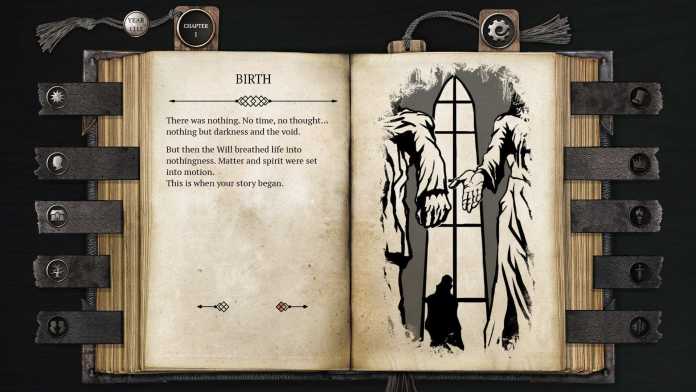
The Life and Suffering of Sir Brante is a narrative-driven game where you play as Sir Brante. Sir Brante isn’t anyone in specific, it’s your choices that will determine who Sir Brante ultimately becomes. Players will guide Sir Brante throughout his entire life, from birth until death. His fate is entirely in your hands. The world where Sir Brante resides is a cruel place, and you will find yourself unable to overcome every obstacle that comes your way. Prepare yourself for failure, for Sir Brante will not be able to come out of every single challenge unscathed.

Before going into further detail, it should be noted that pretty much the entire game is text-based, so if you don’t fancy reading, then this most likely isn’t the game for you. In any case, the presentation and soundtrack are both superb. The latter serves the game’s setting just right, setting the perfect ambience as the story plays itself out. Although it can feel repetitive at times, especially since it’s pretty much the only audible stimulation that the game provides, it usually nails the right emotions. Whether it’s during a slow and intriguing build-up, a sudden turn of events, or a moment of respite, the game’s soundtrack always hits the right spot.

Now, just to provide you with some context in terms of the game’s world, I’d like to say that the game takes place in the Arknian Empire, a long-standing empire that stands on the shoulders of the Twin Gods and the idea of Lots. Everyone has their own Lot, the clergy, the nobility, and the commoners. The clergy’s Lot is to enact the will of the Twin Gods, while the nobility’s Lot dictates that they must rule over the commoners. To that end, the Lot of the common citizen is solely to suffer and endure the rule of those above them by tirelessly working. 

Sir Brante belongs to the lowest of the Lots, he’s a commoner. Despite that, his father, Robert, is actually a noble, because his father himself is also a noble. The reason why you’re a commoner is that your mother, Lydia, Robert’s second wife, is actually a commoner. With that said, Sir Brante has 3 siblings. There’s Nathan, your youngest brother, and Gloria, your older sister which was born from a previous relationship of your mother. Both of them are commoners. Just like your mother, your father also brought to this family his son from his previous marriage, Stephan, who is a noble by birthright. 

There are a lot of power dynamics going on in your family because not everyone shares the same Lot. Just as the world around you is changing, as a reflection of the ongoing struggles of the commoners, as well as in-fighting between the clergy and the nobles, so too does your family change over time.

The game is divided into five different chapters that span Sir Brante’s life. The first three are marked by representing his childhood, adolescence, and youth, while the other two are part of much bigger events. Each of these chapters plays out in a very different way than the rest of them by presenting you with all sorts of different opportunities. The choices that you make on each of them will determine who you’ll become in the future, your place in the world, and they’ll also trigger certain events, thus altering your experience. 

Although this is a narrative-driven game that, when faced with certain situations, presents you with multiple choices, these choices are only possible if you meet certain personality criteria. Throughout the early stages of each chapter, you’ll get to build up certain aspects of your personality or strengthen your political position, whatever that may be. For instance, option A might make you more wealthy but it will tarnish your family’s honour, while option B will increase your family reputation but bring it closer to financial ruin. There isn’t right or wrong here, it’s simply up to the player to decide who they want to be.

Nonetheless, although in theory, this idea of having different stats that represent Sir Brante’s personality and his aptitude for certain things sounds great, I think it doesn’t really work that well in the end. Personally, I only realized this closer to the end of my playthrough. While through the vast majority of my playthrough I was making the choices that were in line with the character that I built Sir Brante to be, after a certain point, the game started locking me out of most choices because I didn’t have the necessary amount of points for them. I’m aware that this is because of the choices that I made up to that point, but I still felt like most of them were choices that made more sense to me, to my Sir Brante, than the few that I was able to choose. 

With that in mind, although I don’t regret the way that I played the game, I still wasn’t happy about how it ended for me. I thought I was following a specific path, but when I realized what was really going on it was already too late to change the course of history. The fate of Sir Brante didn’t end up being the one that I was hoping for, so I’m eager to revisit the game in the future. I’m not sure how many actual different endings there are, but there are a ton of different branching paths that you can pursue, so there’s quite a lot of replay value here. Furthermore, it also means that each player can experience vastly different storylines. Personally, I absolutely love that, I love being able to discuss a game with someone else and realize how different our journeys were. 

Depending on how fast you read, a full playthrough should last you somewhere between 13 and 17 hours. In any case, to say anything less than that The Life and Suffering of Sir Brante has been nothing short of a huge surprise would be a lie. It’s quite a shame that Sir Brante hasn’t been receiving the spotlight it truly deserves. Despite its few shortcomings, I still can’t believe how this game has gone unnoticed in the mainstream game’s media. If you enjoy narrative-driven experiences, especially ones that feel exactly like a choose-your-own-adventure book, then do yourself a favour and pick this game up. I’m certain that you won’t regret it.

Review: Monster Jam El Toro Loco 1:24 Radio Controlled Truck

It’s time to review the Monster Jam El Toro Loco 1:24 Radio Controlled Truck, with help from my 4 year old assistant.

Take control of Monster Jam’s raging bull with the all-new, official 1:24 scale El Toro Loco RC. Dig in and drive this heavy-duty remote control Monster Jam monster truck to the max and perform awesome stunts, crazy crashes and brutal bashes. The 1:24 scale El Toro Loco RC can be used indoors or outdoors. Experience epic Monster Jam action with your very own 1:24 scale El Toro Loco RC monster truck. 

This realistic 1:24 scale RC is built for Monster Jam action. Perform epic stunts, crazy crashes and brutal bashes.

With a dual joystick controller and 2.4 GHz frequency, you can race up to 6 Monster Jam monster trucks at once. Plus, you can even control your El Toro Loco RC from up to 76.2 metres away. 

The 1:24 scale El Toro Loco RC brings the Monster Jam action right to you. Official BKT tyres, detailed graphics and a styled chassis make it feel like you’re driving the real thing.

  • Suitable for sand and carpet use. 
  • 1:24 scale. 
  • 2400MHz frequency – race multiple RC toys in the same area at the same time. 
  • Top speed 2MPH. 
  • Size H14.3, W19.94, L28.57cm. 
  • Batteries required: 3 x AAA (not included) and 2 x AAA (not included). 
  • Up to 40 minutes drive time.

What’s in the box?

The box contains the truck, a remote control and some paperwork.

A Closer Look

Final Thoughts

Getting the Monster Truck ready to play with was simple – pop 3 batteries in the truck and two in the remote and switch on the truck (the batteries aren’t included in the box so make sure you have 5 AAA batteries). The remote doesn’t have an on/off switch so you don’t need to do anything with that.

The yellow horns on the top of the truck can move position – much to the amusement of my 4 year old assistant.

The remote has two thumb stick controls – one to go forward to back, and the other to turn the front wheels left and right. The truck is rear wheel drive and the tyres and nice a chunky and get a good grip on stone, carpet and even sand! We played with it inside the house and outside and it was a lot of fun. The remote is also the perfect size for a small pair of hands, as demonstrated above by my assistant.

The truck is easy to control and can even move when on it’s side – again, much to the amusement of my assistant! There is even a control under the truck to adjust the rate of drift if you need to.

I did have a small issue early on with the front wheels becoming stuck in turned position – the only way to fix it was to push very hard to get them to click back into place, but that only happened once in the several hours of the play test!

Talking of which, they say you should get around 40 minutes of play from the batteries – we have managed to get a lot more than that so thats a win!

All in all this is a really fun toy to have and play with – when you are allowed to (my assistant was very keen to give it a thorough review and follow up)!

I asked my assistant if he had anything else to add, and this is what he said:

“It’s awesome, I love it”

“I would give it 1000 stars (I asked out of 5!)”

“I love the horns (as he kept moving their position every few minutes)”

The Monster Jam El Toro Loco 1:24 Radio Controlled Truck is available now priced around £18.

You can learn more from the Monster Jam website.

Review: Warshmallows

Warshmallows seemed really easy to me when I first took a peek at the controls and menus. There didn’t seem to be too much going on. Jump around, shoot at marshmallows and trap them in bubbles. Simple. 

But I don’t think I gave it enough credit. Its simplicity in the tutorial belies depth when put in the scenarios it was always meant for. When you play free for all and 2v2, it’s nothing short of a great time. It’s fast, fun and full of colour. Even when you’re constantly taking L’s, losing round after round, it stays fun. It never reaches into the realm of frustration.

You win some, you lose some

Honestly, It’s been a while since I was this bad at competing against real people. The last time I remember losing this bad and this often was in Modern Warfare 2. However, I was more than thankful that this time around I wasn’t shouting at an innocent screen while getting destroyed by some random from who knows where. Now I found myself grinning at both my mistakes and victories. I cheered my competitors on when I was out for the count; and I laughed when I won a round I really shouldn’t have. Those are the feelings and moments that just make for a good time online. Now that’s not to say these are the only kinds of emotions one can or should feel when playing something online. But it makes it all the more accessible for casual players.

When in-game, things move fast. You’ve got other combatants to watch out for, keeping track of ammo and where you might get more. There’s a serious intensity in realising you’re out of ammo and the only sources are being guarded by the enemy. Zipping around, slapping everyone in your way and making it just in time to get bubbled yourself is maddening, but heaps of fun. Even when you get taken down, you can act on your saltiness and roll around as a new form nuisance to your competitors.

Enemies aren’t the only danger

On top of this there is also a timer on every map that results in even more obstacles for everyone on the map. A couple dozen birds flying overhead, dropping eggs, or a massive elephant rolling around on a boulder sweeping the map mercilessly. It’s downright zany and I couldn’t get enough of it, especially when I was already taken out. The sweet vindication of seeing the one who bested me taken out by a downpour of eggs is unmatched. 

Each character also has a superpower which may be their saving grace like the blue’s army helmet, which they retreat into like a tortoise. This leaves them temporarily invulnerable if a little slow, while still being able to shoot. Or like Green’s ability to release a monolithic tower of vegetation ahead of themself causing shots to ricochet off it. 

Maximum fun, minimal content

Unfortunately Warshmallows isn’t bursting with content. It’s still early days, so we can expect more down the road. Right now though, you’ve got a choice of 6 maps, 4 base game characters and 3 weapons. Fortunately things do open up as you progress. More characters and more ammo types become available. That may sound a tad bare bones, but to be fair, there is still a lot of fun to be had with what is there.

I really enjoyed my time with this title. From the colourful, well-detailed map, the earworm of a theme song, reminiscent of 80’s action movie guitar riffs, to the badass cast of characters. Whether you play online with randoms, friends, or take advantage of the couch party option, you cannot go wrong. If you simply want to have a good time, even for a quick session, Warshmallows has you covered

At the end of the day. This game is a lot of fun. It’s fast, wild and full of colour. You’d be hard pressed to find a moment of boredom while you’ve got this one running.

Two Minute Review: Supercolor Panels from Geomag

0

Playtime can be fun with the Supercolor Panels from Geomag, here is our two minute review.

Play with magnets and let creativity and imagination take over with the fun Geomag toy that works like pure magic.

Thanks to the simple Geomag elements and the magic of magnetism, you can build endless 3D constructions with creativity and imagination. The elongated magnetic rods, steel balls and the various panel shapes make up the building system, which stimulates play and learning regardless of age. All plastic is even 100% recycled plastic.

A Closer Look

Final Thoughts

The Supercolor Panels we were sent was the 35 piece set, model number 377.

The entire set is made from 100% recycled plastic and comes with its own storage box, which is very useful as you really don’t want to lose any of the pieces!

You can create anything your mind (or the mind of your child) cam think of, and its a lot of fun to put something together and feel that snap as the magnetic pieces come together.

The Supercolor Panels set is available now priced around £26. There are different sized sets, so have a look and see which one fits you best. This will make an excellent present for anyone aged 5 and up.

You can learn more from the GeoMag website.

Review: Two Point Hospital: JUMBO Edition.

Do you wish you could change the world? To be able to solve poverty or hunger? Maybe you simply want to help the sick become better? If the latter option is your dream, then maybe you can fulfil it in Theme Hospital’s spiritual sequel, Two Point Hospital.

Developed by Two Point Studios and Red Kite Games Limited and published by SEGA Europe, this resource management, business game has been around since 2018 on PC. It’s a well-received title that draws many comparisons to the original hospital simulator, Theme Hospital. This is not surprising, as most of the developers from Bullfrog Productions worked on this project.

Like most great sim titles, this one has released some in-depth DLC that adds; cosmetic and essential items, illnesses, and new locations. The version that I will look at is Two Point Hospital: JUMBO Edition for console. This edition of the game comes with every DLC that has been released to date and this is the most comprehensive way to play.

The ward will ensure you leave healthy.

Two Point Hospital is the game that keeps giving.

Sim games draw in a certain type of gamer. You will need; an eye for detail, the ability to stay calm under pressure, and you must be able to micromanage. If you tick all those boxes, then no doubt you’ll love every moment that Two Point Hospital offers. This single-player game asks you to build and manage a hospital through many unique crisis situations. You are in charge of; research, training, building layout, the hiring of staff and the cosmetic look of your facility.

You will control; the day-to-day business of curing each patient, appeasing the health board, and balancing workload with morale There are many plates spinning simultaneously and all you need to do is prevent them from falling (easier said than done). Each hospital that you run forms part of your corporation. If the business does badly, it’ll affect your reputation. You’ll need to monitor every facet of your business to ensure that you are a success in the medical field.

It’s 40% serious, 50% stupendously silly and 10% bizarre.

This wouldn’t be a business sim if there wasn’t an ounce of seriousness. In Two Point Hospital you will focus on; prestige, levels, money and curing people. Objectives are offered by; colleagues, emergencies, health visitors and more. The better you do, the more cash you earn. Stars are awarded to each hospital, with the goal to achieve 3 stars per location. As well as the stars, an annual award ceremony highlights how you have done against the NPC’s. This offers a small reward and acts as an opportunity to boast and nothing more.

The management side of the game is great, and one of the better examples of the genre. But what makes this stand out against its peers is the utterly stupid names given to the diseases, the bizarre descriptions and the design of each infected person. If you don’t laugh until you hurt while playing, there is something seriously wrong with you. I suggest you should check yourself into one of your own facilities to be checked over. You will deal with; premature mummification, someone who is wrapped in bandages but not yet dead. Animal magnetism, when animals are attracted to you like metal to a magnet. Jest infection suddenly dressing as a clown is essential, and many more. How they came up with these is beyond me, but it matters not as they are side splittingly hilarious. 

It’s a light bulb moment.

The diseases of Two Point Hospital need some specialist equipment and staff. 

Unusual and never been seen diseases cannot use a regular machine to cure them. No, Two Point Hospital has a long list of speciality rooms and equipment to cure each patient you see. A light bulb remover, chromatherapy, pharmacist with a speciality drugs machine, cardiology, wards and so forth. The machines get bigger, stranger and more amusing. No matter how many times you see a person spun around or unscrewed by the neck, it’ll make you giggle. 

Yet the machines are only part of the tale: The right equipment is a must, but equally important is the correct member of staff. Each has a special skill set, and certain procedures cannot go ahead without them. Pay through the roof for a specialist, or train them up yourself. The choice is yours. 

One method costs you money, the other time, you must weigh up which you can afford to lose. Specialists are great, they reduce the risk of death, increase productivity and you can charge more per procedure. So, they must be considered a long term investment. 

This is where the complexity arises. On the surface, it’s a straightforward title that takes you on a journey as a business owner. In reality, it’s a multilayered experience that requires planning, strategy and luck. Its stupidly hectic will overwhelm you, and make you scream, but what a game to play. 

A busy hospital in a glorious setting.

So vibrant and wonderful to look at. 

PC ports can be a disaster on console. The usual complaint is the complicated and stuffy UI. Luckily, this issue is nowhere to be seen. The UI is simplicity personified and is remarkably easy to navigate. Sub menus are easy to find and to scroll through, with the text size being large enough to view on a 50″ TV from over 4 metres away. It made a pleasant change to have something so user friendly. 

If you’ve played The Sims, Theme Park or Theme Hospital, you’ll know exactly what this’ll look like. Vibrant and bright tones make up much of the colour palette. A cartoon style runs through every element, adding fun and humour throughout. It plays incredibly smoothly, is easy to move around and building each room is straightforward. Every disease you observe is unique and many have specific animations that are amusing to observe.

This enjoyment continues in the brilliantly thought out audio. Jovial music plays continually, ensuring there is never a quiet moment. The soundtracks play second fiddle to the cracking tannoy announcements and the striking sound effects. Curing the patients looks and sounds horrific, yet somehow you can’t turn away. The audio is a key component in delivering the comedy moments. Without it, much of the gameplay would fall flat. 

A severe case of premature mummification.

It’s a dream to play. 

The controls replicate the simplicity of the UI. I was shocked by how easy this was to play. A tutorial holds your hand to begin with, and takes you through the finer details. But I don’t think it was necessary as it is so straightforward. Having previously played it on PC, I expected it to be a challenging experience to swap to console. Luckily, the transition from mouse and keyboard to controller was painless and smooth. 

People talk about COD and FIFA being widow makers, but Two Point Hospital is equally addictive. Hours of your life will be lost in creating the perfect medical facility that hosts the best trained staff. You must; earn plenty of rep points, kudosh, stars and complete career objectives. There are masses of locations to visit, diseases to cure and equipment to buy. This is before you consider the challenging achievement list. It’s a game that is jam packed with replay value and you’ll struggle to put it down. 

Is Two Point Hospital: JUMBO Edition worth it? 

There is an argument that bundled editions of games are just another way to generate revenue, and generally I agree with this. But, Two Point Hospital is available for free for anyone who subscribes to Gamepass. So the base game will cost you nothing. If you own it, you can simply upgrade to the JUMBO Edition for £14, which is great value. If you want the fully comprehensive version, then it can be purchased here! At £35, it’s still good value when you consider the content. 

A ridiculously addictive and manic strategy game that will have you laughing throughout. Easy to pick up and play with many in-depth options. I strongly recommend it! Choose your hospital, cure the diseases and become the best around. 

Review: Neoverse

Neoverse is a deck-building RPG that reinvents the genre by adding new mechanics that bring the game to life. When you think of deck-building games, you instantly think of classics such as Yugioh. Neoverse takes classic elements from these games and adds its unique twist to the genre, providing a fresh, rewarding and strategic gameplay experience that is incredibly satisfying.

A Fresh Take on an Ageing Genre

When you first start Neoverse, you will be instantly struck by the stunning graphics of the game. The game looks outstanding and adds a nice flare to the games deck-building gameplay. The game’s graphics and art style are in solid 3D animation and add a new take to the already saturated 2D deck-building genre. It brings life to the game, making you feel immersed in the genre that can, at most times, feel just an extension of the real world deck-building scene. Neoverse also has a beautiful soundtrack, with adventure beats sure to put a spring in your step when you are anxiously trying to an enemy. The music is what you would expect from a deck-building game, adding pacing to an already slow-moving game and genre.

A Battle Sequence

Its outstanding gameplay mechanics match Neoverse’s great graphics and music. As mentioned, Neoverse is a strategic turn-based deck-building game. Whereby you build your best deck from a variety of different card types. In short, you use these cards strategically to take down various enemies throughout the games primary campaign. For example, you may place down multiple defence cards to parry an enemy attack while ending your turn with a quick attack to finish the enemy off. Although a relatively simple example of the games battle mechanics, the mechanics themselves get a lot more complex and strategic.

Strategic Gameplay at its Finest

Its complex and strategic gameplay mechanics make this game shine. The strategic elements of the game not only make Neoverse incredibly fun and enjoyable but also engaging. Truthfully, I am not a big fan of the deck building genre. Even for a sceptic of the genre, I found myself drawn into the games intense strategic gameplay and constantly addicted to the games ability to make the whole deck-building process very engaging. Everything felt fluid and rewarding, making the game very satisfying and a joy to play.

A selection of Neoverse’s various cards

Likewise, Neoverse has a great skill and level up system adding further depth to the game. In this regard, I appreciate the developers leaving out microtransactions that could have been so easily left in. Which is to the games benefit, Neoverse is a rewarding experience that microtransactions would have tainted.

As highlighted, Neoverse is a fun, rewarding experience that will convince even the most adamant sceptics of the genre to pick up a controller and play the game. However, that does not mean that the game is easy to jump into from the outset. It is not.

Although the game does an excellent job of putting you right in the heart of the action, it was initially confusing and did a poor job of teaching me the game. Likewise, at times the game can be rather unforgiving, at least at the start. However, after you get into the game, the experience becomes a breeze.

Verdict

Overall, Neoverse is a challenging and strategic deck-building game. That provides a fresh new take on the genre instead of sticking to its predecessors and peers’ formulaic nature. In doing so, the game is incredibly satisfying and rewarding with considerable depth. Sure to convince even sceptics of the genre to pick up their decks.

Review: Breathedge

It’s time to get lost in space! RedRuins Softworks throws you into a first-person survival sandbox title inspired by the Subnautica series. When transporting your deceased grandfather goes awry, it’s up to you to navigate the vast and lonely vacuum of space. With an immortal chicken and a saucy AI within your spacesuit at your side, you must scavenge resources and build better tools to yield further travel. Set in a first-person perspective with plenty of fourth wall-breaking jokes and narration, the overall tone and humor will make or break the player.

Let’s Start From The Beginning.

You enter the game being dragged into an interrogation by what appears to be robot gangsters asking you for the truth. You answer reluctantly and begin to recap what in the hell actually happened (or continue to spit at them and get beaten repeatedly). It’s not too long of an intro and there are some really good jokes to help hook you in. Occasionally you’ll jump back from the core gameplay to the interrogation room for occurrences such as dying in-game. They’ll say “You’re alive now, so that part was a lie. Please tell the truth!” before you reload your last save file. So it’s time to buckle up and relive the mess that you got yourself into.

Who are these space coffin mobsters? Better tell them your story and find out.

You have survived the aftermath of a huge space transportation vessel that has crashed in space. Many of the ship’s decks and stations have blown up and are separated by long distances. You must cover these areas and eventually reach the ship’s bridge in order to signal for help. It’s a little easier said than done, since you do not begin with the resources necessary to get you where you need to be. As you progress further into the depths of the final frontier, you’ll uncover more to the story and the conspiracies involved.

Inventory Control

Breathedge‘s main focus is to find resources such as metal, ice, and plastic to construct tools and better equipment to extend your exploration into the unforgiving depths of outer space. Oxygen and supplies are limited. Be sure to have a spare tank and some space food to fuel your suit and your body. There are a lot of things to do and tools and materials to craft at your workstation. While it may feel overwhelming at first, that’s essentially the nature of these games.

It’s hard to pass up collecting items when out in space. This inventory box, along with the floor of your vessel, will fill up very quickly.

Fortunately there is an abundance of resources used in the beginning of the game that are easily accessible outside of your pod. There is plenty of room for trial and error here. I never once felt like I was running out of water or batteries and couldn’t progress in the game. However, this abundance can result in a messy workspace. The inventory box is rather limited, but you can toss extra stuff on the floor if there is no room. After a while you’ll find other oxygen-safe areas with their own storage as well. Survival isn’t always pretty.

Space Is A Lonely Place

The atmosphere of being out of the comfort of your pod and into the void is so captivating. The soft piano music and the long travel distances of waypoints make you feel quite insignificant. As you run out of oxygen, the music will change key and increase in diminished tones. This is a nice reminder that you will die soon if you don’t head back. The sight and sound is clearly Breathedge‘s biggest strength.

The first few treks into the great beyond are truly awe-inspiring

However, since so much of your time is spent going back and forth from your pod to the reaches of space, you will fly past the same structures again and again. This can be a slog. It can take minutes at a time to get to some of the areas you will need to visit. And the rewards for a long trek can be underwhelming. Sometimes it’s all just for some new material for a better flashlight or something. The monotonous repetition will cause some players to lose interest after a while. You start to feel desensitized to the openness and ominous mood of space, especially when it’s being juxtaposed by the tsunami of color commentary.

Light-Hearted Dark Humor

Breathedge‘s main directional force is it’s comic delivery. It takes morbid concepts of isolation, death, and human excretion, and adds an optimistic tone soften the mood. It’s a clever juxtaposition, but I can’t help but feel like it’s thrown in your face a little too much. Your chicken companion can be used to kill live wires, plug oxygen leaks, and fix other hazards. The animations associated with said actions are quite silly, and maybe a tad juvenile. The AI is sarcastic and has a joke to say about literally everything you interact with. Does it have a built-in mute button? While I recognize the attempts to add color to the emptiness of space, I do feel the jokes are excessive. After some time, the humor loses its value.

A game objective is to construct a phallic object. It serves no real purpose to help you on your journey, but you can use it to kill yourself.

Bottom Line

I have a feeling that Breathedge will be a divisive title. For those who love Subnautica, and other survival sandbox titles, their experience could go either way. The change of scenery from the ocean to space will be a breath of fresh air for some. However, the atmosphere only has so much polish before being worn off when the same areas are being covered over again. Let’s not forget the oversaturated humor attempts. But for those who are less familiar with the genre, I honestly don’t see any difference in the overall experience either.