Dandy Ace, available on Xbox, PS4, Switch, PC and Mac
What is Dandy Ace? Dandy Ace is an over the top fast-paced roguelike experience that follows a fabulous magician seeking to combine and use his magical cards while fighting and looting his way to defeat the Green-Eyed Illusionist, Lele, who has imprisoned him in a cursed mirror.
– Xbox.com
Fans of the dungeon crawler genre will feel right at home playing Dandy Ace, with gameplay akin to the likes of Diablo and the recent Game Developers Choice Awards Game of The Year winner, Hades. Dandy Ace is sure to delight fans of the genre with its faced paced, hectic gameplay with some unique features, skills and brilliant voice acting.
When I first started playing Dandy Ace I was immediately met with a very unique and vibrant art style and almost anime-like character design. The art style is very vibrant with a bright colour palette, not ashamed to be loud and proud and it matches the theme of the gameplay perfectly.
Dandy Ace has a very vibrant art style
One thing that stood out and impressed me the most was the character design and voice actors. The characters have an anime style design which I know a lot of people are very fond of, but may not be everyone’s cup of tea. One thing that does shine however, is the voice actors. The performance is nothing short of incredible. Every line is delivered with emphasis and passion which adds to the immersion and makes everything much more believable and engaging.
Another weapon in Dandy Ace’s arsenal is the endless replayability. Dungeon crawlers have always been know for their endless replay value and Dandy Ace is no different. Each time the player dies they are sent right back to the beginning, however this time the levels change and the skills that the player is given are different. This encourages the player to try out different tactics and combinations of skills to try and get further and further each time without the serving of repetitiveness that comes with a lot of modern titles.
Dandy Ace has great replay value
After each and every run the player will be presented with stats based on which skills and trinkets were used as well as performance in various areas. This small detail is welcomed warmly, especially when each run is different. It gives the player motivation to beat certain personal targets and even compete against friends.
There were a couple of issues that I had during a few of my runs and I think a lot of players will share my frustrations. Firstly as the layout changes each time, some areas can become very tight and narrow which is intended to create a challenge and force tactical thinking, but sometimes it can become difficult depending on how many enemies spawn in those small areas.
Tight level design can make for some tricky encounters
Combat in general is very fast paced and tactical and can be very satisfying with particular combos however it’s missing one vital feature… lock on. After a few runs I quickly found myself begging for a lock on feature to enable me to attack enemies on the move. Instead players are forced to stop and aim while attacking which not only disrupts the flow of gameplay but can also put players at a tactical disadvantage when fighting against tougher enemies.
In summary Dandy Ace is a very familiar experience for dungeon crawler fans, but with its own unique spin in terms of skills, trinkets and fantastic voice acting. Players may however have issues with not having a lock on mechanic which can have an impact on gameplay and put the player at a disadvantage.
With Christmas not too far away now, we are going to be looking at various things you might want to consider – here we look at the Funko Snapsies Mix and Match Surprise Series 1.
SNAPSIES are Funko’s exciting new capsule collectibles with a whole world of fun inside! Collect animal characters like unicorns, llamas, goats, and dragons — each with their own distinct personalities, looks, and accessories that you can customize for endless combinations!
Funko’s snap technology lets you play your way! Mix and match, create in a snap! Which Snapsies surprise will you get?
Vinyl figures range in size depending on characters/parts combined, though are approximately 2.5-inches tall.
Disclaimer: The Funko Snapsies Mix and Match Surprise Series 1 was sent to us for the purposes of an honest review. All opinions are the opinions of our reviewer.
Old-school RPGs had a generation of gamers hooked to their dark and in-depth stories. The evil creatures that lurk within these tomes were the thing of nightmares. Modern games have appeared to have lost this edge, so when a new RPG hits the market that is full of retro charm, I scrambled to get my hands on a copy. Disciples: Liberation is a wonderfully deep fantasy adventure that will grab you from the opening gambit.
Developed by Frima Studio and published by Kalypso Media, this is a classic RPG. With its wonderful hand-drawn aesthetics, creepy and dank dungeons, turn-based combat, and minor base building, this is a title that offers a lot of elements. However, unlike other games that complicate the matter by putting their fingers in many pies, Disciples: Liberation blends each ingredient beautifully.
Disciples: Liberation has a rich and intriguing world.
People play RPGs for many reasons, but for me, I want a story full of twists and turns. Disciples: Liberation offers this in abundance with its choice-based narrative, many recruitable characters, and a large intriguing world. You’ll enjoy in-depth grid-based combat, murky dungeons full of monsters and more.
You control a lowly mercenary known as Avyenna who doesn’t know where she belongs in this world. She is unaware of her potential and must use her savvy to build an army and forge her destiny. The plot revolves around the land of Nevendaar and the Denizens that reside within it. The landscape of this world is yours to shape, and who you wish to work with is entirely your choice. You must inspire an army, recruit warriors, influence clans, and build a beautiful city to house them all.
Venture through the daunting wilderness.
In-depth but much-loved mechanics.
What I particularly enjoyed about Disciples: Liberation was the use of tried and tested mechanics. The overworld area allows you to encounter monsters, raid dungeons, and progress the story. Alternatively, you have the option to build your city with resources earned through quests. This minor layer allows you to buy and sell items, place buildings for unit training, and so forth. It offers little originality, but its familiarity works beautifully with the rest of the gameplay.
This feeling of deja vu extends to the combat and narrative elements. Don’t look at this as a negative, because it certainly isn’t. These well-done moments ooze old-school charm and capture your imagination throughout.
The grid-based combat proudly uses buffs and debuffs, magic, ranged and melee attacks. There are tactical elements to understand and the environment plays a key role within your strategy. You must select your units and recruitable character for each encounter. You’ll face an array of creatures and gargantuan bosses who have weaknesses and strengths that you must exploit and avoid.
Death surrounds you.
Clans and multiple endings.
Where Disciples: Liberation truly shines is its freedom to experiment and its array of story options. With multiple classes to specialise in, four vast locations to explore, four clans to interact with, and nine unique recruitable characters to pick, the developers have been generous. Moreover, they haven’t shackled you to a right or wrong path and every decision matters. This empowers you to steer the hero and guide the story to match your style. Will you negotiate, be forceful, romantic, or more! The choice is yours and it’s truly fascinating.
Fortunately, this approach heavily influences the flow of the narration. Every conversation has multiple options that drive the plot, alter relationships, and impacts the clans. You may worry that this is too in-depth. Luckily, its simplicity is wonderful thanks to its system of symbols that define the outcome of each decision.
Disciples: Liberation has a grimy world that is beautifully illustrated.
I’ve never needed my RPGs to be ultra-realistic. What I want is for it to suck me into its fantasy realm with a magical soundtrack and exciting imagery. Luckily, Disciples: Liberation does just that with its darker colour palette and wonderfully dated character models. The stunning landscapes you witness and the dark dungeons you explore are breathtaking, and I was never disappointed. The developers have balanced the insanity of its fantasy world perfectly and this ensured I was never overwhelmed.
It was easy to lose yourself in the wonderment of both the story and the gameplay thanks to the dramatic and varied soundtrack. The audio generates a wholesome and magical aura that ebbs and flows with the many twists and turns. I loved how the shifts of power were shown through the use of sound and this supported the ever-changing plot.
The dark theme is evident in every realm.
A clever UI.
With so many elements working together, this could have been messy as hell. However, its clever and clean UI makes understanding the fundamentals a really easy task. Subsequently, you’ll get to grips with it quickly, but mastering it is something altogether different.
When a game offers eighty-plus hours of enthralling action that can be played repeatedly, you know it’s great value for money. With multiple playthroughs offering a unique experience, it’s easy to keep returning. Furthermore, its obscene achievement list demands you revisit the action and completionists are in for the long haul.
Disciples: Liberation is rewarding and highlights why this genre is great.
RPGs have branched off into weird and wonderful ventures. Yet, a retro focus always gets me excited. Disciples: Liberation has captured the essence of what makes this genre great and has delivered a rewarding and well-structured experience. Thanks to its wonderful story full of lore and excitement and its interesting roster of characters, you’ll never tire of what you see. I loved it and recommend you to buy it here! Lead your army to victory while influencing those around you. Remember your decisions matter and the land of Nevendaar is shaped by your choices.
Flight Simulator was a game that came out many years ago and found a niche, a very big niche which allowed to basically be a pilot amongst other things and fly around the world at your own leisure. Since then gamers have found solace in playing games that reflect real life, even the most mundane of jobs or tasks have been turned into games ranging from Farming Simulator, Ranch Simulator and even Fernbus Simulator. This time round it’s something very niche, which goes deeper than just a Train simulator, welcome to Train Station Renovation.
Train Station Renovation is pretty much what the title represents, you are in charge of renovating old train stations. In Train Station Renovation you become responsible for the cleaning, repairing, painting and replenishing of a train station. The premise is fairly simple in Train Station Renovation, you need to complete a series of tasks to improve the train station you are dealing with. There will be several areas within a train station that will usually need at least some cleaning and redecorating. Once you’ve completed enough of these tasks your ‘progression’ increases to a point where you can then move onto the next station. You see 100% renovation is not needed, once you hit that first progression star you can move onto the next station
Train Station Renovation is a slow but very relaxing experience. There are no time limits or restraints, these abandoned train station have been given to you to replenish and then you simply move onto the next one. The tasks themselves are fair in number and can be a little repetitive at times. You pick up litter, get rid of said litter, you order skips to get rid of larger rubbish, you wash off graffiti and so on. You can fill in holes, you can smash stuff up which is hugely satisfying and you can order several things to bring your station back to its former glories such as benches, windows etc. You can even fix things should you come across such situations. In terms of an ‘arsenal’ you can choose from tools like trowels, brooms, sponges and crowbars. You have a Tablet which is where you will order all your items and also acts like a scanner which will highlight anything in the environment that might need some action which is particularly useful. The developers also know the Scanner could be overused so they’ve conveniently added a cool down feature to it.
Outside of the renovation in Train Station Renovation there isn’t much else to do. There are 10 maps that start off in simpler rural settings before you move into renovating more metropolitan stations. Navigating around and completing some tasks can be a little clunky at times but not enough to make things frustrating. Graphically Train Station Renovation will not win any awards, visually it’s not much to look at but I guess we are looking after dilapidated train stations that time has left behind. You can ride around in a model train to see how things are coming along and you do notice the detail, especially where you’ve had some input into the cleaning etc. Audio wise Train Station Renovation is quite simplistic, some sounds are replicated across different stations but nothing out of the ordinary
Train Station Renovation is a the perfect game to relax to, it doesn’t ask much from you nor does it demand anything. It lacks a fair bit in graphical prowess and modes but Train Station Renovation is a simple game where you can pass a few hours rebuilding a train station in your eyes. If you are a fan of simulators or train stations (there isn’t much in terms of train action) then Train Station Renovation is a game you’ll lose many hours with.
After getting home from work you want to play videogames to relax and enjoy. Unfortunately with Spacebase Startopia it feels like another job to deal with.
Spacebase Startopia is an RTS, base builder type game set in space. The predecessor called Startopia came out in back in 2001. For such an old game to be reimagined for the current gen is an exciting proposition. Was it worth reimaging?
Poor Optimization
Usually I would describe the plot first, yet I felt this was the most important thing to say. My experience is based off the Switch which is the weakest console on the market. However no matter how weak the current consoles are this is awful. The graphics are extremely poor reminding me of a PS2 game, but graphics aren’t everything so how does it run? Not good. The game was often dropping in frames heavily for me when it was populated particularly when I had the Switch connected to my TV.
My biggest problem was the menus functionality. The menus are full, not in a good exciting way but mostly with things that just fill the screen confusing you especially for the first hour. The menu kept freezing on me while trying to hire workers and so on. It would often just stop for a few seconds then go to a species of aliens I hadn’t clicked onto. I looked at gameplay on other consoles to see how it runs on a stronger system. It did run better from what I seen, however the graphics were still extremely poor.
This sums up the entire plot of Startopia
What do we do on Startopia?
Our mission after being appointed commander is to make a utopia for many alien races. The AI named VAL who helps us on Startopia will give you guidance during this important mission. At first her humour is refreshing and entertaining while building and doing tedious tasks. Unfortunately VAL never stops and the cheesy outdated dialogue and the poor jokes start to get annoying. You can turn her dialogue off which almost makes it feel like the developers knew she would get irritating. We have three decks to manage on Startopia. The first being the sub deck which is for your employees and to keep the station in order. Then my favourite deck, the entertainment with a disco inside it which was a nice change. The third being the bio deck which had flora and fauna to manage.
As you progress each deck you earn more items to place in them like the recycling facility in the first deck. You’ll then be able to pick up bombs and garbage which helps the recycling facility. The game does not hold your hand when starting off. The tutorial was little help at best giving you no tips on how to do objectives. The menus at first are overwhelming with so much on the screen it was hard to know where to start. You get use to it after about thirty minutes, still a decent tutorial would teach you how to navigate the menus especially in a base builder type.
Working on the first deck of Startopia with my employees
There is a single player campaign to delve into with ten missions, but it feels pointless and unsatisfying compared to the free roam. There is multiplayer and co-op available if you can stomach playing it after getting through the main game. Excitement can occur on the station as pirates can invade and set bombs off. Even though it was never thrilling or nerve wrecking when something went wrong it was nice that the station had an urgency for the commander (you) to do something.
Just poor in general
The game doesn’t really offer anything a consumer is looking for now. The gameplay at its core is fine, but it never felt satisfying building my base since it always looked ugly no matter what I did. It never really felt like my base was running better because of me either. Even though you get rewarded with gaining more space on the deck by opening the huge doors on each deck, yet I still never felt any satisfaction. The game ran poorly making me not wanting to even start up my Switch again. I could see a sequel improving upon this and becoming a good game, except I can’t see this Spacebase getting another chance to create another Utopia.
War has plagued mankind’s existence since the dawn of time! Many lives have been lost and multiple families are broken for minimal gain. People picture each battle as an all-out encounter, yet they rarely are. These long drawn out fights are masterminded by the generals and usually extended periods of silence and tension fill the air. Hell Let Loose captures the brutality of these events in its WWII setting.
Developed by Black Matter and published by Team17, this is a hardcore first-person shooter. Players slug it out in iconic WWII battles across the Eastern and Western fronts. The expansive maps and RTS elements make this an intriguing but slow-paced affair. Its tense and often quiet times will not be for every fan of the genre, yet I loved its alternative approach.
Hell Let Loose is bloody hard work.
I’m not the best FPS gamer, but I can hold my own. Even so, I struggled with the brutally tough gameplay and the constant back and forth across the epic maps. In short, Hell Let Loose is bloody hard work, however, it’s a fantastic experience once you break its back. Unlike other games in the genre that reward “Rambo-like” behaviour, this one will chew you up and spit you out if you try anything so stupid! It’s a tactical game where communication is key. More often than not, it’s the squad that works together that tops the leaderboard. Therefore, make sure you dust off your microphone as you are going to need it.
A match comprises two teams of 50 against 50. These are then broken down into squadrons of six for Infantry, three for Armour, and two for Recon. There is a commander who oversees the battle while calling in support items. The Squad leaders control the Infantry units and they play a key role in pushing the enemy back when placing Garrisons and Outposts. Finally, you have your grunts, medics, and engineers, as well as other specialists. Each soldier must work as a unit to complete each objective, otherwise, failure is guaranteed.
Avoid the tanks or pay the consequences.
The Americans Vs the Germans and Soviets.
No matter which side you punt for, you’ll be surprised by the limited choice of game modes. At launch on console, there are only two to choose from and these are Offensive and Warfare. This lack of modes doesn’t mean that the gameplay becomes stale quickly. No, because many mechanics have been implemented to ensure the action is fresh during each fight.
However, the familiar approach may disappoint veterans of the genre. Effectively, you are playing either capture the flag, or domination as the map is separated into sections that must be secured and held. Yet, let me not simplify it too much, as each mode has its own objectives.
Offensive.
A team of defenders must hold its line and repel the attackers. The defending side holds all the objectives and the attacking team must take them all before the timer runs out. This is an excellent game of cat and mouse and you must decide to spread your defences thinly, or heavily fortify a few locations.
Warfare.
This is the more free-flowing option, where both teams aim to capture each section. The winner is the team who holds the most areas as the timer runs out or all the sectors at one time. It’s a game of tug of war, and the strongest and most organised will be victorious.
Use the environment to stay alive.
Master your role and work together.
With many squad roles to select, you must master your specific task. Each squadron has limited specialist places available, so each player must decide where their skills are best utilised. This is especially key when you take on the part of Squad leader. This person is the difference between a fun tactical experience or a running simulation from hell.
Every map is a vast expanse and traversing it feels like it takes forever. The Squad leader can reduce the grind by placing down Outposts and Garrisons. These create spawn points that enable you to jump right back into the action. If your leader is woeful at their role, you’ll spend more time running across fields than you will be shooting your gun.
Alongside this, communication is a key tool to organising the troops. Each officer can contact the commander to relay orders and discuss tactics. Likewise, squad members can speak directly to their leader or listen to nearby troops. This was a fantastic idea that makes the gameplay super immersive and adds to the RTS mechanics.
Hell Let Loose has you on edge throughout.
Using vast open spaces is risky business as these large areas can appear hollow and empty, and the action can feel gutless and without purpose. Fortunately, Hell Let Loose has created a tense and suspenseful atmosphere with its slower gameplay and hardcore mechanics. Hiding in dilapidated buildings or creeping through fields and trenches was exhilarating. The fear that your enemy could kill you at any moment was a genuine concern. With era-specific imagery and an earthy colour palette, you’ll enjoy the accurate representation of each iconic battle.
My only disappointment is that many of the buildings are inaccessible. This created an unrealistic representation of war and reduced the tactical choices. It was a shame the developers didn’t take a leaf from Battlefields playbook. Destructible buildings and the freedom to manipulate the landscape would have been very welcome.
As discussed, headphones are the key to success, yet a decent pair highlight the audios shortcomings. Unfortunately, the sound is flat and uninspiring when you are wandering around the vast maps. This impacts the ability to pinpoint your foes and reduces the quality of the final product. However, when in the heat of battle, the sound effects are incredible. The booming noises will fill you with fear as you wait to lose your life.
Keep your eyes open as your foes can be hiding in plain sight.
No tutorial = mass confusion.
When a game is as complicated as Hell Let Loose, you’d expect there to be a thorough tutorial. Sadly, though, this isn’t the case! You’ll fumble around in the dark, trying to work out what you need to do. Subsequently, the gameplay is much harder than it should be. Moreover, many casual players will be put off by the difficult learning curve. Fortunately, though, once you understand what you are doing, you’ll love the brutal action and the realistic nature of the controls.
This is addictive as hell if you have a good group of friends or a great squad to play with! You’ll lose hours to this realistic title as the tide of each battle ebbs and flows. But, if you end up in a poor team, you’ll be frustrated, curse your luck, and hate every minute! Its longevity revolves around the many classes that need levelling up, its tough achievement list and the long matches you’ll endure. When these elements work together you’ll experience a phenomenal but tough game.
Hell Let Loose won’t be for everyone.
With many FPS fans preferring an arcade approach, Hell Let Loose will only appeal to a niche market. If you fall for its tough and realistic charms, you’ll enjoy the slower action and tactical nuance. I sucked at it, but I recommend you to buy it here! Choose your side, pick your role, and remember communication is key!
I want you to take a moment and envision your favorite dessert. It can be cake, brownies, ice cream, a donut, whatever. Now imagine eating said dessert after a long day of work or school. How are you feeling afterward? Satisfied? Refreshed? Awesome, have another serving. How are you feeling now? Okay, let’s go back for thirds, and now a fourth, and how about a fifth. At this point, you’re probably sick to your stomach, and it’s gonna be a long time until you want to eat that dessert again.
That’s how I felt while playing Another Eden: The Cat Beyond Time and Space. To be blunt, the game is junk food. Yeah, it’s good junk food, but it’s also incredibly repetitive, and by the end of my time with the game, I felt a bit ill and just wanted to eat a salad.
Another Eden is a mobile, single-player RPG that’s recently been ported to PC, and as a mobile game, it’s got a lot of the negative kinds of trappings you’d expect from the platform. Timers, extreme grinding, loot boxes, all sorts of icky stuff that should warrant you to stay as far away from the game as possible…it’s just a shame that the game is fun to play.
Another Eden might have originally been designed for a more casual audience, but that doesn’t mean there isn’t a lot to like. The anime art style is visually appealing, the music is fantastic, the story, while it won’t be setting the world on fire, is well-written, and the combat is fun.
Combat works like most turn-based RPGs, but with one very fun twist. You go into fights with six party members, four in your front-line doing the actual fighting, and two in the reserves that are on standby and can be swapped in at any time. Characters that are moved onto the front-line either buff your party or debuff enemies and characters in the reserve will regain health and mana for every turn they’re out of combat. This small twist to the standard RPG formula makes combat a lot more fun and mentally engaging, especially during the game’s excellent boss fights, where you need to continuously swap out teammates for strategic healing and buffs.
The game’s boss fights are definitely a highlight.
Unfortunately, this is where the more mobile aspects of the game start to rear their ugly heads. Combat is challenging, like really challenging, like to the point where you’re not gonna win most fights unless you do some serious grinding and add high-level characters to your team. You acquire new teammates by spending Chronos Stones (the game’s currency), and this lets you spin a wheel to determine who’ll be joining your party, and what rarity they’ll be. Each character is sorted by star level, with basic characters having three stars, and the more powerful having four or five stars.
If you want to have the best team possible, then you need characters with a higher star level. That makes sense, but this causes you to view your party as nothing more than numbers and stats, and you’re heavily encouraged to play with the characters that have the best star levels, and not the ones you like. This is unfortunate because there are lots of really cool characters in the game I wanted on my team but was discouraged from using since they were statistically inferior. I wanted to go through the entire game with Riica, my awesome robot healer, but I had to switch her out with the much less interesting Pom when I saw that she had one extra star and thus automatically had access to better abilities and stats (some characters can have their star levels raised, but it requires a lot of time and resources).
As the title suggests, cats play a minor but fun part in the game.
This also messes with the game’s narrative in a minor yet annoying way. The story follows the perspective of a handful of main characters, but you don’t even need to use them during gameplay since they all have low star levels. It’s entirely possible to have the main cast make a grand speech about giving it their all in this next battle, only to have them disappear and be replaced by a bunch of randoms who’ve only spoken three lines of dialogue the entire game.
Another unfortunate aspect of summoning new characters is that each one starts at level one, regardless of their star rating. So if you have a level 40 three-star character and you suddenly roll a level 1 five-star, you’ll need to devote a good chunk of time leveling up your fancy new character to have them be strong enough to replace your three-star in combat. Thankfully there are several high-level dungeons where you can train up new characters, but you have a finite amount of tickets you can use each day to access these areas.
Even if it’s a grind to level them up, it’s always fun to summon a cool new character.
I was also surprised by how little variety there is in the game. I hope you like combat–besides going through the admittedly entertaining story and its side quests, that’s all there is to do in Another Eden. The combat is still a lot of fun, but this is a game that’s designed to be played in short bursts, as playing for long hours can quickly become tedious and repetitive.
Ultimately I’m left feeling conflicted on whether I should recommend this game or not. On one hand, the combat is way more fun than it has any right to be, and the story is light and breezy. On the other hand, this game expects a ridiculous amount of time invested to level up your characters, and you can get stuck with a really bad team if the RNG is stingy with its four- and five-star characters. Thankfully, you can go through the game without having to spend any money (the microtransactions in this game are thankfully not very aggressive), but playing for free is gonna require a ton of time to grind levels and resources, and ultimately, time is not something a ton of people want to waste.
In short, if you enjoy the grind, and like seeing numbers and stats go up on the screen, you could do a whole lot worse than Another Eden. It’s one of the better casual RPGs on the market, and I’d recommend you play this on mobile instead of on PC since you can play the game in short bursts on the go. However, if you want a game that’ll respect your time and has a bit more variety, you should probably look elsewhere.
Ready to add more to your couch gaming nights with friends and family of all gaming experience levels? JAYFL Games may have another addition to your Saturday night library. Drawing inspiration from the WarioWare formula, Diner Bros Inc is a minigame adrenaline rush. The blood will get pumping and the swear words will fly out unintentionally as you try to keep up your pace. While it’s pleasant to see a different genre being replicated, sudden difficulty spikes and untied ideas may keep this from being a Steam standout.
Random Assortment
Diner Bros Inc, as previously mentioned follows a familiar formula to some niche players. You trudge through a gauntlet of easy-to-learn minigames and try to get through them all. Only a finite amount of mistakes are allowed, in this case 3, and at certain points the tempo will increase. After playing through roughly 10 randomized challenges, completed in ten seconds or less, the player will go through them again. This time in a different order and with a faster speed and less time to finish. Falling short of completing the challenge may be enough to convince the player to try again. The games aren’t too hard to learn, so correcting mistakes isn’t a difficult task. That is until time becomes a factor..
Shoot ’em all before time runs out!
Diner Bros Inc has quite a variety of minigames to learn and complete. You may be herding a bunch of cheep into a circle for one game. Then immediately after you’ll be in a kitchen clicking on the appropriate ingredients for a custom cheeseburger order. After that, you’ll be a character in a karate gi kicking at a car until it breaks before the timer ends. It’s easy to note the videogame, and pop culture references in this mini games. However, nothing really helps to tie them all together thematically. It’s like looking into a giant unorganized Lego box. Some of the games are quite fun, but many are either uninspired, or lacking intuition. Also the tempo increase mechanic allows for unwieldy difficulty spikes, which may create stopping points.
Jovial Company
You are accompanied by jovial drawn cartoon characters that congratulate your progress, or cry in your defeat. This is the games attempt to create timbre, or identity, but it just doesn’t work. The childish cheers and “uh-ohs” don’t really work in regards to helping make this game more kid-friendly. It’s just kind of creepy. Of course there has to be a way to tie all of these already noncomplimentary minigames together, but the cartoon aesthetic just doesn’t do it for me. It almost does the opposite by not allowing the randomness of the games to admit that they have little relations to each other.
Inspirational Inquiry
It’s hard to dictate whether players will want to keep playing after some time, or simply lose interest. An easily seen scenario is where someone blasts through all the minigames, then shelves this one away in immediate search for a new challenge. It may also be possible that players may find the small games challenging enough and fun for a reflex workout. It may depend entirely upon the player individually, rather than reading reviews and not seeing for oneself.
Basic fruit matching game
We seem to be at an era of videogames, where the reviving old niche titles is still in full swing. It’s like a deviation from the retro revival that is ongoing still. But the question is whether developers are genuinely invested into their ideas, or simply looking for something new enough they can churn out for some quick sales. I’m led to believe that this may be the latter case for Diner Bros Inc, especially since JAYFL Games already has had success with Diner Bros.
Bottom Line
Despite some flaws, the first few plays of Diner Bros Inc were enjoyable and engaging. Though there isn’t much to tie the nonregulated aesthetics of each individual minigame together, there is still some fun to be had. A console release would definitely make this title more accessible. Most PC gamers don’t have many couch multiplayer titles in their library. Diner Bros Inc is a relatively average title. The weird title characters just add an element of awkwardness to the overall experience that I could do without in all honesty.
Hermitage: Strange Case Files is a mystery-solving visual novel with a sinister gothic twist. You play as Store Manager, a character whose name is an excellent microcosm for the level of delicate mysteriousness and balance in the rest of the game. Store is the owner of a bookshop who, for horror-writing-based reasons, has never been seen outside of its premises. With the help of a range of kooky characters, Mr Manager will get involved with a horrifying grab-bag of paranormal cases, getting to the bottom of which will change the storyline of the game forever.
To solve the mysteries facing Store Manager you’ll need to collect leads – the sort of leads that help you collect evidence, not the sort of leads that help you collect dogs which would be a significantly cuter game and an instant 10/10 from me. You can do this through dialogue, TV news, forums and all the other sorts of things you can do without leaving a bookshop. God forbid the developers put themselves out by designing a new location in the game. Once you’ve scoured the bookshop for evidence, you’ll need to tie it all together in a tight bow, proving your assumptions by associating the narrative you’ve developed with the clues you’ve collected to put together a cast-iron case.
Hermitage: Strange Case Files is pitched as being narratively similar to the weird tales of H. P. Lovecraft, an excellent psychological horror writer and famously terrible person. The trailers also give strong Phoenix Wright: Ace Attorney vibes, drawing similarities to the quintessential investigative adventure game. As you can probably tell by my descriptions of the above, I adore the works of Lovecraft and Wright, so a combination thereof dramatically piqued my interest. Unfortunately, I was left a little disappointed by the final product.
I think the crux of my disappointment is no fault of the developers but instead a key part of Lovecraftian horror – you cannot investigate it. The beauty of a Lovecraftian happening is that it is so incomprehensible, so horrific, so far removed from any human experience that the very suggestion of seeing it or experiencing it is enough to shatter the psyche or the observer, rendering them as a babbling, terrified mess. It’s like giving a human a glimpse of 4-dimensional existence or that scene in The Good Place where Chidi sees the time knife but rather than being played for laughs, the knife has got tentacles and is already penetrating your soul. If you break that down to something that’s just ‘kinda scary’, to a level so tame you can have a quirky bookshop owner called Store Manager investigating it with no real repercussions, it loses so much of its essence and charm. It’s not Lovecraft anymore. It’s just bad horror.
The other side of the coin, the investigation and Phoenix Wright-ness doesn’t earn the game any points back either. The game is slow, and I mean SLOW. It takes its visual novel-ness seriously. We’re talking tens of minutes of dialogue to read before you’re allowed to interact with the game and when you’ve finally battled through that, the interaction will lead you to tens of minutes more dialogue. The dialogue itself is fairly engaging and gothic, with some strong theming. But there’s so little gameplay it’s nightmarish to stay engaged. Even when the dialogue breaks to give you some response options, they’re often not genuine choices, you have to select all of them eventually, you’re just choosing the order in which you want to read the sections.
If you want to read a vaguely Lovecraft-esque novel where you can occasionally make a decision then Hermitage: Strange Case Files might be for you. However, if you want an involved investigative game to channel your inner Sherlock Holmes, or a compellingly creepy narrative about Old Ones and the terrifying other worlds overlapping our own then there are undoubtedly better options out there.
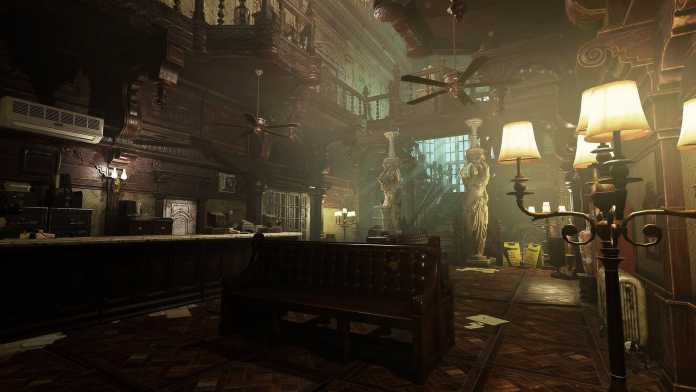
With Halloween fast approaching, it’s time to prepare for the cold weather, trick or treat, and an unhealthy level of scary moments. With horror spanning many platforms, your scary experience can come in many forms. Yet, I love to lose myself in a great video game. Tormented Souls is the latest title to test my nerve and this old-school inspired affair will send shivers down your spine.
Developed by Dual Effect and Abstract Digital and published by PQube, this is a classic horror game set in a cliched but brilliant location. Whenever you get your hands on a scary title, you want to feel on edge throughout. Fortunately, Tormented Souls will scare you senseless and you’ll need a change of underwear before you finish each playthrough.
Tormented Souls wears its influences on its sleeve.
Proudly highlighting your influences is not a bad thing, especially when they have cult status. Tormented Souls is so proud of its inspiration that it openly wear them on its sleeve. Every element of this wonderful horror puzzle title can be linked to the genre-leading games of the PS1. Resident Evil, Alone in the Dark, and Silent Hill can be seen in the puzzles, the creepy rooms, and the horrific foes you face.
You may worry that this will simply be a ripoff of these much-loved games. Believe me, its unique storyline and blend of mechanics makes Tormented Souls an excellent addition to the genre in its own right and I loved its spine-tingling ways.
Stay away from the shadows.
A cliched story, but who cares!
Normally, I want a thorough story that isn’t tired or cliched. However, I wasn’t so bothered by its generic “spooky” storyline because many of the other elements were fantastic. I forgave its dated plot and focussed on the many jump scares and challenging puzzles I experienced.
You control Caroline Walker, a young woman who is haunted by the image of twin girls. The game opens with her receiving an envelope containing a postcard adorned with a photo of the twins. From here, her life sadly takes a turn for the worse. Unable to get them out of her mind, Caroline goes to the hospital located in an abandoned mansion to search for the answers to her many questions. This is a big mistake and the start of the many horrors she is about to witness. Entering this hellish building has dire consequences, but once she starts this journey, Caroline can’t turn back until her questions are answered.
I warned you, this is a classic creepy game.
The labyrinthine mansion, limited hints, puzzles to solve, and items to combine, will have retro gamers champing at the bit. Its classic setting is spooky as hell and is only made worse when you step into the shadows. A creature lurks in the dark and is desperate for you to step closer, but fortunately, a handy Zippo lighter keeps them at bay and illuminates the way.
If the creepy shadows and claustrophobic rooms don’t make you soil yourself, maybe the horrific monsters you face will. Being chased by experimental creatures with only a nail gun to defend yourself is no laughing matter. You must decide whether to run or fight! If you win, you can breathe a sigh of relief, but if you die, it’s game over. The survival elements are brutally unfair and losing your progress is guaranteed, so you must be wise in how you take on each encounter.
Would you dare to eat here?
Puzzles and limited save points.
Being scared senseless is part and parcel of this horror genre. In Tormented Souls, it accompanies everything, but it isn’t the main concept. The developers want you to focus on exploration, puzzles, and the survival elements. The latter is key as save points are limited, and you must find a tape player and a reel of tape to record your progress. Though I hated losing everything, I loved how it kept you on edge, knowing that one mistake would cost you everything.
Exploration and solving each puzzle went hand in hand. The solution to many problems wasn’t simply found in the room or surrounding areas. This forces you to push further into the mansion and remember each task and their locations. This becomes increasingly difficult when monsters are chasing you and fresh puzzles are introduced. The logic-based problems were extremely rewarding to solve, as there were many Eureka moments.
What was equally glorious was how dark and twisted the story becomes the further you progress. The water becomes muddier and the reasonings behind the twisted tale doesn’t become clear for some time. This may annoy some players, but I loved the mysterious albeit weird ways that combined beautifully with the risk of losing it all.
In the correct setting, wooden acting can work perfectly well. When a game is trying to deliver a retro aesthetic, this almost laughable approach is acceptable. I loved the poorly timed delivery and the lack of emotion as this enhanced the action, giving it a cold and heartless tone. When this was combined with the classic horror soundtrack of sharp noises, extended silences, and distant footsteps, you are thoroughly creeped out throughout.
The brilliant audio supports the polished PS1 graphics. This old-school style may be wasted on a top-end PC or next-gen consoles, but I loved it and the look it achieved. The use of greyer tones and smaller spaces enhances the claustrophobic feeling that surrounds every aspect of the gameplay. I appreciate the older style won’t appeal to all, but I think it works brilliantly and is a nod to the market-leading games of the past.
Such a creepy, yet fascinating place.
I wanted it to be more responsive.
When a game expects you to act quickly to avoid enemies, you want the controls to be super responsive. Sadly, Tormented Souls hasn’t read the memo! Its occasionally clunky controls will leave you desperately floundering around while avoiding your foes. I’m perhaps exaggerating slightly, but I wanted the controls to be more responsive. However, there were moments where I had to spam the action button to ensure anything happened and subsequently, this made it frustrating and less immersive.
No matter how many times you experience the same horrific moments, it never gets old. I relived numerous scenes just to jump at the same point repeatedly. This was great, as I worried it wouldn’t have the same impact the second time around. Yet, it’s scary as hell every time you play it and this was great for its longevity. This is supported further still by its large achievement list that requires multiple playthroughs to complete.
Tormented Souls is a classic horror game that shouldn’t be overlooked.
Revisiting tried and tested mechanics can be tricky to get right. Gamers complain about the lack of originality, or the developers just get it wrong. Fortunately, though, Tormented Souls has the blend just right and its nod to much-loved games is mixed beautifully with its unique approach to the genre. I loved it and it shouldn’t be overlooked, so I recommend you to buy it here! Can you solve the mystery surrounding the twins? Stay calm, avoid the monsters, and solve every puzzle in this wonderfully old-school horror title.
Fighting games have been around for close to five decades now and, inevitably, their long history means that a lot of gamers will have their own retro favourites. It’s in today’s modern trend of restoring these old games for a healthy dose of nostalgia that we’ve been given SNK vs. Capcom: The Match of the Millennium. Originally released back in 1999 for the Neo Geo Pocket Colour, the game was ported to the Nintendo Switch back in February and reached PC in late September.
If you’re wondering if this is a game worth your time then really the only question you need to ask is if you like old fighting games. If you do, then this is a firm ten out of ten and well worth a look. If you don’t then there is nothing here that you’re going to find appealing. SNK vs. Capcom: The Match of the Millennium is a tremendously faithful port of the original before it, right down to the emulator-style set-up the developers have produced. This means that you’re not really going to find anything new and innovative, but there’s nostalgia aplenty for any long-time fan of the SNK vs. Capcom series.
The game is broken up into a number of sections for players to explore. First and foremost, you have the Tourney, which acts as the story mode. Players choose their character from a wide range of SNK and Capcom fighters and then are immediately launched into a series of battles, interwoven with snippets of story cutscenes. By winning fights, players can progress through the – admittedly paper-thin – storyline to be crowned champion.
Outside of the story, there is a range of alternate modes to explore too. If you’re struggling in the Tourney, then the Sparring mode gives you the opportunity to have one-off fights against an AI-controlled opponent to brush up on your skills. Similarly, if you have a friend who wants to get involved, then the Vs. Mode opens up the possibility of local multiplayer. Considering the age of the game it’s based on, this mode works surprisingly well, although mapping the controls for two devices smoothly across a single keyboard can get a bit muddled.
Surprisingly, there is also a mode that offers content besides fighting. In the Olympics game mode, players can unlock extra content through minigames that include a rhythm-based dancing game and a timing-based platformer. As is to be expected from a game over twenty years old, none of the minigames are particularly complicated or even well-developed, but they are a pleasing change of pace from the rest of the game.
Backing up the solid range of gameplay are the title’s retro graphics and soundtrack. As with the gameplay, these features have been mimicked perfectly from their original counterparts and they are delightfully familiar to anyone who has played the old games. The developers have also helped to soften the limitations of the graphics by containing all the gameplay within the frame of the emulator, meaning they haven’t had to try to stretch decades-old graphics from an obsolete handheld device to modern, high-definition PC screens. The result is a wonderfully cohesive game style that really supports the rest of the title.
On the more negative side of things, there are two main hurdles players are going to be immediately faced with when they first start playing. Fortunately, both are eminently fixable.
The first is that the controls when you first load in aren’t particularly intuitive. For instance, the directional joystick is mapped to the arrow keys on your keyboard instead of the more traditional WASD set-up. However, this issue is entirely resolved by a very simple system that allows you to remap all the emulator’s controls to suit the player at will. It’s slightly strange that the default load out is so divorced from standard PC controls, but ultimately it’s such a minor problem that it barely ranks as a consideration.
The second hurdle is perhaps less of a problem and more of a design carry-over from an older style of gaming. As is traditional for fighting games, each character has their own moves that players can work to perfect. In and of itself, this is great; it gives the game a surprising amount of runtime given the limited content and there’s a level of challenge involved in mastering each player that can be incredibly rewarding.
However, in deference to letting players figure out these moves for themselves, there is no type of in-game tutorial whatsoever. If you’re someone who’s unfamiliar with fighting games, I can imagine that your first introduction to the game is going to be less trial-and-error, and more just key spamming until something happens. For example, the game features special moves for each character, unique attacks that deal a lot of damage that can only be used when their energy bar is filled. SNK vs. Capcom never tells the player this; unless you’re already familiar with this trend in the genre, you wouldn’t know that it was a game mechanic unless you checked the (blessedly included) manual via the overlay menu.
In 1999 it was perfectly common to have to read a manual before playing a game. As a result, developers didn’t need to include any prompts to do so in the game itself and could instead use their valuable disc space for actual content. In 2021, however, digging through a menu to find an instruction booklet probably isn’t going to be anyone’s first port of call to understand what all the different things on their screen mean. It’s not a game breaking issue, but the developers of the port could have given new players a little more signposting to make their introduction to the game a bit smoother.
All in all, these really are incredibly minor problems that most players are going to breeze past entirely. Setting them aside, SNK vs Capcom: The Match of the Millennium is a very faithful port of a fondly remembered 90s title. There’s a lot here to enjoy and if you’re looking for a bit of nostalgia, then definitely give it a go.
Fire! Fire! There’s so much fire. Welcome to Nuclear Blast, a Metroidvania pixel-perfect fire fighting game. Nuclear Blaze is available on Steam. It originally started as a 48hr project for Ludum Dare. After positive reception, the developer, Deepnightgames, decided to make a complete title. It was originally aimed at the creator’s son. But it became too difficult.
Nuclear Blaze Premise
You begin as a firefighter on the way to a fire in a helicopter. You soon find a factory that doesn’t appear on a map. It appears abandoned and on constant fire. You have a tank of water that you can use to put out with your portable hose. But as you delve deeper and deeper you begin to learn a terrifying secret. This warehouse is harboring a being that creates fire.
Nuclear Blaze Gameplay
In each level, you put out fires to unlock the fire door to the next level. This sounds boring on paper, but it is executed well. The fire spreads quickly if you don’t put them out. You will find if you take too long, more fires appear. Fire isn’t your only obstacle, there are fire wasps. These are difficult to handle and may kill you many times. However, you feel a sense of accomplishment when you beat them.
As you complete levels you earn upgrades, like Metroid. Such as a bigger water tank and new skills. None of the upgrades become useless and are used in future levels. This drove me to push on, imagining what the next upgrade would be.
My only complaint is that the game felt too short. I made it to the end in only a few hours, even when taking into consideration my many deaths. I would happily welcome some DLC or a sequel
Nuclear Blaze Difficulty
This game is far from easy. Since the fires spring up so quickly if you’re not careful, you’ll be killed. The checkpoint system is very frustrating, in most levels if you die you go right back to the beginning. Which if you had already been struggling is infuriating. There were certainly times I got close to closing the game and taking a break.
One welcome feature, because the developer made this title originally for his 3-year-old son, is a Kid Mode. This makes it impossible to die and auto-lock on as well as other assistance. Instead of the aim being to get to the end of the level it is to find the cats. I think this is a great inclusion and will be trying it when my little one is old enough.
Replayability
Apart from trying to get to the end of the level, there are collectibles in the form of cats! Once you find a cat, you then must deliver it to the exit. I found them pretty easily at the beginning, but by the end, I forgot about them. I may go back and play it again to get the remaining cats to see what it unlocks.
Nuclear Blaze Presentation
Pixel art is the style of this fun title and it really works well. Especially with the 2D side-scrolling gameplay. Each area feels different from the previous one and was very easy on the eye. There are a few Easter Eggs as well, which really stand out from the pixel art backdrop.
The audio was definitely up to the task. It was powerful and helped me feel the urgency of putting out the fires. I have the theme playing now and it is motivating. There were not many tracks, so it would have been nice with a bit more variety. There is one instance that I remember where the music changes which was the final area. This set up the atmosphere perfectly. Maybe in a potential sequel, there would be more areas that would call for more music
Final Thoughts
This title came out of nowhere for me. I had never heard of it, but I had heard of Dead Cells. It held my attention far longer than I expected. I got so invested in it that I lost track of time. Even though it was a short game. I will also be going back to it when my son is old enough to play games and enjoy the kid’s mode. So Nuclear Blaze receives a 9 out of 10. With so few negatives it is worth playing even if it is only for a short amount of time.
Antonball Deluxe from developer Summitsphere is a classic arcade experience. If you remember and liked Atari’s 1976 title ‘Breakout,’ you’ll be pleased to discover this modern take on the game. Because who can’t enjoy some ball shooting arcade action from time to time.
Gameplay
That famous title, Breakout, has you shooting a ball at bricks while preventing said ball from falling back past you. Antonball changes the formula to a 2D platformer, where the player is in control of a character who is used to hit a ball and prevent it from escaping. The stage is complete once all bricks are destroyed. This gameplay loop itself is simple enough, you’ll be jumping around attempting to direct a ball into the ever decreasing wall of bricks, without the ball eluding you through the gap behind you. While the stages are varied the gameplay can get repetitive. There are power ups which you can get such as a gun to shoot bricks with, which can help if you are struggling. The DLC ‘Better Than Nothing,’ adds an extra level of challenge with an invisible character, and several new stages.
Presentation
Booting up the game and entering the title screen gave me the feeling of being at an arcade, being excited to try out the games. So when it comes to the theme, the developers did a good job. The art style of the game is simple and clean which makes it easy to tell the background apart from the interactable platforms and objects. After five stages you enter a new area. I started in boiler sewers, but quickly found myself having a grand time in jam jungle. The music in the background helps set the tempo and gives the game a very energetic feel to it.
It features two different game modes, as well as two multiplayer modes. The standard game mode is that classic breakout variant. It’s available in single player and multiplayer with up to four people. There is also ‘punchball,’ which involves delivering ball related justice to various creatures by throwing a ball at them then running into them to destroy them. Lastly, there is a pong style vs mode to play online. This level of variety in a game like this is nice, though it still remains lacking in content despite this.
Controls
In a game like this, having smooth controls is critical, as you need precision in order to succeed. Sadly, the controls on PC are clunky at best. Fortunately I was able to rebind them which alleviated the issue, though navigating the menu remains awkward. This game would clearly benefit from the use of a controller. Better yet, a classic arcade stick would be perfect. It is available on Nintendo switch which is likely the better platform to try this game on.
You might like Antonball Deluxe if you’re looking for a quick bite sized arcade experience to pick up and play for a short time. Something to do to take a quick break from work or study. If you’re looking for something to sink your teeth into and master, look elsewhere. Clunky controls and lack of content for the price hold this game back, despite the enjoyable arcade gameplay.
The animal kingdom is a fascinating place. No matter their position in the food chain, they are all fighting to survive. Instincts are all that keep these creatures alive, yet some have the intelligence to give themselves a head start. Empires of the Undergrowth reflects the hectic nature of our surrounding world as you battle for survival.
Developed and published by Slug Disco Studios, this is a real-time strategy title. The action plays out across two distinct modes of city-building and standalone missions. You must control an ant colony that will dig, hunt, and expand its nest deep underground. The concept is brutal, intriguing, and will make you look at the animal kingdom in a whole new light.
Empires of the Undergrowth is remarkably easy to play.
I’ve played RTS titles for as long as I can remember and my initial concern is always the learning curve. However, fortunately, Empires of the Undergrowth is remarkably easy to play and simple to pick up. The game opens on your ant colony within its Formicarium. This is the central hub where you’ll keep returning to expand your home and to open further missions. From here, you can build the nest of your dreams, upgrade your forces, and unlock further ants. You’ll need to play each combat mission repeatedly as this gifts you resources to complete any improvements.
You open with the choice of two missions that have set objectives. As you complete gateway tasks, further missions become available. Each has a difficulty setting and a further challenge mode once you’ve completed them. After you ticked off every task and you’ve achieved victory, you must choose your prize! Do you pick more territory tiles, food, or Royal jelly? This sounds straightforward, but believe me, it isn’t. Depending on how you are expanding your colony will influence your decision.
Supply the Queen and the colony survives.
Resources make the world go round!
Territory tiles allow you to dig out tunnels and create chambers. Here you can build food stores, nests, and more. You must plan your design thoroughly, otherwise, this will create weaknesses and will slow your ant army down. Mistakes will happen, and a methodical mind is needed to ensure you don’t waste these limited supplies.
Food is essential for your eggs to hatch and your army to keep respawning. You must have an ample supply, otherwise, a raid on your colony could be devastating. In the Formicarium, the food lies on the surface and workers must venture from the safety of the nest to gather it. Players must use quiet moments to fill their stores, as you don’t want to be collecting supplies when you are under attack.
Finally, Royal jelly, the nutritious link between upgrading and buying new troops. This rare resource is essential to improving the capabilities of all your creatures. Without it, you’ll struggle to reach the latter stages and your troops will be weak. You can improve speed, health, attack, defence, and more. It was fantastic to see how much the upgrades improved your army and the different tactical advantages they gave you.
Fighting overground reduces the risk to your colony.
Empires of the Undergrowth is all about planning.
If you are a fan of this genre, you’ll know that the gameplay is all about planning. Unsurprisingly, Empires of the Undergrowth is no different. You must use each of your troops to complete specific tasks while achieving victory. I loved burrowing through the soil to ambush my foes with an army of aggressive warrior ants. It was thoroughly enjoyable watching my swarm of insects dissecting the bodies and returning them to the Queen. The animal kingdom is bloody brutal and the fascinating warfare has been captured perfectly during every mission.
The array of tasks on offer help to keep the gameplay fresh throughout. The inclusion of a challenge mode added a hectic curveball that split your focus and adjusted your approach. This was an excellent way to add longevity and gave the gameplay a hardcore element that veteran gamers will yearn for. These harder missions reward you with greater resources and are essential to expanding your colony.
It’s reminiscent of classic RTS games.
Using a top-down perspective is nothing new in the RTS genre, and Empires of the Undergrowth is reminiscent of many classic titles. Its basic camera angles and limited zoom function give you an excellent viewpoint to watch each battle unfold. I equally liked how key areas were highlighted in the fog of war. The use of exclamation marks demonstrated danger and question marks, resource sources. This simplistic mechanic made planning much easier and I applaud the developers for their user-friendly approach.
The UI is simple and clean-cut and this allows you to focus on the task at hand. Thanks to its uncluttered appearance, you can enjoy the detail of each character model. Moreover, the developers have invested a lot of time into the realism and each animal is lifelike and excellent to look at. Their movement through the corridors and the horrendous combat was smooth and wonderful to be observed.
The drama of each battle is brilliantly complemented by the hard-hitting audio. The aggressive soundtrack is full of energy and matches the danger of each situation. The music was supported by a crunching mixture of sound effects that bring the fighting to life. You’ll hear creatures crunching as each ant army rips through the other. Further still, a brilliant use of narration warns you of intruders, danger, and more as the game progresses. The aesthetics drag you into this dark subterranean world and you’ll fall for its brutal charms from the opening mission.
Protect the Queen no matter the cost.
Clever mechanics make it easy to control.
With an array of ants to breed and choose from, this could have been a messy experience. Fortunately, the developers countered this with some clever mechanics. You can group any type of creature into different categories and these units move by following a pheromone trail. If any enemies approach, the ants automatically attack. This made controlling your army much easier. However, you had to ensure your weaker units were held back. Moreover, there is no ability to split the same type of ant into separate groups. This sadly made it harder to attack multiple fronts and reduced the tactical choices available.
Though tactical choices were limited, I still loved every moment. I happily played the same mission repeatedly, and I will keep playing them. Expanding my colony was moreish and the gateway missions are tough and demand a well-designed nest. The developers have done brilliantly with the unique abilities and the number of ants you can introduce to your colony. Splitting the action into two distinct areas was an excellent choice and one that is sure to extend longevity. There are additional modes you can undertake if you tire of the main story, and there are also extra missions that test your tactical approach. Thanks to these options, there is ample replay value and this will keep you playing for hours.
Empires of the Undergrowth is the perfect blend of educational material and RTS.
Usually anything labelled educational turns me off. Fortunately, however, Empires of the Undergrowth gets its balance just right. I adored learning about each type of ant and the tasks they undertake. I also liked the introduction of predators and how each scenario was realistic and challenging. The developers have done a wonderful job with this real-time strategy game and I loved their multilayered approach. It’s an excellent title and I recommend you to buy it here! Complete each mission to get every resource you require, then plan and build the colony of your dreams.