Review: Nintendo Switch Sports

On my brother’s 10th birthday, he wanted only one thing. I was too young to know what a console was; I had no idea what Nintendo was if I’m honest – so the concept of a Nintendo Wii was pretty irrelevant to me. Nonetheless, he was ecstatic as we got to the toy shop, and he got the gift he’d been after for months. So we set up the white box in our living room and chose two games – one of which being Wii Sports. 

I’m sure you know how revolutionary this game and the Wii were when released. Implementing motion control for a household console and having controllers that didn’t leave wires draping over the carpet and savage tripping hazards for any blissfully unaware family member was a cultural reset for anything gaming. 

I fell in love. 

My brother and I played Wii sports almost religiously – and obviously, he was way better than me due to being older and having experience with video games beforehand. But Wii sports was something I could grasp and enjoy even after crying about losing at bowling for the sixth time in a row. 

Many gamers are in the same boat when thinking about Wii Sports. It’s fondly referenced in conversation and is always a laugh when pulled out at a party. This is because it was revolutionary when it was released. But you can’t kid yourself into believing that the Wii isn’t outdated. 

That’s not to say it isn’t still one of Nintendo’s best co-op games ever to be released. I still love it, and I will always be thankful for all the memories of getting up on a Saturday morning with my brother and watching him master the arts of a smash serve. Or fondly remember my Dad’s thorough coaching on flicking your wrist at the end of a bowl to get a strike.  All of it feeds into how I became such a fan of video games, and they’re wholesome memories I probably share similarly with everyone who played them growing up. 

So when Nintendo Switch Sports was announced in February 2022, it felt like my brother’s 10th birthday again. I watched the direct with bated breath, feeling like I’d walked into that big toy shop, but now I knew what gaming was. 

Nintendo Switch Sports is now available via the Nintendo e-Shop.

How times have changed

I think many gamers were skeptical when we watched the trailer for this game. It’s been anticipated by such a vast audience since the Nintendo Switch was released, so it needed to be done right. With Wii sports holding such a firm place in our hearts, the release of something new that might replace that will need to be top tier even to be considered. We were after something just like the original game’s experience, but it needed to highlight everything positive about the Nintendo Switch and its capabilities. I don’t think any of us knew what we wanted, but we just knew we did. 

It’s not you; it’s Mii.

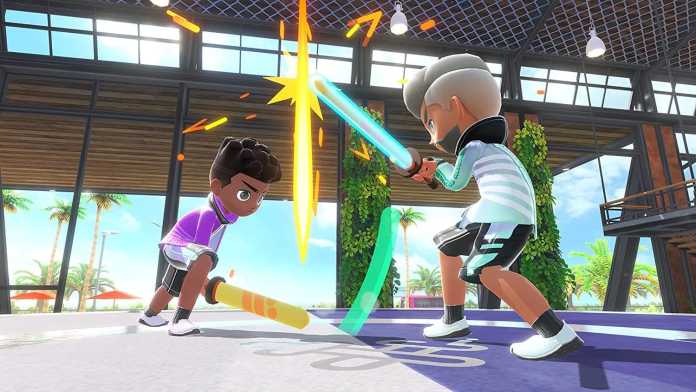
The first thing that stood out to me was the difference in art style. Wii Sports allowed players to use their Miis rather than automatically generated characters, but Nintendo Switch Sports shakes things up. Sure, you can still use your Mii if that’s more your style. But Switch Sports is equipt with character creation as soon as you begin the game. Rather than the 2D appearance of Mii’s, there’s a more rounded and modern approach to characters called “sportsmates.” You can completely personalize your sportsmate to be the best representation of you, then give them a nickname and a title, and you’re good to go. 

I love Mii’s. Any fan of Nintendo probably does. They’re hilarious and iconic to the brand – and there’s nothing like the joy of coming across a Mii created under the image of an obscure character. Which you definitely will. I played a volleyball match against a Monty Mole Mii, and yes – it was just as terrifying as you can imagine. But the Switch Sports character creation shows how times have changed and is a gentle reminder that this game is not just a copy of Wii Sports from the moment you start. The new characters are wide-eyed and eager to play – and incredibly expressive during tense matches, which I found particularly charming. 
An incentive to exercise 

As you progress through the game, you unlock more options to continue to customize your character. So rather than being limited to customizing your character once and never looking at it again, you continue to unlock hairstyles or outfits, or equipment as you earn more points from competing online. THIS is where my competitive side began to come out. 

Unlockable rewards come as a set of three cards, each card hosting a handful of prizes and offering a complete outfit upon completion. To unlock a single award, you need to earn one hundred points. To earn points, you need to play games, and the more success you have, the more points you get (you probably know where this is headed now), so I rinsed through this game. 

As a somewhat perfectionist, I needed every reward and, in turn, every outfit, but that meant hours of gameplay. I have never felt this eager to engage in any sort of exercise. Suddenly a match of badminton was a life or death deal. Bowling turned into a battle royale, and volleyball became a test of skill unmatched by anything I do in my day-to-day life. It has been hilarious. 

An internet sensation

You can enter matches online with two players for tennis, volleyball, and bowling. I’ll preface now, you may end up in several backhanded remarks if said partner hits a ball that you claim would go out of the court, or they miss a spike in volleyball and hand a point to your competition. But if you fight through this tension, you are welcomed into a world of competitive team gaming that I haven’t found so fun in a while. These online games are the only way to unlock the points for cosmetics and rewards, so they will probably be the thing you spend the most time on. 

Unlike Wii Sports, you can compete as a team against another random player and put your skills to the test. I adore this feature, and I think Switch Sports would be incredibly repetitive and boring without it. It’s what I found pulls the game together to make it a unique and refreshing experience for literally everyone involved. Of course, you never know who you’ll be paired with, and since ranked matches can’t be played in a team, you never know how hard your skills will be tested. 

There’s no voice and no text chat either, so the only way you can communicate with the opposite team is by four stickers of characters showing different emotions. By default, you are given feelings of joy, applause, crying, and a thumbs up. But, if played correctly, you can pull out the competitive nature of any player. In Rocket League, when you miss a shot or are responsible for your team’s own goal, everyone spams you with ‘Nice Shot!’ It sends that guilt and anger and the need to prove yourself in the next match racing through your body? 

Spamming the applaud sticker every time the opposing player does something similar is the Nintendo Switch Sports equivalent. 

It was moments like this where I felt like sitting back and cracking my knuckles, ready to show the court who’s boss (even though I probably lost the match, which is why I got shamed in this way in the first place.) Don’t get me wrong; I’m a very competitive person in every game I play. But Nintendo Switch Sports is another level. I have no shame in saying it, but I put so much energy into the matches I pulled a muscle on my first day of playing. Did that put me out of business for the next day? NO! Should I have taken this as a sign to chill out and take it easy on the game? ABSOLUTELY NOT. 

I adore how competitively people react in this game. Suddenly it’s not just a party game; it’s a trial to see if you’re Olympic-level worthy. Online play was one of the best things Nintendo could’ve added to encourage player interaction, and when I say they’ve done it right. I mean it. 

Ready, set, match

Enough about what it feels like to play the game; let’s focus on what makes it so desirable to play and how things have changed since we all picked up Wii Sports. 

Nintendo Switch Sports features old classics any player of Wii Sports will remember and introduces several new games. Football, chambara, volleyball, and badminton are all new additions. Of course, there’s still Tennis and bowling, but if you grew up playing these two and need something new – Switch Sports has you covered. 

Sword swinging and shuttle sending

Chambara and badminton are single-player games, so it’s just you and your competition fighting it out. These can be played online or locally, and both are equally fun. One of my main concerns with badminton was that it might play the same as tennis since it follows the same concept of hitting the thing over the net and hoping your player misses a shot or hits it out of the court upon return. 

But it’s far from being a carbon copy. Sure, it follows the same mechanics, but the Switch has utilized its rumble physics to make badminton feel lighter than tennis. The use of buttons on a single controller can also have you running around the court and making your competition lunge for a skillfully placed drop shot. 

As for chambara, this game is not easy in the slightest. It relies heavily on you reading the next move of your competition, which is something I learned I was pretty poor at very quickly. There is a tiny gameplay window, so it’s got your hair standing on edge from the minute a match begins. Once you get into the rhythm of expecting your competition’s next move, you’ll be a chambara champion. I’m currently playing ranked, and the match is ridiculously good. What rank I’m playing at is classified information to protect my pride before you think about asking. 

Let’s get ready to rumble.

I cannot emphasize how fantastic the game feels in terms of rumble. Tennis feels heavy, badminton is light, and you know when you’ve been hit in chambara. Of course, you need to hit the shuttlecock with some real beans if you want to make sure it goes over the net (hence why I pulled a muscle, I was swinging my arm so hard it hurt.) But in tennis, a light tap could result in an unexpected point. You can also judge how hard to send a shot by changing how hard you swing, which I think Wii Sports missed entirely. 

Directional swinging is also pretty integral. It’s the best way to throw the competition off and go for gold in volleyball.  I didn’t pick this up until a few days into playing, and suddenly I felt way more successful. The hints the game gives you during loading screens are pretty helpful; who would’ve thought? 

It’s easy to say Nintendo Switch Sports makes the most of motion control and other tracking features the Nintendo Switch is capable of. But, as I mentioned, the Wii was pretty revolutionary for its time. The Switch honors many of these features while making them more up-to-date and appropriate for modern gameplay – encouraging that feeling of childlike glee again. 

Spike and Score

Going back to team games, volleyball and football are two more new additions for this release. Football is split into teams of four players and has a Rocket League feel about it. Frankly, it may just have a football feel. It’s never been a game I played or watched growing up, so I can’t speak from any experience in that sense. 

For this game, you need both joy-cons. You can play two players, but you’ll need a pair of controllers. If you have Ring Fit, you can use the leg strap to play for a more immersive experience. (And more strenuous as it involves jogging on the spot – blegh.) But holding both controllers works just as well. Football is an exhilarating chase with seven other players trying to score a goal. Except, your characters can hilariously dive halfway across a pitch to steal a ball. 

These games require a few more buttons and swings to remember than a game like tennis. But it pays off once you get to grips with the controls. Volleyball is by far my favorite sport. It requires slightly more skill in terms of timing and remembering the pattern of setting up for a spike. Once you’ve got into your groove and you’re paired with some decent competition, these matches can be pretty intense. 

I appreciate a challenge, and volleyball requires a lot of gambling your competition moves like chambara. However, getting a perfect run of actions and a spike leading to the destruction of your partner is another refreshing sense of pride Nintendo Switch Sports offers the average joe. (Meaning me. I am the average joe in question, and I like winning.)

Final thoughts

My time with Nintendo Switch Sports has been one of the most fun experiences I have had with a co-op game. And frankly, the most fun I’ve had with anything sport-related ever. I adored Wii Sports, but Switch Sports has given us the breath of fresh air we needed. It has everything good about Wii Sports while adding its twist and charm to a new title. 

If you are hunting for a new party game to whip out to get everyone excited and involved, I cannot emphasize how much I recommend this game. It’s so fun without needing a heavy story and tense gaming to enjoy. Plus, I’m sure it’ll make some memories you can reflect on in the future as Wii Sports did. How can it not?


Oh, by the way. The slide-on straps are vital if you want to have a TV by the end of your playthrough. Joycon controllers are surprisingly slidey if you’re throwing your arms around. Of course, maybe that’s just me.

See you on the pitch!

Review: GXT 391 Thian

Picking the wrong headset can be disastrous for your gaming setup. This can be made worse if you have a limited budget and multiple devices to connect to. Consequently, you must consider how they sound, ease of connectivity, and build quality. There are also many other factors to weigh up as you think about your next purchase. I rarely look at entry-level headphones, so, therefore, I was intrigued when I was asked to review the GXT 391 Thian headset.

I’ve recently looked at the Turtle Beach Stealth 600 Gen MAX headphones and I loved them. Subsequently, I was concerned that the GXT 391 Thian headset wouldn’t compare. Fortunately, I was pleasantly surprised as this multi-use peripheral is user-friendly, robust, lightweight, and has some decent audio quality. It has a flexible microphone, well-placed buttons, and it is made from recycled materials.

The GXT 391 Thian headset allows for wireless PC and PlayStation gaming.
Enjoy wireless PC and PlayStation gaming.

What’s in the box of the GXT 391 Thian headset?

  • The lightweight packaging is flimsy and uninspiring. Consequently, it was unfortunately damaged in transit. Luckily, though, the contents survived the posting ordeal. Furthermore, it has an insipid design because of its cooler colour palette that looks cheap and bland. However, it is emblazoned with useful information and the company logo. A massive positive from Trust Gaming is the fully recyclable packaging.
  • The GXT 391 Thian headset. This lightweight accessory has a basic but robust appearance. It can be used wirelessly or plugged in with a dual 3.5mm audio cable. The earcups are adjustable and have a cool and comfortable leatherette finish. Alongside this, there are well-placed on-ear controls that are simple to use.
  • USB C Charging cable. This cable allows for up to 13 hours of wireless gaming. The short rubberised cable is hard wearing and works from any USB A port.
  • USB wireless dongle. A compact and sturdy device that is automatically connected to your accessory. Turn on your headphones, plug in the dongle and listen to your heart’s content. 
  • 1.2m audio cable. A nylon braided cable that allows you to connect to any device with a 3.5mm audio port.
  • User manual. This simple guide depicts your setup with straightforward images.

Technical aspects. 

Earcup typeOver-ear
Frequency range20-20,000 Hz
Driver size40mm
ControlsVolume
Mute microphone
Power
ConnectorWireless via USB dongle
3.5mm aux for wired connection
Wireless range10m
PlaytimeUp to 13 hours
Dimension160*190*75mm
Weight200g

No one wants to spend hours of their spare time setting up their gear. Luckily, the GXT 391 Thian works straight out of the box. Plug in the USB dongle or the audio cable and your headphones will work. Alongside this, the basic connections allow you to swap between devices with ease. Furthermore, the 5.8 GHz Wireless setup ensures fast and lag-free connectivity.

The rechargeable battery lasts up to 13 hours. Now, for serious gamers, this will be a little short. However, for casual players or those playing wired, this matters not. A clear and helpful LED indicates the charging status, and this prevents you from running out of juice.

With easily accessible controls, you can mute your mic, adjust the sound and toggle power. What’s more, the 40mm drivers deliver a wide range of tones and some decent bass. Consequently, the headphones add to the immersion of big triple-A games or movies you may watch. Furthermore, the bass isn’t too heavy on your ears. I have experienced headphones that leave your head buzzing. Fortunately, the GXT 391 Thian’s are more subtle. They rely on the 40mm drivers to deliver a crisp and comfortable sound.

The Wireless connection is not only lag-free, but it works perfectly on PC and PlayStation. This gives the headset a premium feel at an affordable price. However, for Xbox or mobile gamers, the wired approach is just as good. Both options have their pros and cons, and the lengthy audio cable ensures that you are still free to move about.

An excellent headset for PC and console gaming.
He looks happy with his headset.

Are the GXT 391 Thian headphones worth it?

With a vast array of headsets on the market, it can be tough to choose. Luckily, I think these affordable and straightforward headphones will appeal to many. Now, I found them a little understated for my liking and I prefer something more substantial. Consequently, they were lighter than I’d liked and the earcups were too small. What’s more, a bit of glitz and glam to the livery is never a bad thing. Sadly, the black design is just too simple and potentially a little dull.

However, looks and weight aside, there’s lots to like about this accessory. First, making your product from 85% recycled material is a winner in anyone’s book. Then to combine this with a robust and stylish look is just incredible. This is then enhanced further because of the user-friendly approach, excellent sound quality, a multi-use options. Subsequently, this is a great entry-level product and excellent for younger or casual gamers. Though it didn’t tick every box, I think Trust Gaming has delivered a solid and dependable peripheral that won’t break the bank. If you are in the market for an affordable headset, I recommend you buy it here!

Summary.

This jack of all trades won’t compete with high-end headsets. Its understated looks, lightweight approach, and noticeable cheaper packaging highlight its key demographic and its shortcomings. Yet, if you want a multi-use accessory that ticks many boxes without being OTT, then this would be money well invested.

(More information on Trust Gaming can be found here!) 

Review: Postal 4: No Regerts

Postal is Back

Postal 4: No Regerts really tested me. Not because it was challenging, mind you. It never left me scratching my head trying to solve puzzles that would give the riddler a run for his money. Nor were my hands left with drenched palms from intense firefights. What this game really tested was my patience.

Postal is a series known for being intentionally offensive and vulgar. Irreverent humour and violence are its main draws. Anyone who is familiar with the franchise, especially Postal 2, is probably pretty familiar with the postal dude and his morally corrupt antics. But while the second entry was a relatively fun descent into destruction and debauchery, this latest entry is desperately lacking in fun. Its tone and sense of humour came across as trying a little too hard to be raunchy or edgy. I’ll admit I exhaled out of my nose with some force a few times. However, for the most part I was as straight-faced as I’d be washing the dishes. 

When we join the postal Dude and his ever-faithful companion Champ, they’ve just had their trailer home stolen. Along with it, all their possessions and money. Luckily, a city shines in the distance, beckoning them toward a chance to find their mobile home, or at the very least make some cash. The Arizona border town of Edensin is rife with opportunities. And the postal dude is seemingly up for just about anything.

Anything For a Dollar

This is Postal 4’s main objective in a nutshell. Make money however you can, and man does it take you down some weird paths. From catapulting people south of the border wall, to getting high on noxious fumes and turning into a cat looking for a mate. You’ll become a prison guard for an afternoon, and end up massacring most of the population. Or getting people to sign a petition in support of bidets at gunpoint. 

Your adventures get pretty wild and wacky, but on the other hand, the campaign is fairly straightforward. The story takes place over one business week. Each day from Monday to Friday you’re given a list of tasks from a range of weird side characters. At first, you look for some honest work, however, you find anything but that. 

Everything you do is messed up in one way or another. Such as catching stray animals and chucking them into chutes and compartments of a van for undisclosed but definitely shady reasons. Whatever the task, it usually ends up with someone or something dying. The few exceptions to this are mind-numbingly tedious. Like a job that has you search for illegally parked cars so you can give them a ticket. I was genuinely surprised at how banal this task was compared to the crimes against humanity I’d committed already.

Shoot First, Think Much Later

Whether the job was unclogging pipes, or getting into shootouts I couldn’t help but feel like most of it was just busywork. Too much of the main campaign feels like it would be an optional side quest in any other open-world game; give or take a couple of ethically questionable actions. I can count on one hand how many times I actually enjoyed a task. By the end, it felt almost like the devs created an open-world playground, realised the player needed things to do, and ran down a list of generic missions to complete. 

All of this made me realise Postal 4 lacks a cohesive feel. It’s all just stuck together with the glue of the postal dude needing to take any dirty job under the sun for a crumb of currency. You’re just going from one point to the next occasionally shooting something until the day is done.

However, that leads me to one thing I more or less enjoyed. Shooting things. It’s not to the quality of any major shooter or open-world title that includes guns. It’s an aim and spray that just about gets the job done. Although, in a world filled with pretty uninspired jobs and activities it really makes you appreciate being able to enjoy at least one aspect of gameplay. Edensin is packed to the rafters with guns and ammo, and you won’t go very far before you’ve got an arsenal under your bathrobe. This includes pulling out your johnson to urinate on your enemies, should you wish.

Along with an abundance of weapons, also comes a wealth of consumables around town. Such as unaccompanied slices of pizza on outdoor sofas, and health (read: crack) pipes that you can inhale for a boost of health. But be warned, soon you’ll need another hit, or you’ll get hit with a blow to your HP leaving you questioning whether it was really worth it. There are energy drinks that allow you to dual wield guns, and catnip that can be eaten in order to slow down time while aiming down the sights of a sniper rifle. There are some pretty absurd items that can be enjoyed in a variety of ways to spice up gameplay or give you an edge in a fight.

What a Terrible Place to Live

The relationship between the consumables and combat allows for a little more depth when getting into fights, and with all of these useful items spread out in the world. There’s at least some reward and incentive for exploring Edensin. Unfortunately, actually getting around is another headache. You could go on foot, but the size of the map and distances between objectives means a slow march while your brain turns off and your eyes glaze over. Another way is the vehicle. And I’m sad to say that the previous sentence wasn’t a concord error. Your options include a single kind of vehicle. A mobility scooter

There are all kinds of cars parked everywhere in town, but you’ll rarely see any in use. Everyone who isn’t walking will be using these scooters, including you. Combining the fact that the map is fairly large and these scooters are fairly slow, makes getting around tiresome. Add into that combo a lack of a radio or any kind of music and you’ve got a silent ride that can only be spiced up with the odd hit-and-run. Licensing may not be cheap, but there’s a fair amount of music as you make your way through the campaign. I’d have liked an option to hear some while driving. Maybe even a couple of royalty-free tracks at least. They don’t even need to be good at this point. 

Edensin isn’t exactly easy on the eyes. Full of browns, greys, and greens, the environments are pretty drab. Even if it is somewhat of a desert town. While top-notch graphics aren’t a necessity, a decent art style is and Postal 4 is more than a little unappealing to look at, from the town to the townspeople. At least the aesthetic kind of matches the game’s overall tone. 

The missions can be tedious, the world is uninspired, exploration is painful, and the jokes barely ever land. At least it’s got some fun chaos and gunplay to enjoy. Postal 4 is hardly a game I can recommend if you aren’t already a huge fan of the series with some low expectations. Honestly, you may just be better off going back to Postal 2.

Review: Phantom Breaker – Omnia

It’s rare to come across a 2D fighter that doesn’t require a deep dive into its mechanics to get to grips with it, but Phantom Breaker: Omnia is out to question whether that’s really necessary, as it pairs exciting gameplay with highly approachable mechanics.

Originally released in 2011 as Phantom Breaker, and receiving an update in 2013 as Phantom Breaker: Extra, the 2D fighter has now seen further updates in Omnia. Using Extra as its base, additions include two new characters and new story as well as a remixed soundtrack, a new fighting style and balance adjustments. 

Discarding complicated combo inputs, Omnia sets the game up perfectly for a novice to the genre and allows you to fight however you please. If you like to button-mash – square, triangle, and circle each has 3-4 combos you can tap and string together. If you like to hit-and-run or spam energy attacks from afar, that’s also possible with strong and special moves that at the very most require three buttons to be pressed in unison. 

This may not sound particularly impressive, but this is just one aspect of the fighting system and there are plenty of tension-building gameplay mechanics that can turn the tables in a fight at any given moment. I’d go as far to say as I had some of the most exciting battles that I’ve had in a 2D fighter in a long time due to tight battles and great match-ups between different types of characters (short-range/ long-range etc).

The story won’t be winning any awards, but it suits the purposes of the game.

That was until I realized that the game has an auto-blocking system. Funnily enough, I was hours in before I even noticed it as I’m so used to blocking with the opposite directional button (and was doing it manually). Sadly, like a permanent cheat code that you can’t turn off, it unbalances the battle system and at worst makes all other strategies and mechanics pointless.

By itself, the auto block is not too bad, but when combined with a dodge (which is done by heading towards the enemy exactly as they attack), it’s like a dagger to any tension the game could create. In theory, this double-pronged inclusion makes sense, as timing a split-second dodge is difficult when holding down block to then dodge (i.e. flicking the directional button left to right or visa versa), but it in actuality having the auto block not only makes dodging very easy, it also allows you to sit on your hands while you wait for the enemy to finish their attack and it removes you from the intensity of the action when you are backed into a corner. 

Clashing boosts your gauges and while not particularly photogenic in a screenshot, looks great in real-time.

You could argue that you don’t need to use it, but ignoring it when you know the option is there is like walking to the shops when you have the option to teleport there instead – no one in their right mind takes the harder option. As such, I really think it should have been a setting you could turn off, rather than enforced accessibility. 

Other than that, everything else works like a charm with the mayhem starting as soon as the ball drops. 

But it isn’t just quick gameplay that aids the experience. The in-battle animation, for example, is aided by added visual effects to moves and characters during battles which make the action seem even faster. When characters attack at the same time (which is called ‘clashing’) the camera zooms in and shakes and attacks are often blurred and accentuated with colorful highlights. This, added to a blood-pumping soundtrack, never fails in its attempt to stir up the player and whip up a frenzied battle.  

Despite the game’s accessibility being great in most areas, it ironically is lacking any helpful interactive options in the training mode, leaving you with pages of text to decipher instead.

After clashing multiple times a tension gauge activates and for a short period of time boosts the effectiveness of your attacks while giving you a full energy bar (called a ‘burst gauge). If used strategically you can fill your burst gauge to 200% and unleash your super move to do some serious damage. The burst gauge can also be used for an overdrive (which speeds up your character while slowing the enemy) and an emergency shield.

All these powerful attacking options mean that the battles are often high-speed affairs that – in addition to the varying effective distance of each character’s attacks – really make each fight feel different, assuming of course that you aren’t just relying on the auto-blocking and dodging system. There are also 3 fighting styles for each character (focused on speed, power, or a mix of both) for those that want an even more specific experience, although I mostly chose the speedier option to add to the insanity on the screen.  

Replay value is offered in spades with the 2 story modes (from Onmia itself and Extra) with voiced visual novel sections and a fantasy anime story for 15 characters, while there are 22 characters that are available for the arcade, endless battle, time attack and score attack modes.  

No doubt to the chagrin of many though, the online multiplayer mode lacks rollback netcode, leaving your experience to the mercy of your opponent’s internet speed and, unfortunately, due to a lack of available players at the time of writing I was unable to fully test how robust the current online code is. 

One of the most approachable and enjoyable 2D fighters I’ve ever played, Phantom Breaker: Omnia has the potential to be great, but nullifies the effectiveness of its battle mechanics by trying to be too accessible, which ultimately restricts the best action to the multiplayer modes. 

Review: Bugsnax

0

Time to gear up for an awesome adventure through Snaxtooth Island, filled with delicious-looking bugs that are more than appealing, but tasty too! BugSnax is a captivating 3D-styled island adventure game, full of mysteries and new discoveries waiting to be revealed. The main goal is to discover the whereabouts of Elizabert Megafig. As we do so, we’ll find ourselves making friends with the other islanders as they are scattered all around, each providing separate tasks for us to complete. So with a little bit of free-roaming through the island of Snaxtooth, we’ll be searching for Elizabert and filling our friend’s bellies with Bugsnax.

The best part about the game Bugsnax, is that it’s not just a cute title but exactly what these bugs represent. Many of the tasks we need to fulfill in the game are to catch these delicious bugs, which look like cute food-shaped insects. So no worries, cause these bugs are all delectable and not at all gross! Especially as they come in the form of something fruity, savory, meaty, crunchy, salty, and even cinnamon sweet. There are a bunch of other flavorful bugs and each still does resemble the same appearance and movements of a real bug. So with about 100 species on the island, there are many to catch and so many to taste.

Graphics and Sound

I am impressed with the realistic 3D graphics, it really makes the game so much more appealing, and when looking at food like bugs; Bugsnax, it is hard not to wish you could capture them so you can take a bite! The colors of the sweetly designed characters are well-detailed to appear like real food. Capturing the textures and exact appearance of strawberries, cinnamon buns, sandwiches, pineapples, ribs, and other food shapes. This is also true about the game’s environmental design. Including, the night sky, plants, rocks, logs, buildings, flowers, and so many other objects and background scenes, they all appear so real.

Also, the camera scanning and photo-taking portion add a fun feature to the game. Like being a real explorer searching for new things and in this case new bugs to snack on. Plus, you can take as many photos as you like, from any viewpoint you’d like. Every control to use the camera is very easy, and the shots are simply clear that they look good each time. Plus explanations of each character after scanning and photo-taking are clearly explained.

Furthermore, It’s quite interesting to see how these fuzzy characters change when you feed them. It almost really makes sense, the food you eat is what you’ll look like. In this game that really appears to be true! The more food you feed each fuzzy character, the more similar to the food they ate, Bugsnax will appear on their body. It is strange, but something you’d not find in any other game.

Unfortunately, there is one issue I felt about the graphics that made the game not as great as it probably could be. To be exact, with the many actions that each character can make or do, they don’t seem too close to reality. Just a few examples would be the way they eat and interact with their surroundings. Not to say that it doesn’t present a clear picture of the food being eaten or that they are coming in contact with the objects, but it appears like it just either vanishes or nothing quite moves to show the reaction of things performing together. Regardless, I still feel that the game is still very nicely done, and beautifully appealing to the eyes.

For the sound effects, they are very cute and sound just as they should. From the water being walked through, bushes being shaken, and plenty of other things like the bugs roaming the island. Additionally, the voices are a bit interesting, like Pokemon catching these bugs and the sounds they make, relating to the food they represent. The main fuzzy characters also have this unique and strange attitude with their own personalities. No matter, it’s all a bit humorous and additionally adorable to the entire game. So to be honest, everything about the game’s music, sound effects, and beautifully bright graphics all scream out that this game is friendly and welcome for anyone to play.

Final Thoughts

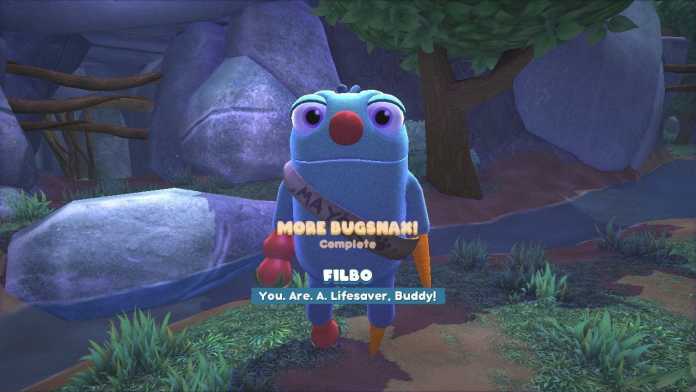
Before playing this game, I honestly had no idea what to expect. Yet, after playing through, discovering the mysterious food-style bugs, decorating my characters, and touring the island, I found the game fully adorable and entertaining. The puzzles are really the tasks being requested by our new island friends, like Flibo the mayor, Wambus the farmer, Beffica the gossip, and many more.

Plus, the Bugsnax on the island doesn’t make you feel squeamish as they are more tasteful like real food than scary like real bugs. I think that is the main reason I love the game is just that! It doesn’t repulse me or make me want to rethink the food I love to eat. Bugsnax in general is cute and is one-of-a-kind, which I found myself enjoying! The game is fully engaging, fun to roam while fulfilling tasks, and provides plenty of interesting discoveries as the story unravels.

Lastly, I did find myself sitting back and playing this for a while, till I was able to solve the mystery of the missing Elizabert Megafig. It’s humorous, cute, and fully entertaining with many things one can do. I don’t feel that the game gets too redundant, even after a few hours of playing. The joy of finding something new that flys, crawls, and just looks appetizing is as exciting as discovering a new Pokemon, but instead of battling you get to eat them. So if it’s cute, fun, and a puzzling type of adventure game you’d love to try, then you might just want to play Bugsnax.

Review: Trust Gaming GXT 834 Callaz

Love it or loathe it, RGB lighting is here to stay. If you are a fan, there is no doubt that your setup is bright and garish. However, if you are one of the few gamers who hate such a grand show, you won’t know what all the fuss is about. I’m in the love it camp, so when the Trust Gaming GXT 834 Callaz mechanical keyboard landed on my desk, I immediately unwrapped it.

I have recently reviewed the ROCCAT Vulcan TKL Pro keyboard, and I adored it. So, therefore, how would this inexpensive and simpler accessory stand up to its upmarket peers? In short, it does pretty well! Yes, it doesn’t have a fancy name or a big price tag, but it performs well, looks stylish, and can be customised to your liking.

You won't lose your way in the dark thanks to the vivid RGB lighting.
Bright and vivid RGB display.

What’s in the box of the Trust Gaming GXT 834 Callaz mechanical keyboard?

  • The packaging is lightweight and simple in design. It is about 95% recyclable and unfortunately didn’t fare so well in transit. However, the accessory and paperwork were intact. With some key points and the company logo on display, the packaging is as you’d expect.
  • The Trust Gaming GXT 834 Callaz mechanical keyboard. This TKL or Tenkeyless keyboard is compact and well built. It has an attached USB 2.0 cable to connect to a PC or Laptop and has a nice weight. There are supporting legs at the rear and this, alongside the high-profile keys, makes it comfortable and easy to use.
  • A straightforward user manual. A well-designed manual explains the fundamentals. You will learn how to change the light pattern, increase or decrease the brightness and speed, and understand the shortcut functionality. Thankfully, this user guide gets you up and running in no time at all.

Technical aspects.

Key technologyMechanical
Width367 mm
Weight652 g
Keyboard layoutQWERTY
Switch brandOutemu
Switch typeLinear
Lifetime of keys50 million
Manufacturer warranty2 years
Response time8 ms
Travel distance4 mm
Connection typeWired
BluetoothNo

Gaming keyboards are all about their responsive nature and comfortable layout. Luckily, this one has both thanks to its small travel distance and compact design. This smaller than normal keyboard allows for a greater mouse movement and a natural position for both hands. What’s more, as it is a mechanical peripheral, it has that delightfully noisy clicking sound that we all enjoy.

Alongside these key elements, we all like a stylish accessory that is built to last. Fortunately, the metal top plate offers a premium finish while making the Trust Gaming GXT 834 Callaz mechanical keyboard more robust. Furthermore, there is a massive 50 million keypress guarantee and a 2-year manufacturer’s warranty.

RGB accessories are all about the lights and the patterns. With 6 different colours and 20 unique programs, you will find the style that matches your personality. Alongside this, there are adjustable speeds and the ability to reduce or increase the brightness. What’s more, if you fancy a break from the multicolour display, you can simply switch off the lights and continue to use the keyboard as normal.

With convenience and time a priority for many players, it is nice to see the inclusion of media buttons. With 12 shortcuts options included, and a well-placed function button, you’ll adjust your setup on the fly with little effort.

The Trust Gaming GXT 834 Callaz Mechanical keyboard is compact and stylish.
A compact and comfortable design.

Is the Trust Gaming GXT 834 Callaz mechanical keyboard worth it?

I’m a firm believer in you get what you pay for. Therefore, at less than £50, you may be a little dubious. Luckily, for the most part, this is an exceptional entry-level peripheral. With a premium metal finish, high profile keys, vivid lights, and multiple programs to select, this gives you a lot of bang for your buck.

However, this doesn’t mean it is perfect because it isn’t. Annoyingly, it can be slow to boot up and you have to watch it run through its load cycle every time. Now, this may seem a small thing, but if you want to load into your boot menu, this can be problematic. Furthermore, the backlit style can make reading the keys a difficult task. Therefore, if you are unfamiliar with touch typing, you may unwittingly make mistakes as you chat or game. Fortunately, with the adjustable brightness, this problem can be eradicated with some fine tweaking.

Other than these small issues, I found this to be a good, user-friendly gaming keyboard that is excellent for an entry-level gamer. Yes, there are better examples out there, but they will cost you an awful lot more. If you are in the market for a bright and stylish accessory that won’t break the bank, then look no further!

Summary.

The Trust Gaming GXT 834 Callaz mechanical keyboard is an inexpensive addition to any gaming setup. What’s more, it is robust, looks fantastic, and has an excellent keystroke guarantee and manufacturer warranty. Its compact design is comfortable and makes the smallest of desks look massive. Sadly, it doesn’t compete with the big brands, but this shouldn’t detract from its brilliance. It is a fantastic budget peripheral that will look amazing next to that bright gaming rig.

(More information on Trust Gaming can be found here!)

The Movies Games and Tech silver award.

Review: Sumire (iOS version)

We reviewed Sumire last year on the Switch, and now it’s available on iOS.

Here’s what we said for the Switch version which still stands for the iOS version (original Switch review by Krissy):

Sumire is a charming narrative adventure where a young Japanese girl sets out on an adventure to change her miserable fate and fulfill her wish of seeing her grandmother’s spirit.

Gameplay:

Sumire is about a disillusioned young girl who spends her days cooped up inside, in fear of the outside world now that her grandmother is no longer in it. On top of this, her father has left home, and her best friend has deserted her. But one day, a magical flower appears and promises her that she can change her fate. But the magical flower only has one day and one life to help her have a perfect day and make her wish come true.

The gameplay is pretty simple; you make choices that affect your karma and determine the outcome of the story. Despite there being a good and bad ending, the game doesn’t force what’s good or bad on you but shows you that your actions have consequences regardless of what decisions you make. And no matter what path you decide to take, Sumire comes to terms with the decisions she’s made at the end of the day.

At the beginning of the game, Sumire jots down a to-do list in her notebook of the things she wants to achieve in hopes of having a perfect day. While it may not sound like much, there are also small quests and even fleshed-out mini-games that you can enjoy along the way.

The most prominent features of Sumire are the art and the music. In fact, the music is not only relaxing but also very memorable. In addition, the overall design of the game feels like a Japanese watercolor painting that blends nicely with the music. While there are some depressing moments, the overall style of the game is quite wholesome.

On the other hand, for a narrative-focused game, I was a bit disappointed in the writing. It felt stiff, and the character dialogue was a bit monotonous. For games where the gameplay is primarily dependent on the story, I think the writing should be meticulous. That’s not to say that the writing ruined the game, but I think Sumire could have been more impactful if the writing was better.

Conclusion:

All in all, Sumire was truly a fun short adventure that I thoroughly enjoyed. With that being said, as a narrative-focused game, if the writing were better, it could have easily been a 10/10 game for me. Despite this shortcoming, I still highly recommend this charming indie game.

Entertainment: 8/10

Replay value: 7/10

Graphics: 10/10

Sound: 9/10

Kid Friendly: Yes

Review: Behind Closed Doors: A Developer’s Tale

Life can often be mundane and repetitive. However, these are the crosses we must bear if we are to survive. Unfortunately, not all of us can be rich and famous and therefore, we must do what we have to do. This is the reality for the protagonist in Behind Closed Doors: A Developer’s Tale. It is a slow and tedious game that has an unexpected and bizarre twist. It also has an unusual concept of a game within a game and this just adds to the madness.

Developed by Polygonal Wolf and published by Sometimes You, this is a pixelated adventure title that merges various genres. It utilises 8-Bit sound, garish colours, and basic imagery as it tells its weird story. You will test both platforming and shooting abilities as you complete your day job and fight for your life. As I said, it throws a few curveballs and keeps you guessing, right to the very end.

Behind Closed Doors: A Developer’s Tale is a game of two halves.

I’m not usually a fan of super slow-paced titles, as I want my attention to be grabbed from the off. However, I’m glad I gave Behind Closed Doors: A Developer’s Tale the time it deserves. You control Ethan, a program developer who has a pregnant wife and a wicked sense of humour. He is good at his job, but he is merely a “normal” man. Consequently, he must grind away at his work, no matter how much it displeases him.

His life follows a simple pattern of waking up, speaking to his wife, preparing for work, and writing new computer games. As his day unfolds, he must reply to emails, test new assets, and return home. I think we can all agree that Ethan’s life is as dull as dishwater. Yet, this quickly changes when he enters a mysterious land and must find a way to return to his loved ones. This adventure has you battling fiery skulls, bats, slimes, and bosses. You will shoot weapons, avoid spikes, leap onto platforms, and collect coins. Subsequently, it has many well-trodden platforming elements, and it doesn’t take itself too seriously.

Behind Closed Doors: A Developer's Tale revisits the same bedroom scene throughout.
This feels like deja vu.

It doesn’t really test you.

Whenever a game focuses on old-school elements, I expect to be tested throughout. However, this wasn’t the case in Behind Closed Doors: A Developer’s Tale. Sadly, most of the action is simple and obvious. Therefore, it won’t test you and will frustrate veteran gamers of the genre. Yet, though, the ideas are straightforward, you will still die a lot. Disappointingly, the controls are loose and ill-conceived and this impacts movement and moments of accuracy. This was gut-wrenchingly annoying, and there were many times when I just wanted to scream.

Yes, there are snippets of difficulty, but with minimal practice, these are easily overcome. This basic approach sadly leaches into each boss fight and this was unfortunate. You’ll steamroller your way through each chapter with little thought or concern. Sadly, matters are made worse as there are no secret areas, the checkpoints are too generous, and most of the landscape is too easy to navigate. In short, there are many areas of the gameplay that will leave you wanting.

Behind Closed Doors: A Developer's Tale has the same easy boss to overcome.
Not this boss again.

Behind Closed Doors: A Developer’s Tale is old-school.

From the bright colours to the simple animation, Behind Closed Doors: A Developer’s Tale is distinctly old-school. I adored strolling around the different locations and the combination of genres. The action seamlessly flits between side-scrolling gameplay and top-down shooting. Alongside this, you are treated to simple but varied locations that break down the monotony.

Unsurprisingly, there is a basic soundtrack that combines high-energy songs with some sombre moments. As well as this, there are some interesting, yet dated, sound effects that match the bizarre fantasy segments. However, though I enjoyed its eclectic style, I wish there were more songs to listen to. I quickly tired of what I heard, especially when you listen to the same track for the nth time.

Behind Closed Doors: A Developer's Tale has an eclectic mix of locations to explore.
Brrrrr, I bet you wish you wore more than just your pyjamas!

Obvious tasks but terrible controls.

The UI is noticeably good, and this was a key reason for the game’s simple style. Whenever a task was to be completed, a clear label or text instructions keep you on the straight and narrow. Furthermore, unlike some of its peers, you’ll discover that your weaponry is very easy to access and use. There is no doubt that this understated approach undermines the overall potential, but it was essential when the controls were so woeful. Because of the inaccurate and slippery controls, you will fall to your death and walk into your foes. For a modern game, the execution of its control system was disappointing.

Unfortunately, the low replay value and limited longevity affect its potential as well. There are only a handful of levels, a few bosses, and minimal challenges as you complete this title. Furthermore, Behind Closed Doors: A Developer’s Tale will only take between 1 to 2 hours. This is painfully short even for an indie game, but perfect for completionists. 

Behind Closed Doors: A Developer’s Tale left me wanting. 

Even though I found the slow opening to be tedious, I enjoyed the twist that followed. It tied together some of the weird ideas and gave the game an unexpected conclusion. However, it could and should have been much better. The controls were woeful, and the story wasn’t long enough. What’s more, the lack of difficulty undermines everything. If you want to try an unusual title, then I recommend you buy it here! Alternatively, there are better examples of indie adventure games to sink your teeth into. Can you overcome the monsters and traps and defeat this bizarre title? Jump, shoot, and climb your way to victory. 

Spoiler Free Review: Sing 2

Sing 2 has just been released on DVD and Blu-Ray, and here is our spoiler free review.

All of your favourite singing and dancing all-stars from Illumination’s Sing return in the definitive feel-good event of the year. The ever-optimistic Koala, Buster Moon (Matthew McConaughey), and his cast have big dreams of staging their most dazzling show yet in the glittering entertainment capital of the world, Redshore City. There’s just one hitch: they must persuade the world’s most reclusive rock star, Clay Calloway (Bono), to join them. Rosita (Reese Witherspoon), Ash (Scarlett Johansson), Johnny (Taron Egerton), Meena (Tori Kelly) and Gunter (Nick Kroll) return with all-new characters, spectacular hit songs and electrifying performances in SING 2, a comedy about the emotional healing power of music.
 
The film is written and directed by Garth Jennings (Sing, The Hitchhiker’s Guide to the Galaxy), and stars Matthew McConaughey, Reese Witherspoon, Scarlett Johansson, Taron Egerton, Bobby Cannavale, Tori Kelly, Nick Kroll, Pharrell Williams, Halsey, Letitia Wright, Jennifer Saunders, Nick Offerman and Bono. The original score was created by Joby Talbot.

I really enjoyed the first Sing movie when it was released, so when I heard about the second one I was already looking forward to it.

As this is a spoiler free review I won’t go into too many details, but the film centres on most of the characters from the first movie when they head to Redshore City and attempt to put on a new production whilst trying to find music legend Clay Colloway (played in the movie by Bono) and coax him out of retirement.

As you would expect from a Sing movie, there are lots of songs throughout and the story is really fun too!

Again, no spoilers, but my favourite line in the entire movie is “Norman – release the piglets”.

If you are a fan of the first movie then you will love Sing 2, I thought (as did my trusty 5 year old assistant) that this one was actually better than the first! Here’s hoping for a Sing 3!

There are also numerous bonus features on the disc too, including music videos, behind the scenes materials, and even two additional short movies which are both amusing.

Sing 2 is available now on Blu-Ray and DVD from Universal Pictures Home Entertainment.

A Closer Look at My First Bananagrams from Asmodee

0

Here we take a closer look at My First Bananagrams from Asmodee.

A colourful, more simplified version of the hit word game that can be enjoyed by players as young as four years old. Features multiple activities and minigames using bright and engaging letter tiles.

My First Bananagrams is a great great to help preschoolers and early readers with their words, and its a lot of fun too!

My First Bananagrams from Asmodee is available now priced around £15.99 and is aimed at ages 4 and up.

You can learn more from the Asmodee website here.

A Closer Look at BrainBox The World (Refresh 2022) from Asmodee

0

Here we take a closer look at BrainBox The World (Refresh 2022) from Asmodee.

A 10 minute brain challenge game that’s fun and educational! You study a card for 10 seconds and then answer a question based on the roll of a dice. If the question is answered correctly you keep the card and the person with the most cards after 10 minutes is crowned the winner. You won’t get bored either as they are over 38,000 questions to answer. You can choose from Football, Maths, The World, Dinosaurs, Animals, Once Upon a Time, French and that famous wizard, Harry Potter!

Brainbox is also made from a minimum of 70% recycled material and designed in the UK, so you can play happily knowing you’re making a difference to the environment as well.

BrainBox The World (Refresh 2022) from Asmodee is available now priced around £13.00 and is aimed at ages 8 and up.

You can learn more from the Asmodee website here.

A Closer Look at Dobble Harry Potter from Asmodee

0

Here we take a closer look at Dobble Harry Potter from Asmodee.

The wizarding world of Harry Potter meets the smash-hit game of speedy observation! Can you spot the single matching magical image between two cards?

Dobble is a fun game, now combining it with Harry Potter makes it ever more fun! It’s a game thats easier to learn, fun play and good if you only have a few minutes to play!

Dobble Harry Potter from Asmodee is available now priced around £14.99 and is aimed at ages 6 and up.

You can learn more from the Asmodee website here.

A Closer Look at Ticket To Ride: London from Asmodee

0

Here we take a closer look at Ticket To Ride: London from Asmodee.

Ticket to Ride can be learned in under 15 minutes. Players collect cards of various types of train cars they then use to claim railway routes in North America. The longer the routes, the more points they earn. Additional points come to those who fulfil Destination Tickets – goal cards that connect distant cities and to the player who builds the longest continuous route.

Ticket To Ride: London from Asmodee is available now priced around £19.99 and is aimed at ages 8 and up.

You can learn more from the Asmodee website here.

Review: Scosche MagicMount Pro Charge5 Window Dash

Here is our review of the Scosche MagicMount Pro Charge5 Window Dash.

Features

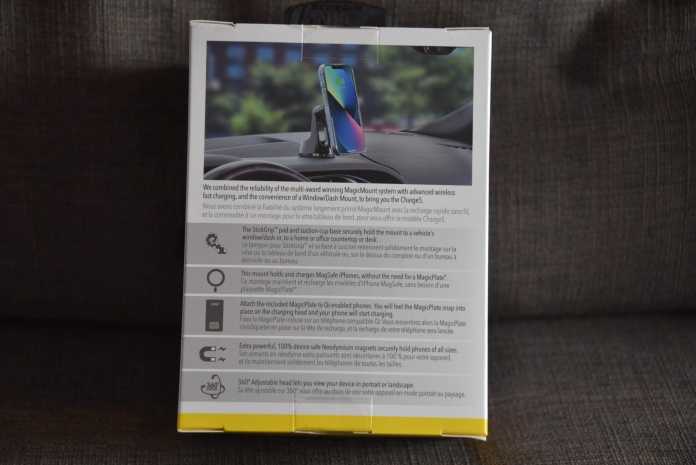
• Certified for safety and compatibility to provide Qi compatible devices with up to 10-Watts of fast wireless charging power 
• The StickGrip™ pad and suction-cup base securely hold the mount to a vehicle’s window/dash. 
• Our specially designed mount head allows you to safely secure and wirelessly charge an iPhone 12, 13 or later device with a MagSafe without having to use a MagicPlate. 
• Attach the included MagicPlate to Qi-enabled phones. You will feel the MagicPlate snap into place on the charging head and your phone will start charging. 
• 360° Adjustable head lets you view your device in portrait or landscape.

What’s in the box?

The box contains the mount, 12v adaptor, MagicPlate, cable management clips and wipe.

A Closer Look

Final Thoughts

Setting up the Scosche MagicMount Pro Charge5 Window Dash was really easy, just follow the simple instructions to place the mount on your Window or Dash.

You can easily adjust the position of the mount, including having it horizontal or vertical, depending on your requirements – its just a case of moving it.

The mount then plugs into the car adaptor which in turn plugs into the 12V port in your car. This enables the wireless charging. There is a small LED on the top of the mount which shows if the device is being charged.

Depending on your current phone and phone case will depend on how you attach your phone to the mount. In my case I have an iPhone 13 in a MagSafe case which meant it was as simple as placing the phone on the mount and it snapped nicely into place. 

If you don’t have a MagSafe case you can use the MagicPlate that is included in the box, along with the template to ensure the MagicPlate is placed in the correct location on the back of your phone – it’s really that simple.

The mount was easy to fit and use, and it held my phone in place securely when I was driving. I liked that the box contained everything need to fit to either the dash or the vent and even had the MagicPlate if my phone didn’t have MagSafe!

If you drive and want to have your phone held securely in place, then you should definitely check out the Scosche MagicMount Pro Charge5 Window Dash.

The Scosche MagicMount Pro Charge5 Window Dash is available now priced around $59.99.

You can learn more from the Scosche website here.