Review: The Riftbreaker

Will mankind ever learn? If science fiction has taught me anything, it’s that we don’t mess with alien worlds. However, we’re stupid, destructive, and greedy! Our desire to find the next big thing keeps us going, no matter the risks. The Riftbreaker has this dangerous and exciting Sci-fi concept at the core of everything it does.

Developed and published by Exor Studios, this is a mishmash of genres set in the distant future. The fun and hectic gameplay demand a cool head, an eye for detail, and a smidgen of luck. With a weak story and laughable characters, you’d be forgiven for overlooking this, yet I strongly recommend you reconsider.

The Riftbreaker is phenomenal, even with its shortcomings. 

Now, I love a fantastic protagonist and gripping story as much as the next person, but I didn’t let this define my opinion. Sadly, The Riftbreaker is seriously lacking a deep and interesting story. Moreover, Ashley, the lead character, is so boring I occasionally let them die just to spice things up. However, every other mechanic pastes over these gaping cracks to create a worthy, albeit random genre title. 

With moments of RTS, Tower Defence, resource management, survival, and top-down shooter, you get a lot of game for your money. The gist of the story is that a company wants to colonise an alien planet called Galatea 37. This hostile world is filled with inhospitable environments and rare resources. You must build bases, defend them from swarms of enemies, and overcome each catastrophic event you encounter. If you survive long enough, you can build a rift to return to Earth and complete your mission.

Battle the swarm.

A standard approach, but so many variables. 

What makes The Riftbreaker so great is the simple core gameplay that runs through every playthrough. Once you have the fundamentals nailed, you can enjoy experimenting with the finer details. With every biome offering a unique challenge and different technology required to tackle each problem, you must be flexible throughout. Whether you are evading the superheat of the desert or trekking through volcanic ash, you’ll have to invest in new tech if you wish to succeed.

However, the exploration elements are but a small piece of this complex puzzle. Base building and Tower Defence are key components. How you design your home and the way you defend it will define your levels of success. Regretfully, the alien swarm likes nothing more than to wipe out your progress. This will infuriate you as they attempt to undermine your power. 

This is where the RPG elements of upgraded equipment and new technology are key! You must research and improve your tech to level out the playing field. I loved how this kept you on your toes and every region and swarm requires a different approach.

Teleport between each region.

The end game is testing. 

I state that I love the constant challenges that each region creates. However, the end game is so testing that I struggled to keep up. With resources to mine, bases to protect, and swarms to destroy, it’s the perfect storm that requires precise planning. You’ll teleport between bases while trying to manage your limited time, and this was stressful. No matter your level of expertise, you’ll find this a tough but rewarding experience.

Though the difficulty will punish many players, the blend of mechanics and the theme work in harmony. Failing in the latter stages isn’t shameful, as it’s all but guaranteed. But with precise planning and a methodical mind, you’ll get the best out of this in-depth title.

The Riftbreaker looks like Halo Wars

I’m not sure if it’s the grimy and earthy colour palette or the futuristic edge that reminds me of Halo Wars. I loved its top-down perspective and alien world. The varied biomes and details of the fauna and flora were brilliant to look at. The action is mostly great, however; I experienced some serious crashes when the screen was overwhelmed. This often occurred in the swamp biome where the Series X and other machines struggle to handle the workload. This was disappointing and infuriating as progress was lost repeatedly. This sadly tarnished the final product and needs addressing ASAP.

The energetic and loud audio was excellent until the protagonist spoke. The acting is dull and leaves a lot to be desired. The dialogue isn’t helped by the lifeless plot, but fortunately, it’s overshadowed by the excellent sound effects. The metallic sounds have a futuristic edge that enhances the brutal nature of the gameplay. The booming explosions, thuds of bullets, and whoosh of your flame thrower bring life to every battle.

Upgrade your Mech.

Many elements = complex controls. 

An eclectic blend of genres ensures that there are plenty of elements to understand. This multi-layered approach is challenging to learn, but a thorough tutorial assists the learning curve. There is no escaping the complexity of the controls, but these are supported by a well-designed UI that helps to reduce screen clutter. Though it wasn’t the most straightforward title to get to grips with, it could have been much harder to play.

Don’t let the learning curve put you off this addictive and rich multi-genre title. The gameplay is moreish and will attract fans from an array of backgrounds. Furthermore, the challenging end game and large achievement list will keep you playing for hours.

The Riftbreaker grew on me.

I didn’t know what to expect when I saw the challenging gameplay and the soulless story. Yet, I’m glad I gave it a chance. The Riftbreaker is a slow-burner that requires patience. Once I understood the fundamentals, I adored what was on offer. If you enjoy any of the aforementioned genres, then you’ll want this. I enjoyed it and recommend you to buy it here! Invading an alien planet was never going to be easy. It’s time to build a base, overcome your foes, and return to Earth safely. 

Review: RiMS Racing

0

Have you ever thought about owning an authentic motorcycle in the future or possibly right now? Well, no more daydreaming or wishing for this to be true, as you can have it all in a digital world, anytime you like! RiMs Racing makes that possible and allows you to have it all, and many more than you ever could imagine. Including all the labor that a real mechanic would endure, and a bike owner will be required to learn to do as well as if it’s for the purpose of racing, as in this game!

RiMs Racing, which is now out for Nintendo Switch is quite a great game and worth playing on the go, especially since the Console makes it portable and playable anywhere! Have all the bikes you want whenever you want to ride them. Plus, the game doesn’t lack any brilliant design, it’s still as lively and lucid as it would be on the big screen. Half of the game focuses on driving one’s dream machine, the motorbike you want, and how you want it to appear. The second portion of the game is the action and racing fun, putting that motorbike to work!

What I have to point out is that this game does deliver! You aren’t left with a lack of excellence when it comes to the motorcycles you can choose. Plus, the ability to work the gears and have the ability to be seated behind the actual bike can be exciting and just exhilarating! The many different focuses you can choose from with the camera just make for an excellent feature. It’s giving the player the ability to drive in comfort from a distance of viewing their rider or being in the actual rider’s seat, where you can view the road upfront. This is one of the features I found that makes this game suitable for many players. Some have different preferences of how they like to view the screen in a game. For this racing game, it’s going to be the road in front of you.

For the bikes themselves, well there are plenty of brands that you can choose from; top quality, elite name brands. I’ve tried the game with the Yamaha, as it’s one name I am very familiar with, but there are even other great ones to choose from, like the Suzuki and BMW. Plus, many more!

When you do start to play the game you are given a freebie, a choice of motorbike. Allowing you a choice of any bike you desire, no need to have a certain amount of cash to choose the one you would like to have. The buying of any other motorbike or the additional parts to add or upgrade a bike will come later. For right now, just choosing a pricy bike is a joy. Plus, this to me was a very charming addition to the game as it’s not just limiting you to choose one type of bike, the lowest cost and less spectacular ride, which is normal in many other racing games. Instead, you get to choose freely, no matter the brand or how pricy and powerful it may be!

Also, for a sim-style game, it may seem to be just focused on the customizing of a motorcycle. However, this is not the only thing that gets to be customized. As the bike needs a rider, which you can customize as well! Even if this is the smallest part of the game, it is still pretty neat to have the ability to dress and design your own rider. Make sure you have a look to fit the bike or just suit your preferences. This is just another way this game makes you feel as if you are really in control, riding on each track, with those wheels burning through concrete.

For a quick view of what I’ve noticed during my gameplay, especially when starting the game, from the beginning is that it may seem quite long till you get to the real races. There is a good reason to appreciate the beginning, as it will set you up and give you that much-needed practice with your bike so you can move forward and become a better racer, like a Pro. After a few times during my gameplay, of course, enjoying the playback of flipping my bike or crashing, I was able to get a hang of the brake and gas pedal so I could move around the track with ease. Each corner gets a bit tough and requires you to go at a certain speed to make the turn. Just like a real motorcycle or if you were driving a vehicle of any sort.

The time spent training and finishing up the few tasks before facing off with the actual racing part of the game has allowed me, the beginner to get a clear idea of how to control and ride my chosen bike. Additionally, it provided me with a clear idea of what to expect on the many circuits I will be racing on. Also, there are these arrows in the beginning. They actually help one control the bike a bit better by using the right speed needed throughout the track. For example, the green is the go as you like, while the yellow and red direct you to slow down and be cautious as the road may require you to turn.

For me, I might have fallen off my bike more than I should have, and still, it’s quite funny to watch over and over. Though, if one wants to achieve the best score possible, the rider must be prepared and ready to take those sharp turns at a slower pace and speed up when necessary while not overdoing it. Really feels like I’m driving an actual bike, even if it’s a game. In addition to driving, you get to utilize a pitstop before continuing on your way.

Another thing I’d like to mention about myself and my experience with this game, I’m not a person who knows much about motorcycles or in other words, motorbikes. However, this game is still quite amazing in how realistic the game feels and what you must do to ride and be a great racer to surpass other players! It takes a lot of work for a beginner and even at the easiest setting, it can still be a lot to take in with the gears and different areas of focus as well as controls needed to ride the bike. Well, I was never great at driving games, but I try to do my best. So for myself to stay inside the path of the tracks while racing can be tricky. However, with some patients and time practicing, I’m getting the hang of it. Additionally, the realistic feature of riding a real bike and controlling one, well that is what it’s all about and if it was easy it wouldn’t feel or be as real.

After all of the racing, it’s just more mechanical stuff with the bike. Taking the time to repair what was used and worn on the bike, which will need replacing and repair. Plus, any new purchases, selling parts you don’t want to keep or need to make money for future upgrades. Also, with each race comes level-ups and earn rewards that can help afford some new additions for your bike or bikes that you’ve got stored in your garage.

Lastly, as mentioned in the beginning, one may daydream or wish they had many bikes or at least one. However, that doesn’t need to be, as this game allows you all the glory of owning all the bikes you want and the space to place them. Plus, top that with becoming a great racer! So that is one giant perk of playing the game RiMs Racing and not to mention you will be able to race in many different circuits all over the world!

Faraday Protocol Out Now

0

Publisher Deck 13, who last year released the globally acclaimed RPG blockbuster CrossCode, delivers another genre breakthrough with a redefined and enhanced first-person puzzler & explorer with a mysterious backdrop story to intrigue. Faraday Protocol is an experience that is not to be missed. – Out Now! PS/XB/NSW –  $24.99/€24.99/£20.99 – PC Steam – $19.99/€19.99/£15.99.

Emergence  / Evolution

After a low profile soft launch and focused feedback from the gaming community, a number of major updates have been initiated in Faraday Protocol. With its unique and challenging gameplay, which adds that extra spark to ensuring it shines brightly, this game reemerges  on Microsoft Xbox, Steam PC, Nintendo Switch and Sony PlayStation 4 /5 with a triumphant boost of creativity.

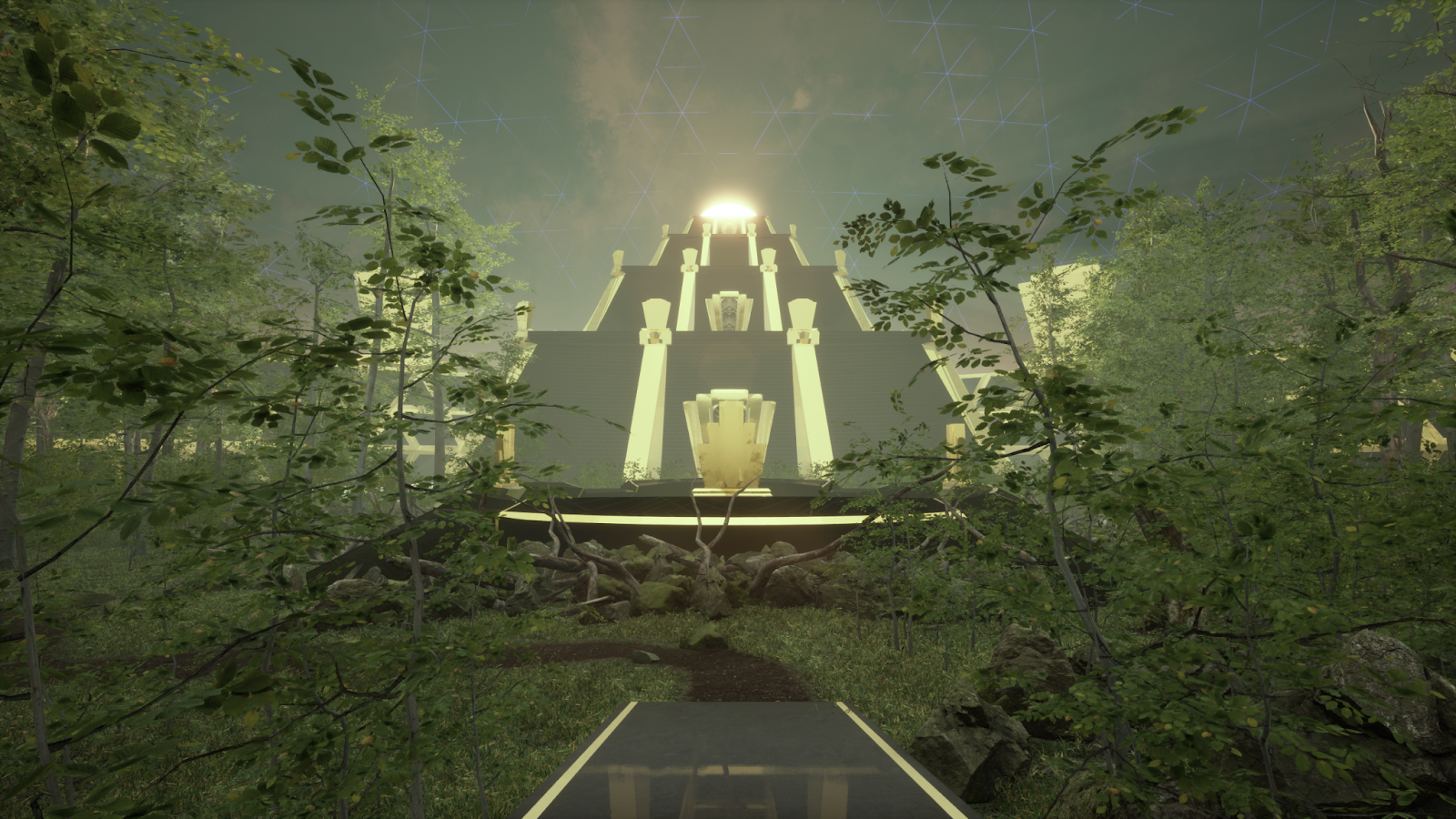
The first puzzle pyramid awaits

Setting New Boundaries

This beautifully crafted first person puzzle journey conjures up intrigue, mystery, and a number of unsettling moments as you experience the atmospheric delights as an interstellar archaeologist who researches the abandoned space station OPIS and its enigmatic governing A.I. IRIS. Developed by the talented Italian developers, Red Koi Box, utilizing the Unreal Engine 4, they have crafted and designed methods unique to this game genre.

Brainy Stuff

All of the mechanics rotate around the Bia-Tool, an original object capable of absorbing and re-distributing specific types of energy. The simple mechanics  evolve over time and allow for increasingly complex and mind-bending puzzles.

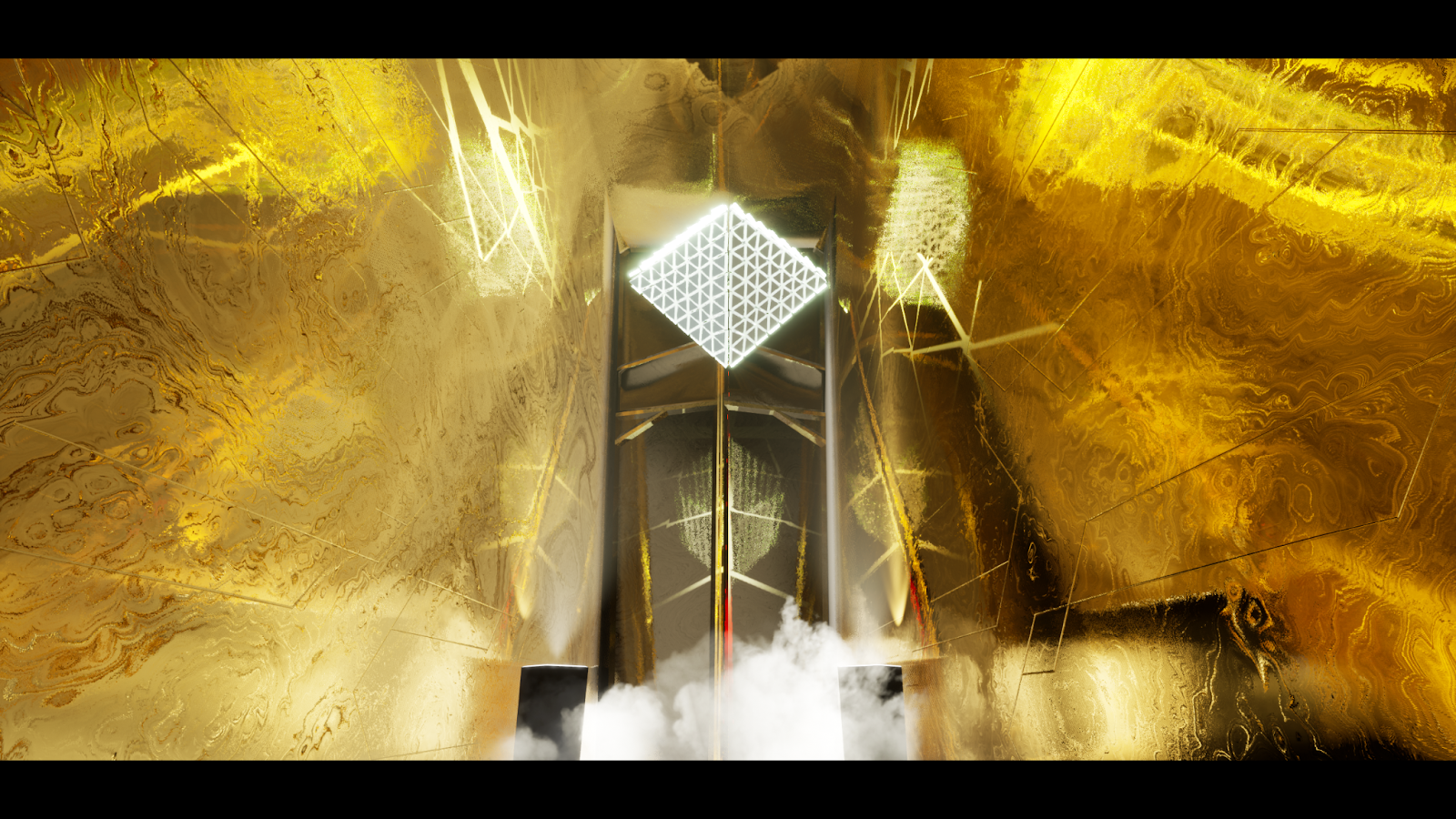
Doors open and puzzlement awaits

Breaking New Ground

Faraday Protocol moves from the traditional ways and follows rules and uses mechanics never used before, and will challenge the grey matter of the player to lateral and logical thinking. The unique puzzle elements combined with the linear game and story progression make this game enjoyable for almost everyone.”, Giacomo Sala, Red Koi Box.

The Story Unfolds and Scene setting – The Challenge Set in a sterile and futuristic world, you are soon thrust into an organic forest-like environment after leaving your spacecraft. In this strange unnerving environment the player will see three Ziggurats (pyramid buildings) and will be led into one, where your intuitive powers of logic and expertise will start. The first building looks clean, sterile and in very good condition, with strong tones of black and gold. Here the player will learn the basic mechanics, and will experiment with them until he will reach the top of Ziqqurat One. Outside night has now come, and more, new mechanics will be introduced. The next building will be decaying, and will comprise a combination of all the player has previously learned. He will then face two other environments, with different tones and feels, which will bring him to the end of the game. Throughout the game, the storyline will progressively grow, as in the beginning it is limited to pre-recorded messages, it will unfold into full conversations with multiple choices.

Ziggurat

Features – Outside the Box

  • Multiple Solutions to succeed.
  • Hidden Collectables – Deviously Hidden
  • Immersive Soundtrack 
  • Puzzle your way through a number of “Escape Room”- like puzzle rooms
  • Absorb and redistribute energy using the Bia-Tool
  • Unravel the mysteries of the abandoned space station OPIS
  • A unique blend of retrofuturism

Faraday Protocol – Its Essence – is a first person puzzler that will test your wits and intelligence. Use the Bia-Tool, an ancient pistol-like relic of an alien civilization, to solve puzzles by bending energy and manipulating enigmatic machinery. Explore the mysterious and abandoned space station OPIS and unravel the mysteries of its governing A.I. IRIS, which slumbers deep at the core of the station. 

Review: The Alien Cube

Lovecraftian horror has a big influence in gaming, as should be expected. The writer’s work is fitting and seems to translate well in video game horror. Also, the weird nature of Lovecraftian stories offers video game writers a free pass to take some creative liberties that make their work easier. For instance, when you are writing a story about alien gods, strange dimensions, visions of otherworldly places and huge tentacles, you don’t have to stick to traditional storytelling methods; you can tell your story any way you want.

Study the Ancient Ones, lose your mind

This new Lovecraftian game, The Alien Cube, takes full advantage of its surreal nature. It’s a very typical story about a man, the protagonist’s uncle, who studies strange things that may or may not have something to do with the Ancient Ones (they do). You control a person who inherits some other strange things from his now dead uncle, and you find out that there’s something eerie going on in his house. The narrative doesn’t really make much sense, and it throws everything it’s got at you without any buildup. You go to the uncle’s house, you find an alien cube, you wake up in another dimension, you learn about a cult that wants eternal life or to merge with their god, you solve some random puzzles and you hear/read a huge amount of exposition.

In the face of your doom, write a letter

It is disappointing that a writer using a setting as otherworldly as this cannot find ways to advance the narrative apart from letters and journals scattered around the place. You find a sunken, derelict place, full of dangers and creepy undertones, only to discover that it’s littered with pages full of information about everything regarding the plot. It’s really as if you are reading letters written by the game itself, addressed to you, the player, so that you understand what’s going on.

The Alien Cube’s environmental storytelling is lacking, but its visuals are excellent; very fitting, atmospheric and just plain beautiful. The game is made by a single developer, who really did a great job in the graphics department. Lighting effects, fog and many types of image filters are utilized to induce the appropriate feelings, and it works more times than not. You’ll explore some dark forests, you’ll visit surreal greenly-lit landscapes, you’ll descend in snowy dungeons and in all instances you’ll want to take some time to admire the visuals. Also, when you’re indoors, in everyday places or otherworldly ones, you’ll appreciate the amount of work done to bring them to life, with many details in the background adding meaning and a sense of place.

Should I run or should I hide?

Sadly, this sense is lost in the narrative, which doesn’t give you a clear purpose and you end up feeling like you’re just skipping from one story segment to the next one, without properly understanding why the character does what he does. Also, the detailed environments create a distraction when you’re looking for a particular object, like a small key, and this sadly leads to pixel-hunting scenarios -the puzzles’ simple, too typical nature doesn’t help: “oh, this generator is empty, find some gasoline!”.

Additionally, the developer has added jump and crouch mechanics that are annoying and underutilized. There are not that many scenarios in which you’ll have to use those moves; you just crouch to activate a button prompt and you jump in frustrating light-platforming bits. The controls are not made for such mechanics, as the input lag is strong and the movement not very tight. Thankfully, you will not find many such instances in The Alien Cube.

Another gameplay mechanic you’ll have to tackle comes in the form of chase sequences that seem totally random. The rules are not clear and are never explicitly laid out, and so you just know that you have to run because the music gets intense and the screen blurs out. In general, most of this game’s rules are left unexplained. You lose health sometimes, but it’s not clear if you made a mistake or not. You are suddenly chased by a creature and you die when caught, without knowing how to respond, where to go, if you should hide or run. This random aspect gives a level of unpredictability to the gameplay, but it also gets annoying after a while. The visual feedback provided in such occasions is just not enough to actually guide the player, and so the game would be better off without these chase-scenes.

A feature that could and should be omitted, unexpectedly, is the voice acting. Most of the narrative unfolds through written text and the protagonist doesn’t speak much, so in most cases you are reading what the character is supposed to be saying. Then, at random, some lines are spoken out loud. The actor portraying our character is very dramatic, even when he shouldn’t be, and the result is a bit campy, especially when you can go for 30 minutes without hearing a word, only to listen to him saying: “I can’t believe this! It’s just like in my dream!” randomly. The inconsistent voice acting creates a disparity that damages the believably of the whole narrative.

Is it scary?

Nevertheless, The Alien Cube doesn’t overstay its welcome. The game’s runtime sits at around 3 hours, with some optional secrets to uncover here and there, and it manages to keep things interesting until the end, albeit based on an incoherent narrative that’s filled with overused genre tropes. If you’re a fan of Lovecraftian stories, there’s a lot to like here, mostly in the audiovisual representation which is excellent. There are some scary parts, many of them consisting of jump scares, but others going the cosmic horror route, trying to give you nightmares through storytelling. It doesn’t always work, but it’s a worthy effort that will scratch your cosmic horror itch, if you have it.

Review: Okinawa Rush

Okinawa Rush is a frantic, fast paced, almost nostalgic game following one simple motive. At first glance it feels like a classic side-scrolling arcade game. With smooth graphics and a niche appearance, but the controls stray from being anything like those in an arcade. Tasked with taking on the role of Hiro, Meilin or Shin, you are responsible for facing off against the Black Mantis Clan. 

And so the story begins

From the moment you start this game the story is put out for you through a backstory animation. You know exactly what and who you are fighting for. Then you get thrown head first into the deep end. I will admit, it took me longer than I expected to understand the controls of Okinawa Rush. At first I just relied on a series of button mashing. Basically any combos I had picked up from Tekken. But after a few rounds and a few frustrating deaths followed by having to start over, I got the hang of what was most effective. 

Combat tends to be fast and fluid, with each character having a multitude of moves. All of which lead to combos, juggles, anything you need to appear a smooth fighter really. There’s also an intuitive parrying system. And the depth to level design makes for some easy escapes in a tricky situation. For a game solely focussing on combat, it definitely meets the mark and has enough substance to keep players engaged. Even when the story is so basic, the combat really keeps it engaging. You can also take on these adventures with a companion, which makes it a lot easier. 

Boss battles and button delays

A few times I definitely experienced a delay between pressing a button to either initiate a move or pick something up which, when you’re swamped with enemies, is far from ideal. As fluid as Okinawa Rush felt, there were definitely delays. Inputs took a few moments to really process and execute. Resulting in me quietly putting my controller down before attempting a level again. Death seems so imminent in this title, but luckily it doesn’t result in being sent back to the very beginning of a level. Plus – once all enemies are defeated that’s them gone for a little bit. 

There are also several conveniently integrated boss battles to really put your skills to the test. Which are admittedly very challenging. I got overwhelmed when fighting a crowd of enemies, let alone a towering boss amongst the rest. Also, watch your step for projectiles and traps as they are very well hidden. Especially if you’re too busy memorising combos to watch your step… (I definitely don’t speak from experience…)

Final Thoughts

The soundtrack for this game is extremely reflective of the nostalgic appearance as well. It all wraps up into a perfect arcade game package. So playing on the Nintendo Switch is just an added extra. In some cases I definitely think Okinawa Rush would’ve been easier if there were a few buttons rather than a whole set of Joycons. It’s definitely a fun game, frustrating in parts, but fun. If you are searching for a fast paced game for a party or just a new adventure with some friends, then I definitely recommend it.

Preview: Priest Simulator

I have played some strange and mind-boggling games in the past. Yet, none have left me quite as confused as Priest Simulator. After investing many hours into its free Steam demo I was left reeling. The core simulation concept is sound, however, the story is so absurd I was left scratching my head.

Developed by Asmodev and published by Ultimate Games, this is a sim game combined with other genres. This single-player, FPS, hack ‘n slash title will make you chuckle while wondering what the heck is going on. The village of San De Ville is quaint but not quiet. Its residents stand up for what they believe in, and this causes friction between the factions that reside there.

Priest Simulator is unbelievably weird. 

I’ve played an eclectic array of simulator titles, so one about being a priest didn’t phase me. Yet, I couldn’t have guessed quite how bizarre my gaming experience was about to be. With lashings of gratuitous violence, begging for funds, and racing around in a small Eastern European car, I clearly don’t know a lot about the priesthood. 

The story is set in a tiny village that is Christian at its core. Yet, not everyone agrees with this religious view and factions begin to form. Christians, Satanists and ‘bums’ (atheists) all share this small community. You control Orlok – a cunning vampire who accidentally becomes the village priest. Moreover, this would be weird enough until you discover what the village is famous for. San De Ville is inexplicably renowned for a deadly chilli eating contest! People flock from around the country to enter and become famous.

The exploits of this event and the village are captured by an ‘influencer’. She wishes to capture every juicy moment while boosting her fame. As I said, it’s bloody odd and makes little sense, but don’t let that put you off.

Watch out for the Satanists.

Just a day in the life of a priest. 

Because it’s a simulation title, there are standard mechanics at play. You must complete tasks, renovate areas, and perform your godly duties. Yet, even these mundane elements have a surreal twist to them. Subsequently, the weirdness increases and so does the laughter. 

Orlok isn’t your normal priest, however, you can’t blame him for being a little unorthodox. After all, he stumbled into the job by accident. Whenever trouble strikes, and this happens regularly, you must use a multitude of tools at your disposal. You may bludgeon your foes to death, lift objects with your powers of telekinesis, shoot them with your shotgun glove, and more. These items can be upgraded on your journey and this improves their durability, power, and strength. 

Alongside the murder, there are some standard housekeeping moments. You will renovate the village or church, clean up graffiti, and complete other mundane tasks. You are also required to collect funds from your followers, quell any uprisings from the Satanists, and spread the word of God.

Once you have completed those tasks, you must tackle exorcisms alongside other jobs. These wonderfully strange tasks make up the core storyline as well as the side quests. Taking on every mission allows you to enjoy a rich and surreal experience. Its blend of genres works well, and though it is strange, and it may confuse you, it’s a brutal and fun ride while it lasts. 

Use the power of telekinesis.

Priest Simulator has great cinematic. 

I don’t play simulator games to be wowed by the graphics, though Microsoft Flight Sim did impress me. Priest Simulator, on the other hand, is a very standard affair. Its world is nice and colourful and great to explore, but that’s about it! The characters are weird but serviceable, yet they are not amazing. Subsequently, it’s pleasant to look at, but it could easily be mistaken for any other sim title. However, one element does stand out, and that’s the docusoap cinematic. The grainy and jittery footage captures the amateur efforts of the would-be ‘influencer’ perfectly. These short scenes broke up the gameplay nicely and were a welcome addition.

Though the graphics didn’t surprise me, the audio fared much better. The excellent combination of voice acting and unusual sound effects will make you chuckle. You’ll love listening to the dialogue and following orders as the creepy voices fill the air. Furthermore, the sound of crunching bones, crashing furniture, and brutal bludgeoning never got old.


The church where it all begins.

A great UI, but the controls are clumsy.

In typical sim fashion, there are plenty of mechanics to understand and buttons to press. Fortunately, Priest Simulator has this covered thanks to its great user interface. The combination of radial menus makes selecting objects and tools an easy task. However, what was noticeable were the clumsy controls. They weren’t as responsive as I’d hoped and this is noticeable when you drive your car. Trying to steer your hatchback was a tedious and unenjoyable task. This was disappointing, as zooming around the village while running down your foes should have been a highlight.

Simulation titles have a tendency to become stale and boring, yet Priest Simulator didn’t. Helped by its absurd story and variety of missions, I found it captivating throughout. In its current build, I cannot say if it’ll have replay value. Yet, if the rest of the gameplay follows suit, it’ll have a niche audience who’ll love its absurdities.

Priest Simulator proves that the righteous path is anything but boring. 

No one would have guessed the Holy path in life would be so exciting. Yet, Priest Simulator proves that being righteous is anything but boring. Its odd story, weird missions, and colourful characters make this a bizarre game you won’t forget in a hurry. It’s free to try on Steam, so you have nothing to lose by playing it. Can you restore the faith in the Catholic Church, or will the Satanists win? Grab your holy water and complete every mission in the name of the Lord.

Summary. 

Priest Simulator will leave you reeling! Its odd story, strange characters and unusual missions aren’t what I expected from the priesthood. Can you convert everyone onto the righteous path? If not, don’t worry, just eradicate the infidels with whatever tool is on hand. 

(Reviewed on PC using Steam. Only available on PC.)

Review: Jetboard Joust

0

Have you ever tried or possibly enjoyed a game called Joust? Well, if you happen to have tried this game, which was playable on a game console with the cartridge or CD; one of the games in the Williams Arcade’s Greatest Hits game collection, You will notice a similarity in the style of how you move about in this game, Jetboard Joust. Additionally, this game also made me think of another classic. Plus, taking into consideration of the alien and space-related theme and visual aspects of the worlds. I get a similar feeling of the game, Defender. These two I’ve played growing up and loved as it’s simple yet like this game, it’s all about shooting and saving the planet from enemies.

When I first tried this game, I already felt intrigued by the introduction. It gives such a clear visual view of how to play the game. Also, it explains how you, the hero of this game, can stop the invasion of these monstrous, alien creatures. What I did want to point out about the game, which was hard not to notice, is the beautifully pixelated scenery and character design, evil or good, were well created! Additionally, music plays an important part. It’s energetic and entertaining, keeping you pumped up and excited to blast those enemies while flying around on a jet board. Just a few levels are all it takes, and the game grows on you. Plus, you can figure out the pattern-style routine and task one must accomplish to get to the next level.

Honestly, it took me a bit of gameplay to realize how this game will keep the gamer entertained. It provides more than just a simple and easy game to play. So prepare yourself for a bit of a challenge and new treasures to be revealed!

I have a few reasons why I feel this game would keep the attention of many players, especially mine. One is the exciting choices of weapons to choose from. The second would have to be the ability to defeat these uniquely designed and challenging bosses, always better with some difficult features they possess and stunning creature appearance to beat. Third, plenty of levels to travel and play through. Lastly, there is always something keeping you going, as there is always a civilian that needs rescuing and many villains to defeat, as you will always be shooting and occupied from left to right of the screen.

While in the game, there are a few different worlds that we will be entering, 5 in total. Each has an original, scary-looking boss we must defeat. Nevertheless, before even defeating the big boss of the world, you must fight a few smaller ones and many other enemies. Your eyes will be working to keep an eye on the left or right of the screen, trying to make sure no other enemy is abducting any of the citizens and changing them into monstrous enemies as well. There is so much going on, which one can’t take some time to slow down! You need to keep on moving and blasting everyone in your way as you jet board all over to save the civilians and the planet! Remember one thing there is no time to slow down or it will be GAME OVER!

The many things that help in this game are the different weapons one may earn when playing the game. The ability to get some upgraded-style weapons to help you defeat the enemies is a pleasure and makes for some fun! I felt that this made the game quite exciting. Having the ability to blast the enemies with more than just a single shooter. I’ve found from the beginning my fave to be the Pulse Cannon. It has this unique ability to come out like a ninja star once fired and even blast into separate pieces to attack and defeat others, causing a better defeat in less time.

I know the game has many others, such as the Phase Mutator, Ion Splitter, and others! All that you need to do is continue through each level and have the reward of accessing many more new weapons that you have to choose. However, it doesn’t just stop there! You can even buy some extra goodies by defeating enemies. Plus, the many diamonds one may obtain when winning a level. It adds up and allows you to buy even more at the end of the level, before starting the next.

I occasionally find myself not buying right away. I always prefer saving my coins till I can afford something big and brilliant. However, there was one thing I’ve noticed, which is a big deal too! You will lose money instantly after each final death, or in other words game over. This is when you lose every life you have, leaving none left, you end up with the choice to pay a fee and get yourself back up or end the game. Even if your game automatically saves after completing each level, There are some issues where you won’t be able to continue if you’ve gotten far and almost finished.

Another thing to note, this game will take longer than just one hour. However, there may be some very clever gamers out there that can figure out each pattern that would keep you from the destruction of your jet board and even yourself. On the other hand, it may take us longer because there are many levels to play through. Plus, different obstacles we must shoot our way through. Each enemy as there is one at the end of each level. Let me say, the small bosses before the giant ones are still difficult.

I find myself intrigued that a few levels are more challenging as you go on verse just a simple shoot and move on the game that doesn’t have anything else to find, gain or even upgrade while playing. It definitely won’t bore or keep you feeling a lack of interest to play. It will always push you to keep going and discovering something new and defeating so many enemies with unique designs and abilities.

Finally, if it’s a game that takes action, classic and pixelated style to suit your gaming needs, this is it! It’s packed with such enjoyment and vigor that you will feel pumped to continue and play for hours. It’s a brilliant action-packed game in my opinion. Also perfect for everyone and very easy to learn what is going on and how to play. I would suggest this to be a fun action gaming fix for a fast-paced action and shooting game!

Review: NEOGEO POCKET COLOUR SELECTION VOL. 1: Steam Edition

Origin Story

Before I could get my hands on my own console (the lovely PS2) my best bet to play a video game was on an arcade machine. Sometimes it was the odd machine sporting King of Fighters in the corner stores of my town. Other times I had to convince my parents to take me to the arcade at the mall and bless me with tokens. 

NEOGEO, without me even realising it, was a part of my love for gaming’s origin story. King of Fighters was the source of some great afternoons. Getting out of school and heading to the store to get a packet of chips, a popsicle and a couple rounds with the change. And then there was one of the titles that really did guide me onto this path, Metal Gear. My absolute number one go-to whenever a machine had it loaded. So imagine my surprise when I see that three entries from these certified classics are part of the NEOGEO Pocket Colour Selection Volume 1: Steam Edition. What a mouthful that name is.

The Lineup

The Pocket Colour Selection is packing ten of it’s classic titles. Namely, SNK Gals’ Fighters, Samurai Shodown 2, King of Fighters R-2, The Last Blade: Beyond the Destiny, Fatal Fury First Contact, Metal Slug 1st Mission, Metal Slug 2nd Mission, Big Tournament Golf, Dark Arms: Beast Buster, and Crush Roller. So clearly you’ve got a lot to look forward to playing, and rest assured there are a few great games to enjoy in this collection. 

However, this brings us to our first problem. Half of these games are fighters. Don’t get me wrong, I definitely enjoy playing a good fighter. But in a bundle of ten entries, what one might expect is variety. When five out of ten belong to the same genre there will inevitably be overlap in experiences, gameplay and mechanics. What doesn’t help this aspect is the fact that it’s a classic set of games from a system with only two buttons used to play. While two buttons aren’t inherently bad, they make that fighter overlap painfully obvious. 

Choose Your Fighter

Although, even with my complaints of an overabundance of fighting games I still can’t help but enjoy myself. They are some well made classics, and it’s easy to see why they were included in the collection. After all, SNK the manufacturer and publisher of the NEOGEO line did excel at pumping out fighting titles. However, the stand outs for me have to be Fatal Fury First Contact and Samurai Shodown 2. Fatal Fury felt like the culmination of the previous entries in the collection coming together. Lending their strengths and sweet combo animations, while being improved upon as well, to become the best version of themselves. Plus it had Geese Howard as a playable character, who had become a favourite of mine not too long ago as a DLC fighter in TEKKEN 7. 

Samurai Shodown stood out to me as it had a bit of a different feel to the other fighters in the collection. I’m also a sucker for the whole Samurai theme and combat style, so that may have played a part. Fights feel more technical, restrained and just a tad tactical. I mean, you’ve got a button dedicated to fake outs that, against a real player, can come in real handy to bait an approach in order to counter attack. 

Speaking of real players, you can also play through many of the games in the NEOGEO collection with a friend via remote or local co-op. This is where the range of fighting titles really makes sense. Out of all the games here, these would be the most fun with a friend. Especially if the two of you played some of these titles back in the day. The nostalgia alone could be worth the purchase.

I Love You, Metal Slug

My favourite game out of the entire Pocket Colour Selection has to be Metal Slug. I may have played more King of Fighters with friends. But Metal Slug will always trump that as my favourite. When I was a kid we’d go to this family restaurant called Spur that had a play area for children. Inside this play area they had set up some games. There were couple of PS2 titles which was great of course, but there was always a line. So instead of waiting in line, I opted to go to some of the less crowded arcade games. This lead me to the holy grail. Metal Slug (though I can’t remember which). I swear I enjoyed Spur for this game more than the food. As soon as we’d grab a table I’d ask if I could go play. 

Therefore, I more than enjoyed playing through a childhood classic again. And honestly, both Metal Slug 1st and 2nd Mission really hold up well. It was and still is a great run-and-gun game, with a surprising amount of variety to it. When your boots are not on the ground, you can find yourself in a jet, tank, boat, submarine, or even rocking a jetpack. The game is just non-stop frantic action that rewards careful maneuvering and quick decision making. It’s safe to say that Metal Slug elevates my score for this collection. However, we still have a couple more games to look at.

Golf, Tentacle Guns and (not)Pacman

Big Tournament Golf really surprised me. I was so ready to just write it off. It’s just golf. There’s not too much to write home about. You pick the best golf club for the distance of the hole, adjust your angle for the wind conditions and shape of the course, and swing. From that description alone, I’m already yawning. And yet, there was something that drew me in. It’s a really simple, but really fun and relaxing experience. I put on some good music, and lost an hour trying to shave a couple of strokes off my game. 

And then there were two. Dark Arms: Beast Buster and Crush Roller. Let’s begin with Dark Arms. When I first loaded it up and saw that it was an action-RPG with firearms I was genuinely excited. It starts off a little slow. In fact, at first I was convinced that the game just wasn’t for me. However, as you progress and gather the resources to develop and improve new weapons, it starts to really come into its own. It’s definitely different compared to the other games, which makes it a breath of fresh air after the plethora of fighters and the side-scrolling Metal Slug. And it’s got a tentacle arm weapon, so that’s a plus.

Finally there’s Crush Roller, which was probably my least favourite game. Not necessarily bad, but nothing you haven’t seen before. It’s essentially a Pacman variant. It does take a couple steps in a different direction, such as paths that overlap like an underpass and bridge. This makes for a bit more variance in maneuverability. However, it didn’t feel all that enticing, especially when you could just go play Pacman.


Overall the NEOGEO Pocket Colour Selection is a solid lineup of some classics that you may have missed, or played a bunch when they first released. Sure half of these are fighting games, and there may be one or two games that don’t interest you at all. But those that do may be enough to check this collection out. Metal Slug alone is enough to convince me, if that wasn’t already clear. Either way you should be in for a reasonably good time, which might turn into a great time with a friend.

Review: Globber Flow 125 Scooter

With Christmas not that far away, we take a look at the Globber Flow 125 Scooter from Plum.

Previously known as the My Too Fix Up.

The Flow 125 is a stylish scooter for 6 years plus. The robust materials and 360° front wheel spin make the scooter ideal for stunts and intensive use.

The adjustable handlebar allows the scooter to grow up with your child. The non-slip deck and handlebar grips ensure your children are in full control of the scooter and stay safe as they ride.

• 4-height adjustable T-bar with super-wide curved aluminium handlebars
• EVA foam grip tape
• Triple reinforced deck structure (aluminium supported & bi-injection composite deck with EVA soft foam grip tape

The revolutionary design of the Flow 125 scooter makes it perfect for intensive use. The ultra-reinforced structure, high-density grip, front fender, double clamps, and high quality ball bearing wheels ensure a smooth riding experience.

The scooter deck is made from a non-slip EVA foam giving you maximum grip.

Designed for older children, the Flow 125 comes with a longer covered rear brake than the three wheeled models.

The height adjustable Y-bar (curved) makes this scooter suitable for children from 6 years old up to teenage years.

What’s in the box?

The box contains the scooter – in two pieces, two hex keys and instructions.

A Closer Look

Final Thoughts

Putting the scooter together was really simple – just slot the T bar into the base and tighten up with the included hex keys.

Then raise the T bar to the correct height for your child and that’s it – all in all took less than 5 minutes to get ready to go!

And go my trusty review assistant did – he loved riding around on it – he said it was fun to use, easy to control and he could do some “stunts” on it.

The scooter itself felt very sturdy and was easy to carry around.

If your child is looking for a fun scooter than you really should take a look at the Globber Flow 125 – it’s a lot of fun – it’s a shame I can’t have a go on it!

The Globber Flow 125 Scooter is aimed at children aged 6 years old and up, is available in Black, Blue, Lime Green, Red and Ruby and retails for around £74.99.

You can learn more from the Plum website.

Disclaimer: The Globber Flow 125 Scooter sent to us for the purposes of an honest review. All opinions are the opinions of our reviewer.

Review: PJ Masks: Heroes of the Night

Superheroes come in all shapes and sizes and their antics span many genres and platforms. Their hard-hitting work ethic, colourful or sexy outfits, and witty one-liners attract the attention of fans from many generations. I admit, I love a good superhero tale and I’m desperate for my children to follow suit. I’m hopeful that PJ Masks: Heroes of the Night is the key to getting them hooked! It should be the perfect option thanks to its simple gameplay, vivid colours, and lighthearted plot.

Developed by Petoons Studio and published by Outright Games, this is a side-scrolling adventure title. Its single-player action allows your little ones to put on their PJs, gain superpowers, and save the world. Though this is perfect for a younger audience, more mature children and adults will find the action tedious, stripped back, and repetitive. However, keep in mind that it was created primarily for a very younger audience, so complexity is out of the question.

PJ Masks: Heroes of the Night was a hit with the kids.

If you are familiar with the franchise, bear with me while I cover the basics. The cartoon comprises three children who are ordinary by day but gain superpowers at night. They are Catboy, Owlette, and Gekko, and between them, they quash evil plots and save the unsuspecting city. PJ Masks: Heroes of the Night captures their heroic exploits as they stop Romeo, Luna Girl, and Night Ninja’s dastardly plots.

So, the story isn’t going to win an Oscar for originality, but it matters not. My kids loved exploring the familiar locations while tackling the well-known villains. Each level is easy to overcome thanks to the simple objectives and repetitive structure. This deja vu approach was painful to watch, yet my kids adored the rigidity and basic gameplay. 

Enjoy the break from side-scrolling action.

Faithful adventure mechanics with a basic twist. 

PJ Masks: Heroes of the Night stays faithful to many much-loved adventuring mechanics. You must explore, collect items, and overcome bosses while using your special powers and teamwork. The developers have cleverly incorporated each of these elements while maintaining a simplistic approach. Every task has a clear UI associated with it, and verbal commands guide you throughout. Sadly, however, as an observer, this made the action tedious and mind-numbing! But my kids loved the user-friendly style and the lack of parental guidance.

The gameplay reminded me of the Paw Patrol franchise, as the similarities are uncanny. In this, you must collect two hundred gems and three hero symbols. In PP it’s pup treats and dog tags. There is also a focus on basic movement and the need for certain characters to perform specific tasks. Subsequently, there were smiles all around, as each playable character was used equally on every stage.

Disappointingly, though, every key task was either automated or restricted to one-button mini-games. Now, I know Petoon Studios is focused on a child-friendly approach, but this was perhaps a step too far. An option to adjust the gameplay would have been welcomed, especially for older siblings. Furthermore, there was a fun inclusion of vehicular levels. These character-specific rides broke up the standard side-scrolling approach and added some much-needed variety. 

Use your super cat speed.

PJ Masks: Heroes of the Night is not “Next Gen”, but it looks good regardless. 

Gamers are screaming out for ultra-realistic or movie quality graphics. Unfortunately, PJ Masks: Heroes of the Night is nowhere near that level, yet it looks good, regardless. Utilising the familiar cartoon style, fans of the franchise will love controlling their favourite characters. Sadly, though, each level is painfully repetitive in both look and design. Fortunately, however, the developers attempted to counteract this with minor theme changes, but the lack of complexity was alarmingly obvious on every stage. 

Unfortunately, ‘Groundhog Day’ didn’t stop at the graphics. No, the audio was pretty repetitive as well! The characters keep repeating the same instructions about collecting gems or climbing walls. It was infuriating to listen to, yet my kids loved the encouragement and gentle reminders. Moreover, they also enjoyed the similarities to the TV series thanks to the excellent action and high-energy soundtrack. Though I wasn’t its biggest fan, some of the dialogue was witty and it made me chuckle many times.

Work together and take down the baddies.

Straightforward controls. 

The developer’s understanding of its key audience was spot on! How they approached the button layout and the simplicity of the controls was excellent. Unlike some kids games that require parental guidance, PJ Masks: Heroes of the Night, does not. The on-screen reminders and barrage of audio commands assist the little player’s abilities in playing this unaided.

Though the gameplay was repetitive and easy, my kids cared not and they’d have played this for hours if allowed. Fortunately for more skilled gamers, there is some replay value thanks to the collectables and stage scoring system. Furthermore, the achievement list demands perfection, so it will require you to invest many hours even though it’s not challenging. 

PJ Masks: Heroes of the Night is simple, colourful, and perfect for kids. 

I wasn’t a massive fan of PJ Masks: Heroes of the Night, however, what I think matters not. This isn’t a game aimed at adults and its key audience in my household adored it. They loved the colourful graphics, loud audio, and silly story. Becoming a superhero was great fun and I’m sure your kids will love it too. Therefore, I recommend you buy it here! Put on your PJs, become a hero, and stop those supervillains.

My video review with footage captured from my Xbox Series X, enjoy!

Review: Despot’s Game

Despot’s Game is a rogue-like battle simulation game from Konfa Games. You control a band of useless humans who have woken up in a bizarre other-worldly labyrinth with no memories, some weapons and only one goal – survive. Unfortunately, achieving that goal is not really on the table as sacrifice is the name of the game. You’ll build up your army, equip and train them for battle and then let them loose, hoping that your army will kill all of the enemy troops before they kill all of yours. 

Aesthetically, Despot’s Game draws a lot from two of my favourite rogue-likes of all time: The Binding of Isaac and FTL: Faster than Light. It also has theming similarities to ‘the thing that all journalists have to compare all things to in late 2021’ – Squid Game. But despite some similar vibes, Despot’s Game is 100% its own thing, maintaining some seriously innovative gameplay and styling choices. I’ve been thinking of it as what would happen if the FTL developers went through a horror-movie style world-outlook-altering event that left them scarred and jaded and then decided to develop a sequel to their crew-managing genre-defining smash-hit. I think that’s enough hyphens for one sentence.

You don’t control your army directly. That would be far too easy for them – having a gaming god like you in control of all their actions. Instead, all of your battles are fought by the game’s AI. Each of your humans attack their nearest enemy, attacking and using their special abilities as often as they can. The one thing you do control is the arrangement of your army so you can put your strongest melee fighters closest to the spawn point of the enemies and keep your ranged fighters and healers at the back of the pack. This does feel a little frustrating at the start of the game, where you only have a few humans to throw against the hordes of enemies and where you desperately want to tell your medic to heal fighters rather than trying to use their stretcher to beat enemies over the head. But, as the game progresses, it is not feasible for you to individually control an army of dozens of humans in the fast-paced combat of Despot’s Game, so the computer taking charge does make a lot of sense.

To give your army a chance at beating the overwhelming numbers and behemoth-like power of the enemy units, you’ll need to strengthen their numbers and strengthen their strength. As you travel from room to room through the labyrinth there are several ways you can level up. When you defeat a room, you are almost always presented with a shop where you can spend the Tokens you collected in the fight. Within these shops, you can buy naked humans incredibly cheaply, much like on certain websites on the internet. However, these humans are very weak and puny without a specialism, so you can also buy weapons to equip your humans. The type of weapon you equip to a person determines their type (fighter, ranged, medic, etc) and the more humans you have in each type, the more effective that type becomes. You’ll come across rooms that provide a special ability to a class, for example healing for a percentage of damage dealt. You can also spend Tokens in a tech tree to level up all of your characters to use their abilities more often, have more health, etc.

All of this comes together to put you, as a player, in more of a middle management position, where you’re controlling the training and key competencies of your workforce rather than micromanaging their everyday combat. This is a great set-up that I’m very much on board with, but I don’t think it would hurt to add a little more complexity to this management system. What I’ve described above is a comprehensive view of all the tools you have at your disposal and, as they are the only way you interact with the game, I could definitely take more facets and intricacies to their deployment.

The final way you can impact your army is through special events that occur when you move between floors of the labyrinth. These events are little story-focused random encounters where you’re given a set-up and have to choose one of the options of how to interact with the situation. Think of the multiple-choice text adventure sections in FTL and you’re on the right track – which is great because those sections are excellent and this feels very similar. Your choices can reap rewards like bonus tokens or weapons but can also lead to you losing a faithful member of your army if you don’t choose correctly.

I’m not saying that Despot’s Game is better than FTL, firstly because they’re different enough that it’s difficult to draw a direct comparison and, secondly because ending a sentence with ‘…is better than FTL’ is punishable by death in my household unless the phrase is immediately preceded by the word ‘nothing’. That being said, Despot’s Game sure does channel some very similar energy to FTL and, if like me, you’ve played FTL to death and you’re itching for some new content then Despot’s game will certainly scratch that itch. It’ll scratch it so hard you’ll have skin sloughing off like someone with eczema midway through being dusted by Thanos. I had a really great time with Despot’s Game. It has vibes of some brilliant games that I especially love and, while it does lack a little complexity, it is certainly a fun and challenging rogue-like romp that’s easy to pick up and play. If you can get over the ease with which you’re prepared to sacrifice individual members of your army for the good of the whole, there are definitely worse ways to wear away your finite hours in this mortal realm than playing Despot’s Game.

Review: Saint Kotar

Saint Kotar brings back the point and click genre and ultimately fails.

Saint Kotar has a decent plot, but never improves

We begin in a strange town in Croatia called Sveti Kotar. We play as two protagonists, Benedek and Nikolay. Nikolay is married to Viktoria and Benedek is her brother. Benedek is a monk who never doubts God, while Nikolay’s belief slowly deteriorates. Viktoria has gone missing and the town is eerie and amiss. As we begin the story we quickly find out that it seems Viktoria is behind the recent deaths in the town. Benedek believes them, while Nikolay refuses to believe it. This could create a good dynamic, unfortunately not much is done with the duo. There is a cult within the town with mysterious deaths occurring as they mention ‘moon ghouls, yellow masks and occultist activities’.

The town itself is the best part of the game. It’s disturbing as characters from the town say it is cursed. All the characters are strange and seem to hate their own town. Many of these characters unfortunately aren’t interesting simply because of bad dialogue and voicing for them. The other areas don’t have the same atmosphere with the exception of the castle. You can also unlock early endings such as dying early or simply leaving the town, except they felt more like a ‘you died’ screen rather than a possible ending.

The game runs fine bar the exception where I had to restart the game twice because Nikolay wasn’t walking where he was supposed to, so I was just stuck being able to do nothing. The game can also give some very tedious tasks like having to find the right grave and having to look at around twenty to get to the right one.

Trying to find the right grave.

Awful script and voice actors

I try to look at the positives for games, however Saint Kotar had none with the dialogue and voice acting. None of the characters were even likable with how dull and wooden they were. The dialogue was unrealistic and robotic at the best of times. For example when playing you ask a receptionist about a bricked up passage and ask what’s up with it and his response is ‘its bricked up’. The game is so overloaded with dialogue, with a lot of it not even being interesting. The dialogue is dragged out with awful voice acting, one character named Dr Kabeer made me laugh when he spoke because it was obvious it had been recorded with a poor quality microphone from home making him sound incredibly out of place of the other characters. The voice acting is either over dramatic or they have little reaction to the situation.

Saint Kotar has lots of dialogue to click without a response from any characters

The dialogue choices can be strange with you having to choose three different choices in a row without a response. It just seems strange to make the player do this when there’s no need and it happens quite a lot. For a game that has no gameplay I can’t understand how they didn’t place more importance on voice acting and dialogue. It was interesting at first, yet it throws fetch quests in a game that roughly takes six to eight hours. The story had some interesting points, however the poor characters and voice acting decreased its value. The story was decent, but with all the bland writing it made it hard to care at all.

I couldn’t recommend Saint Kotar to anyone. The game feels dragged out for such a short plot and it was a struggle to keep playing. The game works, but what’s in the game is poor quality. For a point and click game the plot and dialogue must be good since that’s the focus. The plot had potential, other than that it was always going to be poor.

Review: Black Widow: Recharged

The era of remastered games is well and truly underway. However, many of these great titles don’t need to be revisited. The wonderful graphics and excellent stories still look as good today as they ever did. Yet, the older games could do with a modern polish. So when I was offered Black Widow: Recharged, I was intrigued. I have recently enjoyed looking at Centipede: Recharged, so I was hoping this would also capture that old-school charm.

Developed by Adamvision Studios and SneakyBox and published by Atari, this is a classic twin-stick shooter. Relying on moreish action and fast-paced gameplay, this is an arcade staple. Its unforgiving mechanics and difficult challenge mode will punish the best and most hardy of veteran gamers.

Don’t let the money go to waste.

Black Widow: Recharged is annoyingly good.

When I played Centipede: Recharged I was dubious that the same team of developers would recreate the brilliance of the original, I was wrong. When I loaded into Black Widow: Recharged, I was less sceptical, and wow, they didn’t disappoint me. The madness of the gameplay is infuriatingly good thanks to the thirty challenges, couch co-op, and endless arcade mode.

Every ounce of your being desperately wants to top the leaderboard and get the high score. Yet, every flying critter you face has different plans. These exploding and fast-moving nightmares stop you in your tracks and kill you instantly. The pain of missing out on the top spot is enough to make you scream or cry, yet you brush yourself down and go again.

Avoid the hornets.

No story, but who cares!

If you love your story-driven games and deep emotional scripts, you’re not getting that here. Black Widow: Recharged has only one concern, the destruction of every bug. Whether it’s mosquitoes, hornets, flies, or more, you’ll keep shooting until you can’t shoot any more.

The titular black widow is the beast you control. This aggressive arachnid is strong as hell but lacks health. His flaws require you to plan your approach, as going out all guns blazing is a sure-fire recipe for disaster. You must utilise the many power-ups that the glowing bugs drop when they are shot. You’ll collect rapid-fire, acid shots, the ability to slow time, and so forth. There is also the chance to fire a deadly web that kills everything in its path.

The volume of weapons at your disposal, combined with the variety of foes you face, makes each encounter fascinating. With enemies flying in from any direction and obstacles repeatedly blocking your path, victory is hard-fought, but oh so rewarding.

Black Widow: Recharged has a brilliant modern look.

Though all the mechanics and core ideas are the same, the finished product looks amazing. Its contrasting tones are striking and the use of explosives and vivid colours make each element stand out. The fixed screen perspective captures all the hectic action within its small viewing window and this was excellent. With everything squeezed into one tiny space, it was brilliantly claustrophobic and confusing to look at. Subsequently, this increased the challenge and added to the frustration. Moreover, the small screen captured the arcade vibe, keeping it faithful to the original. 

The desire to stick to the original format continued in the high-energy and shrill synth audio. The loud aggressive music combined with ear-splitting sound effects creates an uncomfortable but brilliant gaming experience.

Exploding bugs, who’d have thought it?

Point and shoot. 

I haven’t always seen eye to eye with twin-stick shooters. However, Black Widow: Recharged is simple to play. Its lack of complexity allows you to focus on the overwhelming waves of enemies instead of the button layout. Subsequently, this allows veteran and new gamers to enjoy the fun while levelling the difficulty curve. 

The ease at which you can play this is great, but what makes it moreish is the thirty challenges you must overcome. Furthermore, you’ll adore the incentive to top the leaderboard and the ability to play with friends. Fortunately, every playthrough is unique and you choose how you wish to take down your foes.

Black Widow: Recharged brings arcade gaming to modern consoles. 

I loved Centipede: Recharged and Black Widow: Recharged is just as good! Its hectic gameplay, striking graphics, and addictive content will keep you playing for hours. Its simple yet challenging approach brings arcade fun to modern consoles, and I loved it. It’s hard and frustrating, but I recommend you to buy it here! Pick up the power-ups, dodge your foes, and aim for the high score. 

My video review with footage captured from my Xbox Series X, enjoy!

Review: Sunshine Manor

Nightmare on Elm Street is a terrifying film. On its own, the notion of a man with too little flesh and too many knives murdering me in my dreams is plenty scary, and the movie knows just how to twist this idea, taking it places that never fail to shock or awe. I can’t help but feel, however, that Freddy Kreuger would be significantly less frightening if his pants fell down every time he tried to chase someone down a winding hallway or moonlit street. Sunshine Manor is a game I frequently caught with its jeans around its ankles. It’s survival horror by way of the Super Nintendo, and while it seems intent on frightening its players, its attempts at eliciting a sense of dread are undercut more often than not by a lack of tonal clarity and near-constant technical frustrations.

The year is 1980. You play as a young girl named Ada out on halloween night with her friends, so naturally it isn’t long before you find yourself trapped inside an ominous mansion, forced to navigate the dastardly puzzles and grotesque apparitions the house has on offer. This story’s protagonist is Sunshine Manor’s most confusing narrative decision, and the one chiefly responsible for the game’s ever-present jarring oscillation between humorous and eerie. The vast majority of Ada’s lines are prompted when the player interacts with objects in the environment, and tend to express a detached curiosity in the pervasive gore and death comprising her surroundings. Not only do these insights into the game’s world sap most scenes of any discernible emotion, but they make me question the entirety of Sunshine Manor’s intent as an artistic work. At one point, after ruthlessly dismembering a comparatively docile demonic entity, Ada proclaims “Holy moly, that was insane!” Is this meant as an earnest depiction of a small child reacting to such an event, or as comedic relief designed to erase any horror that might’ve been briefly achieved? There are numerous scenes throughout the game unquestionably intended to be humorous, and yet still countless others which strive to be taken seriously but come off just as silly. Perhaps this inconsistency is an elaborate attempt at subverting the genre itself, meticulously constructed to create the very sense of uncertainty I’m criticizing. But if this is the case, and Sunshine Manor has executed its vision flawlessly, I feel that vision accomplishes less than committing to either horror or parody would. 

Mechanically, Sunshine Manor is eager to dip its toes into all of horror’s staples, and its attempts at variety succeed about as often as they fail. Your time in the mansion is primarily spent solving inventory-based puzzles from a 2D top-down perspective, but there’s a sort of rudimentary combat system in place as well, which – while by no means complex – serves as an intriguing addition to the archetypal “walk slowly from creepy foyer to creepy kitchen” formula. Your actions are governed by a stamina bar, which you can deplete by either dashing or attacking. The former grants you a sudden burst of speed, but proves risky as there might be an ambush waiting around the next corner, and if you’ve exhausted your stamina you’ll be left temporarily defenseless. This dynamic provides a palpable tension as you traverse the manor’s creaking floorboards and overgrown gardens, intent on making optimal use of your limited move set. While the puzzles here are engaging enough, the act of solving them is made a chore by the mansion’s sprawl. Rooms are vast and often all but empty, and despite having to visit every inch of the place in order to uncover its secrets, the house offers little in the way of branching paths or hidden shortcuts. There is no option for strategically planning routes toward your desired wing of the manor, and thus no reason to care about or familiarize yourself with its intricacies beyond the bare minimum required to get from point A to point B. 

Alongside exploration and puzzle solving, boss fights complete Sunshine Manor’s mechanical repertoire. These bouts are inserted sporadically throughout Ada’s journey, punctuating each of its roughly five narrative sections. Despite their inventive visual and auditory design, these encounters, too, extend well past fun and firmly into tedium, necessitating survival of the same two or three attack patterns for minutes on end, repeated ad nauseum. Similarly to the game’s writing, I feel these battles have a spark of passion at their core, made dim by a lack of focus, or perhaps a focus on too much at once.  

Like its titular house, Sunshine Manor seems to be the victim of a terrible curse. No, it didn’t delete my desktop applications or make blood spurt from my laptop’s USB ports, but I couldn’t help feeling like the game’s multitude of bugs were crafted by some gnarled witch specifically to torment me. Certain items inexplicably disappeared from my inventory, while others duplicated themselves, taking up slots I needed for puzzle-necessary objects. The title screen itself is almost entirely non-functional, as its “continue” feature simply launched me to the beginning of a new game each time I attempted to employ it. This particular issue was compounded by the way Sunshine Manor handles death. When your health is depleted, you’re sent back to the menu screen rather than to a checkpoint, so each time I died – because I couldn’t load my game from the menu – I was forced to begin anew, watch a roughly three-minute opening cutscene, and then manually load my save before being able to play on. I put in considerable effort to be frightened, to be engaged amidst the frustration and the artificial difficulty that arose from these glitches, but Freddy Kreuger ceases to be threatening once you’re helping him pull up his khakis.

Developer Fossil Games’ latest foray into pixelated perversion is an odd beast. There is undeniable talent on display in Sunshine Manor’s art and especially its sound design, which enlivens a setting made otherwise redundant by the past decade’s countless other 8-bit horror escapades. This passion, though, is so often overwritten, so often siphoned of identity by a game reluctant to pick a direction and stick to it unwaveringly.