Ceton Megatron – Building My Own

19

Well in keeping with Tim’s naming convention I will name this build Ceton Megatron

Contrary to the name this ITX Build is small but handle my demands with ease

Due to my lack of time I will condense this build explanation to an all in one

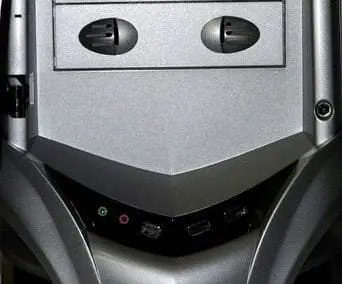
Case: Lain Li PC-Q07 I looked at the PC-Q08 but I like this one better

PC260924 PC260928 PC260942

I Chose the Zotac 9300 ITX

PC260926PC260932

1

I put an Intel E7500 2.8 Core 2 Duo CPU 45nm overclocked to 3.1 @ 37C Idle

2

More Information on the Tranquil PC SAFE Windows Home Server

Last week we brought you the first details on Tranquil PC’s SAFE Windows Home Server.

Over the weekend, Tranquil PC have release more information, and more SAFE Windows Home Server articles on the Green-PCs site.

The Safe Server Module (SSM)

The SSM is designed specifically to be housed in a SQA-5H Home Server.
(It may be possible to fit it to other Home Servers too)

It comes delivered with 2x 500GB 2.5” HDDs, prepared in a RAID1 mirror array, including a Tranquil build of Windows Home Server (PP3) for either the Series 1 or Series 2 SQA-5H.

It can simply be added to an existing SQA-5H – and the Server initialised again (loosing the DATA), or you can Restore the Home Server with the supplied new DVD, with the SSM fitted and recover your DATA *

Priced at £169.00 + VAT, the SSM represents excellent value for money, bearing in mind the system protection it offers, and ease of replacement of the primary (OS + DATA) HDD.  You also will receive a desktop application to help you to monitor the SSM, and also setup email messaging to alert you to the status of the SSM.  You will also be able to re-use your existing HDD1 as a server storage or backup drive !  As a thank you for purchasing, you will also get a licensed copy of the AVA Media CD ripping engine too on the Restore DVD and SSM

The SSM is available from 1st February 2010, and can be ordered on-line here

What’s in the box

  • SSM with 2x 500GB HDDs preset for RAID1
  • Desktop Application software for monitoring / messaging
  • New SQA-5H Home Server recovery DVD, supporting the SSM
  • A FREE copy of the AVA Media CD ripper is also included on the DVD (worth £49.00)

Available for :

  • SQA-5H Series 1 (330)UK
  • SQA-5H Series 2** (D510) UK
  • SQA-5H Series 1 (330) German
  • SQA-5H Series 2** (D510) German

The SQA-5H-SAFE Home Server

This is the world’s first OEM Home Server fitted with the innovative Safe Server Module (read all about the module here). Ensuring that all your data, as well as the operating system is protected. It’s a fine mix of the latest Windows Drive Extender (DE) technology for extendable / flexible / safe data storage blended with the established hardware RAID technology to protect the OS and primary data hard disk. Priced at £569.00 +VAT

sqa5hsafe_thumb1

Features :

  • 2GB Memory
  • RAID1 2x 500GB 2.5″ HDDs preconfigured
  • 4x spare HDD slots
  • Server recovery pack
  • Includes the AVA CD ripping engine
  • 3 year warranty
  • Desktop application for Safe Server Management / Messaging

The SQA-5H-SAFE is available from 1st February 2010, and can be ordered on-line here

What’s in the box

  • SQA-5H-SAFE Home Server
  • Power Supply (country specific cord)
  • Software / Media kit

Windows Home Server PP1, 2 and 3 pre-installed
Media Pack, with Start-up CD, Restore CD, Restore DVD and USB boot key
AVA Media CD ripping engine
iTunes Server
Logitech Server
Safe Server Module Monitor

Available in English / German / French operating systems

Notes :

* – take care that you have enough spare capacity – ie the SSM is a 500GB device, if you have a SQA-5H-3000 with 2x 2TB HDDs fitted, and BOTH are pretty full, you will not be able to provide 100% folder duplication (initially) until you have set up the SSM, then re-added the second 2TB drive as a new pool device.

Full advice is provided with the SSM, on how to install / upgrade existing Home Server installations

** – Series 2 Home Servers were introduced on January 5th 2010.  If you bought a SQA-5H before that date it will be a Series 1

The are a number of articles on the site, including detailed information on the module and how to use it.

We hope to get our hands on one of the modules shortly for a proper review – so watch this space.

Test the SSM in a non Tranquil Home Server ?

The SSM is designed to drop into the SQA-5H HDD caddy.  It has not been tested yet in other Home Servers, i.e. HP, Acer, etc Home Servers –if you have a non Tranquil OEM Home Server and are based in UK, and would like to test / evaluate the SSM in your device – please contact research@tranquilpc.co.uk – we will discuss supply of a ‘blank’ SSM (no Tranquil Home Server OS) – whereby you can run your OEM Home Server Restore application, to image the SSM.  Please note there would be no SSM Manager application / service running.  The purpose of the test is to ensure physical and BIOS compatibility only – the SSM will otherwise function as any HDD1.

Now We Know – Internet Explorer has stopped working – Again!

My Internet Explorer crashed all the time. I mean crashed a lot. I could not explain it (or fix it)and since it had been doing it since right after the fresh OS install I was very frustrated. Performance was poor and the messages were driving me crazy. Does this happen to you? Do you happen to use Skype?

image_thumb25

My original article for tuning up Internet Explorer can be found at:

https://moviesgamesandtech.com/2009/11/25/now-we-know-internet-explorer-self-help/

So, this morning Windows 7 finally gave me the answer. It had never specified Skype was an issue before today. This is just the add-on of course and not the Skype program.

24 times? Yeah, time to disable it. I would have never thought this was the issue and I do not know why Windows 7 did not tell me before. I have had this OS since October 22!

Skype1

Disable the Skype Add-on

Tools>Manage Add-ons:

Skype2

All fixie. No crashes all day. If you use the Skype Add-on then you might want to leave it alone but I do not want it! Again, this is the just the Add-on and not the Skype application.

Check it out for yourself and fix your Internet Explorer!

Now We Know,

Tim

Windows Media Center – Ceton Prime Part Four (Assembly and Video Cards)

This is the fourth of five (?) articles about my Windows Media Center build in anticipation of the new Ceton CableCARD tuner release. Tonight I will be talking about the assembly and video card installation in the Alienware P2 Chassis.

video

Background

The plan is to have this system replace my Moxi Charter Cable DVR AND my WMC PC.

The three previous articles can be found at:

https://moviesgamesandtech.com/2009/12/08/windows-media-center-ceton-prime-part-one-case-and-power-supply/

https://moviesgamesandtech.com/2009/12/17/windows-media-center-ceton-prime-part-two-motherboard-cpu-and-cooling-fan/

https://moviesgamesandtech.com/2009/12/29/windows-media-center-ceton-prime-part-three-drives-memory-and-os/

The Rig

The chassis is a Alienware P2 case with light kit.

Ceton Prime Part Three

Timeframe

I get paid every two weeks and get a few items each paycheck. I should be done in January, well before the March Ceton release. This paycheck I bought the video cards.

Ceton Prime?

I am naming her Ceton Prime in honor of the Ceton Multi-Channel Cable TV Card scheduled for release on March 31, 2010.

http://www.cetoncorp.com/buy.php

This Paycheck – $260

$124.99 for the 9800 GTX from TigerDirect and $134.99 for the 9800 GTX + from Newegg for a total of $260.

The amount spent so far is $260+$434+$355+$225 for a subtotal of $1,274 (no tax). Not too bad.

CPU, Fan and Memory Installation

Motherboard, Media Drives and Hard Drive

Video Card Installation

Instructions and Podcast

What is next?

I am going to load the OS and get it running for the next article.

Tim

Review of the Home Server SMART Add-In for Windows Home Server

This week saw the release of a new Windows Home Server Add-In called Home Server SMART from Dojo North Software.

What this add-in does is monitor the health of your hard drives in your Windows Home Server.

Here is what what Dojo North Software have to say:

Home Server SMART is a Windows Home Server (WHS) add-in that enables you to monitor the health of most of your hard disks attached to WHS. Home Server SMART examines the S.M.A.R.T. data exposed by your disks and determines the health of the disk. If problems are detected, Home Server SMART informs you which attribute(s) are critical or problematic, and it presents a summary of problems found. If the problems are serious, Home Server SMART will make a recommendation to you that you replace the disk.

Disks that are connected via IDE (PATA) and SATA (including eSATA), support Self-Monitoring Analysis and Reporting Technology (S.M.A.R.T.) and report that S.M.A.R.T. data via the standard Microsoft storage driver (most modern PATA/SATA drives do), are fully supported. Unfortunately, since neither USB nor IEEE 1394 (FireWire) attached disks report S.M.A.R.T. data in a standardized manner, Home Server SMART cannot read S.M.A.R.T. data from them. However, it can read the standard Microsoft storage driver “failure predicted” flag, and USB/IEEE 1394 expose this, so if the storage driver detects a potential problem, Home Server SMART will alert you to it.

Simply log into the WHS Console, select the Home Server SMART add-in and immediately see all installed/connected disks. Click on a disk to see more details about the disk.

Need help? Find a bug? Want to see a new feature? Check out the Dojo North Software forum!

INSTALLING

Installation the add-in was very simple and is just like installing any other add-in for WHS.

Home Server SMART Add In Available

USING HOME SERVER SMART

Once you have installed the add-in, when you restart the WHS Console you will see a new tab called Home Server SMART.

Home Server SMART Tab on Console

When you click on this tab you will be presented with a list of your hard drives which you can click on one by one to see the results.

Here is my first hard drive – and yes, I have problems with it (I have to say I am not very happy about this fact as it is a fairly new HP DataVault X510 so for the primary drive to be failing already is not a good thing!).

Home Server SMART report

The second and third hard drives are fine (phew!).

Home Server SMART report 2

You can also click on a drive and then select SMART status to get more information – as you can see my primary drive has some problems where as my others don’t!

Home Server SMART Status Critical Home Server SMART Status Healthy

There is also a very good Quick Help function which explains everything.

Home Server SMART Help

FINAL THOUGHTS

I think this add-in is great – it’s really easy to install and use, and frankly who wouldn’t like some notice about possible drive failures (I have had a few over the years and surprisingly enough they never happen at a good time!).

Best of all this add-in is free – although as the author says “Treat Me to a Starbucks Frappuccino”.

I think this is a must have add-in for any Windows Home Server.

All I have to do now is decide what to do about my dodgy primary drive!

To learn more about Home Server SMART, and to download it, click here.

P80 Update 2.6.6 Released for Windows Home Server

Kris has been hard at work on his award winning add-in, P80. This new release includes a bug fix or two in it and also has some new features that people have been asking for. Here is what Kris has to say about the new release.

    Security is now in place. You can choose four options by going into the P80 tab of the WHS console.

    a. Public – Anyone can login to P80

    b. WHS Users – Users who have remote access turned on can use P80 (default and what you have been accustomed to with P80)

    c. Private – Only selected users can access P80. If they are not allowed the webpage goes nowhere if the P80 link is clicked.

    d. By Pass – Allows users to completely skip the login process of the WHS Website and use Windows Authentication instead to log into P80 via bookmark.

    If users are currently logged in and security is changed to private and they are not allowed, they will get kicked out on the next refresh of their screen

Other features in this new release.

    1. Translated into German now.

    2. P80 now looks for specific words in the descriptions, the field above the computer name for windows machines, for the computers/laptops/servers/etc on your network. P80 will then display the appropriate graphic in the summary screen for that item. Keywords: Laptop, Netbook, Server, Desktop, Workstation, Notebook. If for example you have a severs description as “HP G4 Server – Gaming”, then the server would have an icon displayed as a server in the computers section of the summary screen.

    3.Torrent Downloader – For users who have a torrent application that monitors folders on their WHS for new torrent files. Enter in the folder name in the config screen of P80 and then copy \ paste torrent URL in the torrent section of P80’s summary screen. NOTE: Torrent sites that require username/passwords do not work. This will be in the next version. Also make sure your torrent URL has .torrent at the end.

P80_thumb6[1]

Known Issues

    1. On Japanese WHS’s a user can not select a user name to add to the P80 Private group with double byte characters until they first transfer one of single byte characters. Minor bug.

    2. Torrent Watcher does not work with sites that require user names or passwords.

I want to make a note here so people don’t go crying to Kris. IF you set P80 to Public then be aware that ANYONE on the web can get in your WHS and use AutoExit to shut down/reboot/services on any machine on your LAN! Personally I can not see why you would want to enable Public but it is a feature people asked for so Kris made it available for those users. You’ve been warned!

Kris ask me to pass along some thank you’s too. First to everyone who voted for P80 in the varies WHS web site polls. He is very humbled and thankful. Sam Wood, you are the man. Masahiko Sada, a Japanese WHS MVP for presenting P80 at conference and getting it in a Japanese magazine. Franz Post for the German translation. Wearyeyed for the idea of P80 outside of the WHS web site and this months hot tub payment.

The new release can be found here. Support forum can be found here. The P80 blog can be found here.

fasthair

UPDATE (26/01/10):

Kris has released a bug fix for P80 for French/German users.

The new file is here… http://cid-3eccee382d93ca82.skydrive.live.com/self.aspx/.Public/P80.2.6.7.zip


Are You Having Problems Restoring a Windows 7 Computer from Windows Home Server?

Have you tried to restore a Windows 7 computer from your Windows Home Server and had some strange problems?

If so, then you might want to read the latest TechNet article posted by Microsoft called Windows 7 may not start after you restore the operating system from a restore point on Windows Home Server. The Article ID is: 979499.

Win 7 WHS Article

SYMPTOMS

After you restore Windows 7 on a home computer by using a Windows Home Server Ho…

After you restore Windows 7 on a home computer by using a Windows Home Server Home Computer Restore CD, the home computer may no longer start as expected.

CAUSE

This issue occurs if a hidden system partition is not present on the computer at…

This issue occurs if a hidden system partition is not present on the computer at the time that you restore Windows 7. By default, a hidden system partition is created during the Windows 7 installation. Windows 7 cannot start without this partition.
Note If the original Windows 7-based computer did not contain the hidden system partition when you backed up the computer to the home server, this issue does not occur.

RESOLUTION

To resolve this issue, you must restore Windows 7 on the home computer again, an…

To resolve this issue, you must restore Windows 7 on the home computer again, and then create the missing system partition during the restore process.
To do this, follow these steps:

  1. Insert the Windows Home Server Home Computer Restore CD into the disc drive of the home computer that you want to restore.
  2. Restart the computer, start the computer from the CD, and then follow the instructions in the Restore Wizard to restore the home computer.
  3. On the Choose Volumes to Restore page, click Run Disk Manager (advanced).
  4. Use Disk Management to create a simple volume that has a size of 100MB on the hard disk drive.
    Notes

    • Select the Do not assign a drive letter or drive path option in the New Simple Volume Wizard.
    • Format the volume by using the NTFS file system.
  5. Right-click this 100MB volume, and then click Mark as active.
  6. Create an additional NTFS-formatted volume or volumes for the Windows operating system and for other files.
    Note Make sure that the 100MB source volume is directed to the newly created destination volume.
  7. Click Next to complete the Restore Wizard.

Note Before you start the restore process, your home computer must be connected to the home network by using an Ethernet network cable. In most cases, you cannot use a wireless connection.

The solution is very simple and is worth checking out, and the article has a few additional pieces of information.

Click here to view the full article.

The Media Center Show Podcast 240 Out Now

Ian over at the Digital Lifestyle.com has released the Media Center Show Podcast, number 240.

digital lifestyle logo

Here’s what Ian has to say about this weeks show:

This is the final batch of interview from CES. I have Arcsoft talking about how to get 3D movies in Windows Media Center using Total Media Theatre, they have some great solution for movie watching in Media Center including HD audio and upscalling. Of course 3D requires special hardware and so I talked with Nvidia about the hardware needed to get 3D working on the PC.

The Zune team where at CES talking about the progress they have made over the last year including launching the Zune HD and the Zune marketplace in the Xbox 360, so I talked to Michael Yaeger from the Zune team about the current state of Zune

Garry took a trip down to see Pronto from Phillips about their remote control devices including devices that can control Sonos systems.

The final section wraps up the week with a chat with Bjorn Morris from Cybersmart systems who had his first trip to CES and we find out what caught his eye at the show

Plus I also have a roundup of the weeks news and I want your feedback on the next UK user group event

So, go take a listen, especially if you are interesting in attending the next UK user group meeting – the last one was a blast!

As usual you can listen to it here.

Tech Tip on a Tuesday – WHS Restore with 32-bit Drivers

Last Tuesday I had an issue with the Restore of a 64-bit Dell Inspiron 15. After starting the Restore, and loading the proper Dell 64-bit network drivers, the process stopped when the WHS was not found. I have done about a dozen Restore (32-bit) with WHS but this was the first one to hang up on me. Why?

title

A special thanks to fasthair and Seth for confirming that this error happens in similar scenarios.

Equipment Used

For this Restore I was using the Power Pack 3 CD image and the latest and greatest 64-bit drivers from Dell on my USB stick. Everything should have been working as it has the past 12 times. It was not. Ugh (Insert Google rejected curse word here)!

image

Restore Does Not Work – Server Not Found

I downloaded the 32-bit Windows 7 drivers and started again. The video has been updated. Here it is:

Server Not Found

I tried for a few hours to get past the Server not found error and finally decided I would start looking around for a solution. I knew the issue was with the drivers because this laptop could not get on the network. How could I tell? I connected to the router from another PC and saw that it was NOT connected even though this laptop was hard wired. Crap.

When I went to download the Microsoft Technical Brief to verify the process I came across the following warning:

“If you are restoring from a 64-bit computer the drivers that are stored in the backup will be 64-bit. These will not function with the 32-bit restore CD. Therefore it is may be necessary to obtain 32-bit versions of the network driver and storage-device drivers for your 64-bit computer, while doing a restore of your home computer.”

The full brief can be found at:

http://www.microsoft.com/downloads/details.aspx?FamilyID=196fe38c-df20-4e19-92ca-6bda7bec3ecb&DisplayLang=en

CES 2010 – Video of the HDHomeRun CableCARD tuner

I was fortunate enough to spend some time with Jason Ludka of SiliconDust while at CES 2010. SiliconDust is the company that brought you the HDHomeRun tuner series. As if those products were not enough, SiliconDust is now about to introduce their CableCARD dual tuner. Check out this 5 minute interview to find out more about this amazing product!

Untitled

The HDHomeRun CableCARD dual tuner

The tuner at the show was a working demo and Jason tells us the actual unit (part number HDHR-CC) should be similar in size to the current models. Being a current CableCARD Windows Media Center user I am really excited to see a product like this!

100_3640

Video of the HD HomeRun CableCARD tuner with Jason Ludka at CES 2010

The video quality was not the best since it was on my phone but the audio is the important part of the interview anyway!

As a review, some quick specs are as follows:

  • Dual tuners from one CableCARD
  • Single Coax connection (no splitters!)
  • Windows 7 Media Center
  • Low Power
  • $249 anticipated MSRP
  • Multiple units can be used
  • 100BASE-TX Ethernet

SiliconDust

More information about SiliconDust and their products can be found at:

http://www.silicondust.com/

I will be posting more on this unit (and hopefully a review) as soon as I get detailed specs from SiliconDust. We also expect to hear more from the company in April when their beta testing program starts.

Tim

The Home Server Show Podcast 73 Out Now

Dave and the guys over at the Home Server Show have released podcast number 73.

home_server_show_small

I haven’t listened to it yet so I don’t know if I’m on this weeks show or not – I’ve been on the last few 🙂 I hope this week’s show doesn’t just end like last weeks did!

Here’s what Dave has to say about this weeks show:

The Home Server Show 73 – CES and Blog Post Wrap-Up

On Today’s show John, Jim, Chris, and Dave try to wrap up our CES talks and go over some of the posts on homeservershow.com.  We also talk about some new Add-In’s and critique Dave’s podcasting voice!  Barry White not included.  Also, listen in for the debut of a new Add-In by ASoft called Admini-Me.

twitter.com/homeservershow

Add-In: Admini-Me

Initial thoughts and features of Admini-Me.

Add-In: MyMovies 3.12

Add-In: Asset UPNP

Add-In: Conflict Resolver

Via M’Serv S2100

As usual, you can listen to it here.

How Safe is your Windows Home Server ?

Hot on the heals of various announcements this month, Tranquil PC have started to give some hints on a new project they are working on called SAFE Home Server.

There isn’t much information at the moment, but knowing Tranquil it will be something interesting, useful and worth the wait!

Safe_WHS

Here’s the little information they have released so far…..

For sure, your Home Server ‘data’ – the important stuff, is safe as long as you have more than one Hard Disk Drive (HDD) fitted to your Home Server, and folder duplication is enabled.  Tranquil will always recommend at least two HDDs are always used on Home Servers, unless you use off site backup services too.

Also the primary HDD containing the Operating System (OS) partition is safe, due to the simple way that a Home Server can be ‘Restored’ over the network (another great solution from the Microsoft Home Server team) even if the HDD fails (physically).

However, due to the nature of the Restore process, certain things are lost – ALL the DATA can be recovered safely from any Duplicated Folders, but any specific user settings / folder access permissions etc and installed Add Ins / application software installed on the Home Server is lost.  This is not often a problem to the home user, but in a small business environment (where down time / rebuilding would cause an problem) it may be critical.

Tranquil R&D team have agonised over how to create / supply a hardened Home Server product – ie one that is as ‘SAFE’ as possible, safe from ALL HDD failure, even protecting the Primary HDD.  This short series will explain the issues, the opportunities, and the final solution – the “Safe Home Server”.

Watch this series as we build the world’s first OEM ‘Safe Home Server’

So, if you want to follow this series, and learn more about a SAFE Home Server, click here.

Part II: Restoring the Windows 7 Image – Using the WHS Client Restore Wizard

You may be wondering what happened to Part II, as Part I was written forever ago. I’ve been busy.

Using the tool “ClientRestoreWizard.exe” located in C:\Program Files\Windows Home Server, I did a restore onto a 2.5” hard drive for a laptop. This is a somewhat short and yet complex process, requiring you to have a disk or partition currently mounted in order to restore. Here’s a link to the process: http://www.wegotserved.com/2009/11/17/how-to-restore-a-client-computer-without-using-the-client-restore-disk/

Then, I put the hard drive into the laptop and turned it on.

On bootup I got the message, “BOOTMGR is missing”. Hmm… It’s been a while since I’ve done my own bootup tech support.

I used the Windows 7 installation DVD and entered into the recovery mode. It did its thing and a few reboots later, I get a login screen. Success! (Or so I thought…)

I put in my password, and it does an update. Then I get the famous “You must restart your computer to apply these changes.” message. I also see that it is installing a driver of some sort. My confidence level is increasing.

I click to Restart Now.

Restarted. Logged in. Once more got the same message and apparently another driver. Restart again. My confidence level is now decreasing. Could this be an endless reboot loop?

Restarted. Logged in. Third time’s a charm? Nope, same message, and another driver. Restart again. At this time I’m thinking, well, it seems to be doing different things, as at some point it must have installed an audio driver, I now have sound, and it appears a better video driver. My confidence level is still decreasing. It’s looking like an endless reboot loop.

Restarted. Logged in. Same message? Nope. It works!!!

Now, I’ve got a fully functional Windows 7, with audio, video and network working fine. At this time, I can go and install specific audio, video, networking and any other driver that requires specific hardware, but the base Windows 7 drivers give me good hope in both Windows 7’s built-in drivers and that I’ve got a working PC from my VM. This is the way to upgrade a PC.

Tranquil PC Release AVA Media for Windows Home Server 1.5.1.0 Add-In

Got this from Tranquil PC today and thought I would share it:

AddIns1 AVA_Gen1 CD_Copier MP3_config

Tranquil are pleased to announce the immediate availability of the 1.5.0.1 Add In for Windows Home Server / AVA Media Servers

To get the upgrade click here

What does the upgrade feature :

AVA Media for Windows Home Server 1.5.1.0

Added: User customization content for My Movies 3
Fix: Workaround to problem with special discs that AnyDVD cannot handle for external programs.
Fix: Issue preventing the program from getting album art from Amazon when copying CD’s
Fix: Issue where reading a disc id from AnyDVD could fail
Fix: Issue with selecting language on Xtreamer, TViX and Dune integrations
Fix: Issue with Blu-ray copying where UDF driver broke

Update: Database version matches My Movies 3.04
Update: Minor changes to shared files between My Movies for WHS and My Movies for WMC

To upgrade your current AVA Media Add In please follow the simple steps below :

1.  Uninstall the current AVA Media Add In, from the Home Server console application
2.  Delete the Tranquil AVA Media application from the Add Ins folder on the Home Server
3.  Download and save the upgrade (above) to the Add Ins folder on the Home Server
4.  Re-Open the Home Server console, and check that the new version AVA Media V1.5.0.1 is listed in the available Add Ins folder
5.  Install the new V1.5.0.1 Tranquil AVA Media Add In
6.  Your current licence will auto register.

Enjoy

Please note the Add In will only function on Tranquil PC / AVA Media systems