Review: Active Neurons 3 – Wonders of the World

I love a good mind training exercise, so when I have the chance to combine it with a computer game, I jump at it with little thought (oh, the irony). Previously I have played, completed and reviewed Active Neurons 1 and 2. When I was offered Active Neurons 3 – Wonders of the World, I couldn’t refuse. A delightfully calm, puzzling experience that tests both your logic and spatial awareness. It’s exactly what I needed to break away from the sports and first-person games that monopolise my time.

Developed and published by Sometimes You, this addition to the trilogy follows on from the previous two titles, but can be played separately as it doesn’t affect the action. The premise is straightforward, but the execution is anything but. You control a glowing white square. It aims to navigate a map of obstacles and traps to reach an illuminated white circle. As the game progresses, you must overcome additional hurdles to be successful. The challenges become more convoluted and the difficulty ramps up pretty quickly.

A simple idea, brilliantly executed.

When you strip this back to the bare bones, there is very little to this title. 14 chapters comprising 10 stages, stand between you and completion. When you are successful, you are rewarded with an image and information regarding a Wonder of the World. It’s not much of a prize for all your hard work, but it is interesting to see when each famous landmark was discovered/made, and what they look like.

So many Wonders, and so many levels.

As you start a new episode of 10 stages, a new gaming element is introduced. Teleportation, sticky nodes, cloning, traps, moveable blocks and more. Any combination can be used to form a puzzle, and you must work out a solution even when the goalposts are constantly moving. It was maddening, and made it hard work, but boy was it a fantastic challenge.

Stuck, or want to cheat? It’s only a button away.

When a puzzle game offers solutions up like confetti, it doesn’t sit right with me. This issue is historical across the franchise and somewhat cheapens the game. A helping hand is not an issue, but players can solve puzzles without penalty. A few hints should be available per chapter. This would ensure gamers would press the “cheat” button only when necessary.

Don’t allow this to tarnish your opinion of the game. It’s frustratingly difficult and will push you to your limits. Many of the solutions are ingenious, and when you stumble across the answer there is an overwhelming sense of achievement.

One of the many Wonders of the World.

Simple to look at.

Lining up against the previous instalments shows little change. The fixed screen top-down perspective uses mainly monochromatic tones and simple shapes to define the playing area. An uncomplicated UI keeps the screen from being cluttered, and all the special elements have a unique shape or colour to make them stand out. The simplicity works with this, and anything more would have been an overkill.

The calm and classical musical score works brilliantly in this setting. Soft notes play out behind the scenes, creating a relaxing ambience. It’s like when you are on hold on the phone and they are trying to settle your nerves and ensure you’re patient. The sound effects are at odds with the music, and are jarring, almost robotic. However, they are not overbearing and strike the right balance in terms of style and volume.

Sliding is the name of the game.

When the puzzles are complex and more mechanics are added regularly, you don’t want an unusable control setup. Active Neurons 3 has kept it straightforward, and all you must do is slide. Move around, push blocks, activate switches and dodging traps are all achieved by sliding. If only the puzzles were this easy, you’d be in for a pain-free ride.

A simple view, but a complex puzzle.

What each of these games has lacked is a replay value. Once you’ve completed each of the 14 chapters, you discover that there is little to draw you back in. The achievement list unlocks through natural progression. Completion is all but guaranteed, especially with the free use of the solution button. Timing each stage or a movement counter would have added a competitive edge and would have made you play again.

Same old gameplay, just as brilliant.

You may think “3 games with identical concepts, that must be boring!” It was a possibility, but fortunately, the repetitive approach worked well. Challenging problems, and an interesting blend of puzzle-solving mechanics keep your brain ticking over. The casual and relaxing gameplay is a welcome break from the hectic nature of sports and first-person titles. Do I recommend it? Absolutely! And a copy can be purchased here! Sit back, relax, and use your mind and not a gun or boot to be victorious.

Review: World to the West

The RPG genre has long been dominated by some of the biggest names in the industry; Zelda and Final Fantasy are to name but a few. The complexity of the character base and the mixture of puzzles and battles keeps its fans wanting more. When I was offered World to the West, I was intrigued to see how it would compare to these much-loved titles.

Developed by Rain Games and published by Soedesco, this colourful RPG adventure has you exploring a linear world filled with; monsters, gold and puzzles. You control a team of 4 unlikely heroes, each has their skills and all of them must work together to uncover the mysteries that this medieval world has to offer.

A follow up to Teslagrad.

World to the West is the standalone follow up to the indie hit Teslagrad. Fans of this side-scrolling game will find a new open-world experience that follows a linear storyline. Your 4 heroes do not know that they must work together on their journey to finding a priceless treasure deep to the west of the country. A mystical force brings the team together. They soon discover their heads adorning a totem pole that acts as; a fast travel portal, a checkpoint, and where you swap usable characters.

Just keep running, just keep running!

Though the story follows a set path, you have the freedom to explore anywhere that you can access. Locked doors, moveable platforms, soft ground and more will prevent you from progressing. When you find your path is blocked, you must change to a suitable teammate, or try another route. This skill-based path element was reminiscent of many of the puzzles found in Zelda: A Link to the Past. It was a fantastic twist that makes you think about many aspects of the problem at hand. It was also interesting that you’d be allowed to travel so far before the game forced you to go back. Most times, it was 1 step forward and 2 steps back. It was frustrating, especially as there was no way to track your progress.

It’s fun, but slow going.

The well-written dialogue, weird combination of teammates, and clever puzzles make this a really fun game to play. It’s Lost Viking style puzzle solutions will make you break out a wry smile as the obvious answers suddenly smack you in the face. However, what jumped out to me was the slow-going gameplay. Nothing felt rushed, and progress seemed drawn out. This wasn’t helped by the fact that you had to change characters and then complete the same journey again. It wasn’t so much a fellowship of would-be heroes, but a more unruly gathering.

Another welcome twist to the gameplay was the simplicity of the combat, and that your enemies are more than disposable assets. Fighting is a piece of cake, and this includes any of the main bosses. It takes no time to assess the way to win a fight, so you get to focus more time on the puzzles. I particularly enjoyed the hypnotism mechanic, where mind control allowed you to turn your foes into pawns in your own game of chess. This added another layer to the puzzle conundrum and helps you to keep searching for a solution.

Take some time and enjoy the festivities.

For an older game, it looks great.

Originally released in 2017, World to the West has aged well. The cartoon style, bright colours and interesting landscapes mean that there is plenty to look at. The character models weren’t as detailed as I’d like, but you rarely see them up close because of the bird’s-eye perspective. A lack of camera rotation bothered me more than it should have, and I constantly felt like I was missing out on hidden paths or objects. Like the detailing, it was a minor thing, but it would have been a good feature to have.

The audio is as expected. A punchy soundtrack adds both energy and atmosphere to the proceedings. It was obvious to me that Rain Games are invested in retro and old-school games as all the song have a classic RPG vibe. The sound effects are good, but didn’t stand out. Maybe it was all too familiar for my liking.

4 different approaches, each as easy as the last.

Four different characters means four unique gameplay styles. I was worried that it would confuse and be tedious, but it wasn’t. Tutorial pop-ups help to advise of any new mechanics, and everything else is common sense. It’s a joy to play and allows you to focus on solving the many puzzles.

Time to lose yourself in that beautiful view.

Because you are free to roam the world, you will stumble into the hidden artefacts by chance. These forgotten relics form the collectable portion of the game and add an incredible amount of replay value, if you like that sort of thing. The achievement list is brutally intertwined with the need to find them all, so completionists are in for a tough time.

An old game, but is it worth it?

I enjoyed my time venturing through the different areas, and solving the many puzzles, but I didn’t like the slow gameplay. The constant swapping of characters and walking the same path was too tedious for me. This already has a large fan base, and I can only see it getting stronger because of its unique mechanics. Unfortunately, I won’t be jumping on that bandwagon. Do I recommend it? If you like slow puzzle games with an adventure twist, then yes. If you’re tempted, buy a copy here! Can your team of 4 strangers work together to unearth the treasure in the west? They must, otherwise failure is guaranteed and fate is wrong.

Review: Captain Sabertooth and the Magic Diamond

Captain Sabertooth and the Magic Diamond is a classic platformer. Varying in dimension, the game is definitely enjoyable for some time. Although, as quests increase in difficulty both adults and children alike will struggle. Embedded with puzzles and mini-games, you never find yourself doing the same task repeatedly. With the assistance of a chirpy parrot, you’ll slowly find your way through the map digging up treasure and defeating enemies until you finish. 

Aesthetic appeal

Captain Sabertooth looks fantastic. Bright colors and soft graphics appeal to the younger target audience and remind the older of games like Crash Bandicoot or Donkey Kong Country: Tropical Freeze. It can be stated that the content however does not match up. The concept is simple and definitely something all gamers have heard before. Find a magic diamond that grants the holder it’s wish. Since I’m not familiar with the franchise already, I don’t have the same attachment to the characters that some players might experience. Titled as a game to be ‘fun for all the family’, there are definitely flaws in this. 

‘Family friendly?’

The first half is frustratingly easy. Which is great for the kids who will pick this up. But anyone with a vague idea of how platform games work will breeze through. You are assisted by a parrot throughout, who chimes in occasionally to tell you how to work out a task you might’ve already completed. At first this is charming, it plays into the pirate theme very nicely and is occasionally helpful whilst you get to grip with controls. After the dialogue has repeated several times, you’ll begin to feel quite frustrated at it and end up muting it. Or at least that’s what I ended up doing.

The next half of the game seems to morph into a very challenging series of wall jumps, slingshots and moving platforms. Don’t get too comfortable in how easy the first half is, since this transition will be extremely jarring. Even I found parts challenging and had to replay them time and time again, so I question if kids would feel similarly upon attempt. The challenges fluctuate a lot – which I definitely would’ve found frustrating as a youngster. 

Frustrating character narration

Each character is narrated, and it seems this narration is the only thing that separates the two playable characters you choose from at the start. Despite dialogue being a key factor in the story, your playable character constantly repeats a handful of phrases throughout play. Once again, this starts as charming, but a few hours in this completely shatters any train of thought. Also for a child-friendly game, the protagonist stated “take that, you miserable creature!” every time an innocent enemy was killed… Questionable right? For a bright, soft game, this seems a bit on the nose. Sure the enemies are animated unlike actual creatures but they don’t really do anything. I ended up jumping over most of them out of guilt and the wish to progress to the next area. 

Almost useless map

The map is pretty difficult to navigate too. You can’t zoom in, and the whole thing is marked with a small key to guide you through what means what. I ended up ignoring the map since it wasn’t any help when I needed to know where to go. Areas look great, but they’re hard to navigate. Paths are well hidden and I spent more time than I like to admit running around the same area. Getting stuck in the same area with the same few notes of soundtrack also led to muting. 

Final thoughts

As a whole, I can see why this game is appealing. But with sticky controls and extreme repetition it’s not something I see myself picking up in the future. I don’t even think I’d recommend it to a younger audience since the challenge fluctuates too much and it’s not something you’d play enough to see the credits roll. I’d just leave it if I were you, unless you have a hidden love for the Captain Sabertooth franchise.

Review: Spider-man Miles Morales

Spider-man Miles Morales launched as one of the headline PS5 titles. The initial trailer showed off the game’s next-generation graphics; Miles’s venom-powered moveset; and of course, some more of that sweet Insomniac web swinging. 

Following on from the commercial success that was Spider-man PS4, expectations were set fairly high for Miles Morales’s big debut. The question is: was it able to deliver? And – on an even more important note – would we have to go around chasing Howard’s damn pigeons again?

Not a sequel:

Insomniac were fairly clear that Spider-man Miles Morales isn’t a direct sequel to Spiderman PS4. And now having played it myself, this is evident.

The game doesn’t follow up on the threads from Peter’s story in the first game; with a largely brand-new cast and distinct tone, this truly feels like Miles’s game. Between the Hip-hop esque track; significantly lighter story(for the most part); and distinct changes made, Insomniac have delivered a great spin-off title. But, do not mistake this for a full-fledge sequel; you will be disappointed. 

Miles Morales is not a very long video game. It’s pricing at £49.99 is a point of contention for me. 

I managed to finish the game at 99% completion, and this took me about 16 hours. Whether this level of content is an issue for you or not, the fact is this game is about half the length of Spiderman 2018.

Personally, I think that the story could have used a couple more hours. There were a couple characters and a couple twists that I don’t think received enough build-up to properly capture the impact that Insomniac was going for. 

On the other hand,  I was pleased that Miles Morales managed to change the gameplay formula just enough for it to not feel like a rehash of the previous game. Spiderman PS4’s ‘Arkham style’ combat was one of the game’s big highlights for me back in 2018. Here, with Miles Morales, Insomniac has built upon the system they had in place; adding a few new additions that distinguish Miles and Peter’s playstyles. Unlike Peter, Miles only has a limited amount of gadgets at his disposal throughout the game. However, his arsenal is certainly not lacking, as Miles has the ability to charge up ‘venom’ attacks that pack a real punch. All of these attacks add a new flavour to the gameplay, and are well integrated into the combo flow. You can lift enemies into the air; slam the ground with all your might; and, provide a ‘big-ole punch to the face of New York’s resident villains. 

For my 16 hour playthrough, combat never ceased to entertain, with the boss fights being particularly excellent(more so than the first game). I played on the second hardest difficulty and most of the time felt reasonably challenged. To offer one small criticism, I did find the game lacking when it came to normal moves. Most of the base moveset that Peter had is re-used here, with admittedly some new animations for Miles, but it would have been nice to see a couple more unique combos(because the ones they do have are awesome). 

A good story elevated by great side content:

Spider-man Miles Morales is a focused, personal tale that acts as a very satisfying introduction to Miles as a full-fledged superhero. The game wastes little time thrusting you straight into the action; with a thrilling chase culminating in a tutorial boss fight against Rhino. Shortly thereafter, Peter leaves for a trip with MJ to Europe, and in his absence, it is time for Miles to shine.

As I mentioned, the narrative here is incredibly focused, and centred around Miles and those closest to him. This framing does a great job of allowing Miles to differentiate himself from Peter; his attitude; the adversities he faces; and all of his fantastic relationships successfully help to create an enjoyable – albeit short – story.

Without going into too much detail, the story focuses on Miles’s local neighborhood of Harlem; with the conflict between two adversary groups in Roxxon and The Underground driving the narrative forward. Unfortunately neither group is particularly well developed, and whilst the Tinkerer: the leader of The Underground, is quite an interesting character, Roxxon’s Elon Musk wannabe Simon Krieger is a lazy, typical evil rich dude. I would have appreciated a few more shades of grey here; like we had in the previous game with Oscorp and Martin Li.

Having said that, Miles’s relationships with all of the central characters are very well developed throughout the narrative and side missions. Ganke – his sidekick and bestfriend – is an enjoyable addition, who regularly chimes in with different teenage musings as you swing around New York. Miles’s mum, Rio Morales, is also an interesting character who’s campaigning in Harlem puts her into some interesting situations – to say the least. There are a few other characters whose relationship’s with Miles are thoughtfully developed, including one of the central antagonists, but I think it is best you see it yourself. 

So, the main story is quite good. But, if you were to just blitz through the main story there would be a few developments and character arcs that may seem to have little build-up. This is where the side content comes in.

Unlike in the previous game, the side content here is supplementary to the main narrative. You would be doing yourself a great disservice by not engaging with the side content, in my opinion. 

I was pleasantly surprised by how well the side-missions developed a number of Miles’s key relationships from the main story. Miles’s relationship with a number of residents from Harlem is almost exclusively developed through a select few side-missions. This is good. I like this a lot.

Importantly, none of the side-missions feel like filler; they all serve at a minimum, the central service of developing Miles further. Yes, you do at one point have to catch some pigeons, but again this mission serves to develop Miles’s relationship with Peter. This is just one example. 

In some games, such as the Yakuza series, side-missions offer a fun breakaway from the intensity of the main narrative. In Miles Morales, they are essential in my opinion to seeing the full story. Insomniac have smartly separated them from the core-missions, for those who just wish to play the main story, but that doesn’t mean that they are not incredibly important to the narrative. 

Using the PS5’s potential:

Two seconds. Two full seconds is all it took for Miles Morales to go from the games menu, to the introductory cutscene. Within 2 seconds, I was immersed in the game world; as the palms of my hands were graced with the motions of the New York subway. Insomniac’s immediate – and clever use of the PS5’s DualSense ‘haptic feedback’ feature set the precedent for what would be a thoroughly next-gen experience.

Soon enough I was swinging around New York, with the motion of each webswing being gracefully captured by haptic feedback. ‘This is incredible’ – was an assertion I would regularly regurgitate like a swooned lover, throughout my time with Miles Morales – or should I say: as Miles Morales. Every venom-fuelled punch, luchador esque kick and door being jockeyed-into, is captured by Insomniac’s regular, and immersive use of this new feature. Such use of the PS5’s technology goes a long way into making Miles Morales an incredibly immersive experience. Okay, I think I’ve said Immersive enough now.

Furthermore, upon starting the game for the first time, the player is presented with two key performance options: performance mode, which prioritises a steady 60 frames per second, or fidelity mode, with enhanced ray tracing and graphical resolution. Personally, I spent the majority of the game in performance mode; web-swinging at 60fps is quite frankly, incredible. Again, both options offer players two great options that both reinforce this next-gen experience I keep gushing about. But seriously, this game looks great.

Between the absurdly fast loading times, impressive graphical fidelity, and mostly consistent performance -the game crashed twice during my playthrough, but otherwise was a complete breeze – Miles Morales truly sets the bar for what is to come. 

The experience is further enhanced by a good story, even better side content, and solid combat – that does Miles justice as a great hero in his own right. At £49 the price is on the steeper side for the volume of the game’s content, but if you have the chance, this game is still a must play. I still can’t get over how amazing the haptic feedback is. 

Review: Space Invaders Forever

Few games are almost as old as video games themself, but Space Invaders is one of them. This leaves me asking the obvious question, do we need more? Well, Space Invaders Forever attempts to answer that question with a collection of three games that all offer something different from the original formula to varied rates of success. Included in Forever are Space Invaders Extreme, Space Invaders Gigmax 4SE, and Arkanoid vs. Space Invaders.

The first and really only game worth playing in this collection is 2008’s Space invaders extreme. Extreme does as much as it can to keep the classic space invaders’ gameplay fresh. During each stage, you will get game-changing power-ups and enter unique bonus rooms for extra score or powerups to prevent the gameplay from getting stale. There’s also a more diverse and innovative range of enemies than classic space invaders here that adds a bit more strategy than just mindless shooting. But where extreme really excels is with its trance-like presentation similar to the likes of Rez or Tetris Effect. Your actions sync to the amazing soundtrack and flash visuals entrance you more than a Space Invaders title has any right to.

Second in the collection is Space Invaders Gigamax 4SE offering a multiplayer experience with a large playing area, and… well, that’s about it. There’s nothing special about this version of the game other than the multiplayer, but with the plethora of local multiplayer games out on the market at the moment, it’s hardly worth playing for the five minutes of novelty fun you might be able to get before switching to something more enjoyable.

Finally, we have Arkanoid vs. Space Invaders, and if that title sounds familiar to you, it might be because this is the highly popular mobile game that was released in 2017. It’s a crossover between Arkanoid and Space invaders and mixes the gameplay from both franchises perfectly, creating an experience that makes it satisfying to clear levels due to the added skill reflecting the pellets requires. However, this game cannot be played in docked mode on the switch, and you have to play using touch controls with the button held vertically. This personally made it basically unplayable for me having to undock the switch, take off the joy-cons, and use the touch screen felt like such an unnecessary task when I could play on my phone. I’m not sure why they decided to go with the game for the collection and not something that would be better suited to the system. It’s also strange how this title is treated as a separate game on the switch menu, unlike the other two, which are under one app. 

Overall, Space Invaders Forever seems lacking in any real thought, while extreme is a delightful trance trip. Gigamax 4SE offers so little, and Arkanoid vs. Space Invaders is a frustrating addition to the collection that feels like a complete afterthought that they threw in to try and justify a very hefty price tag. No extras are included in the collection, which is also a shame and adds to how bare-bones the experience is. 

Review: Glittering Sword

Whenever I see a retro puzzle RPG game released, I always look at the gameplay footage. There is something about this genre that takes me back to my childhood. Though I don’t buy them all, I’m always interested to see what has been created. Glittering Sword is an old-school adventure game inspired by classic titles. Developers HugePixel wanted it to stand out so they implemented a Sokoban-style puzzle element to add a challenging layer to their creation. Published by ChiliDog Interactive, this short title will overpower you with its nostalgia filled gameplay and aesthetics.

The story begins like all great adventure titles, with the hero spending time with his one true love. Disaster strikes when an evil wizard swoops in and takes his love away. Your journey begins in a simple woodland area where you must learn the fundamentals before moving on to more complex scenarios. The pixelated protagonist can sprint and slash his way out of danger. He must avoid being hit too many times as death wipes that stage’s progress, and you must work through all the action again.

A short but jam-packed story.

5 chapters of puzzle based fun stand between you and that horrendous sorcerer. Each level has its own main boss, and these are found once you’ve solved many puzzles. Each of the chapters is broken down into segments that are represented by a set map joined only by a locked gateway. Once all the tasks in that area are complete, the gate unlocks, and you are free to progress. The key to moving on can be as simple as wiping out all the enemies, or collecting pink diamonds to de-active the magical wall that blocks your exit. Either way, it’s good, simple fun that reeks of old-school charm.

Circular saws and spikes galore.

The enemies that you face and the puzzles that you must overcome gradually get more difficult. You must flip switches, avoid spikes, dodge arrows, and trip floor plates. In the latter stages, you are forced to think quickly. Magical beings causes stalagmites to rise from the ground, causing you to be injured. No matter how good you are at this game, death is all but certain, and you will learn from your errors and try again. You will study your foes’ movements, and create a plan. It’s not heavy on the tactics, but it pushed me enough to keep me interested.

Potions and death!

Chests are dotted around the world that allow you to upgrade the hero. To unlock them, you must risk your life and solve yet more puzzles. Opening them is worth the effort, and if you get injured, you simply use the health potions available to top yourself back up. But if you die, it’s not the end of the world. I lost count of the times I lost my life to a bat, bee or werewolf. I just swore a bit and started again. You lose no items, just a small amount of progress, so death is a small price to pay.

The simple nature of this title makes it great fun. You start off ploughing through the stages, laughing at the difficulty level and believing that you’ll complete it with ease. But then the complexity ramps up, and you realise you have to think in order to succeed. You have no potions, and the spiders keep leaping at you from the bushes. You calmly make a plan and get to work ensuring that you execute it perfectly. These straightforward chunks of retro gaming are fantastic and make you want to play this short title in one sitting.

There is a reason people are scared of spiders, and this is it.

Classic look, and old-school audio.

The fixed screen bird’s-eye perspective allows you to see all the action with ease. The bright colours and garish tones will remind you of games from the SNES and MegaDrive era. The wonderfully crafted models contain enough details to identify what they are, and each of the stages is well designed. Every one of the 5 chapters has a different look, and new enemies are added the further you progress. The large bosses looked great, and though they weren’t challenging, they made me smile with their distinct retro look, attack and movement.

The audio is equally well designed and is influenced by early gaming titles. A hearty and wholesome synthesised soundtrack plays alongside everything that you do. It varies from; a jovial light-hearted sound, to sombre tracks and aggressive high tempo music. I enjoyed how well it was constructed, and how it altered the atmosphere in the game. The sound effects worked brilliantly, and will make you chuckle, especially when you slay innocent sheep. The differences in the audio were subtle, but it kept the action fresh.

As simple to play as any early adventure title.

One of the main draws of Glittering Sword has to be how easy it is to play. You learn all the controls within the first screen of the game, and from there it’s plain sailing. You will hack and dodge your way out of most situations, and if all else fails, you can use magic and potions to recover. My only gripe with the movement is that it’s set as if using a d-pad. The hero doesn’t hit at an angle, so you can swing away and miss an enemy stood right in front of you. It was a minor thing, but damn was it annoying.

Gold, diamonds and portals.

Because of the short gameplay and easy achievements, there is little to inspire you to keep playing. No NG+ mode was an unfortunate oversight. Its inclusion would have added a lot of replay value. A speedrun option would have also tested a player’s skill. But this matters not, as I completed the game and unlocked all the achievements in just over 3 hours. At only £4.19 to buy, you get great value for money.

A wonderful nod to the past.

HugePixel clearly has an affinity with all things old-school. Their love for the retro titles shines through in this modern game, and I loved it. Every element filled me with nostalgia, and they got the balance of difficulty just right. Though it’s only a short game, it won’t take up much room in your library and can be played casually. Do I recommend it? Absolutely! And you can buy a copy here! Can you help the hero solve the puzzles and defeat everything in his path? Find that wizard and get your one true love back.

Review: The Legend of Heroes: Trails of Cold Steel


The longest-running Japanese RPG series you’ve never heard of, The Legend of Heroes began a new arc of its subset Trails series in 2013, starting with The Legend of Heroes: Trails of Cold Steel on PS3, which developer Nihon Falcom subsequently ported worldwide to the PS4 in 2019. A school-based life simulation JRPG, Trails of Cold Steel follows Rean Schwarzer and the whole of Class VII as they join Thors, a prestigious military academy, and has you live out their lives starting from the beginning of their first school year.  

I hope you enjoyed your time at school as Trails of Cold Steel is going to take you right back, flood you with lore, test you in an exam and then place your results on a board with all the other students. Isn’t immersion wonderful? 

Nightmarish…

The school is the perfect insular setting to allow the story to focus on Class VII’s relationships and plays out a lot like a season of anime episodes, with the game’s visuals, lengthy conversations and a slow-burn slice of life theme very much aiding that experience. You learn about your diverse classmates’ lives in great detail, visiting their largely eEropean-styled hometowns and families on your field trips that allow the characters to learn about the huge divisions and inequality in society. 

It’s a slow and incredibly meticulous ride that becomes ever more engrossing, adding layer upon layer to its story with each passing chapter. Your days are divided into mornings and afternoons and give you plenty of ways to use your time however you wish, whether that’s completing the main or side missions, building social bonds or taking part in other activities such as cooking, fishing or playing cards; there is a tremendous selection of things on offer to keep the player amused. 

A great little card game by the name of Blade that you can play on your train journeys with your classmates. The variety of activities used to immerse you in their daily lives is impressive.

The social bonding events, which share a similarity to the Persona series, vary from going shopping with classmates to listening to them play music and have the dual effect of unlocking battle abilities between the two characters and building a rapport with them. While the events don’t affect the main story as a whole, your choices do affect certain scenes in the game adding a nice customizable touch to the experience. Unfortunately, the number of possible events is more numerous than the number you can choose each day which forces those who wish to experience them all to replay the game through New Game+.

It isn’t just the school-based characters that are given the time to develop, however, as the game’s forays into the outer world provide a world-building that few games are able to match, with nations given a history, maps and political parties. There are countless influential groups attempting to change the world at large, with the game providing a weight to their importance and brilliantly hanging the unease of potential conflict over the story’s head while contrasting it with Class VII’s safe and comforting school environment.

Well….mostly comfortable….

Dungeon-crawling, synonymous with the genre, is basic and accessible allowing you to lower the difficulty of the battles after each lost encounter. The turn-based combat system builds upon the system used in the series’ previous games and requires that you fight opponents in a small area, where you can manoeuvre yourself into strategic advantages as well as working separately to attack opponents. The addition of group actions in both attack and defence as well as the ability to initiate special moves at any time, add interesting tactical elements that can decimate opponents with effective timing and planning.

The clean and effective battle interface is easy to understand and works well. The orange lights underneath my character avatars tell me I have two characters with special moves ready to be deployed. Huzzah!

Despite the game’s duration providing a great platform for its storytelling and world-building, it’s too long, forcing themes to repeat unnecessarily. As a result, Rean and his group of rather serious classmates are constantly re-evaluating their lives in the coming of age story, giving ‘inspirational’ speeches with eye-rolling frequency and leaving nothing inferred. This in addition to the story waiting until its final hours to figuratively blow off the academy doors, suggests the 60-hour text-heavy title is trying too hard to set up the series’ story arc. Having said that, the ending did have me at the edge of my seat and I’m very intrigued to see how the story progresses in the sequels.

One of the few laughable jokes made in the game. The rest of the humor tends to fall either side of awkward or inappropriate.

Unfortunately, while Trails of Cold Steel‘s remaster does receive some improvements – in resolution, frame rate, dual audio and further voice acting – it’s the right solution to the wrong problem and does very little to prevent the already basic assets, animation and NPC mechanics from feeling woefully outdated. Low-quality textures affect the small and sparsely-filled maps, robotic character models interact poorly with the environment, and towns with ‘huge bustling crowds’ equate to 5 very similar looking NPCs walking around in circles. Another addition is a Turbo Mode which gives you the ability to speed up the remaster’s cutscenes and slow pacing. It also acts as a ‘run’ button, but somehow manages to animate your character nauseatingly fast and can’t be adjusted.

The offending ‘bustling’ town. Ouch.

Trails of Cold Steel‘s remaster might just be the best version of the game, but the developer’s barely passable effort makes it hard to recommend as a repeat purchase, with the Japanese audio being the only worthwhile addition. For anime and JRPG fans who haven’t ventured onto Class VII’s campus, it’s an easy recommendation with its excellently crafted world likely to inspire many to embark on the 4-game journey. While its niche appeal might deter a wider audience, those who do give it a shot are unlikely to come away disappointed, despite its rough edges.

Rean is slightly upset by the score, but understands the conundrum that remasters put game reviewers in.

Review: Antigraviator

If I was to mention the word Wipeout, you will either fondly remember the fast and furious spaceship racing franchise, or the popular TV program. For this review I am of course referring to the game, and my, what a brilliant spectacle it was. I was never very good at it, but I enjoyed zooming around the different tracks, attempting to better my last run, and hoping to finish on the podium. When I was offered Antigraviator, I was intrigued to see how it would compare to its nearest rival.

Developed by Cybernetic Walrus and published by Iceberg Interactive, this spaceship racing game follows Wipeout’s model almost identically, but somehow misses the mark on nearly every point. The concept behind this title is simple; race several tournaments, place as high as you can, win credits, and upgrade your vessel. As your vehicle improves, you have a greater chance of winning the more difficult tournaments, and you will win extra prize money. Alongside the career mode, you are given the chance to enter quick races and compete online. It’s a very standard fare, and won’t wow you from the off.

I’ve seen it all before.

There is an issue with spaceship racing games, and that is the difficulty in making it original. Boosts, power-ups and traps have all been done to death, yet they are all sitting front and centre in Antigraviator. It’s hard to criticise Cybernetic Walrus for using such a tried and tested formula, but if you’ve played Wipeout, you won’t find anything new here. Just because the material is old, doesn’t mean that it isn’t well implemented, because it is. 

Nothing better than looping the loop.

The races are mind-blowingly fast, and it takes some time to adjust to the speed. Boost pads are located around each track, and you must use your memory to ensure that you find them as you complete lap after lap. The power-ups are collected and you will fight the opposition to gather them all. Once you have enough, you can sprint for a short period, helping to close the gap, or extend your lead. The traps, though, are a bit of a mystery! A robotic voice screams “trap ready” repeatedly until you send it on its way, your ship will glow different colours, and a message will ring out saying it was successful. What was successful, and how it affected someone is a mystery, but it stops the robot speaking, and that’s a great thing.

Plenty of race types and custom options.

Though the mechanics may be old hat, the developers mixed things up nicely with their race types. 6 are available to take part in; Single race, Pure, Training, Deathrace, Hybrid, and Countdown. Each gives you a different task to achieve, and all follow the same basic principles. Depending on which tournament you enter, you will be given a variety of these to attempt across any of the many tracks that are available. I really enjoyed this part of the game, and it felt like the developers placed a lot of thoughts into ensuring that the race types were varied.

Alongside the many racing options were the ship customisation and equipment upgrades. If you are successful, you earn the accolade of winning a tournament, and plenty of credits. The money can buy a new ship, or to alter the; wings, trans, or plating. Each different part has its own statistics, so you must purchase and fit the bits that best suit your driving style. Once you have your racer sorted, you can customise every part how you wish. I loved this section; decals, colour, and logos, it was all there to select. Unfortunately, your ship goes too fast to see it during a race, but it’s cool to look at in the hangar.

The settings are a thing of beauty!

Online mode, what online mode?

Antigraviator is advertised as a single and multiplayer title, allowing you to enjoy this with friends and strangers from around the globe. Unfortunately, I could never enjoy it with friends, or strangers, as the servers are dead as a dodo. I waited for 30 minutes to join a game. No luck, not even a sniff. So if you wish to play this, it’s very much a standalone game with an unused multiplayer option. If you are fortunate enough to have lots of friends who have the game, you can create a private lobby, or you can go to a ranked match. If you go down this route, don’t expect to be joined by too many random players, though.

Everything is a blur, but it still looks great.

As you whip past posts and buildings, it all blurs into a hazy mess. But oddly enough, it still looks great. Your ship shines in the neon, cyberpunk futuristic setting like a beacon of light on a dark night. The tracks are brilliantly laid out with the power-ups poking from the ground clear for everyone to see. The action flows seamlessly with no juddering or stalling, and though it could make you feel motion sick, its buttery smooth finish allows you to play this for hours on end if you so wished. The many explosions of traps being set off, and ships blowing up, were a visual treat.

The audio however, cut through my brain with its high beats and aggressive tones. A mixture of dance music and drum and bass plays on loop as you circle each circuit. Now I don’t like this genre of music at the best of times, but to hear it blaring down my headphones during hours of gaming can only be described as agonising. If I put aside my hatred of the music choice, it suits the style and theme of the game perfectly. The adrenaline pumping tracks keep you on the edge of your seat, ensuring you stay focused. The sound effects matched what was happening on the screen, and the deafening bangs and crunching noises made you wince as vessels flew off the track, never to race again.

Three in a row can only mean a crash is imminent.

The controls are simple, only your reactions will let you down.

A basic tutorial is offered from the main menu, but you won’t need it. Helpful tips flit up between races, and everything else is learned through trial and error. The accurate analogue control allows you to soar through the skies with little difficulty. Traps are aimed automatically, and your only issues will be your own reactions. You will crash into walls, and the oppositions traps, but you dust yourself off and try again. It really is a straightforward affair, and this is one of its biggest selling points.

From its main selling point, to its lowest ebb, is a lack of desire to return to play. The gameplay feels repetitive and done to death. What you experience from race number 1 doesn’t alter at all. Yes, your ship gets stronger and faster, but so does the opposition. The lack of online play has impacted this title massively, and it’s a shame because I think it would have been a fun multiplayer experience. The multiple races do enough to keep you interested for the short time you try this, and a large and unforgiving achievement list will keep you playing if you want the 100% completion accolade.

How does it compare to Wipeout?

Antigraviator is an ok title, but it’s no where near the greatness of Wipeout. A lack of originality and no online community has killed this before it got going. The custom options for your ride are fantastic, as is the smoothness of the graphics. But I couldn’t get over the deja vu feeling that appeared during every race. Do I recommend it? If you love racing games, yes, but if not give this one a miss. If you fancy buying your own copy, you can do so here! Can you pilot your vessel and win all the fast-paced races? Avoid traps, dodge your opposition, and boost your way to victory.

Review: HyperX Cloud Buds Wireless Headphones

Here is our review of the HyperX Cloud Buds Wireless Headphones.

The HyperX Cloud Buds are the perfect travel companion for those that live life on the go. These Bluetooth® earbuds are great for listening to music, streaming your favorite media, or playing some casual games to pass the time. The lightweight flexible neckband features an in-line mic and multi-function button so you can answer calls, control tracks, and activate digital assistants with ease. Three ear tip sizes are included so you can get the perfect fit for all day comfort.

Features

  • Bluetooth wireless connection
  • Long-lasting battery life
  • Premium HyperX sound
  • Signature HyperX comfort
  • In-line mic and audio controls

What’s in the box?

The box contains the Cloud Buds, extra ear tips, quick start guide, charging cable and carry case.

A Closer Look

Final Thoughts

The HyperX Cloud Buds are small and lightweight. They are on a neckband which, when you are wearing, doesn’t feel like you are wearing it or gets in the way of whatever you are doing.

There is a small carry case included in the box so when you have finished using them you can safely put them away.

Pairing the buds with a device is very quick and easy to do.

The sound quality is very good – the Cloud Buds support both aptX and aptX HD but strangely don’t support AAC, although for a lot of people this won’t cause any issues.

The controls for the buds are attached to the neckband – there is volume control and also a control for either skipping tracks or answering and ending phone calls.

There are some different sized earbud tips in the box so that you can get the correct size for your ears. The earbud tips are slightly angled to give them a better fit, so for some people it might take a little getting used to wearing them, but even for long periods they are quite comfortable.

Battery life is good – you can get about 10 hours out of a full charge.

So if you are in the market for a good quality set of earbuds at a reasonable price, then you will want to take a look, and listen at the HyperX Cloud Buds.

The HyperX Cloud Buds Wireless Headphones are available now priced around £55.

You can learn more from the HyperX website.

Review: UnderMine

The Rogue-lite genre isn’t everyone’s cup of tea. The constant feeling of grinding, and the inevitable pain of repetitive death is enough to stop the fun. Yet for its fan base, this brutal gameplay drives them to succeed, and they won’t hear a bad word said about their beloved games. I sit on the fence; I used to hate everything that it stood for, but as I’ve reviewed several games my hatred has dissipated, and I find myself open to trying them out. UnderMine is a tongue in cheek Rogue-lite title that has you controlling a conveyor belt of peasants on a journey beneath the surface.

Developed by Thorium and published by Fandom, this delightfully pixelated adventure game will have you exploring the mines beneath the city. The wizard in charge sends you on a quest to find the city’s blacksmith and discover the source of the earthquakes. It’s a dangerous trip that will guarantee death, yet the wizard cares not. He dismisses your concerns and sends you on your way with only a journal to protect you.

Rogue-lites core concepts make them repetitive.

It’s true that no matter how much you love these games, you know that the core concept is repetitive. Luckily, UnderMine has tried to alleviate this by adding some key temporary and permanent mechanics. Character and weapon upgrades can be found during any trip to the underworld. Unfortunately, these time restricted items will disappear once you reach the surface. These boosts will give you a taste of how powerful you can be, and they adjust how you approach each playthrough. To add to this, you will also visit demons for curses/blessings and encounter stores hidden in the depths. These little twists add enough to the gameplay to keep it feeling fresh, and to make it stand out from its peers.

One Pickaxe against a giant millipede, I fancy my chances!

The permanent additions are the real winners, and not only do they make you; stronger, faster, healthier and more, they give you a focus for each run. The upgrades can only be implemented by the blacksmith in the city. So oddly, death is an aim when you want to improve your character. These improvements make exploring the catacombs much easier, yet because of the random nature of each playthrough, you can never guarantee that you’ll progress any further. Each of these enhancements cost gold, and this is one of the few items that return to the surface with you. A percentage is lost upon awakening, so you will exhale a mighty sigh when you lose all your items. 

Familiar weapons and bosses. 

I only faced a handful of bosses in my time with this, yet they were all weirdly familiar. This makes me confident enough to state that none of them will surprise you with their style or approach. Boulders will be chucked at you, foes will roll in your direction, and projectiles will bounce off their armour. You may feel that this is unoriginal and dull, but there can only be a few enemy types in this style of game. You must make the most out of the tools at your disposal; throwing your pick, shooting arrows and slicing at the air, all to mine gold and destroy monsters. It was straightforward and helped to keep the gameplay fast-paced and hectic. 

As well as killing anything that crosses your path, you are expected to; gather relics, obtain blueprints for crafting, release prisoners, mine for gold, and collect food and potions. Each visit to the underworld is unique, and though death was irritating, its part and parcel of this genre. The well balanced gameplay combined; dungeon crawling, fighting, and treasure hunting. I was amused by the use of a new peasant, each time you died, and this matched the wizard’s attitude that every adventurer is expendable. It was a great bit of dark humour that occasionally popped up in other conversations with NPCs. 

The mysterious track to nowhere.

It looks like it was made for Nintendo.

The vivid colours and detailed character models look like they belong to a classic Nintendo franchise. The dungeon layouts match the aspirations of many of the early Zelda games, and each monster wouldn’t be amiss in any retro RPG. The bird’s-eye perspective allowed for a great view of the action, and the mini map lets you see where you have been, and what is ahead. The clean cut UI ensures you can concentrate on all the dungeon crawling gameplay. Using earthy tones worked well with the theme, and its nice pixelated style gave it a retro ambience. 

The audio did well to support the concept without being overbearing. Minor tones and simple tunes flutter in the background, and they do little to set the pace, but help to create a troubled atmosphere. The sound effects were more obvious, though. The clink of your pick on stone, the thud of foes being felled by your weapon, and the scream of your peasant as you fall to the next level were all great. Fantastic graphics and audio make this stand out from its many peers.

Easy to play with lots of replay value.

The fast-paced nature of the gameplay may put some gamers off, but it really shouldn’t. No matter how far you get on your journey, or how many items you collect, it’s really easy to play. A straightforward controller setup allows you to learn the mechanics in a matter of minutes. My only complaint was a sense of lag between button presses and a response in the game. It doesn’t ruin it, but I was conscious of it at all times.

The dungeon shop will be a welcome break from the killing.

With its randomly generated maps, upgradable items, and a wide range of monsters, you’ll find plenty to do. The enjoyment of making it further each time you enter the mine outweighed the sense of loss when you died. A large achievement list, and long main story will keep you going for some time. You will need to set aside between 15 and 20 hours to complete the main quests. A further 100 hours will be required to complete it. For a game that is available as part of the Gamepass subscription, this proves great value for money.

Slowly being converted to rogue-likes.

If all rogue-like titles were like UnderMine, I would be an avid fan. Yes, it still has all the annoyances associated with the genre, but these are forgotten because of the light-hearted gameplay. The RPG elements with the upgradable equipment, the variety of enemies, and the curses and blessings make each playthrough different. Lovers of this genre, will either already have this, or have considered trying it. If you normally give these a miss, I recommend giving this a go. If you don’t have Gamepass, you can buy a copy here! Can you solve the mystery behind the earthquakes beneath the city? Grab your pick and venture into the deep. If you die, don’t worry as there are peasants lining up to take your place.

Review: Hammerting

Heigh-ho, heigh-ho, it’s off to work we go!

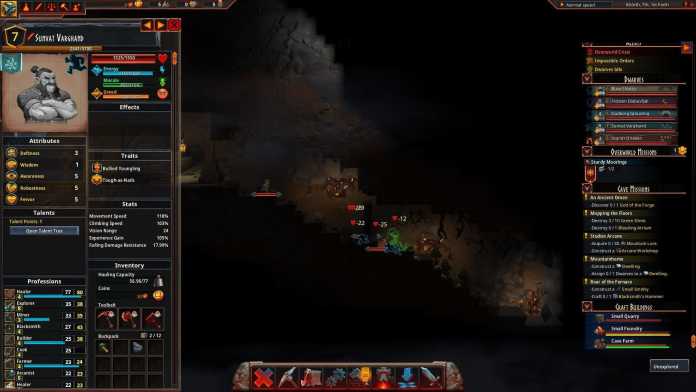
It’s nearly impossible to play Hammerting and not make comparisons. It’s one of those games that is unique in many ways, but is best described as an amalgam of multiple genres. The game is a hybrid of a dungeon-builder, a resource manager, and a sandbox game. Your task is to juggle recruiting an army of dwarven workers while simultaneously attempting to complete missions in the outside world.

Like I said, to those with experience in any one of these genres, the style of Hammerting will be relatively familiar. You recruit dwarves and build structures using resources gathered by the troops you’ve built. It’s simple. Once they’ve arrived, you put your workers to use in various ways. You can have them build structures, mine the depths of the mountain for ore, or fight their way through ancient tunnels.

Here’s the issue. When a game is built on such a simple premise, its success (or lack thereof) is predicated on the execution of a few core mechanics. If your entire game is based on the way in which these interact with one another, when you encounter even a minor hiccup, you have major problems. In Hammerting, the clear weak link in the chain is the behaviour of your dwarven workers. They’re absurdly difficult to control and often get completely sidetracked by pathing issues.

First, credit where credit is due: Warpzone Studios is making an honest effort to address these bugs. During the course of my playthrough, they released a hotfix for the elevators which turned them away from a dwarven graveyard back towards their intended function. But while elevators were the most egregious example of bad pathing, my dwarves still encountered plenty of problems during basic play. Even while sitting back, passively letting them build structures, the dwarves would find the strangest solutions to simple problems. If they needed to gather copper ore, for instance, they’d end up running towards it, and then back to their starting location, only to return to the same spot to collect it.

For me, bugs like pathing issues are just that: bugs. Sure, they’re annoying, and at worst, they can be game breaking, but they will be eventually fixed. The studio will probably lose a lot of players initially over the whacky pathing and other issues, but as it is smoothed out, they’ll find a loyal fanbase.

A problem I can’t overlook; however, especially with Hammerting, is fundamentally poor design.

The combat. Oh, lord, the combat. Can it even be called that? Typically, in fantasy lore, dwarves are described as battle-hardened warriors who are no stranger to a fight. In Hammerting, the dwarves have decided that the best tactic is to simply smash into the enemy and begin a health race to the bottom. If that wasn’t bad enough, rats, goblins, and slimes prove to be more than formidable opponents. They lay waste to my dwarves time and time again. Remember the pathing issues? Here’s when they actually start to bother me. Nearly every single time one of my dwarves is getting destroyed in a lopsided fight, the reinforcements arrive far too late because they’re running all over.

I feel like I’m being fairly hard on Hammerting. Let me be clear: this game has potential. It’s just not there yet. The graphics are beautiful. They’ve done an excellent job with the lighting and the depth of the environment. And, though mired by poor execution, the concept is fresh and intriguing. Oddly enough, the obvious issues that are plaguing Hammerting might be a positive for Warpzone Studios. They know exactly what they have to address. Once they can sort out the pathing issues and revamp the combat system, they’ll already be lightyears ahead of where they are now.

Unfortunately, in its current form, Hammerting is a concept and not much more. There are sporadic moments of enjoyment that are inevitably bogged down by bugs and the other underlying issues. Fine. Let’s assume that the bugs and glitches will be worked out. Then, the studio only really has two major problems. The combat is flat and frustrating. They need to introduce some diversity there (perhaps ranged weapons, stationary turrets, or the like). Beyond that, the game desperately needs a more clear overarching goal. What’s the point of all this production? Currently, the overland map and the work done under the mountain feel like two distinct games. Hammerting is an unearthed gem waiting to be polished. Warpzone Studios just has to keep digging.

Review: Little Nightmares 2

I have to admit, I was extremely late to the party to the quite simply put, incredible Little Nightmares so much that when a good friend assumed, I had played it, I was rightly told off for having never even tried it. A few days later and a mysterious packaged dropped through my front door and low and behind the GOTY version of the game for Xbox One lands on my doormat. To say I was instantly taken back by Little Nightmares and its dark ugly yet still very beautiful world would be an understatement, and something I still have yet to make it up to my friend for sending me the game. Finishing it and the DLC left me hungry for more and with the sequel receiving a couple of delays that pushed it from a 2020 to a 2021 release, I was very much chomping at the bit to return to this world and my word was the wait worth it!

For this review I am going to tread very carefully when it comes to story spoilers as the true magic of both Little Nightmares games is really in discovering the narrative as you play through each chapter, for even knowing anything of what is really to come could be a spoiler for the experience that I genuinely hope you have yourself playing Little Nightmares 2. But there is so much about this game that manages to actually accomplish what so few sequels actually do, build on what made the first game so loved, refreshes it by adding new elements and continuing to showcase a world designed to make and keep the player feeling very uncomfortable just being in it each time you play it.

The very first new element is that this time players control Mono, a boy slightly bigger than Six was in the first game, wearing a very cool trench coat and rather fetching paper bag over his head, with the world as it is right now who are we to judge fashion! Mono finds first finds himself in a horrid looking wood, unsure of how he got there but instantly aware that danger is all around him. Mono is very different to Six, so this is not just a reskinning of the same character model, Mono is slightly bigger as I said which makes him stronger and it also gives him a very different playing style to what Six had in the original game. Six would often have to use stealth with the focus of avoiding confrontation as much as possible whereas Mono is capable of holding his own in some situations and definitely feels more action capable which is used to great effect throughout Little Nightmares 2.

What can be said is that the opening chapter absolutely tells you everything you need to know about the world of Little Nightmares with every aspect growing in scale through progression. The Woods are perhaps the creepiest woods you are going to find in any video game and that includes Limbo and its giant spiders! From the very first step Mono takes in the world and you have control of him, you as the player will immediately feel on edge, for this is not a very nice place to be and it is an environment that completely wants you to feel that unease. Moving through the woods you soon come across bear traps and snares which can catch you off guard if you fail to notice your surroundings. Platforming such as running, crouching, climbing and jumping still make up the core elements of traversing this world.

It would be very remiss of me not to take this moment to just talk about the quite frankly deliciously dark and macabre visuals that both games have but have really been taken to a new level in this sequel. The colour pallet and lighting effects help bring a sinister feel to every location and environment in this game. The way in which the foreground can have so much detail whilst the background tells its own story thanks to how well the lighting and colours just snatch your eyes as you move throughout that you will be forgiven for just stopping to appreciate and to take it all in, which that can happen quite often as long as you have Mono in a safe space of course. This really is just a stunningly beautiful game especially in the animation which has that fantastic non cartoony but stop animation style which makes it stand out even more. There are so many lovely little tiny details in the animation as well from the way Mono runs and climbs to the rag doll animation when he drops a little too far and that thud instantly makes you feel a little guilty for not being more careful with him. Should you die or fail in a puzzle, which can also happen a lot, when the game returns Mono will be sitting arms round his knees looking like he is both sulking for failing but also very sad whatever happened to him because you as the player failed to look after him and that is a guilt through the connection you have with Mono that will have you, if you are like me, actually saying “sorry kid” out loud.

Visuals are not the only brilliant aspect to this game because the sound and musical score complete this cocktail of horrid delights. I would absolutely recommend playing Little Nightmares 2 with a headset, especially if like me, you are able to enjoy this PlayStation 4 version on your PS5 with the 3D Audio, sadly there is currently no new gen upgrade for either PlayStation 5 or Xbox Series X/S on release but trailers have indicated that a free upgrade will be given to players later this year. The sound is even more eerie then the visuals with every sound making you feel like there is danger around every corner and that there is something or someone always watching you. The sound of a creaking door or the echo of a footfall when you are not moving yourself all builds the tension and atmosphere which even to me, someone who usually ignores horror games because they have no effect on me, both Little Nightmares games have been successful in making me feel very uneasy which the gameplay then uses so effortlessly to give more impact to the action sequences in the game.

The most surprising element to Little Nightmares 2 has to be the change to an almost co-op based playing mechanic. No longer is this the solitary tale of one hero but instead Mono right from the opening chapter has a friend to help him on the way, and that friend (not a spoiler as in the trailers and game marketing so keeping to my no spoiler rule) is none other than Six. After rescuing Six and earning her trust, she accompanies Mono on his journey and it is a real game changer for a game I felt needed no changing at all. Puzzles now involve using Mono and an AI controlled Six, to find the solution often with Six providing a much-needed boost up to reach a higher window or gap to climb through. Large objects may require both Mono and Six to move it and working to keep both of them safe will give players true nightmares.

The strength of the connection between the player and both Mono and Six becomes very strong very early in the game. I often found myself as Mono, stopping to see and make sure that Six was ok. The AI is also very good for Six, when she is needed to help, the AI is right on the money every time and so few times did I have to go and collect her to bring her with me, there is even a very charming animation detail that Mono and Six will hold hands when using the grip button on Right Trigger and Mono can then lead Six around. I also was very thankful that the AI controlling Six would not just run to the solution either to spoil it allowing me the time needed to work it out for myself. Most of the interaction between Mono and Six when it comes to teaming up, is based on the proximity of Six to Mono, but when you are for example, ready to push a large object and are already in the push position, it will make Six come to you and Six is far quicker to react than some of the Vikings in Assassin’s Creed Valhalla when it comes to needing someone to help you open a door, just saying Ubisoft!

The puzzling is definitely a mixture of what players of the first Little Nightmares would instantly recognise but also new ideas which make good use of the two-character mechanic and other elements based on Mono’s strength. Mono can use large items as a weapon which can for example, be used to smash through an already damaged door panel or to defend against immediate threats. Thankfully this mechanic is not overused to the extent that it becomes too combat focused as the instances are kept very minimal and very contextual depending on that moment and chapter environment. There is still the trial-and-error approach to some puzzles, in particular the puzzles that require precise running and jumping and by precise I do mean exactly that, be out of position or not moving fast enough or grabbing a ledge in time can result in Mono falling and having to replay that section. Thankfully the checkpoints are far more forgiving this time around in answer to the criticism of the first game but there will be some sections that may prove frustrating on your first run through the game which can make this a very nice dip in and dip out experience if you do find it that frustrating, a break can also help that solution that’s been eluding itself from you, become clearer. Puzzles can be very common sense such as move this box over here to reach this window or they can be more complicated involving Six as well or some level of action like running. The variety and difficulty spikes are actually very well balanced, a lesson taken from the first game no doubt, and I also love that some of the solutions can very so common sense that you fool yourself into thinking it requires something far more complex and spend 20 minutes on a problem that only required ten seconds of effort, that is just how well the chapters and sections are designed.

Little Nightmares 2 is the sequel I and no doubt fans of the first game hoped for and it is a game that has certainly benefitted from the delays to make it even more polished on release that I actually only encountered a few issues which can be fixed in quality-of-life updates such as some of the scripted scenes failing to reset upon recovering from a death or not letting go of a held object fast enough when you quickly needed to get away from an event or enemy. The story is tremendous and even if you have not played the first game, which you absolutely will seek out to do if you play this game first, you can enjoy this strange and dangerous world for the first time but with enough nods to make fans of the original get something special from playing this.

I loved my whole time with this that I dived back into to find the collectibles of Hats that Mono can wear and strange ‘glitches’ in the world to find so do make sure you take the time to explore every corner of every section just to make sure you do not miss anything. This is truly one of the best game sequels I have had the pleasure of playing after enjoying the first game. The grotesque beauty of this game will have you equally recoiling from it and appreciating it in equal measure and if you spend a little bit more for the Digital Deluxe Edition then you will also get the digital soundtrack to enjoy in all its majesty as well as a fantastic digital art book which I do recommend you look at only after completing the game. I certainly have my eyes on the ‘TV Edition’ Collectors version of this game for some point this year.

Mono and Six make a perfect team in a horrible world that draws you as the player and them as characters into its darkness so effortlessly oh and make sure you listen carefully throughout the end credits too! There will always be something extra creepy about discovering that the only way into a place is via the same way that someone escaped…!

Review: Space Channel 5

For those that remember, Space Channel 5 started off as a Dreamcast title way back in 1999. For those that played it, the game itself hasn’t changed very much. In some areas I would even say it looks and performs worse than its first iteration. Button presses have given way to motion controllers, that’s probably it’s biggest departure. A mixture of a short experience, poor character movements, and several quality of life issues make for a rough time.

Dance the Night Away…for about Half an Hour

I’m just going to go ahead and get this one out of the way. The SC5 will set you back around $25 for the PSVR. The “campaign” will last you right around the 30 minute mark, spread out over four levels. So the core of SC5 will cost you just under a dollar per minute. There are a few additional modes to pad out the game play, like an arcade and exercise mode. However, I wasn’t able to find anything that could redeem it.

Overall the motion works…except for when it doesn’t. One or two of the primary dance moves never consistently translated through the motion tracking reliably. This in and of itself wouldn’t be too bad, however when you couple this with the 3 strikes and your out play style and the intros that can’t be skipped, the frustration begins to build rather quickly.

In addition, the visuals are subpar at best. Character lines are harsh, and character models are just bad. The animations aren’t much better, if in fact at all. In many instances, the background dancers have the same issues that many other older/cheaper games do. Those awkward moments where the NPC’s movements don’t align with the game’s design happen far too often.

The entire game consists of watching several alien invaders dance in front of you. Your task is to memorize their patterns, then repeat them at ever increasing speed. Completing this efficiently saves all of the innocent humans being held hostage in an everlasting dance routine. That’s pretty much the extent of the background, but I suppose for a dance routine game not much else is needed.

Around the Rough Edges

SC5 does do a few things well. The campiness is very well done. Everything that occurs and is stated in the game fits the overall tone and not much strays from that path. If saving humans from being doomed to a life of being a dance slave doesn’t drive the point home nothing will. Another plus being that in some sections you are required to move your entire body to match the movements seen on screen. Side stepping left or right in order to dodge incoming alien lasers seems overly simple, but when 90% of the game is moving your hand left or right the variety really helps to freshen it up.

The feeling of stepping back in time 20 years is a big bonus as well. The main character in the original, Ulala, is now your mentor as you become a fledgling journalist that must learn the ropes. This set up allows for an easier way to keep track of movement cues, as she acts as your guide throughout each level. For the most part this works, save for a few instances when you’re first learning the moves and her guidance leaves a good bit to be desired.

Dancing with the Past

There isn’t much I can recommend within SC5. The few positives were all brought from twenty years ago and haven’t been improved upon. There was a lot that could’ve been done, but it seems like a cash grab on the franchise instead of a passion project from lifelong fans. If you were fans of the previous entries, by all means go for it, but I would not make this a jumping in point for any newcomers.

Review: Roombo: First Blood

I’m always amazed at what weird and wonderful ideas grow out of the brains of indie game developers. There is something for everyone, and every genre imaginable is covered. I thought I had seen it all. Then along came Samurai Punk and their creation Roombo: First Blood. From the name alone, I knew that this was a team and a game that wasn’t taking itself too seriously. I couldn’t wait to try the game and hoped that I wouldn’t be left disappointed.

Not to jump to the conclusion, but I wasn’t let down at all. Roombo is a fun filled, gory blood bath that is laced with dark humour, and violence galore. You control a robotic vacuum cleaner (RVC), yep you read that correctly a vacuum cleaner! It’s Christmas time, and the owner of the house has gone out for the evening. You are left on charge when a smash of glass wakes you. Your quiet suburban life is rocked, your house is going to be burgled, and you are its only form of defence.

How very 1990s Home alone.

You will face 6 levels of murderous tests en route to guarding your home. 3 bonus levels are also chucked in for good measure, which is very generous of Samurai Punk. The main aim is to defend the valuables left strewn around each room. Each stage has a set number of burglars, 1 for the first, rising to 6 for the last. One object of value is placed for each of these thieves of the night, and you must do whatever it takes to stop them. 

Run and clean, run and clean.

Luckily, the RVC is no ordinary household appliance; he can hack other electrical appliances. This skill comes in very handy as it allows you to lay traps to take down the intruders. You will; set off sprinklers, charge sockets, drop ceiling fans, blow up tv’s, control showers, and more. It takes little thought process to win a stage, but this is one of its main selling points, its mindless gratuitous violence. 

Once you’ve done killing, you must do what a vacuum does best!

After you’ve finished being chased by the would-be burglars, and you’ve taught them all a lesson, you must eliminate their bodies and clean up the mess. And by god, it’s an almighty horrendous sight to behold. After you hacked the bodies to pieces a la lawn mower style, you must hoover up the chunks of meat and all the blood. A clean house is a high scoring house, and depending on how accurate you were with the traps, you’ll be graded between S+ and F. 

This is Roombo: First Blood in a nutshell. It’s a brilliant, casual experience that requires no skill level. You will roll around, planning your attack and hacking everything in sight. It’s a short endeavour, but it encompasses everything that makes an indie title great. Yes, there are a few tweaks that would improve longevity and replay factor, but in its current state, it’s an enjoyable and mindless action game that will have you chuckling with delight.

So much blood, and only one robot.

It reminded me of the Untitled Goose Game.

The absurd nature of the gameplay and the visual presentation reminded me of another humorous indie title, Untitled Goose Game. The bird’s-eye perspective and simple cartoon style made for a straightforward, yet delightful game to observe. Though each level was identical, I never tired of how it was set up. The opposing colours that represented real life, and the hacking screen made it easy to follow the action. A golden hue surrounded any usable items, making it easy to plan your approach. The well designed levels were easy to navigate, and my only gripe was the lack of a rotating camera angle. It wasn’t entirely necessary, but it would have been nice to have the choice to alter your view.

An upbeat, yet seedy audio plays alongside all the action. The music adds suspense to the situation, and works perfectly as you sneak about hiding under the furniture, avoiding detection. This combined with the amusing sound effects of sockets popping, and ceiling fans cracking skulls will make you chuckle with delight. It’s evil, disgusting, but above all else, it’s great. Samurai Punk are a twisted bunch that has created a dark and messed up game.

2 control systems, both as easy as the other.

One of the great things about this is the simplicity of the controls. You are given the chance to choose between 2 methods, both are easy to master, and neither will cause an issue. The opening level acts as a tutorial, but within 2 minutes of playing you will be up and rolling like a pro. It was a pleasant change to get a game that could be played instantly with no care about how to play it.

That’s right, hiding in plain sight works wonders in this game.

Because of its short nature, the replay element is impacted. A small achievement list can be unlocked in no time, and all the levels can be completed in around an hour. But don’t let this put you off. A tiny price tag of around £4 still makes this good value for money, and murdering burglars with a vacuum cleaner is amusing no matter the body count. An area which the developers overlooked was skill development or customisation. If this had been used alongside small tasks during each stage, then the desire to return would have been vastly increased.

An indie title worthy of a download.

Because of its casual nature, and limited game time, this is ideal to play between major sessions. Whether you decide to ram the thieves, or round them all up to shock them to death, it doesn’t get old. Watching their bodies fly around, and the blood splatter shows you are keeping the house safe, and fills you with a warm sense of success. Do I recommend it? I do, so buy it here! Put your sensible brain to one side and get this downloaded. Mindless violence and traps galore await you in this modern version of Home alone.