Review: JARS

JARS is a wonderfully addictive strategy game with a unique aesthetic.

Victor, the game’s equally befuddled and spooky looking protagonist, ventures into his family’s basement, only to find a plethora of nasty critters. Naturally, Victor is far braver than I am and sets out to deal with these bugs, in some sort of unlicensed bushtucker trial. 

This premise sets out what you will be doing throughout the majority of the game: smashing jars. Sounds simple? It is – but how the developers manage to build on this rather simple mechanic is actually quite impressive. 

Fast-paced, engaging gameplay:

JARS is very much a tower defense game. Each level involves you having to protect a sarcophagus, whilst trying to eliminate the nasties housed within the jars you break. You defeat the monsters by utilising items that you can find in jars, such as darts (which I found very satisfying to use) or through the use of ‘minions’ – monsters that will fight for you.

Certain jars will guarantee an item or an enemy, but each level also has random jars that add a much needed sense of variety to proceedings. If you fail a mission, by failing to protect the sarcophagus(s), you can jump straight back in. Level structure does change ever-so slightly when you fail, which maintains the challenge but at the same time allows the player to identify certain patterns.

Some missions also have additional objectives, such as protecting a set of magnets which will offer a big exp boost when you complete the mission.

As you complete more missions, you can also unlock new minions (who all have different stats), new perks (which you can equip to modify minion stats) and other items. You use in-game currency to do this, from the suitably named ‘Little Shop of Horrors’.

Unlocking new minions feels purposeful, as certain levels will only allow you to utilise certain types of minions, and their different stats will be better equipped at dealing with certain map layouts and enemy types.

There is also Hero mode which you can unlock as you progress through the game. This mode switches the gameplay up by allowing you to directly control one of the ‘minions’ and navigate the stage. 

Overall, the bite-sized missions and different mechanics contribute to creating a gameplay loop that is addictive and simple but with enough permutations to keep the player interested.

Tim Burton esque:

Complementing the delightfully engaging gameplay is JAR’S ‘creepy’ visual design that is clearly a homage to Tim Burton’s work. 

The drab-grey colour palette adds a spooky tone, whilst the overall art direction strikes a careful balance between creepy and childlike (for your minions). Tonally, JARS feels relatively light-hearted, and I especially liked the hand-drawn designs for all the ‘minions’ which are full of personality. 

The cutscenes that you get when you complete levels are also a nice reward for making progress, and whilst they don’t tell too much from a narrative standpoint, they are well directed and contribute to the spooky tone. I also appreciated how humorous some of the scenes were.

A couple nitpicks:

Pun absolutely – shamelessly – intended. 

JARS is definitely a game that surprised me. I didn’t expect to get so hooked to the gameplay loop. That being said, there are a couple gripes I had. 

Firstly, navigating the selection menu between missions (where you select your minions and their perks) is incredibly awkward. This made carefully considering my selection of monsters and perks in later levels much more of a chore than it needed to be. I ended up rushing through this process to save myself from getting frustrated. 

Also, whilst I love the overall visual design, the backgrounds for each stage did start to feel a bit repetitive and could have been a bit more creative (or as creative as basement shelves can be, I guess).

The former issue is one that I genuinely found quite bothersome. I just wish that the UI for the menu section had been revised a bit better as the game genuinely has potential for some interesting tactical considerations. 

Nevertheless, JARS’s excellent visual design and substantial, addictive gameplay offering are major positives that make this title one well worth checking out.

… Also the game has a really fun encyclopedia, with great little descriptions for each of the monsters. I rate that. 

Review: Mainframe Defenders

Computer viruses are a pain in the arse. They ruin your computer and infect thousands of machines, bringing businesses to a standstill while ruining global economies. Mainframe Defenders goes one step further as it predicts electronic Armageddon. 

Developed by Synthetic Domain and published by Big Way Games, this is a retrofuturistic strategy title. It has a basic approach and will remind players of MS-Dos titles. Veteran gamers will love its old-school look and the trip down memory lane.

Mainframe Defenders is wonderfully simple but its UI is woeful. 

I love it when a strategy game focuses on simple mechanics that allows you to jump straight into the action. Fortunately, Mainframe Defenders does just that! Its core concept of rogue-lite mechanics, combined with easy-to-understand strategy elements, was a pleasure to experience. You control a team of four robots who must complete an array of objectives while saving the world.

However, for all its straightforward ideas and enjoyable elements, its woeful UI isn’t one of them. A thorough tutorial explains the fundamentals, yet; the developers fail to explain how the UI works. I, fortunately, stumbled through its messy layout and sadly, its lack of an explanation had me on the verge of quitting before I had even begun. Nowhere does it explain that the d-pad is the key navigation tool between the menus. If you plan to play this, take note, the d-pad is essential!

The future is a beautiful shade of green.

Choose your force and tactics on the fly.

Technology is failing and the world is ending, so what are you going to do? You’re going to hire a reliable team of robots to combat it, that’s what! Luckily, a small band of mechs are available, and they are happy to help. Each of these robots offers different weaponry and strengths and weaknesses. You must pick the best squad that matches your play style and then upgrade them to tackle the latter missions. 

The quests are split into difficulty categories and then further divided by goals and objectives. You are given full visibility of what is expected to be victorious, and this allows you to plan in advance. Before starting a mission, you may upgrade weaponry, armour, heat capabilities, repair your robot, and more. You must strengthen your team with a currency known as ‘matter’. This is earned by completing goals or finding it during each expedition. It’s a tough commodity to collect, so wasting it is not advised.

You may plan your approach thoroughly, but frustratingly, your enemy doesn’t care about your desire to be victorious. Reinforcements will spawn randomly and this undermines any plans you have in place. You soon discover that you must think on the fly to react to any new threats. This approach made Mainframe Defenders feel more like a Real-Time Strategy title than a turn-based strategy game. 

Manage your team and upgrade their equipment.

Mainframe Defenders looks odd on a large screen. 

I love retro games and I don’t mind dated graphics, yet I think Mainframe Defenders looks strange on a larger screen. If this was played on a smaller monitor or TV, it would work particularly well. However, its ultra-pixelated graphics look out of place on larger modern screens. If you can get over the oddities of the presentation, you’ll witness a great but dated representation of a future world. The retrofuturistic style is enhanced by the colour palette. The environment is industrial, cold, and sterile, and the classic futuristic look is brilliantly captured. 

The futuristic tone continues with the electronic music and shrill 8-Bit sound. Veteran gamers will adore the old-school audio. The nod to classic titles and the throwback to the golden era of strategy titles was appreciated and worked perfectly with the MS-Dos aesthetics. 

The dated aesthetic won’t be to everyone’s tastes.

Once you master the UI, the rest is a piece of cake. 

Mainframe Defenders is remarkably easy to play once you understand the horrific UI. The missions focus on Action Points or Ap for the combat elements and a grid-based approach for movement. The environment plays a key role in your strategy and you must destroy or avoid the obstacles in your way. Luckily, it’s easy to understand as many commands are completed by the press of one button. However, this doesn’t make it perfect. My gripe surrounds the lack of an ‘undo’ facility. Mistakes happen, yet there is no way to rectify this. Your plans will be ruined and missions lost and this was frustrating. This was a shame as it was an unnecessary oversight from the developer.

Because of its array of upgrades, vehicles to unlock, and the combination of robots to select, no playthrough is the same. If you then consider the rogue-lite elements that influence the gameplay, you experience a tough but addictive title. Moreover, its challenging achievement list demands you return if you wish to finish it. 

Mainframe Defenders is a wonderfully retro strategy title. 

I love how much the genre has evolved, but I also enjoy stepping back to a simpler time. Mainframe Defenders does just that with its wonderful blend of strategy mechanics, simplistic gameplay, and dated aesthetics. It won’t be for everyone, but I enjoyed it and recommend you to buy it here! Can you destroy the virus that plagues the future? Grab your squad of robots and take the fight to them! 

Review: Growbot

I’ve always found point and click adventure games to be practically unparalleled in their ability to tell stories and build worlds, and unparalleled as well in their ability to endlessly frustrate me. Trawling through screen after cluttered screen for that lone pixel impeding your progress can be a chore, but thankfully Growbot’s developer Wabisabi Play seems to have spent far more time fleshing out their game’s world and puzzles than they did deviously hiding click boxes. 

Although it doesn’t entirely reinvent its genre’s inventory-based wheel, along with varying its approach to puzzle design, Growbot takes a few decisive strides toward streamlining the point-and-click formula. Yes, gameplay still largely consists of clicking around the screen to either pick up objects or walk between different spots on the floor, but this process is made uniquely intuitive thanks to an inventory with distinct and readable sections: one housing permanent items with multiple uses throughout the game, and the other displaying your “consumables;” items to be used only once before being discarded. This minor tweak to the conventional inventory system provides you with an organic sense of direction, a subtle objective marker letting you know which items you should be paying attention to right now, and which you’ll be using later. Another staple of clicky-puzzlies – moving between rooms – is handled with slightly less grace. I felt the fading transitions from screen to screen aired on the side of tedious, often lasting just long enough for me to notice. However, your player character’s swift walking speed and snappy animations help to alleviate this mild sluggishness. 

Growbot’s puzzle design is one of its more interesting facets. At the outset, the space station on which the game takes place seems to operate as you’d expect. Characters and objects block various paths, and you must procure specific items in order to bypass them. Quickly though, you’re given the ability to craft melodies out of musical notes you find throughout the world represented as flowers, and to use these melodies as keys to new areas. I found this concept to be quite engaging once I managed to parse its obscure tutorial, and I was eager to collect more notes and form increasingly complex tunes. As speedily as this idea was introduced, however, so was another puzzle mechanic, and then another, and then several more still until it became clear to me that Growbot never intended for melody-matching to be the core of its gameplay, but for that core to be comprised of variety itself. New and interesting puzzle ideas surfaced at a pace that truly shocked me, and that compelled me to see what was next in a way few games manage. Some have you navigating mazes, others fitting gears into place, and all of them exude a burning creative passion. While admirable, this passion also seems to be the source of many of the game’s pitfalls. As puzzles take shape in so many ways throughout the adventure, it can be difficult to jump between them so rapidly, and this issue is only compounded by the vague text tutorials that accompany them. Ideally, the puzzles would be more visually clear, negating the need for such written instructions, but their elements can be hard to decipher, which often makes decoding what exactly the game is asking of you more difficult than overcoming its intended challenges.

In contrast to the ever-shifting chaos of its puzzle structure, Growbot’s visual and auditory presentation cohere to create a singular atmosphere which permeates every room of the game and captures the imagination in countless ways over the course of its roughly six hour play-time. Alien foliage sprouts from the floors and walls and ceilings, tiny creatures hum and buzz, and painterly brush strokes imbue this whimsical world with a sense of tactility that begs to be thoroughly explored. The sound design, too, breathes life into an already flourishing space, employing a deft combination of musical motifs, vocal work, and resonant chimes to animate a soundscape wholly unique to Growbot, one which conveys more about the fiction than all of the game’s myriad journal entries combined. I did feel that some areas of the game lacked the polish applied to its world and audio design, namely its menus having little to no feedback when opened or navigated. This small issue, however, only serves to exemplify the artistic mastery with which Growbot was otherwise produced.

While Growbot’s world is a pleasure to poke around in, this is often in spite of its story rather than because of it. The tale is a fairly simple one, following a Growbot named Nara on her quest to cure her space station from the sudden blight of mysterious blue crystals, which block doorways and encase the station’s denizens against their will. The narrative is largely well-written enough, providing context for the world and its inhabitants, but I feel this context did more harm than good. The mystical greenery and ethereal sounds each successive room treated me to frequently lost some of their majesty to needless and constant exposition. I felt driven by Growbot’s seamless marriage of steam-punk architecture and storybook wildlife to simply exist in this far-off land, pondering its mysteries for myself, and yet so often I was soured by the game’s desire to explain away all of this whimsy, leaving behind a collection of objects and characters I no longer felt the need to think about. It frustrates me that Wabisabi Play seems so intent on showering players with dense descriptions of the vibrant, deeply atmospheric setting they’ve crafted when it is so capable of speaking for itself. 

Growbot has undoubtedly taken pointing and clicking to its logical extreme. Despite its modest length, this is a game that combines aspects of puzzle types from across mediums and genres to create a sense of dynamism rarely matched by others of its ilk. Its wondrous art and sound are frequently weighed down by densely-written exposition, and its puzzles tend to feel like they could’ve used a bit more time in the oven, but Nara’s musical adventure is one worth embarking on, if not just to discover that you’re tone deaf.

Review: ZAGG Glass Elite Privacy 360 Screen Protector for iPhone 13 Pro Max

If you have an iPhone 13 Pro Max you probably want to protect it, here we look at the ZAGG Glass Elite Privacy 360 Screen Protector for iPhone 13 Pro Max.

The new Glass Elite Privacy 360 has a four-way privacy filter that prevents looky-loos from seeing your screen in portrait and landscape mode. It’s the most advanced privacy filter on the market. No more side-eye or over-the-shoulder peeks allowed. Glass Elite Privacy 360 provides edge-to-edge impact protection with ClearPrint Technology and an anti-microbial treatment that protects the screen protector against degradation from microorganisms.

A Closer Look

Final Thoughts

The first thing I noticed when I opened the box was that I had everything I needed and it was nicely split between two envelopes – one for the preparation pieces and one for the screen protector.

The instructions are really simple and clear – follow them to prepare your iPhone for it’s new screen protector.

Fitting the iPhone into the cradle ready for the screen protector was simple. Peel off the back of the protector and then place the top and bottom onto the cradle (there are little ridges to hold it perfectly in place) and then press down. Then all you need to do is peel back the top and that’s it – really simple. The whole process took a few moments and it was perfect – no issues, no bubbles and it was perfectly placed.

I really liked the EZ Apply approach ZAGG have adopted – this has got to be the easiest and quickest screen protector install I have ever done – and believe me I have done quite a few over the years.

The screen protector offers both portrait and landscape privacy and it works really well, unless you are looking directly at the screen the further you are away from directly on, the less you will be able to make out.

If you want a great screen protector that is very simple to fit and privacy is important to you then look no further than the ZAGG Glass Elite Privacy 360 Screen Protector for iPhone 13 Pro Max – it’s staying on my phone!

The ZAGG Glass Elite Privacy 360 Screen Protector for iPhone 13 Pro Max is coming soon priced around £34.99.

You can learn more for the ZAGG website.

Disclaimer: The ZAGG Glass Elite Privacy 360 Screen Protector for iPhone 13 Pro Max. Scalextric was sent to us for the purposes of an honest review. All opinions are the opinions of our reviewer.

Review: Scalextric Back to the Future Part II DeLorean

With Christmas not that far away, we take a look at the iconic Back to the Future Part II DeLorean in Scalextric form.

Great Scott! Prepare to go Back to the Future in celebration of the film’s 35th anniversary with this new release of the most famous time machine to ever grace the screen! In Part II this time Inventor Doc Brown’s DeLorean time machine is used to take Marty, the Doc and Jennifer into the future (2015).

Whilst in the future, what was thought to be a simple mission starts to get complicated and to make things worse – Old Biff. When they learn that the menacing Biff had used this time machine for his own benefits.

This car features detailed decoration including the Mr. Fusion Home Energy Reactor.

The Back to the Future DeLorean is arguably the most famous and recognisable car in cinema history and is now a rare collectable in real life among movie fans. Being somewhat more affordable than the real thing, this Scalextric slot car model replica is sure to be one of the biggest hits of the year for collectors young and old plus, not just of slot cars, but movie fans too! Grab it now, before it disappears into history. Please note: This slot car does not actually fly.

A Closer Look

Final Thoughts

As both a fan of Scalextric and also of Back to the Future (I saw all three films at the cinema when I was a kid) I was really keen to get my hands on this car.

And what can I say other than it’s amazing! The attention to detail on it is fantastic, even down to having Marty McFly sitting in the drivers seat.

If you are looking for that slightly different Christmas present, or just want to add it to your own collection, then this is definitely one to have – you may find it hard to take it out of the box, it looks that good! Obviously I was a little disappointed that it didn’t fly, but to be fair on Scalextric they did caveat it saying it wouldn’t – but one can dream!

The iconic Back to the Future Part II DeLorean from Scalextric is available now priced around £49.99.

You can learn more from the Scalextric website.

Disclaimer: The Back to the Future Part II DeLorean from Scalextric was sent to us for the purposes of an honest review. All opinions are the opinions of our reviewer.

Review: Godstrike

Godstrike Nintendo Switch trailer

Godstrike is a 3D boss rush Bullet Hell based on time. This means that you have to face every Boss and defeat them before your time runs out! Time is money and health, so buying abilities or being damaged will reduce your remaining combat time. You better watch out!

– Nintendo.co.uk

As a gamer I would love to say that I have played many twin stick shooters and boss rush games but unfortunately I haven’t. The closest experience I have is playing similar games such as space invaders and dead ops arcade. I can already tell what you’re thinking… and yes I was not prepared for Godstrike.

The aim of Godstrike is very simple, using your twin sticks you must fight against a number of different bosses, each with their own set of skills and patterns. As with other similar games you can expect to be constantly on the move and dodging a massive number of attacks. Godstrike has one major standout difference to other games of the genre… time. Before fighting a boss you are given a certain amount of time in which to emerge victorious. If the player does not defeat the boss within the given time then they are given one last attack and after that it’s game over. Each time the player is hit by an enemy attack, the timer goes down so it is vital to plan your moves wisely. That’s not the only thing that affects time though, players will also have to decide whether or not they want to give in to the temptation of buying skills. That’s right, even buying skills reduces your time and when I say every second counts, it really does count, so be wise with all of your choices.

Although Godstrikes gameplay is very addictive and action packed, I found myself becoming disengaged due to the difficulty issues. I understand just as much as any other gamer that games need to be a challenge to give the player something to work towards and encourage them to try and try again, but with Godstrike I found the difficulty to be too much. I think this issue is mostly due to the unique time feature, which on paper is a brilliant and unique idea but in practice I think it fails to deliver in the way that the developers intended. Time is very constrained and after many attempts I still found myself needing at least an extra minute to defeat many of the bosses. Receiving damage as well as buying skills reduces your total time and I found myself completely avoiding these helpful skills knowing that I would struggle with the time penalty. The concept of ‘every second counts’ is unique but Godstrike should of implemented this is a more forgiving way rather than punishing the player to the point where completing some bosses In the given time is just unrealistic.

Godstrike has a very simplistic art style which is usually effective but it’s not without its issues. The simplistic art style helps when the screen is being bombarded by attacks and ensures that it doesn’t become too cluttered, however I find that the player controlled character is far too small and at times I even found it difficult to see where my character was amongst all of the mayhem. This can be frustrating when you have mere millimetre gaps in which you can dodge incoming attacks and you’re struggling to see exactly where you are at all times.

Another one of Godstrikes shortcomings is with its story. When first loading up the game the player is given great detail about how Yissa (playable character) put on the mask of Talaal to defeat the god-like Heralds who are causing the decay of their world, Eonora. This sets some great lore and backstory right out of the gate but beyond that point the story is rarely mentioned again apart from a few quotes between boss battles. It would of been interesting for Godstrike to capitalise on this story a bit more as it’s mostly lost and forgotten about in the chaos.

As with the story, the soundtrack is almost non existent. It’s very soft and easily lost amongst the chaotic battles and ever present projectiles. These intense battles could have been elevated and made all the more satisfying with a bold soundtrack to match but unfortunately fails to deliver.

I’m summary Godstrike is an addictive and chaotic experience that is sure to delight fans of the twin stick boss rush genre however it is let down by its difficulty and a story and soundtrack that are lost amongst all the mayhem.

Review: My Friend Peppa Pig

If you are fortunate enough to have little people in your life, you’ll know the love and hate I feel for kids’ TV programmes. I’d like to say they improve as they age, but sadly they do not. However, no matter your disdain towards them (the programmes, not the children), you have to suck it up and grin and bear it. One such program that has been banned in my house many times is Peppa Pig. Yet, when My Friend Peppa Pig was released, I cracked and let the kids go wild.

Developed by Petoons Studio and published by Outright Games, this is a colourful but friendly adventure title. Taking in all the wonderful sights of Peppa’s world, My Friend Peppa Pig allows your little ones to spend time with the Pig family while completing simple tasks and jumping up and down in muddy puddles.

Can you help Daddy Pig with the salad?

My Friend Peppa Pig captures the essence of the TV series perfectly.

My kids adored every painful moment of My Friend Peppa Pig! They giggled as they helped George save Mr Dinosaur “Roarrrrr” and were hooked when driving the car, running in sports day, and helping Daddy Pig find his glasses. It was lovely to see them interacting with the characters while enjoying the ultra-simple approach from the developers.

Every element of the game is simplified for a younger audience. As an adult, it was sadly mind-numbing, by My Friend Peppa Pig isn’t aimed at adults, so this matters not. Moreover, this basic approach allows older siblings to help their younger counterparts enjoy the action with no parental guidance. Subsequently, it’s the perfect distraction tool if that’s your thing. 

Take a ride to the forest.

A variety of locations and a full cast of characters. 

Where My Friend Peppa Pig excels is its vast choice of familiar locations to explore. You’ll visit the playgroup, museum, Windy Castle, Snowy mountain, and more. Each has a light educational undertone mixed with the normal Peppa charm. The kids beamed as they took a trip to the moon, saw a dinosaur skeleton, peered through a telescope, enjoyed the snowy peaks, and so on. It was great to see a developer using a variety of key areas to increase longevity. It would have been easy to create a small and heartless title filled with microtransactions. Fortunately, this never happened and your children can enjoy a safe and fun environment.

Alongside this, it was pleasant to encounter the full cast of characters. The over the top personalities came to life as they asked for help with tasks or sneakily progressed the story. Its similarities to the TV program were excellent and its pace, difficulty, and levels of interaction were perfectly balanced for a younger audience. 

My Friend Peppa Pig is smooth and colourful. 

Thanks to the well-established artwork, My Friend Peppa Pig was always going to be great to look at. Its familiar style and colourful world captured my kid’s attention immediately, and they were hooked from the start. I was, however, surprised by how smoothly it ran. With minimal loading times between scenes and the characters movements smooth and easy to observe, it was a pleasure to watch. 

I’m no Peppa Pig aficionado, but every character sounded like they do on the TV program. The cheeky one-liners and loud audio are all reminiscent of the classic cartoon and fans will love it. The audio was excellent, mostly, though there were moments of awkward silence. Your character is addressed regularly, but it has no name and doesn’t talk. They constantly refer to your avatar as ‘you’, which was annoying and the gaps in the dialogue were odd. These issues could easily have been resolved with the choice of preset names and some basic sound clips. If these ideas were implemented, it would polish the end product considerably.

Create the Peppa character of your dreams.

Just press the ‘A’ button. 

There is no use in creating a highly complex title that kids can’t play, so I’m glad the controls were simple. Every action requires the ‘A’ button to be pressed and movement is completed with the left thumbstick. Fortunately, this makes the game extremely accessible and though very young players may struggle, older siblings will be able to help with little effort or bickering.

As an adult watching on, I could have happily switched it off at any point. However, the kids would have played it for hours if allowed. Thanks to its array of tasks and locations, My Friend Peppa Pig offers plenty to entertain younger players. Alongside the content-packed action, you can customise your avatar with a small selection of clothing, animal bodies, and accessories. It was great fun creating the Peppa character of their dreams and three save slots allowed my kids to each enjoy a unique adventure.

My Friend Peppa Pig is a firm favourite with the kids. 

My Friend Peppa Pig isn’t going to be among many gamers to play, list! Yet, if you have youngsters in your life, you need it on your console. Its excellent story, colourful world, amusing script, and simple adventures are perfect for kids. It’ll keep them occupied for hours as they tour the vivid and vibrant land where Peppa resides. My kids loved it, so I recommend you to buy it here! Take an action-packed adventure with Peppa Pig and all her friends. Enjoy every activity and help out whenever the opportunity arises.

My video review with footage captured from my Xbox Series X, enjoy!

Review: Chasing Static

Chasing Static provides a unique horror experience. Chasing Static is a retro psychological horror reminiscent of the PS1 era. The retro polygon look to the art style is a good choice, making it nostalgic yet it doesn’t feel like an old game. You play as Chris who has just recently lost his father in the opening scene. After the funeral Chris stops off at the Last Stop Café where you meet Aneira who asks you to fix the fuse box in the back. Once you finish and go back to her strange paranormal activities start to occur.

Chasing story

As Chris we use the FDMD which is an audio device. Chris is tasked by Helen, a mysterious woman, over the phone that we need to find anomalies using the FDMD. As we find them, it is the anomalies themselves that tell us the story. These anomalies tell stories of other characters which help Chris figure out the truth of what is happening in Hearth. While the mystery unravels it gets more exciting by each anomaly. As we piece together other peoples stories from these anomalies we begin to find out what is truly happening.

A lot of the story is told through notes you can read when you find them. Reading them explains the past and perhaps why these supernatural events are occurring. These notes that have been scattered along Hearth explain a good amount of the story so I would certainly recommend reading over them.

Is he okay?

The plot is quite good overall even though admittedly the ending is rather anti climatic, bearing in mind how good the plot was previously. This doesn’t mean the end is bad, but it left me wanting more answers especially as the ending felt sudden. Still the story is interesting nonetheless.

Gameplay wise you can expect an experience like Resident Evil, as you retrieve items from different areas and in turn the items you collect along your journey bring you to more areas. Unlike Resident Evil there is no combat. Chris has to contain three sites where these anomalies have appeared. Once you find these anomalies you can unlock cassette tapes and find the power for each site which contains them. One thing that was a nice touch was the save points. You would take out a camera and take a photo which would save the game in that spot and it would show you photos of all your save points.

Great Audio

It offers exceptional voice acting. Usually for indie games you don’t even get voices for characters, but Chasing Static shocked me (excuse the pun!). The characters felt alive and gave natural responses to events. The dialogue was solid, however the voice actors improved upon the script.

Using the FDMD

Notably the music is fantastic and reminds me of retro sci fi. I honestly just wish there was more of it, but in the hour and a half it takes to finish it’s just enough. The sound is fantastic, while you walk outside the drops of rain cover you and fill your ears with the soothing beat of rain hitting the ground. Sound isn’t just used to please you. Often you will hear random whispers and creaks that make you feel uneasy. The psychological aspect is developed even further as you hear these sounds because you know there’s nothing close to you.

Chasing Static made an interesting story within a genre that generally struggles with good story telling. The great voice acting and audio really sets it apart from other indie games. For a horror fan this is certainly worth considering as it takes a different approach than most horrors nowadays.

Review: Death Becomes You

What I find interesting about stories is that your interpretation of them can change based on your experiences and perspective. As a child watching the show, Spongebob, I used to find the character of Squidward hilarious because he was so grumpy and rude, and I knew no one would act like that in real life. However, now that I’m an adult and have dealt with many real-life Squidwards, I see the character wasn’t supposed to be humorous, but a portrayal of the jaded cynicism people in the blue-collar workforce often feel. As a kid, I interpreted the story as a funny joke, but as an adult, I view it more as a depressing satire about work culture. The story didn’t change, but my opinion did as I grew and learned more about the world.

Death Becomes You is a visual novel about perspective and how your opinions on something can radically shift depending on the information given. At first blush, the game seems like a regular murder mystery. The protagonist is a girl named Sidney who is investigating the death of her best friend, Lyra. It seems like a simple enough premise for a story; however, as you progress through the game and find out more about the victim as well as the potential perpetrator, you start to realize the roles of victim and villain might not be as black and white as you initially thought. 

The game has a small cast of characters, but all of them have a ton of depth and complexity.

Death Becomes You is a short game, it takes about 2 hours to beat, and by the end of my time with the title, I wasn’t exactly loving it. My opinion on the game was hovering somewhere between mildly entertained and disinterested. However, once I finished the story and realized I had only unlocked ending 1 of 13, I knew things were about to get a lot more interesting.

There are four potential suspects in Lyra’s murder, and there isn’t enough time to investigate all of them in a single playthrough. At multiple points in the game, the story comes to a crossroads, and you’re forced to choose a path for Sidney to take. The options are never more complex than choosing which characters to follow or interact with, but each option has the potential to massively change the outcome of the story, and when presented with these options, I’d genuinely have to sit for a minute and think out what I wanted to do. 

Your choices in the game have the potential to radically shift the narrative.

No matter what decision you make, Sidney will only be seeing a slice of the overall narrative, but each time you restart the game, you’re able to choose different paths through the story, and almost every option reveals interesting new information about Sindey, Lyra, and the rest of the cast. Although there is a true ending to the game, I’d encourage you to try and acquire at least six or seven of the 13 endings, as you’ll gain a lot more context and appreciation for the story and the characters. If you use a guide to rush to the true ending, you’ll probably be left confused as you’ll need information from other playthroughs to make sense of everything. 

If you’re a fan of visual novels or just a good story, this is probably a game you’re going to want to play; however, there are a few caveats you should know about before taking the plunge. 

One of the best parts of Death Becomes You is replaying the game and piecing together new information about the characters and story. Unfortunately, I found the very first playthrough to be a bit boring, and what’s worse, the first playthrough is also the longest. The game takes around 4-5 hours to 100%, but during my playthrough, I spent about 40 percent of my time on playthrough 1. 

The game mercifully has a skip feature that allows you to speed through parts of the story you’ve already seen.

I also felt the worldbuilding in the game had a lot of wasted potential. Death Becomes You takes place in a magical school filled with potentially hundreds if not thousands of students and faculty. However, the game has such a laser focus on Sidney and the main cast that everything else feels like it’s being ignored, and I ended up asking many questions that never got answered: why is there a magical school, are there more like it, where are we in the world, what’s the world like outside of the school, how does magic work, what kind of magic can Sidney use, why does the school need a magic barrier to protect it, and why are all these students and faculty seemingly ignoring the fact that one of their classmates died/disappeared? Ultimately the main story is still the highlight of the game, but so little is done with the world, the magic school, and its students that it almost seems like it would have been better to place the story in an entirely different setting.

The artwork in the game is also pretty sparse and lackluster. This game was made on a budget, so I don’t want to be too hard on the developers, but the character portraits can look downright ugly at times, which is a shame because you’ll be looking at them for 99% of the game. As with most visual novels, there are a couple of high-quality illustrations to bring attention to big narrative moments, but I feel like the developers should have taken those resources and created art for scenes that had more impact on the story. For example, some of the illustrations in the game include sitting down for coffee, lying in a meadow, and eating a cake. Nothing wrong with that, but there are several moments in the game that would have hit a lot harder if there was some high-quality artwork to go along with it. A few examples include someone sprouting wings and flying into the sky, a character casting magic to fling people out of their room, a massive fissure erupting out of the earth, and a character disintegrating into a thousand pieces.

The game’s backgrounds look fine, but the characters look a bit off, especially their eyes.

Regardless of the worldbuilding or the art, the most important thing a visual novel can do is tell a compelling story, and I believe Death Becomes You succeeds in that regard. The first ⅓ of the story is slow to get through, but after you clear that hill, it speeds up and never lets off the gas until the very end. Additionally, the way the game required you to replay it multiple times to piece together the story was quite interesting. The positive aspects of the game will stick with me a lot longer than any of the negatives, and I look forward to seeing what game this company creates next! 

Sunshine Manor Out today on Steam

0

Today developer Fossil Games is pleased to announce that Camp Sunshine’s prequel, Sunshine Manor, is out now on Steam for PC, Mac and Linux. To celebrate – a release trailer that alludes to the terrors within the walls of the spooky house..

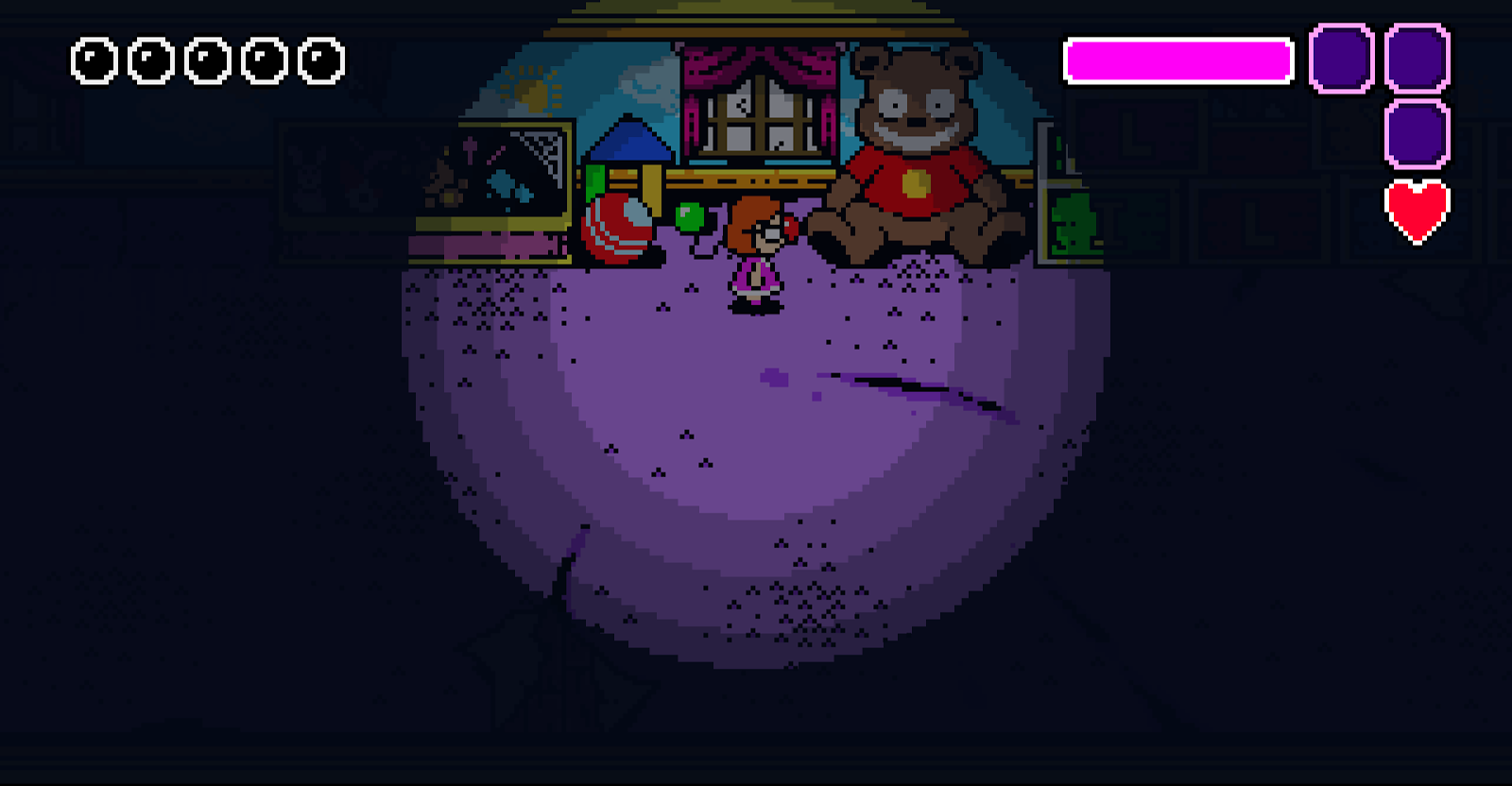
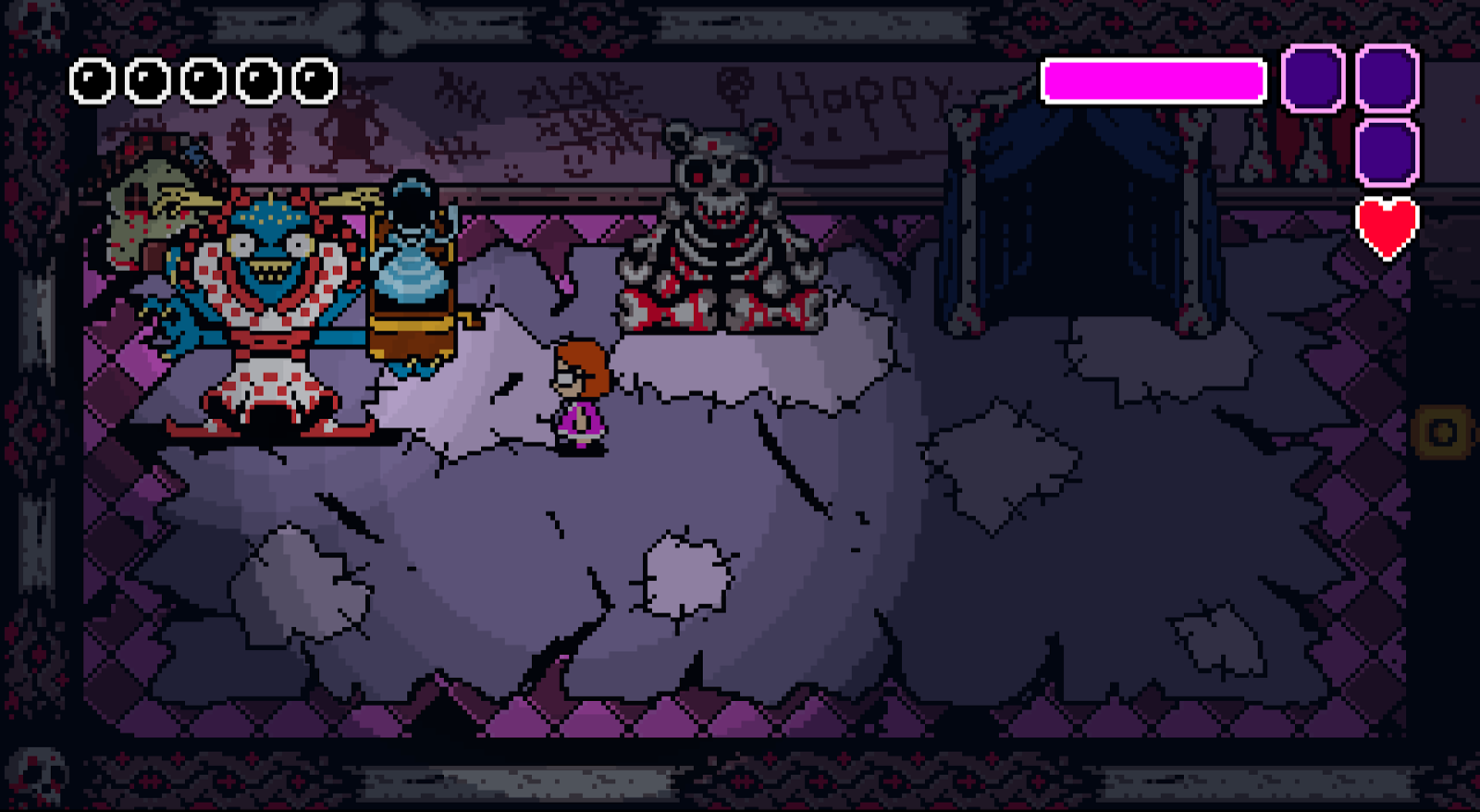
It’s Halloween 1980, the front doors are open so step inside the old Aitken House and guide Ada on her journey through both the human world and the terrifying demon realm. Find out what events unfurled that led to the Camp Sunshine massacre in 1986.

Killer bear!


Game Features

  • A dark, involved and outright weird story that builds to the events of Camp Sunshine!
  • Beautiful hand-drawn 8 bit-esque pixel art
  • Inspired by classic horror movies of the 1980s and beyond.
  • A game of cat and mouse where the nefarious Shadow Man could be waiting for you around any corner.
  • An original 1hr 22m soundtrack written exclusively for the game
Horror awaits

The console versions (PS/XB/NSW) are in development, scheduled for a 2022 release.

About Sunshine Manor

In Sunshine Manor, players adopt the role of Ada McReady who, unfortunately and against her will, gets trapped in Sunshine Manor whilst out trick or treating. It is not a place where most folks would want to be. Its long dark corridors dripping with cobwebs, creaking floorboards and unwelcoming atmosphere hang heavy. Ada has only one recourse, to get the ‘hell’ out of this nightmare as fast as possible!.

As Ada tentatively explores the Manor, you’ll meet ghosts, battle demons (some more friendly than others) and attempt to stop whatever is happening in the old Aitken house. As always with good versus evil, Ada has plenty of her own tricks to even things up with psychic powers that can banish demons for good! Sunshine Manor offers twists, turns, blood, mystery and lots more once the door slams behind you. 

Uncover the mystery and history, all whilst trying to avoid being taken by The Shadow Man – who just happens to be watching your EVERY move.

Gaming together, forever.

What happened in the old Aitken House that triggered the Camp Sunshine Massacre? 

About Fossil Games

Fossil Games is a two-person indie games team who have a love for retro gaming, pixel art and 1980s horror movies. Having released Camp Sunshine (the first game in our Sunshine Universe trilogy) to a fantastic reception and gathering praise on all storefronts and is featured in hundreds of YouTube let’s play videos from creators such as SuperBestFriends, CinnamonToastKen and more!

About Hound Picked Games

Hound Picked Games, a subsidiary of global consultancy agency PR Hound, is a company set on helping indie studios realise their full potential releases. It specialises in hand-picking indie games that can benefit from the work.

A Closer Look at Wonderbly Personalised Books

With Christmas not too far away now, we are going to be looking at various things you might want to consider – here we look at some awesome personalised books from Wonderbly.

This is how Wonderbly describe themselves:

“There is nothing more magical than a child’s imagination. It is limitless, glorious, and incredibly precious. Here at Wonderbly, we create meaningful, magical personalised stories which let children imagine themselves doing extraordinary things.

From learning about their own identity, to discovering the world around them and developing empathy, curiosity and confidence, our splendid stories help prepare children for every chapter of their life ahead.

The positive power of personalisation

Studies show that when children see themselves in a story, it has a profound effect on their literacy and language development. This helps create confident, enthusiastic readers for life.

Personalisation also helps children relate to the storylines – it’s really them, in the story! This makes them far more receptive to the key messages and learnings of each tale – from courage, to friendship, to curiosity and kindness.”

We decided to take a look at two different books that Wonderbly offer.

Where Are You? Save the Multiverse!

An urgent mission to save the multiverse from an evil criminal mastermind? Awesome! Send up to three children on an epic quest to look for themselves (and save each other) in a personalised search-and-find book.

This particular book is aimed at ages 4 to 10 and comes with 36 pages. You can even preview the entire book before you buy which is great.

This personalised book is £24.99.

How Many Yous Make a Hippo?

Are you faster than a cheetah? Can you jump higher than a kangaroo? How many yous would it take to lift a gorilla? See how you compare to the world’s most incredible creatures in this personalised animal book for kids.

This particular book is aimed at ages 4 to 6 and comes with 34 pages. You can even preview the entire book before you buy which is great.

This personalised book is £24.99.

Both of these books are great – the process of personalising them was easy and fun and from ordering them to them being delivered was a very short time too.

Wonberbly have a lot of really great and interesting personalised books to choose from – take a look, there is bound to be something there you would love to give someone for Christmas.

You can learn more from the Wonderbly website, and there are some great offers on there at the moment as well.

A Closer Look at the Catalyst Tempered Glass Screen Protector

If you have an iPhone 13 Pro Max you probably want to protect it, here we look at the Catalyst Tempered Glass Screen Protector.

100% Compatible with Catalyst Waterproof & Drop Proof Cases
Switching up your case and protecting your screen has never been easier. For the first time ever our screen protector is compatible with both our iPhone 13 Series Vibe, Influence, and Total Protection cases. 

Shatter & Scratch Resistant 
This anti-shatter and anti-scratch glass is the perfect defense against all those unwanted nicks and scratches.

Fingerprint-free
Keep your screen as fresh as the day you got it with our fingerprint-free Screen Protector. 

Easy Installation
Installation is fast and easy. Plus, each set comes with a cleaning cloth, dust remover sticker, and alcohol cleaning pad. Although I would state that there are no instructions for fitting included in the package – there is a QR code that is supposed to take you to installation instructions but instead its a quick marketing video, but its not that hard to fit the screen protector.

Ultra-Thin
Our Screen protectors are ultra-thin and lightweight while still maintaining a flawless display quality on your iPhone

The Catalyst Tempered Glass Screen Protector is available now priced around $39.99.

You can learn more from the Catalyst website here.

A Closer Look at the Catalyst Active Defence Influence Series iPhone 13 Pro Max Case

If you have an iPhone 13 Pro Max you probably want to protect it, here we look at the Catalyst Active Defence Influence Series iPhone 13 Pro Max Case.

Get going with the latest Active Defense Influence Case for the iPhone 13 Series. Created with a fingerprint-free frosted back, it’s the ideal option for those looking for a tailored, sophisticated look.

2.5X Higher Drop Protection
Always feel secure with our high-tech design and air-cushioned engineering that allows for a drop spec of 10ft (3m) – 2.5X higher drop protection than military standards. Plus, it comes with a free lanyard, so you’re never left hanging. Necessary for that bike commute into work. 

+30% Louder Sound with Unique Forward Audio
Don’t you hate when you have to cup your hand around your phone to echo the noise while on a late-night conference call? With our unique forward audio, those days are in the past as this case delivers +30% louder sound versus a naked iPhone. 

Fingerprint Proof 
We all love a clear case, but fingerprints not so much. Have the best of both worlds with our fingerprint-free frosted case back. 

Charge with ease 
Each Active Defense Influence Case is MagSafe and QI wireless charging compatible. Lets you charge up without stripping down.

Instant Mute Switch
Be gone the days of getting your nail stuck in the tiny crevice of your phone case every time you want to silence your phone. With our instant mute switch, all you have to do is twist and hear the click. Trust us, you’re going to love it. 

Personalise as you please 
Looking to spruce up your case with a pop of personality? Each Influence case has 4 corner attachments that are compatible with our Crux Gear line allowing you to pick and choose what suits your needs and of course your style. 

The Catalyst Active Defence Influence Series iPhone 13 Pro Max Case is available now priced around $39.99 and comes in four different colours – Stealth Black, Clear, Neon-Glow-In-The-Dark and Pacific Blue (the one we were sent).

You can learn more from the Catalyst website here.

A Closer Look at the Marvel BattleWorld Treachery at Twilight Mega Pack

With Christmas not too far away now, we are going to be looking at various things you might want to consider – here we look at the Marvel BattleWorld Treachery at Twilight Mega Pack.

Pick your favorite Hero, rescue your friends, and win battles to defeat Thanos!

Battleworld is a revolutionary cooperative, expandable, collectible adventure game featuring dozens of characters from all over the Marvel Universe!

Players get to crack open the mysterious Thanostones during the course of play to reveal the mystery character inside for a constant sense of surprise and delight! 

Mega Packs let you jumpstart your collection with six characters: four starting Heroes [including an exclusive Captain Marvel (2099 Suit) variant] and two more trapped in Thanostones!

Unique team-based or solo gameplay allows players to jump into Battleworld right away!

Collectible characters come with their own game cards for immersive, cooperative play. Collect all the unique powers and abilities!

Free the mystery character from the “Thanostone.” Each time you crack one open, it’s a surprise!

Series 2 includes 30+ unique characters including rare variants!

Includes a new unique-to-Battleworld Hero available ONLY in this Mega Pack – Captain Marvel (2099 Suit)!

The Marvel BattleWorld Treachery at Twilight Mega Pack is aimed at children ages 6 and up and is for 1 to 4 players. Each game takes around 15 – 30 minutes to play and you can combine them with other games, and you will want to collect all the characters!

The Marvel BattleWorld Treachery at Twilight Mega Pack is available now priced around £15.

You can learn more from the Funko website.

Disclaimer: The Marvel BattleWorld Treachery at Twilight Mega Pack was sent to us for the purposes of an honest review. All opinions are the opinions of our reviewer.