Review: Going Under

Roguelite games have always tickled my fancy. I love the idea of a fresh adventure, the replay value is high, and each playthrough is never the same. But, when I get into the action I always get frustrated as losing my progress always feels like a backward step, and I never truly experience progress.


When I was offered Going Under by developers, Aggro Crab and publisher Team17, I tried it with an open mind, not allowing my previous annoyances to cloud my better judgement. 


What’s it all about?


Going Under is a Roguelite dungeon crawler inspired by failed tech startup companies. It’s fast-paced, full of fighting and its dialogue is laced with tongue-in-cheek comments and clichés galore. You control Jackie, who lives in the Dystopian city of Neo Cascadia. You’ve applied and been successful in becoming the latest intern for Fizzle Beverages. You soon discover that the tasks expected of you don’t match the job description, and being successful in your new role will require a solid constitution. You must be able to file paperwork, and have the ability to fight monsters that live in the procedurally generated dungeon that exists under the company campus. 

What makes this stand out?


Going Under isn’t merely an adventure title where you crawl never-ending dungeons hoping to complete the odd quest, it’s much more than that. You must complete each mentor’s questline, this gains their blessing and approval. Once you’ve unlocked a peer trainer, you are free to use them to apply a special skill to your character. Talking about skills, there are plenty to find and master. Each run you will find randomly generated skill cards, the more you use them the quicker you fill its progress bar, and the sooner you become an expert in it. You will be blessed with positive effects and be cursed by negative ones, so you must choose wisely. 


Everything is a weapon!


The best thing about this, alongside the cringe-worthy clichés, has to be the weapons. Everything can be used! Find a stapler, lob it an orcs head. See that broom? Stick it somewhere so he can sweep the floor while running away from you. (Disclose, no cleaning happened while reviewing this game!) The world is your oyster, and you are free to attack anyone with it.


“What’s the point?” you may think. Plenty of short, sharp mission makes this a casual and accessible game for everyone. Its light-hearted approach proves that the developers don’t take themselves too seriously, and the variety in quests means that you will always focus on different goals each playthrough. As the dungeons are procedurally generated, not all quests can be completed or attempted all the time. This was a little annoying, but it kept you on your toes throughout.


It’s a colourful affair. 


A while back I reviewed a game called Ooblets, and I was amazed by the art style and vivid colours. Going Under matched this sense of amazement. Don’t misunderstand me, the graphics aren’t spectacular. It doesn’t sit at the top of the tree lording it up over other games. It simply blew me away with its unusual style and use of vivid colours. The art style has a cartoon approach with caricature-like elements. The people are over the top and almost absurd, and every part of the environment and the characters scream look at me. It’s a colour explosion that you won’t tire of.


The audio is loud in your face and almost too much, yet it works well. Each item has a unique sound, my favourite being the twang of the guitar when you wrap it around an enemy’s head. If you can picture any children’s TV program, the constant noise and attempts to grab your attention were reminiscent of this game’s audio approach.


Its all-out attack as dodging is pointless!


Aggro Crab clearly believes that the best form of defence is attack, as dodging is a challenging pastime. I couldn’t work out if the issue was with my reactions, or the responsiveness of the controls. Either way, dodging was pointless and victory came from the relentless bludgeoning of your foes. Other than this issue, the controls were simple to understand, easy to master, and this made the title a pleasure to play. 


Whenever you play a game that wipes all your progress upon death, you are going to experience a lot of replay value, as long as you can get over the loss of your gear, that is. This is a challenging title to work through, and completion requires a mixture of luck and skill. A tough achievement list can be unlocked, but it requires; time, patience, and every task to be completed. This isn’t one for the faint of heart, and you’ll need around 10 to 15 hours to finish it. At £15.99 it proves to be good value for money.


Was I right to banish my demons?


I have my demons whenever I play Roguelite or like games, but I’m glad I placed my concerns to one side and tried this one. The humour and many tasks heavily outweighed the annoyance of losing my gear and I enjoyed my time with it, mostly. Do I recommend it? Of course. It’s a; colourful, fun, fast-paced and enjoyable title that can be played casually. Can you make Jackie the best intern Fizzle Beverages has ever seen? Grab the nearest object and smash every monster in your path, your internship depends on it.

Review: Black Desert

If I picture the persona of a hardcore gamer, two images instantly spring to mind. 1. The streamer who specialises in eSports titles and first-person shooters. They spend their days screaming down a microphone, thanking their followers for donations and subscribing. 2. The gamer who grinds out results for hours at a time, the real world no longer exists to them, and all that matters is the online realm, and the clan they now call their family. Think South Park and the episode: Make Love, Not Warcraft. That image is the metaphorical nail on the head.

I’ve flitted between both states, but now I’m comfortable playing shorter games, hiding behind the defence that my typed reviews give me. The genre MMORPG rarely crosses my path, not because I don’t enjoy them, no, it’s because of the lack of time that I can invest.

Ultima Online was my last major MMORPG.

It shows how out of date I am with the genre, that my last major title was Ultima Online in the early 2000s. So when playing code roulette with the page owner, he kindly provided me with a copy of Black Desert to play. Developed by South Korean developers, Pearl Abyss and published by Kakao Games, this MMORPG is the time sink that I love and worry about all in one glorious package.

Set in a fantasy sandbox-orientated kingdom, you must create your hero to live amongst the people of this realm, completing quests and generally just existing. The world that you explore is a thing of detailed beauty. The developers have spared no efforts in making this game look absolutely amazing. I heard the hype surrounding the graphics, and character customisation options, and disregarded it as fanboy nonsense. That was foolish, as this has the most in depth custom options of any MMORPG on the market today. If this is what floats your boat in online games, then you will think it’s your Christmas and birthday come early.

MMORPGs are big business, is there room for another?

With so many of these games absorbing every part of its fan bases waking hours, how does a new venture squeeze its way to the top and start taking its competitors’ players? By giving them something that feels familiar, but applying a new gentle twist to the narrative, that’s how! Black Desert’s ace card is its focus on “realism”. Farming, fishing, taming, breeding, trading and so forth. Gamers love to feel they have influenced and bettered the world that they exist in. Items can be purchased from NPCs, yet anything that is created or grown is exponentially greater. Food that is grown will improve your health and recovery at a faster pace than anything purchased in a store. Taming allows you to obtain your much needed mount, and breeding lets you create specific super breeds. It’s easy to get lost in the small details, and this is one of the major obsessions when playing Black Desert.

It all sounds great, yet it doesn’t feel right!

All this freedom and quality game mechanics are great in theory, but in reality they all feel a bit janky. I never felt comfortable with any of them, I’d always scowl when attempting most tasks as the action always seemed off. It appeared as though it was trying too hard, yet you never truly get the result that you wanted. Like that child at school who desperately wants to answer the question to prove his worth, but everyone knows that he doesn’t know the answer. It was bizarre as it should have been brilliant, instead it just seemed odd.

As with others in the genre, this shares several familiar traits; PVE and PVP combat, large event battles, level caps, guilds and grinding (wow! The grind is real in this game).

Combat – PVE or PVP?

The fighting mechanic is super smooth and enjoyable to experience, but it has its drawbacks when you combine it with the skill tree. It enforces that combos are used to get the best result, so you must tap away at buttons to make sure you make the most of each situation. You must take your time to get used to the finer points of the game, but luckily in Black Desert, time is on your side. The PVE setup is great for early game players wishing to push level gains, it can be done simply enough, though it goes against the ethos of the game. Black Desert wants you to take your time to master skills and your approach to improve your character. The developers want you to enjoy your time online with the community and not rush to the end game. We’ll discuss the end game, or lack of it shortly. The PVP is good, yet tough. The phrase “arse and handed to” springs to mind. One of my bugbears of this genre is PVP and the grind and frustration that comes with it. These days I steer clear wherever possible, which does limit my exposure to parts of the game that other players love.

No End game, what’s the point?

From my time with this, I never discovered an end game, though fellow players claimed it to involve the PVP aspect of the title, so unsurprisingly I did not care. If you disregard this endpoint, you’ll discover that there is a plethora of experiences to fill your time; fighting, riding through beautiful areas and larking about being enough to sustain me. Gamers who invest a lot of time may feel differently. As a casual MMORPG player (that’s an Oxymoron if ever there was one!) I didn’t have enough hours in the day for everything as it was.

For all its niggles, what the developers have got correct are the aesthetic features. Graphically its spectacular, it pushes high end PCs to their limits, and looks awesome on the Series X. The variety of biomes brings the world to life, the structures look unique, and the large castles are overbearing and awe inspiring. If you combine this with atmospheric music and cracking sound effects, you have a recipe for a game that easily transports you to its fantasy setting. It’s therefore unfortunate that the immersive feeling is so easily removed with the jarring nature of the clunky gaming mechanics.

Is it really a time sink?

Replay value is not an issue for a much loved MMORPG. Once it gets its claws into you, you are doomed. The phrase time sink is an understatement, you won’t lose hours to this, you’ll lose days. Time simply fades away once you start playing. You will forget all your worries as you grind away to gain resources, while pushing that XP to achieve the maximum level cap.

Were losing hours of sleep and years of my life worth it? Probably not, but I had a fun time, mostly. Every class you select is enjoyable with a new and distinct way of approaching situations. The PVE/PVP argument is as predictable as ever, and you will sit comfortably on one side or the other. The sandbox and realism touches were an interesting concept, if a bit flawed. I liked how your effort met with in game reward, and this meant that every role that is taken has a meaning and a use. The fighting is good, even if you consider the annoyance of the combo system and the confusion with the skill tree. I recommend this, but it will consume your life. If you want to take on a unique MMORPG with beautiful audio and stunning graphics, then look no further than Black Desert.

Review: El Hijo

If you were to zoom out from a classic Clint Eastwood standoff, and instead pan up the humble monastery up on a hill, you may find a boy skulking around, longing to escape. El Hijo is the tale of that very kid. Left behind by his outlaw mother, El Hijo (“The Son”) seeks to escape the confines of his orphanage and discover the truth behind the destruction of his family’s home.

El Hijo plays as a sleepy Spaghetti Western stealth game. It’s slow and leisurely. But what El Hijo lacks in excitement, it makes up for in charm. The narrative consists of about as much dialogue as your average Buster Keaton film, and instead opts to string the player along by the use of gestures and animation. In most cases, this would leave a game feeling unfinished, but it works here. In fact, it works probably as intended. HandyGames has given us a straightforward plot, and by deciding to forego voice acting—beyond grunts and exclamations—they keep you fairly engrossed. It makes sense when you think about it. It’s hard to resist the pull of a mysterious narrative when you have exactly zero exposition going on.

The atmospheric successes don’t stop there for El Hijo. The animation and visuals are excellently done. The gameplay is so simple that you can imagine it being implemented in multiple settings, and yet the choice of Spaghetti Western seems to be the perfect choice. The usual suspects are all there: cacti, sun-dappled wooden floors, rocky outcrops. It’s familiar in all the best ways. There’s also something about the animation style in conjunction with this setting that adds a refreshing levity to the game. It never takes itself too seriously. It remains a joy to look at the entire time.

You have two primary objectives in El Hijo: escape each stage and inspire other children along the way to rebel. I suppose there is another overarching goal: don’t get caught by the roaming monks.. Oddly enough, you don’t have to inspire all the children to complete a stage. If you make it to the exit, you can continue to the next level. As far as I can tell, there are no requirements to completing a stage other than reaching that final door. Though it should be said that the children can provide useful temporary items as well as offer a bonus incentive for the completionists in the crowd.

Speaking of items, El Hijo offers a variety of ways to make your life easier as you progress through the game. You are first given a rock that can be thrown to distract enemies, but you’ll inevitably come across different wind-up toys, a slingshot, and the like that will aid you in your quest for escape. If I’m being honest, the rock was my crutch for the first ten or so levels. It begins to feel a bit overpowered though. The items are so useful that they basically ensure that you will not reach a point where you will truly struggle.

Unfortunately, the core of the game managed to fall flat for me. The stealth mechanics have been done to death and there is not much inventive here. It’s also painstakingly railroaded. There is basically one route through each stage. Because of this, at its heart, El Hijo might actually be more akin to a puzzle game than a stealth. The majority of my time was spent figuring out patterns of enemy movement and ways to shift objects in my favour. I was never skulking around to avoid being seen; I was simply timing my movements.

As you’d expect, this gets stale fast. Without any freedom to make your own decisions, you sort of jump to the next problem and apply the same logic you used to complete the last one. I swear that 50% of my time was spent waiting for a monk to finish sweeping a corridor and then just slipping in behind him. Simply put, it’s repetitive. This doesn’t mean that El Hijo is unplayable by any stretch of the imagination, but I don’t imagine many gamers will be opting for a second pass after completion.

El Hijo feels a bit like an introduction to stealth games. It’s restrictively linear nature makes it an excellent choice for beginners, but a frustrating experience for inveterate stealth players. Still, its monotonous nature can, at times, be overshadowed by the cutesy, innocent spirit of the game which shines through in spite of gameplay concerns. Oddly, El Hijo might scratch the itch for players that have either never played a stealth or who have played nearly all of them. For those players in the middle of the pack, who still have plenty of options left, your time might be better spent elsewhere first.

Review: Iris Fall

Depending on your superstitious nature, the sight of a black cat will fill you with either love or loathing. The very sight of one of these felines will either bring you good luck or curse you. I’m not a true believer in superstition, but even I know that black cats are not good news. This thought process was reinforced in my latest review title, Iris Fall

Developed by NExT Studios and published by NExT Studios, PM Studios and Tencent Games, this dark puzzle adventure title asks you to control a young girl named Iris, whose curiosity ensures that she gets trapped in a twisted fairy tale world. She must manipulate the light to solve the problems she faces, while following the black furred cat that dragged her into this mess. 

The creepy, gothic environment that you explore will send shivers down your spine, as will the stunning artwork that forms the backbone of this gorgeous piece. The main game mechanic of light manipulation has been done to death, but how the developers have utilised it alongside their artistic approach meant that I instantly forgave their lack of originality, and strapped myself in for a glorious ride into some weird and wonderful experiences.

Puzzle games can be hit and miss with their difficulty!

What instantly struck me as I traversed the bizarre rooms, avoiding murderous looking dolls and bears, while searching for the next item to grab, was the ease at which I could work through the puzzles I found. The developers balanced the difficulty perfectly, ensuring that most players will complete the trials before them, but those that want to obtain all the achievements would have to be perfect during each attempt. This generous approach should ease the concern from any new gamers to the genre, whereas veteran players will still find enough challenge to want to try this as well. 

The game takes place over 7 Chapters, with a finale section that must be played through as well. As you progress, you must think about; the items you find, how to alter the objects you see, and how their shadows will assist you as you transport yourself to the dark side. This light manipulation mechanic to forge new paths is nothing new, but when the developers merged it with their delightful art style, it was a joy to explore the world you were in. You will be asked to turn and twist furniture and stairs to cast shadows onto the wall behind. Mannequins must be moved and posed to complete images, and light beams altered to blind the all-seeing eyes. The problems don’t simply fall into a 2D category, the rooms you investigate become the puzzle and the solution. All you need to do is understand how light and dark will overcome your issues. 

The gameplay flows nicely! 

Each chapter is refined to a few cluttered rooms. Desired objects are easy to locate with a white orb hovering nearby, and your black cat guide stays with you throughout. The only thing that will stop you proceeding is if you cannot solve the puzzles. Stunning cutscenes fill the gaps in the action, keeping the gameplay flowing nicely. It’s described exclusively with imagery and music, no spoken dialogue is used, and with the detail shown, and the emotion created through the audio, it would have been an overkill if there were speech applied. 

I’ve gushed about the beauty of this game enough already, but yet I’m going to mention it again. Each of the chapters uses a hand drawn predominately black and white approach that emphasises the gothic nature. The dolls, bears and other children’s toys that litter the landscape make this an eerie title to enjoy. The distinct art style was reminiscent of Alice in Wonderland. It is bizarre to look at, and I spent most of my time waiting for something to jump out at me. The developers should be very proud of the world they have created, and the detail that it contains, it’s an excellent example of an indie title done to a very good standard. 

The audio continues on with this high level of quality. The melancholy and uneasy atmosphere is supported superbly by the accompanying sad piano music. The footsteps of Iris can be heard throughout, the echoed sounds symbolise her lonely existence in this dank and dark fairy tale.  The sound effects that are used to create the ambient sound are haunting, and if you are like me and have a phobia of clowns and carnivals, then you will find an awful lot of this unbearable. The shrill fairground style noises chilled my blood, constantly putting me on edge. The aesthetics experienced in this game are up there with the best I’ve seen from an indie developer.

Enough of the praise. Surely it’s not perfect? 

It’s very good, for sure, but unfortunately the last two portions of my review are the weakest elements; the controls and the replay value. The controls are easy to get to grips with, but her movement is slow, arduous and clunky. You’ll walk into objects, catch yourself on the environment, and stumble around like you have had one too many beers. For such a great looking and sounding game, the controls were a bit too clumsy for my liking, and should have been refined to improve the player experience.

With the puzzle genre, I feel like a stuck record when discussing the lack of replay value. It’s the worst category for replayability, and I’ve come to terms with that. Yet, when a game is as good as this one, I wish that there was more for me to get to grips with. To clear all the chapters without perfecting the puzzles will take you around 2 hours, if you then return using chapter select to master the solutions, and unlock all the achievements, you will add around 1 to 2 hours depending on your skill level. At $19.99 you don’t get a lot of game for your money, but the brilliance of the short playthrough makes this a worthy title to add to your library. 

This was one monochromatic journey that I adored. The stunning visuals, atmospheric audio, creepy imagery, and accessible puzzles make this a game that should be purchased. Yes, the game mechanics have been done to death, and the eerie concept is as old as the hills, yet the combined elements work in perfect harmony. It will not surprise you that I recommend that you should play Iris Fall, I just wish all indie developers could take a leaf out its book. Following a black cat into a weird world was a big mistake, but can you overcome all the puzzles and get to the other side? I’m pretty sure you can.

https://www.microsoft.com/en-us/p/iris-fall/9pnhxrvf258q?activetab=pivot:overviewtab

Review: The Pillar: Puzzle escape

If you have read any of my other reviews, you’ll be aware that I’m a great lover of most genre’s of games. Like all gamers the world over, I have my favourites, but I’m happy to chance my hand at anything that comes my way. With limited gaming time available to me, I’m always keen on anything with the tag “Casual”, so when my latest review title dropped in my in tray, it instantly piqued my interest.

The Pillar: Puzzle escape by developers, Paper Bunker and Eastasiasoft, and published by the latter is a casual exploration adventure puzzle game that takes place in a magical and colourful land. You must control an individual who is lost within this maze of ever growing intricate problems, where your only escape is found by solving every puzzle linked to the mysterious pillars that appear during each stage.

The gameplay takes place over 7 levels and opens with an intro quest that acts as a tutorial. Here you will learn the fundamentals of the 4 different colour-based puzzles that you will face. As you venture onwards, you will encounter more elaborate problems, and though the solutions will stare you in the face, the intricate design will test the logical part of your brain.

The Puzzles?

I’ve played a lot of this genre over my long gaming “career”, from; Riven and Myst to Call of the Sea, and many Artifex Mundi games. Though I’m not an expert, I’m comfortable enough to say that though you will be tested throughout your time with this title, the puzzles aren’t particularly hard to solve. You must connect a set number of coloured squares together in one continuous path. Whilst doing this you must also fill all the empty blocks. If you cannot connect the right colours, or leave a space empty, then the problem remains unsolved, and you must try again. There are 4 varieties to enjoy and solve, each getting progressively more difficult as you progress.

Is there more to this than just puzzles?

It wouldn’t be part of the puzzle genre, if this wasn’t the main concept, however, there is more to this than just the colour trials. Exploration and observing the finer details of the world you currently call home is a must. Clues are etched into the walls, and float above you in the surrounding air. Each level contains jigsaw pieces that make up a picture when completed. They are hidden around each stage, and must be found hidden between rocks and within the vegetation. Failure to collect all the parts won’t prevent you from progressing, you’ll simply miss out on a high score, and most of the achievements.

This genre is renowned for its beauty, and the other games that I have already mentioned look fantastic, with a great atmosphere that is created from a combination of; beautiful music, deep lore, stunning scenery and excellent audio. Does The Pillar: Puzzle escape match up to its peers? In places, yes, though some elements let it down. Graphically, it is reminiscent of the vivid world of Sea of Thieves, combined with the mysterious approach taken in Myst and Riven. That is a big compliment, and a massive thumbs up for this developer, but when you closely inspect the environment, it doesn’t look great, and shows signs of being dated. Now, it would be fair to argue that this genre doesn’t need AAA level design, but when the developers want you to immerse yourself in the world they have created, I expect the imagery to be better polished than the final product produced here. It isn’t terrible, and the bright and vivid tones match the mystical theme, I just wanted more!

The audio is very good. The sound of echoed footsteps can be heard throughout, which only serves to emphasise the sense of isolation. The piano music adds a sombre and calming atmosphere that then changes dynamic and pace as you edge close to the final obstacle of each stage. If Paper Bunker had captured the brilliance of the audio within their graphics, they would have been onto something special.

Is this best suited to PC?

There are certain games that consoles do better, and ones that the PC excels in, so would this be better played on a PC? No! The control system is smooth, accurate and works well with a controller. I had no issues with solving the problems and selecting objects was a simple task to achieve. The developers have done well to create a straightforward title to master, which helps to create a relaxing and laid back gaming environment.

When a game has a small variety of puzzles to crack, and 7 levels to explore, it impacts the replay value. An easy achievement list can be unlocked in approximately 6 hours, and a full completion is achieved in around 8 to 10 hours. So, you get a fair bit of game time for your money. At $14.99 it is good value, but its lack of new puzzles once it’s finished, and no NG+ mode reduces the desire to return and play.

The Pillars: Puzzle escape is attempting to stand out in a crowded and niche market, where the leaders of the pack are extremely strong titles. A much simpler approach makes this an accessible game compare to the others, but I can’t ignore its graphical short comings. Had this element been spot on, it would have scored 7.5 out of 10, but it has to be marked down slightly for these issues. With this being said, do I recommend you try it? Yes. A great entry level title that can be played casually, with an excellent audio and nice graphics (if you don’t look closely at the details.) Can you unlock the mysteries of the pillars and escape this magical world? 

Review: Bridge Constructor: The Walking Dead

Bridge Constructor: The Walking Dead is a good game. Some might expect that this game is lacklustre attempt to expand the already saturated Walking Dead universe. Raising an eyebrow to another Zombie videogame. But this is not the case and is no ordinary zombie game. It is a fun, intricate and smart bridge simulator and puzzle game. That deserves the spotlight.

Dead-ication is key

Bridge constructor: The Walking Dead is a bridge-building simulator at its heart, but a particularly clever one at that. From starting the beginning tutorial levels of the game. I was quickly impressed by the bridge/puzzle mechanics the game brings to the table. Resulting in intricate level design and presenting a real challenge. To complete a level, you have to manage to get your controllable characters to a checkpoint. While killing any walkers (zombies). Doing this requires intricate—bridge-building skills to get a perfect balance between saving your players and defeating enemies.

The complexness of bridge-building

An example would be to create a bridge that allows your player to cross a particular area. At the same time simultaneously pulls a specific large object onto the walkers. Killing them due to the character’s weight on the bridge effectively pulling the object onto the walkers. This smart and sophisticated level design mixed with bridge and puzzle mechanics makes this game stand out. At multiple points during levels, I found myself completely surprised at the intricacy needed to complete a level, through building the perfect bridge.

A classic bridge

Likewise, the variation in materials used in building bridges and your characters’ offensive capabilities such as bombs. Makes for a fun, challenging and fulfilling bridge-building simulator. Bridge constructor: The Walking Dead also has a great cartoon style vibe. It looks great with a story spread across its several chapters. Although it isn’t as profound as storytelling goes compared to its Telltale counterparts, it offers some story nonetheless.

A bone to pick

However, on the flip side, despite me singing the game’s praises, it has flaws. Firstly, although it plays okay on the console, it is better suited to the PC or mobile. The controls on console seemed clunky, making it a reasonably arbitrary process to build bridges. At multiple times, I became frustrated at the characters’ movement mechanics and how long it took to connect two wood pieces. It, therefore, needs better optimisation for consoles in terms of its controls. Likewise, I’m not sure about the game’s replayability and longevity either. You have a several chapter campaign, and that’s it. Once you master a level, there is no need to go back without endgame content such as a level builder or other challenge options. Players don’t need to come back to it—a shame for such a cleverly designed game.

Verdict

Overall, Bridge constructor: The Walking Dead is not just another addition to its already saturated entertainment franchise. It is a creative, intricate and well-designed game. That offers notable fun and challenge despite replayability issues and a relatively poor console optimisation. It is a good game. There needs to be more attention given to it.

Preview: Spacebase Startopia

I have been a fan of the simulation genre for as long as I can remember. I love how easy it is to get lost in this crazy in-depth world that you must micro manage within an inch of its life. The name Kalypso Media is synonymous with these games, and I have grown up with nearly every franchise that they have been involved in. To say I was a little excited when I heard about their latest title is an understatement. I waited eagerly as my installation bar slowly filled up to the 100% mark as I desperately wanted to play Spacebase Startopia. 

Developed by Realmforge Studios, and published by Kalypso Media, this simulation title has you controlling every aspect of each space station that you come across. You are in charge of; building, researching, happiness, garbage collection, trading, planting, harvesting and so forth. As the station manager, you handle the wellbeing of your staff, and the joy of every carbon based Lifeform that steps foot/tentacle on board. 

As with most of these titles in this genre, getting to grips with the basic mechanics is a bit of a nightmare. You are offered a full tutorial that lays out the fundamentals, but this is only the beginning, and mastery of the finer details comes with practise. The gameplay flows at a gentle pace, allowing you to get to grips with everything in a timely fashion. Unlike its peers, I could not speed up or slow down the action. This seemed alien to me (pun intended), and I may have missed something, or this may have been an oversight by the developers. Either way, I hope that this is addressed at a later date, as this missing function needs to be implemented to improve the accessibility of the gameplay. 

Before we go any further, Spacebase Startopia is a Game Preview title! 

As an Early Access game, changes can be made at the drop of a hat, so you must know if you wish to buy this, you may end up with a product that looks completely different from the one you purchased. Now we have that out of the way, lets look at what you get for your money.

Unlike several simulation titles, this one allows for a solo campaign and multiplayer action, where you have the choice to face either human or CPU gamers. Each of the modes has set goals that must be achieved, and these are shown at the beginning of any playthrough. The campaign is rigid, with no ability to change your objectives, whereas the multiplayer mode lets the players choose; their tasks, how many gamers are involved, the difficulty, map size, and so on. I learnt more through the solo experience, but had much more fun with the freedom that I found when taking on the multiplayer portion of the game.

 How does it stand up against its peers?

Like all the great simulation games from the past; Port RoyaleTropicoTheme Hospital and Sim City, this one will keep you on your toes throughout. Disasters will sweep in and undo all your good work at any given moment. You must think several steps ahead, as failure to do so will leave you flagging behind and quickly swamped with issues. The madness and chaos make these games great, you know that you can stop the problems from happening, all it takes is patience and a logical thought process. Spacebase Startopia captures this perfectly in its gameplay. There are so many finer details that you have to be aware of, that if you don’t keep all the little plates spinning at once, your space empire will quickly come crashing down. It can be stressful, but when you get it right, it’s so very rewarding, and all the headaches and heartache seem worthwhile when you see your orbiting empire succeed. 

You may wonder, “What does victory look like?” As with most in this genre, money is king, and in this game, money translates to energy. Aliens spend energy like it is going out of fashion, and you must set up your base to drain each one of them of every last particle. Drinks stations, berths, hotels, discos, hospitals, cafes etc, etc. Everything on board must drain those mindless aliens dry. Unfortunately, it’s not that easy though, as you hire someone, this costs you energy. Build a shiny new room. Yep, energy spent. Expand your station, buy boosts, research new items, attack your foes, it all empties your bank account. You must find the balance between spending and earning. This is the fun of the genre, and again, I believe that Realmforge Studios has the balance just right.

Isn’t the simulation and RTS genre best suited to PC? 

Normally I’d be harping on about how this game would be better suited for PC, attempting to give several reasons behind my thought process. Fortunately, there is little evidence to support this theory, other than one minor issue regarding the control setup, but more on that later. Right now, I want to talk aesthetics. How does the game look and sounds? Frankly, brilliant! As much as I’m a massive fan of these games, I always have a fear that the UI is going to be horribly cluttered on a console, everything will be painfully detailed, and all the text will be too small for me to read from my sofa. In reality, my experience was the opposite of this. It looks great, it uses a moody, darker tone to give a space vibe to all the action, each of the 3 decks that you have access to have different looks, and the aliens all appear detailed and unique. My issue lies ironically with the lack of detail on some items that you can construct. Hovering over icons does not highlight what you are looking at, you aimlessly have to build a product in order to understand what you are viewing. It was frustrating, and for a game that has all the other loose ends tied up so well, it was a little disappointing. 

If the lack of detail added grey clouds to the situation, the fantastically dry and witty commentary from the robot aide blew them away. The clever wording, delivery of lines and timing made me chuckle at every stage. I didn’t tire of the voiceover work and genuinely looked forward to what I would hear next. This combined with the synthesised upbeat music, and futuristic and robotic sound effects made for a near perfect audio that was a joy to listen to.

I’ve mentioned an issue that I had with the control system, and how I believe this element would be best suited to a PC, or at least a mouse and keyboard. The analogue sensitivity was a nightmare to master, and never really reacted as I hoped. Every time that I would attempt fine minor adjustments of the cursor, I’d end up moving too far, or not enough. It was enough to make me sigh repeatedly and left me with no doubt that the accuracy of a mouse would be better. Not that you won’t be able to have fun, and enjoy what you are doing, no, it’s just that you will need to adjust your game style to get the best out of the controller. 

People lose hours to simulation games. Will that happen with this one? 

Once I got to grips with the basics, I became obsessed with playing it. I looked to improve on what I had previously created, aiming to make a better, more efficient space station. This mixed in with the addictive and fun multiplayer mode makes this ooze replay value. As it’s currently in the Game Preview program, the achievement list isn’t available, but judging by the depth of content I believe that this will be a large and challenging set to unlock. The price of approximately £50 will put off several gamers, but if you love this genre, then this is money well invested as there are hours of gaming fun that awaits you. 

I’m always worried whenever I start a new simulation game, that the learning curve and difficulty will eat into my limited gaming hours, with minimal progress. But I’m glad that my genre obsession forced me into working through this. Once you’ve broken the back of the gameplay mechanics, you will experience a colourful and challenging simulation title that contains minor elements of RTS. Do I recommend you try this game? Yes, I do! https://www.microsoft.com/en-us/p/spacebase-startopia-game-preview/9ngpb7ngbpc9 You will sink hours of your time into creating the perfect station, just so a natural disaster, or your foes, can destroy your hard work. Can you build the best space station around, keeping everyone happy, while draining everyone of their energy? Buy a copy and see how you cope under the pressure.   

Summary

Life as a space station manager was never going to be easy. Hire the staff, build all the facilities, and make sure every alien is kept happy. Space has never been such fun!

  • + The user interface isn’t complicated to master.
  • + The tutorial is easy to understand.
  • + Attractive and simple graphics.
  • + The audio is fantastic.
  • + Plenty of replay value
  • – The controls are too sensitive.
  • – Some details are missing in product selection etc.


    (Preview completed on the Xbox Series X. Also available on PC, Mac, Linux, Playstation and Nintendo Switch.)

Review: Tanuki Justice

0

Don’t be deceived by the cute Tanuki on the cover – this game is not for the faint of heart. Tanuki Justice is a plethora of nostalgia goodness, reminiscent of the classic Megaman series with a SNES retro feel. What makes this game so charming is its simple game mechanics mixed in with hoards of unique enemies plus sneaky traps. If you’re a fan of indie or retro games and haven’t played this already, I highly suggest you add this gem to your wishlist.

Gameplay:

Tanuki Justice is set in feudal Japan, where a Tanuki duo aims to seek justice and save the world. This frantic Run ‘n’ gun platformer has seven levels and three game modes: Normal, Hard, and Insane. Each level is timed and features a dynamic and unique environment with numerous enemies and bullet hell moments. Our Tanuki hero can play solo or with a friend in any level and game mode.

The controls are pretty simple, you can shoot an infinite number of shuriken in any direction and jump. Also, there’s a special giant shuriken that not only kills enemies but deflects their shots as well. You start off with three lives though one hit will instantly kill you. There are also several power-ups that can aid in your journey. There are no checkpoints, so if you lose all your lives you have to start the level over! However, there are unlimited continues and you can start from any level you have previously completed.

Warning: this game may lead to rage-quits and excessive swearing. Don’t get me wrong this game is loads of fun, but there were so many cheap-shots I was THIS close to putting the game in the digital trash. The only way to truly beat this game is to learn the level and remember your mistakes. (And a bit of luck!)

Pros:

  • Power-ups! There were tons of power-ups that gave you special abilities, but some are hidden so pay attention so you don’t miss them!
  • Depending on your skills you can easily beat this game within 1-4 hours. This might be considered a con but honestly, it’s refreshing to me as an adult as I have less time to play games these days. 
  • A secret level! I won’t spoil how to unlock it but let’s just say you get to play an old friend.

Cons:

  • The main attack range is way too short in my opinion.
  • I wish Normal mode featured a checkpoint at the halfway point of the game, it was aggravating having to start back at the beginning every time I died.
  • I encountered a glitch a few times where my poor Tanuki died off-screen and never respawned, despite having lives left…

Conclusion:

This is a great game for the price and definitely something refreshing to play solo or with a buddy. It has its annoying moments, but the satisfaction of completing the game is definitely worth it.

Entertainment: 7/10

Replay value: 5/10

Graphics: 8/10

Sound: 6/10

Kid Friendly: Yes

Platform:Nintendo Switch
Developer:Wonderboy Bobi
Publisher:No Gravity Games
Released:December 10, 2020
MSRP:$14.99
ESRB:Everyone 10+

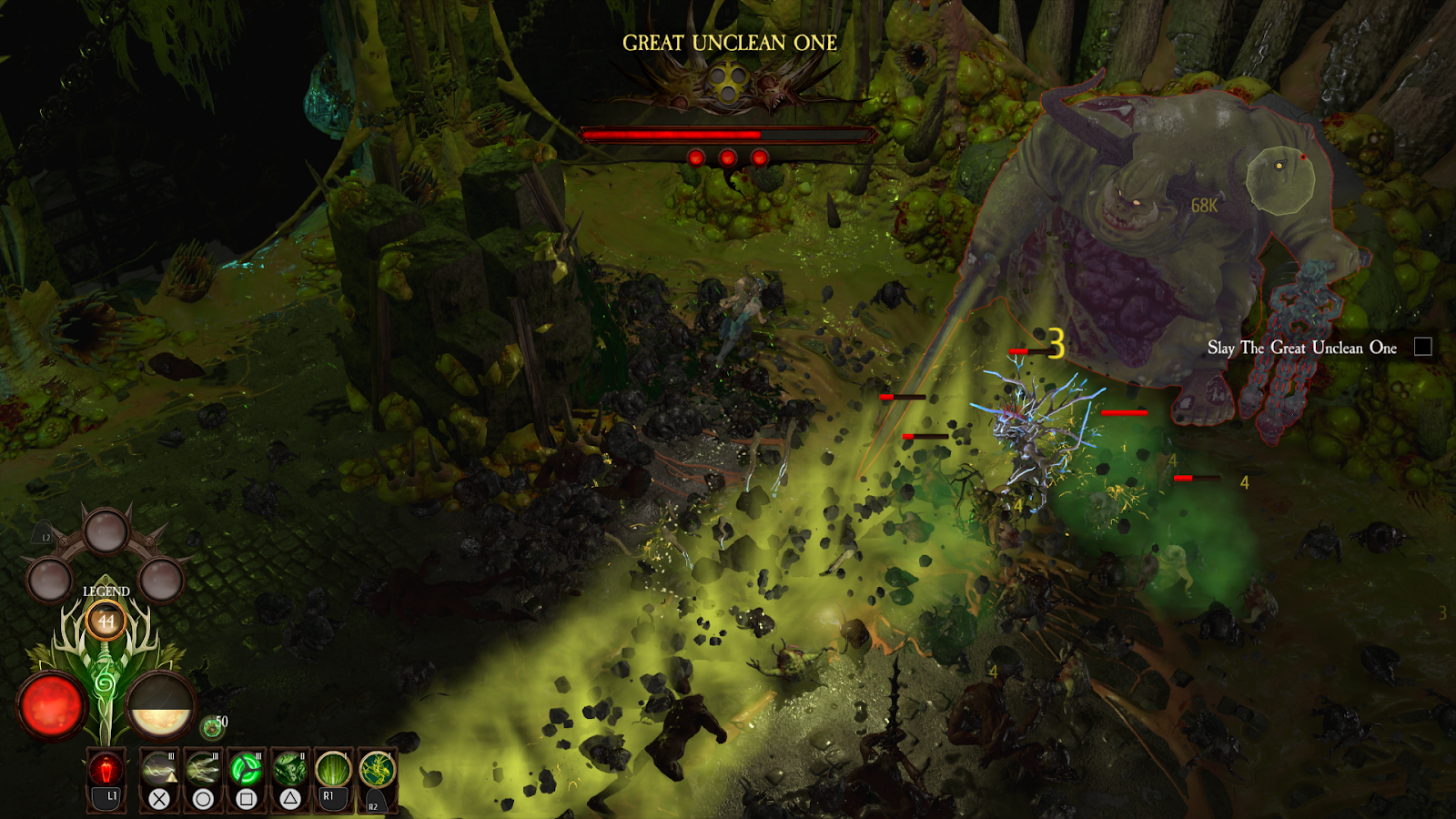
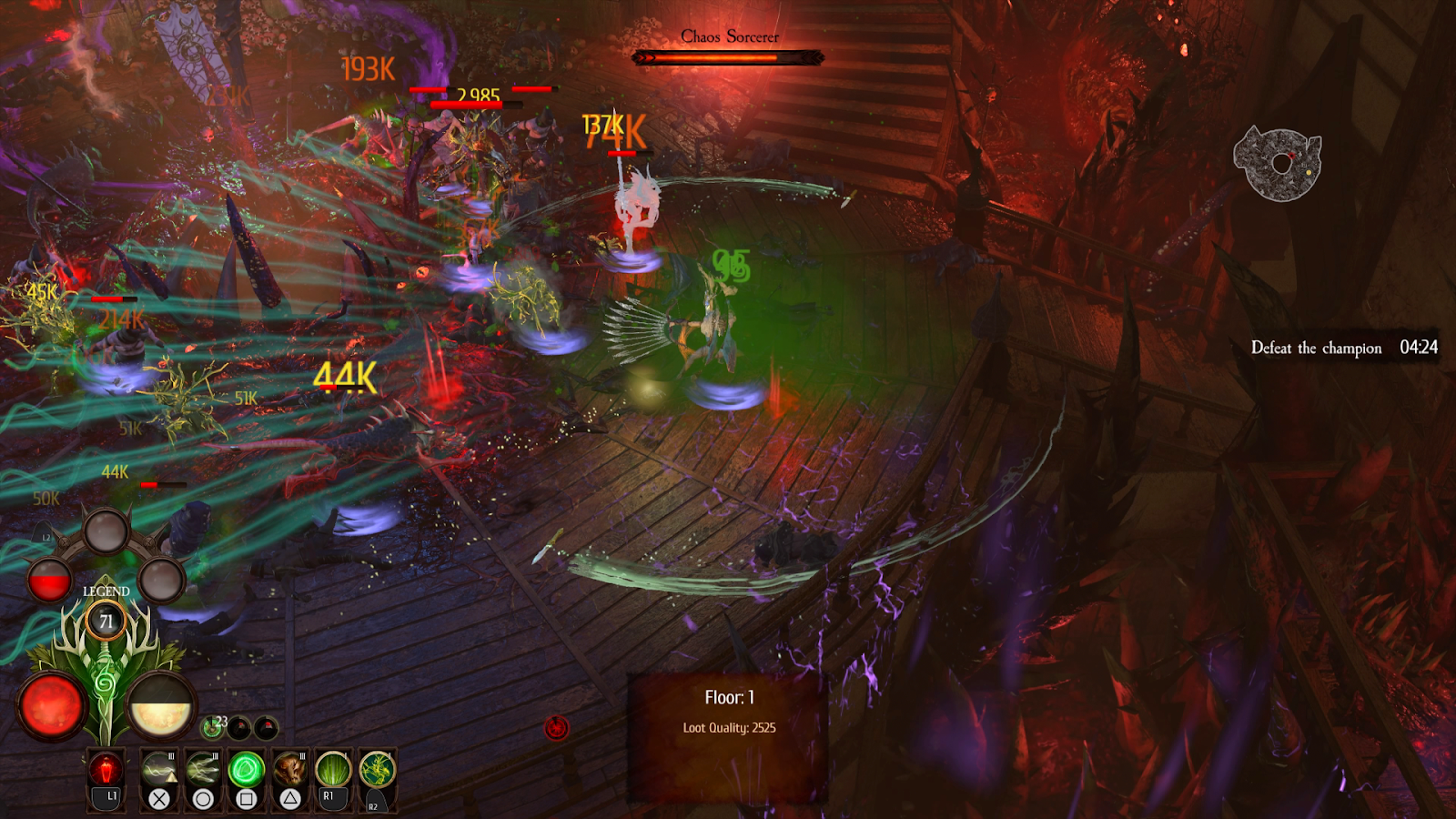
Review: Warhammer: Chaosbane Slayer Edition

I need to start this review by saying that the Warhammer franchise has never appealed to me. But when I started playing Warhammer Chaosbane, I couldn’t stop. From its intuitive combat and diverse range of characters that all feel distinct from each other. To the extensive range of choice the skill system gives when leveling up, it’s an action RPG full of decisions, but its weak story and impactless loot system hold it back. 

“From summoning druids to buffing allies, there is a large variety of special attacks to choose from.”

The combat in Chaosbane is fantastic. The way your character can chain together abilities to carve through waves of enemies is buttery smooth. The constant cycle between building up energy then splurging it all to clear out enemies is continually engaging and gives balance to the combat rather than spamming your best attack.

The skill system is designed to provide you with the choice of how you build your character. All the abilities are unique and change the way you play. From summoning druids to buffing allies, there a large variety of special attacks to choose from. Rather than just giving you skills when you level up, the game also offers skill points that will upgrade specific skills, passive and active, or swap them out for new ones. During my time playing, I was constantly swapping out skills to see what fit best my playstyle and what abilities I could string together to make effective combinations. It was all focused on the fun I was having with the abilities, and I never felt pressured to pick the best possible combination. Oh, and did I mention there’s also another skill tree filled with insane god skills to check out.

While the variety in abilities is vast, the same cannot be said for the enemies. The distinct lack of elite style enemies with unique attacks can make fights slightly repetitive. But fortunately, as you reach the later difficulties and chapters, these enemies do start to appear, and the variety of the enemy’s attacks matches that of their visual appearance.

Bosses are all very well designed and add a nice change of pace to the gameplay requiring you to decide when and what to attack. They force you to stay on your toes and pay attention if you don’t want to end up having to fight them over and over, but once you learn the patterns, you should not have too much trouble. And if you are, you can always tweak the difficulty from the overworld though it will decrease the quality of the rewards.

All bosses are replayable in the boss rush mode that will reward you with extra loot and the option to add some modifiers to the fights for added replayability. However, there are only six bosses across the whole game, and it would have been nice to see some more, especially with how good the ones in the game are.

“A diverse range of characters that made me want to play through multiple times.”


All the classes in Chaosbane are excellently designed to feel distinct from each other, and there is something for everyone. My personal favorite was the wood elf archer, with who I did my first playthrough with. I particularly enjoyed grouping up enemies before unleashing a flurry of arrows to mow them down and snipe off the stragglers. As well as the ability to spawn an army of druids to help aid my fight tho at times, they did look a bit lost, not knowing what to attack.

On top of the four characters from the original 2019 release, the PS5 slayer edition also includes all the previously released DLC characters and chapters. The first is a witch hunter that can switch between ranged and melee weapons on the fly, leading to awesome combinations as you dance in and out of enemies. And the second an engineer with an overheat mechanic that has you making moment-to-moment decisions to manage heat levels. Ethier blow of some air for instant damage or charge that power to overheat and cause a massive explosion. It’s great to see such a diverse range of characters that’s made me want to play through multiple times to experience all they have to offer.

The loot system in Chaosbane is slightly underwhelming. After picking up the first few equipment pieces, I found that it was never worth reading into the more in-depth stats and best to equip the item recommended to me. Nothing I picked up changed how I built my character or how I played until the end game items started to appear. Heroics do have some playstyle altering effects, such as reducing the number of skill points a particular skill will require or buffing a specific type of damage.  I would have loved for these items to have appeared slightly earlier into the game and for it to feel like a big deal when I finally scored that piece of loot that will take me to the next level.

As someone who has zero experience with the World of Warhammer, I did not connect with the story of Chaosbane at all. All of the non-playable characters are very forgettable and gave me nothing to feel invested in. You are given some hints toward their backstory but not enough to fuel your quest across the regions. And the same can be said for the playable cast, while they are fun to play, they lack the motivation needed to feel like a big deal in the world. If you are experienced with the Warhammer universe, you might get more from the story and its characters than I did. But personally, I found it all too repetitive and predictable, and the below-par voice acting from specific characters left me wanting to skip cutscenes to get right back into the killer gameplay.

“It’s safe to say there is lots to keep you grinding for many hours.”

There is a plethora of post-game content on offer in Chaosbane to help you acquire better gear and climb up the difficulty ladder.  As you level up, the guild master will offer you many different modes to try out and see if you can get that upgrade you’ve been looking for. The Tower Of Chaos has you clearing floors of enemies in unique ways, getting higher level loot with each floor that you clear. But once you choose to open the chest, your run will end, you will need to decide how much further you can go. 

Then, there’s Relic Hunt that tasks you with clearing out enemies and killing the Keeper of Relics to unlock a Relic chest. Like the earlier mentioned boss rush mode, you can also add modifiers that add difficulty but increase the chance of better loot. So there is a constant element of risk versus reward in the post-game, leaving you to decide how far you will push. With all this and the ability to run through remixed areas of the game, it’s safe to say there is lots to keep you grinding for many hours even after the story ends.

“In 2020 we should be able to play games we love with our friends no matter the system.”

The PlayStation 5 version of Chaosbane has exceptional loading times and runs perfectly smooth without fail. I never once dropped frames, even when I was purposely trying to fill the screen with as many enemies as I could.  Chaosbane does not use the duelsense’s haptic feedback in any way, which is a great shame seeing as how good the feature is. Trophy tracking is also not utilized, which has left me guessing how many more Relic hunts I need to do, heroic items I need to bless, and side activities I need to complete. However, the adaptive triggers are utilized when abilities bound to those buttons are on cooldown, so it’s not all bad.

Lastly, there is zero cross-play between consoles and generations, so if you plan to team up online with your friends, you will have to be on the same system. I would love to see this fixed in a future update as I hope cross-play becomes the standard for gaming in the future. In 2020 we should be able to play games we love with our friends no matter the system.

I loved my time with Chaosbane and am putting in more hours by the day to try and get that platinum, even though I have no idea how many more relic hunts I need to do. Its poor story and early game loot system are such minor problems in the broader scope of what is an excellent action RPG set in a beautiful universe with top combat mechanics and plenty of choices on how you want to play. 

Review: A Tale of Paper

As an origami figure brought to life, this simple 2.5D puzzle plat-former has tons of heart and it’s obvious that OpenHouseGames has a lot of pride in this title. From the first five minutes of playing, I wanted to love this game, I truly did. However, there were several, huge, factors that left a sour taste in my mouth and not enough positive ones to balance it out.

A Few Tricks Up His Sleeves…Just a Few

After awakening on a dusty bedroom floor, in an empty house, the adventure kicks off without much of an introduction. We are given control of a small origami figure and not given much other guidance. Moving around the room reveals the path rather quickly and the environments are used in a clever way to run you through the basic premise and expectations, with crude diagrams scribbled onto sheets of paper. These, along with tiny mushrooms that illuminate once you get close, serve as your guiding beacons along the way, as well as serving as nifty ways to brighten up the darker areas further on in the game.

The hook for this title is the ability of your little origami figure to change shape and turn into several other forms that all serve to complete the numerous puzzles along the way. All of these puzzles come in the form of your typical platformer; positioning elevators to the proper elevation, lowering water levels to open the next path, etc. None of these are new to the genre, but the addition of using several different forms helps keep it somewhat fresh. At times, these forms have to be changed back in forth in quick succession. All of these forms have their pros and cons. For example, the first form learned, is that of the mighty frog. The ability to jump much farther comes at the cost of not being able to take individual steps. There are several forms, and each comes with a pretty big trade off to prevent overuse and abuse. Each form is well implemented and the level, as well as puzzle, design compliments each one.

The similarity to Limbo is front and center.

Once you have progressed past the first few areas, the first enemy appears. I chuckled to myself when I saw that this enemy was a demonized Roomba that chases you around the room without reprieve. Enemies in this game are relatively scarce and there isn’t much in the area of diversity. There are only a few and, since there is no combat, there are no actual boss fights. The closest thing would be a small section that is heavily based on the chase levels from the Crash Bandicoot series…and I mean heavily. I will say that this section, as well as a few others, do a decent job of ratcheting up the tension. Other than these, the main enemies in the game are in the controls and the forced camera.

Scissors Beats Paper

One thing I noticed right from the beginning, was the inability to make minor movements. There are a few jumps in the game that require you to get relatively close to the edge of the platform. Moving your character on screen means shifting the analog stick, almost fully to one side or the other. Moving the analog stick slightly in one direction will only sometimes allow you to adjust on screen. There were several deaths that could’ve easily been avoided with tighter controls. However, since death isn’t much of a punishment in A Tale of Paper, this is a relatively minor complaint.

If you pair the controls with the fixed camera, this makes it incredibly difficult in areas to see the path of traversal. If you’ve played any 2.5/3D platformer over the last five years or so, you’ve probably seen this issue before. Looking at the level horizontally, at a 90 degree angle instead of at an elevated angle, creates blind spots due to the lack of depth perception. Luckily, in some areas, OpenHouseGames sought to make some of the narrow paths somewhat magnetic to make it harder to miss. This doesn’t seem to be the case for all of the pathways however.

Any one that has a hard time with depth perception in these types of games, such as myself, may find areas like this treacherous.

Another small item was how repetitive the puzzles can be. The same formula is used over and over again. Turn on elevator and race up stairs in time to use elevator as jump platform to next area, adjust water valves to raise/lower the water in the next area, turn into new shape to complete obstacle, etc. Each puzzle was very simple and acted more as padding to fill out the game time. Though, I am not saying there was no fun to be had with any of these areas or the puzzles nearby; I honestly enjoyed every one of them.

However, my enjoyment was short lived when the credits started to roll about 50 minutes after I started playing. Luckily I sat and watched for a few additional moments and was pleasantly surprised that the game play started up again. This was a new area, although familiar, with a new character and all of my abilities had been stripped away. I was half relieved that there was more to play and half irritated that I was starting from scratch. This lasted for another 20 minutes before the final set of credits rolled. Needless to say I was fairly disappointed that a $15 purchase would only last for an hour and a half and have little to no replayability.

I would’ve been able to move past this, I thought, if only there had been a little more meat to the almost nonexistent story that’s presented during the short campaign. After the final credits rolled, I returned to the main menu and checked the newly opened extras menu option and that’s when I found the story. Throughout the game there are a handful of collectibles, but what the game doesn’t tell you, or at least tell you clearly, is that each collectible unlocks a portion of the backstory that can be seen in the extras menu. Granted, there is a chapter select so going back to get anything that you missed would take less than 30 minutes, but I believe I would’ve enjoyed the story aspect much better if I had been able to experience it as I went through it. I will give A Tale of Paper this, for the small moments of narrative we are given during the story pack quite a punch. There is a surprising amount of emotion packed into each small moment.

Some enemies are best left unseen.

A Score to Beat

One area that A Tale of Paper does in excel in is with it’s score. The first major platforming section shows up within about ten minutes of the opening. At the bottom, the music starts softly and slowly builds to it’s peak as you reach the top. I was blown away by how well the score matched each of my character’s steps. In many other areas, the score becomes ethereal and in later levels fits the tone and art design as perfectly as I’ve seen.

A Small Payoff

All in all A Tale of Paper isn’t a bad game. Unfortunately, it just doesn’t give itself enough time for the negatives to get drowned out by the positives. Small items such as the fixed camera, loose controls, and forcing the collection of items to reveal the main story, really stand tall when there’s nothing on the opposite end of the spectrum to contrast with. If it had it given itself another hour or so, I would’ve easily given it an 8. However, at 90 minutes and no reason to replay it, I would wait for this to be on sale before picking it up unless you are a sucker for these types of platformers. However, if you honestly can’t resist this genre, you probably won’t be disappointed here.

Review: The Botanist

Whenever I think of 3D platform games, I’m always reminded of the excellent titles that were released for the N64 and the Playstation One. Games such as; Croc, Super Mario 64, Spyro, I could go on! So, what do all these have in common? Colourful worlds, memorable characters, increasing difficulty, and fanatical followers. When I hear that a publisher and developer have opened up their gaming account in this genre, I fear that they have bitten off more than they can chew. Will this be the case for Ghost Entertainment? Or will their gloriously colourful endeavour The Botanist be a resounding success and take the gaming world by storm?

Will it tick all the boxes, or fall short?

I have already highlighted 3 elements that make up a good platform title, but there are many more. Having spent a fair bit of time with this game, will I have experienced these things, or will I be left frustrated, and wanting to uninstall it? Let’s jump right in and take a finer look. The Botanist is your classic 3D platform game; you spend most of your time controlling a little Mushroom boy by the name of Bob. Bob loves his plants and researching new types of Fauna. His work is tiring, and during one of his expeditions he has a snooze to recover, and shock horror, the roots of the evil Green Queen of the Dark Forest turn his dream into a nightmare. Can you help Bob explore the new world that he lives in and awaken him from his slumber?

The game takes place over two game modes; story and speedrun. You face 8 challenging levels where you must; jump across chasms, land on moving platforms, avoid spikes and fire traps, and overcome many enemies. If you can do all these things, you will reach the flowery end goal, and progress on to the next stage.

Story.

The Story mode is self explanatory. Each level starts with a delightful cutscene that reminded me of a classic haunting fairy tale. The cinematic allows you some insight into how the tale unfolds and contains many twists and turns. All the cinematic contain no spoken dialogue, and doesn’t need to as the imagery is so powerful, and clearly explains the story. During this mode you are free to explore every section of the map, collecting mushrooms and additional lives en route. Paths will lead you to dead ends, and you will have to find magical boxes to make platforms move to forge a new way to the exit. You may worry that Bob’s life is very lonely, his friends now hate him, and he has to explore this new horrendous world alone. You do not need to be concerned, Bob finds a new ally in the form of a red dragon, he aids our hero on his quest, and can explore the world from a dragon’s-eye point of view, as well as dazing your foes with his fiery breath. The story is well designed, short, and leaves no rocks unturned. However, it’s a frustrating platformer to complete because of several gameplay mechanics, but these will be touched on later in the review.

Speedrun.

This is for the hardcore gamers out there. Fewer lives and a direct approach allow you to challenge yourself to completing this already tough title in the quickest time possible. If you take on this mode, you will not be enjoying the scenery, you will not explore every section of the land that you reside, no, you will follow the helpful arrows all the way to the end goal in as direct a fashion as possible. This mode almost killed me, my hands and eyes failed me on many an occasion, and I was left screaming in frustration as Bob fell to his death on every stage I attempted. It’s a brutal experience, but it adds an excellent layer of replay value to an already tough title.

How does it compare to its peers?

The Botanist will not sit among the greats for this category. Not that it’s a bad game, or that it doesn’t tick the boxes for what makes up an excellent 3D platforming title. No, it simply doesn’t have that finesse that the old-school games have. All the gaming elements are serviceable, and it is enjoyable as a platform experience.  Unfortunately, it has some minor issues that affect how the gameplay unfolds. Luckily, however, these can be polished out with future patches, making for a much smoother and enjoyable game to play.

The world that you explore is as vivid as those early console generation titles. Bright colours and bold shapes await anyone that takes on this title. The aforementioned cutscenes are fantastic, and it is a treat to observe them. The quality can’t be classed as AAA rated, but for a first attempt Ghost Entertainment has done a fantastic job. However, where there is praise, there can also be constructive criticism. There are issues with catching, and ghosting through plants and items, you will get stuck on the scenery, and more importantly Bob’s mushroom head is too heavy as you can’t look up or down. The developers do need to add this ability, as the world is lovely to look at, and unless you have your dragon friend available, you never get to see the full picture.

The audio is both brilliant and annoying. The music is whimsical and follows on from the fairy tale theme. The light hearted nature of the music was a joy to listen to and matched the theme perfectly. The greatness of the music was impacted by the constant noise of Bob’s voice as you completed any task. His shrill tone of “huh” and “yah” drove me to the point of wanting to make him jump off a cliff. I’m hoping that this gets reduced in future updates, as this will make him slightly less annoying, and will improve the audio greatly.

The control system works particularly well, even if some buttons are mapped to several actions. The dragon and Bob share the controls between them, so you will check the control settings just to make sure you know exactly what you have to do. Accuracy is a must when jumping on the tiny platforms, and fortunately there were no latency issues on the inputs. In its current build you can only use mouse and keyboard, but it would be nice if full controller support were to be added at a later date.

Like its peers, will you be desperate to play this one again?

With two game modes to experience, 8 levels that must be completed to finish a run through, and some challenging achievements to unlock, there is plenty to make you come back for more. The story mode gives you lots to see and collect, and the speedrun section is a hardcore challenge that will push even the greatest of players to their limits. At £3.99 on Steam, this represents great value for money.

Though it doesn’t fall into the category of greatness like many of the much loved 3D platform titles, this one is perfectly serviceable, and will fill up many hours of your time. I know that Ghost Entertainment is working on this as an active project, so I expect it to be more polished, and to have additional content added at some point. Do I recommend that you buy this and try it? I do! https://store.steampowered.com/app/1240270/The_Botanist/ A great first attempt from this new company, that is worth having in your library to pick up and play on a casual basis. Can you help Bob awake from his nightmare before it’s too late? Grab a copy of the game and see if you can do so.

Review: Habroxia

I’m of an age where gaming has been readily available in my household for all my playing “career”. I’m envious of the gamers of a generation that had to use arcades and change from their pocket to play their favourite games. Arcade gaming is as retro as it gets, and no publisher or developer in the world can recreate that buzz that comes from being in a room with many like-minded individuals. Each person hope’s to collect the most points to reach the accolade of number one on the high score leaderboard. My latest review title Habroxia attempts to recreate the gameplay found in all those old-school experiences with its pixelated side-scrolling and top-down perspective.

Developed by Eastasiasoft Limited and Lillymo Games, and published by Eastasiasoft Limited, this space themed shoot-’em-up will have you testing your reflexes, memory recall, and patience as you take down wave after wave of alien spacecraft and gigantic bosses. You control a small fighter ship that must shoot lasers and rockets towards its foes, while avoiding asteroids, mountainous boulders, and the weaponry of your enemy.

You are tasked with completing 15 levels of fast-paced mayhem. Enemy ships will appear from nowhere, and you must think on your feet to take each of them down. As you complete a set of 5 levels, a mini game mode is unlocked. You will chance your hand with; invasion, boss battle, rescue and survival modes. Each allows you the opportunity to master different elements of the game, where you can earn credits, and plaudits as you aim to top the leaderboard, and be the champion pilot amongst your friends.

As you can see I’ve mentioned the word “credits”, you cannot ignore the chance to gather these as quickly as possible, as these are used to upgrade your basic fighter ship into a killing machine. You earn this currency by blowing up rocks, asteroids, and any spaceships you encounter. You will also be given a reward when you defeat the main boss for each stage. So what upgrades do you get? You can improve health, shot rate, power, spread of fire, add rockets, and more. You have the freedom to choose which you improve first, but ultimately you will upgrade them all, so it matters not which you select first.

The joy of arcade gaming was the infuriatingly difficult nature of the bosses you faced. Money would be wasted at an astronomical rate, as you desperately attempted to beat each level. Unfortunately, Habroxia didn’t quite get this balance right. The bosses were all too easy for my liking, and unfortunately some were used repeatedly with their names simply changed to “Boss II”. It was a little disappointing as the new and improved baddie would only have more health, and didn’t change its attack strategy, so once you had learnt how to take down its predecessor, then you knew how to overcome your new nemesis. I wish the developers had spent a little more time on this portion of their game, as it would have made it much more challenging, and would have been much closer to the arcade experience that they were attempting to create.

What both Lilymo Games and Eastasiasoft Limited get right is the aesthetics of the title. Both the graphics and the audio scream arcade classic. Mostly, the gameplay follows a simple West to East side-scrolling direction. Occasionally the action is mixed up as your ship flies from the bottom of the screen to the top using a top-down perspective. This mix in the gameplay kept things fresh and kept me interested throughout. The pixelated graphics have been polished up for the latest generation of consoles, but it keeps that arcade tone and colour that we are all accustom to. The stages each have a unique look, and each of the models of the enemy ships are different, allowing you to identify how to approach each situation. The gameplay was insanely busy, yet there were no signs of slow down, or visual issues that I could find. If you are a fan of arcade gaming, then you will love how this looks.

Continuing on from the visuals, the audio only serves to enhance the gamers experience. The retro synthesised soundtracks that accompany the gameplay pull at your heartstrings and takes you back to gaming with friends in an arcade. The sound effects are crass, sharp, and exactly what I hoped for. The clunky sounds of crashing into walls, the shrill sound of lasers being fired, and the explosions associated with your rockets made for a delightful audio that works perfectly with both the theme and the genre.

I’m going to be hated by retro gamers when I say that I think that arcade titles handle much better using modern day controllers. Habroxia handles brilliantly using an Xbox One controller, and its responsive analogue stick and buttons make the gameplay a joy to experience. This doesn’t mean that I wouldn’t want to try it with an arcade style controller, but the developers have done a great job of mapping the controls so they are easy to master, and make the game simple to play.

With a lack of difficulty settings, and only 15 levels to complete, it would be fair to say that the replay value may be impacted slightly. Fortunately, most arcade gamers are highly competitive, so the use of a leaderboard for each stage was a stroke of genius. I don’t know one person who won’t want to have their name in that number one slot, so this will keep people coming back for more. If you then add in the 4 mini games to compete in, then you have a recipe for plenty of gaming time. The achievements aren’t particularly tough to unlock, the hardest being the ones obtained in the mini game area, but with a little practice these can be easily added to your Gamerscore. At such a low price, this represents great value for money, with hours of gaming ahead of you.

Retro gaming is all the craze at the moment, and so many players are using these short, sharp titles to fill the void between big titles such as CODAC Valhalla and Cyberpunk. I can see Habroxia doing this perfectly, especially if you are a fan of mindless space themed games. Do I recommend that you buy this? Absolutely! Jump in your cockpit, upgrade your vessel, and take down everything that flies in your path.

Review: Unturned

            If you’re reading this, then congratulations! You made it through the exhausting year that was 2020! As bleak as things may have seemed at times, at least there weren’t any zombies. We can gladly say that zombies remain, for the time being, consigned to the world of fiction. After a tumultuous year like this last one, killing some zombies may be just what you need. If that’s the case, I urge you to seek your undead-pummeling therapy session in any game that isn’t the absolute mess known as Unturned

            Developed by the poorly named FunLabs, Unturned is an, “open-world survival sandbox where you assume the role of a survivor in the zombie-infested ruins of modern-day society.” That’s a direct quote from the Microsoft Store description of the game, and it is there so that we can laugh at it. That description has the exact same level of personality, charm, and inventiveness that the game itself has: none. Zero. Zilch. Bupkis. Unturned is what would remain if you destroyed every ounce of humanity, zest, and creativity that existed. I can hear you beginning to type, “Isn’t that, like, a main part of a zombie apocalypse?” Yes, but shush. I’ll tell you what I mean, but allow me to first point out the game’s largest flaw.

            Unturned is one the ugliest games that I’ve ever seen. I don’t want to sound too mean, but it’s bad. Uglier than the most vile of sins, ugly. Dr. Jekyll doesn’t turn into the horrifying monster Hyde anymore, he turns into this game. Ever wonder what Michael Myers is afraid of? It’s this game. Now you know. The entirety of the game looks like it was made as an amateur student project. Character models, vehicles, houses, the environment, weapons, backpacks, skins, clothing, everything looks like an ugly placeholder for a game that is leagues away from completion. There isn’t a single shred of art direction or cohesion to any of the game’s visual elements.

            Going back to the earlier paragraph, Unturned’s exceptionally plain aesthetic could best be summed up as the template for a game described as “the zombie-infested ruins of modern-day society.” It’s the template. As I wandered the world, I eventually stumbled upon a building that simply said, “HOSPITAL” in large red letters. Other than that and the entire building being white, there was nothing else to it. It feels like a game that was created by a computer program. There’s no sense of story, life, or anything even remotely descriptive. It’s not a farm that was worked by a small family, it’s Placeholder Farm #2. It’s not a firehouse where people used to live, it’s Red Square Building #5. Perhaps the game was modeled after an assortment of a six-year-old’s LEGO creations. Those LEGO creations probably look better than the game, however, since they wouldn’t be affected by various forms of ugly lighting all at once.

            Now, allow me to say that I’m one of the first people who will defend a game’s art style. Games like UndertaleThomas Was Alone, and Minecraft don’t have the shiniest, fanciest graphics of all time, but they have direction. They have artistic effort behind them, and each one aims for a specific, aesthetic style. Unturned does not do that with its visuals or with its gameplay. 

As a survival game, your goal is to do just that – survive. Make it through the nights and days, eat food, drink water, build a fort, and so on. However, doing these activities is an absolute slog. Everything takes way too long to do. Healing yourself takes ages, opening the menu to grab a piece of clothing, exiting the menu to physically hold the clothing and press a button to put it on, and killing zombies all take too much time. Even on the easiest difficulty and with pretty good gear it takes an exorbitant amount of damage to kill a zombie. Don’t even get me started on walking from place to place. I understand that, for some odd reason, every single video game has to be an open-world game in order to be a video game, but the open-world here is way too big. Perhaps it makes vehicles more appealing, but that’s like saying two flies in your soup is better than one since every vehicle is buggy to the point of unusable.

What’s the point of the game? I wish I could tell you, reader. After what felt like hours of wandering around and finding only bullets, clothing, and bandages, finding a gun made me think, “Ah-ha! Maybe the shooting will actually be pretty fun.” I was a fool to believe. Unturned’s gunplay is stiff, clunky, and tedious. There is no joy to be had in dispatching zombies, and I found that, in most situations, it was somehow less work to lead zombies far from the objects I was attempting to loot than to kill them. As one could easily guess, a zombie survival game where it isn’t fun to kill the zombies does not make for a very compelling zombie survival game.

Again, I don’t want to be a bully, but this game is simply unfinished. I should point out that there is no end goal either. The game expects you to run around, loot, kill zombies, and build a base forever. Perhaps you and a friend or two could have a bit of fun playing with one another, but that just means you have fun friends. With such a  mindlessly repetitive, uninspired, and predictable gameplay loop and my now go-to example of horrible visuals, Unturned is, like a zombie, better off dead.

Review: Double Pug Switch

            You know what’s cool? Indie games. I remember a time where the idea of an indie game was impossible. A game played by hundreds of thousands and it doesn’t come from a huge company? Can you really call it a video game? Now, thankfully, we live in an indie game renaissance of sorts. It’s easier than ever to create a game and have it published onto almost every platform imaginable. One of the original indies that paved the way was Super Meat Boy. An absolutely brutal platformer that rewarded precision, patience, and resilience. It garnered such a cult following way back when that it kind of created its own platforming subgenre. Double Pug Switch is a platformer that feels as if it’s trying to find a place within that niche portion of gaming. Unfortunately, neither its bark nor bite are anything impressive.

            Developed by The Polygon Loft, this side-scrolling, jumping adventure sees a good lil’ pupper of a pug named Otis get sucked into an alternate dimension. This is a direct result of the wicked kitty cat Whiskers knocking over some experimental chemicals within the lab of the professor that owns these fuzzy characters. Aside from being an insidious piece of anti-cat propaganda, it sets the game’s plot in motion, and now it’s up to Otis and his other-dimensional half to stop Whiskers from…*checks notes* creating an army. Look, it isn’t Shakespeare. 

            Dorky story aside, what we really want to know in a platformer is if it’s any fun. The answer is a big ol’ kinnnndaaa-no. Not really. Let’s start by talking about the double-pug switching part of Double Pug Switch. Due to travelling between dimensions, Otis now has the ability to switch between two versions of himself. This causes him to change colors and it makes certain objects, platforms, or baddies change as well. That platform look a bit too transparent? You’ll probably fall right through it. Switch dimensions to make it usable, and get ready to switch a lot more to make it through the rest of the level. This is a fine idea, and there are plenty of moments where you can pull off some last minute dimension hopping that feels and looks super slick. However, those moments are too few and far between. Not only that, but they’re hampered by the remaining design choices of the game.

            For starters, Otis is a little doggo. He is not a light doggo. Otis’s weight feels unsuited for this type of platformer. In a game where near-perfect precision is crucial, you don’t want a character to be too floaty or, in this case, to sink faster than CD Projekt Red’s stock after the release of Cyberpunk 2077. His weight also made it frustratingly common for everything to look like I was about to land safely on a ledge, only for Otis to awkwardly slide backwards a bit before plummeting into a chasm. However, Otis’s weight might feel better if not for the game’s biggest mistake: auto-scrolling.

            Yes, that dreaded beast. Everyone’s least favorite level in every platformer is any level that makes the screen scroll on its own. However, the auto-scrolling in Double Pug Switch is twice as evil because Otis carries himself from left to right. “If I don’t need the left half of this controller in my hands, why do I have it?” I thought before grabbing my hacksaw. In a platformer, or any game for that matter, letting the player have or at least feel like they’re in control is crucial. Effectively telling the player to sit, watch the pretty colors, and occasionally press a button or two at the exact moments they’re supposed to doesn’t feel like a lot of control. In fact, it barely feels like a video game at that point.

            Auto-scrolling and auto-running beg the question of what it is the game is even trying to accomplish. If the gameplay makes up such a minor component of the game, is there an interesting story or message to be told? Oh, yeah. Evil cat that is now a cyborg for some reason. If you’re really into the idea of pressing the right button when you’re told to, the game does at least have a nice checkpoint system. Seeing as Otis fails if he makes a single misstep or collides with an unsavory obstacle, not having to restart every level from the very beginning is a wonderful addition. Not only that, but there’s a lovely little progress bar at the top of the screen which shows how close you are to the level’s end. Though, I continued eyeing that like an impatient middle-schooler eyes the classroom clock.

            Even when an indie game doesn’t turn out to be amazing, it’s amazing that we have so many indie games. After all, would we be able to define the good games without the stinkers? It has a few good ideas, but they aren’t enough to turn the game into an enjoyable experience. With the smallest semblance of a plot, a character that feels too heavy and imprecise, and just plain odd design choices, Double Pug Switch is one indie platformer you’re better off missing.