Here is our review of the Gioteck AC2 Ammo Clip Charging Dock for PS5.
The Gioteck AC2 AMMOCLIP charging packs provide unlimited power for next-gen consoles players. AC2 AMMOCLIP let players stay fully immersed in the action and focused on their game. If you run out of juice just grab your second pack, and reload! It also delivers huge savings by reducing the number of batteries needed for marathon gaming sessions.
What’s in the box?
The box contains the Ammo Clip, 2m fast charge USB-C cable and instructions.
A Closer Look
Final Thoughts
There is nothing worse than running out of batteries in your controller in the middle of a game! This is where the Gioteck AC2 Ammo Clip Charging Dock comes in.
There is a fast charge USB-C charging cable that plugs into the AC2 Ammo Clip, so just plug the other end into a USB port or plug.
The click the PS5 controller into the AC2 Ammo Clip and wait for it to charge – which isn’t that long! There is even an LED indicator on the AC2 Ammo Clip to show the charging status.
The Gioteck AC2 Ammo Clip Charging Dock for PS5 is available now priced around £17.99.
Here is our review of the Gioteck AC2 Ammo Clip Charging Dock for Xbox Series X and S.
The Gioteck AC2 AMMOCLIP charging packs provide unlimited power for next-gen consoles players. AC2 AMMOCLIP let players stay fully immersed in the action and focused on their game. If you run out of juice just grab your second pack, and reload! It also delivers huge savings by reducing the number of batteries needed for marathon gaming sessions.
What’s in the box?
The box contains the Ammo Clip, 2m fast charge USB-C cable, 2 600mAh batteries and instructions.
A Closer Look
Final Thoughts
There is nothing worse than running out of batteries in your controller in the middle of a game! This is where the Gioteck AC2 Ammo Clip Charging Dock comes in. It is designed for the new Xbox Series X controllers and has two batteries in the box.
There is a fast charge USB-C charging cable that plugs into the AC2 Ammo Clip, so just plug the other end into a USB port or plug.
Just take the back of your controller off, remove any batteries that are already there, and pop one of the AC2 Ammo Clip batteries in it’s place, and that’s it. The battery even looks like it belongs on the controller and fits perfectly.
The click the controller into the AC2 Ammo Clip and wait for it to charge – which isn’t that long! There is even an LED indicator on the AC2 Ammo Clip to show the charging status. You can even charge the second battery without it being plugged into a controller if you so wish.
The Gioteck AC2 Ammo Clip Charging Dock for Xbox Series X and S is available now priced around £19.99 and it’s a bargain if like me you go through normal batteries all the time!
15.5 is a laudable number for any developer to reach in a series, but for a one-man team, it’s downright impressive. Responsible for every aspect of the Japanese fandom-crazed shoot-em’-up game series since 1995, the Tohou series has stretched to different genres and even a manga. The creator, Jun’ya ‘ZUN’ Ota, works endlessly on main series and wisely passes the development of the fighting spin-offs to other companies and this one is its 6th fighting iteration – Touhou Hyouibana: Antinomy of Common Flowers.
Possessing people is all the rage.
A battle tag style 2-vs-2 fighter, Antinomy of Common Flowers has a 3-plane field which combatants fly between in an attempt to defeat their enemy. With a story and fighting system carried over from the previous 2 fighting games (Hopeless Masquerade and Urban Legend in Limbo) ACF introduces a phenomenon called Perfect Possessions which allows someone to take over another person’s body and then switch between the two. It’s an inventive mechanic that adds to a system of basic combos that allows for anyone to pick up the game and get to grips with it, with most moves just one direction and button. I, never the master of this genre, was quite appreciative of this, as it allows you to focus on the strategy and gimmicks at your disposal, rather than having to undertake your own research study to memorize combos.
Another element that eases the difficulty is the ability to both ‘jump’ and ‘drop’ to the above and below planes which makes evading and planning your attacks more varied. This, paired with each character’s ranged and arched projectile attacks, are different takes on the standard fare and while they take time to get used to, are nice inclusions, even if you are unsure how these characters are actually able to fly.
In addition, with each character given their own fighting styles and deep move-set, there is a freedom of creativity handed to you that gives many battles a life of their own. The well-animated characters range from Racoon chefs to pot-dwelling ‘inchlings’, and have special moves that can range from cutting the enemy in half to sending a train to hit them head-on. This all equates to a well-designed and unique package, but the biggest thing for me, the single biggest thing that separates it from other fighters is that this all-female cast has absolutely no fan service whatsoever, and for someone who reviews a lot of ‘anime-type’ games, it’s quite refreshing.
A cool move that creates cracks in the background and then explode
While the visual design impresses (apart from an offensively basic menu design), it’s unfortunately the game’s poor performance and audio presentation that brings this title down a notch.
Mind you, I am comparing ACL to greats of the genre such as Street Fighter and Marvel vs Capcom 2, but for me, these 2D titles need to be fast-moving and have as much of an impact in their audio as they do in their visuals, which is where ACL lacks. It should be said that the moves themselves are not exactly slow, but there is a noticeable delay between your input of said moves and the game’s reaction, making playthroughs feel slightly looser and inexact.
Also, apart from a decent soundtrack, voice-acting and impactful sound effects are glaring omissions that make the fights seem like ‘a silent movie with the radio on’ and drains the personality the visuals create. I like my characters making audible noises (no giggling please) with each strike and/or stating their intentions from the story or situation, but ACL does little appease these lofty personal requirements.
Despite splitting off from the original series, the shoot em’ up influence is also evident in some special attacks but they feel haphazardly implemented with bullets that visibly pass over characters without making contact. This also happens between characters and to me is a bit of a faux pas as it not only makes you uncertain of if the damage is being received but also it’s hard to see what’s actually happening.
The story and the Online play does nothing if not add replay value however, and held up well with no issues during my playthrough. Unfortunately, it’s pretty barebones though with a create or search for a room option only and nothing else. Leaderboards or even a page for personal stats would have been nice.
Too many bullets, too little impact.
It’s quite hard to nail down ACL, as on one hand, for the 25th (despite its 15.5 name) title in the series one might have hoped for a more developed experience, with a fighting system and audio experience that lacks technical execution and basic audio sound effects. But, on the other, its concept and nice visuals represent a partly decent fighting game that could appeal to more than just the fandom that craves it.
I love going into a game blind, having no idea what to expect other than judging the book by its cover (or the game by its main menu). One of the perks of writing for Movies, Games and Tech is that I get to do that a lot more. So, when I downloaded Cannon Brawl onto my Nintendo-based Switch-console I had no idea what an exceptional experience was awaiting me behind the unassuming title screen.
Cannon Brawl describes itself as an action RTS and artillery hybrid which buries the lead so deeply that even the most dedicated of bloodhounds wouldn’t be able to find it in time for walkies. The game is an action RTS, true enough, but the main mechanics of the game lend a reasonable amount from a wide range of genres, with a particular leaning towards tower defence.
You play as an airship captain whose job is to defend a friendly base on one end of a 2D battlefield and to attack an unfriendly base on the other. To fight that battle you’ll claim areas in the centre of the battlefield and build a variety of highly specialised towers – image the Tower of London but with a pigeon-deterring microwave cannon built on the roof. Alongside your architectural endeavours, you’ll pilot your airship around the towers and use their abilities to attack the enemy’s bases and towers and to defend your own. Success depends on an even split between meticulous strategy and frantic speed. Every encounter gives a rush of endorphins and, as each level in the campaign only takes 5-10 minutes to beat, you get a string of delicious bite-size chunks of intense airship piloting action, one after the other.
To properly dominate the battlefield you’ll need a veritable arsenal of tower types at your disposal. Fortunately, Cannon Brawl has got you covered, with tower types gradually unlocked through the campaign with a range of special effects. First, you’ll need to claim some territory on the battlefield using a balloon tower to add a circular range to your side’s area of influence. Then you’ll need to fund your devastating building addiction with a mine built on a deposit of gold or crystal which will generate the currency you need for further expansion. From there the battle begins.
You have a range of offensive and defensive options, such as cannons, missiles, bombs, shields and a repair beam, among many others. All of these are strong and weak against each other, for instance, the shields hinder attacks from cannons but bombs can roll straight through, meaning you need to build strategically to tailor your offensive and defensive capabilities to those of your enemy. Oh, and did I mention that all of the terrain is fully destructible à la Worms, so even the most meticulously constructed base is vulnerable to an attack from below. After all, as the builder I’ve commissioned to construct an evil lair directly beneath my house keeps telling me: if you remove the foundations, the building will not stand.
The game is such a hybrid, it borrows all the best parts from RTS, artillery, tower defence, Worms and the final product triggers the same response in me as FTL: Faster than Light where you are frantically juggling a lot of systems in real-time, constantly putting out metaphorical and literal fires, deciding on the fly what parts of your defence are important and which can wait, or even be sacrificed, in pursuit of your overall goal of defeating the enemy. The way it makes you manually move between each tower to activate its effect means you have to always be thinking and strategising, altering your plan moment by moment, on top of the original strategy you put in place when considering what to built and where.
I was blown away by Cannon Brawl and I’m in the rare position of not having the slightest negative thing to say about it. I loved it. 10/10. The most 10/10 of the 10/10s I’ve given out in my time writing for this site. It’s a strong recommendation from me.
Warfare is gory, violent, and needless. All wars lead to unnecessary loss and bloodshed and I think we can all agree that medieval battles were horrific. Being sent out onto muddy fields to be bludgeoned to death is not my idea of fun. Chivalry 2 runs with the hostile theme and creates a spectacularly gory fighting experience.
Developed by Torn Banner Studios and published by TripWire Interactive, this is a brutal first-person hack ‘n slash multiplayer fighter. You are a grunt who faces waves of human or NPC foes. You choose your best weapon, understand your objective, and plan to work together to be victorious.
Chivalry 2 is a balanced experience.
First-person fighting games used to be my go-to genre. I loved working with my friends to win every match. As I’ve aged, my reactions have slowed and I struggle to keep up with my youthful counterparts. Luckily for me, Chivalry 2 is easygoing for the older generation. With an array of attack methods and defensive techniques this is more brain than brawn.
With a lot to learn, but a gentle learning curve, Chivalry 2 is the most user-friendly fighting game I’ve experienced. Jumping into the massive sixty-four player battles was only a few clicks away. You’ll be wielding your halberd, axe, sword, or bow in no time. However, this doesn’t mean that you’ll be competing with the big boys. No, finesse and mastering each move is a must if you wish to be competing with the best. With a high skill ceiling for each weapon, there is plenty to work towards.
Kick start that battle.
A small number of maps, but an array of objectives.
With a limited amount of maps at the time of this review, you’d be concerned that this would become tiresome. It doesn’t and players have invested hours of their life into reaching the top. You choose between the two factions, the Mason’s or the Agatha. You select whether to play free for all or join thirty-one teammates in a sixty-four player battle. It’s absolute madness with gamers firing arrows and bolts at you from a distance. Knights flailing their morning stars, and shields deflecting your blows. Limbs become decapitated and heads implode! It’s gory, stomach-churning, but so, so moreish.
Though the map selection is small, the ones that are presented are brilliantly designed. With sprawling open sections that give advantages to bowmen, to claustrophobic alleyways that allow for close-quarter combat. Each battlefield has a sandbox experience with random objects available to use. Grab a chicken, rocks, or food, and turn them into a weapon. A flaming torch will heat things up and slow them down. It was brilliant and added variety to the weapon-wielding ways.
Each battle comprises many objectives; whether you are scaling a castle wall with enormous siege towers, or protecting a high valued target, it adds to the drama of any match. The dynamic and fast-paced qualities keep you alert while jostling for power during every battle. No matter which side you are on, you have enough tasks to keep you focused until the finale.
I’m here to Axe you a question.
Chivalry 2 has enough classes to interest everyone.
With four classes to choose from; Archer, Vanguard, Footman, and Knight, and three subdivisions for each, there is plenty to choose from. The developers have done well to offer enough variety to please every play style. Hide at the back and lace the battlefield with arrows, or smash your opponents with a mighty axe or broadsword. The choice is yours.
Like many first-person fighting games, there is a levelling system and an array of customs options. No warrior needs to look the same and Chivalry 2 allows you to dress to impress. Gold is your currency of choice and victory is the way to earn it. Smash some heads, get rich, and look great while doing it.
Chivalry 2 is eye-catching.
I knew Chivalry 2 was going to be gory, but I admit I was taken back by the amount of blood. Claret sprays everywhere and decapitated bodies lay motionless on the dirt. It’s amazing to look at and has a sense of cinematic theatrics to it. The lands where the battles commence are varied with high detail. I loved the many walking routes and entry points that enable different tactics to be deployed. Each level is brilliantly constructed, and it balances the gameplay perfectly.
The audio was equally good except for the tutorial. The gruff narrator who offers tutelage is obnoxious and annoying. His voice grinds you down and you’ll pray he stops talking. Other than this minor annoyance, the rest of the audio is excellent. You’ll enjoy dramatic music, crunching sound effects, and blood-curdling war cries. The high-energy approach demands you take action and no matter how composed you are, you’ll be desperate to jump into battle.
Don’t let the castle walls hold you back.
You’ll be swinging your sword or firing a bow in no time.
With its brilliantly thorough tutorial (except the narrator), you’ll be in the thick of the action in no time. The fundamentals allow you to throw yourself into the arena with some hope of being successful. With responsive controls and a clever layout, it’s a dream to play. I loved the dynamic movement of each swing and the variety of blows available. Dodging is as important as attacking and a tactically minded player will enjoy the challenges and advantages this offers. It is the most accessible fighting game I’ve played in a long time and it offers a lot for veteran gamers.
Once you smash one skull, you’ll be hooked. This gory and violent fighting title inspires you to keep going. You can run riot and team up with three friends or strangers. You can also choose to go it alone and play offline against NPCs or online if you so wish. Learning the finer points will keep you busy as will the large achievement list. I’m sure further maps will be added to increase longevity and reward its loyal player base.
Chivalry 2 gets it just right.
Having played many first-person fighting games I know the balance between old and new gamers can be unfairly skewed. Chivalry 2 has this sorted with its quick to learn mechanics. I loved it for its fair approach and I think this is its most appealing quality. No matter your style, there is a class for you and each game mode offers a rounded experience for each warrior. It is brilliant and I recommend you to buy it here! Take your training, choose your class, and lead your army to victory.
The entire time I was playing Castle Flipper, there was one thought I just could not get out of my head: ‘Wow, I should really clean my flat.’ That’s not to say that there were any chores in particular I was avoiding; instead, it was just that Castle Flipper is a game that appeals to a player’s perfectionist streak in a way few other games manage. If you’re the kind of person who likes being able to strike things off a to-do list, then I don’t imagine you’ll find a game that can offer you more satisfaction than this one.
Castle Flipper is primarily made up of a series of levels in which the player is tasked with cleaning up garbage, mopping up stains, repairing furniture, and constructing buildings. This might seem like a list of chores most people would avoid, but I promise it’s a lot more fun than it sounds. The levels start reasonably small, but grow steadily until the final few encompass impressively complex maps with a long task list to complete.
While the increasingly complicated maps may seem a little daunting, the game doesn’t require players to reach 100% completion before concluding the level. This means that even if you miss a few bits of garbage here and there, you can still continue with the game without having to search high and low for it.
Despite its deceptively simple gameplay loop, Castle Flipper has a surprising amount to enjoy. To start with, the game’s soundtrack is brilliant. With no dialogue or ambient sounds, players are going to spend a lot of their time listening to the music and it doesn’t disappoint. With a vaguely medieval theme, the music manages to be both soothing and set the scene for each location.
That world-building is strengthened by the inclusion of mini-stories that you can follow along with. While there aren’t any NPCs, which is a little disappointing when building your own town, the game features collectible notes that gradually reveal the various machinations of different people within the world. These stories have no real impact on the game and players can ignore them entirely, but their inclusion adds some nice variety to gameplay that might otherwise have become stale.
My biggest criticism of the game is that it is much too short. You can complete all of the pre-set missions within a few hours and while there is an endgame objective after that, it only adds an hour or so to the overall runtime. There are a couple of collectibles in each level but none of them are that hard to find and there’s too few for them to bulk out the content all that much. In my first run-through of the game I found every chest and note and still managed to 100% all the missions in around 3 and a half hours.
It’s clear from the amount of detail that has gone into each of the levels that adding more would be a tremendous undertaking by the developers, but as it stands, I think Castle Flipper needs more content to be considered a fully-fledged game. That being said, however, the low selling price does help to soften the blow somewhat.
Less critical but still frustrating is the way in which you switch between tools. Over the course of cleaning a level, players will need to rapidly change between various items to clean stains or repair furniture, for example. All of this is done via a radial menu. While the system never misunderstood what I wanted, it felt incredibly clunky for the rate at which you are expected to switch tools. Making the issue more obvious was the fact that it’s possible to hotkey different structures – walls, windows, doors, etc – to help speed up building and it works brilliantly; that you can’t do the same for the different tools felt like a misstep. The issue wasn’t enough to dissuade me from playing, but it certainly made some tasks more laborious than they were perhaps intended to be.
On a related note, I found the repair mechanic a constant chore. Most of the tools have an associated mechanism to use them, such as moving the mop up and down when cleaning stains. When repairing furniture, the minigame involves restoring any missing pieces – almost always adding legs to a broken chair – and then hammering in nails to fix them in place. Each nail is quite small and requires two clicks to complete. There is no challenge involved, and you have to wait for the hammer animation to complete before moving on or the hit won’t register. The result is a slow, unengaging process that never felt fun. Any time I loaded into a new level and saw that I had a number of repairs to complete, I found myself letting out a weary sigh.
The problem could have an easy fix: speed up the animation and drop the number of required hits to one for each nail. Unrealistic as that might seem, the fact that it is currently quicker to build a small house than to fix a chair just feels frustrating.
Outside of the issues with tool switching and repairing, Castle Flipper’s mechanics are largely very strong. When building, structures click together in a very satisfying and intuitive way. However, I did find that when building castle structures, it was not always clear how to place certain items. Most, but not all, structures require a foundation before they can be placed, while other features like crenellations can only be placed when hovering over a very specific part of a room. None of these caused game-breaking problems, but they may manage to take you out of the flow of things.
One of the strangest features of Castle Flipper I found was the inclusion of a day-night cycle. If you stay in a single level long enough, the sun will set and you’re left to continue working through the night. This isn’t a problem, necessarily, but I can’t really say it added to the experience either. Its biggest impact on the game for me was the minor annoyance of the darkness making it harder to spot stains. The reason it stuck out to me was that I was aware time must have been put into developing the system when it could instead have been spent on more levels.
Likewise, the game also features a talent tree to level up your builder. These upgrades include a detection system for finding missed items and collectibles, and an increased inventory system. As with the day-night cycle, this mechanic does no particular harm and the ability to identify missed garbage was useful in places, but equally the system doesn’t add a huge amount to the game. I didn’t unlock any upgrades until the final mission because I ended up forgetting the mechanic was even there, and once I did, it made no real change to my experience.
The much better progression system in my opinion was the inclusion of minigame jigsaw puzzles to unlock new furniture for your town. While these unlockable items didn’t provide anything new in terms of content or mechanics, the puzzles did act as a nice change of pace.
Overall, I can easily say that I had an excellent time with Castle Flipper. So much so in fact that my biggest complaint boils down to not being able to play it for longer. It isn’t a game for everyone by any stretch – if you’re not someone who gets satisfaction from completionism then you will likely be bored out of your mind. If you are, however, there is a lot of fun to be had with this game. The levels, few as they are, are a joy to explore and with limited travel options at the moment, this might be the closest any of us can get to a sun-drenched villa. Just be prepared for the fact it might leave you thinking you should probably be a bit more productive in real life.
Here is our review of the new ROCCAT Magma Membrane RGB Gaming Keyboard.
The ROCCAT Magma Membrane RGB Gaming Keyboard is ideal for RGBA enthusiasts seeking a competitive gaming keyboard. Its top plate is fully illuminated in 16.8 million RGB colors and AIMO compatible, making it ready for stunning lighting showcases. Featuring silent membrane keys, ROCCAT Easy-Shift[+] technology, a detachable palm rest and a low maintenance design.
Specifications
Membrane keyboard
Transparent front plate
5 AIMO light zones with 2 LEDs each
7 shared media control keys
26 key roll over
1.8m USB cable
Gaming Profile
Height: 3.90cm
Width: 45.20cm
Length: 15.70cm
Weight: 870g
What’s in the box?
The box contains the keyboard, the palm rest and a quick start guide.
A Closer Look
Final Thoughts
The Magma keyboard looks quite futuristic with its intelligent lighting. Basically it creates a state-of-the-art aesthetic which makes the keyboard look cool! There are five separate zones, powered by ten discrete LEDs that create some really cool backlighting effects which display through the semi-transparent top plate. In fact there are 16.8 million combinations apparently – I didn’t get chance to test them all during the review though, so I think I will just take ROCCATs word for it.
The keys are very responsive and feed solid to use, and they are silent. Personally I like a good satisfying click when I type, but that’s just me! Although for playing games it is actually nice to be able to focus on the game audio. The keys also employ advanced anti-ghosting, so you can press any number of keys at the same time and they will all register.
ROCCAT’s proprietary button duplicator technology expands the command power with a single keystroke. Hold down the designated Easy-Shift[+] button to unlock a second function for a host of keys in the WASD zone. This is a very useful function for gamers!
ROCCAT have also included a detachable palm rest in the box – it’s very easy to fit, and remove – it just clicks into place. This is a useful addition and I found it very comfortable to use.
The ROCCAT Magma Membrane RGB Gaming Keyboard is a really great addition to your gaming set up – and it’s even great for typing reviews on!
The ROCCAT Magma Membrane RGB Gaming Keyboard is available now priced around £49.99.
Here is our review of the new ROCCAT Kone Pro Mouse.
Meet the ROCCAT Kone Pro Lightweight Optical Ergonomic Performance Gaming Mouse with RGB Lighting. Perfected through 14 years of craftmanship, at just 66g the Kone Pro is the most lightweight and advanced gaming mouse we’ve ever made. It utilizes the Titan Switch Optical, AIMO RGB lighting, our 19K DPI Owl-Eye Sensor, PhantomFlex Cable and superior heat-treated PTFE glides.
Specifications
ROCCAT Owl-Eye 19K optical sensor (Based on PAW3370)
Adjustable lift-off distance
50g acceleration
ROCCAT Titan Switch Optical
100 million click life cycle
On-board memory
1.8m flexible cable
Length: 125.6mm
Height: 40mm
Width: 72mm
Weight: 66g
What’s in the box?
The box contains the mouse, a set of spare feet and a quick start guide.
A Closer Look
Final Thoughts
The ROCCAT Kone Pro Mouse feels very comfortable in your hand, and it effortlessly glides along surfaces. The mouse itself only weighs 66 grams so it’s almost like its not even there! The vivid AIMO 16.8 million colour RGB lighting appears when using the mouse buttons.
There are the two main mouse buttons, two sides buttons and a wheel called the Titan Wheel Pro.
The Kone Pro connects to your computer using the attached USB phantom flex cable. This cable is very light weight and it doesn’t get in the way of a good play session!
The Titan Wheel Pro is made of solid aluminium and give you a satisfying click when using it.
The mouse buttons provide a tactile and responsive click and feel comfortable even in the heat of battle. The Titan Switch Optical is faster than any mechanical switch and has twice the durability, giving you the competitive edge game after game.
Bottom line, if you want a smooth, fast, comfortable mouse that will give you a competitive edge when playing games, then you definitely want to take a look at the ROCCAT Kone Pro Mouse.
The ROCCAT Kone Pro Mouse is available now priced around £69.99 in white.
Human beings are considered the most intelligent beings on Earth. We have built vast homes for ourselves, communicate with one another, and openly express our emotions. But are we the only creatures that do this? Do you ever look at the surrounding creatures and think “what are they thinking, or how does the world look to them?” Life of Fly 2 does just that with its observation focussed narrative.
Developed and published by EpiXR Games, this is the sequel to Life of Fly. I reviewed it in January 2021 and thoroughly enjoyed it. I loved its dry narrative and observational dialogue. When I was offered the sequel I jumped at the chance.
The thoughts of a fly.
Life of Fly 2 is mellow, touching, and lacks complexity.
Life of Fly 2 is a delightful break from the norm. The world of fast-paced shooters and sports titles is a million miles from what you experience here! This mellow and slow-paced narrative-driven title allows you to absorb the story while exploring familiar landscapes.
The gameplay revolves around the observations and life experiences of one fly. His stories have a range of subjects, some are funny and poke fun at errors made by humans. Some are touching, sombre tales that describe naivety and loss. You play through thirteen chapters that flow into one another. You revel in the delight of each fly’s discoveries and it’s a genuine pleasurable time listening to each tale.
The game, however, lacks complexity, though this isn’t a complaint. You fly around each stage looking for a glowing orb. As you collect each one, a segment of the story plays. In the right corner, you see a counter that highlights the number of orbs to collect. Once they are all gathered, you will hear the complete story. It was a wonderful way to make you explore your surrounding, but this approach was also problematic.
Wooden delivery and drawn-out narrative.
I loved exploring each chapter. Getting to see each commonplace from a fly’s-eye perspective was an intriguing experience. But the time to travel to each orb makes the dialogue stutter, which affects the flow. The pause between each point makes the stories appear disjointed and confusing, and I’d preferred a continual flow with orbs placed closer together.
The break-in narrative had a weird side effect as it impacted the delivery of each line. Sometimes heartfelt lines were devoid of emotion and almost wooden in their approach. This was a real shame and was a step back from Life of Fly, where the delivery was more consistent.
Explore everyday locations.
The chilled approach may be a turnoff for some.
With a lack of objectives and repetitive gameplay, this voyeuristic game won’t be for everyone. I loved its amusing observations and wasn’t put off by the slow pace. I would have liked some tasks that gave depth to each character, however.
Exploration was a key mechanic, so some hidden collectables relevant to each stage would have added an interesting layer. If you could fly faster during this free play section, this would have added a new dynamic to the gameplay that would have been a welcome addition.
Life of Fly 2 looks great from its fly’s-eye perspective.
The larger-than-life imagery and the fly’s-eye perspective work wonders to sell the games main concept. Each chapter portrays everyday situations in a larger, more dominating fashion. The lighting is sharper and more vivid, making brighter spaces harder to navigate. The blurry view from the fly’s many eyes reduces detail and gives the game a dated look. I enjoyed flying past the OTT objects as a golden glowing insect, the overbearing furniture emphasised the tiny statue of the flying protagonist. You knew what to expect from each scenario. But I was amazed by the variety and level of detail in each stage.
The audio was also great with a well thought out calm soundtrack. The serene music matched the laid back atmosphere and allowed the dialogue to take centre stage. The amusing and touching audio was delivered to a high standard and was only held back by the aforementioned issues. The protagonist flaps around silently. And that was the right choice. The gaps in dialogue are nicely filled with mellow music. When a game focuses on its story and relaxed pace, you need the audio to reflect this. Life of Fly 2 gets the balance just right.
Focus on the white orbs.
Its simplicity affects the replay value.
Life of Fly 2 is such an easy game to play that no tutorial is necessary. Each chapter starts and you flap to each orb using the analogue stick. This is the extent of its control system, making it a piece of cake to pick up and play. Other than inverting the axis and setting the sensitivity you have nothing to worry about.
Sadly, the replay value is impacted because of a lack of collectables and each short stage. The thirteen chapters can be completed in a few hours, and once they are finished, there is little reason to return. The small achievement list is unlocked through natural progression and offers little challenge. Luckily, the dialogue is well written making the first playthrough worthwhile.
Life of Fly 2: a wonderful tale worth experiencing.
You may not want to put down your fast-paced games, but Life Of Fly 2 is worth the sacrifice. With its wonderful stories, excellent environments, and touching audio, this is a relaxing game worthy of your time. I enjoyed it and recommend you to buy it here! Look at the world through the eyes of a fly. Listen to their stories and laugh at their observations. Who’d have thought a fly could be so interesting?
They say that living in a virtual world is thwarted by dangers. Predators, viruses, and more can prey on the weak. What I don’t think they had in mind were endless puzzles filled with traps. This is the idea behind Loopindex, an ingenious puzzle game set in a virtual setting.
Developed by Somepx and published by Ratalaika Games, this small indie title takes logical thinking and quick reactions. A game that can be played solo or couch co-op with a friend. You must move from stage to stage, solving the problems and escaping using the lift. It appears straightforward in concept, but new mechanics are added regularly that complicate matters and muddy the waters.
Push the frog and see where the arrows take him.
Loopindex tests many abilities.
Most puzzle titles focus their efforts on logic-based challenges. Loopindex does this also but adds extra layers to increase the difficulty. You must use observational skills to avoid traps and plan the correct route. Timing and precision must be practised to overcome obstacles, and you also use Robo pets to trigger switches. None of it will blow your mind, but it makes for a challenging experience with each element combined.
You take control of two robots who exist in a virtual world known as Loopindex. This land comprises 70+ tricky levels, each with unique designs and problems to overcome. You will use each robot to trigger switches in the correct order, kick bombs, or move boxes. If done correctly, spikes will retract into the floor, walls will break, and new paths will be formed. None of the challenges was difficult, it simply took planning and foresight to complete each stage.
Robo pets and bosses.
You and your robot pal aren’t alone in this mysterious place. No, you are joined by Robo pets and enormous bosses. The frogs and mice are controlled in different ways, and learning their quirks is essential to being victorious. The frogs enjoy being pushed around and only leap in a straight line. Any obstacle they hit will stop them, so using the environment or your teammate is essential to manipulating their movement. The mice, however, run away as you approach them. You scare the skittish rodents to force them to sit on pressure plates. This took patience and was the most frustrating element of the whole game.
Everyone loves a boss fight! Proving your worth against monstrous beasts shows how great you are. Loopindex uses its boss battles to piece together each element. You must dodge attacks, kick bombs, trigger pressure plates, and use the pets to overcome the bosses. It was manic, but once you understood what was expected, it wasn’t particularly challenging. It would have been nice to have been tested more, but victory felt rewarding and showed you had mastered every element.
Use that pesky rodent to solve the puzzle.
Loopindex has a classic indie look.
With its fixed screen top-down perspective, it’s easy to study each stage and plan your approach. Using garish colours and pixelated graphics, Loopindex has the standard indie game look and approach. With limited details and basic sprites, its simple style won’t amaze many gamers. Though it wasn’t great to look at, I liked what I saw and importantly its visuals didn’t detract from the core concept of puzzling.
Like the graphics, the audio is also standard fare. With a low key synthesised soundtrack you almost forget it’s playing in the background. This isn’t a bad thing, as its unobtrusive nature allows you to focus on the job at hand.
Neither the audio nor the graphics did anything to surprise me. Both stuck to a tried and tested formula and this produced an OK but safe result. It was enjoyable to play, but it never wowed me.
Can the frog solve the puzzle?
Easy to play solo but better as a team.
How the developers ensured the game could be played solo and co-op was ingenious. Flitting between characters was smooth (as long as you remembered the button), and moving items was a cinch. However, sometimes the controls failed to respond. This caused many issues and usually resorted in the level being reset. Queue many huffs, sighs, and tuts of annoyance. This issue was removed when playing co-op, as you could take your time and focus solely on your task. Solo play was enjoyable, but this excelled as a co-op title.
70+ levels are a lot of bang for your buck, especially when new mechanics are added regularly. Though the puzzles aren’t the toughest compared to their peers, the use of other elements made the gameplay challenging. There is some replay value because of the number of stages, but the simple achievement list won’t draw you back to play again.
Loopindex delivers a pleasant indie experience.
I wasn’t wowed when playing Loopindex, but I thoroughly enjoyed my indie puzzle experience. Combining lots of simple mechanics has created a fun and slightly challenging title. It’s much better with a friend, but still worth the investment if you are a solo gamer. I liked it, so I recommend you to buy it here! Virtual worlds are dangerous, so work together, solve the problems, and get out alive.
Sumire is a charming narrative adventure where a young Japanese girl sets out on an adventure to change her miserable fate and fulfill her wish of seeing her grandmother’s spirit.
Sumire was released on May 27, 2021, for both Nintendo Switch and Steam. The Steam version has a bundle that comes with the original soundtrack and a digital artbook.
Gameplay:
Sumire is about a disillusioned young girl who spends her days cooped up inside, in fear of the outside world now that her grandmother is no longer in it. On top of this, her father has left home, and her best friend has deserted her. But one day, a magical flower appears and promises her that she can change her fate. But the magical flower only has one day and one life to help her have a perfect day and make her wish come true.
The gameplay is pretty simple; you make choices that affect your karma and determine the outcome of the story. Despite there being a good and bad ending, the game doesn’t force what’s good or bad on you but shows you that your actions have consequences regardless of what decisions you make. And no matter what path you decide to take, Sumire comes to terms with the decisions she’s made at the end of the day.
At the beginning of the game, Sumire jots down a to-do list in her notebook of the things she wants to achieve in hopes of having a perfect day. While it may not sound like much, there are also small quests and even fleshed-out mini-games that you can enjoy along the way.
Pros:
Attractive design and relaxing music
Mini-games!
Short, but offers a nice bit of replay value
Cons:
Can’t have more than one save file
Character dialogue and writing could have been better
Can’t play mini-games from the main menu (I really liked them so this was a bummer)
The most prominent features of Sumire are the art and the music. In fact, the music is not only relaxing but also very memorable. In addition, the overall design of the game feels like a Japanese watercolor painting that blends nicely with the music. While there are some depressing moments, the overall style of the game is quite wholesome.
On the other hand, for a narrative-focused game, I was a bit disappointed in the writing. It felt stiff, and the character dialogue was a bit monotonous. For games where the gameplay is primarily dependent on the story, I think the writing should be meticulous. That’s not to say that the writing ruined the game, but I think Sumire could have been more impactful if the writing was better.
Conclusion:
All in all, Sumire was truly a fun short adventure that I thoroughly enjoyed. With that being said, as a narrative-focused game, if the writing were better, it could have easily been a 10/10 game for me. Despite this shortcoming, I still highly recommend this charming indie game.
Ride 3 is a grown-up racing video game. The Ride series has always taken a serious stance when simulating racing, and this game is no different. Unlike other games in the genre, Ride 3 makes racing a serious matter, delivering the most realistic motorbike video game to date.
A Riders Dream
When you first start Ride 3, you will instantly realise the games incredible customisation options, available from the get-go of the game. Ride 3 not only lets you customise your character but also your bike, giving you numerous colour and other cosmetic options. In this regard, the game stands out, making you feel like a motorbike racer with your very own personalised bike. Similarly, the sheer variety of bikes available is impressive; the game has them all from the RS 125 Aprilia to the BMW F800 R. As a result, Ride 3 is a motorbike enthusiasts dream. The hundreds of bikes available are outstanding adding depth and considerable replayability to the game.
As already highlighted, you shouldn’t expect Ride 3 to be a shoot from the hip, quirky racer with powerups and funny looking characters/vehicles. Fun in this game comes from the pure joy of racing and that alone, which comes in several different racing modes, including quick play, time trial and a career mode. All of these modes are excellent, adding variety to the game. The seriousness of Ride 3, devoted to a motorbike fanboy rather than the average racing fan, makes this game stand out.
Graphics That Can’t Catch up
Ride 3 is by and large a near-perfect simulation of competitive motorbike racing. In reality, though, this game is only meant for the most hardcore of biking fans. I quickly found myself getting bored with the game after a few laps of Garda Lake in Italy. However, this isn’t to the detriment of the game. Simply, I’m not Ride 3’s target audience, and that’s not a bad thing. The games built for motorbike racing fans who love the thrill of racing, and it executes that perfectly.
Ride 3, alongside its excellent customisation options and bike variety, has access to many tracks. Such as the Ulster Gp, which further adds to the immersive racing experience. On the other hand, despite the positives of the game, it’s not without its flaws. Ride 3 is an excellent racing simulator but honestly doesn’t look that great. The game looks grainy and lacks the graphical fidelity expected from a game of this nature. Unfortunately, the game’s graphics let it down, making it look lacklustre on current and last generation consoles, despite the game’s graphics taking away from the immersive racing experience. Ride 3 still stands proud as a great racing game simulator.
Verdict
Overall, Ride 3 is a superb motorbike racing simulator. Despite its lacklustre graphics, Ride 3 is an immersive motorbike racing experience. It is built for those who love or want to experience the thrill of nitty-gritty motorbike racing. If you love motorbike racing, pick up this game, it won’t let you down.
Do you like an addictive challenge that slowly grows on you? Are indie games with an old-school vibe your thing? Will I stop asking questions and get on with this? If the answer to all three questions is yes, then you’ll love Arkan: The Dog Adventurer, and I can get on with this review!
Developed by Taverna Game Studio and published by Sometimes You, this is an Arkanoid platform game with a retro twist. You control a dog who is hell-bent on destroying everything and everyone he sees. He is a dog like no other and has special powers and a badass attitude.
So many foes for one dog.
Arkan: The Dog Adventurer is simple but addictive.
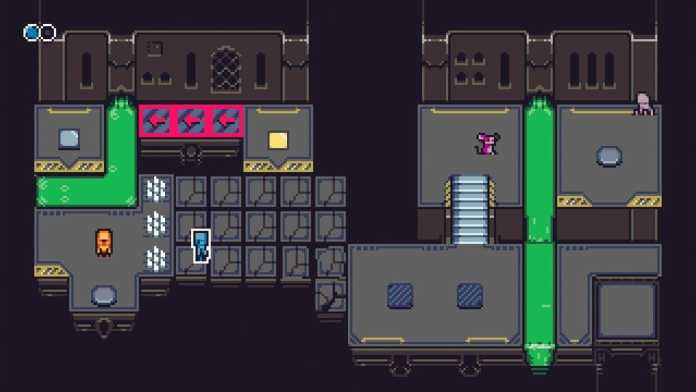
Like the great arcade games from the past, Arkan: The Dog Adventurer has a very simple concept. You must control the doggy hero as he throws a ball at the destructible scenery. Like Arkanoid, you must annihilate every block. If you don’t, the scenery will act as a defensive wall for the monsters. Failure to kill them all will prevent you from collecting your stars and progressing.
There are three worlds to visit, each comprising twenty stages. You aim to collect each of the stars, kill the monsters, and survive. This is easier said than done as your enemies become more aggressive and increase in size. You must plan how to eliminate the blocks, aim your throws, and dodge projectiles.
During the early stage, this is relatively easy, but it quickly becomes problematic. You will fall down pits, be struck by bullets, and fail levels. It’s infuriating, annoying, but it adds to the addictive fun and demands you have just one more try.
Arkan: The Dog Adventurer is no ordinary dog, he has special powers.
It wouldn’t be much of a platform game if the hero had no special powers. Luckily, Arkan: The Dog Adventurer is loaded with game-changing skills. He can; jump, double jump, power up his magical ball, and teleport to slow time.
These skills take time to get used to and they add a tactical element to an otherwise simple premise. Worried about facing a barrage of bullets? No problem, teleport out of the way. Are all your foes hidden behind blocks? Don’t worry, leap like a gazelle and take them down. Is the action going too quickly for you? Slow it down and give yourself time.
Dodge those projectiles.
A game of luck, patience, and some skill.
Like Arkanoid, there is some skill needed to be successful. But mostly you’ll need luck on your side and a heavy dose of patience. The ball will bounce around the right-hand side of the screen and there is nothing you can do about it. An invisible force field stops you from entering and you simply must wait for the ball to return to you.
This was pretty tiresome and I wish the developers had used an option to reset the ball. There were moments where you stared blindly at the screen as you became a voyeur in your game. It wasn’t necessary, and it impacted the enjoyment factor.
A classic indie old-school look.
There is very little that’ll surprise you about this. The fixed screen perspective leaves nothing to the imagination. The pixelated graphics are good but lacked originality. I liked what I saw, especially the different backdrops for each world and the unique monsters. However, I would have liked to see something unusual that matches the weird combination of genres.
The audio is similar, and it has a pleasant array of songs to listen to. Each matched the look and help to build the manic atmosphere. It was a shame that it sounds like many retro indie games on the market. I was disappointed as I hoped for more from this bizarre title.
Don’t let the freezing cold stop you.
Practice makes perfect.
When the controls are simple, you’d expect to pick them up quickly. Strangely, I struggled with it to begin with. The timing was a key element and if you get this wrong, you floundered in the air and missed the ball repeatedly. Fear not though, practice makes perfect! Once you nail the finer points, it quickly becomes second nature.
With many stages to complete and lots of stars to collect, this will keep you going. Three difficulty modes are available to make the game harder and this increases the longevity vastly. A small achievement list adds some challenge but can be completed in a few hours. It’s inexpensive so you get a lot of value for your money.
Arkan: The Dog Adventurer is challenging, fun, but plateaus.
This is one bizarre title that I’m glad to have played. Never in a million years did I think this would work, but it does. It’s challenging, fun, and addictive, yet the gameplay plateaus quickly. It keeps you interested throughout, so it’s worth giving it a go. I liked it and recommend you to buy it here! Break the blocks, collect the stars, and kill your foes.
I’m sure you’ve been asked who your favourite superhero is on hundreds of occasions at this point. So who would you respond with? Batman? Superman? Captain America? Well, have you ever thought about what their life was like outside of being so idolised? Do they have a normal life? Do they attend school? What do they do in their spare time? Luckily, DC Super Hero Girls: Teen Power lets you live through all parts of the day to day life of our heroes.
Fun for everyone
DC Super Hero Girls started as a cartoon on Cartoon Network, and due to its extreme popularity, Teen Power was released so fans could live the lives of their favourite heroines. Following the story of SuperGirl, BatGirl and Wonder Woman, you are set with the challenge to explore the fantastic world of Metropolis, meeting more beloved characters along the way. With a cast entirely narrated by the original voice actors, you really get to know each heroine. And before you know it you’re saving the world side by side.
As someone with no prior experience in the franchise, I was skeptical to suit up and start this adventure. I didn’t really know what to expect, but after playing it for just an hour I had gained a whole new appreciation for the franchise. Characters are witty and fun, and you gain such an insight on the world behind saving lives and kicking butt. Rather than following a single narrative and living the life of one character, you take on the lives of all three. You also get to witness the villainous demise of DC characters, like Poison Ivy who I definitely admired growing up. Although this is a great feature, and you never find yourself bored of the cast, I couldn’t help but feel frustrated when the main characters didn’t realise that their high school besties were their counterparts in crime.
More than enough to explore
The storyline is as expected of a superhero game. Fight any crime that comes your way and save the city from potential peril. You’ve heard this a thousand times I’m sure, but it shouldn’t put you off. I’ve been a fan of superheroes much like everyone else, and so I feel like I’ve seen it all. DC SuperHero Girls: Teen Power is not worth sleeping on because of this though. There’s something so refreshing about experiencing something entirely new. Even if that is just living the life of an undercover teenage hero. Going out for ice cream has never felt so exciting, much the same as attending highschool. I felt smug going about daily activities as BatGirl, because no one around you knows. Now I understand why it feels like the biggest secret anyone could ever tell you.
Just because it’s based on a cartoon certainly doesn’t mean that it is easy. I really appreciated that DC SuperHero Girls: Teen Power is a challenging game. You have to work hard and put in the time to progress, much like if you were a superhero. Things don’t come easy, and even with a magical whip or the ability to fly, you still have to work hard. And I definitely did. I spent hours buzzing about Metropolis without even realising. There are hundreds of challenges and quests to complete, so it’s not short of content either.
Final thoughts
If you’re looking for a lighthearted, action packed experience then I cannot recommend this game enough. Even with no prior experience with the wonderful world of Teen Power, this game is an enjoyable and arguably an unforgettable experience.