Review: RunBean Galactic

RunBean Galactic is one of those titles that shouldn’t be as fun or addictive as it is. However, this simple idea has you hooked from the off. Like the now-unavailable Flappy Birds, this title isn’t complicated or graphically impressive. No, its basic approach and just one more try nature will amuse you and drive you insane in equal measure.

Developed by Khud0 and Eastasiasoft Limited and published by the latter, this is an action platformer. However, those labels should be taken with a pinch of salt as you effectively dodge a plethora of obstacles. Consequently, this never-ending running title demands fast reactions, excellent peripheral vision, and the ability to be flexible.

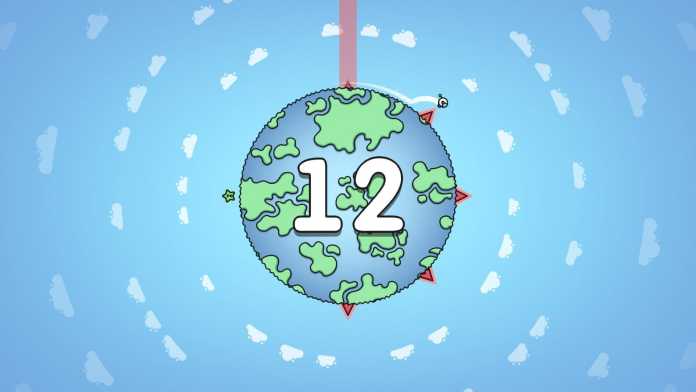
Level 12 is manageable.
It starts so well.

RunBean Galactic has no story!

Why the “hero” is stranded on this lonely planet is anyone’s guess, but the lack of story has zero impact on proceedings. Instead, you may enjoy the looming danger, the mountains of obstacles, and the minor tactical elements that you face. Furthermore, there are several heroes at your disposal as you try to survive for as long as possible.

You control a cute creature that is abandoned on a lush planet. However, you don’t get to explore this strange place. No, you must circumnavigate it while avoiding spikes, traps, and locked doors. As you progress, your score increases and it only stops whenever you die. Moreover, there is a day/night cycle to add a layer of difficulty to the action.

Nighttime has stuck at level 52.
Nighttime is daunting and oppressive.

It is all about the score.

Like Flappy Bird, the idea of RunBean Galactic is to survive as long as you can while achieving the highest score possible. Now, this may seem like an easy task, but things soon hot up and the gameplay becomes consistently tougher. As day turns to night, the rotation of the planet appears to change. Subsequently, you must react faster as the traps are closer together. This was wonderfully brutal as it tests your memory, your reactions, and your ability to scan the whole planet. What’s more, it makes the action rewarding, especially when you beat your high score.

The core concept is unbelievably simple. As such, you must jump red spikes, roll under yellow-toothed traps, or leap over locked doors. Furthermore, you may collect stars to increase your score, leap to gather keys to unlock padlocks or blow up stuff with a bomb. On top of this, there is a pillar to turn you around as well. Each of these obstacles spawns randomly and can appear right before your eyes. Consequently, you are kept on your toes and must think fast if you wish to succeed.

RunBean Galactic is bright but understated.

With such a simple concept, I wasn’t surprised that the visuals were so basic. However, I was taken aback by the vivid colours and the excellent character models. Alongside this, I enjoyed the animation and the shift in style between daytime and nighttime. What’s more, each trap is easy to identify, and this helps make the gameplay a little easier.

Like the visuals, the audio was stripped-back as well. The upbeat and funky soundtrack plays on a loop. Accordingly, this made the action even more repetitive. Yet, this wasn’t so bad as each round is short and the casual action is enjoyable and moreish.

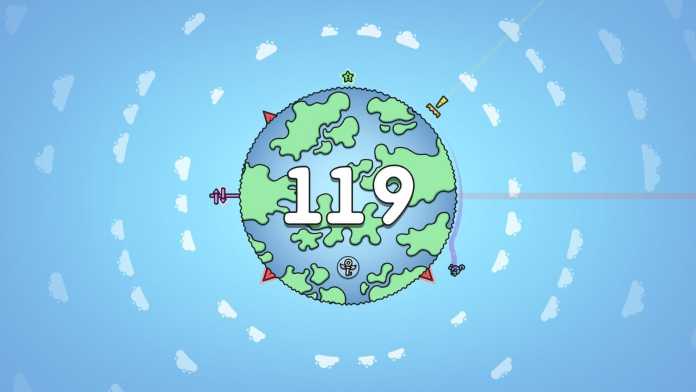
Level 119 and things look to have calmed down.
Leap those spikes.

Simple controls but minor flaws.

You cannot stop your character from running, nor can you choose their direction. No, instead, you must allow the gaming gods to decide your path. As such, all you focus on is jumping and rolling. Therefore, as long as you pick the right option and time it correctly, you’ll survive. However, though the controls are straightforward, moving from the rolling animation to jumping is sluggish. As a consequence, you will dive into red spikes repeatedly and this will kill you. Moreover, this will also make you scream with rage and want to smash anything within reach (you have been warned!).

RunBean Galactic has no story, no goals, and no depth, but it is addictive as hell. It is so moreish that I want it on my phone, Steam Deck, and any other portable device. Alongside this, there is a competitive edge, as there is a leaderboard to track your progress. Yet, there could have been many more elements incorporated to enhance the experience. I would have loved to see unique planets with their dangers, more traps, and daily or weekly quests. Furthermore, each character should have had a set of skills to mix things up. However, this didn’t happen, and this was disappointing.

RunBean Galactic is a great casual game.

Though this won’t set the world alight, it is a great casual game, nonetheless. Its rudimentary approach, vivid colours, and easy-to-understand mechanics make it an enjoyable experience. On top of this, it is stupidly addictive and tough to put down. Accordingly, I loved it and I recommend that you buy it here! Run, run, and keep running. Leap, roll, and avoid every obstacle as you stay alive for as long as possible.

Tower.bet Responsible Gaming Guide: How Do I Know It’s Time to Stop Playing?

0

Recently we decided to do a little research on various gambling platforms. Among the modern resources there are many crypto casino games, but the best were in Tower.bet. This platform strives to provide a reliable gaming environment for all its users. They let us know that gambling can be a fun and exciting form of entertainment. 

But, we would like to point out for you that it is important to recognize the signs of problem gambling. And to take appropriate action! If anything, we are there to help you with helpful information. We’re gonna give you some tips. You will define how to determine when it’s time to stop gambling and seek help if necessary.

The first and most important step is to admit to yourself that gambling can be a problem. There is no need to ignore such calls. It is important to set limits for yourself and stick to them. This means setting a budget for how much you are willing to spend on gambling and not exceeding it. It’s also important to set a time limit, for how long you will gamble bitcoin dice games and to stick to that as well.

Another sign that it may be time to stop playing is when you start to feel anxious or stressed when you are not gambling. This can be a sign of addiction. It’s important to seek help if you feel like you can’t control your urge to gamble. This can include talking to a counselor or therapist who specializes in problem gambling, attending a support group, or seeking treatment at a specialized gambling addiction center.

If you find that you are spending more money than you can afford – it’s definitely your time to take a break. Seriously, you don’t want to go bankrupt, right? This could mean taking a break from Gambling altogether. Or simply taking a break for a certain period of time. Remember that: Gambling is meant to be a form of entertainment. It’s not a way to make money, for sure. If you are gambling with money that you can’t afford – it’s time to stop.

Let’s consider that you are neglecting other important areas of your life. Work, school, or relationships, for the sake of gambling. It is another sign that it is time to quit. It can be a sign of addiction, and it is important to seek help if you feel you cannot control your gambling cravings.

Tower.bet provides tools and resources to help players make informed decisions about their Gambling. These include setting deposit limits, setting time limits, and self-exclusion options. Players, can also reach out to customer support if they have any questions or concerns about their Gambling Habits.

Final thoughts

Gambling can be a fun and exciting form of entertainment, it’s important to recognize the signs of problem gambling and take appropriate action. If you feel like you can’t control your urge to gamble, it’s important to seek help from a professional. Tower.bet is committed to providing a safe and responsible gaming environment for all its users, and we encourage our players to gamble responsibly.

Classic Games that Stand the Test of Time

0

Pretty much everyone (within a certain age range) has fond childhood memories of playing video games growing up. From the imagery to the sound effects, the nostalgia factor has just as much to do with these games’ popularity as their actual quality. Of all the video games that have been introduced over the years, just a few of them have kept their appeal. The games mentioned below are just as iconic as those played in the real world, like chess or checkers. In fact, you can even play games like Four in a Row online – thanks to sites like Foony, they’ve evolved to reach even wider audiences. 

Tetris

Who hasn’t heard about Tetris? Even non-gamers have heard of it, as this game has made its way into pop culture all over the world. Originally from Russia, this block puzzler is simple enough to be accessible to anyone, yet complex enough to keep you occupied for hours. Even more impressive, Tetris has inspired numerous remakes that have tried (and failed) to improve on the original formula. This game is somehow so simple, yet so perfect. No matter how hard game developers tried, they’ve never been able to produce something that could top the original 1984 version. 

As of March 2023, Tetris even has its own movie, made with big-name stars and quite an impressive budget. As it turns out, the game’s origin story is just as engrossing as the game itself. You can learn more about that on your own, though; suffice it to say that the more you learn about Tetris, the more you’ll love it!

Street Fighter II

The original Street Fighter may have fallen by the wayside, but Street Fighter II lives on as one of the early iconic fighter games of the 90s. It was a titan of its genre, and (just like so many other games) was followed by numerous spin-offs. Mortal Kombat was another early competitor for the title of “best fighter game”, but Street Fighter II is arguably the winner. Not only was it released before Mortal Kombat, but it also had more influence on the next decade’s worth of games released in this genre.

Compared to the first iteration of this game, Street Fighter II had more colorful characters that had unique abilities and were brilliantly designed. It was also the first game of its type to introduce the combo system, a mechanic that later became integral to fighter games. Regardless of what decade you’re living in, Street Fighter II offers some of gaming’s greatest experiences ever.

Half-Life 2

This timeless classic gave us Gordon Freeman, the voiceless protagonist who’s every bit as iconic as Sonic, Mario, and other well-known figures. The physics-based first-person shooter game is a must for anyone who calls themselves a gamer; it’s practically a rite of passage at this point. What makes this game such a classic? It’s mainly due to its advanced physics-based mechanics, as well as its innovative game engine. This engine has provided the framework for countless games thanks to its strength and versatility. Even at 17 years old, Half-Life 2 still feels just as fresh as it did the day it was released.

Doom

No discussion of classic video games is complete without mentioning Doom. This first-person shooter has gotten a new lease on life thanks to a revival of the series, but the original version still holds the soul of the game. It’s a bit like the Star Wars franchise – nothing will ever be as good as the originals. There’s plenty to be said for the newer versions, but the original Doom titles have a simplicity that makes them easily portable to any platform. The controls are easy to handle, letting players enjoy fast-paced action throughout the entire game. The graphics may be a bit janky, but they still have a certain charm and artistic style that keeps them from feeling dated.

The Legend of Zelda: Ocarina of Time

One of Nintendo’s staples over the years, the Legend of Zelda series has been thriving since its inception. Its fifth and most iconic installment was released in 1998, called Ocarina of Time. Even now, more than two decades later, it’s known as one of the series’ best releases. It has amazing playability, with an action-adventure-fantasy vibe that easily captures the imagination for hours at a time. The game has even been enjoying a renaissance of sorts over the past several years; core elements like rewards and quest items are randomized in order of appearance, making an entirely new experience for even the most seasoned Zelda fans.

Halo

The later installments of this game may have faltered, but the original 2001 Halo has stood the test of time. This sci-fi shooter was absolutely ground-breaking when it was released, and fans are still flocking to the early games for both fun and nostalgia. It’s possible to play glossier remasters, but die-hard aficionados can use the original graphics setting for a blast from the past. Halo’s early campaigns can still be considered masterpieces, proving that this multiplayer game can hold its own against all comers.

Mario 64

From Mario’s mustachio to the iconic magic mushrooms, Mario 64 has influenced not only the gaming world, but the imagery of pop culture as well. Even people who have never played the game recognize many of the references. The game mechanics of the initial Super Mario Bros. was unprecedented for its time, cementing its place in video game history. From the appealing visuals to the enjoyable adventures, it’s no wonder that this game is still so popular. These days, it’s often played by gamers who are livestreaming “speedruns”, in which they try to beat the game as fast as possible.

The takeaway

Most older games simply can’t compare to their newer counterparts – the graphics are too clunky, the controls are frustrating, or there’s some other fatal flaw. With these games there’s no such problem. No matter what you compare them to, they’ll always hold their places as timeless classics.

Review: Eggcelerate to the Tropics

Eggs are delicate and easily broken items. Therefore, why do we insist on using them during races? Kids love an egg and spoon race, but no one considers the loss of many an egg life! This problem is at the fore when you play Eggcelerate to the Tropics. Consequently, the developers care not for the well-being of each egg. Well, yolks on them as a careful rider can safely traverse each track and keep their prized egg in one piece at the same time.

Developed by Tim Beaudet and Tyre Bytes LLC and published by the latter, this is a challenging time trial racing game. What’s more, it relies heavily on physics-based controls and has an unfair amount of obstacles, traps, and tight courses to overcome. Subsequently, completing each of the 30 courses is no mean feat, and the action and drama will make you squeal with rage.

Bank that corner and keep the egg safe.

Eggcelerate to the Tropics chucks you in at the deep end.

With little explanation of what is happening, you are chucked straight in at the deep end. Furthermore, there is no story, no overarching rivalry, and no idea of the dangers you’ll face. However, this matters not, as you jump on your bike, rev your engine, and stare down the barrel of a loaded gun, metaphorically speaking, of course.

Each course takes you on a journey around a segment of a beautiful tropical island. As you traverse each track, you’ll come across traps, obstacles, turtles, and much more. On top of this, you must ride a feeble dirt bike while balancing an egg in a basket. Why? Well, why not! As you corner, mount the curb, or ride moguls, the egg shifts and sways like a ship on an ocean. Now, this isn’t a bad thing, but too much movement and your egg will smash on the floor. If that happens, your run is over and you must start the stage again.

The bike leaps a river.
That egg is going to go splat!

It is all about a quick lap.

Failure and broken eggs are guaranteed in this anti-egg endeavour. However, with a careful approach, a great memory, and a bit of luck, you’ll make it around each course. Yet, this isn’t enough, as this game is all about a quick lap. Eggcelerate to the Tropics pushes you to beat each course record. If that wasn’t enough, it slaps you in the face and tells you the best time achieved for each track. This horrendous carrot ensures that you must try to beat the time repeatedly.

Sounds easy, right? Well, wrong! The faster you push yourself, the more likely you are to crash. When this happens, your egg cracks and you screech some more. On top of this, to enhance the difficulty further, the developers have created tight shortcuts that are full of traps and danger. These tempting paths will inspire you to cut time, but they will also push you to your limit. Accordingly, they are not for the faint of heart and will test your abilities to the max.

Eggcelerate to the Tropics looks a bit rough.

Though I enjoyed the vivid colours and the simple sprites, the finish is somewhat rough. With boxy graphics and basic environmental assets, each map isn’t as exciting as it could be. Furthermore, it wasn’t always easy to sight each pathway and this can lead to frustration. However, what I liked was the change in track surface, the use of different weather fronts, and the easy-to-identify traps and obstacles. What’s more, the clean UI allows you to focus on the task at hand.

The audio was a mixed bag as well. I enjoyed the upbeat soundtrack and the varied songs. Furthermore, each track was suited to the tropical theme, and I loved the level of detail. However, the engine noises were too shrill and annoying. Yet, the developers have done a nice job with high and low rev ranges for each vehicle and unique noises for each engine. As such, though I didn’t like it, it was another interesting idea that helps the gameplay.

A chicken bike is determined to keep the egg safe.
That chicken will keep the egg safe…I hope.

Easy controls.

I spent most of my time using my Steam Deck to play this. Accordingly, it was very easy to pick up and simple to play. Moreover, the control layout is intuitive and straightforward. Subsequently, you don’t need a tutorial or any guides and you can jump straight into the action. What was also great was how much fun it was to balance the bike while keeping the egg in the basket. With minor tweaks to your style, you can jump moguls, watch your egg fly into the air, and catch it again.

Eggcelerate to the Tropics drip-feeds its traps and obstacles to ensure that the action isn’t overwhelming. At first, there are some coconuts and tight turns to navigate. Soon enough, though, you’ll have bananas to avoid, rocks to ride around, mud to slide on, wind to lean into, and much more. As such, there is plenty to keep you busy as you try to keep your egg from eggsploding.

Eggcelerate to the Tropics is an eggcellent eggperience.

No more puns are necessary, but Eggcelerate to the Tropics is a great indie title. Not only has it balanced its difficulty, but the drip-fed mechanics keep you on your toes as well. Yes, the graphics could have been better, but this was a minor thing. Furthermore, I disliked the engine noises, but this didn’t impact the action in any way. Accordingly, I enjoyed my time with it and I recommend that you buy it here! Will you be able to stop your egg from breaking? Speed around every track, avoid obstacles and keep the egg safely in your basket at all costs. 

Review: Blackbird 8K60 2×1 Switch

8K technology for gaming and films is closer than you think. 4K resolution was revolutionary, but now it is old hat. Consequently, technology moves on and producers and developers want to make the best experience possible. Therefore, 8K resolution is on the horizon. This is where the Blackbird 8K60 2×1 Switch is essential. This small but convenient device has plenty of tricks up its sleeve, as well as being affordable.

With 2 HDMI input ports, optical audio output, and an IR controller, this device is simple, user-friendly, and built with the future in mind. Moreover, its brushed metal finish, strong case, and understated looks ensure that it has a professional aesthetic. On top of this, it is excellent for those that are less tech-savvy as the advanced EDID control prioritises your selected resolution. What’s more, the audio output ensures that you can use your existing sound system with ease. With all that being said, let’s tackle the finer points of the Blackbird 8K60 2×1 Switch.

What’s in the box of the Blackbird 8K60 2×1 Switch?

  • This amazing device is packaged in a plain cardboard box. Subsequently, it doesn’t have the glitz and glam of other leading accessories. However, this isn’t an issue as it reduces the price and ensures that it is 100% recyclable. As such, Monoprice gets a big thumbs up from me.
  • The Blackbird 8K60 2×1 Switch is no bigger than a modern mobile phone. Yet, it has a noticeable weight and feels robust. Furthermore, the HDMI and optical ports are conveniently placed towards the rear. At the front, there are lights to highlight the active port and a switch to change the input channel. You’ll also notice the IR sensor, so make sure that this remains uncovered.
  • As Monoprice is an American company, you are provided with an American plug. However, you can buy an adapter online to overcome this issue.
  • A simple user manual is provided to highlight compatible audio outputs and other technical information. 

Technical aspects. 

Inputs2x HDMI 2.1
Outputs1x HDMI 2.1
HDCP2.3
ResolutionUp to 8K60 4:2:0 10 bit and 4K120 4:4:4 10bit
Bandwidth40Gbps
Video CodecsHDR, HDR10, HDR10+, Dolby Vision, and HDLG pass‑through
Low Latency SupportVRR, FVA, and ALLM
Audio FormatsLPCM, Dolby Digital/Plus/Ex, Dolby True HD, DTS, DTS‑EX, DTS‑96/24, DTS High Res, DTS‑HD Master Audio, DSD
Audio Outputs1x Analogue, 1x Digital Optical
EDIDAdvanced EDID management through dip switches

High-resolution entertainment relies on many minor elements. Yet, one key factor is your frame rate. Now, depending on your monitor, TV, or projector, you’ll be capable of different results. However, if you have a high-end device, you’ll notice that the Blackbird 8K60 2×1 Switch can deliver 8K at 60 fps 4:2:0 10 bit or 4K at 120 fps 4:4:4 10 bit. Now, I don’t have an 8K device, but the 4K was phenomenal. Accordingly, my Xbox Series X produced buttery smooth visuals with limited frame drops.

This performance was helped by the excellent 8k HDMI cable that Monoprice kindly provided. This meaty braided cable made the Microsoft one look like a piece of crap and there is no way I’m going back. Right, I’ve got that off my chest. Let’s focus on the audio performance. 

The Blackbird 8K60 2×1 Switch extracts the audio to output it in either a digital or analogue optical format. As such, this switch can be used alongside high-end external audio receivers. Moreover, it supports the following formats; LPCM, Dolby Digital/Plus/Ex, Dolby True HD, DTS, DTS‑EX, DTS‑96/24, DTS High Res, DTS‑HD Master Audio, and DSD. Therefore, users of every audio level can maximise their sound and this makes it stand out from the crowd.

Usability.

This device performs admirably. However, most TVs have multiple inputs, as do monitors. Consequently, what advantage is there to having this device? Well, though they provide HDMI ports, the high-end ones are limited. As such, you have to unplug your devices and move things around. Therefore, to remove this issue, HDMI switches were created.

This 2 port switch allows you to conveniently switch between multiple devices on one display. Accordingly, you no longer need to mess around and the transition from one console to another is seamless. Furthermore, thanks to the IR controller, you can flick channels at the touch of a button. On top of this, the audio output is simple to set up and even a technophobe would get it right. 

Is the Blackbird 8K60 2×1 Switch worth it?

If you are running an 8K setup, then you want the best experience possible. Fortunately, the Blackbird 8K60 2×1 Switch removes the headache of switching between devices. What’s more, its consistent frame rate ensures every game performs to its best potential.

Alongside this, you must consider the excellent audio output, its usability, and the sturdy and robust build quality. However, to get the best out of it, you’ll need some 8K HDMI cables. Fortunately, though, Monoprice has you covered for that as well. All things considered, this is an excellent device that enhances any setup. Accordingly, I recommend that you buy it here!

(More information on Monoprice can be found here!) 

Review: Loretta

0

Adventure games have a wonderful way of putting us in roles that we may normally never find ourselves in. That could be the role of a pirate looking for treasure or a detective looking to solve a crime that seems impossible upfront but Loretta throws all that out of the window. Not all is as it seems and Loretta does a wonderful job of making you care for the main character despite all the flaws we see throughout the story.

Before diving into the review, it is important to note that this game takes place in the 1940’s and the views of the characters reflect that time frame. There are moments with terms and stereotypes that some may find offensive and Loretta makes this known before the title screen even shows. 

Loretta follows the story of titular character Loretta, also known as Lora by her friends. She is a stay at home housewife in the 1940’s who is married to a writer named Walter. Their marriage is on the rocks when we start the game. We start in medias res with Lora telling us that she murdered her husband and that we can judge her for her actions but first we need to hear her story. As the story starts to unfold, we find out that Walter was unfaithful to her and had an affair with the waitress in the small diner in town. Pairing this with a rough financial situation and a couple forced to leave their home causes Lora to finally break down. When she decides that it is time to leave, she visits the bank to take out a small loan. Once she becomes aware of the lucrative life insurance policy that was filed in his name, things take a dark turn for the couple. 

Gameplay involves guiding Lora through a series of events with endings that can be determined by the player.  During dialog, There are occasional moments where you are able to pick the response that Lora will give and this can impact how things play out. For example, the introduction has an option to make the detective a glass of water with him in the room. There is a bottle of rat poison on the counter and you are able to try and poison the detective’s drink. He will see this though and end the game prematurely by shooting Lora. I thought it was a pretty interesting decision to allow the player to try and make such a risky decision right away without having Lora talk herself out of it. Over the course of the story, we are tasked with keeping our story straight in regards to Walter’s “disappearance” and sometimes the wrong dialog option will put you into a corner that you will have to back out of. 

As with most adventure games, you will also be required to interact with the environment around you in order to solve some of the puzzles as well. Interacting with different objects in the world will have Lora commenting on the current citation or give a small story about the item. In between chapters are more puzzles but these are more hands-on without any guidance. For instance, there is one that requires you to click on all the negative thoughts and prevent them from reaching the middle of the screen. There is no instruction on what to do and it is up to you to piece it together. Thankfully failing the puzzle only puts you back to the start of it so there is no real time wasted when mistakes are made. 

Seeing Lora’s descent into despair and desperation was an interesting story choice since we aren’t playing the usual heroine. Her character has minor changes based on your dialog choices and the ending will change as well so replayability is relatively high for those interested in seeing the other paths play out.  I got the winter ending and felt like that was a wonderful way to wrap up such a dreadful story. I clocked in around an hour and a half for my initial playthrough so it shouldn’t take long to see the credits roll for your first playthrough. This is definitely a game to keep an eye out for, especially if you are interested in seeing the story of a not-so-perfect character play out.  

Review: GrimGrimoire OnceMore

Perhaps a testament to how much video games have changed since 2007, when GrimGrimoire was first released for the PlayStation 2, the remaster smacks of mobile tower defence games crossed with a very rudimentary Age of Empires-style upgrade system. Whilst GrimGrimoire OnceMore pleases the eye with a vibrant, mystic aesthetic that translates well to combat, I found it’s core gameplay loop to be a bit repetitive at a basic level and a little too involved as the game progresses.

GrimGrimoire is best described as a 2D, side-scrolling, real-time strategy game that borrows from some of the fantasy genre’s classic mythology, including demons, spirits, elves, witches and the like. The remaster has updated graphics, general quality of life improvements, an art gallery, a new voice cast, and the addition of a skill tree for your units. The overall impact of each of these can be debated but the overall package is well produced.

The art gallery in particular is an excellent addition, each battle you win will reward you with an illustration by a different artist portraying various scenes from our protagonist’s life. Each image is superbly detailed and is a great way to champion differing art styles.

Its Hogwarts Jim, but Not as We Know it

Our story follows budding witch Lillet Blan, who joins the magic academy at the Tower of Silver Star to find a school in chaos. Over the course of a repeating 5-day loop, she must solve mysteries and battle demonic forces to save the lives of the menagerie (quite literally in some cases) inhabitants of the school.

The cast of characters that Lillet meets and interacts with are well-voiced and intriguing enough to propel the plot forward but the paint-by-numbers mystery involving a sinister dark lord called Calvaros who just seems hellbent on just killing everyone and being super evil. Whilst Lillet is a decent protagonist and the addition of a Groundhog Day-style time loop keeps the plot afloat, it cannot get away from the lack of true threat, especially since most of the tower’s inhabitant weren’t all that likeable to begin with.

Why Learn Spells when You Can Enslave Minions?

Combat revolves around a loop of collecting mana using worker class units, allowing you to build bases, towers, units, upgrades etc. that, in turn, allow you to conquer your opponents bases (known as runes in-game). It’s a gameplay loop that I found startling similar to basic tower defence games commonly found on mobiles. At its core, the gameplay loop is satisfying enough but the controls do not make it particularly easy to operate. Oddly enough, this game is not available on PC where I feel a mouse and keyboard approach would be far more suited to selecting units, moving around, and attacking. But that’s possibly due to my experience with Age of Empires and the like.

Adding to the relatively simple gameplay is a rock-paper-scissors matchup system that pits Glamour, Alchemy, Necromancy, and Sorcery against one another as the different schools of magic. Each school has its own abilities, unit, strengths, and weaknesses. After the first couple of hours, a skill tree is unlocked for each school as well, giving you the ability to further enhance your units with the goal of tailoring your playstyle to specific challenges.

However, it is exactly these complexities that detract from the overall experience for me. I was quite happy early game, farming mana, creating units, and sending them into battle. As soon as I was promised a 1.5% increased to attack my eyes glazed over. Others may well enjoy this element to GrimGrimoire, but I found myself both slightly overwhelmed and uninterested. I understand the idea behind this addition, making the combat loop less repetitive but I can’t help but feel this could’ve been achieved in some other way that didn’t involve miniscule percentage increases.

Gathering the Magic

Graphically, the game is very simple, using a visual novel style to move the plot forward with excellent voice acting for each character, even if some of those characters are, in a very Japan-produced game way, bizarre (there’s a lion teacher and it’s like no one cares). The graphical style in combat is slightly more cartoony with units making various comments as you move them throughout the stages which works well even if the shift is a tad jarring. All-in-all, it makes for a well-presented experience even if the music could stand to be less repetitive in the menus, but that’s a criticism I could level at many games.

Although I personally didn’t gel with GrimGrimoire OnceMore, I can see that it will have its fans. It’s a well-produced, aesthetically pleasing title with a fantasy backdrop that serves it well. Combat is somewhat repetitive but has enough mechanics to make it challenging on higher difficulties. The voice cast and art style are superb, and I greatly enjoyed the art gallery.  

If you’re into RTS games, I’d definitely consider this but maybe not at the expense of more well-established titans of the genre.

Review: Rivalia Dungeon Raiders

Rivalia is an action dungeon crawler game with a simple, DND-like concept: what if 4 adventurers were trapped in a rougue-lite loop by an evil jester during one of their quests?

After the brief tutorial of the game (in which you fight but do not defeat Ciceron, the aforementioned jester), the protagonist (Ashelin) awakens in a sanctuary and is fed a large helping of exposition by Halmor. Through this you are told that Ciceron has warped the castle into a series of easily generated, cookie-cutter levels which you now have to trek through in order to finally defeat him.

All 4 characters venture into levels together and all can be played as: Ashelin is the typical sellsword/ leader, Halmor is the archer and dagger enthusiast, Yhorm is the hammer-wielding strongman, and Evanya is the sorceress.


The Characters*

Everything I’ve just said is effectively all the story the game gives you. This is fine, there’s no reason that a game, especially one which is marketed as a rogue-lite should have to have any trenchant or immersive story. But what about the characters?

All of the characters are very generic, not only given their token roles as ‘adventurers’ but even in the moves they have. Every character has a basic light attack, as well as 4 ‘unique’ abilities which can be activated by holding L1 and pressing a corresponding face button.

All of these abilities are exactly what you would expect, from AOE damage, to party shields, to healing circles, to flurry attacks. This is all fine as no one expects the starting loadout to be anything amazing, but this is ALL you get for the entire game. Sure, you can level up, but that only upgrades your health and damage, and there are no weapons to equip or gear to unlock outside of runes, which are just flat stat upgrades anyway.

At this point, I at least expected for the game to lean very heavily into each of these characters personalities. Sure they look generic, but there must be something beneath each of their bland exteriors. Well, maybe there is, but I would have no idea of knowing because all dialogue in the game isn’t voiced, only subtitled in the top right corner, and a lot of it is during combat, so good luck trying to read any of it.

Even in the hub area, your safe-haven, you still can’t speak to any of them. They’re there, and they can even help you craft runes and items, but you can’t ever interact with them.


The Levels

The game has 6 levels. There are only 6 levels. Man, these must be some wonderful levels, right? Well, it’s really just 1 level which is re-themed each time until the game is over. I suppose there is a degree of modularity here as each dungeon is randomly generated each time you play, but these are not grand quests, they are just 5-15 minutes levels of similar looking rooms wherein you fight the same enemies, with the same set of characters, who all have the same moves for the entire game.

It may have been better if each level was just an actually designed level as the modular nature of them, and how obviously rooms are slotted into one another means that after a level or two you find yourself tuning out a lot of the environments which, while admittedly nice to look at, don’t have anything in them that warrants searching or requires any keen sense of awareness. Essentially: if a room has 1.) no exits but the way you came, and 2.) no chest, then just don’t even bother.

Even some decisions made regarding the enemies are strange. All the enemies are the typical DND fair you would expect from this kind of game, but enemies don’t spawn in rooms unless you walk into that room first. This baffling decision only serves to makes each area feels even more artificial than they already did. It’s not even as though they’re teleported in by the boss, or by the final boss to come and test you, they just appear when you walk through a doorway.

The modular nature of these randomly generated levels only serve to hurt the experience as there seems to be no line of code which keeps the boss room a certain number of “squares” away from the starting room. I’ve started several levels (2 of which in my initial playthrough) where the boss room was just a single room away.


The Gameplay

Okay, let’s assume you don’t care about the story, or the repetitive levels, or the lack of progression. Are the characters fun to play as? No. The gameplay is bad. Not terrible, but disappointingly bad.

Each character has this strange issue where their walk cycle is seemingly not matching the speed at which they’re moving. Every character should have a higher base movement speed based upon their walk cycle, they just don’t. The only way to alleviate this problem is by ‘running’, I put it in quotes like this because it should just be your base walking speed so far as I’m concerned and there should be no reason I have to spend stamina to use it.

As for the combat, it’s nothing. Every character has standard attacks as well as a dodge, but the dodge is almost always useless as there’s no way to cancel any moves into said dodge. This mean that if you’re using a character with even moderately heavy swings in a later stage, you’re going to get hit for far more damage than you’re putting out, or better yet, you’ll to be staggered out of your move, so you may as well have not pressed anything at all.

Worse than that however is the fact that there’s no lock-on, nor can you re-aim your attack mid animation. This is already terrible, but when so many of your ‘combos’ or L1 abilities are multi-hit/ ‘powerful’ moves that can’t be manually directed or re-directed to hit any kind of moving enemy, then they become almost useless.

All of this is worsened by the fact that the characters have no synergy with one another, the game only tricks you into thinking they do because everyone attacks at the same time, so enemies, at least early on, often don’t have the health to effectively counter anything you’re throwing at them.

Assuming you buy this game (don’t buy this game), who should you play as? Evanya is the sorceress and healer who you would at least expect to have some interesting variety in her ranged moves, she doesn’t. Every move Evanya does is some colour of orb, the effects of which are largely useless. Next.

Okay, how about the main character Ashelin? Ashelin has heavy sword strikes and a berserker mode which allows her to hit harder. This is so negligible an upgrade that it in no way makes up for how often you will get staggered out of her normal attacks in the last 2 levels. Next.

Yhorm could be cool? You’re right, he could be, but he isn’t. He’s far too slow, has no good power moves, and gets staggered just as much as everyone else despite being twice their size. Next!

Play as Halmor. Obviously don’t buy this game, but if you already did then just play as Halmor. He has the fastest attack speed and is the only character with two weapons (a range and melee option). There is no reason to play anyone else.


Are The Bosses Any Good?

To the game’s credit, the bosses do often look quite nice, and while they’re often easier to beat than the rooms of enemies leading up to them, they are a surprising breath of fresh air as their small intro cutscenes remind me of boss encounter intros from early 2000s 3D JRPGS.

One of the bosses is even a very clear nod to Orntein & Smough from Dark Souls, something that, along with the relatively giant character who is actually named Yhorm, convinced me that these devs were clearly fans of FromSoft’s work.

I wish they could have taken some better gameplay lessons from that studio however as each boss ends up as a straight up DPS race as opposed to any sort of interesting or memorable battle. The last two bosses are especially tedious and turn what could otherwise be remembered as decent spectacle bosses into slogs which take longer to beat that the levels leading to them.


At Least It Looks Nice

As I mentioned before with the boss intros, the game, while very rough around the edges, definitely has an otherwise ineffable early 2000s JRPG charm to it. The 3D models are often very good, especially for the four main characters and the bosses. The levels, while bland, do at least have somewhat distinct themes, and even the music, while there are only 8 or so songs in the entire game, does at least sound nice (even though I’m almost positive that 1 or 2 of them are just facsimiles of already existing songs).

As for everything else, I do have a few more small gripes:

  1. The game has an odd feature where the camera can be moved with the touchpad and you can attack by clicking it. I thought this was some remnant of porting it from mobile, but it was never on mobile so I have no idea why it’s here.
  2. The game has no real ending. Not to spoil anything, but it effectively just pulls something out of thin air and forces you immediately into new game plus.
  3. I beat the entire game in 2 hours. I got the platinum because I felt compelled to and my total playtime was still only 3 hours.
  4. For some reason, the English localization slipped up in one section and anytime I was using a potion on a character it was labelled in Spanish. So far as I could tell, this was the only item affected by this.


Conclusion

This is a somewhat charming game, but with the overwhelming number of gameplay, balancing, and design issues, there’s not enough charm in the world to save it. It’s a 3/10.

Todd Stashwick Interview

Star Trek Picard Season 3 is with us, and one of the break-out superstars is Captain Liam Shaw. Some people hate him, others love him, but what we all agree on is that the actor, Todd Stashwick (Star Trek Picard, 12 Monkeys), plays the part perfectly.

I was lucky enough to sit down with the Chicago-born actor and geek out!

What is the most meaningful item in your collection?

You know what? It very well may be my original Kenner Star Wars action figures. From 77 or something? So those I’ve literally carried with me for 45 years. So those mean a lot because they’re… I mean, I have my Mego Star Trek figures, but they’re not the originals, right? Those I re-bought on eBay or were gifted to me. So they’re representative of something very meaningful. But I would say my Star Wars action figures because I’ve had them forever!

[We then geeked out for a bit over his Mego bridge and the tree topper providing sound effects! I showed off my sixth scale Speeder before getting a full tour of the Nerd Lair – it’s incredible. The man has a dragon! I certainly found myself envying the Atari 2600 hooked up to a CRT TV].

So, we both love collecting, and I know you have access to the real thing because, of course, you’re an actor, and a lot of actors do like to take souvenirs from the set after production. So, got to ask, did anything come home with you after Picard wrapped?

No, we’re absolutely not allowed to keep anything from the set.

So you didn’t sneak away a combadge or anything like that?

No. Yeah. No. No, it’s not my property. No, no, no, no. I would never admit to that.

[We can only imagine what goodies now have (but definitely don’t exist) a home in the Nerd Lair!]

Being a Trek fan, you said you have the original Mego figures in the seventies, and of course, you grew up with the movies and The Next Generation; what did it feel like to put that uniform on for the first time and step out onto the set of the bridge of your ship?

You know, it’s obviously a slow process. I mean, I got fitted for my suit. They measured me, and I’d had stages of having it cut to fit me. And then, before all of that, Terry brought me to the set, so I got kind of a private tour of it so that I could kick the tires of the bridge before I actually shot. So, the upside was that none of it felt like a first time, so I could comfortably live in the skin of this character once we got to shooting.

I walked onto the bridge, I knew where everything was, and I knew who was where and what positions were what. And I’d already sat in my chair! But having all of it collectively come together fills your soul. Like it’s that feeling of being connected to a legacy that has brought so much joy to people. Me being one of them. And you feel yourself being part of a continuum; It’s quite beautiful and thrilling. And, you know, I had to separate the six-year-old in me from the adult actor in me, and it was never lost on me while it was happening. I was always appreciative of feeling the gratitude of the event while it was happening.

What was it like working with the original TNG cast?

I have admired their work. You know, I’ve been fortunate in my career to work with people whose work I’ve admired. It’s always nice to meet these people. I’ve been to many cons and whatnot in my life just as a fan; I’ve walked around and been a part of nerd culture as a fan, as much as I have participated in them as an actor. So, it was really nice to meet these people under the circumstances of we’re coworkers. I could extend my compliments to them that I enjoy their work, and at the same time, I got to be chill because we had a job to do. We were all in the same, I was going to say boat, but ship!

We had you know, we had this great writing and these great scenes that we got to do. And I had known Jonathan Frakes prior to it, and Terry Matalas, obviously, I had known for quite some time. It was walking into a very warm, welcoming set.

Was Shaw fully fleshed out when you got the script, or were you allowed to input at all into the character’s development?

Well, obviously, characters happen in stages. No one person is responsible for what the audience finally receives. So, Shaw started in the writer’s room and in the imagination of the writers. And then, they created his backstory, and they created his forward story. So, my job was to be the best custodian of what was on the page. My input comes in performance in how I play the role and what nuance and thoughts I bring to the moment because what they’ve committed to the page differs from what I am experiencing as I interact in real time with the other characters.

How do you, as an actor, prepare to portray Shaw’s trauma in such a convincing way?

I have all the information. Right. So, you know, I know things the audience doesn’t. And so, as an actor, I take all that information, and I process it, and I, you know, you try to think the thoughts that the character’s thinking that’s all based on the information that you have about the character. So, anything that anybody says to him, his response is always going to be seen through a lens of his experiences. When certain things trigger him, or he has to reckon with issues that he’s maybe buried, it will come out in the moment. Despite his need to be professional and to be precise, he’s still a human being.

I think you do see that kind of dichotomy between the professional officer and the human being reacting to triggering things.

But I do have to ask as well in Episode 1, did that blue stuff taste good?

It was space meat!

Was it Tribble?

It was not Tribble! No, it was, you know, they never give you anything bad just because you have to eat it for more than one take.

Undoubtedly, you will have seen a lot of the early reactions to Shaw, and with your knowledge of what’s to happen across the course of the season, do you think people are judging him too quickly and writing him off?

Oh, no, no. I think I think people are judging him based on the information that they have at the moment. That’s the joy of going on a journey with a character, right? Just like every person you meet, you get first impressions and then as you get to know them, you find out other things about them that will also shape your opinions. So, what’s really fun for me is to go on the initial journey with them. I think this is the joy of a single episode release, which if you had given people a binge, a lot of these conversations we wouldn’t be having. But because we are releasing one at a time, people watch it more than once. They’re replaying the episode, replaying the episode, replaying the episode, and so they get to perseverate on specific moments and dig in and dissect things that you probably wouldn’t have done if you had gotten all ten episodes all at once.

So, what I really enjoy is the people going, ‘he’s a jerk, but he’s not wrong’. Like one person said, ‘what if it was Picard’s ship and two superior officers without orders showed up and said, we’re taking the Enterprise where we want to take it? Picard would have gone. Yeah. No, I don’t think so. And even without any personal baggage, he would say no.

Of course, you’ve worked with Terry Matalas before on the incredible 12 Monkeys.

The character you play in that show was another character that started out looking a bit like a villain and then seemed to have a redemption arc, and by the end of it, was a fan favourite. Is this a similar thing we can expect with Shaw?

What’s different about Shaw is that he’s not a villain. He’s actually the opposite. He’s a good Starfleet captain. So, he’s not like Deacon at all. Deacon was a murderer, a sociopath. So, to compare them, the only thing that’s similar is that I’m the driver of both characters. They both prickly and acerbic and funny, hopefully, and brutally honest. But, I think that’s where the similarities stop. Now, if the journey for the audience is I don’t like this guy and maybe as I get to know them, I start to like them more. Then, yes, that would be a parallel journey, but Deacon was a warlord. So, he’s nothing like Shaw at all except in perhaps delivery. You know, they both speak with salt in their mouth!

What’s your fondest memory of working on 12 Monkeys?

It’s always the people. It’s always the people. I think my fondest memory was getting to go to Prague with everybody and being able to explore this magical city with people that I had spent three years with and that I love. And that’s always what you take away from these experiences. The job is amazing and fun, but it’s always the human beings and experiences.

How did you feel at the end of 12 Monkeys Season 4 with how Deacon’s story wrapped up?

I think he may have the most profound arc of anybody in the show. Like, he’s the only one that went from being a villain in season one to be very altruistic, self-sacrificial, hero. That’s a rare thing to get in this industry. The character with the breadth of his arc.

It was astonishing to see because it also didn’t feel forced. It felt like, oh, no, that makes sense. That’s his logical progression in life.

Yeah. He gets stripped down to his basic human elements, and then you understand why he is the way he is because of the man that raised him. And so your heart breaks for the guy. Then you basically go, well, I don’t know if I was stuck in a post-apocalyptic situation. I might make some of the similar choices that he’s made. He was never a villain in the sense that The Witness was a villain; he wasn’t hellbent on world domination. He wanted to keep people alive. Yeah. All of it was motivated from his father’s treatment of him as a boy and his love for his brother. Like, there’s a lot to sympathize with this guy.

There are so many cult franchises under your belt at this point. You’ve been in Buffy and Supernatural, 12 Monkeys, and Star Trek twice. Is there a franchise missing that you’d love to work on that you haven’t been able to do yet?

It’s a great question! You know, people ask, what do I want to do next? I would say be surprised. The jobs that are the most rewarding are the ones that I didn’t see coming. We just finished season one of Foundation, which was great. I would love to do like a big sword and sorcery thing. That’s one area I haven’t really explored. Like Rings of Power or Game of Thrones. I did audition for Willow. Something like that would be really fun. Yeah, I would like to do that because I’m a D&D kid. I would love to do that and live in that world.

You’re not just an actor, of course; you’re also a writer. How do you separate your writer instincts from an acting part that’s been written by somebody else?

Well, I don’t. I don’t separate them. They all work together because it’s all the same. It’s all coming from a storytelling need. So, my job as a writer is to make sure that I have enough information out there so that the audience or the writer or the actor, director, or producer reading it gets the understanding of the character that I’ve created or shaped or whatnot. So as an actor, I am reading the script with the writer in mind in many ways going, okay, I want to make sure that I see what their vision is and I see what their intentions are and how I best can then serve that vision as an actor.

I remember reading that you were working on a Star Wars game which never came to light, unfortunately. Can you tell us anything about what it was going to be? What we could have expected?

It was a third-person, action-adventure game, much in the spirit of the kind of games that Amy Hennig crafts. So it was, you know, of that Uncharted cloth. It was an ensemble game set in the world of scoundrels, I believe is the best way to put it. It was set in the more underworld areas of Star Wars. Not the Jedi or Empire of it all. I prefer the scoundrels. That is where my strength lies, I like writing those characters. You know, watching Star Wars, I always saw myself as Solo, not Luke Skywalker. And Amy as well. I think there’s a pulpy spirit of those space pirates.

Yeah, definitely. I really wish they had allowed that to be made. That sounds awesome!

You and me both. Three years of work on that.

Would you write a Star Trek game or book if offered?

You know what? If I’m honest with myself. I’m not sure. I mean, look, I would if somebody said, hey, we want to hire you, I would jump in with both feet. But, it is a realm of writing that is maybe beyond my strengths as a writer. When I listen to all of the military tactical stuff and the Starfleet protocols and all of those things. That is definitely a deeper skillset that I currently have. And I’m always in awe of people that could do it with such aplomb. But again, I certainly would love, you know, if given that challenge, I would try to rise and be that, you know. Something involving the Fenris Rangers, maybe.

One of the biggest games so far this year, Forspoken, which of course, you were involved in. How much involvement did you have with that story, and how did you end up working on it?

That was through Amy that I was brought in. They had been working with a group of writers that were breaking down and building a world. Then they came to Amy and said, hey, would you like to take this worldbuilding and turn it into a story? And Amy brought me on board. And then we broke the story on that and Allison Reimer, who was my official writing partner. and then she and I, after Amy went to go over to Skydance Media, continued that. Allison was on the project with Gary as well. Allison and I then went on to develop the bible of the world and then the script itself. We wrote primarily the cinematics, like many of the side quests and combat dialogue, and stuff like that is all done later in the process. So we did the main story.

We had a great time with it. We loved these characters. We loved this process. I love the world. It was a heck of a lot of fun to try and blend this kind of high fantasy Game of Thrones world with a young woman from contemporary America. It was cool.

We tried to keep it bouncing and buoyant and fun and truthful as to how someone who’s in their early twenties might react to this.

Now you’re working on the Skydance Marvel game, Captain America and Black Panther. You probably aren’t allowed to say anything under pain of death from Marvel, but how involved are you with this project?

I was working on this even when I was doing Forspoken. Amy and I, since I was brought on for Uncharted 4, have developed a very strong collaboration relationship, and we work really well together. And so, I get to, you know, on Star Wars I was what was called a narrative consultant and a writer. I get to be the same with this game. I get to be part of the art meetings and reviewing that and I’m there to kind of toe the line of narrative. I go to the development meetings; I go to the the level design meetings be the voice of the story in these meetings. And Amy of course is that as well but she’s also you know, she’s the creative director. She’s the head of the pyramid here. So, I get to just focus on the story and view all these meetings through the lens of how does the narrative affect this or how does this affect the narrative? So that process is just fantastic. We built a really great writer’s room early on when we were breaking story, we brought in people who had worked on other Marvel projects like Akela Cooper, Niceole Levy, Evan Narcisse, who had actually written some Black Panther comics. Marc Bernardin who wrote on Picard season two and I’ve been friends with for a while. So, it was really great, it’s a big process making video games. It’s a slow process.

How do you prepare for something as big as the Marvel Universe? Have you been reading lots of Captain America and Black Panther comics?

That’s exactly what you do. And we’re not set in the MCU. We are its own thing. Which gives us a certain amount of freedom in storytelling because we’re not bound to the events of it. But we also want it to feel as good and as solid and as well thought out as the MCU is, even though we are not an MCU project. You do your research and we work in tandem with Marvel as they are there as our ongoing partners and consultants on this project. We focus on certain eras of comics and certain aspects of comics. And so, yeah, you do your research and then at the same time you go, all right, well, this is also an original story so what new can we add to this? What are the different flavors of these characters that we can bring out that maybe you haven’t seen before? We’re working on something special, you know.

Of course, with all these cool franchises comes a lot of fans. So what’s your most memorable novel or unique kind of fan experience that you’ve had?

I think when I saw people cosplaying as Deacon and sending pictures on Instagram cosplays of Deacon, that always tickles me. That someone in their spare time is pouring over the show to actually then go to their sewing machine or whatever and put together a costume, that always that tickles me. And they’re always just so very kind. Obviously, Now Don’t You Forget About Me is tethered to my existence. I’m often asked to sing that when I make Cameos for people!

[Todd also mentioned he won’t know if ‘older dudes with white beards’ will be cosplaying him or Riker – so make sure to let him know!]

One of your big loves is Dungeons & Dragons. And, of course, you have the Nerd Circus business as well, which is great. What got you into TTRPG?

[A great piece of advice from Todd if you want to play D&D and can’t find a group – teach yourself to become a Dungeon Master, and then you put the group together!]

My cousin, the same cousin that introduced me to Star Trek, who was a few years older than me. I just remember him taking out his dice and his character sheet one day in his apartment. I was just like, what is that? He started to describe it to me. I remember trying to connect like The Hobbit with these dice, like, it didn’t make sense to me. Then, like, a year later, it caught fire. I probably first heard about D&D in ‘78, and then I started playing in ‘79. Then I played pretty strongly for four years, and I came back to it as a grown-up. Years and years later.

[The Stashwick Table, by the way, is a thing of glory, and you can find out more about it at The Weathered Dragon]

If you were going to recommend a comic, a film, and a TV show that every geek should read and watch, what would they be, and why?

Comic, The Sandman by Neil Gaiman because it’s among my top two favourite pieces of literature. A TV show, Battlestar Galactica. The reboot is damn near perfect and just all the things you want. I’m carefully avoiding franchises that I’m in – so obviously Star Trek, obviously 12 Monkeys! Film? You know what? I’m going to avoid all the obvious ones, and if you want to be a hardcore nerd, watch Hawk the Slayer. It is a fantasy, Star Wars rip-off Dungeons & Dragons it was made in the eighties so it’s all like synthy. It is very much a B film, but it meant so much to us D&D nerds of the eighties. Hark the Slayer gets my recommendation. It’s craptastic! It’s not terrible, but it’s very B of its era. Like, it’s it obviously low budget, it has very laughable moments but the spirit of it is great. It is craptastic. Then not-craptastic and actually good, I highly recommend Green Knight that came out a few years back. That would be a good watch for fantasy fans. But Hawk the Slayer, Battlestar Galactica, Sand Man.

How did you feel about the developments of Shaw in episode two?

Episode two was really fun because you actually get to see him captaining. In light of this wrench that got thrown into the works of his otherwise, fine day. So, you actually get to see him be the captain and make decisions as a captain. Again, what I love about Shaw is when given all of the information, Shaw makes the right decisions. So, we get to see him be a good captain as opposed to just a jerk. 

What advice would you give aspiring writers or aspiring actors?

Well, watch. Watch what you love, watch it, consume it, read it, and then write. Like, write. Just write your own. Find a way to put it out there. Find somebody to put it on the internet. Just write, write, write if you are an aspiring writer. So, consume it. Read books, read Ursula K. Le Guin. Read Philip K. Dick. Read just good science fiction. And Neil Gaiman read great fantasy, read Tolkien. And then watch this stuff. Consume it so that you know what field you’re entering yourself into. Then, like we live in a day and age where we have film studios in our hands so make stuff. Make, make, make. Don’t wait for somebody to give you permission. Just do it.

[You can follow Todd Stashwick on Twitter and Instagram and catch him in Star Trek Picard on Paramount+]

Review: King of the Arcade

The gaming industry is a competitive animal. As such, if you are a gamer, you’ll play to win. What’s more, players of all ages have a chance to shine. Consequently, when King of the Arcade tells a sombre story of a man that is down on his luck, it makes you sit up and listen. Luckily, though; the plot isn’t too heavy and this arcade-loving title is mainly a lighthearted affair. 

Developed and published by Super Villain Games, this is an adventure arcade experience. Moreover, it is witty, competitive, and can be enjoyed solo or with another. Furthermore, it is distinctly old-school and comprises some classic and original games. Therefore, there is something for everyone in this short but amusing endeavour. 

The hero cannot escape his gaming destiny.
The hero can’t escape his gaming destiny.

King of the Arcade tells a fall from grace. 

Everyone loves to see an underdog fulfil their potential. Yet, what isn’t so popular is when you witness their subsequent fall from grace. Sadly for the protagonist in this tale, this is exactly what happens. However, there could be a sting in the tale as the hero could redeem themselves and save the day. 

You are Mac McCormick, a gaming prodigy who reaches his peak at the age of 13. Having won the King of the Arcade competition, his life then takes a downward spiral. 20 years on from that life-changing experience, Mac fid himself broke and desperate for work. As such, he enters Castle’s Arcade where he must prove his worth if he is to be employed. But this fateful encounter sets off a chain of events that could have devastating consequences. 

Gus tells you that you must complete 7 challenges.
7 challenges, is that all?

80s gaming at its best. 

I love retro gaming. Therefore, I felt very comfortable with every brilliant arcade game on offer. The action is divided into 2 modes. There is the story option or a private arcade to enjoy. The latter choice allows you free rein of every game, handheld device, console, or computer. Furthermore, you can enjoy most of the machines with someone else and that was great fun. 

The body of the experience, however, is the excellent, albeit short story mode. Here, you must prevent a hostile takeover of Castle’s Arcade by overcoming 7 challengers and defeating a final boss. Each task incorporates a unique genre, and the “tough” and obnoxious characters wonderfully capture each clichéd personality. 

Each title is astonishingly 80s in its design and this enhances the arcade theme and the retro style. Moreover, you’ll enjoy racing, air hockey, football, a claw grabber, plenty of shooting, platformers, and a punching bag game. Alongside this, some addictive and simple titles beg to be experienced. Accordingly, this straightforward affair offers plenty of variety during its short playtime. 

King of the Arcade is gloriously low-poly. 

Low-poly graphics aren’t everyone’s cup of tea. However, when it comes to retro gaming, they are a must. As such, I loved the boxy shapes, the garish colours, and the silly character models. Furthermore, the rough graphics and even rougher edges were fantastic. What was even better was how smoothly each title performed. Yes, they are extremely simple games, but I didn’t experience any issues. However, the same can’t be said for the protagonist’s movement. Disappointingly, he walks like he’s soiled himself, and bumping into the furniture is unfortunately a given. Accordingly, this should have been much better even if it wasn’t game-breaking. 

80s gaming requires an upbeat and aggressive soundtrack. Thankfully, there is a fantastic choice of songs to listen to, and a retro jukebox is available to let you pick your favourite track. On top of this, you can “enjoy” some horribly shrill and apt sound effects. Whether it was the distorted sound of a crowd cheering, the tinny noise of bullets, or the crass noise of failure, it was amazing. 

A black and green race car fight one another.
That is some aggressive driving.

Excellent controls 

Other than the aforementioned movement issues, the developers got their controls spot on. With responsive inputs, easy-to-understand layouts, and thorough tutorials, you’ll be enjoying this in no time.

Though the story is short, and that was annoying, there is still replay value and longevity. Thanks to the private arcade, the leaderboard, and the multiplayer action, there is plenty to do. What’s more, there are over 40 games to try out, so it is great value for money. 

King of the Arcade is a tongue-in-cheek title that will tickle you. 

There have been several games that have tried to replicate the arcade experience. Sadly, most of them fail and the action feels shallow and pointless. Luckily, King of the Arcade doesn’t take itself too seriously, and this helps its cause. Moreover, most of the games are great fun and this helps things further still. Yes, I wish the story was longer, but I still had an enjoyable time, nonetheless. Accordingly, I recommend that you buy it here! Your path to redemption has come to the fore. Can you prove your worth in the gaming arena and save the day? Take on each challenger, obtain every high score, and prove that you are the King of the Arcade. 

The Ins and Outs of Australian Car Insurance

0

Are you looking to get car insurance in Australia? If so, you need to know the ins and outs of the car insurance industry in the country. From the various coverages available to the various providers, it can be difficult to know where to start. In this article, we’ll cover everything you need to know to make sure you get the best coverage for your needs. Keep reading to learn more about Australian auto insurance.

Choosing Insurance Coverage

ISelect car insurance is an insurance comparison tool in Australia that showcases a range of policies that suit different needs and budgets. Choose from comprehensive cover, third-party property damage cover, and third-party personal injury cover. Comprehensive cover protects you from losses due to theft or fire as well as accidents involving other vehicles. Third-party property damage covers the costs associated with any damages caused by your vehicle to another’s property, while third-party personal injury covers any medical expenses incurred by other parties if they are injured in an accident involving your car. In addition to their car-related policies, iSelect also helps you compare home and contents insurance which can protect you against loss or damage of your possessions within the home such as furniture, appliances, electronics, etc. Check out different general insurance products on the iSelect website and start figuring out which ones work best for your lifestyle.

Learning Factors That Impact Insurance Cost

img

The cost of car insurance in Australia is determined by a variety of factors, including the make and model of your vehicle, its age, where you live, and the number of years you have been driving. Additionally, insurers consider your claims history as well as any other additional coverages that may be required for specific vehicles or situations. For most drivers in Australia, the primary factor influencing their premiums is their overall risk profile – how likely they are to make an insurance claim. Insurance companies use detailed data to assess each driver’s risk level and set their premiums accordingly. This includes things like age, gender, occupation, and driving history (including traffic convictions). Drivers who are considered a higher risk will pay more for car insurance than those deemed lower-risk drivers such as those with perfect records or no prior claims on their policy. 

Comparing Different Providers

Comparing different insurance companies in Australia is also an important step before committing to a policy. It is essential that you research and compare the various policies available to ensure you are getting the best value for your money. Different insurers will typically provide varying levels of coverage, such as third-party property damage or comprehensive insurance, so it’s essential that you find out which type best suits your needs. Consider any additional features offered by each insurer; this could include things like roadside assistance, excess waivers, or no-claim discounts—all of which can save you money in the long run if utilized correctly. Finally, check whether there are any exclusions on their policy. Some may not cover certain types of vehicles or activities (such as off-road driving). Once these aspects have been considered thoroughly and compared against other providers’ offerings, then one should be able to make an informed decision about which car insurance provider offers them the most suitable coverage at a reasonable price.

Understanding Excess Fees and Deductibles

img

The excess fee is an amount that you, as the policyholder, must pay before your insurer will cover any costs associated with a claim. This means if you are involved in an accident or other incident resulting in damage to your vehicle, you must first pay this fee before the insurer covers the remaining cost. In Australia, there are two types of excess fees: standard (which applies to all policies) and voluntary (which applies only when chosen by the policyholder). Standard excess fees can range from $200 to $1,000 depending on the type of coverage purchased. Voluntary excess fees allow policyholders to opt for a higher deductible at their own discretion; however, this increases their risk because they must pay more out-of-pocket should they need to make a claim. 

Overall, learning the ins and outs is essential for anyone who owns a car in Australia. It provides an in-depth look at the different types of cover available, as well as the risks associated with each type so that drivers can make an informed decision about their car insurance needs. Knowing the ins and outs of insurance can help to make sure that drivers have the necessary protection to keep them safe and secure on the roads.

Seven Amazing Features You Should Check on Your Android Device

0

The Android phone software has several amazing features that are freely available. Apps perform many functions, but your device’s settings also include a number of useful features. Many of these features are rarely used, and most people are unaware that they exist.

Let’s explore seven of these awesome features and how you can use them to get the most from your Android device. Some features may not be available on devices with Android version 8 or lower. The settings described here may differ from one device to another. However, you can always check with the manufacturer to determine the right settings and features.

One-Handed Mode

One-Handed Mode is a useful feature that enables you to use your phone with one hand. It does so by shrinking the active screen down to a smaller size, so that it is easy to reach all corners of the screen with just one hand. To use this feature, just swipe up from the bottom of the phone screen and select the one-handed mode option from the resulting options. You may choose whether you want the screen to be shrunk down to the left or right side of the screen, depending on which hand you are using.

Screen Pinning

This feature is ideal for people who love reading online books or gaming on the go, as they can do it with a single hand while the other holds luggage or provides support on public transport. With many gaming sites and casino websites in India offering mobile gaming, you will have lots of fun as you wait to get to your destination. Websites such as IndiaCasinoClub.org have authentic reviews of mobile casinos whose games you can play on the go.

Screen Pinning allows you to secure your phone by tying it to a specific app of your choice. This feature comes in handy when you need to lend your phone to someone but don’t want them to have access to your personal data or other apps. You can lock it to the specific one that they are using when you lend them the device.

To use this feature, go to Settings > Security > Screen Pinning and toggle the bar to blue. Then, open the app you want to pin, tap the Recent Apps button, and swipe up on the app’s card. This will pin the selected app to the screen, and no other app can be accessed until you unpin it.

Multi-Window Mode

Multi-Window Mode is a great feature for Android users who would like to multitask on their phones. It allows you to use two apps simultaneously on the same screen and get full visibility of the activities done by each. To use the feature, tap and hold the Recent Apps button, then select the second application that you want to use. The phone screen will then split in two, with each app taking up half the screen. The feature allows you to determine the size of each of the apps by dragging the divider icon between them.

Smart Lock

All Android devices have a lock feature that automatically locks the screen after a given period that the user sets on the device. However, the feature can be annoying if you have tokeep unlocking the device every few minutes. Fortunately, you can use the Smart Lock feature to keep the device unlocked when connected to a trusted device via features such as NFC, WiFi and Bluetooth. You don’t have to enter your password or use biometric authentication every time you want to use your phone.

To use the Smart Lock feature, go to Settings > Security > Smart Lock and add your trusted locations and devices. Once set up, your phone will automatically unlock when you’re in a trusted location or connected to a trusted device.

Split-Screen Keyboard

Split-Screen Keyboard is a handy feature for those with larger devices, such as tablets and other devices with large screens. It enables you to divide the digital keyboard in half, allowing you to type with both hands as you would on a computer. To activate the feature, tap and hold the comma key on your keyboard. This will split the keyboard in half, with each half on either side of the screen. You can adjust the size of the keyboard halves by dragging the divider between them.

You may need a little training to be able to use each half of the keyboard. However, once done, you will find it easy to type on your phone.

Guest Mode

Guest Mode is the perfect feature to use when you want to let someone else have your phone but don’t want them to have access to your personal data or apps. Guest Mode creates a separate user profile on your phone that provides limited access to your data and apps.

Just like in guest mode on a Windows computer, the user does not have the rights to make changes in the settings and cannot access your private files in your profile. However, they are able to use all the features of the phone without any issues. To use it, go to Settings > Users > Add User > Guest. When your guest is finished using your phone, you can simply switch back to your profile and continue accessing all features as you had before.

Infrared Blaster

Some Android phones have an infrared blaster that allows them to be used as a remote control for your TV or other electronic devices. To use this feature, download a compatible app and follow the instructions. The compatible app could be device-specific remote software or a universal one. Once set up, you can use your phone as a remote control, which makes it easier to switch channels or adjust the volume without having to use the physical remote.

Review: Sifu

Does anybody remember God Hand? God Hand was a 2006 game released by Capcom and directed by the survival horror icon Shinji Mikami. God Hand was near universally panned on release, but after years of people digging through the review bomb ruble, they found what was probably the greatest hand to hand combat in a video game.

Sure Yakuza has more gameplay variety and an undoubtedly better story, Sleeping Dogs and the Arkham games were more accessible and more immediately satisfying, but no game had ever gotten hand to hand combat THAT right. Until Sifu anyway.

To ensure I don’t ramble, this is going to have to be heavily truncated and compartmentalized, but Sifu is now the best hand to hand combat game around, and alongside its most recent update, it has finally been released on Xbox.

Sif-Who?

In Sifu, you play as either the son or daughter of a kung-fu master who was killed by five of his former students. Seeking revenge, you set off to take down each and every one of them. These five ‘bosses’ are what comprise the game’s five stages.

I do think it important to note that, while the game does now offer difficulty options, the original difficulty labelled ‘Disciple’ is far and away the best difficulty for new players; ‘Student’ is comically easy and effectively trivialises an otherwise thrilling game, and ‘Master’ is far too hard for a beginner. Even if you pride yourself on tackling the hardest difficulties immediately, I implore you, pick normal. The game does not need your help to be difficult.

The Folly of Youth

The reason the game can be so difficult for beginners is because the entire conceit of the game is that you have to reach the end in one lifetime. Notice I said ‘lifetime’ and not ‘life’, that’s because Sifu is not so insane as to expect perfection. You can die, but when you die you can revive on the spot by adding a year to your life. See, you start the game at 20 years old, and you get gradually older the more you die, and your goal is to beat the game before you use up all your available years and die. Every time you beat a level, you start the next level at the age at which you finished the previous level, but you can always replay earlier levels in order to beat them at a younger age.

If you’re confused, I wouldn’t be surprised, let me explain. When you die at 20, you get 1 year added to your age, the next time you die you will get 2 years added to your age (as you’ve died twice) and so now you will be 23. This is an exponential growth that can see you hit your 30s by your 4th death; however, there is a remedy. There are certain powered up/ higher tier enemies that, when defeated, will take one of those deaths away, not one of the years (you cannot de-age outside of easy), but when you die at 21, you will instead rise as a spry 22 year old instead of a decrepit 23 year old.

For each new decade you enter, your damage will increase, but your health will decrease, there are also age cut-offs for certain moves and shrine bonuses, so pay attention to what skills only a young man can learn.

The Essence of Learning

There are two ways in which you can ‘level up’: you can use xp you’ve earned from defeating enemies to learn new moves (moves which can only be permanently unlocked by investing heavy amounts of xp into), and you can use your level score (based on your combat performance) to buy upgrades at one of the level’s shrines (there are 3 per level, and each can only be used once per run). These are not permanent fixes however, as when you become too old to continue and actually die, you will lose all of your moves that you did not deign to permanently unlock, as well as all of the shrine bonuses for the level on which you died.

Do You Know Kung-Fu?

Sifu’s combat is fairly simple: you have a light and heavy attack, you can throw enemies when stunned, trip them, and break their ‘Structure’ bar by parrying and attacking them in order to deal a flashy finisher, thereby circumventing the need to deplete their health.

While simple, Sifu’s combat used to be so difficult to explain because before it’s latest update, it was incredibly esoteric and relied solely on your own ability to understand what works in what situation, and why. Thankfully, all of this has been alleviated with the addition of an actually informative tutorial mode. Thank god. Now, in lieu of explaining all of the intricacies of the combat, I can simply say “go play the tutorial”.

The Joy of Mastery

Sifu is a difficult game to fully sum up without a plethora of visual aids, but essentially you are just working your way through room after room of increasingly difficult enemies and trying to get to the end, and defeat the boss, without too many deaths so that you can then tackle the next level with your aging knees and back in tact.

The gameplay of Sifu is all about entering a flow state; it’s key that you understand what your opponents can do, as well as how to counter or avoid their attacks. While it may seem initially daunting, there is nothing better dominating a room or entire stage of enemies that once gave you trouble.

Who We Fightin’?

Each of the 5 levels is painstakingly constructed to be as beautiful and as unique as possible. All of the bosses are represented in some way by their stage: Fajar is the animal who lives in the slums, Sean is the nightclub dwelling bad-boy, Kuroki is the suffering artist holed up in her museum, Jinfeng is the CEO who never leaves the office, and Yang (the man who killed your father) is the stoic master meditating in his hilltop dojo.

If you’re looking for more of a definitive story, there is one here. It’s not just a slapdash excuse for you to go kill some enemies, throughout each of the levels there are a series of collectibles and clues, all of which speak to the larger narrative of who these people actually are and why they killed your father. As well as this, there are a number of shortcuts which can be unlocked in a sort of metroidvania-esque workaround should you find yourself getting too old before the boss. These shortcuts can either be unlocked by progressing further in that level, or even by finding a key or passcode in another level. These crisscrossing collectibles do a great job of showing how even though these bosses are intimidating and powerful, there are still human, and they are, or at least were, good friends.

The Never-Ending Journey

As for what to do after you beat the game, Sloclap have been updating the game since launch and periodically adding new content, whether in the form of alternate outfits, in-game challenges, or unlockable modifiers and cheats to tune the game any which way you want.

They’ve also recently released the Arena mode, which is a collection of 45 individually tailored challenge missions. They’ve also finally allowed you to somewhat customize your moveset to a greater degree by allowing you to switch out the animations on some of your attacks, so you can truly tune your fighter to look as cool as the limits of the game will allow.

Conclusion

I’ve gushed quite a lot about the game, but what’s wrong with it? Honestly, not much, especially now that the update and re-release has seemingly ironed out every issue I’ve had with the game. There were still times when the camera would catch on a wall, but in most cases that was due to my poor positioning, and the enemy tracking doesn’t seem as magnetic as before, so it’s far easier to choose your targets.

On top of everything I’ve said, the game was only $40 on release; which is an insane deal no matter how you look at it.

This is a game that I would universally recommend, and with so few (if any) issues, it easily deserves a 10. 10 obviously does not mean perfect, just that there were so few issues that my enjoyment was never soured. Even after 100 hours, I still sunk 5 into the new update, and that only came out two days ago. Sifu initially released last February, and even amongst the likes of Elden Ring, it was my favourite game of last year, and in re-playing it for this review, it’s also my favourite game this year.

Review: Terraformers

As far as we know, Mars is not home to any life, but what if that were to change? In Terraformers, you can get a glimpse into what that might look like. Terraformers, developed by Asteroid Lab and published by both Golbinz Publishing and IndieArk, is a turn-based strategy game in which you are tasked with the survival of a human colony on Mars. While you might have some trouble doing so thanks to the poor tutorials, there is a lot to enjoy about this title. From the challenging yet fair difficulty, engaging gameplay and beautiful presentation this game is an enjoyable experience.

The Red Planet Awaits

As stated earlier, you are tasked with the survival of a human colony. To survive on such a rough planet, you will need to explore, expand and terraform the planet to the needs of the colony. All of this is done via turn-based gameplay. At the start of a new game, you will select a path. These paths determine the victory conditions for your survival. These conditions include but are not limited to reaching a certain amount of sustainable resources, terraforming the planet a certain amount, or populating enough areas on Mars. Upon choosing a path to walk, the game will begin by having the player choose a leader. Every leader has different skills, each providing different benefits. A leader only has one chance at being elected. Once this whole process is complete, the game will officially start.

A leader in the making

As shown, it takes a long time to start playing the game. Even after all of that, the start of a new game is slow due to the limited resources at your disposal. Because of this, I didn’t enjoy the game at first. However, the player will eventually build their way up to a more self-sustaining system. Building trade routes between Mars and Earth, creating mines for resources and so much more. Going from a city with few resources to a planet with plenty of oceans and forests is very satisfying. While the start of a new game can be slow, building up the planet makes it worth it. After achieving the victory conditions, the player has the option of starting a new game or continuing with their current game in a free-play mode. After clearing a game, your level will increase; giving you more options in future playthroughs.

Building Support

In this title, you have a lot to manage. But how do you spend your resources? Why gather resources in the first place? Well, Resources can be used to build cities, fund projects, and create trading routes. These actions will increase the resources gained and the support level. Every few turns you will receive a continuous decrease in support. If the support level reaches zero or lower, it’s game over. Some actions may cause negative support level gain, however they may be necessary for gaining more resources for future support level gain. This risk and reward system is very interesting and can lead to a very difficult time surviving on Mars, especially with the chance of random events, like earthquakes, occurring. When all the mechanics are at play, it can be quite challenging, which makes it all the more enjoyable.

A city? In a Crater!

The Sounds and Looks of Mars

Terraformers looks and sounds incredible. Every detail from the menus to the amazing illustrations and even the soundtrack adds to the incredible presentation of this game. As soon as you see the title screen, you can tell you are in for a treat with the amazing artwork on display. These pieces are also used to display scenarios you encounter while exploring Mars. The menus are easy and simple to navigate while being fun and satisfying to use which is very important for a game with so many menus. While all this is good, the soundtrack is the highlight of the presentation in Terraformers.

The sound design is jaw-droppingly amazing, featuring a full orchestral soundtrack. This soundtrack made me feel emotional and it made the experience all the better. The best part about the soundtrack is how it reacts to what you do. For example, if you start growing plant life, it will play a  jungle-esque beat, or when you complete the objective and win, it will play a triumphant melody. Listening to this soundtrack is truly a treat for the ears.

Terraformers, Space at its Finest

While Terraformers has its faults like the unclear tutorials that don’t explain the mechanics of the game very well, it is overall still a very fun game. This is thanks to the fantastic presentation, the many unlockable options and difficulty options leading to a very replayable game, and the challenging yet enjoyable gameplay. I strongly recommend giving this game a go. While it has a slow start, I encourage you to push through its grueling start to find a fantastic game with a lot of depth and an emotional soundtrack.