Review: Rabisco+

In life, several things must be presented as one; Simon and Garfunkel, Tom and Jerry, Ant and Dec, peanut butter and jelly (jam), and the moon and the stars. Can you imagine if one appeared without the other? How odd would that be? Well, Rabisco+ tells a heartbreaking story of when the moon lost her stars.

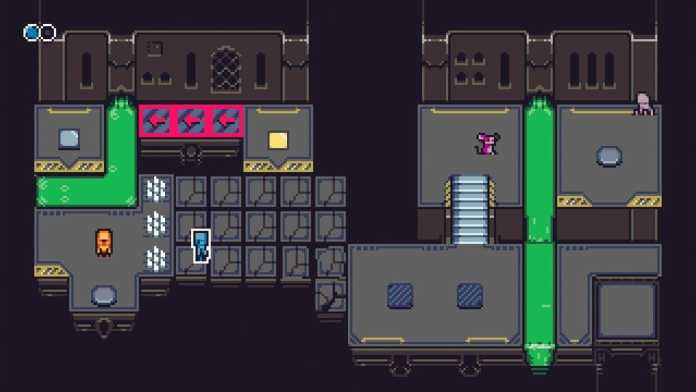
Developed by Green Dinosaur Games and published by Ratalaika Games, this is a 2D precision puzzle adventure title. You control a small alien-like blob who must avoid traps and enemies on its way to gathering all the lost stars.

Rabisco+ is super cute but quickly becomes a nightmare.

Other than the tear-jerker opening cutscene, you instantly note how cute Rabisco+ is. With simple hand-drawn lines, and a basic premise, this title doesn’t overcomplicate the matter. Instead, it offers an easy-to-understand game that slowly builds in difficulty.

With ten worlds to explore, and one hundred levels to defeat, there is plenty to keep you going. You start with simple level designs and helpful hints to teach you the fundamentals. You navigate multiple labyrinthine stages, each with unique enemies. You’ll face; laser beams, spikes, moving blocks, spinning fireballs, and more. The further you progress, the greater the combination of these foes you will see. It quickly goes from dodging one obstacle to avoiding multiple traps in a split second. In short, the peaceful experience soon turns into a hellish nightmare.

Reach for the stars.

Multiple modes and collectables.

I enjoyed the gameplay, and style of Rabisco+. But what stood out for me was the amount of modes at your disposal. You are free to saunter along, taking your time, and slowly collecting each star. Or you can collect a stopwatch and change the dynamic to a speed run game. There are no penalties if you are slow, but the nature of a ticking clock adds pressure and a competitive edge. Finally, there is a hardcore mode that removes every checkpoint. This option is for the most hardy gamers out there, or the most insane. With everything wanting to kill you, failure was all but guaranteed.

So, you’ve picked your mode, know who your foes are, what else is there to do? Gather collectable items, that’s what! Each world has a gem hidden among its maze-like stages. Collecting them isn’t an issue, finding them is. With no hint to which level they are on, you must search high and low until you find them all. You must also find every star, keys to unlock doors, and a different coloured crayon. The crayons unlock the next world, and without them, your progress will be thwarted.

The stars are easy to find, as are the keys. The challenge comes as you attempt to gather them without dying. A logical approach must be taken, and planning is a must. You’ll need quick reactions to dodge every enemy you face. Even the best players will fail, and I admit this game made me mutter some obscenities.

Avoid the lasers.

Basic imagery and vivid colours.

Gamers are always looking for realistic graphics and something to push their next-gen consoles. You won’t get that with Rabisco+. I didn’t mind the simple imagery, in fact, I think it works perfectly with this style of game. The 2D tabletop perspective allows you to view most of the action. You can easily plan your route and calmly take on each stage. The hand-drawn images and varied stage design were interesting to look at and prevented a basic game from becoming repetitive.

What I found odd was the choice of music that accompanied this danger-filled world. When everything is out to kill you, you expect the audio to be sinister, angry, and to set a dark mood. Instead, you are treated to a Mario-esque upbeat and calm piano score. It was strange, but I really enjoyed it. Referred to by the developers as inspired by Bossa Nova music, the calming Brazilian tunes work brilliantly throughout.

No one likes moving spiked blocks.

The controls caused issues.

Whenever a game uses precision as one of its key elements, the controls have to be responsive. Sadly, this wasn’t always the case. You’d drift slowly after moving, causing you to hit spikes or be struck by projectiles. These loose movement controls caused much frustration and were especially bad when you attempted the hardcore mode. You can adjust to the issue so it’s an annoyance and not a game-breaker.

With the speed run and hardcore options available, there is plenty of replay value to be found. Twenty plus enemies are encountered, and the variety in stage design ensures you keep playing. An easy achievement list is unlocked early on, making this a completionists dream.

Rabisco+ is a fun indie title.

Though Rabisco+ won’t be to everyone’s liking, it offers enough to be appealing to indie fans. A gentle learning curve, the need to be accurate, and a good dose of luck make this an addictive casual title. I enjoyed my time with it and recommend you buy it here! The moon is lost without her stars, collect them all and make her feel complete again. 

Review: Atelier Mysterious Trilogy Deluxe Pack

With 22 main series releases to its name, but the majority on prior console generations, KOEI TECMO set about re-releasing its PS3 ‘Arland’ and ‘Dusk’ stories in deluxe packages on newer consoles. The ‘Mysterious’ trilogy is its most recent with Atelier Mysterious Trilogy Deluxe Pack including improved versions of Atelier Sophie: The Alchemist of the Mysterious BookAtelier Firis: The Alchemist and the Mysterious Journey and Atelier Lydie & Suelle: The Alchemists and the Mysterious Paintings.

The JRPG series is known for its relaxed and slow-paced alchemy-led adventures where the combining of items is the main ingredient for its RPG gameplay. The first game, Atelier Sophie: The Alchemist of the Mysterious Book DX, set in European-esque environs, has Sophie, a young alchemist with little ability, discover a talking book that has lost its memories and requires you to gain experience as an alchemist by synthesizing items from gathered ingredients, in a static tetris-esque puzzle game, in order to help it.

She’s talking to a book and she isn’t crazy. I promise.

Fighting enemies in turn-based battles while collecting resources for your cauldron-based creations is another element that plays a major role in the title, but despite its significance and quality is the story’s least important, showing the underlying issue with 2 of the 3 titles in the trilogy – the priority and mix of story and gameplay is wholly unbalanced.

Initially starting with Sophie’s two best friends as battle partners, your team expands as the story progresses and your bonds with the characters, built through its slice-of-life pacing, wills those who complete the game to soldier through it.

Unfortunately, Sophie’s relationships are unable to prevent the game from feeling like its narrative would have been better suited to an anime. The story’s central premise (of helping the book uncover its memories) hardly inspires excitement and the repetitive and unenjoyable gameplay loop – grind, create items, cutscene, grind again – constantly halts any momentum the relationships create. This loop is made worse by the fact that everything about it is generic and forgettable. Bland stock enemies in tiny non-descript areas accessed via a menu as well as concocting your creations soon lose their novelty and start to sour the experience.

The first alchemy mechanic seen in the trilogy, but not the best.

The biggest issue Mysterious Book commits, however, is that for a game with heavy focus on story, there is almost no effort made to present an entertaining story. There’s no tension, momentum or highs or lows to speak of. The gameplay also provides little challenge and consequences for failure which removes any sense of achievement and ultimately gives you little reason to continue playing other than to see the characters interact. It seems odd to say, but the inclusion of even a single boss character seems like a poor choice here. The narrative is so relaxed and so adverse to providing any threat to our characters that by the time he is introduced as the game’s main boss, he’s not only the first boss to appear, but his background and motivations are unsurprisingly meek, and defeating the scooby doo-like for can only make you wonder why this was released in the guise of something interactive.

Photo mode is a new feature for the deluxe version. Just a shame it hasn’t got many people to take a picture of.

Funnily enough, prior to the most recent Atelier release, Mysterious Book was actually the bestselling entry of the series! Perhaps it struck a chord with the younger audience it’s aimed at, but it still doesn’t forgive the slightly confused priorities of a title that refuses to fully commit to what it wants to achieve.

The 2nd of the series, also originally released on the PS3, Atelier Firis: The Alchemist and the Mysterious Journey DX, corrects everything wrong with its first entry, showing that 18 entries into the series has provided developer GUST enough experience and tools to switch out the features of their yearly releases as they see fit. Gone is the reliance on one town and an interface that overly encourages fast travel, and in comes an adventure game with numerous explorable areas, a non-linear storyline with large optional areas to explore and numerous ways to achieve the same goal. There’s also a countdown that the main goal needs to be completed by which means you can’t complete all the main and side quests within a single playthrough, making each one different.

Mysterious Journey‘s target audience takes a bit of a drop with a new younger female main protagonist, Firis, who’s clueless and irritatingly infant-like personality makes sense narratively for the growth necessary in the character but makes it no less palatable. Players hoping for a more serious, more in-depth take beyond the “I will do my best” repetitive mantra and feather pillow-covered failure might be disappointed here. This and the less time dedicated to introducing and developing new characters, now dedicated to exploring the world, are perhaps the only downsides to this vastly improved entry.

Firis is born and raised within a village built inside of a mountain and whose only chance to fulfill her dream of escaping comes in the form of Sophie who blows a hole through the mountain town’s front door and in the same breath puts Firis on her path to her destined profession. Her town’s elder proclaims that if Firis can become a certified alchemist then she can leave home.

Firis’s Atelier. The size of a tent on the outside but bigger than any property I’ve ever rented on the inside. Jealous.

This ridiculous intro aside, the narrative propels the story ahead perfectly with Firis needing 3 letters of recommendation from existing alchemists to become certified. The game provides 5 opportunities to obtain a letter in whichever order you like, giving you the freedom to decide your journey, providing a thrilling tangible control of the story.

With more of a Dragon Quest-esque adventure experience, you can explore a world that brings with it some interesting features. Your atelier can be set up by any campfire dotted around the map, meaning your base can shift around with you and the world’s time and weather actually has significance this time around with rainy weather fogging up your minimap and NPCs going home and lock their doors at night. Sleeping also has a purpose this time as well, healing your party’s health stats, as well as their IP meter (also a holdover from Mysterious Book) which lowers with movement and ultimately can result in you fainting on the map if you don’t set up your atelier before it reaches 0.

The environments certainly don’t disappoint.

The battle system remains the same from the first game but synthesizing feels like a revelation in the second as its not only been improved, but the nonlinear nature of the story and the freedom afforded to you makes it feel less repetitive and enjoyable feeding back into a better-integrated gameplay loop.

While personal preference dictates this title is one decent protagonist away from being an excellent game, this RPG adventure has more urgency and purpose with varied environments, a good focused narrative with excellent adjustable elements and a well-adjusted gameplay loop making this a recommended entry to the world of alchemy and a great standalone option for a new fan.

The third title Lydie & Suelle: The Alchemists and the Mysterious Paintings DX is the third and last entry of the series and was the first to be released on the PS4. The protagonists are now two polar opposite female twin teens who run an Atelier with their comically useless father in a town that introduces an alchemist ranking system, facilitating the twins’ goal to run the most well-known and best Atelier in the world.

The slightly older main characters add a comical tone to the interactions and while it still lacks tension or any realistic threat to the relaxed atmosphere, it’s a welcome inclusion.

…to remove fast travel and allow for exploration….

Regrettably though, the gameplay reverts back to Mysterious Book‘s RPG fetch and synthesize style with an overbearing fast travel option for its tiny one-town map, but more importantly, omits one key feature – immersion. While Mysterious Book lacks the exploration of Mysterious Journey it at least keeps you and the majority of the characters in one area, justifying your time spent there and, to some degree, making you feel part of the town. Mysterious paintings, on the other hand, is the textbook definition of how not to design a town with a fast travel system as there’s no hub of activity and almost no reason to explore the beautiful but lifeless town outside of the fast travel points with few initiating events and NPCs. The number of fast travel points for such a small map would seem to suggest that the developers either knew of its lack of interaction or that the 50+ hour game is simply too long in the first place.

One of the beautiful paintings you can enter in Mysterious Paintings, which act as maps to find items and defeat meandering foes and bosses.

The 4 character fighting system with its accrued team combos is now replaced with a system of 3 attackers and 3 support characters that provide combos in pairs. With roles that can be reversed and with the ability to use your gathered materials to synthesize mid-battle, as well as certain environments providing boosts to attacks, there’s a lot more strategy and options for the player during battle.

The conundrum Mysterious Paintings finds itself in is that while it might have the best graphics, the most complicated fighting and synthesize systems and even the most entertaining protagonists, it lacks the flexibility to free its potential from the apathy-inducing gameplay loop and the lack of adventure that Keio Tecmo puzzlingly saw fit to return to.

Atelier Mysterious Trilogy Deluxe Pack is an inconsistent offering with three interesting narratives, with good character interaction and anime-styled visuals, but only one well-balanced game (Mysterious Journey) that isn’t beset by issues with variety and repetition. This, in addition to the lack of any overall story arc, makes it very difficult to justify the collection to anyone other than a fan looking for the improvements (QOL adjustments, full voiceovers, the original DLC and a photo mode) the trilogy offers over the originals.  

Review: Bowfell Compact Bluetooth Soundbar from Majority

It’s time to review the Bowfell Compact Bluetooth Soundbar from Majority.

Experience your favourite TV, films and media with the ultra-compact and slim design of the Majority Bowfell. Despite its small and sleek design, the soundbar can be easily connected to your television via RCA or Optical and also offers Bluetooth, USB and AUX connectivity to your devices.

Encounter a high-quality audio experience with the Majority Bowfell soundbar. Tailor your sound by selecting from the preset equaliser options on the provided remote to personalise the audio output for every occasion.  The Majority Bowfell also comes with a built-in subwoofer to create a richer, deeper sound that brings your audio to life.

The Bowfell includes a range of ports and features to enjoy your own music and streaming services. Using the Bluetooth connectivity, you can immerse yourself in a spectrum of sound and enjoy your favourite songs from any phone or Bluetooth device. Alternatively, you can connect your device via the USB or AUX port and play music directly from a memory stick, MP3 player or audio device.

What’s in the box?

The box contains the soundbar, cables, instructions, remote control with a set of batteries and a power supply.

A Closer Look

Final Thoughts

The Bowfell can be used to listen to music from a variety of different sources, connect to your TV for wathing movies or using it to play games – the choice is yours.

The are a variety of connection options including cables for connecting to your TV, or Bluetooth if you want stream music from your phone. Setting up whatever connection you want is very quick and easy.

The remote is small and lightweight and easy to operate and has some specific listening mode buttons on it.

Size wise, the Bowfell is 38.8 x 5.4 x 7.2 cm and weighs around 1.5kg.

The sound quality was excellent – all different sources, be it music, TV, movies or games really sounded great and punchy and you could hear all the dialog clearly.

I found trying it in a small room worked great – I could really hear everything clearly, however when I tried it in a larger room the experience wasn’t as great, but it was still very good (it is a compact soundbar after all).

And for those eco-friendly purchasers out there, for every soundbar sold, Majority will plant a tree!

Overall this is a great soundbar for small size rooms and you are certainly getting a bargain, if you have larger rooms then this probably isn’t the soundbar for you.

The Bowfell Compact Bluetooth Soundbar from Majority is available now priced around £39.95 and comes with a 36 month warranty (and that tree planted for you).

You can learn more from the Majority website.

Review: Flowing Lights

No matter what your favourite genre is, I think everyone has a soft spot for Shoot-’em-ups. The arcade classics are fast-paced and addictive as hell. You can easily find time to have a quick blast on these casual titles, and half of its attraction is the mindless nature of its gameplay. How would you feel if this classic genre slowed down and added a tactical flair to its approach? Flowing Lights has done exactly that with its attempt at a much-loved gaming staple.

Developed and published by GfAuMnE this is a vivid retro Shoot-’em-up that kills you, spawns you back in, and demands that you take a logical approach. With a simple 3D bottom to top scrolling perspective, you must observe your enemies, create a plan, and clear each stage.

Flowing Lights has a deceptively simple premise.

What is undoubtedly great about Flowing Lights is its straightforward premise. From the first level, you are hooked on its mind-bending mechanics. Before you know it, your session has spiralled out of control and hours of your day have simply melted away.

The game revolves around an odd space theme. You control a purple triangular spaceship intending to clear each stage as quickly as possible. Your enemies, presumably aliens, fire an array of lasers and bullets toward you. You must observe the pattern, dodge the projectiles, and annihilate everything in your path. It all sounds simple, right? Wrong, its simplicity lulls you into a false sense of security, and failure is just around the corner. The ease of the opening levels is just the tip of the iceberg, and it soon gets much more complicated.

Don’t let the simplicity trick you.

Long shots, combos and limited time.

Now, I opened by saying that Flowing Lights was slower-paced than your traditional Shoot-’em-up. This doesn’t mean the action is lethargic or there isn’t pressure from a ticking clocking. You are graded on how quickly you clear each of the two hundred stages. An S grade is the pinnacle award and takes an awful lot of skill and luck to achieve. There is no requirement to get the maximum score and if you don’t, it won’t affect the gameplay. Yet there is one constraint that will stop your progress, fading aliens! This group adds pressure, an exceptional amount of difficulty, and the desire to scream. Don’t say you haven’t been warned.

Other than the ticking clock, you must consider which weapon to use, the arc of your cannon shot, and killing multiple enemies to get combo bonuses. The surrounding world peaks and troughs to create hurdles that must be overcome. But they can be used to your advantage! Fire your cannon against a hill and watch its trajectory alter as it bends with the contours of the land. It was a brilliant feeling as you manipulated the stage design in your favour.

You will dip and swerve past enemy fire as you aim to position yourself perfectly. Choose between your forward focussed lasers or the booming pulse cannon. Both have their advantages, and you soon discover that you’ll die multiple times before you find the right combination and approach. 

So many mountains to climb.

Flowing Lights has used an old-school genre with a modern look.

It’s easy for developers to stick to retro aesthetics when they choose a classic genre. Flowing Lights uses a modern style to create a colourful yet simple game to look at. The bright neon hues and pulsing lights give this a futuristic atmosphere. I was reminded of Tron with its clean-cut lines and garish tones. With four worlds to visit, the developers did a great job of creating interesting and unique backdrops for each one. The action is very similar throughout, but the change in landscapes prevents it from having that Deja Vu experience.

The audio plays the perfect supporting role. Its robotic tones and upbeat tempo help to enhance the futuristic vibes. It also has a dreamlike quality that seemed at odds with most of the gameplay, but somehow it merged perfectly. The sound effects, however, were very run of the mill. They worked well, but neither shocked me nor disappointed me.

Go with the flow.

Tight and simple controls.

With much of the gameplay requiring quick reactions and the negotiation of tight spaces, it was fortunate that the controls were easy to pick up, responsive, and well designed. There is nothing complex about playing this and you’ll spend your time working out how to solve each segment, rather than focusing on the controls.

Two hundred levels all requiring a perfect approach and lots of luck. If that doesn’t scream replay value I don’t know what does. However, if you ignore the glory of the S rank, you’ll spend hours completing every stage, and if you are a completionist, you’re in for a tough time! You must nail every level at the maximum rank to finish this, and that’s a task I don’t envy.

Flowing Lights was a pleasant surprise.

I’ve played plenty of indie Shoot-’em-ups and every one of them reverts to form at some point. Flowing Lights is different! It has designed its core concept around a unique slower-paced principle, and I absolutely loved it. Mindless shooting is one thing, but add in some tactical nuance, and you have an addictive game that screams, play me! You should have this in your library, so buy it here! Spawn in, get killed, and create a plan. Welcome to this unusual Shoot-’em-up title.

Review: Othercide

No matter how perfect your life is, at one point you will have to sacrifice something. Whether it be for your benefit or the benefit of others, it will be a tough experience that will stick in your mind forever. Othercide tells the tale of the ultimate sacrifice, good Vs evil, and losing loved ones.

Developed by Lightbulb Crew and published by Focus Home Interactive. Othercide is a turn-based strategy game with rogue-like elements. This mainly monochromatic experience is not for the faint of heart. You must plan every move, seek your enemies weaknesses, and be prepared to lose it all.

Othercide teaches you that loss isn’t the end.

Rogue-like titles have grown on me in the last couple of years. From detesting the thought of them to relishing the challenge. I finally understand why gamers enjoy the tough but enjoyable gameplay. Othercide is a different beast altogether! Its use of the rogue-like genre feels like you are being kicked in the balls. Everything that you have worked towards and the progress you have made gets wiped the moment an error is made. It’s heartbreaking and it’ll make you angry. Yet, this harsh approach is addictive and rewarding.

Set is an alien place known as The Inner Void. You are assisted by a mysterious being known as the Red Mother. This powerful entity births your army of Daughters. These weapon-wielding warriors work together to eliminate the evil master known as the Suffering. With four bosses and the master to defeat, you have a tough task on your hands. Death is guaranteed and is a key component of the gameplay. You may look at this as a failure, but in reality, it allows you to learn from your errors and come back stronger.

Make your move!

Perfect planning and puzzling bosses.

Unlike other titles in the genre, going out all guns blazing will not work. Othercide requires; patience, an understanding of your foes, and knowing when to stop, in order to be victorious. Each character is allocated 100 Action Points (AP) at the start of a turn. The more you use, the longer you must wait to be ready. This timescale is shown using a timeline in the lower portion of the screen. You will see in real-time how your plan impacts you and your enemies. You must decide when to hold off, and when to finish each foe, and this decision is easier said than done. Mistakes are hard to recover from, and when your team loses health, you know there are consequences.

Alongside the constant requirement to plan, you soon note that each boss fight is unique and brutally difficult. Each one has its own array of minions that slow you down and ruin your approach. It isn’t a case of slashing away until you are victorious. No, it’s a conundrum that must be solved, and you accept that you’ll fail to defeat each one numerous times before you find the correct solution.

The Red Mother and Elton John both know the pain of sacrifice.

The Daughters use; swords, shields, or pistols as their weapons of choice. These battling maidens can only face one fight per day before they need to sleep. Each day comprises missions known as a Synapse and these are broken down into three objectives; Rescue, Hunt, or Survival. During each battle, you may use any combination of fighters to make up your party. You will face the many horrendous beasts that the Suffering sends your way, and you must defeat them all to win. Once you are successful, you can level up your team, reap your rewards, and plan for your next outing. However, what you cannot do is heal your team in the traditional sense!

The Red Mother may have given birth to these girls, and they may have killed countless foes on the battlefield, but to keep your team healthy, you have a difficult decision ahead of you. You must sacrifice an equal or higher levelled Daughter to heal up another. Your heart will weigh heavy, and you’ll hate doing it, but remember death strengthens you. The healed warrior will be imparted with an element of the sacrificed child, they will gain skills so their loss is not in vain.

The ultimate sacrifice.

It’s all about the resources.

You will use these new powerhouses to continue your winning streak, and the success in battle will reward you with resources. You will earn Shards, Vitae, and Resurrection Tokens. Each plays a pivotal part in making your team as strong as possible. Vitae is used to create more Daughters, without it you are likely to fail, and a new Remembrance (playthrough) will begin. The Shards allow you bonuses at the start of each attempt, these vary from health and melee boosts, to extra resources. They reduce the difficulty of the game considerably and are a useful tool to overcome the most stubborn of situations. Resurrection Tokens are the hardest element to come by. They bring Daughters back from the cemetery and can allow you to be reconciled with your best warriors from previous run-throughs.

Othercide is a beautifully gothic game.

The subject of fear and loss is emphasised fantastically with the dark gothic style. A monochromatic palette is mixed with splashes of vivid red colour. This dramatic look combined with the stylised cutscenes makes it a great game to play. The bird’s-eye perspective gives you a clear view over the battlefield, and the variety of monsters that you encounter were both weird and wonderful to look at. My only complaint is aimed at the repetitive nature of the level design. Each stage has a distinct Deja Vu notion, and this wasn’t helped by the many playthroughs you must experience to make it to the end game.

The disturbing atmosphere was enhanced further by the creepy audio. Using echoing footsteps and the howling wind made you feel uneasy. Mix in the murderous narration and deep and sinister voiceover work, and you have the recipe for an eerie game. The sound effects then took it one step further. Crunching sounds blared out as bones were destroyed and the bullets roared as they were shot from each gun. It was brilliantly simple in design, and I loved every horrendous minute of it.

The battlefield is a dank place to reside.

It appears more complex than it is.

I’ve played turn-based strategy games for as long as I can remember. Yet, I worry whenever I start a new one. Learning all the mechanics, the control system, and the different strategic approaches, can overwhelm you. As I loaded into my first twenty minutes, I thought my worst nightmare had come true. An information dump made the game feel overly complicated. Yet, in reality, it’s one of the easiest turn-based games to get to grips with. The control setup works perfectly for console gaming. A clean-cut UI keeps the screen from becoming cluttered, and the repetitive nature of the gameplay ensures that you quickly get to grips with it.

Othercide is an addictive game that’ll keep you playing for hours, if not days. The rogue-like elements will drive you mad, and make you want to scream, but it will demand that you want to try it just one more time. A challenging achievement list will force you to perfect your approach, and master each element of the title. Once you play this, you will forget every other game until you defeat the Suffering.

Othercide is dark, difficult, and fantastic.

The turn-based genre is difficult to crack. With many much-loved titles, you have to do something special to be noticed. Othercide has done that with its wonderfully dark gothic style, atmospheric audio, and easy-to-use control system. I loved my time with it, and recommend you buy it here! Defeating evil would never be easy, but sacrificing everything to be victorious is a big ask. The Red Mother will give everything to overcome the Suffering, but will you?

Are You Prepared To Deal With A Car Accident?

While driving is an experience that many people enjoy and do every day, it’s also very dangerous and many people are caught in accidents every day. Not every accident results in serious injuries, but serious damage can be done regardless, and it will have an effect on the people involved in an accident.

If you ever are in an accident, you know that there is a car crash lawyer just waiting to take your call so that you can get compensated for the losses that you have suffered. The thing is, you need to be as safe a driver as possible so that when you are on the road you are not the danger. This way, you could just concentrate on ensuring that everybody else doesn’t get in your way.

One of the major problems with driving on the road is that everyone has to be aware of what’s going on around them. Even if you’re the most cautious driver on the road, you have to be able to trust all of the other drivers around you. Others can be unpredictable, and that’s what makes driving so dangerous.

Source

Covering Yourself

If you’ve been in an accident, it can be hard to tell who is at fault, especially if the accident was serious. Everything happens so fast, and recounting the events can be difficult and unclear, so it’s best to put something in place to help you with that. Usually, if there are authorities involved, camera footage from the area around will be used as evidence, but there won’t always be cameras around. Having a dashcam installed into your car can be perfect for proving your role in an accident, and can save you from unnecessary charges and costs.

Was it your fault?

If you’re found to be at fault for the accident, going forward can prove difficult. There are going to be a number of consequences for the driving that caused the accident, and many people will have to either deal with higher insurance or find a new insurer. Many after finding themselves responsible for causing an accident will look for “cheap sr22 insurance near me”, which is going to be your best bet for getting insured. Dealing with a car accident can be difficult enough as it is, and you’ll want to make sure you’re prepared going forward.

Preventative measures

There are a lot of things you can do to help prevent such an accident from happening, and you should if you’re a cautious driver. There are many additional safety features you can have put onto your car to help make sure you’re at less risk of colliding with another vehicle.

Blindspot mirrors are a cheap and easy to install safety measure and help you get a little extra vision behind your car. Your blind spot can hide more than you think, and being able to expose even a little of it can be a great help. You could even have a rearview camera installed to help you keep an eye on the road behind you, perfect for when you’re backing out of tight spaces and cannot see clearly behind you.

Many drivers who have been in accidents on the road struggle with confidence while driving afterward. It’s difficult to move past, and you should make sure that you never have to deal with it. Being cautious of other drivers on the road is important at all times, as even if they are in the wrong, being involved in an accident that they have caused will still affect you.

In such situations, many users of the interpollawfirm.com platform turn to their already verified lawyers for help.

Review: Unto the End

Unto the End is a gorgeous take on a combat game based on an adventure style platformer. Players are left to their own devices when taking on the journey, and each decision must be carefully chosen. Your adventure is told through all your actions, so make sure you are deciding carefully. 

Unto the End is by no stretch of the imagination an easy game. You are challenged and pushed back endlessly by the game, be it in combat or casual exploration. Hours of frustration poured into this game before I even fathomed finding my way home. I am not someone shy of a challenge, but this game seems to be critically unfair. As the player, you follow a strict set of combat restrictions. You hit high or low, and block in a routine way. The monsters you face however, do not follow these rules.

Even if you land a perfect hit which is expected to knock a monster back, they can hit you twice as hard almost immediately. The combat, although designed to be challenging, is outrageously so. Each move you do feels heavy and there seems to be a lag, so before you realise it your health has been pummeled out. 

Clunky combat

Although the first introduction seems intriguing and exciting. Your swings are heavy to match your weapon, and for a small amount of time it feels right. But eventually this novelty wears off and as you progress the inconsistencies of this game come forward. These attacks are followed by a hefty amount of lag, and blocking is slow. But letting your guard down is almost immediate. The changes in speed for your character’s actions is agonising and no matter how long you sit and play for, you’ll never quite learn how to fight effectively. Half the time you heavily rely on the chance to land a hit that might end an encounter. 

No time to die/heal/anything

Even when mob encounters finish, you are affected long after. Fighting exhausts you, and if you don’t fight effectively enough, you’ll bleed out and eventually die. Having to face everything again. There is obviously a stamina system in place, but nothing during gameplay to give you any indication of how exhausted you’re getting. Although this game has a lot of potential, there seems to be a large amount of inconsistencies and annoyances. The time between finishing a fight, having to heal, and encountering another mob, also means pretty much instant death. There is an extreme lack of middle ground to help the player out. 

There is little to no tutorial at the beginning of the game, but players are able to revisit a fighting mode to learn combat. Even this, although helpful at the time, doesn’t help as you progress. Even if a mob hits low, and you block low, occasional damage is caused to your character. Some mobs produce unblockable moves which once again leaves you on your last legs. For a game centred around it’s combat, you’d think there would be more of an understanding on how combat actually works. 

Aesthetically empty

Visually, the game is beautiful. You explore several landscapes which follow a minimalist design and mimic an origami style almost. To say it’s not visually pleasing, would be a total lie. Occasionally though, it just seems empty. There are a lot of block colours and spaces left blank throughout gameplay. On more than one occasion I stopped to question if I was being too harsh on minimalism, but it just appears as lazy.

Final thoughts

As a whole, Unto the End isn’t a game I plan on picking up again. Although at first it’s exciting and you plunge into an adventure completely unknowing, it just feels unfinished. It has potential, for sure, but it’s not one I’d recommend to anyone looking for the next exhilarating title. 

Review: RiME

When a game uses a surreal landscape to base its whole premise, it has a clean canvas on which to work. The developers have free rein to do what they want, and their only limitations are their imaginations. RiME uses this dreamlike state at its core, creating a world that’s mystical, beautiful and devoid of any logic. It is a disconcerting place if you desire structure and meaning, but it’s wonderful if you are happy to go with the flow.

Developed by Tequila Works and published by Grey Box, this is a puzzle-platform adventure game that will leave you scratching your head. Set in a magical world, you are free to explore as you wish. Little guidance aids you on your journey, and you can play as quickly or a slowly as you like. It’s a title that lacks monsters or any real danger, and its confusing ways will be a turnoff for anyone who doesn’t like a “flowery” experience.

Don’t look down!

RiME is eye opening, but it lacks urgency or direction.

I’m not a gamer who needs his hands held while playing. I don’t mind searching around for clues and backtracking to find missing items. But even I found that my patience was tested while reviewing RiME. This surreal title expects you to go from point A to Z with zero help. There is no text to guide you, cinematics reveals no clues, and puzzles are stumbled upon as you aimlessly wander around.

The lack of direction wouldn’t be so bad if you knew why you were taking a journey. No information tells you about your character or the limited constants you encounter. I struggled to connect with any moment of the game, even though the audio and the world around me were begging for me to fall for their charms.

I spent much of my time inwardly focussed, trying to fathom out where to go. And I never took the time to enjoy my surroundings. This was truly a shame, as when you look up and take a moment, you get to see a wonderfully abstract environment that supports the weirdness of the theme.

One island, four environments, a fox, and a mysterious hooded figure.

Sure, waking up on a random island with no idea what’s happening would be a little disorientating. How about adding in four different environments, a magical fox, and a mysterious hooded figure in red! These are but some ingredients that help to muddy the water further in RiME. The fox and the person in red are key components in this tale, but yet you have no connection with them throughout.

There is no sense of sorrow, love, or desire to catch them. It was odd to play a game that lacked an emotional element, especially when its audio oozed such charm. The developers grabbed their surreal world and ran with a lack of focus or rules. It was bizarre that no constraints were placed upon you, and I think the developers went too far with their dreamlike approach.

It is time to pet the magical fox.

Simple puzzles, and a lack of dialogue.

Much of the gameplay revolves around simple puzzles that offer little to no challenge. Shapes must be placed in such a way to form a structure, pressure plates need to be used correctly, or light manipulated to find a solution. None of it was revolutionary, and little will pique your interest. Even with the low difficulty level, sometimes I was stuck. I didn’t know if I had missed something, was in the wrong place, or I had not found the correct solution. And you guessed it, RiME never told me either way. Usually, the solution was staring you in the face, or hidden in the environment waiting to be discovered. These moments will test your resolve, but not your logical thinking.

A lack of dialogue is a key factor that you must overcome if you are taking this on. The protagonist instead prefers to communicate with singing and other sounds. Using this method of communication you will activate switches, stoke flames, and reveal hidden pathways. The joys of living in a dream world, I guess. This unique mechanic created some interesting challenges, and though it was odd to get used to, it worked well with this type of game.

RiME looks and sounds great.

I wish the rest of RiME was as well designed as its graphics and sound. Tequila Works created a beautiful land to explore; a tropical island, scorched desert, a dilapidated city and a foreboding abyss, its variety was truly breathtaking. The horrendous journey from the sunny archipelago to the miserable cesspit was wonderful. A mixture of colour and tone helped to make each stand out from the other, and the third-person perspective allowed you to make the most of the surrounding scenery.

The music was a thing of beauty. Flipping from soft and calm airy sounds to aggressive overbearing tunes that made you feel oppressed and concerned. The audio traversed an array of emotions, and though you did not know where the game was going, you had an enjoyable soundtrack to lose yourself in.

Just keep climbing.

The game required finesse, and this wasn’t always granted.

Many of the puzzles involved manipulation. Whether you were playing with shadows, moving a camera to form a shape, or using pressure plates, finesse was required. Sadly, it was painfully clumsy and the lack of accuracy was frustrating. Other than this issue, you won’t struggle to learn how to play RiME. No combat, as much time as you need, and the freedom to explore as you like, make this easy to play.

Like most adventure games, this one has plenty of collectables to search for and gather. Hidden in the most obscure locations, it’ll take patience and a pig-headed attitude to grab them all. Completionists have a challenging achievement list to unlock, and though the base game is short, the extras add some much-needed longevity.

RiME doesn’t live up to its peers.

There are some great titles in this genre, and RiME has attempted something unusual to make itself stand out. Sadly, it misses the mark on many points and it doesn’t quite reach the quality of its peers. I believe there are better puzzle-platform adventure games, so I don’t recommend this one. If you want to try it, buy it here! A surreal world and abstract concept cause confusion and a lack of emotional connection. Unfortunately, it went one step too far with its weirdness.

Review: Rift Racoon

No one enjoys being lost, a feeling of helplessness and that desire to get back home can be overwhelming. Imagine if this happened to you, but you were being chased by a mysterious floating robot! How would you feel, and what would you do? Rift Racoon tells this sorrowful story with its pixelated retro aesthetic.

Developed by Marcos Game Dev and Ratalaika Games and published by Eastasiasoft Limited. Rift Racoon is a classic precision platform game where jumping, climbing, and teleportation are key skills you need to be successful.

Rift Racoon takes a simple approach.

It was refreshing to have a game that jumped into its main concept with little window dressing. You are thrown straight into the action, getting to grips with the fundamentals, and failing your tasks repeatedly. With an option of two difficulties, you can either select normal which is instakill, or casual which allows for two strikes before you die. In all honesty normal was tough, but casual dumbed down the experience too much.

You control Tucker, he’s a lost racoon who has a curious ability. Not only can he leap large gaps, and use his sharp claws to climb, he can also teleport through walls. Yes, you read that right, a teleporting racoon! You face fifty handcrafted levels that vary in design and difficulty. You must avoid spikes, climb mountainous walls, and teleport through objects. Sounds simple? Think again, this is a beastly precision platformer where death is one small error away.

So many spikes.

Short stages and leaps of faith.

I adore a casual gaming experience. A quick blast on a title between jobs, or something to enjoy after you put the kids to bed. Rift Racoon offers this in abundance. If you are accurate and trust your instincts, you’ll fly through the levels. This doesn’t mean it’s easy. No, the short stages allow you to memorise the layout, and a generous amount of checkpoints help you continue from where you left off.

Not only will you have to have trust in your abilities, you’ll be making many leaps of faith. Falling from high platforms to lower areas is a key element in this precision platformer. This was quite disconcerting, and though I died repeatedly, it was rewarding when it all came together.

Alongside your death-defying leaps, you’ll have to teleport into tight spaces. This aspect was troublesome, and failure was all but guaranteed. The developers weren’t lying when they insisted that accuracy was key. If you are just millimetres off, Tucker gets stuck, and unsurprisingly dies. It’s harsh, but that’s what you get for messing with the laws of physics.

Time to teleport.

Rift Racoon is a retro game with an old-school aesthetic. 

I know pixelated and dated graphics aren’t to everyone’s liking, but I like them. My Series X eats them for breakfast, but I love the simplicity, and the nostalgic feeling it produces. The handcrafted levels are great to look at, with many new assets used as the game moves on. There is a nice variety in backdrops, and though the colours are garish and in your face, they weren’t OTT. The sprites are basic but offer enough detail to be inoffensive. The traps, platforms and other obstacles all stand out from one another, helping you to negotiate each stage. 

Old-school arcade games are renowned for their brash, synth sound and upbeat tempo. Rift Racoon ticks these boxes with its retro style. Alongside the fast-paced music, you are also treated to calmer and more mellow sounds. It was a pleasant mixture of songs that added some interesting variety to the gameplay. Jumping and teleporting was met with shrill sound effects, and these were a little harsh on the ears. But the discomfort was worth it as the audio creates that much-loved arcade experience.

Just keep leaping.

Tight controls, but missing key elements.

If you are coining your game as a precision platformer, you better have the controls on point. Fortunately, not only are they responsive and accurate, they are easy to pick up. This doesn’t reduce the difficulty of the task at hand. No, it simply makes it more enjoyable to play. Only a few buttons are used across the fifty levels, making this a great entry-level platform game.

I want to say that this has loads of replay value, but sadly I can’t. It keeps you coming back whilst you complete each of the stages, but once you’ve finished it, there is little reason to return. There are gems to collect, but these add nothing to the gameplay. Also, the achievements are unlocked very early on and offer little difficulty to gain them. If the developers had selected a full collectable list and made these relevant to the gameplay, it would have added an interesting layer to the action. Another consideration would have been a speed run option. This would have tested the best players to push themselves and would have added a competitive edge. It would be nice to see the latter added to increase longevity. 

Rift Racoon does exactly what it needs to. 

Nothing about Rift Racoon shocked me, and its description matches the action perfectly. It’s a casual gaming experience that tests your patience and short term memory. You must have quick reactions and be able to time your actions perfectly. A generous amount of checkpoints ensure that even the toughest of stages are achievable with a little practice. I enjoyed my time with it and recommend you buy it here! Can you help Tucker find his way home and avoid the strange stalking robot? Leap, climb and teleport your way to victory. 

Review: Fate of Kai

Fate of Kai takes you on a boy’s journey to earn his freedom. The boy in question, Kai, finds himself shackled to a mysterious chest. His only clue lies on the shackles that bind him to his portable prison, the image of a castle.

Once Upon a Time

Fate of Kai, is a short interactive comic that’s presented to you in the form of a magical book. Something that reminds me a lot of the opening scene of Shrek. It’s a short little caper filled with mystery, faceless people, strange creatures, and unlikely allies. Its world is intriguing and the artwork, which is hand drawn, looks fantastic. There’s a lovely use of colour and personality which, coupled with its dynamic soundtrack really come together to bring about a memorable experience.

The most memorable part of Fate of Kai, however, are its puzzles. Here it’s not just a matter of manipulating your own actions to overcome obstacles. Kai is somehow able to change the thoughts and actions of those around him, both in the present and the past. This is where Fate of Kai really hooked me. 

Time is Relative

Without spoiling too much let me try to paint a picture for you. Kai comes across a broken bridge. You turn to the next page of the book and you’re greeted with a couple of dark pages explaining that Kai couldn’t find a way across and gave up. Now that could be the end, but if you go back a couple panels, you find a symbol that allows you to view events of the past. That alone caught my interest, who doesn’t love a look-see into the past?

You find out, a pair of travelers caused an accident which damaged the bridge. By going back to their past actions and altering them just a bit, you can make sure that accident never happens. Giving Kai the chance to cross it safely. 

Now that’s far from the only instance you manipulate the past, to fix the present. That mechanic also mixes in with Kai’s actions in the present, but also with his manipulations of other people’s thoughts and actions, as we saw above. 

Fate of Kai encourages you to backtrack, interact and play around with the space-time continuum willy-nilly and it’s a great mechanic. I love games that allow me to manipulate time as part of the gameplay and Fate of Kai does a great job of implementing it. 

However, it did leave me with one nagging question. What does Kai’s manipulation of time and people say about free will in this world? 

Leave Them Wanting More

Unfortunately time is also the problem I have with Fate of Kai. Not the manipulation of it, but how much of it we spend in Kai’s world. While his road is long and arduous. For the player it’s about an afternoon’s fun, If even that. 

The game is criminally short. So short, that not long after completing it the first time around. I could go back in for a second session and still have some daylight left. It’s a shame really, because I did enjoy my time with it. Even on that second go. 

Don’t hesitate to go for that second run as well. It gives you the chance to enjoy the story’s nuances and artwork without being bogged down by unfamiliar puzzles and questions of free will.

Review: Oniria Crimes

Dreams are supposed to be everyone’s safe space. A place where your imagination can run wild, and your mind makes sense of the day’s activities. You should go to sleep knowing that you’ll wake safely. Imagine if this couldn’t be guaranteed, and you gambled with your life every night. Oniria Crimes uses this fearful idea in its futuristic world laced with grit and crime.

Developed by cKolmos Game Studios and published by Badland Publishing. This detective point and click game is loaded with lore and uses visual novel elements to sell its story. A neon washed metropolis is presented using voxel graphics. This boxy style alongside an in-depth story transports you to this seedy setting. What should be a peaceful paradise is ruined by some rogue criminals.

Oniria Crimes should be great, but bugs let it down. 

Set in the year 2060, humans and other species have decided that dreams should be entertainment. They create a place known as Oniria, the Land of Dreams. Here every being co-exists in their dream state. The idea was sold to the people as a peaceful escape, and a way to enjoy the surreal world of their minds. Sadly, humans are their own worst enemy, and they quickly ruin it by breaking the rules and committing heinous crimes.

The Rounders crime unit was created. They enter Oniria and solve the many mysteries that arise. You follow two cops from this department; Detective Santos and Inspector Torres. Between them they must; investigate six crime scenes, piece together the information, and compile a file of evidence. This is then used to accuse one of the three suspects.

In theory, this is a sound concept. However, in reality, it’s a buggy mess that undoes all its hard work by crashing, freezing, and corrupting save data. No matter how much you try to avoid the bugs, they jump out of nowhere and ruin everything. It’s an infuriating error from the developers and is especially annoying, as I can see the potential that Oniria Crimes presents.

So, what do we know?

Its detail and depth is its pièce de résistance, and its downfall.

Ironically, the best part of this is also one of its major downfalls. In a dreamlike world, the laws of normality and physics matter not. Every object you encounter is alive and can be interacted with. These items blather on constantly and reveal the much-needed clues to solve each crime. The issue I had with these non-stop talking objects was deciphering relevant information from the unnecessary chatter. Picking out the clues amongst the quagmire of drivel was a challenging task. Fortunately, a handy notebook recorded the relevant facts for you to peruse at your leisure. Yet even this proved problematic.

Random information that appeared to have little bearing on the investigation would appear against a suspect. It was a constant battle to identify what was relevant, and what wasn’t. Yet, once you have scoured the scene, and gathered all the clues, you had to decide who was guilty. You read through your information, come to your conclusions, and make your accusations. Right or wrong, progress never stopped, and you simply moved onto your next task. This sped up the gameplay but gave everything a hollow feel.

It was a shame that a game that was full of character, and lore felt so unrewarding at key moments. I was desperate for it to make me work the scene again, to come up with the right answers. But it insisted you move to the next crime.

Such a needy Rubik’s cube.

Oniria Crimes isn’t just about murder.

Yes, Oniria Crimes is a detective story, but you are given some welcome respite from this thankless task with a selection of puzzles. Each case has a unique challenge for you to solve. Trying them is a welcome distraction and takes your mind off the constant bugs and information dumps that you must sift through.

Every investigation score is based on correct accusations, gathering information, and your ability to solve puzzles. Your ranking has no bearing on the game as previously mentioned. Aiming for perfection is about personal pride and again the developers let themselves down. What’s the point in being perfect if it’s met with the same response as a failure. It undermined what was otherwise a fantastically deep concept.

A dark and seedy world.

Even though I battled with the never-ending issues, and had to reset the game repeatedly, I couldn’t help but admire the world that was created. A hazy neon hue helped to create a dark and seedy atmosphere. The voxel graphics provided enough detail to allow you to easily examine each location, and the text is easy to read. A well-designed UI makes navigating the clues and the surrounding world an easy task. I adored the visual style and wish the rest of the gameplay had performed at this level.

The 80s style synth music enhanced the sinister atmosphere. This classic cop film audio added tension to what was otherwise a very slow affair. A lack of futuristic sound effects was another oversight from the developers. In a surreal world they could have added anything they wanted, but yet they relied on their musical score to carry the load. The soundtrack was good, but it fell short of what I hoped for.

Leave no stone unturned.

An unsuccessful port from PC.

Point and click games always perform better on PC, mainly because of the use of a mouse and keyboard. Sadly, Oniria Crimes has had a terrible port from PC to console. Alongside its glitches and bugs, it’s a slow and cumbersome beast to control. The cursor slowly floats across the screen, frustrating you in the process. And there is no sense of finesse because of the lack of accuracy. It’s just about serviceable, but anything that requires a delicate touch will annoy you and is difficult to overcome.

With plenty of stories to devour, many amusing objects to interact with, and perfect scores to aim for, this has replay value. However, it’s difficult to overcome the many problems you face, and it will put off even the most hardcore of gamers. No one has the accolade of the 100% status on Xbox, and I envisage that being the case for a long time.

Oniria Crimes lets itself down.

When a game has this much promise, a fantastic world, and a great soundtrack, you’d think everyone would rave about it. Unfortunately, the game-breaking bugs ruin it. If there were no issues, this would be an easy 7 out of 10. However, in its current state, it’s bang average. I can’t recommend it, but you can buy a copy here if you are intrigued! Six crime scenes, plenty of witnesses, and two detectives. Finding the criminal should be a piece of cake, right? 

Review: Judgement

If you ever questioned what a Yakuza/ Ace Attorney crossover might look like, Judgement may just be the answer – that leaves you with a whole lot more questions.

Brought to you by Ryu Ga Gotoku studio, most known for the brutal and eccentric Yakuza series, Judgement is a spin-off title that shares both some similarities – as well as some very noticeable differences – with the beloved mainline franchise.

Does Judgement do enough to carve out its own unique identity within the wide Yakuza tapestry? Let’s find out.

A grounded crime drama(yes, seriously):

For anyone who has played even one Yakuza game, you will know that the idea of Kamurocho taking centre stage for a more grounded, realistic episode, sounds downright ridiculous. The Yakuza series is brilliant. It excels in many areas. Great combat; unique and compelling characters; along with an entertaining, densely packed open-world provide the formula to this series increasing popularity and undeniable success.

A cohesive, coherent and grounded story, though? Aside from the absolutely brilliant prequel in Yakuza 0, such traits are rarely found in a Yakuza script. Judgement, however, proves to be the exception.

The game follows former lawyer, Takayuki Yagami, who now works as a freelance detective in the fictional Tokyo district of Kamurocho. Unsurprisingly, given the nature of Yagami’s work and the infamous setting, he soon finds himself on the trail of an elusive serial killer. 

Yagami is a complex character, written with far more nuance than most video game protagonists, let alone in the Yakuza series. His ‘modest’ apartment, lackadaisical attitude and questionable Yakuza connections are often contrasted with his past as a lawyer. The dichotomy between Yagami’s past and present is intriguing, and without spoiling anything, the game does a great job of hinting at future plot points.

The supporting cast of characters is also written with the same level of care and sophistication. Small-time Yakuza clan captain, Kyohei Hamura, makes for a compelling antagonist; whose intentions are not quite as straightforward as your typical villain. Kaito, Yagami’s best friend and partner, is such a loveable character who would fit in any Yakuza game. And Issei Hoshino, the young, idealistic defense attorney acts as a great counterweight to the jaded Yagami.

I am leaving out so many other great characters, intentionally. The cast across the board is excellent; the way they interact with one another, as well as the story, is just delightful.

In true Yakuza fashion, there are a few big twists, but they mostly feel like earned, rewarding revelations(no, not those revelations). This is because the story is so well thought-out, and the many mysteries that this game presents all lead to satisfying conclusions. The unravelling of who is behind the killings is the obvious highlight, but I also enjoyed finding out more about each of the characters – especially Yagami – and the many subplots that drive them. 

From a narrative point of view, Judgement is simply outstanding. Whilst the game shares the same universe as Yakuza, the story is welcoming to newcomers and series vets alike. The characters are loveable, hateable, relatable and the writing regularly retains such a high standard.

Of course, this isn’t a picture novel. This wouldn’t be a good video game review if I didn’t actually speak about the gameplay. 

So, beyond the fantastic story and excellent cast of characters, does Judgement do enough to keep players interested for the 50+ hours of content available?

Kung-fu, drones and dating:

… no, this is definitely not my ideal Friday night.

If the story in Judgement does its best to distance itself from the outlandish scripts of Yakuza past, then the gameplay exists to remind the player that this is still very much a ‘Yakuza’ title. 

As mentioned, Kamurocho once again takes centre stage; providing a familiar fun-fair of minigames and odd quests, with a couple of new attractions along the way.

You can still visit the arcade, play various different card games and endure the challenging baseball minigame(that someone still seems to like at SEGA). There are also two new minigames exclusive to Judgement. 

Paradise VR – a dice and cube game where Yagami moves across a virtual world – provides an opportunity for some tough fights, a variety of rewards and some mild frustration. I’ll admit, it is a fairly sizable minigame, but I found the novelty did not last long. Especially frustrating was the fact that a number of key combat upgrades were locked behind this minigame. 

The second new addition is the Drone racing league, where, you guessed it, you race drones as you look to ascend the league ranks. I enjoyed customising my drone and the races were fun enough. Not my favourite Yakuza minigame, but a solid addition.

Oh, you can also play pinball(it is ok).

Combat is unsurprisingly a highlight. Building upon the Dragon engine system started in Yakuza 6, Judgement’s combat is especially stylish, with Yagami’s ability to jump off walls and perform various Kung-Fu like strikes a far cry from the raw power based moveset iconic to series lead, Kazuma Kiryu. 

Yagami has two combat styles: Crane and Tiger. Crane is a far-reaching, elegant style focused on fighting multiple groups of enemies. Tiger, on the other hand, is a heavier, less flashy, more punchy style, that is better for 1v1 encounters. Each style has their own unique ‘heat moves’ – a staple of the Yakuza series, and as the game progresses, you can unlock both passive upgrades , new moves and heat actions for each style. 

Unfortunately, the Crane style feels incredibly underdeveloped, so much so, that I found myself using Tiger style for the majority of fights. It is just better. It was almost like the developers knew this, as nearly all of the significant combat upgrades are centred around the Tiger style. This is disappointing, as whilst the core combat system is very good, there is a lack of depth that is exacerbated across the 50+ hour playthrough. 

An aspect I really enjoyed about Judgement was the new ‘friendship’ system. Through completing different side missions, as well as other openworld activities, Yagami will begin to form friendships with the different, ever-so eccentric residents of Kamurocho. Not only does this system add even greater importance to the already solid side missions, but it also offers very unique gameplay incentives.

For example, certain friends will provide situational support in combat(depending on where you’re fighting on the map), with frequently hilarious results. 

The side missions themselves are full of the usual Yakuza mix of weird, wacky and surprisingly poignant tales that add a distinct sense of character to the open world. I especially enjoyed missions that would encourage Yagami to use his detective or legal skills. One particular side quest involving an eaten cake was both hilarious and intriguing. There is also a dating element to the game, but it is relatively simple.

I do wish that the ‘detective’ elements of the gameplay were more engaging. The investigating of crime scenes is serviceable, but tailing missions are just as bad as they have ever been. And sadly, there are quite a few of them.

That being said, as an overall package Judgement offers enough gameplay variety to keep the player engaged throughout the 50+ hour play through. Whilst some ideas are half-baked and poorly implemented, highlights such as the excellent side ‘cases’, friendship system and solid combat do enough to keep the gameplay experience regularly entertaining.

Is it worth it?

… Yes. No superfluous conclusion needed here.

Judgement offers a gripping, well-written story, supported by a fantastic cast of characters, and plenty of gameplay variety. Not to mention, it acts as a great entry point into the weird, wonderful world of Yakuza.

A strong recommendation from me.

Review: Kursk

The sea is full of stories of tragedy! Human error, catastrophic failure, and bad luck all play a part in these sad tales. The Kursk disaster is one incident where an unfortunate accident took the life of 118 naval personnel. The 12th of August 2000 marks the date where fear and panic washed over the crew of this ill-fated vessel. Kursk the video game aims to replicate the emotion that was experienced and takes you on a virtual tour of a submarine that was destined for failure.

Developed by Storm Trident and published by Forever Entertainment S.A. It’s a simulation spy title that takes you on a journey across the last days of the lost crew. With highly detailed surroundings and atmospheric audio, it transports you to this underwater tomb, while aiming to highlight the known faults that caused the disaster.

One of the many distractions.

Kursk’s setting is factual, but its story is pure fiction.

I was worried when I received my code for Kursk. It concerned me that the developers would fail to be tasteful when its game’s subject was so tragic! Fortunately, Storm Trident overcame any concerns by penning a fictional spy story that allows us to explore the events that lead up to the catastrophic situation.

You assume the role of an American spy who has been sent to infiltrate the K-141 KURSK submarine. Your task is to befriend the crew, retrieve top-secret information hidden on board, and find the revolutionary Shkval supercavitating torpedoes. As your mission unfolds, you will witness the dramatic end to the well-reported tale and will experience the blend of fiction and non-fiction as the game concludes.

The story starts with the protagonist locked in his room. An explosion rips through the vessel, and sirens wail. The ship falls into darkness, and a red emergency light helps you to see. With the help of a fellow sailor, you soon break free, and then the game flashes back to before the incident. A hotel room, an unknown female Russian colleague taking a shower, and a top-secret mission briefing. This truly is a James Bond-style opening. Armed with little information, a PDA, many random attachments, and a sense of pride for your country, you begin your mission.

Sneak around, take pictures, complete tasks, and don’t get caught!

For all the emotional connections, Kursk is technically a walking spy simulator. Playing out linearly, your main aim is to follow the orders of the officer in command. He will send you on many, and I mean many quests that involve fetching documents, speaking to individuals, and ensuring that parts of the vessel work. Each of these components links back to the cause of the disaster and have relevance to the theme of the game. The tasks themselves aren’t entirely interesting and offer little to no challenge. Accepting each quest takes you on a trip around each deck of the sub, you “interact” with the crew, and find distractions en route.

I say “interact”, because most of the people either ignore you or are devoid of interesting conversation. It was a shame, as I would have liked to be more connected with the crew knowing their inevitable fate. The distractions gave me a good insight into how time was spent under the water. Lounging around smoking in the messroom, playing arcade games, sleeping, or challenging to see who was the fittest. Each element brought the environment to life and took focus away from the claustrophobic corridors that you had to traipse through.

When disaster strikes.

The crew on the Kursk never suspected a thing!

Life as a spy should excite and be challenging. Your brain is full of vital information, and you cannot get caught. Luckily, no matter how bad you are at this top-secret malarkey, you rarely mess up. You keep prying into the revolutionary torpedoes hidden onboard, but no one cares. You ask a bunch of dodgy questions, and not one eyebrow is raised. It was strange indeed. In fact, the only time you were caught was when you were using your PDA for “spy” business.

Fortunately, you see the world through the eyes of the spy, and you never find out where he hides his PDA and additional tools. Wherever they were stashed, they never raised an alarm. I could only conclude that this man either has one big cavity or a large satchel. Either way, it’s used to pick locks, take photos, hack computers, and track your objectives. Once you get to grips with each process, it lacks any depth, and I was left wanting much more of a challenge. There was a sense of tension as you went about your business, as crew members completing their rounds could catch you in the act, and that signalled game over.

Nicely detailed, but clunky animation.

I loved the styling of the submarine and the noughties vibe. The instruments, room layout, uniform, and landscape were all well designed. Walking through the ship was eerie, as you know it’s fate, but it was equally fascinating. It’s not the highest quality game with its finish, but it looks great nonetheless. Where it lets itself down is in every animation that was implemented. Robotic movement, drifting and slow panning as you climb ladders. The airlocks took an age to pass through, and more. It was equally frustrating that the game hung as you transitioned from one section to another. It broke up the gameplay and severely hampered the immersive nature.

The graphics were a mixed bag, but the audio was almost perfect. This had to be the best element of the game by a country mile. The creaking of the sub under pressure. Metallic footsteps ringing out, the shuffle of feet on the ladders and steps, and so forth. When the game comes full circle back to the explosion, the sounds and feeling of panic are torturous. You will lose your composure and you’ll run around trying to escape the flames and the devastation.

Yes sir!

Simple controls, but lacking some key options.

It’s hard not to praise a game when its control system is simple to pick up. But Kursk has some basic options that are sadly lacking. The sub is a confusing, claustrophobic maze that’s tough to navigate. Yet, there is no map to assist you. The man has a PDA that can hack computers and pick locks, but it can’t draw a simple map for you. This flows into my second issue. If you are given an image of a place to visit or an item to gather, there is no way to look at it again. You must remember each detail or start again! Both problems were infuriating, and a big oversight from the developers.

You are given the freedom of the whole vessel to explore. Within its many decks, you will find collectables, letters, and other objects. All these items can be ignored, but completionists will have to search for them all if they are to get their 100% status. This alongside the many side quests adds a considerable amount of replay value. The story won’t draw you back in once you have finished it, but the other elements increase its longevity.

Kursk is tasteful, but lacking in some departments.

For all its shortcomings, Kursk is a tasteful depiction of the events that lead up to the submarine tragedy. Its unrelated fictional story allows you full access to the ship while piecing together the mystery that shrouds this accident. Graphically it should have done better, and its lack of a map and item recall was a big oversight. Fortunately, it’s saved from sinking with its wonderful audio, and stunningly detailed depiction of the K-141 KURSK. On the whole, I enjoyed it and recommend you buy it here! Experience a tragic moment in Soviet history and remember the 118 personnel who sadly lost their lives.

Review: Before We Leave

Balancing Monkey Games invites you to take a break from the day-to-day, and whatever hardships that may bring, for some relaxing world-building amusement. Referred to as Peeps, these human-like inhabitants come forth from the planet’s crust after a previous war leaves it in shambles. From the ground up, it’s time to build a new world and leave for another. Explore new islands, construct communities and thriving ecosystems, and chill out to a beautifully orchestrated soundtrack. Before We Leave lets you control the pace and keep the stress down on this hexagonal shaped experience. For those looking for a break from Demon-slaying and online trash talk, this may be the right fix.

“Peep” Into A New Society

Players new to the genre, will find an elaborate tutorial that takes it’s time introducing and explaining what to do. Start with simple roads and houses. It’s so calming to watch more and more Peeps emerge from the central hub and find things to do as more roles become available. Though the player may feel like the game is on autopilot at first, that feeling isn’t here to stay.

The world is so neat and cute.

Eventually it will be time to learn how to research new building constructs, and resource farming methods. You’ll then be preparing shipping routes and interplanetary space travel. Though it may take a couple of hours to finish the first planet, the tutorial never feels like a slog. This is in-part due to the clean and nonintrusive interface that Before We Leave utilizes. It’s easy to navigate around to learn and explore.

There really aren’t that many issues to deal with, aside from resource management and infrastructure problems. There is no war, or politics, or famine, or any sense of impending doom when resources are low and and/or not being distributed responsibly. You will, however face the infamous “all buildings must face a road” ordeal that many players and reviewers of the genre are all so quick to point out. A pro-tip is to really focus on where your roads are going first and build the city around it. It’s like comparing London to New York City. You will also need to focus on the travel distance for your peeps to carry resources to and from, as well as other logistics. These issues are manageable and have no lasting outcomes, aside from halting production.

Wait, How Do I Do That Again?

As your habitat expands, new roles, materials, and buildings become available. Farm research points to be able to unlock them.

While Before We Leave may give the sense of the game playing itself, there may be a point where the player will start to feel the training wheels being taken off. You will start to realize that more and more minor fixes and research becomes necessary to progress. Once the iron smelting plants, wool fabricators, and school systems are required, the small logistical problems can stack up. It can then become tedious to go back and diagnose what to do. Thankfully, there are online walkthrough videos and forum posts to save the day for literally any game. After such an in-depth learning experience it’s easy to forget some of the tips and necessities learned in the early game. This, of course, can be a completely subjective issue. Other players may easily have no problems planning out and retaining everything, so there’s nothing game-breaking to report.

Sit Back And Relax

What immediately draws attention is the opening theme upon a first boot-up. The music is heartfelt, exciting at times, and overall melancholic throughout. So many stringed instruments and pipes draw a medieval village and contemporary countryside vibe. When playing games with a lot of patience or grinding involved, the soundtrack becomes important to help keep the player immersed. And Before We Leave does just that.

Take your ship to freely discover new islands on the planet.

Chill out and listen to the tunes as you watch your Peeps work hard together with the tools they created. Imagine a utopian society as such existing today. You may even look up the OST online to study or read to at the end of the day if you’re too tired for a game (I listened to the OST while writing this review).

Bottom Line

Games that are information and infrastructurally heavy may be intimidating, but Before We Leave provides a safe space to learn and make mistakes. It’s a nice little title for those wanting to get into the simulation realm and escape. With some of the best music of it’s genre, players will find comfort in the adorable aesthetics with little major problems to encounter down the road.