Review: Aztech Forgotten Gods

It’s apparent within moments of starting Aztec Forgotten Gods that you’ve stumbled upon something fascinating and unique. 

Opening in a mysterious cave that Indiana Jones wouldn’t feel out of place in and armed with a gauntlet that allows you to fly and attack stylishly through the air, you are put in control of a well-designed character, introduced to the game’s mechanics and mythology before being whisked away from that character forever and transported ahead in time to a modern Aztec civilization with flying cars and bright lights.

This unexpecting beginning then fosters an excellent and heartfelt story sandwiched between the gameplay of flying around this futuristic Aztec city and fighting humungous gods. Imagine the Aztec/Mayan design and structures in Sonic Adventure painted with a Cyberpunk brush. It’s such a cool idea that there are even plans for a live-action movie, I mean, really – what’s not to like?

It should perhaps come as no surprise that up-and-coming Mexican developer Lienzo was capable of such a feat though, as they also merged great aesthetics with Mexican culture in their last title, Mulaka, which focused on the little-known Tarahumara. Combining the secluded tribe’s folk stories and history with an exciting action-adventure world, it created something culturally significant in an industry that lacks diversity.

There’s a clear focus on making the presentation as stylish and epic as possible.

The story has our heroine Achtli help her mother uncover the truth of the scientific research they are doing on an ancient dig site, and inadvertently unleashes world-destroying gods onto the world.

This is where the prior-mentioned gauntlet comes in and it is this huge attachment that does all the heavy lifting in the gameplay department. It allows you to traverse your city to make your way to the next plot point, but it also works the same way in the boss fights, which are huge grandstand set pieces, allowing you to blast around the huge enemies looking for weaknesses.

For a gameplay mechanic that is so integral to the game, thankfully, it is a joy to use, as the controls are flexible and easy to learn. You can launch yourself upwards from a standing start, blast yourself forwards from the ground and adjust your trajectory mid-flight.

Photo mode provides a great opportunity to frame the awesome trailing blast from your gauntlet, and if you wanted to change how the city looks, you can always visit a shop to make the change the time of day, lighting the world completely differently.

Mind you, the gauntlet isn’t just a glorified flying Iron Man rip-off, as it’s also your only method of offensive. As you progress through the game you are given upgrades (in addition to ones you can purchase) – which add to your available attacks – that focus on each new boss’s weakness, so that by the end, you have a satisfying arsenal of moves such as a super punch, a ground stomp, and a slicing projectile.

The city itself also can be used as a parkour-like playground. You can grab onto rails and run along them, jump up structures like Spider-Man or slingshot yourself off them for a boost to your stamina, which flying slowly decreases. You can even land on the train that runs around the city or catch a ride on any of the flying vehicles or boats that run around the city. 

This makes for a grand old time of just flying around with no goal and for no good reason – you do it just because you can, and it’s a blast (pun intended). If you did want something to do outside of the main story, the world also provides distractions in the form of purchasing different hairstyles, costumes, and gauntlet upgrades as well as minigames challenges like races and fights in order to earn in-game currency for said shops.

Just deciding where to fall – should I land on a train, a building or attempt a moving target, like a flying vehicle?

You can even talk to every single NPC that walks around the main city square which is yet another aspect that will make you wonder how this was made by such a small team. With this effort, Lienzo was essentially aiming for the stars, and considering how high you can actually fly, it doesn’t seem like they were actually that far off.

On the flip side of that coin, however, there are aspects of the game where the reality of a smaller budget clashes with its tall ambitions, but other than NPC designs that might make you do a double-take, there aren’t any that particularly affect the core experience. Yes, the map isn’t as feature-filled as it could be, and, true, the graphics and animation are at times incomparable to more expensively-made alternatives on the market, but the key is that the game never loses sight of its strengths – its empathetic story and epic battles – creating something both compact and impactful.

Erm, you don’t think you could’ve mentioned that the boss was a spider-like insect with claws? Ewww…

Other than the occasionally poor-quality visuals and boring fight though, every other aspect is like the cherry on the cake of this sub 10-hour action-adventure. There are only 5 human characters involved in the story, but their characterization and personalities are rich and believable. Humour, grief, and friendship are weaved together effortlessly and with every relationship given time to grow, scenes have an emotional weight – a hugely important aspect in any story that wants to take itself seriously – and can be really quite moving. 

There is a particular scene where you need to separate from a character who means a lot to Achtli, and in-game this is as simple as walking across and exiting a map, but based on what it would mean for her, you won’t want to make the journey. Simply put – there won’t be a dry eye in the house.

Aiding the story is the very expressive – albeit repetitive – animation of character models in interactions which is excellently paired with emotive noises at the beginning of each sentence. It gives a palpable emotion and humanity in each conversation. As someone who gets lost in the Yakuza series for games at a time – with their voiceless side missions and often wooden expressions – this approach to conversation scenes is like a breath of fresh air.

It’s only a short ride that we get to go on with Achtli, but it’s a highly memorable one.

It would be remiss of me if I went without mentioning the titular Aztec gods which feature heavily throughout, as they don’t disappoint, with designs inspiring awe and fear in our heroine who already bears the pressure and fate of the entire city on her inexperienced shoulders. 

Aztech Forgotten Gods is a highly ambitious project that undoubtedly has room for improvement, but considering what this action-adventure not only aims for but also achieves in under 10 hours of playtime, it can only be considered a resounding success. I for one hope that this isn’t the last we see of our witty heroine and Aztec gods as the lore and world is teeming with potential. 

Super Epic: the Entertainment War pre-order now

0

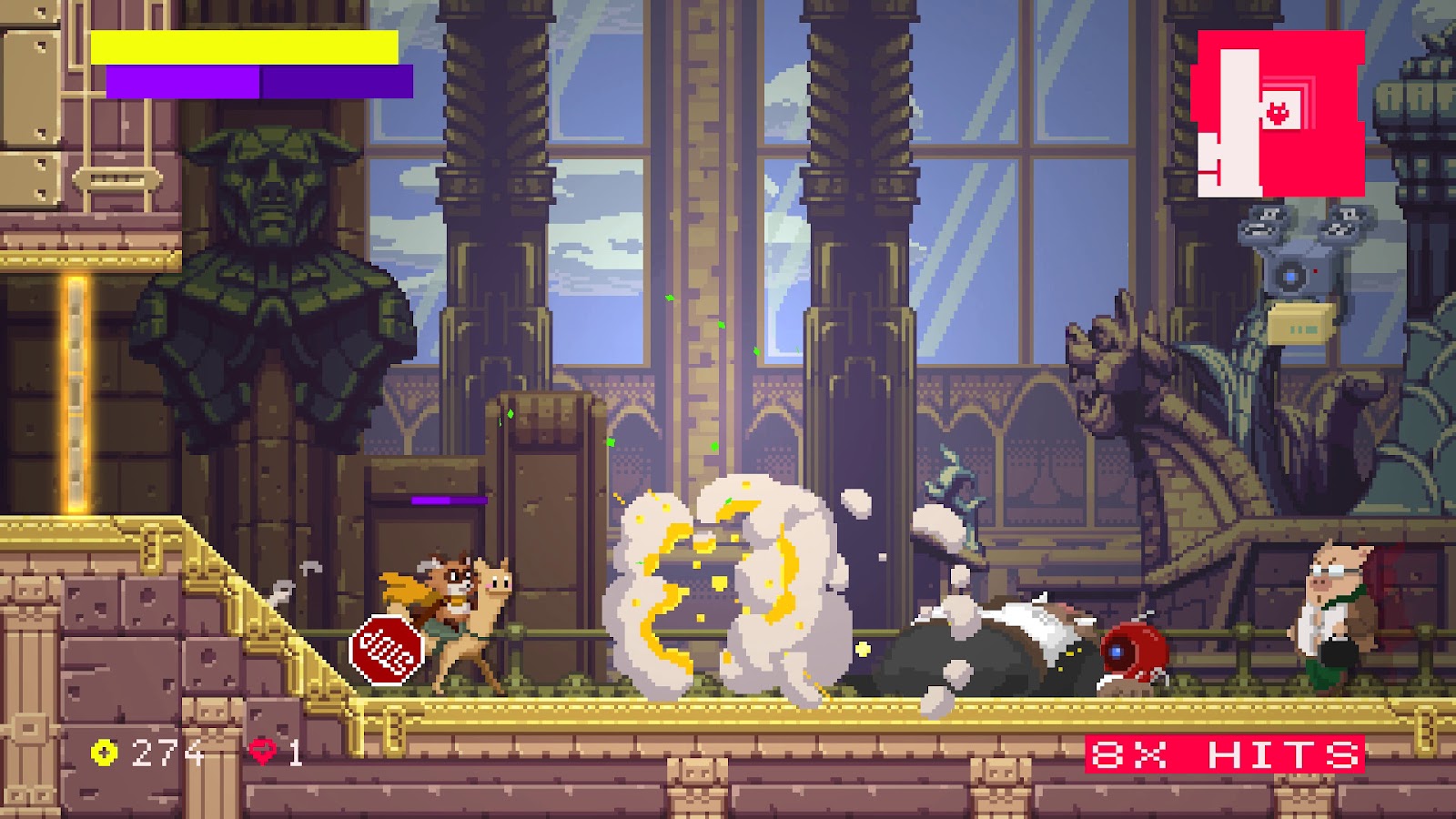
Strictly Limited Games, in partnership with Numskull Games and Undercoders are delighted to announce the upcoming limited physical release of Super Epic: The Entertainment War. This Metroidvania action-adventure with gorgeous pixel art has you join a raccoon and a llama on a quest to save video games as we know and love them, with tons of 2D combo-based combat and lots of humour, which can also be seen in the trailer

With its satirical take on video game conglomerates, abusive microtransactions, and the important preservation of video games, this indie gem is well-aligned with Strictly Limited Games’ values and a worthy addition to their Partner Store. The game is coming for Nintendo Switch and PlayStation 4 as a boxed Limited Edition and Special Limited Edition, with pre-orders kicking off on Thursday, March 10th, at 4PM CET, only at the Strictly Limited Games Partner Store and their partnered fan store Gamesrocket.

Fighting back against the regime!

About the game:

The year is 2084. After a series of mergers, buyouts and hostile takeovers, only one video game development company is left in the world: RegnantCorp. A huge enterprise run by greedy piggies. All the fun in video games has been replaced with intrusive addiction algorithms used to control people’s minds and behaviour. But a rebellion of game enthusiasts is fighting back, replacing RegnantCorp’s software with classic games. Following a distress signal, Tan Tan the raccoon and his valiant llama steed Ola prepare to take on RegnantCorp and confront the pigs…

The finest quality ingredients can be found in this Metroidvania! A large interconnected world to explore and unlock, a responsive customizable action-set for combat and an in-game economy-based upgrading system, with lots of weapons and abilities to unlock and enhance.

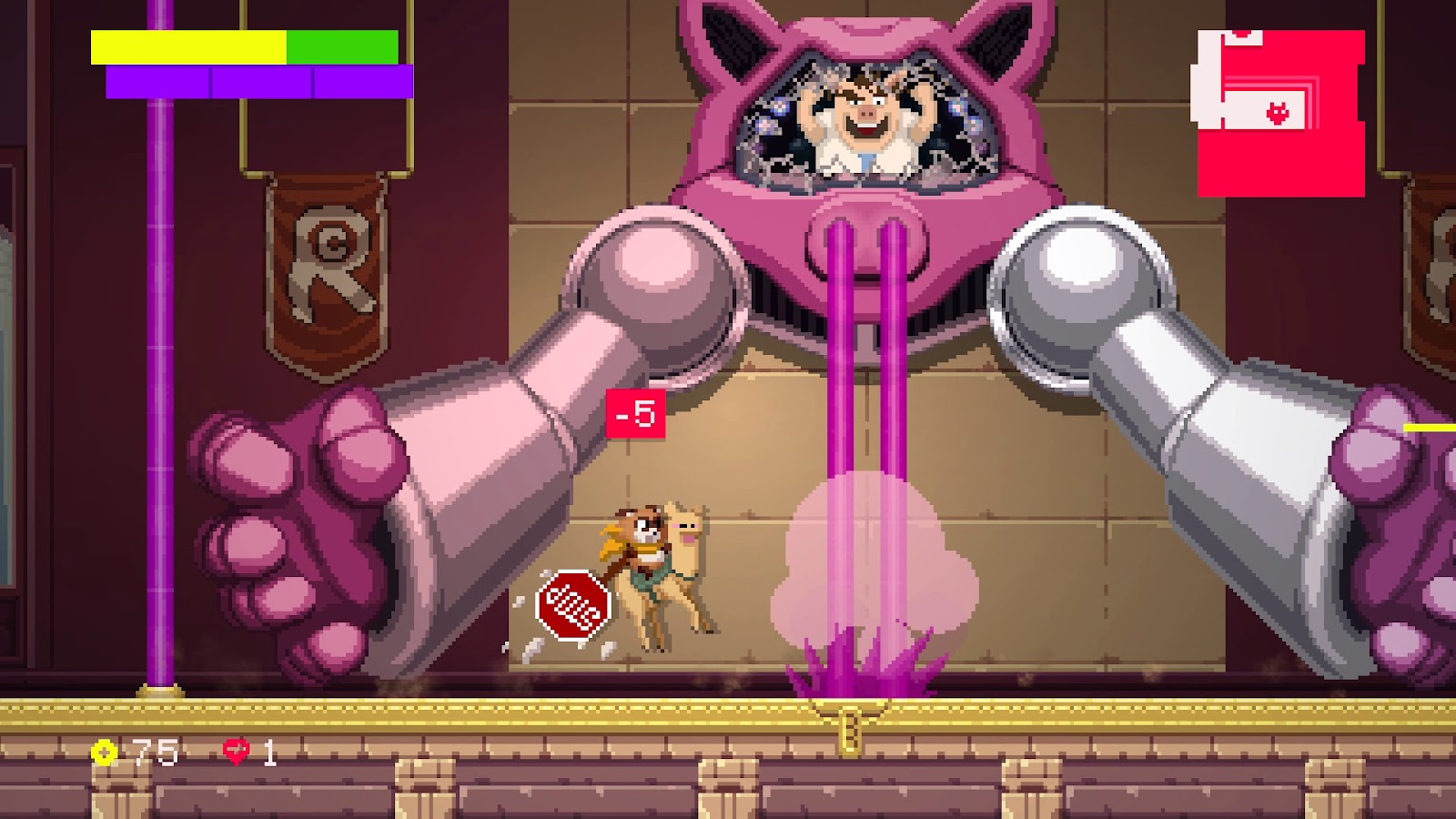
Cat boss attacks!

Features: 

  • Classic story-driven mode with handcrafted levels and multiple endings
  • Gorgeous 16/32 bit era cartoon sprites
  • RPG like weapon and armour upgrading system, with tons of items to collect and discover
  • Extensive combo-based combat system
  • An unlockable procedural “rogue-lite mode”
  • Fast-paced, non-linear exploration
  • Optional cross-media content

Strictly Limited Editions:

Strictly Limited Games is giving SuperEpic a definitive boxed release with two unique limited editions, available for pre-order exclusively via the Strictly Limited Games Partner Store and via Gamesrocket.

The Limited Edition is limited to only 500 individually numbered copies for Nintendo Switch and 300 for PlayStation 4, at a price of 29.99€, including a unique cover artwork and a colourful art booklet with game manual.

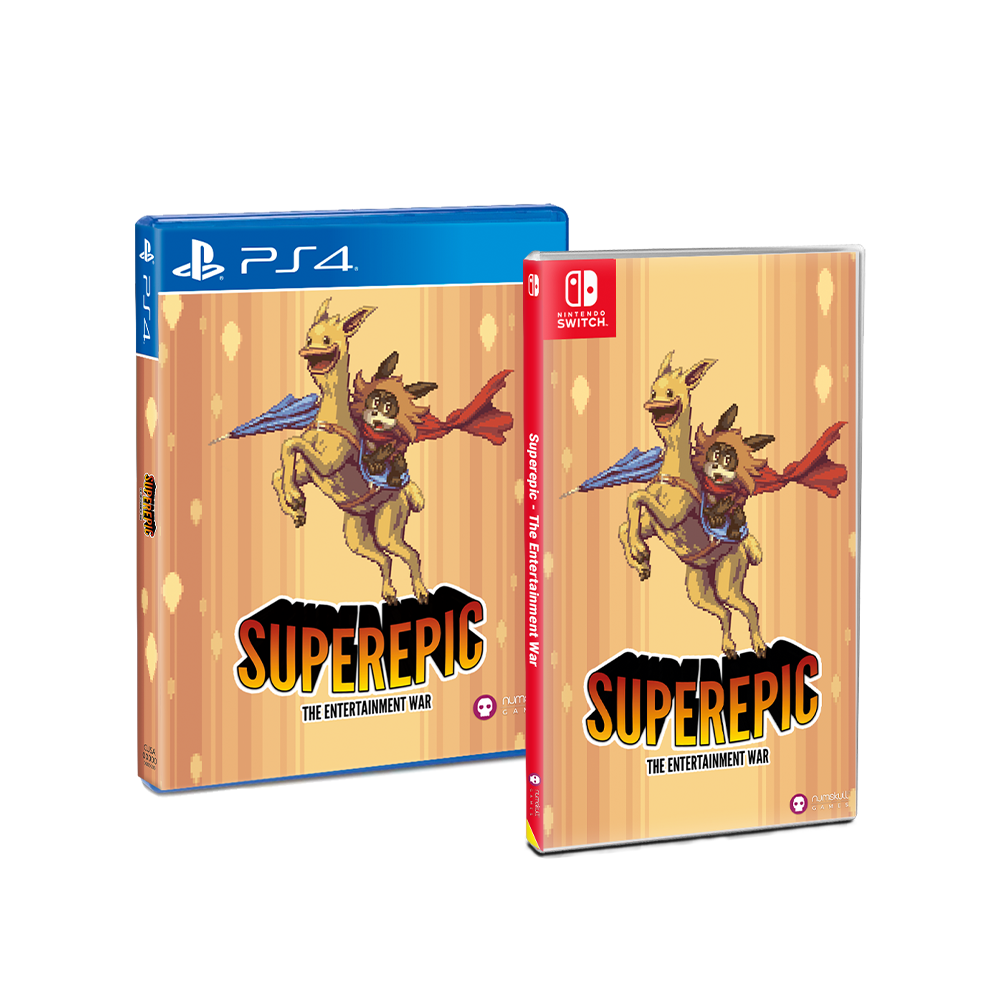
PS and NSW box art

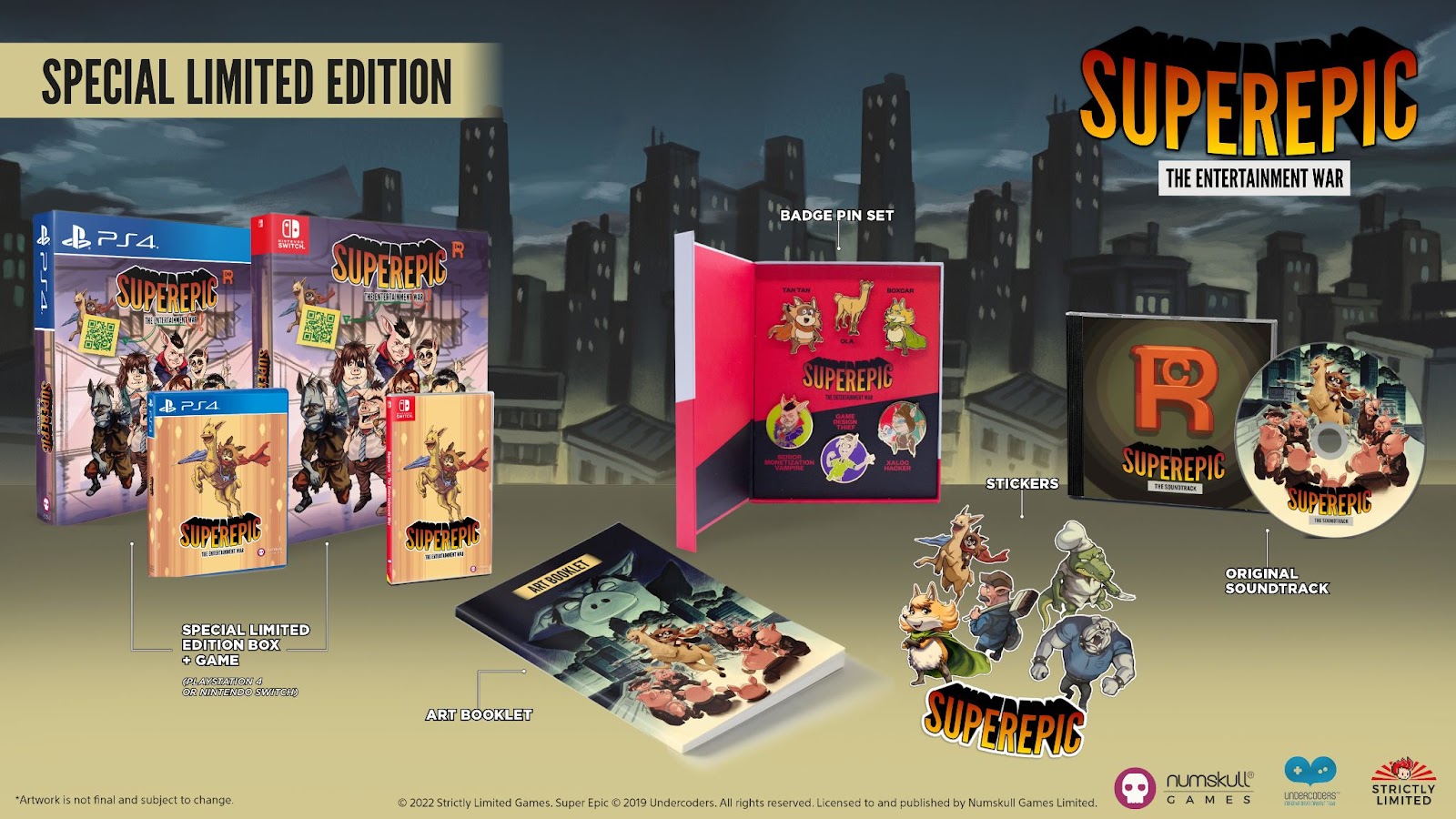
The Special Limited Edition is limited to 700 copies for Nintendo Switch and 500 for PlayStation 4, for 49.99€, including awesome additional collectibles: 

  • Enamel Character Pin Set with Magnetic Latch
  • Original Game Soundtrack
  • Die-cut Character Sticker Set
  • Art Booklet with Game Manual
  • Special Limited Edition Box
Special Limited Edition contents

Review: Splash Cars

Gaming is no longer considered a part-time hobby. With Esports and other competitive events, gamers can class themselves as professionals. Yet, though for many of us it’s a way of life, that doesn’t mean that we can’t enjoy the odd casual title. Splash Cars aims to take away the serious edge while allowing you some good old-fashioned arcade action.

Developed by Paper Bunker and Eastasiasoft Limited and published by the latter, this is a casual racing game. Set in an isometric world, you must use an array of cars to paint the environment. You’ll collect power-ups, grab coins, guzzle petrol, and avoid police. If you can do all these things, you may unlock new maps and extra vehicles.

Splash Cars lacks complexity.

Though I enjoy the simplicity of a casual arcade racer, I don’t always like the lack of complexity. However, Splash Cars’ repetitive and basic nature is endearing, and you won’t be able to stop playing. Furthermore, the developers have successfully incorporated both solo and cooperative action and this ensures that it appeals to a wider audience.

Like many casual titles, this one has no story. Consequently, this may disappoint you, but thanks to the fast-paced and grindy action, you won’t give it a second thought. The aim of the game is to drive your vehicle around an array of maps. Each of these locations has houses, parks, roads, and other redeeming features. As you drive, you leave a wake of colour in your path as you try to paint as much of the map as possible.

The world needs more colour, this is where Splash Cars excels.
Such a dull world!

It’s harder than it seems.

So the concept is quite straightforward, but it is harder than it seems! There are many things that prevent you from completing your job, and it quickly becomes a nightmare. You must avoid the attention of the police, who, for unknown reasons, wish to smash your car to pieces. Then there are the street cleaning vehicles that undo your work unless you activate them. Furthermore, there are tiny micro machines that do the same, and a long list of power-ups to gather.

Alongside the hectic hurdles that you must overcome, there is fuel and coins to collect. Each of your cars has a limited fuel tank, and it is your responsibility to keep it full for as long as possible. Consequently, if you run out, it’s game over, unless you wish to pay to continue. Trying to hunt down every fuel canister while being chased by the police is a tough but fun task. You’ll weave between buildings, dodge past trees, all while painting the ground beneath you.

Yet, you can quickly get the upper hand by collecting any of the power-ups you find. You’ll turn your vehicle into a magnet, shrink it, double its size, add a turbo booster, become a tank, or turn your pursuers into your allies. Subsequently, it was a wonderful twist to the gameplay that added much-needed depth. I adored the change in pace and the randomised nature of the gameplay.

Splash Cars has an array of vehicles to buy.
Which car will you pick?

Splash Cars looks dated.

I loved the simplicity of-the-art style and the isometric viewpoint. However, Splash Cars, unfortunately, looks dated. Its blocky imagery, basic sprites, and smaller maps lean towards the mobile gaming market. Now, this isn’t a problem, per se, but it will put off some players. I, though, enjoyed how each level sprung to life once the colour was added. Furthermore, the retro imagery reminded me of Micro Machines and other early racing titles. Unsurprisingly, I had no performance issues, and the game played as smoothly as expected.

Sadly, I wasn’t wowed by the audio either. The shrill noises are annoying and hurt your ears. Subsequently, I found it tough to play this while wearing headphones. This issue aside, I liked the upbeat music that added energy and a fun atmosphere to the proceedings. Though much of the audio wasn’t to my liking, it was serviceable and, as expected, for a basic arcade title.

Drive a tank in Splash Cars.
It’s tank time.

Why can’t you reverse?

The developer’s desire to keep things simple is applaudable. However, having no reverse gear in a racing game is an oversight in anyone’s book! Annoyingly, you’ll crash repeatedly and the police will keep ramming you. This wouldn’t be so bad if you could make a hasty retreat. Sadly, though, you must slowly turn while repeatedly crashing, and this becomes tedious. Other than this issue, the controls are responsive and easy to understand. With a straightforward tutorial to complete, you’ll have this mastered in no time.

Where Splash Cars excels is its longevity and replay value. Yes, it is a bit of a grind-fest, but it’s also enjoyable to unlock every car. Each stage has a ranking system of 1 to 3 stars, and these are awarded based on the percentage of paint you’ve dropped. Moreover, for every star you collect, a bonus is awarded. Whether it’s tickets to spend on a new paint job, coins, a new map, or the latest vehicle, there’s plenty to unlock. Alongside this, you’ll increase your fuel tank, the size of your paintbrush, reduce the speed of the cops, and so forth. Therefore, this simple title offers a lot more than first meets the eye.

Splash Cars is simple but addictive.

There was always a risk that Splash Cars wouldn’t offer enough variety. Fortunately, though, this concern is quickly forgotten. Yes, the action is basic, but damn, it is so addictive that you won’t care. You’ll adore racing around every level while trying to avoid the Popo. With many elements against you, you’ll love successfully painting every level and unlocking new and improved vehicles. It is an excellent casual title that can be played solo and with friends between other games. Therefore, I recommend you to buy it here! Will you paint every town, or will the Rozzers stop your fun?

Review: Farm Manager 2022

0

Any Gamers out there who love and enjoy the farming lifestyle, but also would like full control of every part of the farm? Then Farm Manager 2022 is an excellent game to play! It takes the ordinary farming life up a notch by letting you work at a higher position in the game, and one thing you won’t have to deal with is being the worker doing all those chores. Instead, you will be the leader and to be more exact the boss. Everything that goes on the farm is all up to you, as you are the decision-maker in this realistic farming game.

That’s right, you’ll not be a traditional farmer who takes care of the chores like taking care of the farm animals, keeping up with constantly checking and prepping for new crops to grow, adding new buildings, new employees and so much more. All this rather than a regular farmer job like many farming games. It takes you a step higher where you’re in charge and really gets the true feel of how it is to be a farm manager for real!

How will it Feel to be a Farm Manager?

First off, I’d like to say that sometimes I can tell right from the beginning how good the game will be. Especially for a simulator, just by the game’s graphics, how well the character’s design has been done, and what personal features you may have control over. Specifically, the way they react and utilize everything on the game; realistic animation. One last thing I factor in is that if it includes, which by the way is a big part of the game and how fun it may be for me to play, is understanding the mapping on the controller.

I always love simulator games when it’s easier to know how to move the player, interact with objects other people, animals, or many other features required to know to play the game. In this case, it’s knowing just how to access and add new things to the farm as well as keep an eye on the workers. It’s a bit trickier, I won’t lie. However, a farm manager needs you to work from above and make sure to take care of tasks like buying, selling, and making sure to keep checking on everything. So in some way, it feels like a tycoon-style game and it is really a good idea to take the tutorial stage as it’s super helpful and if you are still a bit lost, take it again and again. Just till you get an idea on how to play.

Consequently, I will tell you my honest feeling about my first time playing and the many other experiences that I’ve felt while playing the game. To clarify one thing, I’m still playing this game as it’s not a short game and can go on forever. Especially from the different modes like the campaign, scenario, or the free mode. They all give the player like myself, a chance to build and change up each gameplay. So let me tell you about the results of my gameplay, which isn’t all great, but there are plenty of positive features, especially the design of the game and its challenges.

Short Example of Farm Manager 2022 Campaign in action

To start, this game had me a bit on edge it would be too difficult to control or know how to play the game correctly, but honestly it wasn’t as bad as I thought. Yes, it’s challenging at the beginning, yet it got easier after the tutorial stage, by it teaching me how to manage and utilize each component in the game as a farming manager. Especially, when you finally have plenty of things on the farm going at once. It really isn’t a simple walk in the park! So for those not too experienced with simulator games that feel as close to reality, it may take time to do certain jobs, and work with the mapped-out controller’s buttons.

A few assignments as the manager which can get tricky to keep tabs on is not just a few, but many of things like taking care of the many employees you hired and assigned as well as have to pay, keeping an eye on the animals you have on the farm, adding more buildings, the change of the weather, planting crops and making sure they are cared for daily, building a fund to use by selling, and the main goal, keeping everything from becoming a disaster and just run smoothly. Even I felt as a manager, it must be so much easier to just watch over others, but then reality hits and I realized it can be still just as difficult as an employee or a single farmer.

Now a few other things that I do feel were great with this game are the graphics, the music, the weather being so realistic in its ability to change from sunny to rainy, and one great love for the speed adjustment button. The speed adjustment will allow you to go from pause to normal speed, faster and feastest. So if one has to wait for something to be delivered, a building to be built, and even having crops grow, this button really speeds things up and allows you to get to the gameplay way sooner. Even the target goals you want to accomplish quicker.

Nevertheless, it all couldn’t be just as wonderful, there are a few parts that the game made me feel curious about why it was done a certain way or missing something to make it perfect. So here I go! There are a few slight problems I came across, not as many issues that will make anyone not want to play the game. Since they are mainly my own thoughts I felt about the game, just as what is missing or had been a bit difficult to play the game easily.

First off, the words on the screen tend to be a bit smaller than expected. I had to do a bit of squinting to read the TV screen. However, it could be that my TV is smaller than many may have and it also could be because the text is a bit long, and would be hard to fit it all on the screen without covering up the game in the background. I also had to move closer to the TV or skip some of the text to get a move on playing the game.

Also, I did feel a little curious why the group of employees the creators of the game only made them one race. There are females and males, but none of them are different in ethnic groups. They all are just white men and women. Is this to depict that farmers can’t be from any other culture or ethnic background? I doubt that, but the game really seems to make that a bit unfair to see other types in the employee choosing department.

To Sum it All Up

There is so much you can do in this game. It’s very well designed and the graphics are outstanding as well as the disasters and reality of how things move, and the workers work. I love when a game is so realistic in appearance and feels like the real thing, verse ones that are too easy or feel a bit like it’s in a beta stage of completion. Thankfully this game is perfect and one I’d honestly be playing on a daily basis!

Lastly, before I conclude this review. I did have that question, which I asked above about any gamer who loves the farm lifestyle. Well if this was a yes and you feel you have what it takes to be a manager, then this is the game for you! It won’t let you down, especially since Farm Manager 2022 has more than just the traditional barnyard animals or farming styles that many other games may not include. Such as having fun by adding fish, ostriches, or even many other animals to your farm. This game won’t just be challenging fun, but feel like a real-lifestyle manager job.

Review: The Mooseman

My video review with footage captured on my Xbox Series X, enjoy!

Mythology is a beautiful, yet bizarre thing. I’m no aficionado, but I enjoy it because of the wonderful stories and deep lore. Therefore, when a game utilises it at its core, I am keen to dive right in. The Mooseman is a strange, but striking title that’ll capture your attention from the opening gambit.

Developed by Morteshka and published by Sometimes You, this is a single-player adventure title. It uses a distinct monochromatic palette and relies heavily on tribal imagery. Moreover, it aims to educate its fanbase with knowledgeable titbits and real to life artefacts.

The Mooseman is confusing but intriguing. 

With mythology at the heart of everything The Mooseman offers, I found the action to be a little confusing. However, this doesn’t detract from its fascinating concept or its wonderful style. Instead, it compiles its ideas in a surreal and dreamlike fashion. This didn’t come as a shock to me, as many of the fables have supernatural or religious undertones. If you decide to take this on, you’ll have to go with the flow. Consequently, it’s a wild ride full of drama, weird imagery, and unusual creatures.

The plot is based on the mythology of Komi as well as other Finno-Ugric peoples. The action utilises three key characters, The Mooseman, the shaman, and one of the sons of Yen (the creator God). The latter character must travel to the underworld to collect Shondi (the sun). Subsequently, if he fails his task, the world will be eternally cold. With many monsters to overcome, supernatural powers to utilise, and minor puzzles to solve, this is both beautiful and challenging.

The Mooseman allows you to change your form.
Can you find a way through with the eagle?

An excellent blend of mechanics. 

Where The Mooseman excels is its wonderful blend of mechanics. Moreover, the drip-fed elements prevent the action from becoming overwhelming. As you start your journey, you’ll use basic platforming controls and nothing else. This quickly evolves as you find a mask that enables you to see images from a supernatural plain. This special power allows you to solve problems, reach new heights and control surrounding beings. Furthermore, its brilliant use of monochromatic imagery adds to the striking nature of the game. If you put on your mask, you’ll move mountains with a turtle, or drag logs with a snake. It’s very odd but strangely alluring.

Furthermore, once you collect the Shondi from the depths, it acts as a shield. This illuminating presence protects the user from one hit only! If you are struck, the power diminishes and you must activate it again. Though it was easy enough to do, this adds a layer of complexity to the gameplay. You must time the use of this ability to protect yourself from relentless flying beasts. Consequently, if you don’t, you’ll die repeatedly. I adored the simplicity of the approach, as it allowed you to focus on the educational elements. On your journey, you’ll find artefacts that contain in-depth information about tribal cultures and the fables you are experiencing.

The Mooseman has an array of simple puzzles.
Will you solve every puzzle?

The Mooseman is stunning. 

The developers focused on some interesting mechanics, but I loved their artistic approach. The side-scrolling nature of the gameplay, combined with the stunning tribal imagery, was amazing. Furthermore, the contrasting monochromatic imagery worked beautifully with the surreal theme. It could have been easy for Morteshka to dip into the realms of absurdity. Instead, however, they focused on the wonderful myths and awe-inspiring artefacts of the Finno-Ugric people. Alongside this, you’ll experience some creepy and weird monsters and some unusual but interesting landscapes. The standout level has to be the underwater area where the hero is chased by a fish. The scenery is utilised for cover as you dodge the fish’s attention. It was particularly spectacular thanks to the combination of every mechanic and the horrendous nature of the aquatic enemy.

Each scene was dramatic and was enhanced by the excellent audio. With a blend of haunting tunes and airy sounds, it’s hard to dislike what you hear. Unsurprisingly, clichéd tribal music can be heard throughout, which may annoy some of you. I, however, didn’t mind it as it suited the theme without being OTT. What I also enjoyed, was the excellent environmental sounds. There was nothing better than listening to footsteps in the snow, the sound of the wind blowing, or the splash of water. The realistic noises add to the experience while transporting you to each location.

The Mooseman is full of real to life artefacts.
So many artefacts to find.

Simple to play. 

With an array of abilities to learn, it could have been complicated. Luckily, though, its basic approach is simple to understand. Using your special abilities is easy, and shooting your bow takes little practice. Therefore, this can be mastered with ease. Furthermore, the responsive controls help with the platforming moments. The puzzle elements sadly won’t test you, but they are interesting and enjoyable nonetheless. 

With many artefacts to find, there is both longevity and replay value for completionists. Moreover, any keen historians will be interested in the story behind each trinket you find. Sadly, though, the main body of the game is minuscule! This is where The Mooseman falls short. I was disappointed that the action ended prematurely, as I was desperate for more. With only 2 hours’ worth of story, you will be left wanting! This being said, its quality makes it great value for money.

The Mooseman is brief but brilliant. 

Though its mediocre length left me disappointed, I still adore it. It’s hard not to love every element on offer, as they are all brilliant. The strange but alluring story is captivating, and this is supported by the dramatic audio. Consequently, it’s touching, unusual, and will get under your skin. Therefore, I can’t help but recommend this wonderful indie title. Will you discover every artefact hidden within The Mooseman? Unlock your powers, explore the strange world, and save humanity from the eternal cold. 

Review: Clouzy

The world is a hectic and fast-paced place. No one has time for anyone else, and you can easily feel lost. Subsequently, it’s tempting to drop what you are doing and search for a simpler existence. I think this is what makes games like Harvest Moon and Animal Crossing oh so appealing. They sell a vision of a wonderfully relaxed lifestyle in a cute and colourful way. Therefore, I’m never shocked when I see new titles that are heavily influenced by their magic. Clouzy is one such game that aims to win over its audience with an unusual theme and sickly cute graphics.

Developed by Tinymoon and published by Freedom Games, this is an adventure farming simulation. It offers stress-free action and a never-ending list of quests to complete. Furthermore, there are some simple puzzles to overcome, and a loose story to enjoy. I loved the freedom to explore the moderate-sized map and the unusual inclusion of pet clouds. It won’t be for everyone, but fans of the genre are bound to fall for its unusual charms.

Clouzy is bizarre. 

I’m all for a strange theme and unusual happenings, but Clouzy is just bizarre. The game opens like many of its peers. You are given a basic tutorial and then you set to work. So far, so good, that is until you are introduced to your first cloud. Now, I haven’t got anything against these rain carriers, per se. But in this setting, it’s just odd. You are tasked with cleaning, healing, and appeasing each one. You’ll have to cure illnesses, reduce their anger, make them less nervous, and so forth. The cures are found around the island or by concocting an array of meals or drinks. As I said, it’s bloody bizarre.

You control a farmer who runs a smallholding in the middle of a quaint archipelago. This minuscule piece of land must be upgraded and improved to complete every quest on offer. Like Harvest Moon or Animal Crossing, you must help the surrounding islanders by completing jobs, finding items, and exploring ruins and dungeons. However, unlike the aforementioned titles, there is a distinct lack of depth within the progression elements. Yes, you can upgrade equipment, get new recipes, and more, but it quickly plateaus. Consequently, once you reach the top and you exhaust the main storyline, there is little else to do.

Like Harvest Moon, Clouzy has a cosy house to rest in.
Take the time to relax.

Abilities and crafting. 

Where Clouzy excels is its drip-fed abilities and crafting elements. The adventure aspect of the gameplay expands as your pet learns new skills. Subsequently, the small world opens up once you complete puzzles and find dramatic landmarks. It was wonderful to revisit old areas as you were empowered with the ability to jump, could overcome cold temperatures and more. The larger world had plenty of collectables to find and an array of new ingredients to harvest. Moreover, you’ll discover chests with costumes, furniture, and special items. 

The crafting mechanic forms a key component of the gameplay as every task relies on recipes, new equipment, and different ingredients. Consequently, you had to scavenge an awful lot of goods if you wished to complete each task. Cooking foods and blending drinks were completed through a simple mini-game, and this was a little disappointing. I wish the developers had made this more complex to increase the challenge. Sadly, this wasn’t to be and as such, you’ll tire of it quickly. 

Can you heal every cloud in Clouzy?
I wonder what a sick cloud would unleash?

Repetitive gameplay and many bugs. 

Clouzy undoes much of its greatness because of its repetitive and buggy gameplay. Sadly, after a few hours, it becomes pretty tiresome. Unlike its peers, there is a lack of custom options and this reduces your sense of ownership. As you are searching and finding new items, it feels exciting and enjoyable. However, a lack of direction or hints stagnates progress very quickly. I’m not one for hand-holding, but absolutely no indication of what to do was a poor choice. Subsequently, I wasted hours expecting the quests to guide me, whereas all I had to do was to explore to stumble upon the solution.

This is compounded further because of the long list of bugs I encountered. Fortunately, most were annoying and not game-breaking, but they ruined the finish, nonetheless. First, I experienced the cinematic replaying every time I reloaded the game. Second, the tutorial repeated itself numerous times even though I didn’t initiate it. Third, my pet would become stuck on objects, ignore me completely, or I’d be blocked by its presence. Lastly, clouds in the pet area would simply vanish, never to be seen again. As mentioned, these weren’t game-breaking, but they were poor nonetheless.

Clouzy is cute as a button. 

The developers have pushed the envelope to create a sickly sweet title. Subsequently, Clouzy is as cute as a button. Your character is larger than life and has soft doe eyes. This adds to the innocence and childlike qualities the genre is renowned for. Furthermore, the clouds have a unique appearance that matches their personality and ailments. I loved the attention to detail and the vivid colour palette. It was magical to explore the variety of landscapes because of the mellow approach and bizarre imagery.

The relaxed and calm atmosphere is enhanced by the soft piano music. Slow songs match each location you visit and play on a continual loop. This repetitive approach created a familiar and serene experience, but it was also tiresome. Unfortunately, Tinymoon got this wrong as their delightful and wholesome soundtrack quickly becomes tedious.

Clouzy demands that your pets learn new abilities.
Who wouldn’t want a talented pet?

Messed up controls. 

Clouzy gives the impression of a game designed for PC. Sadly, this is because the controls are clunky and cumbersome when using a controller. Attempting to move items or collect objects was challenging and not very user-friendly. Annoyingly, if you had stacks of items to transfer, the default setting is all or nothing. Therefore, you’ll be unnecessarily moving your inventory back and forth during every interaction. This issue detracts from the crafting mechanics and leads to unwanted frustration.

The genre is renowned for sucking people in for hours. Clouzy, on the other hand, will not! Yes, there is plenty to do, a reasonable amount of recipes to cook and unlimited tasks, but these won’t test you. Sadly, this won’t grab your attention and this affects both the reply value and longevity.

Clouzy could have been great.

From the opening, you could see Clouzy’s potential. The developers pushed for a cute and laidback adventure and that’s what you get. Sadly, however, it never really develops, and this impacts its appeal and depth. Despite its shortcomings, I enjoyed it casually and recommend that you buy it here! Can you nurse each cloud back to full health? Scout the landscape, find ingredients and complete each task you face. 

Review: Atelier Sophie 2: The Alchemist of the Mysterious Dream

We Are Legion

Atelier Sophie 2: The Alchemist of the Mysterious Dream is the latest entry in a long-running series revolving around the fantastical and alchemical. When I say long-running, that’s no exaggeration. With 22 entries across 25 years, the Atelier series is a veritable veteran. 

As a newcomer to the series, I initially had no clue about its tenure in the JRPG sphere, its dedicated fan base, or how it managed to retain both across two decades. However, after spending time in its world, with its characters, and behind a cauldron; I get it. 

The Story So Far

Atelier Sophie 2 begins with Sophie, who you may not be surprised to find out is the protagonist, and her mentor/friend Plachta leaving town. They’re leaving Sophie’s home with two goals. The first is to get Sophie certified as a licensed alchemist. The second is to restore Plachta’s human body.  

Plachta was once an amnesiac talking book. She helped Sophie learn the art of alchemy, which in turn helped her regain her memories, and gain a life-sized doll that she could use as a body. Clearly, there’s some wild stuff, and backstory we’re missing here. Luckily Atelier Sophie 2 provides a recap of the previous title which you can watch at any time to brush up on the plot. Or if you’re like me, to get a better idea of what’s going on. 

Sophie and Plachta’s journey is interrupted when a vortex appears out of nowhere and whisks them away to Erde Wiege. A world created by the goddess of dreams, Elvira. Usually, she invites people whose dreams interest her. She offers for them to live outside of space and time in order to realise their life’s goal.  Our heroes, however, never even met the goddess and Sophie wakes up in this world; Plachta nowhere to be found. So she begins a new journey to find her friend and figure out how she got here.

The story is fairly interesting in premise, but I never really found myself fully engrossed. It came across as very middle of the road, with few standout moments, lore, or characters. This can be a bit of an issue considering the amount of time you’ll spend here. It’s a long journey that will provide the player with an ample amount of playtime, around 50-60 hours if we include some side quests. There are a lot of people to meet, places to explore, monsters to fight, and of course a lot of alchemy to practise. This ended up being the saving grace for the game. Since alchemy is wonderfully executed.

When Will It End?

The abundance doesn’t end there though. Like some twisted rite of passage, this title barrages you relentlessly with tutorials. Many hours into your playthrough there’ll still be tutorials. You may think you’ve safely evaded the last of them. To your dismay, another tutorial will be slinking, cloaked in the shadows for that perfect moment when your guard is down. It got a bit ridiculous. How many mechanics can one game have? At times I seriously wondered if there’ll be a tutorial for the final boss. I guess this is what happens when you’ve had 22 entries to add systems and refine your formula. Thankfully for players returning to the series, tutorials can be skipped. This is handy when mechanics are familiar, or if you’re a rebel who wants to play it all with no help. 

Although I have to admit, these tutorials are far from unnecessary. Atelier Sophie 2 is a robust, and sophisticated title in every positive sense of the words. Its main draw, alchemy, is so fully realised it becomes more than a simple crafting mechanic. In fact, the alchemy gameplay alone could be a set as a stand-alone game. 

Making the Ordinary, Extraordinary

Like many crafting systems you may have encountered, you combine items to create a new one. However, here things are taken leaps and bounds further. Every item in this game has its own set of stats. These include a quality rating, an element (fire, wind, etc.), and traits (which are like buffs for your synthesised item). These stats are all taken into account when using them to make something new. This allows you to make an insane amount of different variations of the same item. As well as being able to synthesise higher quality versions as you improve your alchemy, materials used, and understanding of mechanics.

Once you select the ingredients required for a recipe, you start the alchemical process through a 5×5 screen where you place and group your items by elements. Your placement of elements is vital, as linking them in specific ways increases their power and quality. It becomes a kind of puzzle game, where you need to think a bit about the placement of your ingredients. 

Atelier Sophie 2’s alchemy is really good. It’s complex without being convoluted or impossible to grasp. It will, however, take time to fully master. In this way, you step into the shoes of an alchemist. Knowledge comes through trial and error. Making better quality items requires you to deepen your knowledge of the systems that govern alchemy. There’s also an auto-synthesis option, which arranges ingredients on your behalf, saving time when you aren’t concerned about quality and traits. However, this takes all the fun out of the system. Doing it yourself will often be more rewarding, both in terms of gameplay and the quality of the things you create. 

Stock Up & Square Up

In order to get the ingredients needed to learn more recipes, and improve the quality of your work. You need to go out and explore the world. It’s positively overflowing with items. Some can be simply picked up by hand or with special tools you’ll have to craft like fishing rods, scythes, and hammers. Other items are gained through more combative means. While Erde Wiege is a dream world, it’s not without its share of danger. There are all manner of monsters and beasts you’ll be trading blows with, from rabbits to dragons.

Combat in this title is turn-based. You and your team of friends and fighters engage enemies through basic attacks, flashy and defensive skills, and employ a variety of items you’ve crafted to give you the upper or a helping hand. There are also some tag-team attacks that allow you to use your skills a bit more liberally, without using up MP. I had little to complain about with regards to the combat. Yet at the same time, little to applaud. It’s simply effective in what it sets out to do. It’s responsive, visually appealing, and satisfying enough. However, it’s really nothing you haven’t seen before

Sights, Sounds & Cessation

Visually, Atelier Sophie 2 also left a little to be desired. It’s standard fare JRPG character and world design. Especially the town of Roytale, which is so much like the countless other towns, you’ve seen just like it. Erde Wiege has a pretty sheen to everything and makes good use of colour. The world definitely feels dreamlike in its employment of light and saturation. But I feel it could have done more to add a more surreal element to the dream world Sophie finds herself in. 

I may not have been all that impressed by the world design, but the music that accompanies exploration definitely caught my ear. It’s a mostly light, uplifting, and ethereal soundtrack that makes great use of woodwinds, strings and percussion. It’s got an amazingly positive tone that is sure to put you in a great mood while exploring and creating. I often caught myself whistling along, which is always a good sign.

While this latest entry in the Atelier Series may not excel in every mechanic it employs, it has clearly mastered one. Its complete realisation of the alchemy gameplay is a consistent pleasure to play. Its shortcomings minor and major in its visuals, story, or combat are routinely overshadowed by the satisfaction of improving your alchemical skills. Provided you know what you’re getting into, you’re sure to enjoy your time stirring the pot.

Review: Tormented Souls

Tormented Souls is an homage to the great survival horror games of old. If you’ve been missing the classics like early Resident Evil and Alone in the Dark this might be the game you’re looking for. The game begins with Caroline Walker receiving a strange letter from Winterlake Hospital about some twins. Bizarrely she decides to go investigate the strange, abandoned mansion turned hospital. Caroline arrives and is knocked out, awakening naked in a bathtub. The game unnecessarily indulges in some gratuitous nudity at this point with a lengthy cutscene.

Caroline in Tormented Souls when she receives the mysterious letter

The hospital is empty save for the creepiest priest to ever appear in a videogame and an array of creatures; mixed human and machine grotesque monsters, that will attack when they see you. From here the plot is mostly predictable. Especially if you’re familiar with the survival horror genre of games. While this is a little disappointing; the real joy of the game is the journey, exploring the dark and creepy hospital.

You can see the care and attention the developers put into this environment. It has an eerie blend of Victorian gothic architecture and modern hospital facilities long abandoned. This is well showcased with the fixed camera the game uses. The camera will track Caroline as she walks around from a variety of angles. Some more cinematic than I expected. This not only added to the tensions and scare factor when you literally couldn’t see around the corner, but it certainly gives it flair.  

Controls and Combat

The controls can be frustrating at times because they change with the camera angles. In addition, you get some very traditional ‘cursor moving’ point-and-click style interaction. The more you explore and interact with the environment the more you get used to it; but there is a learning curve there before navigating feels comfortable. Saving the game requires finding a videotape and going to a save point in the game’s world; this only increases the terror as if you die, you restart the game unless you’ve done this. As you would expect with a survival horror game Tormented Souls requires a lot of backtracking as you learn more, obtain more useful items and need to take different paths to new areas. The hospital is, however, so creepy that this never felt anything other than uneasy as you wonder what might leap out at you.

Monsters are grotesque abominations in Tormented Souls

Combat is simple in this game, and in all honesty feels like an afterthought. Those creatures while grotesque and scary looking are all similar in how they attack you. Similarly, there are no real bosses to speak of so combat becomes quickly forgettable next to exploration and puzzle solving.

Puzzles Galore

The puzzles is where Tormented Souls really stands out though. They are the perfect balance of challenge without requiring a notebook and pen next to you to write down everything. This felt spot on when playing and can be really satisfying when you do solve it without becoming frustrating. Lighting also plays a key part in this, especially in the beginning when all you have is a lighter; if you remain in the shadows too long you die resulting in a game over. Combining this with creatures or other blockades as another layer of challenge to navigating around the creepy hospital.

In Tormented Souls Caroline can open cupboards to get items or information.
Explore everything in Tormented Souls, puzzles and useful information is everywhere

Save for a few minor graphical glitches my biggest gripe with the game is the cheesy and over-the-top voice acting. In places it really does detract from the survival horror nature of Tormented Souls.

Should I buy Tormented Souls?

As an indie game Tormented Souls is never going to reach Bloodborne or Resident Evil level of polish but that’s ok. Despite its lower end graphics (compared to the latest titles on current generation, and even last generation consoles) it holds up. It holds up because it plays on that nostalgia for the survival horror games of old. You will be caught out by the shock scares and general creepiness while solving some well crafted puzzles in a stunning envrionment.

Tormented Souls is a solid play… but maybe leave the lights on!

Caroline walking in Tormented Souls
The cinematic camera work in Tormented Souls (PS5) is stunning

Review: The Life and Suffering of Sir Brante

The Life and Suffering of Sir Brante is a title that caught me unaware. Subsequently, it was akin to that moment when you binge-watch a random TV series. As such, I was hooked on its gruesome ways, melancholy narrative, and its array of interesting characters. Its strange approach got under my skin and I couldn’t put it down.

Developed by Sever and published by 101XP, this is a narrative-driven RPG set in a grim, dark world. The story is full of life-changing choices, colourful moments, and heart-wrenching decisions. You’ll decide who lives and dies, how your life unfolds, and if you uphold your family honour. Subsequently, there are plenty of what-ifs, lots of double guessing, and many bad decisions.

The Life and Suffering of Sir Brante is tough to stomach.

The Life and Suffering of Sir Brante blends an RPG stat system with the mechanics of a visual novel. As such, you experience a game that is similar to an Ian Livingstone novel. Consequently, every choice you make must be well-considered, as it has an impact. Your decisions will affect your character, the surrounding people, and the ebb and flow of the story. It makes the gameplay incredibly deep and leaves you considering your choices. 

The game opens in the twilight of Sir Brante’s life. It explains that his existence has been a roller-coaster of decisions. From this point, the action rolls back to chapter one, where his life began. From here, you will experience poignant moments of his life and make each heart-wrenching choice. It sounds easy, but it never is! You’ll decide between friendship, love, family, and work. You must consider what is important to you, as certain life events depend on the decisions you make.

The Life and Suffering of Sir Brante is full of difficult decisions.
Will you take the nobleman’s path?

Every choice has an indelible mark. 

Each stage of the game impacts the following chapter. Consequently, it affects the relationships you form and the path you focus on. You are a lowborn, a person of no status and, as such, your lot in life is misery and servitude. However, your father is a noble of the sword, a man who earned his title through dedication and hard work as a judge. This path is open to you if you wish, or you can join the clergy, become a soldier, or have many other options. Whatever you pick has its merits, but it also limits your interactions with your friends and family. Therefore, choose wisely as you will not be able to change your mind.

The action relies heavily on text, dramatic audio, and a melancholy atmosphere. As such, you will spend your time devouring words, considering your approach, and forging your path in life. Sadly, positivity is limited and you’ll wonder why the world is so depressing. Furthermore, many of the ideas are formed from dated stereotypes and this can be uncomfortable to experience. Moreover, there are religious undertones and a distinct divide in class. At the top of the tree are the Arkanians, then the nobles, and finally the lowborn. You must know your place and remember your lot. If you step out of line, you will be punished! Your family name will be damaged, your wealth diminished, and death is a real possibility.

Stats and true death!

Though the story plays out like a visual novel, the progress is dependent on an RPG stat system. Every stage of your existence has specific attributes that have a bearing on later life. You’ll build relationships and forge a personality that pushes you towards a certain career. Your decisions will add or detract from your will, power, career, wealth, reputation, and more. Subsequently, this will form your character and make you the man you are in later life. It was thoroughly interesting to alter your career, friendships, and standing with others. You can be a righteous man, a person of limited means, or fulfil your potential to become nobility. No path is right or wrong, and every option is filled with intrigue and interesting outcomes.

Finally, The Life and Suffering of Sir Brante has a sombre outlook on death. Each person that resides in the Arkanian empire must abide by the law and understand their place. However, if they don’t, they may experience one of their 3 lesser deaths. These scarring events remind people of their worth, while giving them the chance to redeem themselves. Yet death can be permanent! If someone receives 4 lesser deaths, they cannot be reborn. More damming, though, is the punishment for heinous acts. If someone is guilty of a serious crime, or they are struck down by an Arkanian, they cease to exist. This is known as a true death and too many wrong choices will prematurely end Sir Brante’s life.

The Life and Suffering of Sir Brante is all about balancing the stats.
One of the many submenus

The Life and Suffering of Sir Brante is sombre and melancholy. 

When a game relies heavily on text and little else, it has a risk of becoming stale. Luckily, however, The Life and Suffering of Sir Brante uses pictures and a brilliant plot to add drama. The wonderful sepia tones, excellent portraits, and delightfully dull colour palette add to the sombre atmosphere. Furthermore, I adored the animation of the pages moving, the simplicity of the imagery, and the striking scenes.

The devilishly dark story is enhanced by a wonderfully folksy soundtrack. The dramatic and wholesome music adds to the damming atmosphere. Moreover, its mixture of slow and upbeat songs beautifully represents the changes in tone and the occasional happy moments. To add to this, the realistic sound effects make the basic animation pop. Consequently, each simple scene is full of energy and this was great to see and hear.

The Life and Suffering of Sir Brante deals with life and death.
Where it all began.

A great UI. 

Unlike traditional visual novels, The Life and Suffering of Sir Brante is more complex. However, this doesn’t make it hard to play or difficult to master. No, thanks to its great tutorial and excellent UI, you can handle every element with ease. You’ll witness your standing in the community, your position at work, friendships, character traits, and more. It was brilliantly hidden behind submenus and this doesn’t detract from the story. Furthermore, the responsive and well-laid out controls allow you to focus on the action and nothing else. 

Thanks to the many life choices, there are multiple paths you can take. Therefore, players can expect an array of endings and many unique experiences. Consequently, this adds to the replay value and longevity. Each playthrough lasts around 9 hours of sombre and heartbreaking endeavours. Yet, this didn’t put me off and I couldn’t wait to see what another path would bring. Its deceptively simple gameplay makes it moreish and addictive.

The Life and Suffering of Sir Brante is brilliant. 

This was never on my radar, but I’m glad I played The Life and Suffering of Sir Brante! Yes, it depressed the hell out of me, but it was oddly enjoyable. I loved watching relationships blossom and how my choices impacted every aspect of the surrounding world. It was brilliant and I recommend you to buy it here! Will you be righteous, evil, or “ordinary”? The choice is yours and yours alone. Make your decision and live with the consequences. 

Review: The Batman (2022)

SPOILER FREE REVIEW

The Batman Trailer – Warner Brothers

“Batman ventures into Gotham City’s underworld when a sadistic killer leaves behind a trail of cryptic clues. As the evidence begins to lead closer to home and the scale of the perpetrator’s plans become clear, he must forge new relationships, unmask the culprit and bring justice to the abuse of power and corruption that has long plagued the metropolis.”

– Official synopsis for The Batman
Image from The Batman Trailer (Warner Bros)

How do you take an 83-year-old character and make it fresh, but also appeal to long-time comic book fans? That was the riddle that Matt Reeves had to answer in The Batman.

Like James Bond, Batman had gotten a bit stale and over-the-top by time George Clooney had finished his time in the cowl. The Dark Knight trilogy is great if you only want your Batman to be an action hero. Affleck, unfortunately, never really got the chance to shine although I maintain he makes a fantastic older Batman.

Now then we get Robert Pattinson. The best way I can describe his take on Batman is like this – he is to Batman what Daniel Craig is to Bond. Meaning, he has taken a cult icon, made it his own and delivered an incredibly realistic and raw performance. The voiceover is reminiscent of the finest noir movie of old. The Batman voice is great without being gimmicky. As Bruce Wayne he portrays a brooding soul lost in the world, a small boy still mourning the loss of his parents in a brutal attack.

As Batman he delivers a realistic, raw, gritty performance where presence is everything. He is menacing and while you know he wants to do good at times you see him really try and show restraint from just beating people to oblivion. There is an anger there. An underlying sense of blame on every crook in the city for the death of his parents. He gets hit, he falls when he leaps buildings, he gets tired. This is a Batman you can believe in. A Batman at the beginning of his journey who hasn’t quite got it all figured out yet. It’s perfect.

In fact, all the casting is perfect. Andy Serkis plays an all too little seen version of Alfred, Zoë Kravitz plays Catwoman wonderfully and you can really tell she studied up on the movements of cats with the almost ballerina-like grace she employs. I like this new take, like Batman she is at the beginning of her path too. The chemistry is sizzling and every interaction between the bat and the cat reminds me of scenes from the comics.

It is Colin Farrell as Penguin who stands out to me though. If I hadn’t known he was in the movie I would have never known. His look, his voice, his mannerisms all perfectly Penguin and totally unrecognisable as Farrell. It was a masterclass in character acting. The shift to make Penguin more a Mafia type of old noir fiction makes far more sense for this world. Jeffrey Wright plays a great Jim Gordon, although sadly never really got enough screentime to develop. That then brings me to Paul Dano, Batman’s foe for the film – the Riddler.

The Riddler is not an easy Batman villain to do well. But the decision by Reeves and Craig to twist the essence of the character into a sadistic, deranged, Zodiac-style serial killer was both genius and chilling. It fitted perfectly with the new Batman world being created; one that is more realistic and grounded than perhaps the franchise has been before. The puzzles, the riddles all of it works seamlessly to present a challenge, give you creepy chills and really show off just how intelligent the character really is. Even when you think all the pieces are in place; there’s one last spanner in the works. He remains a step ahead which in this type of movie is never usually an easy thing to do.

The whole film is presented as a dark, noir detective thriller starring the world’s greatest detective – The Batman. Finally. Batman does some detective work! I’ve been waiting for this in a movie for so long that I almost jumped out of my seat with joy when he paced the scene looking for clues and talked forensics with the cops.

The film has a slow pacing, it indulges in some truly beautiful shots and really Gotham City itself is as much of a character as any of the cast. The silhouette outlines of Batman, especially during visceral fighting, were truly breath-taking. Everything felt purposeful though, which is important as the run time of this film is just shy of three hours. At no point did it feel boring, slow, or unnecessary. Similarly, the score fits every moment. Building tension when it needs to, providing an eerie backdrop to a sadistic moment or showing tenderness and true raw emotion. There were a couple of instances where I think the scene would have been more impactful with no music at all – but that would be me nit-picking.

Gadgets, cars and fighting all grounded in realism. The most ‘out there’ gadgets Batman really has is his grapple gun and camera contact lenses. This film, however, gave us a new car. I love this car. You can really believe a young Bruce Wayne, two years into his crime fighting life, built it. It has presence, it will get down and dirty and when it needs to it will unleash raw power. I’m thankful The Batman gave us such a great scene utilising it and one moment where it roars out of the flames is almost applaudable.

The new Batmobile roars into action!

When it comes to fight sequences in The Batman, there are many. They, like all the movie, are raw with some beautifully paired camera shots so you can really appreciate the full physicality of hand-to-hand combat. The Batman takes punches, falls but gets up and hits back even harder. You can certainly feel the power of each punch and kick and feel the exhaustion at the end. This isn’t a refined Batman, and it makes perfect sense.

The film draws on the essence of some of the best Batman comic books. The shot framing a topless Batman revealing a back full of scars straight off an Alex Ross page for example. There is clear inspiration from some of the best Batman stories ever written; Batman Year One and Two, Batman The Long Halloween to name a few. I read an interview with Reeves where he explained his inspirations and you can really feel their impact.

Is The Batman a reboot? Not really because there’s been very little on-screen continuity for Batman movies from version to version. Technically this version is outside of the DCEU movies (which may or may not have Ben Affleck as Batman depending on day of the week) and very much on its own. This, in my honest opinion, is for the best. Mostly because it allows Matt Reeves to create a totally different style of superhero film. Rob Pattinson’s Batman wouldn’t fit in at all with the likes of Wonder Woman, Superman, Cyborg and Flash and that’s ok. This film is grounded in gritty realism in every regard. Much like The Joker (2019) you could see something like this happen.

Is The Batman good? Well, this is the question. Simply. Yes. It is by far some of the finest cinema released in the last decade from a visual, auditory and story perspective. Not only that but it’s a great crime adventure story even if you aren’t a fan of the comics. Finally, and perhaps most importantly, it’s the best version of Batman we’ve ever been treated to on screen. This is Batman’s Casino Royale.

This is a realistic, dark and gritty take on The Batman