Review: Young Souls

Being an outcast can be tough to swallow. Therefore, you have to have a thick skin and great resolve if you wish to survive. However, you always wonder why people dislike you just because you are different. All you want is a quiet life, but to be accepted, you must step up and show you care. Young Souls uses this idea in its bizarre fantasy story.

Developed by 1P2P and published by The Arcade Crew, this is an arcade beat ’em up with RPG elements. It’s a dungeon crawler that has the sass of Olli Olli World and the dark elements of Deaths Door. Furthermore, it can be enjoyed solo or cooperatively and is available on Game Pass. Subsequently, you and a mate can enjoy this title for nothing, so what’s to lose?

Young Souls is a story of redemption. 

It can be tough to change how the world perceives you. Yet, this is the core message of Young Souls! You control a pair of twins who are Jenn and Tristan. Their world was turned upside down when they were orphaned at a young age. However, fate stepped in and they were adopted by an eccentric scientist. Unbeknownst to them, this chance encounter would change their entire lives.

The professor has a brilliant mind, and he hides many great secrets! However, the cat is out of the bag when he goes missing. Worried about his safety, the twins enter the secret part of his lab and discover a hidden goblin world. This is the start of their strange adventure through sprawling dungeons. They must overcome monsters, gargantuan bosses, and stop the leader, Dwaverngobben, from destroying their town.

Young Souls is full of gargantuan machines.
Giant goblin machines.

Hack’ n’ slash and collect the loot.

Though the story of Young Souls is amusing and touching, the action is hectic. The gameplay focuses on hack’ n’ slash combat, oodles of loot, and upgrading the ginger heroes. Furthermore, what makes it particularly appealing is the simplicity of its design. From the opening gambit, you know what to expect and very little changes. Now, this may sound like it plateaus early on, but it doesn’t. Luckily, the developers have drip-fed new elements and mechanics to keep things fresh. Moreover, as you progress, the difficulty increases exponentially. Therefore, you are challenged from the beginning to the end and this makes it moreish as hell.

The action is broken down across four unique locations. On top of this, you must find four special keys that unlock new paths and treasure chests. Subsequently, you must return to each area if you wish to explore every nook and cranny. This was an excellent approach from the developers that helps the learning curve. Furthermore, you’ll explore each area thoroughly and this doesn’t become tiresome. With new bosses to find, loot to gather, and secrets to discover, Young Souls is full of surprises. 

Welcome to Goblin Street.
Goblin Street is a thing of beauty.

Bosses, levelling up, and plenty of equipment. 

Every great RPG has custom options at its core. Luckily, Young Souls is no different. You’ll gain XP for every monster you kill and this is used to level up your characters. However, unlike traditional RPGs, your three stats are automatically improved. I can understand that this may seem restrictive, but the developers have allowed some freedom. Occasionally, you are awarded a token to use in the local gymnasium. Here you complete a mini-game that improves one of the three skills. Luckily, the task is simple as you must keep your cursor within the marker. However, though it’s easy to understand, obtaining 5 stars and the maximum result is harder than it looks. Consequently, you’ll struggle to get the best out of the exercise, and this will frustrate you.

Where this excels is its vast range of monsters, demi-bosses, and enormous overlords. The selection of enemies will blow your mind and keep you on your toes. Subsequently, each area funnels the heroes to an encounter with either the underlings or a massive guardian. Alongside these creatures, you’ll face traps, darkness, and plenty of trickery. As you face off with each of the overlords, you’ll be awarded new equipment, guardian tears, or a rune of power. Each of these items is as important as one another as they improve your character and help you progress.

You can purchase and find different sets of armour and weapons that’ll change your approach. Whether you use a slow two-handed sword or swift knives, they both have strengths and weaknesses. Furthermore, you can equip enchanted items that’ll resist cold, heat, electricity, and more. These items can be changed on the fly, so you can alter your style depending on which enemy you face. 

Young Souls plays like a comic book.

I loved the gameplay, but what amazed me was Young Souls’ phenomenal art style. The beautiful imagery, interesting landscapes, and colourful world were brilliant to look at. Moreover, the developers have done an amazing job of replicating a comic book. It was fascinating to explore each dungeon while taking on every monster. Alongside this, the cinematic was stylish and amusing. I adored the cutscenes and found the information to be captivating and humorous. The graphical approach was excellent, well-considered, and ran smoothly on the Xbox Series X.

The presentation was further enhanced because of the wonderful audio. A brilliant mix of folksy and high-tempo music helped convey the story. I loved the blend of tunes and the crashing sound effects. Sadly, though, there were a few things that were missing. First, there were no clichéd “Wham, thwack, and capow!” speech bubbles. These would have added to the comic book approach and would have matched the style. Furthermore, the story relied heavily on text rather than acting. Consequently, this was a missed opportunity. Had this been incorporated, then the game would have gone to the next level.

Hit the gym and get stronger.
Time to get strong!

Lots to learn but easy to play. 

Thanks to its array of weaponry, a vast selection of monsters, and different environments, there is lots to learn. Therefore, it’s understandable that gamers may feel overwhelmed. Fortunately, however, the simple controls and thorough tutorial make it easy to play. If you tackle this solo, you can select either twin with ease. Yet, as a duo, you’ll adore the straightforward style and its uncomplicated ways.

Like many adventure RPGs, Young Souls oozes replay value. With many avenues to explore and lots of treasure to discover, this will keep you busy. Furthermore, there are several difficulty settings that’ll test newcomers and veterans alike. To complete this, you’ll need skill, patience, and at least 15 hours.

Young Souls is incredible.

The indie market is saturated, so to be noticed, you have to be special. Luckily, Young Souls is incredible and will entertain you immediately. What’s more amazing is its inclusion in the Game Pass subscription. Therefore, you can play this awesome game for nothing. I adored every moment and recommend you to buy it here! Will you save the day, or will the goblins take over? Attack every monster, gather the loot, and defeat Dwaverngobben. 

Review: Triangle Strategy

0

Do you have what it takes to be a heroic and great leader? Possibly, you have a love for long narrative-style games, which you can enjoy the option to choose what you want to say next? Well, that is what you get with Triangle Strategy is a game that provides all of those options and choices that you have to decide upon. So if you can say yes to one or both questions asked, well then you might have found the next best game to play this year or longer, with the chance to end up a victorious winner in this game!

Especially cause the gameplay and the story are built upon the player’s choices, as you are the leader and controller of all the odds. There is no single straight and narrow path to playthrough. The battles and the way the narrative portions take place are all based on the player and not just the game. Especially, the way we upgrade, remove, equip, or do anything else in this game. Therefore, it’s on us to decide and be this outstanding leader!

How It Felt To Play Triangle Stategy

First of all, it’s an excellent strategic RPG game with a long story that flows quite well with the battle portion. It’s something that I’ve never played before with the two combined. Also, I’m enjoying the ability to have control over the game’s outcome. So without a doubt, I just felt the game is completely original, and my eyes were amazed at the remarkably artistic game design, which includes the characters and the actual graphics of the game.

I was also impressed that for a game that allows not a choice of how the outcome will end up, but there is a choice to make it easier for everyone to play. Just by adjusting the difficulty level, going from very easy to hard, and the option to adjust the game’s entire settings is also a pleasure to have. Its ability to set the game correctly up for whoever is playing is an excellent aspect for me. No one has to suffer a one-way-to-play method, like many other games. In this game, the options over everything are not as limited and close to endless.

Plus, the game can also be extremely a long adventure to dig one’s mind into, with a long narrative and battle portion. However, in my own opinion, I’m not a big story lover when it comes to games. Especially one that is very long and that isn’t just in one portion of the game but throughout the entire game. Thankfully there is that fast-forward button or skip choice when you want to move it along faster. I’m not saying it’s a bad story, just might put me to sleep if I don’t get to more of the gameplay and action sooner.

On the other hand, the game’s battle portion is my favorite portion of the game. There are so many possibilities to choose what goes on during the gameplay. Especially, choosing the team members you’d like to have, utilizing the character’s equipped items, and plenty to choose from as well as upgrading, level-up, and learning new skills as you battle through each game. Also, collect some more items for future needs and battles. Additionally, I’ve found the neon-lit squares to be very helpful and aid in the battle portion of the game.

I would also like to tell you there were only two issues I really felt that didn’t suit me about the game. By the way, I’m not saying it’s a bad game or story, but these are more about my own comfort and the kind of games I prefer. To start, the narrative is the first issue I’ve felt was an issue for me. I am not big on long stories and it really could put me to sleep. I rather discover more items at each location and have more action, and less of the story to speed through. The second problem is the frustrating issue I had with the placement of the team members while having the use of both buttons on the controller, the directional buttons, and the left analog stick. It could be a bit difficult when moving the player on the team to a location you want when using the analog stick as it can move too quickly. On the other hand, the directional buttons can move slower which can be a little easier.

This also goes with the option of what weapon, skill, or item you want to use for that member of the team you’re playing next. I feel it’s a possibility to be about the sensitivity of the controller and it can be harder to get it perfect. However, it isn’t as horrible as I thought it would be after playing through the game, but it sometimes can be frustrating as well! The last issue I had is that I don’t like that there is a need to choose which way you face when finishing a turn. It’s like an unnecessary portion, which maybe should be left out. I think it would be nicer to fight no matter whichever way you face as you can easily attack whoever is near you.

Otherwise, the game is something I’d still see myself playing again and again, as the options of what you do can always be changed. No game has to be played the same way. Plus, if I want to go a bit difficult, making the battle portion of the game even more challenging, well that is another reason I can enjoy this game! Especially by building up one’s love for tactical and narrative gameplay, by playing this game and going from easy to hard, and adjusting the story perfectly.

Final Thoughts

As with all the questions, I started with, I have just one more. So does this game have what it takes to bring joy and pleasure to whoever wants to play a really good strategic RPG game and narrative story? In my opinion, the answer is YES! I had nothing but complete interest in the game, by the unique combination and the game art. It’s quite compelling and enticing. However, in short, this game is amazing and fun. The entire experience is just totally amazing! I love the ability to lead as a leader and build my team to battle along with as well as move the story the way I wanted to.

Therefore, I want to end by saying that the game is as remarkable as it appears. Especially, when you turn it on for the first time and many times after! The graphics will brighten up your eyes and the game’s adventure and options will keep your brain in tip-top shape. It’s something that won’t leave you fully bored or regret not trying it out, as it’s got plenty to offer.

Review: Moto Roader MC

The 80s are responsible for some great and terrible things. For the gaming industry, this decade created some of the most influential titles ever to be seen. Subsequently, developers and gamers still adore the simplicity of this era. 30 to 40 years have passed, and the industry has evolved massively, yet there is room for some classic titles to be re-released. Moto Roader MC bursts back onto the scene and highlights quite how much the industry has moved on.

Developed by Masaya and published by Ratalaika Games, this is a top-down racing title. It’s distinctly old-school in its approach and therefore, it lacks complexity. It can be played solo or with up to four others as you race around minuscule tracks. Furthermore, it offers some extra modes that add depth to an otherwise shallow experience.

Moto Roader MC: an unnecessary remake.

I usually adore every remake or remaster that I come across. I love revisiting my childhood while allowing my kids to see some gaming history. However, Moto Roader MC is an unnecessary remake that fails to evolve. Sadly, its lack of complexity, poor graphical fidelity, and shallow gameplay leaves a bitter taste.

I didn’t expect it to comprise multiple race options, but what you get is tepid at best. There is no story, no overarching rivalry, and no love interest to fight for. In short, you complete the same repetitive task for very little gain. Consequently, it quickly becomes mundane and tiresome, and you’ll soon turn it off.

Moto Roader MC has a varied selection of tracks to experience.
Can you avoid every obstacle?

Multiplayer action and level design are its saviours.

Never has the level design or multiplayer action been so important! Without these two key elements, Moto Roader MC would score a 1 to 2 out of 10. Luckily, though, the excellent variety of stages and their little quips add depth. You’ll race across an array of locations that have ice, obstacles, and speed boosts. These small additions give you a tactical edge while adding a layer of difficulty. Alongside this, each vehicle is loaded with a cannon and explosive barrels. These can be used to blast your opponents and change your fortunes.

Another great element was the couch cooperative action. If you have like-minded friends, you can come together to race or take on mini-games. Thankfully, this was where Moto Roader MC excelled. It was brilliant to race around the tiny courses while hurling abuse at your mates. Furthermore, the Rocket League style mini-game was enjoyable in short bursts. Unfortunately, however, though this was the best part of this title, it barely makes up for the shortcomings. Annoyingly, most of the gameplay is weak and underdeveloped.

One of your rivals.
Will you beat your rival?

Moto Roader MC is dated.

Unsurprisingly, a thirty-year-old title looks incredibly dated. Therefore, it appears blocky and out of place on a large TV. What I did like, though, was the contrasting tones, the simple but varied stage design, and the well-thought-out perspective. Moreover, each of the cars is unique, and this helps when the action is hectic.

If you enjoy the sounds of 1000 wasps buzzing, then you’ll love the audio of Moto Roader MC. Consequently, it is annoying at best and utterly bloody horrific at worst. The constant shrill buzzing and tinny bangs are terrible to listen to, and an instant turn off. Now I know the 80s were limited in its sound design, but this is just awful. Subsequently, I advise you to turn the sound to a minimum. Unless, of course, you like the sound of angry wasps, that is.

Careful of the ice
So much ice.

Simple controls.

Due to its retro style, I didn’t expect any complexities. Luckily, my expectations were met, as the controls are simple to understand. Sadly, though, they are also extremely sensitive and consequently, it’s like driving on ice. Therefore, you’ll slip and slide your way around every track. It was a little unusual, but you soon master its bizarre approach. Other than the handling issues, the game is simple to play.

If your ears can stand the noise, you’ll complete this in no time whatsoever. Luckily, there is some longevity because of the time trial mode and local multiplayer options. However, it sadly lacks depth, and this ultimately impacts the replay value.

Moto Roader MC is poor.

There are some great 80s racing titles, but Moto Roader MC isn’t one of them. It’s lacking in nearly every department and will leave you wanting. Moreover, it has few redeeming qualities and will only attract serious retro fans. It was tiresome and I don’t recommend you to buy it. However, more information can be found here. Can you avoid the obstacles, missiles, and mines? Turn down the audio and race to win the championship.

Review: CurBot Portable Curtain Robot

Here is our review of the Review: CurBot Portable Curtain Robot.

Tired of wasting time opening and closing curtains? Hate the feeling of being woken up by an alarm clock? Installing smart curtain devices seems to be an excellent choice. But the time and cost of installing traditional curtain motors are too high. CurBot is here to help you out! 

CurBot is an advanced smart home device that can turn any old-fashioned curtains into a fully automatic curtain system based on IoT technology. With CurBot, you don’t need any installation tools or skills, it can be set up in seconds, and it fits most types of curtain rails and rods.

A Closer Look

Setting it up

After you have charged the CurBot, its time to set it up. Download the Smart Life App and follow the instructions to add the CurBot.

You can then control the CurBot from the app.

Then just fit the CurBot onto your curtain rail.

Final Thoughts

Each CurBot comes with Rod, U Rail and I Rail attachments, and each one is different. There are also space grey, moon silver and pink versions of the CurBot so make sure to get the one that fits in best for you.

Fitting the CurBot was very simple – it took less than a minute. Everything you need is included in the box for your type of curtains. Just download the app and follow the instructions. These are really simple and only take a few minutes, then you are ready to use it.

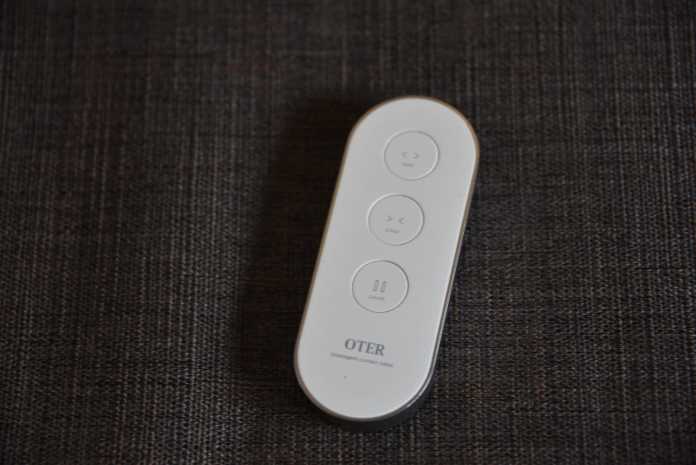
There are different ways of having the device open your curtains – you can use the app to move it left or right, use the app to fully open or close the curtains, set up a schedule so that at certain times of the day and it can even open when it detects sunlight. There are so many options for you to choose from, however you want to use it, it will be easy. There is also a remote included if you don’t want to use the app.

The fully charged battery lasts for around 12 months depending the number of times per day it’s used – we haven’t tested this obviously but the app will show you how much battery you have left.

The CurBot is a great gadget for opening and closing your curtains without the need for doing it yourself. Sometimes at the end of a long day, or first thing in the morning, who wants to be bothered doing that – well now you can have it done for you.

And because CurBot is portable you can take it with you when you go away so that you have the same easy time.

The CurBot is available to order now on Kickstarter – the prices vary depending on what pack you want so take a look.

You can learn more from the CurBot website.

Review: Quest for Infamy

0

Quest for Infamy is a game I wanted to like a lot but sadly it falls short. Based upon the Quest for Glory series by Sierra Games this is a classic fantasy RPG-Action game that honestly, I wish I had played on PC. I reviewed this point-and-click adventure on PS5, and the experience was less than desirable.

The controls for movement which involves cycling through cursor options really isn’t suited to a controller and I often found myself using the wrong one and having to cycle through again to progress. This gets tiresome after a while and in a game as well detailed as this one, it made playing more of a chore.

The premise of the game is simple enough, you play the part of Mister Roehm, an unsavoury gentleman running away from being caught with a Baron’s daughter and trying to make a name for himself. You would think, with the title of the game, you could get up to all sorts of mischief and nefarious activities – but you would be mistaken. After this initial incident the game takes a rather tame turn. You can’t really hurt people, break things, or steal from the shops. If you do attempt such infamous acts, you will be chastised by the disembodied narrator. This can be amusing especially when the character breaks the fourth wall to interact back.

It’s a little disappointing then that the game almost forces you to be less infamous and more heroic as you go about the world. There’s also a level of apathy which I found confusing. The main character rarely seems to care about anything which begs the question why he bothers doing anything.

During the game you can elect to become a brigand, a rogue or a mage which gives you access to different storylines, items, and abilities. The game world is incredibly detailed and the depth of recreating endless pixel art backdrops for your character to walk through and interact with is evident.

Puzzles. Quest for Infamy does puzzles with exceptional strength. What sets these puzzles apart is that they aren’t necessarily based on random objects you might find. This isn’t typical in point-and-click games that employ puzzles and they are welcome to see and feel satisfying to solve.

Which brings me on to perhaps the worst part – the painfully badly acted dialogue. Honestly, it is so bad I wish they hadn’t bothered. I wonder if they are doing this intentionally to provide satire on the genre or if someone signed this off as good quality. Either way it was a terrible, terrible mistake. If you can get past it and continue playing then there is a lot to enjoy. It’s just very difficult to enjoy when every time you speak to someone or have the narrator speak to you, you’re reminded of just how terrible it is.  

Despite this, the dialogue can be tongue-in-cheek and funny in some places. The overall plotting and story is also reasonably well developed, if not a little light. This is perfectly serviceable for a classic era point-and-click RPG but I expected a little more. It’s never going to be ground-breaking, and the tropes will feel familiar, but it relies a lot on nostalgia. This will always put a smile on your face.

The treatment of female characters is not something that should have been borrowed from those RPG games of old. Barely clothed in a chainmail bikini in one place for example just made me eyeroll. Combined with slightly uncomfortable attempts at humour it just makes the character, and indeed the game, feel sleazy.

Should I play Quest for Infamy?

For an indie game the sheer size and scale of the world is great. So to is the story and the fact each class has its own storyline. As well as this, the amazing puzzles. Quest for Infamy achieves a lot. It does some things very well and for a fan of those classic RPGs you’re going to love it. It will transport you back to the early 90s and that’s never bad. Sadly, the bad scaling and the atrocious voice acting are hard to get past. If you’re not used to this type of game the learning curve is steep and it may seem tedious.

Review: Gunborg: Dark Matters

What’s not to like about a great sci-fi adventure? They are full of aliens, badass one-liners, and likeable heroes. Furthermore, there are swathes of enemies, gargantuan bosses, and plenty of danger en route. You are normally thrown in at the deep end, and this is both overwhelming and exciting. Therefore, when I was offered Gunborg: Dark Matters, I couldn’t wait to see what I’d encounter.

Developed by Ricpau Studios and published by RED ART GAMES, this is an arcade twin stick shooter. It has science fiction at its core and guarantees to drive you crazy because of its tough ways. Now, it’s not in the same league as many of the 2D hardcore platforming titles. Yet, it still requires patience, precision planning, and a great memory.

Gunborg: Dark Matters is retro to the core.

Retro gaming is massive, but some titles merely play the part. Gunborg: Dark Matters is different! Every element reeks of old-school action, and I loved it because of it. From the excellent pixelated graphics, simple side-scrolling perspective, and hard-hitting audio, there’s plenty to enjoy.

The story, however, is a little weak. I admit I was confused from the off as the developers fail to explain what’s happened. Effectively, you are a female warrior who must escape from an abandoned spaceship. On her way, she encounters many aliens, traps, and objects that wish to kill her. She must use her guile, dexterity, and weapons to overcome the obstacles and get to the escape pods.

There is the normal selection of weapons to choose from, the usual traps to avoid, and the monstrous bosses to defeat. Yet, it still feels fresh and exciting to play. The gameplay is broken down over many short levels, and you’ll encounter a boss every four levels or so. You may think, “short levels, what’s the point?” Trust me when I say it, but they are the perfect length, as anything longer would be overwhelming.

So many obstacles to overcome.
Lasers, spikes, and many aliens!

Weaponry.

The heroine is armed with an energy sword and shield. As she progresses and kills aliens, she can steal their guns to improve her arsenal. Sadly, there is no way to reload your weapon, so once you are out of ammo, you chuck it away (no recycling here, I’m afraid). You’ll pick up rifles, grenade launchers, machine guns, rockets, and so forth. I adored the selection of futuristic guns and loved mowing down every foe I faced.

You’ll encounter flying discs, explosive beasts, sword-wielding maniacs, grunts, and more. Each hulking alien has strengths and weaknesses that must be exploited, and the further you progress, the harder they become. Therefore, it is essential that you empower your Dark Matter ability. This special power is armed as long as you achieve a large combo and don’t get hit. Subsequently, you are rewarded for your skill and this makes you much more badass.

Combat is only one part of the equation, however. As you explore the cavernous stages, you must avoid an array of obstacles and traps. You’ll avoid spiked walls, dodge lasers, land on moving platforms, and run under energy-infused cogs. Insanely, you must do all of this while fighting every foe you face. Therefore, you must plan on the fly and have razor-sharp reactions.

The bosses have many weapons at their disposal.
How can you defeat this awful boss?

Ranking system and 3 difficulty settings.

Like the great arcade titles of the past, Gunborg: Dark Matters focuses on an easy to understand ranking system. You will be marked on your speed, your deaths, the points you’ve collected, enemies you’ve killed, and collectables you’ve found. If you excel and perform perfectly, you’ll be awarded an S accolade. However, no matter what you score, you’ll always be able to progress.

Luckily, completionists and perfectionists can return to tackle any level at any time. Therefore, you can work your way through each stage and return to achieve top marks whenever you wish. I liked this approach as it keeps the action flowing. It would have been easy for the developers to make it more of a chore, but this would have undermined the arcade style.

To test veteran gamers, Ricpau Studios utilised 3 difficulty settings, easy, normal, and hardcore. Now, twin stick shooters are a genre I struggle with, so I found the easy option to be challenging enough. However, madmen or women can push themselves to their limits and try to defeat the hardcore option.

Gunborg: Dark Matters looks great.

It is easy for me to get swept up in the hype of retro gaming, as I love the nostalgic ways and the garish colours. However, I can’t deny that Gunborg: Dark Matters looks great no matter my biased point of view. The developers have done an amazing job with its buttery smooth action, brilliantly varied stages, and excellent neon hues. It captures everything that the 80s loved about sci-fi, but it adds a wonderful modern twist. Furthermore, the aliens look amazing, as they all have a unique appearance.

To enhance the retro style, there is a brilliant synth soundtrack that is aggressive, loud, and amazingly dated. Its hard-hitting ways add energy and drama to every stage you attempt. Alongside the great music are the fantastically futuristic sound effects. You’ll adore the booming explosives, the shrill sounds of each laser, and the ominous sounds of every alien. Like the graphics, the audio is well-thought-out and matches the theme and genre perfectly.

Gunborg: Dark Matters has many bosses to defeat.
Don’t negotiate with the aliens.

Responsive controls.

When a game demands high levels of precision, you need the controls to be responsive and accurate. Luckily, Gunborg: Dark Matters does just that. Subsequently, it makes a tough genre much easier to play. Even when the action gets hectic and you have many obstacles to avoid, you won’t feel out of your depth. Therefore, I can confidently say that this is suitable for both veterans and new players alike.

Thanks to the array of difficulty settings, collectables to find, and challenging gameplay, this will keep you busy for hours. Furthermore, once you finish the main story, you must overcome three extremely difficult stages! These will test the best gamers and will potentially make you rage quit.

Gunborg: Dark Matters is a hidden gem.

I knew little about this title before it hit my desk, but wow, I’m glad I played it. The developers have got every element spot on, and this will appeal to fans of many genres. I adored the aesthetics, the level design, the array of weaponry, the aliens, and the replay value. Yes, I won’t be trying the hardcore mode, but I know my limitations. I absolutely adored it and I recommend you to buy it here! Can you work your way through the spaceship and get to the escape pods? Grab any weapon you find, kill the aliens, and avoid every obstacle.

Review: Dr Oil

If you live by the seaside, chances are that you’ve been attacked by a seagull! These sky rats are greedy, aggressive, and obnoxious. They’ll crap on you from a great height and take enormous pleasure in stealing your food. It is for these reasons I can relate to the hero in Dr Oil. The protagonist was bitten by a seagull and he’s hell-bent on revenge. His enemy is now referred to as Captain Seagull, and he’s an angry beast. Yet, our hero is Doctor Oil, and he’s angrier still. He despises every seagull he sees and plots how he can decimate their whole species. 

Developed by Antena and published by Chilidog Interactive, this is a 2D hardcore platform title. Set across 5 unique worlds, this is a classic controller breaking affair. You’ll hate every moment of it, but you won’t be able to put it down! It demands accuracy, patience, and a lot of skill. Subsequently, if you have none of these things, you’ll rage-quit, swear, and despise every moment.

Dr Oil is infuriating. 

Like its peers, Dr Oil punishes minor errors. You’ll need muscle memory, exceptional twitch speed, and an eye for detail if you are to succeed. Furthermore, you’ll grind your teeth to stubs, bite your lip in rage, and make noises you never knew existed. In short, Dr Oil is infuriating, but oh so rewarding.

When a title mocks you about death, you know you’re in for a tough time. Therefore, if you don’t like failing, or you get a little sensitive, Dr Oil probably isn’t for you. Subsequently, each of the 75 levels will test you in horrific ways. You’ll have to dodge spikes, land on spinning platforms, avoid ghosts, work in the dark, and so forth. Furthermore, there are flying bullets, plenty of sharp edges, and ledges that disappear. In short, it’s a nightmare to beat and will test the hardiest of gamers.

Dr Oil has so many spikes to avoid
Avoid the spikes and stay alive.

Its concept isn’t unique.

Hardcore precision platformers aren’t a new concept. As such, it has a niche following that loves a brutal time. The genre is already packed with rage-inducing titles such as Super Meat Boy and OkunoKA Madness. So, how does this compare? Sadly, it isn’t as good as its counterparts. Yes, it is challenging and is enjoyable, in a sadomasochistic way. However, its concept isn’t unique and its peers do everything that much better.

Unfortunately, Dr Oil is lacking in the complexities that the other leading titles have. Moreover, the stages are much smaller and the levels lack flair or depth. However, this doesn’t mean it’s poor, because it’s not. I simply wanted it to evolve past the drip-fed mechanics and usual death-inducing elements.

Though I wasn’t overly enamoured by its approach, I liked the unique element within each world. This was a clever idea from the developers that kept the gameplay fresh. Furthermore, it added to the difficulty and kept you second-guessing. Whether it was the introduction of shifting platforms, floating spikes, cannons, or more, you had to think on the move. This quick planning and the constant shift in approach are where the title excels.

Captain Seagull is massive in Dr Oil.
That is one big seagull!

Dr Oil keeps things simple. 

The lack of complexities extends to the graphical approach. The blend of bright colours and dark tones makes it pleasant and interesting to look at. What’s more, the sprites are simple, yet striking, and this helps to navigate each stage. Other than the silhouetted level, the action is easy to follow. Sadly, I struggled on the low light stages as the obstacles and enemies were tough to see. This unfortunately increased my frustrations unnecessarily. Had the developers used contrasting colours, then the issue would have been alleviated. This aside, it was a nice looking game that is attractive, simple, and well designed.

The simplicity continues with the repetitive, but melodic soundtrack. The high tempo and aggressive music suit the risky and challenging gameplay. Sadly, though, its basic nature will annoy many gamers. Unfortunately, the same song plays on a loop and that’ll drive you mad. With no respite or sound effects to break up the tedium, it’s hard to play for long periods.

Dr Oil lacks contrasting colours.
It is far too dark.

Easy controls. 

Much of the action demands accuracy and tenacity. Therefore, it is lucky that there are easy controls to rely upon. Fortunately, the simple layout and responsiveness help to overcome the difficulties. The actions are well explained in the early levels and this helps to set you up for the challenges you encounter.

Unlike its peers, Dr Oil doesn’t have a speedrun option. Furthermore, there is no NG+ mode, and this was disappointing. Yes, the gameplay is tough already, but I expected more from this genre. However, completing every level is no mean feat, and subsequently, you’ll keep playing for hours.

Dr Oil ticks most boxes.

Getting everything right in this genre is a tough ask. Its fanbase is particular and wants to be challenged. Luckily, Dr Oil ticks most boxes, but I feel it doesn’t evolve enough. Sadly, there are a few things missing and this prevents it from fulfilling its potential. This being said, I enjoyed it and I recommend you to buy it here! Will you overcome every obstacle and get your revenge? Avoid every trap and kill that evil seagull. 

Review: Persona 4 Arena Ultimax

Perhaps Persona 4 Arena Ultimax was re-released as an amusing reminder for why there are still fingerprints on my TV or perhaps it’s down to Atlus’s infamously odd release strategy, but there’s one thing for sure, no one’s complaining about this choice as part of Atlus’s 25th-anniversary celebration, with the excellent 2D fighter now brought to modern consoles. 

Originally released in 2013 as a sequel to Persona 4 Arena, Ultimax contained adjustments and improvements to the gameplay mechanics while also providing a continuation in the story. It also had quite a lot of DLC, even including Arena‘s story, which now comes as standard alongside the Japanese audio.

If you are unfamiliar with the story of the Persona series (itself an off-shoot of the darker Shin Megami Tensei series), then this description is probably not going to help, as it doesn’t make a great deal of sense.

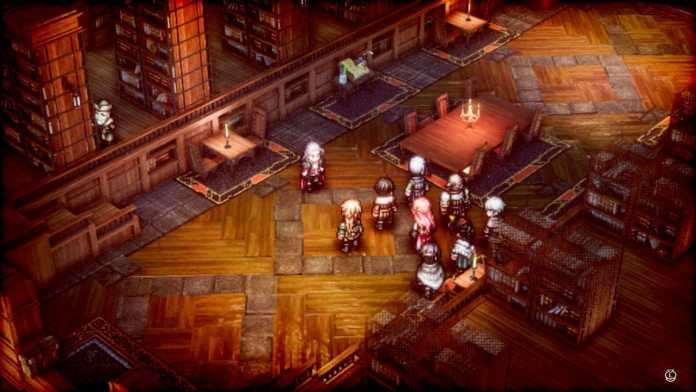
Essentially, it centers around high-schoolers who each control a ‘Persona’, powerful supernatural entities converted from an evil ‘Shadow’ spawned by their own negative thoughts. Armed with their Personas and together with their friends, they battle evil Persona owners in the same mysterious dimension from which the shadows originate, and is one that’s accessed……through a TV. Instead of the darker, moral side-choosing of the SMT games, Persona has a relaxed anime charm, and it’s likely this aspect that you can partly attribute the huge success of the super stylish Persona 5 to.

Persona likes to keep most of its hows and whys behind a huge cloak of mystery, which allows its mainstay characters to pop up without much explanation or interruption.

Disappointingly, there’s no trace to be found of the more recent Persona 5 and its characters, but unless you already own the original, there’s little reason why fans of the series – or fighting games for that matter – would come away disappointed. 

This is partly because the amount of content available here is absurd, with the voiced visual novel/fighting story modes from Arena and Ultimax‘s own at the very least 20 hours, as well as excellent Arcade, Score Attack and Golden Arena single-player modes to supplant the online and local multiplayer modes. 

Arena‘s narrative (a continuation of Persona 3+4) tells the story of the P-1 Climax Grand Prix, a strange battle tournament, used as bait to lure the cast to the TV world and is told through 9 different characters’ perspectives. Ultimax picks up where Arena left off but uses 3 separate branching timelines for its chapters – as well providing the ability to choose who you fight as when in a group. It’s more of a warm hug for fans than it is a shake-up in the state of affairs, bringing in new characters to provide the standard drama, but it’s still an enjoyable ride. 

For those who aren’t particularly interested in the story though, you can take solace in the fact that the Arc Systems Works-developed battle system is undoubtedly the star of the show having lost none of its allure in the last decade, with a well-balanced roster of characters with distinct movesets and characteristics. 

Your Persona has its own health, effectively ‘hearts’ shown as the blue cards underneath your health bar, and if they all are crossed out, you won’t be able to summon your Persona for a set period of time. This is a great gameplay mechanic as characters whose attacks rely heavily on them will be extremely vulnerable until it recovers, forcing you to adapt your playing style.

It’s not the largest roster in the world, but the action is lightning fast and the animation is beautifully smooth, emanating personality from the 2D models that make the action feel alive right from the well-designed intro screens and graphics. This is also helped by the fact that the game is never silent, with an exciting soundtrack supplanted with constantly chatting characters and a brilliant in-battle commentator that comments on your progress, praising you when you come back from behind to win and bemoaning your bad fortune if you lose from an advantageous position.  

If you do happen to find it difficult though, fear not, there are 3 training modes to help improve your skills including a challenge mode that shows short videos of how the move actually looks – perplexingly, a feature missing from most fighting games – and breaks combos down into sections while showing you which parts you’ve done successfully on the screen. Further accessibility is provided by being able to launch a powerful combo by simply pressing ‘Square’ 5 times and another by just holding ‘Square’ down long enough for it to build up different levels on a meter. If that wasn’t enough, there’s even an auto mode that will fight the matches for you, before or at any point during the fight.

In the last few challenges of the Challenge Mode, if you try to access the demonstration it amusingly prods you to try it yourself without cheating.

None of this is to say that Ultimax is easy or overly simplistic though, as not a single soul will profess that the Risky level (the hardest of 5 difficulty levels) is a walk in the park and the battle mechanics, similar to Arc Systems Works’s Granblue Fantasy: Versus, are not only highly approachable but are deceptively deep, with numerous defensive and attacking features for those willing to put the time in to learn them, such as cancels and bursts which extend combos. Additionally, the SP meter (the bars at the bottom of the screen) also facilitates instant blocks and attacks without filling up too quickly during the fight, balancing the gameplay without the ability to spam any one particular feature.

The impressive amount of content doesn’t end with the story either with the 3 battle modes adding something different in each instance. Arcade mode adds a bit more story for each character with a set amount of enemies, Score Attack allows you to select different courses and difficulties and Golden Arena goes back to its JRPG roots with a level-up system with customizable moves in a limitless dungeon-like framework for the battles. You can even choose a partner that will provide you with extra skills and commentary. This makes each fight feel distinctly different from the last with a host of different variables changing the state of play on the turn of a dime – and it’s awesome. Individual battles are fun enough as it is, but these modes provide legitimate variety, and you can lose hours and hours getting stuck into them.

The JRPG-esque fighting mode provides a great deal of depth to the game.

If I’m being greedy, I would have loved to have seen a 3-vs-3 tag mode, as well as the different fighting styles, would really compliment and contrast with each other well, but it’s really hard to pick any faults with what we’ve been provided with here. Would you like more cake with your cake, good sir/madam?  

If online is your thing then Ultimax doesn’t rest its laurels in that regard either. Admittedly, it has launched without the must-have in online gaming – rollback netcode – but in the few 1-vs-1 lobby fights that I had, there weren’t enough issues that won’t tide over the mode until it arrives in the summer (to all consoles but the Nintendo Switch).

I often bemoan barebone re-releases as quick cash-ins from publishers trying to revitalize their IP with minimal effort, and while Persona 4 Arena Ultimax does fit that criteria (as the DLC and Japanese audio were already technically available), in all honesty, it was already an excellent 2D fighting package that didn’t need improving. And with rollback netcode on the horizon to give the game more of a modern relevancy, there’s never been a better opportunity to jump in.

Review: Prose & Codes

If you ask someone what they think about video games, chances are that the answer won’t be reading, or anything book related. After all, video games as a medium are all about interactivity, so, when someone thinks of video games, it’s very likely that they’ll think about a new release, an action-filled adventure, or an engaging game that had them glued on their chairs and couches for countless hours. However, every now and then, there comes a game that tries to do something new, or that brings a new approach to already established mechanics and ideas, and these games manage to create a special spark.

For the overwhelming majority of such creative cases, I’d dare say that indie games dominate this field. From time to time, I come across a few games that might not have a widespread appeal, but they’ll stick with me for years to come. For 2022, it seems that the first of such games is Prose & Codes, a game where all you do is decrypt excerpts of various books. 

It’s such a simple concept, but I can’t think of any other game that tried to do something like this. The entire game is about solving substitution ciphers, where each letter of the alphabet has been replaced by a random one, and it’s up to you to find the solution to all of them. The game features a total of 350 ciphers, to be exact, and these are spread evenly across seven different genres. There’s Adventure, Children, Sci-fi, Drama, Notable, Mystery, and Horror. 

There’s pretty much something for everyone, and what’s even better is the fact that, once you solve a cipher, not only do you unlock a synopsis of the original book, but the game actually rewards you by providing a direct link to the book’s page on Project Gutenberg. A lot of people might be familiar with this project, but, in case you aren’t, it’s essentially a massive preservation effort that seeks to store literary works in a digital form, and, therefore, distribute them online for free, for everyone. 

In a way, I feel that Prose & Codes is trying to rekindle that fondness for reading that, perhaps, a lot of people have lost throughout the years. The truth is that, many people, myself included, have found that some video games have cultivated or sparked a long lost interest in something, namely reading. For me, this was the case with visual novels and text-heavy RPGs. However, Prose & Codes is possibly the best example of how you can captivate someone’s attention through an interactive medium and draw it towards the literary realm.

The excerpts that the developers have picked for each of the ciphers seem to have been carefully chosen in order to draw people into the various literary works. It’s almost as if each cipher is a tiny window through which you can only catch a glimpse of another world and another story. However, the great thing about it is that these worlds are only a few clicks away. It’s really quite wonderful. I’ve certainly have added quite a lot of books to my reading list that only keeps getting bigger. 

Regardless, Prose & Codes stands out as a good game on its own, even if we’re not counting its connection to the Gutenberg Project. There isn’t really an ever-increasing degree of cipher difficulty that culminates in a massive cipher that would supposedly represent some sort of boss fight, but the game gives you plenty of tools to tailor the experience to your liking.

There are four different difficulty modes, Easy, Medium, Hard, and Progressive. Easy will reveal six letters right from the start, while Medium will reveal three, and Hard will keep them all hidden. Meanwhile, Progressive will make things more difficult for you as you make your way through each genre of literature.

As a non-native English speaker who learned English on their own playing games, reading, and watching TV shows and films while growing up, I have to admit that I spent way too much time trying to get through my first cipher on Hard. I then switched to progressive, but my success there was short-lived as well. It was then that I settled with Medium, as starting with a few letters already revealed was a huge help. Furthermore, you can always ask the game for a hint, and the game will then reveal a single letter for you, but you can only do this three times per cipher.

There were plenty of moments when I just couldn’t wrap my head around a few ciphers, and when I finally gave in to the temptation and asked for a hint, everything just started to make sense and it was like a flood of words coming through my head as I furiously finished the rest of the cipher as I could then easily figure out what was missing. Sometimes, all you need is a small helping hand. In fact, there’s also an option to enlarge the text, and there’s even a dark mode. It really feels like the developers have thought about everything extensively, but from my experience, the game can’t solely be played on just a mouse or just a keyboard, you have to use both.

Although these difficulty options are great to have, it should be noted that the game always presents you the books in the same order, no matter which difficult you play or if you start a new game. Therefore, once you’ve gone through the 350 ciphers, there isn’t any incentive to go back and try everything again in a harder difficulty, because you’ll probably just remember everything from your first playthrough.

I definitely wish there were more ciphers in the game, or that the game would always generate a random cipher in case someone wanted to replay the game, but I guess that just isn’t something that’s feasible to implement. Likewise, the dreamy version of me wishes that, in an ideal world, this game would simply be a tool that would allow anyone to add their own excerpts and ciphers to the game and share it with others. Maybe an idea for the future?

At the end of the day, there really isn’t anything about the game that I’d change, even if I could. Prose & Codes is something quite special, not because it’s groundbreaking in gameplay mechanics, but because it excels in being exactly what it set out to be. The ambience with the music and the background sound effects are phenomenal, and while the puzzles might not be everyone’s cup of tea, there is surely a very niche audience that will absolutely adore it for what it is.

Prose & Codes is more than worth its asking price. Still, I’d like to point out the fact that the developers mention that a portion of every sale goes to Project Gutenberg, but I was unable to find any concrete information regarding how much a “portion” actually is. Nonetheless, the fact that sales of the game support the Gutenberg Project is just the icing on the cake. If you’re an avid reader and enjoy solving puzzles, this will most surely be a great addition to your digital library.

Review: Drill Deal – Oil Tycoon

Currently, the word oil is frowned upon. Whether you are an environmentalist, a homeowner, or a motorist, this black gold is costing you a fortune. Sadly, though, people are getting rich and the demand will never dwindle. However, I’m not here to discuss the heart-wrenching increase in fuel prices. No, I’m here to talk about Drill Deal – Oil Tycoon. You now have the chance to run your own platform and make your fortune at the same time.

Developed by A2 Software and published by Manager Games S.A, this is a Voxel simulation title. Like its peers, it has familiar mechanics, hectic gameplay, and rewarding outcomes. It is easy to pick up, challenging to master, but so bloody addictive that it hurts. You control every aspect of your drilling rig while preventing an array of quick time events from ruining your progress. Sadly, though, it isn’t an innovator, but it is fun and interesting nonetheless.

Drill Deal – Oil Tycoon demands you dive right in.

A2 Software has created a user-friendly title that utilises every familiar mechanic. As such, you can dive straight into the action with no concern. However, the developers aren’t that cruel, as they offer an in-depth tutorial to help you get started. Once you get through that, you must tackle each of the stages in order. There is an array of environments to work through, and each has unique problems to overcome. Furthermore, there is a limitation of how far you can develop your tech and the amount of equipment you can buy.

Now, this may seem restrictive, but it’s not. Fortunately, the limitations prevent the action from becoming overwhelming. What’s more, you don’t want to waste precious space or resources on unnecessary technology. Even though you couldn’t select everything at each stage, my creativity was never stifled. I loved the balanced approach from the developers, as it ensured the action flowed nicely.

Drill Deal- Oil Tycoon demands you expand your rig to maximise your profits.
Expand your rig and make a fortune.

Campaign or Sandbox. 

As mentioned, you have an array of stages to work through. Each has quests and in order to progress, you must obtain at least one of the three stars. You will have to upgrade your rig, defeat pirates, prevent people from drowning, sell goods and more. Whatever the objective is, it is never as straightforward as it appears. Subsequently, each level requires a methodical approach, a meticulous eye for detail, and a fair bit of luck.

If you tire of the campaign, you can lose yourself in Sandbox mode. This never-ending option allows you to build the oil drilling empire of your dreams. Moreover, there are no restrictions placed upon you and you are free to do as you will. What’s more, you’ll still experience freakish events that will keep you on your toes. Drill Deal – Oil Tycoon offers the perfect blend of focused and free gameplay. Consequently, this was an excellent decision from the developer and fans will be kept busy for hours.

Is that it?

Obviously, the action revolves around the business of selling oil, but it isn’t that simple. No, you have many plates to spin at once if you wish to succeed. You must plan where to place buildings, hire staff, maintain happiness, and maintain cash flow. At times, it is painfully hectic, and one minor error can undermine hours of hard work.

Buildings. 

You must contemplate where to place resource gathering buildings, staff facilities, and miscellaneous items. Dumping buildings willy-nilly is not advised, as this will impact morale, and will upset staff. Furthermore, there is a risk of fire and no one wants their employees to burn to death. Sadly, every building that produces resources also creates noise! This affects your employees and has to be considered. After all, no one wants to eat, sleep, or relax next to a chemical plant.

It was a brilliant way to make you plan your layout, but damn, it makes it much harder. As you begin, you’ll make mistakes, waste resources, and learn from your errors. Quickly, though, you understand what works and you’ll build a well-oiled (pun intended) machine.

Staff. 

The bane of any business is the staff. These moaning cash-grabbing fools are never happy! They always want more, and they eat into your handsome profit margin. However, without a content roster of workers, you’ll never get oil. Therefore, you must balance profit and satisfaction very carefully. You must improve entertainment facilities, lodgings, kitchens, and more if you wish to succeed.

Sadly, though, this isn’t all you have to contend with! Employees have certain skills, and therefore you must hire the right person for the correct job. It can be a nightmare getting a fully competent team while keeping them all happy. Your brilliant operation can be undermined by unhappy or incompetent staff. Subsequently, keeping these cash leeches happy is a priority!

Cash flow and development.

Like every other simulation title, Drill Deal – Oil Tycoon demands you focus on cash flow and development. If you ignore either of these key elements, you’ll fail! Therefore, you must balance the books and improve every element of your oil rig.

Cash flow on paper is easy to maintain as you simply sell everything you extract from the Earth. However, things are never as simple as they appear. As you progress, every resource is used to create more advanced products. These make more money when sold, but cost a lot to get set up. Moreover, the more facilities you have, the more people you hire, and this is expensive. Annoyingly, it’s a juggling act that gets more complex the deep you go.

To add to this, you must research new tech to complete every task. This unlocks new items and improved equipment, but it costs money and resources. You have to weigh up every aspect of your plan before you invest heavily. Consequently, it’s a bit of a headache to get right and will test your patience and skill. 

Drill Deal - Oil Tycoon is full of nasty monsters.
Bloody Kraken!

Drill Deal – Oil Tycoon looks great. 

Now, I understand why people dislike Voxel games. I, however, love the simplicity and style. There is something endearing about the garish colours and blocky imagery. What’s more, its basic approach works really well with the genre. The developers have kept the levels of detail to a minimum and this was the right thing to do. With so much going on, it could have been messy. Luckily, the simple style allows you to focus on running your business. Alongside this, this excellent UI prevents the screen from becoming cluttered.

Unlike the graphics, the audio didn’t impress me. Yes, it’s serviceable and fun, but I expected more. Sadly, there is no interaction with your employees and this makes it feel shallow. Consequently, it would have been nice to hear some form of conversation to add to the realism. First, they are an emotional bunch, so why not show it? Second, it was easy to overlook your team, so some distinct audio would have helped massively.

Deal with pirates on your deep sea expeditions. Drill Deal- Oil Tycoon will keep surprising you.
I don’t want to fight pirates.

Excellent controls. 

Simulation titles aren’t always easy to pick up and play. Drill Deal – Oil Tycoon, on the other hand, is user-friendly and simple to master. Helped by its fantastic tutorial, you’ll have the basics accomplished in under 20 minutes. A2 Software has done an excellent job with its responsive controls. If you are new to the genre, this is a great way to get started.

Its simplicity made it easy and moreish. Subsequently, I invested hours without knowing it. You’ll try and fail each stage repeatedly, but this matters not. Each attempt is a learning curve and you’ll enjoy trying out new things. Furthermore, thanks to the Sandbox mode, you could keep playing this forevermore. This being said, I would still like more content to be added. If the base game is enhanced or multiplayer gameplay is incorporated, then this will be an epic title.

Drill Deal – Oil Tycoon is a wonderful indie game. 

This won’t be a tough sell for a fan of the genre. It’s easy to love everything that Drill Deal – Oil Tycoon offers. Yes, it’s not as in-depth as some of its peers, but its QTEs and stage-specific challenges make it fun. Consequently, it’s a wonderful indie game worthy of your time. I loved it and I recommend you to buy it here! Can you improve the fortune of every oil rig? Invest in your people, the facilities, and your partners, and make a fortune from the black gold.