With Christmas not too far away now, we are going to be looking at various things you might want to consider – here we look at the WOW! PODS Space Jam Bugs Bunny from WOW Stuff.
Bugs Bunny from the Space Jam: A New Legacy Franchise. The perfect gift for Space Jam and Looney Toon fans of all ages. Boys and Girls will love this mini figure of the classic Disney cartoon character.
Its really simple to connect the pods together and create your very own fan display with your favourite characters. Build your own display and watch the awesome light show across your wall, shelf, table or window ledge
Move your hand in front of the POD and watch it light up revealing a mystery surprise hidden feature. Swipe your hand across your POD collection and create an awesome light show! The light will automatically switch off after 30 seconds
Connect to other WOW! PODS characters in seconds. There are 4 Space Jam WOW! PODS to collect, Bugs, Daffy, Lola and Tweety Pie. Build the famous basketball team and watch them light up the room!
The Space Jam Collection features unique collectibles, toys and gifts inspired by the Space Jam : A New Legacy film and are authorised and licensed by Warner Bros.
The WOW! PODS are really cool – the attention to detail is amazing and they really add something unique to a room. They are really easy to use and light up the room. These really are great stocking fillers and with so many to collect – which ones will you get?
The Space Jam A New Legacy Bugs Bunny (145) is available now from Amazon priced around £14.99.
Disclaimer: The WOW! PODS Space Jam A New Legacy Bugs Bunny was sent to us for the purposes of an honest review. All opinions are the opinions of our reviewer.
Judgement, released back in 2019, strayed away from the zany plots of Yakuza past – focused on billions of yen being stolen, secret Koreans causing all sorts of mischief and epic showdowns culminating in macho shirt-ripping – favouring instead a more grounded narrative that tackled a number of sophisticated issues relevant to Japanese society.
The characters, the story and the writing all felt considerably more mature and nuanced than what fans of the series might have come to expect, and for me, this was a welcome change of pace.
As a long-term fan of the series, Judgement succeeded in innovating from a narrative and tonal standpoint. And the recent release of Yakuza Like a Dragon demonstrated that Ryu Ga Gotoku studio were also capable of switching the gameplay up, to a turn-based system that might have felt incongruous to the rest of the series. But, it worked.
Crucially, both games also retained the essence of what makes the Yakuza series so distinct and wonderful; densely packed open-worlds, with myriad minigames and side quests to engage with, and interesting characters who can all kick-ass in their own right.
With all of this in mind, I was incredibly excited to see what Lost Judgement – the sequel to Judgement from 2019 – had to offer this time.
What new innovations would the developers attempt next?
Back to school:
Right off the bat, Lost Judgement throws you straight into an active case with series lead and ex-lawyer – turned freelance detective – Takayuki Yagami, and his faithful former Yakuza partner, Kaito-san. Yagami and Kaito have been hired to investigate a young man who appears to have swindled his supposed beau for a staggering amount of yen.
This introductory mission does a great job of re-introducing the cast, contextualising their relationships and makes Lost Judgement feel very beginner friendly. Of course, having played the original, I enjoyed seeing these characters back together all the more, but new players will not feel lost by jumping in here.
During this mission, Yagami receives a call from some familiar faces from the first game, who are seeking his help with a case they are working on at their own (new) agency in Yokohama.
The story is almost entirely standalone, but naturally, character dynamics are enriched if you have played the previous game.
Word of warning: the game does spoil a fairly important plot development from Judgement very early on.
Very quickly, Lost Judgement veers from its predecessor, taking Yagami and Kaito away from Kamurocho to Yokohama (introduced in Yakuza Like a Dragon). The narrative also delves into largely uncharted territory for the series (much like the first game), as Yagami and co are stationed at a private school which has seen recent spouts of bullying.
This is where Lost Judgement’s ambition is paramount. The developers have chosen to tackle some heavy issues here in terms of bullying, sexual assault and suicide – all issues that have been prevalent in Japanese society for many years. Without going into too much detail, the game’s handling of these issues is somewhat inconsistent.
Where I think the first game really succeeded in dealing with its social commentary, Lost Judgement at times can be a bit indelicate when exploring these issues. Early on, Yagami and Kaito literally beat up some kids. Now, absurdity like this is par for the course within the Yakuza series, but in the more grounded Judgement – and in the main narrative, as opposed to a side quest (where things do get crazy, and we love it) – the ludonarrative dissonance here was a bit tough for me to initially stomach.
Also, there is a mission where you place hidden cameras to help with your investigation of bullying in the school. Not only is this incredibly creepy, it is also just so ridiculous that it took me out of the narrative. I think this whole initial portion in the school is done poorly, and whilst the game does pick up later, the slow pace and tone deaf approach to some of the issues doesn’t leave a great first impression, which could deter new players.
Another frustration that I had that made the beginner hours feel like such a drag was how dialogue is sometimes handled. Lost Judgement is like that overbearing parent who still tries to hold your hand as you cross the road – even into adulthood.
Yagami will constantly repeat information that the player will already be aware of – as will other characters – and this drags scenes to unnecessary lengths. Now, I prefer this to writing that doesn’t explain anything at all, but there should be a middle ground between the two; Lost Judgement never leaves anything up to the players imagination for too long.
That being said, the writing as a whole is still regularly excellent, and the narrative develops from a slow, clumsy start into a real-page turner. Whilst the school related portion of the game (which is significant), isn’t the most consistent aspect, I have to commend the developers for trying something so ambitious. I just wish a little bit more thought was put into balancing the seriousness of the narratives themes and issues, with you know, beating up teenagers.
When the narrative delves into more familiar gangster territory later on, Lost Judgement is regularly breathtaking, dramatic and absolutely the darkest entry yet in this franchise.
The new cast are welcome additions, with a particularly fantastic antagonist. The old guard hold their own as well, even if at times, this story feels less personal than the original to Yagami.
I also love how the plot connects seemingly disconnected issues, and drops little nuggets of information early on in the story that later pay off with big twists and revelations.
Overall, I found myself – after a clumsy first few hours – engrossed in the narrative. Whilst I think the original game was consistently good throughout, Lost Judgement arguably has much higher highs – and a few more evident lows.
Both the dub and original Japanese voice acting are fantastic, by the way. Personally, I played the original in Japanese, so I stuck with it throughout, but the dub is also very good (aside from the imperfect lip syncing). Add in such expressive facial animations, and I found myself easily immersed in this gripping crime drama.
The King of open-worlds:
There is nothing I hate more in video games than the recent plague of open-world games, where developers seem to think that bigger is intrinsically better; irrespective of the quality of activities and gameplay.
Assassins Creed Valhalla is a great example of a game with some fun minigames, side missions and a well written story (when you have time to get to it), which is stretched to mediocrity through its sheer size. Bigger isn’t always better, and stretching similar activities across ridiculously large maps – whilst initially an impressive feat – quickly leads to boredom.
Perhaps the biggest appeal of the Yakuza series, for me, is that it is very much the antithesis of most recent open-world games, as it favours a much, much smaller map; densely packed with an impressive amount of minigames, sub missions and other shenanigans to lose hours to.
And, on this front, Lost Judgement might be the most impressive entry to date.
Staple activities in baseball, darts and a variety of card games (and so much more, of course) return, as well as exclusives from the original Judgement in Paradise VR and Drone racing. In Yagami’s base(s) you can also play a number of different Sega Classics, and the Arcade also has an impressive array of games, like Sonic Fighters (which I am terrible at).
Of course for long-term Yakuza fans this is something we almost take for granted, and repurposing these assets is something that SEGA excels at. For a new player, however, the sheer breadth of activities is fantastic.
That being said, Lost Judgement also leans heavily into the school life that is central to the narrative, with a number of brand new activities as part of the new ‘school stories’.
Ironically, as much as I think the school presence provides most of the narrative lows, the side activities in the school stories might be my favourite part of the game. From dancing, to boxing, to robot wars – and many more activities to be discovered, there is just so much variety to keep the player interested.
The writing in these quests inherit the carefully balanced humour, sadness and absurdity that Yakuza substories are known for, whilst also providing in depth progression. As a fan, the boxing was my favourite, and the unique upgrade path to the activity was a welcome surprise.
Put simply: there is something for everyone here, and of course, the usual zany Yakuza substories (titled side cases in Judgement) can also be discovered around Kamurocho and Yokohama. The panty thief saga continues to (I couldn’t write that with a straight face).
Out with the old, in with the new… and back to the old again:
When Yakuza Like a Dragon was said to move away from the series brawler style combat, I was one of many fans who felt, initially, very disappointed. The arcadey combat, where your environment – and every inanimate object in the surrounding area – is your weapon, is just something so silly, badass and iconic to the Yakuza series. Straying away from this chaotic system, for a more considered turn-based style was something I could not fathom.
Well, as it turns out, I loved the changes in Yakuza Like a Dragon. I believe the turn-based system breathed new life into the series, and perfectly complemented Ichiban and his band of heroes.
At the same time, it was announced that Judgement would continue the traditional Yakuza style combat. The original Judgement didn’t change things up too much, with Yagami’s more Kung-fu inspired style functioning mechanically similar to other styles throughout the series. This made it easy to pick up Judgement, and only have to grasp a few new concepts (such as the wall jumping mechanics and the mortal wounds that bosses could give you).
However, the game did have an issue with the balancing between the two primary styles: Tiger and Crane. Tiger, which is a slower, more weighty style that favours 1v1 encounters, felt far more developed throughout the game, whereas the more evasive Crane style – which favours group encounters – saw little meaningful upgrades as the game progressed. What this led to was the combat in the original game getting stale quickly (further exacerbated by the ridiculous amount of encounters with the infamous Keihin gang).
Lost Judgement, thankfully, manages to take a few sensible steps forward in progressing this system.
Both styles from the first game return, with increased movesets and new mechanics that add a bit more consideration to encounters.
Joining them is the new snake style: a parry focused combat style that is great at disarming enemies – and Yagami’s preferred choice for dealing with unruly private school scoundrels (at least he has the sense to hold back somewhat, I guess…).
I loved this new style, with the focus on holds and counter-mechanics feeling like a callback to Tanimura’s style from Yakuza 4 (for all my OG’s out there).
Switching between each of these styles is effortless, and Yagami this time feels faster and more fluid than ever. Overall, combat encounters feel incredibly smooth, and the addition of haptics on the PS5 (even though they are quite subtle), add that extra punch to heat actions.
Lost Judgement isn’t necessarily going to win over those who have struggled to enjoy Yakuza’s combat in the past, nor will it offer particularly complex or tactical encounters, but it still feels enjoyable.
My only real gripe is that – once again – the game feels very easy. At least there is no dastardly Keihin gang this time around. Big win for combat.
An impressive game, an ambitious story and an inconsistent delivery:
If you’re a fan of the original game, Lost Judgement provides another exciting chapter in the story of Takayuki Yagami and his friends. Combat has received a much needed boost in terms of depth, and the open-world activities impressively manage to improve on the original game – and may be the most impressive Yakuza offering yet; rivalling Yakuza 0 and 5.
Narratively, Lost Judgement can go from shocking, clumsy, distasteful, emotional to absolutely gripping. The characters are once again written well, and an initial slow-start sets up some exciting developments later on.
The school section of the game manages to provide both the best and worst parts of this entry, and new detective elements add a bit more diversity to gameplay, but sadly not much more for the player to think about.
If you can’t tell: this is a game that regularly takes a step forward, then a quick step back. I think with a bit more fine tuning, Lost Judgement would eclipse it’s predecessor.
However, despite its misgivings, it is still an excellent video game offering with a ridiculous amount of things to do, interesting characters to fall in love with, and an ambitious story that asks some very interesting – and uncomfortable – questions.
People love to play the part of the detective, to solve impossible crimes, and to be declared a hero. This is why detective novels fly off the shelves and Cluedo has been a family staple for years. So, you may think, “what has this got to do with the gaming industry?” Well, let me get to the point…The Magister is the latest title that allows you to lead a murder investigation. You’ll question the locals, piece together clues, and solve the crime, or not, as is so often the case.
Developed by Nerdook Productions and published by Digerati, this is a murder-mystery deck-building RPG. It’s a wonderfully complex title that combines many genres. You will focus on turn-based combat, deck-building and resource management as you gather clues and eliminate suspects.
The Magister: fingers in many pies, spring to mind.
You control a Magister who is effectively the judge, jury, and executioner in any crime. You are sent to the village of Silverhurst to investigate the death of a fellow Magister. The poor chap was murdered in his room in the local inn and you must find the clues, question the locals, and serve justice. In theory, it’s as simple to grasp as Cluedo, but in reality, it’s as tricky as holding a slippery eel.
I’m all up for a game that is ambitious, but The Magister has its fingers in so many pies! The constant back and forth between different mechanics make it hard to master, and this will put off many players. Moreover, this isn’t helped by its thorough tutorial that does well to explain the gameplay, but offers no hints. Therefore, most of your early experiences with this will be of scratching your head. Sadly, this slow and confusing start undermines a rather intelligent and well thought out game. If the developers had capped their ambitions, the project would have been much more successful.
Enjoy the RPG elements of The Magister.
Excellent questioning and rapport building.
I’ve mentioned complex mechanics more times than I like to, but I loved how every element was brilliantly woven together. The game demands that you balance your time between questioning, side quests, and special events. You must work with the locals to gather information, debunk alibis, and piece together the mystery. Your playthrough culminates in a classic revelation of your thoughts as you travel to the Signal Tower to speak to the head Magister. Here you discover if you’re the next Sherlock Holmes, or simply a bumbling idiot.
I loved how each game ended, but let’s roll it back a bit and look at what you’re going to experience. Set from an isometric viewpoint, you are free to explore each unlocked segment of the map. You’ll visit an array of areas each full of colourful characters or enemies to overcome. You must build relationships with the locals in order to question them successfully. Your bond is rated out of three stars and by completing tasks and helping them out, they will be forthcoming with information. This was an excellent choice as it demanded that you looked at the bigger picture and proved your actions have consequences.
Turn-based action and diplomacy.
When you are not interrogating individuals, you are likely to be engaged in either combat or diplomatic events. Both options follow a similar turn-based pattern and both use the deck-building mechanic. Your deck of cards is upgraded and increased during each playthrough and a better deck makes the game much easier.
The combat uses a timer-based approach that determines the order of action. If you go all out and use every card, your character must wait longer to go again. Subsequently, a little poise and some planning is key to getting the best out of each player. Your deck is made up of attack and defence cards and you must observe your opponents and decide the best course of action. You occasionally have support in the form of guards, and the computer-controlled characters offer some much-needed help. However, the lack of control over their actions can make planning challenging.
If you’ve ignored the combat mode and plucked for diplomacy, your aim is to calm your opponent down. You have a limited number of turns to reduce their rage counter. You must use cards to create empathy that, in turn, buys more cards to reduce rage. It’s a tactical battle of luck and wits and is frankly really difficult. Though I found this to be challenging, it was extremely rewarding and, like the combat, it was brilliantly executed.
Use logic and chance to be victorious.
Resource management and too much to cover.
Once you’ve completed the aforementioned questioning and battles, you are then free to complete side quests and other tasks. This is where the resource management section comes to life. You must use your limited time to select who you wish to help and what tasks are most viable to complete. It can be tricky to balance the villager’s needs with your own, but you must be selfish if you wish to build rapport. Unfortunately, the longer you take to solve the crime, the more impatient the head Magister becomes. After all, no one wants an idiot in charge.
The length of this review shows just how in-depth The Magister goes. There are so many layers to talk about and I haven’t even scratched the RPG elements. With character levelling available and upgraded cards, you have more mechanics to deal with. Once you get to grips with the finer points, you’ll enjoy a thoroughly enjoyable and deep game that’ll keep you playing for hours. Until that moment, however, you’ll need patience, luck, and an experimental mind to find the best approach.
The Magister has an earthy medieval aesthetic.
For all its complexities and convoluted ideas, The Magister has used a simple and dated graphical style. The old-school imagery reminded me of early console/PC RPGs thanks to the basic character model and restrictive world. This decision worked well as it reined in the mechanics and prevented the gameplay from running away with itself. I liked the use of earthy tones to enhance the medieval theme, and the lack of clutter made searching each scene much easier.
The audio does well to also capture the medieval theme and the drama of the impending case. The folksy music creates a lighthearted vibe that was pleasant to experience. With so much going on, the basic soundtrack was a pleasant change that gave you time to think. This was wonderfully contrasted by the aggressive music during the turn-based events.
Select from your deck of cards and defeat your enemies.
A woeful port from PC.
Not all games are successfully ported from PC, and sadly, The Magister is one of them. Its woeful controls haunt it throughout and the simplest of tasks is a painful experience. A free-flowing cursor would have been a wise choice. Instead, you are left fumbling around during every encounter.
If you have the patience and aptitude to pick up and understand every mechanic, you’ll experience a game that is full of replay value. With its procedurally generated cases, no playthrough is ever the same. To finish this is no mean feat, and completionists must invest hours to unlock every achievement.
The Magister: brilliantly convoluted, but less is more.
The Magister contains some excellent and interesting mechanics that work well within the detective genre. However, its ambition and convoluted ways make it a tough nut to crack. The adage, less is more is relevant and removing some elements would have made this much more user friendly. Yet I still enjoyed the challenge and recommend you to buy it here! Search for clues, build relationships, and solve the case no matter the challenges ahead.
Space Invaders is one of the most iconic classic games in existence. It’s up there with Tetris, Pong and Pac-Man as a quintessential game that has suffused the world’s consciousness. If you asked around my high-school class you’d struggle to find a student without some exposure to Pac-Man through the Google doodle from about ten years ago but comparatively few students who have played the original arcade game. Similarly, I’ve definitely played some version of Space Invaders in my life but I couldn’t tell you what version and I’m certain I’ve never played the original. This puts me in a very unusual position in this review of Space Invaders Invincible Collection where I’m covering entries in a franchise that I’m hyperaware of which were released well before I was born and before video game reviews were an established thing. But I’m nothing if not adaptable so I’m going to pull up my tube socks, put on some prog rock, channel my internal proto-video games reviewer and dive right in.
Space Invaders Invincible Collection is a bundle of 10 classic Space Invaders games from the original, released in 1978, up to the iconically named Space Invaders Gigamax 4 SE, released in 2018, giving Nintendo Switch owners a chance to play some classic Space Invaders games from the comfort of their own home, opening up the franchise to a new generation. The collection is very well put together with no unnecessary faff, just a game selection menu between the loading screen and the game you want to play. There are buttons devoted to things like adding credits to make the arcade game go, rather than breaking out a hammer in an attempt to negotiate feeding a pound coin through the screen of the Switch. But other than that the games are all faithful ports of the originals with the controls sensibly mapped.
There isn’t a huge amount to say about the collection itself so let’s take a look at the games on offer. You’re in for a treat today because I’m going to go away, play each of the ten games for a little while, come back and write 100 words of less reviewing each of them to give you an idea of which flavour of Space Invaders you might want to try first when you pick up the ice cream parlour of Space Invaders Invincible Collection. Buckle your seatbelts and here we go for a coffee-fuelled rampage of a review.
Space Invaders (Original Version)
Vanilla. It’s the original Space Invaders. The spark that started the fire that lit the inferno. The original foundation that everything else builds upon. You’re a tank, the aliens are dropping down from the sky and speeding up the more you kill. The first level is hard. Are there other levels? Probably. Do you have a chance of playing them without some Space Invaders wizardry? Probably not.
Space Invaders (Color Version)
Vanilla but blue. It’s the original Space Invaders again but this time it’s been coloured in. The gameplay is the same, the assets are the same and the sound is the same. This is the one to go for if you want a taste of that original space invaders charm but with a little more visual interest. Not recommended if you’re not one of those weirdos who watch black and white films or play games with visual filters or film grain.
Space Invaders Part II
Raspberry ripple. It’s that original taste of Space Invaders with a little swirl of something new. Space Invaders Part II adds the delicious raspberry flavourings of enemy reinforcements in a tub that splits in two, much like some of the new enemies. Not as radically different as going from a supermarket own-brand to a Ben and Jerry’s but there are certainly some additions to get excited about in the second part.
Lunar Rescue
You know how some ice cream parlours sell coffee? Coffee. Not a Space Invaders game, not even in the same sub-genre as a Space Invaders game. If Space Invaders is London then Space Cyclone is Pluto. In Space Cyclone you play as a tiny UFO trying to take a trip to and from the surface of a world, presumably for some light probing. On the way back you can shoot the asteroids that are in the way in a Space Invaders-ey way but that’s where the similarities end.
Space Cyclone
You know how some ice cream parlours sell hot dogs? Hot dogs. It’s not a Space Invaders game so not an ice cream but it’s still arguably food. Similarly to Lunar Rescue, Space Cyclone is a spin-off game made for the same chip as Space Invaders and vaguely included in the SICU (Space Invaders Cinematic Universe). In this entry, you still shoot from the ground up at enemies but a lot of the Space Invaders stylings are lost.
Majestic Twelve: The Space Invaders Part IV
Phish Food. Unlike Space Invaders Part II, Part IV is a serious innovation over any other entry into the franchise thus far, stepping well over the line into the Ben and Jerry’s section of this bizarre parlour. The game keeps the core mechanics and stylings of the original game but overhauls basically everything else, producing what I would call the first game in the collection that holds up to modern standards. There are serious upgrades available, stage selections and even sections where you are preventing the abduction of cows – presumably where the milk comes for the ice cream in this list.
Super Space Invaders ‘91
Phish Food. Again. This is literally the same game as the last one. There are a few visual changes and you play through the stages in order rather than selecting them as you do in the previous game but those differences are so minor and unnoticeable to be irrelevant. Why these two identical games were included but Return of the Space Invaders (nominally Space Invaders Part III) was excluded, I’m not sure but skipping from 2 to 4 makes me feel icky.
Space Invaders DX
That multipack of Häagen Dazs ice creams with similar flavours you see in supermarkets. This entry is packed with content including a basic Space Invaders mode that mimics the previous entry (for a third time), a Versus mode where you can battle it out with friends/family/sheeps to see who has the best Space Invaders skills, sabotaging them as needed and a Parody mode that plays like a standard Space Invaders level but with the assets swapped out – a chicken instead of a tank and cats/pumpkins/your-guess-is-as-good-as-mine instead of the aliens.
Space Invaders Extreme
LSD. I don’t know what’s going on, I’m incredibly overwhelmed and I think I might have taken drugs before selecting this game. But I think I like it. It’s Space Invaders turned up to eleven, being faithful to the original vision but stretching it to an extreme. You face a quick succession of small waves of invaders and are showered with devastating upgrades to your weapons while the game monitors your performance on more levels than the average patient is monitored on life support. It’s my favourite entry in the collection, even if I desperately need a lie down now.
Space Invaders Gigamax 4 SE
A sundae, and bring me 4 spoons. A Space Invaders game aimed specifically at being played cooperatively with 3 friends. It’s, in essence, a long Space Invaders screen where each of the four players can control a zone to clear it of invading aliens or, once you’ve cleared out your area you can skip across to another zone and help out grandma before she causes the fall of humanity as we know it with her inability to shoot where the aliens are going to be instead of where they are.
I’ve said it before, and I’ll say it again, the love for arcade games will never die! No matter how much the industry evolves, gamers will always yearn for the thrill of simple hard-hitting competitive titles. Shoot-’em-ups always get the blood pumping, thanks to their elements of chance and skill. Centipede Recharged has appeared out of nowhere and hopes to capture players’ imaginations like the original did all those years ago.
Developed by Adamvision and SneakyBox and published by Atari, this is a retro fixed-screen shoot-’em-up title. Using the vivid and boxy aesthetics that older gamers will love, Centipede Recharged brings retro gaming to a new generation with its modern polish and smooth gameplay.
Use the power-ups wisely!
Centipede Recharged is all about the competitive edge.
Arcade gaming is all about the competitive edge! You play to be crowned the champion of the leaderboard and to outperform your friends. Luckily, Centipede Recharged has captured this in its simple yet moreish gameplay. The single-player or couch co-op action is split across two modes, each as frantic as the last.
Arcade mode rekindles everything you loved about the original. Creatures fall from the sky while moving left to right. They ricochet off any obstacles and this makes their movement unpredictable. The beasts move closer to the bottom as you try to blast them with your weapons. A successful shot reduces their size and improves your score. Your blocky ship has one life and death results in the end of your run. It’s brutal, challenging, and will keep you on your toes.
The audacious challenge section mixes up the gameplay across thirty outlandish objectives. The twist on the standard action asks you to concentrate on key quests while attempting to stay alive. It’s brilliantly thought out and adds fresh impetus for a modern audience. I loved how minor changes have big implications on how you approach each level. Whether it was destroying mushrooms, killing enemies, exploding bombs, or staying alive, it pushed you to think outside of the box.
So many mushrooms and creatures.
Power-ups and better with a friend.
Shooting the centipedes and other nasties with your basic weapon was all well and good. However, it’s much more enjoyable when you use power-ups. With twenty OTT enhancements to find, you’ll be chuckling like a maniac as you shoot bombs, lasers, explosive bullets, and more. The extra power can go to your head and aggression takes over, so more haste and less speed is always a wise move.
The solo action is great fun as you get to see how you compare on the leaderboard. Yet, where Centipede Recharged excels is the local co-op option. The competition is brutal as each player attempts to survive the longest while outgunning their rivals. I loved how simple it was to play with another gamer and the developers capture the essence of arcade gaming perfectly.
Centipede Recharged is a neon-infused treat.
A debate about the best screen ratio to use has rumbled on for years. However, Centipede Recharged has gambled with a 16:9 field of play. This detailed space allows you to see all the action while retaining the old-school aesthetic. Moreover, this allowed me to enjoy the simplicity of the imagery and the neon-infused colour palette. The crisp lines and basic creature design had a modern finish that worked nicely with the dated theme.
The developers have incorporated a unique soundtrack that fills the gameplay with energy while retaining some of the original charms. This was complimented nicely by the booming sound effects of weapons firing and your enemies exploding. It was a little OTT, but it matched the arcade influence and will make older gamers feel nostalgic vibes.
Get used to this!
Move and shoot.
It doesn’t take long for the frantic action to overwhelm you. With a steady wave of creatures to defeat, your only chance of survival is to move and keep shooting. The fast-paced action is handled brilliantly by the responsive and well-mapped controls. Its user-friendly approach has been designed around original arcade machines and this makes it a joy to master.
This ticks every box for an addictive and fun experience. It’s excellent to play solo but better with friends! It captures the moreish nature of arcade titles and gamers will want to compete to be the number one player. If you are a completionist, you’ll have your work cut out to finish this. Thanks to its challenging achievement list, it will test your skills and won’t be easy to get them all.
Centipede Recharged is a wonderful blast from the past.
People scream about the lack of originality, but sometimes a trip down memory lane is all we need. With its heavy dose of nostalgia blended with a modern finish, Centipede Recharged is a fantastic casual arcade title. I enjoyed it and recommend you to buy it here! Go it alone, or bring a friend to tackle the unforgiving waves of creatures that want to kill you!
When I think of the great RPGs of modern gaming, I’m spoilt for choice. Whether it’s an overpowering story, sprawling environment, mystical beasts, or fantastic characters, there is something for everyone. I’m thinking of A Plague Tale: Innocence, Witcher 3: The Hunt, and NieR Replicant. There are lots more, but these were games that blew my mind. This got me to think about the major RPG series that we never experience in the West! Are we missing out, or will the cultural differences undermine the core concepts? Xuan-Yuan Sword 7 is the latest instalment in a multi-platform spanning franchise and the first to make it onto Western shores.
Developed by Softstar and DOMS Studio and published by Eastasiasoft Limited, this is a sprawling Chinese mythology-inspired RPG. It’s a standalone title from the rest of the series and fortunately, no prior knowledge is required to dive right in. Many of its high-quality elements reminded me of the aforementioned RPGs, so I couldn’t wait to get stuck in.
The world is full of beauty and mystery.
Xuan-Yuan Sword 7 blends mythology and folklore perfectly.
I’m no mythology aficionado, but I grasp the simple concepts. Xuan-Yuan Sword 7 allows its players to experience a wonderfully vast world filled with magical tales, gargantuan beasts, and logic-based puzzles. You visit bustling towns and villages while on your quest to release a Demi-God and save your sister.
The plot takes many twists and turns, but its core concept revolves around a bond between the two lead characters. A pair of siblings who must support one another after a betrayal destroys their childhood and family. You control Taishi Zhao, a highly skilled hunter who will do anything to protect his younger sister.
Their basic but cosy life is turned upside down when a shadow beast mortally wounds Taishi’s sister. Using the mystical power of the Elysium Rift, Taishi strikes a deal with a Demi-God to free him in return for his sister’s life. This agreement is thwarted with dangers and could have dire consequences. This is where Taishi’s story begins and the blend of Chinese mythology and folklore comes to the fore.
So many fantastic elements.
Xuan-Yuan Sword 7 captures so many wonderful elements from other RPGs while still maintaining its unique style. The beautiful relationship between the siblings is ever-present and creates a sense of fear, pride, and urgency in every fight scene. It reminded me of the caring bond between the lead protagonists in A Plague Tale: Innocence. Moreover, this captures the excellent logic-based and environmental puzzles that you must overcome. These challenging events block your progress and require patience and planning to succeed.
While the central plot revolves around emotions and puzzles, the game allows you to lose yourself in a stunning sprawling world. Borrowing ideas from both Witcher 3: The Hunt and NieR Replicant, you’ll explore a vast mystical world full of mysteries and treasures. The awe-inspiring landscapes require you to leap gaps, climb cliff sides, and traverse many obstacles. You’ll squeeze through gaps, crawl through caves, and explore incredible dungeons.
I was amazed at how quickly I was sucked into this magical world. The people and story demand that you travel that bit further and kill that extra monster. And, though the missions lack difficulty, you’ll need to plan your approach, equip the right gear, and be strong enough to compete.
Unleash the Demi-God!
Standard RPG progression.
Though much of Xuan-Yuan Sword 7 is unique, it also shares many familiar and tried and tested mechanics along the way. Subsequently, this is a very comfortable experience for veterans of the genre. However, this doesn’t mean new players will have a rough ride. No, a constant tutorial explains new mechanics, ensuring you are familiar with new skills and abilities.
Taishi gains XP through successful quests, killing monsters, and completing other tasks. This levels him up and opens up new martial art skills in a talent tree. Each one offers a new stance that has strengths and weaknesses. You must decide which to use and this gives you the chance to fight as you choose.
Alongside this, you will build and improve workshops that can be used to upgrade your equipment, make accessories, add souls to your gear, and so forth. You can also select new weapons that can be traded or looted on your adventures.
None of this will shock veteran gamers, but its familiarity is pleasant. However, what stood out for me was the ability to use companions as a battle aide. Using their explosive martial arts skills can turn the tide of any battle in your favour.
Focus and fight the gargantuan beasts.
Xuan-Yuan Sword 7’s large map is no problem to traverse.
I love the idea of vast maps to explore, in theory, but in reality, they are a time-consuming beast that becomes arduous over time. Luckily, Xuan-Yuan Sword 7 utilises ‘Guard Stones’ to enable quick travel and an easy way to move around the map. Alongside this, convenient campfires and shrines allow you to heal and save on the fly. The developers have made it enjoyable to explore without the risk of losing too much progress, and I applaud them for this.
Like Witcher 3: The Hunt, the game isn’t just about murder and exploration. You are encouraged to take time to play Zhulou Chess. This ancient board game borrows mechanics from Chess, Draughts, and Othello. It has no bearing on the outcome of the game, but it’s an exceptional waste of time that is competitively addictive at the same time.
Xuan-Yuan Sword 7 is incredible to look at.
When a game is this vast and grand, you expect it to have incredible graphics and triple-A rated cinematics. Fortunately, Xuan-Yuan Sword 7 doesn’t disappoint, mainly! It has been brilliantly enhanced for the Xbox Series X and the surrounding world is utterly incredible. The player’s movement is smooth and the scenery will capture your attention. However, for all its amazing qualities, there are minor glitches, some cutscenes are poorly constructed, and the movement of hair and other finer details are off. I am being very particular, as the majority of the action is phenomenal.
The high quality continues with the authentic audio. The excellent traditional soundtrack gives way to some hard-hitting songs that deliver high adrenaline moments. The excellent sound effects add realism and depth to the sprawling world and the noises of your enemies enhance the mystical theme. All the dialogue is spoken in Mandarin and accurate subtitles help to convey the story. This was an excellent choice as English dubbed speech would have reduced the authenticity.
Lose yourself in this beautiful world.
Plenty to learn, but smooth controls.
As you pull up the controller layout, your heart will sink. It looks complex as hell and not user-friendly at all. Fortunately, however, the thorough tutorial reduces the difficulty considerably. You’ll love the hack ‘n slash combat, the use of magical skills, and the ability to call upon your companion. The responsive controls make the combat thoroughly enjoyable, and I adored slicing through my foes at every opportunity.
Thanks to its large world, and engrossing story, you’ll play it for hours. It’s easy to lose yourself in this wonderful title and fans will keep returning for more. Its large achievement list requires some effort, so completionists won’t have an easy ride.
Xuan-Yuan Sword 7: an excellent addition to the genre.
I have no clue how this latest instalment compares to the rest, but I know it’s fantastic. Lovers of RPGs have a new and wonderful game to experience thanks to its lore, excellent settings, and brilliant mechanics. I can’t enough of it and recommend you to buy it here! Making a deal with a Demi-God is tricky business! Yet a promise made is a promise kept! Fight the monsters, release the king, and save your sister.
With Christmas not far away and with talk about delivery issues for all sorts of things, you might want to consider getting some of your gifts in early, and Tonies have a number of things you will want to consider.
Your entry ticket to a whole new world of adventures and audio fun for children is how Tonies describe their products, and they are not wrong.
There is a Tonies box which requires you to place one of the Tonies characters on in order play its content, whether it’s a story, a song or something else.
It’s very easy to use at any age as all you need to do is remove the character and place another on, it really is that simple, and it works very well. We have been using Tonies and listening to stories and songs on it for over 2 years now and is part of our nightly bedtime routine, and sometimes our morning routine too.
Welcome to Adventure Bay, the home of six heroic pups: Marshall, Rubble, Chase, Rocky, Zuma and Skye. Led by a young boy named Ryder, the PAW Patrol use their unique blend of skills to work together on high-stake rescue missions to protect the Adventure Bay community.
Marshall
Marshall is available now priced at £14.99, with a running time of 54 minutes.
Skye
Skye is available now priced at £14.99, with a running time of 58 minutes.
Chase
Chase is available now priced at £14.99, with a running time of 54 minutes.
Each one of the pups has a different sets of stories, for example for Skye has two Sea Patrol stories and Marshall has 4 different stories. If you, or your little ones are fans of PAW Patrol then these are a must have addition and will really help bedtime go more smoothly. The attention to detail is amazing and the sound quality is great too! We cant wait to see which is the next pup to be released!
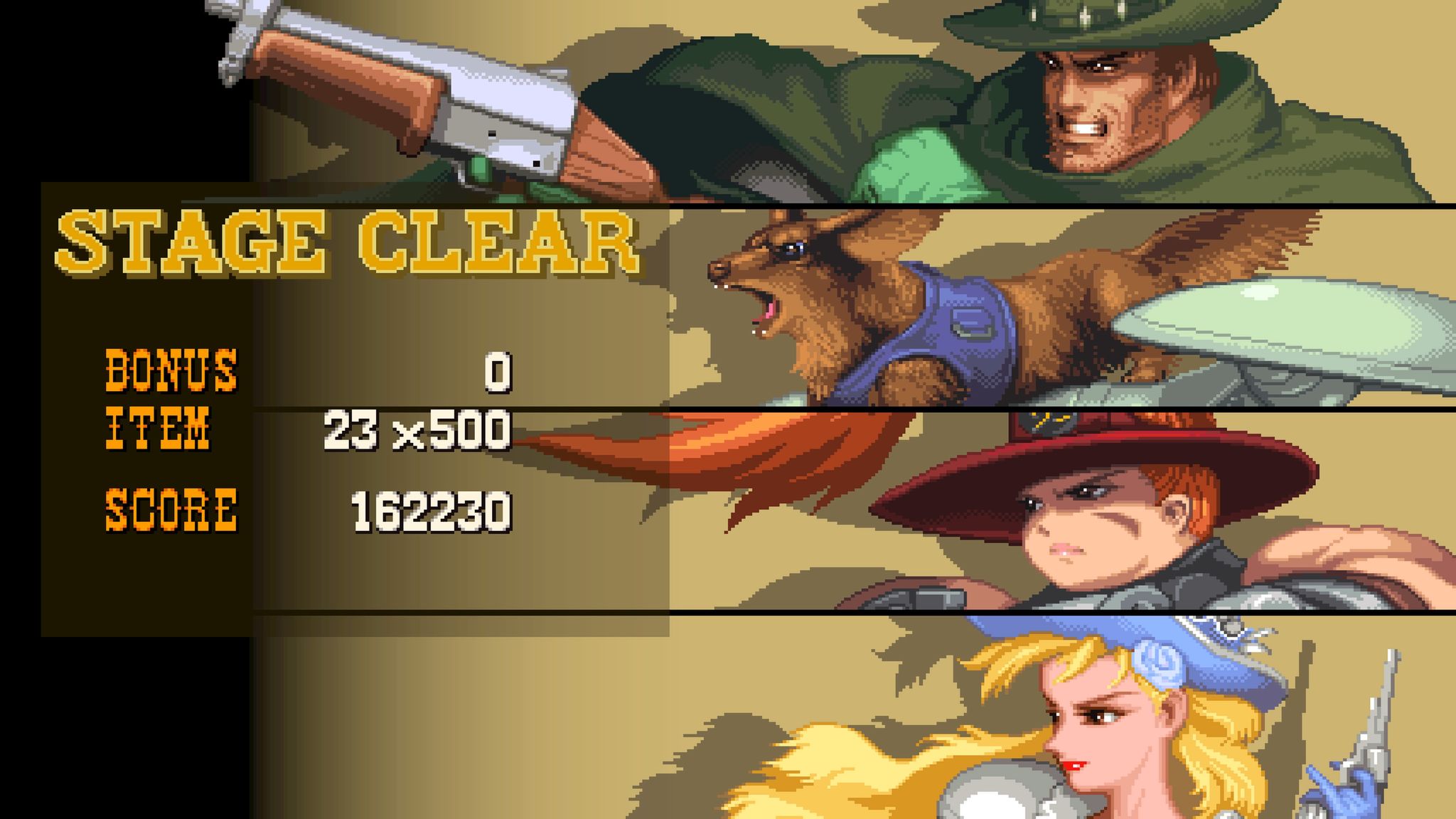
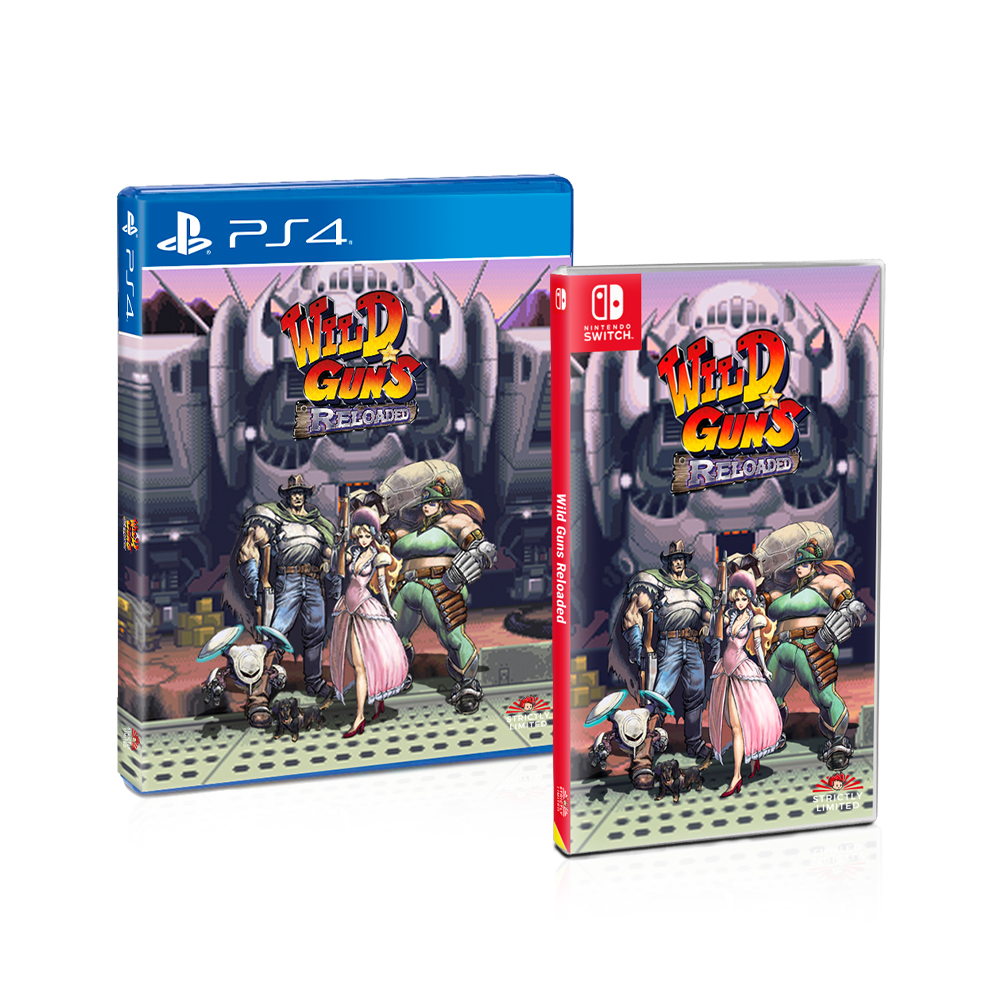
Strictly Limited Games, together with Natsume Inc. are happy to announce the pre-order start of the iconic ‘Shooting gallery’ shmup, Wild Guns Reloaded. There will be different special versions of the boxed release, which will be available for pre-order from October 3rd, 2021 only at Strictly Limited Games.
Fans of the wild west shoot ‘em up can get Wild Guns Reloaded as boxed Limited Edition and Collector’s Editions for Nintendo Switch and PlayStation 4. Plus, there will be something special for the retro game enthusiasts out there – the popular, acclaimed ‘90s classic Wild Guns will be coming back in limited quantities for SNES!
Wild Guns is a classic fast-paced arcade-style shooter, mixing classic Wild West with futuristic yet retro steampunk. Play as Clint or Annie and jump, dive, and roll to get out of the way of the barrage of bullets enemies let fly. Grab a friend and face your enemies together in 2-player co-op! Gather machine guns, grenade launchers, shotguns and bombs to defeat the various enemies and bosses in different stages, all of which are coming with a visually outstanding and detailed design.
As the worthy remastered version of the classic game, Wild Guns Reloaded brings you two additional characters for some thrilling four player action. Besides Annie and Clint, you now also join the fight against the futuristic mech-opponents as Doris and Bullet the dog!
Wild Guns Reloaded additionally features:
Enhanced visuals
Two new characters added to the Wild Guns roster – Doris and Bullet
Up to four players cooperative play (local play)
Additional stages – ‘Underground’ and ‘Flying Ship’
New weaponry to master
With all the new content, however, Wild Guns Reloaded is making sure that players still get the original Wild Guns experience as it stays true to the roots of the original.
The well-known gaming site Nintendo Life had high praise for the game, saying:
“Wild Guns Reloaded sets the new benchmark on how to bring back old Super Nintendo titles to the current generation of gamers. It not only manages to remain faithful to everything that made up the original such a stellar effort, but actually offers some worthwhile new content. Solid, memorable and fun arcade shooting action that will keep you coming back for more, even if only to see Bullet hovering about while grappled by his lethal drone”. 9/10 Excellent.
Get yourself an awesome limited Edition for pre-order at the Strictly Limited Games Shop.
The Wild Guns Reloaded Limited Edition is available for €29.99 and limited to 2,000 copies for Nintendo Switch and 1,000 copies for PlayStation 4.
Farming Simulator games capture many players’ imaginations. Whether it’s the ultra-realistic Farming Sim franchise or the cutesy Harvest Moon type game, there is something for everyone. I admit I regularly get swept up in the hype surrounding these types of games, so I’m surprised it’s taken me this long to play Monster Harvest. It’s a hybrid of Stardew Valley, Rune Factory, and Pokémon, so in theory, what’s not to like?
Developed by Maple Powered Games and published by Merge Games, this is a cute farming simulator. Set in a colourful world, you must run a farm, grow Planimals and battle your neighbours and wild creatures.
Monster Harvest has a very generic plot.
Chances are that if you are reading this review, you’ve already played many of the market-leading titles. If that is the case, you’ll be disappointed to hear that Monster Harvest comprises a very generic storyline! You control a boy or girl who must turn around the fortunes of a rundown farm. You will clear the land, till the soil, plant seeds, and run your newfound business.
So, nothing new there! However, this is the moment of the grand reveal….your uncle (a mad scientist) has harnessed the power of slime. This wonderful discovery allows people to grow Planimals (plants + animals, you see what they did there?). He wants you to spend your time working the farm whilst also investigating the local slime company, Slimeco. This is Monster Harvest’s overarching plot in a nutshell. It may be well-trodden, yet, let’s not write it off because it lacks originality.
Take some time out from farming and have a cold beverage.
Cold interactions and the usual town setup.
This genre is renowned for the many interactions you have with the locals. This heartwarming mechanic makes you feel part of the community and creates additional side quests. However, none of that is true in this title. Conversations with your neighbours do build rapport, but there is no indication that it changes the gameplay. You are never presented with gifts or love, and there are certainly no additional tasks. Subsequently, the time spent in the village feels cold and heartless. This was truly disappointing, as I enjoy building relationships, yet, sadly, this key element was missing.
Another element that appears too generic and safe was the ‘normal’ selection of shops. Purchasing goods for everyday use was only a click away, but it never wowed me. I hoped that the main concept would evolve beyond its safe limitations, but it never did. You’ll purchase food and seeds to keep you going throughout, yet this is more out of necessity than a desire to be the best farmer. A vast selection of seasonal seeds can be selected and grown to sell, eat, grow hybrid plants, or cooked once you get the relevant tools.
You’ve got to start somewhere.
Turn-based combat and no daily timer.
Growing Planimals should have been Monster Harvest’s saving grace, yet it never takes off. Sadly, this is because the combat is unrewarding, mainly. Arena-like battles take place in a five-floored dungeon and against three locals every Friday. The latter eventually leads to the main fight that isn’t worth the effort. The dungeon that is far too small to be the centre of all the action does at least offer some challenge. Each turn-based fight asks you to take on wild creatures with your homegrown talent. Victory rewards you with resources, XP, and seeds, and little else. Defeat, however, results in you losing your beloved Planimals. Subsequently, the small amount of effort isn’t rewarded, and you are left feeling deflated.
Where Monster Harvest stands out against its peers is the bizarre choice to remove the daily countdown. You can spend as much or as little time as you wish on each day as long as you have stamina. Theoretically, this is an excellent idea, but in reality, removing this restriction gives you too much free rein. The developers had an all-or-nothing attitude, and this proves that less is definitely more.
You can mark your progress with festivities and the aforementioned weekly fights. Less said about the fights, the better and probably the same can be said about each seasonal event. These limp affairs will pale in comparison to its peers, and you’ll be wondering how the developers missed the mark so drastically.
Monster Harvest looks retro, cute, and colourful.
For all its shortcomings, Monster Harvest has excelled in its visuals. I loved its cool retro style, pixelated imagery and vivid colour palette. This is exactly what I hoped to experience when I saw it first advertised, and I wasn’t disappointed. Sadly, though, for its great style, the gameplay is loaded with bugs and glitches. I had performance issues galore and the game repeatedly crashed. For a title that isn’t hardware heavy, I expected it to be much more stable.
The audio is also presented as expected. The calm and serene music allows you to calmly work the fields. However, it increases with pace and aggression during battle scenes. I enjoyed the change in tone and style and this helped to keep the standard gameplay from becoming boring. I liked the sound effects and the basic yet effective noises matched each action and weather front.
Keep yourself busy with plenty of crops.
An easy to control farming sim.
With many tasks to complete, this had the chance to be complicated. Fortunately, a well laid out set-up and responsive buttons make Monster Harvest easy to play. Sadly, what isn’t so easy to understand are the additional mechanics such as the Planimals. These elements could be easily overlooked by new players to the genre and the developers should have made the basics clearer.
This genre usually oozes replay value and you’ll struggle to put down a moreish title. This can’t be said for Monster Harvest, as the story is short and the core concept doesn’t evolve. It’s a shame, as it has plenty of potential, but it fails to deliver on what should be an excellent title.
Monster Harvest isn’t bad. It simply can’t compete with its peers.
This review has a negative vibe, and this isn’t because Monster Harvest is bad. No, it simply can’t compete with its peers. It fails to highlight its unique selling point, and this damages its potential. It has so much going for it, yet it’s comfortable to never excel in any area. There are better examples from the genre, and I don’t recommend this one. However, if you want a copy, it can be purchased here! Run your farm, grow your crops, and defeat every Planimal you encounter.
After a long period away from our TV sets, the Cotton series, one of the originators of the Cute ’em up sub-genre, has been revived by publisher Success with Cotton: Reboot! which reboots (and includes) the 1993 X68000 Sharp computer release of the first game of the series Fantastic Night Dreams Cotton.
Cotton, the titular named character, is a young witch with an almighty sweet tooth who chases any lead that would deliver the holy grail of sweets – her beloved ‘Willow’. Most often, the faint promise of said sugary goodness is fed to her by Silk, a fairy who tries to tempt, convince and cajole Cotton into saving her kind.
Accompanying the amusing cutscene-based story is some nice Japanese voice acting.
A modern take on the original, the reboot mode, Arrange, is an addictive and manic explosion of color and bullets that meshes well with an in-depth item system while attempting to ease you into the 7 increasingly difficult stages. The assortment of ways to grasp and wield this multi-colored beast means that every playthrough feels unique but makes sense to a grand total of no one – to begin with anyway.
The system itself revolves around jewels dropped by defeated enemies, which can enhance and spread your stream of bullets, be picked up to increase your point total, or provide you with magic to launch attacks. Shooting them also changes their color, which in turn changes their potentially acquired magic, and jewels shot for a long period of time turn black for huge point increases. Another element to further mix this up is a multiplier feature called Jewel Fever which converts defeated enemies into a multiplied score and is best launched with a screen full of jewels and enemies.
Shooting jewels kills two birds with one stone, building up your multiplier (bottom left) and splitting your bullet stream into two.
Thankfully, a tutorial is provided in an attempt to make this somewhat fathomable to beginners and once you get the hang of it (and are sufficiently caffeinated) – it’s a blast, and chasing the insane online scores will have you coming back for more. How often you return to it will likely depend on the effort you put into learning the intricacies of the item system, but even then your success of which can sometimes feel more like trying to align fruit in a slot machine rather than anything skill-based.
This is especially true with the different magic power-ups that are gained by picking up jewels. Not only is shooting the jewels to your desired color hard enough, but the order of your acquired magic is fixed and can’t be selected from, so when you inevitably pick up the wrong colored jewel you often end up spamming the magic button regardless of what’s next, which makes the system quite random. A further offender is the point multiplier, which displays huge figures across the screen almost immediately after firing it up, obstructing a large part of the screen and putting all your efforts in peril unnecessarily.
Personally, I’d have preferred the challenge be with defeating the enemies and bosses instead of wrestling with the weapons, but it doesn’t negate the satisfaction that can be had from a successful run.
Prizes for those who can tell me who’s hiding behind door No.1
The X68000 mode, instead of a constant stream of color and flying paraphernalia, is a more subtle mode, and with fewer complications gives you time to breathe. Simpler weapons and plainer visuals make the original pop as much as the reboot, however, giving space for every feature to shine instead of being drowned out by the noise of its presentation.
The soundtrack can now be heard, for example, and the sprites seem more vibrant, coming together for a more cohesive effort that you feel more in control of.
Rather than this being better or worse than the reboot, this juxtaposes brilliantly in the overall package, giving you two very different experiences.
This mode comes off poorly when looking at screenshots, but is actually looks far better when playing.
Further online fun can be had with a Time Attack mode which are fast and frenetic incarnations of the reboot version in 2-min or 5-min loops with smaller enemies.
If this game has anything though – it’s character, with upbeat tunes filling the menus and stages with head-bopping melodies. The soundtrack is addicting enough to warrant turning off all other sounds to enjoy the mix of retro beats, screaming guitars, and poppy riffs. Complimenting the energetic presentation further is the amusing relationship of Cotton and her tiny friend which maximizes the charm, and comes together to create a warm and fuzzy experience that is good enough to forgive the sometimes spotty translation.
Despite the reboot’s imperfections, Cotton: Reboot! is still a very good package of side-scrollers that provides enough replay value and variety to revitalize a long-dormant franchise and provide enjoyment to a new generation of shoot em’ up gamers. The price point might seem a little steep for those only looking for the retro experience, but I’d be willing to bet that most would be won over by its charm if given the chance.
The horror genre divides its fan base like no other. Do the developers go old-school and stick to tried and tested jumpscares? Or do they play it much more casually while sticking to psychological tricks of the mind? Whichever method is used, you best be prepared for brown trouser moments and unnerving shenanigans. In Sound Mind utilises the latter option while focusing on multiple story arcs and exploration.
Developed by We Create Stuff and published by Modus Games, this is a first-person horror exploration title. Set in an undefined time, you must search for answers while solving puzzles and taking on unique boss fights. You’ll explore a weird world that blends reality with a dreamlike state. With some borderline clichéd mechanics, this is a title that may divide opinions.
In Sound Mind cleverly blends each mechanic in a well-trodden manner.
No one likes a spoiler as it removes the mystery and undermines the anticipation. For this reason, In Sound Mind is a challenging game to review. Many of its key mechanics are interlaced to define the protagonist and the root cause of the issues you face. I’ll try to steer away from plot defining moments, as this is a title that deserves to be experienced with unknowing eyes.
You control a therapist who investigates the problems surrounding the people he has helped. You’ll search miserable environments and surreal scenes as you uncover many strange happenings. There are bizarre goings-on that are linked in more than one way. The protagonist must listen to past therapy sessions while searching for clues. Your journey takes you through five random locations that all need a thorough search and a keen eye for detail.
Prepare to meet this creepy beast.
Odd enemies and stealthy moments.
Staying true to its therapy roots, the Rorschach test plays a key role in developing the plot while filling you with fear. Haunting images of inkblot creatures follow you throughout. These, like other foes, can be attacked or avoided. In Sound Mind doesn’t focus heavily on its combat mechanics instead, it wishes you to explore to unravel the truth. Therefore, stealth is a worthy alternative to combat and utilising the environment is as useful as going in all guns blazing.
The convoluted game of hide and seek adds to the creepy and suspenseful nature of this title. Crouching behind boxes while avoiding the creatures that haunt you makes this a horrifying experience. The tactical approach beautifully slowed down the gameplay and kept you on edge throughout.
Creep beginnings and limited resources.
The opening scenes ooze eerie and creepy vibes that suck you into this strange, puzzling world. As the game expands past the central hub of your rundown apartment building, the creepiness subsides. In Sound Mind then delves into its true course of searching for clues while unravelling the mysteries of this dreamlike world.
The gameplay spans four distinct sandbox locations, a grocery store, quarry, forest, and a lighthouse. You are encouraged to explore as much as possible! You’ll search every nook and cranny for clues and useful tools to solve the riddles. However, the distinct lack of hand-holding makes this particularly challenging. This is where In Sound Mind will divide its community. The semi-open world and partially linear plot encourage you to carve your path. Yet, missing key objects or losing your way happens regularly, and this leads to unnecessary frustration.
Armed with limited tools, you must survive while scavenging for key items. You carry a battery-powered torch, a pistol, a gas mask, and a shard of glass. You must find spare batteries, ammo, and food to continue your adventure. The gas mask protects you from deadly fumes and the shard enables you to see hidden objects in its reflection. The latter item wonderfully ties in the surreal nature of the plot and further increases the fear factor without becoming too clichéd.
Do you dare to approach the dummy?
Provoking phone calls, a talking cat, and not so challenging puzzles.
Though much of the gameplay goes off on a tangent, some constants reign it back in. The gameplay revolves around your apartment building and the slow-burning exploration as new tools are introduced. This is supported by the discovery of therapy tapes and the “transportation” to each aforementioned zone. Then there are the constant berating phone calls! A gruff voice teases and taunts you throughout. His brutal words mock your past indiscretions at every opportunity. He’s a thorn in your side, but one of the constants that tie together this bizarre plot.
Talking of bizarre….would you consider a talking cat an oddity? I would, but in a surreal land, I guess anything goes. Your talking companion is simply another dreamy layer that makes up In Sound Mind’s crazy storyline.
Though this is coined as a puzzle title, the riddles weren’t challenging to solve. The gameplay has made searching for each relevant item the difficult element and this may disappoint puzzling fans. This adds to the previously mentioned frustrations as key objects can be easily overlooked and this, unfortunately, stalls your progress.
In Sound Mind is dated and has performance issues.
In Sound Mind has a classic grainy look that combines vivid imagery to match its dreamlike theme. Its dated aesthetic wouldn’t be problematic if there were no performance issues. Sadly, however, there are frame rate problems, bugs, crashes, and more. These tend to relate to certain areas or bosses and hopefully, a simple update will remove many of the unsightly errors.
The excellent blend of sound and silence builds a suspenseful atmosphere. I loved the cleverly thought out audio that thrived on its retro inspiration. The Living Tombstone has created unique songs for each story arc in the distinct locations. Each different track prevents the action from feeling repetitive, but it helps to tie each story to the central concept.
Search every room by torchlight.
This would be better on a PC.
When a game focuses on selecting objects with a cursor, a console controller simply lacks accuracy. Therefore, a mouse and keyboard would make playing this much easier and would enhance the experience tenfold. Other than this issue, there is little else to complain about and the straightforward layout makes learning the controls simple.
Thanks to its strange ways and easy to miss objects, this contains some replay value. With around twelve hours of gameplay to enjoy and some weird experiences en route, you’ll love being creeped out at every stage. I liked the variety in locations and the many tasks you must complete. A thorough achievement list demands you keep playing and completionists will have a challenging time finishing this.
In Sound Mind explores some taboo ideas while maintaining its horror roots.
In Sound Mind bravely tackles some taboo subjects within its horror remit. I loved how it delivered its message while staying true to its theme. The mental health issues may be uncomfortable, but hiding behind surrealism has allowed the story to flourish while capitalising on some old-school horror/detective influences. I enjoyed its blend of horror elements and how it creeped me out and I recommend you to buy it here! Battle your demons while searching for answers to the problems that haunt you.
On her 18th birthday, our protagonist Olympia takes on the challenge of finding her soulmate. Craving to follow in the footsteps of her mother, she very quickly realises it isn’t going to be as easy as she had wished. I mean, how easy would it be to find your soulmate in a town where people are too afraid to even look in your general direction? Luckily, a quick turn in events introduces Olympia to a whole cast of heroes. Leading us to this question,
Who would you pick?
Now, I never thought I’d be one to sit down and play a dating simulator. But after the hype of Mystic Messenger and the universe of Hatoful Boyfriend, I find myself much more open to the idea. There’s a point in everyone’s life where, even for a second, the thought of people fighting over us is exciting. I’ll be the first to admit it. But I’d never let this play out in real life, which is why I think I keep coming back to dating simulators.
I’ve heard a lot of praise for Aksys. The developers hold the crown when it comes to dating sims, so are known for large and in charge titles. I went into this review with high expectations after researching the company and finding pages and pages of joy. But with an extreme lack of knowledge in the field of virtual dating, I had no clue what I was really in for. I found myself definitely jumping the gun and expecting a somewhat cringey and uncomfortable experience, but that’s not what I received at all.
Exceeding every expectation
Olympia Soiree is definitely a beautiful, compelling game. Unlike my experience with other games of this kind, Olympia Soiree has an almost tangible energy to it. Within the first five minutes I would definitely suggest I was hooked. There is depth to the characters and the story, and each chapter definitely leaves you wanting more. Which is undeniably what you want from this genre. If you don’t put it down and immediately want to pick it back up, is it really worth your time? Characters need to charm, the story needs to have enough to it that you think about it in day to day life, and I think Olympia Soiree has it all.
The thing I found most enjoyable about this game though, is how genuinely misunderstood our heroine is. Usually with sims, the female lead is ditzy and clueless. Just bimbling their way through life and bumping into unrealistically lovely and ethereal strangers. But Olympia isn’t like that. Reading between the lines of the story, she’s just a people pleaser. She does what she needs to get the job done, but never really cuts herself any slack. The introduction scene explains that she just wants to be normal, for people to not be afraid. But she doesn’t know how to go about it. Rather than focusing on the storylines between love interests, your main focus is on Olympia’s story and how to help her. It just helps that those explaining what to do are visually appealing anime boys. (Definitely extra points for that).
I also loved that this game is fully narrated, leading the characters to feel more real. If I had just sat reading words on the screen for hours I don’t think I would’ve felt nearly as captivated. You learn to recognise characters by their voice, and even the change in soundtrack. Which in itself is beautiful.
Final thoughts
The soundtrack and full narration made Olympia Soiree feel like rather than playing a game, I was watching a TV show. With all the reactions and paths I wanted to take. I cannot praise this game highly enough in terms of story engagement and character design. I certainly don’t think you have the time to listen to me ramble about how genuinely beautiful it is as a whole. So if you are looking to lose yourself for an hour or ten, I think you might love Olympia Soiree. Now let me be, I’ve got boys to flirt with.
Everyone wants to be in control of their own destiny! Following orders is one thing, but having no freedom to choose your path in life is something altogether different. A caged person will always yearn to see the world, and this is exactly what happens to the protagonist in A Juggler’s Tale. It’s a wonderful German-inspired fairy tale that takes you on a journey of beauty and highs and lows.
Developed by Kaleidoscube and published by Mixtvision, this is a 3D side-scrolling puzzle adventure title. It’s a touching tale about one girl’s bid for freedom, and the cruel world she resides in. You will explore stunning locations, enjoy wonderful mechanics, and be thrilled by the classic rhyming narrative.
The theatre is now open.
A Juggler’s Tale is a short but thoroughly enjoyable experience.
I’ve played many indie titles and rarely am I shocked by what I see. However, A Juggler’s Tale surprised me because of its combination of stunning landscapes, emotional audio, touching storyline, and excellent puzzling mechanics. I thoroughly enjoyed everything I experienced and was only disappointed when it ended much sooner than I hoped. The developers have captured the classic German fairy tale world perfectly and its inoffensive style allows gamers of all ages and skills to enjoy its story.
The plot revolves around a Bavarian theatre and a story about a girl called Abby. She wows the crowds with her tightrope walking and minxy ways. Yet, for all the cheers and pleasure she gets from her adoring fans, Abby wishes to see the real world. With a smart mind and an eye for detail, only her puppet strings hold her back. You must control her as she bids to escape the ringmaster who keeps her captive and the subsequent bounty hunters who chase her.
Simplicity is everything.
What makes A Juggler’s Tale so fantastic is that its simple concepts allow you to enjoy every element. There is a perfect balance of difficulty, exploration, puzzles, and character interactions. You will venture through many locations while climbing ladders, pushing boxes, avoiding your captures, and carving new paths. During every interaction, you must ensure that your puppet strings remain untangled and branches, poles, and overhanging surfaces will prove to be troublesome.
Working your way through each problem becomes increasingly tougher, especially when you are being chased by Tonda, a bloodthirsty barbarian who has been paid to return you to the circus. As he steps up his efforts, the surrounding world turns into a dank, war-torn environment filled with starving and dying citizens. Abby no longer knows whether she wants to be free, but she can’t return to the life she once knew.
Can you beat the bear?
A Juggler’s Tale is a wonderful blend of wonderment and misery.
The basic theatrical set-up is a fantastic setting for this fairy tale inspired title. This helped the developers to create any environment or location that piqued their interests, and I loved how each Act merged into another. The side-scrolling style focussed the action linearly, and this worked well with the structured lines of the play. The earthy tones and sultry colour palette enhance the classic look and emphasise the horrendous and miserable plight of each citizen. The misery was brilliantly juxtaposed with the bright characters and the joyous but fleeting moments of victory. I quickly got swept up in the drama of the plot and I loved how it was presented.
The classic medieval style was supported by the folksy soundtrack. This lively music brought energy and fun to an otherwise sad and desperate plot. The changes in tone and pace reflected the drama on the screen, and this prevented the story from having any low points. I admit the music was great, but it paled in comparison to the booming rhythmical narration. I loved Jack’s storytelling and the many twists and turns it created. This helpful fellow guides the story perfectly, but, a word of warning, don’t get on his bad side.
Don’t touch the water.
User-friendly controls.
Though some of the puzzles may be too challenging for a younger audience, the controls are user friendly. However, with a little guidance from a competent player, A Juggler’s Tale will be enjoyed by all age groups. With few buttons to remember, it was easy to pick up the controls. My only gripe was when it was challenging to find stones or fruit that can be thrown. A helpful indicator would have removed many issues and, in turn, this would have made those moments more pleasurable.
Unlike many of its peers, this has plenty of replay value. With hidden objectives and many ways to complete multiple tasks, you must play through each Act many times to complete this title. To finish this will be a challenge, and its short two to three-hour gameplay will be experienced many times if you wish to unlock every achievement.
A Juggler’s Tale is a great puzzle game that needs to be played.
Fans of LIMBO or INSIDE will adore A Juggler’s Tale! With so many great elements to enjoy and a wonderfully narrated story to experience, this is a game that needs to be played. I loved it and recommend you to buy it here! Will Abby regret her decision to escape? A dangerous world awaits her, but surely a life filled with fear is better than no life at all?
My review with footage captured from my Xbox Series X, enjoy!
Growing up, there was always that child who got great pleasure from antagonising others. They would bully, tease, and hurt you for no reason. As we age, we usually mature and realise that this behaviour is neither appropriate nor acceptable. Don’t Touch This Button is the gaming version of this child! It’s a cruel beast that takes great pleasure from taunting you from start to end.
Developed by 9 Eyes Game Studio and published by Ratalaika Games, this is an adventure puzzle title. Set in a green space-age labyrinth, you must move through each stage by solving the logic-based problems. Each level contains a clue to help solve the puzzle, but here’s the kicker…..the clue is always wrong and you must do the opposite to what is instructed.
Get it right or die!
Don’t Touch This Button is a cruel game!
I loved Don’t Touch This Button’s mean ways, but they made me wince regularly. I’m not a man who likes to ignore instructions, so I found the concept uncomfortable throughout. I did, however, enjoy analysing the cryptic clues, and when you solve a particularly tricky stage, it’s extremely rewarding. The game revolves around unlocking doors by pushing buttons. Sounds simple, right? Mostly it is, but the difficulty does increase and much of the success relies on a logical train of thought. You are required to smash vases, push boxes, find hidden paths, twist dials, and more as you seek out each green button.
With sixty-six levels to traverse, you may worry that this became tedious and boring. Fortunately, new mechanics are added in regularly and the puzzles are challenging. You must think outside of the box during the latter levels, and failure is all but assured as you scramble for the answers. The developers tried to spice things up near the end by adding in ‘Minions’. These floating creatures don’t do anything, but you must find them and destroy them to complete the game.
So many buttons to choose from.
A silly concept that culminates in a strange boss fight.
Though many of the levels will test your mind, they are built on a humorous and silly concept that may not appeal to all gamers. I liked Don’t Touch This Button because of its childish humour, but its counterintuitive methods may annoy purists of the genre. What I found frustrating, however, was when the clues were too vague and cryptic. On one level, you must discover an area where the gravity is different from the rest of the room. There is no indication of why you should move the cubes, and I had to check a walkthrough to solve this stage. This angered me as there was no clear solution and trial and error shouldn’t be a key concept of any puzzle title.
Alongside this annoyance, I found the finale to Don’t Touch This Button to be rather strange. The sixty-six levels culminate in a bizarre boss fight involving buttons, fans, and falling platforms. The game gives no indication that this giant creature exists, and I was confused when it entered the fray. It was an unnecessary element that needn’t have been added. Though I enjoyed the closure, I didn’t know why it was angry with me, what it was, or why it existed.
Don’t Touch This Button has a dated aesthetic.
Graphics aren’t an important part of a puzzle game, I just hope that they are pleasant on the eyes. Luckily, Don’t Touch This Button uses a simple but dated aesthetic that is easy to look at. The contrasting dark greys and vivid greens make identifying essential elements an easy task. The clean-cut lines and basic stage design ensures that wandering around each level is straightforward and trouble-free.
The audio follows suit with its uncomplicated approach. The synthesised and futuristic soundtrack matches the strange environment you are exploring, and the pace ensures that you don’t feel rushed, nor does it bore you. The sound effects like much of the presentation won’t wow you, but they are suitable and allow you to enjoy the action.
Best of luck getting to safety.
Easy and responsive controls.
With many items to move around, and some tight spaces to work in, the controls needed to be accurate and responsive. Luckily, the developers got this right and the simple button layout makes playing this pleasurable. With limited commands to remember, you’ll understand the fundamentals in minutes, and this allows you to focus on each puzzle you’ll face.
Sixty-six levels is a good amount of content for an indie title, yet it won’t take you long to fly through each stage. Yes, the difficulty does increase, but for logical gamers, this won’t be a challenge. All achievements will be unlocked through the first playthrough so sadly this does affect its replay value.
Don’t Touch This Button is a nice indie puzzler that won’t break the bank.
With many puzzle titles on the market, Don’t Touch This Button will struggle to stand out. Fortunately, it’s low cost, so won’t break the bank and so this will appeal to casual gamers and completionists, alike. I enjoyed it and recommend that you buy it here! Ignore the hints, solve each puzzle, and take down the odd final boss.
Here is my video review with footage captured using my Xbox Series X, enjoy!