Puzzles have fascinated mankind for years, and people set aside hours to complete each problem. It matters not if it’s for work or pleasure, the sense of achievement when we solve each puzzle is rewarding. Recently, the genre has ventured into more dramatic and interactive scenarios, and escape rooms have become big business. Escape Simulator aims to build on this success with its challenging yet fun problem-solving experience.
Developed and published by Pine Studio, this is an escape room sim title. Available to play solo or online with another player, this is a tricky yet fun game to experience. Its simple style, colourful characters, and interesting scenarios capture your attention from the start. Its many logic-based problems will get under your skin and once you begin playing, you’ll struggle to stop.
Escape Simulator has lots to offer and many unique puzzles.
I’m a massive fan of the puzzle genre and have taken part in many escape rooms. Therefore, I was always going to jump at the chance to give Escape Simulator a go. However, I hadn’t prepared for the vast amount of problems and scenarios that were on offer. I was shocked by the level of detail and the complexities surrounding each puzzle.
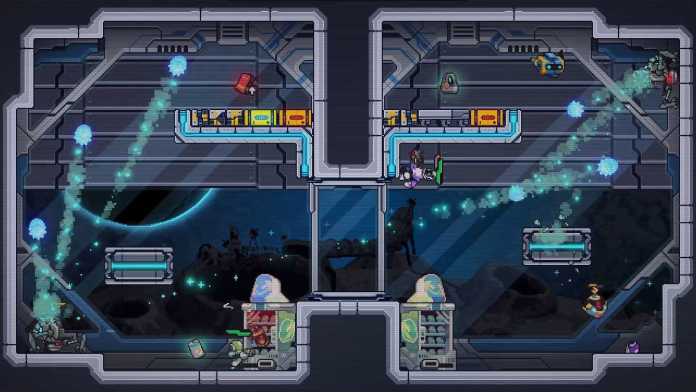
The game offers four playable areas, including the tutorial. Each of the three main scenarios comprises five stages that match each theme and have unique problems to solve. You’ll explore an Egyptian area, a futuristic space zone, and a Victorian building. Each area attempts to create theme accurate puzzles that require logical thinking and an eye for detail.
You’ll smash vases, twist dials, move pyramids, pick up gems, search for keys, and more. Each room has three main objectives to complete and achieving each one within the time limit is nearly impossible. The objectives are the same throughout and players must search for hidden tokens, complete each room, and get out before the clock reaches zero.
Decipher those hieroglyphics.
Clues, frustration, and a level editor.
When every object is a possible clue, it’s hard to decipher what is useful and what is not. Luckily, Pine Studio considered this issue and added a handy visual guide to ensure you don’t waste time with junk items. This was a considered and well thought out mechanic that makes the gameplay much more accessible. Yet, this doesn’t make the problems any easier to solve.
Some of the puzzles are frustratingly difficult and a scenario can quickly turn from a fun experience to a nightmare in seconds. With no hint system, you can be stuck on a level for hours. I wish the developers had considered this problem as less skilled gamers will be put off by the complexities of some of the puzzles.
Where Escape Simulator truly shines is its co-op action and its level editor. Co-op play requires a good level of communication to be successful. However, a good teammate does help to alleviate the aforementioned lack of hints. It was great fun solving problems with a friend and though it got messy quite quickly; it was extremely rewarding when you completed each stage together.
The level editor allows creative players the chance to design and share their escape rooms with the community. This was a fantastic idea that increases longevity while adding some interesting content.
Space is so lonely.
Escape Simulator has a nice look, but it won’t amaze you.
Thanks to the small stages, the developers have been able to focus on the finer details. This was essential when every item can be a clue. I loved how the surrounding world changed as levers were moved and puzzles were solved. Boxes can be shifted, new paths created, and fresh problems introduced. It was a clever approach that brought the claustrophobic stages to life. However, for all its positives, it won’t amaze you with its aesthetics. Sadly, they are a little dated and the textures are a bit rough in places. Subsequently, this does reduce the final polish.
The clutter-free UI and the ability to inspect every item were a brilliant touch from the developers. Flipping, spinning, and searching every item was a great way to find clues, and it gave the game a real hands-on feeling. I loved how this sucked you into the action, and no matter how obscure the item, you’ll scrutinise it, nonetheless.
A calm problem-solving title needs a mellow soundtrack. Escape Simulator delivers this and it helps to keep the action going at a steady pace throughout, however, I think this was an oversight by the developers. I’d have liked the countdown clock to be more dominant, as this would have added pressure. This could have been supported further with a mixture of upbeat and more aggressive songs. If these ideas were implemented, it would improve the experience and increase the challenge. In its current build, the music is suitable and pleasant, yet it simply fails to add to the emotion.
Can you solve this Victorian puzzle?
Easy to pick up and play.
When a game focuses on problem-solving, you don’t want to concentrate on the controls. Fortunately, Escape Simulator has a well-mapped button layout and is easy to play with Mouse and Keyboard. Sadly, though, it doesn’t support a gamepad, and this is something that should be implemented at a later date. The well-designed UI allows you to select items with ease, and moving around the small stages was simple and smooth.
Thanks to the level editor, online co-op, and multiple stages, this will keep you playing. It’s not an easy game, and its lack of hints will sadly put off some gamers. If you can cope with the challenging levels, you’ll experience a moreish game with intelligent puzzles to solve.
Escape Simulator replicates the atmosphere of every escape room I’ve experienced.
What makes Escape Simulator fantastic is its ability to replicate the difficulty and claustrophobic nature of every escape room I’ve experienced. The tough puzzles and intertwined problems will challenge the best in the puzzle genre. I enjoyed it and recommend you to buy it here! Every room is full of clues! Can you piece together the information, solve the puzzles, and escape each room? Collect the tokens, search every object, and beat the clock.
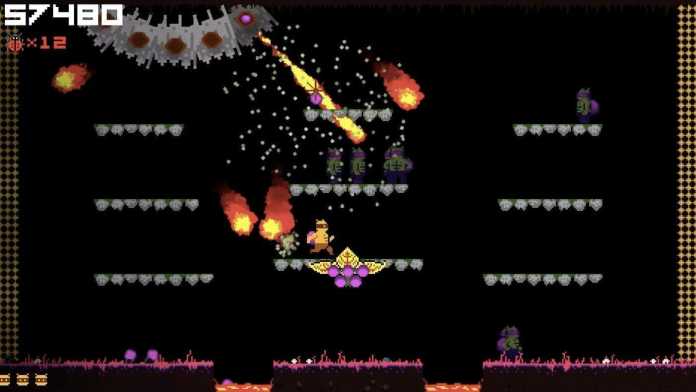
Raging Blasters is a vertical-scrolling space game developed and published by TERARIN GAMES. Also, know as shmup or Shoot ’em ups It’s not a genre I’m familiar with, yet with the amount of time I played, I enjoyed every minute of it. Raging Blasters is available on both Windows PC and the Nintendo Switch.
Ignore my awful High Score
What is Raging Blasters?
The premise is simple, you are a space cadet tasked with destroying the enemy. That is it, and it’s all the game needs. The action is constant and it never gives the player time to breathe. My eyes were darting across the screen so that I could predict the enemy’s every attack. You can control the speed of your spaceship and the direction you move on the screen. Big exclamation marks appear at the bottom when an enemy sneaks behind you which is helpful.
There are two game modes. One is the arcade mode, in which you defeat enemies and bosses to progress to the next round. Then there is the Caravan Mode. This gives you three minutes to progress as far as you can while scoring as many points as you can.
One of the many boss fights
Raging Blasters’ Presentation
The pixel art style of the game suits the simplicity of the story. But, the black outlines of the main characters are ugly and could have been cleaner.
The enemies are many and varied. The bosses have interesting designs as you progress. This keeps you on your toes as well as makes it interesting to find out what the next boss will be. The only negative I have is that your ship can only take one hit. I admit I’m not the most experienced in this genre, but it does feel unfair. The difficulty is quite high on normal, and there is no easy option. But to counter the unfairness, it doesn’t take long to start a new game. You also have access to different power-ups from lasers to a ring shield that damages enemy spacecraft.
Fast-paced combat
Platforms?
Where this game makes the most sense is on the Nintendo Switch. It is so easy to pick up and play. No long story to remember and with the caravan mode, you can have a quick three-minute round between tasks. Such as working from home. Even so, because of the low system requirements, it can run on almost any PC hardware. I used my laptop and it worked flawlessly.
The audio sounds like it comes from the 16-bit era. Fast-paced and with limited instruments which contribute to the arcade machine feel. For the majority of the time, it will play one track, but when you encounter bosses the music fades away, replaced with boss music. For an arcade game, this is all you need.
Homing weapons
The Verdict
After playing a few hours I started to get the feel of the game and how to progress. It is rewarding when you progress further than before. Much like the Souls games. For gamers that love this genre, it would appear shallow even when expanded with co-op play. For the casual gamer, but, this is a great introduction to the genre and would be a great entry point to the world of Shmup. Due to this, I can only give Raging Blasters a 6/10. It’s too shallow to be a game you come back to, but at the same time introduces new players to the genre.
Emerging from the depths of hell comes BPM: Bullets Per Minute, an innovative and punishing Rhythm FPS roguelike that requires you blast to the beat of its guitar-shredding soundtrack while teetering on a knife-edge difficulty.
If you ever thought that the standard Doom formula need a bit of shake up, then BPM is for you, as it reduces Doom down to its 90s core and shoves it into a randomizer. While the goal in BPM is to clear each grungy room and defeat the main boss of each dungeon, everything else – the rooms, the enemies, their drops, the number of ways to get potential abilities, equipment, and stat boosts – is completely random.
This makes every playthrough different – as you’ll rarely see the same upgrades and abilities in consecutive playthroughs – and requires you to adapt your plan of attack based on the arsenal available to you. If you have a revolver or a semi-automatic gun that requires frequent reloading, then you’ll need to be more evasive in your movement when planning your shots. Starting off with revolvers, you’ll unlock weapons (through the shop or in treasure chests) that extend to equipment such as laser guns, shotguns and rocket launchers, all of which handle wildly different.
The dark and environs clearly an ode to the 90s shooters of old.
Abilities and standard stats round off the trifecta of essential elements that dictate whether or not you even escape the first dungeon. Once you are lucky enough to happen upon some effective abilities, such as a regenerative ability, explosive shots and a great weapon, the real thrill of the game kicks in, with its high octane action and overpowered weapons combining with a motivating soundtrack to make you feel invincible.
In my experience, though, expecting an epic combination of abilities is like playing against the house – you are going to end up empty handed, and more often than not you’ll find yourself at the mercy of it. When you inevitably lose your one and only life, all of the equipment and abilities you’ve gained are lost. Knowing that you won’t see be able to pick-up that equipment again for hours is more than enough to make you want to throw your controller across the room.
For better or worse, this forces you to think about giving up on your current run and instead consider spending your coins in the equipment shops to potentially see better weapons in future runs (unlocked from your accrued loyalty points).
One of the shops that becomes more of an investment over time due to the many, many failures you’ll come to experience.
Keeping your heart’s BPM up and your headbanging is the game’s soundtrack, but shooting to its beat is also no walk in the park. Developing a calm trigger finger to follow the beat and lining up the enemy in your crosshairs takes practice, while getting this wrong will cause your gun to jam, and will lead you to flail around in circles even more than normal. The developers were kind enough to provide an option to disable this feature for those without a rhythmic bone in their body – like me – but they also ramped up the difficulty and lowered the points you can generate in said mode, making its benefit mute.
A nice offering after tossing a few coins into the pot. I should note that there are other levels with different designs, but well, I didn’t take any screenshots of when I was there and well, I never was able to return….
There are 10 playable characters with different abilities, 4 difficulty modes and a challenge mode which add depth to the product for those looking for more from the shooter, but the big attraction is certainly in its main mode.
It’s as clear as day that there is an enjoyable game hidden within BPM, but it might take a very specific audience to fully enjoy it. The system that strips you of your abilities upon death while offering no extra lives, for example, might be par the course for hardcore games, but linking your entire fate to the pick-ups rather than any skill you can develop, is a little too extreme for my liking. You could argue that this what the developer was looking for, and that this does indeed feel like emerging from hell as it isn’t possible to ease into the game or build momentum for more than a few minutes.
A boss. Hello.
The emerging Rhythm FPS subgenre changes up the FPS in ways I hadn’t thought possible, and is a genre that I hope continues to grow, adding a tremendous twist to the standard shooting mechanic. BPM does a decent job integrating this system, but then shoots itself in the foot centering the game around equipment drop rates rather than graded difficulty levels. While this keeps the dungeons feeling fresh from the beginning as the difficulty level is essentially static, you lose any sense of control over the events in the game and it feels like you are dicing with an invisible and overly sadistic 8-ball rather than a specific enemy.
Another element that isn’t quite so perfect are the controls, which demand a speed and accuracy that I’m not sure the PS4 controller is best suited for regardless of how sensitive you adjust the aiming settings for the joysticks, which makes me believe the PC version, which the difficulty was made for, might be slightly easier to pick up.
With its randomized playthroughs and victimizing difficulty BPM will humble even the cockiest of revolver-wielding Cliff Eastwood wannabes, but once you are able to find your groove with the rhythm mechanic, its appeal makes a bit more sense, just know that you aren’t playing BPM – it’s playing you.
Farming is one of the toughest industries to be involved in as farmers deal with long hours, horrendous weather, sick animals, poor crops, and more. However, strangely, the gaming industry smooths over the rough bits while selling us a picture of tranquillity. Farming Life is the latest farm simulator title to tempt us to live our best life in the virtual countryside.
Developed by Pyramid Games and published by Gaming Factory and Ultimate Games, this is a relaxing farming simulator. Using a Voxel aesthetic and semi-realistic storyline, you must turn around a run-down farm to help the local community.
Allow the machines to make your life easier.
Farming Life adopts a serious approach with twangs of Harvest Moon.
The farming genre attracts a dedicated fan base, and no matter the title, these loyal followers will sink hours of their life into their favourite games. Farming Life hopes to capture the attention of both Harvest Moon and Farming Simulator’s fans. With many serious management aspects and a silly rundown farm mechanic, it’ll tempt many players.
The game opens with a decent tutorial that covers the fundamentals. Here you are introduced to your rundown (Harvest Moon) farm that needs your attention. You must complete quests to build your reputation, increase your level and unlock better equipment. You must micromanage the day-to-day running and this attention to detail will drive sim fans crazy.
A relaxing game that’s packed with content.
I normally love the idea of sim games, but quickly the intensity overwhelms me. Fortunately, Farming Life is a lot more laid back. Its slower pace and quest-driven gameplay allow you to plan more accurately. You are free to design the farm of your dreams and choose between animals, crops and fruit trees to work with. You can take on as many or as few quests as you wish and the gameplay expands at your pace.
I adored this approach from the developers and loved expanding my farm whenever I wanted. I also liked how new crops, buildings, animals, and vehicles unlocked the further I progressed. The volume of content was drip-fed, making it much more relaxing. Alongside the excellent farming content, were the well thought out resource management mechanics. These complex yet simple to understand elements were cleverly intertwined with the day-to-day business.
Work the fields and spray for bugs.
Staff, animals to feed, and making profits.
A sim would be hollow without the finer details and Farming Life gets the juices flowing. You must balance cash flow with the sale of goods, growing crops to feed animals, and the well being of your staff. You will maintain vehicles, kill pests, visit the town, and expand your empire.
Balancing your workload can become hectic, but the simple staff management screen and easy to locate quests makes it much easier. Your employees will drive to town, sell your goods, sow your fields, harvest your crops, and feed your animals.
Selling your goods is a sure-fire way to make a profit, but this must be balanced with in-house needs. After all, there is no sense in selling crops that your animals would eat. Another way to keep the account full is to complete quests. There is an array of tasks that reward you with XP, reputation, and cash. The better you do, the more land you can acquire and the richer you become. You get to help the town while helping yourself, so it’s a win, win.
The Voxel aesthetics in Farming Life look great.
Voxel games fill me with dread as they normally feel unfinished and dated, yet Farming Life bucks this trend. Its warm colour palette and quaint landscape create a wholesome atmosphere. This matches the relaxed and calm theme while selling the image that farming is a romantic vocation. The free-flowing camera and ability to zoom freely were well implemented, and I experienced no graphical issues or frame rate drops.
The wholesome atmosphere continues with the calm and soft background music. You’ll waste hours ploughing fields, pulling crops, and tending to your animals, and all the while, you’ll enjoy the lovely soundtrack. The relaxing music is complemented by the realistic but not overbearing sound effects. I enjoyed the sounds of the tractors working the fields and the noises of the animals.
Time to live the chicken life.
A well-designed UI and simple controls.
Pyramid Games got the UI spot on. The clean-cut look and excellent submenus make navigating the game much easier. With plenty of content to pick from, this could have been a horrible mess. However, it is easy to pick up and simple to master.
This isn’t the first time I’ve lost my life on a virtual farm, and it won’t be the last. Farming Life sucked me in from the start and its addictive gameplay kept me playing for hours. With multiple quests, lots of content, and a large achievement list, you’ll easily become addicted.
Farming Life is the right blend of serious and fun.
Pyramid Games have created the perfect balance between serious action and mindless fun. It ticks enough boxes to interest veterans of hardcore sim games and isn’t overbearing either. I loved its relaxed approach and recommend you to buy it here! Tidy up your farm, help the community, and expand your empire.
If you want to play a macabre platformer as a weird bee that looks like a bear wearing a blindfold, there aren’t really many games for you. And who doesn’t want to control the bear-bee and carry huge purple berries in an iron maiden torture device, only to emerge as a flying winged creature brandishing a sword to fight demonic creatures that look like a ninja turtle? You really can’t make this up. I’m talking about Zombeez: A Killer Queen Remix, a 2D platformer / not-quite-endless runner that takes its inspiration and iconography from a classic arcade game named Killer Queen. The original title was a team-based effort, where 5 players competed against 5 others to win some very weird rounds, riding snails, picking up berries and fighting to the death. It was a very fun game.
Run like hell
Zombeez tries to take some of the key elements of its arcade spiritual predecessor and incorporate them in this new style of single-player gameplay, while maintaining the weirdly funny demonic feeling. Visually, this new iteration looks just as the original did, with strange creature design and pixelated graphics. The music is hit or miss, mostly because it is really chaotic, like a chip-tune on steroids. It is indeed fitting, but it will undoubtedly annoy some people. There’s not much to talk about in regard to this game’s presentation really. If this particular style is your thing, it looks perfectly OK, reminiscent of the original Killer Queen and of arcade games in general.
The gameplay follows a design approach similar to what Super Meat Boy Forever tried to accomplish; Forever was to Super Meat Boy what Zombeez is to Killer Queen. Meaning, it’s a pretty simple and straightforward score-based runner, based on a different game that defined a franchise, and is making you complete small, ever-changing levels that are filled with traps, spikes and enemies. A level can take 3 minutes to be over, but there are many alternate paths to follow so you can replay it almost endlessly to find your ideal route, to maximize your score and to fool around with the enemies.
As expected, there is a “wall of death” that follows you, here a swarm of demonic creatures, so you have to hurry and move fast to avoid dying. What is really weird is the behavior of the enemies and even weirder is the way you fight them. It goes like this: you find a big berry, you take it, and then you carry it to an iron maiden, you go inside and you come out with new powers. Without those powers, the only thing you can do is jump on enemies to push them around, if you don’t touch their swords and weapons, that is. Even when you do have a weapon, you need to touch enemies in a specific manner to kill them: you have to hit them while being above them; if you’re below, they win the fight. It’s a fun little system, weird, a bit annoying and surely not done to death.
Randomly handcrafted
Pushing enemies to fall in pits and lava pools is particularly satisfying and flying to bring death from above to unsuspecting larvae is great, but the controls don’t help much. The jumps feel floaty and slow, with not enough precision to match a fast-paced, hard as nails platformer, and the flying system is frustrating, making you press a button repeatedly to gain height but with no clear feedback and a sluggish response.
The similarity to Super Meat Boy Forever is found in the way Zombeez handles level design. The stages are not proceduraly generated, they are not totally random, but they take their aspects from a pool of possible choices, mixing them up to create the feeling of entirely different levels every time. This way, the stages feel random but also handcrafted. After you finish a short and quite funny prologue that serves as the game’s tutorial, you can compete for high scores with other players, in daily or weekly generated levels and leaderboards, or just have fun in random setups.
Weirdly fun
You can even tinker with the formula, changing the different parts of a level as you see fit, but without really knowing exactly what you are choosing each time. You change some numerical values, like 089765, and each number represents a part of the level. So, there are many combinations, but not infinite or truly random, meaning that there is some familiarity to be gained, which is a good thing and it makes the high difficulty manageable. A thing that bothers me is the snail, which is not important enough compared to its game-winning role in the original arcade game. Here, if you manage to ride the snail to the finish line, you just earn some points, not really enough to justify trying to do this in the first place. Sadly, there are more elements that are not properly utilised and feel a bit pointless, not adding much to the gameplay loop.
Then again, nothing makes absolute sense in this game, but it is strangely addictive and unexpectedly fun, despite its shortcomings. It’s a title that has the potential to keep you playing for a long time if games of this specific type are your thing, and its comedic demon-like presentation is just delicious. Zombeez manages to feel somewhat like a Killer Queen game, while drastically changing the core mechanics and the general approach. And, if you play it enough, maybe you can finally answer the eternal question: is this a bear or a bee?
Space still holds many mysteries and much of its vast depth is out of reach. Exploring its emptiness has intrigued mankind for years, and I don’t see that fading any time soon. Whenever scientists get the chance, they love to meddle with things while floating at zero-G. Though the results of these experiments are interesting, most of the time mistakes occur. This is exactly what happens in International Space Banana! It’s a fruit-filled physics-based title that’ll drive you insane.
Developed by Cool Scooter Software and published by PQube, this futuristic adventure game is infuriating. Zero-gravity has never been so frustrating, and this game will make you scream within minutes. However, it’s oddly addictive and will make you chuckle between your fits of rage.
It’s a colour explosion.
International Space Banana is simple, but you’ll despise bananas forevermore.
I’m not sure many developers create their games and hope that you despise the protagonist. Yet, that’s exactly what happens in International Space Banana. This perfectly grown and ripe banana was part of an experiment that went wrong! A scientist who is working on merging monkey and banana DNA, screws up and turns himself into the titular character. With no arms and legs to move, he must rely on the lack of gravity and surfaces to propel himself along. Its insanely silly story will make you giggle, and I loved the absurdity of the situation.
Though the story is amusing, and the narrative comical, this is where the laughter ends. International Space Banana isn’t a game for the faint of heart and players will despise this yellow fruit forevermore! This is the Dark Souls, Super Meat Boy, or OkunoKA Madness of the zero-gravity world. You will bump off surfaces, spin forever, and beg for mercy as you lose your mind and patience.
Use the obstacles to navigate zero-G.
Who’d have thought space would be so troublesome?
When the lead character is a piece of fruit, you don’t expect the gameplay to be challenging. Yet, I was horribly wrong! Subsequently, its brutal ways make it unfairly harsh and almost too tough to play. The core concept is basic, as you simply must move from A to B while avoiding obstacles. Therefore, you may be confused about my moaning about the difficulty, so please, allow me to expand.
The scientist banana is solely reliant on surfaces to propel himself, and this is pretty tricky to master. One false move and he spins in the wrong direction. If you then chuck in the many switches you must activate, gaps to navigate, and traps to avoid, it quickly becomes a hellish nightmare. Strangely, though, it’s still thoroughly enjoyable, and it’s tough to put down.
International Space Banana looks great, but depth perception is challenging to read.
Cool Scooter Software has captured the space theme perfectly. Its metallic greys and sultry colour palette show off the traditional tones and imagery that was expected. I loved the futuristic items and the larger-than-life objects that matched the banana’s stature. Yet, for all its positives, depth perception isn’t one of them. When planning your route is reliant on every item you hit, you need to know what’s in the foreground and the background. Sometimes this was impossible to tell and subsequently, the tough gameplay just got harder.
I loved the audio as it sets the tone and pace for the action brilliantly. When every room and corridor are problematic to cross, you want a soundtrack that’ll distract you, and that’s what you get. This was wonderfully punctuated by the comical narration. The witty one-liners and informative dialogue make you laugh while progressing the story nicely.
What crazy experiments were they doing?
Simple controls, but gravity is a menace.
The movement is achieved through the use of two buttons, so this was fortunately very easy to master. The developers have also allowed multiplayer action to be achieved on one keyboard. This was impressive, as it created a cramped yet fun experience. Alongside this, full controller support has also been implemented, so many input methods are available. Controlling the banana isn’t the issue, however, gravity is the problem! This menacing mechanic undermines your progress at every opportunity!
The story comprises a handful of stages that follow a similar pattern, so repetition sets in pretty early. Fortunately, though, the challenging gameplay ensures that it doesn’t become tiresome. To enhance its longevity, the developers introduced a competitive race mode for up to four players. This silly setup has you rolling across obstacles as you race to the finishing line. It was a welcome distraction from the madness and I applaud the developers for incorporating it within the game. Steam achievements enhance the replay value further, and a tough list demands you complete every element of the story, so best of luck!
International Space Banana: the rage-inducing, fruit-driven masterpiece!
My love for brutally tough games that demand a thick skin has waned over the years. However, here I am looking at International Space Banana. Its harsh mechanics are papered over by its great looks, wonderful audio, and comical story. It’s absurd, tough as hell, but addictive and fun. I hated and loved it and recommend you to buy it here! Life as an intelligent banana is fun, but there is always the risk a space monkey will eat you. Complete your adventure and try to reverse the experiment.
War and business should never mix, but sadly, they do more often than not! When greedy individuals make money from the spoils of war, it’s cold, callous, and calculated. ConnecTank proves that the wheels of commerce should stop for no one. Subsequently, you must complete every mission given to you, no matter the consequences.
Developed by YummyYummyYummy and Tamatin Entertainment and published by Natsume Inc, this is an action title. Played solo or with up to three others, you command a tank that must roll across an ever-changing world. You are loyal to no one and you are only interested in what they are willing to pay you.
ConnecTank is a hectic production line game filled with tactical choices.
The opener about war is very loose as all-out warfare doesn’t exist in this game. However, ConnecTank is all about smaller battles with rival companies and individuals who stand in your way. The game utilises a production line mechanic as you and your teammates must fix the inside of your tank before blasting your opponents to pieces. Each fight follows a similar pattern, and players are forced to think quickly, repair their vehicle and begin creating shells to start shooting.
The game begins by helping a literal fat cat called Finneas Fat Cat. His delivery company desperately requires your help, and as you need the money, you jump on the opportunity. As time passes, different companies present themselves and you are given an array of missions to complete that all have a similar tone. The main action takes place on a top-down map that spans a random location. You must view the landscape and choose the path that affords you the best chance of survival. En route, you will face an array of machines, collect prizes, and meet vendors who will upgrade your equipment or sell you new ammo.
Time to enjoy your well-earned victory.
Patterns, robots.
What I adored about ConnecTank was the simplicity of its core concept, combined with the difficulty of its tactical approach. You begin the game with a basic mech that has set ammo, some perks, and a handful of mods. As you progress, a shop opens and you are free to spend your hard-earned cash on further mods and upgraded shells.
The opening robot is suitable, to begin with, but as you face tougher opponents, its basic armour, health, and attacking capabilities fall short. Luckily, you can unlock new and improved machines by defeating them in battle! Every fight that you win earns you a piece of that mech, and five successful encounters allow you to select that machine. This is brilliant in theory, but in reality, you must work extremely hard to get the high-end brutes, as destroying them is no mean feat.
Once you have sorted the machine of your dreams, you must focus your energy on the finer points of each battle. Ammo isn’t given to you and you must match coloured scrap metal to a pattern to make your bullets. There are three core colours, red, blue, and yellow, and correctly mixing the elements is essential to creating each shell. If you get it wrong, you’ll shoot weak pieces of scrap at your opponent that they’ll simply bat away. Alongside your basic munitions, you can create upgraded missiles that move faster, are more durable, and hit harder. They are an essential tool for victory in the latter game and you must balance robot upgrades with each piece of ammo.
Navigate the colourful and treacherous world.
Pesky critters make it much harder.
Learning the fundamentals isn’t that challenging, but the developers had a nasty trick up their sleeves! Just as you get used to setting up your conveyor belts and the weaponry at your disposal, another harsh mechanic is added. Your belt can become damaged and your enemies fire pesky critters into your tank to steal your scrap and to ruin your equipment.
You’ll curse your opponents every time this happens as you must split your attention from firing shells to preventing their mischief. It quickly becomes a hectic nightmare, and failure is all but guaranteed. This is where a tactical mindset is essential, and planning your approach is key if you wish to get the most out of this.
ConnecTank is colourful yet simple.
I loved ConnecTank’s cartoon imagery and comic book style for each of the cutscenes. The striking imagery was pleasant on the eye and I enjoyed the details used in each character. The top-down map and colour palette were reminiscent of PQube’sCat Quest and Cat Quest II and this simple style was essential when the screen became loaded with monsters and pieces of scrap. Subsequently, anything more complex would have been overkill and would have made it far too busy.
Oddly, the hectic nature of the gameplay wasn’t reflected in the audio. The folksy soundtrack created a calm atmosphere that was at odds with the surrounding madness. It was strange, but it worked, nonetheless. This mellow audio was supported by the crashing sound effects of guns firing and robots exploding. I loved this use of overbearing noise, and it worked well with the theme and the aggressive nature of the gameplay.
Which mech will you pick?
The controls are a little clumsy.
When a game relies heavily on planning and quick movement, you’d expect the controls to be accurate and responsive. Fortunately, they are mostly, however, they can be a little clumsy! When attempting to throw any object, it was difficult to see exactly where it would land, and this caused you to misplace your efforts repeatedly. This shouldn’t be an issue, you may think, but in a game where time is of the essence, a missed opportunity is the difference between death and victory.
I admit that I didn’t have high hopes for ConnecTank when I first started it. I had done no research, and it appeared very generic. Fortunately, I gave it the time it deserves as my first thoughts were wildly off the mark. I enjoyed every mission I undertook and love the challenge the new robots offer. Upgrading your equipment doesn’t become tiresome, and though the gameplay was repetitive, it was never boring. Its large achievement list will demand you return, and playing with friends makes it more enjoyable, still.
ConnecTank is a gem of a title.
Rarely do I say this, but ConnecTank exceeded my expectations in every element. Its simple concept, combined with its tactical approach, was clever and the music was understated and well balanced. It took me by surprise how addictive and intelligent the gameplay was and this gem of an indie title is one of my favourite games in 2021. I loved it and recommend you to buy it here! Pick your robot, create your ammo, and collect your well-earned reward.
My video review with footage captured from my Xbox Series X, enjoy!
The synthetics are rebelling, causing chaos in a futuristic space world, and it’s up to the four titular “Gravity Heroes” to save the day. First, they have to discover why the synths are acting up. Something seems to be off, turning the robots against the humans and bringing closer the threat of an all-out war. Surprisingly, this is the story told by Gravity Heroes, a 2D pixel-art shoot ‘em up that can be played solo or with up to four people. It is surprising because, usually, a game of this style and caliber is not expected to actually care about the plot. Gravity Heroes doesn’t tell a complex narrative about the nature of humanity, but, nevertheless, you will find more than you’d think.
The story is simple, full of exposition-heavy dialogue that gives away most things, but the four heroes do have some depth. First of all, while they look almost the same, albeit with different colors on their suits, these heroes have some personality. Interestingly, there’s also a bit of character-specific dialogue that changes depending on who you’ve chosen to play as. The writers even tried adding small backstories to keep things fresh, and it’s an effort worthy of praise, simple as it may be. It’s better, undeniably, to be able to identify with the characters, even on a basic level, than controlling faceless avatars and blowing away at baddies for no clear reason.
The campaign is short, ending in 2-3 hours, but it’s enough to tell a small, contained story, mainly through dialogue in the beginning and end of missions. It’s not a particularly engaging script, but surely it’s commendable enough for trying.
Gravity is subjective
Getting past the plot, we find ourselves in tiny maps comprised of one “screen” with some traps and platforms that we can use to our advantage (they can also be a disadvantage, depending on the situation). Our main goal is to destroy all the enemies that come in waves. It’s a simple premise, with classic shoot ‘em up antics reminiscent of older arcade shooters like Smash TV mixed with some 2D Mega Man-like platforming.
What differentiates Gravity Heroes from other similar games is, well, gravity. You see, we can manipulate the flow of gravity so we are able to move vertically or horizontally at will. If you use a controller (it is without a doubt the preferred way to enjoy this game) and you tilt the right analog stick to one direction, the flow of gravity shifts accordingly. Keyboard and mouse controls are decent, but inevitably harder.
For example, if you tilt the stick upwards, your character turns upside down and falls until hitting the ceiling, where they start walking -the same can be done in every direction. This gimmick gives you an edge in battle and allows you to use the stages’ space as you see fit. It’s a cool trick than opens up many possibilities, but, sadly, there are some caveats.
Bullet hell needs tight controls
The most important fault that can be found within the gravity-shifting system arises because of some frustrating controls. The jumps are not responsive enough, the characters can’t turn in the 2D space while shooting a gun, and, in general, movement is brought down by a slow feeling. Also, gravity feedback is a bit sparse and you end up confused more often than not, not knowing if you’re going up or sideways. Action of this sort needs a laser-precise control scheme to be enjoyable and unfortunately Gravity Heroes doesn’t manage. Because of this, action pieces that should be exhilarating puzzle-like shootouts end up being frustrating and cumbersome. The main gameplay mechanic, as cool as it is on paper, doesn’t really take off.
Then, there’s the high difficulty which, paired with the problematic controls, creates annoying moment-to-moment gameplay. It is worse if you try to play solo, because the game is clearly designed to be enjoyed in multiplayer, as evident by its bullet-spongy enemies. Some additional small annoyances make things worse: the weapons are not balanced, meaning that some of them are virtually useless and others too powerful. Also, you have no way to switch between them, as the one you equip takes the place of what you already carried. This in itself is not a problem, but it leads to situations where you have a shotgun that is not helping at all, and you have to deplete its ammo to be able to use your trustworthy laser-gun.
Additionally, the enemy types are not enough to maintain the desirable levels of variety. Some of them are downright annoying, with no clear attack patterns and many highly damaging moves. Boss fights are particularly hard, leaning in a “bullet hell” approach that is efficient in its design, but again affected by the aforementioned problems. Unexpectedly, the levels switch things up sometimes by introducing thematically fitting puzzles. Again, decent puzzle design is brought down by unresponsive controls and unpredictable character movement. When you finish the campaign, you can go back in a higher difficulty mode made available after the first completion, you can chase higher scores, or play multiplayer matches with your friends in versus or survival modes. Nothing too substantial, but enough content to stretch the playtime for some hours.
Pretty, simple fun
The presentation is fitting, portraying the heroes and enemies in cool, well-made colorful pixel designs. The levels are even better, boasting some nicely drawn landscapes, derelict space stations, abandoned buildings and more sci-fi backdrops. Everything runs smoothly, and the action is accompanied by ear-catching tunes in futuristic-miami-vice style or in slower, cavernous melodies. Gravity heroes will not blow you away, but it gets the job done. The biggest visual downside is that some enemies, while decently designed, don’t convey their type in an efficient manner, letting you try to predict their attack patterns based on lacking feedback.
All in all, Gravity Heroes is a fun little game that is sure to satisfy hardcore arcade shooter fans. Its presentation is decent, the mechanics are interesting, and the story packs some unexpected depth for a game of its type. Sadly, it’s a shoot ‘em up that could be well above average, but some problematic design choices and subpar controls don’t let the core concept shine. If you have friends who are nostalgic for the arcade-era shooters, you’ll enjoy an action packed afternoon.
Far Cry is back with its sixth main game outing following an initial delay which for me was a welcomed delay to apply more polish to the game, something that you can feel right away as you play. The real question is with Far Cry 6, would Ubisoft stick to the tried and tested formula of the series or as they have with Assassin’s Creed, attempt to refresh the series to show that it can carry on as a long running and popular series. Well, I can say that not only does it achieve the same chaotic playground fun fans will expect from it but there are a quite a few improvements and gameplay changes that I never considered being something I would enjoy and yet, Far Cry 6 has really become my favourite installment since Far Cry 3!
Fry Cry 6 introduces us to the charact of Dani Rojas (no not the character from Ted Lasso) and a character that the player can decide which gender they have, the first of many borrowed mechanics from recent Assassin’s Creed titles. Once the player has chosen their Dani, the opening prologue will see you fleeing from a military attack on the city, running to a boat with the hope of escaping to America and the opportunity it may bring them. Two major moments happen in this opening, first the player takes the role of Dani and secondly, we are introduced to the game’s big bad and for me the greatest villain yet for the series in Anton Castillo, more on him a little further on. The escape fails however, and Dani is left washed up on the shores of the island of Yara, alone in a place heavily under the dictator boot of Castillo with little options other than joining the rebellion force of Libertad who want to put Dani’s military training to good use.
This is only the second Far Cry entry that I have played on PlayStation, the first being Far Cry: Primal on PS4 but I will say this uses the features of the PS5 very well indeed. Far Cry 6 has a massive playground for players with coastal and jungle environments to urban towns, villages, and former tourist locations now all captured and used by Castillo’s military. The speed of the new generational console SSD’s provides the quick loading you want for a large map using a fast travel system, something I suggest players utilize once further into the game and missions begin to venture deeper into the varying areas of the map. The haptic feedback and adaptive triggers of the Dualsense controller add more than you would expect with the triggers of different weapons using the adaptive triggers and anything from the rocking of a boat you are using to the force of being knock down by an enemy, explosion or the wildlife using it to bring extra immersion to the experience.
Visually Far Cry 6 is stunning with vibrant colours and land stretching as far as the eye can see which invites players to go exploring as any good Far Cry game should do. With Yara being controlled for decades by dictators, something clearly inspired by real world Cuba, you will see that it is a place almost stuck in time with many cars being classic models with only the military having more modern vehicles to drive and fly, showcasing how oppressed the people are and how completely in control the line of rulers has been with Anton Castillo perhaps being the most ruthless of them.
I do want to bring attention to the abundance of Accessibility options, continuing Ubisoft’s focus on making gaming possible for everyone, and the options available are full of features available to everyone that I advise taking the time to look through them to see if they can help your experience whether you feel you might need them or not. Subtitles that can be modified and applied to give sound queues for action as well as conversational dialogue to being able to change actions that would require holding down a button or stick can be turned into using a toggle system instead and visually changing the colour scheme and lay out of the player hud are fantastic to see and all available before you even get into the game. I have degenerative arthritis in my hands so I can have pain using my fingers to hold down buttons and doing thumb clicks of sticks, so for me I have the weapon wheel on L1 (Left bumper for Xbox) set to toggle instead of hold and sprint set to how far I push the left stick forward instead of clicking it. Having this integrated as options and not highlighted as Accessibility Options also makes them feel more natural choices instead of in their own group on the menu. I applaud Ubisoft for being one of the leading developers and publishers who are at the forefront of putting Accessibility in their games first rather than as an afterthought.
Back to the gameplay itself and whilst so much of this game will feel very familiar if you have played a Far Cry title in recent years, Far Cry 6 changes quite a lot of well-known mechanics. For example, your character Dani, now features in the cinematic cutscenes for the story whereas before you would only be seeing an event from a first person view and often having very little dialogue it at all in response to other characters. This helps the story telling for me especially now when you are accepting a mission or being offered one, the game will switch to a screen where the character giving you the mission, lays out the briefing directly to you away from the world. In the world other character’s and NPC’s will respond to previous actions you have completed as well making you feel even more part of the story and the world.
That world itself now feels far more grounded as well than previous games with the formerly standard radio towers being the way to reveal areas of the map now gone, instead the map will be revealed simply by exploring it, which does take some getting used to at first. Military locations have replaced the former Outposts, and some can be taken over as previously by removing the enemies there so the Libertad forces can take control but there is less fan fare in doing so such as you can get a bonus for doing it undetected and without triggering any alarms but even if you do that now there is less of a feeling of accomplishment other than just getting it done which is a shame, it was something I really liked to do in previous games and now it feels like it matters less if I do it all Ninja style or all guns blazing.
Perhaps the two biggest changes come in the way the crafting and skills systems work in Far Cry 6. Starting with the skills system and you will quickly notice that Far Cry 6 no longer uses one, in fact Dani will have many abilities right from the start such as the chain machete take downs right away, which previously would have taken skill points to unlock the different stages. Dani is capable of so many talents and skills that would have taken hours to unlock in other Far Cry games with instead the focus of improving what Dani can do is now based on a system borrowed from Assassin’s Creed. Weapons can be modified with different types of ammo to take down specific types of enemy and vehicles for example, and you can immediately carry three main weapons and a side arm of choice which again, would have been something you had to unlock via skills or crafting to do so. Whilst you are still able to change your loadout on the fly, the workbench’s did encourage me to try to use one loadout and adapt to any situations with it rather than the standard “oh now I need a rocket launcher, luckily I have 5 in my pocket” style. Now that is just a personal playing style for myself but it does make the gameplay feel more purposely for me, equipping weapon to see how they work and experimenting with the mods to tailor it to what I may find in the world.
Crafting itself is also very different as no longer do you have to hunt wildlife or find plants to make potions and equipment. If you want to heal you just use medicine or a medicinal capsule from your inventory. Materials are used to create mods for weapons, but perhaps the big new element is the “Resolver” gear that can be created. Resolver gear is very much in the sense of guerilla tactics of creating something from what you have so these are weapons which are of the “more out there” style compared to more conventional weapons. Introduced to Dani from the man I wish I could say is my actual uncle in Juan Cortez comes the Supremo backpack system, a pack that strangely enough, goes on your back all Ghostbuster proton pack style, with different types all having special abilities such as launching rockets at targets or firing an EMP blast to knock out security and alarm systems to blasting off causing massive damage like a jet pack. Each can be modified with throwables you want and modified to give extra abilities like more stealth or a bonus for getting headshots for example. Essentially the Supremo system makes Dani a one-person guerilla group and as you will unlock many types, you can tailor your surpemo like your weapon loadout for the mission or area you are about to go and do or visit. Early in the game this crafting system can feel a little out of reach as you will lack the materials, mainly depleted Uranium for the Supremo crafting or Gunpowder from FND crates for weapon mods, but once you are in the game a bit more, these become more than available allowing you to create the tools you need to take the country back from Castillo.
Missions will come in the standard main objective style to move the story forward Operations to the side quest style Yaran Stories and as always, once you are in the world there will be plenty of distractions to provide things to do and with a map the size of this, there will be plenty of things to do. Now without a skill system requiring XP, the reward from doing all the side stuff and Yaran stories as compared to the obvious main campaign operations, will be the shops will offer more weapons the higher level you are, and more crafting options made available. As you explore you will start to find more Gear for Dani to wear which is again taken from Assassin’s Creed’s more recent titles. Gear sets will have a head piece, chest, legs, feet, and gloves and can have different bonus elements for Dani such as quieter movements or increasing defence against certain ammo types for example. Now as with all games, often the best gear will also be the ugliest which is why thankfully, the AC style of being able to equip an item but change its appearance to anything else you own allows you to have the cosmetic look you prefer but the best bonus from the gear you have collected. A rather nice touch.
Naturally we should talk about the Amigos, the pet companions that in previous games would take the completion of a mission midway through the game to obtain but here you are given your first amigo in the first hour of the game in the form of the crocodile Guapo. Amigos will have their abilities as well depending on what you need your companion to help with such as Guapo having the ability to heal itself and even self-revive but they can also be a hindrance in that people can be scared or alerted by your Amigo. They can be ordered to a location or can be sent to take down an enemy and they all have enhanced abilities that can be unlocked just by having them perform certain tasks like a certain number of enemy take downs or by having them loot bodies for you. Other animals in the world can be seen as always, some friendly and some not so friendly but thankfully no Honey Badgers but there are evil git Roosters so be on your guard.
The main selling point of the story must come in perhaps, well certainly for me, the most fun big bad villain in Anton Castillo, played by the incredible Giancarlo Esposito. Anton Castillo is an absolute bastard of a character, a quiet man who has complete and utter dominance over his believers and supporters. As the President of Yara, he believes in force to keep the people down and under his thumb and he has a vast military to maintain that control. His presence in the cut scenes is Goosebumps level brilliant, such as the opening prologue which saw Dani trying to escape by fishing boat only to have the boat seized by Castillo’s forces because his very own son, was hiding on the boat trying to get away and to make an example to his son, he had everyone on the boat slaughtered to dissuade his son from ever trying to escape again. The story will see Anton teaching and grooming his son into becoming the leader Anton believes he must be to continue the brutal dictatorship of Yara. The performance by Giancarlo Esposito is electric, the animation is so good that combined with his voice performance, a mere look to his subordinates is all he needs to do but when he raises his voice, you can feel the characters tremble before him. It adds so much to the story to have this performance which along side perhaps the best voice cast yet for the series, just makes this a must play game even if you are not a regular player of Far Cry games.
Far Cry 6 is a successful continuation of the long running series which is smart enough to keep the very elements that bring players back to the series time and time again but aware enough to start making changes to that formula, changes that work well. The map is huge so there is a lot to do and whilst some of the side activities may feel repetitive, the variety in how you can take on the world with the Supremo system and different weapons means there will always be a fresh way to play. The story is strong and tackles many difficult themes of what it means to have a country and people completely under the rule of a tyrant and dictator which in 2021 is still very much a real scenario in some parts of the world. The Cock fighting mini game is very on the nose in terms of what it represents and though it is a legal activity in Cuba, the inspiration for this game, the novelty of it wears off very quickly to the point where you can play and complete all you need to do with it in a few minutes and never go back to it.
This is just more of what makes the Far Cry series so much fun to play, a chaotic world with crazy random events and fun missions that can all be played solo or with a friend in co-op, there is even additional side stuff to do co-op with the Expeditions which will be expanded over the life of the game as well as the Season pass content that will bring all the previous big villains into Far Cry 6 in a fun way for fans. It plays incredible on new gen consoles for those fortunate enough to have a PS5 or Xbox Series X/S in your setup and it feels like a celebration of everything that has come before along with new aspects to keep it fresh and fun for veteran players and newcomers.
All I ask is that you look after Chorizo, he is just the best boy and deserves all the nose-boops, yeah I said it, in a game where violence is the key to victory, Chorizo the little sausage dog on wheels, is the cutest thing you will see in gaming today, so look after him for me ok!
The genre of first-person shooters used to be so straightforward! All you had to do was pick a team, select your class, and away you go. Now, I’m all for evolution as it keeps the genre alive and ensures players return for more. Yet, I’m not so sure adding physics-based mechanics is the way forward. However, here I am looking at Bouncy Bullets 2 and its crazy manipulative ways.
Developed by Petite Games and published by Ratalaika Games, this is a physics-based FPS. You must work your way through forty-plus levels of increasing difficulty. To make matters worse, you must consider every opponent you face and the surrounding environment if you wish to succeed.
How are you going to get to the portal?
Bouncy Bullets 2 is not your standard shooter.
I admit I used to love first-person shooters, and I was addicted to COD 4. Yet, my reactions have slowed and I don’t enjoy getting my arse handed to me. Subsequently, I’ve left the genre alone for a considerable time, as my enjoyment has somewhat dwindled. However, not one to back down from a challenge, I thought I’d give this single-player title a shot.
Luckily, its slower-paced mechanics and labyrinthine levels negate my snail-like reactions. Your only time pressure is the ever-present clock that ticks away in the corner. This constant reminder adds a fine layer of pressure that is oddly enjoyable. Unlike many of its peers, the standard shooting mechanics are a little unusual. Enemies vary in colour, and you must shoot specific rounds or bounce bullets off walls to annihilate them.
Will those lasers help?
Traps, obstacles, and maze-like stages.
It’s unusual to blend the FPS genre with a challenging maze-like puzzle experience. However, Bouncy Bullets 2 has succeeded. Its simple shooting mechanics rely on you attacking specific coloured enemies with matching bullets. You’ll face yellow, pink, and black foes en route to becoming victorious. You are armed with yellow and pink bullets and you must ricochet shots off walls to kill your black opponents. This can be horribly challenging, as it’s tough to shoot, dodge, and move at the same time.
Alongside the difficult shooting elements, you must work your way through the maze-like levels. This is easier said than done, as you must avoid water, flames, lasers, circular saws, bullets, and leap chasms to get to the end portal. With projectiles flying past your head, you must focus on carving a path and surviving. It tests your patience and ability whilst also being fun.
Bouncy Bullets 2 is colourful but dated.
Few indie titles push graphics to their limits, and sadly, Bouncy Bullets 2 isn’t one of them. Its basic and blocky design is vivid and will catch your eye. Yet, this doesn’t mask its dated nature. However, this wasn’t an issue, as the labyrinthine levels were enjoyable to explore. With multiple floors being utilised, you must scan all around you to stay alive. The stages are brilliantly thought out, and this adds to the game’s difficulty. I lost my sense of direction repeatedly and I cursed the developers many times.
The damning nature of the core concept isn’t reflected in the jovial audio. The upbeat soundtrack will make you smile as you scream in frustration. It was a strange choice from the developers, but it did make me chuckle. The sound effects are very basic and just about match the actions you complete. Unfortunately, the audio didn’t wow me, but it’s perfectly serviceable and no worse than other indie titles.
Take down the pink guy!
Sluggish controls make jumping tough.
When jumping gaps is a key component of the gameplay, you’d expect it to be spot on. However, the slow to respond controls cause you to fall to your death repeatedly. Subsequently, the already hard gameplay is just a bit tougher! Fortunately, however, aiming and shooting your weapons are easily achieved and moving is pretty smooth. If the developers could improve the jumping command, then the game would be improved vastly.
Forty-plus levels of varying difficulties are a great return for such a small outlay. The challenging stages will keep you playing for hours, yet the achievement list is completed in around sixty minutes. Thankfully, this doesn’t impact the replay value as a fun speedrun mode and hidden collectables test you and keep you playing.
Bouncy Bullets 2 is a tough and colourful affair that’ll test your patience.
Bouncy Bullets 2 drove me mad because of its tough gameplay and maze-like stages. Yet, I admired it for its interesting mechanics that’ll test your patience. It’s great value for money and I recommend you to buy it here! Shoot your foes, find the collectables, and get to the portal.
James Bond remains one of cinema’s most prized commodities, raking in the money and entertaining the audience. Why doesn’t the world tire of 007?
The Bond Franchise: All Time High and Refuses to Die
James Bond, the super spy created by Ian Fleming, has always been popular. The combination of guns, gadgets and glamour is what makes James Bond so intriguing to audiences. James Bond is the greatest super spy the world has ever known. He’s also one of the most beloved film characters in all of cinema history. The character of Bond is one that has remained popular for over fifty years. The reason for this popularity can be attributed to the fact that each actor who plays Bond does something different with the character while still maintaining certain aspects of his personality.
The Business of Bond
One can also assign 007’s staying power to the way that the business of Bond has been run; even though the release of Bond films have been relatively consistent over the years, it’s never been to the point of oversaturation. The periods between these films has always been long enough to nurture the public’s appetite for more. The Bond films are lavish productions, with costs running into the millions, yet, while they’re distributed by big studios like Sony or Universal, they’re made by Eon productions, which has been described as a ‘mom-and-pop’ operation, and this is because for years, the franchise has been in the hands of the Broccoli family. Either way, owning shares in production companies like the three just mentioned would line the pockets of investors and traders alike.
A franchise that ages like a fine wine
The MCU has been greatly piloted by Kevin Feige, but the rate of at which Marvel films have been churned out has caused many to suffer from superhero fatigue. There can be little doubt that Bond’s steady rate of release combined with the fact that the films almost always deliver an expected degree of quality have allowed the franchise to age like a fine wine. Over the years each actor that has boldly taken on the mantle of 007 has played the character to his strengths, thus defining each tenure as an era. Quite recently audiences had the pleasure of seeing the Daniel Craig era come to end in absolute style with the release of No Time To Die. And while many Bond aficionados will always debate which era or actor is the best, with Sean Connery usually coming up tops, most place Daniel Craig at a close second. Craig’s tenure has been unique; he’s the only actor who had the opportunity to play the character from a hard reboot. This also allowed the producers to depart from the episodic nature of the Bond movies and do something they’d never done before with the character – to give him an arc. The Craig films combined tell an entire story from beginning to end, and if the ending if No Time To Die is anything to go by, it will be interesting to see who will ask for a Vodka Martini next and fill those shoes.
It might be beloved, but it’s also about the money
It’s easy to overlook the fact that the 007 movies are about more than just satisfying fans and movie-going audiences alike; they’re also about money – a whole lot of money! The Craig era alone has generated nearly $3.2 billion and when one takes into account the fact that the revenue from the entire series is $7 billion, it soon becomes apparent that Craig’s era has been a real money spinner. The Bond films outside of their entertainment value have always served as great vessels of advertisements – watch No Time To Die to see how often Bond makes sure that everyone can see it’s a Heineken he’s drinking – with each film providing a slew of product placement opportunities. And let’s not forget the merchandise; toys, video games released across a slew of consoles since 1982 and an official 007 domain where fans can buy everything Bond under the sun. James Bond is important both culturally and as a currency.
The youth of today have a vast array of entertainment options at their fingertips. Whether it’s the Internet, cartoons, or TV shows, there is something for everyone. Growing up in the 80s, I loved cartoons, and fortunately, my children enjoy these classics as well. However, I can’t prevent them from watching modern kids’ programmes. Blaze has recently captured their interest, so when Blaze and the Monster Machines: Axle City Racers was released, I let them have a copy.
Developed by 3D Clouds and published by Outright Games, this is a colourful racing title. Coined as perfect for any age group, I think the developers were a little hopeful. As an adult, this title offers little challenge, and a minuscule amount of content. However, my children loved it and subsequently, I lost my Xbox Series X for many hours.
Blaze and the Monster Machines: Axle City Racers captures the essence of the show.
If you have never watched the show, let me quickly get you up to (blazing) speed. Every story revolves around AJ and his monster machine called Blaze. His team of friendly trucks must complete missions while teaching the audience about maths and science. So, fortunately, it has an educational edge that’s produced in a fun and colourful way. Like all great kids’ programs, it has a villain and in Blaze, the baddie is called Crusher! He has a sidekick and together they cheat their way through life but always fall short. The producers of the show love a good moralistic ending.
Blaze and the Monster Machines: Axle City Racers focuses on high adrenaline racing with the odd smattering of information. The similarities to the TV program are minimal and its faithful elements revolve around the characters and their voices. The lack of depth or connection to the TV series won’t bother younger players, but it irked me considerably.
When a game uses a big name to sell its product, I expect it to try to be an extension of the franchise. Sadly, though, this appears to be cashing in on its popularity.
Use your power-ups to get ahead.
Limited modes.
The game offers three distinct modes to enjoy. Quick Race, Play with Friends, and Adventure. Each has further sub-menus, and except for Play with Friends, must be tackled solo. The gameplay revolves around races of three laps in specific locations. Each has tried to have a unique look and style, but sadly, it all appears the same.
The main mode is Adventure which gave the impression there would be some depth to the gameplay. Unfortunately, this wasn’t the case. The mistitled mode should have been labelled as a tournament because that is all it is! You will take part in three separate events, each comprising three races. You complete the event, move on to the next, and eventually arrive at the finale. The last race mixes things up and you go head to head with Crusher. It offered little in the way of a challenge but was a relief after so much repetition.
The Play with Friends option is where it comes to life, and here I spent most of my time competing with my children. Presented in a split-screen fashion, I loved how well it performed and how smooth the gameplay was. My kids enjoyed the fast racing and the simple approach from 3D Clouds.
Take in the sights as Blaze.
A limited roster of characters, but at least they were unique.
A small roster of characters is available to be picked. You have the chance to select the key protagonists from the series and this was enough for my children. I, however, wanted more options and the ability to customise my truck. If the developers had allowed for customisation, this would have added some depth, which was sadly lacking.
Though the choices were sparse, I have to applaud the developers for their eye for detail. I liked how each machine had a unique skill set and special power. These are charged by collecting spanners that are located on each map. Blaze has his ‘blazing’ speed, Darington drops confetti, Crusher slows you down, and so forth. Charging the power-ups was guaranteed, as the developers were overly generous with the placement of spanners. Again, this worked perfectly for my kids, but it reduced the difficulty further for any adult gamers.
Blaze and the Monster Machines: Axle City Racers looks the part but is dated.
Blaze has a distinct style, and this has been captured in Blaze and the Monster Machines: Axle City Racers. It’s just a shame that it’s pretty dated. The colourful landscape, familiar machines, and twisting racetracks entertained the kids throughout, but for me, I wanted more. There wasn’t enough complexity to any event, and the gameplay was impacted because of this. No matter the difficulty, the computer never challenged you. When you have nothing to look at, except for some dated graphics, it becomes tiresome quite quickly.
Fortunately, the audio wasn’t as drab! The familiar voices and little sound clips bring the gameplay to life. The use of the theme song was a hit with the kids, and it set the scene nicely. The engines are a little lacklustre, but they work in a childish cartoon environment. The constant chatter from each character was enough to fill the room with laughter, so 3D Clouds has got this element right.
This mode is great with kids.
Excellent controls for children.
Continuing with the praise, the controls are exceptional for a younger audience. They are simplicity personified and there is even an option for automated driving. This makes it much easier to play as a family as the computer assists younger players. This was excellent as it levels up the playing field nicely. I admit I was dreading the normal arguments and frustrations as I introduced the family to the first race. However, I was wrong to be concerned, and subsequently, we all had a great time.
The kids were beaming while they were playing, and they were desperate to play again. It’s clear that this has hit the right note with them and the game is aimed at a less skilled and younger market. As an adult, you’ll need limited time and patience to complete it. Therefore, I won’t return to give it another go unless my kids insist on trying to beat me.
Blaze and the Monster Machines: Axle City Racers is perfect for youngsters.
I rarely give out two scores for a game, but Blaze and the Monster Machines: Axle City Racers needs it. As an adult, it’s clearly lacking and underdeveloped. It is unashamedly cashing in on the name, but this, sadly, is nothing new. For this reason, it scores between 4 and 5. Alternatively, my kids adored it! They couldn’t care less about the lack of complexity or character models. They smiled throughout and want to play again, so for that reason, it gets an 8. If you have children this is a must-have and I recommend you to buy it here! Pick your favourite character, win each race, and pick up the coveted Cup.
My video review with footage captured from my Xbox Series X, enjoy!
Building upon the success and maintaining the momentum of the overwhelmingly favoured realme 8 series, today, realme will launch one more best-seller candidate: realme 8i. Since its inception, realme has been carrying out the mission of democratising tech for all, by providing cutting edge technology at an affordable price.
This time, the realme 8i brings the first 120Hz ultra smooth experience with a never before seen affordable price. Equipped with a powerful G96 processor, 120Hz display, and up to 7GB Dynamic RAMwhile also featuring a massive 5000mAh battery with 18W fast charge, realme 8i is poised to be the ultimate smooth superhero.
realme 8i comes with Helio G96’s debut in Europe. The Helio G96 possesses two large A75 cores and 6 small A55 cores, and its main frequency reaches up to 2.05GHz.
The Helio G96 processor is jointly overseen and launched by realme and Mediatek, demonstrating realme’s determination in ensuring quality control and product development. Seven senior engineers were assigned to guide the whole process. Over the course of 106 days, they had technically optimised 3 major performance features, making the realme G96 the only G9 series chip that can power 120Hz displays for updated smooth gaming performance. This is also realme’s first screen in which the brightness can reach as low as 1 nit.
Combined with high-quality performance, the realme 8i also offers the ultimate immersive viewing experience with its 120Hz refresh rate, 6.6inch full screen with a 90.8% screen-to-body ratio, allowing more people to enjoy the ultra-smooth experience together.
Apart from processor and screen display, realme also upgrades the smooth experience with DRE technology, Dynamic RAM Expansion, where 4GB RAM can be upgraded to 7GB RAM (only 4GB+128GB version). The DRE technology is originally derived from computers and is now applied to smartphones for comprehensive uplift in overall smoothness. Not only do apps open faster, but background processes also move faster.
The realme 8i not only delivers a smooth experience but the 5000mAh Battery has also been optimised for ultimate, long-lasting performance that doesn’t affect the day-to-day experience. With just a single charge, this device lets you talk to your friends for 40 hours straight, listen to 1,200 songs or watch 18 movies.
Wales Interactive, acclaimed for its FMV games and narrative-driven stories, has revealed that interactive movie Bloodshore is set to wash up on all platforms starting November 3. Players must battle out in a dystopian battle royale set on a mysterious island location; where influencers, death row inmates and failing celebrities compete for a life-changing cash prize and all the attention they could ever want.
As the world watches on, player decisions dictate the story arc and outcomes — ‘Kiss the girl? Kiss the boy?’ or ‘Kill the girl? Kill the boy?’ — in Bloodshore they can end up being the same thing.
The brand new trailer below shows the life-or-death decisions players will have to make, and with eight hours of FMV footage — the most for any game — each playthrough has winding paths that will affect the narrative and the outcomes of the story.
Bloodshore arrives November 3 for PC, PS4, PS5, Xbox One, Xbox Series S/X, Nintendo Switch, Mac, and iOS, with more details available on the Steam page.