Tilt Happens—Here’s How to Stop It Before It Wrecks Your Online Gambling Session

0

Everything’s fine… until it’s not. One bad beat turns into another. A small loss snowballs. Your bets get bigger, your reasoning fuzzier, and before you know it—you’re not playing anymore, you’re reacting. That’s tilt. It creeps in fast, wrecks your focus, and empties your bankroll if you let it. But tilt doesn’t have to take over. This guide walks you through how to recognize the warning signs early and gives you practical tools to shut it down before your online gambling session goes off the rails.

What Tilt Really Is (And Why It Hits So Hard Online)

Tilt isn’t just frustration—it’s a shift in how you think. When you tilt, you stop analyzing and start reacting. Logic goes quiet, emotion takes over. Online gambling makes it even easier to slip—there’s no dealer watching you, no chips to physically stack, no pauses between hands. The next spin or bet is always one click away. That frictionless speed fuels emotional gambling and makes tilt feel almost invisible—until the damage is done.

It’s a Mental Fog

  • You’re still playing, but you’ve lost the thread of your strategy
  • Decisions feel rushed, blurry, or impulsive
  • You stop tracking your balance or time

It Feeds Off Frustration

  • One unlucky outcome triggers a wave of “I’ll get it back” bets
  • The urge to “fix” things replaces good judgment
  • Every new loss feels personal, like the game is out to get you

It Feels Urgent

  • Tilt makes you want to win back fast—right now
  • The faster you try to recover, the sloppier your play gets
  • It turns a short loss into a session-ending spiral

How to Spot the Tilt Warning Signs in Yourself

The earlier you catch tilt, the easier it is to stop. It doesn’t usually come out of nowhere—it builds. Most players experience a mix of emotional, physical, and behavioral cues. The trick is learning to spot yours before they push you over the edge. This isn’t about meditation or deep self-reflection. It’s about creating small tripwires that catch you before things escalate.

Notice Changes in Your Body

  • Clenched jaw, bouncing leg, tight chest—these are tilt alarms
  • Even subtle tension can signal your frustration’s rising
  • Pausing to notice often breaks the emotional loop

Listen to Your Internal Narration

  • Phrases like “This game is rigged,” “I’ll just win it back,” or “One more…”
  • Tilt often shows up in the words we say to ourselves
  • Recognizing this voice helps you step out of it

Watch Your Bet Size and Speed

  • Are you clicking faster than usual? Doubling your bets without planning?
  • Tilt loves speed—it cuts off the thinking part of the brain
  • When your pace jumps, so does your risk

Tilt-Busting Techniques That Actually Work Mid-Session

Once you feel yourself slipping, don’t power through. The smartest move is to interrupt the pattern. These techniques help you step back, cool down, and reset—without losing your session entirely. You don’t need a full ritual. You need friction. Something that slows your emotional response just enough to let logic step back in.

The 5-Minute Hard Stop

  • Set a timer and step away, no matter what the screen is showing
  • Use that break to breathe, move, or grab water—not stew in frustration
  • Most tilt fades with distance, not more betting

Re-Check Your Goal

  • Ask yourself: what was I trying to get out of this session—fun, profit, relaxation?
  • If your current mindset doesn’t match, stop or reset your intention
  • This reframes the game from reaction to purpose

Use a Physical Anchor

  • Keep a small object nearby—a coin, a stone, a rubber band
  • When tilt hits, pick it up, feel its texture, and breathe slowly
  • This simple move grounds you and breaks emotional autopilot

Conclusion

Tilt is sneaky, fast, and powerful—but not unstoppable. The key isn’t eliminating tilt—it’s catching it early and having a plan when it shows up. By noticing your triggers, adding pauses into your session, and creating space between emotion and action, you can keep control. Smart gamblers don’t win every hand—they stay cool enough not to blow up their balance when things go sideways. And that control? It’s the real edge you bring to every game, no matter the outcome. Finally, if you are looking for the best online blackjack casino, check out the following article!

From Obsession to Balance: How to Gently Reduce Your Online Casino Time

0

It doesn’t take a full-blown addiction for online casino time to get out of hand. Maybe you tell yourself it’s just for fun—but the hours stretch longer, the deposits get bigger, and the line between play and escape starts to blur. You don’t need a dramatic breakdown to realize it’s time for a reset. The goal isn’t to quit cold. It’s to restore control without losing the thrill entirely.

This isn’t about shame. It’s about shifting from compulsive clicking to conscious playing. You can still enjoy the occasional spin or hand. You’ll just do it with your eyes open and your limits intact.

Step One: Track Your Play Without Judging It

Before you cut back, you need to understand your habits. For a week, keep a simple log. Jot down your gameplay in the trusted casinos you use:

  • When you play
  • For how long
  • How you feel before and after
  • What you win or lose

Don’t edit or sugarcoat. You’re not building a case against yourself—you’re collecting data. Patterns will start to emerge. Maybe you play more when you’re stressed. Maybe you always go over budget at night. This awareness gives you a roadmap.

Step Two: Shrink the Window, Not the Game

Trying to stop completely can backfire. Your brain resists sudden deprivation. Instead, compress the time you allow yourself to gamble. Set a specific time window: maybe 7–8 PM, only on weekends. When that hour ends, you log off—no negotiations.

Use alarms or app timers if needed. Over time, you can tighten the window further. What matters is that you define the space gambling is allowed to take up. That simple act reintroduces a sense of agency.

Step Three: Build in Cool-Down Activities That Actually Work

If you try to stop gambling and just sit in silence, boredom creeps in fast—and boredom often leads straight back to the casino app. So you need a buffer. Something that feels good without feeding the same cycle.

Here’s what helps:

  • Walking outdoors with music or a podcast
  • Cooking a real meal from scratch
  • Playing a game that’s fun but not tied to money
  • Talking to someone who doesn’t bring up gambling at all

These don’t replace the buzz of a win. But they reconnect you to your body, your space, and your sense of time—three things gambling often hijacks.

Step Four: Turn the Game Into a Budget Challenge

If numbers excite you, reframe your playtime as a budgeting exercise. Give yourself a micro bankroll—$10, $25, maybe $50 per week. If you lose it, that’s it. If you win, you split the profit: half goes to future play, half to something real.

This adds friction to mindless spending. You’ll notice the urge to reload, but you’ll also notice the thrill of restraint. Turning limits into a game makes discipline feel less like a punishment and more like a clever win in its own right.

Step Five: Separate the Screens

Many people gamble more when it’s integrated into their everyday screens. If you play on your phone, delete the app and only access it on a laptop. If your casino time is tied to certain tabs or browser bookmarks, clear them. Make gambling feel like something you step into—then out of—not something you can slip into unnoticed.

This makes logging in feel intentional, not impulsive. It slows the process just enough to help your better instincts catch up.

Step Six: Talk About It—Even Casually

You don’t need a support group or a therapist (though those help). But mentioning to a friend or partner that you’re trying to reduce your casino time—even lightly—adds accountability. You’ll think twice before diving into a marathon session. Not out of guilt, but because you’ve spoken your intention aloud.

If you don’t feel like talking to someone in your life, write it down. A simple note like “I want to play less because I feel better when I do” can become a quiet anchor when cravings hit.

Final Thought

You don’t have to give up gambling to take back your time. You just have to change the relationship—from one where the game pulls all the strings to one where you choose when to show up, how long to stay, and when to walk away.

Balance isn’t flashy. But it feels a lot better than waking up with regret and a drained account. Start small. Shrink the window. Rebuild the thrill in ways that leave you clear-headed, not foggy. The fun’s still there. You’re just meeting it on your own terms now. Finally, if you want to compare top-rated casino platforms, then check out the following article!

Review: LONESTAR

Developed by Math Tide and published by Thermite Games, LONESTAR is a strategic Roguelike spaceship deck builder.

I found myself truly surprised by LONESTAR. I know I have said this a few times now, maybe I just discovered love for Rogue-like Card Battles, I don’t know. What I do know is that I had fun playing LONESTAR. 

However, this praise must come with an *asterix* for the word ‘Had’ holds much value today. My time enjoying LONESTAR was cut short, not long after I just got the hang of it. It seems in the rush of finishing development of their game, Math Tide forgot to add the most important aspect of the game… A goal!

A LONESTAR TRAVELLER

The idea is quite simple. You are a bounty hunter, and you have a ship with limited slots. You place weapons and modifiers in these slots, respectively. As the game progresses, you get more items for slots, more slots, and other random helping hands.

As for the gameplay, you must fight and destroy other ships in 1on1 combat. Win and you proceed to the next round, lose and you start from the start(Classic Rogue-like stuff.)

To fight, you are dealt some cards. These cards have random numbers between one to ten on them and are one of three colours(Blue, Red, White). Each item in your slots reacts differently to these cards and must be them to the best of your ability to win the fight.

Both ships line up their weapons in their turn, but the battle happens at the same time. This repeats turn after turn, till one ship is destroyed.

A LONESTAR PROBLEM

Now, for the stuff I hated.

The tutorial is all over the place, leaving you more confused than anything. The number differences in attack do not always work as they should. This could be a feature, but LONESTAR never made it clear.

All the upgrades have very confusing descriptions, and it gets very confusing to know what you want.

The difficulty jump between each enemy is insane, leaving you very little room to experiment with your moves. This often made LONESTAR’s battles seem dependent on luck.

In the grand scheme of life, all of the above are things that can be overlooked. However, what ruins this game fore me is the lack of reason.

The Missing Reason:

The big dopamine rush that games like LONESTAR have to offer is the ability to unlock and try a new variety of items and objects. LONESTAR heavily lacks in this department. 

Starting from the beginning, you are shown two locked ships and a list of locked pilots. The feeling screams that this is what you strive for, what you must unlock. Things take a turn.

First, you will unlock a set of pilots. Before starting a run, you must pick one to man your ship. These could be men, women, aliens, or even animals. These are dozens of different pilots who barely change anything in terms of how the game is played. They all do have some sort of power-up with them, but that does not change the game in any way worth the time and effort. 

After that, you have the two unlockable spaceships. Sadly, the starting one is the only one worth using. The others are just fat in front of fire and have upgrades that just don’t compare.

Suppose you take an interest in the game’s minute upgrades and changes. Sadly, you achieve all this just above level 10. A place you can reach within your first or second playthrough. Not nearly enough to get your money’s worth from the game. 

So that’s the final statement, isn’t it? 

A LONESTAR’S FINAL WORDS

So that’s the final statement, isn’t it?

LONESTAR had potential, but it burns out fast. Once the novelty fades, you’re left with a shallow loop, forgettable unlocks, and no real reason to keep playing. It’s not broken, just hollow — and not worth the effort.

Exploring the Most Popular Online Gaming Genres still

0


2025 continues to be a great year for online and offline gamers alike. With almost half a year through, it is still captivating players with unique experiences and innovative gameplay. The online gaming landscape continues to expand, always offering something new for every type of player. Let’s delve into the most popular online gaming genres of the year and highlight a few upcoming titles to keep an eye out for.

The Thrill of Survival

Battle royale games remain a dominant force in online gaming offering the thrill and excitement of last-player-standing experiences that keep players on the edge of their seats. Battle Royal titles continue to thrive and shine, with regular updates, new skins and never ending content, these games are here to stay and dominate the online sphere.

Fast-Paced Action

FPS games have long been a staple in the gaming world, from great single player narrative driven stories to nowadays huge online maps, and 2025 is no exception. First person shooters keep on offering adrenaline-pumping and almost realistic action with a lot of competitive multiplayer modes that attract a dedicated player base.

Risk, Reward, and Relaxation

In recent years, online casino games have carved out a major niche among gamers seeking fast, rewarding play. Titles range from traditional favourites like poker and blackjack to modern video slots filled with bonus features and mini-games. What draws many players in is the blend of entertainment and the thrill of potential wins — often from the comfort of their mobile phones.

Online platforms now offer everything from live dealer games to tournaments where players can compete for prizes and leaderboard spots. Special promotions such as various online bonuses, themed slot games, and progressive jackpots keep the experience fresh and engaging. With major platforms like Action Network continuously expanding their offerings, online casino games have never been more accessible or socially integrated.

Behind imagination Storytelling

RPGs have always been all about to captivate players with rich narratives, fantastic worlds and endless character development options. Online RPG’s sometimes involve a huge amount of players to complete raids and a lot of titles offer expansive worlds and deep lore, allowing players to embark on epic quests and shape their own destiny.

Competitive Sport and play

Sports games  keep on maintaining their popularity as a lot of gamers like sports – so combining these two passions is always a fan favorite. Whether it is Football, Basketball, or almost any other sport, these games provide fans with the opportunity to control their favorite teams and athletes, and the option to beat an online rival with your favorite team is priceless.

End of the game 

The online gaming landscape in 2025 is bigger than ever, and every title coming out wants a piece of the action. The days of couch play are almost gone and online games are dominating. That’s why online gaming is trying  to cater to a wide variety of interests and moods. Whether it’s intense competition and thrill in shooters, or story-driven adventures, players today enjoy more choice than ever before. 

Review: GoobnBalloonsDX

GoobnBalloonsDX is a fun-filled and deliciously old-school experience. Though the action is rudimentary by design, it is addictive, and I struggled to put it down. The compact arena-based action demands an eye for detail, razor-sharp reactions, and plenty of patience. This crazy mixture of ingredients will drive you crazy. Yet, though you’ll want to rage quit, you will bite your lip, scream a little, and push on regardless.

IconicArts LLP developed and published this arcade shooter. It is a single-player or cooperative affair, and each objective and level has a repetitive edge. However, it is this familiar approach that makes it particularly user-friendly and ideal for younger gamers.

GoobnBalloonsDX tells a wholesome but crazy story.

I love it when a developer blends a wholesome plot with something a little outlandish. GoobnBalloonsDX does this with its tale of friendship and destruction. The kingdom of Goobstar has been invaded! Goobert and his friends must work together to save the denizens of this strange kingdom. Unfortunately, things rarely go to plan, and you must use your wits and skills to overcome every challenging stage.

Deadly balloons are your foes in this classic shooting endeavour. They come in all shapes and sizes and cause untold mischief as they float around the skies. Bully balloons, spitting balloons, spiked mines, and party balloons must be destroyed and navigated if you wish to survive. On top of this, each level has a goal that must be completed if you wish to proceed.

Plenty to see and do.

GoobnBalloonsDX has loads of worlds and plenty of bonus stages to explore. However, it is the unique nature of each level that impressed me. Whether you are destroying targets, aiming for a set score, avoiding birds, or dodging immortal balloons, it will test you.

Each level must be completed as quickly as possible. A faster time equals a higher score, and a higher score equals a gold or silver medal. The high scores are for bragging rights, as any score will allow you to progress. Yet, if you wish to grab every achievement, you’ll need to move quickly or grab a friend and tackle this cooperatively.

GoobnBalloonsDX is refined but attractive.

Visually, I wasn’t blown away, but I liked what I saw nonetheless. The developer has created some fun arenas to observe, and the animation is smooth and realistic. I loved the underwater world and the silhouetted stages. These were the most creative levels as they offered the most challenging and rewarding gameplay.  

The audio is as repetitive as the core mechanics. The noise of your bullets and the pop of each balloon were overbearing. However, the sound effects were suitable even if they occasionally fell flat.

Easy to master.

GoobnBalloonsDX is easy to understand and even easier to master. The hero moves left to right on a flat surface. Furthermore, the bullets fly across a limited plane, and this causes issues. Had the aiming been more fluid, you could easily destroy every balloon you encountered. Instead, you must combine lateral movement with your crosshair if you wish to tackle every foe.

Though this is a simple game, there is plenty of replay value. There are loads of levels to complete and plenty of gold medals to grab. Moreover, there are bonus stages to tackle and plenty of characters to unlock. Each of the new characters has a different weapon that adjusts your tactical approach. This mixes things up nicely and helps to keep things fresh.

GoobnBalloonsDX is a good indie game.

Though GoobnBalloonsDX won’t set the world alight, it is a good indie game. The action is easy to understand, and there is enough variety despite the repetitive gameplay. I liked the challenging action and appreciated the artistic flair of some of the more outlandish levels. Accordingly, I enjoyed it, and I recommend buying it here! Can you save Goobstar and become a hero? Dodge the balloons, pop everything in sight, and save the day.

Review: The Darkest Files

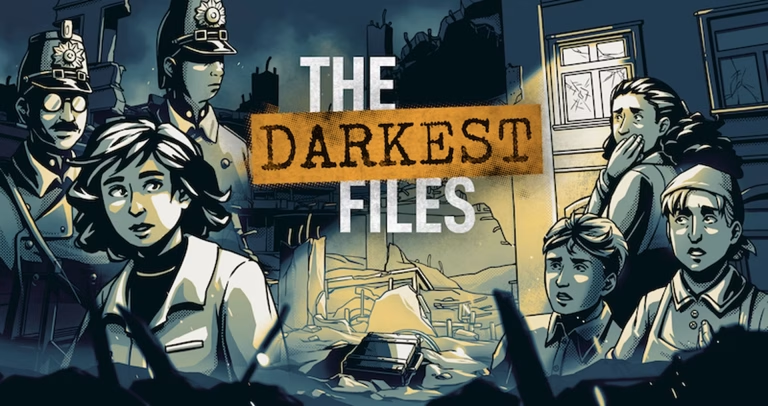
Paintbucket Games, the Berlin-based studio renowned for its poignant historical narratives, returns with The Darkest Files, a gripping courtroom drama set in 1950s West Germany. Building upon the foundation laid by their previous title, Through the Darkest of Times, this game immerses players in the role of Esther Katz, a young prosecutor determined to bring Nazi war criminals to justice in a society eager to forget its past.

Beautifully presented, Immersive Narrative

Set in 1956, The Darkest Files places players in the shoes of Esther Katz, who joins the real-life prosecutor Fritz Bauer’s special unit. Bauer, instrumental in the capture of Adolf Eichmann and the initiation of the Frankfurt Auschwitz Trials, serves as a guiding figure as players navigate the complexities of post-war justice. The game delves into the moral ambiguities and societal resistance faced by those seeking accountability for Nazi-era crimes.

Visually, The Darkest Files employs a cell-shaded 3D aesthetic reminiscent of 1950s pulp comics. The monochromatic palette, punctuated by bold reds and yellows, enhances the noir atmosphere, while full English voice acting brings authenticity to the diverse cast of characters.

Innovative Gameplay Mechanics

The game masterfully blends investigation and courtroom drama. Players gather evidence, interrogate witnesses, and reconstruct crime scenes using a unique “Blueprint” system. This mechanic allows for a step-by-step recreation of events, requiring players to piece together testimonies and physical evidence to build a coherent narrative.

A standout feature is the “inner eye” mode, where players experience witness testimonies firsthand. These interactive reconstructions enable players to explore scenes, identify inconsistencies, and challenge falsehoods, adding depth to the investigative process.

The Darkest Files Also has highly customisable difficulty settings which allows players to casually enjoy the story. But where the game shines in my opinion is the head scratching higher difficulties. Where a slight oversight on the players part will result in injustice.

Emotional Resonance and Historical Significance

Beyond its mechanics, the game confronts the emotional toll of seeking justice in a society reluctant to face its atrocities. Esther’s journey is fraught with bureaucratic hurdles and societal pushback, reflecting the real challenges faced by post-war prosecutors. The narrative doesn’t shy away from the possibility of failure, emphasizing the complexities of legal proceedings and the weight of moral responsibility.

My Conclusion

The Darkest Files is more than a game; it’s a profound exploration of justice, memory, and the human capacity for both denial and redemption. Through its compelling narrative and innovative gameplay, Paintbucket Games offers players a chance to engage with a pivotal moment in history, challenging them to consider the cost of truth and the courage required to pursue it.

Review: Old Skies

Oh no. Old Skies has opened one of the oldest and largest cans of worms ever known: time travel. The grandfather paradox and ‘don’t tread on anything’ tropes are well known, but as soon as you acknowledge that time can change, everything unravels. Cause and Effect isn’t a one-off event, after all. Every effect leads to a cause. If you change one link, then everything after changes. It’s impossible to predict. What if you change something that stops you making the decision to time travel? Does everything just loop forever?

You know what, let’s leave the headaches aside for one moment. Old Skies deserves more than rambling about time travel. Fiddling with chronology is just a vehicle, after all, that delivers us to some excellent and heartfelt writing. Old Skies excels in the character writing, to the point that the sight-seeing tour across history takes a back seat. It’s coupled with some sparks of genius in the gameplay, even if it does use time manipulation as a bit of a crutch.

Old Skies

Plenty Of Time

The figure at the centre of all this time related wibbly-wobbliness is Fia Quinn, an employee at ChronoZen, who looks disarmingly like Courtney Hope in the promo art. Her job is to take clients to a past date of their choosing and alter a single element, with the hope of getting a positive outcome in the future. There’s a book of rules behind it, of course, and you can’t fiddle around with the past of important people. Also Fia comes armed with a gun that can obliterate organic matter. In case you try and sucker punch your school bully, or something.

Old Skies‘ plot is structured across six acts, all of which take you to different time periods, at the behest of different people. It’s a cleverly laid out plot. Ostensibly, it’s six unrelated stories, but the nature of time travel – and Fia herself – starts knitting them together. Fia hops between time periods, and will occasionally stumble into characters who she helped decades ago. It’s tricky keeping track of who’s who. The story directly confronts the impermanence that comes with time travel. Things in the future can change on a minute-by-minute basis, as timelines are constantly fiddled with.

This sort of thing requires some definite finesse in the writing, and Old Skies has some excellent writing. All of the clients feel unique, with some feeling more comedic and others being quite brutally dark. It delves a lot into regret, understandably, but its time travellers become the more interesting characters. They are locked in time, unable to change their past. So everything around them changes instead. The writing explores their struggles with a world that, for them, is constantly in flux. How can you feel for anything if it might be gone the next second? It’s a deep theme, handled well.

Old Skies

Time, And Time Again

The gameplay fits in relatively well with this. On the surface, it’s a fairly routine point’n’clicker. You find random things on the ground, and stuff them into your cavernous pockets. Then you rub them on anything that looks promising. The key difference here is the introduction of time. We can hop between time periods, for one. Information in the past can be brought with us to the future. We also have access to an archive that allows us to see people’s altered timelines too, which can give us clues on how best to approach people and solve puzzles.

There are some strokes of absolute genius. The zenith is a chapter where three clients all approach us about the same thing, one after the other. If we run into our past selves, we paradox to death. So after we solve the first set of puzzles, we have to achieve a different goal while avoiding our past selves. Then, avoiding two of our past selves. It’s great. Still, these are excellent puzzles floating in a sea of dialogue tree puzzles. Quite often we solve problems by just exhausting dialogue trees, punctuated by dying and rewinding. The ‘death, then rewind’ gimmick feels like a bit of a crutch at times.

They’re not terrible. Most require you to read the relevant documents beforehand, but given the very first puzzle has us uncover a padlock serial number so we can scan it and put in the reset code? I was hoping for something more techy. My only other quibble is a very particular one: the characters look a little strange to me. The background art is absolutely gorgeous, but I find the in-game character art to be a tad peculiar at times. It’s in the faces, I think. Character animations are absolutely gorgeous though.

Old Skies

Old Skies – Fantastically Written

Old Skies feels like six clever vignettes that tell cautionary tales about time travel, with a big overarching theme connecting them all together. Ultimately, it’s unlikely that going back and fiddling with your past is going to make you happy. We then have to deal with the crippling loneliness that accompanies the time travel, along with a big handful of difficult choices along the way. I’m not sure how much difference the choices in Old Skies actually make, but they gave me pause for thought.

That’s a sign of good writing, along with the fact that the ending was one of those where you can vaguely see it coming, but there are loads of other places they could’ve taken it. It’s a great ending, by the way. Ooh, it’s been hard not to spoil this one. But Fia, and her colleagues Nozzo and Duffy, all feel very well rounded and so their stories have a great emotional punch. While there’s some cleverness in the gameplay, it takes a definite backseat to the story. Not necessarily a bad thing. If you want to delve into a time travel story, and twist your brain into an emotional pretzel, then you can’t go wrong with Old Skies.

(Old Skies‘ Steam Page)

Review: Damn!

Damn! isn’t the most challenging game. However, the action is fun, and the missions will keep you busy. Despite this, the gameplay is somewhat repetitive, and this holds things back. Had the developer incorporated more game modes or different quests, the game would have thrived. Instead, you’ll enjoy 5 different missions across 25 unique levels.

This top-down twin-stick shooter was developed by 7 Raven Studios and published by Totalconsole. It is a single-player affair with a fast-paced mindset. Moreover, your hero has limited health, and explosions, projectiles, and other obstacles destroy him in seconds.

Damn! is missing a story.

I have no idea why the hero is smashing a never-ending army of robots. Moreover, there is no clue as to why you are saving hostages, planting nukes, or running away from a ticking bomb. All I know is that death is guaranteed, and 3 stars per mission is your goal. 

The core gameplay is simple. Move around each level and collect new weapons along the way. Once you have a powerful gun, you must mow down waves of demented androids. If you cannot achieve this aim, you will perish and your mission will fail. No matter your goal, you must think fast and keep moving. 

Simple but fun mechanics. 

Each level is rudimentary and straightforward to explore. Additionally, each world comprises 5 levels and 5 different quests. The 5th stage is a huge boss fight. This enormous brute is tough to overcome, and some tactical nuance is required. 

Though you’ll need some elements of luck, anyone will be able to play Damn!. None of the missions were complex, and saving the hostages or escaping the ticking bomb was a cinch to complete. Consequently, if you want a challenging time, you may wish you had picked up another game.

Damn! is easy on the eye.

The simple aesthetics complement the basic gameplay. Each stage has a rudimentary but interesting design. Furthermore, the robots are understated, but I liked their animation and the small but fascinating roster. Explosions and projectiles can be overbearing, but the game never falters, and there were no performance issues.

The audio is loud, uncomfortable, and in-your-face. Each weapon has a distinct and unruly sound effect that makes your ears hurt. Moreover, the upbeat soundtrack adds energy to each arena encounter.

Tight controls. 

Damn! delivers tight and easy to master controls. There is no tutorial, but some trial and error gets you up to speed in no time. Subsequently, this can be played by gamers from all skill sets.

Replay value is somewhat limited. Once you nail 3 stars in each of the 25 levels, there is one other mode to try. The arena option is fun, but I found it quite repetitive. Consequently, it won’t keep you coming back for more.

Damn! is fun but limited.

Damn! isn’t the most complex affair. Keys, weapons, and medikits add some layers of depth. However, it is paper-thin, and this prevents it from excelling. I enjoyed the rudimentary gameplay, but its limitations hold it back. Accordingly, despite these shortcomings, I recommend buying it here! Can you complete each world and every quest? Grab a gun, explore each level, and hope to stay alive.

The Evolution of Entertainment From Retro Arcades to Modern Digital Playgrounds

0

The transformation of entertainment from the whirring, mechanized sounds of early arcades to the electronic playgrounds of today is a reflection of a shift in intimate technology, culture, and accessibility. Such transformation, driven by the development of interactive media, has significantly altered how people engage with play activities. From the bodily allure of initial arcade cabinets to the boundless possibilities of virtual reality and online websites, entertainment has evolved to meet changing social demands while still retaining its core appeal: escapism and interaction.

The Development of Online Platforms in Recreational Entertainment

One of the primary phases in the evolution of entertainment has been the development of online platforms, particularly for recreational activities like gaming and socialization. These web locations have leveraged the global reach of the web to offer a variety that can be accessed anywhere. Internet-based casinos, for example, provide a wide range of games, from virtual slots to live dealer play, appealing to a diverse demographic. Social casinos have gained popularity, where members play casino-type games in social settings without wagering money. Others, like new sweepstakes casinos, have also emerged, offering alternative ways to participate in similar activities. They usually incorporate social aspects, such as chat functionality and leaderboards, to allow players to socialize with each other. This mobile revolution further reinforced the trend, bringing entertainment fun conveniently into daily habits and marking a milestone shift in how individuals communicate and play.

The Arcade Era & The Foundation of Interactive Entertainment

The 1970s brought a change in entertainment with the dominance of the arcade, introducing video games as a new and emerging form of entertainment. Some of the early fare included Pong and Space Invaders, which captivated audiences with their compelling, if rudimentary, mechanics on the backdrop of glowing CRT screens. Arcades existed as public gathering places where users congregated to challenge one another and share information, blending technology with social interaction. The tactile feedback of joysticks and the sound feedback of coin machines created a unique sensory atmosphere. The era saw the potential of interactive entertainment being unveiled, with a shift from basic graphics to advanced titles, such as Pac-Man, reflecting rapid technological advancements. Arcades paved the way for the video game market, demonstrating that interactive media could compete with mainstream forms of entertainment.

Home Consoles Have Brought Entertainment to the Home

Entertainment’s growth didn’t pause because home consoles were launched in the late 1970s and early 1980s, and gaming made its way into the living room. Home consoles like the Atari 2600, Nintendo Entertainment System, and Sega Genesis introduced game-oriented leisure activity to the living room without relying on public space. This created a broader market because it brought families and people at home to participate. Consoles also perfected storytelling and gameplay, and Super Mario Bros. and The Legend of Zelda presented more advanced narratives and mechanics. The shift from 8-bit to 16-bit hardware improved graphics and sound, deepening the feeling of immersion for games. The era solidified video games as a mass entertainment genre, on par with film and television in terms of cultural impact.

The Internet Era – Connectivity and Digital Growth

Entertainment continued to accelerate with the widespread adoption of the internet in the late 1990s. Multiplayer games played over the internet, like World of Warcraft and Counter-Strike, enabled users to connect across the globe, sharing a communal experience. Digital distribution platforms, such as Steam, have revolutionized game delivery, offering access to enormous libraries with just the click of a button. The rise of mobile games further expanded the scale of entertainment, as smartphones transformed billions of devices into gaming platforms. Twitch-style streaming platforms also emerged, enabling players to broadcast their games and build communities. This period of entertainment highlighted the shift from isolated experiences to networked, global ecosystems, altering the boundaries of play.

Immersive Technologies Present The Next Frontier

The latest evolution in entertainment development is the emergence of immersive technologies, including virtual reality (VR) and augmented reality (AR). Devices like the Oculus Rift and PlayStation VR have provided platforms that allow players to be fully immersed in virtual worlds. These technologies represent a significant leap in the evolution of entertainment, offering multisensory experiences that blur the line between the virtual and real worlds. Advances in artificial intelligence and cloud gaming continue to individualize and streamline access to such experiences. In the years ahead, emerging technologies like mixed reality and haptic feedback will take immersion even further, pushing entertainment into even more realistic domains.

Landmark Achievements in Entertainment’s Evolution

  • Arcades brought video games as an interactive, social experience to the mainstream in the 1970s.
  • Home console technology brought gaming into the living room, widening accessibility in the 1980s.
  • The internet provided global accessibility and digital distribution in the 1990s.
  • Mobile gaming became a popular form of entertainment using smartphones in the 2000s.
  • Interactive technologies and virtual reality transformed play in the 2010s and beyond.

The development of entertainment, from traditional arcades to modern digital platforms, indicates how technology and human innovation have unfolded. Each stage—arcades, consoles, online gaming, and immersive technologies—has built on what came before, increasing the range and reach of play. As play expands, it will become more embedded in everyday life, offering many personalized experiences. The path tracks a common desire for connection, challenge, and enjoyment, despite the way play has evolved to serve successive generations.

Tech Advancements You Need to Know About in the Online Gaming Industry

0

The global online gaming industry generates billions of dollars each year in revenue, and it is constantly being shaped by the latest technological advancements that are forever pushing the boundaries of what is possible in this sector. 

Gaming website operators, development studios, and software providers use various technologies to create more immersive and engaging experiences for players like us. 

On this page, we will be taking a quick look at some of the most notable tech advancements that have helped take online gaming to new heights, which include everything from the use of artificial intelligence and blockchain technology to the integration of socially interactive elements, virtual reality, and beyond. 

Which Key Technological Innovations Have Helped the Online Gaming Industry Grow?

If you are a gaming enthusiast and have been for some time, you may have noticed some of the new technologies companies now use to make your experience better. 

Several notable technological innovations have helped the online gaming industry grow exponentially, some of which have either completely revolutionised how we interact with games, made the online gaming environment safer and more secure, or created more entertaining experiences. 

One of the most notable tech advancements that many argue has had the most significant impact on transforming the online gaming industry is the use of artificial intelligence (AI) and its many applications, such as generative AI, machine learning, and the gathering and analysis of big data to personalise gaming experiences on an individual level.

Blockchain technologies (and cryptocurrencies) are helping to safeguard online freedom and enhance our security. Cloud gaming/computing technology allows sites to offer more games and better quality games. Finally, virtual reality (VR) and augmented reality (AR) technology and wearable devices have created unique gaming experiences.

These key technologies have had the most significant impact on revolutionising online gaming and will continue to shape the future of online gaming in the foreseeable future in some ways that we cannot yet imagine. 

Which Other Key Tech has impacted the Traditional Online Gaming and iGaming Industries?

Besides these key technological advancements, you may have also noticed that many other cutting-edge technologies have been used to help the online gaming industry significantly evolve, which have made this form of leisurely entertainment activity more appealing than ever. 

Examples include developments in smartphone technology, which have made these preferred devices more powerful and capable of handling even the more graphically demanding, high-end triple-A blockbuster video games. The same goes for desktop computers, laptops, tablets, and dedicated handheld gaming devices like the Asus ROG Ally X, which are far better these days and help facilitate the smooth running of the games we play. 

Other key technologies that are also helping take the online gaming industry to new heights are superfast Internet speeds, such as 5G, which has been rolled out in most countries, even in the harder-to-reach areas, and live streaming capabilities. Also, thanks to the highly sophisticated game engines and computer programming/coding languages that are needed to develop games, the games we play are now better than ever. 

Major organised eSports events (professional video game competitions) have helped create strong online gaming communities and bring video gaming leagues and tournaments into the mainstream, and many other state-of-the-art technologies have also helped shape both the iGaming and traditional online gaming sectors. 

Various AI-powered applications, for example, are also used more than ever by the iGaming industry’s most trusted online casino operators. The technology non-intrusively monitors each player’s account and then analyses this information to help operators provide more tailored experiences. 

Game suggestions have become far more relevant (based on a player’s account activity, which games they typically like to play or avoid, how long they play for, and so on). 

Thanks to these cutting-edge technologies, players are more likely to be suggested games they would prefer to play, and the bonuses and promotions they are offered are also now more relevant and far less generic. 

The technology also significantly reduces fraudulent activity and prevents underage gambling. It can also monitor player behaviour, detect patterns in play to prevent problem gambling from occurring, and raise the alarm if needed by providing relevant support. 

You can find a complete list of today’s safest and most secure new casino sites that leverage various ground-breaking technologies to enhance the overall player experience over on the official AskGamblers review site. 

AI-powered chatbots also help boost customer service and satisfaction levels by providing quicker and more effective player support. The responses to any questions posed by players are faster than ever, and the answers that these sophisticated AI chatbots provide are now far more relevant.  

Online payment processing gateways have made online transactions cheaper for online gamers, more secure, and easier for them to process with simplified solutions, and the blockchain technology that facilitates cryptocurrency payments has helped safeguard the very essence of online freedom, privacy, and anonymity. 

Online gaming has become more of a socially interactive experience these days, fostering the growth of online communities and helping create shared experiences. Today, you can find many useful in-game tools to chat in real-time with other like-minded gamers, no matter where they are in the world. 

Cloud gaming/computing technology has meant that online gaming sites can host an almost unlimited number of games on their websites without compromising things like the loading speeds of the web pages or the games or the quality of the smooth running of the games. 

Live streaming capabilities and faster Internet/Wi-Fi speeds have helped pretty much eliminate those annoying lagging/latency/buffering/disconnection issues that used to plague gamers, meaning that players can now play their favourite titles in full HD for hours at a time without encountering these technical issues. 

Virtual reality and augmented reality (VR and AR) have created far more immersive experiences, and various computer-generated 3D digital worlds and metaverses now allow us to do more than just play games in the virtual realm. 

Besides being able to play VR games, people can also now use their wearable VR/AR devices to visit the wonders of the world, such as the Giza Pyramids or the Great Wall of China, exercise alone or with others, hook up with friends or meet new people in custom-built hangouts, explore new worlds, and even attend VR concerts. 

Conclusion

Over the coming years, artificial intelligence, virtual/augmented reality, blockchain technology, cryptocurrencies, and more powerful PCs and mobile devices will help make online gaming even more accessible and entertaining than ever for millions of new gamers worldwide. 

Online gaming will become more sociable, immersive, safe, and engaging, and the video games of the future will help grow this industry even more and take it to extraordinary new heights. 

Review: Frane: Dragons’ Odyssey

Frane: Dragons’ Odyssey is a dated experience that should have been captivating and tough to put down. Unfortunately, that isn’t the case as it is far too basic, and a lack of guidance causes frustration. Alongside this, you can mow through your opponents with ease, and every quest lacks reward or difficulty.

This action RPG was developed by EXE-CREATE and published by KEMCO. Unlike other KEMCO RPGs, this one is sadly lacking. Yet, despite its many shortcomings, there were a few glimmers of light. Accordingly, I suggest you sit back and let me talk you through the pros and cons of this disappointing indie game.

Frane: Dragons’ Odyssey tells a great story.

One of Frane: Dragons’ Odyssey’s stellar points is its story. The fantasy edge was great, and I liked the colourful characters you encounter. Zues is the god in charge of Vanneth. However, no matter how powerful he is, he can’t stop his subjects from misbehaving. Escude, a lost girl from the angel clan, has ventured to Earth. Luckily, Kunah and his childhood friend, Riel, are sent to find her. This mission is thwarted by danger, and the duo must work together to destroy monsters and appease the humans.

The story was great, and this was the main reason I kept going with this game. Unfortunately, many of the core mechanics were lacklustre and disappointing. Each tiny area was simple to navigate despite the inclusion of traps and puzzles to overcome. Furthermore, there are waves of monsters that should cause a headache. However, they have the backbone of a worm and die with ease. This issue is compounded when you tackle each of the bosses. Defeating them is easy, and you slice through them like a hot knife through butter.

Fight, cook, and befriend people.

The fighting involves you spamming a pair of buttons to slash your sword or use Riel’s magic. This deadly combination eliminates anything in your path. As you explore each minute arena, you will find items to use and plenty of treasure. Both of these things can be used to improve your health or to buy new goods from the item and equipment stores. If you wish, you can cook hearty meals to gifts to the key NPCs.

I ignored the cooking and farming elements as it doesn’t impact the gameplay. Yet, if I had chosen to go down this route, I could have befriended the locals and unlocked a raft of achievements. The time and effort seemed a little unnecessary, and this will only appeal to completionists.

Frane: Dragons’ Odyssey has a wonderfully old-school aesthetic.

Though the core mechanics were disappointing, Frane: Dragons’ Odyssey has a brilliant old-school approach. The sharp but earthy colour palette complements the pixelated and rudimentary graphics. Additionally, the simple level design and character models reminded me of a Sega Mega Drive game. The retro graphics may not be everyone’s cup of tea, but I enjoyed the simplicity.

The audio is equally old-school, but the shrill sound effects were uncomfortable to listen to. The unnecessarily loud special attack was particularly annoying. Yet, it was this OTT idea that brought the retro design to life. Though it made me cringe, I couldn’t help but smile.

Classic controls.

The developer has focused on an authentic retro feel. This is another incredible aspect of this underwhelming game. The d-pad controls and refined combat design strip back the nonsense from other more complex endeavours. However, Frane: Dragons’ Odyssey is basic and understated as a result, and this will annoy modern gamers.

I invested around 7 hours to push through every area. Had I tried the cooking and friendship aspects, I could have increased the game time by around 3 hours. This isn’t a bad return for an inexpensive game. However, the lack of challenge or reward makes it tough to keep playing.

Frane: Dragons’ Odyssey wasn’t good enough.

I’m a fan of retro gaming, but Frane: Dragons’ Odyssey didn’t light my fire. Though the story was great, and I liked the characters, everything else felt lacklustre and dull. This isn’t one of KEMCO’s finest games, and I won’t be recommending that you buy it. However, more information can be found here! Can you complete your mission and find Escude? Grab a weapon, kill every monster, and prove your worth.

Preview: Schedule I

0

Schedule I is as addictive as every Class A drug available. Once you pop, you will not be able to stop. Consequently, this game should come with a health warning! I’ve wasted many hours and spent many a late night cultivating weed and baking Meth. Though I normally frown upon such actions, I adored my time as a small-time dealer.

TVGS developed and published this drug-dealing simulation title. It is both a single-player and online multiplayer game, and excels as a consequence. Though I spent no time in the latter option, I’ve seen footage and read reviews about the fun to be had. As such, if you have a great group of friends, this title will make you laugh repeatedly.

Schedule I is set in a fictional world with real-life issues. 

Hyland point is an absolute shit hole. Crime runs riot, and drugs are the food of choice. Though you never wanted to be part of this world, you can’t avoid it. Your family is scummy, and your RV is perfect for cultivating drugs. Yet, when a rival blows it up, you have to think on your feet. New connections, a motel, and limited cash are the order of the day. However, some effort and plenty of drug addicts make you plenty of money and an empire built on grime and weakness. 

This uncomfortable setting may be off-putting. However, once you put your moral compass to one side, you’ll cherish every moment. Yes, dealing drugs is a horrible thing, but virtual dealing only hurts a bunch of moronic pixels. As such, I think you can be forgiven for losing yourself in the moment. 

Surprisingly simple to play. 

Schedule I should have been a ballache to play. After all, running an illegal business should be thwart with danger. However, Tyler, the developer, has ensured that it is surprisingly simple. The day is broken down into 4 key time zones. Morning, afternoon, evening, and night make up your business hours. Furthermore, curfew is in effect for the latter 2 portions. Accordingly, you must avoid the police if you don’t wish to lose your gear and your money.

As the day unfolds, you are free to do as you wish. Cultivate plants, cook Meth, mix your gear, or pick up rubbish. Whatever you choose, it is bound the make you cash. As you earn more money, you are free to buy new properties, businesses, and hire staff. Each of these things requires time and planning. Yet, once everything is in place, your drug empire thrives. 

Guns, cars, skateboards, and more content to come. 

A pleasant XP and progression system can be enjoyed. There are no complexities, and the more you sell, the higher up the ranks you go. Hiring dealers pushes you along faster, but costs you a cut of your profits. Consequently, it is a bit of a balancing act. 

Moving between your businesses and deals can be dangerous. Therefore, buying a car to carry more gear or a skateboard to navigate the streets is essential. Additionally, arming yourself with a melee or ranged weapon is necessary. Though I don’t condone violence or attacking law enforcement, it is essential in Schedule I. The Po-po are everywhere, and survival of the fittest keeps you ahead of the game. 

Though there is plenty to see and do, Tyler has promised more content. Updates are already rolling out, and the game will improve as a consequence. Don’t expect the new items to come weekly, as this is a solo developer project. However, a little patience pays off as the game improves at a pleasant rate. 

Schedule I looks amazing. 

The vibrant but grim world is enjoyable to explore. Though drug-riddled streets should turn my stomach, they rarely did. If you then add in the odd side effects of my cut drugs, you will chuckle repeatedly. Schedule I has a few minor polishing issues, but the final presentation is impressive for a game at this stage of development. 

The audio blends silence and funky music to great effect. I love the heavy bass line and the upbeat tunes. Moreover, the sound effects were amazing, and I never tired of what I heard.

Mini-games galore. 

The simple art of cultivating plants should have been boring. However, Schedule I has plenty of mini-games to keep you interested. Every action requires you to complete plenty of minor tasks. Ripping soil, smash Meth, mixing chemicals, and trying new workstations form the backbone of every task.

Replay value and longevity could be restricted. Thankfully, the ability to play this online and the expanding content help to keep things fresh. Moreover, there is a massive world to explore and endless opportunities to mix and create signature drugs. Subsequently, this will keep you busy for hours. 

Schedule I is great and will only get better. 

I found Schedule I tough to put down. This time-sink experience kept me coming back for more. The silly drug names, animations, and simple storylines were also amazing. Once the developer adds more content, this will be a game that everyone should play. Though some minor bugs and problems exist, these shouldn’t put you off. Accordingly, it is amazing and I recommend buying it here! Can you become a drug lord? Build your network, hire some goons, and mix drugs like your life depends on it.

Review: The Hundred Line – Last Defense academy

0

The Hundred Line: LDA is a 2025 tactical RPG and visual novel hybrid developed by Too Kyo Games and Media.Vision, published by Aniplex. Directed by Kazutaka Kodaka (Danganronpa) and Kotaro Uchikoshi (Zero Escape), the game combines strategic combat, social simulation, and a compelling narrative

Combat although amazing, still pales next to the story

The story follows Takumi Sumino, a teenager whose life changes when monstrous entities attack his city. Rescued by a mysterious being named Sirei, Takumi gains the power of “Hemoanima” and is transported to the Last Defense Academy. There, alongside 14 other students, he must defend the school for 100 days against grotesque invaders to prevent humanity’s extinction.​

The academy is isolated, surrounded by the “Undying Flames”—a barrier of inextinguishable fire that traps the students and keeps most threats at bay. This setting creates a tense atmosphere, emphasizing the students’ desperation and the high stakes of their mission. The writing is very enjoyable, with every character being so distinct , players will find it easy to follow each classmates storylines. The blend of dark humour, well written characters and engaging high stakes plot make for a gripping story throughout the entire experience.

Outside of battle, players can freely explore the Last Defense Academy and its surroundings, which are presented in two distinct styles: a side-scrolling format within the school itself and a board-game-style isometric map when venturing beyond its boundaries. These sections involve a variety of activities such as training, resource gathering, bonding with classmates, and unlocking secrets of the academy. These choices are far from filler—they directly influence combat effectiveness and narrative development. Rather than traditional experience points and levelling, progression is handled through an upgrade point system. Points are earned through interactions and exploration, and can be used to improve characters’ stats and abilities. Additionally, the protagonist can earn ranks in various academic subjects, which open up new gameplay mechanics and expand your influence during both social and combat phases

Choices in and outside of combat

The gameplay of The Hundred Line: Last Defense Academy masterfully blends turn-based tactical combat with rich social simulation and character progression, echoing the emotional tension and strategic planning reminiscent of Danganronpa and Fire Emblem. Combat takes place on grid-based battlefields where each student must use their unique “Specialist Skills” and abilities to fend off grotesque, otherworldly invaders. Central to these battles is the mysterious power known as ‘Hemoanima’, which allows the characters to manifest personalized weapons and armour—transformations that reflect their inner strengths and traumas. Battles require careful positioning, synergy between characters, and intelligent use of abilities, especially as enemy encounters grow more complex over the 100-day in-game timeline.

A major aspect of the gameplay lies in its branching narrative and decision-making. Each day, players choose how to spend their limited time—whether it’s training, talking to a classmate, exploring the map, or preparing for the next wave of enemies. These decisions are not only impactful in the short term but ripple through the storyline in unpredictable ways, leading to an enormous variety of possible outcomes. In fact, the game boasts 100 Extreme Despair-Filled Endings, underlining just how reactive and malleable the narrative structure is. This creates a compelling sense of pressure and consequence, with every choice carrying potential weight in shaping the relationships, survival, and fates of your fellow students.

Well executed visuals

Visually, the game leans heavily into contrast—bright, saturated character palettes are set against moody, often unsettling backdrops. The Last Defense Academy, with its looming halls, flickering lights, and flickers of digital distortion, feels equal parts boarding school and war bunker. These backdrops are meticulously designed to evoke unease, evoking a feeling of creeping dread that never entirely dissipates, even during lighter narrative beats. The environment design plays a key role in building atmosphere, with classroom spaces, training grounds, and even character dorms shifting in tone over time—subtly reflecting the psychological strain the students are under as the days count down.

There’s also notable attention given to visual storytelling outside of major set pieces. Character portraits shift in subtle ways to match tone, with eyes darting, brows furrowing, and colour filters subtly shifting depending on emotional context. Cutscenes blend in-engine graphics with stylized 2D illustrations, often punctuated by sudden colour shifts, high-contrast imagery, or symbolic cut-ins during key moments—something fans of Kodaka’s previous work will immediately recognize and appreciate.

My Conclusion

The Hundred Line: Last Defense Academy offers a rich blend of strategic gameplay, emotional storytelling, and immersive world-building. Its unique mechanics and compelling narrative make it a standout title for fans of tactical RPGs and story-driven games. The combination of high-stakes decision-making, character development, and atmospheric design ensures a memorable gaming experience.​

For players seeking a game that challenges both strategic thinking and emotional engagement, The Hundred Line: Last Defense Academy is a compelling choice.

Hidden gem: PlateUp!

0

Before diving into PlateUp! on PlayStation 5, my fiancée had never shown little interest in playing video games. Other than the occasional Hitman and The Sims phase, and the Hazelight studios co-op masterpieces. However, this charming co-op cooking roguelite not only captivated her attention but also transformed her perspective on gaming.

A Welcoming Entry Point

PlateUp! combines the strategic planning of restaurant management with the thrill of roguelite progression. Each session involves designing your kitchen, selecting dishes, and serving customers efficiently. The game’s structure is intuitive and paces new recipes well, making it accessible for newcomers. My fiancée quickly grasped the mechanics, from chopping vegetables to managing orders, and found joy in the collaborative gameplay.

PlateUp!_20250421000825

The game’s design encourages teamwork without the chaos often found in similar titles. Unlike other cooking games that can lead to frustration, PlateUp! fosters a sense of camaraderie. We found ourselves laughing over burnt dishes and celebrating successful service days, strengthening our bond through shared achievements.

The main difference from the obvious competitors such as overcooked, is the roguelite element. Although we have completed both overcooked games and their respective DLC’s, we had long breaks from the game due to the levels getting so hard and so many mechanics being added. In PlateUp! we could choose our own difficulty depending whether we wanted to unlock stuff, try something new or simply chill out.

PlateUp!_20250422222159

Strategic Depth and Replayability

Beyond its approachable exterior, PlateUp! offers layers of strategic depth. As you progress, the game introduces new challenges, such as complex recipes and customer behaviours, keeping the experience fresh. The roguelite elements mean that each run is unique, with opportunities to unlock new equipment and layouts. This progression system kept us engaged, as we continuously adapted our strategies to overcome obstacles. The satisfaction of refining our restaurant’s efficiency and seeing tangible improvements was immensely

While PlateUp! doesn’t boast cutting-edge graphics, its colourful and clean art style suits the game’s tone perfectly. The visuals are clear, making it easy to distinguish between different ingredients and appliances, which is crucial during hectic service periods.​ On the PS5, the game runs smoothly, with quick load times. The issue we had however is controls. Although simple, I would often grab the wrong thing, and it would always be in the worst time throwing off my groove.

Our Conclusion

PlateUp! is more than just a game; it’s an experience that brings people together. Its blend of accessible gameplay, strategic depth, and cooperative fun makes it an excellent choice for both seasoned gamers and newcomers. For us, it was a delightful journey that not only provided countless hours of entertainment but also prompted my fiancée to say “just one more run”.