Sort of. Actually, I’m the guy behind the scenes. I’m running the entire operation—or at least trying to. I’m sitting in a booth, surrounded by an array of plugs, buttons, and knobs whose purpose I’m not entirely sure of. I might as well have a blindfold on at times. It’s in this chaos that the brilliance of Not For Broadcast is revealed. The game is at its best when you have absolutely no idea what’s going on, which, if you’re like me, is quite often.
In Not For Broadcast, I’m placed at the helm of a broadcast studio for the National Nightly News, a whacky, never quite in control, news station. My job is superficially simple: mix, edit, and censor the news to satisfy the viewers (represented by the score bar at the top of my control panel). But, like the National Nightly News, things always seem to get out of hand quickly. The difficulty is juggling all the tasks I’m confronted with at once. I’m trying to account for interference while simultaneously making snappy editing decisions when suddenly one of my guests disrupts the broadcast with a string of curse words. My ratings begin to plummet.
Oddly, the controls in Not For Broadcast are intuitive. When first faced with the control panel, I’m a bit intimidated. But the built-in tutorial is effective at getting me up to speed, and the game does a great job of ramping up the difficulty slowly. By the time I’m facing nudity on the screen and thunderstorms at the station, I’m an old pro.
I’ve got to point out one obvious but important fact: all of the news segments in Not For Broadcast are actual videos performed by hired actors. Truthfully, I was a bit worried. This could have gone either way. It could have been pain inducingly bad or, as it turns out to be, pretty darn good. By just the second broadcast, when a man in full bondage gear falls out of a cupboard behind a conservative preacher, I actually find myself laughing. At these moments, Not For Broadcast feels more akin to watching a quality Netflix show than it does to actually playing a game.
Unfortunately, this sort of spawns one of the main problems. I can’t exactly follow the storyline too easily while playing the game. I find myself too caught up with the perfect timing and editing to pay any real attention. To be fair, Not For Broadcast offers me the ability to rewatch all of my work, so I could easily go in and catch myself up on any of the story I missed, but this feels like a chore. It would be ideal if I could naturally follow along with the narrative while focusing on the game, but I find myself too often overwhelmed by the task.
I’ve got the gist of it. The National Nightly News segments seem to mostly feature guests that are either for or against the status quo. You can craft the news more or less to your liking, and any decisions you make will have consequences. In between segments, I’m faced with events that are tangentially related to the goings-on of the broadcast booth. But the tone of these two sides of the game seem at odds. I’m confronted with super serious political decisions, but when I return to my booth, I’m hit with a barrage of Monty Pythonesque goofiness.
I know it’s not a choice, but if I could, I’d just stay in my booth and play through the game’s creative and silly segments. Whenever I’m drawn back into my apartment, and the on-the-nose political commentary begins, I find myself yawning. It’s not that I’m offended by it or that it’s not well done. The problem is that I just don’t care. The core of the game is so playable that I find myself eager to get back to it. I’ve seen this narrative played out before; I’ve never edited the news. Simple as that.
Don’t worry. The small issue of the narrative doesn’t even come close to undermining what’s good here. Not For Broadcast is easily one of the most unique games I’ve played. Not only that, but you literally see the work the team put in. The humour and the pacing of the videos pair seamlessly with the game’s mechanics. It’s chaotic, it’s stress-inducing, it’s beautiful. You’ll often feel like Homer Simpson sitting at the nuclear power plant blindly pressing buttons, but you’ll enjoy every second of it.
The world of science is a crazy place, many people fear it, yet it has advanced mankind to the beings we are today. Some of our greatest achievements have come to life thanks to the brightest people that exist on this little blue planet. Can you imagine that moment when Earth’s greatest mind decides that he is going to use his phenomenal discovery to give life to a piece of spaghetti. Yes, you read that correctly a piece of spaghetti that can; move, think, and solve problems all by itself! This is the concept of Freddy Spaghetti, which has been developed by the aptly named Playful Pasta and published by Ratalaika Games.
Freddy Spaghetti is a 3D action-adventure title that asks you to control the newly intelligent piece of pasta who has been created by Dr. P Starr. He has named his creation, Freddy. As Freddy you must; leap, stretch, fall, dodge and avoid obstacles on your way to the end goal. This physics based patience testing title has you exploring 50 short levels across 5 different scenarios. As the game progresses, the spaghetti becomes more intelligent, and the objectives become progressively more challenging. Each different stage that you’ll face is punctuated by some of the funniest narration that I have heard in a long time. It reminded me of the title Thomas Was Alone by Mike Bithell. The voice over work is; dry, witty, and progresses the story at a comfortable pace.
The concept of the game is as simple as it sounds, making this an accessible puzzle adventure for players of all skill sets. For veteran gamers of this genre, you will find the only challenge that you’ll face is keeping your temper under control, as some levels are more luck than judgment. Freddy is moved by interacting with either end of his spaghetti body. His elastic, al dente structure makes him very flexible, and he can fling himself to great heights (which is lucky, as he has to overcome many gaps on his journey). During your new existence as a piece of pasta you may; smash up kitchenware, play football, leap from neon shapes, jump spikes, avoid cars, and more. I could never dream that life as a piece of spaghetti would be so exciting, so this was an eye-opener for me.
The story that is told alongside the basic action keeps this title from becoming boring and keeps you focussed on wanting to complete all 50 levels. Like in Thomas Was Alone, you soon discover that giving intelligent life to an inanimate object is a regrettable decision, and how this plays out across the length of the gameplay is both heartwarming and amusing in equal measures. The game mechanics follow a very similar pattern, which allows players to accuse the developers of creating a relatively repetitive title, yet, I think that the minor tweaks to the difficulty and landscapes, combined with the storytelling give this enough variety to keep you interested for the short time needed to run through every stage.
As this is an indie title set in a 3D world, I think that you have to come into it with a relatively low expectation on how you hope it would look. Fortunately, Playful Pasta have created a fun and colourful environment for you to explore. Most of the action takes place from a bird’s-eye perspective, with everything playing out in front of you using a fixed camera angle. Several levels buck this trend using side-scrolling gameplay, which helps to mix things up, and alleviates the aforementioned problem with repetitive gameplay. The imagery uses a cartoon art style and relies heavily on vivid colours and tones. It was pleasant that each of the 5 different scenarios had a unique look, and I could not find any glitches or glaringly obvious problems during my short playing time.
The main body of the game uses a mischievous and playful audio that plays gently in the background as you progress. It helps to support the story, and changes suitably to match the nature of each different section of the tale. The sound effects are as expected, and neither disappoint nor wow you, they exist to give depth to the actions you complete. The pièce de résistance for this whole game, and the resounding success, is the spoken narrative. Frankly, it’s brilliant, and I would happily play all 50 levels to hear his dulcet tones again. The writing is so good that I now refuse to eat spaghetti as I worry that I will devour one of Freddy’s family (This isn’t entirely true as pasta is still on the menu in my household, but it’s not every day that you feel empathy for this Italian food staple).
When I’ve played any physics based game that revolve around flimsy protagonists (I’m looking at you Human: Fall Flat) I always worry that the controls are going to be infuriating to use. It always feels that the developers are making it too hard to control the lead character to enhance that floppy status. Freddy Spaghetti can be guilty of this, mainly when he is required to leap in the air. It was a bit hit and miss which way he would go, and how high he would jump. Though it was annoying, it never turned me off wanting to play, and on the whole it was an easy title to pick up and play.
I’ve mentioned the word “short” several times during this review, and that’s because a run through will take you between 1 to 2 hours, and that will also allow you the 100% completion status. So that makes the replay value 0 then? No, it doesn’t! Each stage is timed, and you are free to play each one as many times as you wish. It’s the perfect title to practice your reflexes and speedruns on. If you combine this with the brilliance of the narration, then I’m certain that you will want to come back for more. It’s a cheap title at around £4, so even if you were to play it once, it still represents great value for money.
Though Freddy Spaghetti won’t push your abilities, and the world that you explore isn’t the most up to date looking environment, it all works well, and is a fun game to play. What I’ve learned during my time with this is that you never give food items the ability to think for themselves, it just ends up with issues. Do I recommend that you play this? I do. Your patience will be tested, as will your eye hand coordination. But what you will love is the storytelling, and the warmth of the narrator. Empower your spaghetti to evolve, after all, what is the worst that could happen?
Collectable card games (CCGs) have become an increasingly popular genre over the years, following the release of Hearthstone in 2014. Since then, many other CCGs have tried to emulate Hearthstone’s success, with even table-top card games such as Magic the Gathering creating its own online version to enter the CCG market. Most of these CCGs are relatively easy to get into and understand for the most part. Faeria, however, is not. It is likely the closest online collectable card game you could find that is as intricate as a chess game, which makes it so much fun to learn and so rewarding to play. The game has been out since February 2016 for PC and just made its way to the shores of the PS4 and Nintendo Switch a while back. I was fortunate enough to get a review copy for the PS4 version of the game, and as a big card game fanatic myself I got hooked.
The game features a hexagonal grid board that is filled with water. Players must place lands on the board in order to cast spells, summon creatures and move them around the map. Certain cards can only be used when a certain type of land is placed, or when the player controls a certain number of lands on the map. For example, green cards can only be placed on forests, and some green cards are only made available for play when you control 3 forests. Players must place land each turn via the action wheel at the bottom left-hand corner of the screen. Additionally, players can choose to gain mana or draw additional cards instead, which opens up more possibilities for playmaking. Each player starts with 3 mana a turn which rolls over to the next turn if unused. There are also mana wells which give the player 1 additional mana per turn, but only if there is a creature next to the well on the board. As one could already guess, the possibilities for strategizing are endless. I often wonder if I should gradually move around the map, slowly collecting mana to summon bigger creatures or go straight for my opponent’s face. Nine times out of ten, this decision you make at the start of the game determines if you win or lose.
Face is the place!
Faeria’s single-player mode is wonderfully structured, as well. In addition to single-player campaigns that pit you against AIs, there are also fun puzzles that challenge your problem-solving skills. I found myself playing lots of the puzzles available and learnt many new things about the game’s mechanics along the way. More often than not, I prefer to stray away from the single-player modes of CCGs, but Faeria’s single-player content was so fun that I ended up spending countless hours playing puzzles and testing my decks against the AI. In addition to the single-player campaigns, Faeria also has a draft mode similar to Hearthstone’s arena mode. The player is given 5 cards each picking phase and picks one card to be added to the deck. This goes on until all 30 cards are selected, where the player then goes on to face other players with similarly constructed decks online. The more wins you get, the better the rewards. I personally loved drafting for every card game I’ve played, and Faeria was no different.
One of the many puzzles in Faeria
Faeria does market itself as having little to no microtransactions, which means that farming all the cards through hours of grinding is possible. This honestly was a big minus for me. As I started opening packs in-game, I received legendary cards after legendary cards. I realized that it just wasn’t that much fun opening packs anymore, knowing that I wouldn’t get duplicates and eventually hold the entire collection. The fun of opening card packs was that you didn’t really know what was going to be in them, and the joy of getting really rare cards added to the excitement of it all. Even though Faeria’s business model might put less pressure on our wallets, it really takes away a fun element of card games.
Playing on the PS4 felt a little wonky. There were times where I would place a creature on a wrong tile due to the hexagonal features of the map not lining up with my 4 direction D-Pad. It also requires a PS Plus subscription for online matchmaking (though it really is a Playstation problem rather than the game’s problem). Speaking of which, Faeria’s online queue times are exorbitantly long. There was once I waited almost 7 minutes for an online opponent. But then again, due to the game’s steep learning curve, I can understand why there aren’t many people playing the game in the first place. I wouldn’t really recommend playing the game on a console for that matter, and since cross-play is enabled it might be a better idea to buy the game on PC instead.
Faeria does have issues with its queue times and online gameplay, but it really is a remarkably well thought out game. The sheer amount of thinking that goes into each and every turn makes the game difficult to understand and get into. Most people wouldn’t go through that much effort to learn the game, but those who do will definitely find it a truly enjoyable CCG.
Overcooked All you can eat should have a warning sign attached. Be warned; This game could ruin multiple relationships many times over! But this is by no means a criticism. Overcooked All You Can Eat is the perfect swan song to a set of games that reinvented the cooperative cooking simulator genre. It provides all the Overcooked games and additional content that fans of this genre love. It offers all of this content, coupled with the intense cooperation fans crave in a fun and charming accumulation of the genres finest.
A classic level
Overcooked All You Can Eat consists of Overcooked 1, 2 and Extra Trimmings, a DLC pack essentially adding new stories and adventures for your chefs to go on. Individually the games stand out in their ability to encapsulate highly addictive gameplay. Which involves perfect cooperation to complete recipes under a specific time limit. With charming music, intricate level design, smooth gameplay and laugh out loud food humour makes each level a genuine pleasure to play within each game. I found myself in mystical castles, cooking up burgers for wizards and floating above the clouds cooking Sushi. As a result, Overcooked 1, 2, and the Extra Trimmings each individually stand out as excellent pieces of content and come together to create an unrivalled cooking simulator experience.
Cooperation is key
However, each is at its best when you play cooperatively. You feel the heat of the kitchen when you are cooking up recipes alongside friends, family and significant others. Under that intense time limit. One slip up could cost everything and your teammate’s patience! It is the perfect party game, all wrapped up in a package of fun and charm. On the flip side, the single-player element is still the weakest point of the Overcooked series. Although playing on your own does not provide you with a bad experience. It is inferior compared to its cooperative play. Playing each games main campaign puts you in control of two chefs. The constant back and forth between chefs to cook up recipes still is fun. But lacks that magic of cooperative play with a teammate, which is the preferred way to play this game.
Cooperative fun out at sea
Let’s Taco ’bout content.
Although it is much harder playing without a teammate. Overcooked All You Can Eat does a successful job offering different modes such as Assist mode to ease the difficulty and vis versa. Although you can’t change the mode, you play each campaign after starting the story, which is frustrating. This addition does offer an excellent cooking simulator experience for both new players and well-established players, used to the cooking simulator genre.
The amount of content available within Overcooked All You Can Eat is also outstanding. You not only get Overcooked 1 and 2 and DLC the Extra Trimmings but an arcade mode. In which the game offers both cooperative and online versus modes. The value for money that Overcooked All You Can Eat offers through its content is excellent. It is undoubtedly All You Can Eat! Sure to satisfy new and old players to the genre for a very long time.
Two chefs on the road
Verdict
Conclusively, Overcooked All You Can Eat is nearly perfect in every way. Despite minor nitpicks. It is the perfect love letter to the Overcooked series of games. It illustrates what makes the Overcooked series stand out within the cooking simulator genre and how it will stand the test of time as one of the genres very best.
Here is our review of the Manhattan T3-R Freeview Play 4K Smart Recorder.
Features
Record, pause and rewind over 85 TV channels: the T3-R 500GB records up to 300 hours and the T3-R 1TB a massive 600 hours
Catch-up with brilliant on demand TV from BBC iPlayer, ITV Hub, All 4, My5 and more
Watch YouTube and YouTube Kids on the biggest screen in the home
Experience programmes in stunning Ultra HD 4K HDR
Connect to a rooftop aerial to enjoy Freeview and by Wi-Fi or Ethernet for on demand TV
What’s in the box?
The box contains the recorder, a power supply, controller, cables and manual.
A Closer Look
Final Thoughts
The Manhattan T3-R Freeview recorder is quite small – smaller than a number of other Freeview recorders on the market. It looks at home on your shelf and only has a single light on the front to show if its on or in standby.
Connecting up the T3-R was easy – connect up the HMDI cable to your TV or amp, plug in an aerial and that’s it. You can also plug in an Ethernet cable or use Wi-Fi if you want, I used an Ethernet cable.
Following the on screen set-up prompts was really quick and easy and within no time at all the recorder was ready to use.
The remote is quite large but isn’t heavy so it’s easy to use, you can even program it to control your TV if you want to. Scrolling through menu options and making your selection is easy and comfortable.
Using the T3-R is very easy – just choose what you want to watch and that’s it. You can also easily set up things to record and playback too, and is also has a live pause function which lasts for about 2 hours if you need to pause for that long!
If you choose to delete a recording it is sent to the trash which is automatically emptied after 30 days, but if start to run out of space then the T3-R will remove recordings in the trash first, followed by the oldest recordings. Personally I prefer to have my recordings only deleted when I want them to be so you will want to go through the various settings and set up the T3-R to however you want it to be.
There is a FEATURED section on the Home screen that shows top pics from the UK’s on demand players organised into genres. This makes it very easy to find things to watch you might have missed.
One of the major selling points of the T3-R is that is supports up to 4K Ultra HD HDR resolution and the quality is excellent.
If you are looking for a high quality 4K Freeview recorder then look no further than the Manhattan T3-R, it’s great!
The Manhattan T3-R Freeview Play 4K Smart Recorder is available now priced from £169.99.
The end of the 2020 gaming year was just busy as all hell with all the big blockbuster names all enjoying the holiday season and post new generation console launches and I got to admit, I was lost in at least four different 100hr + games during Christmas. But one game certainly took me by surprise and was really one of the first games I got to test out my new Xbox Series S console with, a game that was almost buried by the bigger named titles but one that going into 2021 and the usual January absence of big releases and one that should make a nice entry into the new year if you missed it….you could say, The Falconeer is a great way to ‘fly’ into 2021 with!
Before I head into talking about the game it needs to be said that this entire game is the brainchild and hard work of just one person, not a big developer team with a massive budget but the sole work of just one person. That in itself is just a staggering fact to take into account even before you hit that start button. The Falconeer is truly ambitious and in many ways, it manages to give an experience that some AAA Games have failed to deliver but it also has some flaws and issues that show the problems when it is a very small team, or in this case just one person, trying to make a complete video game come to life.
At its core, The Falconeer is an open-world air combat game with a huge focus on the dog fighting style of aerial combat, which is a style of flying game I have loved for many generations from Star Fox to Wing Commander. I also arrived at playing The Falconeer are several joyful months of playing EA’s Star Wars Squadrons so it was actually rather nice to find another albeit indie attempt to keep the genre alive and kicking. It also offered a rare chance to see the very big difference that going from a big budget, big developer team produced game like Star Wars Squadrons to a much smaller scale single developer team with a much smaller budget with The Falconeer can be and yet there are times when The Falconeer manages to outdo what Squadrons accomplished and, in some areas, failed in the same ways.
I do have to begin by just applauding the visuals and art style of The Falconeer especially playing this on an Xbox Series S as well as an Xbox One X. Set in the world of The Great Ursee, a world that is mostly covered in water with four factions on islands making up the political war that is currently wreaking havoc in the world. You as the player, take the role of a protector of one of the factions, with other “chapters” having you fly on behalf of another faction for that chapter. You pilot on the back of a giant Warbird as you fly and explore the world taking on missions and the open world element and freedom is where the art style helps bring this world to life. Soaring high above the world or dive bombing and flying just above the water is a wonderful joy at times. From incredible storms to jaw dropping sunsets and sunrises, The Falconeer is a gloriously beautiful game that has a tremendous musical score. Being in this world, riding on the back of a giant bird of prey is at times very meditative and relaxing as it is exhilarating when you get into a good dogfight.
The world itself will reward the player for exploring every inch of it by revealing more and more of the lore and history of the world as you take on each of the four chapters which means working for one of the different factions. Going back to the fact that this is all the work of just one person, there is a hell of a lot going on in this world and the universe building with the lore and locations that makes it all the more impressive if you give yourself the time to really dive into it. The art style will certainly keep you wanting to experience more of the world and the flying mechanics ,which do take some getting used to at first, makes traversing the world a definite reward.
Missions can be taken which range from escort duty to courier style missions which will see you gather supplies or similar and tasked with delivering them safely. The variety allows players to tailor the experience they want to have in their gaming session and the Chapters which you would at first feel should work like a traditional story campaign in that you move from one to the other in a chronological manner actually all run at the same time, you are simply given the freedom to play them in any particular order which can be a little messy seeing how each chapter or faction play, will give you access to a different Warbird with different stats making it either very easy or very hard to adjust depending on when you choose to tackle them so I would recommend playing them in numerical order before maybe experimenting with that order in a new playthrough.
The combat however is really where the action of the game and the dog fighting can be truly intense right from the start with a short tutorial which gives you the basic elements of flying and fighting but once you are in the world itself it can still be overwhelming when you start off, almost punishingly so. The main flaw is that the targeting reticule moves so slowly compared to your turning, which if you have played any dog fighting aerial game is key to the combat. This can feel very clumsy sadly and though with upgrades to weapons and some practice you can adjust your playstyle to adapt to it, it really should not be a factor. After some frustrating combat scenarios, I would just go off and explore the world, focusing more on flying than fighting which thankfully the game does allow you to do.
This naturally brings me back to the reality that this was made by just one person, Tomas Sala, who should be absolutely commended for what he has achieved with this game, for the beauty of it and its flaws. I am being more forgiving for the fact this is an indie game and the work of just one person because the size and scope of The Falconeer is truly remarkable but it does have issues but despite them, for the low price of the game right now, for the beauty of the world which is impressive alone to experience on your new Xbox Series S or X then this is not a bad way to kick off 2021 especially as it just received its first DLC content which is FREE to all owners of game with “The Kraken”.
One thing is for sure, I would make a point of remembering the name Tomas Sala because I sense we will be seeing far more from him in the years to come and if given a larger team and budget, I am very excited to see what games he works on next.
Following the New Year’s Day Special ‘Revolution of the Daleks’ there has been an abundance of speculation yet again that Jodie Whittaker is set to leave the show at the end of this year’s season, set to air in the autumn of 2021 with filming still going on until at least the summer. Rumours had circulated that she would only do two series along with show runner Chris Chibnall but if reports are to be believed, Chibnall will actually stay on as show runner but Jodie will bow out this year leading to a regeneration and 14th Doctor carrying on.
So far the BBC has refused to comment on anything related to the report in British Tabloid The Mirror which is the norm until an official announcement is made. The next series will also be a reduced eight episode run due to complications with filming due to COVID 19 so if Jodie is leaving than this would be the opportune time to do so, following in the footsteps of many other actors to play the Doctor only doing three series, Matt Smith and Peter Capaldi immediately come to mind.
Of course this might not actually be a surprise to most Whovian fans as during the press run for the 2020 series, Jodie was interviewed by Entertainment Weekly who directly asked her if she was going to be staying in the role to which Jodie responded:
“Yes, I’m doing another season, that might be a massive exclusive that I’m not supposed to say, but it’s unhelpful for me to say because it would be a massive lie! I absolutely adore it. At some point, these shoes are going to be handed on, but it’s not yet. I’m clinging on tight!”
I actually liked Jodie Whittaker’s Doctor but I do feel that yet again, just like with Peter Capaldi who I feel was totally let down by Steven Moffat, her Doctor has yet to really had the opportunity to shine as Chris Chibnall not only rewrote 60 years of Whovian lore in the last season but has had to share the screen with three other characters in the TARDIS. But fans will will have to wait for the next series to see how her quite likely departure will be handled and how it will set up a show which is currently just two years away from the big 60th Anniversary special.
I’ve never been one for aerial combat games. Anything that involves flying a plane, helicopter, or anything else in the sky has never appealed to me much. So I was slightly apprehensive going into Rogue Aces Deluxe. With that said, I had great fun battling it out in multiplayer modes. As well as getting great satisfaction from blowing bases to pieces and shooting down planes. But did find the game to become repetitive with the lack of varied missions and complicated landing mechanics.
Rogue Aces Deluxe is a classic 2D shoot ’em up. You play as an ace pilot tasked with single-handedly winning the war. Equipt with your arsenal of bombs and missiles, you will need to shoot down planes, boats, and tanks as well as blow up and capture bases to help acquire domination. The game’s solid and responsive controls make all the weapons fun to use and easy to handle. However, I found the camera movement too fast at first, but you do end up getting used to it.
Repetitive Campaign
Rogue Aces Deluxe features three different campaign modes. Up first is the “Normal Campaign.” Here you are given several missions to complete by the commander. They consist of only a few things, such as destroying a certain number of tanks or shooting several planes. Most of the tasks given to you all play out very similarly. So there is no need to adapt your playstyle for specific missions. This led to me having no investment in what I was doing. I was flying to the marker, dropping the bombs, and flying back to base without having to think about what the mission was. It was far too repetitive and went on for way too long. Eventually, after about thirty minutes, I would end up losing concentration and crashing the plane.
Next up is Veteran mode; this is the same as normal but harder. There is no target in veteran mode to show where you are aiming and no ability to auto-land. I found landing rather tricky as you had to be particularly precise with your speed and landing distance. After going back to the tutorial to learn how to land, I gave up and went back to normal mode as I could never master landing consistently. But if your willing to put the time into learning how to land, you might find more enjoyment from Veteran mode than I did.
The last of the three campaign modes is “Front Line Campaign” here, you have to progress across several islands to capture them and move your war front forward. In this mode, you have many attempts across all the levels, and the game ends once you run out rather than ending after the first death. I found this the most enjoyable of the campaign modes due to the progression, but it plays very similarly to the other two. Destroy a certain amount of things without dying and set a high score, not that there’s nothing particularly wrong with that. I mean, it is an arcade game, after all. But when runs can go on for over thirty minutes, it all feels rather repetitive and meaningless.
Front Line Campaign Mode
Arcade Mode
Rogue Aces Deluxe also has an Arcade Mode that features four different modes. I was only able to unlock two of the modes, being survival and rogue ace. As of writing, I’m not sure how to unlock the other modes. I thought they might be behind score or XP, but after checking my rankings on the leaderboards, I would assume that is not the case. As I ranked inside the top 10 for score in all modes and lifetime XP, and they have still not unlocked.
Survival mode is as simple as it sounds. You fight as many planes as you can before you die, and the more planes you destroy, the higher your score. In Rogue Ace mode, it’s all about dealing damage. Your score increases by blowing up and destroy as much as you can. I enjoyed Rogue Ace mode more than survival. It was very satisfying performing airstrikes and watching the bases explode into pieces and going on an absolute rampage. And if I wanted to scratch that dogfighting itch, I could always hop into multiplayer rather than survival.
Like the Veteran mode, there is no auto landing in the arcade modes, so you are forced to learn how to land. And as I previously mentioned landing the plane is very difficult. This meant that the arcade modes have little pickup and playability as you have to master the landing mechanics to get any reasonable score, which is a shame as I would have enjoyed seeing what scores I could achieve. It would have been nice to have the option to play these modes with auto land on. Even if that meant it had a separate leaderboard to keep everything fair.
Multiplayer fun
Rogue Aces has three different multiplayer modes that can be played against AI bots or with up to 3 friends locally. To be clear, I could only play against the AI, but I can only assume the experience is better with friends as most games are.
First up is “Pure Deathmatch.” In this mode, it’s an all-out fight to see who can score the most points. You score points by destroying other planes and dealing damage, so you want to make sure that you are dealing as much damage as possible, even if it’s not the killing blow. This mode was fun, but I enjoyed “Deluxe Deathmatch” more as it plays like standard deathmatch but with added power-ups. This, for me, was the best of the three modes. I enjoyed the added chaos that the power-ups brought to the game. It kept things constantly fresh throughout the whole battle compared to the standard deathmatch. But it’s nice to have the option for those who want to keep the experience pure.
Finally, there is “Wing Commander.” It plays like deathmatch, except you are on an AI-controlled team trying to score eliminations. Not much to talk about here, as there’s no option to play this mode with the power-ups. I did not find myself playing this mode as much as I would have if that were an option.
Overall I enjoyed playing the different multiplier modes, and there is lots of replayability here compared to the campaign. However, I would have liked to customize some of the rules. All matches are five minutes in length, and there is sadly no way to change that. Finally, when playing solo, I had to use a controller as mouse, and keyboard was not an option for multiplayer. So I had to adapt to new control settings to play the multiplayer, but this was not a massive issue as the controls are easy to pick up.
Deathmatch Deluxe Chaos in action.
Verdict
I enjoyed Rogue Aces gameplay and satisfying explosions, and the variety of multiplayer modes on offer. And its solid controls mean you can jump right in if you are playing modes with auto-land on. However, it did not take long for the experience to become repetitive because of the extended campaign mode and lack of varied missions. Finally, the landing mechanic made arcade mode inaccessible to me as I could not master landing, even after spending half an hour in the tutorial trying to get the hang of it.
If you can jump into Dreadlands and see anything aside from the Borderlands franchise, you’re a better man than I. The game plays as a turn-based strategy similar to XCOM 2, but with a dash of post-apocalyptic flavour. Dreadlands’ premise is relatively simple. The world you exist in has become a desolate wasteland, and the most valuable commodity that now exists is a resource called “Glow.” Essentially a super fuel, Glow has become the impetus for massive wars and in-fighting around the Dreadlands.
Right off the bat, I found that Dreadlands plays more like an early access game than a full release. The pieces are all there, but it lacks depth. Sure, I encountered a few bugs here and there, but that’s not really what I’m driving at. It just feels empty. After the first ten or so encounters, I begin to notice that the map is really just recycled over and over again. Perhaps the cover and barricades might be positioned differently, but every fight begins to feel cookie cutter. I suppose that’s more or less inevitable in a genre that will force you into hundreds upon hundreds of battles, but it was several hours before I even encountered an aesthetically distinct map.
Since combat is central to Dreadlands (it is a strategy game, afterall), you’re going to spend countless hours on these maps. These aforementioned aesthetic failings could be overlooked if the combat was innovative and fresh, but it, too, feels stale. We’ve all been here before. The battles run in a fairly typical turned-based strategy manner. You begin the round with action points for each of your squad members. They can expend these to move, attack, or use tactical abilities (more on that later). I found that the game often panned out as more of a waiting game where the AI and I would face off for long periods of time with neither of us willing to give up cover. This is because playing defensively is essentially the only viable option in Dreadlands. If you simply set up and wait for the AI to come to me, you will win the encounter 9 times out of 10.
There actually are a few innovative mechanics, but as far as I was concerned they were non-factors. For example, if you are able to kill an enemy squad’s leader, you will break their morale. This either manifests in the encounter immediately ending or as bonuses applied against the now disheartened enemy team. I never found it to be particularly useful to focus on their leader, as that character usually sat in the backrow of the fight, but I kept the mechanic in mind when risking my own captain.
Another key feature is that downed squad members only receive a light wound. They can receive 3 light wounds before becoming afflicted with a deep wound which will put them out of battle for a few rounds. This means that unless you are not diligent, you are unlikely to lose squad members. It’s a nice addition that gives some peace of mind to the player, but it feels out of place in such a relatively easy game. This might actually be one of the areas Blackfox Studios could look to improve; a more ruthless permadeath feature could be an important step in fixing some of the difficulty issues.
Perhaps the most interesting feature of the combat is the tactical abilities you have at your disposal. You have a deck of tactical abilities and are randomly assigned 4 at the beginning of each encounter. You can re-roll one of your cards, but the outcome is random, so it may be better to stick with a mediocre card than to randomize and get something even worse. But, Dreadlands suffers from these tactical abilities again, I found some of them to be ludicrously overpowered. Namely the “Bomb Rats,” which act as homing missiles that deal damage after 2 rounds.
The combat is defined by a singular problem within Dreadlands: the difficulty; it’s either too easy or impossibly hard. To make matters worse, the choice is mostly in your hands. If you play defensively and exploit your tactical abilities, you’re unlikely to lose. If you are impatient and decide to opt for a more offensive playstyle, you’re probably going to pay for it.
This isn’t to say that the game is without charm. I quite enjoyed the quirky dialogue—all the characters spoke in a way that was very uniquely Dreadlands—and the overall world and character design, while imitative, was well done. And though customization was limited, it was nice to be able to name my gang, choose my logo, and rename my squad members if I chose to do so. But, these minor aesthetic and narrative successes hardly outweigh the issues that are pervasive in the game’s core components. Instead, they only exist to remind you of the potential that Dreadlands is failing to fulfill.
Unfortunately, for the most part, Dreadlands has been done before. Even the few unique mechanics are not enough to save it from feeling stale. It’s made all the more frustrating because it’s easy to see the charm and playability hidden just beneath the problems that plaguing the current state of the game. Instead of a quirky, niche turn-based strategy game, we’ve got a game that feels like a total slog to get through.
In Super Sports Blast, the developer Unfinished Pixel offers you three games (Super Volley Blast, Super Soccer Blast and Super Tennis Blast) in one package. There are clear similarities in each of the three included games but they do vary somewhat in their modes and features. The volleyball game Super Volley Blast was my clear favorite among the three, largely due to the story mode and fun gameplay.
Game modes
The three games offered in this package do vary in what they offer as far as game modes. Some, but not all, of the available game modes are:
Super Soccer Blast allows you to play different tournaments such as a version of the world cup, champions league or custom tournaments.
In Super Tennis Blast you can start a career in the World Tour mode where you move up the rankings while improving your character’s forehand, backhand, speed, power and serve. The World Tour was actually a deeper experience than I was expecting from a game like this.
In Super Volley Blast you can play a surprisingly charming story mode that had me chuckling a few times with funny pop culture references.
Avatar editor
The graphics are charming, fun and set the tone for Super Sports Blast. Unfinished Pixel definitely went for a distinct look in these arcade styled games.
For all three games there is an avatar editor where you can design your avatar in a fun and time efficient manner. Usually, I have the unhealthy habit of getting stuck in character editors for hours trying to figure out my character design and build. In Super Sports Blast I ran through the different avatar editors in minutes. This is not a dig at the avatar editor. Rather, I felt very satisfied with the many design options and I knew my preferred choices right away. The avatar editor is absolutely a highlight feature of this games package.
The only part of the customization that left me feeling let down was the team editor in the soccer game. Not in the editor itself, but in what I could actually do with my team once I had set it up, which is a shame. Even though it would stray from the concept of simplicity, I wish there was more to do with my newly built soccer team. I do feel like there was potential left on the table here.
Jump right in
What I do appreciate about this game is how easy it is to get into. The mechanics and controls are simple and intuitive for all three games, especially the volleyball and tennis games. The controls in the soccer game did leave me frustrated on a few occasions but not in a way that ruined the experience. I did go through the very short available tutorials before jumping into the gameplay just to make sure I was not missing any key features. Truthfully though, the tutorials were the equivalent of a friend telling me to hit cross to pass and circle to shoot. You could probably figure out the controls with a few button mashes in your first game. Due to the limited length of the tutorials though, there is more value in going through them than skipping them.
Single player vs Multiplayer
The gameplay is simple, easy to get into and fun. Simplicity usually comes with some downsides and that is true for Super Sports Blast as well. For players who want a deep single player experience or more complex mechanics, this game will surely disappoint. When I was going through the different game modes the gameplay started to feel repetitive in all three games. That is not to say the single player experience is without value, but I do wish there was something more to entice me to keep playing. The one standout in this regard was the volleyball story mode. Unfinished Pixel did manage to keep my interest and engagement throughout the story mode thanks to the opposing characters, increasing difficulty and perfect length.
Where Super Sports Blast truly has the ability to soar is in the local multiplayer. You do have the ability to play up to 4 players on local multiplayer however; I have not yet had the opportunity to try this out myself (thanks corona). I definitely see myself bringing this game out when socializing with friends in the future. A perfect mode for local multiplayer is the blast mode in the volleyball game. In this mode you have the ability to add some off the rails features. For example, you can substitute the ball for a chicken that is acting on its own forcing you to miss otherwise clear spikes, or playing on a slippery ice court. This is sure to end a relationship or two if you decide to play blast mode against a somewhat competitive counterpart. So do with that information what you will.
Who is this game for
If you are looking for a game to play on your own and spend hours upon hours on, this game is probably not for you. The single player experience is fun enough to test out for a few hours but you will most likely start to feel the repetitiveness in your first play through.
In my opinion, this game is best suited as a party game. With Super Sports Blast you can introduce the game to a group of friends and almost instantly, you can have a local multiplayer tournament going. The game mechanics and intuitive controls open this game up for both inexperienced and experienced players. You can probably have a good time playing Super Sports Blast together with your family as well.
Verdict
Solid. This is a well-executed game that is easy to get into without long tutorials or setups. There is some variety in the game modes but this game is best enjoyed together with friends or family. If you set your expectations right you can have a fun experience. Just don’t go in expecting a Matrix-like immersion.
What is your thoughts on review: Super Sports Blast? Share your thoughts in the comments below.
Reviewed on: Nintendo Switch (Via Cloud Streaming Tech) Also available on PlayStation 4, PlayStation 5, Xbox One, and Xbox Series X.
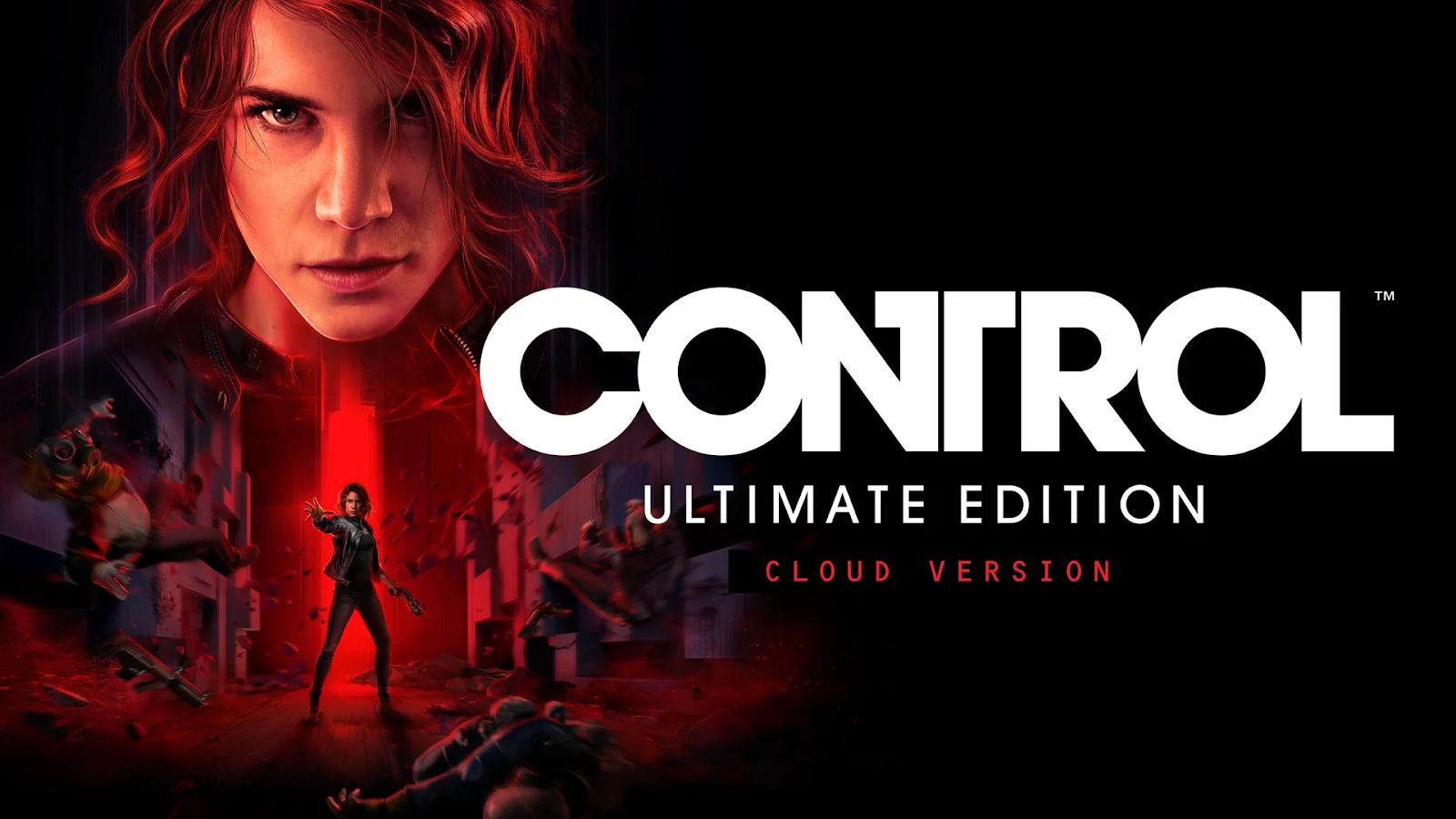
Control is one of the many games that I had heard a fair amount about, thought “it’s worth a try”, and personally never got around to playing. At the time it first came out, that being 2019, I was too preoccupied with other great games from 2018 like Sonic Mania Plus, Celeste, God of War (PS4), Dragonball FIghterZ, Batman: The Enemy Within, and Red Dead Redemption 2, to name quite a few. All were phenomenal in their own rights, and were a source of sinking an average of 20 hours a week. (Bad news for an overweight guy like me)
Then, when I was gonna play Control a few months after it came out, other great 2019 games came out like Devil May Cry 5, The Outer Worlds, Mortal Kombat 11, Kingdom Hearts III, Borderlands III, Shenmue III, Sekiro: Shadows Die Twice, and Fire Emblem: Three Houses all took up a ton of my time in 2019. Combine that with retro and current titles like Gears 5, Rare Replay, Jetpac Refueled, etc. all coming to Xbox Game Pass Ultimate alongside the long-anticipated Phantasy Star Online 2, and any thoughts of Control were quickly cast into the abyss of my memory. As of this writing, an Ultimate Edition was released for Current-Gen systems, and versions are being planned for PS5 and Xbox Series X/S.
That said, I wondered if they’d ever bring a Alan Wake-themed game to Current-Gen systems, much less the Switch. This is where last week’s Nintendo Direct Mini Partner Showcase comes into play. The direct itself was interesting, and the real highlights (for me, personally) were the revelations that HItman III and Control: Ultimate Edition were both coming to the Switch, at least as a Cloud Version..
As someone who’s written articles and reviews for various Stadia Websites last year, I am a fan of this, as it means that games that would be natively impossible for the Switch to handle, like Call of Duty: Black Ops Cold War or Phantasy Star Online 2 or even Watch Dogs: Legion, can come to the Switch. Moreover, HItman III and Control: Ultimate Edition are the first Cloud games from Ubitus to make their way to the rest of the world after Assassin’s Creed Odyssey was Geo-blocked to Japan, and Phantasy Star Online 2 and Resident Evil 7 Biohazard also got stuck in Japan, most likely due to a small team handling these cloud ports at those times.
Sorry about the rant and sidetracking. Where was I? Oh yeah, Control Ultimate Edition – Cloud Version.
This hit from Remedy Entertainment and 505 Games, the folks behind Alan Wake and one or two other titles I’m most likely unaware of, was nominated for a number of awards last year, and won a few of them, including IGN’s Game Of The Year Award. It won several E3 awards as well, and received positive critical acclaim from reviewers. So, having recently bought a $50 Nintendo eShop gift card from Walmart this past weekend, I bought the pass and “played” it.
Long story short, I can’t believe I missed out on this game when it first came out. It’s simply amazing!
To start with, the story of this game is very much a combination of Twin Peaks (which I’ve only seen small bits of), and The X-Files (which I have seen a bit of, and recognize the main theme; Thanks, Quarter Guy!) Aside from the main story, which I’ll cover shortly, (Spoilers warning, mind you!) Control was followed by a downloadable expansion, The Foundation, which was released on 26 March 2020. A second expansion, AWE – a crossover with Remedy’s previous game Alan Wake (not to be confused with the character of Alan Wake)- was released on 27 August 2020.
As this is my first proper exposure to Control, I’ll be going over the story in its entirety. This includes the main game’s story and its 2 DLC expansions, The Foundation, and AWE. I’m going into full spoiler mode, even though this game is only a year or so old. You have been thoroughly warned.
STORY
Jesse Faden arrives at the Oldest House under the telepathic guidance of Polaris, finding the building seemingly devoid of people. She bumps into a Finnish janitor, Ahti, who directs her to an elevator for her “job interview”. Through the elevator, Jesse discovers that the Federal Bureau of Control’s Director, Zachariah Trench, has seemingly committed suicide with his own sidearm. Picking it up, Jesse learns that it is an Object of Power known as the Service Weapon, and is transported to the Astral Plane, where she completes a ritual and is selected as the new Director by the Board.
Jesse emerges from Trench’s office and finds that the Oldest House has been invaded by a hostile force she dubs “the Hiss”, which has possessed most of the Bureau’s agents and corrupted the building’s shifting topography. Jesse uses an Object of Power known as the Hotline to listen to the lingering presence of Trench, who relays that his former management team knows the secrets of the Bureau, and Jesse hopes they may be able to tell her the whereabouts of her brother, Dylan, who was kidnapped by the FBC years prior.
Jesse aids Emily Pope and the other remaining agents of the FBC, who have survived by donning Hedron Resonance Amplifiers (HRAs), devices developed by Casper Darling that protect their wearers from the effects of the Hiss.
Pope explains that the Oldest House is on complete lockdown until the Hiss can be eradicated. Seeking to release the lockdown and access other sectors of the building, Jesse enters the Oldest House’s Maintenance Sector and is guided by Ahti to repair the building’s electricity and plumbing to prevent a major meltdown. Jesse uses a Directorial Override to reopen the other sectors, and enters the Research Sector in search of Helen Marshall, whom she believes knows about Dylan.
Jesse aids Marshall in retaking the Research Sector and facilitating production of more HRAs. Marshall reveals that Dylan, known to the Bureau as “Prime Candidate 6”, was brought in as a candidate for the role of Director due to his special parautilitarian abilities, but after he proved unstable and killed several Bureau agents, he was detained in the Containment Sector.
Jesse rushes to the sector to find Dylan, only to learn that he has appeared in the Executive Sector and surrendered to the FBC agents there. Dylan tells Jesse that he has embraced the Hiss, which he believes will set him free of the Bureau, and that their invasion was made possible by the slide projector Object of Power that the Bureau recovered from Ordinary. Dylan warns his sister not to trust Polaris, but Jesse resolves to find and deactivate the Slide Projector.
Jesse investigates the Prime Candidate program and learns that both she and Dylan were considered for the role of Director, and that the slide projector is contained in the Research Sector. Ahti gives Jesse a cassette player which enables her to navigate an elaborate maze protecting the slide projector’s chamber. In the chamber, Jesse finds the slide projector missing.
She learns that Darling led several expeditions into the dimension accessed through the only surviving slide the FBC was able to recover (the other slides having been burned by Jesse years prior), discovering a polyhedron-shaped organism he named Hedron, which is the source of the HRA resonance. Jesse discovers that Hedron is Polaris, who called out to Jesse to save her from the Hiss; however, when Jesse reaches Hedron’s containment chamber, the Hiss attacks and seemingly kills it.
Jesse’s mind is invaded as the Hedron resonance falters; however, she is able to rediscover Polaris’s essence within her and restore control. Jesse learns that Trench fell under the Hiss’s influence during one of Darling’s expeditions; he stole and concealed a second slide and used it to let the Hiss into the Oldest House to destroy what he perceived to be the threat of Hedron’s takeover.
Jesse finds the Slide Projector in the Executive Sector and through it enters the Astral Plane to confront Dylan, who is attempting to take over the Board through the Hiss. The Board, fearing they are losing control of the Astral Plane, allocates what power they can to Jesse, amplifying her abilities to stop the Hiss. Jesse, with her newfound power, defeats the defending Hiss and cleanses Dylan, who falls into a coma. Accepting her new role as Director, Jesse resolves to defeat the remaining Hiss in order to restore order to the Bureau.
Well, that’s certainly a LOT to take in all at once, ladies and gentlemen. It takes what worked from Twin Peaks, X-Files, and – as DLC shows, Alan Wake – to make a truly practical and wonderfully written story with memorable characters like Dylan, Jesse, Marshall, Former, The Board, etc. It also has a good mix of Dark Humor, wacky moments, and serious moments mixed as well. The main game’s story was interesting, but I felt that more could’ve been done with the story, instead of simply leaving us with hopes for a DLC expansion. I hate when companies sell the rest of the complete story as DLC instead of including it in the base game. I really sure as Hell do.
But all critiques aside, this was enjoyable, and now it’s time to see how the Foundation stacks up
DLC #1 – The Foundation
The Foundation takes place in an eponymous location at the bottom of the Oldest House, after the main story, where Jesse is summoned by the Board to deal with a threat to the Bureau. In the Foundation, Jesse discovers a “Nail” that acts as a conduit between the Oldest House and the Astral Plane. The Nail has been damaged, resulting in the Astral Plane merging into the real world which would be catastrophic if it continued beyond the Oldest House. The Board grants Jesse a new ability and instructs her to find the Nail’s four nodes to repair it; in the process, Jesse searches for the whereabouts of Marshall, who entered the Foundation during the initial Hiss invasion seeking to secure it.
While repairing one of the nodes, Jesse suddenly encounters Former, an extradimensional entity and ex-member of the Board, which grants Jesse an additional ability which the Board had not ordained. The Board is furious, but later calms, and attempts to persuade Jesse not to trust the Former. She then has a conversation with Former, which claims that it was blamed for something that it got exiled by the Board as a result, and is more willing to help her however it can, though its true motives remain unclear.
Jesse repairs the nodes, but tremors occur between the Oldest House and the Astral Plane which threaten to destroy both dimensions. Jesse reaches the base of the Nail, where she finds Marshall possessed by the Hiss, and kills her. With the aid of Former, Jesse cleanses the Nail.
Marshall’s presence reveals through the Hotline that it was she who destroyed the Nail, seeking to prevent the Hiss from taking over the Oldest House through it, and also as a preventative measure against the Board’s control. The Board, in response, destroyed Marshall’s HRA, allowing her to be possessed by the Hiss. Jesse, with her faith in the Board shattered, resolves to lead the Bureau her own way, but continues letting the Board believe it is in control. As Jesse exits the Foundation, Former recedes in the distance.
As an epilogue for the main story, this DLC is really great. There’s new characters like Former, Marshall shows up for a rematch after the prologue of the main story. Making Marshall the final boss of the (post-game) story was an amazing idea. It redeemed her for her rather easy boss fight near the beginning of the main game,and made her a sympathetic character who sacrificed herself for both the greater good and to help Jesse realize the Board’s corruption. What a way to die tragically, by your savior’s hands after getting infected via The Hiss. Poor Marshall. . .Now, onto DLC #2 – AWE.
DLC #2 – AWE
AWE takes place in the Investigations Sector during the endgame, a closed sector of the Oldest House formerly used to investigate various Altered World Events. Jesse is summoned to the sector by an apparition of Alan Wake (the protagonist of Remedy Entertainment’s eponymous video game), where she discovers that the sector was closed off several years prior after a major breach of containment.
In the sector, Jesse learns of the Bright Falls AWE (the Altered World Event encompassing the events of Alan Wake), including Cauldron Lake, a naturally-occurring Threshold in the town of Bright Falls which enabled artists’ works of art to rewrite reality. Dr. Emil Hartman, a psychologist, attempted to study and control the lake’s power via troubled artists kept at his clinic. However, after attempting and failing to do so with Wake, Hartman was confronted by agents of the FBC, who took all of Hartman’s research.
Hartman ultimately resorted to diving into Cauldron Lake himself in a final attempt to study the forces within it. He was immediately taken over by the Dark Presence (known to the FBC as “the Shadow”), a monstrous entity and the antagonist of Alan Wake, after which he was contained by the FBC at the Oldest House. However, Hartman soon breached containment, forcing the FBC to abandon most of the sector.
During the Hiss invasion, the Hiss entered the sector and took over Hartman and the weakened Dark Presence; the Hiss and the Dark Presence amplified one another, twisting Hartman into a monstrous entity. Inside of the sector, Jesse is contacted by Frederick Langston, who tells her to eliminate Hartman so that the sector can be retaken. All the while, Jesse visits the Oceanview Motel, where she experiences visions of Alan through a doorway marked with a spiral.
Eventually, Jesse is able to reach the Bright Falls AWE area of the sector and kill Hartman, ending the threat and cleansing the sector of the Hiss and the Dark Presence. Langston then informs her that the FBC has received a possible AWE report from Bright Falls, but notes that the date of the report is several years in the future. Huh…?
Well, that was… interesting. Seeing Hartman from Alan Wake play such a huge role was interesting and exciting, even to me – and I’m not even an Alan Wake fan! Getting to avoid him in some creative puzzles using “light” was an ingenious idea, and his boss fight, while standard in comparison to the previous DLC’s offerings, is pretty cool. Seeing the spiraling loading screen be a hint at and reference to Alan Wake was awesome.
Overall, it’s all really good, but I feel there could’ve been more put into the base game, such as enhanced rematches with Hiss-controlled characters, such as Marshall in the Black Rock Quarry. That’d have been a PERFECT rematch location! Oh, well. Not much can be done at this point but to move on to the gameplay. Let’s go.
GAMEPLAY
Control is played from a third-person perspective, and is built using Remedy’s proprietary Northlight Engine, which was first used on the company’s previous title Quantum Break. Control is set within the Oldest House, a featureless Brutalist skyscraper in New York City, and the headquarters of the fictional Federal Bureau of Control (FBC) which studies Altered World Events (AWEs) and collects and studies Objects of Power from these AWEs within. The Oldest House, itself an Object of Power, has an interior far larger than its exterior, an enormous, constantly shifting supernatural realm that defies the laws of spacetime. At the onset of the game, an entity called the Hiss is attempting to cross over through a dimensional barrier into this reality, and has taken over numerous parts of the Oldest House, reconfiguring its architecture to its needs, as well as many of the FBC employees to fight for it. The player controls Jesse Faden who has come to the Oldest House seeking answers about her brother after a prior AWE, but becomes involved in the fight against the Hiss.
Control is built in the Metroidvania format, with a large world map that can be explored at a nonlinear pace, unlike Remedy’s previous titles which were primarily linear. As the player completes main story missions, they will encounter areas known as Control Points, which can be unlocked after clearing the area of enemies and then used both as save points and for fast travel throughout the building to previously-unlocked Control Points. As the player completes missions, they unlock more of the building to explore along with additional side quests, in addition to various rewards. These include skill points which can be used to improve psychokinetic powers that Jesse gains over the course of the game, such as projectile-launching debris at enemies or seizing control of enemies’ minds temporarily to turn them into her allies. Mission rewards can also include resources that can be used to improve the function of the Service Weapon, a special gun that can take on multiple forms, ranging from a close-range shotgun-like blast to long-range sniper-like form, with each form outfitted with various perks. The player can equip perks to improve Jesse’s base attributes. Various side-quests and optional time-limited mission alerts are available with additional rewards if completed.
An A.I. system known as the Encounter Director controls interactions with enemies based on the player’s level and location in the Oldest House. Enemies in Control are predominantly human agents of the FBC possessed by the Hiss, an otherworldly force. They range from standard humans carrying firearms to heavily mutated variations that possess a variety of superpowers
Also included in the Ultimate Edition of Control is one of the best Assist modes in any game, period. Unlike most games where you can adjust the difficulty to a certain extent such as, say, being stuck in Safety mode if picked in Persona 5, you can adjust the difficulty, toggle one-hit kills onto and off enemies as you wish (this applies to bosses as well), and even give Jesse God-Mode Immortality. You do still have to unlock Levitation, Telekinesis, and the Gun, but you can just mess around with enemies as you wish. I know playing as a “god” is not the way the game wants you to play it, but here’s my story of my first hour with Control Ultimate Edition – Cloud Version on Nintendo Switch, so you can get my perspective.
I was starting up the game and getting used to the controls, input lag, story, and all that jazz. Then, the enemy encounters started, and I began dying to simple enemies even when I took the game’s advice to time my shots, and melee enemies who were close to my character’s position, and yet I still died as demonstrated in this screenshot below.
As you can probably guess, I died – a LOT – in the opening two missions of the game. Then, as I checked the options to see if things could be made easier to any extent, I found Assist Mode, which after assuring the game I wanted to toggle around with it, let me do so. I could make enemies and bosses die in ONE HIT, and make Jesse invincible to everything except bottomless pits. This is only available in the Ultimate Edition of the game.
This is useful for eliminating the difficulty spikes that plagued the game for some, and I’m among those who agree with that mentality. I’m gonna be upfront: the difficulty spike in the near-beginning of the game was brutal, and made it difficult for me to maintain my interest in “playing” the game. (more on that in a minute, folks) That being said, it does make the game a bit boring. Good thing there’s platforming challenges in the Astral Plane to keep your skills sharp.
These challenges will test you with different tasks like targeting hiss-possessed enemies, navigating tricky jumps, and running through noise/hiss-infested clusters, to name just a few of the challenges you’re gonna deal with when battling the Hiss. While the game works and runs fine from a technical standpoint, with minor input lag most of the time, there were times where I had considerable input lag and latency issues, with it being arguably even worse than Super Smash Bros. Ultimate. Yeah, I said it!
With Smash, it was built with both online and offline in mind, while this port is a streaming video feed from Ubitus’s headquarters that’s entirely online based. The lag as a result contributed to several deaths during the first 1/5th of the game. Performance mode lasted for 15-20 minutes, and Graphics Mode lasted for 20 or so minutes before going to low mode, each leading to stuttering and major LAG that lead to my usually 30-minute long to one-hour LONG sessions being cut short!
Also, if you leave the game idle for too long, you’ll be disconnected automatically. That sucks if you get interrupted a lot like I do and have to leave for 5-10 minutes at a time, which I do, a LOT!
Despite these issues, I got addicted to the game and fell in love with it. What was supposed to be short 10-minute sessions turned into 30-minute sessions. And 30-minute sessions, in turn, turned into hour-long sessions. Best part, though? I can walk around the house and play this game, and not have to sit in front of a tv to play, unlike when I want to play on my PS4 or Xbox One or even Stadia.
And, as I said, for the most part, there’s little-to-no input lag if you have a good connection to the internet, and most places have free Wi-Fi access. It runs at a good and surprisingly steady 30FPS with very few dips unless your connection dips due to weather distance from said wi-fi.. Even without much of a connection, from my experience, it still runs at 30FPS, with small dips to 20-25FPS in Performance Mode. Graphics Mode, surprisingly, still yielded good results of about 20-25FPS, but slightly more dips into the low twenties-early teens. Impressive work, Ubitus, Remedy, and 505Games. Basically speaking, if you can handle youtube, then your switch can handle this with little trouble, and only a 98mb download file is needed.
FINAL VERDICT
Now, to finally answer the burning question you’re all waiting for: Is Control Ultimate Edition – Cloud Version really worth burning through $42 dollars on the eShop after taxes? The answer, YES!
Folks, the game is a HUGE step forward, as now more Cloud games can make their way to America, and thus more games “CAN” be “on the Switch” in some capacity. Think of the possibilities of the games that could reach Nintendo Switch systems through this service that Ubitus is doing. Titles like Watch Dogs: Legion (Because Watch Dogs was on Wii U before), Call of Duty: Black Ops Cold War (It’d make a lot of money for Activision), and Resident Evil VIII: Village (It would be a huge surprise and a great way to make up to the Nintendo fans for their apparent lack of third-party support).
Don’t miss this wonderful opportunity. Just, don’t miss out or neglect it at least until you try a free 10-minute trial.
It’s an overall enjoyable game, with little-to-no input lag, great controls, a story leaving me wanting more, and a perfectly adjustable difficulty through a broken assist mode. Bring on Hitman III, Ubitus!
Death Ray Manta is described as an arcade style shooter and one needs to only watch the trailer to see it is nothing less than that. It is easy to pick up, fast paced and it challenges the player’s reflexes as well as familiarity with the environments. Because of it’s short levels, quick transitions and no apparent loading screens it is also very replay able.
To complete a level the player is required to use their projectiles to destroy all the enemies while manoeuvring around the obstacles and trying to not get hit themselves. The player moves around fairly quickly allowing to outrun most threats. The player’s weapon shoots rapidly spreads out slowly usually making precise aiming unnecessary. Most of the enemies die in one hit and the obstacles can also be destroyed. The player can also shoot down enemy projectiles using their own, giving the weapon a defensive function and letting the player survive even when they would rather not move. The game doesn’t have any timer to measure a player’s score instead counting how many levels were completed during a run with there being 32 in total. The player can also try to get a double score for a level by quickly picking up a diamond before it disappears.
Visually the game uses mostly simple, easy to read, neon coloured shapes. All enemies and obstacles are visually distinct from each other making it easy to see the different threats and quickly prioritise which ones to deal with first. Some events like enemy deaths and the player moving around are appropriately accompanied by particle effects. Along with explosion particles the destruction of an enemy triggers random words to briefly flash on the spot. However at times those effects may cause the screen to be a bit too busy to keep track of everything. I found most of my deaths happened when I got distracted impulsively trying to read the flashing words or as many moving objects blended together and prevented me from seeing actual threats. At the end of each stage a quick screen wide warp transition does well to signal the player’s victory and separate each level without breaking the flow.
The audio meshes very well with the visuals and helps to evoke the 80s nostalgia aesthetic. All the distinct sound effects complete with retro robot voices serve well to signal their respective triggers. They make the environments feel more responsive and shooting everything down feels more satisfying as a result. From the start of the first level the gameplay is accompanied by a fast paced synth soundtrack which goes very well with the gameplay’s rhythm trying to help the player stay in the flow and continue playing.
In terms of technical aspects I wasn’t able to find any problems. Everything seems to be working as it is supposed to. The game responds perfectly to all the controls which only involve the use of the twin thumb sticks on a Nintendo Switch controller. The options menu also allows the player to swap the move/shoot functions between the sticks.
Whenever I started up the game I found myself playing for much more time than Initially expected. Some visuals are distracting for me and get me occasionally frustrated when it felt like my death wasn’t my fault. However the game still keeps pulling me in and whenever I fail it always makes me feel like I can do better and I end up improving my game in small but noticeable ways. The game is also great to watch and listen to, which made it entertaining even when I wasn’t the one playing and I am sure I would enjoy playing it with someone even though it is a single player game.
In The Suicide of Rachel Foster, a spooky mystery-thriller game set in the early 1990s. The player takes control of a character named Nicole. Who returns to her families long-abandoned hotel in the hope of selling it. Nicole is reluctant to return to the hotel. Due to a tragic family history associated with the hotel. The player quickly realises this tragedy involves the suicide of Rachel Foster, a girl whom Nicole’s father had an affair. After getting stuck at the hotel due to a snowstorm, Nicole is contacted (over the mobile telephone) by Irving. A nervous FEMA agent who quickly becomes Dr Watson to her Sherlock. As things start to feel out of place within the hotel. A mystery soon ensues with Nicole and Irving finding out what happened to Rachel Foster.
The player exploring the master suite
After completing The Suicide of Rachel Foster’s relatively short campaign. What stood out was how well the developers built the games incredibly eery and creepy atmosphere. A combination of the silent but battering snowstorm, making the hotel creek and shudder. Combined with the classic tight corridors you expect from a mystery-thriller game of this style and the dim lighting of the hotel itself. Created an atmosphere both engaging and genuinely creepy and scary. I was impressed by the games ability to make you feel that you were not alone in the hotel. Even simple additions such as making your character’s movement painfully slow. To get the effect of creaking floorboards. Built an atmosphere that made me second guess if I wanted to enter that particular room or turn that corner.
The atmosphere and tension are further built upon in the games central story moments and plot points. Throughout the campaign, several story moments created a high level of uncertainty. That made me convinced that whatever was lurking in the house would show its supernatural face. I frequently found myself, jumping at the simplest moments of a door creaking. Clutching my controller convinced something horrifying would happen. Quicky to realise, it was all in my imagination. It is through these particular story moments; this game is at its best. The game successfully creates an atmosphere and tension that fully engages the player. Making them fearful of what will happen next. Likewise, the games plot points and twists also make it stand out with surprises and shocks. Accredited to the developer’s ability to craft an engaging, creepy and atmospheric led story.
The Suicide of Rachel Foster also has great art direction. The game looks excellent with great polish and graphical fidelity. Evident in the hotel’s highly detailed, Americanised look. Furthermore, the games 90’s feel is incredibly appealing. I wondered throughout the hotel, gazing at old NASA rocket ship posters. Chuckling at the characters genuine scepticism about the effectiveness of using a mobile telephone with Irving. It is fascinating and shows the stong writing and dialogue present throughout the game.
The players mobile telephone
However, this is where this game flounders. Despite strong writing and dialogue, Nicole and Irving’s constant interactions over the telephone unimmersed me from the story. In multiple scenarios, I found myself when at the high point of a story point fully engaged in the story’s tension and eeriness—given a reality check when the player’s character Nicole rings Irving. Disengaging me and devaluing the tenseness of the moment.
Similarly, navigation is also a significant flaw in this game. As already mentioned, movement is purposely slow, which is a positive. However, this, combined with no player location marker on the map. Makes exploration and progression through the story a chore. I found myself continually getting lost at a tortoise neck speed. Creating a frustrating experience that led to a similar lack of immersion.
A classic 90’s style hotel room from the game
The games save states also have significant flaws ruining the immersion of the game. For example, if you quit the game during a particular day of the games’ main story and rejoin hours later. It starts you from the beginning of the day. Meaning you have to start that particular day all over again. This, in addition to a few progression glitches which ruined immersion. Such as the game giving no prompts about what to do next after I continued a playthrough. Limited my immersion further.
All in all, The Suicide of Rachel Foster is an okay but not great game. It is a well-polished 90’s style mystery-thriller game. That tries hard to create an atmosphere of tension and creepiness with twists you expect from a game of this style. For the most part, it succeeds, but never reaches its full potential due to multiple flaws that ruin the game’s immersion that it tries so hard to build.
I measured my heartrate while playing Wingspan: 58 bpm. I can pretty much guarantee I’ve never had a more relaxing gaming experience. For the first couple of minutes, it was almost unsettling. I’ve grown so used to being screamed at through tinny microphones or berated via text that I almost didn’t know how to behave. After I settled into the sweet solace of Wingspan, something remarkable happened: I had a lot of fun. To inveterate board game fans, this should come as no surprise. Wingspan was popular long before it ported to Steam. But to me, a born and bred FPS player, I never dreamed I could enjoy such a slow-paced game.
As well as holding the crown for ‘most relaxing game I’ve ever played’, Wingspan might also hold the dual title of most confusing game I’ve ever played. The in-game tutorial left me more bamboozled than ever, so I headed online to trusty YouTube to try to sort out the mechanics. When this endeavour left me even more lost, I decided to just jump in. Learn from my mistakes; just jump in.
Wingspan is fairly easy to play once you understand it. It’s a card game where your deck is composed of a myriad of birds from all over the world. Like most games, you want the most points to win. The difficult part to understand, though, is the scoring system: you gain points for birds played, eggs laid on each bird, bonus objectives, etc. The confusion arises because most of the tokens serve multiple functions. For instance, food can be used to play a bird card (sort of like energy or land requirements in Pokemon or MTG), but food can also be cached (stored) on a played bird card for points. Obviously, Wingspan is not a game that is easily understood by reading, but if you dive in, you’ll get the hang of it relatively quickly. It is only intimidating from the outside looking in.
I began my immersion therapy with an online game. You can play either synchronous, with five minute turns per player, or asynchronous where you can close the game and return to make your turn later. As I researched the game, I noticed that the majority of negative feedback surrounding Wingspan were directed towards the online game mode. There were complaints saying that the game had skipped their turn, closed at random, or the like. I experienced none of this. In my first game; however, one of the other players left and was replaced by an AI. My only issue with this feature was that the player was in last place and the AI quickly caught up and won the match. I don’t want to sound like a sore loser, but it is, in my opinion, better to learn alongside other new players who are struggling their way through the match. The other human player and I had no chance once the AI got going.
Forward-thinking defines Wingspan. You have to be several steps ahead. There are four rounds and each is marked by a specific objective that will gain you more points. For instance, the first round’s objective could be to have eggs on the wetland habitat. Well, if you have no birds played on the wetland habitat, you may elect to simply concede this goal and focus on subsequent rounds. It might not be worth your time to try and play catch-up. Instead, if the second round’s objective is points for birds that consume fish, you may want to start playing as many of those types of birds as possible.
The game is also rather unique in that you do not craft your own deck. Instead, you draw from a massive pile that ensures almost no two games are the same. This eliminates the ability to lean on premeditated tactics and builds. Still, veteran players will be able to determine quickly which cards to take and which to discard, as well as which habitats and birds to focus on. I found myself slowly developing a method that worked for me. I decided I was the type of player who liked to get as many bird cards as possible on the table and allow their abilities to accrue for massive benefits. While it didn’t pay off for me very often, I enjoyed the ability to carve out a unique playstyle without feeling railroaded. There really is no set way to play Wingspan.
Beyond the actual gameplay, Wingspan oozes charm. It has a delightful, relaxing (there it is again) soundtrack. It’s sort of repetitive, but you never really notice it. It’s true background noise. As well, from the main menu you can access information on any birds you have encountered including small factoids pertaining to them, their habitat, and their calls. The game is far from educational, but a short description is given of each bird as you play it, and you’ll slowly learn just by virtue of sinking hours into the game.
For doubters, look through this review and count how many times I said ‘relaxing’ or mentioned the ‘slow-pace’ of the game. If this appeals to you, go out and buy Wingspan. That’s exactly what it is. It’s a beautifully designed and truly unique card game. This Steam port clearly builds off of a solid foundation from its board game progenitor. If my endorsement means anything, this game couldn’t deviate further from my normal interests, and I loved every second of it.