If you were to imagine a 1980s side-scrolling shoot-em-up, the images that come to mind would likely be almost identical to the images you’ll see when you boot up 1993 Shenandoah. It’s a classic of the genre, as true to the source material you could ask for and, as such, is equal parts satisfying to play and obnoxiously difficult. How did the developers manage to publish a game in 2020 that is such a prime example of a retro 80s/90s genre? Simple. They started developing it in 1992. It’s literally a 28-year-old time capsule of a game, released on modern media and if that doesn’t get you a little excited, I might have to revoke your nerd credentials – I want your badge and gun on my desk (or more realistically, your padawan braid and sonic screwdriver).
In 1993 Shenandoah you’ll pilot your tiny pixelly space ship through 15 different 2-Dimensional side-scrolling worlds. Each of these worlds will want you dead. Badly. Like you’ve just killed John Wick’s puppy while kidnapping Liam Neeson’s daughter – that sort of ‘wants you dead’. Bullets are flying at you from every direction and death traps are all over the shop. You have a shield that covers around 50% of your perimeter, which you can rotate to wherever the damage is coming from. However, much like Captain America in a real-life gunfight, that shield is woefully inadequate when the world is dishing out damage from every direction.
To help you fight back against the continuous onslaught of death, you’re going to need guns, lots of guns. Your ship starts out equipped with a simple peashooter. As you progress through each world you’ll pick up currency that you can use in the shop to buy more guns. There’s a mind-boggling variety of weapons including lasers, split beam weapons and a backwards-firing gun (which is unbelievably useful when enemies come up behind you and you can only normally shoot one way). You can also use that currency to upgrade your ship.
The game also has a couch multiplayer mode for up to 4 players, however, there’s a pandemic on so I didn’t have the opportunity to try that out. It’s always nice to see a multiplayer mode you can play with people who are physically in the same room and a bit of backup against the horrors of interstellar war would be very much appreciated to dampen the difficulty a smidgeon.
The graphics are a gorgeous throwback to the generations of games that 1993 Shenandoah was supposed to be a part of. Completely retro and faithful to the Amiga, the graphics are something to behold. They have a muted colour pallet and blocky models which look so distinct from games from the 21st century. The loading screen art is also absolutely gorgeous. The screens look like mid-century sci-fi posters and I want printouts of every single one of them to cover my walls.
1993 Shenandoah is such an interesting one. If you’re interested in gaming history then it’s definitely a game for you. But, the intrigue of an honest to goodness 1990s shoot-em-up, not a homage, not a remake but an absolute original, released for modern hardware, without emulation is enough to make the 1993 Shenandoah worth a try in my mind. And once you’ve tried it, the compellingly difficult gameplay might just be enough to drag you down a rabbit hole into some more excellent retro titles.
We have two copies of A Discovery of Witches Season 2 on Blu-ray to give away.
The brand new second season of A Discovery of Witches sees Diana and Matthew hiding in time, now in the fascinating and treacherous world of Elizabethan London.
Here they must find a powerful witch to help Diana master her magic and search for the elusive Book of Life. In the present day, however, their enemies have not forgotten them.
Based on Shadow of the Night, the second book in author Deborah Harkness’ bestselling All Souls trilogy, A Discovery of Witches is back for an unmissable, fantasy filled and thrilling new season.
How to enter to win
We have two copies of A Discovery of Witches Season 2 to give away on Blu-ray. All you need to do is enter below.
As a child, books and storytelling amazed me. The magic that the words hold captivated me more than any film or sports event ever could. Yet, no matter what is written, it can’t beat the imagination of the human mind! Especially that of a child. As we grow the sparkle erodes, the surrounding oppression weighs us down, and it’s easier to follow another’s creative thoughts than think of our own. When I saw Lost Words: Beyond the Page, I smiled. It’s a game that I’ve waited for since its release on Google Stadia. I was keen to see how writer Rhianna Pratchett wove her wonderful ideas into this story.
Developed by Sketchbook Games and published by Modus Games, this 2D platform puzzle game is both touching and beautiful to look at. Set in both the real world and a land of fantasy, this heartfelt tale will melt the iciest of hearts and will take you on a fantastical, yet emotive journey of a young girl’s mind.
Lost Words: Beyond the Page was worth the wait.
Building yourself up for a game is a dangerous ploy. I have been left disappointed more times than I care to remember. Happily, Lost Words: Beyond the Page was worth the wait. With delightful characters, a beautiful story, excellent voice-over work, striking landscapes and a magical watercolour aesthetic, this is one title you’ll lose yourself in.
The story revolves around a young girl who loves her family, especially her gran who she dotes on. Izzy has a passion for words! Her journal is used to write down her thoughts. She is encouraged to allow her imagination to run wild. She writes a fantasy tale about a girl in a whimsical and enchanted land called Estoria.
This story turns out to be more than just a playful tool for the girl to waste some time. The tome becomes a reflection of her mind and her emotions. Izzy’s life is turned upside down when her gran has a stroke. The land of Estoria is now in peril and faces turmoil as well. A fire-breathing dragon destroys the sacred village tree and the fireflies who protect the villagers have scattered. The lead character in your story must traverse many environments to collect the insects, and hunt down the fire-breathing beast.
You are trusted as the new guardian.
Words tell the story and solve the puzzles.
The story cleverly splits itself equally between real-life and fantasy. The first is expressed only through the use of Izzy’s journal. Words are utilised to solve the puzzles you face. Moments include; moving the word clean over dishes to simulate the task, or burn, where you throw a torch onto a piece of paper. Nothing is too difficult, and the solutions will make you crack a wry smile. Alongside this, the other words form the platform element. The silhouetted girl must touch highlighted text to reveal more of the plot. It was a nice way of telling the story in a timely manner. You soon lose yourself in the moment, bouncing around the sentences, looking to progress to the next chapter.
Estoria is where the magic truly happens. Each episode “boss” reflects Izzy’s emotional state and overcoming each one helps her to come to terms with her gran’s situation. If you look beneath the story, and the fluffy stuff, you find familiar gaming mechanics. Yes, each has a magical twist, but there is little complexity.
You possess a magic book (a journal, perhaps?) This holds the spells you discover on your journey; rise silent, burn, break, repair, and so forth. Each must be dragged from the book to the required object to solve the puzzle. This is where real-life and fantasy merge beautifully, with the use of words to overcome each obstacle. As well as the puzzles you must; leap over pits, push blocks, swing on vines, and crawl through gaps. It doesn’t break the mould, though the use of words is unique and made for a polished and well thought out adventure.
Short stages and a linear approach.
More gamers are demanding bigger and vast landscapes to lose themselves in. But less is sometimes more. The larger the world, the more chance the concept is watered down. Each of the small stages is accompanied by a portion of Izzy’s journal. This highlights poignant moments found in her fantasy tale, and the creatures she encounters. Each of the 8 chapters can be played casually. Be warned that they cannot be selected individually, so completionists will need to keep their eyes peeled for all the fireflies.
The linear approach may frustrate, but this represented the structure of the novel perfectly. Moving from section to section slowly and methodically allowed the emotion to build. It becomes apparent how the trauma has impacted the family’s mental state.
The heart and soul!
Lost Words: Beyond the Page was nearly perfect.
Lost Words: Beyond the Page is spectacular to look at. I don’t mean triple-A realistic graphics that’ll blow your mind! No, its watercolour aesthetic, vibrancy and colour choices create a surreal world that is a joy to visit. The simplicity of crisp text on a white background was great. The blend of family photos enhanced the written word, and the easy puzzles all made this a visual treat. You then consider the unique landscapes, beautiful character models and the ease at which the game flips from pastel to garish, real-life to fantasy. It’s fantastic.
Sadly, though, there were noticeable errors that destroyed the immersive nature. Screen tears, odd movement trails that polluted the image, and one moment where I moonwalked for several minutes. The latter made me laugh, and the others didn’t break the game, it just took away the polished finish.
Let’s get back to the positives. The audio is simply stunning. The music will make you well up and will reduce you to a blubbering wreck. Its melancholy tones sell the emotional state perfectly. Anyone who doesn’t instantly connect with it is a heartless monster. The music is matched up with an incredible delivery of narrative and voice-over work. You’ll lap up each of the characters’ personalities, falling for their charms instantly. This is the standard that every indie title should aim for. Sadly, most will miss the mark.
Just keep jumping!
Its simplicity makes it a joy to play.
I love when a game allows you to focus on the action. Lost Words: Beyond the Page does just that. The buttons are responsive and using the spells is a straightforward task. It was a pleasure to play from start to finish. Playing it was easy, making it a title that is accessible to gamers of all abilities.
One of the unique elements is the ability to control the story. Key moments are decided by you; the character’s name, her personality, why her foes are upset and so on. Your decisions alter the storyline, and this adds untold amounts of replay value. What a fantastic and ingenious way to keep you playing. It’s a brilliant idea, and I can’t wait to see how my next playthrough unfolds.
Grab some tissues you’ll need them!
There is no denying it, I loved everything about this game. Tainted slightly by some glitches and its lack of challenge. However, it’s a stunning story, with a wonderful presentation and tear-inducing moments that more than make up for this. You need this in your life, so buy it here! Experience the sumptuous land of Estoria, the creatures hidden within, and the quest to capture the dragon. All this and more can be enjoyed in this marvellous platform puzzle adventure.
One of the games included is. . . Big Tournament Golf?!
The NeoGeo Pocket Color Selection Vol 1. released on the Nintendo Switch Eshop this past March 2021. It contains 10 NeoGeo games, which consist of the following 10 games:
Do these games make the collection worthwhile, or is this collection a miss? Let’s find out!
GAMES – A Major Compilation Issue…?
Now, one complaint with similar compilations in the past is that they are, or were, skewed towards fighting games. The new addition of Sports title Big Tournament Golf, RPG Dark Arms, Action-shooters Metal Slug 1st Mission, and Metal Slug 2nd Mission – all new to this compilation, by the way – all help to skew the balance towards a slightly more neutral-sounding compilation.
I covered SNK vs. Capcom: Match of the Millennium before on this site as a seperate review. it’s a good game. The Last Blade: Beyond The Destiny is also enjoyable. I used to enjoy the Mario Golf games growing up, so I will probably enjoy this Big Championship Golf.
I have not played the other games in this compilation at this time. However, the fighting games do have similar controls as each other, and getting the better endings in The Last Blade: Beyond The Destiny’s amazing story modes (one story route for each character) requires playing on the harder difficulties. (I think). I feel as though figuring it out through guesswork has outgrown its’ welcome.
FINAL THOUGHTS – An Enjoyable Package
Overall, I am enjoying the package. I’d probably enjoy the package as a whole a heck of a lot more, if not for the impromptu arrival Pac-Man 99 for the Switch.
On that note, if you’re looking for a good compilation of NeoGeo games, this one is for you.
Now, with that taken care of, I’ll see you next time with a review of potentially either Pac-Man 99, or Outriders. I’ll let this image conclude things for me. Hehehe…
Might And Delight returns with the third installment in their recognized animal survival series. Control the leader of an elephant pack under spiritual guidance to roam the land and reunite with your herd. The 3-D tangram character models, and the almost picture book aesthetic juxtapose the harsh realities of mother nature in this brief, yet touching story. Does Shelter 3 live up to the praise of the previous installments? Is it accessible as a stand alone title?
Lead With Me Reva..
Play as Reva, whom is given the task to reunite the surviving members of an elephant herd under the navigation of an almost evangelic-like entity. Travel slowly, and I mean slooowly, through deserts, forests, and mountains to reach the end game goal. You’ll be tempted to hold the run button almost the entire way, but pay attention to your herd; stamina is limited and famine is a real danger. Thankfully, there are fruit trees that can satiate your hunger needs, and waterways to drink from. You will also need to do routine elephant calls to see if anyone in your pack needs solace, or nursing. Times are tough and elephants will die if you are not careful or considerate.
One of the elephant calves clipped right under the water
I noticed a lack of collision detection with the character models. Elephants seamlessly pass right through each other when traversing. Also, when you approach a group of deer, all of the models slide right through each other like air. Maybe this was to compensate for the slow movement, but I was hoping for the animal interactions to be a bit more eventful, rather than when alligators appear. This makes the non-threatening animals feel like they didn’t need to be in the game at all, aside from aesthetic purposes. All in all, the physics and game engine feel a bit unfinished.
Choose Your Path
The journey is broken up into four or five checkpoints, preceded by a a moment between Reva, and her spirit guide. You simply walk up to the entity, and you will both look into the sky and pick from two directions, represented by constellations. Should you stay near the waters, where alligators linger? Or maybe risk the barren desert wastelands with less to eat and drink? The choices are a nice touch to spice up the gameplay, but this intermission feels very repetitive. You walk up to the spirit guide in the same spot each time before choosing your next path. Pair this with already slow movement speed and, this can feel like a bit of a slog.
The pathways are nicely drawn out as constellations
Ambience
The Shelter series do feel more like experiences, or art pieces, than actual games at times. That’s mainly due to the intricate artwork and carefully composed soundtrack to make up for the limited controls. While there was very little to interact with, the world you roam does feel like a nice place to get immersed in. I loved the color palette of each area and how each model is made of simple geometric shapes. The music is touching at points and comes in at the right times, as expected with this genre. Listening to the cries of hunger, thirst, or bereavement of your elephant herd really brings out the mother, or pack leader, in you to tend to their needs before moving forward.
A Second Playthrough
Upon a second playthrough, I took different paths and thought I still visited similar places at times. It felt like in some areas checkpoints were simply moved around, and the landscapes were recycled a bit. The final destination was also in the same place as in my first playthrough. After losing Reva’s pack due to famine, or predators, I kept a couple elephants alive this time around and experienced the exact same ending. This creates no real incentive to keep your group alive, aside from the dread you feel as your herd walks away from a fallen calf. The somber nature is a recurring motif in Shelter.
Though stamina and nourishment are scarce, it’s tempting to stop for a bit and take in the environment.
Bottom Line
I didn’t play the other releases before Shelter 3. The first installment was a linear adventure, and the second was more open world. I see how the developers wanted to create a new kind of adventure with the “choose your path” mechanic, but I don’t think that it worked as well here. Also, I know elephants are slow moving in general, but the walk speed can push some away as well. The art style and audio are great, but if you want the best experience play Shelter or Shelter 2. I heard those were quality playthroughs. This third release, however, feels solely to scratch the itch of the fanbase.
If someone would’ve told me at the beginning of the year that my favorite game of 2021 thus far would be a niche anime dating simulator I probably would have laughed at them – but here I stand, corrected by the 2019 PS4 release of Japanese comedy romance visual novel Date A Live: Rio Reincarnation. This treasure trove of light-hearted quips and cliched adolescent relationships was previous released on PS Vita in 2015, and also includes the series’ two prior game releases (Rinne’s Utopia and Arusu Install) all of which were previously released exclusively in Japan on PS3 and PS Vita.
The Date A Live story gives high school student Shido Itsuka the responsibility of placating beings responsible for ‘spacequakes’ that are threatening to annihilate earth. These beings, known as Spirits, are – luckily or unluckily for Shido – part of a sexually charged female cast vying for his attention and companionship, but with them liable to ‘explode’ if they become too unstable, Shido, as the unwilling participant, must keep them calm by taking them on dates and ultimately seal their powers by kissing them.
With 9 potential partners, he has quite the options…
With its ludicrous plot filled with a harem of one-dimensional characters and repetitive scenarios, you might wonder how this was even able to be greenlit by a publisher let alone be an enjoyable video game, but conversely, it’s that very absurdity that makes it work. This anything-goes premise allows the humor to guide the story while the tight-knit cast of characters provides an endearing and familial atmosphere, keeping you smiling throughout.
While Date A Live: Rio Reincarnation won’t be winning any awards for its narrative, what is remarkable is the stunningly large array of story routes available to the player. The branching system integrates your independent choices seemlessly to the main storyline through intermediary scenes with characters constantly referring to the actions and decisions you’ve taken. So expansive is this system in fact, that few will have the same exact experience in any given playthrough due to the 400+ story events and 50 different endings spread across the three games.
Rinne’s Utopia and Arusu Install are both dating simulators, but despite that function quite differently. Rinne’s Utopia is a slow slice-of-life story following the 16-year-old protagonist’s life at school, with a deeper story and longer relationship arcs providing ample opportunity to change your potential ending and partner. Arusu Install, on the other hand, has an AI character trap you in a VR world to show them the meaning of love and ramps up the fantastical and sweaty situations with more love interests and comedy, but fewer branching choices and a less coherent story. Personally, I enjoyed the 2nd game more with its VR concept able to spawn hilarious impromptu situations, but the first is more immersive and replayable.
One of the best situations the VR simulation puts you in and ever more amusing due it being the polar opposite to this character, Kurumi’s, personality
Each game has a ‘true ending’ which the story arc follows, but the majority of the endings exist as (good or bad) conclusions for your chosen partner largely depending on whether you choose a ‘red flag’ conversation choice to make them lose interest. While there isn’t anything outrageously graphic in the game, there is a lot of suggestive discourse and partial nudity that garners it an M for Mature ESRB rating.
The titular game, Rio Reincarnation, switches gears completely, discarding the branching system and numerous romantic options to instead focus entirely on its main story. This makes the game run like an anime movie with the trilogy’s best pacing, building tension and potential for tragedy right from very the beginning, while also slowly intimating that you’re going to be presented with a gut-wrenching decision at the end. It’s a shorter but more emotional ride than the previous two that brings all its strengths together, ending the compilation on a very memorable high.
Erm…could you repeat that please?
What makes these visual novels so effective is not only the excellent balance of comedy and closeness of the characters but also the brilliant visual and audio presentation that blends so cohesively to complement the story. The soundtrack adds a warmth that echoes the camaraderie of the characters and a great Japanese voice-acting cast and detailed, but understated, character animation brings the charming characters to life.
Such is the depth and quality of content on offer here that it’s near impossible to find any areas in need of improvement. It could be argued that there is a slight lack of approachability for newcomers when starting Rinne’s Utopia, as the game restricts most of the backstory to the characters’ own choice-based stories, but this short-term issue soon turns into a positive when playing through the other endings as it makes each 4-hour playthrough (if read at normal speed) distinct. The only real issue is that the games’ true endings can only be accessed after unlocking all the good and neutral character endings for that specific game which, if you’re unaware, might be spoiled by the third game’s recap video. In addition, the unnumbered games are also listed out of sequence in the main menu (1->3->2), so playing them backward is also a real possibility.
Date A Live: Rio Reincarnation is one of those rare games that achieves everything it sets out to achieve and more, offering an assortment of riches that integrates romance, comedy, drama and tragedy effortlessly in a wonderfully creative choice-based gameplay design. This, added to the incredible replay value afforded to the player, makes this a must-buy for fans of the series and genre as well as being highly recommended for more mature anime fans to branch out into. It must be said that the niche genre limits its potential audience, but even so, this does little to affect the quality of the product.
I love a great fantasy tale. Good Vs Evil, and the constant back-and-forth action that eventually falls the way of the light. It’s easy to lose yourself in such a world. Aiming to become the hero of the realm, to right the wrongs, and bring peace to the Kingdom. Ravensword: Shadowlands follows this to a tee. A vast evil presence, a disastrous battle, and one hero who must reclaim what is rightfully his and thwart the beast.
Developed by Crescent Moon Games and published by Ratalaika Games, this is a clichéd, old-school RPG that has the look and charm of a 90s PC classic. Its bold colours, wooden acting and tinny audio will win no awards. But somehow I got hooked on it and I loved its retro, rustic style.
Ravensword: Shadowlands reminded me of Tolkien’sLord of the Rings.
The game opens with a dramatic video that sets the scene for the story ahead. Its pace, lore and delivery were Tolkien-esque. It reminded me of Lord of the Rings, albeit a poor man’s version.
Ravengard has fallen, and the Kingdom of Tyreas stands alone against the might of the dark elves. The Ravensword, is lost! Sadly, dark times are ahead. A war is raging and man pushes the elves back. An Archmage and a Demon have struck a deal. But the mage was deceived by his apprentice! Every soul that fought that day has been taken by the Demon. All but one, that is. He is the descendent of an ancient King’s bloodline. A man who may wield the Ravensword, the only hope that humanity has of defeating the darkness.
It’s super dramatic, I know. It’s been done to death and offers little in the way of originality. But I dived straight into my role as the new hero of this ancient and mystical land.
Don’t fear the skeleton, simply shoot it.
It’s an instant cult classic.
We’ve all watched films that are so terrible that we’ve loved them. Whether it’s; the awful plot, bad acting, atrocious costumes, or the lame choice of set. They make us laugh, and they become instant cult classics. This is exactly how I see Ravensword: Shadowlands going. Every element of the game is just about serviceable. However, more often than not it’s a comical mess that’ll make you chuckle.
The single-player RPG adventure has some standout layers that deserve to be highlighted. A large open-world map begs to be explored. Many caves and treasures hide in the shadows. If you fail to explore the surrounding land, you’ll miss out on the many rewards. There is an array of; creatures, monsters, and pre-historic beasts waiting to be discovered. Slaying them earns XP, meat to eat and equipment to sell.
Your hero is a blank canvas, and whatever you wish to specialise in is your choice. XP increases your level, which allows you to improve attributes and talents. Do you wish to be a master of a bow, sword or magic? Perhaps you want to sneak about in the shadows, or be an expert on horseback? The choice is yours, and it’s wonderfully empowering. Your character is set around your preferences and game style. And nothing else.
The pièce de résistance has to be the quests and the many subplots. Ravensword: Shadowlands has a main and linear narrative that must be followed. Side quests can also be accepted to help the people of each settlement you find. These missions and the multi-part quests add depth to the story and increases its longevity.
The horse fears no evil.
Glitches, tears, and as flat as a pancake.
Early PC and console gaming was great. However, the technology tethered it to its blocky, flat, and glitchy existence. Modern gaming shouldn’t suffer from these issues. Unfortunately, Crescent Moon Games failed to get the memo. Its presentation is an insult to the senses. I was left wondering if it had been optimised for modern systems.
There are some positives to the graphics. Mainly the variety in landscapes, and the interesting colour combinations. Magical and enchanted moments use a bright and vivid tone. Whereas, earthy tones made up the bulk of the colour palette.
The negatives cannot be overlooked; flat textures, poor render distances, ghosting, screen tears, animation delays and so on. Sadly, the list could go on! Even with its atrocious faults, I just got on with it. The issues were confusing, but they made me laugh repeatedly. Not one problem broke the game, yet, they simply don’t belong in a newly released title.
Sadly, I can’t be so generous about the audio. It was mostly diabolical, except for the music. The tunes that accompany the action flit from whimsical medieval folk song to tense battle moments that set the scene. From the sublime to the appalling, the sound effects are terrible! They are flat, lifeless and dull. The creatures share sound files, making them merge into one entity. I recommend not using headphones as the tinny and shrill noises are ear piercing, and will hurt your head.
Someone needs a dentist.
Confusing layout.
Ravensword: Shadowlands chucks you straight into the action with a simple tutorial that helps with the fundamentals. After that, you are on your own. A bizarre layout for; map use, accessing the inventory, and other tasks, make it a confusing game to play. Fortunately, the fighting controls and mechanics worked well, even if the animation and audio failed to keep up.
Will you return to play this? Sadly not! Though it has the talent tree, the freedom to choose your attributes, and which weapon you prefer. The gameplay isn’t unique enough for it to make a difference. The achievements are unlocked through natural gameplay, and there is little chance you’ll miss them. For all its faults, I enjoyed my first playthrough, so I’m not too disappointed.
Ravensword: Shadowlands will divide opinions.
I liked my time with Ravensword: Shadowlands, but that’s because its shortcomings tickled me. It’s not the best indie RPG available, but I found it oddly addictive. The characters appear to have done 10 rounds with Mike Tyson; the audio is likely to make you deaf, and the controller layout is odd. However, this is countered with; interesting quest lines, a large choice of weapons, a selection of talents, levelling up, and a large world map. This won’t be everyone’s cup of tea, but I liked it. If you want a copy, buy it here! Do you have what it takes to stop the Demon and save humanity? Follow the Archmage’s advice and face that Demon head on!
If I could sum up Aground in a nutshell, it would be Minecraft meets Steamworld Dig. Essentially, Aground is Minecraft but in the 2D art style of the Steam World Dig franchise, although it doesn’t break the formula and reinvent the wheel in terms of the survival genre. Aground is a charming 2D survival game full of nostalgia. That is sure to delight fans of modern survival games such as Minecraft and nostalgic retro era games.
Retro at its Core
From the outset, Aground is a stunning game, not graphically but from an art style standpoint. The game takes the classic retro 2D pixel art animation that we all love and uses it to its fullest. The art style is incredibly charming, from the pixelated bit animation of the game’s characters to the beautiful 2D backdrop of the games in-game world. The art style is stunning. Likewise, the music also takes cues from this era of retro pixel art with a fantastic 8bit and 16bit soundtrack that makes you feel like you are playing a game from the 1980s/’90s. From a purely nostalgic standpoint, Aground is flawless. The game uses the sentimental but appealing art style and soundtrack from the retro pixel 2D era of games. It gives it new life mixing pure nostalgia with the relatively new survival genre.
Out in the World
A Classic Survival Game
As mentioned, Aground is essentially Minecraft at its core and has seemingly taken inspiration from SteamWorld Dig. The game has all of the Minecraft elements you expect, such as crafting, digging and trying to survive. Thus, the game is very similar to Minecraft and plays out similarly. Like its inspiration, it has easy to pick up controls, a fluid crafting system and addictive but straightforward gameplay. It also has a decent upgrade system allowing you to upgrade your character.
Nevertheless, its striking similarities to Minecraft means Aground doesn’t reinvent the wheel and, at times, is too simple with little challenge. In this regard, Aground falters, but this is not necessarily a bad thing. Aground sticks to a proven formula but adds a nostalgic twist. The game takes everything we love about the more laid back games in the survival genre. Such as Minecraft, and adds a nostalgic flair to it, taking us back to our youth’s sentimental nature. The game has an odd but incredibly charming mix of contemporary gameplay and past nostalgia, balancing both perfectly. In this sense, the game stood out and was an absolute delight to play. It transported me back in time with a genre I love.
Mining for Treasure
Verdict
Overall, Aground is a fantastic game. Although it doesn’t reinvent the genre and is relatively unchallenging, it adds a retro nostalgic twist that is sure to please both fans of the contemporary survival genre and old school gamers looking to feel their youth’s nostalgia. It was an absolute pleasure to play and should be picked up by anyone looking to find a new survival game and those who love the retro era of games.
Picture the scene; the world you live in is a dank cesspool of; oppression, fear, and death. Hatred burns deep among the neighbouring people, and everything you do is constantly judged. A plague runs riot, and the town where your father lived is poisoned by this curse. This is the brutal existence of the characters in Pathologic 2. A survival game where you must; form bonds, save lives, and battle infection to stay alive for 12 days.
Developed by Ice-Pick Lodge and published by tinyBuild, this is a single-player oppressive survival game that will test the most hardcore of gamers. The sequel to the much-loved but problem-riddled Pathologic. Will the 2nd instalment learn from the past? Sadly not, but it’s enjoyable in a macabre way.
That’s some twisted art.
Pathologic 2 has a bizarre opening.
The game begins on the final day of the story. Fires are burning, people are screaming, and bodies are strewn around. You are offered the chance to rerun the 12 days, attempting to rectify the mistakes made. You control Dr Artemy Burakh who is known as the Haruspex. Returning to your father’s home, and your childhood town, your welcome upon arrival is less than warm. Attacked by 3 men hell-bent on revenge, they lose their lives and so the fear and uncertainty begin. It transpires that two people have been killed; the first was a prominent leader, and the other was your father.
The gameplay revolves around; the brutally difficult survival elements, the forming of relationships, and saving people’s lives. The game follows a bizarre day-night cycle to tick you away to the 12th chapter. You must observe key attributes; hunger, thirst, stamina, exhaustion, reputation, and infection. This wouldn’t be so bad, but resources are scarce, and your stats drop at an alarming rate. Add in the lack of autosave facility and it’s clear that Pathologic 2 is out to get you.
Do you dare enter the creepy mask building?
Preventing death is your aim, but can you stop yourself from dying?
With the game giving you the freedom to pick your missions, you can explore and talk to whoever you wish. This non-linear approach gives the impression of an open-world adventure. In reality, you are more likely to die because of the journey you have taken. It’s a tough balancing act, but if you get it right, you are rewarded with a fulfilling story.
You will meet many interesting characters, such as; a child gang known as Soul-And-A-Halves, and Mark Immortell who discusses the punishments that are inflicted when you die. Just in case the game wasn’t tough enough, death incurs penalties; lower health, you are quicker to exhaustion and a reduced hunger bar. These will make you wince, and it makes the gameplay much harder.
Unfortunately, where there is a plague, there is death. In Pathologic 2 it’s your job to save as many people as possible. You must attempt to stem the flow of infections with a medical-style mini-game. It was an interesting and detailed process, but a correct diagnosis relies on limited supplies. It can frustrate you when the success rates are reduced by the harsh game mechanics, and not your knowledge or ability.
Blood on the bed, and a ghostly portrait…..nothing to see here!
Pathologic 2’s brutality is its blessing and its curse.
Every element of Pathologic 2 will test your patience and your survival skills. Looting, crafting, and the mini-games all require an eye for detail. No matter the time spent scavenging, there will never be enough supplies to go around. With limited time available, you will need to make some brutal decisions on who lives and who dies. It’s unfair, heartbreaking, and is a sobering experience. The townsfolk die before your eyes and there is nothing you can do about it.
This hardcore and non-linear approach will leave some players with a bitter taste in their mouth. You’ll believe you’ve missed out on many opportunities, and the game appears unnecessarily harsh. I loved how horrendously cruel it was, and its survival of the fittest attitude. You soon become immune to the cold nature of the world around you. People’s lives soon become a commodity to increase both your reputation and your purse. Just remember, you’re the doctor and what you say goes.
It looks as dark and gritty as it plays.
I applaud Ice-Pick Lodge for their depiction of this cursed town. Grimy townsfolk wander the streets looking for scraps of food and a way to survive. The earthy tones and dull colours add to the sombre and oppressive landscape. Images of death hang around like a bad smell, and the gritty and shadowy world makes you uneasy. I loved the presentation, but boy, did it make me feel on edge. It’s a horrible place to be and looking at it from a first-person perspective only made it seem more real.
This was supported brilliantly by an eerie audio that changed to match each setting. The environmental sounds were perfect, with animals yelping and the wind whistling by your head. The crunch of your feet on the ground, or the howl of someone crying matched the theme and solidified the sorrowful events the town was experiencing. Pathologic 2 steers clear of obvious jump scares, but the sudden change of audio will naturally make you nervous. I admit I jumped countless times, and shamefully it was usually my imagination and nothing more that caused the shock.
Things are heating up.
Lots to learn, but a novel tutorial teaches you.
With so many mechanics all in play at once, it can be complex and overwhelming. Looting, crafting, fighting, and all the survival attributes to observe make this a meaty game to take on. Luckily, the quirky intro acts as a tutorial to unravel all the fundamentals. You’ll learn; how to attack, trade inventories (by swapping hearts), gather water, and navigate the map. You’ll still have lots to learn, but you’ll get to grips with this through trial and error and lots of talking.
You never truly feel comfortable with what you are doing, and there is always a worry you’ll make a mistake. I think this is part of the charm, as you are constantly working on how to be better at the game.
There are so many missed opportunities each day that this begs you to play it repeatedly. You can easily uncover new minor narratives every playthrough. Add in the punishments for dying, that’ll change your approach, and you’ll always be looking at the same scene differently. You have a large achievement list to unlock and hours of brutal gameplay to experience. If you can stomach the harsh reality of Pathologic 2, there are plenty of reasons to return.
Pathologic 2: A Wonderful Nightmare.
Pathologic 2 is one of those survival games that will destroy you mentally and physically. It’s unfairly difficult, it will punish you for minor indiscretions, and will hold a grudge forever. In short, it’s a bit of an arse! But somehow I still loved its evil and sadistic ways. Presented in a touching and sinister way, you’ll instantly warm to the hardship the townsfolk are experiencing. This isn’t a game for the faint of heart, yet I recommend you try it. If interested, you can buy it here! Being a doctor is no easy task, especially when people have the plague and you are short of supplies. Do your best, help who you can, and survive the 12 days.
To fans of the Monster Hunter franchise, especially to those who played Monster Hunter World, this game may seem like a lesser version. That is far from the truth. Monster Hunter Rise is a stunning standalone addition to an already beautiful collection. Whilst maintaining the charm of older Monster Hunter games, Rise presents new challenges and a simpler experience for fans.
Kamura and kittens
Kamura Village is a smaller quest hub than what you are probably used to. But the characters within are what make it seem so timeless. You meet a range of people as a hunter, from quiet timid types to loud, exuberant NPCS. Despite it’s small size, Kamura is packed with action and quests. Although the lovable cast of the franchise is concentrated and thus some favourites have been axed, their disappearance is made up for. For veterans of the franchise, it’s sad to see a lack of the Meowster chef, but the substitute rice palicos are adorable enough to make up for it. I happily sat and listened to their songs every time I ate a meal, and advise you to do the same.
Palicos and Palamutes
Palicos are not the only sweethearts of Monster Hunter Rise though. When you’ve finished creating your hunter right at the beginning of the game, you are able to create your own Palamute. The introduction of this new companion allows the player to take a load off and travel faster through maps by riding their dog, essentially. As well as being a faster way to move, Palamute’s assist you in battle, much like your Palico partner. So whilst you’re out risking everything to attempt that quest for the third and final time, your animal associates join every step of the way.
Slingshot into action
Another new addition Rise presents is the wirebug travel aid. Rather than the slow, grinding trek to get from point A to B on the map, hunters are able to zip across large gaps using this. This has massively reduced the amount of time spent lugging heavy weapons across the ground. It is rechargeable, so can be used throughout play. When monsters flee during battle, and annoyingly disappear halfway down the map, you can sling yourself down in style. Between the wirebug system and your Palamute, travel never seemed so easy. This also reduces the heavy grinding feeling most Monster Hunter games present, and the very thing that has turned players away.
I found it extremely difficult to successfully use wirebugs when I first played through this game. I kept overshooting where I needed to go, and ended up plunging myself into a new realm of monsters to fight single handedly. This new element is definitely one which needs practise. I found it easier to use after playing for a few hours and it became clear that the game was designed around this feature. You can even use wirebugs in Kamura village. I spent a lot of time slingshotting myself around and ending up sat with Yomogi for a pre-hunt snack.
Classic combat
Combat within Rise is as fluid as you’d expect from a Monster Hunter game. You are able to eventually choose from a list of weapons, which as expected affects your attack. Unlike other games, long animations and cutscenes have been reduced during gameplay. Hunts are still long, enjoyable battles of brawn and you are still able to enjoy the open world. The downfall of these intense battles though is the dropping in frame rate when engaging in intense fighting. Massive quick attacks and the effects that go alongside cause the Switch to struggle. There is so much happening on screen at one time, it is easy to get lost in what you’re doing. Unforgivingly, potion consumption and preparations for battle can still land you in immeasurable pain. It’s lucky you have new battle buddies to take the brunt when you need to heal.
Rampage is a riot
A new style of combat has also been embedded within this game. You are tasked with defending a large tower either on your own or as a team. As herds of beasts hurtle towards you, you must pace cannons and traps to prevent destruction. Rampage (as the style of gameplay is titled) is an adaptation of the siege feature in previous games. Rather than having the indescribably massive monsters attacking though, you are faced with herds of species you’ve encountered already. You aren’t tied down with artillery as you’d expect to be, but this tower defence is more a test of how fast you can travel between weapons. It better be fast, or you will cause the village to face the wrath of a hundred beasts.
Rampage holds the potential to carry the most impressive elements of combat in the game as a whole. When facing challenges with your friends in co-op, things become extremely stressful. Luckily it pays off when a huge monster keels over before you. Rampage is exhilaratingly exhausting, and when you’re juggling a team and all the artillery you definitely feel the challenge. There are 31 creatures to find and face, which is a smaller roster than Monster Hunter Generations Ultimate. But it’s not a small number at all. Oppose to Monster Hunter World, which was quality over quantity, Rise feels a little too dependent on future updates. There’s enough action to sink your teeth into whilst the game is fresh, but if you expect it to be completed, that isn’t the case.
Final thoughts
As a whole, Monster Hunter Rise is a beautiful and extremely enjoyable game. With dozens of hours of gameplay, there is so much to explore. Capcom have once again bought the franchise to life with this release. The game helps new players feel like masters from day one, and old players are able to refresh their love for the title. Future updates will aid the game into becoming something remarkable, but even from release this game is absolutely amazing. If you adore action packed RPG’s, this is for you, and is most certainly one of the best that the Nintendo Switch has to offer.
When you consider the idea of surviving in hostile environments, what crosses your mind? Death Valley, a trek to the North Pole, or maybe you imagine what you’d do if you were stranded at sea. These are all fine options, but how about we up this a level and attempt to escape from an accident in deep space. Every resource is scarce, and any mistake will probably cost you your life! That’s what I call an extreme situation, and this is the premise behind Breathedge.
Developed by Redruins Softworks and published by Hypetrain Digital, this is a science fiction survival title with a twist. Recently reviewed by Wil Raterman for the PC version, it can be read here for comparison. Breathedge takes you on an adventure through space, where the priority is; to collect resources, craft tools, and explore the surrounding areas. It is a doomed situation, but Redruins Softworks attempted to lighten the atmosphere with toilet humour, and well timed one-liners.
Space is cold and heartless.
Gangster robots and an unsightly crash.
The dark humour is chucked straight in your face with an unfortunate accident involving your grandpa’s ashes and a hearse. Robot mobsters wish to know how the incident occurred, yet you defy them by spitting in their faces and spinning them a yarn. The truth must come out, and so the story begins. You see, the world through the eyes of “The MAN”. The crash occurred, the spaceship is ruined and you only have a chicken and a witty AI as company.
You do not know what caused the accident, nor does it matter. Your aim now is to survive for as long as possible, and journey to the place where you’ll be rescued. Like all survival games; Ark, Subnautica, Stranded Deep and so forth, this relies on you scavenging for anything useful. You start with a spacesuit and little else, you must collect: metal, rubber, ice, aluminium, and more. You will use these objects to craft tools that will be required to survive. So, in all honesty, it’s pretty standard fare.
Breathedge borrows heavily from Subnautica.
The key concept of survival blended beautifully with exploration, and this is where Breathedge shines for me. The 3D world can be explored freely, and your only restriction is how much oxygen you have to breathe. This is where Subnautica’s influence is most apparent. The world is wonderful and vast, yet you must plan how you will explore it to its fullest. Running out of O2 is a nightmare and unlike Subnautica where rising to the surface replenishes your tank, Breathedge enforces you either; take plenty of canisters, return to your base, or die.
This was a big problem because one of its major plus points is heavily tainted with the tedious requirement to trek back to your home, or risk losing it all by dying. Canisters weren’t difficult to find or make, but they used up precious resources just so you could explore a little further. It was a vicious circle; gather supplies, waste them, and gather more. Though you could see progress was being made, it was painfully slow.
So many resources, and only this little tool.
Broken gear.
Anyone who has played a survival game knows that half the fun is the grind. Moving from primitive to high tech, and reaping the benefits of your hard work.. Nothing irks you more than when there is no reward for your effort, and everything you craft breaks. Sadly, this is the route taken by the developers. Everything is painfully brittle, you venture out, start mining resources and your tool breaks. “F*&%ing H&^%” you scream, turn around, head back to home and build another to try again. This is the cycle of resource gathering from start to finish, and it doesn’t get any easier.
That may annoy, but you learn to adapt. Multiple tools are created and you shout “Ah ha, in your face broken object mechanic.” Yet, what you can’t get around is the truly diabolical difficulty curve that strangely goes hand in hand with each upgrade you equip. Bigger oxygen tanks, increased boosts, stronger suits, sounds great right? Nope, the objectives simply move further away, and the radiation gets stronger. Increasing your tech doesn’t feel like a step forward, you are metaphorically treading water, permanently! It’s a major oversight, and something that veteran players find abhorrent. Grinding away with no progress is soul destroying and only serves to stretch out the gameplay and to manipulate the difficulty curve.
When is a survival game, not a survival game?
I may seem very negative, but that’s only because I wanted to enjoy what was on offer. Everything was serviceable, and the exploration was fun, once you worked out the oxygen issue, that is. However, what was truly strange was the later chapters. It led me to thinking, “when is a survival game, not a survival game?” The answer? When the developers go off track and turn it into a linear adventure game.
I couldn’t compute why the gameplay ditched its core concept for a 10 to 15 hour exploration of the finale to the plot. It was strange, belittled all your hard work, and left me feeling uneasy. I wasn’t bothered about the; who, what, and why by this point. I certainly didn’t want closure! It was a weird move that undermined the few positives I could find in the early chapters.
Home sweet home.
Every space cloud has a silver lining.
If you dig hard enough, you’ll find positives in everything. The silver lining in this rather gloomy space cloud is the visual presentation. The first-person perspective works brilliantly with this genre, and you get an instant sense of the vastness of the surrounding environment. The depth of colour creates an impression of isolation, and the detail of the damaged vehicles show the reality of the catastrophic accident. The UI is simple, and the use of the submenus keeps the display clutter free. The movement is smooth, I encountered no bugs, and this part of the game was a pleasure to experience.
The audio didn’t fare so well, sadly. I loved and loathed it, mainly because of its slapstick style humour and distracting ways. Its positives came from the delightful piano music that helped to emphasise the sombre situation and the loneliness of space. The slow tunes were great to listen to as you floated towards your destination. Unfortunately, the immersion was destroyed with the gutter comedy and tiresome one-liners that were ever present. Some gamers will despise these from the off, and others will find them amusing initially. Eventually, however, everyone will despise them as they sully the desperate atmosphere, turning it into a comedic side show.
Floating through space is fun.
There is no denying it, zero gravity space exploration is fantastic. The sense of weightlessness is captured perfectly. You float around with limited control over your movements, enjoying the ride from structure to structure. It would have been a peaceful experience if it wasn’t for the ever ticking oxygen clock. For all its shortcomings, the control setup isn’t one of them. The UI was easy to handle, it had responsive controls, and it was a pleasure to play on console. It’s a shame that everything else wasn’t to this standard.
I would normally scream about the replay value, and how you should return to discover everything. This will not happen. It’s rare that I don’t get on with a survival game, but Breathedge had made it onto that short list. It’s playable and enjoyable in places, but it doesn’t have enough redeeming qualities for me to say you’ll want to return to it.
Breathedge took a gamble, and it didn’t pay off.
The survival genre has been around for long enough that developers should know what works, and what doesn’t. Oddly, Breathedge captured all the genre bad points and rolled with them, anyway. Then, there is the strange change of direction that must be considered. In all honesty, it’s a bit of a mess, and I won’t be recommending it. However, if you want to buy it, you can here! Tough and unforgiving mechanics will leave you frustrated, and an odd story marries up with some weird gameplay choices. If you want a survival game, there are better options available.
The box contains the Penrose Wireless Planar Magnetic Headset, 2.4GHz Wireless Dongle, Detachable Broadcast Quality Microphone, USB-A to USB-C Cable, 3.5 mm to 3.5 mm Cable,Quick Start Guide and a Warranty Card.
A Closer Look
Final Thoughts
The Penrose is all black apart from a green band around the ear cups (green for Xbox).
The microphone is small and is easy to fit and remove, and also move into the perfect position for playing. The quality of the microphone is really great, with excellent quality speech heard by the people on the other end.
There are separate volume controls on the headset for both volume and the microphone so you can get it set up exactly how you want it.
Connecting the Penrose to whatever end device you want to use is fairly simple – you can used a wired connection, Bluetooth or the included Wireless dongle if you want to use it with a PC or an Xbox. Everything you need is included in the box and it doesn’t take long to get it all set up and running.
The sound quality on the Penrose is excellent – whether you are playing a game or listening to music, I found it to be very clear sound and I could really feel explosions going off around me when I was playing COD.
Battery wise I got about 10 hours from a single charge – which for me was more than enough. You will just want to remember to plug it back in to charge when you are not using it.
My only real criticism of the Penrose is that it’s not the most comfortable headset I have ever tried. It’s got quite a squeeze to it meaning that extended playing resulted in me having to take it off for a while to give my head a break.
There is also an Audeze HQ app that you can use to tweak and fine tune various settings for you headset.
The Penrose is a really great gaming headset – its got everything you need and you won’t be disappointed. Take it out for a spin now!
The Penrose Wireless Planar Magnetic Headset from Audeze is available now priced around $299 and there is also a version for PlayStation consoles too.
If you were a world-class scientist who was about to visit space, would you want to; discover new life forms, a new home for us to live on, or be known for travelling the furthest distance? They all sound amazing, and I bet the one option that didn’t cross your mind was to fall in love with an alien Queen! Moon Raider wants you to exist in this mad fantasy science fiction world.
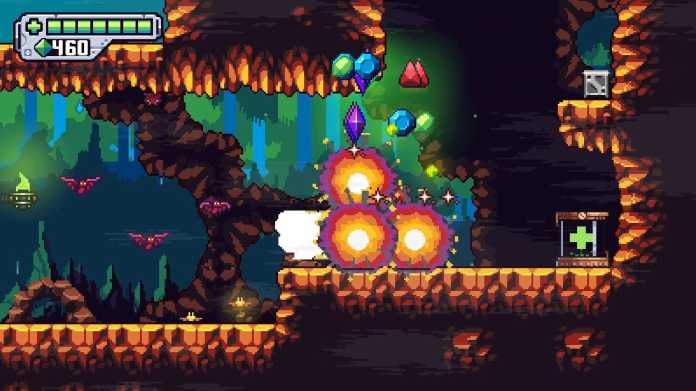
Developed by Cascadia Games and published by Drageus Games, this is a 2D retro platform title that takes you on a journey inside the Moon. You will experience all the usual platforming mechanics in this colourful pixelated story of love and family.
Moon Raider sticks to the tried and tested mechanics.
Moon Raider has a bizarre story to support the out of this world gameplay. Dr Cavor rescues the former Moon Queen Selene from the thuggish Selentine’s. Her reign was ended by her people and the doctor refuses to sit by and allow her to be placed in danger. Taking her back to Earth, the two fall in love where they have a daughter. Tragedy strikes! Selene falls ill, as she relies upon the gems of the Moon to keep her healthy. The only choice to keep her mother alive is to travel to her former home and take 200 gems to heal and sustain her.
So, it will not win any awards for originality, but it sets the tone nicely for the 10 areas that you’ll have to explore. The Selentine’s were considered advanced beings, but you soon discover that they are primitive. Their only concern is their supply of gems, which you are happily stealing. You must traverse each room; breaking boxes, shooting aliens and deactivating laser beams. The further you get, the harder it becomes, but the difficulty never gets to where it is unplayable.
Explosions and gems!
Familiar gameplay.
If you’ve tried any of the many indie platform games that are available, you’ll feel instantly at home with this. The pixelated landscapes wind around in a maze-like fashion. You will find; dead ends, secret rooms and crates full of crystals. Ultimately, however, your aim is to move through a door to the next room. Any enemies that you face can be ignored or killed, the choice is yours. But shooting them rewards you with gems, so the small amount of effort is worth your time.
Every area is blessed with an end-stage boss. These 10 overpowered beasts will; shoot laser beams, impale you with spikes, and do their best to kill you instantly. But with a little patience and some keen observation, it will ensure they are defeated quickly. The fighting is enjoyable, but isn’t the best part of Moon Raider that accolade is given to the movement mechanic.
Powered by gems, you will be gifted with the ability to soar through the air like a burning bird. You’ll reach otherwise unobtainable heights and find many of the collectables that were out of reach. This special ability can; destroy obstacles, kill enemies, and allows you to sprint around the world. Just be warned that it runs out, and when that happens, you drop like a stone through water.
Dying, the unavoidable annoyance.
Death is an unavoidable annoyance in most games, and in Moon Raider, it’s no different. A small health bar and no additional lives mean that dying is a concern. Fortunately, you don’t lose too much progress as you spawn at the start of each room. As the stages wear on, though, they become increasingly complex. Losing all your hard work is agony, and it hurts like a kick in the balls.
It’s painful, annoying, and will make you grimace. But it simply serves as a reminder that the platforming genre requires; accuracy, skill, and patience. Spiked traps, laser beams and overly aggressive aliens all try to ruin your adventure. You must plan your approach, take your time, and collect all the healing gems. After all, you are the only one who can save your mum’s life.
Keep moving, you don’t want to freeze.
Moon Raider looks nice but doesn’t stand out.
What I loved about Moon Raider was the variety in level design. Each stage had its theme and style, with its hazards to overcome. The bright and simple look was pleasant enough, with attractive sprites and smooth movement. The stages are well lit, with enough definition between each object to spot the traps and collectables.
It was done to a good standard, but it doesn’t stand out against the many similar titles that fall into this category. Luckily its odd story and flying mechanics make it memorable. Otherwise, it could have been just “another” platform title.
It continues its retro influence with its basic and to the point audio. A surprisingly quiet soundtrack plays alongside the jumping and shooting action. The synthesised music allows the loud and almost overbearing sound effects to be at the fore. Ear piercing noises play constantly. Your laser-firing, gems being collected, boxes smashing, and so forth. It’s shrill, painful, but works perfectly with the science fiction theme. I liked how the audio was integrated, but I would have preferred the music playing a bigger part in setting the scene.
Plan your route and stay alive.
Its lack of difficulty and ease of controls makes it a newbies dream.
We all have to start somewhere, right? No one wants to cut their teeth on Okunoka Madness, as it’s far too challenging. Moon Raider is a fun and accessible title that allows gamers of all skill sets to enjoy themselves. Easy to learn fundamentals and well-designed levels allow you to casually work through each stage. Cascadia Games have done well to balance the challenge with the enjoyment factor.
Platform games are more than simply leaping chasms and killing enemies. The best ones force you to explore the world around you, searching for hidden collectables. Luckily, this has that element in abundance. Secret rooms, bonus areas, and locked up aliens that need rescuing. What more could you ask for? Without this, there would be little replay value. But it’s extremely enjoyable searching every nook and cranny and it’ll keep you returning for more.
Does Moon Raider tick all the boxes?
Moon Raider’s biggest issue is strangely also one of its strong points. Its simplicity and familiar mechanics make it super accessible, but also prevent it from making its mark. It has a nice art style, in keeping audio and an unusual story. I liked the difficulty curve, and how it can be played casually. It has plenty going for it, so buy it here! Can you save your mum by gathering all the gems on the Moon? You must, you’re her only hope!
Mountains of Madness is an adaptation of the H.P. Lovecraft novella, and a new entry into the Chronicle of Innsmouth series. It takes you on a macabre journey into the depths of the occult. It’s a flawed adventure, but with a love for the works of Lovecraft. A love, fans of the genre will really appreciate.
Head scratchers galore
Playing through a mystery can be a solid experience all on its own. The sense of danger that builds as the story reaches its crescendo. The threads leading in all directions before coming together down the line in the most unexpected ways. Red herrings, secrets, and long, dark nights. All of these elements are found in Mountains of Madness, they’re a big part of the draw. However, add in a healthy dose of Cthulhu and heaping tablespoons of the occult and you’ve got yourself a wonderfully dark jaunt through a lovecraftian mystery.
Any good mystery relies heavily on its puzzles and riddles. Mountains of Madness does not mess around in this department. There were some seriously tricky puzzles here; at least for me. However, I feel it handled the difficulty really well. It wasn’t an overly frustrating experience, in fact it was engrossing. I kept a notebook nearby for all the clues, and it made me feel like an active part of the story. By the end of it all, I felt like some mad researcher with pages on pages of scribbled notes, numbers and symbols scattered across my desk. Being this engaged made it all the more satisfying to solve these puzzles. I’ll admit though, there was one puzzle that seriously left me scratching my head. It took me longer than I’d care to admit to figure it out.
What is going on?
For the most part, you play as Lone Carter, when not with Lone the game has you hop around between a fair share of its characters. You even spend a little time playing as a young Lovecraft, pretty wild.
Lone is a private investigator following up on a disappearance. It leads him to the strange town of Innsmouth. When you first lay eyes on him he’s severely injured. By the looks of it, missing an arm and leg. Needless to say, I didn’t think I’d be spending much time with him past that point. The next thing I knew he was awake, good as new but missing a fair bit of his coat and pants; those same limbs bare, yet unscathed. Thus began the first of many questions I’d have before the credits rolled.
Imperfection
Mountains of Madness does a fair job of balancing questions and answers. Especially considering the universe its set in is filled to the brim with mysteries on a cosmic scale. However, at times it did feel as though it withheld quite a lot to be revealed later. Toward the end you are bombarded with new information that for a newcomer to Lovecraft, like myself, would be a little disorienting. The plot was never lost on me, but I feel the exposition could have been laid out a little more evenly throughout the story. Because of this the pacing felt a little off. Once I had reached the climax, I found myself surprised, I was sure I still had a good hour or two to go before it was all over. However, a couple of cutscenes and my time with Lone was at an end.
Speaking of cutscenes, Let’s talk about the voice acting. If I’m being honest it wasn’t that great. Sometimes I could swear it sounded like those text-to-speech voices. At first I was sure it was due to the dialogue. It’s got this early 20th century style of speaking that’s very fitting for the setting and time period, with all the decorum that one would expect. I thought perhaps this type of speech just sounded strange to my 21st century ears, but that theory didn’t hold up under scrutiny. Take for example the 2015 film, The Witch. Here everyone speaks like something out of old world literature. It’s set in 17th Century New England and it sure sounds like it. But their dialogue is still believable, because of the quality of delivery. So it leads me to the conclusion that delivery lies at the heart of what I disliked about Mountains of Madness’ voice acting.
Deliciously Dark
I quite liked the dark and morbid style of the title’s design. The colours are dark and drab, adding to the atmosphere set by the story. Dark greens, grays and browns are the majority of the palette, with bright shades of colour few and far between. There’s a sense of despair in the artwork. This growing despair is also carried over to the music, in the beginning there’s some decent background music. Lone Carter visits his offices and is surrounded by smooth jazz, and noir inspired tracks. As the locations and tone start to change, so does the music. It becomes more ambient and ominous, like the tolling of church bells in the forest around the cemetery.
That is one area Mountains of Madness does not disappoint. Atmosphere.
It’s far from perfect, but Mountains of Madness will definitely be a good time for fans of point-and-click adventures, and of the tales of H.P. Lovecraft. If you’re a fan of both, this is perfect for you. Challenging puzzles, atmosphere and a solid mystery are the order of the day.