Indie games are much-loved across the industry. They allow developers creations to flourish and can usually be produced with much smaller budgets and man-hours than triple-A titles. I’m always keen to see what the future holds, so when Xbox announced its ID@Xbox Summer Game Fest I couldn’t wait to get started. There are plenty of demos and games to choose from, but one, in particular, caught my eye. Watching the trailer, I fell for the cartoon graphics and bright colours. I instantly downloaded the demo and waited patiently for Sail Forth to install.
Developed by David Evans and published by the Quantum Astrophysicists Guild, this is a procedurally generated adventure title. You control the captain of a vessel who is free to explore the wonderful and massive deep blue sea. You will sail to different locations, identify new islands, and assist people you encounter.
Heed the lighthouses warning.
Sail Forth in a great shape for an Alpha title.
The demo allows you to experience everything that has been created. I have to say for an Alpha build game it’s thoroughly impressive how well the developer has done. Yes, it screams indie game in style and gameplay, but it has a high-end finish I don’t always associate with this market.
You begin the game with the choice of two vessels. Each has advantages and disadvantages, and you must decide which matches your style. You also get to pick your flag, its colour, and the look of your boat. The options are basic, but they allow you some freedom to be creative. Once you are set up, you set sail for the high seas. Sail Forth allows you to pick your path and you can do as much or as little as you wish. Want to help the local fisherman? Grab a rod and catch some rare specimens. Pirates bothering you or the locals? Fit some guns to your ship and blow them out of the water. Do you fancy starting a race? You can do that as well. None of the quests is mind-blowing, but they offer enough variety to keep you interested on your journey around the world.
Weather the storm and clear the rocks!
Procedurally generated, so no playthrough is the same.
Now, the word procedurally generated will fill some gamers with dread. Some players love the familiarity of running through the same stage repeatedly. Not me, I love when the game is constantly changing, and this is one element that David Evans excelled with. The thought that each time I load into the game I’ll have a unique experience is impressive. With so many little elements combining to drive the main concept, this makes for an intriguing prospect.
Every playthrough will have new NPC’s to interact with, and your friendly merchants will be found on different islands. It is the epitome of exploration and adventure and I loved it. The merchants are key to your success as they sell you new ships and guns. You can also sell them excess items that you find in crates and when you blow up pirates. The game’s currency is wooden planks! Boy, oh boy, do you need a lot of these to succeed. This is possibly one area that needs a little balancing as it’s quite difficult to gather more supplies.
Sail Forth wants you to be the captain of a fleet of ships. Gather sailors from the water, find new boats, and rule the waves forevermore. As your fleet increases, you will learn to use simple commands to keep everyone in check. This is essential when you attack pirate forts and luckily it is easy to do. Being in charge has never been so straightforward, allowing you to pillage and plunder to your heart’s content.
Sail Forth has surprisingly good graphics.
I went into this with low expectations. The trailer I saw gave me glimpses of what to expect, but I didn’t want to get excited about an Alpha build game. I have to say I was pleasantly surprised by the quality. The colourful world and cartoon imagery are reminiscent of Zelda Wind Waker and Sea of Thieves. The multitude of islands is devoid of life at the moment, but they vary in sizes and fauna. As the game develops, I’d expect the world to become more vibrant and interesting. Alongside the look, I was impressed with how well the gameplay ran. I had no issues at all. There were no screen tears, crashes, or glitches. It was quite impressive.
The audio lacked a pirate edge, sadly. I expected jolly sea shanties and more “Yarrrrrrrrrr’s”. Instead, the world is mainly full of gentle atmospheric sounds that help to transport you onboard your vessel. The airy tunes gave the game a surreal finish that worked well with the strange and unusual gameplay. The sound effects, however, are very good. The crashing of the cannonballs, your boat colliding with land, and the random noises from the NPCs are all great. Though it didn’t match what I expected to hear, it was delivered to a high standard.
Take your fleet around the globe.
Sailing has never been so easy.
When a game allows physics to impact its mechanics, I get a little worried. Fortunately, Sail Forth uses the idea of wind direction and speed generously. You must control your mast’s position and the amount of sail you wish to unfurl. This sounds like a complicated task, but it’s straightforward to achieve like the rest of the controls. A radial menu hides all your commands, and controlling your boat is a joy. Combat is easy thanks to a crosshair and grid that shows both aim and maximum distance for each cannonball. If the developers can maintain this simplicity, it’ll be a cinch to play.
As this is only a small demo it’s hard for me to decide how much replay value it holds. I have no visibility of the achievement list, nor do I know how in-depth the quests will become. In its current build, I found the gameplay addictive, and it was hard to put down. If the game continues in this vein, I believe it’ll keep gamers playing for hours.
Sail Forth has a bright future.
Obviously, an Alpha game can change direction and mechanics at the drop of a hat, so gameplay may alter from now to full release. Yet, I don’t think major changes need to be made. This demo is proof that Sail Forth has a bright future and I can’t wait to see how David Evans develops it further. I recommend you try the demo here! Be aware it is only live until June 21st 2021. Life on the open waters is dangerous and thrilling, so grab your ship and crew, and go adventuring.
Summary!
Sail Forth is a wonderful procedurally generated game that is fantastic to play. With plenty of tasks to complete, new islands to explore and vast ships to sail, you will soon become the King of the Seas. An Alpha build game currently, this has great promise to be an amazing Indie title.
(Reviewed on Xbox Series X. Also available on PC, Nintendo Switch and PlayStation.)
SEGA has been on a roll in recent years, having been voted video game publisher of the year in 2020, and have amassed a cracking stable of IPs that rivals even their beloved back catalogue. This focus on newer titles has left longtime fans of their older IP holding their collective breaths for even the slight mention of their favorite games and, oddly, it has taken the pandemic, which has restricted resources the world round, to stimulate not just SEGA, but most publishers to dip into their existing franchises to fill up their release schedules.
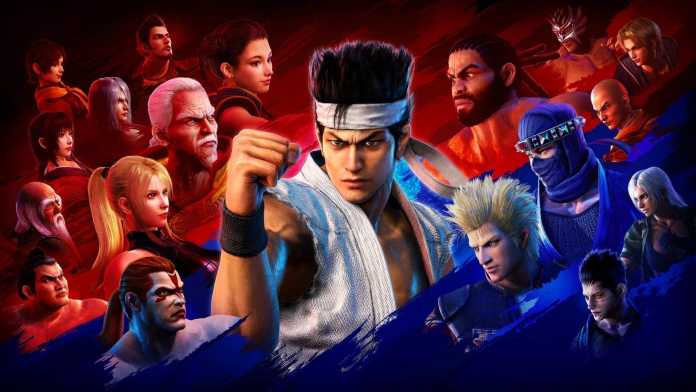
Clench your fists and whip out the arcade stick cause Virtua Fighter is back! The legendary Yu Suzuki-created series and the first fighter to grace us with 3D graphics is back with Virtua Fighter 5 Ultimate Showdown – a remaster of the PS3 and Xbox 360 title with revamped graphics and a focus on online play and developing an e-sports phenomenon.
You can view high ranked matches from the main menu as well as being able to watch matches as they are being played live.
The 14-year-old fighter has been refurbished using the dragon engine (used in the Yakuza series) updating the graphics, menus and soundtrack. But are the aesthetic upgrades enough to justify giving the remaster a shot? In short – yes, if you are playing online or local co-op.
Terrified that I was plunging into the deep end of one of the most notoriously technical fighters in the genre I avoided Akira and his all-important timing-based attacks and went with Mexican wrestler El Blaze thinking that I could button mash my way to victory. I mean – how hard could it be? Let’s just say I was wrong on both counts.
The beauty of this series is that the effort to learning your character pays you back in spades, with a deep set of moves that can allow you to acquire the necessary timing and skill to change your approach for each opponent and completely dominate them. This isn’t Marvel vs Capcom 2 where the most impressive moves are initiated with the press of two buttons, this also isn’t Dead or Alive or Mortal Kombat where other visual gimmicks are the biggest selling points. The Virtua Fighter series has the allure of a pure fighting game, where the combat styles and strung (but manageable) combos are the attraction. The impact of each maneuver is felt by the player as impactful sound effects and heavy damage give weight and meaning to your attacks. It also means that dramatic comebacks are not commonplace, but when they do occur they are memorable and feel earned. It’s a very rewarding experience, a depth that gives the title replay value, addictive longevity, and it’s that very thing that makes Virtua Fighter a perfect e-sports title.
The original Virtua Fighter character model style is very appealing.
Unfortunately, this keen focus on the esports scene is rather narrow, resulting in an underwhelming lack of modes and features, with no story mode to speak of and only a short jaunt of an arcade mode providing any competition non-multiplayer related. There is of course a training mode and DLC provides music from previous games and beautiful blocky polygon VF character models, but a bit more of an offline element would not have gone amiss.
Another misstep is the lack of rollback netcode meaning that slower internet connections prevent a more interlinked global audience and high latency affects the quality of matches unnecessarily. Other fighting games, even other re-releases (a previous review of mine King Of Fighters 2002 Ultimate Match as an example) have integrated this feature as standard, making it quite the glaring omission based on its overall goal. I didn’t experience too many connectivity issues or have much of a problem finding matches but I don’t know if that can be said for those with poorer internet speeds. Ranked matches and searching for/ creating a room for fighters are the two online modes available and both function well.
My go-to character – Sarah Bryant – in a position that will likely introduce the opponent to world of hurt. On a side note – SEGA please use this graphics engine to develop Shenmue 4.
Although it’s billed as secondary to the online aspect, It’s hard to trump traditional multiplayer – local co-op – in my mind and it’s really where the game shines for me. Exploring the depth of the fighting system and characters on offer through extended playthroughs with friends, learning each character’s nuances and strengths is a great deal of fun, and makes me want to consider my recent stance of preferring single-player experiences. I can see this being a mainstay on game nights with friends in the not-so-distant pandemic-less future. Online is certainly not a bad option for the time being though.
Virtua Fighter 5 Ultimate Showdown may not be the complete package, and might be letting down its e-sports aspirations by omitting rollback netcode, but the core gameplay is a diamond in the crown of a series that deserves to remain relevant and will no doubt provide endless fun for those looking for a great multiplayer experience with replay value.
The music industry is a fickle beast. It goes with the popular vote and talent rarely beats money. Songs have the power to move us, and they connect with us in a more meaningful way than words ever could. They often divide communities and you’ll argue until you are blue in the face about why your style is superior. However, music is rarely at the centre of political turmoil, but when it is, it causes a divide between the rich and the poor. No Straight Roads runs with this idea and integrates it into its colourful world.
Developed by Metronomik and published by Sold-Out Software, this is a vivid action-adventure game. Set in a bizarre futuristic landscape, this coins itself as a rhythm adventure title, but truth be told, the beat makes up only a small part of its gameplay. This surreal story is full of banging tunes, whacky characters, industry stereotypes, and many jokes.
No Straight Roads teases you with wonderful mechanics, but it fails to evolve.
I never know what is more disappointing, an outright poor game with no direction, or a title with an interesting concept that fails to evolve beyond its basic premise. No Straight Roads sits in the latter category and is a game that has such great potential. Many of its layers worked brilliantly, but sadly it just didn’t take off. With the story revolving around fights and capturing districts, it gets stuck in a monotonous loop of repetition. A lack of enemies and the same type of battle give this a distinct Deja vu feeling.
Though I was disappointed with its shallow gameplay, I still found plenty to entertain me. If you are a fan of the industry, you’ll love the in-jokes and digs at the culture. The comedy runs deeper than that with amusing one-liners fired between the two protagonists throughout. This approach helps the loose story flow from district to district, giving you direction and helping you to focus. There is a ranking system for each battle, collectables to be found, and fans to win over. So, on a basic level, there is a lot to do.
Challenge the DJ!
Vinyl City is a place where the rich always win.
The game is set in a sprawling metropolis known as Vinyl City. You control the Rock duo Mayday and Zuke, one is OTT and craves fame, the other is so laid back he’s horizontal. Their band Bunk Bed Junction wants to return Rock to its former glory, but the evil EDM empire known as NSR (No Straight Roads) disapproves. While they control the music scene, they filter the power to whomever they chose. The EDM favour their rich backers and allow the poor to suffer in the darkness.
The Rock duo will not stand by and watch their beloved Vinyl City fall under this tyrannical ruler. Together they battle to capture each district, overcoming the boss in charge and loosening the grip the NSR has over the people. Rock must live on, and Bunk Bed Junction is the band to make it happen.
A semi open-world with a linear focus.
When you first look at the surrounding environment, it appears vast and daunting, as any major metropolis should. As you play you quickly realise that this large space is devoid of life and the game linearly funnels you to how it wants you to play. You are free to explore “hub” areas, searching for energy sources to power broken equipment. In doing so you’ll increase your fan base, which is used to help with upgrades to each character. However, finding all the damaged equipment is no easy task, and repairing them all offers a reward and an interesting alternative challenge to the main plot.
As you move through the zones, you note a distinct music style for each location. I loved this small detail, and it reflects the developers love of different genres. Each district follows the same pattern and here unfortunately is where the repetition begins. You must battle your way past security, rinsing and repeating the same few moves against the same type of opposition. Once you overcome the predictably easy minions, you’ll face the big boss. This would have been an exciting experience if it wasn’t for the rehash of the same fighting mechanics.
It’s time to go to the disco.
No Straight Roads fails to hit the high notes.
The tone is one of sorrow and negativity, but that’s not because I didn’t like what I’ve experienced. No, it’s out of sheer disappointment! This genuinely has so much potential that I wanted it to kick on, however, it never did. There were so many great moments that made me smile and laugh throughout. Yet, its core concept of the battles dragged it back down to earth.
Yes, the stages that the fights take place on are unique and interesting to look at. Also, the bosses all vary in stature to match their song and their environment. But, this doesn’t take away from the tedium of the overall event, sadly.
There are highlights peppered along this weird rhythmical journey. The characters that you interact with are warm, full of emotion, and are well designed. They add such depth to a loosely written story it’s hard not to love the effort put into each one.
There is also the concept of a skill tree that is powered by your fan base, the ranking system for each event, and many stickers that give you temporary buffs. So, there is a lot to consider before taking on each mission. It’s simply unfortunate that it’s all held together by a hollow mechanic that fails to go anywhere.
A vivid yet unusual trip from start to finish.
No Straight Roads smacks you right between the eyes with its incredibly unusual art style. Bold characters, sharp contrasting lines, and retina-burning colours make this an acid trip of a game. I fell for its style instantly and loved how the characters were designed and how they matched the world they lived in. The variety between the areas was incredible, with every element creating a surreal atmosphere. It’s rare these days that a game can be unique and original, yet that’s exactly what you get here.
When a game is all about music, you know the audio will be spot on. Metronomik loves everything about the industry and this shows in their eclectic mix of sounds. From Rock and electronic to rap and more, there is a vast selection of styles. As you battle off against the bosses, you’ll have to endure their taste in music. But, as you win over the crowd and reduce their health, the tunes start to have a Rock undertone. This gets stronger the further you progress, and this was a marvellous touch.
When you look at how great the graphics and audio were, you can see why I’m frustrated. So much care and attention has been placed into making this sound and look great that it’s annoying the core concept fails to flourish.
Elton John has nothing on this boss.
Easy to pick up, frustrating to use.
At first glance, this appears quite complex to play. Two characters to control, combo attacks, melee and ranged weapons, dodging, and finally parrying. All of these must be mastered to the beat of the songs. It sounds like a nightmare, right? Wrong! A thorough tutorial teaches the fundamentals and everything else falls into place with a little practice. You soon become a master of the beat and your only challenge will be the unresponsive controls when changing players. This wasn’t a big thing, but I would have liked it to be smoother.
Where No Straight Roads excels is its volume of tasks to complete. With multiple collectables to find, electrical equipment to repair, a skill tree to fill, and S ranks to obtain, there’s plenty to keep you playing. There is also a large achievement list that requires perfection in the boss fights. So, this will help keep you busy if you are that way inclined. Yet, the issue doesn’t lie with how much there is to do. No, it’s whether you can stomach repeating the repetitive fights, again! This is one for the true completionists among us. The player who likes the accolade of completing a game few others have.
I loved No Straight Roads, but its failure to reach its potential holds it back.
Ironically, I feel like a stuck record after my time in Vinyl City. I’m stuck playing the same piece of music knowing there should be more, but it never materialises. This is No Straight Roads, in a nutshell, such potential, but it never quite gets there. With so many great elements, this could have been phenomenal. Sadly, its safe and repetitive core concept holds it back.
I enjoyed my time with it, mostly and loved many of its components. It’s a shame its lack of adventure stops it from becoming the game it’s destined to be. I recommend it but be warned you’ll only play it casually. A copy can be purchased here if interested. Will Rock music endure and save the day? Or will the NSR be victorious? Grab your instruments and remind Vinyl City what they’re missing.
I find it quite disconcerting that we know more about other planets and the deep reaches of space than we do about Earth. Miles and miles of the ocean remain a mystery and many of our problems could be solved by what lies in the deep. This lack of knowledge allows our imaginations to run wild and developers have the creative licence to scare the living daylights out of us. Subnautica: Below Zero is a claustrophobic nightmare that keeps you on the edge of your seat throughout.
Developed by Shiny Shoe LLC and Unknown Worlds Entertainment and published by the latter. It’s a survival game set in a fantasy alien world and it’ll test the best players to find all its secrets. The stand alone expansion to the much-loved Subnautica, it’s a multi-terrain title that pushes you to your limits. It runs with many of the series well-trodden mechanics but adds new content to keep you entertained.
Knowledge is half the battle.
Subnautica: Below Zero is a stunning piece of art.
When I played the first title, it made me feel anxious, and I was uncomfortable at all times. The constant requirement to dive deeper and the fear of the unknown was ever-present. Subnautica: Below Zero has captured this essence, but it breaks up the fear factor with its stunning underwater environment. The vastness of this icy ocean and the eclectic blend of wildlife make exploring both dangerous and exciting.
If you ignore the emotional story, the game’s premise is quite simple. You are in control of your fate and you must manage your health, oxygen, food, and water. Supplies hide in emergency drop locations and are found on the seafloor. You must gather as many resources as possible, create new equipment, cook food, and dive further into the deep. Scanning life-forms, finding new resources, and exploring all add new blueprints for game-changing technology.
It’s all about embracing the world around you, foraging the local fauna and surviving at all costs. Your new tech will allow you to ride new vehicles, dive for longer, and battle the harsh climate when out of the water. Every element is brilliant throughout and is cleverly intertwined.
Naughty little sea monkeys.
It’s a heartfelt tale about loss and deception.
I won’t go into details about the story, but I will say it’s brilliantly written with some intelligent and well-delivered acting from the entire cast. The emotional ties from the protagonist and her reasons for exploring this alien world are heartbreaking. You quickly become attached to her and hope she finds the answers to all her questions.
You control a scientist called Robin Ayou. She smuggles herself onto planet 4546b to investigate her sister’s death. Her employer Alterra claims she was negligent, but Robin does not believe what she is told. The planet is full of research bases that are abandoned and you must explore this icy tundra and deep ocean to try to find out the truth behind your sister’s demise.
Beyond this, there are some fantastical twists and turns that force you to explore the surrounding environment. You will naturally have to improve your technology to progress and the requirement to gather supplies and enjoy the plot is finely balanced. You must remain focused, otherwise, you’ll easily lose yourself in the game’s beauty.
Subnautica: Below Zero sets the survival benchmark.
There are so many survival games available that we are swimming in choices. Every workable theme has been covered and some are great, whereas many are trash and a waste of time and money. Subnautica: Below Zero is brilliant and every mechanic it uses works in harmony with the others. This is, without doubt, the benchmark for what other survival games must strive to achieve.
The demands to replenish oxygen, food, water and health are constant but feel manageable. For every negative impact on your stats, there is a positive in the technology you use. You must choose how you wish to manage your stats. Failure to stay alert will cause death and loss of your items. It’s a tough survival game, but planning and knowing your limits will ensure a successful expedition and the continuation of the story.
Behold this alien structure.
Anyone for an underwater party pad?
Everyone loves to build a home of their own. Just because you are on an alien planet this desire doesn’t dissipate. You are free to build basic outposts to give you much-needed shelter, or an OTT party pad similar to a Bond villains hideaway. It was fantastic to let your creative juices flow and was a welcome break from the oppressive alien world.
What was equally great was the selection of land and sea vehicles at your disposal. Cutting through alien oceans, exploring caverns and zipping past fish was thrilling. Exploration no longer felt daunting and though it was still thwarted with danger, you felt safer with technology by your side.
If the constant pain of not being able to breathe gets you down, you can spend time out of water. O2 is no longer your primary concern, no, you simply have to watch out for hypothermia. Out of the frying pan and into the freezer. The small overworld section didn’t thrill me as much as I hoped, and I leapt like a salmon to return to the icy depths.
Subnautica: Below Zero is proof that science fiction is beautiful.
I’m rarely lost for words, but trying to describe how Subnautica: Below Zero looks is a tough ask. The art team has allowed their minds to run wild with strange but familiar fish, haunting landscapes, and beautiful weather fronts. Using neon colours, vivid tones and vast landscapes makes this a massive stunning alien environment to explore. Viewed from a first-person perspective, your limited window of view keeps you in suspense and you quickly learn to fear the unknown.
If you are not used to instructions being barked at you, you soon will be. Your HUD screams for oxygen, water and food. The orders come thick and fast and you’ll beg for them to stop. These robotic sounds are matched perfectly with moments of silence and haunting animal sounds. The audio captures the alien environment to a tee, and you are left in awe as you float weightlessly out in the deep. I’ve already mentioned it, but the quality of the acting will move the hardiest of individuals. You will fall for the story and each character from the various audio clips you hear. Piecing these together will help solve the mystery and may save your sister’s reputation.
Welcome to the winter wonderland.
Like this review, Subnautica: Below Zero keeps going on and on and on!
Floating around underwater can disorientate and losing your way is a worry. But, what you needn’t worry about is the controls. With so many complex mechanics this could have been a nightmare, instead, it’s an absolute joy to experience. With pinned recipes, beacons, a compass and more to help you navigate, getting lost is the last of your concerns. The layout is well thought out, and the UI is simple and clean-cut. Even towards the end game, it maintains its straightforward approach.
Like this review, Subnautica: Below Zero keeps going on and on and on. You can play for hours and be nowhere near the finish. This large almost objective free experience may be daunting for some. However, I loved the lack of shackles and thoroughly enjoyed the freedom bestowed upon me. A small achievement list is shrouded in mystery, so best of luck unlocking each one. With so much to do, this will keep you busy for ages and is great value for money.
Subnautica: Below Zero is a stunning Sci-Fi survival game.
Subnautica: Below Zero is such a great experience from beginning to whenever you find the end. It proves that science fiction isn’t all about geeky ideas. No, sometimes it’s beautiful, emotional, and has a deep fulfilling story. With balanced mechanics, a purpose to explore, and a brilliant story, this is what all survival games should be like. Unsurprisingly, I recommend you buy it here! Sneak onto an alien planet, find clues to what happened, and clear your sister’s name.
When life gets you down, what are you going to do? Will you keep accepting you are going nowhere and everything is out to get you? Or, do you plan to make a change? I suggest taking the bull by the horns and take control! BitMaster shows what happens when a common person becomes a hero. No longer will they be walked over when they fight for their freedom!
Developed by CoMiGo Games and published by Sometimes You, this is a colourful futuristic twin-stick shooter. You control one of five heroes who must blast their way through waves of enemies. You’ll face massive bosses and go up levels to improve your abilities. It’s a game of patience, tactics, and power-ups.
Keep moving and shooting.
BitMaster grows on you.
When I first loaded into this arena shooter, I admit I was confused. The gameplay is fast-paced; the enemies come at you in waves, and I did not know about my weapons. I floated on my hoverboard with little focus other than to shoot anything that moved. It took me a good hour for the premise to click, and when it did, I wondered how I struggled so badly.
The concept is ironically straightforward. There are one hundred waves broken down into five sections of twenty. At the end of each one, you will face a random boss. If you die, you lose everything and your score is calculated. This is added to your character’s progress and you may level up, increasing his/her base stats.
However, if you defeat the boss, you will create a shortcut that allows you to spawn at different wave points with a random allocation of weapons. Get used to the word random, as most of the gameplay is based around RNG and luck. During each wave, you collect a boost and this will either heal you or improve one of your four weapons. The best part of the game, though, is the positive and negative buffs that aid and impact your progress.
Plan as much as you like, but debuffs are a pain in the arse.
Every character has a set shield and health stat. If you are skilled and lucky, you will keep each maxed out. That’s until the debuffs take over! Your shield will drain over time, or you won’t be able to recharge it. Your movement speed may be reduced, or your ability to shoot is negatively impacted. It’s brilliantly infuriating, especially when you are making such good progress. Yet the randomness is appealing and adds such variety to each playthrough. No attempt is ever the same, and this is one of BitMaster’s key features.
Alongside these horrendous ability drains, you will have little choice over which weapon is improved. Your four tools of destruction are as follows; a widespread laser, a boomerang, an EMP gun, and a high-powered rifle. Each has its advantages and disadvantages, but you may be forced to use your least favourite if luck isn’t on your side.
Defeat crowds with your EMP.
BitMaster doesn’t make life easy.
Once you get the hang of what you must do, you’ll be lulled into a false sense of security. You’ll speed around on your board, dodging projectiles, and keeping your eye on the buffs. The game is in constant flux and this won’t be to everyone’s liking. The constantly shifting playing field makes planning your approach almost impossible. With no control over which weapons you’ll improve, and the game wanting to kill you, this can be unfairly harsh.
Yet, I loved BitMaster for its brutality and high level of difficulty. Yes, I was frustrated when I got backed in a corner and my shield drained away. But this strengthened my resolve and made me come back stronger. There was one area that I wasn’t so happy with, however! The randomness of each of the five bosses was unduly harsh. You have one chance to defeat them, and unless you are a quick learner, or have a great memory, you’ll fail miserably.
It added to the difficulty, but I can see a lot of gamers chucking in the towel way too early because of it. I would like to see the chance to spend in-game credit on picking your opponent. This would ensure players had a fairer chance of victory, and another collectable to gather during each wave.
A game that’s electronic and futuristic.
The synth/electronic influences are clear to see in both the graphics and the audio. Its isometric viewpoint allows you clear scope to see the surrounding arena. A well placed HUD gives you a radar image of your foes, so you can dodge and weave throughout the maze-like factory. The purple and neon hues and Amiga-like imagery give this a retro aesthetic. With twenty different enemies to tackle, this has plenty of variety in both looks and gameplay. The action can be hectic, but it never suffers from stuttering, glitches, or crashes. Everything runs smoothly, and this makes it a really enjoyable experience.
The audio is where the game shows its electronic roots. With a high-tempo synth soundtrack it belonged to the 80s, but was fused with futuristic vibes. It was delightful to listen to and kept the energy levels high. The sound effects were equally great, with screeching lasers, explosive crashes, and loud thuds as projectiles struck the scenery.
No enemy is getting through that.
Easy controls once you get used to it.
As previously mentioned, I struggled at the beginning. This wasn’t because of the controls, however. The simple layout allows you to hit the ground running and you’ll be blasting foes in no time. Moving around can challenge you until you become familiar with the fluid approach. You’ll crash into the forcefield, walls, and every enemy you face. Yet once you get used to it, you’ll not experience these problems again. It truly is a game that needs time and practice to master. If you have the patience, you’ll be rewarded with a well-rounded experience.
With four additional heroes to unlock, five monstrous bosses to defeat and one hundred waves to overcome, this will keep you playing. The in-game balance is constantly changing, so you’ll be kept on your toes throughout. A challenging achievement list is small, but will only be completed by thorough players. Hours of gameplay await you making this a great value title.
BitMaster is a tough indie title.
BitMaster is undeniably tough. The RNG buffs enhance the difficulty, as does the random weapon allocation. No playthrough is ever the same, and I loved it because of that key feature. I enjoyed my time with this, and recommend you to buy it here! Grab your hoverboard, pick a weapon, and shoot your way to freedom.
Here is our spoiler free (I know, but some people may not have seen them) review of the new 4K Ultra HD 4 Movie Collection of Indiana Jones.
Relive the unforgettable exploits of world-renowned, globetrotting hero Indiana Jones in spectacular 4K Ultra HD when the INDIANA JONES 4-MOVIE COLLECTION in a new 4K Ultra HD + Blu-ray set and on Digital to Download & Keep from Lucasfilm Ltd. and Paramount Home Entertainment.
The cinematic classic that started it all – Raiders of the Lost Ark – celebrates its 40th anniversary this year, having first introduced audiences to the man with the hat on the 12th June, 1981. Forty years later, the legendary hero continues to captivate new generations of fans.
Now, for the first time ever, all four films are available together in 4K Ultra HD with Dolby Vision and HDR-10 for ultra-vivid picture quality and state-of-the-art Dolby Atmos audio. Each film has been meticulously remastered from 4K scans of the original negatives with extensive visual effects work done to ensure the most pristine and highest quality image. All picture work was approved by director Steven Spielberg.
In addition, all four films were remixed at Skywalker Sound under the supervision of legendary sound designer Ben Burtt to create the Dolby Atmos soundtracks. All original sound elements were used to achieve the fully immersive Dolby Atmos mixes while staying true to each film’s original creative intent.
The INDIANA JONES 4-MOVIE COLLECTION includes nine discs in the set. Each film is presented on 4K Ultra HD Blu-ray Disc with original theatrical trailers and on standard Blu-ray. The set includes a double sided map and an additional Blu-ray™ with seven hours of previously released bonus content as detailed below:
On Set with Raiders of the Lost Ark
From Jungle to Desert
From Adventure to Legend
Making the Films
The Making of Raiders of the Lost Ark (1981 documentary)
The Making of Raiders of the Lost Ark
The Making of Indiana Jones and the Temple of Doom
The Making of Indiana Jones and the Last Crusade
The Making of Indiana Jones and the Kingdom of the Crystal Skull (HD)
Behind the Scenes
The Stunts of Indiana Jones
The Sound of Indiana Jones
The Music of Indiana Jones
The Light and Magic of Indiana Jones
Raiders: The Melting Face!
Indiana Jones and the Creepy Crawlies (with optional pop-ups)
Travel with Indiana Jones: Locations (with optional pop-ups)
Indy’s Women: The American Film Institute Tribute
Indy’s Friends and Enemies
Iconic Props (Kingdom of the Crystal Skull) (HD)
The Effects of Indy (Kingdom of the Crystal Skull) (HD)
Adventures in Post Production (Kingdom of the Crystal Skull) (HD)
I am a huge fan of Indiana Jones and have been for most of my life. Whilst I didn’t see Raiders at the cinema (I can’t remember why now, it was a while ago), I did see the rest at the cinema. I remember going to see Temple of Doom about six or seven times and loving every minute of it. I think today it is still my favourite of all the films. I have to be honest, I wasn’t really impressed with Crystal Skull, and so I am hoping the new Indiana Jones movie, which is currently filming, will be better – it has to be!
Anyway, I’m not going to spoil any of the stories in case people haven’t seen them yet (I know I am very excited to show them all – well the first three – to my son when he is a little older).
This set is simply a must have if you are a fan of the movies – they are beautifully remastered in 4K and it makes you feel like you are back in the cinema. The inclusion of all the extras really adds to the value of the set.
So what are you waiting for, go get it now, you wont be disappointed.
Available on 4K Ultra HD Blu-ray and on Digital to Download & Keep now.
Well I certainly would not want to follow that incredible Xbox and Bethesda Showcase just 30 minutes ago but now we have the Square Enix Digital showcase for E3 and as a PS5 gamer, I certainly have my eyes on this one for some Final Fantasy news, MARVEL’s Avengers Blank Panther expansion news and other updates and possible reveals of what to expect over the next year from this publisher. Below you will find all the news and trailers as they happened in the showcase followed by my own thoughts on them:
MARVEL’s Guardians of the Galaxy: Official Reveal Trailers
Fire up Star-Lord’s jet boots for a wild ride across the cosmos in this third-person action-adventure game, a fresh take on Marvel’s Guardians of the Galaxy. With the unpredictable Guardians at your side, blast your way from one explosive situation to another, with original and iconic Marvel characters caught in a struggle for the fate of the universe. You got this. Probably.
Marvel’s Guardians of the Galaxy is coming October 26, 2021 on PS5, PS4, Xbox Series X|S and PC.
Final Fantasy: Pixel Remasters
The games that inspired a generation come to life once more, in the ultimate 2D pixel remaster. Coming soon to Steam and Mobile!
Legend of Mana:
Watch the Legend of Mana opening movie! Now Remastered for the first time, featuring a colorful cast of characters, exciting real-time combat, and the option to alternate between the original or new rearranged music. Legend of Mana is available 24th June 2021
MARVEL’s Avengers: Black Panther – War for Wakanda Trailer
Black Panther must defend Wakanda from Klaw, who seeks to steal Vibranium for his own desires. Watch the cinematic trailer for Marvel’s Avengers Expansion: Black Panther – War for Wakanda. Available in August 2021!
Mobile Games: Trailers
Hitman Sniper: The Shadows introduces a wholly original story set in the Hitman Universe. The game focuses on events following the disappearance of Agent 47 and follows the story of The Shadows, a group of highly skilled snipers – Soji, Kiya, Kolzak, Knight, and Stone – within the hidden world of assassination, where a new criminal network threatens global stability. Diana Burnwood and the International Contract Agency (ICA) activate Initiative 426, aka The Shadows, to eliminate this threat. Hitman Sniper: The Shadows is a free-to-play game set to be released in 2021 on iOS and Android. More exciting updates will be revealed later this year.
Pre-registration is now available for NieR Re[in]carnation, an action command-based RPG for mobile.
With over 45 Million downloads worldwide, FINAL FANTASY BRAVE EXVIUS celebrates its 5th Anniversary with a special countdown campaign starting on June 17, 2021!
Can you become history’s first SOLDIER? FINAL FANTASY VII THE FIRST SOLIDER coming to iOS and Android Worldwide in 2021
BABYLON’S FALL from Square Enix is developed in partnership with renowned action specialists, PlatinumGames Inc., (NieR:Automata). Featuring fluid co-op-combat, powerful weapons and a unique, striking art style, the epic world of BABYLON’S FALL is coming to the PlayStation5 (PS5) console, PlayStation 4 and STEAM. The game can be played in co-op online multiplayer for parties up to four and will feature a range of post launch game modes at no additional cost.
Life is Strange: Remastered Collection Trailer
The Life is Strange Remastered Collection includes ‘Life is Strange Remastered’ and ‘Life is Strange: Before the Storm Remastered’. Both award-winning games have been remastered with updated visuals across characters & environments.
Life is Strange: True Colours Trailer
In March, the latest entry in the Life is Strange series was revealed: Life is Strange: True Colors, a small-town supernatural mystery. Brought to life through full performance capture by rising talent Erika Mori, players will navigate Haven Springs as Alex Chen, a young woman who has long suppressed her ‘curse’: the psychic power of Empathy, a supernatural ability that allows her to experience, absorb and influence the strong emotions of others – which she sees as blazing, colored auras. When her brother dies, in a suspicious accident, Alex must at last embrace her volatile power to find the truth, and uncover the dark secrets buried by a small town. Alex Chen’s journey, power and future are all fully under the player’s control. The psychic power of Empathy affects every interaction and relationship Alex has in the game and is fully under the player’s control. Use it to reveal the secrets of Haven Springs, the hidden facets of Alex’s past, and the future of her journey to find a place to call home. Release Date: September 10, 2021
Strange of Paradise: Final Fantasy Origin – Announcement Trailer
FINAL FANTASY VII REMAKE veterans Tetsuya Nomura and Kazushige Nojima join forces with Team NINJA from KOEI TECMO GAMES to deliver a bold new vision for FINAL FANTASY. Get your first look at STRANGER OF PARADISE FINAL FANTASY ORIGIN. Coming to PlayStation 5, PlayStation 4, Xbox Series X|S, Xbox One, and PC in 2022. With the memory of their struggle buried deep in their hearts… Jack and his allies, Ash and Jed, burn with resolve to defeat Chaos as they throw open the gates to the Chaos Shrine. Yet doubts remain—are they truly the Warriors of Light the prophecy foretold? Step into a world of dark fantasy and revel in the exhilarating, action-packed battles! Trial version available on PlayStation 5 until June 24th, 2021.
and that is a wrap…..
My Thoughts…
Well short and sweet and to the point really, a focus on the big MARVEL license they have so of course we got to see the plans for the MARVEL’s Avengers newest expansion in Black Panther: War for Wakanda and I have to be honest, it does look good enough to make me want to return to the game to play it and a very sensible choice to keep it as a free for everyone who owns the game because at this point following the most recent content updates, not sure I would put my hand in my pocket to pay for it. The surprise opening of the rumoured MARVEL’s Guardians of the Galaxy was a clever way to open the showcase and they did double down on the trailers with a reveal, gameplay and developer breakdown set of trailers. Pleased to say they are certainly more inspired to give a comic book GoTG experience than trying to make it like the MCU versions though some of the gameplay look like it was lifted from the Tell Tales GoTG game and Avengers.
A Focus to Mobile games was expected but not really very exciting unless you are into Mobile games before a nice look at Life is Strange and I will say that though I have no desire to revisit the first game again, True Colours certainly has my attention with its main character and choice of powers. Babylon’s fall looks interesting but not as much as what was not shown in this showcase though the promise of another Square Enix Presents in the future that will look at Final Fantasy XVI and Forspoken, but it was enough, nothing huge but just…enough.
Here we go, perhaps the biggest event for Xbox fans other than a console launch, with E3 2021 now fully underway it is time for Xbox and newly acquired Bethesda Studios to both showcase what they have coming soon and for the next 12 months. Hoping for surprises and reveals, updates on currently known games and what Xbox has in store for fans in the near future, this is a showcase with so much potential to make a lot of Xbox gamers very very happy. Below you will find all the news and trailers from the event as well as my own thoughts on it:
The opens with Bethesda’s Todd Howard delivering the opening and welcome to the showcase, talking about the 20th Anniversary of Xbox and the relationship between Bethesda and Xbox. Time to open the show with…Starfield!
Starfield: Showcase Teaser Trailer
Starfield is the first new universe in 25 years from Bethesda Game Studios, the award-winning creators of The Elder Scrolls V: Skyrim and Fallout 4. In this next generation role-playing game set amongst the stars, create any character you want and explore with unparalleled freedom as you embark on an epic journey to answer humanity’s greatest mystery. Launching November 11, 2022 exclusively on Xbox Series X/S and PC. Become a member of Constellation at StarfieldGame.com and be among the first to receive Starfield news and updates.
Stalker 2: Heart of Chernobyl – Official Gameplay Trailer
From epic cutscenes and underground labs to open-world fields, here is the first look at the gameplay of S.T.A.L.K.E.R. 2: Heart of Chernobyl. The game is next-gen only (PC, Xbox Series X|S) and will be available day one on Xbox Game Pass (both console and PC).
Back 4 Blood: Coming to Xbox Game Pass Trailer
New PVP mode for Back 4 Blood tells us one thing – things are about to get messy. Coming Slay, October 12! https://www.xbox.com/games/back-4-blood Play Back 4 Blood day one with Xbox Game Pass.
From Avalanche Studios and Xbox Game Studios, a co-op smuggler’s paradise set in the fictional world of 1970s Bayan.
Sea of Thieves: A Pirate’s Life Reveal Trailer
Split across five incredible Tall Tales packed with secrets and side-quests, Sea of Thieves: A Pirate’s Life sees Captain Jack Sparrow sailing in from beyond the horizon to sweep players into an epic new adventure! Free Jack from his prison and witness the power of the world’s greatest Pirate Treasure, which he just so happens to have stolen, before joining him on an unforgettable quest to stop dark forces from dominating this pirate paradise. This lovingly crafted story will be available to play alone or with a crew, and will be a free update for all players with the arrival of Sea of Thieves: Season Three on June 22.
Yakuza: Like a Dragon – Xbox Game Pass Reveal, Available Now!
Play Yakuza: Like A Dragon today on console, PC, and cloud with Xbox Game Pass. Become Ichiban Kasuga, a low-ranking yakuza grunt left on the brink of death by the man he trusted most. Take up your legendary bat and get ready to crack some underworld skulls in dynamic RPG combat
Battlefield 2042: Gameplay Trailer
Play Battlefield 2042 starting October 22, 2021. Fight to define the future in a world transformed by disorder. For the first time in Battlefield’s history, 128 players can join the all-out war at the same time* – giving you the chance to take part in massive-scale battles where anything can happen. Get an even greater sense of spectacular, large-scale war on seven massive maps where you’ll experience ever-changing battle conditions and gameplay challenges.
Twelve Minutes: Release Date Trailer
Twelve Minutes is coming Xbox console & day one to Xbox Game Pass on console, PC, and cloud on August 19, 2021.
Psychonauts 2: Gameplay Trailer
Psychonauts 2 is available August 25. Play it day one with Xbox Game Pass. Combining quirky missions and mysterious conspiracies, Psychonauts 2 is a platform-adventure game with cinematic style and tons of customizable psychic powers. Psychonauts 2 serves up danger, excitement, and laughs in equal measure as players guide Raz on a journey through the minds of friends and foes on a quest to defeat a murderous psychic villain. Optimized for Xbox Series X|S.
Bethesda Updating more games coming to Xbox Game Pass such as the free Xbox Series X/S optimisation for Doom ETERNAL before talking about….
Fallout 76: Steel Reign Expansion Trailer
Steel Reign brings the conclusion of the Brotherhood of Steel storyline. You arrive back at Fort Atlas to find the tensions between Paladin Rahmani and Knight Shin have reached a boiling point. After swarms of Super Mutants start to appear and people are reported missing, how will you guide the Brotherhood? Will you take the side of justice or will you remain committed to duty? Free for Fallout 76 Players. Available July 7.
Expeditions: The Pitt is a free update to Fallout 76 that will, for the first time, take you outside of Appalachia! Expeditions are story driven, repeatable missions to various exciting locales in the Fallout universe – starting with The Pitt in 2022!
The Elder Scrolls Online: Console Enhanced Trailer
Experience Tamriel unleashed with Console Enhanced, a new version of the game for Xbox Series X|S that fully utilizes the native power of current-generation machines to provide incredible boosts to performance and graphical fidelity. Tamriel has never looked or played better on consoles with Console Enhance—available June 15 for Xbox Series X|S
Party Animals – Official Console Announce Trailer
Get ready to party like an animal. Party Animals is coming to Xbox Game Pass in 2022. Fight with or against your friends in Party Animals! Choose your character from a diverse cast of adorable animals as you battle it out across multiple game modes to be the last one left standing in the ultimate competitive brawler.
HADES: Xbox Gsame Pass Reveal Trailer
Battle out of hell in Hades, recipient of more than 50 Game of the Year awards, coming to Xbox Game Pass on console, PC, and cloud on August 13, 2021 and also available for pre-order now. In this rogue-like dungeon crawler from the creators of Bastion and Transistor, you’ll wield the powers and mythic weapons of Olympus to break free from the clutches of the god of the dead himself, while growing stronger and unravelling more of the story with each unique escape attempt.
Somerville E3 2021 Trailer
In the wake of catastrophe you must find the means to make your family whole again. Somerville is a Sci-Fi adventure grounded in the intimate repercussions of large scale conflict
HALO Infinite: Multiplayer Trailer
Halo Infinite’s free-to-play multiplayer experience is dynamic, ever-evolving, and arrives later this year on Xbox and PC. Whether you’re a returning player ready to check out the Master Chief’s new campaign or brand new to the franchise, Halo Infinite builds on the legacy foundations of the series’ sandbox-driven gameplay, including Big Team Battle and Arena. Offering something that’s equal parts fresh and familiar, with a personalized Spartan journey that’s only just beginning at launch – Halo Infinite’s multiplayer will deliver continuous content releases, finely tuned combat, unique modes, and community-driven content for years to come.
DIABLO II: Resurrected Reveal Trailer
A dark figure wanders in the East and he must be stopped at all costs. Own the definitive remastering of Diablo ® II and its Lord of Destruction ® expansion on 9/23/21 for Xbox Series X|S and Xbox One.
A Plague Tale: Requiem Reveal Trailer
Embark on an emotional and breath-taking journey. Follow Amicia and her brother Hugo on a perilous new quest, doing whatever it takes to survive a brutal, uncaring world. A Plague Tale: Requiem will be released on Xbox Series X|S and PC in 2022. The game will be available at launch on Xbox Game Pass for Consoles, PC and Cloud.
Far Cry 6: Xbox Gameplay Overview Trailer
Watch new Far Cry 6 gameplay from the Xbox & Bethesda Games Showcase. Takedown settlements with the help of an angry alligator Fang for Hire, resolver weapons, and customizable backpacks. Bring freedom back to Yara with co-op matchmaking.
Slime Rancher 2: Reveal Trailer
Beatrix LeBeau is returning to the Far, Far Range in Slime Rancher 2!
Shredders: Reveal Trailer
A love letter to snowboarding, Shredders takes inspiration from snowboarding movies, the Amped games from the original Xbox, and the snowboarding heroes on social media. Shredders is a project fed by passion and built to shine on Xbox Series X|S.
Atomic Heart: Reveal Trailer
Atomic Heart is coming day one to Xbox Game Pass on console, PC, and cloud. Atomic Heart takes place in the Soviet Union in an alternative reality sometime in 1955, where technology like the internet, holograms and robots have already been invented. The main protagonist is a special agent called P-3, who is sent by the government to investigate a manufacturing facility that has fallen silent.
REPLACED: Announcement Trailer
Discover the dark secrets of Phoenix-City. Define your shared future in REPLACED coming in 2022 to Xbox Series X|S, Xbox One, and Xbox Game Pass for Console and PC, with an optimized version for Xbox Series X|S.
Grounded: The Shroom & Doom Update Trailer
The Grounded Shroom & Doom Update is available June 30. Play it with Xbox Game Pass. Befriend pets, build castles, unlock achievements, fight the Broodmother, and so much more, in one of our biggest updates to Grounded yet, coming June 30. Play Grounded today in Xbox Game Preview with Xbox Game Pass.
Among Us: 15 Player Lobbies Trailer
Hey Crewmates! Among Us celebrates its 3rd birthday on June 15, and our gift to you is a special update: You can play with EVEN MORE of your friends with the launch of 15 Player Lobbies!
Eiyuden Chronicle: Hundred Heroes: Reveal Trailer
Eiyuden Chronicle: Hundred Heroes is an exciting new JRPG adventure published by 505 Games and developed by Rabbit & Bear Studios. Featuring a traditional 6-character battle system utilizing painstakingly created 2D sprites and gorgeous 3D backgrounds. Eiyuden Chronicle: Hundred Heroes is a celebration of the JRPG genre readily associated with studio lead Yoshitaka Murayama (Suikoden I & II) and director Osamu Komuta. Eiyuden Chronicles is both a throwback to the classic JRPG games that have entertained millions and a modern, exciting tale of discovery and adventure featuring a cast of hundreds of fully realized characters.
The Ascent: Coming to Game Pass Trailer
Play The Ascent day one on console, PC, and cloud with Xbox Game Pass on August 19, 2021. The Ascent is a solo and co-op Action-shooter RPG set in a cyberpunk world. The mega corporation that owns you and everyone, The Ascent Group, has just collapsed. Can you survive without it?
Age of Empires IV: Release Date Trailer
Age of Empires IV is available October 28, 2021. Play it day one with Xbox Game Pass for PC. One of the most beloved real-time strategy games returns to glory with Age of Empires IV on Xbox Game Pass for PC, Windows Store, and Steam, putting you at the center of epic historical battles that shaped the world. Featuring both familiar and innovative new ways to expand your empire in vast landscapes with stunning 4K visual fidelity, Age of Empires IV brings an evolved real-time strategy game to a new generation. Choose your path to greatness with 8 diverse civilizations, 4 distinct campaigns with 35 missions that include legendary historical figures, user generated content tools for custom games, 8 player multiplayer modes, and a tutorial system and story mode designed for first time players to help achieve easy setup and success.
The Outer Worlds 2: Reveal Trailer
New solar system, new crew, same Outer Worlds. The Outer Worlds 2 is coming…and when that day is closer we will show you more…but until then enjoy this.
Flight Simulator: Xbox Console Edition
Microsoft Flight Simulator is coming to Xbox Series X|S July 27, 2021. Play it day one with Xbox Game Pass.
Forza Horizon 5: Reveal trailer
Your ultimate Horizon adventure awaits! Explore the vibrant and ever-evolving open world landscapes of Mexico with limitless, fun driving action in hundreds of the world’s greatest cars. Play Forza Horizon 5 day one with Xbox Game Pass.
Phil Spencer takes to the stage to recap what has been shown, 30 new games with 27 coming to Xbox Game Pass on day on of release before announcing one more Xbox Exclusive…
The quaint island town of Redfall, Massachusetts, is under siege by a legion of vampires who have blocked out the sun and cut the island off from the outside world. Trapped with a handful of survivors against diabolical enemies threatening to bleed the town dry, choose your hero from a diverse roster, grouping up with others to create the perfect team of vampire slayers. Redfall is an open-world co-op FPS being developed by Arkane Austin and will launch exclusively on Xbox Series X|S and PC in Summer 2022. Play it Day One with Xbox Game Pass.
and that is a wrap….well…almost
My Thoughts……
HOLY SH*T!…..I mean if you are going to hold a 90 minute briefing at E3…..Xbox have just set a new standard, to put this into perspective, 30 games were showcased with 27 of them coming to Xbox Game Pass Ultimate for console and PC. The Pacing did not let up, this was a showcase all about the games, no talking about films or TV shows in the work, no focus on Cloud gaming and the plans to expand on the technology across new devices…just games and we got a lot of games.
From sequels to surprises and finally Xbox Exclusive games to call their own, this showcase not only showed the Series X and S consoles as being must have consoles now but Xbox Game Pass Ultimate is the best subscription service you can have as a gamer. This show in 90 minutes answered all the criticisms of the last 8 years for lack of exclusive games and with so many games coming and the plan to have one a month on Game Pass has blown my mind to the level i am physically tired just having all that information in my brain. Though we did not hear or see anything about FABLE or Avowed, we still have a Gamescom season to come and this was a lot, I do not think any platform has announced that many games with so many coming as part of an affordable subscription service.
Incredible showcase by Xbox and the entire team, and to end with the Xbox Series Mini Fridge…..amazing, and of course now I want one!
Nioh 2 is special to me. It became a turning point from my rigidity toward challenging games. It also proved to me, if nothing else, that I’m able to meet almost any video game’s challenge. Provided I’ve got enough patience, and a willingness to fail miserably a couple of times first.
Difficult ≠ lmpossible
Anyone who knows me, knows that I have had more than one disastrous foray into the souls-bourne series. I’ve played every entry outside of Sekiro. And I’ve yet to finish any of them.
Slowly over this year however, things have been changing for the better. It started a few months ago when I played a game called Mortal Shell. A souls-like title in more ways than one. When I found out what I was in for. A feeling of dread hit me. However, something unprecedented happened. I not only finished, but enjoyed it. Me, of all people.
It laid the foundation of where I find myself now. Loving Nioh 2 more than I ever thought I would. Even when I want to tear my hair out after my 7th death to the same boss.
Who am I, and what is going on?
Nioh 2 has you play as Hide, a hybrid samurai. You are half-human and half-yokai, a supernatural entity in Japanese folklore. While your human half gives you the tenacity to make it in this demon infested world, your yokai heritage grants you access to abilities that provide you with a welcome edge in combat.
While your backstory may be set in stone; your character Hide is mostly customizable. Leaving you free to embody whatever kind of warrior you can imagine. Whether a samurai warlord or an Onna-Musha, there’s a great range of options at your fingertips.
You’ve also got the option to delve into the Nioh community’s character codes. Making your way through Japan, battling all manner of yokai as Obi-Wan Kenobi, Zuko, 2B, or Ciri. Hell, Billie Eilish is an option, even if some may not be the most accurate replications.
Sengoku-era Japan is your battleground. Featuring historical figures from this feudal period such as Oda Nobunaga and Imagawa Yoshimoto, the cast is positively star studded. Your human father is even Saitō Dōsan. Nioh 2 hits manynotable events in Japanese history, but even so it takes a couple of steps to the left of historical accuracy. Nioh dives into the deep end of the supernatural, using this to explain major events as strings being pulled by evil forces of the dark realm. Forces which have sown chaos across Japan.
Enemies galore
Crawling with enemies both human and of the dark realm, there are no shortage of battles to be had. Nioh 2’s wide range of enemies make for a multitude of different combat scenarios. Amongst the horde of foes you will inevitably come across are yokai such as the Yoki, a brutish demon that hacks at you mercilessly. Or the Karasu Tengu, a bipedal bird-like creature carrying a spear to descend upon you from the sky. Those are just two of more than 30 different yokai you’ll find yourself fighting, not even counting the unique Bosses.
Every yokai and every boss has their own style of combat. Some may be swift, closing distance between the two of you in the blink of an eye. Others are slower, dealing devastating damage to those unfortunate enough to find themselves on the receiving end of their rage.
These different combat scenarios incentivise you to learn your own strengths and your opponents weaknesses. A big bulky enemy will be at the mercy of fast attacks and quick movement. A faster enemy may be better dealt with at a distance. It’s your responsibility to make yourself familiar with the many different combatants you’ll encounter.
Dancing with the yokai
Lengthier boss battles become something of a dance. Your first few encounters might not result in anything other than your timely demise. However, there is a benefit to failure in Nioh 2. Every time you perish and respawn at a shrine, you’ve gained valuable knowledge. As time goes by and the battle tally rises, you learn the telltale signs of your opponent’s movement. Whether they raise their head before a sweeping attack, or climb a tree before unleashing a ranged blow.
No matter how insurmountable a fight may seem at first. Before long your enemy holds no more surprises for you. You’ll come to know every move they’ll make. You know how to bait them, exploit their animations and counter at crucial moments. These fights evolve into a well-choreographed dance that just requires a bit of focus and patience. Your opponent steps forward as you dash back. They attack as you position yourself for that perfect opening that you know all too well is coming. Even the most difficult fights can be unpacked and analysed to find the most efficient route to victory. It makes combat extremely engaging and fluid in its rhythm, grabbing and holding your attention to fully immerse you in the battle.
While yokai form a huge chunk of your enemies. Humans are also in the mix. They can be simple in theory, but may just surprise you when making use of their wide range of weapons. Humans take up many of the weapon types available to you. From dual swords, to axes. Some of them, such as spearmen, do not prove to be much of a challenge. While others, like switchglaive-bearing opponents can overwhelm you with their relentless barrage of blows. However, humans are rarely more deadly than the yokai.
Take your pick
It must be abundantly clear by now that combat in Nioh is fantastic. You make use of three fighting stances. Low-stance has the lowest stamina consumption, allowing you to dance around your enemies effortlessly to deliver a flurry of quick attacks. While sacrificing damage output, you have more freedom of movement to compensate. Perfect for embarrassing slow enemies with your fancy footwork. Or just keeping up with a particular quick opponent. High-stance is all about damage. You dash, dodge, and attack more slowly, using more stamina in the process. However, every hit that lands is that much harder on your enemy. These are perfect for weaker enemies such as the gaki and other one-on-one fights. Mid-stance strikes the balance, allowing for a more well rounded range of attacks and movements.
Nioh 2 supplies you with 11 potential weapons of which you may choose 2. Between the tonfa and odachi, there are many play styles you can adopt. You might enjoy a healthy mix of ranged and close quarters weapons like the dual swords and Kurasigama. You may wish to challenge yourself with a strictly ranged or close weapon loadout. Or you can be the ultimate badass and take on demons barehanded. The choice is yours.
That’s not even mentioning the projectile weapons. The longbow, rifle and handcannon all give you the option to deal damage at a distance. You can take out bowmen before they see you, or ninja hiding in bushes. Even take pot shots at big enemies to give you an advantage between going head-to-head. With all this variety, you don’t even have to stick to your two initial choices. At any point you can switch out your katana for a splitstaff and get to work.
However, switching comes at a cost. There are 8 attributes ranging from constitution and heart, to skill and magic. You’ll want to commit to a set few to get the most benefit. Of course there are ways to respec your points. Although, sticking to a choice few allows you to increase your damage output with certain weapons. For example the more points you have in constitution the more effective you are with a spear. While I’d love to be able to switch weapon types on the fly with less consequence. This does work incredibly well with setting up specific builds for the best possible damage output. It also makes for great replay value as you can choose drastically different weapons and attributes the second go around.
There’s almost too much
The depth to Nioh 2 is absurd in the best way possible. 30 Hours from the starting point and you’re still more than likely to find something new. There are A LOT of items in this game. Honestly it can be overwhelming when you first dive in. Just have a look at this list of usable items in-game, it’s crazy. You’re constantly picking up new stuff, but don’t be too intimidated. Every once in a while, take a gander at the item descriptions. Or even experiment with them at random. Before long you’ll have your favourites. Whether Jutsu and Onmyo magic, necessities like antiparalytic needles, or helpful items like stones to toss at enemies, baiting them.
Between the weapons, enemies, and usable items; Nioh 2 is overflowing with content. Yet there are still a number of systems within the game that provide even more depth to an already deep experience. Such as the revenants and benevolent graves. Revenants are AI-controlled spirits of fallen players you can do battle with, if you feel like there isn’t already a legion of enemies to fight. Defeating these revenants drops loot and glory, a currency used to unlock items and cosmetics. But most importantly they drop Ochoko Cups, which are used to summon spirits to join your fight. These spirits are called upon at benevolent grave sites left by other players, yourself included. This can come in handy when you need some backup. Or just to use as cannon fodder.
And yet, there’s more
We’ve already established a number of different ways to go on the offensive from weapons, to jutsu and magic. But even with its generous range of options Nioh 2 still has ways of adding even more. Specifically through soul cores. Whenever you defeat a yokai, it has a chance of dropping a soul core containing its unique ability. You attune a soul core to your guardian spirit, allowing you access to their powers at the cost of your anima gauge. A Nure-Onna core will give you the ability to paralyse enemies. A Waira core will allow you to dive underground, bursting out from beneath your opponent to deal damage. There are soul cores for just about every yokai type. Giving you a wide range to choose from throughout the campaign.
One of the most helpful abilities available in Nioh 2 however, is the yokai shift. You channel your half-yokai side, which you inherited from your mother. Transforming you into a supernatural being. Much like normal combat in this form you have the ability to switch between stances that provide different combat approaches. You can even execute multiple soul core attacks in this state as they are no longer tied together by the anima gauge.
What makes this ability for me though, is the fact that your HP is not linked to the Yokai form’s. Meaning once your Yokai gauge is depleted, you revert back to human form with your HP exactly where you left it. Yokai shift has been my saving grace on more than one occasion, taking me from near death panic to unearned confidence.
You have a choice between three yokai forms, brute, feral and phantom depending on your chosen guardian spirit. And later in the game you even gain access to a second guardian spirit. Allowing you access to another form that you can switch to during a shift.
Man, do I love Nioh
Nioh 2 has a lot to offer, and succeeds at basically everything it attempts here. From combat to its many systems, it’s almost too much content. As blasphemous as that may sound. But with enough time spent, it becomes clear that it is an expertly crafted title. Everything that worked in Nioh and games of its calibre has been curated and refined into this magnificent piece of work.
At times it may be unforgiving, and not always as welcoming to newcomers. But if you stick with it for a while, the rays of genius come shining through every pixel.
From ravaged villages and labyrinthian caves to the enemy design, Nioh 2‘s world is a pleasure to gawk at. Hours upon hours in and you’ll still be finding new environments to explore and baddies to put down. I struggle to find things to hate. Well, maybe just one thing. After your 8th death, a boss’ theme song can become a bit grating. But hey, that’s on me for dying so much.
Clearly there are very few things I find myself complaining about in Nioh 2. It’s an absolute banger of a game, even for those not traditionally into difficult titles. However, if you happen to be a fan of a challenge, you’ll get exactly what you desire and then some. Nioh 2 is the full package.
Its medieval times and the idea of having oodles of gold is a dream that you’ll never achieve. Living in your mud hut, you are more likely to die from a horrendous disease than you are to become rich. You decide that you’ve had enough of the oppressive regime and the only way to make it in life is to work hard. You put your skills to the test and take on cleaning and building jobs to earn as much gold as possible. If you save enough, you can build a castle and be the lord of the manor. This is the dream that is realised in Castle Flipper! So don’t shy away from work thrown your way and prove “the man” wrong.
Developed by Pyramid Games and published by Ultimate Games, this is a ye olde house clearance and renovation simulator. You are a peasant who is down on his luck. Fed up of having little to be proud of, you gather your tools and start helping the elite of society. The jobs keep flowing and the gold builds up. Pretty quickly your fortunes are turned and that dream castle becomes a reality.
Castle Flipper, a standard simulator with some amusing twists.
Now, house renovations games have been available for quite some time. People love to get to grips with wrecked properties. Adding their creative flair, they allow their imagination to run wild. Castle Flipper has all the standard mechanics you expect, but its crazy quests add depth and character to a familiar prospect.
What I particularly enjoyed was that many of the jobs were intrinsically linked. For example, one person would ask you to smash up their neighbour’s house because of money owed, or a hatred for one another. The next quest you are given you return to the scene of the crime only to be paid to rectify the damage caused. It was brilliantly amusing, if not a little repetitive revisiting the same location so soon.
It’s drinking time!
A world that’s devoid of life.
When I was shown the medieval landscape, I was hoping this would be a game full of life, dirt, and disgusting characters. Sadly, other than the dirt, the rest failed to materialise. The game adds new shops for you to unlock blueprints and to exchange or sell goods, but interactions are restricted to ledgers and numbers. It was frustrating as it’s an opportunity that slipped the developers by. The world should be alive with people milling about, but it’s quiet and serene.
If you love the meticulous nature of the genre, you won’t mind the emptiness, but I would have preferred quests to be offered by real people, rather than a quest board found by your house. The flow of jobs was nicely balanced, and you always received a blend of different objectives. You may have to build a house for an Earl or repair a castle for a Lord. Whatever task you had to do, it was thorough, comprised plenty of minor jobs, and kept you entertained throughout.
The world is split into two distinct areas; the free play section and the quest section. The first is where you may build your house/castle, become a landlord, and purchase materials. The second transports you to different locations where a list of tasks is shown on the display. You’ll have to; mop up stains, repair walls and furniture, clean rubbish, and destroy broken furniture. It’s repetitive, but the variety of jobs and the different locations prevent this from becoming monotonous.
Could you knock up a house like this?
Gold and skill points.
Money makes the world go round, and Castle Flipper has bags of gold on offer. Materials are expensive but gold is never scarce. If you wish to make more money, and who doesn’t? Build some small huts, fill them with peasants, and become a medieval landlord. After all, what is the point of having a mighty castle if no one is there to admire it?
As you complete each task, you earn XP for a job well done. As you level up, you are free to upgrade skills to help you work faster. No one likes to spend hours scrubbing floors, hammering nails, or cutting down trees, so improve those abilities and get the job done quicker. This is a standard mechanic for this genre, and I would have liked Castle Flipper to have done something original. Maybe the chance to hire surfs, or to subcontract work to make more money. Either of these ideas would have been interesting and would have added a twist.
A gritty medieval world turns into a fairy tale.
What I loved about Castle Flipper is the grimy dark world you live in. The medieval land is wonderful to look at and its earthy tones set the scene perfectly. This poor existence quickly alters to become a glamorous and regal landscape. With plush furniture, grand walls, and flowered gardens, it moves from a nightmare to a fairy tale in a flash. It’s by far the best looking house renovation sim I’ve played and it ran like a dream.
Now, I wish I could say the same for the audio. Yes, it was apt and screamed ye olde vibes with its light stringed soundtrack. But it quickly became annoying and tedious. I had to turn the sound down to eliminate the repetitive tunes. Once I removed the songs, I appreciated the realistic sound effects. This was where the audio shined and I wish Pyramid Games had added a variety of songs to listen to.
Who doesn’t want a dead animal hanging on their wall?
Simple to play, with good use of hotkeys.
This had the potential to be a pig to play. Loads of tasks to complete and mammoth stages to explore were all a recipe for disaster. Luckily, the simple UI and the great use of hotkeys made this a joy to play. My only gripe was with the furniture placement. It didn’t snap to the allotted spaces, so if you wished to create a tidy room as intended, it was pretty fiddly and time-consuming. I ended up dumping the furniture and walking away. I’m not sure this is what the developers intended, but it worked nonetheless.
If you love the genre, you’ll adore this. With loads of quests and the chance to build a castle, what’s not to like? Earn money, increase skills, become a landlord, and more. There is a large achievement list to work through and lots of blueprints to unlock. Simply put, there is plenty to keep you playing.
Castle Flipper: The medieval builders dream!
I didn’t know what to expect with Castle Flipper, but I thoroughly enjoyed myself. Its variety in gameplay, in-depth quests and building mechanics make it a dream to play. It’s a must-have game if you love the genre, so buy it here! Don’t let “the man” crush your dreams! Work hard, save your gold, and own that castle you’ve always dreamed of.
E3 2021 season has begun and Ubisoft is holding its own annual digital event to showcase hopefully new games as well as updates for current games available and those soon to be released. As per the norm now sadly, some aspects have already leaked ahead of the event in terms of potential DLC for Far Cry 6, a delayed game only recently given a release date but this is a time for many Ubisoft fans to get excited to see what they have in store for them for the next 12 months and beyond. Below you will find all the news and trailers from the event:
Rainbow Six Siege: Extraction – Cinematic Reveal Trailer
As the threat grows, our Operators rise to meet it. In Extraction, Rainbow Six has been united under REACT. Their mission: learn about the enemy, stop its spread at all costs… and leave no one behind. Hibana has gone Missing in Action. See Operators Ela, Lion, and Nomad, under commands from Eliza “Ash” Cohen, mount a daring rescue mission, as they use intel, teamwork, and improvisation to save one of their own from a dangerous new enemy. Who’s Got YouR6?
Aiden Pearce is back! Discover Bloodline, the expansion that brings Aiden and Wrench back to Watch Dogs! Set before the events of the main game, Aiden Pearce leaves Chicago for London where he will take over a contract and reunite with Wrench and his nephew Jackson. Caught between a powerful military robotics corporation and a returning DedSec member with an opposing agenda, Aiden must rely on his grit and experience to navigate a hostile city, try to outmanoeuvre his enemies, and keep his family intact. Bloodline is part of the Season Pass. Available 6th July.
The Crew 2: Year 4 Reveal Trailer
The Crew 2 is getting new content for its 4 year! Starting with Motorflix third season this summer: You have your spot on the starting grid of the U.S. Speed Tour, the fastest rally around the East Coast.
Rocksmith + : Interactive Music Learning – Reveal Trailer
Learn to play acoustic, electric, or bass guitar with Rocksmith+, the only subscription service that offers interactive music learning using official song masters and personalised real-time feedback. Rocksmith+ has been built upon the proven Rocksmith method which has helped almost 5 million people learn how to play guitar.
Riders Republic: Official Deep Dive Trailer
Riders Republic invites players to jump into an exhilarating massive multiplayer playground where they can experience the thrill of outdoor sports through some of the most breathtaking landscapes the United States has to offer! Riders Republic will run at 60 FPS on next gen consoles and display more than 50 players simultaneously live on screen. With the game’s very intuitive character and camera control combined with an innovative trick system, all players, casual and hardcore, will have the chance to experience untapped joy from the very beginning.
Rainbow Six Siege: North Star Story Trailer
Love, wisdom, bravery. It suits her. On June 14, look to the skies for help from Thunderbird in the new Season, North Star.
Tom Clancy’s Ghost Recon Breakpoint: 20th Anniversary Trailer
2021 marks the 20th Anniversary of Tom Clancy’s Ghost Recon. It’s thanks to the fans continuous support that Ubisoft celebrating this milestone. Stay tuned! There’s still lots to come!
Just Dance 2022: Reveal Trailer
Launching 4th November 2021, Just Dance 2022 will make you dance, exercise and share unforgettable moments!
Curious to know where your journey with Assassin’s Creed will lead you in the coming months? Learn more about Assassin Creed Valhalla’s upcoming second expansion, The Siege of Paris, as well as free updates, Discovery Tour, and more in this Upcoming Content Recap.
Ubisoft Movies and TV Shows Updates:
With the quarantine finally over, the new season of Mythic Quest finds everyone back in the office (well, almost everyone), attempting to build upon the success of Raven’s Banquet by launching an epic new expansion, but Ian (Rob McElhenney) and the newly promoted co-creative director, Poppy (Charlotte Nicdao), struggle with the game’s direction. Meanwhile, C.W. (F. Murray Abraham) reconciles some unresolved issues from his past, the testers (Ashly Burch and Imani Hakim) test the bounds of an office romance, and David (David Hornsby) loses yet another woman in his life as Jo (Jessie Ennis) leaves him to assist Brad (Danny Pudi).
WEREWOLVES WITHIN is a feature film based on the Ubisoft VR title of the same name. Directed by Josh Ruben (“Scare Me”), and written by screenwriter, bestselling author, and Ubisoft Women’s Film Fellowship Recipent Mishna Wolff (“I’m Down”), “Werewolves Within” is set in the small town of Beaverfield. When a killer terrorizes the snowed-in residents of the small town, it falls to the new forest ranger to find out who – or what – lurks among them in this hilarious horror whodunnit The ensemble cast includes Sam Richardson, Milana Vayntrub, George Basil, Sarah Burns, Michael Chernus, Catherine Curtin, Wayne Duvall,, Harvey Guillén, Rebecca Henderson, Cheyenne Jackson, Michaela Watkins, and Glenn Fleshler. Werewolves Within opens in theaters June 25 and on VOD July 2.
Far Cry 6: Meet the Villain Anton Cinematic Trailer
Escape isn’t an option from Yara. Watch as Giancarlo Esposito plays the most powerful Far Cry villain yet. In Far Cry 6, players are immersed in the adrenaline-filled, chaotic world of a modern-day guerrilla revolution. Welcome to Yara, a tropical paradise frozen in time. As dictator of Yara, Antón Castillo is intent on restoring his nation back to its former glory by any means, with his son, Diego, following in his bloody footsteps. Become a guerrilla fighter and burn their regime to the ground.
For the first time in franchise history – become the villain. You are Vaas. You are Pagan Min. You are Joseph Seed. Play as past villains with the Far Cry 6 Season Pass. Watch now and learn more.
Mario + Rabbids Sparks of Hope: Cinematic World Premiere Trailer
Team up with Mario, Rabbid Peach, and their friends on a mission to save the galaxy! Mario + Rabbids Sparks of Hope, coming 2022 on Nintendo Switch. Cursa, a mysterious and malevolent entity seeks out energy to further its nefarious plans, plunging the galaxy into chaos. Twisting the planets with its evil influence, it’s determined to consume all the energy of the Sparks, uncanny creatures formed by the fusion of Lumas & Rabbids, and destroy all who stand in its way. To bring order back to the galaxy and save the Sparks, Mario and friends team up with Rabbids heroes in a journey through mysterious and ever-surprising planets.
Mario + Rabbids Sparks of Hope will be available for Nintendo Switch in 2022!
….and that’s a wrap following a word from Ubisoft CEO Yves Guillmort, paying tribute to all the developer teams following the difficult year that was COVID and giving credit to the millions of Players and Fans for their support in their game’s communities but closing the event with the first look at….
Avatar: Frontiers of Pandora Reveal Trailer
Coming in 2022 on PlayStation 5, Xbox Series X|S, PC, Stadia and Luna.
My Thoughts…
Very little on big surprises but overall, a very solid and steady event from Ubisoft that will no doubt have fans of their iconic game series looking forward to the year ahead. Interesting to see that AC Valhalla is going to be supported through it’s second year with more expansions no doubt pushing the next AC Game to 2023. Plenty of things for fans of Rainbow Six Siege to get excited for with Extraction being a potential fun one to see experienced players stream. Surprised by the lack of focus on titles like Watch Dogs Legion: Bloodline expansion, just a trailer during the pre-show and mention briefly during the show.
But yeah, a solid and great start to the E3 eekend and for me, keeping it simple and safe was probably wise considering the amount of delayed games they have had to deal with in this challenging last 12 months.
Battle Hunters is your typical adventure RPG game set in an unknown faraway kingdom in need of saving. On your quest to save the kingdom, you run into many different characters that eventually join your party and become playable characters. Boasting over 36 different characters to choose from, Battle Hunters’ simplicity and accessibility allow players to form squads catered to their own preferred playstyle.
The variety of characters presented is pretty neat, ranging from your typical knight in shining armour to elusive rangers and spell-slinging wizards. I was so spoilt for choice with the characters that were presented to me, as a party could only consist of three battle hunters and any given time. I guess a downside to the character system that I noted was that each character gains experience points separately. This meant that if I wanted to switch up my playstyle or heroes in the middle of my playthrough, I had to train my hunters all over again.
Battles and their mechanics are straightforward to understand, making the game really accessible for kids and casual gamers. Players issue commands to their characters separately to try and defeat the monsters during battle. The game is forgiving because the battle pauses whenever the player is issuing commands so that the player does not need to overly stress about micromanagement within a strict time frame. The combat is highly intuitive, which allows players to dive right into the heat of battle without the need to read up or study any fancy tips and tricks. However, this begets the issue that the gameplay can get really repetitive and mundane after a while. The combat system is thus also very restrictive, in that players are only given a limited set of actions which prevents creative strategies and playstyles.
Issuing commands during battle
My first impressions of Battle Hunters upon launching the game honestly gave me shallow expectations of what to expect. The game started off with overly simple dialogue and storyline, what one would expect in a children’s game. This, coupled with a visually unappealing user interface, made me feel like I was playing a mobile game made by an overzealous game producer with little to no budget.
First impressions are undoubtedly important, but the gameplay is usually the deciding factor as to whether a game is even worth playing at all in the first place. Unfortunately, the gameplay itself was OK at best. I found the battles very repetitive and boring as they were not interactive at all. Because of the game’s simplicity, all I did was issue commands and watched as my characters fought to the death. It was a simple brainless process, devoid of thought that a kid would have probably enjoyed. The maps and dungeons were not aesthetically pleasing either, which did not alleviate the overall mundaneness of the game. Quests were repetitive and unexciting, while the background music was just forgettable and unimpactful.
Battle Hunters felt more like a mobile game that you would drop after a week or two. The aesthetics of the game, combined with its overly simplistic gameplay, didn’t do much for it as a console port. It is definitely enjoyable to a casual audience and is excellent for just killing time. However, for $16.99, there are surely better games out there that could better make your money’s worth.
Beautiful Desolation is a District 9-like isometric Sci-fi RPG adventure that has made its way to consoles following its Steam release in 2020.
Trapped in an unknown world, you need to collect items and make tough decisions in an attempt to find your way back home. Initially without the resources and knowledge to do so, you’ll require the help of the planet’s eclectic inhabitants, with who you’ll communicate or threaten to achieve your goal. It’s these characters, and the choices that affect them, that make this a unique, if not under executed, game.
After the appearance of a UFO spacecraft named The Penrose a few years before, two brothers look to uncover the secret of why it came to earth and its purpose. Placed on maps with rudimentary RPG transaction-like gameplay, functionality is limited, with your character only able to run and initiate interactions. Interaction like in isometric adventures Disco Elysium and Desperados is noticeably absent and will likely leave you wanting. You do get a talking robot dog though, so it’s not all bad – even if you can’t pet it.
No animals were harmed in this review
As you discover new areas, you acquire an airship and can use a hub map with areas you can access. This, plus smaller areas of exploration, focus more on the interactions between characters and allows the world to pulse with personality.
This isn’t how the game starts though, with a beginning that suffers from poor pacing and the game’s worst adventuring sections to the point that I would have given up if I wasn’t reviewing it.
Firstly, it’s not always immediately obvious what to do, which, while par the course for these types of games, is unaided by the game’s areas that are burdened with a design that makes its depth imperceptible – you can’t even tell if areas can be accessed directly in front of you.
This is the most you’ll see of your human character, but it won’t matter much as the scenary looks rather nice.
Unfortunately, the controls haven’t been optimized for consoles, using the same collision detection for as the PC’s mouse point and click system, meaning that it will automatically try to run around an obstacle if it hits one. This makes sense if you are clicking further down the map using a mouse as you’d expect this delayed movement to automatically move around obstacles, but for a controller that requires immediate input/output, this makes the character movement unruly and takes unexpected detours when you make contact with the edge of the map – which is especially easy as you have no idea where they are. This is made worse by sluggish control response times and it results in a highly frustrating experience.
As mentioned before, however, when the story gets going the interactions between characters are amusing and memorable, providing mystery to the world. With a multiple-choice conversation system and choices with a great deal of gravitas, there is a real feeling that the game has something special – only for it to let itself down. As a big fan of being given choices with consequences, I was slightly disappointed by its implementation as time is spent creating a scenario with potential for tension and intrigue, only for the immediate consequence – the equivalent of a shrug – to drain all emotion from the situation and feeling like its inclusion was simply to set-up multiple endings.
Erm…..so where am I exactly?
If you can forgive these issues the voice acting is excellent and its profanity-filled convo choices are right up my street. Let’s be honest, who hasn’t tried to swear in a South African accent?
Ultimately beauty is in the eye of the beholder, but in my mind, this title’s elements aren’t integrated nor interactive enough to fulfill the potential built by the story and the world and therefore is far from an essential purchase – it just feels too empty and void of gameplay. The lack of a consistent soundtrack that could’ve helped create more emotion and even minigames to assemble items or unrelated side missions that would delve more into the main character’s background would have added more variety missing from the final product.
Despite all this, Beautiful Desolation will appeal to an RPG fan looking for a short and unique adventure with some replayability, its just likely to come up short for everyone else.
Mayhem in Single Valleyis the second game developed by Fluxscopic Ltd., and published by the lovely folks over attinyBuild. The developers describe their game as a “fast-paced, puzzle-loaded action adventure”, and although I completely agree with that description, I’d also add that a key part of Mayhem in Single Valley is its charm and loveliness.
In Mayhem in Single Valley, you play as Jack, a random kid from Single Valley. Now, what is it that makes Jack special? Truthfully, nothing, but it just so happens that he started the apocalypse, or at least that’s what pretty much everyone in town is led to believe. In an effort to both clear your name and save the world, you step out of your own backyard and venture into the world.
It all started with a spillage of a mysterious substance in the local water supply. Upon consumption, the local wildlife and the townsfolk immediately became vicious and attempted to kill or transform anything and anyone in their path. As you travel the surrounding areas, you’ll traverse a multitude of environments, bat-infested caves, a desert, a private zoo, your own school, the town itself, amongst a few places.
Throughout your journey, you’ll meet several quirky characters that will aid you in your quest to save the world. However, although your interactions with the various characters are funny and memorable, and even though the game has plenty of charming moments, overall, I, unfortunately, didn’t find the overarching story to be that interesting. The game definitely has its moments and surprising twists, sure, but it wasn’t really the driving force that pushed me to keep playing the game. What kept me going through the game was the fact that it constantly presents you with new challenges and small gameplay dynamics. Because of that, the gameplay manages to feel fresh throughout the whole game.
Now, upon first glance, Mayhem in Single Valley might look like a game with some degree of combat, but actually, that couldn’t be further from the truth. While there will be plenty of enemies in your way, you won’t actually be fighting them directly. Instead, you either run past them as fast as you can, dodging if necessary, or you distract them with bait. Most enemies have a unique kind of food that they like, and if you manage to drop or throw a piece of it, they will gladly leave you alone while they eat it. In any case, there isn’t any penalty to dying, other than just restarting at the last checkpoint, so you can easily try again.
Meanwhile, just as a huge part of the game revolves around avoiding enemies, another huge part of it is puzzle solving. Now, if we’re being real, the puzzles are very minor, and this is coming from someone who doesn’t play puzzle games at all. Most of them are pretty typical, requiring you to move boxes and hit switches with your slingshot, but, most importantly, none of them feel forced. That’s one of the main reasons why I had such a good time while playing the game. Pretty much every gameplay mechanic, no matter how small it is, feels natural within the game world.
It’s worth pointing out that the game features a huge amount of collectables, but the overwhelming majority of them are optional. With that said, there are upgrades that you can get if you manage to find duct tape. Still, it’s fairly easy to acquire all of the upgrades even if you’re not looking in every nook and cranny. The upgrades themselves are pretty useful, not because they do things like increasing the number of items that you can carry, but because they increase your movement speed. This is my biggest complaint about the game, the fact that, by default, you move extremely slow. Fortunately, this is only a real issue during the early phases of the game, because once you get the speed upgrades, the whole game becomes much more fluid.
In terms of how the game feels, I must say that I was pleasantly surprised by how great it plays with a keyboard and mouse. At the same time, I was also astonished by how good the game looks in motion. Based on the screenshots that I had seen prior to playing it, I was expecting Mayhem in Single Valley to feature some finely detailed pixel art, but it actually goes beyond that. The game also boasts some rather meticulous lighting effects and dynamic shadows and reflections. Sure, it’s no ray tracing, but I feel that the developers have definitely put in work to make their game look the best it could.
Mayhem in Single Valley is a great example of why I love indie games. It perfectly shows what video games can be when developers don’t have their creative freedom restricted. They can bring to life ridiculous premises that can end up being incredibly witty and fun to play. In an age where the overwhelming majority of games either focus way too much on action or whatever their genre is best known for, Mayhem in Single Valley feels like a breath of fresh air.
Although far from perfect and despite having a few, albeit minor, bugs and crashes, as a whole, I found Mayhem in Single Valley to be a compelling experience. It took me around 5 hours to beat it, but that could probably be stretched over the 6-hour mark if I went back and hunted down every single collectable and achievement. For 12,49€, I think that Mayhem in Single Valley is definitely worth your time. It has some pretty creative ideas which you don’t see on a lot of games, it’s funny and charismatic, it plays great, and the soundtrack is a banger.