I love an in-depth game as much as the next person. The levels of details and the amount of planning required tests you to your limits. Yet, at times I simply want to pick up a controller and lose myself in fast-paced arcade action. This is what Techno Tanks allows you to do. Plenty of short levels of tank battles await you in this vividly coloured arena shooter.
Developed and published by EpiXR Games, this arcade tank game is hectic, and requires a fair bit of skill. The concept is straightforward, observe your foes, plan your attack, and blast them from this planet. But the execution is anything but easy.
Don’t get the chop!
Techno Tanks is a classic addictive arcade title.
Whenever you look at the great arcade games from the past, they all have familiar traits. They are vivid and wonderful to look at; the audio is loud, and the gameplay lulls you in with its simplicity. Techno Tanks ticks all these boxes. When I began playing, I didn’t appreciate what was on offer. I bumbled through each stage with little thought. As the difficulty increased, I realised some tactical elements made it much more than a basic arcade game. This small additional layer changed my impression of the gameplay, and I began planning each level before a shot was fired.
The action is split into two styles; arcade and retro. The first allows you to take on each of the fifty levels with unlimited lives. This was fun, but it lacked any true challenge, so I focussed my attention on the latter option, retro. Here you are given five lives and an option of game modes. Invisible enemies, only bombs, normal, hard, faster, and a different camera angle. The altered rules changed how you approached each stage and gave the gameplay a fresh impression. It was a genius move by EpiXR Games and increased the longevity no end.
Sneak around those corners.
Arcade games are nothing without friends.
I spent most of my time in solo mode, but you can challenge up to three friends to all-out warfare. This was fantastic fun, extremely competitive, and amusing to watch when four adults were screaming about the loss of their virtual tank.
The main mode can also be played in couch co-op which was an excellent option in theory. Sadly, there is a game-breaking, or more accurately cheating issue with this option. For reasons unknown, the computer players have no beef with player number two. They will unleash all the fury of hell on number one, but two is left alone unless hit in error. It was a great way to cheat your way to the end, but a massive oversight when trying to play as intended.
It was disappointing as the co-op mode added a new layer of tactical thinking. Sadly, this quickly went out the window when you knew victory was all but assured.
Techno Tanks is like Tron on acid!
If you’ve seen Tron you’ll know how bright and vivid the electric colours are! Techno Tanks takes this idea and multiplies it by ten. Clean-cut but interesting levels present themselves in a bird’s-eye or 3D isometric perspective. The dark and cold environments are juxtaposed with neon tanks and glowing projectiles. The colours were overwhelming but great to look at, as we’re the simple vehicle models. It’s without a doubt an arcade title, but it has a wonderful modern polish.
What I equally liked was the electronic drum and bass soundtrack! The loud and upbeat audio keeps you on edge from level one to fifty. The style is not my thing, but I really liked it in this setting. I also enjoyed the loud in your face sound effects of your missiles and bombs. The OTT nature was enough to hurt your ears, but it worked so well that I forgave it.
All out warfare.
Two control methods, both the same!
Now, I’m all for alternative control methods, freedom of choice is a great thing. Yet, what I don’t like is when nothing differs. I tried both options many times to check I wasn’t going insane, and I got the same result every time. It was bizarre, didn’t affect the game, but it baffled me it was there in the first place. Other than this minor indiscretion, the controls were really tight. The buttons were responsive and controlling your vehicle was a joy.
Techno Tanks saving grace for replay value is its battle mode with friends. This was great fun, and I wish they had focussed more energy on this area. The main mode was excellent while it lasted and was challenging if you didn’t cheat. But, once you have all the achievements you are unlikely to play this mode again. If the developers had implemented an NG+ option, this would have increased the longevity. I played this without cheating and finished it in around two hours. Add in the multiplayer gameplay and this proves to be good value for money.
Techno Tanks is a fun casual title.
There is no doubt that Techno Tanks is fun, fast-paced and addictive. It’s wonderful to play casually and even better with friends. I can’t get over the co-op cheating option, nor the two control methods that amount to the same thing. These two minor elements hold it back and have sadly affected its overall score. This being said, I enjoyed my time with it and you should buy it here! Jump in your neon tank, plan your approach, and destroy your enemies.
Some genres are made for certain forms of media – video games and adventure, movies and action, and seemingly, high school anime and any activity that requires a swimsuit. With an opportunity to make a still-jiggly, but slightly less seedy game (as the developer of the Senran Kagura series), developer Honey Parade released Kandagawa Jet Girls, a jet-skiing yet kart-like racer that pits pairs of high school girls in competition across Tokyo.
Well, of course
The title, based on its anime, unfortunately, suffers from the same issue many licensed products also befall to – the gameplay is second in priority to the already established story.
Initially providing the player with hope that this might not be the case is the game’s presentation whose relatively in-depth story through visual novel sections are paired with crowd-pleasing visuals and an energetic soundtrack. Anyone who enjoys even the basic storytelling beats of a high school anime will surely fall for its charm. Furthermore, given that there are up to 12 chapters (each with cutscenes and a race) for 7 teams and around 125 different races, you’d expect that the game would have you hook, line and sinker.
Bursting your balloon, like the hundreds of beach balls you’ll be shooting for enjoyment when miles ahead of everyone else, is the story’s outrageously easy difficulty that negates any potential joy from being had in between cutscenes. As an example, it’s possible to completely destroy the competition in 90% of the races with blowout wins of 10-20 second margins and then feel utterly helpless in the remaining 10% with overly harsh tracks that you’ll wonder where the consistency or your ability to play video games went.
Compounding this issue is a conveyance of speed so slow that it uses speed lines – at all times – to hide the pedestrian pace of the races, like Mario Kart being stuck on 50cc instead of increasing in speed and difficulty with each cup. Add a low frame rate that’s especially noticeable when racing ahead of the pack, and you’ve got a perfect storm for a forgettable video game adaption.
I’ll have you know that these lines are not wrinkles, they are speed lines
What confuddles most about these racing game faux pas though, is that they are entirely avoidable. In fact, their solutions have already been implemented elsewhere in the game. The missing adjustability of the difficulty and customization modes that allow you to upgrade your machinery to achieve impressive and exciting speeds already exist in the single track mode.
Quite why they decided to conceal the most enjoyable gameplay in the least developed part of the game is beyond me, but worse than that, the single-player modes are as barebones as some of the characters’ uniforms – with single track, time trial, and an online multiplayer Vs mode being it. Considering the effort put into the story it’s a shame this aspect isn’t equally plentiful, with tournament cup modes and also offline multiplayer sorely missed. Even the feature that the concept of the story delivers on a silver platter – 2-player co-op gameplay with one as the driver and the other as the shooter (similar to that in Mario Kart: Double Dash) – is also unfortunately omitted.
When the stars do eventually align for some fast competitive racing, there is little beyond standard karting mechanics and gameplay. Bland tracks, while based on actual places and rivers in Tokyo, are very similar, and their width removes any incentive for precision driving. In addition, weapons provide little sense of control, making races a ‘footrace’ to the next power-up. This isn’t by any means unusual for a kart racer, but the best entries in the genre provide unique aspects that allow for creativity in your approach and precise or advanced controls that allow for skilled runs for those who desire it.
One of the better features of the racing battle system. Unfortunately for Jet Girls, the rest of the features are a bit hit-and-miss
Pulling off special moves after jumping off a ramp and weapons that change the camera view to your rear, while putting your jet-ski into auto-drive, in order to shoot at your rivals are two interesting inclusions that do provide some semblance of individuality in the gameplay, but much like in other areas of the game, these are isolated and don’t make a larger impression. Money for your upgrades, for example, can be earned in amusing minigames, such as jet ski cleaning and treadmill running, further showing that the developer can create quick and exciting mechanics, but they are over far too soon.
On one hand, Honey Parade and XSEED games should be applauded for not simply cashing in with a visual novel release like most anime tie-ins, but on the other, in trying to expand into something more interactive, they bit off more than they can chew, and due to a lack of execution and ambition, they are unable to elevate the title from being more than just an average racer and a complimentary story game for it’s source material.
Focused more on its appearances than how it plays, Kandagawa Jet Girls is a wet, but not so wild jetskiing racer whose big wave never arrives. The warm and cuddly story and the fan service-level clothing customization may please the anime’s fans, but those looking for an immediately enjoyable racing experience with depth and execution should look elsewhere.
Remember playing around on newgrounds.com back in the day and seeing those strange Creepypasta-like flash games next to the eponymous Salad Fingers series? This game will make you feel right at home. Desert Fox brings another addition to the praised Bad Dream series. In Bad Dream: Coma, the player navigates around a hospital in search of a missing nurse, but soon traverses through graveyards, parks, and other strange and creepily atmospheric areas. This is a point-and-click adventure title made for lovers of the genre, by lovers of the genre. Not only is this experience a lengthy and bulky one, but there’s more than simply finishing the puzzles and progressing. Proceed, and click, with caution.
It’s Just A Dream.. Right?
The story begins with the player sleeping in bed and awakening on a bridge overpass leading into a big city. Is this a dream? Or is there something more sinister going on? The first thing the player will notice is how creepy the presentation is. There are old newspapers blown about and broken bottles all over the road. The city looks derelict and abandoned, as if there is someone, or something, pulling the strings from behind the scenes.
Just because you can kill the birds, doesn’t mean you should.
This segment serves as a solid intro, and has minor puzzles to complete to familiarize the player with the game’s mechanics. It’s a nice way to set the tone without showing all of the game’s cards at once. After the first chapter, the game really opens up in terms of what you can interact with and in what order. The story also comes more into play.
Grotesque Imagery
As the adventure continues, the player will be exposed to different areas and puzzles to solve, broken up into chapters. They are quite substantial, and could each serve as a stand alone adventure on those flash game sites from way back when. Each chapter has it’s own setting, sometimes revisiting previous places, with beautifully hand-drawn puzzles and characters to interact with. Paired with creepy music, the game does a good job edging the player to try and progress, if anything, to see the next chapter and what lies ahead.
A small taste of what the player will be exposed to, visually.
There are some horrific situations to get into, some being rather graphic, so be ready for some horror and gore. The shocks and scares can come out of nowhere, and events can take a turn for the worse. Some actions made even me feel uncomfortable executing (see video at the top of the page). The overall mood is Bad Dream: Coma’s biggest attribute, as it should be. Without atmosphere, point-and-click games will drop interest rather quickly after a few minutes.
Click Around And Find Out
The usual “click on this” or “use this on that,” motifs are found here, hence the genre. However, this title throws a curve ball. You can do things such harm animals and other humans, which will change the player’s image and yield different endings. So be careful and don’t resort to clicking on everything when stumped, for you may be punished for your recklessness. This was implemented nicely and forces the player to calculate their moves properly.
There a lot of actions that change the player’s status, rather than advance the plot. Click carefully
With that being said, Bad Dream: Coma is a rather difficult playthrough, reserved for the point-and-click veterans. Those who don’t think outside the box will spam click everything out of frustration which may result in some bad in-game choices. A walkthrough will most likely be necessary to yield the good ending. For a game so in-depth, it would have been cool to see more endings possible due to event outcomes, rather than what’s derived of the players use of violence.
Bottom Line
There’s not much more to elaborate on without diving into spoiler territory. For those who are into horror and point-and-click adventures, Bad Dream: Coma is an easy sell. It has received a lot of positive reviews, and for good reason. Just be ready to use your brain a little since the puzzles can be cryptic at times.
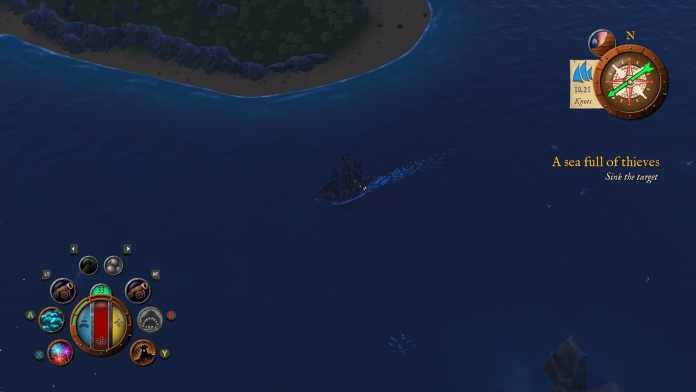
Oh to be a mighty Pirate, sailing the seven seas taking what you can and giving nothing back. There are a number of ways that gamers can indulge this fantastical dream on the high seas with a couple of obvious ones springing to mind giving very different Pirate Experiences in Assassin’s Creed: Black Flag and of course, Sea of Thieves. A new contender to the throne however comes in the form of King of Seas by 3DClouds and TEAM 17, a very different experience is set to hoist the colours and shiver some timbers!
Now that I have run out of corny pirate’isms, I have to say that I have had my eye on King of Seas for some time now since its announcement towards the end of 2020. As an avid player and year one Pirate Legend in Seas of Thieves, I have been looking for a new fresh way to continue my fascination of the Pirate world. Where King of Seas manage to carve its own position in this genre makes it stand out next to the well-established Sea of Thieves, and gives an experience I found both challenging and rewarding the more into the world I dived.
In the world of King of Seas, Pirates once ruled the seven seas and Voodoo magic was everywhere until the Navy chased and hunted down the Pirates, forcing them to flee to the very outskirts of the seas they once ruled. The Navy than created a grand Kingdom of the Seven Seas and made sure to keep the threat of Pirates and use of Voodoo magic away from the world. Now Centuries later, betrayal and conspiracies will lead to the assassination of the current Ruler whilst his children are off testing their own worth on the seas, upon returning they are ambushed and the blame of high treason and murder is put on them. Believed dead in their sunken ship, they are rescued by some Pirate survivors and go on a mission to clear their names, find out who murdered their father and reclaim the throne itself!!
King of Seas is an Action Role playing game set in a deadly procedurally generated pirate world with the player choosing the play either as Marylou, the daughter of the King and someone who would rather go out partying all night than learning to be a Princess or Luky, the Prince who also likes to spend time away from royal duties to learn to use his pistol. Once chosen, the game will see the player taking one of the siblings on their journey to become a true Pirate. I absolutely love the story that is threaded throughout everything you will end up doing in the game’s campaign as it serves t both guide you in the world but also to slowly open the world up further and further as you progress more into this strange world. Being a procedurally generated world, each new game you start will be different to any previous ones with island and port locations being very different each time making sure that no two games will be the same.
Gameplay will have you running your own ship, starting off with the always sturdy and reliable sloop, small and nifty, it has only three canons and a tiny hull but it’s the best way to start off a pirate career. This career will have you mainly following some main quests and as you do, more of the story will be revealed and the world opened. What, how and when you decide to follow the main story quests is entirely up to the player as there is thankfully no forced timed completion style main quests. In fact, quite the opposite is true as the main quests simply train the player in the various elements that make up running your own pirate ship starting off with a focus on ship combat which thankfully the Sloop is the first starting ship to practice on.
The two main elements which remain the shame no matter the type of ship you are using, which I will come to a bit later on, are controlling the ship on the seas and managing that ship. Controlling the ship is extremely natura and intuitive for a console controller, each ship has canons on both sides with RT for right side canons and LT for left side canons. Sails are controlled with the bumpers as RB lowers the sails for more speed whilst LB raises them to help sharp turning and slowing down. Ships can also have special abilities thanks to some cheeky Voodoo magic spells and differ from ship type to ship type but believe me, once you have summoned a giant shark attack to slow down and damage an enemy ship or launch a massive firework display that damages all ships around yours, well it just never stops being fun. Damage is measured in three ways; sail damage, hull damage and crew damage. Sustain too much damage to the sails and you may not be sailing anywhere, take too much to the hull and you will sink, both are fairly obvious but it is the crew damage that might surprise you the most. Lose too much or all of your crew and you may find your ship performing rather terribly, less canons being fired when you need them most!
Managing your ship and choosing which quests and jobs to take on, takes up a lot of time. Managing your ship is vital as you can customise many areas and all come together to reflect how strong your ship will be on the seas. Different types of Crew, sails, hull and canons will all have an impact on how well and frankly how long you will survive out there. Different types will boost or add elements such as hull strength and sail strength or boosting cargo space and crew spaces. Some will be simple ship upgrades and others will have more magical boosted elements for your ship and all can be purchased at the various ports you can dock at across the seas from the carpenters. You can sell any you do not need for important gold for buying new upgrades or investing in that all important better ship type. Starting with the sloop you can then move up the Flute class, which is more designed as a trading ship with a larger hull than the sloop but slower at sailing. The Brigantine is next followed by the Frigate, which is the fastest of all the ships and ready for battle with 12 canons per side but makes for a poor trading ship with its tiny hull size where as the Galleon is the largest both in number of canons and comparable hull size for cargo. How you want to play be it out there fighting other ships or utilising the worlds full on real trading economy, buying good to sell for increased prices depending on the port you take them to just allows so much freedom.
Pair that with visiting the local port tavern to pick up side jobs which can vary from taking out a specific target to delivering a package or cargo to a destination or providing escort security for another ship, all give such freedom of choice to do and make of the this world whatever it is you want from it and because the main story quests do not force you into anything once they have helped you unlock the ability to buy another ship, any ship you own remains at the Pirate main port allowing you to return and switch to any type of ship you own, still equipped as you left it, means you can tailor the experience to your liking every time you fire the game up. I relish this so much in a such a game because you can get lost in just doing jobs for people to earn the gold to get that next class of ship as well as spending time in the world trying to upgrade to have the best version of the ship you have by defeating other ships, searching ship wrecks and finding discarded loot on the seas. Eventually you can even start fishing to sell your catch for extra gold.
All the systems in play are so beautifully crafted as well to be deep and as rich as you want them to be, for example the combat is always fun either when defending your ship or when you just go and be the best Pirate you can by attacking other ships but there is a price to pay if you get it wrong. Pick the wrong ship at the wrong time in the wrong place and you might find the nearest port security boats will come after you or become infamous enough and Pirate Hunter ships will attack you on sight. A 1v1 ship battle is fairly easy to handle depending on your ship build but when a number of ships attack, do you stay or run, something that will be determined by the ship build you have and which special abilities you have to either help in a group fight or help you get out of there to fight another day.
It is truly staggering just how much there is do in the world that pairing the main story and abundance of side activity to take on, there is a mountain of hours of gameplay with King of the Seas. There are different difficulties as well which up the rewards but also the risk so starting with Ship’s boy, Gunner, Captain which serve as your “Easy, Normal and Hard” modes when you start out increase the risk deliciously well. On Ship’s boy for example if you are sunk you do not lose any cargo or equipment and simple respawn at the Pirates home port in a fresh ship with a fresh crew ready to try again. Move up the difficulties and there is a price for losing your ship especially if you bought it as you can lose anything that is equipped so will need to rebuild your ship build or even lose the ship itself meaning having to replace it as well at great cost. There are two ultimate modes which are locked until you complete the story in Corsair and King of Seas which is the toughest of all the modes as it also features a perma death penalty!
Visually I love how the art style just brings the world to life helped by a fantastic musical sore that does a great job of making you want to watch Pirates of the Caribbean all over again. Reviewing this pre-release build did have some issues for me, there were times in the later stages of my playthrough that the game would start to slow down and even freeze forcing me to restart the game and I did get one annoying audio bug of my ship sounding like it was sinking when it wasn’t which again meant another restart to clear it. But there are some wonderful little details such as when you stop to loot a ship wreck, the little animation of crew members jumping from your ship to the ship wreck always makes me smile. I am having such a incredible time with King of Seas that I will be putting many more hours into it to try and build the best fleet I can and working towards conquering all the seas before me. If you are a fan of Sea of Thieves than this will compliment it even though it is a very different Pirate experience but this is one you will want to invest your time in because it really just so rewarding on every level.
So fill your tankard with Grogg and hoist the colours, there is mighty Pirating to be done, YO HO me hearties YO HO, GARRR!
If you are a gamer of a certain age, you’ll remember the glorious NES and Mega Drive franchises of Double Dragon and Streets of Rage. Now I’m well aware that we have had modern iterations for current consoles. But I’m referring to the amazing pixelated side-scrolling games from Techno Japan and Sega. The premise of both was simple, the violence gratuitous, and they were easy to lose hours to. Now you may think, “why are you discussing Double Dragon and Streets of Rage?” Because Jay and Silent Bob: Mall Brawl has been heavily influenced by these classic 8-Bit titles.
Developed and published by Interabang Entertainment, this a side-scrolling beat ’em up title. Keeping old-school gaming at the heart of its premise, there is little that complicates its approach. You take the role of either Jay or Silent Bob as you make your way through the mall. In theory, this shouldn’t be problematic. In reality, every goon blocks your path as you try to escape.
Don’t mess with the Easter bunny.
Jay and Silent Bob: Mall Brawl replicates 90s vibes.
From the opening cutscene, I knew I was going to be transported back to the days of the NES and the Mega Drive. With its garish looks, simple backdrops, and wonderful pixelated sprites, this captured my childhood instantly. But as an adult, I could enjoy the subtle elements of comedy that have been hidden amongst all the noise. The sexual innuendos of shop names and achievement titles will make you chuckle throughout. There are plenty to mention, but I suggest focusing on the carpet store!
The gameplay revolves around the classic side-scrolling beat ’em up action. That is except for one moment of shopping cart madness. This fast-paced racing section was unusual, came out of the blue, and was a welcome break from the constant fighting. It was, however, frustrating as hell! Following the same pattern throughout it was more a test of memory and reactions than anything else. It was by far the toughest portion of the game and will make you groan in annoyance.
Nine stages, many bosses, and two difficulty settings.
When you break it down, Jay and Silent Bob: Mall Brawl is a short game to play. Nine levels comprise many boss fights, an array of enemies and much wanton destruction. Both Jay and Silent Bob are playable characters, and you can take this on solo or couch co-op with a friend. If you are like me, you’ll be on your own changing between characters on the fly as each gets knocked down. If your character gets killed, and they will, you simply wait a few moments and they’ll spawn back to life. This added a small layer of tactical nuance to the gameplay as patience was a must if you wished not to restart each level.
On your journey through the mall, you explore arcades, food areas, kitchens and more. You’ll also get to experience the classic lift fights that all Streets of Rage fans love. As you move through each area, you encounter many foes; ninjas, chefs, pretzel monsters, the Easter Bunny, and so forth. It was entertaining and bloody stupid, but that’s why I loved it.
Don’t let the barrels hit you.
Mega Drive and NES graphics on a large screen, why not, eh?
Seeing the vivid colours and bright text flash up on a large screen never gets old. Jay and Silent Bob: Mall Brawl has captured this aesthetic perfectly, while still offering enough polish to make it palatable for a modern audience. The animations are smooth, but still have that retro stutter that we all love. The backdrops are all similar but have enough variety and detail to prevent us from getting bored. In short, it won’t wow you with realism, but it’s a trip down memory lane that’s great to experience.
The same can be said for the 8-Bit synthesised sound that accompanies you throughout. Loud, crass, and absolutely marvellous. It is 80s and 90s gaming personified and everything you want to hear from an old-school inspired title.
Let’s take this fight to the arcade.
In Jay and Silent Bob: Mall Brawl attack is the only form of defence.
Now, this is one area that I think needs improvement. The basic controls were easy to pick up. That’s fantastic, as you can jump straight into the action. Sadly though, this simplicity comes at a cost! With no block action, there is little finesse in what you do. Yes, you can dodge, but in the harder mode, and later stages, a defensive style is a must. This was an oversight, and for future games to the franchise, it would be nice to see this implemented.
With solo and couch co-op gameplay, and two difficulty settings, there is plenty to keep you playing. Each playthrough takes little time to complete keeping the action fun every time you revisit it. If you are a completionist, you’ll need to be a perfectionist! A tough list asks that you complete both modes without dying once. I think I’ll give that a miss.
Jay and Silent Bob: Mall Brawl is a great albeit short blast from the past.
You can’t help but fall for the old-school charm in Jay and Silent Bob: Mall Brawl. With its comedy elements, classic foes, and variety of levels, it outweighs the small drawback from the lack of defence. I enjoyed my time with this and recommend you buy it here! Make your way through the mall, avoid the goons, and love the 80s and 90s vibe.
It seems that Nightdive Studios can’t be stopped when it comes to bringing back old games from the dead. Over the past few years, the studio has done a lot of great work in terms of game preservation, and now, the latest title to benefit from such treatment is Shadow Man.
Nightdive Studios have done an excellent job with this remaster. Not only did they vastly improve the game from a technical standpoint, by remastering the soundtrack and sound effects, by vastly improving texture resolution and adding dynamic lighting and shadows, but they also added new levels and enemies. Furthermore, they’ve also improved the gameplay and controls, although I can’t personally attest to that, as I never played the original game. So, having never played the original version of Shadow Man, and after hearing countless great things throughout the years, I gladly embraced the opportunity to check out this remaster.
It’s important to remember that this is a REMASTER, and not a REMAKE (some people seem unable to distinguish between the two). The game has undoubtedly been improved in numerous ways, as mentioned previously, however, the remastered version remains truthful to its original style and design. Even if I wasn’t aware that this was a game that was originally released in 1999, after having played it for just about an hour, I could tell that this was a game from the late 90s, and I don’t mean this in a bad way.
If you have fond memories of the original game and want to revisit it, then I honestly think that you won’t regret purchasing this remaster. Not only do you get the best version in technical terms, but you also get to experience some new content that Nightdive Studios have managed to add.
Now that I’ve finally finished the game, I think it’s fair for me to say that Shadow Man was probably ahead of its time in terms of ambition and scope. At its heart, it’s an action-adventure game with plenty of platforming and exploration. Nonetheless, it could also easily be described as a metroidvania, although a very rough one.
The story in Shadow Man serves as a central driving force for the entire game. The fact that the whole thing is entirely voice-acted also makes the game so much more immersive. In Shadow Man, you play as a Michael LeRoi, the current Shadow Man, one amongst a long lineage of warriors that protect the thin veil between the world of the living (Livingside) and the Deadside. The Deadside is the place where everyone ends up after they die, with no exception, and is also where the majority of the game takes place. It’s your task to put an end to an ancient prophecy that predicts the end of times, by stopping an evil group of individuals that aim to create an immortal army with which they plan to invade Livingside.
Given how dark and grim the game is, both in terms of looks and setting, I must admit that I was quite surprised to find a bit of humour in the game. Although it certainly contradicts the events and mood of the game world, it certainly adds a lot of character to Shadow Man, and I can see how a lot of people remember this game so fondly. The soundtrack also plays a huge role in setting the right tone for the game. It vastly changes between the game’s different areas, but it always manages to remain particularly eerie and unsettling, especially when the game throws a few horrifying sound effects into the mix. I was constantly on edge whenever I got into a new area.
In terms of the actual gameplay, although there is plenty of combat to go through and quite a decent amount of weapons to choose from, I didn’t find it engaging at all. For the most part, I made use of the game’s automatic targeting system, but you can also use a first-person aiming mode to shoot at enemies while remaining still. In spite of that, enemies don’t pose that much of a threat, not only because you can easily dispatch them from a distance with your weapons, but also because the AI leaves a lot to be desired. On top of that, you can always abuse the quick save feature if you find yourself in trouble.
It’s fairly easy to dodge enemy ranged attacks because they’re somewhat slow and you can just easily move out of the way. As for melee enemies, you can just as easily get rid of them before they get within attacking range. Still, some enemies can feel like bullet sponges, taking too many hits to kill until you get more powerful weapons. Besides that, enemies aren’t that smart and have rudimentary behaviour. For example, with enemies that have melee weapons, they simply pose no threat if you’re at a different elevation, even if it’s just tiny enough so that they can’t walk on a straight horizontal line, enemies can’t even make the tiniest of jumps. Also, sometimes there might also be enemies grouped up, but even if you attack one of them, only the one getting attacked starts running towards you. The other enemies nearby will just sit and watch while you kill their friends. It’s also possible to completely cheese enemies by just corner peeking. Likewise, although boss fights can be difficult, they don’t really pose that much of a challenge in terms of mechanics, it’s more of a case that they just have a lot of health.
Despite everything, although this might be a great remaster, I do think that the game hasn’t aged that well. I don’t have any complaints in terms of how you control your character, move around, and fight, it’s more the intrinsic elements of game design that, in this day and age, just feel outdated and rough. For instance, exploration is a big part of Shadow Man’s gameplay experience, but, for something that resembles a metroidvania, it just feels too convoluted for its own good. Sure, it might have been fine back in 1999, but I’m looking at this through the lens of someone that is playing the game for the first time in 2021. Allow me to explain.
The world of Shadow Man is divided into multiple different zones, a lot of which are blocked by these gates that require you to collect a certain amount of Dark Souls to unlock them. In essence, these Dark Souls are just one of two in-game collectables, but unlike most games that feature collectable items, these aren’t optional, as you have to retrieve the overwhelming majority of them if you want to finish the game. So, why is that a problem? This is a problem because they are scattered throughout the entire game, and, in metroidvania fashion, you’ll be forced to go back and forth between areas to collect them. The issue is that, a lot of times, you won’t be able to see or reach Dark Souls when you’re first near them, only later when you acquire specific items or abilities that allow you to retrieve them.
Unlike most metroidvanias where new abilities and items allow you to directly progress further in the game, in Shadow Man, you’re forced to continuously backtrack and search for any missing Dark Souls in areas that you’ve previously been to. The reason why I’m not fond of this system is because, due to the lack of a map, I often found myself having to go through every single section that I’ve already been to, just to see if I could acquire any of the previously uncollected Dark Souls with my recently acquired items and abilities. This not only makes the game extremely longer than it could’ve been, but it also makes the whole process of progressing through the game a lot more tedious.
I had a hard time figuring out if I was actually where I was supposed to be and doing what I was supposed to do. The game doesn’t give you any clear objectives or guidance other than what is said during dialogue. Instead, it lets you roam each level freely, and, in this case, this is both good and bad. It’s good because it gives the player the freedom to progress at their own pace and discover the world on their own, but it’s also bad because you can easily feel lost and unsure of what to do or go next.
I spent a lot of hours wandering aimlessly, trying to figure out where I needed to go next, where a Dark Soul could be hiding. Still, while I found that navigating each area was confusing at first, particularly because there’s no map, I quickly learned my way around. With that said, the amount of backtracking is excruciating, and the sense of getting lost in long stretches of various levels can be overwhelming. This state of affairs, the fact that progression is directly tied to acquiring collectables, makes it so that the pacing of the game is a bit of a hit or miss. There were times when I just got frustrated and had to look at an old guide from 1999 to figure out what I was missing. Although I have 23 hours in Shadow Man Remastered according to Steam, my last save game is around the 14 hour mark. Nevertheless, I feel that without a guide and a map, it would’ve easily taken me 20+ hours to beat the game on my own.
I do want to point out that, although there are a few things that I’m not really a fan of, and even though I never played the original version, Shadow Man definitely feels nostalgic. I say this not only because of its distinct visual style, but also because the way that the game plays reminds me a lot of the old Resident Evil and Tomb Raider games. Now, what I mean by that is that it feels clunky and cumbersome by today’s standards, but it’s still a blast to play once you get past the initial adaptation period.
Shadow Man is a game that I both thoroughly enjoyed and hated at the same time. I hated it due to the multiple reasons that I’ve already stated, but mainly due to the lack of guidance and the constant need to backtrack to previous locations every time that I unlocked a new item or ability just to pick up any leftover collectables. Meanwhile, I enjoyed it due to its grotesque visuals, the old-school level design and platforming sections, as well as the sense of exploration. If you don’t mind being left on your own, then you might enjoy Shadow Man. However, if you like to always have a clear objective in mind, with the game clearly pointing the right way forward, then I’m pretty sure that you won’t enjoy playing Shadow Man. This is undoubtedly one of those games where people’s opinions vary wildly depending on what kind of games they prefer to play.
For the asking price, I think that Shadow Man Remastered is well worth it. This is true both for people who want to revisit the game after all these years and those who were always interested in trying it out but never got the chance. As long as you don’t mind some heavily dated aspects, then you’re in for a pretty cool adventure of the likes you probably haven’t seen, or played, in recent years. Shadow Man is undoubtedly a relic of a bygone era that deserves a chance.
Your home and its people are under attack. Enemies invade and pillage mercilessly. Everyone and everything else has already fallen. It’s now down to one last stronghold to keep the invaders at bay.
Siege Survival
While the soldiers fight to protect the last castle they have left, they’re running dangerously low on supplies, weapons, and defenses. It’s now up to you, a handful of civilians whose lives have been uprooted, to keep them going. The civilians now need to work through the trauma of invasion to support the troops protecting them and the keep.
Siege survival: Gloria Victis is a brutal exercise in survival and defense against mounting odds. It has you make difficult choices and manage your resources to not only ensure your survival, but the victory of the soldiers fighting the encroaching enemy.
Choices, Choices, Choices
From the moment you first jump in, Siege Survival has you make a terrible choice. Between protecting fleeing civilians or hoarding supplies that will be helpful to your starting position. This is the first of many tough choices. Not only those that are directly presented to you, such as choosing between people and suppiles. But also in which resources to use and when.
Will you prioritize food and medicine, or weapons and armour? Will you rest your civilians, saving their energy for the next day’s work? Or will you spend your nights scavenging for anything that might help?
Even indecision can contribute to your failure. There was a situation where I only had enough food for two of three groups. The hungry farm animals that provide us with eggs, and fertiliser for our crops. The soldiers who need rations to stave off exhaustion and sickness. And the civilians who gather resources, build structures and scout enemy troops. I took too long to make my choice and not only did one of my animals die, but my troops were weakened through starvation and thirst, ahead of the next wave of enemies.
Day and Night
Siege Survival presents the brutal reality of invasion and the ensuing battles. The enemy is tireless and merciless, every day presents the possibility of another attack. You make use of the daylight to prepare yourself and your troops: building, repairing, crafting, farming, and cooking. All while managing the needs of the people, ensuring they get enough rest, food, and water.
While the day is a vital part of your survival it would be impossible to prepare without the night’s activities. When the sun sets you have the choice to rest or scout. Scouting provides useful information on the enemy, such as defense stats and how many days until they mount their next attack. Though, most importantly under the cover of night you scavenge in the ruined streets of your now occupied city.
This was a surprisingly enjoyable part of the gameplay. While searching for resources, you also come across random events, such as a grieving man you have the choice to steal from. Perhaps you leave the man to his grief or you justify your theft with the soldier’s needs. You clear blocked pathways with a shovel, and clear out rotting corpses with burning torches, all of which take up slots in your already limited backpack.
While scavenging the city you also have enemy patrols to watch out for. Avoiding their gazes by hiding in bushes, or attacking them head on. Every action takes time, which there is never enough of. You’re always on the clock and the rising sun is a constant reminder of the coming day’s work.
Through all of this I gained some real sympathy for the civilians and troops in this world. Every night a mad scramble to get enough resources and every day spent preparing for the inevitable battles to come, while trying to keep your people alive. There’s rarely a moment for rest, with civilians sleeping in shifts to ensure preparation, often barely scraping by with enough.
We Survived! What Now?
Siege Survival had some surprisingly addictive gameplay. There’s never no downtime when everything rests on your shoulders. You’ll be carefully considering every choice and every allocation of materials, if you want to survive. However, unless you’ve fallen in love with the gameplay, there might not be much of a reason to jump back in once you’ve completed the campaign.
There are a fair amount of choices between game modes. Either increasing or decreasing the difficulty, making for fewer or more available resources, time in a day, frequency of attacks, etc. You also get modes that emphasize the scavenging or enemy attack segments. However, these never felt like enough alterations in gameplay to lure me back, once it was all said and done.
A Lot of the Same
While the gameplay loop is engrossing, it’s that very loop that also works to the detriment of its replay value. You spend each day in the castle keep, and each night in the occupied city. You see the same sights and landmarks which inevitably becomes repetitive. One might be able to overlook this if there was something to feast the eyes on. However, Siege Survival is filled with the same kinds of environments and locations and designs. While the dark and muddy looking visuals lend themselves well to the medieval setting. It does not give the player any visual stimuli after the initial hours of gameplay.
Siege Survival: Gloria Victis is a gripping game of survival and resource management. It’s brutal portrayal of the costs of medieval defense is unrelenting, and its gameplay hooks you from the first little fireplace built.
In My Shadow is one of those games that doesn’t require a very long trailer to sell itself. A few frames in and you can see the game’s whole deal and, if you’re like me, that’s enough for you to want the game. And that ‘whole deal’ is really interesting. It has rolled a natural 20 for initiative. But does the execution live up to the high standards set by the promises made in the trailer? Read on to find out.
In My Shadow is a puzzle platformer like I’ve never seen before. It almost entirely separates the ‘puzzle’ and ‘platformer’ sections into two mechanics. The platforming all takes place on a wall where you play as the shadow of a nightmare child (more on her later) who is platforming across shadow platforms and around shadow obstacles (if ‘shadow’ has stopped feeling like a word then you should brace yourself for the rest of this review). ‘But’, I hear you cry out in anguish, ‘where do the shadows come from?’ Well, I’m glad you asked. This is where the puzzle mechanic rears its head. You make the shadows. You have a 3D area away from the wall with a light source along the edge. This area has a number of blocks in it which you can move left and right, to move the shadow platforms, and forward and backwards, to change their size. This is the mechanic in the trailer that sold me on the game. You control the platforming AND the platforms in a thematically perfect way. It’s such a wonderful idea, I’m surprised I’ve never seen it before
Unfortunately, this is where the nice things I have to say about the game start to tail off, as the premise is writing cheques that the execution can’t quite cash.
The least legitimate of the criticism I have relates to the aforementioned nightmare child. The game has a very distinctive doll’s house art style which fits nicely with the shadow based gameplay. However, the way that the child you play as is rendered in that art style is quite unfortunate. She’s a nightmare child. She has a massive head, huge inhuman eyes that feel like the cold dead eyes of a killer and a tiny mouth that can only make expressions in the general category of ‘horrifying’. The overall look is very Chucky from Child’s Play and made me very uncomfortable.
Moving up the scale of legitimate criticisms we have the difficulty. I’m not sure if it’s hard, finicky or some frustrating mix of the two. The platforming itself is quite floaty and imprecise which isn’t amazing when the route you need to take through the course to avoid being killed is often pixel-precise. This is compounded by the amount of control you have. As much as being able to construct the platforms is a great idea, when the challenge of the route is so demanding, you’re constantly asking yourself ‘Am I bad a platforming or do I have the platforms in the wrong place?’ The really irritating thing is that the game knows it’s easy to get stuck on a level so the developers have added a message saying ‘You can skip levels in the pause menu’ which pops up after a few failed attempts. It feels like a last-minute fix to a flawed design.
To turn the frustration factor up to eleven, the game has two more irritations. Firstly, in a prime example of the cardinal sin of platformer design, the time taken between attempts is just a little bit too long. When you die in a difficult platformer you want to get straight back into the game to give it another go. Having a few seconds between level resets significantly builds up your frustration levels and shifts the balance away from endearingly difficult and towards rage-quit difficult. Then, just to make sure the game is as frustrating as possible, the second irritation is added in: the music. It’s a piece of very depressing piano music that repeats after a few bars. It’s rather annoying and I think it would drive you mad even if it were the soundtrack to the most chill game in the world. This is especially annoying where the game has very little audio other than the music, so it’s entirely dominating one of the two senses you’re directing at the game.
In My Shadow is a game with great potential that wastes it all away smoking cigarettes behind the bike sheds. Its report card has a note at the bottom reading ‘Must try harder’. I’m sure it’s very possible to have a great time with In My Shadow but that isn’t the experience I had with the game. However, with such an innovative game idea, I think Playbae is a developer to add to your radar. Despite it all, I’m still excited to see what they do next.
The 90s was the source of some of the most original and interesting games seen to date. It never surprises me when indie developers take inspiration from such a great era. The wonderful pixelated graphics, memorable music, and simple gameplay make each a fan favourite. Crossbow Crusade has tried to repeat these early successes with its gruesome gameplay and dated imagery.
Developed by HugePixel and published by ChiliDog Interactive, this is a gothic platform adventure title with a simple outlook. You must run from point A to point B, overcoming basic traps, shooting monsters, and collecting coins. There is little new here, but what you get is a dark story, some wonderful enemies, and a sense of reward once you overcome the increasing levels of frustration.
Jump the river of blood.
Crossbow Crusade doesn’t reinvent the wheel.
Don’t come into this thinking that you will get something original and unique, it ain’t happening. The gameplay doesn’t add to what is experienced in other platforming games. If you are a lover of the genre, you’ll feel straight at home with the usual mechanics, and lack of complexity. However, this doesn’t mean that what is delivered isn’t worthwhile, or of a low standard. No, the quality is good for a low-cost endeavour and the gameplay is addictive, it simply lacks a USP.
Crossbow Crusade revolves around a world-famous monster hunter who finds himself in the Dead Kingdom. He must slaughter each monster he comes across, collecting gold and tickets on his way to show his worth, and improve his weapon. The weapon that he wields is a basic crossbow! This tool pummels any foe it faces, and only poor reactions or accuracy prevent you from annihilating anything in your path.
The game stretches many stages and areas of the Dead Kingdom. Each chapter culminates in a boss fight where you must time your approach, learn their attack pattern, and pray to god that luck is on your side as you free the souls from their demon bodies. You will face four monstrous leaders, which include the final boss, the Demon King. These battles were truly frustrating and made me squeal with rage. The reasons for these issues will quickly become apparent.
Is this MJ’s Thriller?
Quick stages and a very gentle difficulty curve.
One element that I truly enjoyed about Crossbow Crusade was the intensity of short, sharp levels. Each slowly built up the difficulty with new monsters and traps to deal with. Just as you got comfortable with one element, another was chucked in for good measure. Whether this was monsters hidden in the ground, flying bomb-carrying bats, moving platforms, or circular saw blades, it kept you on your toes throughout. Now, the difficulty wasn’t too hard and even with the addition of new mechanics, it never got out of hand. It was well balanced throughout, allowing you time to think of your approach and to plan a route to the finish line.
Your path from one obstacle to another wasn’t always obvious, and this was part of the fun and the challenge of this title. You had to forge paths over pits and chasms by shooting bolts into hanging bodies and wooden blocks. You had limited time to use your new platforms to leap the gaps, and if you timed your attempt incorrectly, you’d fall to your doom. This doesn’t sound challenging in the slightest, but you will try and fail to overcome the easiest obstacles because of the dreadful control setup.
The controls will bring a tear to your eyes.
Just sitting here typing about the controls fills me with rage. I genuinely hated the movement controls and the lack of response throughout. You constantly died as the buttons rarely did what you wanted. The movement used a D-pad layout which made it inaccurate and unnecessarily awful. The controls, though poor, were serviceable, mostly, until you faced the boss fights. You will try your best, but the inaccuracies and lack of response fail you miserably.
This was so addictive that I played this from start to finish in one sitting. It took me around three hours to get through it all, and this included the full achievement list. With a lack of NG+ mode, no additional difficulty settings, and nothing to search for, Crossbow Crusade sadly lacks in replay value.
Hanging out with a ghost.
Crossbow Crusade oozes 90s gaming style.
I love a good retro indie title and Crossbow Crusade is a great nostalgia-filled game. With pixelated graphics, simple level design, smooth animation, and well-used colours, this is a game that ticks all the boxes. The style looks like it was pulled straight from a Mega Drive, and I loved it. Its gothic looks, dark tones, and grainy imagery all worked perfectly with this demonic theme.
Heavy medieval music created an eerie atmosphere. With upbeat major tones, the adrenaline was pumping throughout. What wasn’t so good, however, was the repetitive sound effects. The twang of your crossbow, or the screams of the enemies, soon grated on you. The bosses sounded like a stuck record and you quickly begged for them to stop.
You’ll hate it, want to scream, cry, and quit, but secretly you’ll adore Crossbow Crusade.
Throughout my time with Crossbow Crusade I wanted to scream with rage. I admit there was a lot of angry muttering throughout, plenty of expletives, but also a fair share of enjoyment. This is one of those games that will beg you to keep playing no matter how much you want to stop. The short levels and brilliant retro look will keep you playing from start to end. I enjoyed it, and I recommend you buy it here! No monster will stop a legendary hunter, not even in the Dead Kingdom.
Logical puzzle games are rewarding, taxing, and relaxing. With the pressure of solving a problem in limited moves, it may be stressful for some, but I love the challenge it creates. It’s also nice to step back from the madness of sports games and first-person shooters every once in a while and try something different. Long Ago: A Puzzle Tale intrigued me. And I was keen to see what it offered.
Developed by and published by GrimTalin, this restrictive puzzle title will have you scratching your head. Its fairy tale narrative treats you to a bizarre story while testing your logical thoughts. You must roll a ball around labyrinthine levels, aiming to gather all the collectables while solving the puzzles as accurately as possible.
Feathers and lasers.
Long Ago: A Puzzle Tale is relaxing and frustrating in equal measure.
The beautiful imagery, serene music, and wonderful narrative set the tone for a relaxing experience. There is no pressure, and this allows you to try each problem as many times as you wish. Each of the five chapters comprises many stages, and each of these has two playthroughs. Yet, for all its calming charms, you’ll find it frustrating as hell.
You study the maze, work out your moves, and set off confident that you know the solution. But somehow you’ve made a mistake and you cannot solve it. Restart the level, try a different way, and the same result….. ARGHHHHH! So much for a relaxing time. Yet, this is part and parcel of a logic-based puzzle game, it’s infuriating gameplay has deep lows and euphoric highs.
Do you dare enter the portals?
Plenty of new mechanics, collectables and timed hints.
What’s particularly great about Long Ago: A Puzzle Tale is the drip-feeding of new mechanics. No longer do you roll to an object and allow it to stop you. No, you hit arrows and they change your path. These then alter to move each time you strike them, causing you to have to rethink your approach. Alongside this you will activate statues, power crystals, rotate bridges and more. Your mind must consider the new obstacles, making the game increasingly difficult.
Collectables are the focus of each problem. The first attempt has you collecting feathers and the second gold. The better you do, the higher the grade and the more blue crystals awarded. You will receive three, two, or one depending on how well you do. The second run-through may seem pointless, but the gems are required to unlock further chapters, so each is intrinsically linked. I found the second attempt much more challenging, and perfection in this mode felt like a real achievement and was super rewarding.
Achieving the maximum score is hard, and trying to find the solution can feel like hitting your head against a brick wall. Worry not though as GrimTalin has got your back. If you are struggling to work it out, a timer ticks away, allowing for three levels of hints. Bronze, silver, and gold. The higher the level, the longer it takes. It was a nice touch and took away the stress from any stage you were struggling with.
A surreal fairy tale world.
From the chapter select to the dreamlike setting for each maze, Long Ago, A Puzzle Tale captures the fairy tale aesthetic perfectly. A mixture of earthy tones and bright colours didn’t overwhelm you, and the bird’s-eye perspective made planning an easy feat. It has a basic style, and I enjoyed its simple look and smooth animation.
Nothing felt rushed and there was always plenty of time on your hands. Luckily, this void was filled with some fantastic, calming music. There was a nice variety of airy songs that added to the dream-like world. It was a well thought out element of the game and complimented the visual style and theme.
It’s chapter select time.
Every angle was covered.
When you have many moves to make to get to the solution, you don’t want the controls to let you down. Luckily, this never happened. With few buttons to concentrate on and an arrow that highlighted the direction the ball would move, mistakes were kept to a minimum. However, errors occur, and in a puzzle game, this can be catastrophic. Luckily, the developers placed a handy rewind button in to remove this issue. It was a brilliant decision and allowed you to experiment as much as you wish.
With plenty of stages to complete, two different modes, a grading system, and collectables, there is plenty to keep you going. This is one puzzle game that has lots of replay value, and you will come back to play this repeatedly. The achievement list is unlocked through natural progression but requires perfection to gain the 1000 Gamerscore. It’s a difficult task, and you will have to be logically minded to be successful.
Long Ago: A Puzzle Tale will test you throughout.
It’s tough, infuriating, and will make you scowl in confusion, but my goodness is it rewarding. Long Ago: A Puzzle Tale ticks all the boxes for a logic-based puzzle game, and adds a great theme for good measure. I adored my time in this fairy tale world and enjoyed how the story unfolded. It’s not the most advanced concept, but I recommend you buy it here! Only the most logical of people will complete this without hints! Sit down, clear your mind, and complete each puzzle one roll at a time.
Manga and Anime have massive followings, and they divide people into love and hate camps. With vivid imagery, over the top stories, loud audio, and a ridiculous amount of over-sexualisation, you can see why opinions are split. ONE PIECE: Pirate Warriors 4 ticks every one of these boxes and more with its insanely fast-paced action.
Developed by Omega Force (Koei Temco) and published by BANDAI NAMCO. This is the 4th instalment in the Pirate Warriors Series and uses many of the assets and traditional approaches you expect. An Omega Force Musou game at its heart. You can expect wave after wave of unrelenting fighters who try to block your path. With vivid colours, striking lines, and a wonderful cartoon style, fans of the ONE PIECE series will love what’s on offer for them in this game.
ONE PIECE: Pirate Warriors 4 crams an awful lot in.
ONE PIECE: Pirate Warriors 4 attempts to cram in approximately one thousand chapters of information and storylines into around fifteen hours of gameplay. It’s an impossible task, but I applaud them for trying. What’s been produced is as close to faithful as you can expect when you squeeze in so much content.
You are in charge of Monkey D. Luffy and his Straw Hat Pirates. His mission is to become the most infamous pirate in the world. He journeys to the East Blue Sea to find the titular treasure, and be forever known as the King of The Pirates. You venture across six main arcs; Albasta, Enies Lobby, the Paramount War, Dressrosa, Whole Cake Island, and a poorly executed Wano arc that acts as a finale.
Each of the arcs comprises at least six missions, all with a variety of tasks. You have a choice of playable characters to select, though many only allow a specific selection to be made. The micro sections of the story build-up to sell the main portions of the ONE PIECE tale. It felt a little disjointed, but flowing from one section to next battling the marauding armies overcame this negative element.
Fly my beauty, fly!
Reused assets.
For fans of the series, there are a lot of moments of Deja Vu. From particular arcs that have now gone into more detail in ONE PIECE: Pirate Warriors 4, to the landscape and dated style. It mattered not that parts were recycled, as the new characters, storyline and foes made it feel like a whole new experience.
Each playable character has their skillset and selection of attacks that were specific to them. With forty to unlock, it was always an exciting moment when you could try one for the first time. Alongside the ever-changing crew, you could level up each person. This added new attacks and skills and made your already overpowered heroes that bit more special.
Fast-paced action, but not too challenging.
The gameplay is split between a Dramatic Log (the main story) and the Treasure Log (random events with special rewards). No matter which you choose, you will face the same maddening fast-paced action. A HUD displays each mission goal, and the goalposts move repeatedly during each level. Whether you have to protect teammates, annihilate leaders, or steal land, it will make your head spin. Hundreds of troops descend upon you, and you must slap buttons to produce powerful combos. It’s mindless violence, but damn did it feel rewarding.
Even after fifteen plus hours of slapping foes, I never tired of its monotony. Pulling off slick combos and watching my enemies fall was an enjoyable experience. This is before you account for the brilliant, albeit frustrating, leaping attacks. Fly through the air hacking down opponents, or use special attacks on the ground. It doesn’t matter which approach you take, you’ll be left smiling throughout.
Sadly, the waves of foes offer little resistance, and other than the main bosses, you’ll find that the difficulty is lacking. Your largest challenge arises as you aim to max out each of the levels. Obtaining an S mark isn’t a simple task, and if you want a tougher experience, this is what you should aim for.
Fight under the Skull and Crossbones.
ONE PIECE: Pirate Warriors 4 is wonderful with friends.
The treasure log is more than just a way to earn extra money and experience points. Each of the stages can be played in co-op mode, with some allowing for four players to game online. It’s a fantastic way to replay levels and see it from a whole new light.
The ease of pummelling buttons to wipe out massive armies makes this a great laugh with your friends. I loved how this mode worked, and though I thought it wouldn’t be a success, I was glad to be proven wrong.
Smooth gameplay and vivid imagery.
Whenever I see the word Anime, I instantly jump to a conclusion about how it’ll look. ONE PIECE: Pirate Warriors 4 didn’t shock me with its style. I knew the lines would be clean, the characters OTT, and the backdrops awash with colour. The reused assets prevented it from being as polished as I hoped, but you don’t see it because of the hectic action. Where it excelled was its animation and the smoothness of the gameplay. These two key elements were done to perfection and made playing the game a pleasure.
Alongside the predictable imagery, there weren’t too many shocks with the audio. An aggressive soundtrack gets the adrenaline pumping alongside the noise of buttons being mashed. Screeching noises from each hero and the slash of weapons make up the rest of this loud ensemble. Kudos to the developers for using the original Japanese cast to work on this project. This made the experience authentic, and though it wouldn’t have impacted the game, purists will love to see this element implemented.
Let nothing stand in your way.
So many combinations and special attacks, but so easy to play.
One of the main selling points of this type of game is the crazy combinations of attacks you can try. I certainly wasn’t disappointed. Aerial combat, ground strikes, and special attacks, can be used at will. There is no punishment for simply hitting the buttons in any order, either. I expected it to be a tough game to master, but you’ll have the fundamentals down in no time, and you’ll love learning the finer points of each character you select.
The biggest downside has to be the relatively short story. At only fifteen hours, fans will crave more. However, with the aforementioned Treasure log and the ability to play with friends or family, there is plenty of replay value to be found. The achievement list isn’t too complex, and a little manipulation makes this an easy game to complete.
ONE PIECE: Pirate Warriors 4 will appease its hungry fan base.
Whenever a series has such a big fan base, it always risks angering it. Yet I think ONE PIECE: Pirate Warriors 4 has done exceptionally well to stay faithful to its massive storyline. With the option to play with friends, forty playable characters, and the original Japanese actors, this is one game that ticks many boxes. It was hellish, fast-paced, and I loved it! You should buy your copy here! Will Monkey D. Luffy fulfil his potential and become the King of the Pirates? Join him on his quest and see.
In any dire situation, most of us would know what to do. Fight or flight would kick in, and you’d try everything to survive. Yet, I’m not so sure how I would react to being swallowed by a gargantuan whale. How on earth would you escape this colossal prison? This is the issue you face in Gutwhale! Monsters everywhere, a limited ammo supply, plenty of weird hats and a falling van. It doesn’t get much stranger.
Developed by Stuffed Wombat and published by Ratalaika Games, this is a 2D pixel shooter that takes place in a confined space. Claustrophobia kicks in and there is a sense of urgency as you try to work your way downward, or upward out of this beast’s belly.
Grab that ammo.
Gutwhale is weird from start to finish.
No matter which way you look at it, Gutwhale is odd as hell. There isn’t a story, and you don’t know how you got in the whale’s stomach. Stranger still, it has its own wardrobe full of bizarre hats. This isn’t the best of it though! Death is bad enough, and painfully it’s all but guaranteed. But to make things worse, each time you die you are squashed by a falling van.
I gave up trying to make sense of the situation and got into the swing of things instead. The concept is brilliantly simple; you have one bullet and multiple enemies to take down. Once you’ve fired your gun, you must retrieve the bullet and shoot again. Kill everything in sight, drop down the levels, and complete each of the three chapters. This is Gutwhale in a nutshell, it’s simple, but its gameplay has some complexities to it.
Each of the hats has special abilities. Some increase health, others sporting abilities, and one multiplies your points you collect. Whichever one you choose, the gameplay doesn’t alter. Avoid your enemies, take them all down and try to get to the end.
It’s escape time.
Rogue-like elements make it super addictive.
Death doesn’t just mean the end of your run, it also means the loss of all your stuff. Rogue-like elements are back to haunt us, and this time they work well with the theme of the game. Losing everything you have worked towards is heartbreaking, but each playthrough is so short that this usually painful element makes this super addictive.
With procedurally generated stages and tight spaces to work with, you will die….. lots! It matters not, though, as you experiment with different loadouts, purchase new upgrades at the end of each chapter, and rip through each monster you face.
You’ll encounter floating skulls, pink blobs, frogs, spinning star-like shapes and more. You must learn their methods of attack and make a strategy to avoid them. It’s madness, will make you confused, but you’ll have fun, mostly.
Gutwhale’s graphics leave a lot to be desired.
I’m not a gamer who needs highly polished graphics, but the low detail in Gutwhale makes it tough to differentiate between the scenery and your enemies. This caused problems where you were struck by unseen projectiles or got stuck on the scenery. It wasn’t the end of the world, but it’s something you’ll experience more than once. Other than this, you’ll see some variety in the character models and the backdrop which helps to prevent a repetitive feel to the gameplay.
To make things weirder, Stuffed Wombat used an odd soundtrack to accompany its strange theme. Its upbeat tempo and selection of songs were repetitive and almost hypnotic. I probably shouldn’t have expected anything different considering the theme. It was therefore a little disappointing when basic and almost boring sound effects accompanied every action. I felt cheated on and wanted it to be ridiculously absurd. Instead, it was very run of the mill, sadly.
Frogs, so many frogs.
Straightforward and responsive controls.
The gameplay itself has tricky elements, mainly because of the tight spaces and the way the enemies move. But one area that works well is the responsive controls. A simple layout makes learning the fundamentals an easy job, and each action is completed when needed. The only downside is you have no one else to blame when you die.
There are claims in the developers’ notes that there is an unlimited survival mode. This allows continuous play with a leaderboard to monitor scores. Now, I have completed the game, and I have failed to find this. So from my viewpoint, there was little replay value once you completed it, but if this mode magically appears then the desire to return will increase vastly.
Gutwhale is weird and does everything right.
Gutwhale is so weird that I had to love it. Its plot or lack of it makes no sense. The short gameplay and rogue-like elements make this addictive to play, that is until you finish it. I really enjoyed it and recommend you buy it here! Choose your hat and descend into the belly of the beast.
The Coma 2: Vicious Sisters, is the second installment to The Coma franchise, following from the first game ‘Cutting Class’. Specialising in pulse raising, tense, side scrolling horror, Vicious Sisters is ideal for any horror fanatic. The game can be approached without any experience with the previous title. There is no story to follow from the first game, the only thing similar is the structure and play style. Initially based in Sehwa High, you are tasked with utilising the city’s map to run from a bloodthirsty, possessed teacher.
Expansive exploration
The survival horror game scatters items across the entire map, making you really trek to find them. With several locations locked until you find certain things, you are tasked with exploration whilst fleeing. The tension is kept high throughout the game since you never know when you might be vulnerable for attack. The constant back and forth whilst searching for items is grating and can quickly shatter the tension and replace it with frustration. But areas hold so much to discover there is more than enough to keep you engaged. There is also a wide number of side quests across the whole map to provide more than just a ‘run from evil’ challenge. These side quests can aid your characters escape, so it is vital to complete them when you can.
Dumb and defenceless
The protagonist, Mina, is initially defenceless against any threat. You know three simple controls. Walk, run and hide. Items across different areas will be picked up by you to help the chase. This is why exploring every aspect is so important. But you have limited inventory space, which is extremely frustrating. It’s important you bear in mind which items you have at all times. You never know when you’re going to need mace. Your stamina and health aren’t unlimited either, and letting them deplete usually ends up with a terrifying conclusion. For a game with such a simple concept, a lot goes into guaranteeing your survival.
When the fear sets in
Despite the game being tense from the beginning, since you’re not sure what to expect, the real ‘fun’ begins when you encounter a twisted version of Ms. Song. Her and her long-limbed cohort are walking disasters. With one simple slash Ms. Song threatens you with death, which is extremely annoying to recover from. With no guarantee of health items being near it’s important to keep them on you regardless of inventory space. When the great chase begins, you probably wont know your way around the map so don’t know the best way to hide. This repetition is what lets the game down a little, since being killed means going back to a previous save point and doing the same thing time and time again.
On the frequent occasion she is near, or hunting you down, you must complete a series of timed events to avoid being spotted. These are fairly simple and don’t require any Konami code style patterns, but certainly add to the hair raising gameplay. The majority of tension within the game is from the music and background. Although at first the monster encounter is scary, you get used to it fairly quickly. The sound design and haunting artstyle is what keeps you on your toes.
Final thoughts
The Coma 2: Vicious Sisters is an ideal game to play in short bursts, and is a wonderful slice of survival horror. To anyone searching for a short, engaging horror to play, I’d definitely suggest this. Since you don’t need any previous experience with the franchise it can easily be picked up as a standalone, and you might end up like me and want to revisit its roots after completing Vicious Sisters.
Platform games have been wowing audiences for years. From the classic side-scrolling 2D titles to massive sprawling 3D open-world experiences. Franchises come and go, but a few stick in our mind as being synonymous with the genre. Crash Bandicoot was originally released on PlayStation in 1996, and loved by anyone that played it. Fast forward twenty-five years and many spinoffs have been enjoyed by its fan base. In 2020 its latest instalment was released, can Crash Bandicoot 4: It’s About Time hit the heights of its predecessors?
Developed by Toys for Bob and published by Activision Publishing, this is a whacky, colourful 3D platformer that’ll drive you insane. Following on from the much-loved and expected mechanics found in the series, Crash Bandicoot 4: It’s About Time chucks in some unexpected elements to keep you on your toes, and make the gameplay feel fresh.
Same old enemies, but a new threat.
The gameplay kicks off where Crash Bandicoot: Warped ended. Doctors Neo Cortex and N. Tropy are trapped in their prison in the past. Uka Uka attempts to liberate them all and succeeds by tearing a hole in the fabric of space. Realising that they can now take over the multiverse, they leave Uka Uka behind and join forces with Doctors N. Gin and Nitrus Brio. The Four evil geniuses create a generator to open more rifts, and in doing so awaken four ancient witch doctor masks.
You aim to travel across many stages, overcoming each of the doctors, collecting the masks, and closing the rifts. If you succeed, the universe is saved. Failure, on the other hand, is unthinkable, so don’t fail.
You control Crash, Coco, Tawna, and more, as you take on many challenging levels and game modes. As you’d expect you must collect fruits, crates and hidden gems en route to completing each stage and aiming for perfection. You will enjoy bonus levels, flashback tapes, N’verted modes, time trials, and boss fights. In typical Crash fashion, the action is fast-paced, requires accuracy and patience, and will demand an eye for detail.
Lionel Richie will love you dancing on this ceiling.
Two gameplay styles and plenty of collectables.
The Gameplay is split into two distinct styles; modern and classic. Modern has unlimited lives, a checkpoint system, and a counter to show how many times you die. The latter element was heartwarmingly frustrating, especially when it ticked into double figures. The classic set up has no checkpoints and a limited amount of lives and is aimed at gamers who are familiar with the series.
I played both methods and found that neither was more nor less pleasurable than the other. The classic method will appeal more to the purists of the franchise. But I enjoyed playing without the concern of running out of lives. The modern method was certainly easier, but both are challenging in their own right.
The focus across each stage, no matter the mode, was as follows; find every crate, collect all the fruits, die fewer than three times, and find the hidden gem. If you are successful, you’ll unlock a cosmetic skin. Crash Bandicoot 4: It’s About Time is all about crazy moves, and looking cool.
Mwahahahahaha!
So many levels and objectives that it feels a bit of a grind.
With over one hundred levels to work through, including five boss fights, this has plenty of content. There are thirty-eight different stages, each with a slight variation depending on which mode you undertake. Sadly though, with so much going on, it becomes a bit of a grind trying to collect everything. Luckily you soon overcome this feeling with the many game modes you must play.
Flashback Tapes.
You to return to play a 2D level that will tweak those nostalgic strings. The aim for each stage doesn’t change, but it was refreshing to play from a different viewpoint.
N’verted.
Psychedelic colours, special gems, and a mirrored version of each level. It was hard to get your head around the sudden changes, and if you have memorised a level, it was tough to unlearn the paths you wanted to take.
Bonus Levels.
These hide in plain sight on every stage. If you cannot find them, you will not get the six clear gems, and you’ll miss out on that fashionable skin.
Time Trials.
Little explanation needed, but be prepared to be enraged as you attempt to beat the time, and stay alive.
Finding every collectable in Crash Bandicoot 4: It’s About Time was a nightmare. The developers have done a great job of making the most of their stage designs, and it will take you many attempts to tick every box to complete each level.
Grind that rail.
Crash Bandicoot 4: It’s About Time is a colourful, loud, and wonderful experience.
What instantly strikes you is the bold and vivid imagery that is used to create the Crash world. Fantastic cut scenes break up the many levels that you will face. These short videos are full of humour and help to progress the story. The updated aesthetics will be familiar for its large fanbase but look modern and polished for the next generation of consoles. The variety of stage designs, use of contrasting colours, and excellent character models make this a fantastic game to look at, and one you will not tire of.
The audio was equally good. It didn’t surprise me as much as the visuals, and its style and tempo screamed Crash franchise. I expect loud and fun tunes whenever I play one of these games and was fortunately not disappointed. If you chuck in the OTT sound effects, this is a noisy title that’ll make you smile throughout, even when you are dying.
I suggest you keep running.
So many actions to master.
It’s all about accuracy and fast reactions, so I’m glad to say that the controls are tight. The fundamentals are familiar, and won’t shock anyone who loves the genre. What is tough to understand is the use of each of the ancient masks. Each has a special power that can assist you. You must use each power correctly. If you cannot do this, you’ll fall to your doom and have to start again.
This is a completionists dream and nightmare. With so many collectables, this will test the best platform gamers resolve. Items are hidden, multiple modes must be completed, and perfection is necessary. In short, Crash Bandicoot 4: It’s About Time will destroy you with its tough achievement list. You are going to lose hours of your life to this brutal platform game, and only the most hardcore gamers will complete it.
Crash Bandicoot 4: It’s About Time ticks all the boxes.
I was amazed by nearly every element I experienced. The ridiculous amount of collectables and levels, the many game modes, and the aesthetics all make this a wonderful platform game. Other than the grind to get the 100% status, the developers have ticked all the boxes for me. If you are a fan of the franchise or the genre, buy it here! The multiverse is under threat, and you must do everything you can to get those masks and close those rifts.