Review: Clouzy

The world is a hectic and fast-paced place. No one has time for anyone else, and you can easily feel lost. Subsequently, it’s tempting to drop what you are doing and search for a simpler existence. I think this is what makes games like Harvest Moon and Animal Crossing oh so appealing. They sell a vision of a wonderfully relaxed lifestyle in a cute and colourful way. Therefore, I’m never shocked when I see new titles that are heavily influenced by their magic. Clouzy is one such game that aims to win over its audience with an unusual theme and sickly cute graphics.

Developed by Tinymoon and published by Freedom Games, this is an adventure farming simulation. It offers stress-free action and a never-ending list of quests to complete. Furthermore, there are some simple puzzles to overcome, and a loose story to enjoy. I loved the freedom to explore the moderate-sized map and the unusual inclusion of pet clouds. It won’t be for everyone, but fans of the genre are bound to fall for its unusual charms.

Clouzy is bizarre. 

I’m all for a strange theme and unusual happenings, but Clouzy is just bizarre. The game opens like many of its peers. You are given a basic tutorial and then you set to work. So far, so good, that is until you are introduced to your first cloud. Now, I haven’t got anything against these rain carriers, per se. But in this setting, it’s just odd. You are tasked with cleaning, healing, and appeasing each one. You’ll have to cure illnesses, reduce their anger, make them less nervous, and so forth. The cures are found around the island or by concocting an array of meals or drinks. As I said, it’s bloody bizarre.

You control a farmer who runs a smallholding in the middle of a quaint archipelago. This minuscule piece of land must be upgraded and improved to complete every quest on offer. Like Harvest Moon or Animal Crossing, you must help the surrounding islanders by completing jobs, finding items, and exploring ruins and dungeons. However, unlike the aforementioned titles, there is a distinct lack of depth within the progression elements. Yes, you can upgrade equipment, get new recipes, and more, but it quickly plateaus. Consequently, once you reach the top and you exhaust the main storyline, there is little else to do.

Like Harvest Moon, Clouzy has a cosy house to rest in.
Take the time to relax.

Abilities and crafting. 

Where Clouzy excels is its drip-fed abilities and crafting elements. The adventure aspect of the gameplay expands as your pet learns new skills. Subsequently, the small world opens up once you complete puzzles and find dramatic landmarks. It was wonderful to revisit old areas as you were empowered with the ability to jump, could overcome cold temperatures and more. The larger world had plenty of collectables to find and an array of new ingredients to harvest. Moreover, you’ll discover chests with costumes, furniture, and special items. 

The crafting mechanic forms a key component of the gameplay as every task relies on recipes, new equipment, and different ingredients. Consequently, you had to scavenge an awful lot of goods if you wished to complete each task. Cooking foods and blending drinks were completed through a simple mini-game, and this was a little disappointing. I wish the developers had made this more complex to increase the challenge. Sadly, this wasn’t to be and as such, you’ll tire of it quickly. 

Can you heal every cloud in Clouzy?
I wonder what a sick cloud would unleash?

Repetitive gameplay and many bugs. 

Clouzy undoes much of its greatness because of its repetitive and buggy gameplay. Sadly, after a few hours, it becomes pretty tiresome. Unlike its peers, there is a lack of custom options and this reduces your sense of ownership. As you are searching and finding new items, it feels exciting and enjoyable. However, a lack of direction or hints stagnates progress very quickly. I’m not one for hand-holding, but absolutely no indication of what to do was a poor choice. Subsequently, I wasted hours expecting the quests to guide me, whereas all I had to do was to explore to stumble upon the solution.

This is compounded further because of the long list of bugs I encountered. Fortunately, most were annoying and not game-breaking, but they ruined the finish, nonetheless. First, I experienced the cinematic replaying every time I reloaded the game. Second, the tutorial repeated itself numerous times even though I didn’t initiate it. Third, my pet would become stuck on objects, ignore me completely, or I’d be blocked by its presence. Lastly, clouds in the pet area would simply vanish, never to be seen again. As mentioned, these weren’t game-breaking, but they were poor nonetheless.

Clouzy is cute as a button. 

The developers have pushed the envelope to create a sickly sweet title. Subsequently, Clouzy is as cute as a button. Your character is larger than life and has soft doe eyes. This adds to the innocence and childlike qualities the genre is renowned for. Furthermore, the clouds have a unique appearance that matches their personality and ailments. I loved the attention to detail and the vivid colour palette. It was magical to explore the variety of landscapes because of the mellow approach and bizarre imagery.

The relaxed and calm atmosphere is enhanced by the soft piano music. Slow songs match each location you visit and play on a continual loop. This repetitive approach created a familiar and serene experience, but it was also tiresome. Unfortunately, Tinymoon got this wrong as their delightful and wholesome soundtrack quickly becomes tedious.

Clouzy demands that your pets learn new abilities.
Who wouldn’t want a talented pet?

Messed up controls. 

Clouzy gives the impression of a game designed for PC. Sadly, this is because the controls are clunky and cumbersome when using a controller. Attempting to move items or collect objects was challenging and not very user-friendly. Annoyingly, if you had stacks of items to transfer, the default setting is all or nothing. Therefore, you’ll be unnecessarily moving your inventory back and forth during every interaction. This issue detracts from the crafting mechanics and leads to unwanted frustration.

The genre is renowned for sucking people in for hours. Clouzy, on the other hand, will not! Yes, there is plenty to do, a reasonable amount of recipes to cook and unlimited tasks, but these won’t test you. Sadly, this won’t grab your attention and this affects both the reply value and longevity.

Clouzy could have been great.

From the opening, you could see Clouzy’s potential. The developers pushed for a cute and laidback adventure and that’s what you get. Sadly, however, it never really develops, and this impacts its appeal and depth. Despite its shortcomings, I enjoyed it casually and recommend that you buy it here! Can you nurse each cloud back to full health? Scout the landscape, find ingredients and complete each task you face. 

Review: Atelier Sophie 2: The Alchemist of the Mysterious Dream

We Are Legion

Atelier Sophie 2: The Alchemist of the Mysterious Dream is the latest entry in a long-running series revolving around the fantastical and alchemical. When I say long-running, that’s no exaggeration. With 22 entries across 25 years, the Atelier series is a veritable veteran. 

As a newcomer to the series, I initially had no clue about its tenure in the JRPG sphere, its dedicated fan base, or how it managed to retain both across two decades. However, after spending time in its world, with its characters, and behind a cauldron; I get it. 

The Story So Far

Atelier Sophie 2 begins with Sophie, who you may not be surprised to find out is the protagonist, and her mentor/friend Plachta leaving town. They’re leaving Sophie’s home with two goals. The first is to get Sophie certified as a licensed alchemist. The second is to restore Plachta’s human body.  

Plachta was once an amnesiac talking book. She helped Sophie learn the art of alchemy, which in turn helped her regain her memories, and gain a life-sized doll that she could use as a body. Clearly, there’s some wild stuff, and backstory we’re missing here. Luckily Atelier Sophie 2 provides a recap of the previous title which you can watch at any time to brush up on the plot. Or if you’re like me, to get a better idea of what’s going on. 

Sophie and Plachta’s journey is interrupted when a vortex appears out of nowhere and whisks them away to Erde Wiege. A world created by the goddess of dreams, Elvira. Usually, she invites people whose dreams interest her. She offers for them to live outside of space and time in order to realise their life’s goal.  Our heroes, however, never even met the goddess and Sophie wakes up in this world; Plachta nowhere to be found. So she begins a new journey to find her friend and figure out how she got here.

The story is fairly interesting in premise, but I never really found myself fully engrossed. It came across as very middle of the road, with few standout moments, lore, or characters. This can be a bit of an issue considering the amount of time you’ll spend here. It’s a long journey that will provide the player with an ample amount of playtime, around 50-60 hours if we include some side quests. There are a lot of people to meet, places to explore, monsters to fight, and of course a lot of alchemy to practise. This ended up being the saving grace for the game. Since alchemy is wonderfully executed.

When Will It End?

The abundance doesn’t end there though. Like some twisted rite of passage, this title barrages you relentlessly with tutorials. Many hours into your playthrough there’ll still be tutorials. You may think you’ve safely evaded the last of them. To your dismay, another tutorial will be slinking, cloaked in the shadows for that perfect moment when your guard is down. It got a bit ridiculous. How many mechanics can one game have? At times I seriously wondered if there’ll be a tutorial for the final boss. I guess this is what happens when you’ve had 22 entries to add systems and refine your formula. Thankfully for players returning to the series, tutorials can be skipped. This is handy when mechanics are familiar, or if you’re a rebel who wants to play it all with no help. 

Although I have to admit, these tutorials are far from unnecessary. Atelier Sophie 2 is a robust, and sophisticated title in every positive sense of the words. Its main draw, alchemy, is so fully realised it becomes more than a simple crafting mechanic. In fact, the alchemy gameplay alone could be a set as a stand-alone game. 

Making the Ordinary, Extraordinary

Like many crafting systems you may have encountered, you combine items to create a new one. However, here things are taken leaps and bounds further. Every item in this game has its own set of stats. These include a quality rating, an element (fire, wind, etc.), and traits (which are like buffs for your synthesised item). These stats are all taken into account when using them to make something new. This allows you to make an insane amount of different variations of the same item. As well as being able to synthesise higher quality versions as you improve your alchemy, materials used, and understanding of mechanics.

Once you select the ingredients required for a recipe, you start the alchemical process through a 5×5 screen where you place and group your items by elements. Your placement of elements is vital, as linking them in specific ways increases their power and quality. It becomes a kind of puzzle game, where you need to think a bit about the placement of your ingredients. 

Atelier Sophie 2’s alchemy is really good. It’s complex without being convoluted or impossible to grasp. It will, however, take time to fully master. In this way, you step into the shoes of an alchemist. Knowledge comes through trial and error. Making better quality items requires you to deepen your knowledge of the systems that govern alchemy. There’s also an auto-synthesis option, which arranges ingredients on your behalf, saving time when you aren’t concerned about quality and traits. However, this takes all the fun out of the system. Doing it yourself will often be more rewarding, both in terms of gameplay and the quality of the things you create. 

Stock Up & Square Up

In order to get the ingredients needed to learn more recipes, and improve the quality of your work. You need to go out and explore the world. It’s positively overflowing with items. Some can be simply picked up by hand or with special tools you’ll have to craft like fishing rods, scythes, and hammers. Other items are gained through more combative means. While Erde Wiege is a dream world, it’s not without its share of danger. There are all manner of monsters and beasts you’ll be trading blows with, from rabbits to dragons.

Combat in this title is turn-based. You and your team of friends and fighters engage enemies through basic attacks, flashy and defensive skills, and employ a variety of items you’ve crafted to give you the upper or a helping hand. There are also some tag-team attacks that allow you to use your skills a bit more liberally, without using up MP. I had little to complain about with regards to the combat. Yet at the same time, little to applaud. It’s simply effective in what it sets out to do. It’s responsive, visually appealing, and satisfying enough. However, it’s really nothing you haven’t seen before

Sights, Sounds & Cessation

Visually, Atelier Sophie 2 also left a little to be desired. It’s standard fare JRPG character and world design. Especially the town of Roytale, which is so much like the countless other towns, you’ve seen just like it. Erde Wiege has a pretty sheen to everything and makes good use of colour. The world definitely feels dreamlike in its employment of light and saturation. But I feel it could have done more to add a more surreal element to the dream world Sophie finds herself in. 

I may not have been all that impressed by the world design, but the music that accompanies exploration definitely caught my ear. It’s a mostly light, uplifting, and ethereal soundtrack that makes great use of woodwinds, strings and percussion. It’s got an amazingly positive tone that is sure to put you in a great mood while exploring and creating. I often caught myself whistling along, which is always a good sign.

While this latest entry in the Atelier Series may not excel in every mechanic it employs, it has clearly mastered one. Its complete realisation of the alchemy gameplay is a consistent pleasure to play. Its shortcomings minor and major in its visuals, story, or combat are routinely overshadowed by the satisfaction of improving your alchemical skills. Provided you know what you’re getting into, you’re sure to enjoy your time stirring the pot.

Review: Tormented Souls

Tormented Souls is an homage to the great survival horror games of old. If you’ve been missing the classics like early Resident Evil and Alone in the Dark this might be the game you’re looking for. The game begins with Caroline Walker receiving a strange letter from Winterlake Hospital about some twins. Bizarrely she decides to go investigate the strange, abandoned mansion turned hospital. Caroline arrives and is knocked out, awakening naked in a bathtub. The game unnecessarily indulges in some gratuitous nudity at this point with a lengthy cutscene.

Caroline in Tormented Souls when she receives the mysterious letter

The hospital is empty save for the creepiest priest to ever appear in a videogame and an array of creatures; mixed human and machine grotesque monsters, that will attack when they see you. From here the plot is mostly predictable. Especially if you’re familiar with the survival horror genre of games. While this is a little disappointing; the real joy of the game is the journey, exploring the dark and creepy hospital.

You can see the care and attention the developers put into this environment. It has an eerie blend of Victorian gothic architecture and modern hospital facilities long abandoned. This is well showcased with the fixed camera the game uses. The camera will track Caroline as she walks around from a variety of angles. Some more cinematic than I expected. This not only added to the tensions and scare factor when you literally couldn’t see around the corner, but it certainly gives it flair.  

Controls and Combat

The controls can be frustrating at times because they change with the camera angles. In addition, you get some very traditional ‘cursor moving’ point-and-click style interaction. The more you explore and interact with the environment the more you get used to it; but there is a learning curve there before navigating feels comfortable. Saving the game requires finding a videotape and going to a save point in the game’s world; this only increases the terror as if you die, you restart the game unless you’ve done this. As you would expect with a survival horror game Tormented Souls requires a lot of backtracking as you learn more, obtain more useful items and need to take different paths to new areas. The hospital is, however, so creepy that this never felt anything other than uneasy as you wonder what might leap out at you.

Monsters are grotesque abominations in Tormented Souls

Combat is simple in this game, and in all honesty feels like an afterthought. Those creatures while grotesque and scary looking are all similar in how they attack you. Similarly, there are no real bosses to speak of so combat becomes quickly forgettable next to exploration and puzzle solving.

Puzzles Galore

The puzzles is where Tormented Souls really stands out though. They are the perfect balance of challenge without requiring a notebook and pen next to you to write down everything. This felt spot on when playing and can be really satisfying when you do solve it without becoming frustrating. Lighting also plays a key part in this, especially in the beginning when all you have is a lighter; if you remain in the shadows too long you die resulting in a game over. Combining this with creatures or other blockades as another layer of challenge to navigating around the creepy hospital.

In Tormented Souls Caroline can open cupboards to get items or information.
Explore everything in Tormented Souls, puzzles and useful information is everywhere

Save for a few minor graphical glitches my biggest gripe with the game is the cheesy and over-the-top voice acting. In places it really does detract from the survival horror nature of Tormented Souls.

Should I buy Tormented Souls?

As an indie game Tormented Souls is never going to reach Bloodborne or Resident Evil level of polish but that’s ok. Despite its lower end graphics (compared to the latest titles on current generation, and even last generation consoles) it holds up. It holds up because it plays on that nostalgia for the survival horror games of old. You will be caught out by the shock scares and general creepiness while solving some well crafted puzzles in a stunning envrionment.

Tormented Souls is a solid play… but maybe leave the lights on!

Caroline walking in Tormented Souls
The cinematic camera work in Tormented Souls (PS5) is stunning

Review: The Life and Suffering of Sir Brante

The Life and Suffering of Sir Brante is a title that caught me unaware. Subsequently, it was akin to that moment when you binge-watch a random TV series. As such, I was hooked on its gruesome ways, melancholy narrative, and its array of interesting characters. Its strange approach got under my skin and I couldn’t put it down.

Developed by Sever and published by 101XP, this is a narrative-driven RPG set in a grim, dark world. The story is full of life-changing choices, colourful moments, and heart-wrenching decisions. You’ll decide who lives and dies, how your life unfolds, and if you uphold your family honour. Subsequently, there are plenty of what-ifs, lots of double guessing, and many bad decisions.

The Life and Suffering of Sir Brante is tough to stomach.

The Life and Suffering of Sir Brante blends an RPG stat system with the mechanics of a visual novel. As such, you experience a game that is similar to an Ian Livingstone novel. Consequently, every choice you make must be well-considered, as it has an impact. Your decisions will affect your character, the surrounding people, and the ebb and flow of the story. It makes the gameplay incredibly deep and leaves you considering your choices. 

The game opens in the twilight of Sir Brante’s life. It explains that his existence has been a roller-coaster of decisions. From this point, the action rolls back to chapter one, where his life began. From here, you will experience poignant moments of his life and make each heart-wrenching choice. It sounds easy, but it never is! You’ll decide between friendship, love, family, and work. You must consider what is important to you, as certain life events depend on the decisions you make.

The Life and Suffering of Sir Brante is full of difficult decisions.
Will you take the nobleman’s path?

Every choice has an indelible mark. 

Each stage of the game impacts the following chapter. Consequently, it affects the relationships you form and the path you focus on. You are a lowborn, a person of no status and, as such, your lot in life is misery and servitude. However, your father is a noble of the sword, a man who earned his title through dedication and hard work as a judge. This path is open to you if you wish, or you can join the clergy, become a soldier, or have many other options. Whatever you pick has its merits, but it also limits your interactions with your friends and family. Therefore, choose wisely as you will not be able to change your mind.

The action relies heavily on text, dramatic audio, and a melancholy atmosphere. As such, you will spend your time devouring words, considering your approach, and forging your path in life. Sadly, positivity is limited and you’ll wonder why the world is so depressing. Furthermore, many of the ideas are formed from dated stereotypes and this can be uncomfortable to experience. Moreover, there are religious undertones and a distinct divide in class. At the top of the tree are the Arkanians, then the nobles, and finally the lowborn. You must know your place and remember your lot. If you step out of line, you will be punished! Your family name will be damaged, your wealth diminished, and death is a real possibility.

Stats and true death!

Though the story plays out like a visual novel, the progress is dependent on an RPG stat system. Every stage of your existence has specific attributes that have a bearing on later life. You’ll build relationships and forge a personality that pushes you towards a certain career. Your decisions will add or detract from your will, power, career, wealth, reputation, and more. Subsequently, this will form your character and make you the man you are in later life. It was thoroughly interesting to alter your career, friendships, and standing with others. You can be a righteous man, a person of limited means, or fulfil your potential to become nobility. No path is right or wrong, and every option is filled with intrigue and interesting outcomes.

Finally, The Life and Suffering of Sir Brante has a sombre outlook on death. Each person that resides in the Arkanian empire must abide by the law and understand their place. However, if they don’t, they may experience one of their 3 lesser deaths. These scarring events remind people of their worth, while giving them the chance to redeem themselves. Yet death can be permanent! If someone receives 4 lesser deaths, they cannot be reborn. More damming, though, is the punishment for heinous acts. If someone is guilty of a serious crime, or they are struck down by an Arkanian, they cease to exist. This is known as a true death and too many wrong choices will prematurely end Sir Brante’s life.

The Life and Suffering of Sir Brante is all about balancing the stats.
One of the many submenus

The Life and Suffering of Sir Brante is sombre and melancholy. 

When a game relies heavily on text and little else, it has a risk of becoming stale. Luckily, however, The Life and Suffering of Sir Brante uses pictures and a brilliant plot to add drama. The wonderful sepia tones, excellent portraits, and delightfully dull colour palette add to the sombre atmosphere. Furthermore, I adored the animation of the pages moving, the simplicity of the imagery, and the striking scenes.

The devilishly dark story is enhanced by a wonderfully folksy soundtrack. The dramatic and wholesome music adds to the damming atmosphere. Moreover, its mixture of slow and upbeat songs beautifully represents the changes in tone and the occasional happy moments. To add to this, the realistic sound effects make the basic animation pop. Consequently, each simple scene is full of energy and this was great to see and hear.

The Life and Suffering of Sir Brante deals with life and death.
Where it all began.

A great UI. 

Unlike traditional visual novels, The Life and Suffering of Sir Brante is more complex. However, this doesn’t make it hard to play or difficult to master. No, thanks to its great tutorial and excellent UI, you can handle every element with ease. You’ll witness your standing in the community, your position at work, friendships, character traits, and more. It was brilliantly hidden behind submenus and this doesn’t detract from the story. Furthermore, the responsive and well-laid out controls allow you to focus on the action and nothing else. 

Thanks to the many life choices, there are multiple paths you can take. Therefore, players can expect an array of endings and many unique experiences. Consequently, this adds to the replay value and longevity. Each playthrough lasts around 9 hours of sombre and heartbreaking endeavours. Yet, this didn’t put me off and I couldn’t wait to see what another path would bring. Its deceptively simple gameplay makes it moreish and addictive.

The Life and Suffering of Sir Brante is brilliant. 

This was never on my radar, but I’m glad I played The Life and Suffering of Sir Brante! Yes, it depressed the hell out of me, but it was oddly enjoyable. I loved watching relationships blossom and how my choices impacted every aspect of the surrounding world. It was brilliant and I recommend you to buy it here! Will you be righteous, evil, or “ordinary”? The choice is yours and yours alone. Make your decision and live with the consequences. 

Review: The Batman (2022)

SPOILER FREE REVIEW

The Batman Trailer – Warner Brothers

“Batman ventures into Gotham City’s underworld when a sadistic killer leaves behind a trail of cryptic clues. As the evidence begins to lead closer to home and the scale of the perpetrator’s plans become clear, he must forge new relationships, unmask the culprit and bring justice to the abuse of power and corruption that has long plagued the metropolis.”

– Official synopsis for The Batman
Image from The Batman Trailer (Warner Bros)

How do you take an 83-year-old character and make it fresh, but also appeal to long-time comic book fans? That was the riddle that Matt Reeves had to answer in The Batman.

Like James Bond, Batman had gotten a bit stale and over-the-top by time George Clooney had finished his time in the cowl. The Dark Knight trilogy is great if you only want your Batman to be an action hero. Affleck, unfortunately, never really got the chance to shine although I maintain he makes a fantastic older Batman.

Now then we get Robert Pattinson. The best way I can describe his take on Batman is like this – he is to Batman what Daniel Craig is to Bond. Meaning, he has taken a cult icon, made it his own and delivered an incredibly realistic and raw performance. The voiceover is reminiscent of the finest noir movie of old. The Batman voice is great without being gimmicky. As Bruce Wayne he portrays a brooding soul lost in the world, a small boy still mourning the loss of his parents in a brutal attack.

As Batman he delivers a realistic, raw, gritty performance where presence is everything. He is menacing and while you know he wants to do good at times you see him really try and show restraint from just beating people to oblivion. There is an anger there. An underlying sense of blame on every crook in the city for the death of his parents. He gets hit, he falls when he leaps buildings, he gets tired. This is a Batman you can believe in. A Batman at the beginning of his journey who hasn’t quite got it all figured out yet. It’s perfect.

In fact, all the casting is perfect. Andy Serkis plays an all too little seen version of Alfred, Zoë Kravitz plays Catwoman wonderfully and you can really tell she studied up on the movements of cats with the almost ballerina-like grace she employs. I like this new take, like Batman she is at the beginning of her path too. The chemistry is sizzling and every interaction between the bat and the cat reminds me of scenes from the comics.

It is Colin Farrell as Penguin who stands out to me though. If I hadn’t known he was in the movie I would have never known. His look, his voice, his mannerisms all perfectly Penguin and totally unrecognisable as Farrell. It was a masterclass in character acting. The shift to make Penguin more a Mafia type of old noir fiction makes far more sense for this world. Jeffrey Wright plays a great Jim Gordon, although sadly never really got enough screentime to develop. That then brings me to Paul Dano, Batman’s foe for the film – the Riddler.

The Riddler is not an easy Batman villain to do well. But the decision by Reeves and Craig to twist the essence of the character into a sadistic, deranged, Zodiac-style serial killer was both genius and chilling. It fitted perfectly with the new Batman world being created; one that is more realistic and grounded than perhaps the franchise has been before. The puzzles, the riddles all of it works seamlessly to present a challenge, give you creepy chills and really show off just how intelligent the character really is. Even when you think all the pieces are in place; there’s one last spanner in the works. He remains a step ahead which in this type of movie is never usually an easy thing to do.

The whole film is presented as a dark, noir detective thriller starring the world’s greatest detective – The Batman. Finally. Batman does some detective work! I’ve been waiting for this in a movie for so long that I almost jumped out of my seat with joy when he paced the scene looking for clues and talked forensics with the cops.

The film has a slow pacing, it indulges in some truly beautiful shots and really Gotham City itself is as much of a character as any of the cast. The silhouette outlines of Batman, especially during visceral fighting, were truly breath-taking. Everything felt purposeful though, which is important as the run time of this film is just shy of three hours. At no point did it feel boring, slow, or unnecessary. Similarly, the score fits every moment. Building tension when it needs to, providing an eerie backdrop to a sadistic moment or showing tenderness and true raw emotion. There were a couple of instances where I think the scene would have been more impactful with no music at all – but that would be me nit-picking.

Gadgets, cars and fighting all grounded in realism. The most ‘out there’ gadgets Batman really has is his grapple gun and camera contact lenses. This film, however, gave us a new car. I love this car. You can really believe a young Bruce Wayne, two years into his crime fighting life, built it. It has presence, it will get down and dirty and when it needs to it will unleash raw power. I’m thankful The Batman gave us such a great scene utilising it and one moment where it roars out of the flames is almost applaudable.

The new Batmobile roars into action!

When it comes to fight sequences in The Batman, there are many. They, like all the movie, are raw with some beautifully paired camera shots so you can really appreciate the full physicality of hand-to-hand combat. The Batman takes punches, falls but gets up and hits back even harder. You can certainly feel the power of each punch and kick and feel the exhaustion at the end. This isn’t a refined Batman, and it makes perfect sense.

The film draws on the essence of some of the best Batman comic books. The shot framing a topless Batman revealing a back full of scars straight off an Alex Ross page for example. There is clear inspiration from some of the best Batman stories ever written; Batman Year One and Two, Batman The Long Halloween to name a few. I read an interview with Reeves where he explained his inspirations and you can really feel their impact.

Is The Batman a reboot? Not really because there’s been very little on-screen continuity for Batman movies from version to version. Technically this version is outside of the DCEU movies (which may or may not have Ben Affleck as Batman depending on day of the week) and very much on its own. This, in my honest opinion, is for the best. Mostly because it allows Matt Reeves to create a totally different style of superhero film. Rob Pattinson’s Batman wouldn’t fit in at all with the likes of Wonder Woman, Superman, Cyborg and Flash and that’s ok. This film is grounded in gritty realism in every regard. Much like The Joker (2019) you could see something like this happen.

Is The Batman good? Well, this is the question. Simply. Yes. It is by far some of the finest cinema released in the last decade from a visual, auditory and story perspective. Not only that but it’s a great crime adventure story even if you aren’t a fan of the comics. Finally, and perhaps most importantly, it’s the best version of Batman we’ve ever been treated to on screen. This is Batman’s Casino Royale.

This is a realistic, dark and gritty take on The Batman

Review: Total War: Warhammer III

The idea that a sequel or trilogy can better the original is an alien concept. However, there are exceptions to the rule and one such case is the Total War series. This long-running franchise is much-loved as it was built on strong foundations. Therefore, Total War: Warhammer III has been well-received since its release.

Developed by Creative Assembly and published by Sega, this is a fantasy strategy title. Fans of the franchise will adore the familiar mechanics while enjoying some fresh ideas. It has a meaty campaign, a long list of playable factions, and solo and multiplayer action. In short, it’ll tick many boxes for an awful lot of gamers.

Total War: Warhammer III is captivating.

Rarely does a strategy game capture my attention from the off. I find them to be a bit of a slow-burner, but Total War: Warhammer III was different. Thanks to the combination of wonderful cinematic, gruff acting, hard-hitting missions, and an excellent prologue, I was hooked. Yes, veterans may think “prologue, shmologue!” But, I implore you to not overlook this fine opening gambit.

Of course, this short campaign serves as an in-depth tutorial. However, it is also much more than that. You are introduced to some key characters and you’ll experience the dark world of Chaos in the great vortex in Ulthuan. To ignore this key campaign is a mistake, as it introduces you to each mechanic without being preachy. Thankfully, you soon become familiar with each strategy and tactic while admiring the lore of the land.

Total War: Warhammer III is all about strategy and patience.
Charge!

What makes it tick? 

You open as a Prince of Kislev who must save the Bear God Ursun from the clutches of Chaos. Very dramatic, I know, but this is just the start! This then evolves where new campaigns and factions can be selected. 8 playable groups can be chosen, and each has its legendary leaders and heroes to select. You may pick from the four Chaos Gods — Khorne, Nurgle, Slaanesh, and Tzeentch. Then there is the Demon Prince, who can command an undivided Chaos empire. Furthermore, there is the Russian-inspired Kislev and the Chinese-inspired Cathay. Last, if you have pre-ordered, you can play as the Ogre Kingdom. As mentioned, the gameplay revolves around the great vortex in Ulthuan and the need to gather 4 demon souls. Once the souls are collected, you must face a final battle to decide your fate and that of Ursun.

As you can imagine, Creative Assembly has gone full bore on the fantasy aspect of the gameplay. Lovers of Warhammer will adore the attention to detail, the array of units to select, and the use of awe-inspiring magic. The combination of spells and melee allow you an array of abilities and traits that impact tactical decisions. Furthermore, battles are won and lost on the most minor of choices. Each faction you select has strengths and weaknesses and demand a unique approach. I loved the different gameplay styles and each vast campaign. Subsequently, you’ll experience betrayal, political ramblings, an empire to build, economical nightmares, and the excellent real-time strategy aspects. Each of the battles can quickly escalate, and this can become overwhelming. This is no more apparent than when you must send your hero into one of the demon’s realms.

Maintain order during every battle.
Maintain order no matter the cost.

Many fronts to fight on. 

As the gameplay evolves, corruption spreads from the many chaos rifts you encounter. Here you have the opportunity to close them down or take on the challenge it presents. If you take on the latter option, and you should, you’ll go face to face with the aforementioned demons. If you vanquish your foes, you’ll steal their souls and be one step closer to unlocking the Forge of Souls. Sadly, this is easier said than done, as you must utilise the world map to forge a mighty army. This is all well and good, but time rests for no man, child, or ogre, and while you wait, your opponents step closer to collecting every soul.

Every war you undertake is a multi-faceted affair, and one of the new components introduced by Creative Assembly. The Survival battles comprise multiple stages and hours of action. Here, you are tasked with capturing a certain point and defending it against waves of Chaos defenders. What’s more, you can use portals to summon more powerful creatures. The action concludes with you duelling each realm’s champion of Chaos. Subsequently, you’ll adore the epic nature of the encounters and the unique challenges you will face.

Total War: Warhammer III is beautiful.

Total War: Warhammer III is beautifully detailed thanks to its harsh and varied landscapes. If you love the tabletop game, then you’ll adore every minor element that the developers have included. I was struck by the brilliance of the smooth gameplay and the scale of each battle you faced. Overseeing the war while commanding your troops is an amazing experience, and you genuinely feel like you are a general of your army. Moreover, the environments play a key part in any tactical decision and this was important to understand. Luckily, the excellent free-flowing camera and superb UI help you to identify each vantage point with ease.

The atmospheric and dramatic audio complements the excellent gameplay. The haunting songs enhance the deep-seated lore and the grandeur of each campaign. Furthermore, during each battle, there are bone-crunching sound effects as man and beast clash with one another. Consequently, it was fascinating to hear the roar of your troops as you advanced across the battlefield. Like the visuals, Creative Assembly has got every bit of audio spot on. From the varied and at times OTT narrative, to the excellent song choices, this is an atmospheric and chilling title that works on every level.

Total War: Warhammer III is full of epic battles.
So many epic battles.

Excellent controls.

Unsurprisingly, this much-loved franchise has excellent controls that are simple to master. The aforementioned UI makes it easy to understand every move you make. From selecting your hero and the equipment they wear to altering the formation and groupings of your troops, it’s all straightforward. Furthermore, the prologue serves as an excellent tutorial to brush up on your skills. Therefore, every key aspect can be studied and understood before you dive into the main game.

Total War: Warhammer III has so many campaigns and unique approaches that it oozes longevity. You’ll sink hours of your time into it and you’ll barely scratch the surface. The incredible amount of lore and stunning stories will capture your attention immediately and this makes it addictive as hell. If you love real-time strategy games and/or the world of Warhammer, then you’ll need to play this game.

Total War: Warhammer III is the perfect finale.

If this is Creative Assembly’s last instalment in this series, then well done on going out with a bang. They have taken everything that is great about the previous titles and added some excellent content. It will tick the boxes for many people and is a must-play title. What’s more, it is free to play on Game Pass on PC, so you have nothing to lose. I adored it and I recommend you to buy it here! Will you be able to gather every soul and save Ursun? Forge a mighty army, battle your enemies, and step into the Chaos realms to claim your rightful prize.

Review: Autobahn Police Simulator 2

0

Have you ever wanted to be a crime fighter or hero, just like the ones we see on the roads every day? I’m talking about the police who are constantly trying to protect and serve the community against those causing problems for others or those that require and need some help. On the other hand, how about just having the power, while obeying the law and being able to take control of situations that require you to figure out who’s guilty or innocent and even what may have happened? Well now you can, with the game Autobahn Police Simulator 2!

How Does it Feel Be the 5-0

I should first mention, I’m a huge fan of simulated games. So when you can pretend and feel how the life of being a police officer would be like, well right there I’m a bit excited! There are so many corrupt things that happen during the day, and as the duty of being the police in this game, we need to prevent them from reoccurring or getting worse. Plus, with so much going on, many missions; jobs needing our attention, it can be a bit challenging to stay on top of everything.

Therefore, as a rookie, starting this game out from the beginning can be hard to keep up with everything going on. If you don’t get to all these commands, you may just find yourself restarting back at the station. This game is one that I have noticed will keep you on your feet, with plenty of things to accomplish. However, with all good games, even those that appear great, there are a few flaws that make the simulated style of this game a bit off from feeling or expecting to be really pretending to be the real thing; being a real policeman or policewoman.

First, let me start with the positive aspects of the game, afterwards, I’ll voice the few features that made the game lackluster. Especially, what little ideas I have that could make the game better and play even closer to the real thing. To start, I do want to mention that these are my own opinions and I don’t have anything against the game, it really is quite well designed. However, not all games are perfect and some things are left out on getting put together completely when the rest of the game is complete.

So beginning with the favorable parts of the game. Example one is that I do enjoy that you can voice your opinion when being asked a question. You as the player can decide how you want to answer and what kind of person you want to be. So you don’t have to follow one path when it comes to the game, even the responses you can give throughout the game.

There is even a nice feature of being able to move the player with ease, it isn’t difficult to walk around or run. You can easily search and get to the locations you would like to visit that are accessible to you, which will be labeled with either a letter that’s on the controller so you can open, move to, speak to, and practically everything that you can or can’t do. So there may be limitations in this game, but it does keep you from doing something that may cause you to get lost.

So I haven’t found myself getting confused or lost, where I need to move or locate my next mission. The game is very well designed in that manner, which I’m grateful for! Some games can get you to fall off course and get lost on how to get back, this isn’t that difficult, cause it isn’t with too much freedom, not much like a Grand Theft Auto Game.

Now for a few, well many negative features, which I don’t want to sound like there are many, but I did find some issues that take away the realistic gameplay feel you get with a simulated game. One thing, for example, is its limitation on choosing how you want to set up and customize your character; your police officer. The game is limited to just 3 options of males and females. Now it’s not that I don’t mind an easy setup when personalizing a character, but when you are limited to just a few ethnic groups, which not everyone wants to be.

Sometimes you may want to be able to look like yourself in the game. This would make it feel closer to what it really would feel as if you are playing a simulated-realistic style game. Especially, so much more realistic when you can be free to have light tan skin, shorter hair or longer hair, maybe even curly or for the males, a mustache or beard, and so on. It would be great to be able to design a character that matches the real person playing or one that wants to have tattoos, pink hair, or anything unique like that, who says you have to look proper to be a police officer, many in the real world have tats and other looks that aren’t all very conservative in the modern-day.

Also, let’s talk about the mapping of the controller. It may be easier to move the character, but it can be a little hard to understand the controls especially when driving. It might be easy, but I struggled with getting out of the vehicle, remembering which is to backup, using the brakes, turning the siren on and off, and even using the quick signal options or just opening the menu options while in the vehicle. So much you need to know and it takes some time to get used to it. However, with a few trial runs of playing the game it can become a bit easier, just takes some more time to figure it out.

Another issue of the controls that work with the camera, well it can be a bit hard to always keep it on target when moving a different way or looking straight ahead. I feel that the game’s camera rotation can be a bit of a headache when you’re trying to get everything caught up with the camera as you move. Sometimes, I actually wish I can automatically have it move when or whichever view I’m looking towards. Even more so, it can, especially make you feel a bit sick if you have or get vertigo with fast movements or going around in circles.

Oh yes, and if you are looking to get out of tricky situations. For example, if the vehicle gets caught into the trees, possibly bad driving or in a tight spot. There is no way to back out or get out it’s like you have to restart. Just feels a bit off on that and I wish there was a way to backup and get from the problem, which it would or could be possible, but not in this game. It’s nothing like driving in Grand Theft Auto, just wishing it could be, but it’s so much more restricted and difficult.

One last thing is the graphics. It’s not totally horrible, the background scenes and the design of everything is perfect, but the animated style of how things are opened or moved can be slightly off. Especially, when the arms of your created police officer don’t actually move, but the doors will open up or it just happens to be in your hands. It just feels less like you are doing a real action. Only if it’s some type of magical witchcraft you can open doors without using your arms. However, it doesn’t just stop at that!

Another issue is with objects. One especially, in particular, the police car. I noticed right away that you can walk right through the door after opening it. I would think a door would block you from moving forward, not going right through it. So there might be a bit of an animated and graphic issue, but at least the realistic appeal is still there, just that it could probably use a little fix and things might feel a bit more like reality verse just a game that is partially complete or in a stage that is like beta, with a few glitches.

Overall Conclusion

I feel the game has its good qualities and its bad ones. Maybe it just needs a little of these things fixed to be a brilliant game. However, it just can come off a bit less realistic. Even with a simple thing that acts as a meter to locate your next location. It tells you how close you are getting towards an object, well this blue marker does count down, but it never gets to 0 to tell you that you’ve arrived. it just gets to about 2 something, and that is the location. At first, I was thinking it would have to be further, then just right there, but it isn’t.

I’ve played many different games with that type of location thing, but to see it not really do an accurate counting, and the rest of the issues. I only can think that the game is close to playing a beta version of the game, not the completed one. Don’t get me wrong, it’s a great game, but maybe it needs a few adjustments to make it just a bit easier and well put together.

Lastly, I’d like to say that in reality sometimes people, like myself may be afraid of the police in real life, not all are nice, but when I get to be the police it’s kind of fun to see how it is and what they have to face daily. Nevertheless, this game is action-packed and quite fun and challenging at the same time! Even if it isn’t super close to perfect, the game of being a real police officer still allows you that exciting feeling to be a real cop, or even if you want to just say be a pretend cop in this fun game, Autobahn Police Simulator 2!

SNK VS. CAPCOM: CARD FIGHTERS’ CLASH – Review

0

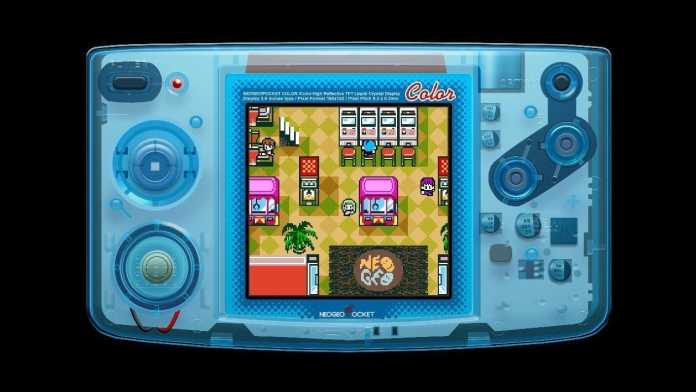
Battle with your favorite characters in this classic trading card game – SNK VS. CAPCOM: CARD FIGHTERS’ CLASH. Originally sold as two separate games for the Neo Geo Pocket Color, both games are now combined into one for Nintendo Switch.

Gameplay:

I never played this gem as a kid, but it felt very reminiscent of the Pokémon Trading Card Game, so it was really easy for me to pick up the rules. When you start the game, you can decide between playing with the SNK deck or the Capcom deck, and you can switch between the two as long as you have separate save files.

You battle 1v1, and each player can place up to three character cards on the table. You draw one card per turn and place character cards alone or as a backup. There are attack cards and ability cards that have a BP and SP. Finally, when a player’s HP reaches 0, it’s game over.

However, don’t be fooled by the simple gameplay; this game is far from simple and proves to be quite difficult. Strategy is your friend and, of course, a bit of luck. I lost many frustratingly close games because the CPU happened to pull better cards, or I played too offensively. At some point, it felt like the game was “cheating”, so I really wished there were different difficulty levels to choose from. Despite this, the challenge makes each win feel so much more rewarding and fun.

One of my favorite things about this cross-collaboration is the collecting and trading aspect. Despite its age, the graphics are still stunning, and you can collect 300 cards. I felt like a little kid again, like how I used to collect my favorite trading cards; I was even excited when I got the Chun-li and Cammy cards. Overall, I think if you’re a Capcom or SNK fan, the trading aspects alone are enough to grab your attention.

In addition, it’s a small detail, but I loved that I could change the handheld size and colors. The original screen size is a bit too small, so I zoomed in as soon as I could.

Pros:

  • Fun & Challenging
  • Numerous cards to collect
  • Can customize the handheld

Cons:

  • Typos & strange wording
  • No difficulty settings

Conclusion:

Even as a newcomer to the series, I think SNK VS. CAPCOM: CARD FIGHTERS’ CLASH is a pretty solid game. Other than a few annoyances here and there, I can say I enjoyed this classic title. If you’re an SNK or Capcom fan, or a card trading game fanatic, I’d say this retro goodie is worth adding to your collection.

Entertainment: 8/10

Replay value: 6/10

Graphics: 6/10

Sound: 7/10

Kid Friendly: Yes

Platform:Nintendo Switch
Publisher:SNK
Released:January 12, 2022
MSRP:$7.99
ESRB:Everyone

Review: Music Racer: Ultimate

Music is a strange entity that divides and unites people. Subsequently, what I may love, you may loathe. Yet, no matter our tastes, we can all agree that it enriches our souls and makes us happy. Music Racer: Ultimate attempts to explore this theory while testing your reactions and rhythm.

Developed by AbstractArt and Light Road Games and published by Sometimes You, this is a racing rhythm title. This is the upgrade from Music Racer, the arcade game released in 2018. The new and improved version has performance enhancements, but more importantly, the ability to play your own music. “Why is that important?” you may wonder! Well, when the hectic action relies on a variety of songs, you may wish to select your favourite track.

Music Racer: Ultimate is a slow-burner. 

I usually adore every rhythm game I tackle, as I love how addictive and challenging they are. I recently covered Beat Souls, and it highlights my obsession with the genre. However, Music Racer: Ultimate didn’t grab me straight away. Its lack of early game content and its simple mechanics left me reeling. However, as I progressed, it got under my skin and I became lost in the futuristic setting. Consequently, I enjoyed unlocking new stages, purchasing vehicles, and the chilled out Ibiza vibes.

Though I soon warmed to its straightforward approach, I was disappointed by the lack of a story. True, it would have been hard to implement it within the fast-paced rhythmical action. Yet, it would have added to the gameplay if there was a reason for racing upon the neon-infused streets. As it is, you must speed through a selection of racetracks, collecting tokens to hit the high score. There are obstacles to avoid, and hitting every marker enhances your combo.

Drive a police car in Music Racer: Ultimate
Why not race a police car?

A basic premise. 

As I said, the concept won’t stretch you. There are no fancy power-ups to collect, and it matters not which car you select. Therefore, the gameplay could be repetitive. Luckily, however, the developers overcame this with the choice of 4 game modes and a variety of songs to pick from. The options available to you are standard, zen, cinematic, and hard. They are pretty self-explanatory, but each has a distinct quality.

The standard mode is your go-to option. Here you will collect tokens, avoid obstacles, and race to the finish. There are no penalties for failure, and hitting a trap is a mere inconvenience. Zen mode, on the other hand, allows you to race freely with no danger whatsoever. Therefore, you can focus on your high score while enjoying the atmospheric music. Next, there is the Cinematic option. It offers an awe-inspiring view of each vehicle and the surrounding world. It was beautiful to zoom in and out of your car while studying the different backdrops. If you so wished, you could lose yourself in this time-consuming choice. Finally, hard mode will break your soul. Death is guaranteed and any mistake will end your run. Subsequently, this hardcore option is not for the faint of heart. It’ll test your reactions, memory, and skills. It’s devilishly difficult and will make you scream.

Music Racer: Ultimate is vivid and futuristic.
A stunning futuristic world.

Music Racer: Ultimate, is a vast improvement. 

New and improved titles are all the rage. Therefore, we are seeing more remastered games because of next-gen consoles. Music Racer: Ultimate pushes its presentation to the limit thanks to its 4K resolution with 120FPS. This jump in performance is noticeable over the original, and the gameplay benefits exponentially. The smooth movement, striking colours, and distinct stage design will capture your attention. Unfortunately, though, for all its positives, there is one glaring oversight. The camera angle is too tight to your vehicle, and this impacts your point of view. Sadly, you’ll miss tokens and hit obstacles that could have easily been avoided. Had the developers incorporated an array of camera angles, then this would have been avoided.

The positives extend to the audio arrangement. With 3 options at your disposal, you are spoilt for choice. First, it is loaded with a variety of chilled and fast-paced electronic songs. These weren’t to my taste, but they suit the theme and were pleasant, regardless. Second, you can temporarily download a song from Audius. This streaming platform has a large selection and you can pick from its vast catalogue. Last, the pièce de résistance is that you can select your own music. Now, this isn’t as straightforward as I’d have liked. You can upload your favourite tune to a server and connect to this from the game. There is a large list of free apps to choose from, but it was too much hassle for my liking. It is a nice idea, however, and adds another layer to the addictive and immersive gameplay.

Music Racer: Ultimate allows you to drive more than just cars.
Leave the cars behind.

The analogue stick is too sensitive. 

Like Beat Souls, Music Racer: Ultimate suffers from overly sensitive controls. This is a massive flaw when moving to the beat is an essential mechanic. Luckily, though, you can use the d-pad and this removes this issue immediately. Problem solved, you’d think, but unfortunately, it is not. During the harder mode or faster songs, the d-pad isn’t responsive enough and you miss your targets repeatedly. This is an issue that needs to be addressed if the game is to reach its potential.

Sadly, Music Racer: Ultimate fails to evolve past its basic concept. Yes, there are four modes to experience, but these follow the same core principles. Consequently, the action is repetitive, and this negatively affects longevity. On the other hand, players who fall for its charms will adore the challenge of unlocking each level and every vehicle. Moreover, completionists will have to invest hours if they wish to finish it.

Music Racer: Ultimate is a wonderful casual title.

Though I found much of the action to be repetitive, I enjoyed playing it in short bursts. Subsequently, this is a fantastic casual experience. I adored the beautiful futuristic landscapes, the interesting cars, and the unusual stage design. Unfortunately, though, its USP isn’t as user-friendly as I’d have liked and this somewhat undermines it. All things considered, it’s a great arcade title that I recommend you to buy here! Will you be able to move to the beat or will you fail miserably? Pick a car, select your tunes, and pick up every point on offer. 

Review: What Lies in the Multiverse

Here is my video review with footage captured on my Xbox Series X, enjoy!

Life is a bizarre thing! On the surface, it’s simple enough, but when you start looking deeper, it gets complicated. Therefore, have you ever considered the possibility of multiple dimensions? The belief is that every possible outcome is being played out. This is the core principle of What Lies in the Multiverse, a dark, yet funny adventure title.

Developed by Studio Voyager and IguanaBee and published by Untold Tales, this is a puzzle-platformer. It is a retro side-scrolling affair with a wicked sense of humour. Furthermore, it has brain-twisting puzzles, will test your reactions and will make you laugh repeatedly. Moreover, it has a striking cast of characters and a strange story that must be seen to be believed.

What Lies in the Multiverse does the basics right. 

Even though the plot, characters and core concept are wild, the gameplay is excellent. What Lies in the Multiverse has got the basics spot on. Consequently, it is an excellent platform title that strikes the right note. It blends madness with increasingly convoluted problems to offer a challenging, yet fun experience. 

You control a young boy who is obsessed with the idea of parallel worlds. He is determined to make the science work, and here is where the madness begins. Armed with a computer and an indignant cat, he starts his experiment. Somehow, he is successful, and this is where he meets the colourful Everett. This wizard, dressed in purple, has a sharp tongue, witty outlook, and a carefree attitude. Think of Willy Wonka, but instead of chocolate, he can bend time and space. Everett won’t allow the boy to jump willy-nilly between dimensions and so he becomes his assistant. Between them, they undertake a wild adventure and take on some wily adversaries. Subsequently, madness ensues, and you’ll chuckle while scratching your head throughout.

Not every chapter of What Lies in Multiverse is dark and dingy.
Take your time and listen to the people of the world.

Simple mechanics and excellent puzzles. 

Though the science behind What Lies in the Multiverse is complex, fortunately, the mechanics are not. The developers have created a wonderfully straightforward affair that is easy to understand. You must move left or right using a classic side-scrolling method. Furthermore, basic platform elements, such as leaping between surfaces and clambering up ladders, are utilised. All sounds easy, right? Wrong! The game twists the action when you flit between dimensions. As you change your perspective, new items appear. Whether it’s vines to climb, icy platforms to slide over, or poisonous air to breathe, it makes the action much harder.

Alongside the perspective-shifting ways are the logic-based problems! They begin easy enough, but soon become much larger and more complex. You are expected to slide boxes, flip switches, and time your jumps between each dimension. Therefore, it’ll test the hardiest of players and comprises many Eureka moments.

The story has 8 chapters that each contain two worlds. You’ll explore a train, town, countryside, caverns, and more. Each of these locations has an alternative dimension to visit, such as an icy tundra, a lush jungle, and a poisonous nightmare. Moreover, you’ll have to put up with “Interferences” and “Ubiquitous”. These are the unfortunate side effects of Everett’s frivolous use of his “Voyager”. This is the staff he uses to travel between dimensions and the reason he is being pursued. The Ubiquitous are items that exist but also don’t exist. They appear in both dimensions but can only be moved in one. The Interferences block the use of the Voyager while forcing you into an alternative world. Both anomalies force you to consider which plain to use while adding complexity to every puzzle you face.

What Lies in the Multiverse has some colourful characters.
Probably best to stay on their good side.

What Lies in the Multiverse is wonderfully pixelated.

Old-school is the in thing. I’ve experienced more pixelated games since owning a Series X than anything else. Indie developers love the style and I admit I’m obsessed with it as well. Fortunately, What Lies in the Multiverse is wonderfully pixelated while being vivid and great to look at. Furthermore, the level design is interesting, varied, and keeps the action fresh. On top of this, the retro sprites add to the interesting layers of nostalgia. Visually, it won’t blow you away, but it’s pleasant and well-considered.

This continues in the simple but fun audio. The whimsical tunes change as you leap between dimensions, and this adds to the drama. Furthermore, there are some strange 8-Bit sounds that increase the madness. Fortunately, however, the noises and music add to the Sci-Fi theme without being too in your face.

What Lies in the Multiverse has a lot of adult themes.
Chug, Chug, Chug, Chug!

Simple controls.

Unlike some of its peers, What Lies in the Multiverse is easy to play. The developers have focused on a simple and responsive control setup. Consequently, this is easy to pick up and master. Therefore, new players and veterans alike will excel thanks to the user-friendly approach. There is an inclusion of basic QTEs that mix things up while maintaining the straightforward style.

Sadly, where this doesn’t excel is its longevity. Though there are 8 chapters, the story only lasts around 4 to 5 hours. This was a little disappointing, as I wanted it to continue. I enjoyed the whimsical story and colourful characters, and I didn’t want it to end. Luckily, however, there is replay value thanks to the large and varied achievement list. If you are a completionist, you’ll spend hours on multiple playthroughs. Consequently, this is great value for money and could span 10 to 15 hours.

What Lies in the Multiverse is great fun. 

I expected What Lies in the Multiverse to be challenging. However, what I experienced was well-thought-out and user-friendly. It has some simple mechanics that evolve thanks to the multidimensional gameplay. Its cheeky story, loveable characters and silly ways will make you smile. Subsequently, you’ll experience an interesting title that is great fun to play. I adored it and I recommend you to buy it here! Can you help Everett complete his quest, or will his adversaries stop him? 

Review: A Musical Story

0

A Musical Story is a game that takes place in the 1970s where we follow the journey of a young man named Gabriel, a factory worker with a dream. His life, working in a canning factory, day in and day out can get a bit tiresome, undesirable, and it just feels like it’s taking him nowhere. So Gabriel decides to push onwards, towards his dream to build a band with his 2 other amazing friends, and the three of them try to build something more for themselves!

The main goal of this game is to complete the story and make the dream of these three friends in this band come true. All by playing the music through each gameplay, hitting the beats or marks around a circular designed game board, making sure to get it at the right time. Each one must be correctly done to move forward and the story can also progress, getting the friends in this band to their final destination Pinewood. This is their goal and where they want to give the best performance they can.

Play Your Hearts Out!

A Musical Story is just that, a story that shares a few artistic graphics of what is going on after each performance; the little game portion we have to play. I can totally appreciate that the game is very well designed, simple and easy on the eyes. There aren’t much crazy, blazing, and bright colors, but it does have that classic 70’s vibe in style and appearance. This includes the hair, clothing, the vehicle we are taking, and even just the entire scenery.

Plus the music that is playing, which is mainly our own creation, while the story progresses isn’t that amusing or entertaining, but it’s something and sort of fits the game’s theme. Additionally, each portion of the gameplay is very easy to play with simple button mapping makes it easy to play. The only problem I find is that it can be hard to know when to start with the first beat or the next ones afterward. It takes a few times to get it right, but soon it gets easier to get a hang of the gameplay. Especially, the way each stage goes in around like a circle and requires just two buttons left and right buttons on the controller to use to play the music.
Again, it’s not like the most music-filled game I’ve ever played. Yet, the gameplay is basically a repetitive action, using two buttons and aiming to hit the beats at the right time, even if the sound doesn’t really pick up or does it ever sound anything more than just a slightly unappealing music game. So it’s not something I was expecting when thinking 70s, it just feels a bit less of the exciting disco or anything that might be danceable or make you want to dance while playing. However, with the gameplay and the part, we have to do as the player, it’s just all about the right timing. Plus, no fear of losing the level or stage because even if you mess up, you can easily replay it while it goes around until you get it perfect. So don’t give up, just try, try, and try again till it’s 100% perfect!

After the little gameplay, the story appears. A new part of what is going on before we play again. It’s like a little image of the story that is going on. It isn’t a bad story, it’s quite different and how it plays it is even more original. It is a bit of a nice story and music-playing combination game. So yes, one thing about the game that I do really like and probably mentioned a few times is that it’s easy to learn quickly and not that much exciting.

Final Conclusion

Nonetheless, it’s not such a bad game. Simple, quick, and easy with its challenging features, trying to hit each beat on time. Though with full honesty, I’m not a big fan of music genres when it comes to gaming, but this wasn’t too bad. It’s all about perfect timing, with each little activity and it gets a little challenging, but can be a bit boring for me. However if music games are things you love that is fine too, don’t let me push you away from this game.

Lastly, the game might not take too long, but it does have its tougher parts. Maybe not as crazy as many music rhythm games, but it still will keep you engaged on timing to play perfectly. I must admit, I wasn’t great in the beginning, but after a while, it isn’t as bad as it was when I first started. Therefore, the game is not too bad, maybe a little less entertaining than many others, but for a simple music game, it’s not too bad.

Review: Monster Crown

As a youngster, I had an unhealthy obsession with Monster Hunter on the PS One! However, all good things must come to an end and I’ve not looked at it since. Yet, this doesn’t mean I don’t have fond memories of the time we spent together. Habits are hard to break and subsequently, whenever a new monster game hits the market, I’m always keen to give it a go. Monster Crown is the latest “Gotta tame them all” title that creeps down a heavily congested walkway and into my lap.

Developed by Studio Aurum and published by Soedesco, this is a top-down 8-Bit RPG monster adventure title. It is clearly influenced by the powerhouse of the genre, Pokémon, and it’s impossible for me to ignore the glaringly obvious similarities. From its garish colours, basic and loud audio, and simple controls, this should appeal to lovers of that franchise.

Monster Crown isn’t unique.

Being influenced by a much-loved title isn’t a crime, but the similarities are worryingly close. Therefore, there is a lack of unique action and consequently, the plot and gameplay feel rehashed. The main concept of fighting lacks personality, depth, and offers nothing new. Furthermore, the plot is generic, slow-paced, and predictable. Sadly, it was all a little disappointing and will be underwhelming for fans of the genre.

The action revolves around a young monster tamer who lives on Crown Island. His dad can see his potential but doesn’t want him to run before he can walk. With some guidance, the hero starts his journey. As you explore your surroundings, you will discover enemies, allies, and a large range of monsters to battle and tame. The story follows a linear plot, and the characters you face are sterile and disinteresting.

Monster Crown takes inspiration from many much-loved franchises.
Where it all begins.

Confusing fighting mechanics.

When a game relies heavily on its combat mechanics and taming elements, you’d hope it would be easy to pick up and play. Sadly, however, Monster Crown is a little confusing. You must understand the 5 different types of monsters in the world and who trumps who. You will encounter Brute, Vicious, Unstable, Relentless, and Will. If you pick the wrong creature to fight another, then your attacks are weaker and your opponent has the upper hand. Luckily, though, the information is made clear in a handy notebook. Unluckily, however, this can’t be accessed during a fight, so memorise it or pay the price.

Once you know who to pick for the best chance of victory, then you must be aware of an ability called Synergy. This all-powerful attack should add tactical nuance to the gameplay, but it’s simply a case of swapping your team around and the ability is unleashed. Consequently, this was disappointing, and it made the gameplay lack finesse.

Monster Crown allows you to select your group leader.
Who will lead your gang?

The best things come to those who wait.

Though you are introduced to the monster taming mechanic very early on, the best elements of the gameplay are withheld. Monster breeding and the deeper parts of the plot don’t appear until you’ve heavily invested your precious time. This wouldn’t be an issue if it wasn’t for the lacklustre story and simple and bland mechanics. Studio Aurum potentially prevented its player base from seeing the premium content by unnecessarily making them wait. With 200 monsters to capture, I mean tame, and an untold amount of mutant breeds available, this makes for a mouth-watering concept. It was for this reason that I was so frustrated that it took forever to be introduced. Had the developers offered it near the beginning, it would have been a mechanic that could have evolved alongside the story.

If you are patient, you can complete your journey across deserts, woods, and through dungeons with a team of up to 8 monsters. These wild creatures are recruited easily by battling them and offering them a pact. In theory, this was an excellent concept. Sadly, though, the beasts are too generous and everyone wants to join your team. With no challenge to face and no refusals on the cards, it quickly became tedious. Subsequently, like many of the elements of Monster Crown, it falls just short of its full potential.

Monster Crown lacks originality.

Monster Crown’s decision to replicate many of the fine qualities of early Pokémon has not paid off. Conceptually, it’s poor and doesn’t grab your attention. Unfortunately, the disappointment doesn’t end there! Graphically, it lacks originality, and this was unforgivable. The sprites, landscape, colour palette, and animation are all familiar but not as polished. Where it does excel, though, is its level design, the clear and easy-to-read dialogue, and the retro top-down perspective. Sadly, these are minor things, and therefore, it is tough to overlook the many shortcomings.

Worryingly, the problems continue with the music and sound effects. Now, I liked what I heard and the dramatic atmosphere it created. However, its oh so familiar style gave a distinct déjà vu aura to the proceedings. Yes, you’ll like the chirpy and cheeky upbeat songs that are juxtaposed with heavier moments during battles. But this wasn’t enough to paper over the enormous cracks that appear.

Monsters of all shapes can be tamed in Monster Crown.
If it isn’t the battle of the sea monsters.

Easy but clunky controls.

To compound matters further, the controls are dated, inaccurate, and annoying. Furthermore, the UI is clunky, and the gameplay is full of issues. At times, you can’t select monsters, move through the menus, or complete tasks at hand. Then there was the issue with navigating small spaces as the hero only moves on 4 points of a compass. Luckily, the action doesn’t move quick enough to make this game-breaking, but it was annoying, nonetheless.

With approximately 10 hours of story to decipher and many monsters to breed or tame, you get a lot of bang for your bucks. Sadly, though, withholding the best mechanics, glitchy gameplay, and bland action will put many players off. Furthermore, it’s obviously a poor man’s Pokémon, and its many fans will not put up with the shortcomings.

Monster Crown falls way short of expectations.

Maybe my obsession with Monster Hunter tarnished my expectations, but I think not. Disappointingly, the developers attempted to get a small slice of a large and well-loved pie, and they fell way short. Practically, every element of Monster Crown is tepid, underwhelming, and lacklustre. Frustratingly, the best elements require you to wade through hours of monotony and this was a poor decision. Unsurprisingly, I don’t recommend you to buy this! Will you uncover the deep-seated mystery of the island? Live up to your potential, undertake a dangerous adventure, and discover what your home is hiding.

Review: Rugby 22

Sport simulation is somewhat of a touchy topic in gaming. Finding the balance between offering fun, engaging gameplay, and an authentic, realistic experience isn’t easy.

Fifa is a series that has often walked the line between arcadey exhilaration and purist satisfaction. But yearly releases demand such a quality. Rugby games, on the other hand, are a less consistent experience. An absence of a dedicated release schedule, and big developer backer, has unfortunately led to sparse releases of varying quality.

Rugby 20 released back in 2020 and showed some promise; a commitment to deep, tactical simulation of the sport was evident throughout the game. Now, 2 years on, developers Eko Software have the chance to build on the evident promise of the previous title with Rugby 22. 

Striking a balance:

I mentioned Fifa earlier because football, much like Rugby, is a tricky sport to translate to video games. The complexity of the game – with deep tactical differences between teams – has presented a significant challenge over the years for developers. A series like Football Manager leans heavy into the tactical aspect; foregoing any arcade aspects for a much deeper experience. Whilst the classic Fifa Street leaned completely into the over-the-top and arcade style of gameplay.

Unfortunately, the demand hasn’t been quite the same for a top mainline Rugby title. Rugby 22 evidently builds on the promise of Rugby 20, with a clear appreciation for the many tactical nuances of the game, but in other areas, you can feel the absence of support.

Gameplay wise, Rugby 22 has a lot to offer. The initial tutorial impressed me with the layers of gameplay mechanics that it seeked to introduce, and I was hooked from my first match.

Tackles feel impactful and frenetic, movement feels responsive and this makes each moment of a match feel engaging and rewarding. That said, there is a deep learning curve here and for newbies (like me) even the easiest settings will feel like quite the challenge. This isn’t necessarily a negative, however, and I’m sure someone new to the game of football would feel similarly about Fifa. Positives aside, the game’s choice to frontload the tutorial with an abundance of mechanics – some, such as the jackal – that are poorly explained, made the learning curve a bit steeper than necessary.

The physicality and intensity of the sport has been remarkably well captured and scaling the difficulties provides hours and hours of entertainment. The developers have also succeeded AT striking a difficult balance between making the game fun and an authentic simulation.

Playing online against other players is a smooth and inherently engaging experience (and humbling in my case). At its core, Rugby 22 offers some very solid gameplay that accurately lives up to the real game.

Unfortunately, other areas of the game feel undercooked, and in some cases, short-sighted. 

Rough around the edges:

“Career mode” fails to live up to any reasonable expectations. A better way of looking at Rugby 22’s “career mode” is more akin to Fifa ultimate team: there is no narrative or story to be found here – instead, you compete to work your way up various divisions whilst earning points to buy packs containing players. Whilst the loop has potential to be addictive, the lack of licensing for most players makes unlocking new players much less exciting when the vast majority are randomly generated.

Without an exciting incentive, career mode lives and dies on the core gameplay, and whilst this might be enough for some, for me it feels misguided.

League mode offers an even briefer alternative, with its one season structure feeling quite bizarre. 

Sadly these issues speak to a game that is very rough around the edges that surround its core gameplay. Game modes are shallow and there is very little to keep you hooked beyond the core gameplay. 

As a visual offering Rugby 22 is also subpar compared to other modern sports games. The scanned players look great, but players without scans look somewhere between creepy and downright frightening. Thankfully the players animations are very well done, even if the commentary that accompanies the action feels stilted. 

A crunching blow:

Rugby 22’s solid gameplay struggles to carry an otherwise mediocre offering and the result is a game that feels like a missed opportunity. Whilst the initial engagement of the deep, well realised incarnation of the sport of Rugby had me excited, the game’s lack of polish in other areas severely hampers the overall experience.

Online may offer some longevity, but outside of that, I’m not sure there is enough here to satisfy anyone but absolute purists. 

Review: Breakout: Recharged

The Recharged series is expanding rapidly and now comprises four titles. I have been lucky enough to play and review each one, and I love the arcade and nostalgic feel of each encounter. Every title follows a similar approach, and Centipede: Recharged, Black Widow: Recharged, Asteroids: Recharged, and now Breakout: Recharged brings old-school gaming to a new generation of players.

Developed by Adamvision Studios and SneakyBox and published by Atari, this is a retro arcade title. It reinvigorates the classic brick-breaking game with a modern lick of paint and high-powered utensils. It’ll tick all the boxes for arcade lovers while offering a new challenge to younger and more modern players. It is the perfect addition to the series and retains the brilliant mechanics that I’ve come to expect.

Breakout: Recharged doesn't go easy on the amount of bricks.
So many bricks to destroy.

Breakout: Recharged is brilliant.

Modern gaming is a wonderful thing! The action is expansive; the worlds are enormous, and there is more depth than you could ever imagine. However, there is always a place for retro titles. After all, Breakout captured people’s imaginations with its simple ways and addictive action. Luckily, Breakout: Recharged maintains this simple style, but it also adds a little modern-day magic.

No longer will gamers just bounce a ball around a small stage hoping to break a few blocks. Instead, you will overcome challenges, take on a fast-paced arcade mode, and infuse your paddle with awe-inspiring power-ups. In short, this is an arcade title with a Hollywood twist. Like the original, it is simple to pick up, but challenging to master. You will aim to hit the top of the leaderboard while destroying as many blocks as possible. You are given limited lives and when you lose them all, it’s game over. This do or die approach makes it difficult and addictive. Therefore, it’s a casual title that is hard to put down.

Blow up the bricks and avoid the traps in Breakout: Recharged
Destroy the bricks and avoid the traps.

It offers more.

The other Recharged games focus on two key modes; Arcade and Challenge. Breakout: Recharged, however, is different. Yes, it utilises those options at the heart of its gameplay, but it also maintains strong links to the original mechanics. Subsequently, it is more authentic than its other Recharged counterparts.

Its similarities, on the other hand, fall within the 50 challenges you must overcome, the never-ending arcade option, and the ability to play cooperatively or competitively. No matter which mode you select, the fundamentals remain the same. You must ping a ball around a fixed screen while trying to destroy every block you encounter. If you have power-ups activated, you will shoot a rail gun, control three balls at once, slow time, and more. The new abilities add a fun layer to the classic and addictive action that we’ve all come to love.

Unlike its peers, Breakout: Recharged isn’t as difficult. The other games in the series were challenging to overcome, and I struggled to get through every level. This one, however, was easy to finish. Consequently, I was left wanting much more! Sadly, a lack of depth or range of missions didn’t help the situation. Subsequently, the developers could have added more variety to up the ante while increasing the difficulty.

Breakout: Recharged looks fantastic.

I adore it when a game maintains its retro charms, however, at times I like to see a modern polish. Breakout: Recharged has been given a new lease on life thanks to its sharp lines and clean colours. Yes, the action is hectic, and at times, unbearable, but the buttery smooth graphics make it a joy to look at.

A fast-paced game needs a high-energy soundtrack, and that’s exactly what’s delivered. Furthermore, the classic sound effects have been retained to add to that feeling of nostalgia. It was easy to fall for its charms because of its futuristic noises, clean-cut imagery, and neon-infused colour palette. Its simplicity won’t appeal to everyone, but I enjoyed what I saw and heard throughout.

Breakout: Recharged has ridiculous weaponry.
It’s rail gun time.

Moving a paddle isn’t a complex task.

Unsurprisingly, it isn’t challenging to master! You are required to move your paddle, judge the pace of the balls in play, and use any power-ups you have collected. Thankfully, the responsive controls and simple button layout enhance the simplicity further. With minimal effort and a little patience, you’ll destroy every block in sight.

With three game modes to select from, the ability to play with or against friends and a global leaderboard to top, this has replay value and longevity. Yes, it isn’t as hard as its peers, but yet, it’s still addictive and it will get under your skin. On top of this, the moderate-sized achievement list will push you to achieve high scores and complete certain tasks.

Breakout: Recharged is a welcome addition.

I will always love retro gaming and I adore it when developers try something new. Consequently, the Breakout series will always tickle my fancy. However, I thoroughly enjoyed the authenticity of the original mode and the nostalgia-fuelled action. Disappointingly, though, it isn’t as hard as its counterparts and this left me wanting. I wish the developers had been more inventive with the challenges, as this would have made it much tougher and more enjoyable. Nevertheless, I liked it and I recommend you to buy it here! Will you beat every challenge and top the leaderboard? Destroy every block, gather the power-ups, and keep your balls in play.