Sokobos is an indie puzzle game that is developed and published by Daisy Games. Since its release on April 1st 2022, it has garnered a positive rating on Steam as of publishing this review. While it can be a bit boring with the unchanging scenery sometimes, Sokobosoffers a polished and relaxing experience.
Sokobos Trailer by Daisy Games
Gameplay
This game is a Sokoban clone puzzle game. Like many other games in the Sokoban genre the main objective is pretty simple; move this object to the specified area to complete the level. While it can be a repetitive experience, Sokobos offers several mechanics to hide its repetitive nature like adding movable obstacles, changing object colors to their intended place and such.
However, unlike many sokoban games, Sokobos approach on puzzle is push-only. That means that you only push around object which can be quite frustrating. Sometimes, it feels like it could benefit from a pulling mechanic too. Like, getting an object that are required to complete the level stuck in the corner of the level and that’s it. You either have to redo to retrace so many steps or press the “retry” button to reset the whole level. Without the ability to pull objects, the game can get quite hard and placed it difficulty on a steep learning curve. I hope that in the future, Daisy games the could some sort of a “grab” or “pull” button into a patch or if they decided to make sokoban clone again.
Also, throughout my playthrough, I didn’t run into any bugs and glitches whatsoever. It has been a quite nice experience so far. So, the game is quite polished in the technical side of things.
Ooh, more obstacles!
Graphics
The retro styled graphics are quite nice and clean but, with a limited amount of variation in terms of scenery changes. It can get quite boring to look at after a while. The only variation the game offers is the object, dye colors, object variety, border color, and the obstacles. Other than that, there’s only the color of black that adorned around the level.
Sounds
There are limited amount of sounds in the game, aside from the sound effects, there are only two sounds: The main menu music and several background music. Which is alright, considering the design decision and art decision by the developer but, the music is nothing to write home to. It’s just a nice, chill, music to accompany your puzzling journey.
Conclusion
There are a story element that the developer implemented too, so there’s something to keep you interesting. It is on a bare minimum but it is still quite interesting. Levels can be quite boring to look at. There are variation inside the border of the level but, beyond that there’s just the color black. The gameplay side of things are fine but it has a steep learning curve. I’m not much of a puzzle guy myself. I even struggle with to come up with a solution for most of the levels but, I could see myself sinking many hours into this game.
Overall, Sokobos offers a chill and satisfying experience. I can safely say that I recommend Sokobos but, if you are a puzzle game fan, the challenging nature will sate you itch. For others that are not however, I understand that the game’s learning curve will put you off the game. So, if you are interested give it a go and if you didn’t like the experience, you can refund it with Steam refund policy.
“I think it puts far too much melodramatic weight upon a character that was never designed to carry it. It was too nasty; it was too physically violent. There were some good things about it, but in terms of my writing, it’s not one of my favorite pieces. If, as I said, god forbid, I was ever writing a character like Batman again, I’d probably be setting it squarely in the kind of “smiley uncle period where Dick Sprang was drawing it and where you had Ace the Bat-Hound and Bat-Mite, and the zebra Batman—when it was sillier. Because then, it was brimming with imagination and playful ideas. I don’t think the world needs that many brooding psychopathic avengers.”
Said Alan Moore in his interview about the renowned graphic novel, The Killing Joke, which has been celebrated throughout the years as a masterpiece. This interview seems to be most relevant today. Batman has never had to carry as much melodramatic weight as he is today.
“The Batman” much like “Joker” is one of the most controversial superhero movies of recent years. One thing that distinguishes this movie from previous iterations of the caped crusade on the big screen and television is its unique approach to Batman’s fundamental philosophy. Every single version of Batman, from Adam West’s goofy and ridiculous hero of the daylights to Christopher Nolan’s Police-loving Dark Knight of 9/11 counterterrorism, has been built on these simple facts: Batman is a good-hearted multi-billionaire who was born into a good-hearted multi-billionaire family and has made a promise to himself to fight criminality because of the trauma he once faced after losing his parents.
The predominant and laziest way to address Bruce Wayne’s wealth problem has been charity.
Matt Reeves is the first director who goes out of his way to question these fundamental facts about Batman. To the point that, even in the comics, we could hardly find such an iconoclastic approach to Batman mythos.
Chrishaun Baker has written a wonderful piece for Inverse titled “The Batman Finally Holds Bruce Wayne Accountable in one Historic Way.” in which he accurately says: The movie is intimately aware of Bruce Wayne’s material privilege, and instead of running from it, Reeves seizes the opportunity to make it a critical element. I think the fact that the likes of Ben Shapiro got triggered by the movie should be evidence enough that Reeves has done something right with “The Batman.” However, I do not want to repeat or paraphrase what Baker and others have mentioned before; rather, I’d like to explore something that they have missed in their analysis.
Although, Reeve has done something different and undoubtedly plays with some really interesting ideas such as capitalism, class divide, corruption in the system, etc. I think it falls short in its execution, and as much as I want to love this movie and clap for all the things it does right, I cannot ignore the fact that it doesn’t live up to all the build-up it goes through. There is a point in the movie where the Riddler, the villain of the story, unapologetically asks the audience that “is Batman’s trauma and backstory all that important?”, “Why should we cry for the likes of Bruce Wayne when there are hundreds of other orphans who are dying of hunger?”
These are bold and brave questions, but what does the movie do with them?
Right around the third act, the movie loses focus and throws logic out of the window to tell a more mainstream tale that is not too controversial. “The Batman” never dares to criticize the Riddler’s vision of real justice -cleverly so. As a result, it irrationally turns the Riddler’s intentions into something that is criticizable. The ingenious Riddler, who only targeted the powerful and the rich and wanted to make the masses aware of their exploitation, suddenly targets the innocent people for the stupidest reason possible. Why should a movie that so heavily criticizes the socioeconomic conditions of the society and goes so far as to criticize the “good” billionaire Waynes ends with some progressive-democrat-looking candidate winning the elections?
“Whoever you are, you obviously grew up rich.” Says Catwoman when Bruce Wayne shows lack of sensitivity by expressing his neoliberal point of view on the matter.
“Capital is an abstract parasite, an insatiable vampire and zombie maker, but the living flesh it converts into dead labor is ours, and the zombies it makes are us.” In the 90s, Mark Fisher published a revolutionary book titled “Capitalist Realism: Is There No Alternative?” which tackles a very disturbing fact about our being: our unusual understanding of the capitalist system. Unlike any other economic system, capitalism is perceived as the only possible and viable system of economics. Very similar to how people of the past could never imagine a grand society existing without kings and queens, we cannot imagine a world without capitalism.
“It’s easier to imagine the end of the world than the end of capitalism,” says Fisher. I think Capitalist Realism is very evident when we look at “The Batman.” A movie that is notably class-conscious, but instead of proposing a solution, it dodges the question by showcasing a ridiculous montage of Bruce Wayne in his Batman suit rescuing flood victims. “The Batman” is not alone in its capitalist criticism of capitalism! Another great example of this would be “Moriarty the Patriot” which takes place during the industrial revolution and the revolutions of 1848. While I think Moriarty the Patriot does a better job at its commentary, it still falls short of seeing an alternative.
Is there truly no alternative?
Of course, I might be too harsh on a Hollywood superhero movie and expect too much from it. That’s fair. However, I like to think there are more people like Bong Joon-ho who look at the window and see something beyond this rusty, cruel, old train.
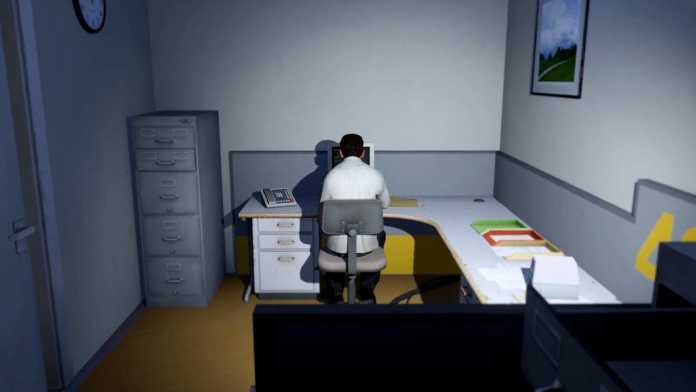
Have you ever tried the 2013 version of The Stanley Parable before? If you haven’t, then you don’t need to worry! This game plays just as it would play in the original, with a slight increase in additional content, new secrets, and plenty more discoveries.
For me, this game is totally new and different, so I wouldn’t be able to tell you what was added or possibly removed. However, from what I’ve played and had done so far, I can tell that this is going to bring a few odd endings and a few discoveries. There is not just one scenario or one path to play through. Each time you go a different way from the narrative story, it creates a new venture to figure out. Close enough to play a sort of maze.
On the other hand, it could feel as if the game’s story is built by the player, which is you! So there is no need to worry about doing something unusual, the game is meant to be accomplished in so many different ways. It just won’t be like any game you’ve played before, which is a good thing! Cause who doesn’t want to change the outcome each time they play, it’s absolutely fun!
Graphics and Sound
The entire 3D design is perfect in how well it makes you feel as if you’re in a real-world office building environment. It’s a little strange that the person, Stanley who we are, isn’t really anything. You can look around with the camera button on the controller to view the rooms and everything around, but for Stanley, you will see nothing there just as if we are an invisible person roaming around.
Additionally, the building is very much desolate and vacant, with no other employees to be found. It must be very easy to just work on making great objects look real when no characters need to be designed. Nonetheless, the many objects inside the rooms you can visit are not that obvious to which will really work or be accessible. So searching around to find something to actually turn on or off, move or use is a bit hard. To add to that, I don’t feel that the actions are too real when it comes to turning on or accessing something since there are no real hands or Stanley’s body coming in contact with the object or device.
I guess I’m just not always a fan of an invisible ghost character to be roaming around, then a real figure being there. However, the game still plays quite well and works exactly as the game has been intended to. Plus, the many rooms and background scenes are nicely set up to give a really good office experience, even in a digital way. I do feel that the vacant rooms and unknowing things that could be around the corner also gave me an eerie feeling, especially being my first time playing. Not to say that a monster is going to jump out, which I realized after playing, but it does sort of make you wonder.
Now the sounds or music isn’t much. Instead, you have a narrator speaking out the story as you roam the building. So for music, it’s a bit on the quiet side, until the narrator adds some music to the game. It’s a bit strange so I don’t know, it all depends on how the game goes. Plus, The sound effects perfectly match the motions and actions taken. So together with the emptiness or baffling music choice, it all works with the strange gameplay.
Final Thoughts
I’ve never had a chance to try the original game released in 2013. However, for the first time trying The Stanley Parable: Ultra Deluxe, I can tell you it’s remarkable and unusual too! Especially cause the entire game is about what you want to do and changes or restarts on its own. Each move, each direction or action you take, is what creates the story. The entire narrative portion just goes along with the player’s next moves but restarts when it feels you’ve gone off the right course. I don’t think I really enjoy that portion, it would be great if it kept allowing you to just roam, but that isn’t the case in this game.
On the other hand, the freedom to direct the story and the game is somewhat interesting to me. No wonder this game is sortof hard to decide what type of genere this game could be considered, expect for the obvious one, an adventure game. There is nothing flawed or unintended to happen while I’ve played, and I didn’t discover any strange loading problems. Even if I do something different, the game reacts to the actions made and the narrator explains each of them as I perform them. However, it’s a bit vague; not exactly what I’m trying to do.
Lastly, I love that this game is unusual, but I wish it was a bit more sandbox-style or in other words, up to you to do as you please. However, you can still do different things, just the problem occurs when the narrator blocks you, so many times and restarts the game. It’s basically a puzzling maze to me, which changes each time it restarts and is limited to roaming. So all in all, I actually found the game, okay after a few times playing from beginning to end. Yet, this game may not be for me. Though, if you love to be stumped and try to discover new routes to the exit or winning location, then you may want to try this game.
A few years ago, I moved to the island of Gotland for my studies. When I got here, the first person I met was a 27-year-old socially awkward student who asked if I liked Vikings after saying hello -I do like Vikings. Without knowing his name, he gave me an hour-long [at least it felt like an hour] presentation on the island’s history. I wasn’t paying much attention until he said that Geoffery of Monmouth, a historian with an untenable imagination, believed that King Arthur conquered Gotland without fighting anyone! So, basically, in Geoffery’s version of the story, Arthur was such a bad-ass that not only did he kill the emperor of the Roman Empire, but random countries and islands such as Gotland, Wenelande, and Orkey just surrendered themselves to him out of fear! I doubt King Arthur did anything resembling that; it’s more likely that Geoffery thought nobody knew enough about these random parts of the world, so why not add them to the mighty empire of Arthur?
In some ways, I sympathize with Geoffrey and his original vision of King Arthur as a mighty conqueror. The original Arthur wasn’t some god-fearing king of the people who fought and died so that everyone could live in peace and harmony. He was a vengeful tyrant who attacked the Vikings of Norway, Denmark, and Iceland to set the score for their past; he was such a punk that people had no choice but to give away their whole lands to him.
While I haven’t talked to that interesting student with a disturbing amount of historical knowledge for a long time, I have thought a lot about his story of King Arthur; what would it be like to have a tyrannical King Arthur who brutally subjugates people without hesitation?
Well, King Arthur: Knight’s Tale allowed me to actually play such a scenario!
Developed and published by NeocoreGames, King Arthur: Knight’s Tale puts you in the shoes of the dreadful bastard son of King Arthur, Mordred. After the battle of Camlann [the Ragnorak of Arthurian Legends], every character from the legend has been brought back to life, including King Arthur as an accursed monstrosity. Lady of the Lake, a machiavellian goddess whose deeds and purpose are unsettlingly mysterious, chooses Mordred as the new king of Britons.
Because of Mordred’s reputation as a vicious prince who only seeks power and riches, the game lets player choose whether they want to be a just and honest king like the King Arthur we all know and love or a power-hungry tyrant like Geoffrey of Monmouth’s King Arthur.
Now, the sad news is that you cannot conquer Gotland in this game. However, you are given two spectra of morality that determine what kind of ruler you’ll be. Not only can you be noble or tyrannical, but you can also choose to either preserve the old faith [the ancient pagan religion of britannia] or make Christianity the dominant religion of the island. The religious dichotomy of Britain and the inescapable conflict between the two religions is one of the biggest highlights of the game. It signifies the outburst of the interconnected antagonism that comes after a mythical glorious age of harmony.
The majority of characters and dialogues are very well-written and although your responses do not matter in most cases, Mordred’s malicious sense of humor makes up for it.
As the new king of Avalon, your time is divided between managing the ancient castle of Camelot and going on missions to handle different matters with your most trustworthy knights of the roundtable. Nearly every character from the Arthurian legends shows up in the game, and your interactions with them are decided based on your choices regarding morality and religion. For instance, the valiant Sir Lancelot could join the knights of the roundtable as one of your most powerful assets, or he could lead a great rebellion against you to bring back righteousness to the island. Unlike many Squad-based Tactical-RPGs of the same nature that emphasizes grinding to expand the time of the game, King Arthur: Knight’s Tale avidly stops you from grinding. Every single mission has a story that develops the melancholically hilarious characters and the well-crafted grimdark world of the game. The only downside is that after recruiting a character, their story is done, and you hardly ever get the chance to explore their story further. The character would have had a better chance of getting fleshed out if the players had the opportunity to go on a handful of missions related to their fellow knights of the roundtable.
Someone described King Arthur: Knight’s Tale as a medieval-fantasy XCOM, and I don’t find that description too far-fetched. Missions include tactical battles in which you have to overcome extremely challenging opponents that truly require you to spend time thinking about each and every move. This is one of the most punishing Tactical-RPGs I have ever played -I played on both Hard and Normal. The deliciously well-designed combat makes it so satisfying that you forget all about dying a hundred times after finishing a mission. The challenge doesn’t end on the battlefield; the choices you make when you’re managing your kingdom is just as important and can easily determine the fate of your brave knights in the next mission. Some of them might not see tomorrow if you are not careful about how you spend your recourses. It is notable to mention that as hard as King Arthur: Knight’s Tale can be, it’s never unfair. I never got to a point where I was too fed up with the game. To give you an idea, the game provides very rare items to resurrect your lost comrades, so if you are ever caught in a situation in which you cannot do a thing to save your favorite character from imminent death, the game helps you bring them back. That being said, the game has a big issue with balancing. Sometimes you love a character, but you are forced to use others because archers -for example- are not as good as mages. I believe making the classes more balanced would help the game immensely.
One of the greatest storylines in the game is Queen Baudicae’s tale of revenge against Roman colonizers who ravaged and raped her land and her daughters. The overarching narrative demonstrates the potential this game has and how it plays with historical and mythological contributions.
I played the game when it came out, so it was inevitable that I would face some irritating bugs. While I never minded minor bugs such as voices not playing or certain activities not triggering for a few moments, I got very angry when at the end of battles, the enemies sometimes just decided to stop moving. There were moments in the game when I had to replay a mission or a fight that was going very well because of game-breaking bugs. By itself, this issue is not a big deal, but it was only infuriating due to the difficulty of the game and the fact that you cannot quick save in the middle of a fight.
Another gripe I have with the game is the post-game content. I cannot express how much I enjoyed King Arthur: Knight’s Tale, but when the game ended, it felt very lackluster and unfinished. Imagine if the story of Little Red Riding Hood would end when the wolf devours the grandmother. Fortunately, there’s the post-game content where the story continues without voice-acting or well-designed and story-driven missions. The post-game content felt like it was meant to be part of the main story, but due to whatever reason, the developers didn’t have the time or resources to finish it, so they decided to make it into something extra that no one could complain about.
To end this review on a positive note, let’s talk about the visuals. King Arthur: Knight’s Tale has a unique take on Arthurian Legends in terms of aesthetics. It’s like if you combine Warhammer 40k with Glen Cook’s Black Company and set it in Avalon.
The dark and grimy world of Avalon truly comes to life with its cleverly designed knights, picts, and demons, who are all disgustingly grotesque, and there’s nothing more satisfying than spilling their blood in the dark corners of abandoned churches of this god-forsaken land.
The only issue with the presentation is some awkward moments from the cinematic cutscenes where the movements of characters -lady of the lake specifically- show the low budget of the game. But of course, everything else is so masterfully crafted that you’re not going to care for those moments much.
King Arthur: Knight’s Tale is a grotesquely atmospheric take on Arthurian legends that explores the dichotomies of an era of Britannia when it was torn between the remnants of its gold gods and the newborn Christian religion. Neocore did an excellent job with this game and I’m sure many fans of Squad-based Tactical-RPGs will enjoy this game for tens of hours.
Deck of Ashes is an approachable and easy-to-understand card-based RPG battler that requires a bit of patience, but not for the reason you might think. Rather than the game’s pacing, its poor design and badly integrated systems force you to deal with the hand that you are dealt, like the backup pack of cards that you’re never quite sure is a full deck or not.
Allowing you to select from 5 different characters – all with their own story and voiced cutscenes – the fantasy story has procedurally generated areas of increasing difficulty and a time limit before the area boss ‘finds’ you, giving you time to strengthen a hand capable of defeating them in its turn-based combat system.
It’s a reasonable enough concept except for the fact that the area bosses are given one line of dialogue and there seems no logical reason for you to just hang around until the big bad guy arrives on the scene. Apart from this structure, the rest of the card-based gameplay is quite similar to Slay the Spire – the gold standard in the genre – with cards drawn from your deck with a certain limit of points usable per turn.
While it could be a positive for newcomers to this type of game, strategy is very much an afterthought here as all-out attacking and the occasional health boost does the trick 100% of the time, all the time. Status effects and buffs and debuffs are also present, of course, and there are cards that take advantage of them, but they aren’t particularly required to win, almost making it too easy.
You’d be forgiven if your enthusiasm set ablaze here as – up to this point – there is very little to grumble about, with a decent in-battle system and overall presentation that combines a combination of art design and an atmospheric soundtrack that suits the fantasy genre well.
The real problems, however, arise outside of battle when you attempt to amend your deck.
This is possible at your camp where four merchants are located, each of which are able to ‘help’ in some regard. You can improve your base stats, upgrade your cards, trade resources and dispose of your cards. The issue here is the disposing of cards which confusingly can be done in three different ways. You can dismantle, burn or cure cards for a fee and it is this highly convoluted feature that effectively broke my save file and prevented me from progressing, losing hours in the process.
As you enter new areas you are lumbered with these deck-clogging ailment cards which do you the pleasure of nullifying turns, abilities, or by simply reducing your health, and the only way to remove them is by paying to ‘cure’ yourself. For some strange reason, it is also possible to ‘burn’ them, but this only removes them temporarily and if you were to ‘renew’ your deck between battles, it puts them back in your deck. Why, you ask? Personally, I’m not exactly going to re-poison myself for giggles at a later date, but who knows, someone else might wish to?
The explorable map is a web of locations with random events that can result in battles or interactions such as the above.
Placing myself in this ridiculous position I not only bankrupted myself in an attempt to burn the cards – and still end up lumbered with them – but I had progressed enough to the point where the enemies would do enough damage over time to kill me before I could remove all the ailment cards from my hand and draw any of my go-to cards.
Somewhat impressively, I also managed to further compound my error by diluting my deck with non-playable cards (that as far as I could tell didn’t even do anything), so after utterly bossing the game and not dying even once, I managed to flip the narrative to find myself unable to progress – at all.
You could argue that most people wouldn’t spontaneously combust so pathetically – and you’d probably be right – but why the game allows you to hinder yourself in such a manner can only be put down to poor system integration and implementation.
Sadly, these usability issues are almost everywhere you look and affect the experience. The cards themselves are so large, for example, that they block the visual of you attacking your opponents. Buggy menus and unintuitive navigation make it hard to tell if the game has frozen completely or if the cursor is highlighting something off-screen, and an evil save feature which gives you unlimited slots, doesn’t let you make different versions of a save file – all while autosaving your humiliation into perpetuity.
Gotta love the parasite cards taking up my entire hand and the fact that your actions can’t be seen behind your gigantic cards.
Although there is little strategy required to defeat the enemy – as you can use the same attacking approach for each and every one – and the main gameplay loop varies little from mode to mode, there is plenty of extra content for those who do enjoy the core concept, so while I have piled on the negatives here, there is an audience for this game – it might just be smaller than it could’ve been.
It’s frustrating when a bug prevents your progress, but when its the game’s own mechanics, it’s a little harder to forgive, so although Deck of Ashes is a decent card-based RPG battler, its middling benefits smolder in the wake of its issues, preventing the player from having a consistently fun experience.
Open-world video games are some of the best games ever. If you had to ask someone to list off their favourite video games of all time, there’s bound to be at least one open-world game in there. Some recent options that spring to mind include Skyrim, The Witcher 3: Wild Hunt, GTA 5 and Elden Ring.
At the same time, we’ve had plenty of open-world games that have sort of flopped. I think one of the biggest that springs to mind is Pokemon Sword/Shield. It sold well, but the general consensus was that it was the worst Pokemon game that’s ever been released.
This begs the question, what separates the great open-world games from the bad ones out there? Where do some developers thrive while others falter? Well, let’s take a look at the anatomy of a fantastic open-world video game:
A good main storyline
All of the best games in this genre have thrived because of the storyline. After all, this is the main purpose of these games. You play them to work your way through the story and follow the characters on a journey. I would say that this is the easiest way to separate some of the best games from the worst.
The story needs to be captivating; it needs to encourage you to keep playing and playing. The recent Spider-Man games on Playstation are a phenomenal example of this. Sure, it’s really enjoyable swinging from your webs all across New York City. It’s very fun beating up all the bad guys and collecting all the collectables. But, the thing that made these games so awesome was the storyline. Each one felt like a movie; you were constantly gripped and left in suspense throughout. You felt like you were part of a proper Marvel film, which encouraged you to keep on playing.
So many other open-world games are like this, while others are not. Everything else on this list is irrelevant if the story isn’t good enough. It doesn’t matter what else the game can offer; if the story doesn’t encourage you to play, it will be a flop.
Plenty of side quests
With all open-world games, your missions are directly linked to the main storyline. Each mission you complete will move you closer to the ending. For me, a good open-world game should take you a very long time to complete. I think the main story should be around 40 hours – but that’s just me. There’s nothing worse than finishing a game in a couple of weekends, leaving you with nothing else to do.
This is kind of where side quests come into play. Side quests should give you things to do outside of the main storyline. They can often link back to the story, but they can also be separate entities. The idea is that you can do these little quests to take a break from the story. They also help you level up your character (more on this in a bit) and prepare for the big fights or events.
Personally, I think the best games have loads of side quests that you can get lost in. Honestly, you want to go down a rabbit hole of quests that take you so far away from the main story. It prolongs the game and gives you more opportunities to explore the world.
A good levelling system
This is perhaps something that gets underrated in many open-world games. However, you need to have a good levelling system in place. There has to be something to play towards as you progress through the game. It’s pretty stupid if the game starts and ends with your character in the exact same place. You need to upgrade your stats or abilities; something has to exist!
A good levelling system keeps you engrossed in the game as you have to make decisions when you progress. Do you choose to upgrade this stat or another one? Some games, like Elden Ring, make you choose certain classes where certain attributes matter more than others. It also makes side quests more important in the game. Sure, they might not help you advance through the main story, but they give you experience points to level up your character.
It doesn’t even have to be your character that gets levelled up. Some excellent open-world games might make you level up multiple characters or people in your party – like Pokemon. There are open-world car games where levelling up your car gives you better upgrades to go faster or have a better grip. The point is that you need a system in place that helps you progress and improve. It’s what keeps you hooked and encourages the grind.
To be honest, I take back what I said about a good storyline being the most important thing. You can say that for every single-player video game out there. For an open-world game, the most important aspect has to be the world you’re playing in.
There are two things every single world needs: a massive setting to explore and some world diversity. Some of the biggest open-world video games have been absolutely massive. It would take you days to explore every single area of the map and you still might not find everything. World diversity refers to the map looking different in different places. I remember Horizon being really good at this; some areas were in snow, others were a desert, and some were grassy.
I think GTA 5 is arguably the best representation of an excellent open world. There’s the whole of Los Santos to explore, including busy city areas, docks, airports, fields, mountains; the list goes on. You get different experiences in different parts of the map, and that’s so amazing.
A good open-world video game will encourage you to explore all areas of this map. You don’t even need to do any quests; you feel compelled to hop on a mode of transport and roam around as much as possible.
A wealth of customisation options
Customisation in open-world games is absolutely crucial. Again, this adds a new fun element to the game, while also giving you something else to work towards. As well as collecting experience to rank up, you can collect in-game tokens or things that you use to unlock different features or outfits.
In games like Assassin’s Creed, you can customise so much about your appearance and gameplay. You’re able to choose loads of different outfits, as well as loads of weapons. This means you start off with weapons or armour that aren’t great, but you gradually unlock better ones to aid you in your fights.
If a big video game doesn’t have many customisation options, it makes it harder for you to keep playing it. Yes, there’s the level progression and the storyline, but you need something extra as well. This is a key element of replayability; if new outfits or things are constantly released and brought into the game, it gives you more reasons to continue playing even after you completed the main storyline.
Good characters
The second to last thing to touch upon is the characters in the game. These characters need to be likeable. Well, the ones you have to play as should be likeable in some way. You should actively become engrossed in their storylines and enjoy the way they’ve been written.
When games have bad characters, it just makes the whole thing feel off. In an open-world game that literally revolves around you and your character, the writers need to get it right. Yes, this is tied into the storyline, but I think you can have a good story that’s often ruined by terrible characters. The plot is awesome, but the characters just make you want to finish the game as quickly as possible.
Downloadable content
Finally, every good open-world game will have downloadable content. This can come in the form of downloadable outfits and other ways to customise your character. However, The Witcher 3: Wild Hunt showcases how DLC should be released.
As well as having one of the longest stories in a video game, The Witcher 3 has two DLC packs that basically amount to an entire game. It gives the whole thing way more replayability. After you finish the main story, you have DLC missions and quests to do. It even unveiled new areas on the map for you to explore!
The ability to keep adding things to a game will make it enjoyable for the players. It keeps you playing for years and years and years. If a game has a short story, it can almost make up for it with lots of great DLC that prolongs the experience. There’s nothing worse than finishing an open-world game and feeling like there’s nothing to do.
In my opinion, these are the hallmarks of an excellent open-world video game. If a game has nailed all of these things, it is going to be a big success. Unfortunately, this is easier said than done as a lot of game developers miss the mark here and there!
Card lovers are you ready to play something, unlike any other card game you’ve played before? Cardful Planning is a game that isn’t really about putting together a full house, straight flush, or even a 4 of a kind. Instead, this game is all about moving one single card from start to finish.
Just by rotating the card every which way, from going right, up, down, or even left you’ll be able to collect special cards and objects, that could aid in the moves you take or unlock and access new locations. It’s like an adventure game in the form of cards. The first portion of the game is basically the tutorial stages that teach the game completely. Afterward, you’re on your own and ready to be challenged by plenty of original and well-designed stages.
So if you are looking for a not-so-usual card game that provides many dangerous obstacles, the ability to use special abilities, and play a board-style adventure game, then you may want to give this one a chance. There are plenty of modes to challenge every type of player and each makes the game a bit more enticing!
Graphics and Sound 🃏
The game’s 8-bit design is sublime in accordance with the card game theme. It’s got this dark background with a white outline of each card and the board is designed exactly the same. It doesn’t cause one’s mind to feel perplexed with the gameplay. You can still make out the single card you’re moving on the game board and the rest of the objects as they appear in each stage.
Everything moves well on the screen, with no graphical errors. I love the only few colors used as the weapons, the symbols on the cards, and a few other things. Either way, with just a few colors and plenty of simple black and white, it’s still a great 8-bit designed game.
The music and little bit of sound effects are a perfect match with the puzzling and adventure genre of this game. Even when it plays through each of the different modes. The sounds and music doesn’t get annoying or irritating, even after playing so many stages at one time. It’s just perfect and not too pressuring to make you fail when trying to concentrate on the puzzle in front of you.
Final Thoughts 🃏
This game, Cardful Planning is exactly as it sounds a game that uses cards and requires plenty of planning. It’s got so many different modes that add a bit more challenge to the gameplay and it’s just fun! In a way, it just works for anyone who likes a more relaxed game or a bit more of a challenging and difficult puzzling game.
There are over 100 stages, to occupy oneself, which are difficult and require strategic planning so it won’t be done that easily. Plus, the three modes, will keep a player busy for a while as they add a bit of a twist to the ordinary game. Additionally, The entire game is like playing like a card entering into different doors that have new and original puzzles that are full of obstacles to conquer. Many of those include sharp points coming from the ground, the need to collect cards to access the next stage, or even unlocking areas with boxes positioned all over the board. Plus, it’s got lots many dangerous obstacles to avoid, like bows shooting arrows at you, sharp moving objects, flames trying to burn you, and so many other horrible things to stop you from succeeding so easily. Thankfully for restart, it helps to get everything back where it was after being killed since it all stays the same where you left it on the board.
Regardless, this just makes the game so much more enjoyable to play, and within either mode, Cardful Planning was and still iss a great game! I am very happy with how well it was designed and the graphics are exquisite. It honestly a mind-boggling, fun game and so hard to put it down.
No matter who you are, you’ll want to lead a happy and healthy life. Everyone’s views of what this comprises are different. However, most of us aspire to wealth and excitement. Consequently, we’ve all dreamed of undertaking an amazing adventure while becoming wealthy beyond our wildest dreams. Science Fiction tackles these ideals in weird and wonderful ways, and this is where The Gunk leads the way.
Developed by Image and Form Games and published by Thunderful, this is a sci-fi puzzle platform adventure title. It’s set in a stunning alien world that will blind you with beauty and choke you with claustrophobia. Furthermore, it has a touching story of friendship, discovery, and morality. Sadly, its core concept fails to evolve, but the ideas are enjoyable in this short indie game.
Probably best to keep away from the lightning.
The Gunk is weird but familiar.
Science Fiction is guilty of rehashing plots and clichéd characters. Yet, fans of the genre care not! No matter how many times they experience the same drivel, they still lap it up. Luckily, however, The Gunk attempts to mix things up with its wholesome and mainly family safe approach. Yes, there is the usual alien imagery, weird language, and obvious dangers, but it focuses mainly on the puzzles and the protagonist’s relationship. This slight twist on the norm made for a refreshing and touching change of direction.
You control Rani, a fearless adventurer with a massive heart. She is partnered with her sensible and reserved friend, Becks. This adventurous duo explores space while trying to find their fortune. Sadly, they are heavily indebted to a massive corporation and are therefore desperate for success. Luckily, though, their prayers appear to be answered as they identify an energy source on an alien planet. Without hesitation, the ship lands and Rani immediately discovers that the planet is in trouble.
An alien life form coined “The Gunk” has killed the wildlife! What’s more, you must stay alert as evil creatures roam the land. Rani must remove “The Gunk” to kill the creatures and restore the planet to its former glory. Annoyingly, this sounds like a much bigger task than it is. With the use of a power glove called ‘The Pumpkin’, you’ll suck up the gloop, kill the aliens, and save the day.
The world is beautiful once the Gunk is removed.
It’s far too basic.
The Gunk opens by hiding no secrets. Consequently, you understand exactly what is to be expected from the off. Now, this may not seem like a bad idea, but in this case, it was. Unfortunately, the game fails to evolve even though the mechanics and ideas are fun and interesting. Therefore, once you’ve hoovered up one batch of alien slime, you hoovered up every batch of alien slime. Again, this doesn’t mean it’s boring, because it isn’t. It merely plateaus very early on.
The action focuses on basic platform elements, resource gathering, research, and minor tech upgrades. As you explore, you can scan the surrounding environment. If you find enough unique items, you’ll unlock a new piece of technology. You may think that this is excellent! However, it rarely adds depth to the gameplay, and this was disappointing. This is with the exception of the gun that is used to complete the uninspiring puzzles. It would have been much better if the technology was linked to progressing the story. Yet, it wasn’t, and this made the upgrades and resource gathering feel worthless.
You’ll unlock shields, health boosts, a gun, increased strength, and so forth. However, none of these things matter. As long as you suck up anything in sight, you’ll progress. Luckily, though, where The Gunk excels is its characters and the story. You can’t help falling for the juxtaposed personalities and the many plot twists.
The Gunk looks phenomenal.
Not only did the story impress me, but the graphics and alien world are incredible. I loved how the landscape blossomed and shone as the slime was removed. Plants grow before your eyes and the bland colour palette explodes into life. Furthermore, there was an excellent blend of open and tight spaces and a nice variety of backdrops. In short, The Gunk never gets old and its performance never falters.
Alongside this, you experience some emotive, touching, and high-energy audio. With excellent acting, crazy sound effects, and calming music, it sets the scene. What’s more, most of the action is family-friendly except for a few choice words. The mainly non-offensive gameplay makes this a perfect game to enjoy with younger players.
The alien architecture is dark and creepy.
Point and shoot.
With so many basic elements, The Gunk is easy to play. The platforming mechanics are simple, and clambering and leaping are helped by the wonderful sense of depth perception. On top of this, every task is straightforward, as most of the time you simply point and shoot your weapon. For veteran gamers, this may be disappointing. However, younger players can progress with little help or guidance. Moreover, the responsive and well-mapped controls make it easy to understand.
Because of the barebones approach, this is devoid of both longevity and replay value. Sadly, the linear approach and short gameplay won’t encourage you to return. Yes, there are secrets to discover and a large array of upgrades to unlock, but this screams unnecessary filler. It was a shame as the world is so unique, and the story is incredible.
The Gunk needs more depth.
What I experienced was a fun but short and undercooked title. It needed much more depth and a greater range of difficulty. None of the aliens will test you and this undermines the difficulty. I wish the developers had worked on the resource management and upgrade system some more. If this had been explored, the gameplay would be exponentially better. All things considered, I enjoyed it, but I wanted much more. Subsequently, despite its shortcomings, I recommend you buy it here! Can you explore the alien planet, get rich, and survive to tell the tale?
You know when you start a game and you instantly regret it? I’ve had this experience many times, and it’s usually because of the platform genre. These precise and deceptively difficult games have been sent to test us all. Therefore, when Glam’s Incredible Run landed on my desk, I knew there would be trouble.
Developed by Three Legged Egg and published by RED ART GAMES, this is a hardcore platforming experience. Ironically, it focuses on minimalist mechanics and should be easy to play. However, it is fiddly, annoying, and requires pinpoint accuracy. Like the great platformers of the past, it lulls you into a false sense of security. Consequently, you’ll believe you’ve mastered the fundamentals, only to fail miserably over and over again.
Glam’s Incredible Run is a tale of family and power.
Everyone loves a bit of drama! Kidnapping, power rifts, and evil witches, so what’s not to like? Glam’s Incredible Run tells the story of one girl who must rescue her mum from an evil witch. In the realm of Caterina, Glam’s mum is being held captive. Why would someone kidnap her (or mumnap her in this case), I hear you ask? The witch cannot allow them to combine their powers and will do anything to prevent them from meeting.
Duh duh duuuuhhhhh. Dramatic, I know! However, the story soon fades into insignificance as you die and scream repeatedly. You’ll study each stage, work out each plan, and fail anyway. Consequently, it’s agonisingly difficult even when it appears unbelievably simple.
Wow, she must use some special conditioner.
Solo or cooperative action.
Glam’s Incredible Run stands out from its peers because of its two game modes. As a solo player, you are responsible for collecting tapes, avoiding obstacles, and getting to the portal. The action spans 11 worlds and each of these is more difficult than the last.
The cooperative mode, on the other hand, spans 60 levels of friendship testing brutality. You must work together to replicate the solo gameplay. However, the twist is that both of you must be perfect or you risk dying repeatedly.
Whichever option you tackle, you must avoid bullets, spikes, goblins, and more. On top of this, you’ll test your acrobatic abilities by swinging by your hair and climbing on walls. These agile moves are death-defying (hopefully) and test your dexterity and patience. Timing your leap of faith is tough, yet it makes the action so much more rewarding when you succeed.
Collect every tape you find.
Sounds straightforward, right?
I’m sure you are wondering why it is so difficult. After all, the mechanics all appear straightforward and easy to understand. Well, precision, timing, and moving platforms all enhance the difficulty. What’s more, there is a degree of speed and physics-based action to contend with as well. In short, it asks you to balance many elements.
Alongside this, each stage has an air of the unknown and the draw of collectables. Consequently, you’ll push yourself to obtain every item, kill each enemy, and get through every stage alive.
Glam’s Incredible Run is pretty basic.
Thanks to its pixelated style and fixed-screen perspective, Glam’s Incredible Run is pretty basic. This may sound like a negative, however, it isn’t. Its understated appearance allows you to focus on the job at hand. This is helped further because of the contrasting tones and distinct sprites. Accordingly, obstacles and dangers are easy to identify.
The old-school aesthetic is enhanced because of the shrill synth music. Moreover, the aggressive and silly sound effects add to the magic. Sadly, it’s not the most original audio, but it’s serviceable and enjoyable, nonetheless.
Cooperative action is tougher than you think.
Excellent controls that are sadly too fiddly.
The developers focused on a three-button approach. Therefore, this should be easy to play, ha! It is nothing but a maddening and rage-inducing affair that serves to demoralise you. The speed at which you must react and think is astronomically fast. Subsequently, you’ll fall into oblivion or into spikes more than you’ll like.
If you can stomach the brutality and humiliation of failure, this oozes replay value and longevity. It’ll keep you playing for hours while demanding you return for more. What’s more, the cooperative mode will test you further still. This isn’t for the faint of heart, but it’s wonderfully rewarding when you succeed.
Glam’s Incredible Run was too difficult.
I like to be tested, but I found Glam’s Incredible Run far too difficult. It was fiddly, unfairly precise, and uncomfortably challenging. However, it will be perfect for hardcore gamers and veterans of the genre. Though it wasn’t for me, I still recommend you buy it here! Can you overcome the obstacles and save your mum? Swing, climb and jump your way to victory.
There’s been a few classic shoot-em-ups being released recently, a throwback to a bygone era where all you had to do was move your little sprite up/down/left/right and destroy whatever is in your way until you reached the end of a stage, then repeat the whole process again. Andro Dunos 2 is definitely something reminiscent of an old early 90’s classic arcade shmup.
Lots of shooting
Andro Dunos 2 is effectively the sequel to an early nineties title called Andro Dunos. Scrolling shoot’em ups were popular in the early nineties and Andro Dunos was actually a Neo Geo (remember that) game. Andro Dunos 2 takes on the Andro Dunos mantle and throws you into classic side scrolling shooting mayhem. You would have played similar titles before, basically you and your ship take on multiple enemies that fly onto screen from several directions until you reach a boss. Your ship can navigate across screen whilst you have a choice of different weapons to use, each useful in their own right.
Even more shooting
Your ship can utilise 3 different kind of weapons which you switch between at any time. You’ll be glad to know there are loads of power-ups that will help you along your way. There are seven reasonably long stages to get through, with the expected boss appearing at the end. As you progress in Andro Dunos 2, you are able to collect blue orbs which can be used to improve your ship and/or weaponry. The more orbs you collect (there are 30) then the better you can level up your ship. The bosses in Andro Dunos 2 follow the same kind of attack patterns so they’re quite easy to overcome once you start recognising these patterns. Andro Dunos 2 is not an easy game though, there is a lot happening on screen so it’s important to keep calm as explosions and projectiles fly everywhere.
Some more things need shooting at
Visually, Andro Dunos 2 is a step up on the original. It resembles a modern remake while staying very close to the originals spritely ships. The stages are varied enough to be noticeable, some of the stages require you to move down diagonally and other times usually around boss fights you can’t just stay on one side of the screen. The explosions are plentiful whilst there is a whole range of colourful things happening on screen. Audibly Andro Dunos 2 sounds great, engaging exciting soundtrack backed up by some loud explosions and high pitched laser noises. Once you’ve completed Andro Dunos 2 there isn’t really any need to go back to replay it, Andro Dunos 2 can be completed in a couple of hours depending on your level of skill.
Andro Dunos 2 is a homage to side scrolling shoot’em ups and does most things well, the weaponry options are particularly impressive. So if you’re looking for some high octane action over a short period you won’t go far wrong with Andro Dunos 2. Unfortunately there isn’t much depth to Andro Dunos 2 in terms of modes so once you’ve completed it you won’t replay it.
Here is our review of the 1/6 Ultimate DX Sand Speeder Diorama Set by JazzInc Dioramas.
Product purchased at retail.
JazzInc Dioramas are a family-owned business that specialises in limited run, high-end custom 1/6 scale dioramas and vehicles. If you’re in the 1/6 scale community you’re probably aware of the amazing work, they do. If you’re not, you might find yourself picking up a few figures to go with their amazing pieces. With items from Star Wars and DC, ranging from environments like the Hoth cave to items like the Bat Computer and vehicles. Oh! The vehicles! Joost and his team have recreated in meticulous details the likes of the Millennium Falcon cockpit and the Justice League Batmobile. Current projects include the Snowspeeder from Empire Strikes Back and the Batmobile from The Batman.
With Rey’s Speeder from Episode VII, they continue the tradition of expertly crafted showstopping pieces. Made by fans, for fans.
What’s in the box
The box arrived from the Netherlands to the UK in very little time at all and I specifically chose to wait until now, May 4to open it. What better way to celebrate Star Wars Day!
The team provides a handy video to help you with the unpacking process. While the item is weighty and very well built it’s still a delicate display model. This is not a toy!
Once opened, the main body of the speeder is best left upright, with that to one side you can start to explore the rest of the contents. In addition to the speeder body in my box I had:
1x foot pedal to insert (the other was already installed
2x clear pillars that form part of the display stand
1x sand colour display stand for the Speeder
1x sand-detailed display stand for BB8 to sit next to the speeder
1x netting to attach to the side with fantastic metal buckle details
10x scrap pieces to place inside the netting, 3 of which are genuine metal pieces
Everything was well wrapped in tissue paper and in separate boxes and the speeder itself had a protective wrap inside the polystyrene box. It was very well packaged, and my item thankfully didn’t suffer any damages or issues at the hands of the couriers.
Assembly
Again, I cannot stress enough the importance of following the video! You do not want to break this expensive display piece. Assembly is simple. Handling the speeder as instructed (it has a nice weight to it!) you stand it on its nose off to one side. Then you place the pillars into the base. These may be a little loose and this is due to allowing some expansion in different climates without damage. If yours is too loose, then you can add some tape underneath, but I didn’t find this necessary. Then you can carefully place the speeder onto the stand, angling as you like (don’t do anything extreme here as it still needs to stand without toppling!).
Insert the pedal, line up the slot, and then it’s a case of attaching the net. Using the metal hooks, it isn’t too difficult to do. Watch the video if you’re unsure of anything.
Finally, add the scrap to the net and/or around the marvellous 1/6 Ultimate DX Sand Speeder Diorama Set for Hot Toys Rey Episode VII to complete the look!
Unfortunately, my Episode VII Rey and BB8 figure set from Hot Toys is currently in storage, but you can use the desert gear on that figure and pose it while riding the speeder for an awesome look.
Paint and weathering
I own a couple of the diorama inserts that JazzInc has made previously, Star Wars corridors and the like, but nothing as exceptional as this. It’s my first vehicle from them and won’t be my last.
The paintwork is astonishing. The metal elements on the exhausts look like metal, the weathering on the engines looks like it’s traversed Jakku ferrying Rey and her scavenged materials. The rust marks, the wear on the orangey frame are all expertly finished. Since it was first shown I have always loved Rey’s speeder. I have a little diecast model of it on my desk. I have poured over technical manuals, photos, and concept art. What JazzInc has done is take all that reference material and perfectly recreate that in 1/6 scale to pair with the figures produced by Hot Toys.
This is a quality that even some of the biggest brands in the 1/6 scale industry cannot achieve. There’s a reason JazzInc are considered masters at the sixth scale dioramas and vehicles and a reason why they have such a loyal fanbase.
The overall impact, the weathering, the tiny details, and the rivets realty do make the item feel real, albeit smaller! It looks like metal, it looks used. I can’t stop staring at it.
Shelf presence
For those in the hobby wondering, or for anyone thinking of purchasing one for themselves, I can confirm that it not only comfortably fits on an 80cm shelf (IKEA’s Billy bookcase) but it commands that shelf. Give this item space, don’t hide it behind a million other things. Let those details shine – you won’t be disappointed. With some good LEDs, you’ll have an eye-catching display to show off your love of Star Wars, Rey, vehicles, or whatever reason it is you want this in your collection (or to start your collection!).
Thoughts and feelings
I’ve been collecting sixth-scale stuff for nearly a decade now. I even have a few vehicles made by other brands. None of them are as impressive, as beautiful to look at, or as detailed as this. Since taking the photos for this review I have relocated Rey and the speeder to a shelf above my desk. I keep craning my neck to look up and marvel at it. It puts a smile on my face every time I do. Sure, it’s a very expensive ornament. But it’s also so much more than that.
It captures my excitement for the sequel trilogy when they were first announced. My feelings when I queued up at midnight to watch Episode VII. Those hours pouring over concept art. This is the pinnacle of my Star Wars collection, for one of my favourite characters in the franchise.
Each time I look at this piece I discover something different. A new detail I hadn’t seen before. It’s astonishing. Breathtaking.
Summary
The 1/6 Ultimate DX Sand Speeder Diorama Set is a very well-built, beautifully detailed display piece that will enhance any Star Wars sixth scale collection. The detail and paint application are fantastic. It’s incredibly well-made and so simple to put together, so long as you pay attention to the unboxing and assembly video. I have no worries about it falling over, breaking, or suffering in any way as it sits with pride on my shelf.
The DX version offers additional elements to really complete the on-screen look. I love that the netting is real, the metal clips are metal, and the scrap is a mix of plastic and genuine metal pieces. It all brings it alive. I love that the team listened to the fans and included an extra base for BB8 to sit on.
JazzInc Dioramas are experts in this stuff, I don’t think I would trust anyone else to make something like this and make it look this good.
May The Force Be With You!
The 1/6 Ultimate DX Sand Speeder Diorama Set for Hot Toys Rey Episode VII is available now for $425.00.
When life is tough, sometimes it can be hard to stick with the status quo. This arduous existence leads to unusual thoughts and rebellious ideas. Consequently, no longer are you viewed as a no one. Instead, you are a thorn in the side of the establishment. This is the core idealism of Road 96. It’s a bizarre and often melancholy title that takes you on a life-changing journey.
Developed by DigixArt and published by Ravenscourt and Koch media, this is an indie adventure game. It takes you on a wonderful journey of discovery across a tough and unforgiving landscape. You see the world through the eyes of children who are disheartened by the tyrannical government. Therefore, there is a sense of danger, magic, and enlightenment on this incredible trip across the country.
Road 96 teaches us that choices matter!
I love a game that enables you to make game-changing decisions. Fortunately, Road 96 uses this mechanism at its core. You are free to interact with whomever you meet. Furthermore, you pick your mode of transport, decide whether, to be honest, or not, and shape your end goals. In short, your choices matter, as they dictate the experience you’ll have.
The action is in a fictional nation called Petria, where the people are controlled by a tyrannical and overbearing official. His political term is up for re-election and this forms a key component of the plot. As you hitchhike, walk, or steal vehicles to get closer to the border, your priorities change. Do you focus on escaping the country and saving your life? Alternatively, do you stay and help fight the dictator that has ruined your life?
Listen to the stories and plan your journey.
Many regrettable decisions.
The nation of Petria is full of wacky and interesting characters. Some of these people form key relationships for every protagonist you control. These strange individuals manipulate and control you with fear, violence, wit, and love. You must decide which characters to befriend and which to run from.
It was a roller-coaster of a ride that is filled with instantly regrettable decisions. You know that your choices matter, but this hits home when a gun is pointed in your face. Subsequently, maybe stealing wads of cash and that car wasn’t a great life choice?
Now, you may worry that I’m dropping spoilers. However, fear not, as each road trip is procedurally generated. Therefore, my many experiences will certainly be unique and different from yours. What’s more, interactions can impart new skills. These abilities further influence your choices and alter the course of the game. I adored the randomness of the plot and the never knowing what would happen.
Put the guns down!
Road 96 has undertones of Americana.
The delightful blend of exuberant locations, sprawling countries, and backwater restaurants were distinctly Americana in design. This was a clever approach as it taps into the desire to travel across the vast American states. Alongside this, the characters emit vibes of desperation and sorrow, and this adds to the melancholy atmosphere. Though each location was small, the world never felt tiny or understated. I cherished the small insight into each unique area and this kept the action interesting throughout.
The audio was also key in setting the scene. With an array of songs to listen to and some excellent acting, the game is a joy to experience. Furthermore, the environmental sounds were fantastic. I loved the different weather fronts and the drama that they added.
Help John on his long trip across the country.
An odd use of point and click mechanics.
I found it very strange that Road 96 heavily leans on point and click mechanics. Yes, you are free to wander as you wish. But, every interaction requires you to move a cursor with the right analogue stick. Now, it worked, but it was a little clumsy and broke up the immersive plot. Other than this, the controls are simple to master.
Thanks to the procedurally generated road trips, the strange NPCs, and unique settings, there is longevity and replay value. With many opportunities to influence every protagonist, the action never becomes stale.
Road 96: a beautifully weird title.
I wasn’t expecting to enjoy Road 96 as much as I did. I thought it would be slower and more disconnected. Instead, I experienced a rewarding and deep title where my choices mattered. Furthermore, it brilliantly juxtaposes its melancholy nature with danger and humour. Subsequently, I loved it and I recommend you buy it here! Will you run for the border and save yourself, or will you try to influence a better future?
Puzzles are always a fun and fantastic way to verify how great our brains really are. Especially, putting our minds to the test and trying to solve as many as we can, in a short amount of time. Even better when you can invite a friend to play against and see who will come out as the top winner!
That is exactly what you get when playing the game Ghosts and Apples. It’s a really fast-paced game that takes puzzling to a whole new quirky and interesting level. There is no slowing down especially while playing, as the time will end and if the level isn’t cleared, it won’t end up good! However, if you push forward and learn the four main buttons to use to place the bright and neon-glowing ghosts on each side, you’ll be able to get to the next level. Oh and with over 150 levels to play, it will keep your brain busy for a while!
I feel that the cute character design and grim appearance may fool the player into believing the game is not super tricky or difficult to play. However, the truth is, that the game doesn’t stay simple or easy to accomplish as you move forward. That’s okay, cause that is what makes the game even more engaging and keeps one playing for hours. So do you have what it takes to solve all 150 or more puzzles, even beating a friend in the game Ghosts and Apples? If so, then you must try this game!
Graphics and Sound 🍎👻
The dark visual appearance in this game is perfect for the theme, but not too gory or spooky to cause anyone to avoid playing if they can’t tolerate something scary. Its artwork of the characters and background is cuter and has a cartoony style in design. Even with a dark background, each important feature is lit up with a neon and bright color. Making it simple to detect what is useable and what is not.
Therefore, the game is very easy on the eyes and simple enough to know what will be rising from the ground next, to play the puzzles correctly. The speed to move the ghost quickly is required to clear the level, so I’m grateful that the graphics were done in a way that it’s easy to notice. Even the color bind option, also helps those playing to enjoy the game just as well.
There is a big issue that occurs not often but does occur. When a game is completed or so much is going on at a time. The game may end uploading to a black screen, which won’t turn back on. I feel this may be due to the game overworking or processing too much at the same time. This can be heartbreaking, especially if you’ve accomplished a level fully and it took forever, just to see the screen go black. Luckily the game saves automatically and saves after each game, so you won’t lose too much progress made during the rest of the game.
The music in the background is perfect for this puzzling-style game and the entire dark atmosphere of the game. I don’t think it’s anything but adorable, less spooky, and more of an ideal fit. That also goes for the sound effects! Everything in this game just works together perfectly, with smooth graphics and excellent sound.
Final Thoughts 🍏👻
Ghosts and Apples is a game that reminds me of Simons Says, not cause it plays like the game, but it uses just 4 buttons you need to press on the controller to direct each colorful ghost to the right location. The faster it goes, just makes it harder to recall which button to press next. This will cause the game to get confusing and it’s easy to make a mistake and lose the chance to earn that golden apple. Not to say you can’t win the level with just a few red apples, and earn a red apple, but the gold is the most difficult to earn and so worth achieving.
Primarily, the game is easy to play, just match 3 or more ghosts together. Yet, it’s not always the same at each level, some are already with ghosts placed and others are empty. No matter how the game is designed, each is a bit challenging and includes plenty of collectible items to achieve. These additional challenges in the many different levels of the game really keep it interesting and fun to continue to play. Even with the many different trophies and collectible items during each level or stage of the game, it’s something to marvel at and feel great to achieve as well!
One minor issue that I came upon while playing the game is that either too much loads at the same time or the processing is too much, leading to a black screen. I don’t think the beautiful artwork and graphics really have much to do with it, but it could be just too much for the game to load correctly. At least, after restarting the game, it plays fine again. It just might be a disappointment if anyone is finally able to accomplish a level and the game doesn’t respond. Yet, if it saves time, at least it won’t ruin the person’s progress or require the entire room to be done over again.
Finally, this game is very fun with plenty of different levels and is fast-paced gameplay. It is something I can see playing any time of the day, for a short amount of time or for a large amount. Each game provides its own difficulties, challenging the mind and working on building better concentration, focusing, and quick thinking skills while playing. Ghosts and Apples is a game so worth trying!
Here is our Two Minute Review of the Braided USB-C to Lightning Charge and Sync Cable from Scosche.
With a premium aluminum housing and a braided design this charge & sync cable is built to last! The braided cable is tangle-free which means no more messing with your cable when pulling it out of your travel pack.
Specification
• Premium Aluminum Housing • Braided Design for Tangle-Free Use • Handles up to 15W for Rapid Charge
What’s in the box?
The box contains the cable.
Final Thoughts
I don’t know about you but I am always needing a charging cable, whether it’s for my phone, my iPad, my laptop, or something else!
It’s very lightweight, but is very strong and tough and is 4ft (1.2m) long!
It handles up to 15W to deliver a faster charge to you device meaning that it will be less time charging. And you could even combine it with the USB-C Power Delivery Mini Car Charger if you need to charge your devices in your car.
If you need to a new USB-C to Lightning charging cable then look no further!
The Braided USB-C to Lightning Charge and Sync Cable from Scosche is available now priced around $19.99.