Today, indie publishers Ratalaika Games announced the 1st of July 2022 release for Parasite Pack. Developed by Lowtek Games Studio, this is a retro indie title comprising 2 games. You’ll experience Tapeworm Disco Puzzle and Flea. The latter is a hardcore 2D platformer, whereas the first is a Snake/Lemmings-inspired puzzle title.
These retro-inspired titles have a dated aesthetic and use some simple ideas. But, don’t let that fool you. Thanks to the gentle learning curve, gamers will be lulled into a false sense of security. Pretty quickly, however, the stages become a handful and you’ll be tested more than once.
Tapeworm Disco Puzzle (XB1/SX, Switch, PS4/5)
Hints of Snake are obvious to see.
Inspiration and obvious retro homage goes to Snake and Lolo with a few extra ingredients added to give it its own originality, Tapeworm Disco Puzzle… offers a little bit more to keep the player entertained. It’s a mix somewhere between Snake, Lolo and Lemmings but has enough unique elements to set it apart from all of those. Best described as a more casual puzzle game with occasional ‘thinky’ moments.
Gamers will help uncover the mystery of the fleas acting strangely. Puzzles will become increasingly harder at times, but are never too long with fresh challenges and new mechanics every 20 levels or so. Gamers can also team up with a friend in Tapeworm for 25 co-op levels.
Each level has objectives and obstacles to overcome, and here are but a few of them:
Avoid enemies.
Don’t kill the fleas.
Collect all the notes.
Help the fleas collect the blood.
Open Doors with switches.
Help Fleada get to the gig on time.
Flea (XB1/SX, Switch, PS4/5)
A classic retro platforming title.
Flea is a challenging 2D platformer with an intriguing back story. Play as Henry the Hyperactive Flea who just can’t stop jumping! Navigate the beasts and collect blood to get to the heart of the problems. Fortunately, though, these fleas are intelligent and have created a network of bendy straws to help navigate the obstacles.
Henry must come to terms with his hyperactivity while avoiding thumb tacks and collecting blood for the refu-fleas. In Flea, you are constantly jumping. Consequently, you must avoid tacks, pits and other less friendly parasites.
Explore 80 levels.
Meet weird characters.
Discover secrets.
Every dog has a different theme and soundtrack, and more abilities and enemies make appearances on later levels. There are a bunch of other parasites you will meet on your journey from friendly fleas, to ticks, mosquitos and tapeworms. Subsequently, the stages become progressively harder and you’ll never know what is around the corner.
Parasite Pack is coming soon.
Parasite Pack is available on July 1st for $7.99, €7.99, or £5.99. Play it on Xbox One, Xbox Series X/S, Nintendo Switch, PlayStation 4and PlayStation 5. Enjoy something different in this retro-inspired, 8-Bit title. Parasite Pack will fill you with nostalgia while being a completionist’s dream.
(More information on Ratalaika Games can be found here!)
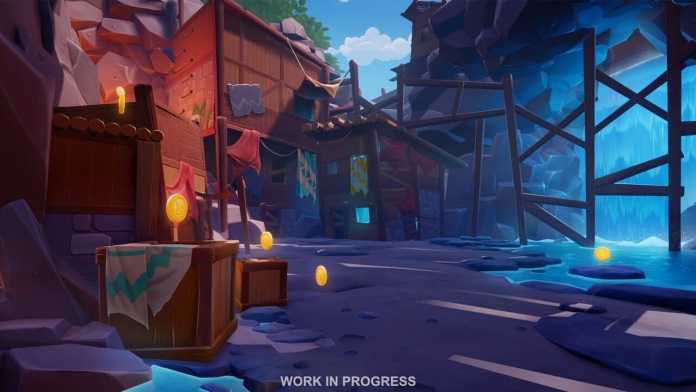
Riftbound is a 3D Plants vs. Zombies style lane defense strategy game. It is developed and published by Barrel Smash Studios. For anyone looking to fill the gap left by PvZ, Riftbound goes above and beyond in many aspects. However, it doesn’t come without its flaws.
Gameplay
Riftbound is simple, there are 5 lanes you need to defend from enemy waves. You have various elementals and spells to assist you in your fight against darkness. All your spells and elemental’s have different status effects applied to the enemy. There are also combo spells you can use if your lane fulfills the spell requirements. And believe me when I tell you that combo spells are very strong. Therefore, you will want to play accordingly and choose your arsenal before the game to maximize your power.
Enemy types are varied and require different responses to their attacks. This adds another aspect of strategizing before the level begins. The game lets you know the different enemy types faced during the level beforehand and gives you a chance to plan. I liked the enemy variability and the strategic requirement of fighting each enemy type differently.
There are several scenarios you will come across as you play through the levels. Each of these adds a bit of a twist to the level and keeps things fresh. The most enjoyable of those scenarios for me was the boss fights. There are a couple of boss fights sprinkled between the levels. These fights require you to understand the boss and how it reacts to different elementals and spells. There were many nail-biting moments when I fought the bosses, which only amplified the fun. All the bosses I fought were different from one another. This game wouldn’t have impressed me as much without its boss fights.
There is an “evolve” system. With this, your elementals can evolve into stronger and sometimes different elementals. Acquiring new stats and abilities. I really enjoyed this part of the gameplay. Deciding what I wanted my elementals to evolve depending on the level at hand was fun.
Progression
The game follows a straightforward level progress system. Once you finish a level, the next one becomes available to play. Occasionally, challenge levels become accessible. Upon completion, they reward you with new spells and elementals. Even though they didn’t include any big bosses, the challenge levels were still a tough task.
There is also a upgrade tree available. Before each level starts, you get to select the upgrades you want from the possibilities as well as the elementals and spells. After each level the upgrade tree resets, and you need to select again for the next level. I was a fan of this design simply because it allowed me to experiment much more than I normally would.
Story and Technical Side
This is the part where I am not going to be as nice towards Riftbound. The graphics are fine, they don’t look out of place or especially beautiful so take that as you may. The sound design is pretty much in the same boat as graphics. To be fair most of the technical aspects of Riftbound, from graphics to animations to sound, is just okay. It is just mediocre. And sometimes it dips even further down into below mediocre.
This pattern continues with its dialogue and story as well. Both of those aspects are formulaic. Such as; nature is good, and darkness is bad. I’m not saying that those themes can’t be molded into something great. I’m saying that they weren’t. The game’s story and dialogue never go past cliché and become something good. However, since I doubt anyone will play Riftbound for its story or dialogue, I won’t spend more time talking about it.
There are a few positives I can say about the technical side, once of them is the enemy and elemental models. They look quite good and detailed. And the next one is full controller support. I am always happy to see full controller support in any game and thankfully Riftbound has it. Kudos to the developers for implementing it.
Conclusion
Riftbound tries some new things within the lane defense genre and succeeds with most of them. As someone who isn’t a big fan of lane defense games, I enjoyed myself for the most of it. If you can look past the mediocre graphics and sound as well as stereotypical story, I can easily recommend this game to anyone who likes strategic lane defense games.
Puzzle games come in all shapes and sizes. Some are horrific and terrifying, whereas others are calm, methodical, and surreal. I don’t mind what theme I experience, as long as the puzzles are challenging. Therefore, when I was given Him and Her Collection, I was a little unsure. It appeared too cutesy and simple, but looks can, of course, be deceiving.
Developed by Williams and published by QUByte Interactive with Game Nacional, this is a logic-based puzzle title. Comprising three mind-stretching chapters, this will test your brain cells. At first glance, it appears basic and easy. However, with drip-fed mechanics and more convoluted stages, it soon becomes tougher. Consequently, this can be enjoyed by newcomers and veterans alike.
Him and Her Collection: a cute and calm puzzle game.
I’m not usually a lover of cute titles, as they can be tedious and inane. However, Him and Her Collection was different. Its sickly love story is a pivotal part of the gameplay. Though there isn’t a plot as such, you must reconcile the separated couple. For unknown reasons, the two find themselves apart at every stage. Subsequently, you must overcome obstacles in this haunting and surreal experience.
Each chapter focuses on either the male or the female protagonist. Though little changes in the gameplay, there are some unique mechanics for each. These minor twists help to keep the action fresh while preventing boredom. It would have been easy for the action to plateau, but fortunately, this never happened.
Where will the black hole come out?
Jump, twist, and avoid the traps.
So, we know the aim of the game. But how are we going to get Romeo to Juliet? By simply turning the world, jumping gaps, flipping switches, and avoiding spikes. Furthermore, there areoccasionally spiked creatures and moving platforms that you must avoid if you wish to survive. Fundamentally, Him and Her Collection is extremely easy to understand. Yet, in reality, it soon becomes a complex minefield.
Each stage demands that you observe your surroundings and adjust the puzzle accordingly. You may need to twist the world by turning the platform you are standing on. By doing this, every surface will move as well. Therefore, you will open new paths, move swinging boxes, and avoid any obstacles you face. However, sometimes, levers must be flipped to generate fresh platforms. These expand each problem and make planning a little tougher. Yet, they also added more depth, and I adored the additional challenge.
Alongside these elements, you have teleporters to use and hidden areas to find. These layers make the affected stages much more complex and tough to complete. This, in theory, is great, but it also leads to my only complaint. Sadly, and annoyingly, there is no hint system. Now, this wouldn’t normally be a bad thing, but on the hardest levels, it is much too tough. This brutal approach will alienate inexperienced gamers while frustrating them as well.
You still have plenty of work to do.
Him and Her Collection has a simple style.
Though some of the stages were complex, the art style was not. With a striking monochromatic colour palette, it is clean-cut and marvellous to look at. The simplicity continues with the straightforward character models and easy-to-identify traps. With a minimalist approach, it could have become boring to play. Luckily, the aforementioned drip-fed mechanics and the increasingly expanding stages keep things fresh.
The cute and calm theme is captured by the haunting music. With a slower pace and light sounds, the soundtrack has melancholy audio. This wonderfully matches the theme of despair and loneliness, without being too heavy. I adored the basic audio as it complements the minimalist visuals.
One of the easier puzzles you’ll tackle.
Frustrating controls.
The biggest bugbear of Him and Her Collection has to be the controls. You’ll accidentally turn a corner as you try to leap across gaps. This then flips the world, and mistakes occur. I’d have preferred an option where you chose to flip each surface. This would have removed the problem without ruining the flow of the action. As it is, it doesn’t ruin the game, it’s simply frustrating.
The developers have tried to improve longevity with two difficulty settings. This is normally applauded, but in this case, it’s just bizarre. As far as I can tell, there is no difference in the gameplay or the puzzles. Consequently, it mattered not which mode you tackled. This was disappointing, as it was pointless and unnecessary. Where it should have been improved were some collectables or a scoring system. Both options would have made it harder while adding some more depth.
Him and Her Collection is a great puzzle game.
Despite its occasional shortcomings, Him and Her Collection is a great puzzle title. With some testing stages and complex elements, it will test you. Furthermore, I adored the theme and the minimalistic aesthetics. It is for these reasons that I recommend you to buy it here! Can you overcome the obstacles, twist the world, and reconcile the couple? 3 chapters and plenty of puzzles stand between you and success.
The world of gaming is made up of many different types of people, all with varying interests and skill levels, so it’s no wonder that opinions differ greatly about the industry. Some people dedicate their entire lives to video games, and occasionally those people can be quite critical of the more casual fans who don’t share their level of reflexes or overall knowledge of the gaming industry. At the same time, some of those casual fans might be critical of those who easily sink around 10 hours or more each day playing video games. Usually, though, these criticisms are reserved for the minority on both sides; however, being such a popular entertainment industry, there are countless more criticisms that gamers have, and those can be shared by both “hardcore” and casual fans alike. One of these criticisms has been that of mobile gaming. But could that critical perception of mobile games be changing?
What Is Mobile Gaming? First of all, let’s take a look at exactly what classifies something as a mobile game. The simple act of being able to play a game wherever you are is generally not what someone would mean by a mobile game. After all, you can easily load up your Steam account on your laptop and play just about any game on the market, whether it’s a competitive MOBA or a battle royale game. However, that doesn’t mean those games are automatically classed as mobile games. Similarly, many people wouldn’t class games designed for handheld consoles to be classed as mobile games either, even though they function in a similar way. Mobile games are simply classified based on the fact that they are designed for and played on either iOS or Android mobile devices. There are plenty of new mobile games being released regularly, all varying in genre and style, just like with other gaming platforms.
Where Did Mobile Gaming Start? If you lived through the nineties, there’s a strong possibility that you had a mobile phone with a few games on it. The first-ever mobile phone game was a variant of Tetris, and these blocky, pixelated games continued to be developed for newer devices. Well-known games such as Snake on the Nokia 3310, as well as different puzzle games. Over the years, developers created new variations of these old favorites as well as the occasional innovative new game, yet it was never something that truly gripped the gaming community, and they simply served as gimmicks to pass the time. If someone wanted to play video games, the chances are they were going to play on a dedicated console such as the Nintendo 64 or the Game Boy. It wasn’t until the iPhone was invented in 2007 that mobile gaming started to become notable.
Online Browser Gaming Certain games that can be played via a browser and therefore can be played using a mobile device wherever you are, have always been popular and serve as a great way to pass the time. Whether someone would consider those to fall into the category of “gaming” is another matter which people regularly debate. However, puzzle games such as the worldwide phenomenon that is the New York Times’ Wordle, and the many variations that have been created since, are played in absolute abundance across the planet. As well as puzzle games, you have the ever-popular online casino sites, which offer the opportunity for people to enjoy fun table games like poker with other players and online slot games. To see just how many of these games there are and compare welcome bonuses, you can visit the casino comparison site, onlinecasinos.co.uk.
The Criticisms Of Mobile Games The general criticism of mobile games is that they are simply not as gripping or feature-rich as games that are created for a specific gaming console. Most game developers are usually focused on making video games for the next Nintendo or PlayStation console. As well as this, the technical restrictions smartphones have had to deal with compared to handheld gaming consoles over the past few decades mean that many mobile games feel outdated when played. These technical restrictions often make people turn their noses up at these games. At the end of the day, why would we choose to play something that feels outdated when we have quality AAA titles available on our console or PC? This overall lack of interest from gamers also caused some developers to search for new ways to make extra profits from those who enjoy mobile games. In-app purchases started to become synonymous with any mobile game, while in some ways hurt the reputation of this industry even more as it just became a way for some developers to churn out sub-par games and apps in an attempt to make some quick cash.
AAA Titles For Mobile As technology advances, we are now seeing many mobile games created that are visually appealing and intuitive to play. This has led to some well-renowned franchise games being created for iOS and Android devices in recent years, including Call of Duty, Apex Legends, and Minecraft, to name just a few. As well as hardware advancements, we also have much better connectivity today, especially with the advent of 5G and superfast Wi-Fi connections, providing high levels of uninterrupted data transfer. This has made competitive games a viable option for mobiles too. For example, shooters like PUBG Mobile have gained huge popularity, surpassing the player numbers found on the original PC version. Although, it’s generally agreed that the mobile version of the game is still considered a more casual option than the PC version due to aim-assistance and other quality of life features in the game.
The Future Of Mobile Games With the increase in popularity of these games, combined with the possibility for developers to make a lot of money through in-app purchases, we are only going to see more games being developed for this medium. The future of mobile gaming does look quite bright, and there are no signs of the industry slowing down anytime soon, similar to the wider gaming industry. While they will never be for everyone, it’s fair to say that the mobile gaming industry, with the help of advancements in tech, is becoming much more respected by gamers than it has been in the past and is definitely worth keeping an eye on in the years to come.
When someone mentions the wild west, most would think of cowboys and outlaws. The true beauty of the west is its rich wildlife. This includes the glorious bald eagle, strong buffalo, majestic wild stallion, cunning timber wolves, and the deadly cougar of the Americas. These are the heroes of Hacksaw Gaming’s new slot game Buffalo Stack’n’Sync now available at online casinos.
Basic features
Buffalo Stack’n’Sync is a simple slot game with five reels and four rows. It has a high volatility with payouts ranging from x0.1 as the lowest with three of a kind 10 symbol to x20 for five of a kind buffalo or cactus symbol. The game has 10 static paylines including four straight rows and six zigzag patterns between two adjacent rows.
The minimum payout for Buffalo Stack’n’Sync game is x0.1 while the highest is x100. Return to player (RTP) rate is up to 96.36%, making it fall into the standard range among slot games.
Special features
Buffalo Stack’n’Sync has wild and scatter symbols like other slot games but it comes with its own unique feature. Instead of having just one special mode, Hacksaw Gaming gave it three. Specifically named Stack’n’Sync inspired by its name, Stampede Reels, and Stampede Spins. Each one is triggered by a unique combination as follows:
Stack’n’Sync
The titular feature is the game’s bread and butter. You just need to have at least one S’N’S symbol appearing on any real to have a randomly assigned symbol to take over that column. It is called the ‘stampede reel’ and this free feature keeps running for as long as there is one S’N’S symbol appearing or at least until the grid gets taken over completely.
This happens frequently during a free spin, rewarding you with high rewards almost instantaneously. Each S’N’S symbol gives you a free spin and it doesn’t take away a new ante or free spin to keep going.
Free spins
You can win 10 free spins after landing 3 flaming scatter symbols represented by a horse’s galloping hooves. This triggers the scatter mode where the S’N’S can appear periodically but it’s also possible that it doesn’t appear at all. Thus, the free spin and stampede reels are not necessarily dependent on each other but they make for a great combo.
Stampede Spins
You can get four scatter symbols instead of three which still grants only 10 free spins. However, this makes the grid filled with buffalo symbols only. Gaps between buffaloes are filled with skulls and only five of a kind count as wins. However, there will be occasional S symbols that randomly stack 5 to 60 more buffalos on the reel it appeared in. This ensures getting more frequent five of a kind each turn.
Final verdict
Buffalo Stack’n’Sync game has a simple gameplay that can lead directly to a series of wins amounting to x10,000 payout from a single spin. All you have to do is hit the free spin mode or get an S’N’S symbol to start the chain effect. It’s currently one of the most rewarding slot games you can play using safe low roller bets but using large antes can be even more rewarding.
The sun is life. Without it, there is none. Sure there are many other factors that dictate whether or not life thrives. But the Sun is the OG, the giver of warmth, and the source of our beloved vitamin D. That’s why I’m thankful it’ll still be around for a couple billion more years.
However, in Imp of the Sun. This vital celestial body is in danger. Its power has been stolen and the moon has blocked its light from reaching the inhabitants of Earth. And so, trapped behind an eternal eclipse, the Sun sends forth one chosen champion. One last hail mary pass that will decide the fate of all life. An imp with no name, and one purpose: To find the four keepers of the sun’s power, and restore light to the world.
It’s a decent enough premise, however, it’s also an idea we’ve seen time and time again. It’s the classic, “retrieve an ancient power to stop the bad guys” plot. However, just because it’s something we’ve seen before doesn’t mean it’s bad.
The plot it lays out is solid, it works and gives you just enough motivation before heading out and kicking some butt. Plus if you’re keen on more lore there are collectable items strewn throughout areas that add some more detail to the world. There are also many Quipu scattered around the environment. These are ancient Andean stringed recording devices that a wise woman will interpret for you. She’ll regale you with the events leading up to this point of eclipse for each quipu you deliver. This is where the plot began to take some more shape and set itself apart from the crowd. These provide some explanation for the state of things, and also provide depth to the four keepers you’ll be fighting.
A Surprise To Be Sure, But a Welcome One
Imp of the Sun’s gameplay took me by surprise. Don’t get me wrong, I wasn’t expecting it to be bad. But I definitely didn’t expect to enjoy my time with it as much as I did. It’s an action platformer first and foremost, but there’s also some light puzzling and Metroidvania-styled exploration and level design to go with it.
It’s non-linear in design and as soon as you complete the tutorial area you can go in any direction and tackle any of the four main areas. As you progress in each area you’ll come across useful abilities that help traversal. These are the classic wall jump, a dash, a blaze form that lights up dark areas, and a smoke form which can pass through certain objects. These added some great fluidity to the platforming, especially in moments when you flow from one ability to the next in order to reach an area. It made for some pretty exhilarating platforming sections.
Gaining these abilities is also where the Metroidvania elements come into play. When you enter an area there’ll be some blocked paths, and exploring an alternate route will bag you a new ability to overcome the obstacle. However, that was often where the Metroidvania aspect ended.
Where There’s a Skill, There’s a Way
The skills you pick up aren’t always absolutely necessary in order to progress in areas due to the non-linear design of the title. They are simply necessary for the area you’re currently in. For example in the underworld area, things were dark as can be. The only sources of light were torches and my own body. On top of that, there were also enemies I couldn’t see or touch, making progress near impossible. Explore a bit though, and you find the blaze form. Now you can both light up the dark, and spot invisible enemies.
Without the blaze form, it would have been a nightmare to conquer the underworld. However, it wasn’t really that necessary in any other area. There were definitely moments it came in handy though. As with all abilities, they can definitely make exploration easier, but they didn’t alter the routes you take or open up the new areas that they perhaps could have.
Platforming also had another layer of depth by way of the puzzles. These mostly come in two parts. One is to make use of the area’s required ability to figure out the path forward. The other is good old-fashioned switch flipping to move platforms for a limited time. These puzzles were always simple, and not all that difficult. But they were also always fun. Some basic problem solving and a little timing and you’re on your way. I may not have found much of a challenge in them, but each and every one was well-designed, adding a little extra something to traversal.
The Power of the Sun
Combat is what you’ll be spending the other half of your time engaging in. It’s a straightforward setup. You’ve got attacks in each direction both on the ground and in the air. Additionally your abilities often have some combat capabilities you can make use of. For example, the smoke form makes you invincible for as long as it’s active, and the blaze form adds some firepower to your attacks. Each of these use up your stamina/mana though, referred to as inner fire.
Alongside your abilities, you can also collect upgrades to your ground and air combos, adding extra hits. But more importantly, you can acquire extra powerful moves after defeating each keeper. From a fireball, to freezing enemies in place. These all added great variety to combat. But they also made things awfully easy.
The imp is crazy overpowered compared to regular enemies and I rarely ever had much of an issue in fights. In fact, they’d be over in a matter of seconds when using combos and abilities together. I’d even argue combat was too easy. Even in the boss fights against the keepers, save for one occasion.
The desert boss, Tui, was such an unexpectedly challenging fight that it felt like it came out of nowhere. After wiping the floor with everyone, even another boss, this guy absolutely wrecked me almost 15 times before I beat him. He was brutal, rarely ever giving me the chance to heal before he came rushing at me. Not once before, or after did any fight in this game come close to that. Not even the final boss, which took a couple of tries. It was a little strange how tough that boss fight was when compared to every other battle. Honestly, though, I’d almost prefer that, to how easy the rest of the game felt at times.
Take It All In
Yours is an epic journey into the unknown. Taking you from the darkest depths of the underworld, to steep cliffed mountaintops. And every leg of that journey was gorgeous. Imp of the Sun is beautifully hand-drawn, which adds so much character and heart to environments. The Peruvian art style is filled with lush backgrounds, and gold-tinged accents that I simply loved looking at.
Enemies may be a bit unbalanced, and puzzle platforming may be a bit on the easy side. However, Imp of the Sun might just take you by surprise they way it did for me. This title is a great example of the whole being greater than the sum of its parts.
When I think of 90s gaming, my thoughts lean towards the classic 3D platforming experiences. Mario 64, Croc, Spyro, and Crash Bandicoot, leap out. However, this genre isn’t as popular nowadays, and that is a shame. Yes, there is still a fanbase that will jump at any new titles, but these are few and far between. Therefore, when Kao the Kangaroo was released, it created a flurry of excitement. Gamers couldn’t wait to experience some classic 90s action.
Developed and published by Tate Multimedia, this is a vivid and amusing platform title. This is the 4th instalment in a franchise that has spanned 20+ years. Consequently, you’d expect these industry-savvy developers to produce a seamless and captivating game. It utilises all the familiar platforming tropes and has a cast of interesting characters. Furthermore, it is simple enough for younger gamers and veteran players to enjoy.
The level design is fantastic.
Kao the Kangaroo lacks originality.
With so many games being churned out, it is tough to be original. Accordingly, Kao the Kangaroo falls foul of this trap because of its well-trodden mechanics. Sadly, much of the gameplay feels dated and tired. Yet, its combination of fast-paced action, collectables, and new elements just about keep you going. Subsequently, older gamers will want to play this casually to keep things fresh. Younger players, however, will enjoy the colourful levels, special abilities, and everything in between.
The story revolves around the Australian hero, Kao the Kangaroo. His sister is missing, and his dad has mysteriously disappeared, but one night, Kao has a premonition. His sister guides him to his father’s magical boxing gloves, and this is where the journey begins. Armed only with the cursed gloves and an array of special powers, Kao must find his sister, battle “fighting masters”, and destroy the Eternal Warrior.
Such a beautiful and interesting world to look at.
It didn’t wow me.
I’m not a massive fan of this genre, yet I loved Mario 64 and Crash Bandicoot. Disappointingly, Kao the Kangaroo falls short of these titles. With a lack of oomph and flat gameplay, I was desperate for more. Even when new elements were added, they lacked energy and were bland. This was a shame, as its vivid world, interesting ideas, and eclectic characters had the potential to be brilliant.
With basic platforming mechanics and a few unique moments, it is reassuringly familiar. But this is its downfall. It relies too heavily on its foundations and doesn’t evolve enough. Yes, you play with some interesting combat combos, and the use of elemental power to solve problems was intriguing, but it wasn’t enough.
The key mechanic is Kao’s gloves. These cursed mitts can store up to 3 fire, electricity, or ice power elements. They are then used to solve problems and open new paths. However, the lack of difficulty and the easy-to-solve problems undermine their use. Now, I don’t want a brutally tough game, but I don’t want it handed to me on a plate either. Tate Multimedia got the balance horribly wrong, and this was underwhelming.
Kao the Kangaroo looks amazing.
Though the gameplay is lacking, the graphics are fantastic. The sharp and bright imagery makes up for the game’s many shortcomings. What’s more, the variety of locations and interesting characters makes this game stand out. Whether it was a lava-filled pit, an icy hellhole, or a lush jungle, it looked amazing. Consequently, this made the poor gameplay that bit more disappointing.
Another interesting layer was the fun audio. The upbeat music and crazy sound effects create a jovial atmosphere. Furthermore, the acting is amusing even if the dialogue was a little dated. I was impressed by the visuals and audio, however, the rest of it taints the excellent presentation.
So many coins to collect.
Responsive and simply to play.
Like many of its peers, Kao the Kangaroo is exceptionally easy to play. Thanks to its responsive controls and simple layout, you’ll have it mastered immediately. This is helped further by the quick but thorough tutorial. This explains the fundamentals without overcomplicating the matter.
Platform games are renowned for their longevity and replay value. This one oozes both thanks to its collectables, scoring system, achievement list, and secret worlds. Then, there are the runes that open up new areas and progress the story. This element was well-considered and kept you returning for more.
Kao the Kangaroo wasn’t for me.
I know some of you will adore Kao the Kangaroo. Sadly, though, it wasn’t for me. It played on too many genre stereotypes and didn’t evolve enough for my liking. Moreover, its lack of development stagnates the gameplay, and it quickly becomes tiresome. I won’t recommend you play it, but more information can be found here! Undertake a colourful adventure through some interesting landscapes. Learn new abilities, unlock new paths, and defeat the Eternal Warrior.
I don’t hide my love of retro games. But, even I have a limit! In 2014, a Pac-Man compilation was released that made me sigh. Now, there is nothing wrong with the games, per se. However, with no evolution, the action becomes stale very quickly. Consequently, when Pac-Man Museum + landed on my desk, my eyes rolled. Now, I shouldn’t be so dismissive, but I couldn’t help it. Before it was installed, I knew exactly what to expect, and let’s just say, my expectations were met. Yet, I will address it professionally and dissect its pros and cons.
Developed by Now Production and published by Bandai Namco Entertainment, this is a retro compilation of arcade titles. It captures the simple and repetitive nature of the gameplay while remaining competitive and fun. What’s more, like its predecessor, this packs in 14 Pac-Man games from the 80s to the modern era. So, will this ball-loving, fruit-munching, ghost-chasing machine still be relevant? I doubt it, but nostalgia is a strong force!
Welcome to the Pac-Man arcade.
Pac-Man Museum + is familiar with a slight twist.
Though my disdain is obvious, I found plenty to enjoy. The 14 titles span an eclectic range of arcade, console, and handheld games. Subsequently, there is plenty of variety and some lesser-known experiences. You’ll play Pac-man from 1980 up to Pac-Man 256 from 2016. The games in between vary in style and popularity. I admit plenty of these odd titles have passed me by, but each of them was familiar. No matter the aim or genre, the core concept is the same. You must collect the yellow balls, eat fruit, and kill ghosts. Therefore, it is wonderfully retro and slightly kooky.
What I adored was the twist on the action. The game is set within a virtual arcade and every title is a playable machine. Alongside this, you can unlock statues and add decorations to your surroundings. This interesting approach adds some depth to an otherwise well-trodden experience.
Fancy a go on Pac-Man 256?
Playing games, earning coins, and completing missions.
Picking your favourite title from the large list shouldn’t be difficult. However, many of them are locked and inaccessible until you complete certain missions. This could potentially frustrate many gamers and put people off. The reason I say this is that some of the choices are a little lame. Consequently, being forced to play something you’re not interested in is tiresome.
Luckily, though, most of the quests are easy to achieve and unlocking your favourite shouldn’t take too long. What’s more, if you successfully complete a mission, you’ll be awarded coins to spend on each game and many decorations. This was an element I enjoyed, as it gave me something to focus on. Without it, I would have become bored very quickly.
Pac-Man Museum + retains its charm.
Pac-Man Museum + does a great job of retaining its original charm. Furthermore, its central hub adds a unique element and some creative flair. There is also a nice modern touch with each reimagined character. Alongside this, the use of emulators ensures that the gameplay is smooth and trouble-free.
The authenticity continues with the original soundtrack. The upbeat and punchy music will bring a wry smile to your face. Moreover, the shrill noises and loud sounds capture nostalgic moments.
The glory of Pac-Man World Championship 357.
The controls should have been better.
When you are being chased by ghosts, leaping chasms, or evading capture, you want accurate controls. Sadly, Pac-Man Museum + fails abysmally! The controls are clunky, cumbersome, and annoying. Accordingly, you’ll die, scream, and die some more. It’ll make you want to rip your hair out and stop playing. It’s a shame, as it taints a classic experience.
In theory, there is plenty of longevity and replay value if you can stomach the shortcomings. Having played it in short bursts, I can honestly say that was enough. However, if you love the franchise, you’ll lap up its eclectic ways and strange titles.
Pac-Man Museum + wasn’t for me.
Ripping apart such an iconic game is a horrendous feeling. But, sadly, it has had its day in the sun. Subsequently, it should have stayed in the archives. It is with a heavy heart that I can’t recommend you to try it. Though, it is free on Game Pass if you fancy a go. Pac-Man Museum + should have been great, but disappointingly, it falls way short.
Kerbal Space Program Enhanced Edition is a fun game with a hideous port to the PS5 that should make you look elsewhere.
Initially released as a demo in 2011, a beta version followed in 2014 before being officially released in 2015, the space flight simulator is now old news. Any readers who have spent some time on gaming-related websites or the likes of Reddit will be long familiar with it.
Construct a suitable spaceship that is able to launch, carry out contracts to earn funds and avoid failure upon launching before enjoying the missions and tasks post-launch.
Honestly it is the kind of game you’ll know if you like or not by looking at the briefest video online. It’s part space-flight simulator, mixed with elements of management sim alongside some quirky presentation. It’s a brief pitch, but an honest one as the game delivers on it.
With nearly four years between its initial demo and its official release it is no surprise this became such a hit in the end, it targets enough bases and is fun to play. There is an enormous amount of content on offer here, this game will keep you occupied for, not hours but quite comfortably, days.
All night long: this game will keep you occupied for a long time
Well, at least it was fun to play, once I’d reordered my entire set up just to play this game. Now, for context before I really dive into this: I sit between three to four metres away from my 42-inch TV while playing games, I sit against the backboard of my bed, I wear glasses but they’re an up to date subscription.
Why is all of this relevant?
Because I couldn’t read the text. My whole setup is about a year old now, and this is the only game to have prompted this issue. There aren’t any options in the game to change the text size or remotely fix this either, and it’s a text-heavy experience so the zoom function on the console was a necessity.
For context: it’s under accessibility options on the settings menu, but when doing this you literally zoom the screen in, which cuts off another part of the screen so it isn’t even a viable solution.
Distant problems: a kerbal takes on a mission on another planet
There is no real fix here other than to change your setup for playing video games and it’s a very text-heavy game so personally yes, this was a dealbreaker. The biggest thing when considering whether to buy this game has to be to honestly examine your own setup and note whether it will be worth changing to try and find a comfortable alternative.
I was actually pretty stunned to see a game that has this much positive notoriety fall down on such a basic step.
Trying to wrap up this game review is an exercise in driving myself insane. It is a fun game, with a wonderfully quirky approach and it feels like a cocktail of games that my younger self would not have thought possible, but then it was a chore to play.
This should have been a delightful game that I was relishing the chance to review, but it quickly completely fell apart. If I could get past the text being too small then this would very obviously be a great game, but I can’t.
Make no mistake, the core game here is a good one, it is a clearly well-refined game that delivers on hours of content. In theory, this is an enjoyable game but this PS5 version falls at the first hurdle, which hundreds of games over the past year haven’t, it just isn’t forgivable.
That was quick! Just blink and a few years just flew right by, especially when you play the game Space Ribbon. The year is 2132 and your main job is to choose one of your favorite classic scrap cars, and reconstruct it to be a super revved-up racing car. As you fly through each racing track either a panda or tiger is spewing out of its mouth, against plenty of AI or friend racers. The goal to keep in mind is to get right into the mouth of either animal and be there first. So do you have what it takes to race in space through a twisting and always-changing race track that brings plenty of challenges, not only including the other riders?
🏎 How Was The Game 🏎
In the beginning, I enjoyed the idea of taking an old vehicle and having the chance to upgrade it, and even better, never driving on the same track. The twists and turns really made it a bit more interesting and challenging. It does stink that you are limited to just a few vehicle options to choose from, but it gives you a goal to work towards new vehicles and most of all, upgrades and even difficult levels. So with some time, patience, and levels to unlock, there will always be a chance to gain some even nicer gear and vehicles to drive.
Now even if it looks a bit short with the levels, they are still quite interesting. Especially, as nothing is the same racing track. You’ll have the freedom to play two different modes, like the free play mode or campaign mode. Each has so many different competitive rivals at each game, some that may surpass you. The further you move on the more difficult the other players become. One thing that may help is that right off at the menu, you can adjust the game to suit you, the player. Therefore, if you play the easy version it may be a bit better as a start off before going full out hard. That way you’ll get an idea of the game and win a few races easier. On the other hand, if you love a challenge and racing games, you can take the step right up to the hardest choice.
Now for the fun of each level, an original way to make a track as you race. The levels are all animals spewing out the tracks and are creating an original racing track to play on. Who knew a panda bear or tiger head could create a track for you to race on. Well, it’s more like a flying head-style ship that is letting loose these tracks. Regardless, each level is going to bring crazy twists and turns which makes it a bit more of a surprise to know what will be coming up ahead.
I did like that the game was set in a space scene and the unique way the tracks are made. Even the music has an upbeat and perfect sound for the game. Honestly, the graphics look pretty good. My favorite part is that the ride is smoother and it’s easy to move on the track. It isn’t too many buttons to learn or press. Everything is easy and the beat in the music is quite compelling, without being a distraction. The ending target is fun when you hit it 1st place and go flying into space. Plus, the bonus gear for winning is always a great thing as well.
🏎 Final Thoughts 🏎
Space Ribbon is full of exciting levels to race through. The challenge and design of the game, including the graphics and sounds, are absolutely amazing. It feels like an excellent racing game. The only thing is that it can get difficult to keep up with the animal heads spewing out difficult tracks. I must admit, I did fail a few times, but that just made me want to get back to the start line and begin again.
Most of the time, your mind is so onto every other racer, but racing to win isn’t the only goal. As it’s entering the mouth of the animal to win the game. I honestly would say this isn’t at all a bad game. It’s a racing game, unlike any other with great music. So if you want to play a new space-themed racing game, that is not like any other then this is one you should try!
A zombie apocalypse and mankind’s downfall go hand in hand. Subsequently, many films, books, and games use this theme. Therefore, there is a distinct lack of originality and things are often clichéd. Thankfully, for the most part, Hillbilly Doomsday bucks this trend. Yes, it still leans upon the usual tropes, but this wasn’t so bad.
Developed by Uncle Frost Team and published by Sometimes You, this is a side-scrolling platform adventure. Thanks to its dark theme and crazy plot, you experience some gory scenes. What’s more, there are oodles of guns, masses of enemies, and plenty of secrets to find. Luckily, its simple ways are addictive, and I loved the mindless gameplay.
Vivid pixelated graphics enhance the retro feel.
Hillbilly Doomsday is disgustingly gory.
Whenever zombies are mentioned, I expect to see claret. However, I was surprised by how much blood there was. Every enemy, small and large, sprays litres of blood everywhere. Therefore, it is gruesome, gross, and probably not suitable for younger players. Moreover, your enemies are creepy and your arsenal of weapons kicks ass. Accordingly, no matter how many foes you face, you’ll always have a fighting chance.
The plot for Hillbilly Doomsdayis just stupid. Effectively, the world is doomed, and a hero needs to step forward. Fortunately, Uncle Billy from Rottenwill is available, and he has no fear. Armed with a spade and a pistol, he begins his journey into the unknown. He must cross dangerous terrains, mow down his foes, beat bosses, and collect coins. The further he progresses, the bigger the monster become, but this matters not. If he can find the root cause of the mayhem, he’ll be a hero and save the day.
Sometimes a spade will have to do.
Just keep shooting!
Though the action is fast and hectic, there isn’t much to it. The developers have focused on creating a fun and easy-ish title. In short, you must leap pits, collect coins and diamonds, kill enemies, blow up explosives, and more. Therefore, there really is nothing to it.
Now, it seems like it could lack depth, but fortunately, it has some tricks up its sleeve. Hillbilly Doomsday has an array of equipment upgrades and new weapons to purchase. Whatever you choose, it gives you a tactical advantage going forward. Consequently, this adjusts the way you approach each stage. However, this isn’t perfect, as every weapon is overpowered. Therefore, your enemies are slain in moments.
This minor issue undermines the difficulty, as it is far too easy. By simply upgrading your guns and continuously shooting, you always get the job done. Subsequently, I wish it was harder with a tougher learning curve.
Hillbilly Doomsday is perfectly pixelated.
Side-scrolling platformers and pixel artwork go beautifully together. Hillbilly Doomsday is the perfect example of this thanks to its dated look. I adored the cute and disgusting sprites, the varied backdrops, and the gaudy colour scheme. What’s more, the eerie scenery and rivers of blood are gruesome and undeniably disgusting.
The audio enhances the excellent aesthetics. Its heavy but fun tunes are full of energy and angst. Alongside this, the sound effects are loud and wonderfully zany.
Kill that slimy boss.
Tight controls and addictive action.
Poor controls can tarnish your whole experience. Moreover, they can ruin a game and make it unplayable. Luckily, Hillbilly Doomsday has tight controls and a considered layout. Further to this, the UI is simple and easy to understand and keeps the screen clutter-free.
With an array of weapons to unlock, upgrades to purchase, and treasure to find, this has longevity. Alongside this, each weapon alters your approach, and this increases replay value. There is also a moderate achievement list that’ll keep you playing.
Hillbilly Doomsday got it just right.
Simplicity isn’t such a bad thing. In fact, Hillbilly Doomsday got its approach, just about right. Yes, a choice of difficulty setting would have improved it, but that’s one small drawback. Mostly, it is mindless fun that’ll entertain you for hours. I enjoyed it, and I recommend you to buy it here! Zombies, a hero, and loads of weapons. What could go wrong?
Is Metal Max Xeno Reborn a remake, a remaster, or a re-release? Well, let’s just say one of life’s mysteries goes unresolved for another day, but this turn-based JRPG is – like the name suggests – ‘reborn’ like a director’s cut of a movie that manages to create a completely different experience from the same source material.
Originally a PS4 and PS Vita release, the 15th entry in the post-apocalyptic vehicle-combat Metal Max series, that has gone relatively under the radar here in the west, but don’t let that fool you, this low-budget re-thingamajig is one of the most addictive JRPGs I’ve ever played and is tremendous fun.
The biggest change from the original is the complete overhaul and massive improvement of its battle system, which now plays more like a hybrid action game on a ‘live’ map, with a turn-based structure triggering only when discovered by an enemy, allowing for you to avoid them entirely or for countless other enemies to join the fight. The transition from adventure and battle modes is also seamless, keeping you in the active world throughout, making the game feel more alive and autonomous.
They found me, I found them, and pleasantries were exchanged.
Even if a battle starts after being detected, you can still exit the attack mode at the touch of a button and attempt to escape the enemy’s range, while another can activate an auto-fire mode which gives you the chance of victory even without hanging around.
I can’t think of any other turn-based games that work this way, but I’d love to see more adopt it as it works fantastically, only getting better as your weaponry expands. Interestingly though, it couldn’t be more of a departure from the original, which in comparison feels like a retro RPG with wooden and barebones adventuring married with a classic turn-based system, and the transition between the two felt awkward and forced.
While the action in Reborn mostly takes place in vehicles – including tanks, a buggy, a bus, and a spider tank – the game also brilliantly combines the action with the ability to attack on foot, which is where engineer, medic, and assault abilities come in handy.
The well-designed enemies are both numerous and amusing, having you guessing what’s around the next corner.
This is only half of the overall gameplay loop though, as you can have almost as much fun with an addictively deep and creative tank customization system that rewards constant tinkering, but also requires it, to challenge the progressively harder enemies. If you try to brute force your way through the game without taking the time to pick up items and develop your own weapons you will struggle to progress, but if you become adept at creating builds that focus on the best available weapons and enemy weaknesses, you’ll likely have little trouble carving through the field.
With a choice of 5 weapon slots, an engine slot and 5 trait chips to enhance your tank, there’s a lot you can play with.
Buying, creating, and upgrading your large selection of weapons is great, but one of the best elements of tank customization is deciding on your tank’s setup and how to divide your weapons between your vehicles.
You can’t, for example, equip all of the most powerful – and heavy – weapons to one vehicle, as the closer you get to your weight capacity limit, the lower the tank’s health becomes. Selecting a lighter weapon of the 3 types (machine gun, cannon, and missile) or reducing the weight of your individual weapons can also help, but that lowers your overall attacking power and makes them more susceptible to damage during battle, so striking a balance is key to get the most out of your tanks. It might seem tedious at first glance, but the slickly-designed menus make it an easy process that you can easily spend hours playing around in.
I personally found the normal mode a little too easy, but with the game providing 3 extra unlockable difficulty levels as well as a survival mode (which removes all auto-healing from the game), there is something for everyone.
I don’t know where you stand on the need to platinum your games, dear reader, but so simple and efficient is the gameplay loop in Reborn that even my long-lost desire for such achievements was rekindled at the thought of more explosive action and tinkering with more tank setups.
Each vehicle looks and handles very differently, with each change of weapons giving your tank a new design.
Story-wise, the post-apocalyptic narrative is about as basic as it gets – humanity is on the brink due to an overzealous and unappreciative AI mind who created behemoth machine monsters, called SoNs, that you need to defeat.
Initially a lone wolf, you soon discover humanity’s last beacon of hope – a base that can recover and replenish resources – and explore the world finding survivors and abandoned vehicles to add to your arsenal. The bosses responsible for the hell on earth all have bounties on their heads and drop special parts you can use to create epic weapons to destroy the next one.
If Reborn had a priority list, the story would be near the bottom as it’s actually a butchered version of the original, cutting out entire plot points, characters, animated cutscenes, and ultimately leaving the story to play out like a mystery that gets filled in a piecemeal manner through character interactions as they delve into their pasts.
The world itself is explored linearly and is largely barren except for enemies, but interestingly, this sparseness never really becomes an issue as the gameplay loop of battling, fast traveling back to base to auto-heal and upgrading your vehicles paints an effective picture of survival in a harsh world where everything is hard to come by – apart from the auto-healing which we’ll chalk down to modern gaming convenience.
Colorful explosions, cool-looking bosses contrast well with bleak sand-covered maps.
It should be said that the mysterious atmosphere exuded by the soundtrack, great enemy variety, and environmental design makes you want to learn more about the world through the relationships with the available characters (that develop as you level them up), but even those unaware of the original would sense that something was left on the cutting room floor here. This slight frustration is then compounded by quirky joke endings for each NPC that shows your bedroom door and cuts to credits, which is either amusing fan service or a sign of a neglected story.
Not content with just a gameplay and story revamp, the visual design has also gotten an overhaul, taking the original’s cartoonish style and taking a more photo-realistic filter to the output as well as vastly improving the menus. With all the changes, it makes you wonder if the original was made for the PS Vita and then scaled up for the PS4 later on.
If you are not a fan of the great tank-related gameplay, there’s not much else to convince the player to jump into Reborn, but there is a jukebox (with some kickass tracks) and a bar that you can drink at during pitstops from the adventuring.
Reborn, then, is perhaps how the original was supposed to be, but despite the chance to add to the game and risk feature bloat, the game does the exact opposite, knowing exactly what it takes for a low-budget title to succeed and becoming more efficient in its strengths. The developer deserves a lot of credit for this restraint as the inward focus provides a great many immersive details that give the world and its characters more context.
A day/night cycle, for example, conveys and contrasts natural beauty against the backdrop of the desolate world filled with suffering. The sun rising and setting while stretching shadows across the map might sound like a small detail, but the imagery of a new day starting to a tonally perfect soundtrack as cannons fire and war rages is not only impressive but had me thinking of our impermanence in the world.
My favorite minor detail, though, has to be when your teammates hitch a ride atop of your vehicle (after their own has been totaled), which for safety reasons probably wouldn’t happen in real life, but the thought process makes sense and it’s an entirely unnecessary inclusion that brings you closer to the action.
I’d be remiss if I forgot to mention the dog that can join your team as an assist character – with a gun strapped to its back. You can stroke and feed him at base, and if you spend a ton of upgrade points for him you can also unlock a belly rub – not kidding. Furthermore, if you want to play a spin-off from the same developer you can always buy ‘Metal Dogs’, which has solely dog protagonists – also not kidding.
Despite all the awesomeness, there is some inevitable low-budget jank, with character models lacking the quality in detail that the vehicles and environment are both afforded and the occasional slightly jagged running animation that comes with them, but they aren’t a deal-breaker by any means. Perhaps the worst offender though is the inconsistent translation, which ranges from non-existent (with some enemy and item descriptions still in Japanese) to slightly confusing.
With its tremendous take on the turn-based formula and creative vehicle/weapon customization, Reborn has one of the simplest and most addictive gameplay loops I’ve ever experienced, even outperforming its larger JRPG cousins in that regard. Sadly, with the cancellation of Reborn’s sequel being announced on the same day as its western release, it rings even truer now that Reborn is a giant killer from start to finish, going out perhaps not as intended, but in a blaze of glory.
The ocean is an awe-inspiring place. It is incredibly powerful, calm, beautiful, and mysterious. We have yet to discover every secret it holds, and I don’t believe we ever will. Therefore, I understand why it lures so many people to explore it. Whether it is sailors, swimmers, surfers, or divers, they all love the dangerous and alluring nature of the great blue. I adore the sea, and I love anything that uses it at its core. Therefore, when I saw Deep Diving Adventures, I knew I had to play it.
Developed and published by Jujubee, this is an underwater adventure title. Played exclusively from the first-person point of view, you quickly become immersed in the gameplay. Alongside this are the realistic sound effects, a whole plethora of sea creatures to witness, and some beautiful yet haunting environments. In short, it will appeal to many gamers.
I’m not sure a knife will defeat this shark.
Deep Diving Adventures is realistic, in-depth, and touching.
The blurb for Deep Diving Adventures claims that this is “one of the most immersive diving simulators to date”. Now, this is a big claim, especially as I have played and loved Beyond Blue. Therefore, I wasn’t hopeful that they’d live up to their word. However, I was surprised by the ultra-realistic movement, the environment, the detail on the animals, and the sense of fear. What’s more, the missions are educational, informative, and touching.
The story is very loose and plays second fiddle to every mission you undertake. Effectively, you are a rookie diver who is hired to find treasure and clean each location. As you explore, you earn new equipment, dive deeper, and encounter an array of deadly predators. Accordingly, there is a sense of foreboding whenever you enter the water. Alongside this, the developers have captured the uncomfortable claustrophobia of cave diving as well as the freedom of open water exploration. Consequently, you experience a range of emotions while feeling uncomfortable and on edge.
Lose yourself in the kelp forest.
Different goals and interesting DLC.
Though I loved exploring and the sensation of weightlessness, I appreciated the missions more. Every level has a unique environment with dangers and obstacles to overcome. Alongside this, you must complete different goals to progress. You’ll be asked to collect treasure and rubbish, clear fishing nets, shoot mines, heal fish, and stay away from predators. Accordingly, each task will test you and you must have an eye for detail and quick reactions.
As you complete each task, you’ll be awarded XP. Furthermore, as you level up, you’ll unlock new and upgraded equipment. This is essential if you wish to explore every map to its fullest. After all, diving is dangerous and running out of oxygen is a genuine risk. If this happens at any time, you lose everything for that dive. Now, this was heartbreaking, especially as predators deplete your O2 at an alarming rate. Subsequently, you must be clever, lucky, and not greedy.
The inclusion of the DLC was refreshing. So many developers use this as an excuse to enhance profits. Luckily, Jujubee are different. The Adventure pack allows you to try out new equipment in some risky environments. You’ll explore caves, use explosives, and experiment with the best gear.
Deep Diving Adventures looks amazing.
Though Deep Diving Adventures isn’t ultra-realistic, it still looks amazing. The almost real-to-life imagery transports you to each varied location. Whether you are cave diving, swimming through ancient monuments, exploring a wild west town, or more, you won’t tire of it. Furthermore, the animations are smooth, realistic, and very lifelike. Alongside this, I loved the finer details and the lighting effects. The shadow work and vivid colours are both exciting and relaxing. Then there are the dark and seedy areas that fill you with dread. These locations are made worse because of the first-person perspective and the tight spaces. On top of this, every predator will make you shudder.
No matter how rough the sea is, I always consider it to be relaxing. Deep Diving Adventures has captured this feeling perfectly because of its audio. The emotive soundtrack combined with animal noises works spectacularly. Then, there are the minor-toned warning sounds. Every time a predator is near, daunting music blares out. This simple idea works well, as it keeps you on edge throughout.
Time to swim with the fishes.
The swimming is great, whereas the shooting mechanics are poor.
Navigating each level is a wonderful experience. You can cut through the water with ease because of the excellent controls. What’s more, selecting tools and gathering resources were easily achieved. What wasn’t great, however, was the hitboxes for the guns. It didn’t matter how much I practised, as I believe luck and no judgement play a major part. It was infuriating that many other aspects were great. However, this key element was woefully abysmal.
There are so many missions and collectables that completing Deep Diving Adventures is no mean feat. You’ll have to spend hours searching high and low, or using your sensor to speed things up. This was incredible as there is some depth to this great title.
Deep Diving Adventures is both interesting and challenging.
With a large selection of missions to tackle and masses of creatures to encounter, this is both interesting and challenging. What’s more, the array of locations keeps you on your toes, while keeping the action fresh. Subsequently, I loved what I saw, and I recommend you to buy it here! Will you find valuable treasure, or will every predator be too much?
These days, it’s not uncommon to witness people playing a selection of mobile games. In fact, while console gaming opportunities appeal, mobile gaming’s offering is being enjoyed by more people than ever before. Some mobile gamers are even purchasing gaming phones, while also adding additional accessories, such as a joystick or a VR headset, to improve the overall experience on offer.
According to App Annie, in 2021 alone, players spent nearly $90 billion on mobile games. Player spending is set to reach $138 billion by 2025, too. Statista has also found that the majority of the games being accessed by mobile gamers are puzzle titles, casino games, strategy products, and RPG releases. Other popular genres include simulation, shooter, lifestyle, sports, and AR/location-based games. While mobile gaming doesn’t appeal to everyone, it’s evidently a go-to option for many of us. But why? What is the appeal of gaming on a smartphone, and what’s behind the rising amount of mobile gamers? Let’s take a look below.
You can game practically anywhere
Although the detail and crystal clear graphics on a powerful console machine provides a more realistic gaming experience, it can only be utilised indoors. While many gamers are happy purchasing a gaming chair and immersing themselves in a particular release for a few hours, other more casual gamers are happy dipping in and out of specific titles as and when it suits them. Mobile gaming therefore appeals to a large amount of people, especially those who aren’t usually tempted by a tricky and more detailed console product. On the whole, mobile games are designed to be picked up and put down throughout the day, they provide genuine fun and entertainment, and they can accompany us in our pockets wherever we go. All you need is an internet connection and you’re good to game.
The quality of titles has improved dramatically
While classic mobile titles like Snake will be fondly remembered by many, it’s a title that probably wouldn’t stand up against today’s selection of innovative titles. For example, people are enjoying the immersive gaming experience on offer in an augmented reality product like Pokemon Go. Niantic’s creation has around 81.2 million monthly active users, although it is some way behind PUBG Mobile and its 511.6 million active monthly players. With regards to PUBG Mobile, it’s also a PC product that has made a successful transition over to the mobile category of gaming. In fact, this is a trend mobile gamers have been able to capitalise on, with other popular console-quality games including the likes of Minecraft: Pocket Edition and Call of Duty: Mobile. These games supplement other in-demand releases at an online casino, with gamers learning about blackjack card values before diving in for a session, alongside accessing poker games and an array of live gaming products. Other go-to options for mobile gamers include brain training and puzzle releases, alongside massively popular titles like Candy Crush and Among Us. Overall, when assessing the selection of games mobile gamers can easily access, it’s clear to see why so many people now regard themselves as mobile gamers.
For many mobile gamers, the ability to boost a device’s gaming performance is another pull. Smartphone users can purchase joysticks, VR headsets, and even smartphones that have been specifically designed for gaming.
Mobile gaming doesn’t break the bank
Above all else, gaming on a smartphone device doesn’t cost an arm and a leg. Most of the games available for download on iOS and Android are cheap or completely free, with many offering optional in-app purchases. Console gaming, on the other hand, is expensive.