Review: PlateUp!

Whenever I watch famous TV chefs, I wonder why anyone would undertake that job. Every element of it looks stressful and depressing. However, whenever I have the opportunity to play a cooking-themed game, I jump at the chance. PlateUp! is the latest Steam sensation that has its fan base salivating. Therefore, I wanted to see what all the fuss was about.

Developed by It’s happening and published by the Yogscast, this is a crazy and hectic cooking title. What’s more, it has a high degree of tactical nuance and procedurally generated levels and can be enjoyed solo or with up to 3 friends. On top of this, it is Steam Deck verified, and this makes it all the better. 

Is PlateUp! a poor man’s Overcooked?

Whenever a developer creates a new IP in this genre, it’ll inevitably be compared to Overcooked. Now, this may seem unfair, but it is the Gold Standard that we all look towards. Fortunately, PlateUp! does enough to not be considered a poor replica. Instead, it’ll be appreciated on its merits and its distinct layers of originality.

Unlike its peers, PlateUp! doesn’t rely on a story. Instead, it lets its action take centre stage. Now, this may disappoint some story-hungry gamers, but it shouldn’t. Why? Well, its unusual approach gave the developers all the creative freedom they wanted. Furthermore, it lets you focus on the action without unnecessary distractions.

So, the action follows a simple gameplay loop. Survive 15 shifts in your restaurant, upgrade your menu, and your equipment, and then start over again with your improved gear. This continues until your customers lose patience and your restaurant is closed. This is the core concept, but of course, there is plenty more meat on the bone.

PlateUp! allows you to cook with friends.
Too many cooks spoil the broth.

Upgrades, upgrades, upgrades!

The crazy gameplay demands a multi-faceted approach. Subsequently, you’ll be spinning many plates at once. This is particularly disconcerting as a solo gamer, as it can become overwhelming. Yet, when playing with others, the madness is infuriating, and moreish, and will test your friendships.

Each playthrough begins with a rudimentary kitchen. However, as each shift is completed, upgraded equipment can be purchased. Whether it was a new counter, fridge, table, breadsticks, or plants, they all have their uses. Depending on your approach, you may wish to increase your customer’s patience and resolve. Alternatively, you can improve your kitchen, upgrade your decor, or purchase a mop to clean stains. Whatever you decide, it’ll drastically improve your chances of staying open.

The daily routine is in theory quite repetitive. You must manage the front of house, clean up and serve delicious meals. However, there is so much going on that things rarely become tiresome. Accordingly, the developers should be applauded for their unique ideas. At no point did I experience tedious or boring gameplay. No, instead, I thrived on the unknown and the mayhem that ensued.

Use the garage items to improve your chances.

Varied menus and fussy customers.

It wouldn’t be a cooking game if there wasn’t a fantastic variety of food on offer. Fortunately, PlateUp! has a great selection that gets better as you progress. As the shifts pass, upgraded ingredients are added to the menu. Now, this may seem great, but it also complicates every meal you prepare. Why? Well, your simple salad or dessert suddenly requires multiple components and considerably more time to prepare. Furthermore, it impacts the amount of kitchen space you have to work with. Consequently, as the game wears on, you have so much to think about that it can be tough to keep up.

Annoyingly, things aren’t helped by the demanding customers. These impatient imbeciles are messy and unhelpful. Sadly, they lack patience and in large groups; they demand their meals are served together. This shouldn’t be an issue, except when hot food is involved. If left on the side, the hot meals become cold and the customers won’t be happy. Therefore, you have to recook the food and risk losing it all. If this happens, it is game over and your restaurant is closed. Accordingly, no matter how much you hate them, you must prioritise their needs.

PlateUp! has a nice and simple style.

Much of the action will push you to your limits. Accordingly, I appreciated its simple visuals. Playing out from an isometric viewpoint, the madness is easy to follow. What’s more, each playable character has a distinct colour that makes them easily identifiable. On top of this, the progress of each task is supported by an easy-to-understand progression bar. As such, you know when each job is nearly done, and you can plan ahead.

What was also great were the customisable elements for each restaurant. At the end of the shift, you have the freedom to adjust each location. This was amazing, as any issues with tables or the kitchen layout can be altered immediately. 

This genre has some of the best audio around. Its whimsy style and upbeat nature will bring a smile to your face. Alongside this, the sound effects are great, even if the noise of burning food fills you with dread.

The later levels are ridiculously tough.
How will you manage this madness?

Excellent controls, mostly. 

Even when everything is burning around you, the controls won’t let you down. Thanks to the thorough tutorials and easy-to-access recipes, playing this is a piece of cake. However, there are minor problems with the size of the hitbox. Subsequently, you have to be pretty accurate whenever you undertake a task. Disappointingly, this leads to unwanted frustration and failure. Other than this, it works exceptionally well with both a mouse and keyboard and the Steam Deck

Thanks to the procedurally generated approach and the multiplayer action, this oozes replay value. Furthermore, it is addictive and tough to put down. Like its peers, it’ll get under your skin. Consequently, you’ll play it again, and again, and again. 

PlateUp! is an excellent addition to the genre.

This genre has some amazing titles. Therefore, finding something as interesting and original is unusual. Moreover, add into the mix its addictive action and multiplayer approach, and you get a spectacular game. PlateUp! is so addictive that I could only stop playing by cutting off my hands with my virtual cooking utensils. Unsurprisingly, I loved it and I recommend you buy it here! Running a restaurant is never easy. Therefore, you must spin many plates as you try to make everyone happy. 

Review: Miraculous: Rise of the Sphinx

There have been some incredible TV series to computer game crossovers. However, there have also been some absolute stinkers. The latter category is usually filled with children’s programs that aim to cash in on their much-loved popularity. As such, these titles normally get berated by angry fans and those who should know better. Many adults forget to consider that the key audience is their children, not the person footing the bill. As such, as long as the little ones love it, does it matter? Now, Miraculous: Rise of the Sphinx is another TV series game that could easily fall into either of the aforementioned categories. Therefore, I had to be careful when I examined it in finer detail.

Developed by Magic Pockets and published by GameMill Entertainment, this is a superhero adventure title. What’s more, it is set in the Miraculous universe, but no prior knowledge is required to enjoy the action. As it is aimed towards a younger audience, the levels are understandably short; the difficulty is reduced, and the aesthetics are loud, colourful, and in your face. Furthermore, it is simple to pick up, has a moralistic backbone, and is a vain attempt at an interesting story. In short, it delivers a punch without really wowing you.

Ladybug has some kick ass moves.
Time to show them your moves.

Miraculous: Rise of the Sphinx delivers a bizarre story.

The key protagonists return for another unique adventure. Ladybug and Cat Noir must tackle the diabolical supervillain Hawk Moth across 7 colourful and interesting levels. Their arch nemesis has akumatized the Parisian locals to do his bidding. However, the superhero pair won’t let this stand in their way as they de-evilize each akuma. En route, the pair will make friends, learn new skills, and take down a plethora of bosses.

In theory, this sounds like a fantastic and classic superhero endeavour. In reality, it doesn’t make much sense, and the exploration elements in the central hub didn’t work. Consequently, I understood what the developers were trying to achieve, but I and my children became lost in the nonsensical and fragmented narration. Between chapters, you are expected to lead a “normal” life. As such, you’ll go to school, interact with friends, and do everyday tasks. Yet, Hawk Moth is up to his old tricks, and this creates an array of problems for you to undertake. Accordingly, the story flits from one moment to the next, and it is tough to keep up.

Alongside this, the central hub, or Parisian districts, didn’t add much to the gameplay. Instead, they reeked of padding out the minimalist plot and were poorly executed. Thankfully, a fast travel system and a well-laid-out map were incorporated to remove much of this pain. However, it was sadly a key element between chapters that will leave you feeling disappointed.

Miraculous: Rise of the Sphinx has some terrible combat mechanics.
Kill the goons and collect the orb.

Collectables, fighting, and well-trodden mechanics.

Each stage followed the same gameplay loop. Once you finished faffing around the central hub, the game moved onto a linear 3D platform world. Here, you are expected to search for collectables (orbs and macaroons), fight each of the bosses’ goons, and undertake the standard platforming tropes. Disappointingly, Miraculous: Rise of the Sphinx played life extremely safely, making it understandably lacklustre. Yet, my kids enjoyed the understated nature of the gameplay, and the easy-to-explore levels.

As the story wears on, each of the heroes learns new abilities that’ll open otherwise unreachable areas. Subsequently, you are expected to revisit earlier stages to find each collectable and improve that chapter’s score. These abilities create new paths or help you to overcome an array of obstacles. Moreover, this was an interesting way to expand each level and something that stood out amongst the otherwise flat and lifeless elements.

The flaccid approach continued within the fighting mechanics. Though there are a variety of goons to defeat, they won’t test you, nor will they test a child. With a few hits, each of your foes is conquered and you move on. This continues until you reach the end of the level and you encounter one of the bosses. Thankfully, these moments were excellent. Furthermore, the gargantuan beasts were challenging and demanded a small amount of skill. You’ll use stealth to defeat Weredad, your power and agility to destroy Mr Pigeon and your knowledge and intelligence to take down the Gamer. Alongside this, Miraculous fans will enjoy the new bosses on offer.

The bosses are big, angry, and challenging.
That is one giant selfie.

Miraculous: Rise of the Sphinx is a frame rate nightmare.

Graphically, I expect very little from this genre. Usually, the developers throw together some show-related scenes, while incorporating familiar characters and landmarks. Now, this may seem like a copout, because it normally is. Thankfully, though, Miraculous: Rise of the Sphinx has a unique story, and many of the levels are surreal and unusual. This was great, as it kept things interesting, even though each chapter was painfully short. On top of this, I liked the stark imagery within the cutscenes and the vivid colour palette. Disappointingly, however, the game has a terrible frame rate and the action particularly stutters to a stop. This was noticeable during cutscenes and in the central hub. Yet, when fighting Weredad, it is beyond a joke. This was a terrible example of modern gaming and one that is unforgivable in 2022.

The audio is equally disappointing! With horrific soundbites, terrible sound effects, and music that stopped unnecessarily, it is dreadful. For unknown reasons, the heroes spout dated sayings, such as, “would you like a knuckle sandwich?”. Now, this wouldn’t be a problem, but when it is played on a loop, it is irritating as hell. Furthermore, when an 8-year-old mentions its tedious nature, you know it’s bad. Luckily, there is a saving grace. The acting for the cutscenes and the narration are well-delivered, full of energy, and enjoyable. Sadly, it was a shame that the rest of the audio didn’t follow suit.

The two heroes will save the day.
Ladybug and Cat Noir.

Simple controls.

As a parent, you purchase this genre to let your kids play unsupervised. As such, you don’t want to be helping out every other minute. Fortunately, the simple control system ensures that once the fundamentals are nailed, the game is easy to play. On top of this, each level has a basic navigation system to ensure you stayed on track. What’s more, the inputs were responsive, and this was helpful during the combat encounters and the minor QTEs you’ll experience.

If you are young enough to enjoy the inane action, you won’t want it to end. Accordingly, younger players will be happy to explore the hidden areas. Furthermore, there are plenty of macaroons to locate and loads of orbs to collect. Alongside this, the whole story can be enjoyed cooperatively in a local setting. Therefore, a parent and child can play together, or 2 siblings can help each other to defeat Hawk Moth. This was a great approach that made this a fun, albeit problematic, family title.

Miraculous: Rise of the Sphinx is great for kids.

From an adult’s perspective, Miraculous: Rise of the Sphinx is undeniably awful. However, there are a few glimpses of amazing ideas, but these are fleeting. As such, it doesn’t deserve more than a 3 or 4 out of 10. Yet, this is aimed towards a much younger audience. Consequently, it ticks many boxes for its key demographic. The story is lively and loud, the characters are charming and loveable, and the gameplay is stripped back and easy to pick up. Moreover, the interesting and surreal stage designs are enjoyable to explore, and the basic platforming elements test younger players. Subsequently, the developers have delivered for this player base. As such, I recommend you buy it here! Will Ladybug and Cat Noir save the day? Collect the orbs and macaroons, defeat your foes, and stop Hawk Moth at all costs.

Beginners Guide to D&D Sourcebooks

Dungeons & Dragons (D&D) isn’t the easiest of hobbies to get into. The rules alone are often enough to overwhelm the hardiest of tabletop players out there. Add on the abundance of official supplement books you have to sift through, and you may find yourself wanting to quit before you’ve even started.

To make things a little easier for you, I’ve narrowed down the 50+ official books into 7 bitesize recommendations. For the sake of keeping things beginner friendly, I won’t go into overwhelming detail. Instead, I’ll simply provide concise summaries of what each book has to offer, along with their target demographics.

I’m also strictly limiting this guide to the core and supplement sourcebooks. Campaign and adventure books are an entirely different kettle of fish, and both are deserving of their own separate articles.

Is playing for free an option?

Before getting into this, I’d like to start off by reminding players that you don’t need to purchase ANY books in order to begin playing D&D. The basic rules, character customisation options, monsters, and prewritten adventures, can all be found for free over at D&DBeyond.com. That, in my opinion, is the perfect way to dip your toes into the water, and get a taste of what D&D has to offer.

However, if you are set on giving yourself a wider array of options, then the books we will be discussing today are a great place to start.

Core Books (Essential Buys)

Player’s Handbook

One book that every D&D player should own is the Player’s Handbook (PHB). This, for all intense and purposes, is rightfully considered to be the 5th edition bible. It contains easy to understand explanations of the basic ruleset, along with step-by-step guides to help you create your characters. 

The myriad of customisation options that comes packaged within this book will service you for your entire tenure as a D&D player. No matter what you fantasise playing as, the PHB can assist you in making that dream become a reality.

Included in this book are:

  • 40 subclasses
  • 42 feats
  • 13 backgrounds
  • and a wide variety of helpful tooltips.

Beyond the initial setup, the PHB is also the book you’ll refer to the most during your gameplay sessions. Want to know how much something costs in a shop? Perhaps what ability a specific spell does? Or maybe how a status effect will impact you? All of this and more can be discovered in the PHB.

Without a doubt, if you only intend to buy one D&D book, you should make it this one.

Monster Manual

This one comes with a bit of an asterisk attached. If you intend to be a player, then you really don’t need to seek this one at all. On the other hand, if you are an aspiring Dungeon Master, then you probably should add the Monster Manual (MM) to your arsenal ASAP.

Enclosed within the MM are 150 readymade monsters for your campaigns. This alleviates a lot the pain of having to come up with your own set of balanced creatures. Instead, you get to sit back and relax whilst choosing which monster you want to torment your players with. Speaking of the monsters, the MM covers just about everything you could ask for. From Dragons and Goblins, Unicorns and Beholders, and, my personal favourite, the Mind Flayer.

Compact stat blocks also accompany each monster in the MM, allowing you to locate, manage, and run an encounter effortlessly. Alongside this, each monster is also provided with a description of its appearance and den. You may not think that is important now, but illustrating an image in your players mind is a fantastic way of immersing them into the game.

Lastly, the challenge rating system ensures you can safely pair a monster to your party’s current level. While it isn’t perfect, the system often does prevent you from accidently wiping your party… so, that’s nice.

Overall, the content found in here will allow you to run games for years to come.

Supplement Books (Non-essential, but recommend)

Dungeon Master’s Guide

Some players genuinely place the Dungeon Master’s Guide (DMG) into the essential category. Whilst I can certainly see their reasoning behind placing it there, respectfully, I would have to disagree with their assessment.

Player characters don’t benefit all that much from having this on hand. Likewise, if you are a self-reliant DM, particularly in the creative department, then this book will also be a wasted investment. That isn’t to say that the DMG is complete waste of time though. On the contrary, it can be a great source of inspiration.

There are a ton of tables for you to roll on that allow you to create basic dungeons, settlements, and NPCs. In addition to this, there are optional game rules for you and your players to tinker around with, along with extra tips on how to better DM your D&D games. Best of all though, the 50 odd magic items detailed in the DMG are exceptional dungeon/questline rewards.

All in all, the DMG is a useful resource to have. Though, like I said earlier on, it isn’t exactly necessary. I’d really only recommend picking this up if you want to boost upon the core gameplay experience, or, if you want some help in curating your world.

Xanathar’s Guide to Everything

Xanathar’s Guide to Everything (XGtE) can best be described as a companion piece to the Player’s Handbook. Inside, you’ll discover additional subclasses, racial feats, and spells, that allow you to further diversify your characters skillset and identity.

Dungeon Master’s can also take advantage of this book by exploring the plethora of new DM tools. To name a few, these include, combat encounter tables, dungeon trap examples, and, intriguing ways to highlight player tool proficiencies.

In keeping with streamlining the preparation process, XGtE also provides you with a handy name generator based on race and language origin. This is unbelievably reliable, and a true lifesaver when you need to quickly come up with an NPC name on the spot. Oh, and much like the DMG, you also gain 50 new magical items to add into your campaign.

However, the element I love the most about XGtE, and one that I constantly refer back to, is the discussion surrounding downtime activities. Fundamentally, this section details various ventures you can offer to your party during the less hectic moments. It helps to keep the game moving forward, and give you time as a DM to prep the next big thing.

Undoubtedly, XGtE is one book I am happy to have on my shelf. Having said that, you don’t really need to pick up this book immediately. I would still recommend it, especially if you’ve had your fill of the PHB content, but it’s not necessarily something you need on day one.

Tasha’s Cauldron of Everything

Similarly to Xanathar’s Guide, Tasha’s Cauldron of Everything (TCoE) expands upon the core customisation and ruleset options of 5th edition. In addition to extra subclasses, feats, and spells, TCoE also allows players to fully customise their characters origins via changing their racial traits. Essentially, this allows you to create a character ideology and personality, then pair it to the confines of the game. For example, if you wanted to play an intelligent Orc, or a stealthy Goliath, well, now you can! If that wasn’t enough, Tasha also comes bundled with an entirely new class centred around crafting, aptly called the Artificer.

DMs also gain some additional toolkits. These range in usefulness, from how to add and mange a party sidekick, all the way up to intricately designed puzzles. Though, if you really want to impress your players, you can now offer them the ability to gain a magical tattoo.

‘What are they?’ I here you ask. Well, more or less, these operate in the same way as a standard magical item. The only difference, as the name implies, is the magical power is directly etched onto a characters body. Realistically, this is strictly included for flavour purposes. But it give you another way as a DM to help foster a characters identity.

I love this book, as do the dozens of players I run the game for. Out of all the optional recommendations I have in this list, I’d probably place this one at the top. Yet, much like XGtE, you can wait until you’ve had your fill of the PHB before going out of your way to buy this.

Monsters of the Multiverse

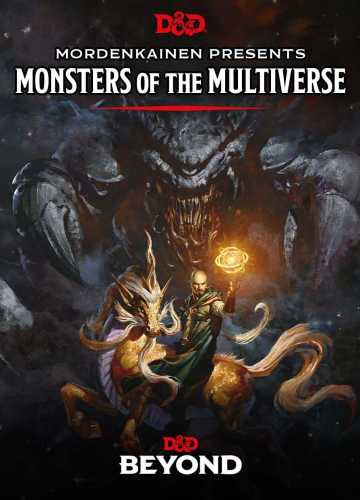
If the villainous foes in the Monster Manual aren’t quite cutting it for you, then you may want to look into the Mordenkainen Presents: Monsters of the Multiverse (MotM). This contains over 250 new monsters that have been assembled from two other sourcebooks, those being Volo’s Guide to Monsters, and Mordenkainen’s Tome of Foes. Now, rather than having to buy two separate books, you get both of them for the price of one!

As is standard with 5th edition bestiaries, each monster comes with its own stat blocks and descriptions. However, unlike the aforementioned Monster Manual, MotM simplifies the way that spellcaster variants work. This makes running encounters with the likes of witches and wizards so much smoother for us DMs. — As a side note, I hope the monsters in the MM will retroactively receive this update upon the release of One D&D. — To cap it all off, players also receive a whopping 30 fantastical races to mess around with.

Truth be told, I reach for this book a lot more often than I do for the Monster Manual nowadays. Depending on which creatures you like, you may want to opt for this book over the MM. The only problem I can foresee in doing is missing the stat block breakdown and explanation in the MM. Though, this can easily be remedied by reading the basic rules section over at D&DBeyond.com.

Fizban’s Treasury of Dragons

As the name implies, Fizban’s Treasury of Dragons (FToD) is a large compendium of Dragons. Over 80 Dragon related monsters are packed into this tome, all of which come with beautiful descriptions and, you guessed it, independent stat blocks. You even have chapters dedicated to discussing what you might find in a Dragons lair, ranging from things like magical items to Draconic gifts.

Although there are a couple of new subclasses and player options, both of which unsurprisingly revolve around Dragon themes, FToD should primarily be thought of as a bestiary. And, a very niche one at that. As such, this book is mainly aimed at DMs that have a fascination with Dragons. But, as with everything else in this category, it really isn’t required.

Summary

So, there you have it. A very brief insight into what official D&D supplement books you should be on the lookout for. Depending on which medium you prefer, you can purchase these either physically or digitally at all reputable retailers. As one last piece of advice, you can also pick these up as part of a set. Going down this route has the added benefit of being more cost efficient.

The core set includes:

The expansion set includes:

As a reminder though, you don’t actually need to purchase any book to begin playing D&D. Instead, you can find plenty of free resources on Wizards of the Coast’s official digital platform, D&DBeyond.com. Furthermore, places like Reddit and YouTube offer a ton of homebrew ideas and settings. The content found on those platforms is enough to last anyone a lifetime. I implore you to check those out first before you commit to purchasing any official product.

Review: Justice Sucks

Robots are mankind’s future, apparently. They will complete mundane tasks and make our lives easier. However, science fiction has taught me a thing or two about robotics. Consequently, I know that this idealism will end with screaming, tears, and death. Unsurprisingly, this is exactly what happens in the gory and brilliantly crazy Justice Sucks.

Developed by Samurai Punk and developed by tinyBuild, this is a violent action game. What’s more, it has some strategy elements, plenty of levels, and gallons of blood to contend with. Yet, if you are squeamish, you can reduce the gore while retaining the hilariously violent gameplay.

The missions in Justice Sucks are random, amusing, and challenging.
It’s time for an explosive time.

Justice Sucks = Déjà vu!

When I was given Justice Sucks, I was sure I’d played it before. Everything about it seemed familiar, and I had a distinct déjà vu moment. Then it struck me. In 2021 I reviewed Roombo: First Blood. The original title was a much simpler and refined version of its sequel. But I loved it nonetheless and scored it a 7. Accordingly, I was hopeful that Samurai Punk would build on their strong foundations, and create a deep and brutal game for us all to enjoy.

Well, spoiler alert, they have done just that. Justice Sucks is much more grisly, angry, and disgusting than its predecessor. Subsequently, it’ll make you wince as you bludgeon your opponents to death. Moreover, the protagonist becomes all-powerful as he chews up their bodies and sucks up their blood. Oh, have I forgotten to mention that the hero is a robotic hoover?

You control Dusty, a robotic household hoover. He loves his family, and when their house is broken into, he goes rogue. By killing the burglars, it alerts the manufacturer, FamilyCorp of his misdemeanour. Consequently, the Warranty squad is called in to resolve the situation. As they arrive, a scuffle breaks out, and Dusty is sent flying into the TV. Here he merges with the TV world, and a surreal adventure begins.

Dusty can become a powerhouse.
Customise your robot and complete every mission.

Weird, but it’ll make you chuckle. 

Being teleported into a surreal world is just weird, but it gives the developers a creative licence. Thankfully, they grabbed the opportunity with both hands and the gameplay benefits considerably. The action is split among several worlds, each comprising an array of levels. During each stage, you are given unique tasks to complete and a limited amount of time to succeed. If you are victorious, you’ll be scored for your efforts and you’ll progress. This gameplay loop continues throughout, even if the objectives and goals differ slightly per world. 

As Dusty, you’ll be asked to move parcels, prevent robberies, kill invaders, clean up, and much, much more. As you explore each level, you will need to hide, hack, and steal items to use as weapons. The Warranty squad is determined to stop you, so you must be proactive and aggressive throughout. Yet, a little tactical nuance isn’t a bad thing. As such, using the shadows to hide, or hacking electrical supplies to shock would-be assailants is not a bad idea.

Alongside this, Dusty has an array of abilities and perks that he can unlock. These special elements give you a fighting chance and can be the difference between success and failure. The abilities are powered by blood, so the more people you kill, the more powerful you become. Subsequently, you’ll want to hoover each dead body, and clean up the claret they leave behind. 

Justice Sucks looks similar to the original. 

I adored the gameplay changes in Justice Sucks. Subsequently, I think the developers did a perfect job of enhancing the difficulty while retaining the gory charm. However, I wasn’t so impressed with the visuals. Unfortunately, there is little to decipher between the two games, and this was frustrating. Yes, it looks nice, and the stage design is interesting, but I would have liked a bigger improvement in the graphics, nevertheless.

The audio follows suit with its upbeat and familiar style. The high-adrenaline soundtrack works well with the gruesome gameplay and is complemented by wonderful sound effects. The noise of bones crunching, skin squelching, and blood spraying was incredible. When you combine the ear-splitting audio with the eye-opening visuals, you get quite a vivid and overwhelming experience.

Every stage will be scored.
Aim for the best score possible.

Confusing controls. 

When a title is as simple as Justice Sucks, you expect the controls to be easy to master. However, I was horribly wrong, as I struggled considerably to pick them up. With many submenus and plenty of buttons to understand, I was all fingers and thumbs. Yet, once you understand the fundamentals, it is enjoyable, straightforward, and well thought out.

With many levels to overcome, a scoring system to follow, and a global leaderboard for each stage, it’ll have you hooked. The only element it was missing was multiplayer action, and this was disappointing. Even if the developers stuck with couch cooperative gameplay, this would have scratched that itch.

Justice Sucks is good brutal fun. 

Though Samurai Punk went a little OTT with the gore and violence, I still think it works. Its core concept is brilliantly addictive, and I adored how challenging each level was. Furthermore, I believe they have improved on their first title. Accordingly, I loved it and I recommend you buy it here! Can you save your family and exit the TV realm? Suck, clean, and maim your way to victory. 

A Closer Look at NASA Interactive Robot Astronaut

With Christmas less than 2 months away, we take a closer look at the NASA Interactive Robot Astronaut.

This NASA Interactive robot responds to voice and touch. Talk to him and listen as he records and repeats your messages. Moves forward, backward, left and right.

Perfect for any space enthusiast, the NASA Interactive Robot Astronaut is a lot of fun to play with and will make a great Christmas present.

The NASA Interactive Robot Astronaut is available now priced around £29.99 and is aimed at ages 3 and up.

You can learn more from the ThumbsUp website.

Disclosure: This product was provided free of charge in exchange for a fair and unbiased review.

A Closer Look at NASA RC Opportunity Mars Rover

With Christmas less than 2 months away, we take a closer look at the NASA RC Opportunity Mars Rover.

Re-create the excitement of NASA’s exciting mission to Mars with our remote control model of Opportunity. Set your smartphone into the bracket and record your own exploration missions.

Perseverance’s innovative wheel tracks enable it to move forward, backward and even sideways just like the real Opportunity on Mars.

The NASA RC Opportunity Mars Rover is a lot of fun to play with, and whilst you can’t take it to Mars, you can certainly find places on Earth to play with it!

The NASA RC Opportunity Mars Rover is available now priced around £39.99.

You can learn more from the ThumbsUp website.

Disclosure: This product was provided free of charge in exchange for a fair and unbiased review.

A Closer Look at Bubble Gun Extreme from ThumbsUp

With Christmas just a few months a way, we take a closer look at Bubble Gun Extreme from ThumbsUp.

The Bubble Gun Extreme is a 60 hole automatic bubble launcher. Charge it up, dip it into the bubble solution provided, aim, pull the trigger and watch thousands of bubbles immerge and take over the skyline.

Super fun with kids and adults, the rechargeable Bubble Gun Extreme adopts an innovative rocket launcher design to make you the popular bubble player among your friends and family.

Bubble Gun Extreme from ThumbsUp is available now priced around £39.99 and its lots of fun (for the person holding the gun)!

Disclosure: This product was provided free of charge in exchange for a fair and unbiased review.

Review: The Fridge is Red

The fridge is red is another entry in the crowded space of ps1-styled horror games and unfortunately the charm of that genre did not make up for this short experience. For those looking for a game with scares and thrills wrapped up in the older aesthetic, there are plenty titles out there that fulfill this need with a more interesting story but this may serve as a nice filler once players have burned through the rest of the genre.

Story

There is not much to be said here to be honest. Players can pick two different stories to follow when starting up the game. Fidgeted Sherri has players in a chair in front of a red refrigerator that moves around as if something is inside of it. As they look around the room, there are a multitude of notes that hint at something being inside of the refrigerator. As players solve the one puzzle that this story has, they then greeted with the main menu screen. I believe that this short story is to help build anticipation and serve as an entry point for the rest of the game but this isn’t explained right away so it was hard to tell initially.

Once players solve this little mystery, they can then move on to the next story titled for daddy to work, which revolves around a character being trapped in an  elevator before it comes crashing down. After a freak incident, players are thrust into a creepy environment, including having to navigate a hospital in search of their wife. The game features scratchy voice acting from each of the characters, but this wore out its welcome not too long after starting the game.

The fridge is red features 6 of these little stories and while some were more interesting than others, the experience overall was muddied by the weaker stories and unclear understanding of how they all connect.

Gameplay

The fridge is red has players navigating a multitude of creepy spaces in a first-person view with a creepy VHS filter thrown on top to add to that sense of unease. Personally, I would have loved to see a way to turn the filter off as well as the voice acting since both felt more nauseating than creepy, but these features will serve differently for each person.

The gameplay loop revolves around players starting a new chapter and then solving some of the minor puzzles that each chapter offers. Some puzzles require players to seek out additional items in the confined spaces while others require players to utilize the resources in the immediate area. For those looking for a strong puzzle experience, this game fails in that aspect.

Each chapter gives players a new experience to tackle and overcome, whether that be finding a wife in a hospital or avoiding a creepy monster that is chasing them as they drive down a snow-covered road. The chapters themselves are not extremely long and play time may last players around 2-3 hours if they speed from one chapter to the next with no issues.

Final thoughts

Overall, the fridge is red seems like a title that would hit it off well for those who are heavily invested in niche horror experiences but for those who are like myself, the intro did not do enough to get me hooked enough to fully understand what the story was behind the demonic red refrigerator. There were hints of a more coherent story throughout the game but since that interest was dashed on the rocks at the start, it was hard to want to piece everything together. The red fridge may be tempting for some to open, but it might be best that it remained closed.

Review: Way of the Hunter

There’s no denying it. Hunting is a divisive topic. Yet, no matter what side of the fence you sit on, you must agree that the participants are skilful and patient. Now, I’m not talking about those asshole poachers who have no morality. No, I’m highlighting the men and women who take part in hunting as a licensed sport. This group and anyone who is fascinated by the subject will be keen to try Way of the Hunter.

Developed by Nine Rocks Games and published by THQ Nordic, this is a sports simulation title. What’s more, it has some business management elements and a nostalgia-fuelled story. As such, it isn’t just mindless shooting and gory violence. Instead, it highlights the finer points of the sport while giving you the opportunity to see what makes the protagonist tick.

Way of the Hunter has a beautiful and expansive world to explore.
What a stunning world to explore.

Way of the Hunter is slow, methodical, and oddly relaxing.

The last thing I expected from a hunting game was a relaxing experience. However, the stunning environment is undeniably breathtaking. Set in either the USA or Europe, you get to explore a plethora of biomes and unique locations. Moreover, each has specific animals and natural areas of concealment. As such, you must use your surroundings to your advantage if you wish to hunt every species. Yet, if you want, you can ignore that and simply enjoy walking around the stunning world. With babbling rivers, death-defying cliff faces, and thickly wooded areas, it is mind-blowing.

What was particularly great about Way of the Hunter was how the story forces you to explore. Each region and map are pivotal to key moments in the plot. Whether it was finding a childhood viewing spot, hunting legendary beasts, or helping the local restaurant, it all plays a key role. Yet, if you so wished you can run free and hunt whatever you wish. This freedom was intriguing, and I adored the lack of rigidity in its approach. 

It’s all about the gear. 

Failing to prepare is preparing to fail! This is the ethos of Way of the Hunter. Accordingly, there is a vast range of weapons, attachments and gear that can be purchased to improve your experience. Furthermore, different weapons are more effective against selected prey. As such, you’ll need to plan ahead if you wish to complete a successful hunt.

Once you’ve picked the right gun, you must arm yourself with binoculars and an animal lure/caller. These handy tools trick the animals and make your job much easier. But this is only half the challenge. When out and about, you must use your hunter sense to find clues, listen to noises, and find trails. What’s more, you’ll identify resting grounds, feeding areas, and watering holes. If successful, you can create a map of key areas for future hunts or specific quests.

Make sure you hit the vital organs.
Were you accurate enough?

Perks, your approach, and picking the right target. 

Having the right gear is essential, but your approach is more important, still. You must learn to be stealthy while using your surroundings wisely. Whether it’s long grass, craggy rocks, or a hunting tower, it matters not. Instead, you must stay out of sight, keep upwind, and not miss your shot. Talking of shots, a professional hunter only shoots to kill. If you damage your target and don’t hit a vital organ, it will have a slow and painful death. Consequently, you must focus on the head or heart shots. As sick as it sounds, getting this right is enthralling and unbelievably rewarding.

Alongside this, you must pick your target wisely. If you run around killing animals at will, you’ll decimate the population and it won’t recover. Therefore, you mustn’t overhunt one species or one sex. If you do, the consequences are dire and your hunting will become much harder. 

Finally, the more you do, the better you become. You’ll improve your hearing, hunter sense, lung capacity, and more. As such, the further you progress, the easier things become. You’ll purchase new licences to hunt in different areas, new scopes and rifles will destroy each trophy beast, and hiding becomes much easier. 

Way of the Hunter looks awesome. 

Except for some minor glitches, Way of the Hunter looks awesome. I adored the grand maps, the realistic animals, and the detailed weapons. Moreover, the varied locations keep things interesting, as do the animal animations. Observing birds flying, or large beasts trotting, was incredible. Alongside this, your hunter sense highlights any points of interest without reducing the realism or difficulty.

The visuals were one thing, but the audio was incredible. We all know that silence is deafening, but Way of the Hunter takes it to a new level. However, when it isn’t eerily silent, you’ll adore the sounds of nature, the crack of your rifle, or the brutal hum of your car engine. What’s more, every sound has been considered! The rush of a river, the rustle of the long grass, and the cracking of branches are, to name but a few.

Use the Hunter sense to track down your targets.
Your Hunter sense at work.

Incredibly easy to play. 

I’ve played many hunting and fishing games, and I’ve found them to be convoluted and unnecessarily complex. Thankfully, Way of the Hunter keeps things simple. Now, purists may argue that it doesn’t go far enough. Yet, I think the balance is just right. Because of its lack of complexity, you can focus on exploration and the hunt. 

Thanks to the interesting story, massive maps and each species to track, this has plenty of longevity. What’s more, the vast selection of weapons and unique locations to explore ensure you have a lot to do to master this game. 

Way of the Hunter was uncomfortably good. 

I’m not happy about enjoying a hunting game, but Way of the Hunter is extremely good. Everything about it is intuitive, and every minor success is rewarding. Consequently, I couldn’t help but enjoy it, even if it bent my moral compass. However, I liked it, and I recommend you buy it here! Can you master the art of hunting? Study your surroundings, purchase the right equipment, and take home a well-earned trophy. 

Review: Squares Multi-Colour Starter Kit from Twinkly

Have you ever wanted to create a cool multicolour display you can control? If you have, you might want to check out our review of Squares Multi-Colour Starter Kit from Twinkly.

An interactive mosaic made of dazzling “mega” pixels, Twinkly Squares flawlessly marries technology and innovation with the sleek and elegance of interior design.

The first of its kind, Twinkly Squares’ smart LED wall panels each feature 64 premium app-controlled, addressable LEDs specifically designed for brightness and colour quality in 16 million colours and can be combined with up to 15 extension panels – bringing unlimited creative potential for any space. Whether it’s creating stunning 8-bit pixel artwork and GIFs, widgets including weather forecasts or clocks, or just colours and animations – the opportunities to create huge displays of beautiful artwork are endless. 

Easily configurable via Wi-Fi and Bluetooth, Twinkly Squares can be controlled using the free Twinkly app, available for iOS and Android, and voice-controlled with voice assistants including Amazon Alexa, Google Assistant and Apple HomeKit. Once the lights have been set up, the Twinkly app scans and maps each individual LED, allowing everyone to generate bespoke light design installations through a wide range of preset effects and animations, as well as the ability to create custom effects from scratch using the FX Wizard tool. 

To take home or office decoration to the next level, Twinkly Squares can also be combined with lights in the home via Twinkly Music, a USB device with a built-in microphone that interprets ambient sounds and music in the home and applies matching colours and effects to the lights.

What’s in the Box?

The Starter Kit includes 1 x master panel and 5 x extension panels, as well as a USB-C cable and power adapter. 

A Closer Look

Here are some of the things you could do with the Squares:

Final Thoughts

Whether you are a gamer or someone who wants something cool in the room, the Squares enable you to create something unique and very cool.

The starter kit comes with 6 panels to start off your personal masterpiece, you can buy more to add to those.

Set up each panel using the clips and cords into the pattern you want, then download the app to your device and configure them just how you want them to look and act. Each LED on each panel can be controlled so you can really let your imagination go wild.

You can create your own display or use one of the existing ones, the choice is yours and the possibilities are endless.

Using the app you can even schedule different things to happen – you’ll probably spend a lot of time just playing with all the various options trying really hard to find the one you want to keep because there are so many possibilities – but again, that’s half the fun.

If you have Razer Chroma RGB & Omen Light Studio you can set them up to sync with your gameplay, or you can have them sync up to your music.

The Squares also can be controlled using your voice using Google Assistant, Amazon Alexa, and Apple home kit.

The Squares are really easy to set up, fun to watch and experience, and the possibilities are endless – you will want to add more and more and change up your Squares often!

The Squares Multi-Colour Starter Kit from Twinkly is available now priced around £249.99.   

You can learn more from the Twinkly website.

Three Great Games To Play For Fans of Ancient Egypt

0

A strong setting and a fascinating theme that catches people’s interest is the perfect combination that makes a video game.

For example, Red Dead Redemption 2 gained widespread popularity because it’s one of the best story-driven games that takes place in the Wild West. Another example is the action-adventure game Grand Theft Auto V which takes place in the fictional U.S. state of San Andreas and the city of Los Santos, which is roughly based on California and Los Angeles, respectively. Both take an interesting setting and backdrop and add layers of playability and engagement.

Games based on historical places and events are also likewise a sure way to capture audiences. Ancient Egypt is an era steeped in lore and imagery that is ripe for video games, both on console and mobile. You can see the impact Egypt has on gaming through mobile games, such as Age Of Pyramids: Ancient Egypt, which challenges gamers to build a civilization on the banks of the Nile River. You can also find an Egypt-themed title among the Foxy Bingo jackpot slots, namely the 4 Tombs of Tutankhamun. This game uses the themes and characters of Ancient Egypt as reflected in the king’s name and the repository for the remains of the dead. The mobile game Sphinx And The Cursed Mummy is another example which bears the name of one of the most iconic structures of ancient Egypt and is a fun mix of action, platforming, and puzzle solving.

These games demonstrate how recognisable this era is, as it’s used so often on mobile games. However, its impact on console games is a different matter. As console games need to be much deeper and more detailed, not all games based on ancient Egypt are a raging success. Thankfully, some of these console games do get it right, giving a great Ancient Egypt experience, and we’ll explore three of these games below.

1. Assassin’s Creed Origins

After years of developing a popular franchise, Assassin’s Creed Origins is another amazing addition to the collection. The game has an amazing storyline filled with missions, mysteries, and emotional scenes in historical settings like Alexandria and Memphis. Assassin’s Creed Origins takes players back to Ancient Egypt for a chance to traverse the land and discover some of the dark secrets of the past through the Assassin’s Brotherhood. The game features amazing architectural buildings and provides a wonderful open-world adventure that is both exciting and dangerous.

2. Predynastic Egypt

Predynastic Egypt is a marvellous game for those that would love to try building a civilization from the ground up. Fans of Ancient Egypt will appreciate this game because they’ll be able to explore the land prior to any pyramids and tombs in the area. They’ll start from the beginning, around 5000 B.C., and develop a strategy to lead their Egyptian tribe through the difficulties of becoming a great empire. Just like in the history books, players will have to go through wars, epidemics, and religious ceremonies, among other hardships, to reconstruct Egypt. Predynastic Egypt is a fantastic realistic simulation of Ancient Egypt’s era.

3. Nefertari: Journey to Eternity

For an immersing adventure into one of Ancient Egypt’s greatest queen’s tombs, Nefertari: Journey to Eternity is a must-play! This game employs VR technology and gives the players a chance to enter Queen Nefertari’s tomb and explore the deepest areas. Of course, there’s no electricity to light the way, so players are given an oil lamp as their only source of light into the dark corridors of eternity. The recreation of the tomb, amazing art, and meticulous details provides players with a realistic experience of traveling to Egypt and seeing the mythology and history of the empire.

Ancient Egypt was one of the most powerful kingdoms that ever ruled our world, and its rich history has attracted millions of enthusiasts all over the world. The memory of this great era is kept alive through many things, and games are one of them. Try these games out and experience the glory of one of the greatest empires the world has ever seen.

Review: Recon Cloud

Cloud gaming has absolutely exploded! Consequently, where there is demand, there are manufacturers desperate to create new products. As such, the range of mobile gaming controllers is overwhelming. RiotPWR, NaconGamesir, and Razer are to name but a few. However, we’re not here to talk about them. No, today I’m looking at a Turtle Beach controller called the Recon Cloud.

This futuristic accessory screams Cyberpunk and is fitted with many high-end features. What’s more, unlike many of its competitors, it can be used wirelessly and wired for a truly versatile experience. Moreover, it has customisable buttons and the fantastic Turtle Beach EQ presets. On top of this, it looks, feels, and acts like an official Microsoft controller. Therefore, it is reassuringly familiar, and this allows you to jump straight into the action.

The Turtle Beach Recon Cloud is designed for Xbox.
Designed for Xbox.

What’s in the box of the Recon Cloud controller?

  • The eye-catching box is slight and well-built. It is adorned with key selling points and some interesting imagery. Furthermore, it has the familiar Xbox green livery.
  • The Recon Cloud controller looks fantastic. It comes in a choice of two colours and has comfortable tactile grips. To the back, there are two mappable buttons, and on the front is the EQ control panel. Alongside this, there is a USB-C port for charging and a wired connection, and a port to secure the mobile phone clip.
  • Extendable mobile phone holder. This small rubberised clip is sturdy and will hold most mobile phones securely. 
  • USB-C cable. A braided cable for a wired connection or to charge the impressive 30-hour capacity battery.
  • User manual and Game Pass code. With many features available, you’ll want to study the user manual. Furthermore, a one-month subscription to Game Pass is included in the package. 

Technical aspects. 

Whenever you get a new controller, you want it to perform perfectly. Fortunately, the Recon Cloud is an amazing device. It’s designed to look, feel, and respond similarly to the official Microsoft pad. As such, you are reassured of its quality and usability. Thanks to its responsive inputs and comfortable travel distance, this is a great device for all genres. On top of this, the additional mappable buttons are incredible. Not only are they easy to customise, but their textured finish and placement make them irresistible to use. 

Alongside this, I was impressed by how easy it was to connect to various platforms. At the bottom of the controller is a switch that changes the connectivity from Bluetooth to wired. Subsequently, if you wish to play on your Xbox, you simply plug in the cable and away you go. If you are a PC gamer, you can choose your approach and play wirelessly or wired. However, if you wish to game online using your phone, this can be done in seconds. By simply connecting the handy mobile phone holder, the Recon Cloud becomes a portable gaming device. 

Now, you may worry that the seating position for the screen is uncomfortable. Well, worry not, as it can be adjusted to your liking. What’s more, it doesn’t sit too high up, nor is the screen uncomfortably close to the controller. Instead, Turtle Beach has got the balance just right. Another contentious issue with this type of mobile accessory is the weight. The concern focuses on the weight of the phone and how much this impacts usability. Well, fortunately, it did little to detract from the fantastic experience I had with this controller. Yes, it is noticeable, but after a few minutes, you forget all about it.

The Recon Cloud controller has an epic battery life.
Play wirelessly thanks to the 30+ hours of battery life.

Battery life and build quality. 

A wireless controller has to last the course. Thankfully, the Recon Cloud has a whopping 30-hour capacity. This is incredible as it competes and beats many more expensive peripherals. Moreover, charging the device is easy thanks to the handy USB-C cable. The controller batteries are charged whenever you play on a wired connection. Accordingly, you rarely run out of juice as the process takes less than 2-hours. 

There is an argument that wired connections outperform wireless ones. Sadly, I tend to agree with the logic. However, the difference in response rate and input lag is minimal. Fortunately, this controller performs admirably, and I had no issues at all. Yet, if you are playing competitively, you may wish to plug it in for optimum performance.

We all know that your gamepad takes a battering. Whether you drop it, throw it in a rage, or just play hours of Fifa or COD, it gets well used. Therefore, you need a device that is hard-wearing and built to last. Thankfully, the Recon Cloud ticks all of these boxes, and it looks fantastic at the same time. Its textured grips and robust buttons will last the course. Alongside this, the ports are well-positioned and the gaming clip is strong and sturdy. As such, I have no concerns about how long this device will last. 

Control the audio via the EQ interface.
The Turtle Beach EQ interface.

Is the Recon Cloud controller worth it?

Picking up a Cloud-ready device is extremely easy these days. The choices are almost endless, and it can be quite confusing. However, the Recon Cloud delivers an excellent gaming experience for both Cloud gaming and traditional methods. Consequently, it is fantastic value for money and stands out from its peers.

Alongside this, the exceptional EQ settings are mind-blowing. Whenever the controller is plugged in, you can access Turtle Beach’s amazing preset options. With Superhuman hearing, bass boost, and other options, it makes all the difference. Furthermore, you adjust your settings directly from the controller interface. Subsequently, this makes it quick, easy, and particularly user-friendly.

As you can tell, this device impressed me. I loved its versatility, its features, and its style. Moreover, the inclusion of mappable buttons, the EQ interface, and the tactile grips make it one of the best controllers I’ve used in a long time. Accordingly, this will make a phenomenal addition to anyone’s gaming setup. As such, I recommend you buy it here!

(More information on Turtle Beach can be found here!)

The Recon Cloud has been awarded the Movies Games and Tech Gold award.

Review: Turtle Beach Recon 70

Christmas is the time when people upgrade their gaming gear. However, if you are in the market for a new and improved headset, or you are new to gaming, then why wait? Turtle Beach is renowned for its amazing devices, and they offer some amazing products no matter the price point. Yet, if you are considering an entry-level accessory, look no further than the Turtle Beach Recon 70 headphones.

These durable and well-built headphones are extremely comfortable, and lightweight and offer surround sound on Xbox. Furthermore, the 40mm drivers deliver a rich range of tones. On top of that, the flip mic makes it the perfect device for solo or online gamers.

Can you see the camo headphones?

What’s in the box of the Turtle Beach Recon 70 headphones?

  • The compact cardboard packaging is sturdy and lightweight. Furthermore, it is emblazoned with striking images and key selling points. Finally, it is fully recyclable, and that is fantastic. 
  • The Turtle Beach Recon 70 headphones. Available in a variety of colours, this stunning headset looks amazing in Arctic camo. Its simple design incorporates a volume wheel, cushioned ear pads, a small flip mic, and a built-in cable with a 3.5mm audio jack.
  • User guide, sticker, and warranty card. As standard, this accessory has a handy guide, some colourful stickers, and a warranty card in case of accidents. 

Technical aspects. 

Depending on your budget, you’ll have different aspirations. Consequently, those buyers that focus on entry-level devices want great value, excellent sound, and amazing build quality. Fortunately, the Turtle Beach Recon 70 headphones tick each of those boxes with ease. On top of this, they look stylish and they won’t break the bank.

One worry is that 40mm drivers usually provide a subpar performance. Yet, the audio was surprisingly good as it delivers a neat range of sound. Alongside this, it is optimised for Microsoft’s Windows Sonic for Headphones. Accordingly, you experience immersive audio for a really low price.

You must then consider the flip-to-mute microphone. This isn’t normally what I’d expect from a lower budget device. Instead, there is a reliance on inline controllers and manual mute switches. Therefore, this was an unexpected and pleasant additional feature. What’s more, the microphone delivers a crystal-clear sound. Therefore, it is an amazing device to use when playing FPS titles. 

Premium cushioned ear pads.

Build quality. 

So, the Turtle Beach Recon 70 headphones sound great and have an amazing microphone. But what about the build quality? Thanks to the premium cushioned ear pads, you experience awesome comfort. The synthetic leather is breathable, and this prevents your ears from overheating. Accordingly, this is essential when playing long gaming sessions.

Alongside this, the adjustable headband is lightweight, yet rugged and tough. Subsequently, it’ll cope with heavy hands and the occasional bit of roughhousing. Finally, the camouflage finish deserves a mention. I adored its simple white-on-grey accents and how it complements other Turtle Beach products. 

The 3.5mm audio jack is versatile.

Are the Turtle Beach Recon 70 headphones worth it?

Entry-level headphones are two a penny, and I’ve recently covered the Trust GXT 411 Radius headphones. However, these are head and shoulders above their peers. Not only is it versatile with its 3.5mm audio jack, but it also delivers excellent sound quality. Accordingly, it is excellent value for money with no obvious shortcomings.

Every element of these headphones is brilliant, for the price. The 40mm drivers are balanced, the optimised surround sound on Xbox is immersive, and the build quality is incredible. Consequently, without hesitation, I recommend you buy them here!

(More information on Turtle Beach can be found here!) 

The Turtle Beach Recon 70 headphones have received the Movies Games and Tech Goldaward.

Review: Gas Station Simulator

I have played some weird and wonderful simulation titles. Hell, my most recent one, Priest Simulator, knocked my socks off. However, when I spied Gas Station Simulator, I thought, at least I can try something a bit more “normal”. Yet, there is a possibility that running a virtual gas station will be mundane. However, I had high hopes that it would test me and keep me interested throughout.

Developed by MD Games SA and published by Drago Entertainment, this is a business management simulation title. What’s more, it has a wicked sense of humour and mafia undertones. Consequently, it’ll push you to your limits, make you chuckle, and will fill your heart with fear. As such, it adds some spice to the well-trodden mechanics. 

Gas Station Simulator is a family affair. 

Like the best businesses, your petrol station is a family affair. Well, that’s not entirely true, but your uncle plays a big part in financing your operation and offering some much-needed advice. The story or lack of one revolves around a young man who buys a rundown gas station. By working hard, he’ll improve the facilities, clean the business, and make his fortune. However, he must be wise as he could upset his uncle and lose it all. 

As with many games in this genre, the story plays second fiddle to the ongoing action. Subsequently, the over-arching plot makes no difference to how you perform or what you do. Yet, key components from the plot impact the way Gas Station Simulator plays out. If you borrow money, like any fledgling business will, you better pay it back. If you don’t, your uncle goes all “Godfather” on you, and his goons trash your place. There’s nothing like close family ties, eh? But if you stay on his good side, his cash injection is essential to keeping your business running.

In Gas Station Simulator you run a simple business.
Your business in all of its glory!

Many plates to spin. 

Like its peers, Gas Station Simulator demands that you spin many plates at once. Sadly, this can be quite difficult, overbearing, and stressful. Yet, that’s how running a business feels, so it adds to the realism. The core action focuses on 5 key elements: Stock management, cleaning, running the shop, fixing cars, and selling fuel. Accordingly, you’re a Jack of all trades and you must plan wisely if you wish to succeed. 

At first, the tasks and the gameplay are manageable. After all, all you must do is fuel some cars and tidy up. However, things soon heat up as you unload stock, fill shelves, serve customers, repair cars and sweep the floors. On top of this, an annoying boy sprays graffiti until you scare him off. Then, there are the crazy QTEs to contend with, as well. If you can manage all of these elements, you’ll successfully run a business and become increasingly popular. Yet, word of warning, this is no mean feat!

Mini-games and station improvements.

What I loved about Gas Station Simulator was its unusual mini-game approach. Every task you complete requires some skill to overcome. When fuelling the cars, you must stop the gauge as accurately as possible. Repairing cars requires certain items and a steady hand. Finally, running the shop demands fast reactions and quick thinking. Consequently, this unusual approach makes it stand out from others in the genre. What’s more, it enhances the difficulty and makes the gameplay much harder.

Thankfully, though, the developers used a generous learning curve. As such, the further you progress, the tougher things get. Therefore, as you upgrade each facility, the customer base becomes more demanding. They’ll want new stock, faster service, and a cleaner environment. Now, by yourself, this would be impossible! So, why not hire some staff to take away the pain? By installing trailers, you can take on some locals to do the worst jobs. This in theory is a great idea, but the more people you hire, the higher your outgoings are. Subsequently, you must balance expenses and income to be successful.

Your business starts as a messy investment.
It is probably best to tidy up.

Gas Station Simulator looks surprisingly good. 

I don’t play simulation games for their looks. However, Gas Station Simulator looks surprisingly good. I adored its rich colour palette and House Flipper aesthetics. Moreover, the smallish world is interesting as it hides many secrets. On top of this, there is a nice blend of characters and vehicles to interact with. Other than the looks, the action was smooth, and I experienced no frame rate problems or performance issues. However, there were a few visual glitches that were amusing and harmless.

The audio was just as good as well. With a distinct country and western edge, and deep Southern accents, it brilliantly sets the scene. Alongside this, the realistic sound effects and fancy environmental noises worked brilliantly. In short, the audio does amazingly to set the scene and keep things lighthearted.

You wouldn’t be running a gas station without pumping gas.

Excellent controls. 

Like House Flipper, Gas Station Simulator relies on a radial menu and a zonal interactivity system. Consequently, completing any maintenance task is easy and lacks complexity. On top of this, the responsive controls help with other key jobs. Therefore, every mini-game is fun and interesting. Moreover, the excellent tutorials ensure that the finer points are completely covered.

This genre oozes replay value, and this game is no different. Thanks to its varied approach, it’ll keep you going for hours. Furthermore, you’ll enjoy racing RC cars, picking locks, and stopping that kid from vandalising your business.

Gas Station Simulator is brilliantly addictive. 

My fear of being bored to tears never came true. Thanks to its interesting core concept, excellent key mechanics, and wacky QTEs, it keeps you on your toes. Moreover, hiring staff, renovating the business, and keeping everyone happy isn’t an easy task. Yet, though it’s challenging, it is thoroughly enjoyable and ridiculously addictive. It is for these reasons that I recommend you buy it here! Running a business isn’t easy. However, anything that is worthwhile rarely is. Accordingly, you must plan, appease your customers, and keep your uncle onside if you wish to be successful.