Plantera 2: Golden Acorn

Plantera 2: Golden Acorn is another fantastic entry in the Plantera series. While it is a sequel, there is no need to play the original to understand what is happening in this entry. For those unfamiliar, Plantera 2: Golden Acorn is an idle game developed and published by VaragtP and features charming pixelized visuals, a bright bubbly soundtrack, and a satisfying progression system.

Plant, Expand, Sleep and Repeat

In this new exciting, addictive game, the Mellows are back to help you, the player, tend to the garden and grow the fabled Oak tree. These round blue creatures will help you harvest your crops and other resources. By harvesting, your coin count will increase allowing you to expand the garden even further. You can even buy animals to further increase profits.

While there is a lot to learn, it is all introduced with the player’s rank. The game will force you to start by growing leaks, then move to strawberry bushes, and so forth. The player rank will grow as you make more money, in turn allowing you to increase the variety in your garden. All of these mechanics combine into a wonderfully enjoyable experience that kept me hooked for a very long time. I thoroughly enjoyed expanding my garden and customizing it to my liking.

A very lively garden

The Oak Tree

New to this sequel is the golden acorn meter. This meter increases over time and can be increased further by planting decorations all over the garden. Once this meter has maxed out, it will grant you a golden acorn, which can be used to grow the Oak tree in the center of your garden. This tree has several benefits, including housing bees to protect the garden from pests and increasing the speed at which the Mellows work. This new feature adds some nice quality-of-life changes to the gameplay. This includes bees attacking aliens, something which the dogs of the previous game cannot do. It is very addicting and satisfying to watch as the tree grows taller and taller.

Sit back and Idle

As an idle game, this game is all about sitting back and watching the money roll in. This is not a bad thing. As stated earlier, players can expand the Garden to further increase their profits. However, if there is nothing else the player can do they can turn off the game and let the Mellows do some work for a while. How long they will work is determined by how much the player has upgraded the clock upgrade. A huge problem most idle games have is being forced to babysit the computer as the game automatically makes profits. This feature is perfect as I can turn the game off, go to the grocery store, then boot it back up to continue expanding my garden.
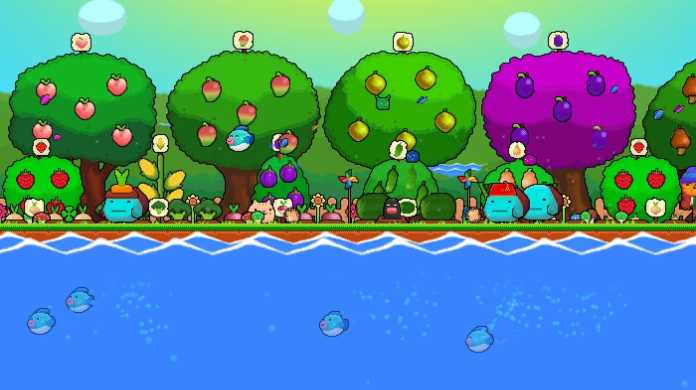
Mellows hard at work

Cuteness and charm abound

This game has plenty of charm, from the bright bubbly music to the amazing colorful pixelated graphics. Further exuding this charm is the ability to customize your Mellows. New to this sequel is the ability to put hats on your Mellows. This is a neat new feature that I am glad they added. I enjoyed putting top hats on all my Mellows, making them look fancy. Another thing that makes this game so pleasant to look at is the adorable character designs. This cute and cuddly game is a visual treat for the eyes.

Plantera 2: Golden Acorn Idling at its finest

From the charming visuals to the fun and addicting gameplay, Plantera 2 is one of the best idle games I have played. The only negative I can think of is that it hurt my hand a tiny bit when I was mashing click on a Loot Hero. Outside of that very minor problem, this game is fantastic. I loved every second of this charming expierence.

News: Amazon Luna+

Cloud gaming is the future! The biggest players on the block are making waves and Amazon refuses to be left behind. Consequently, on the 1st anniversary of Amazon Luna, some big news has been announced. Previously limited to a US-only audience, the rest of the world looked on enviously. However, residents of Canada, Germany, and the UK can now get in on the action.

Not only can you now subscribe to the excellent Amazon Luna+ service, but you can also invest in the Luna Controller. The latter option is a phenomenal way to seamlessly play between a range of devices. What’s more, it can connect via Bluetooth or Wi-Fi to enhance its versatility. On top of this, the controller effortlessly reduces gameplay latency, and this improves your experience further still.

Why subscribe to Amazon Luna+?

With plenty of cloud gaming options available, why would you invest in another option? Well, the Amazon Luna+ subscription service is great value for money and offers a vast range of games. Moreover, Amazon Prime subscribers have a plethora of titles available at no extra cost! Alongside this, Ubisoft+ Multi Access allows you to play your Ubisoft PC gaming catalogue on a range of devices.

Talking of devices, Amazon Luna+ can be used on mobile devices, TV, PC, and Fire TV. Furthermore, if you love to stream, you can become a Twitch broadcaster with ease. Stream gameplay live with a camera feed overlaid on-screen using the broadcast button, which provides a simple way to broadcast to the Twitch community. For those on Fire TV devices, simply use a QR code to connect your phone as a webcam and mic.

Enhanced Gameplay.

Luna frequently delivers new features and content, and offers several unique features that make it easy to play and engage with friends, family, and communities:

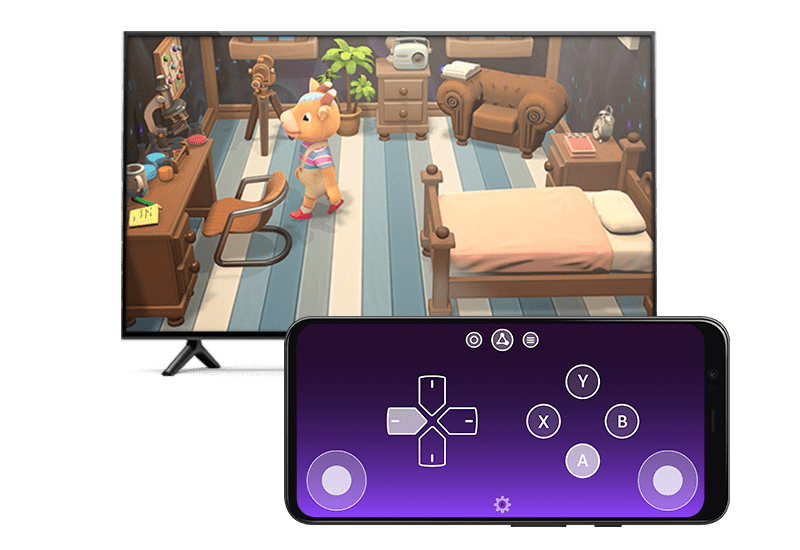
  • Luna Phone Controller: Luna Phone Controller allows customers to play Luna on Fire TV using just their iPhone or Android phone as the controller through the Luna Controller app, available as a free download in the iOS and Android app stores. An on-screen controller is an option for new or casual gamers without a controller who wants to check out side-scrollers, turn-based RPGs, trivia titles, and more.
  • Luna Couch: Enjoy playing local co-op games together with friends on Luna, even when you’re physically apart. The most popular games with Luna Couch among U.S. players are Overcooked!, Pile Up, Death Squared, the Contra Anniversary Collection and the Jackbox Party Pack.

Gaming on Luna.

To play even more titles in the Luna catalogue, customers can choose from three different monthly subscription options. Subscriptions available today are:

  • Luna+: Luna+ gives customers access to a growing collection of games from across genres—action, adventure, classics, and more. Our largest and most diverse collection of games, Luna+ features fan-favourite titles such as Beach Buggy Racing 2: Hot Wheels Edition, SpongeBob: Battle for Bikini Bottom – Rehydrated and Resident Evil 2. The Luna+ library includes family favourites, appropriate and approachable for gamers of all ages and a retro selection of beloved classics from publishers like Capcom and SNK. Luna+ is available for £8.99 per month.
  • Ubisoft+ Multi Access: Ubisoft’s subscription service includes access to fan-favourite AAA titles including Assassin’s Creed, Watch Dogs, Tom Clancy, and Far Cry franchises for £14.99 per month.
  • Jackbox Games: Only available on Luna, the Jackbox Games subscription includes popular hits like Quiplash, Trivia Murder Party, and Drawful. Jackbox Games are available for £3.99 per month.

(More information on Amazon Luna+ can be found here!)

(More information on the Luna controller can be found here!)

Review: Wobbledogs Console Edition

0

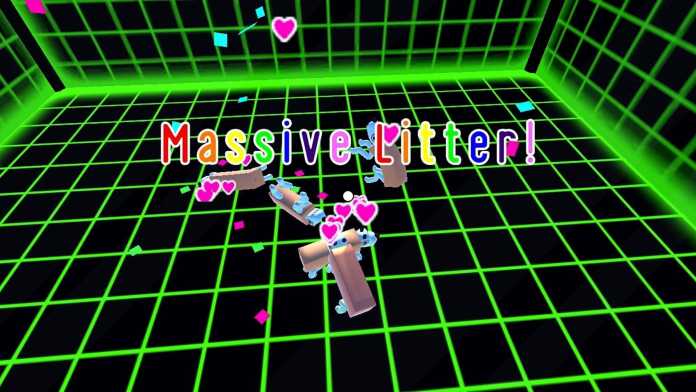
Wobbledogs is the most unique and original game I’ve played so far this year. It’s a creative combination of playing like you are a mad scientist, changing the DNA of a dog, and creating so many more. There are no specific restrictions stopping you from creating the most unusual dog to love. So what can go wrong when you build your own dog and add it to your playroom with the many other dogs you’ve created?

Weird Science, Let’s Get Mutating!

First off, there are no real rules to follow, just a slightly quick tutorial on how to control and set things up. Afterward, you are free to invest time in developing new dogs and bring them to your empty playroom, where you’ll be able to add new items. The entire design is an open space cube floating, giving you a free area to add and design as you like. Leaving you a full amount of freedom to play without restrictions or large goals to achieve.

The only thing that gets a bit confusing with the game is getting a handle on how to use the controls to select anything within the game. I felt a bit disappointed, even though it appeared like a hand cursor on the screen, it was very hard to move or select certain features and objects. I found myself going through every button at times to just release, get near or find what I need to select. It mainly was this control, which is the big part of the game I struggled with, the rest of the buttons with direct actions weren’t difficult to use.

After that one disappointment, I sort of lost interest in the game. It just felt complicated and started to begin feeling frustrated. If it’s to waste time, well this will waste so much time just trying to do one single thing. Sadly, after that issue, I felt the game didn’t interest me as much as I felt in the beginning. However, I did take a second chance at the game after giving it a day to completely clear my mind and reset my thoughts. the result still felt the same, I’m on the fence about the game. Even if it felt a bit easier to understand the controls, it just still is not as easy as I’d like to control every movement and selection.

Don’t get me wrong, the idea was really awesome, using DNA changing and breeding one’s own dog or dogs. Also the idea of having the ability to play with them, and add or change the room as you like. Oh, and I can’t forget the ability to watch them all interact with each other. I did find those features of the game to be quite fun and entertaining. However, the learning portion sort of got a little lost for me, trying to figure out what each micro-organism or what else has been found out on the list. I didn’t really know what it had to do with what I needed to use and the same goes for the strange feeling of dogs being placed into a pod to pupate is also odd for a dog, but maybe just oddly different.

There was one other issue that stumped me. In the beginning, the loading took so long and it almost appeared as if it froze the entire screen. I had no idea if it did freeze and if it required a reset. Fortunately, it did start moving again and everything ran smoothly afterward. I guess maybe having one very slow-loading portion of the game is better than the entire game taking too long to load.

Final Thoughts

This game is quite a nice idea, but it could require a bit more work. I liked the concept, and love the color graphics and cuteness factor, but the few issues that came up so often are hard to pass and forget about. I think I was half the time frustrated and getting a headache from how much I was going around in circles to select and try to do anything I could in the game. Unless a few things get fixed, this game may not be on my radar anytime soon.

Review: Dragon Ball: The Breakers

Dragon Ball: The Breakers attempts to bring colour to an otherwise grim horror genre. This asymmetrical 7V1 survival multiplayer steps on the toes of Dead by Daylight and Friday the 13th. However, can something as loud and in your face as Dragon Ball excel in this niche arena?

Developed by Dimps and published by Bandai Namco, this is a multiplayer experience. What’s more, it brilliantly incorporates the Dragon Ball lore, has some incredibly unusual ideas, and is thoroughly enjoyable with the right audience. Yet, sadly, its player base is fading and trying to connect to an online match is arduous, tedious, and definitely lacking in fun. Consequently, no matter how much you love this game, its connectivity issues hold it back.

One of the survivors hides from a raider.
Hide from the raider and stay alive.

Dragon Ball: The Breakers gets off to a bad start.

Learning the fundamentals is nobody’s idea of fun. But somehow Dragon Ball: The Breakers makes it a little more horrendous. With tricky controls, mental ideas, and a linear approach, it is extremely tiresome. Thankfully, though, once you break through the learning curve, the action improves vastly.

The game can be played solo or online with up to 7 others. Each endeavour comprises 7 human survivors and a Dragon Ball villain as the raider. The aim of each round never changes as a mashup of resource gathering and combative moments culminates in a fight to the death or an ingenious escape.

The 7 survivors are sucked into a temporal rift where they must face off against some grandiose Dragon Ball characters. By utilising the massive environment, scavenging for supplies, and working together, each hero must stop Frieza, Cell, and more villains from destroying the world.

A survivor rides a police vehicle from a raider.
Best escape any way you can.

Simple concept.

Though each arena is a great sandbox world, the concept is relatively simple. The raider must skulk around the place while hunting its next victim. Whereas the survivors must collect power keys to start a time machine or fill energy cells to annihilate the raider. Alongside this, there are supplies to harvest, and some interesting combat mechanics to use.

Effectively, Dragon Ball: The Breakers is a game of cat and mouse. Each of the survivors must search marked-out zones to find key items. All the while, the raider will try to pick you off one by one. The idea isn’t new to the genre, but the crazy nature of the theme pushes it into a surreal realm.

Alongside this, transpheres can be unlocked to empower every survivor with the spirit of a fallen warrior. As such, the combination of this idea and the ability to work as a team gives the survivors some interesting tactical ideas and an advantage over the overpowered raider.

Dragon Ball: The Breakers looks dated.

Dragon Ball has such a fine pedigree that I expected Dragon Ball: The Breakers to blow me away. However: the textures aren’t great, the landscapes lack detail, and it is visually lacklustre. What’s more, minimal arenas and raiders make it unfortunately repetitive. Alongside this, it didn’t perform as smoothly as I’d have liked and this taints things further still.

I expected the audio to be loud, in your face, and distinct. Luckily, I wasn’t disappointed or let down. The cliched approach added to the theme while enhancing the drama and madness. Additionally, the loud sound effects and unique noises for each action were interesting and enjoyable to hear.

The team escape their fate.
Well done for escaping the hunter.

Confusing controls.

I don’t mind a tough learning curve, but Dragon Ball: The Breakers took the biscuit! With manic combat, large levels, and an all-powerful raider, shit hits the fan all the time. Consequently, I expected the layout to be more intuitive and better considered. Alongside this, the tutorial is as dull as dishwater. Subsequently, this doesn’t help matters.

Because of its rapidly fading player base, this lacks replay value and longevity. However, if you can find a lobby, you’ll enjoy the challenging and insane action as well as the opportunity to level up. On top of this, you can customise your hero while selecting unique features from the key characters of the franchise. Disappointingly, a lack of content and dead servers hold this back, though.

Dragon Ball: The Breakers is an interesting concept that has failed to take off.

I applaud the developers for their efforts, but the asymmetrical survival genre is best suited to horror. Now, I enjoyed the mashup of ideas and the Dragon Ball theme. Yet, confusing mechanics, poor visuals, and a lack of content prevent it from excelling. Accordingly, I don’t recommend that you buy it. However, more information can be found here! Will you survive, or will the overpowered raider take all the glory?

Review: Tricky Thief

Tricky Thief lets gamers forget about hectic action and violence. Instead, it asks you to test your mind as well as your logical thinking. As such, it is a casual experience that is good for completionists and players of all ages.

Developed by YeTa Games, and Eastasiasoft Limited and published by the latter, this is a top-down puzzle title. What’s more, its art style and audio make it a captivating experience as well. Alongside this, its simple approach and tongue-in-cheek nature are safe and can be enjoyed by everyone.

The thief avoids the attention of two guards.
A nice way to learn the fundamentals.

Tricky Thief has no story.

Rarely does this genre incorporate a story. Consequently, the action can feel shallow and there is no empathy towards the protagonists. Disappointingly, Tricky Thief follows this pattern and there is no explanation for what is happening. Accordingly, this could have been easily resolved had cutscenes and a basic plot been introduced.

However, these elements never appeared, and you are left to form your own conclusions. Yet, let us not dwell on this shortcoming, as the core concept is well-conceived, enjoyable, and mentally taxing (in the latter stages). The action resolves around the “hero”, a thief who wishes to steal the gold and avoid detection. If he is spotted by the roaming security personnel, he is arrested and you must start the level again. However, if you are successful, you’ll escape and live to steal more treasure.

Sensors, guards, and a heck of a lot of treasure.
Things are getting a little harder.

Create your path.

Though the concept is easy to understand, solving each puzzle isn’t a walk in the park. The thief can only move in 4 directions and they stop whenever they collide with a wall, crate, or special tile. As such, you must create a path to the treasure by running at walls and adjusting your plan accordingly. By doing this, you’ll carve a path through each stage and collect all the treasure.

Additionally, you must be aware of the security guards, pulsing beacons, explosive boxes, and crates. The guards walk a set route that is marked on the floor. Furthermore, they have a restricted field of view, and both elements must be manipulated if you wish to succeed.

This being said, the early stages of Tricky Thief are far too easy. Consequently, your focus will wane. Yet, once you tackle these levels, the action is testing, and the gameplay improves vastly. Had the developers incorporated more mechanics or a harder option, I believe the game would have been much better.

Tricky Thief: A nice whimsy art style.

Tricky Thief has a bright colour palette and a charming art style. The whimsy character models and simple stage design allow you to focus on the puzzles. What’s more, the animation is basic but smooth, and this is more than acceptable. Subsequently, I wasn’t blown away, but I appreciated the end product nonetheless.

The audio complements the visuals. With a charming and upbeat soundtrack, it isn’t impressive, but it is serviceable. What’s more, there is a mischievous edge to proceedings, and that enhances the sneaky theme further still.

The final stage definitely tests you.
I did say that things get harder.

Basic controls.

Unsurprisingly, a straightforward concept has a basic control layout. Yet, this is so refined that I was shocked. With no action button or switches to select, all you must do is move the thief. Thankfully, the navigation controls are responsive and accurate and this improves the gameplay.

Tricky Thief unfortunately lacks both longevity and replay value. Because the opening levels are so easy, you fly through 50% of the game without concern. Furthermore, a lack of additional game modes holds it back as well. However, this is perfect for completionists and is still good value for money.

Tricky Thief is a pleasant and casual title.

This isn’t a game that will wow you, nor is it bad enough for you to voice a complaint. Instead, it is a pleasant and casual title that is inexpensive to buy. Furthermore, once you navigate the easy levels, it will test your grey matter, and that was fantastic. I loved its charming way, but the lack of cinematic and story disappointed me. Accordingly, despite its shortcomings, I recommend that you buy it here! The treasure is yours for the taking. However, you must avoid the guards, beacons, and explosions if you wish to carve a path and be successful.

Best Types of Poker Games to Play Online

0

Poker has been around as an evergreen pastime for centuries, and with the rise of online casinos, there are more ways than ever to play this classic game. But, with so many variations, how do you know which ones to try? In this article, we’ll look at some of the best poker games you can play online so that you can find the perfect fit for your playing style. So, whether you’re a seasoned pro or a newcomer to online poker, there’s a game out there for you!

Texas Hold’em: The Classic Poker Game.

When it comes to poker, Texas Hold’em is the undisputed king. As the most popular and widely played variation, you’ll find no shortage of online games and tournaments to join. Here’s why Texas Hold’em is a must-try:

  • Easy to learn: With simple rules and a clear structure, Texas Hold’em is an excellent starting point for beginners.
  • Wide range of strategies: As your skills progress, you’ll find plenty of opportunities to develop strategies and outwit your opponents.
  • Huge online community: With millions of players worldwide, you’ll never struggle to find a game or make new friends who share your passion for poker.

Omaha: A Twist on Texas Hold’em

Omaha is a great choice if you’re looking for a poker game similar to Texas Hold’em, but it offers more complexity. Here are some reasons to give Omaha a try:

  • More hole cards: In Omaha, each player is dealt four hole cards instead of two, making for more interesting hands and decision-making.
  • Pot-Limit format: Most online Omaha games are played in Pot-Limit format, adding another layer of strategy to your betting.
  • Variety: Omaha comes in several variations, such as Omaha Hi-Lo, where the pot is split between the highest and lowest hands.

Seven Card Stud: A Classic Favorite

Though it has waned in popularity compared to Texas Hold’em and Omaha, Seven Card Stud remains a favorite among poker enthusiasts. Here’s why you should give this classic game a shot:

No community cards: Seven Card Stud has no community cards, making it a more individualized game where you’re not sharing cards with other players.

  • Up and down cards: Players receive a mix of face-up and face-down cards, providing a unique blend of visible and hidden information.
  • Strong memory skills: With more cards and no community cards, Seven Card Stud requires good memory and observational skills to read your opponents and make the best decisions.

Razz: Lowball Poker Fun

Razz might be right up your alley if you’re looking for something different. This lowball variant of Seven Card Stud rewards the lowest hand, making for a fun change of pace. Here’s what sets Razz apart:

  • The lowest hand wins: The objective of Razz is to make the lowest possible five-card hand, flipping the traditional poker mindset on its head.
  • Unique strategy: Razz requires players to adjust their strategies and think differently, making it a great challenge for experienced poker players.
  • Less popular: Since Razz isn’t as well-known as other poker games, you might find softer competition, giving you a better chance to win.

Triple Draw Lowball: Three Chances to Win

Another exciting lowball option, Triple Draw Lowball, offers players three opportunities to draw and improve their hands. Here’s why you should consider trying Triple Draw Lowball:

  • Multiple draws: In this game, you’ll have three chances to exchange cards and improve your hand, allowing for more strategic play.
  • Two popular variations: Triple Draw Lowball comes in two flavors: Deuce-to-Seven and Ace-to-Five, giving you options for your preferred lowball style.
  • Less mainstream: Similar to Razz, Triple Draw Lowball’s lower popularity might mean weaker competition, making it a potentially profitable option for skilled players.

Zoom Poker: Fast-Paced Action

For those who crave a quicker pace, Zoom Poker is a thrilling, high-speed alternative to traditional poker games. Here’s why you should check out Zoom Poker:

  • Rapid gameplay: In Zoom Poker, you’re instantly moved to a new table with new opponents after each hand, keeping the action non-stop.
  • Less waiting: You won’t have to wait for slow players or sit through boring hands; you’ll always be in the thick of the action.
  • More hands per hour: With the fast pace of Zoom Poker, you’ll play significantly more hands per hour, perfect for players looking to gain experience quickly.

Final Thoughts

To sum up, there are tons of thrilling poker titles to choose from online. Whether it’s the traditional Texas Hold’em or something more dynamic like Zoom Poker, everyone can find a game that fits their taste and capabilities. So why not try out all these options and discover your ideal match?Best Types of Poker Games to Play Online

Review: Dark Matter: Sentry Streaming Microphone.

0

Streaming and video reviews are great ways to get your point of view heard. However, if you have an awful microphone, people will run for the hills. Consequently, you want to buy something that sounds incredible, is easy to use, and looks amazing. Luckily, the Dark Matter: Sentry Streaming Microphone offers all of these elements and plenty more besides.

Designed with build and audio quality in mind, this microphone blew me away. Furthermore, its metal casing and simple effective lighting system were fantastic. On top of this, there are 4 recording modes that are easy to select and straightforward to understand. As such, this is the perfect accessory for those that are starting out, and those that want a little more versatility in their set-up.

What’s in the box of the Dark Matter: Sentry Streaming Microphone?

  • The simple but effective packaging is professional and striking. Furthermore, it is adorned with key selling points and can be recycled.
  • The Dark Matter: Sentry Streaming Microphone comes in three parts. You have the microphone, a small fixed tripod stand, and a 5/8″ universal lug. Each of these items is made from metal and has a brushed black finish. What’s more, the mic has a mode button at the top, gain and headphone volume knobs at the front, and a USB-C port and LED switch at the bottom.
  • The USB-C cable is relatively short, but it can be replaced with any standard cable of the same fitment. 
  • The basic user manual highlights the fundamentals. Alongside this, it tells you the use of each of the 4 recording modes. 

Technical aspects. 

Microphone TypeBack electret condenser
Pickup/Polar PatternsCardioid, Bidirectional, Stereo, Omnidirectional
Audio ConnectionUSB 1.0 or 2.0
Frequency Response20Hz ~ 20kHz
Sensitivity‑36dB ±2dB (0dB=1V/Pa at 1kHz)
Maximum SPL130dB
Microphone Gain‑12dB, 12dB maximum
Output Impedance32 ohms
Sampling RateUp to 96kHz
Bit Depth24‑bit
LED Accent Lighting ColoursPink, yellow, white, blue, green, off (no lighting)
Compatible Operating SystemsWindows® XP/Vista®/7/8/10, macOS® 10.x or later, Linux®

If you are looking for a new microphone, then you’ll want to prioritise usability and sound recording over looks. However, the Dark Matter: Sentry Streaming Microphone does look great, so you won’t have to discount too much, fortunately. We can forget its style for one moment as we focus on its excellent recording facilities. 

Designed with 4 recording settings, you are spoilt for choice. Monoprice has incorporated Cardioid, Stereo, Bidirectional, and Omnidirectional as standard. Luckily, each of these options is easily identifiable thanks to the excellent mode LED system. With the press of a button, the microphone flicks between settings while automatically adjusting the pickup and cancellation. This was incredible, as this makes it a truly versatile accessory that works on many levels.

Compared to its peers, the Dark Matter: Sentry Streaming Microphone can be used for a range of tasks. You may wish to record musical instruments, interviews with one other person, a podcast situation, or a large group of friends. Whatever the event, this microphone will work perfectly. Moreover, thanks to the excellent frequency range, this device easily records a selection of vocal tones. On top of this, the sound quality was crystal clear, and I never struggled with distortion or unwanted background noises.

Build quality. 

So, we know it is easy to use and has exceptional recording facilities, but what about the build quality? Well, this weighty microphone excels in this department as well. With a brushed metal finish and a wired grid cover, it is built to last. What’s more, a delightful LED omits a coloured hue to improve the show. On top of this, the universal 5/8″ connection allows you to use the supplied mount or a boom arm. This was incredible, as it adds to its already versatile nature.

The control system is straightforward and the gain and headphone knobs are tactile and simple to adjust. Furthermore, adjusting the recording settings or the colour was easy to do. Thanks to the easily identifiable buttons, you can set up the Dark Matter: Sentry Streaming Microphone in no time at all. Additionally, Monoprice has utilised a USB-C system to power the device. This was a wise choice, as I believe it makes it more accessible to standard gamers and streamers.

Is the Dark Matter: Sentry Streaming Microphone worth it?

Having reviewed the ROCCAT Torch, the Ampligame A8 microphone, and the Shure MV7X, I know what a good microphone looks like. Consequently, the Dark Matter: Sentry Streaming Microphone compares nicely to its peers. With exceptional build quality, a fancy LED display, and simple controls, this is a user-friendly device. Moreover, the 4 preset recording modes are exceptional! As such, this makes this microphone stand out from its peers.

I absolutely adored its usability, the sound quality, and how great it looks. On top of this, the plug-and-play approach and USB-C setup make it the perfect accessory for newbies and veterans alike. Accordingly, it is for all these reasons that I recommend you buy it here!

(More information on Monoprice can be found here!)

Review: Anthology Of Fear

I’ve always found horror and comedy to be two sides of the same coin. Both seek to probe the emotional core of the mind, with links back to past experiences. They’re also both incredibly hard to pull off. Ever tell a joke and have it fall completely flat? It takes a proper set of ingredients to make people laugh or, as Anthology of Fear is trying to do, scare them. Fear is a primal, near-inexplicable emotion that’s hard to pin down.

Both horror and comedy tend to fall back on stock tropes, too. Look at how many zombies are in popular culture these days. In both genres, actually. Still, the rules of comedy tend to be easier to lay out, so let’s flip those rules to horror and run Anthology of Fear through the gauntlet.

Anthology of Fear - Peeking Mannequins!

Ghosts of Redundant Media

First rule, a good scare requires a good setup. Anthology of Fear does alright on this one. The story starts off fairly routine, but gets more interesting as time goes on. We play as a chap looking for his missing brother, which leads us to (what else) a creepy hospital. From there, the plot takes a sharp left turn as we discover that the hospital staff have been experimenting with dream therapy, which has led to some disastrous results. To uncover the truth, we begin to watch some mysterious VHS tapes that relate to these incidents and, ultimately, the whereabouts of our brother. As setups for horror goes, it’s not too bad.

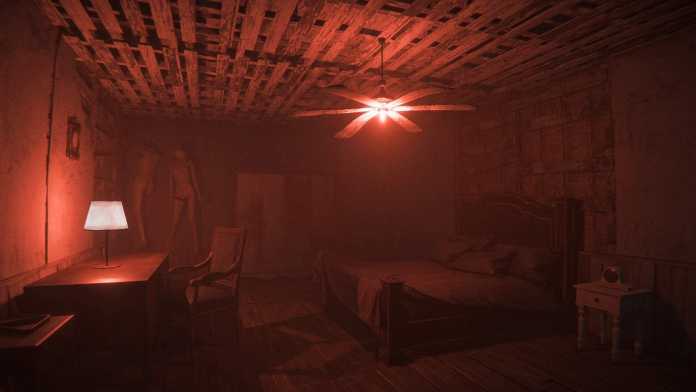
Anthology of Fear isn’t too shabby at setting up atmosphere either. It’s well paced in the beginning, with a lot of walking through creaking corridors and flickering lights. I found myself looking over my shoulder quite a bit for the first half hour, which was a positive sign. Unfortunately, it couldn’t quite keep it up. A suspensful atmosphere isn’t worth much if there’s no payoff, which is distinctly lacking. Anthology of Fear is like a rollercoaster where the big climb just ends with the photo kiosk and a long walk down a staircase. Well, alright, there is some pay off but that leads us to the second rule…

Second rule, the audience shouldn’t be able to guess what scare is coming. Let me conduct an experiment. If you’re playing a horror game and you turn a corner to see a mannequin, do you think it’s going to A) model fashionable clothing or B) appear behind you when you do something important? It dropped the bottom out of the atmosphere for me, because I guessed (correctly) exactly what was going to happen. So when they did inevitably move, I just nodded slightly and carried on. A whole half of the game is built around these things, turning a harrowing experience into a humdrum one.

Threat Not Found

It’s particularly frustrating because Anthology of Fear‘s story is hitting interesting beats. The second chapter seemed to be building up around the idea of survivor’s guilt, paired with themes of suicide. Its a brutal story that doesn’t pull any punches. It even competently links together the different chapters. It’s an absolute gold mine for horror, but Anthology of Fear only starts to dig in right towards the end. There’s a giant eye that’s saying mean things, I keep getting locked in rooms and someone’s crying over my shoulder. Spooky stuff. It’s trying its best to get under my skin, but the entire thing is completely undermined by the next rule..

Rule three, the best scares are the risky ones. Anthology of Fear is desperately lacking in any sort of threat. It’s one of those games where ninety percent of game time is spent walking down a corridor and the other ten percent is on easy little puzzles. Even when a monster did appear, all he did was make my screen wobble for a bit and then disappear. I did get a gun at one point, which gave me hope that we were about to throw some tension in the mix. It even had a unique mechanic where you could only fire it when a phone was ringing. But then it disappeared after about five minutes and it was back to holding up the left stick. Knowing that nothing bad could happen to me rather killed what tension was left.

It’s not helped by the slightly wonky execution. For one thing, Anthology of Fear makes you hold the right shoulder button and then press A to examine things. A small problem, granted, but given that I ended up holding down RB almost constantly, I can’t see any reason why you wouldn’t set examine to just the A button. It’s also not great at explaining its mechanics. At one point it wanted me to yank out some of my teeth (don’t ask), but was weirdly reticient about telling me to how to do it. Add in some wonky writing and voice acting and you’re left with a slight unfinished feel. That said, let me give some credit: it does look rather nice. The lighting and general graphics hold up Anthology of Fear a great deal, even if it is weirdly insistent on smearing Vaseline over the camera.

Post-It Note of Fear

The last rule is an important one – don’t charge a premium price if you’re only going to be on stage for five minutes. Anthology of Fear‘s full playtime clocked in at just over two hours. For £13, that’s pretty painful. Layers of Fear, a comparable game, is two quid more and about twice as long. I wouldn’t mind as much if the story wrapped up well, but it just meanders about. The missing brother plot is concluded about an hour in. We’re left exploring the brain of a tangentially related woman and then it just ends. There’s no interesting climax or even any characterisation to speak of. Two stories does not an anthology make.

I do feel a little bad for bashing it because there is some grain of potential buried here. But it’s buried in handfuls of dirt from other, stronger titles. Mannequins, looping buildings and impossible architecture. It’s all been done before. I’m glad we all agree that PT was an interesting experiment but it’s time to move on. Dig deeper into that interesting plot, perhaps explore those gun mechanics a bit and then you’ll have something a lot more interesting. As it stands, Anthology of Fear is trying its best but the curtain hook is already extending to yank it off.

(Anthology of Fear’s Steam Page)

Review: Peppa Pig: World Adventures

If you have young children, the words Peppa Pig will be all too familiar. This annoying yet loveable character brings joy to many youngsters’ hearts. However, as an adult, you’ll despise her chirpy and repetitive ways. Consequently, when Peppa Pig: World Adventures was installed on to my Xbox Series X, I could have cried. My children, on the other hand, couldn’t have been happier with the situation.

Developed by Petoons Studio and published by Outright Games, this is a family-friendly title. What’s more, it has some basic adventure elements and plenty of simple but enjoyable tasks to complete. Therefore, it is the perfect endeavour for your children to undertake by themselves or with their siblings.

The Pig family head to the harbour to start their adventure.
Go to the harbour and pick a trip.

Peppa Pig: World Adventures is a great sequel. 

Having reviewed My Friend Peppa Pig, I didn’t know how a sequel would work. In the first instalment, the developers incorporated some fun tasks and a healthy spattering of recognisable characters. Moreover, the Peppa world was vibrant and enjoyable to explore. However, reviewers slammed the game and users didn’t appreciate its charms. I, though, identified its key audience and respected this fact. Accordingly, I’ll do the same with Peppa Pig: World Adventures

This vivid game won’t impress adults. In fact, it’ll drive you insane as the inane gameplay is repetitive, mundane, and lacking in any sort of difficulty. Yet, Peppa Pig: World Adventures isn’t aimed at an older audience. As such, it hits the right mark with younger gamers. What’s more, it has a delightful educative element, it can be tackled without adult intervention, and it’s a safe environment for your munchkins to explore. Therefore, what’s not to like about that?

A cruise around the world, why not?

Like the first instalment, this game asks you to complete rudimentary tasks. You’ll be expected to jump up and down in muddy puddles, swing on swings, find items, play with toys, and interact with the cast of the TV series. Furthermore, you’ll learn facts about each country you visit and gather nik-naks to decorate your house with.

You’ll visit the Eiffel Tower, play football in Barcelona, see the skyscrapers of New York, drink hot chocolate in Germany, make pizza in Italy, and much more. During every expedition, Peppa and her new friend, that’s you, will explore freely or until the cruise ship captain demands you return. Once you leave each place, the story nicely highlights key points from each trip and this reinforces the subtle educational undertones. This was excellent, as the game neither feels moralistic nor preachy. As such, kids will learn subliminally, and that was wonderful.

A rhino serves pizza when Peppa and her friend visit Italy.
mmmm pizza time.

One step further. 

Where Peppa Pig: World Adventures excels is its ability to make you feel part of the colourful world. Unlike My Friend Peppa Pig, this one lets you build a house and decorate it with all the nik-naks you bring back.

Now, this may seem like a minor element, but my kids adored this small mechanic. Furthermore, it was a clever touch that makes you want to explore each location thoroughly. Alongside this, your character has an array of costumes to change into, and you are able to create the family of your dreams. As such, you can live alone with one parent, or you can make a massive family of cats, dogs, rabbits, and so forth. 

Peppa Pig: World Adventures is a colour explosion. 

Like its predecessor and the TV series, Peppa Pig: World Adventures is eye-wateringly vivid to look at. Additionally, the characters are simple, clean-cut, and well-animated. What’s more, the varied backdrops are bright, fun to look at, and capture each scene perfectly. However, there were occasional issues as the game transitioned from one area to another. Furthermore, characters would unnecessarily appear or disappear randomly. Luckily, these are minor faults that will be rectified with a day one patch.

Fans of the franchise will adore the chirpy audio. With familiar music and sound bites, your kids will go wild for the experience. On top of this, the script is easy to follow, safe, and amusing. My children loved interacting with each character while learning key facts about every location. 

A mass outing to the moon.
I wonder if there is any cheese here?

Easy to control. 

As it is aimed towards younger players, the controls are understandably stripped back. Accordingly, each action can be easily executed and minimal explanation is needed to learn the fundamentals. What’s more, young children can master it and little guidance is needed. 

On the surface, this lacks replay value and longevity. Yet, my kids returned over and over again. They couldn’t get enough of travelling the world or decorating their house. Furthermore, they adored the basic activities. Consequently, I was amazed by how much it held their attention. 

Peppa Pig: World Adventures won’t disappoint your sprogs. 

If your munchkins love this annoying pig as much as mine, then they will cherish Peppa Pig: World Adventures. Additionally, you won’t have to help unless you want to enjoy the vivid and OTT experience. As such, it is a fantastic, yet simple endeavour that entertains and educates young gamers. Moreover, the environment is safe; the dialogue is clean and amusing, and the activities are perfectly balanced. Accordingly, it is a great title and I recommend that you buy it here! Moving to Peppa’s world was a stroke of genius. Now, you can make new friends, enjoy new activities, and travel the globe. 

Review: Sanctuary Saga

RPGs lend themselves to beautiful, diverse environments with fantastic stories and engaging tactical combat. While there is an interesting battle system in Sanctuary Saga, it fails to deliver an enthralling narrative. This RPG Rogue-lite hybrid is developed by Boomer’s Workshop and published by V Publishing and features a lot of fantastic ideas. That being said, some of these ideas fall flat, leading to a fairly average game.

A Tale of Survival

Sanctuary Saga takes place 6 months after a failed foundation in a continent known as the Untamed Wilds; a bountiful land that happens to be very dangerous, with monsters and the undead inhabiting it. After being overworked, Syrena and her guild try again to settle in the Untamed Wilds. She joins with other guilds from across the nation such as the thief guild led by the sly Ethan and the Dwarrodwarf clan led by the brute Dolgrim to name a few. They adopt a Caravan lifestyle and help her settle in this foreign land until they can find a suitable foundation for their Sanctuary.

Sanctuary Saga exhibits a great premise but fails in the execution. Most of the story progression is done off-screen by random NPCs, rather than being shown to the player through the cutscenes or the gameplay. In the later parts of the story, the party is told that the lands are becoming corrupt. However, because of how few environments there are, we don’t see this through our expeditions. The world and the story don’t feel connected, which breaks the immersion of this story for me, unfortunately.

While the story may be lackluster, the interactions between the party members grant an entertaining experience. By fighting alongside each other, characters gain relationship points (Or RP for short). Gaining enough relationship points levels up the relationship level between characters. Upon leveling up a relationship between two characters, a small heart-to-heart appears, showing us more of this cast of characters. These conversations feel very real, detailing the emotions of the characters as they traverse the dangerous landscapes. I thoroughly enjoyed reading each one of these conversations and I personally believe this to be the highlight of the story.

A good relationship is the key to success

Life in the Caravan

Sanctuary Saga is split into two sections. The expeditions where you explore the Untamed wilds, and the Caravan. The Caravan acts as a hub for the main party. Although it is quite bare with little to do, it houses very important aspects of the game. It is here where the party can upgrade their gear with resources found on expeditions. Each character requires two different resources to upgrade their equipment. Furthermore, each resource has different drop rates depending on the biome, for example, it is easier to find hides in the cavern’s biome. While this may be the case, there is a trader that allows the player to exchange resources for a small fee. Also in the Caravan are NPCs that will give you side quests. Each one of these must be accepted before going on an expedition and can reward you with relationship points, upgraded skills, or resources.

The Caravan is a very interesting place, showcasing some of this game’s more interesting choices. This includes the lack of experience points. In this case, your party’s level is tied to your equipment. The stronger your equipment the higher your level becomes. Furthermore, your progress is tied to your level. Once you have four party members at the next level and complete an expedition, the story will progress. Additionally, your party will face the same enemies throughout the adventure. While this system works well, it’s hard to see any visible improvement with your characters due to the same enemies leveling up alongside the player. I also wish there were more ways to prepare other than leveling up. Still, it’s a nice resting spot after the expeditions.

Setting out on an expedition

Life in the Wilds

Upon completing your preparations in the Caravan, you will want to set out on an expedition. An expedition takes place in one of four biomes, each having its own diverse set of enemies, puzzles, and bosses. Each expedition consists of three areas and at the end of areas two and three you will fight a boss. While all this sounds exciting, unfortunately you are most likely to repeat areas, as well as bosses and puzzles. This makes the grind for resources a slog, which causes expeditions to become very repetitive. Additionally, resources aren’t plentiful enough to where you can skip battles either, so you must be prepared to fight every single battle.

Fortunately, while the game has many grinding aspects, the game’s battle system itself is very fun. The game takes place in rows. Using attacks and defending will move your position in the row, affecting what skills you can and can’t use. On top of this, the enemy can push your allies back and forth through the row as well, making it necessary to adapt to an ever-changing situation. I love this combat system. I found it satisfying to make it through difficult battles, and it forced me to use every resource available to me. However, the hit rate of attacks feels low, causing me several turns of missed attacks.

Finally, in combat, you have the ARG meter. Getting hit by enemy attacks will cause this meter to go up. You can lower it by healing, avoiding attacks, or using ARG meter healing skills. This is the main combat feature highlighted in the promotional material. Having a high ARG meter will cause the character to argue. What does arguing do? Well, you miss a turn. This is a huge disappointment due to how fixated the trailer was on this feature.

Cool the first time. Not so much the fifth.

Sanctuary Saga, Concepts lost in translation

Overall I had fun with Sanctuary Saga thanks to its great battle system and charming pixel art visuals. However, the lackluster story and the repeat walkthroughs of every area hurt the experience for me. If there were more enemies to fight, more dungeons to go through, or even more story sequences to play through I feel as though I would have had a better time as is. Fortunately, the developers are continuing to work on this game, even after its launch, but as it is now, this game is simply a decent experience.