Review: Beyond a Steel Sky – Console Edition

My formative gaming years were spent with the classic Point and Click adventure games of the 90s, from The Secret of Monkey Island series, Full Throttle, Day of the Tentacle, and others. It was a golden age of the genre, something that had a bit of a rival with the Tell-Tale Game releases but one of the more iconic games for me was “Beneath a Steel Sky”, a Cyberpunk Sci-Fi rich adventure full of humor release in 1994. So back in 2020, when it was announced that a spiritual successor in “Beyond a Steel Sky” was to be released on PC as well as iOS and Android devices, well it had my attention, but it has taken to the final days of November 2021 for the game to finally come to main consoles, so was the wait worth it?

Beyond a Steel Sky is more than just a spiritual successor, it is a direct sequel to the 1994 classic, set ten years after the events of the first game and features a returning Robert Foster, the hero of the first game, enjoying life back in the GAP, formerly the Australian Outback before the world went to pot. Now helping a new tribe, on his final day there, Robert goes on a fishing trip along with his best friend and their son Milo when suddenly, a giant machine comes out of the water knocking Robert and the boys father out and kidnapping the child. With the father too injured to pursue, Robert takes up the task of tracking down and rescuing the boy, this will bring Robert back to face his past and a world he felt he had already saved and left behind.

Now, if you have played the original than Beyond a Steel Sky is going to be a fantastic and rewarding return to that world for it has so much nostalgia for it in terms of returning themes and names whilst using the same style of puzzle solving and humor that fans will instantly recognize. If you have never played the original, there is still a very competent modern style point and click adventure but a lot of the spirit of the game might be a little lost on the player. From the same team behind the Broken Sword series, ‘Beyond a Steel Sky’ is very much old school, which for 2021 console players who may never have played a true Point and Click story, might leave them in the cold.

Visually this game has the similar art style of Tell-Tale Games, and it certainly works for it, controlling Robert Foster with a controller instead of a mouse gave me more of a connection to Robert as I moved him around to navigate locations and interact with the world. That world is very beautiful with the main bulk of the adventure taking place in Union City, a rebuilt version of Sydney Australia, with locations that look incredible as you often visit places that allow you to move the camera to see more of the city with building reaching hi into the sky. The animation is simplistic but works though it can feel a little off at times such as Robert Foster not really running rather than fast walking when the player wants to move a little faster when wandering around a level.

The story itself is very much a narrative driven experience, there is little to no combat and very traditionally focused on puzzle solving and there is a great deal of that though the puzzles are quite simple, nothing too testing that interacting with everything in an area to see if it will help you solve a section to exploring all dialogue options with the characters around you. Quite a bit of this interaction style can feel like filler after a while however with the main puzzle solving mechanic of Hacking, which uses a tool to switch program protocols from different systems often being the go-to solution when needing to access a location or system for information. This is a fun mechanic at the start of the story but by the final sections can become a little repetitive.

The themes of the story continue very much from the original which saw an AI system controlling the city but here it has been replaced by “The Council” who uses a QDOS rating system to control the population. QDOS is a scoring system that works when the person does as they are told so turning up for work and being all happy can lead to a high QDOS score and opens more social climbing and progression for that person but the flip side is, miss a day of work, acting in a way that is not seen as positive and happy for the community, and your QDOS will be impacted and even lowered, removing your social standing and therefore access to all the lovely things that make your quality of life worthwhile. It is a clever look at a very dystopian method of control and the player can see how this impacts the people they interact with as Robert Foster, adding more reason for Robert to take The Council down.

The voice performance is a very mixed bag here, some performances are great but the variety of quality across the different characters is very noticeable, often wooden performances made me skip a lot of dialogue not centered on the information you needed to get from that character, and there is a lot of throwaway dialogue options that can build an understanding of life in Union City, but with the voice performances being rather annoying to listen to, I found myself focusing on just getting what I needed and moving on, especially in the later stages of the game.

There is a real over reliance on players of this game at least knowing the story to the original, as the moments where the nostalgia kicks in, such as meeting Joey, the AI Robert created in the first game, will have more impact for the player and though it will not be completely lost on a newcomer to this game, the references and jokes certainly connect better with the knowledge and experience of having played “Beneath a Steel Sky”. As someone who did play the original, Beyond offers so much that reminded me why I loved the original so much but also offered something new to justify a return to that world and this does deliver that but it also has a very one and done feel to the experience, once completed I never felt the same connection to this game as I do with the original, making this more a fun holiday back in time that a “oh I really want more stories in this world” feeling as the game’s credits rolled.

Overall, this is certainly a game for fans of the original, though taking as long as it has for this 2020 release to make its way to the main consoles is a real shame but with the world as it has been for the last couple of years, it is very understandable. As a game experience, if you love the point and click genre style of puzzle solving and story telling than ‘Beyond a Steel Sky’ has a lot of boxes ticked for you, if not then you might find this a rather plodding along game experience that will be a great “picked up in a sale for a £10 or lower” title.

I enjoyed this game because of my experience with the first, and it was a fun nostalgia ride down my gamer memory lane but beyond that, and pardon the pun, it is a good but not overly memorable or fully satisfying game experience.

Review: Night Lights

Have you ever noticed how quickly the world changes when the lights are turned off? While everything is illuminated, there is a sense of safety and warmth. Yet, when darkness strikes, even the most familiar of locations can appear alien. So, what’s the solution? You must switch on the lights to illuminate the gloomy environment, that’s what! This is the core idea behind Night Lights, a funky light manipulation experience.

Developed by Meridian4 and published by Ratalaika Games, this is a puzzle platform title. Comprising forty-five levels in an array of locations, Night Lights becomes increasingly more complex and convoluted.

Night Lights is a fresh look on a well-trodden mechanic. 

Light manipulation and puzzle titles go together like Ant and Dec, peanut butter and jam (jelly for our American friends), and Christmas and Santa. Heck, I’ve recently covered Tandem: A Tale of Shadows, which incorporates this idea brilliantly. So, with so many games using this element, you have to do well to stand out. Fortunately, Night Lights does just that. Its striking style, drip-fed mechanics, and interesting stage design all work in harmony. Furthermore, its simple approach won’t overwhelm you. Though, a pinch of Metroidvania gaming adds a little spice that increases the challenge further.

The story, or what little there is of it, revolves around a tiny robot. He finds himself on a darkened planet that is ominous and overbearing. He begins life with limited skills, and this restricts his ability to explore. As the game evolves, the robot learns new abilities and previously out of reach locations can be visited.

Where will this door lead?

Wonderfully straightforward. 

Where Night Lights excels is its lack of complexity. I adored the freedom to explore each of the four zones and the introduction of new mechanics. You will learn the ability to jump higher, dash, sprint, and will gain a head bulb. These new skills were fascinating and you’ll love uncovering hidden areas on the map. This creates an engrossing exploration adventure experience, and this is where the Metroidvania elements sneak into play. It was easy to become lost as you attempted to find collectables or new routes, and some may find this frustrating. I, though, enjoyed how this added to the longevity while demanding you stay focused.

Your newly acquired skills need energy to work, and this is where the collectables are essential. Dotted around the map, you’ll find lightning bolts to gather. These tricky treasures are always just out of reach! Ironically, the skills that need them must be used to collect them. Alongside this, you must find a limited supply of crystals! They are the key to progress and power multiple tools and portals en route. Without these, you have no chance of completing the game, so keep your eyes peeled.

Allow the light to guide you.

Night Lights is beautiful to look at. 

This 2D side-scrolling title is absolutely beautiful to look at. Set with a mainly monochromatic palette, I was amazed by its haunting style. The bleakness is punctuated by moments of colour and warmth from any light sources. This was a classy touch that complimented the striking black on white. With four worlds to explore, the developers did a great job of creating variety in a minimalist setting. Moreover, I never tired of what I saw, and this was aided by the buttery-smooth gameplay. 

Meridian4 tried to enhance the eerie atmosphere with a monotonous choral soundtrack. Sadly, it didn’t work as well as they hoped. I could see what they were trying to achieve, but the end result was repetitive and annoying. Furthermore, there is a bug with the audio settings that mutes the sound as you start the game. You’ll manually alter it to your liking, or play in silence. Either way, it’s a frustrating issue that needs to be addressed. 

I take it back, TV is not useless.

Familiar platform controls. 

If you are a veteran of the genre or even played just a few games, you’ll be familiar with the controls. The well laid out setup and in-depth tutorial make this a pleasure to play. Yes, it can be fiddly and precision is key, but any shortcomings are user-related. Many games require finesse and practice to progress, and Night Lights is no different.

Thanks to its many levels, unlockable skills, and collectables, there is plenty to keep you playing. Furthermore, the Metroidvania style exploration adds mystery to this stunningly simple title. Sadly, though, the achievement list is tiny and doesn’t add to the longevity. Subsequently, the replay value is found in the gradual learning curve and the expansion of each area.

Night Lights reignites the genre. 

When a game uses well-trodden mechanics, it’s easy for it to become bland. However, Night Lights twists familiar elements and reignites the genre. I adored the simplicity of the gameplay, the mystery behind the exploration, and the striking aesthetics. If you love puzzles and platforming, then this is the game for you. I enjoyed it and I recommend you to buy it here! Can you add light to this gloomy planet? Explore, unlock new abilities, and find every collectable.

My video review with footage captured from my Xbox Series X, enjoy!

Review: LOVE – A Puzzle Box Filled with Stories

0

I am so, so in LOVE with this game! Literally, a game with many uncompleted mini-stories to solve. Each of these is done in a form of a puzzle, which evolves in such an adoring story. Each person’s story you get to view requires you to solve the slightly perplexing puzzle. I kid, it’s not that difficult, but it can be a little challenging. I found the game to be a bit intriguing to see what you may just find out about these people in the game; these tenants that live in this one large apartment building.

The game is giving us, the player the ability to revive and evolve the stories of these tenants by figuring out the little pieces that make the story continue. There are a few that might feel a bit sad, but many other mixed emotions when you are figuring out the stories of these unique characters. So it may bring on a few different emotional feelings during the past time, but when the stories are completed, they lead to better and improved; happier presents. So as in a present; real-life timeframe in the game, we the player work by solving the stories allowing every tale to blossom and produce the result of what was to happen next in the recent timeframe.

Of course, I can’t help to feel a tad sad or feel some type of different emotion for a few of the stories; past and present events that occur. It’s nothing that would make me feel that this game is awkward, strange, or in any way of being terrible. It’s far from a dreadful game! Except, maybe the poly-like graphics aren’t that great in the past visual experience, which I will get a bit more into next!

These characters are done to be human beings. Nothing strange, just a man or woman. Plain and simple as that. However, I think the look of the characters can appear a bit stranger in shape as they should be. The design isn’t as neat or smooth as the poly-style design in its features. A big reason I feel this way is that the characters; tenants in this apartment have this awkward appearance with the graphics because they could blend in the scenery, as many rooms are crowded with items. Also, they sometimes look stranger in shape because of this design approach; polygraphic design. Longer fingers, arms, or hands made them appear alien-like.

Nevertheless, it’s an original idea and I do still enjoy the one concept of going from a past to a present in this game, changing their appearances and the perspective of the entire world, room style objects, and people. Where you see the black and white; grey being the color of the past events while the present stands out in full color, makes it super easy to decipher each time frame you are working and seeing.

Now for the game, well it does provide something worth playing! It brings the player a little puzzling fun to connect the past and present events together. Now, this is the main purpose and goal of the game. Why I kept mentioning these two styles and the visual appearance of each story. Since, you go from the start of the game, learning ways to maneuver and use each game’s easily mapped out key on the controller to play. From zooming into the rooms, changing and viewing each open room, or closing them and viewing another side. It’s all explained and clearly. Even going from the menu with an album of the photos is done with a cute heart-shaped selector. Sorry, that little piece is just adorable to have added.

Afterward, it’s all about learning to solve the puzzle of the game, well many puzzles are all similar just about connecting one story to the next. So practically, it’s all a bunch of rotating from left to right, searching up and down and even selecting the characters in these different apartment rooms, within the building to play through their stories. Super simple to understand, which I love, and no getting lost when you begin playing, so don’t worry if that ever is a fear. It’s perfect for everyone, anyone wants to open up a can of worm and love these magnificent stories.

In some ways, the game does remind me of a rubrics cube, rotating the boxes; rooms in this apartment to make it match up just right. This way the story can continue to move on and play through. Oh yes, there is something that is quite original with this game’s puzzling design is that it moves from past and present. I know I’ve mentioned this a bunch of times already, but what I didn’t mention is that the photos are also contributing to each past and present part of the puzzle that needs to be created and unlocked to move further through the game. For example, a few past and present images will show up in the album. You as the player must figure out what will make the completion needed to unlock many more stories of the tenants in the building.

Now for the features and parts that didn’t quite fit my enjoyment of the game. Don’t get me wrong, I did think that the game first caught me as a fun way to see play a puzzling story-style venture. However, there were a few issues I stumbled across. One is that the album of past and present shares this interesting puzzle that you need to figure out how one image relates to the next part of the present story. Yet, the problem I came upon is that the album can be quite challenging to know what you need to do next. It isn’t super clear with the grey color images and the colorful ones.

Thankfully for these cameras like illustrated; selectable objects being presented on the rooms that are most important to take a glance at, really help! Plus, I don’t think there is a path that says you need to do things in order, just go as you please, of the ones that are unlocked. So, in my case, I just played the game freely not really utilizing the album for much guidance. I went my own blind-gameplaying method, which I do often in games. Doing this I mean I just begin to rotate, click, select, or choose an object that would be available for me to work with next. That is basically the way I made it work.

The second and last issue arose when some of these designated locations after selecting a character really don’t easily have a clear enough area to place them. Especially, since these lit-up areas are telling you to move them to this specific spot. I still felt it was hard cause the lighted ring can be seen through all objects and if you don’t click the right position being targeted with a light ring, or close enough. I think it can get slightly frustrating, this might just be me, but if you end up playing and keep trying the spot and it wasn’t close enough, I just felt it could be less visible through all buildings, making it easier to detect the location.

Lastly, I felt the entire game and its many stories to be very entertaining, relaxing and doesn’t make for such a complicated game to play. It’s fun to see all the photos being completed and finishing a story to get a whole new, bunch of others to open up and try to solve. I find the game perfect to be called for everyone because it is fun for, well everyone! Oh, by the way, the soundtrack is quite nice and adds this perfect additional pleasure to the game, while sitting back and playing.

Review: Blue Reflection: Second Light

It took me longer than I was expecting to figure out whether or not I actually liked Blue Reflection: Second Light. There were moments where I got immersed in the story and the dynamic between it’s cast of characters. But also moments where gameplay felt like a slog. Just busywork to get me to the next plot point. 

I’m Not Upset, Just Dissapointed

This kind of relationship between story and gameplay has always been something that pushes me away from fully enjoying a game. The two need to work together in order to convince me to keep going. The gameplay propels the narrative forward in an enjoyable way, and the narrative justifies the gameplay in a compelling way. However, I felt Second Light only hit home for me in one half of this statement. 

As much as I tried to enjoy the gameplay, I just couldn’t. That isn’t to say that it’s irredeemably bad. Just that it was a little disappointing. Now that I write this out I can’t help but think of the clichéd phrase: “I’m not upset, just disappointed.” 

Honestly though that old and tired phrase is a pretty accurate representation of my feelings toward the gameplay. Specifically the traversal and combat. Two very big components of the time you’ll be spending in this world. 

The Beginning of a Long Summer

However, let’s touch on the story first. Second Light follows the protagonist Ao Hoshizaki and a group of girls living in a school surrounded by blue waters. How they got there and why they’re there, are both unknowns. The entire group except for Ao have all lost their memories. Yet Ao has no idea of what the place is. Only that she was headed for summer school before awakening at this strange imitation of a school. 

Ao was not the first or last to arrive here, but is the most determined to uncover its secrets and help her newfound friends to recover their memories. They come to learn that their best bet are places called heartscapes. Heartscapes are areas linked to one person’s memories. They change in appearance and landscape depending on whose emotions and heart is tied to it. Inside this heartscape are fragments of their memories. And so they venture forth, exploring, foraging and fighting demons in order to piece together the puzzle of what’s going on. 

Get Me Out of Here

On paper this is a fairly interesting premise, and narratively it definitely is. However, it falls short in it’s heartscape gameplay. Combat is fairly simple. It’s a turn-based/real time hybrid that has everyone, whether hero or enemy, acting on a timeline. As time passes you gain access to your abilities, the first tier gives you 1000 points which is enough to complete one basic action. However as fights progress you gain access to higher tiers, allowing you to string moves or use items and healing abilities. This makes combat a bit of a waiting game where you eagerly await the button prompt telling you you’re now allowed to make a move. I was not a fan of this style of combat. I enjoy a good turn-based RPG sure, but this felt like a weird warping of those gameplay mechanics. 

My time in combat also never felt as tactical or strategic as it might in other turn-based titles. It instead became a matter of dealing the most damage while watching out for attacks being resisted or exploiting a weakness. There were status effects and items that gave out buffs, but rarely ever did they feel necessary. I’d mess around with them for the sake of engagement, but they felt like window dressing for the most part. You could, after all, get away with simply attacking and occasionally healing. The only times when you’d actually make use of your full range of abilities, mainly out of necessity, would be on the highest difficulties. 

Getting around the heartscapes can sometimes be a tedious task. You walk, run and sneak around enemies, trying to hit them first for a slight advantage at the beginning of a fight. You slowly balance and cross beams over gaps, hang on tightropes, and climb ladders. Standard fare, but mightily mind-numbing. What really doesn’t help is the fact that they use the same voice line everytime Ao gets to climbing and crossing. Prepare to have the limits of your sanity tested in that department. 

You also collect resources along the way. The things you collect are used as materials for the game’s crafting system. You can use the crafting system to create meals that provide HP recovery or buffs to defense and attack damage among others. You can also use your foraged resources to craft items used in the construction and upgrades of building/amenities.

Enough Fighting, Let’s Talk

As you play through the game, exploring everyone’s heartscape and hanging out at the school. You end up spending quite a lot of time with everyone, forming bonds with your newfound friends. This is the part of the game that I felt was the strongest. The writing shines here, with every person having their time in the spotlight and gaining depth as characters. You start establishing favourites among the group, ones you may identify with. Others you may find annoying but endearing, or a buzzkill who means well for the people they care about. The time I spent with each of Ao’s friends ended up being the one thing I was looking forward to. Especially when out in the heartscapes fighting demons.

The characterizations are strong in Second Light and this really lends itself well to the depth of the main story. It stops proceedings from just being “go fight demons to get on with the story” and rather a genuine wish to help each girl recover who they are. What’s essential to this is the amount of time you spend with each person.

Aside from the main story cutscenes, there are interactions that occur naturally, as you wander the halls of the school. However, there are also optional “dates” that you can go on with the girls. I was at first taken aback at the choice of wordsI wondered if it was a more literal translation from Japanese, or if Second Light was a dating simulator disguised as a JRPG. Thankfully though, these dates aren’t just straight up romantic interactions for the sake of fanservice. They’re rather moments where you get to hang out with your favourites. Although, you will find the odd flirty dialogue option, which ends up being more adorable than romantic.

For the Eyes and Ears

I enjoyed the soundtrack on offer, although at times I’d have liked some variety in the hub area theme. Lucky for me the song is pretty good. It’s this wonderfully light and airy music that just gives me a warm feeling reminiscent of long summer days. If I could think of a single word to describe it, it would be wholesome.

You won’t really find much to be amazed at visually. Character, enemy, and environment design are adequate, but never really go much further than that. The moment to moment visuals aren’t especially pretty either. However, there are little slices of beauty, like when a sunset hits just right. Providing deep shades of orange and yellow to the surroundings. Or this shot of a boss room lit up by floating lanterns of soft pink and orange. I’d have loved some more use of colour to add some life to the world.

Blue Reflection: Second Light is a great story carried by excellent characters, but dragged down by uninspired gameplay. I really wanted to enjoy it more than I did. But I just couldn’t convince myself that I was having a good time outside of cutscenes and dialogue. 

A Closer Look at In The Book Personalised Books

With Christmas not too far away now, we are going to be looking at various things you might want to consider – here we look at some awesome personalised books from In The Book.

This is how In The Book describe themselves:

“At In The Book, we believe in the power of reading. The power that helps educate, instil confidence, and most importantly, create a lasting bond between parent and child.

We came to life in 2018, and our aim was to put magic into the story by writing your child into adventures with their favourite characters from a host of well-known brands. Their name is woven into the story, as well as on the cover and even in the illustrations. This kindles their natural curiosity, helps children to relate to the book, and ultimately grow as a reader and an individual.

At In The Book, we’re a team of illustrators, storytellers, content creators (see here!) and most importantly, readers! We know one story is enough to transform an individual’s outlook on the world, whether it’s a well-loved book from childhood, or a classic work of fiction.”

We decided to take a look at two different books that In The Book offer.

Marvel’s The Infinity Saga Storybook Collection

Our Marvel’s The Infinity Saga storybook collection covers the entirety of the Marvel Cinematic Universe in chronological order over 188 pages! Including the first appearance of the mind stone, The First Avenger, Bruce Banner’s experiment all the way to the Guardian’s of the Galaxy, Ragnarok and Thanos’ arrival, this Marvel storybook collection is the ultimate gift for a Marvel film fanatic or dedicated comic book fiend. They’ll get to see how the Avengers were assembled, and everything that follows their gathering!

The edition is available in two sizes, featuring the individual’s name embossed on the cover and featured along the top of each page of each story. Bursting with hand-drawn illustrations, the deluxe edition offers larger and more detailed content, printed on premium quality gsm paper. Our book even includes exclusive Endgame artwork commissioned by Marvel especially for In The Book, which you can’t find anywhere else! This makes our collection book a special collector’s item for Marvel fans.

To finish off this ultimate collection, why not add a special message to the inside page? The book will arrive in one of the luxury gift boxes available and you can choose to upload a picture which will appear on the opening page of the book, making the gift entirely unique.

Personalise your book with your child’s name, which will be printed on the cover and at the top of each page of the book. Also add a special message to feature on the title page before the story. And, exclusive to In The Book, upload a photo to truly create a gift like no other.

The Marvel’s The Infinity Saga Storybook Collection is available now priced from £29.99.

Personalised Paw Patrol Story Collection for Bedtime

Any child who loves Paw Patrol will be over the moon with their very own personalised Paw Patrol story book collection! Your little one will be taken on exciting journeys with Ryder and the rest of the gang as they try to save the day in Adventure Bay. Your child has their own specially written introduction story that features them as one of the main characters alongside the pups as they begin their latest mission! After reading their own adventure story, they can get stuck into another four stories! With 104 fun filled pages in this collection, they’ll always have something exciting to read. Since it’s especially made for bedtime, you can sit down and read some fun stories with your child as they get tucked up into bed!

Even more, your child will be able to see their Name on the front cover of the book and on the top of every page, as well as read a special Message on the opening page! It’s the perfect personalised gift for any fan of the hit TV show, especially when you can complete your gift with a Photo of your little one to appear at the back of the book!

You can personalise your Paw Patrol book collection with any Name, appearing on the front cover and throughout the pages of the book. You can also add a special Message to the opening page of the book, especially for your little one!

There’s also the option to add a Photo of your child to appear at the back of the book.

Personalised Paw Patrol Story Collection for Bedtime is available now priced from £29.99.

Both of these books are great – the process of personalising them was easy and fun and from ordering them to them being delivered was a very short time too. 

In The Book have a lot of really great and interesting personalised books to choose from – take a look, there is bound to be something there you would love to give someone for Christmas. I really loved the option to add a photo – that makes it even more special.

You can learn more from the In The Book website, and there are some great offers on there at the moment as well.

Review: Undungeon

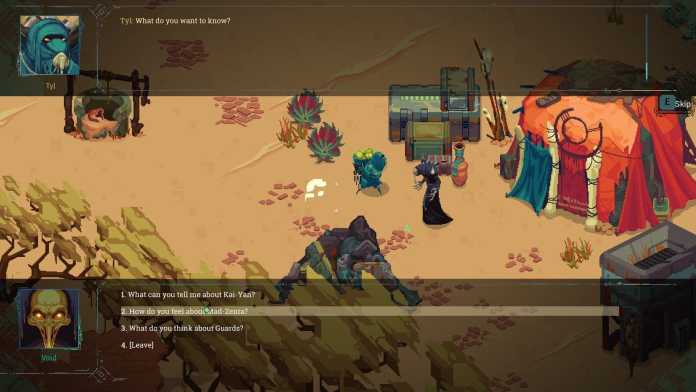
I love the freedom developers have to design fantasy worlds and bizarre stories. The blend of science fiction and mythology never bores me, and I’ll try anything that looks weird and wonderful. Game Pass allows players to delve into games they may otherwise have overlooked. One such title that may sadly fall into this trap is Undungeon. The confusing description of collapsing worlds and a Multiverse that needs to be reset doesn’t instantly grab you. However, this is one slow-burner that make take you by surprise.

Developed by Laughing Machine and published by TinyBuild, this is an old-school-inspired action RPG. Set across multiple bizarre landscapes, you control a claw-wielding herald called Void. His job is to save what is left of the Multiverse by completing quests, exploring vast words, and gathering organs. 

Undungeon is confusing as hell. 

When a game opens with an in-depth description to set the scene and a basic but thorough tutorial, you’d think you’d know what was going on. Sadly, Undungeon is confusing as hell, and I’m still not entirely sure what is happening. 

Yes, it’s clear that the game takes place after the point of no return! You must complete your quest to reset the Multiverse from collapsing in on itself. But, after that, I’m simply going along for the ride to see what unfolds.

You’ll encounter multiple guides, including a floating eyeball that offers you advice, and a hub keeper who happily reminds you of how difficult you were to create. After all, Void isn’t a normal creation! No, he’s a blend of essence, organs, and ribs all cooked together in some ungodly pot.

Death is but one hit away!

Missions and hack n slash combat. 

The odd plots and strange flowing story may be confusing, but the core mechanics are intelligent and fun to experiment with. The gameplay brilliantly blends its two genres with ease. The free-flowing real-time combat works well with the action elements. Whereas the character levelling and statistics and attribute improvements lean towards the RPG layers. 

Encountering scampering scorpion-like creatures who spit acid projectiles was hellish. However, the hack n slash style combat creates a hectic but unrefined experience. It seemed at odds with the rest of the stylised gameplay, even though it did well to break up the mission-based exploration. Sadly, these standard RPG staples will leave you uninspired. You’ll save lost people, transport goods, and explore unknown areas. Veterans of the genre will be stepping into very familiar territory. This isn’t a bad thing. I just hoped for more. 

Upgrades and equipment. 

When death wipes your progress back to the last checkpoint, you are going to want the strongest character possible. This is where XP, levelling, and bigger and better equipment comes in. 

Being an ungodly creature that is created from organs and essence has its advantages. Namely, the ability to swap out your inwards for new, improved parts. You can change your heart, skin, brains, legs, and intestines for improved versions with attribute boosts. Moreover, a rune-based system allows you to fine-tune Void to your gameplay style.

I loved the customisable approach, and this extends to the equipment that Void can use. With grenades, throwing knives, and potions at your disposal, the claws aren’t the only method of attack. Furthermore, they can be traded en route and repaired in the central hub. Sadly, nothing lasts forever and your gear takes a beating throughout. You must maintain everything you own or you’ll weaken your approach. It is an inconvenient layer of micromanagement, but one that matches the RPG mechanics. 

Slash your way to victory.

Undungeon looks and sounds fantastic. 

Though it has a strange story, weird organ-based mechanics and standard RPG quests, Undungeon undeniably looks amazing. Its striking pixel art demonic imagery and Sci-fi edge work fantastically well. Its wonderful top-down perspective gives you a fantastic viewpoint, and the game feels alive and full of energy. Yet, this strange world isn’t perfect. Its hectic battles and odd movement are overwhelming and jarring to look at.

With spells exploding, projectiles flying and creatures leaping, there is a lot to take in. As for the jarring moments, Void lacks fluidity when he turns. This is distracting when much of the action requires quick and accurate movement. Sadly, this is one retro element that was badly implemented.

The dark and creepy Sci-fi theme is captured in the low-fi audio. This wonderful soundtrack adds energy, emotion and atmosphere to this eerie odd title. Furthermore, the excellent sound effects of crashing magic and slicing claws brilliantly complement the hard-hitting action.

Influence those around you.

An exhausted godly hero. 

Heroes with weaknesses are nothing new, but to run out of stamina almost immediately is ridiculous. Void can slash his claws for three consecutive attacks before he’s gasping for breath! This annoying and poorly executed concept is thoroughly frustrating and is a turnoff. If you combine this with the poor turning circle and distracting combat visuals, Undungeon is quite a handful to play. I did, however, appreciate the use of submenus and the stylised pause in the action as you equipped new weaponry or different potions/accessories. It was a great way to break up the hectic gameplay while making it manageable to handle.

With death wiping your progress, you are kept on edge throughout. The strange storyline and weird mechanics are oddly moreish, and encountering the bizarre NPCs only muddies the water further. It’s a game that’ll keep you playing out of intrigue as you’ll want to know what is going on. Its tough gameplay is reflected in the challenging achievement list and completionists will lose hours to it. 

Undungeon is fantastic even with its shortcomings. 

Imperfect games are unfortunately a given these days. However, this doesn’t define whether a title is playable or a success. Undungeon is fantastic despite its shortcomings and I was fascinated by much of its central concept. Its strange style won’t appeal to all, but I loved it and recommend you to buy it here! Game Pass subscribers have nothing to lose as you can play it free of charge. Complete your quest, upgrade Void, and reset the Multiverse. 

Review: Severed Steel

Severed Steel is a first-person parkour-them-up where you play as Steel, a one-armed badass with gymnastic and time travel abilities to rival Max Whitlock during his ill-fated appearance on Doctor Who. In a world unbothered by trifles such as gravity and plot, Steel needs your help to smash her way through a fully destructible map using a gorgeously fluid combat and parkour system. All of this is made that little bit easier for the player’s stupid and slow brain by the ability to slow down time, giving you the time you need to perfectly chain together your jumps and dodge the bullets the bad men are firing at you.

First things first, let’s deal with the elephant in the room: Mirror’s Edge. Mirror’s Edge is the pinnacle of the art form when it comes to games with parkour mechanics and nothing has vaguely come close to matching the feeling and look of the game in the *checks notes* 12 years(!) since its release. So is Severed Steel just a clone of a very successful classic game? Should you care about it or would you have a better time by just playing Mirror’s Edge? 

The components that make Severed Steel distinct from Mirror’s Edge are threefold. 1) Severed Steel has a combat focus where Mirror’s Edge is all about avoiding combat and the purity of the parkour (apart from that one level everyone hated). A different direction in the gameplay priorities makes Severed Steel feel like its own thing. 2) Mirror’s Edge has a very white, futuristic and clean aesthetic which Severed Steel swaps out for the neon palette of a cyberpunk art style. This, again makes the game feel distinct from its spiritual predecessor and matches absolutely brilliantly with the slightly chaotic gameplay style that Severed Steel suggests. 3) Severed Steel has a ‘slow down time’ button meaning you can deal with the chaos and combat in a way that feels controlled and elegant, avoiding the pitfall there could’ve been by adding additional mechanics and making the game unplayably convoluted.

Now we’ve dealt with the elephant, let’s move on to the meat of the review.

The parkour. Is it good? Yes. With the perfect complement of moves, Severed Steel serves up your parkour fantasies, like a butler with a speciality in abstract concepts. You’ve got the basic moves you’d expect from your Call of Duty: Black Ops – you can jump, double jump, slide and wall run with elegance and ease completely at odds with the amount of screaming your average gamer would be doing on attempting those moves in real life. But Severed Steel ups the ante with a few additional moves that tie the whole system together in a bow. The first is a button that I think all games should have from now on to make sure you can live out all of your Matrix fantasies – dive. When you’re running along you can do a head-first leap that you’re heavily encouraged to use to make like electromagnetic radiation and transmit yourself through glass. You can tie this in with a double jump to get the extra forward momentum to make up the final few meters you need in the leap over the bottomless pits that are so prevalent in video games. The other button that Severed Steel adds to the standard set of gaming moves is kicking. You can kick off a wall after a double jump, giving you a little more height to scale those super tall obstacles in your path. You can also use the kick in combat situations to knock off your opponent’s block.

But kicking in an enemy soldier’s face, like it’s the Ikea box I just flattened for optimal disposal, is not the only tool on offer to ruin the bad guys’ whole day. In a crazy deviation from video game cliche, in Severed Steel, you have access to these things called guns. You can pick up enemies’ guns and use them against them, shooting from the walls mid-wall-run or kicking off enemy number one to get the flip you need to shoot enemy number two. And, as the game is as invested in you looking cool as Elon Musk is invested in not solving world hunger, you can obviously throw the gun once you’re finished with it, making sure the weapon has its final use once it’s out of gun food. The guns and kicks can be used on more than just guards – you can shoot windows to make a dive through them easier or just straight up shoot the walls and doors to make a path thanks to the destructible terrain.

An awful lot is going on in Severed Steel and, as much as Steel is a superhuman ninja who can think at the speed of light, you, as a player, are not. Juggling complex platforming and not getting shot by an overwhelming cohort of enemies is not an easy thing to do for us mere mortals so Severed Steel gives you a couple of gifts to maintain the flow and feel of the game in its panic-inducing, control-forgetting, damage-taking moments. Firstly, you don’t take any damage while doing acrobatic feats. Sliding, diving and wall running all make you invulnerable, meaning that, if you’re good enough at the parkour, you don’t need to worry about any enemies that aren’t directly in your path. But what if you’re not good enough at the parkour? The solution, as with most things in life, is to simply slow down time. With a click of a button, you’re in slow motion so you can perfectly time your attacks and moves to make you as smooth and talented as I believe you are. You can even dodge bullets. When you start the game, this mode is pretty much compulsory if you want to make sense of all the things going on that you’d have no chance of registering in real time. This lets you achieve your set objectives without worrying too much about being murdered, much like the improvements my office recently made to the alligator ceiling.

All in all, Severed Steel is a glorious ball of barely understandable chaos. A lot is going on which gives you a lot to master but Severed Steel has put a lot in place to make sure it’s manageable and even an idiot can make themselves look vaguely competent. If you want to feel like a slow-motion, parkour and face kicking badass then there aren’t a lot of better places to look than Severed Steel.

Review: Drizzlepath: Deja Vu

Video games span multiple genres and comprise a magnitude of themes and styles. They offer something for everyone, and what might be right for you won’t be attractive to someone else. Whatever your go-to genre is, there is always room for a relaxed and chilled out game. Drizzlepath: Deja Vu walks you through some stunning locations while giving you the time to think.

Developed by Tonguc Bodur and published by Eastasiasoft Limited, this is a walking simulator title. It’s the second Bodur game that I’ve covered recently and one I was thoroughly looking forward to. Drizzlepath: Deja Vu is a re-envisioning of his first endeavour and a welcome sight on console.

Why are they sculptures here?

Drizzlepath: Deja Vu is what you make of it.

As with most walking simulator titles, you only get out what you put in. Drizzlepath: Deja Vu allows you to lose yourself in its surreal world full of overbearing images. The game can be as short and simple, or as long and complex as you wish. You’ll span an array of landscapes, witness some weird sites, and listen to some intoxicating narration. Subsequently, hours of your life will be lost to this developer’s emotion-laced creation.

You control a man who takes a journey to discover the meaning of his existence. His story starts in a pool at the base of a mountain. You swim with fishes, observe a floating octopus, and pass a ghostly image. You may think this odd, but this is merely the tip of a surreal and bizarre iceberg. Unlike Lucid Cycle Bodur’s recently released walking simulator, Drizzlepath: Deja Vu isn’t as dreamy. However, the experience takes in unusual imagery and has many overbearing moments.

The water can be a dangerous place!

A journey through the ages.

Though there is a loose plot to follow, Drizzlepath: Deja Vu leaves much open to interpretation. This was a wonderful decision, as it allowed you to move through each defining moment. I adored how the nuggets of narration punctuated the surreal landscape. With no guidance on what path to take, it was easy to become disorientated. However, you were never too far from the correct route and progress flowed nicely.

The serenity and slow pace will be off-putting for many gamers. Subsequently, its relaxed approach and the interpretive plot will make some players feel uneasy. I, though, loved the exploration and how every element blended to create a vivid environment that was alive. Moreover, the world fills you with an array of emotions thanks to each chapter’s unique design. Whether you are lost in the snow, swimming underwater, strolling by the coast, or creeping through a blood-red land, it’s fascinating to experience.

Drizzlepath: Deja Vu needs a polish. 

When a game wants you to immerse yourself in the action, you want the world to be beautiful. Sadly, Drizzlepath: Deja Vu misses the mark as it needs a polish. From afar, the imagery is fantastic, and the giant Greek statues, landmarks, and trees look amazing. However, step closer and it appears dated and rough. This isn’t a deal-breaker, but it ruins the immersive nature of the title. Furthermore, the movement of the animals and NPCs is a little wooden, and I’d have liked this to be much smoother. Fortunately, though, you traverse the land with ease and the first-person perspective was a great choice.

The blend of soft music, dramatic tunes, and realistic sound effects complete this walking simulation. If you then account for the beautifully acted narration, you’ll experience a free-flowing and touching story. You’ll be transported to each area thanks to the crunching snow beneath your feet, the sound of rushing water, or the wind howling. It was brilliant and made this a relaxing but must-play title.

I’m not sure I want to go on this journey anymore.

Walk or jog, your choice!

There is little to worry about within this minimalist walking simulator. You don’t have to solve problems, there are no items to use or chasms to leap. No, your hardest decision is whether to walk or run. Yes, the scenery can block your path and this was a little annoying, but it was a minor thing. Thanks to the responsive controls, you can stroll or jog to your heart’s content.

Drizzlepath: Deja Vu is let down by its replay value. The story is short, with only eleven chapters to experience. Once it’s finished, there is little reason to return. Sadly, the achievement list won’t draw you back, either. The small list is progress related and you’ll complete it in no time. Unfortunately, it lacks both replay value and longevity. However, it’s still great value for money and worthy of your time.

Drizzlepath: Deja Vu is short and sweet. 

Tonguc Bodur creates some amazing games, and Drizzlepath: Deja Vu is up there with his best. I loved how the elements combined and the freedom you have to interpret the plot. The story is wonderfully emotive and players will lose themselves in its unusual world. It won’t be for everyone, but I enjoyed the slow pace, great scenery, and beautiful audio. It’s worth your money and time and I recommend you to buy it here! Take a journey across many landscapes while pondering your existence. Enjoy the weird imagery and reflective nature of this touching plot.

My video review with footage captured from my Xbox Series X, enjoy!

Review: Captain Toonhead vs the Punks from Outer Space

What on earth (or space) is Captain Toonhead?

Most of you are probably thinking the same thing as me before I played this game for the first time, what on earth (technically not on earth) is Captain Toonhead? I’m very glad you’ve asked!

Have you ever wanted to play a VR game where you can fire piggy piñatas at cyber chickens or shoot down aerial kittens before they drop bombs on you? Well you’ve come to the right place! You can do all of that and so much more during your time playing Captain Toonhead.

At its core Captain Toonhead is a tower defence game… on steroids. It takes everything you can think of from a typical tower defense game and cranks all the dials to the max, especially when it comes to crazy!

Captain Toonhead has some of the craziest level and character designs which I absolutely love. It makes the game feel so refreshing and sometimes its downright funny. I mean where else would find a tank shark or a cyber chicken.

Unlike the typical tower defence games that we’ve gotten used to over the years, Captain Toonhead does a fantastic job of making the gameplay new and refreshing while catering perfectly for VR players. Not only do players get a recognisable top down view of the battlefield but also a first person on the ground view that really makes you feel part of the action. Each view has their benefits, top down can be used for placing and upgrading turrets and the on the ground view can be used to feel like part of the action as you blast chickens with your dual laser pistols.

After all of this the aim of the game is to defeat waves of enemies, all with different abilities and stop them from reaching your escape ship and getting to your adorable little cube friends called Enercubes. Upon defeating enemies, they will drop scrap which you can collect by throwing your mjolnjrs at them, you can then use them to build or upgrade your turrets.

At the end of each round you are given a score and told how many of your enercubes you were able to save. Yes saving these guys is very important as it’s their job to upgrade your turrets and weapons which is essential as you progress through the game.

Great variety… for the most part

During the few hours of the game that I was able to play I was met with so much variety in terms of character design and turret design. There are some crazy enemy types that clearly took a lot of imagination such as the aerial kitten, the cyber chickens and the sharks running on tank tracks just to name a few.

In terms of turrets there are a wide variety with some familiar types that appear in a lot of tower defence games. There is a standard rocket turret which deals a decent amount of damage and doesn’t cost a lot of scrap to build, there’s a bomb turret which acts almost like a trebuchet, unsurprisingly it’s slower but deals a tonne of damage. Other turrets Include a slow down turret which freezes enemies in place. All of these turrets can be upgraded and levelled up, increasing their stats. Using this variety of turrets players must use their tactical skills in order to defeat increasingly difficult waves of enemies.

In a rinsed out genre such as tower defence, variety like this is so important as it gives the player something refreshing to sink their teeth into and brings new life into the genre as a whole.

One place where I wish there was more variety is with the player held weapons. Unfortunately the only weapon that the player is able to use is a dual laser pistol set up and although they can be upgraded it would be nice to have different weapon types.

A nod to the great voice acting

Captain Toonhead also has some great story, characters and voice acting. The voice acting itself is very enthusiastic and at times actually very funny. It really helps to engage the player with the story and also shows that the development team have put that bit of extra effort in to make their game special.

Captain Toonhead as a character is very relatable also. He’s just found all of his crew dead, they’ve cooked the burrito in the microwave which they were told explicitly not to do and now Toonhead has been made captain and its up to him to carry out the mission by himself. Captain Toonhead takes this unexpected promotion with ease and really comes into his own. He’s a very loveable and relatable character and with the fantastic voice acting he is definitely memorable.

So what’s wrong with it?

So I’ve talked a lot about what’s good with Captain Toonhead but what’s bad about it? And is it missing anything?

So there are a few issues I encountered during my time playing Captain Toonhead but generally they were very minor. Firstly I noticed a few visual glitches especially with the players hands when throwing the Mjolnirs, they tend to bend very awkwardly and to be honest, quite painfully.

Another visual issue that I noticed was with the pointer lasers that come out of your mjolnirs to show where your pointing. These pointers were a very bright yellow and were filled with a pattern that was very hard to look at and it even started to give me a headache if I would stare at it too long.

One thing that I wish was included is collision with your hands. Unfortunately when your holding your mjolnirs or weapons, your hands will just glide through objects and although it is a very small issue, I just think it would be a cool feature to be able to interact with objects, especially on your ship.

Verdict

Captain Toonhead takes the typical tower defence formula and completely cranks it to the max. It has a fantastic art style, voice performances, enemy designs and gameplay features which make the game refreshing in an otherwise dull genre. There are a few visual issues and things I wish were included and that could have given the game the 10 out of 10 it rightfully deserves.

Preview: Tape Recovery Simulator 96K

Gamers of a certain age will have no clue about tape cassettes, or even better floppy discs. These dated storage devices were the only way to share information and to play games. They were a great invention but were prone to damage and corruption. Tapes, in particular, were constantly failing, and this forced people to take matters into their own hands. Tape Recovery Simulator 96K is a simple but strangely addictive title that’ll transport you to this ancient art of data recovery.

Developed and published by CaffeineWithdrawalGames, this is a logic-based game full of 80s clichés and humorous one-liners. It’s a blast from the past and will fill older gamers with nostalgia.

Tape Recovery Simulator 96K is about solutions, not problems.

In the business focused world of the 70s and 80s, upper management wanted solutions and not problems. This present day tongue-in-cheek title captures the essence brilliantly in its email discussions and absurd business model. You work for EES the game’s fictive but modern firm. You take on the role of a data recovery specialist who must work with recovery tech to complete their job. Your tools of the trade comprises a basic computer, a tape player, and a mixing deck.

The core concept in Tape Recovery Simulator 96K is simple. Accept a job, save as much information, capture any images, and return it to the client. You must battle your never-ending workload while working as quickly as possible. You’ll focus on key areas of the recordings, complete your tasks, and move on. There isn’t a lot to it, but it’s brilliantly addictive and uses your senses of sight and hearing to overcome each problem.

Use the mixing desk to solve the problems.

Microelements and a thorough tutorial.

Now, I haven’t looked at a tape cassette in years, nor do I remember much about data recovery, so I was a little overwhelmed, to begin with. With dials, displays, and an array of complex labels, I was out of my depth. Fortunately, however, looks can be deceiving, and that’s certainly the case in Tape Recovery Simulator 96K. Its many minor layers are easy to work through and this creates an interesting albeit repetitive title. You’ll control the main volume, the emul volume, and the sync speed. You must handle the tapes, program the display with basic coding, record imagery, and scan the data.

I admit it sounds overbearing and very scientific, but it really isn’t thanks to the thorough tutorial. With a step-by-step guide that sets the scene and explains the fundamentals, you’ll be productive in no time. A word of warning, though! This game is all about the small details and this is essential to note during the opening stages. If you skip any of the hints, you’ll struggle to progress, so take your time. After all, who doesn’t want to learn about the long lost art of tape cassette data recovery?

So many error messages.

Tape Recovery Simulator 96K is wonderfully retro and authentic.

My memory of cassette gaming is somewhat hazy, but I do recall the vivid and wild loading screens and the repeated errors. Tape Recovery Simulator 96K has captured this fantastically in its minuscule display. I adored the trip down memory lane thanks to the authentic approach. I also loved the volume of information that can be moved and removed to match the user’s needs. This was excellent, as the UI could be as cluttered or clean as you wish.

The sneaky hidden gems of information were also a great element. Using each tool at your disposal was key to identifying problems and to finding the solutions. This was brilliantly simple but was easy to overlook, and this enhanced the game’s difficulty levels.

Younger players won’t know the joys of hearing your game squeaking as it processes the data. Tape Recovery Simulator 96K enhances its authenticity with its horribly shrill sound effects. The screech of each cassette loading and the sounds of the tape player transport you to this basic gaming era. It’s fair to say it lacks finesse, but this reflects the retro nature and I think the developers got the balance just right.

The emails never stop.

Data recovery is simple.

I never thought I’d put the words data recovery and simple in the same sentence, yet here we are. Controlled exclusively by mouse and keyboard, moving dials, imputing code, and handling tapes is a cinch. Subsequently, you can focus on the finer details of the gameplay and not the controls. Furthermore, much of the action relies on small shifts on the mixer board and, fortunately, this was never a problem.

Alongside this, it is undeniably great to return to physical devices. I loved interacting with the cassette player and the simplicity of how it works. The developers captured the magic of this long-forgotten era and I was grateful to experience it again.

When a game is this simple, it can undermine its replay value and longevity. However, as the title is still in its early stages I expect the difficulty and gameplay to evolve. The snippets I have experienced were wonderfully moreish and demanded your attention, and I hope this continues in any additional content. I was fascinated by the combination of visual and audio clues, and this made it a captivating experience. I’m not sure it’ll resonate with everyone, but a niche following will adore its charms.

Tape Recovery Simulator 96K is surprisingly fun.

I’ve played some weird and wonderful games and Tape Recovery Simulator 96K is a strange concept. Yet, I loved its unusual gameplay and retro style. It captures the essence of a simpler time while challenging you to think logically. I enjoyed its nostalgia-laced action and recommend you to wishlist it here! Battle the clichés, recover the data and become the best engineer in the field.

Summary.

Tape Recovery Simulator 96K is a nostalgia-laced logical title. You must use the limited tools at your disposal to find the problems and offer solutions. Filled with humorous one-liners and dated aesthetics, this is one title that older gamers will adore. You must pay attention to the tutorial and the minor details, otherwise, you’ll experience a confusing and frustrating time.

(Reviewed on PC using Steam. Available Q4 2021 or Q1 2022.)

Review: Heart Chain Kitty

0

If cats are something you love and possibly find adorable, well this game may or may not be as easily adored for you like many other games. I don’t know why, but the design is a little creepy to me. Something I wouldn’t feel like the first cat-related game I’d like the play. 

Plus, with the title, Heart Chain Kitty it sounds sort of nice, and yet the game’s story and design just feel a bit uneasy to enjoy. Especially since the game provides not much color as one may read in the description. Only if the creators are trying to imply more about how the world possibly blends colors, most uniquely. In my own opinion, it appears like the design of the world is made of a bit geometric-style gelatin; translucent style landmarks in the worlds that aren’t anymore but greens, reds, yellows, and blues all combined. If you ever took gelatin and mixed the colors, it sort of reminds me of that. None is very smooth in design, a bit fuzzy on the screen, and just not pleasing. 

It’s not only the characters and our cat, Kittey we play as the player that looks so strange with these colors. The worldly objects and landmarks are additionally a bit hard to look at. Not that the ability to move the camera each way is a problem, but the visual scenery gets a bit spooky in some ways. For example, there is one in particular, which I don’t want to be odd, but one cat statue is something I found a bit offensive. If you ever heard the thing about Disney movies appearing to have some obscene images left in the movies or somewhere on even the designed covers of the video, well it sort of made me feel just like that. 

Let’s say if you are lucky to spot this statue, I guess that will be a Willy Wonka moment, finding the golden ticket to see that obscene cat statue at the beginning of the game. I think if this part of the statue was done a bit smoother in design at the tip, this wouldn’t be an issue. Also, it could just be me, and possibly everyone I have shown at home that felt the same about it. 

So sadly, I can’t find myself to give this game’s graphics any high rating as it just is unpleasing. Even though it’s different and unique, it’s just a way too unminded portion of the game. I would rather have a normal color-scape and cute characters verse a gummy bear-style character to play as, with a tail and ears in a translucent gelatin worldly background and scenes.

Oh yes, and I must mention it also includes the designs of these villainous bosses! They are just as undesirable for a design, but it suits the game as the entire graphical appearance looks horrendous. At least there is some more of a battle to fight, than jumping on enemies in the game.

There is one other negative aspect of the game, which I found to be hard to relate to or want to care to read. The conversational pieces that took place in the game tend to not be at all humorous as they might or are meant to come off as. This is just my input, but I felt it to be still missing something to make it a bit more charming and amusing. So right from the beginning to the ending, the entire design and conversation between the cats and characters are just a bit dull and uncomfortable. 

However, if we do move on to the game itself, well this is where it has earned a few positive points! There really is one thing that this game may provide and that is a bit more engaging fun for the player. Just like many platformers, it’s a 3D-style game that you move about searching and transporting around the levels collecting objects and others, and finishing to completion. Again that is if you can get over the ubiquitous style levels and worldly designs. 

Heart Chain Kitty may actually have some way of reminding you of a few classic, retro similar style platformer games, with an adventure to entertain the player. From the many bosses and quests, it can keep you occupied, throwing in some challenging levels to accomplish it can be quite fun. Yet, there always is for me, that one big feature problem, the graphics that make it feel still a bit awkward like something won’t do what it should when being shot from a hoop to another location or if something is missing to get to one place to the next in the game. I don’t know why the game makes me feel this way, but it oddly does supply the connection and I have yet to feel stuck.

I sometimes feel like the only good thing is that you have a world to adventure through, like any typical platformer. Plus, the quests to entertain you and keep you motivated to play. Oh yes, and maybe the simple controlling button that was for the Xbox One is something to be pleased about. Other than that, the entire design really wrecks the game for me. I would rather have it in a standard design, not evening needing to be 3D. A standard appearance like 2D or a simple pixelated design would be perfect! Oh and maybe then this color-scape style world may be more appropriate and somewhat pleasant.

Nevertheless, the main purpose and goal of the game aren’t too difficult. Solving quests that are being asked, collecting items, and of course completing the main adventure of finding his family. It can be a game that may please those who can accept the quests, but it isn’t something that I can find myself playing so very often.

A Closer Look at the LEGO Marvel The Avengers Advent Calendar 2021

With Christmas not too far away now, we are going to be looking at various things you might want to consider – here we look at the LEGO Marvel The Avengers Advent Calendar 2021.

Behind each of the calendar’s 24 doors are daily gifts for kids to reveal throughout December’s buildup to Christmas. There are 7 minifigures – Iron Man, Spider-Man, Black Widow, Thor, Captain Marvel, Thanos and Nick Fury – plus exciting items and amazing accessories from the Marvel Universe that kids will love: a Quinjet, Helicarrier, Spider-Man drone, Avengers Tower and more. As the big day approaches, kids can mix up the gifts to create endless, exciting, super-hero adventures.

Includes 7 minifigures – Iron Man, Spider-Man, Black Widow, Thor, Captain Marvel, Thanos and Nick Fury – plus exciting items and amazing accessories from the Marvel Universe that kids will love.

Behind door 24 is an awesome surprise (clue: it’s one of the most powerful objects in the universe!).

I, and my trusty young helper love the calendar – each day is an adventure.

The LEGO Marvel The Avengers Advent Calendar 2021 is available now priced around £24.99 and is aimed at children 7 years old and up.

You can learn more from the LEGO website.

Disclaimer: The LEGO Marvel The Avengers Advent Calendar 2021 was sent to us for the purposes of an honest review. All opinions are the opinions of our reviewer.

Review: G-Darius HD

With recent rereleases offering nearly the entire series on PlayStation consoles, it’s quite clear that the Darius franchise is as eager as ever to show that it belongs as a mainstay in the industry, providing the same fast-paced horizontal shmup experience to newer audiences.

On the menu today is G-Darius HD, which is a remaster of the original 1997 arcade release, G-Darius, which was first ported to PS1 and then included in compilation releases for both the PS2 and PS4. Sprucing up the original with smoother 3D models and resolution grants it a new ‘mode’, alongside the original, but the content otherwise remains the same.

Despite the fact that it’s 20+ years old, G-Darius still holds up great. It has everything you’d want from a shmup – it’s tough, it looks and sounds great and it utilizes a fun weapon gameplay mechanic. It therefore completely justifies its reputation as being one of the best the series has to offer, together with Darius Gaiden, and if you haven’t had the chance to play either of those, and are a fan of shmup games – you should, but probably not with this release.  

Just look at that beast – glorious!!

Making G-Darius stand out from the large list of entries in the series is that it was the first to bring 3D graphics to the party, juxtaposing 3D models to the 2D scrolling action to give it a 2.5D look and making the enemies, and especially the bosses, even more distinctive. The best of these new additions is the ability to fire a gun that can capture an enemy and have it fight alongside you. You can then either choose to sacrifice your new buddy as a bomb or to convert it into a super beam gun, which will very satisfyingly wipe out all in its path or have Dragon Ball Z-like energy wave battles with some tremendously large bosses at the end of each section.

The ease in which these features can be used, in comparison to the relatively convoluted Dariusburst: Another Chronicle EX weapons and stretched screen, make this Darius the most enjoyable to play of the most recent two releases and easiest to master. 

It doesn’t take long to realize that these titles revolve around the boss battles at the end of each stage, and they deserve a lap of honour here. They are very well-designed in both their visuals and attacks and their difficulty is such that you have to focus on defeating specific enemies that drop weapon and shield upgrades throughout the level before you reach them in order to stand a chance. Intertwining lasers, pistols, missiles – and my personal favourite – a pinball game of hell are all implements of pain that try and blast you out of the sky.

At first you’ll be very confused as you think he might try to pincer you, before pinballing you to death

They’ll succeed an awful lot of the time as well, even on normal difficulty, but with another inclusion that allows you to have unlimited lives – and save at any point with the ‘R2’ button – it’s possible to make it from start to finish without much frustration while giving you the chance to practice if you so desire. 

With 15 stages in a branch structure and the prior-mentioned difficulty, there is plenty of replay value for those who are crazy enough to want to master it, but you might be disappointed if you are expecting a similar level of content seen in recent series releases. Dariusburst Another Chronicle EX was ironically criticized (*cough* including by me here) for its frugal list of features despite having 9 different playable ships, 4 modes and plenty of missions, but this title is essentially one mode with different visuals.

While there aren’t any big issues with the port, unfortunately both the HD and the original – though it seems more prominent in the HD version – experience slowdown when the screen gets busy with bullets or when the background shifts significantly. I have no doubt that porting a video game is no easy task, but considering the hardware they are running on, I can’t help but question the quality of the port.   
Also, the differences in visuals between the HD and original version, while obvious, are not so pronounced that it justifies a new mode – personally, I actually prefer the original’s over the HD version as the 3D features seem to contrast a bit too much for my liking, even though the HD models are far cleaner and crisper. 

Kamehameha!!

Judged on its own merits, G-Darius HD is one of the franchise’s best, made better, but it falls short of being perfect only for its slight technical hitches and a lack of features. It’s also not the greatest bang for your buck, unless G-Darius is the only version you wish to play, as there are 3 other packages with better value currently/soon-to-be available on the PS4- Darius Cozmic Collection Console (which includes console releases of Darius 2, SAGAIA, Darius Twin, Darius Force, Super Nova, Darius Alpha and Darius Plus), Darius Cozmic Collection Arcade (which includes arcade versions of Darius, Darius 2, SAGAIA and Darius Gaiden) and if you can wait until the end of the year, Darius Cozmic Revelation, which includes both G-Darius HD and Dariusburst Another Chronicle EX+.  

Review: 6Souls

Searching for priceless treasures can be life-changing and enthralling. Moreover, finding something that has been lost for decades is well worth the time and effort. However, you need to be careful where you start your hunt. Searching through dilapidated, spooky venues will only end in tears. 6Souls revolves around these ideas as you follow the adventure of one man and his trusty pet pooch.

Developed by BUG-Studio and published by Ratalaika Games, this is an action-adventure platform title. Its retro-inspired aesthetic and simple but captivating story will keep you interested in each of the ten chapters. Utilising two difficulty settings, and character-specific mechanics, the story is underpinned with some basic puzzle elements. Moreover, it’s an old-school game that will remind you of Sega Mega Drive or SNES gaming. This will therefore tug at older players’ heartstrings.

Avoid the spikes.

6Souls is straightforward but revolves around a whacky plot. 

This single-player experience asks you to control Jack and his faithful companion Butch. This heroic adventuring duo must work together to explore a long-abandoned eerie castle. This clichéd setting is allegedly full of treasure, and Jack can’t wait to get his hands on it. What the pair don’t know is that the castle has a bleak history and they are unwittingly going to disturb the ghosts of the past. Subsequently, a simple treasure hunt becomes more complicated as Jack and Butch venture deeper inside. 

The story has some wonderful twists and turns across its ten chapters. This impacts your character choices and how you navigate each stage. You must learn to use Butch’s agility, stealth, and speed to crawl through tunnels and evade detection. Whereas Jack can dash, climb, leap, and attack his foes. Each stage is filled with dangers and these must be overcome to find the treasures, collect keys, and get out alive. Each chapter culminates in a boss battle! You must use every mechanic to avoid being struck and to defeat them once and for all.

A lack of challenge and new powers.

None of the levels is overly challenging, yet they require precision, patience, and some degree of planning. You must be flexible in your approach and accept the limitations of each character. Furthermore, it lacks the complexities of its peers, but this complements the retro style.

The completion of each chapter rewards you with new power. These mystical abilities allow you to jump further or higher and you’ll reach otherwise inaccessible locations. Alongside this, Jack finds a bow on his journey. This enables him to create new platforms and attack his foes from afar. It was an excellent way to traverse great chasms and annihilate your enemies safely.

Don’t mess with the monster book.

The combat is lacklustre and death is a slight annoyance. 

When every chapter ends with a boss fight, you expect there to be a degree of difficulty. Sadly, 6Souls is sorely lacking in this department. Each enemy can easily be slain or avoided completely if you are a pacifist. Unfortunately, there is no reward or benefit from fighting, so running away is your go-to option. Furthermore, this was disappointing, as I wanted the adventure to be thwarted by danger as well as tricky puzzles. However, disappointingly, it wasn’t to be! This lack of complexity continues in the boss fights. Each encounter could be riveting, yet you simply spam the attack button to kill each boss. I desperately wanted the combat to be harder and more rewarding, but this never materialised.

Each chapter is cut up into bite-size stages that must be overcome to progress. This was a fantastic idea, as it made the action manageable and easy to play casually. But the developers missed an opportunity to increase the difficulty as the death mechanic doesn’t test you. Dying will reset your progress during any of the small stages, but I would have liked to see it punish you further. You never truly fear failure, and this undermines the action. The thought of having to redo a chapter would have increased the tension and longevity.

6Souls is gloriously old-school. 

6Souls is brilliantly old-school in design and look. The pixelated sprites, simple stage design, and garish colours gave it a dated aesthetic. I loved how the scenery varied through each chapter and this prevented it from becoming boring. Furthermore, each chapter ends with a story defining cutscene which was excellent to watch. I adored how the plot was pieced together and unveiled. It was fantastically extravagant, absurd and worked perfectly with the genre.

Retro gaming perhaps lacks originality and the well-trodden audio is guilty as charged. The familiar tunes and clichéd approach is suitable and serviceable, but it won’t amaze you. I didn’t dislike it. I just wanted something unique and unusual. This issue sadly flows through the sound effects as well. The dated noises match each action, but it won’t leave you feeling inspired. 

The cutscenes are great.

Clumsy and problematic controls. 

A dated game needs an old-school control setup. 6Souls delivers this but to the detriment of its gameplay. The clumsy setup sadly undermines the combat elements, and this leads to unnecessary frustration. Alongside this, the button mapping never felt intuitive, and I was constantly making errors. This could have been a user issue, but I failed repeatedly because I always pressed the wrong buttons. This was annoying and frustrating and could put some players off.

With collectables galore, ten chapters to explore, and a second difficulty option to unlock, there is plenty to do. Yes, the gameplay isn’t complex, but it’s fun and addictive, nonetheless. It is quintessentially retro, and that makes up for its shortcomings. Completionists will love the simple achievement list, but this reduces its challenge further still.

6Souls is absurd and wonderfully retro. 

6Souls starts as a simple treasure hunt but quickly evolves into an absurd tale. I loved the madness that unfolds and happily became swept up in the story. Its simple mechanics and lack of difficulty may annoy some, but this should be countered by the harder difficulty. I adored its retro ways and recommend you to buy it here! The castle is full of treasure and history and demands a brave adventurer to unearth both. Do you have what it takes, or will you leave empty-handed?

My video review with footage captured from my Xbox Series X, enjoy!