Review: Monster Energy Supercross 5

Love them or loathe them, sports simulation titles are here to stay. The annual influx of new instalments is always met with excitement and a barrage of sarcasm. Whether it’s Wayne Rooney with slightly fuller looker hair, or Tom Brady somehow never ageing, the games are full of our favourite stars. Sadly, the biggest complaint is the lack of evolution year on year, and I have to agree. However, Monster Energy Supercross 5 attempts to break that pattern. With new game modes, retro bikes, and an in-depth career, this has plenty to offer.

Developed and published by Milestone, this is a sports simulation title. With high-energy action at its core, you’ll quickly fall for its charms. Yet, unlike its peers, Monster Energy Supercross 5 is accessible to all players. No longer will you need to worry about a harsh learning curve. No, instead you can crank up the rider aids, turn down the difficulty, and learn as you ride. This was an excellent decision from Milestone that immediately makes it stand out from its rivals.

Monster Energy Supercross 5: career mode is king. 

If you are a serious sports simulation aficionado, you’ll dive straight into career mode. Fortunately for you, Monster Energy Supercross 5 is fantastically deep and fulfilling. With a choice of 3 difficulty settings that are adjustable throughout, you can alter the settings on the fly. Once you are happy with your setup, you dive straight into the action. Here you begin as a young rider in the “futures category”. Your aim is to tick all the boxes and progress to the pro level. Each of the three stages comprises an array of races, special events, and sponsorship goals. It’s long-winded, wonderfully exciting, and oh so challenging. 

Depending on how committed you are will determine how long a race week takes. If you want a lighter experience, you can skip all the pre-race elements and jump straight into a 5-minute all-out competition. Or, alternatively, you can go the whole hog and lose hours of your life being bested by your computer opponents. Whichever option is right for you, you’ll enjoy the gasoline fuelled racing, nonetheless. 

The world and bikes are incredibly detailed.
Every detail adds to the realism.

It isn’t just about the racing. 

Though racing is a massive part of the gameplay, there are also management elements. Whether it’s arranging your seasonal contract, improving your rider, unlocking new gear, or fine-tuning your skills, this has it all. Furthermore, you’ll have to account for fatigue and injuries to your character. Subsequently, your abilities will be affected if you don’t keep yourself healthy and in great shape. 

Most of these additional elements are obtained through skill games and tests. With limited availability per week, you won’t want to muck up. After all, a missed opportunity could be the difference between victory and shameful silver. Moreover, having a great rider is essential when you hit the latter portion of the game. With Pro rivalries to contend with, you are going to need to be at peak performance. 

More than just a lone experience. 

The developers have worked really hard to make this more than just a single-player experience. Subsequently, you are treated to an amazing online and offline competitive title. You can team up with a friend and play split-screen during couch cooperative moments, or play online against the world’s best players. What’s more, you can design tracks, upload them, and race on others’ creations. Furthermore, you can customise accessories for others to use. 

These major and minor elements give Monster Energy Supercross 5 a real community spirit. Alongside this, the lobbies aren’t toxic! There is a sense of enjoyment and friendly rivalry that matches the nature of the sport. The developers have captured the essence of race day and this makes the online action exciting and realistic. My hope is that this doesn’t turn sour as the game becomes more popular and the community grows.

Make the jump and stay upright.

Monster Energy Supercross 5 is ultra-realistic. 

Modern sports simulation titles are cinematic masterpieces. You no longer need the real thing as the games are ultra-realistic. Luckily, Monster Energy Supercross 5 is a leading light in this element. Subsequently, you experience a phenomenal looking and sounding title that is spectacular. With highly detailed vehicles, large arenas to race around, masses of bikes, and more, this will blow your mind. Then there is the hectic action, the barrage of shunting and bumping, jumps, falls, and so forth.

No matter how complex the racing becomes, there are never any issues or frame rate drops. Consequently, the game runs smoothly at all times. Furthermore, I was amazed by the levels of detail and the variety of arenas on offer. Whether you played this solo, split-screen, or online, the gameplay never suffers.

To add to the realism, the developers have incorporated some shrill, loud, and obnoxious engine noises. If you adore motorbikes, then you’ll love the headache-inducing sound effects. However, if you aren’t so keen, you’ll hate the constant buzz of the bikes. To support the ear-splitting vehicles, you’ll enjoy the crunch and bangs of every crash. High-speed sports are always dangerous and this culminates in some spectacular carnage.

All in all, the aesthetics are where I hoped they would be and are an improvement on previous iterations. You can feel the difference on a next-gen console, and the audio transports you to each arena you visit. 

Monster Energy Supercross 5 takes you on a journey across many environments.
This is a strange arena.

An excellent tutorial. 

Even though there are many tools to help newbie riders, a thorough tutorial is always essential. Luckily, this is delivered across two key areas to prevent it from becoming overwhelming. First, you have the traditional lessons. Here you’ll learn about the fundamentals and little else. Once you finish this short guide, you can explore advanced techniques or get on and ride. If you choose the latter option, you can polish your skills in the aforementioned training mode. Alongside the detailed tutorials, you’ll experience a well-designed controller layout and responsive input times. In short, it’s easy to pick up and a pleasure to play.

Thanks to its vast and deep career mode, you’ll be kept busy for hours. On top of this, the excellent multiplayer options add to both the longevity and replay value. Becoming a pro is no mean feat and it’ll test the hardiest of players. Alongside this, you have the chance to create your own tracks and share these with the community. This was a phenomenal tool that adds new and unique races to the already full calendar. 

Monster Energy Supercross 5 is fantastic. 

Milestone has done a fantastic job with its latest endeavour. Monster Energy Supercross 5 adds realism and fun to the genre while still being tough and addictive. If you love everything about motorbikes, then you’ll adore this. Subsequently, I recommend you to buy it here! Choose your bike, master your career, and become the best rider ever. 

Review: Thunder Kid: Hunt for the Robot Emperor

War is a word that is on the tip of our tongues and is engrained at the fore of our minds. It’s devastating, heartbreaking, and the path to much senseless loss and sorrow. However, no matter how emotive or sensitive the subject is, it is always a popular theme. Thunder Kid: Hunt for the Robot Emperor is the latest war inspired game. Though, luckily, this futuristic title is so farfetched that it is unlikely to offend anyone.

It has been developed by Renegade Sector Games and Eastasiasoft Limited and published by the latter. It is a third-person shooter set in a futuristic but low-poly world. Furthermore, it is distinctly old-school in every way. Therefore, if you hate retro gaming, you may want to look elsewhere.

Thunder Kid: Hunt for the Robot Emperor is absurd. 

Set in the year 201X, war has ravaged much of the continent. A rogue AI rebels against its creators and takes over North America. Subsequently, this act changes the world while forming a new power known as the Robot Empire. You control a young lad who has trained his whole life to protect his kingdom. He is an Agent of Justice and he’ll stop at nothing to prevent the robots from taking over the world.

Thunder Kid: Hunt for the Robot Emperor has it all! A young hero who must prove his worth, an evil overlord, and humanity on the cusp of extinction. However, its futuristic tones and varied environments make it absurd. What’s more, you quickly forget the story as you dive into the repetitive and simple gameplay. Consequently, it’s easy and mindless fun with a heavy dose of nostalgia.

Thunder Kid: Hunt for the Robot Emperor is full of monsters and traps.
Defeat them or avoid them, it’s your choice.

Dodging and shooting.

The game’s absurd plot doesn’t affect its simple gameplay. The action effectively boils down to a handful of goals. First, shoot anything in sight. Second, collect energy tokens and health vials. Third, avoid traps and leap across moving platforms. Finally, fourth, kill each enormous boss. This is Thunder Kid: Hunt for the Robot Emperor in a nutshell! It’s easy to pick up, simple to play, and gloriously old-school.

The robots you face are determined to kill you! Subsequently, they shoot a barrage of projectiles that must be dodged, or death is a certainty. Sadly, though, they are predictable and this makes it too easy. Therefore, they offer little challenge and this was disappointing.

Alongside the enemies, you must tackle are energy tokens to gather. These collectables, unfortunately, add nothing to the gameplay and this undermines their existence. Furthermore, finding them wasn’t challenging, so it was another wasted opportunity for the developers. It would have been nice if they made you stronger or gave you new abilities. However, this sadly wasn’t to be.

The rest of the gameplay is a blend of platforming moments and end-of-chapter bosses. The latter element will test you, as these hulking beasts are tough to beat. With lasers, projectiles, long arms, and more, they will test your resolve. The platforming elements, however, are simple to master. With a few spikes and some shifting surfaces to overcome, they offer little challenge.

Who gave these robots laser weapons?
Dodge the lasers.

Thunder Kid: Hunt for the Robot Emperor is a retro gamers paradise. 

With blocky graphics, simple but colourful backdrops, and foes that lack detail, this is super old-school. It was reminiscent of a Sega Saturn title but without the finesse or polish. Consequently, I was a little confused by its style. Now, I like retro gaming, but I want it to be unique and interesting to look at. Unfortunately, Thunder Kid: Hunt for the Robot Emperor was underwhelming. It lacked variety and identity, and this was disappointing. On top of this, the level designs failed to evolve past their initial approach. Subsequently, it was frustrating and made the action unnecessarily repetitive.

Talking of repetitive, the audio needed a shakeup! The developers used a limited number of high-energy songs that added drama to the action. Sadly, though, they emphasised the familiar nature of the gameplay. Furthermore, the lack of variety became tedious, and this was unfortunate. I did, however, like the loud and basic sound effects that enhanced the retro style.

So many big bosses.
Will you defeat the giant monster?

Move, shoot, jump. 

What could be easier than focusing on three basic commands? In Thunder Kid: Hunt for the Robot Emperor, all you must do is move, shoot, and jump. Alongside this, every command is easy to control. With responsive inputs and a straightforward approach, you’ll have this mastered in minutes.

Sadly, the understated action undermines the replay value. Yes, there are 5 worlds with unique enemies, but there is little else. Unfortunately, this reduces the longevity considerably and will take around 2 to 3 hours to finish. Had the developer’s incorporated extra skills and more complex levels, the game would benefit exponentially.

Thunder Kid: Hunt for the Robot Emperor isn’t fantastic.

I love retro games, so I understand what the developers tried to achieve. However, they focused on oversimplifying the action and this is to its detriment. If the gameplay was more complex, or there were additional modes, it would have been great. Yet, Thunder Kid: Hunt for the Robot Emperor is lacking in key areas. If you love retro games, then you’ll probably adore it. Everyone else, though, will probably not understand it. Everything considered, I cautiously recommend you to buy it despite its shortcomings. Can you stop the robots from destroying humanity? In short, yes you can! 

Review: The Last Cube

With maths and science, there is always a solution. Whether it is simple geometry or complex equations, there is always a way to find an answer. Therefore, when games use this theme at their core, I’m always ready for the challenge that awaits me. The Last Cube is conceptually straightforward, but it quickly turns into a nightmarish puzzling endeavour.

Developed and published by Improx Games, this is a puzzle platform title. It utilises clean-cut lines and sparse environments to give the game a sterile and futuristic edge. Furthermore, it’s easy to pick up, but an array of collectables and challenges makes it tough to complete. Subsequently, it’s the perfect title for newcomers and veterans of the genre.

Many stages appear easier than they are.
Don’t be fooled by the simple appearance.

The Last Cube slowly evolves. 

The story of The Last Cube is of little importance, but it’s interesting, nonetheless. The enormous cube appears to be crumbling. Within its shell, the puzzles and problems are destroying it. Only by completing each coloured section can you rebuild this once awesome structure. However, this is easier said than done. Consequently, it’ll take guile, logical thinking, quick reactions, and skill to get the job done.

The story aside, the gameplay essentially asks you to roll a die across an array of surfaces. En route, you pick up stickers that must be used to activate switches. This sounds easy, right? Well, it would be if it weren’t for the obstacles in your way. Rivers wipe your stickers, and electrical blocks reset your cube. What’s more, you can only activate the switch by matching the symbols. Therefore, you must plan your moves wisely in order to progress.

On top of this, each of the stickers has special abilities. You can slide along the ground, turn your cube on the spot, create steps from nowhere, and so forth. Individually, these abilities aren’t problematic, but combining switches and stickers makes the gameplay tough. What’s more, you’ll have to split your focus while trying to avoid the traps that halt your progress.

Cubes and lasers, what a perfect mix.
Lasers and cubes are the perfect combination.

Challenges and relics.

If the basic gameplay wasn’t tough enough, the developers have added some spice to proceedings. Once you complete a stage, a challenge is laid down. Now, this could be as easy as not losing a sticker. However, they are usually tough as hell and test your patience and resolve. You’ll attempt to perfect a run in a limited time, or complete it in a set amount of steps. This sounds easy on paper, however, it’s unbelievably difficult. The developers have given little room for error and subsequently, you’ll hate them for it. Yet, the brutality of the matter is wonderful for puzzle veterans. Yes, it may be out of reach for inexperienced players, but hardened gamers will love the extra content. 

Talking of additional elements, there are also relics to find. These collectables are hidden in plain sight and require some logical thinking to collect them all. Consequently, this is the portion of the game that is aimed towards completionists. Collecting each of these items gives you an insight into the lore of the surrounding world. However, they add nothing to the gameplay. Therefore, it can be overlooked if you just want to complete the puzzles.

The Last Cube has a crisp style.

When a game has a basic concept, you don’t expect it to be visually overpowering. Luckily, The Last Cube has a lovely, simple and crisp style. Furthermore, the clean-cut lines, cool colours, and minimalist approach allow you to concentrate on the task at hand. Sadly, though, there is an issue with the action lagging between scenes. This slowdown is jarring and undermines the simplicity and smoothness of the entire project. Subsequently, this is an area that requires immediate attention to improve the final product.

It has a distinct sci-fi and futuristic appearance that is matched by the audio. Furthermore, the airy and metallic sounding music emphasises the vast emptiness of each stage. This is complemented further thanks to the basic sound effects. I enjoyed the stripped back style as the developers could have easily incorporated many clichéd elements.

The Last Cube has a variety of stages.
Use your power to avoid the fire.

Great controls. 

With many abilities to focus on, and some complex states to navigate, this could have been tough to play. Fortunately, however, the excellent button layout and responsive controls make this easy to play. What’s more, there is a responsive free-flowing camera that further improves the experience.

Normally, puzzle games suffer from a lack of replay value. Unfortunately, the developers tend to overlook additional modes and this is frustrating. Luckily, though, The Last Cube demands you revisit each stage. Consequently, this makes it moreish and great value for money. 

The Last Cube is testing. 

Puzzle games are designed to push your mental prowess. Yet, The Last Cube is potentially too testing. With multi-faceted stages and many elements to balance, this is tough to complete. However, I enjoyed the challenge, the aesthetics, and the simplicity of its approach. Subsequently, I recommend you to buy it here! Will you master every stage? Find the relics, harness the ability of the stickers, and complete every level. 

Review: Ghostrunner DLC – ‘Project_Hel’

2020’s brutal first-person ninja slasher Ghostrunner was a revelation for me. Never have I quite experienced the simultaneous high of adrenaline, dread and accomplishment than as the cybernetic ninja that takes on the oppressive establishment controlling Dharma Tower. 

Wall running and leaping over an enemy, dodging attacks in slow motion and then slicing them in two – every frenetic scene felt like you were a cameraman capturing ground-breaking shots in an epic action movie – and to date, it is pound-for-pound the most satisfying and purest gameplay experiences I’ve ever had.

What makes it so unique is its intense – but fair – difficulty. You may have heard that one before with the FromSoftware games, but what differs here is that instead of constantly having the rug pulled out from under you, instead of feeling like the game is cheating, the game makes dying as smooth and comfortable an experience as possible. Every strike is a one-hit death, but the linear levels are divided into bitesize sections, so you can immediately have a 2nd shot at it, and a 3rd and a 4th and a 5th. 

So easy is it to continue playing that despite the fact that I died on 2,289 occasions during my 10-hour playthrough, I never felt like rage-quitting, in fact, I’d say the opposite was true, it’s almost too difficult to put down. 

With that in mind, when I heard that Ghostrunner was getting some story DLC I knew that I needed to get my hands on it. 

‘Project_Hel’ is a prequel chapter to the main game racking up the death count through the eyes of a different character – Hel. There are some new enemies and platforming elements, but it’s a safe addition to the overall Ghostrunner universe, one that expands on a plot point that’s briefly alluded to in the main game – a resistance force slaughtered by one of the bosses – who just happens to be you, before all the slaughtering.

Fighting on the enemy’s side is a fun change of pace and has you suppressing the rebellion in similar environs, even covering some of the same ground from the first level of the main game as you follow in the footsteps of the Ghostrunner back in the past before he does it – you know what I mean. 

The well-designed protagonist is aptly named ‘Hel’.

The DLC’s story itself is not particularly in-depth but it has its moments, adding nice details to the backgrounds of some of the main players in the game’s world. It wasn’t as expansive or as visualized as I would have liked – with the story explained over a communication channel overlayed on top of the action – but this is true of the main game as well, with Ghostrunner‘s 2-min opening cinematic still representing more visual world-building than the game and DLC put together.  

In terms of the gameplay, the developers have tried to introduce new mechanics but haven’t quite committed to changing the game’s structure to suit its needs. This, when combined with the very few abilities and underwhelming maps, feels like a different instrument trying to play the same song, unable to hit all the right notes at the right times. 

The biggest difference in characters is Hel’s super-powered jumping ability, which allows you to cover much larger distances with huge flee-like jumps in the game’s bigger levels, and packs them with a higher concentration of both old and new enemies. These new enemies are all mobile, adding a welcome degree of randomness to enemy attacks and giving you less time to think on your feet, but are also often twice the distance away, forcing you to double jump.

It is often said that life is about the journey, not the destination, well this one feels like you never reach your destination as you are perpetually halfway through an overexaggerated jump.    

Also, I say ‘welcome’, but there was a room where I died nearly 200 times due to the sheer volume of bad guys and their evil positioning. Funnily enough, I didn’t even beat that room myself, and it took an overly eager respawn point change to accidentally transport me to the next room in order for me to progress – or perhaps the game was taking pity on me.

There are 3 new enemies, but the worst of the three is the – seemingly – weakest of any enemy in the entire game, but for one thing – they are sneaky little buggers, and I found them circling behind me if I lost track of them. Almost every other enemy type also attacks individually, but these guys crowd together as a group and create a formation, spreading out like an inverted mighty ducks flying V. 

In terms of upgradable abilities and items, most have gone – with no more ninja stars *weep* – and are replaced by a basic ‘rage meter’ which tops up when you defeat an enemy. This meter affords you a one-hit shield or the ability to attack with a long-distance slash move (returning from the main game) as long as you have enough ‘rage’, but it starts decreasing right away, encouraging you to keep up your assault.

Even with this multi-layered addition though, Hel is limited to basically two moves and a jump throughout the 5-hour playthrough, making you acutely aware of how lacking it is in close-quarter fights, which is really where this game should always excel – you are a sword-wielding ninja after all.

In the main game, a poorer jumping ability necessitated smaller spaces, but they were creatively designed for your fast wall run and your quick descents, allowing for poetry in motion when you pulled off kills. In comparison, Hel’s mechanics seem to encourage erratic and evasive jumping and the open environments make wall-running less viable, forcing slower direct approaches, which in my mind, abandons the perfect formula – at least in room-to-room combat.

Conversely, it does actually mean that Hel’s abilities are better suited to the game’s boss fights and make the 2 included in the DLC the most enjoyable parts of the game, but I wish the developers would have committed to its landing, either sticking with the same formula as the game or going all out and focusing solely on large boss battles. Instead, we are stuck with content that tentatively jumps off an edge only to abandon its jump halfway. 

The first boss is like a souped-up version of the new rocket launcher-wielding flying enemy, but with a sword, but the pick of the two is a robot straight out of a bullet-hell game. It makes for some great dodging sequences, but unfortunately, it’s over too soon as you are granted the ability to have an infinite rage meter, meaning you can spam the slicing attack and beat the boss in no time at all.  

How much you enjoy the Ghostrunner’s ‘Project_Hel’ will likely depend on how much you are craving extra content, as the DLC is not only shorter – taking me 5 hours to complete – but it also feels inferior to the main game in most aspects. I did appreciate the ability to experience a world-expanding chapter with good characters and decent bosses, but with Hel’s abilities less than fulfilling to wield, I wouldn’t even be able to recommend this over the free extra content released prior to this DLC (the excellent ‘Wave Mode’ and ‘Kill Run’ modes). 

Review: Royal Frontier

Trying to find a new and better life for yourselves is never easy. The path is always thwarted with danger, and minor errors will undermine your chances. Nonetheless, you mustn’t let this dishearten you! No matter how many times you get knocked down, you must brush yourself off and start again. This is the premise of Royal Frontier, an old-school title that’ll drive you nuts.

Developed by Woblyware and published by Ratalaika Games, this is a rogue-like turn-based and real-time adventure title. Set in a fantasy world full of traps, quick time events, and monsters, you’ll have your work cut out for you. Like others in the genre, it’s hard work, requires an awful lot of grind, but it’s fantastically addictive.

Royal Frontier's map is easy to navigate.
Which path will you take?

Royal Frontier relies on luck. 

The story behind Royal Frontier is as old as the hills. Subsequently, the plot is familiar and doesn’t offer any surprises. However, don’t let that discourage you from giving it a go, as it’s reasonably challenging. You control a band of 3 heroes who undertake a dangerous expedition. They must survive 45 days while battling creatures, uncovering mysteries, and defeating bosses. If they are successful, they’ll make it to New Haven, where their lives will be transformed.

So, nothing too complicated about the plot, or the core concept. Nevertheless, the developers are evil as they make it tough to progress. Consequently, you’ll be frustrated by the gameplay grind and the repetitive nature of the beast. Unlike its peers, Royal Frontier relies more on luck than it does on skill. Sadly, this weakens the tactical elements and makes the action feel unbalanced.

Your 3 heroes must battle their way past endless amounts of monsters. During these encounters, you must decide whether to attack, use items, or special abilities. This is all very standard fare and didn’t shock me. However, there was a glaring oversight as you couldn’t dodge your foes’ advances. Subsequently, no matter what you did, you would always take damage! This was bloody infuriating as you simply waited for harder monsters to wipe you out. Therefore, it was a massive mistake from Woblyware, as it made the gameplay almost unbearable.

Turn-based and real-time combat. 

Where the developers have tried to alleviate this problem is the use of real-time combat. Here, you must press buttons when the character flashes in order to strike an opponent or defend an attack. This element ensured there was some finesse and tactical moments. However, it wasn’t enough. Yes, there was some variation to the button pressing, but it fell way short. Sadly, the key moments in the combat were seriously lacking.

This, unfortunately, continues in the turn-based elements. There is no indication of which hero will go first, so you have to play it by ear. Consequently, this adds to the frustration, as you won’t know who to attack or whether to heal your characters. The only thing you do know is that your team goes first and the enemy second. Other than this, the rest is anyone’s guess. 

Save your gold and purchase new equipment.
You’ve earned it, so spend it on whatever you wish.

QTEs, blessings, and heroes. 

I’ve examined every way that Royal Frontier lacks a tactical approach. So, let’s look at its positives. These lie in the QTEs, the blessings, and the heroes. These mechanics are the saving grace in a title that would otherwise be bitterly disappointing.

The QTEs randomly spawn on the map and offer you game-changing choices. You’ll visit shrines, steal from bandits, enter caverns and more. Whatever you choose is up to you, but you must live with the consequences. Yes, you may get rich, but you could lose everything. Alternatively, you could increase your health or your strength. Whatever happens, it’s bound to add spice and an element of uncertainty.

The blessings add permanent upgrades for that playthrough. Whether you increase health, strength, XP, add scrolls or more, they give you a tactical advantage. These magical embellishments are unlocked as you progress and are key to a unique experience. I loved this element of the gameplay and wish the rest of the action was as good.

In total, there are 6 heroes to pick from. However, you open with just 3 and the rest must be unlocked. As you defeat each boss, you’ll earn new characters and this should be exciting. Sadly, though, they add little to the gameplay and this was disappointing. Yes, they look different, have a unique set of stats, and have special abilities, but they don’t alter the gameplay. Hence, it matters not who you pick, as the action doesn’t vary.

Royal Frontier has a simple style. 

Much of Royal Frontier lacks sophistication, so it is fitting that the artistic style is clean and simple. Each playthrough takes place on 3 maps made up of 15 nodes. On top of this, there are 3 paths that contain monsters, treasure, shops, and more. Each of these routes is limited and you must select whichever you fancy. This basic world map has a board game appearance and is easy to follow. The combat elements, on the other hand, have a more detailed 2D approach. I loved the old-school sprites, the vivid colours, and the variety of enemies.

The audio embodies a dated style with its shrill and upbeat tunes. The aggressive music emphasises the drama of each battle without being OTT or annoying. This is also true of the basic sound effects. Sadly, though, they are not unique, yet they offer enough quality to be of interest. 

Royal Frontier has so many different monsters.
Which foe will you kill first?

It’s easy to play. 

I unfairly expected this to be complicated and tough to play. Luckily I was wrong! Instead of a challenging mess, you get a simple to understand title that’s easy to play. On top of this, the buttons are responsive and the controller layout is well-considered. In short, it’s a basic game that can be mastered in moments.

In theory, Royal Frontier should keep you playing for hours. However, in reality, it won’t. Sadly, much of the gameplay is mundane and repetitive. This doesn’t change when new heroes are introduced or blessings are unlocked. Unfortunately, its simple approach undermines its replay value and longevity. 

Royal Frontier should have been great. 

Royal Frontier left me wanting! It was irritating as I could see the potential and it had the ingredients to be terrific. Sadly, however, it never got going, and this was disappointing. Instead of playing an addictive and demanding title, you get something that is mediocre. I loved its aesthetics and simple story, but everything else is understated and lacklustre. Subsequently, I don’t recommend you to buy it. Can you traverse the dangerous terrain to find a new home? Pick your heroes and your route and hope luck is on your side. 

Review: Roguebook

Books are often magical as they transport you to a faraway land. However, no one takes this literally, otherwise, libraries would be a dangerous place indeed. Yet, Roguebook does just that with its tough missions and magical chapters.

Developed by Abrakam Entertainment SA and published by Nacon, this is a rogue-lite deck-builder. At first, it appears to be complicated and tough to play. But, this soon changes as you revisit the repetitive gameplay for the nth time. Subsequently, practice makes perfect and an experimental approach will be your best friend. 

Roguebook is brilliantly repetitive. 

It’s rare that I praise a game for being repetitive, but Roguebook is brilliant because of it. The core concept demands a slow and methodical style where death and failure are leading mechanics. Consequently, there are moments where you’ll be disheartened, the action feels unbalanced, or you’ll want to quit. Yet the flip side to this is when it clicks and it all comes together. This fleeting moment is euphoric and makes it so rewarding and unbelievably addictive.

The game is set within a book that has developed a wicked will. This tome was lost within a well in the land of Faeria. As it lay in the magical waters, it became tainted by the evil magic. Subsequently, the stories and characters within are now cursed! However, where there are villains, there are heroes to fight them, and this is what you must do.

There are many obstacles to overcome.
Search each vast land and collect every treasure.

A new story on every playthrough.

Roguebook heavily leans on its rogue-lite mechanics and procedurally generated maps. Therefore, you experience a new story during every playthrough. Like every other rogue-lite, death takes all but your character progression. This is normally harsh but acceptable. Yet in Roguebook it’s bloody soul-destroying. You’ll spend your time collecting treasures, abilities and brilliant cards for each hero. You’ll have an amazing loadout only for some bad luck or poor planning to take it all away. 

Thankfully, the disappointment is short-lived, as a new attempt creates a unique adventure. The action unfolds on a blank page of this magical book. Moreover, each chapter has a central boss to defeat and victory moves you onto the next page. You’ll have to explore a large map comprising many hexagonal spaces. Within this landscape, there is gold, treasure, ruins, battles, and more.

However, it wouldn’t be a magical tome if there wasn’t a degree of mystery. Luckily, each chapter is shrouded by a fog of war. Therefore, you must uncover your surroundings by painting paths with magical paint. It was a wonderfully tasteful way of incorporating the novel (pun intended) theme into the navigation elements.

The pages of the Roguebook are full of colourful monsters.
What the heck is that thing?

Teamwork, trinkets, and deck-building. 

Though navigation and the book elements were key to the story and theme, the gameplay revolves around deck-building and teamwork. Subsequently, you must experiment with your approach, your heroic duo, and the trinkets you find.

Each run allows you to select a pair of heroes who have unique strengths and weaknesses. One may be strong and hardy and act as a tank. Whereas, another may be agile, quick, and better as support. Whichever you choose, they all add a different tactical approach. Furthermore, combining the heroes correctly adds different synergies and abilities to each encounter.

Once your team is selected, it’s all about deck-building and combat! These two elements are intertwined and require planning and tactical nuance in order to be successful. Each character has 50 cards to select from, and their use varies from defence, attack, or miscellaneous. Furthermore, every card costs energy to be used. Therefore, you must juggle between an all-out attack and ensuring you block your enemies blows.

Getting your approach right isn’t easy and at times you won’t have the correct cards available. When this happens, you must learn to gamble while potentially sacrificing a hero. Consequently, this makes the gameplay tough and unfair, while letting you hope for an ounce of luck. 

Roguebook has an old-school style. 

Though the graphics are crisp, sharp, and colourful, there are distinct old-school vibes going on. I’m not sure if it’s the simplicity of the 2D sprites or the basic landscapes. Whatever it is, it works brilliantly with both the theme and genre. What’s more, I adored the vivid animations that add to the fantasy approach. On top of this, the well-designed UI prevents the screen from becoming cluttered.

Like the gameplay, the audio differs during each element. As you wander the world, you’ll hear folksy and airy music that creates a calm environment. However, as each battle rages on, you are treated to some hard-hitting, high-energy songs. These bring drama and aggression to each encounter while adding a new dynamic to the gameplay. This is then accompanied by some fantastically loud and crunching sound effects. The developers did an amazing job of incorporating the magical theme within each action.

Roguebook has many QTEs.
What will you choose?

An easy to play deck-builder. 

Some genres perform better on PC, and this is one of them. Because of the menus and levels of detail, it can be tough to use a controller. However, Roguebook performs particularly well on a console. Helped in part by its excellent UI, but the straightforward approach and excellent tutorial made it easy to understand.

I’ve mentioned the repetitive gameplay, and this is a key element. Every time you die, you gain XP to improve your deck of cards. Moreover, on your journey, you’ll find pages of a book that permanently improve your character. This may increase the levels of treasure, healing potions, special shops, and more. Whatever you pick will improve your chances of progressing! Therefore, all these elements combined increases the replay value while adding to the longevity.

Roguebook is a deck-building dream. 

There are plenty of great deck-building games to buy. However, Roguebook has to be one of the best! Its straightforward approach makes it easy to understand, while its complexities add tactical elements. Yes, the rogue-lite elements are harsh, but this makes the gameplay extremely rewarding. Moreover, it has an excellent story, interesting characters, and plenty of unique environments to explore. Subsequently, I think it’s phenomenal and I recommend you to buy it here! Can you survive the cursed tome? Pick your heroes, build your deck, and come out fighting. 

Review: Chocobo GP

Chocobo GP is the direct sequel to Chocobo Racing from 1999 and delivers the same fun racing experience as its predecessor.

The game is available in a digital-only format on the Nintendo Switch. What is unique for this console game is there is a Lite version available for free in addition to the fuller paid for game. This review is only of the full paid game.

Chocobo GP is a kart racing game for fans of the Final Fantasy franchise with tracks taken straight from the games. The game centres around Chocobo and friends and as you would expect from a kart racing game features a lot of unlocks. Unfortunately, some of these are contained within a microtransaction based store. Call me old fashioned but any game that costs as much as Chocobo GP really should not have microtransactions. Combine this with the season pass requirement to access things like the online mode and felt a little ‘cash-grab’ and unsettling when you know how many children will be drawn into the bright colours and cartoony visuals.

Speaking of the visuals, they’re great. Really fun, bright, and cartoony. Just what you want from this sort of fun and casual kart racer. What sets Chocobo GP apart from most similar kart racers, however, is the story mode. Story mode in Chocobo GP is a fun trip through the Final Fantasy landscape and fans of the franchise will enjoy the little cutscenes that break up the racing. If you’re not overly familiar however, these can get a little tedious. While the tracks start very basic (and in some instances are very short) they do get a lot better and more complex as the mode progresses.

Other modes are what you’d expect – quick races, time trials, custom modes all offering alternative gameplay options. What I do particularly love though is that the game supports two-player split screen, so this game is a perfect ‘party game’ for those wanting some variety from other, popular, kart-based racing games on Switch.

There is then the online mode – this is quite impressive with a large-scale 64 player staggered GP. However, it’s only available with the season pass so I didn’t get to experience this.

The game plays exactly as you would expect it to. There’s a three second timer before a race begins that will allow you to boost as you’d expect. You can drift, gaining additional boosts as you do so. On the track you’ll face obstacles and boost pads that keep things interesting. The best part, by far, is the array of abilities that can help you or hinder your opponents. The system is interesting, you can stack magic types providing additional boosts to the abilities. From ghost attacks to a teleporter that leaps you forward (or pulls you back if it’s dropped by an opponent). This variety does keep things fun.

For the most part Chocobo GP doesn’t reinvent the wheel. In fact, any kart racer will give you the same, if not better an experience. However, Chocobo GP does give you some interesting mechanics with the racers themselves. Throughout the race you can fill a bar that will trigger a special ability once filled.

Overall, Chocobo GP has a lot to offer for an alternative to such kart-based staples like Mario Kart. It’s vibrant, offers a good experience with slight variations on the genre’s norms. What lets it down, however, is the price point and reliance on microtransactions/season passes to experience the full game. If you’re a die-hard Final Fantasy fan then I recommend it, for everyone else there’s Mario Kart.

Review: Synergia

Sci-Fi and Cyberpunk go hand in hand and the wonderfully futuristic ideas are intriguing. Furthermore, if you then couple this with a seedy romance and an overbearing government, you get a winning combination. Synergia tells the story of a dark and dystopian future through the eyes of a young girl. Despair and doom are around every corner, but will there be a light at the end of the tunnel?

Developed by Radi Art and published by Top Hat Studios and Eastasiasoft Limited, this is a Yuri thriller visual novel. It tackles some far-fetched ideas but is also touching and endearing at the same time. If you can accept the human and android interactions, you’ll experience a heartwarming romance. Furthermore, the elements of forbidden love will inspire you to keep reading.

Everyday life is still mundane.
Even the future has mundane tasks.

Synergia is a depressing tale.

You are Cila, a veteran Cop who is uncomfortable in this futuristic world full of androids. Cila, however, never trusts her computerised companions, as they are cold and lack emotions. This all changes, however, when her android stops working. Her friend lends her an unusual model called Mara. Unlike any other robot she has seen, this one has human characteristics. Subsequently, this intrigues the protagonist, and friendships start to blossom.

Though romance is a key portion of this novel, it only materialises later in the game. In the beginning, you experience the seedy and untrustworthy elements of this futuristic society. Subsequently, much of the dialogue and tone is of distrust and fear. Furthermore, this leads to confusing and flawed subplots. Thankfully, though, as you progress, the pieces fall into place, yet it’s a little messy until it starts to click.

The poor editing skills don’t help! Unlike its peers, Synergia is determined to dump as much information as possible. I have read many visual novels and I appreciate the bite-size approach. However, this one lacks finesse, and this impacts the pace of the story. Furthermore, it’s difficult to keep up with the emotional side of each character. These problems sadly undermine the gameplay and should be addressed to improve the ebb and flow of the storytelling.

So many problems to overcome
What are you going to do?

Underdeveloped romance.

When I saw the words Yuri, thriller, and Cyberpunk in the same sentence, I expected an epic novel. However, instead, you get a short 3 to 4 hour read that has limited dialogue choices. Moreover, there are only two endings, good or bad, and this impacts its longevity further still. The minuscule and underdeveloped plot impact the rapport that you build with each character. As such, I never warmed to the romance elements, as this was introduced too late.

Sadly, the gameplay feels like it’s two unique parts running sequentially. This wouldn’t be a problem, but one focuses on the lore of the world and the latter on the brief romantic encounter. Had the developers infused the two segments, this story would have been much more dramatic. On top of this, the introduction of bit-part players in the later story increases the confusion. These throwaway characters come and go and leave nothing but unexplained loose ends.

This odd approach works well with the elements of suspicion, but it adversely impacts the flow of the story. It reinforces my belief that parts of the plot need to be revisited. If this was done, the story would be stronger and much easier to follow.

Synergia looks amazing.

Though I struggled to follow the story or build rapport with the characters, I admired the stunning artistry. The neon-infused backdrops and wonderfully striking characters enhance the Cyberpunk theme. Furthermore, the mix of tones and colours adds to the oppressive and overbearing atmosphere. However, there were a handful of minor issues that detract from the brilliance. First, it was hard to decipher the dialogue choices. The developers used a translucent effect, and this was unclear and confusing. Second, there are many continuity errors that are simply irritating. Consequently, you’ll witness hair changing colour and different outfits. Last, there is an array of grammatical errors that need to be addressed.

Like the visuals, the audio is wonderfully emotive. Its dramatic soundtrack has been composed by Andy Andi Han, the composer for Sense – A Cyberpunk Ghost Story. The deep and rich music transports you to this futuristic world, and its style and approach work perfectly with each unique backdrop and CG.

Synergia highlights an unusual relationship between humans and androids
Allow Mara to make your life easier.

A bizarre skip feature.

Visual novel fans love a long read and multiple endings. However, what no one wants is to have to re-read the same bit of text repeatedly. Thankfully, a skip feature is incorporated into the majority of these games to make things easier. Yet, Synergia has taken the bizarre approach of making you hold buttons to use this feature. Though it wasn’t difficult to do, it was annoying and broke up the immersive nature of the plot.

With only two endings and a short read time, this sadly lacks replay value or longevity. What’s more, the small achievement list requires little effort to complete. Unfortunately, Synergia is no epic tale and absorbing both endings takes less than 5 to 6 hours of work.

Synergia could have been great.

Much of Synergia is okay, but it could have been great. If the developers had focused on delivering a stronger and more rounded story, it would be vastly improved. Sadly, the poor pacing of the text and many loose ends undermine much of the action. Subsequently, I cautiously recommend you to buy it here! Can the barriers of distrust be broken, or will you question everyone’s intentions? Find the light in the darkness of this oppressive and dystopian future.

Wonder Boy Returns Remix – Limited Editions for Nintendo Switch

0

Wonder Boy Returns Remix will soon get a special limited release! Strictly Limited Games is happy to announce the pre-order start of the Limited and the Collector’s Edition (Nintendo Switch) for March 20th. The game together with some special physical collectibles will be available at the Strictly Limited Games Store

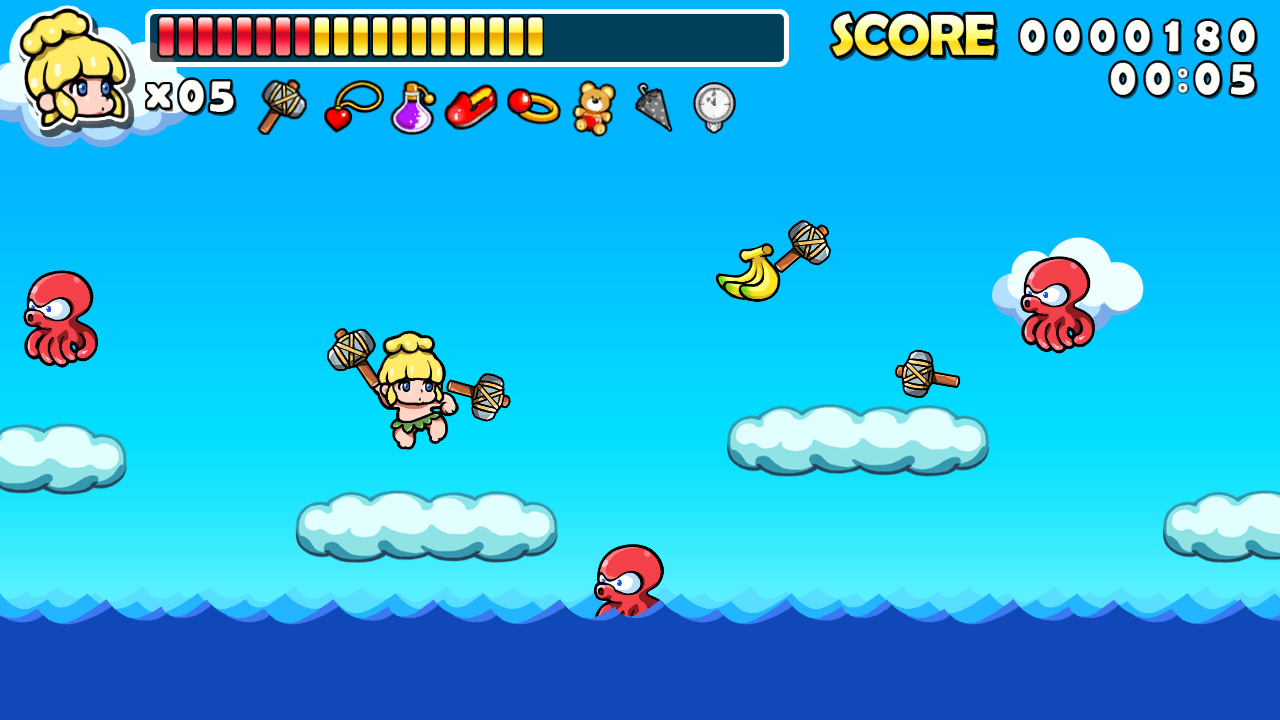
Hammer tossing from the sky!

About the Game 

The Wonder Boy adventures have a long history. In 1986, players first accompanied the young hero on his journey in the side-scrolling action game. Over time, the legendary adventures have delighted many fans of all generations. And so, in Wonder Boy Returns Remix, you’ll join Boy/Tom-Tom once again on his quest to save his girlfriend! The HD remake of the legendary and iconic original Wonder Boy adventure was rearranged and greatly improved by Wonder Boy creator Ryuichi Nishizawa and features a beautiful anime-inspired style, an awesome soundtrack and special features! Now, Strictly Limited Games is making a boxed Nintendo Switch version available for the very first time 

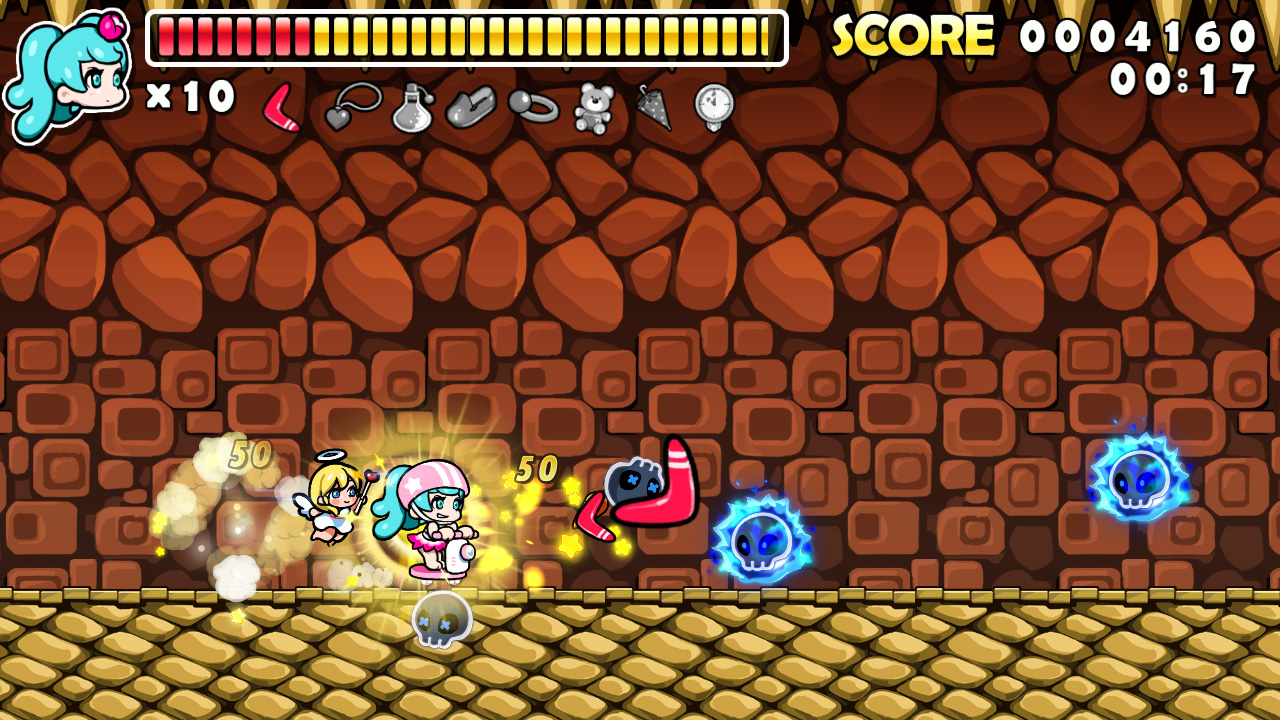
Battling baddies

Experience an ultimate classic of video game history!

  • Modern HD, anime-inspired graphic style
  • Bright visual effects and smooth animations
  • Superior soundtrack compositions and sound effects
  • 2 playable characters: Boy/Tom-Tom & Tina/Tanya
  • Improved gameplay and interface compared to the original

Limited & Collector’s Edition

Some might remember the special editions of Wonder Boy Returns that were released in a limited quantity by Strictly Limited Games for PS4 only, a few years ago. Now Nintendo Switch owners can finally also get their hands on the Wonder Boy Returns Remix special editions, including awesome collectibles. Available for pre-order March 20th!

The Limited Edition (Nintendo Switch) will be available for €29.99,  limited to 3,000 copies worldwide. 

Collector's Edition contents

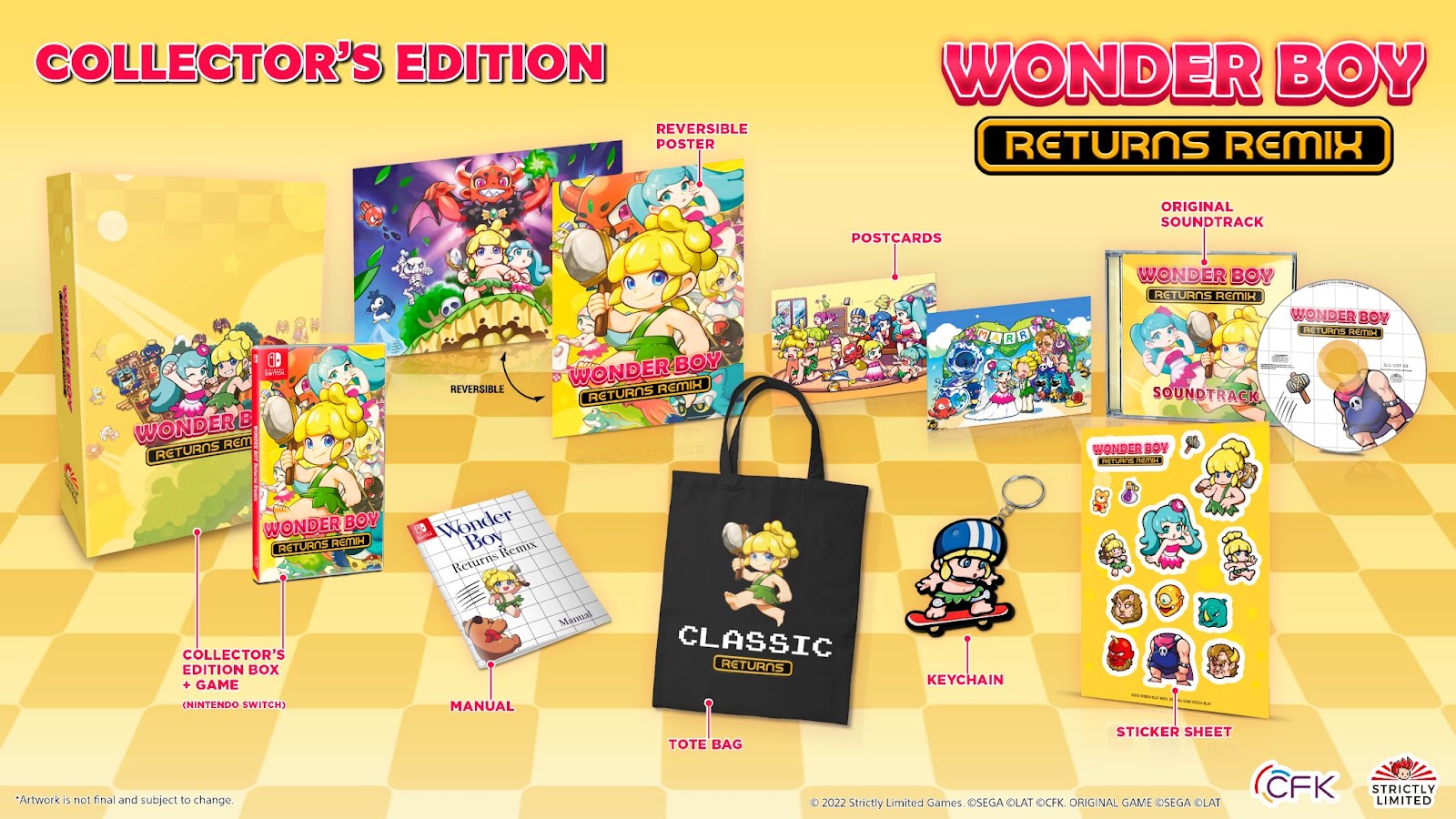
Also available is a highly limited Collector’s Edition (Nintendo Switch) with quality physical collectibles, including:

  • Collector’s Edition Box
  • Tom-Tom Keychain
  • Stylish Tote Bag
  • Postcard Set of 2 
  • Reversible Artwork Poster
  • Character Sticker Sheet
  • Original Soundtrack CD
  • A colorful manual 

The Collector’s Edition will be available for €54.99, limited to 2,000 copies.

For all Wonder Boy fans out there, Strictly Limited Games has some more awesome titles in their lineup, such as the Wonder Boy Anniversary Collection (Nintendo Switch/PS4). Featuringsix games of the beloved series in console ports from Arcade, Master System / Sega MARK III, Mega Drive / Genesis and more, the Anniversary Collection comes with a total of 21 different versions! Visit strictlylimitedgames.com for more information!

Review: Who Pressed Mute on Uncle Marcus?

Families are a funny thing. The saying “you can pick your friends but not your family” haunts every household. Therefore, for every content group, there are the ones that despise the sight of one another. This being said, family bonds should overcome any animosity! However, this isn’t always the case and heated arguments can turn sour. Consequently, this is the plot of Who Pressed Mute on Uncle Marcus? It’s a headache-inducing title that reminds us all that family get-togethers can be deadly.

Developed by Good Gate Media and Wales Interactive and published by the latter, this is an interactive movie title. It utilises the theme of a murder mystery, and it is your job to become a detective and hunt out the perpetrator. Subsequently, you’ll have to search for evidence, have an eye for detail, and identify the criminal in this funny, yet stressful game.

Who Pressed Mute on Uncle Marcus? is maddening.

I’m all for a crazy and eclectic family tree, but Who Pressed Mute on Uncle Marcus? is something else, altogether! It is the epitome of maddening action and you’ll love and hate many of the central characters. Each of these whacky individuals adds humour, mystery, and tension to the proceedings. They all hate one another, and each has a hidden agenda that you must uncover.

You play the part of Abby, who is the black sheep of the family. She is a calm, caring, and methodical person who is henpecked by her mother to follow a career she hates. Furthermore, everyone except Abby despises her uncle Marcus. Sadly, he is viewed as a paranoid attention seeker and a thorn in the side of the family business. Consequently, resentment has been building for many years, and unsurprisingly Marcus has been poisoned by someone close to him. He knows he is hated, and he is likely to die, so he turns to Abby for help.

Thankfully, the annual family quiz allows you to question people with ease. Therefore, you must team up with potential suspects, go along with the flow, and find evidence in a timely fashion. If you fail to identify the killer, or you can’t find the poison that was used, your uncle will die and his murderer will evade capture.

This is Uncle Marcus from Who Pressed Mute on Uncle Marcus?
Hi Uncle Marcus.

The characters are infuriating!

Every household is weird in its own right, but this one is stranger than most! The blend of characters in Who Pressed Mute on Uncle Marcus? are an infuriating bunch. Yet you will find them amusing, endearing, and interesting to interact with. Including Abby, there are 7 key players in this plot. You will converse with your mother, gran, aunt, sister, and two male cousins. So far, so good. However, this strange bunch is always at each other’s throats and you must put up with their snide comments.

There is the uptight mother, the alcoholic and spiteful aunt, the tech-fearing gran, the social media-obsessed sister, the nature-loving cousin, and the one that is obsessed with death and violence. Each of the characters has their reasons for hating Marcus, and each has a story to tell. It is your job to question, probe, and unravel the lies from the truth. On the surface, it seems easy, but you quickly realise that playing the detective is hard work. Unfortunately, this family that is fuelled by hate despises one another, and therefore, getting them to trust you is a difficult task.

Clues and evidence.

The gameplay revolves around the necessity to piece together clues and reveal evidence. The hints are found by listening to conversations, speaking to Marcus, and choosing which suspect to team up with. As you begin each round of the quiz, you are treated to an array of strange questions and short interactions between each protagonist. Annoyingly, your time with each person is short and subsequently, you must pry as much information out of them as possible.

The restrictive nature of the gameplay can be frustrating, especially when a round is ended prematurely. You will see the conversation opening up, but it’ll be cut painfully short. This is especially annoying when you a desperate for evidence and you are unable to interact with that person again. This annoyance comes to a head at the end of each playthrough as the amount of information you have gathered matters. If you have enough clues, you can accuse one of your suspects. However, if you have failed in your task, your uncle may be dead and you are no closer to the truth. Luckily, though, each run is short, and this makes replaying not so bad, after all.

Can you find the evidence?
Collect the evidence and point the finger.

Who Pressed Mute on Uncle Marcus? is a standard FMV title.

I’m no FMV expert, but I have played and reviewed Night Book. Consequently, like its peers, Who Pressed Mute on Uncle Marcus? delivers a good quality but unsurprising performance. The use of video streaming, an array of cutscenes, and varied locations for each character add depth to the story. However, it wasn’t unique, and this holds it back. It would have been nice to see some flashbacks to the “meeting” that is constantly discussed. If the developers had incorporated this, it would have added meat to a rather sparse meal.

This problem aside, the simple filming methods, high quality recording methods, and excellent video editing make it pleasurable to experience. Moreover, on multiple playthroughs, you can skip already witnessed scenes and the action smoothly transitions between each new aspect.

It is tough to judge the quality of acting on offer as it’s a subjective matter. However, I enjoyed it mostly. Yes, there were times when the actors were wooden and, quite frankly, awful. But, the story flows nicely thanks to the overall performance they all provide. I enjoyed their blend of eclectic styles, and this adds to the madness that ensues. The acting dominates proceedings and there is little in the way of music. Moreover, there are some basic and familiar sound effects that help support the virtual world you experience.

There is always one idiot in every family.
The sister is tiresome.

Easy to control.

Like visual novels, FMV titles are easy to control. Obviously, there are moments where you must make snap decisions, but it’s normally a calm affair that can be enjoyed leisurely. For what it’s worth, however, the controls are responsive and the button layout is simple to understand.

With a short lifespan and many playthroughs required, this minuscule murder mystery will keep you playing for hours. You must investigate every possible outcome, pry information out of stubborn suspects, and build a case against every perpetrator. This takes time and effort but will keep you entertained during each attempt. Luckily, though, the developers allow you to retain all evidence from previous attempts. This sign of generosity will speed up your investigation while removing the possibility of repetitive action.

Who Pressed Mute on Uncle Marcus? ticks the right boxes.

Murder mystery games are a tough nut to crack. They require an excellent plot with many twists and turns, and an exceptional cast. Fortunately, Who Pressed Mute on Uncle Marcus? ticks the right boxes from the off. Yes, the acting was terrible at times, but it’s mostly brilliant and helps to convey the theme perfectly. I enjoyed my time working out this heinous crime and I recommend you to buy it here! Will you be able to save uncle Marcus or will he die in vain? Challenge the suspects, gather the evidence, and solve this horrendous crime.

Review: Monster Hunter Rise

First of all, let me preface this review by saying that this is my first ever Monster Hunter game. Therefore, if you are reading this hoping to find some sort of comparison to Monster Hunter World, then I’m afraid to say that you won’t find that here. Nevertheless, if you’re a fan of the franchise, maybe you can come up with your own conclusions by learning how a newcomer feels about the latest entry of this beloved series. 

If you’re like me and never played a Monster Hunter game before, or if it’s the first time you’re hearing about it, then all I’ll say is that the name really does the game justice. To nobody’s surprise, Monster Hunter Rise is a game about hunting monsters. However, I must admit that I was surprised by the fact that, when you start a new hunt, the game tells you exactly where the monsters are located on the map. This feels a bit contradictory, since you’d assume that tracking down the location of monsters would be part of hunting as an activity, but I’ll discuss how this actually works in a few moments.

Despite having played this on a PC with all the graphics options turned up to the maximum, it’s clear that Rise was built with the hardware of the Nintendo Switch in mind. Even at max settings, Monster Hunter Rise still pales in comparison to World. With that being said, I think that the series’ characteristic art style still remains in place, albeit at a lower visual fidelity. Don’t get me wrong though, I don’t think the game looks bad, it’s just that it can look dated in a few areas, namely when it comes to vegetation density and just the amount of detail that’s present in the world, or lack thereof in this case.

Now, when I said that Rise was made with the Nintendo Switch in mind, I’m not only talking about the way it looks. The whole game feels like it was made so that every area wouldn’t be bigger than it needed to be, with the village hub area even being divided into smaller rooms that you have to enter if you want to interact with certain NPCs. Everything feels strictly streamlined, but while I couldn’t stop wondering how the game might have suffered from this in my first few hours, the more I played it the more I realized that the flow of the game actually benefited a lot from this. 

The core gameplay loop is simple, you go on hunts and kill monsters, you get materials from said monsters, and then you return to the village and use said materials to upgrade or craft new weapons and armour. Rinse and repeat. While I can see how some people might find it repetitive, and I have to admit that I felt the same way when people would describe Monster Hunter to me, now that I’ve played it, I found it to be extremely addicting.

Loading times are pretty much non-existent, and the game as a whole is extremely fast-paced, which undoubtedly helps in feeding its addictive nature. When you’re in the village, all you have to do is talk to an NPC and then you can press a button to instantly go to your next hunt. As I’ve mentioned previously, once you load into one of the game’s hunting grounds, the game tells you exactly where all the large monsters are. But why would it do that?

The only thing that comes to mind when I wonder what could have made Capcom make the game this way, is that they just wanted to make the game faster and less time-consuming. However, I found that having this information beforehand, allowed me to plan a route that could be used to gather resources and stat boosts along the way. Yes, because hunting monsters isn’t all you do, you also have to feed your hunger for materials and resources that will allow you to grow even more powerful. 

Each mission, or hunt, in Monster Hunter Rise, takes place in a self-contained area. There’s no huge open-world to explore or anything of the sort. Nonetheless, exploration is heavily encouraged. The hunting grounds are brimming with resources that you can farm. These can mostly be used to craft potions, food, and other consumables on the go, but there are also these small birds called spiribirds that grant you stat boosts when you pick them up. 

It’s with this kind of exploration in mind that I think that revealing the monster’s location from the very beginning is an excellent idea. This way, you can plan your route through the map to maximize the amount of stuff that you can pick up while making your way towards the monster. This whole preparation phase isn’t really required to kill the main monster you’re after, but it’s definitely an advantage since you can configure the game so that you’ll automatically craft certain items once you acquired the required materials. You definitely don’t want to commit to a fight empty-handed.

The novelty of exploring a new area is rather brief though, as you’ll be revisiting the same areas a lot, and even more so if you really get into the game and want to do and unlock everything in it. I assume that this shouldn’t be a surprise to fans of the series, but for a newcomer such as myself, I have to admit that I wish there was more to see and explore. However, I’d be lying if I said that I’d consider this aspect to be a deal-breaker for me. At the end of the day, gameplay is king, and if there’s one aspect in which Monster Hunter Rise excels, then that’s most definitely its combat.

It’s honestly quite unlike anything that I’ve ever played before, and despite struggling for the first few hours, I can now see the appeal of it. The combat in Monster Hunter almost feels like an exhilarating kind of ballet, with the player chaining together a series of over the top animations that unleash a flurry of blows on whatever is on their way. There are 14 different types of weapons, each with its own unique set of combos and special attacks, and playing with a new weapon requires you to pretty much learn a whole new game. Each weapon feels exceptional and behaves in a completely different way, so changing your weapon while you’re still a rookie can definitely feel like a huge challenge.

The weapons aren’t just everything that makes up the bulk of the combat however, because to be a great hunter, one must also master a constant battle of keeping up the momentum. Players have to manage their stamina, the state of their weapon, making sure their well-fed, while also looking for opportunities to attack monsters when they’re exposed. The thing that I love the most about this though, is the fact that monsters aren’t just enemies with huge health pools. Each monster is unique in the sense that they have their own set of moves and attacks, but they also have body parts that you can damage in order to weaken them. 

With Monster Hunter Rise’s rooster of monsters, getting to know each monster is a tremendous task and a huge time commitment, and while this will certainly please a lot of people, others might stay away because of this very same reason. It’s clear that the story isn’t really the focus of the game, and while there’s certainly a campaign, I wouldn’t recommend this game if all you’re looking for is a game with a campaign that you can beat and then be done with it. This is one of those games where most enjoyment comes from investing a ton of time and seeing how you evolve throughout your many hours with it. I’m not just talking about an evolution in terms of much better loot you get, I’m also talking about how you evolve as a player. 

In Monster Hunter Rise, part of the player’s evolution can also be seen in how they gradually learn to move around with the use of the Wirebug, a new addition to the franchise. Despite its rather odd name, the Wirebug is just a grappling hook, but one which you can hook into thin air. In essence, it allows you to quickly get out of harm’s way by dashing vertically or horizontally in any direction. The most important thing about it, however, is that it allows you to prevent yourself from being knocked out when you’re hit mid-air. 

Just like a lot of things in Monster Hunter, the Wirebug is also a resource that slowly generates its charges, so you can’t just keep dashing away to infinity. Still, it creates a lot of opportunities during combat, especially when you use it to unleash powerful attacks that are unique to each weapon type. Furthermore, it opens up more ways for you to navigate the maps, essentially giving you a lot more vertical reach.

Whether you’re hunting alone or with other players, you’ll always be accompanied by two of your pet companions, a cat and a dog. Palicos is what Monster Hunter calls its cats. These are adorable but fierce cats that will actively support you during hunts. Moreover, there are five different types of support that your Palicos can provide. They can place traps to weaken monsters, they can focus on healing you, or you can just have them specialize in finding high-quality materials. Likewise, Felvines (dogs) are also very reliable companions that not only aid you during combat, but also let you ride on their back, which obviously makes the task of traversing each locale and tracking down monsters a lot easier.

Just like you, they can have their own equipment and they also level up as they get more experienced. You can even hire more of them and send them out in expeditions to find materials for you or send them to train at a dojo. To be honest, Monster Hunter Rise feels rather overwhelming at times. There just seems to be so many systems and menus, and so much stuff to keep track of. 

Don’t get me wrong, I appreciate how much depth Monster Hunter Rise has, but personally, I do wish it was a lot more straightforward. I really dislike having to pay attention and keep in mind dozens of different things when playing through the game. Still, I’m sure that a lot of people love the series for this very same reason, so, at the end of the day, it all comes down to personal preference.

I absolutely love the combat, exploring each area to the fullest, getting new equipment and all that, but there are just so many more things going on and they didn’t feel like they add much to the experience. For instance, your pet companions, sure, they’re cute and useful, but it feels like a chore having to also keep track of their gear, and then recruiting even more companions that you can send out to gather materials for you. Yes, these are all things with a purpose, but they just feel more like padding than anything else. 

If you never played a Monster Hunter game because you fear that you’d feel overwhelmed, just like I did before playing it, I can safely say that the game does a pretty good job of onboarding new players. Sure, it can take a while to get used to the movement system, and every time you’ll pick up a new weapon type it will feel like you’re trying to learn to play a whole new game, but it’s most certainly worth the effort you put into it. The game has a lot of cool and memorable moments, like these missions where you have to fight against a series of waves of monsters while building automated turrets and manned defences, or the fact that you can even ride the large monsters that you’re hunting. How did I not even mention this before?! 

While in the past I might have just glossed over a new announcement about the Monster Hunter franchise, this will certainly not be the case any longer. I honestly can’t wait for Rise’s expansion, Sunbreak, to arrive later this Summer so that I can put even more hours into it. It might take a while to get there, but once the game clicks with you, Monster Hunter Rise becomes a highly addictive experience that you can’t just put down. It’s an extremely satisfying and engrossing game that can definitely keep you entertained for at least a hundred hours. 

Whether it is the right game for you or not, that is up for you to decide. If the idea of hunting down a plethora of monsters in what’s possibly one of the best melee combat systems out there sounds enticing, then definitely give this one a shot. If you’ve played a previous Monster Hunter game and felt like it wasn’t for you, then I doubt that this one will change your opinion. Whatever your case may be, Monster Hunter Rise is one hell of a game, and I can’t even imagine how a sequel might topple it.

Review: Hero’s Hour

Welcome to Hero’s Hour, the perfect opportunity for you to fulfil imperial dreams in a safe environment. Invade cities, commandeer resources and build up terrifying armies to amass power in a world that’s only purpose is to serve as an ever-changing battleground

Guilt-Free Conquest

Hero’s Hour is a strategy RPG that allows you to test your empire building skills in a vast array of different factions, scenarios, and maps. There are so many options available you’d find yourself struggling to see and do everything the game could offer. You take control of a faction, either by choice or the luck of the draw. It drops you in the world where you then build up your base, which can increase income, train elite troops (using money and resources), and provide spells to give your armies an edge.

One base is not an empire, though. Your goal is to grab up all surrounding structures and settlements in order to take control of a region. It’s not always a matter of planting your flag and calling it a day. There is often a range of enemies blocking your ambitions. At times you’ll be facing creatures guarding buildings like sawmills or ore refineries necessary for producing vital resources. Other times you’ll be going up against members of rival factions in order to stem the tide of invasion or do a little invading yourself.

Spoiled For Choice

Start a new game, and Hero’s Hour greets you with a list of options for your new attempt at consolidating power. There are maps of varying sizes, where neighbouring domains and their leaders can be a stone’s throw away, or across oceans. Along with these maps are even more scenarios, such as a two-kingdom tug of war. As well as a battle royale between four neighbours, not only fighting each other for dominance, but also contesting a central area belonging to none of them.

On top of the array of conquest scenarios, you also choose between factions. These differ in the kinds of soldiers they produce, innate abilities, and design (obviously). Between the maps, the number of enemies, difficulty, and factions, the amount of possibilities is insane. You could spend countless hours playing, and still have a bunch of variations to try. There are simply a lot of options for what will inevitably be a lot of different runs.

Choose a Side

When I had a look at the lexicon, which gives you some useful lore on the 11 factions, their culture, troops, and strengths, I saw just how much variety there was on offer. Every faction has three specialities. Such as the Dwarves of the Earthen being able to use gold to endlessly create soldiers, so long as they have the coin. Or the Lizardfolk of the Enclave that produces a free resource every day.

Through hours of experimentation, you can find the factions that work in accordance with how you like to play, You might want to be able to restore mana every turn, or be able to trade resources for specialized troops.

When you start a campaign you are given control of one of 22 heroes. These heroes can have a variety of skills made available as they level up depending on their class. For example, I landed a demon-worshipping Pyre who could use a teleportation spell for free every day, which caused a huge explosion around their destination point.

The Armchair General

Combat is very straightforward. Almost to a fault. Choose your troops if you’ve got more than can fit onto the battlefield. Hit start, and then watch legions crash into one another like a pair of waves. You can attack, defend, or flee when things start to go sour. Occasionally you may want to scale a wall if you’re attacking a neighbour’s stronghold. Although the more exciting elements in skirmishes often come from spellcasting.

Every run you will find yourself with a different set of spells, except for Hero-specific magic. There are comets that can rain down on you and your enemy alike. Explosions that can blow combatants to smithereens, tossing some right into the middle of your army. Spells that can summon elementals and Lovecraftian beings. There are also a couple of spells to transform opposing fighters into weaker units or just plain old frogs. Mana is limited though, so you can’t just spam spells willy-nilly.

These spells were my favourite bit of battles though, and I think a large part of that is thanks to how simplistic battles can be. Amass your army till they can steamroll your enemies then watch them absolutely demolish anyone in their way. Spellcasting helps bring some more interaction into things and gives you a bit more of a say during combat. It’s repetitive to a degree, but somehow still quite satisfying to witness. Especially in the tail end of a run, when you’ve amassed a gallery of eldritch horrors, dragons, and demons.

However, some of the complaints of overly simple wars can be alleviated by simply upping the difficulty. This forces you to put more thought into which resources you search for first, and which buildings should be prioritised. Not only this, but also what kinds of troops to stockpile, and what spells to use for invasions. Like blinding enemies so flying troops can scale walls and attack. After the cooldown, you might just follow up with a bloodlust spell and take out the poor disoriented souls.

Building For Dummies

Besides warmongering and conquest, building up your own base is also very important. It’s not like many Strategy games where you build scores of structures with specific jobs and go from a hamlet to a city. In Hero’s Hour there are preordained slots for everything you might build. You simply gather the money and resources necessary and choose which building you want first. This can be a bit of a turnoff if you’re looking for more of a hands-on experience in building and management. But if you’re just here to grow an unrivalled army, you’ll be fine.

One vital building is the tavern, which gives you the chance to recruit new Heroes. These individuals may technically be optional, but they’re actually essential for any run. These Heroes come with a couple of troops, which you can take for yourself. They can also act as stewards for your base, should a rival decide to try their luck while you’re out exploring and expanding your borders. Although most of the time I used these heroes as supply lines. Let them train and deliver fresh soldiers from bases to me, saving me limited moves provided each day. They can also be a force to reckon with on their own. If managed right you could send them out to take over one region while you’re in another.

8-Bit Empires

The 8-bit style art direction of the title was a great choice in two regards. The first is that the 8-bit art style is always a pleasure to look at for me. It simply enables creative design without having to worry about graphics too much. Environments aren’t especially unique. The faction troops and strongholds are where it shines a bit more in their wonderfully distinct designs. With the number of different types of soldiers you can train, I was happy to see a good amount of design variation between them.

This leads me to the second aspect of the design that worked. The large-scale battles. There are a lot of fighters on-screen during a battle. Both in terms of number and types. the 8-bit style makes it so that you get as much action as possible on-screen without melting your hardware. Thanks to this art style we get to have our cake and eat it too.

Gameplay is fairly easy to wrap your head around, however, there is a lot of content. Troop types, factions, hero classes, abilities, and skill trees, as well as the items and treasures you find on your journey. This makes things a bit harder to perfect and master than it is to get into initially. Especially, on higher difficulties and larger maps. This is hardly a bad thing though, it just means there’s a lot more depth than meets the eye. And a lot more hours of fun than I anticipated.

 If you’re into Strategy games this can be a fun take on things. Plus I’d wager it’s also a great entry point into the genre. Its learning curve isn’t steep enough to scare off newbies, and it’s got more than enough content to keep you going for a long time.

Review: Assetto Corsa Competizione

0

Do you have what it takes to be a great racer? All you need to do is take a seat in front of the steering wheel, both hands holding on tight, the gas pedal continuously being pressed and the wheels spinning so hard that it burns marks right into the pavement as you turn at each corner. If so, well it’s time for you to try Assetto Corsa Competizione, a game that really will keep your eyes captivated on the screen. As well as engaged by each hand on either a controller or wheel, forcing you to quickly decide which button to press or move to make by steering and speeding past other racers on the circuit.

This game will make you feel like you’ve entered into a real race, just as it should with everything featured in this realistic simulated experience. Plus, with so many quality vehicles to drive, the graphics that look so close to seeing the outdoors of a circuit and even the sound effects are so unbelievably real, it’s hard not to feel as if you are honestly racing in real life. It also truly helps by the well-designed viewpoints of the inside and out of each car driven.

Keeping Steady And The Will To Win The Race

Being my first time playing such a realistic racing game, it does really show promise to please many as well as myself. I honestly can’t believe how astounding the graphics really are, and one of the most exciting experiences to watch as well as play! I’m quite intrigued by the realistic effects that occur on the circuit, from damages taken to the vehicle, as well as the knowledge needed to know how to drive. Plus, if you add in the environmental design of each background, how close it appears to the real thing, well that just perfection even more!

I honestly enjoyed hearing the engine roar, while revving it up during a race. Having real lights on the vehicle I choose to turn on during the night, as well as many other functions to work just as well. It’s just so much like a real vehicle or even a well-resemblance of a real racing car. In my opinion, there is nothing left out, no lag in the movements, or even the graphics. Yet, this review is in regards to playing it on an Xbox One console, not even the newer Xbox Series that others may play it on. So if it’s great on an older console, it must be excellent on a newer one!

There is one difficulty I’d like to point out. A problem that may only be hard for a bit or depends on those who played any recent or similar racing games like this one. It’s nothing to fear, but something that may take a little bit of time to learn. This is actually more about the controller and the many buttons that are used to move the vehicle you’ll be driving. Not the actual game I’m referring to.

I know from my experience, it’s something that won’t come so easy to learn, by whoever plays the game for the first time. Yet, this is normal, As with all simulated-style games, it does require a bit of practice. I had to understand it a bit more before moving forward and trying to race others through the more difficult modes and choices of gameplay. Even if I decided to choose to play against others online, which will allow more challengers of all types, not just the AI; computer from the game. It all requires a keen sense of understanding how to drive, making it the biggest part of the game.

Other than being stuck in for a while, the game isn’t too bad. There are some issues with the capability of reversing and only being blocked to go a certain way, even if you are trying to get back on track. Yet, there can even seem to be a few areas where cars path through you, possibly a slight error in the graphics. Nevertheless, it’s not a bad game, just need some more time spent playing and practicing before really moving forward to actual events and challenges or challengers.

Final Thoughts

Honestly, I think that even for a game so real, it is a bit difficult and not super easy for many. I won’t find it to be something I’d probably spend most of my time playing. Especially if I can just set up a quick race. It’s great to have so many options and features, but if you aren’t so familiar with the features and how to really move the vehicle it can just be confusing. As it takes time, and even after pausing for a bit, some more time is needed to understand the true concept of the game and not just what it’s all about, simply racing to win. Yet it’s the controls and the many features which are necessary to comprehend.

Leaving me to say that the game isn’t bad for all, as many may love to race and played plenty to love this just as much. On the other hand, it could just be a task that might not be something for an occasional player or amateur to pick up and play with ease. Don’t get me wrong, the realistic appearance is a pleasant surprise, but the difficulty out dues me at this time. Even if I find racing games to be fun in other games, it struck me to be a bit frustrating and tedious as well. Yet, for a more average racer will find it a bit easier and possibly enjoy as much as I have, the real appearance that is the surroundings, the car, and the sounds. That I can say is breathtaking like a real racing tournament, but better as you have the pleasure to take the seat as the driver and take the wheel into your own hands.

Review: Wife Quest

The sanctity of marriage is a special thing. Therefore, if someone or something comes between you and your spouse, there is bound to be trouble. Most of us would be annoyed if our significant other was taken away from us, however, I’m not sure we’d all turn to violence. Wife Quest, on the other hand, has fighting and rage at the core of everything it does.

Developed by Pippin Games and Eastasiasoft Limited and published by the latter, this is a retro platform experience. It utilises some Metroidvania mechanics as well as a side-scrolling perspective. Furthermore, it has shrill synth audio and colourful pixelated graphics. Sadly, though, it offers no groundbreaking ideas and as such, it’s familiar from beginning to end.

Wife Quest is a saucy affair.

If you like your games with a hint of sexism and a heavy dose of misogyny, then look no further. Strangely, the developers have insisted on a bizarre and over-sexualised plot. Now, normally this would turn me off, as I find the OTT nature of the gameplay to be tedious. Luckily, however, most of the ideas are tongue in cheek and are subsequently very humorous. If you think of Jim Bowen from Bullseye, but make his jokes funny, then you just about hit the mark.

The action takes place in a quaint but magical kingdom. Here, a farmer (Fernando) and his retired warrior wife (Mia) live a quiet and relaxing life. However, things soon take a turn for the worse because of the horny and seductive monster girls! These big breasted and skinny monstrosities are determined to capture Fernando to make him their love slave. Surprisingly, he hates this idea and begs his enraged wife to save him. This is where the adventure begins, as Mia will stop at nothing to save her beloved.

God damn this volcano is hot.
Is this shield fireproof?

Plenty of levels and drip-fed mechanics.

Unlike some of its peers, Wife Quest has a large array of levels to explore. Helped in part by its Metroidvania twist, this is a title that keeps on giving. You start on a basic linear path where you encounter an array of monsters, traps, and treasure. As the game evolves, you must traverse different pathways to unlock gates and activate platforms. Consequently, the action is somewhat convoluted, but it’s enjoyable nonetheless.

Where the gameplay excels is its straightforward concept. Furthermore, its drip-fed mechanics offer up a gentle learning curve. Therefore, this is an excellent title for newcomers to the genre. However, the saucy theme may not be suitable for younger players. This aside, you’ll love how new elements are added as you defeat each boss. You’ll gain the ability to fly, defend yourself, smash walls and floors, and so forth. Not only did these new abilities alter your gameplay style, but they also allowed you to find hidden locations within each dungeon.

What I found to be less impressive, however, was the ill-explained fundamentals. Mia’s special abilities are powered with Mana crystals. Subsequently, every time you fly, use your shield or smash blocks, you use some Mana. Now, this may seem obvious, but without an explanation, it took me around 2 hours to realise what was happening. In such a simple game, this was an oversight that could have easily been avoided with a basic tutorial.

Wife Quest has an array of bosses to defeat.
Brrrrrrrr.

Wife Quest: a retro adventure.

I enjoy a good retro-inspired title, and luckily, Wife Quest is well designed. Its interesting levels, blend of colours, and dated sprites give it a distinct old-school look. Furthermore, each of the dungeons you visit has a unique theme that keeps things fresh. However, the varied looks merely mask the repetitive nature of the gameplay. Many of the stages use identical mechanics and this stifles the progress a little. Fortunately, though, this doesn’t undermine the end product. To add to the humorous nature of the story, Mia punishes every monster she tackles. Therefore, you’ll witness a funny animation as you capture each of the creatures. Whether you beat them with a club, rip off their wings, or strangle them, you’ll make every one of them pay.

The cute but oddly sexy nature of the gameplay is enhanced by the fun and lively audio. Thanks to its upbeat music and chirpy sound effects, every moment is filled with sound. The aforementioned animations are awash with noises and this will make you chuckle. I loved the little details that were incorporated into the simplest of ideas. Subsequently, you’ll notice new things each time you play.

Wife Quest begins in a simple hamlet.
This is where the journey begins.

Simple controls.

Platform titles require precision and accuracy. Luckily, Wife Quest’s controls are well designed and responsive. It is easy to attack or defend yourself in any situation. Furthermore, the clear UI is neither clunky nor is it overpowering. These elements make it easy to play. However, I wish the developers had made the use of Mana much clearer.

Wife Quest oozes replay value because of its secret locations. Fans of the genre will love revisiting dungeons to find collectables that were otherwise out of reach. Moreover, each stage has a set number of foes to defeat and treasure to find. On top of this, there are unique challenges that must be completed in every area. All of these things combined add to the longevity while making this great value for money.

Wife Quest is a misogynistic success.

Rarely would I place the words misogyny and success together. However, Wife Quest has delivered a wonderful and whimsical title that does just that. Its amusing plot, interesting monsters, and large dungeons will make you laugh and keep you playing. It’s wonderfully dated, challenging and interesting. Subsequently, I enjoyed it and I recommend you to buy it here! Can you defeat the monsters in every dungeon? You must otherwise Fernando is destined to become a sex slave forever!