Review: Little Nightmares 2

I have to admit, I was extremely late to the party to the quite simply put, incredible Little Nightmares so much that when a good friend assumed, I had played it, I was rightly told off for having never even tried it. A few days later and a mysterious packaged dropped through my front door and low and behind the GOTY version of the game for Xbox One lands on my doormat. To say I was instantly taken back by Little Nightmares and its dark ugly yet still very beautiful world would be an understatement, and something I still have yet to make it up to my friend for sending me the game. Finishing it and the DLC left me hungry for more and with the sequel receiving a couple of delays that pushed it from a 2020 to a 2021 release, I was very much chomping at the bit to return to this world and my word was the wait worth it!

For this review I am going to tread very carefully when it comes to story spoilers as the true magic of both Little Nightmares games is really in discovering the narrative as you play through each chapter, for even knowing anything of what is really to come could be a spoiler for the experience that I genuinely hope you have yourself playing Little Nightmares 2. But there is so much about this game that manages to actually accomplish what so few sequels actually do, build on what made the first game so loved, refreshes it by adding new elements and continuing to showcase a world designed to make and keep the player feeling very uncomfortable just being in it each time you play it.

The very first new element is that this time players control Mono, a boy slightly bigger than Six was in the first game, wearing a very cool trench coat and rather fetching paper bag over his head, with the world as it is right now who are we to judge fashion! Mono finds first finds himself in a horrid looking wood, unsure of how he got there but instantly aware that danger is all around him. Mono is very different to Six, so this is not just a reskinning of the same character model, Mono is slightly bigger as I said which makes him stronger and it also gives him a very different playing style to what Six had in the original game. Six would often have to use stealth with the focus of avoiding confrontation as much as possible whereas Mono is capable of holding his own in some situations and definitely feels more action capable which is used to great effect throughout Little Nightmares 2.

What can be said is that the opening chapter absolutely tells you everything you need to know about the world of Little Nightmares with every aspect growing in scale through progression. The Woods are perhaps the creepiest woods you are going to find in any video game and that includes Limbo and its giant spiders! From the very first step Mono takes in the world and you have control of him, you as the player will immediately feel on edge, for this is not a very nice place to be and it is an environment that completely wants you to feel that unease. Moving through the woods you soon come across bear traps and snares which can catch you off guard if you fail to notice your surroundings. Platforming such as running, crouching, climbing and jumping still make up the core elements of traversing this world.

It would be very remiss of me not to take this moment to just talk about the quite frankly deliciously dark and macabre visuals that both games have but have really been taken to a new level in this sequel. The colour pallet and lighting effects help bring a sinister feel to every location and environment in this game. The way in which the foreground can have so much detail whilst the background tells its own story thanks to how well the lighting and colours just snatch your eyes as you move throughout that you will be forgiven for just stopping to appreciate and to take it all in, which that can happen quite often as long as you have Mono in a safe space of course. This really is just a stunningly beautiful game especially in the animation which has that fantastic non cartoony but stop animation style which makes it stand out even more. There are so many lovely little tiny details in the animation as well from the way Mono runs and climbs to the rag doll animation when he drops a little too far and that thud instantly makes you feel a little guilty for not being more careful with him. Should you die or fail in a puzzle, which can also happen a lot, when the game returns Mono will be sitting arms round his knees looking like he is both sulking for failing but also very sad whatever happened to him because you as the player failed to look after him and that is a guilt through the connection you have with Mono that will have you, if you are like me, actually saying “sorry kid” out loud.

Visuals are not the only brilliant aspect to this game because the sound and musical score complete this cocktail of horrid delights. I would absolutely recommend playing Little Nightmares 2 with a headset, especially if like me, you are able to enjoy this PlayStation 4 version on your PS5 with the 3D Audio, sadly there is currently no new gen upgrade for either PlayStation 5 or Xbox Series X/S on release but trailers have indicated that a free upgrade will be given to players later this year. The sound is even more eerie then the visuals with every sound making you feel like there is danger around every corner and that there is something or someone always watching you. The sound of a creaking door or the echo of a footfall when you are not moving yourself all builds the tension and atmosphere which even to me, someone who usually ignores horror games because they have no effect on me, both Little Nightmares games have been successful in making me feel very uneasy which the gameplay then uses so effortlessly to give more impact to the action sequences in the game.

The most surprising element to Little Nightmares 2 has to be the change to an almost co-op based playing mechanic. No longer is this the solitary tale of one hero but instead Mono right from the opening chapter has a friend to help him on the way, and that friend (not a spoiler as in the trailers and game marketing so keeping to my no spoiler rule) is none other than Six. After rescuing Six and earning her trust, she accompanies Mono on his journey and it is a real game changer for a game I felt needed no changing at all. Puzzles now involve using Mono and an AI controlled Six, to find the solution often with Six providing a much-needed boost up to reach a higher window or gap to climb through. Large objects may require both Mono and Six to move it and working to keep both of them safe will give players true nightmares.

The strength of the connection between the player and both Mono and Six becomes very strong very early in the game. I often found myself as Mono, stopping to see and make sure that Six was ok. The AI is also very good for Six, when she is needed to help, the AI is right on the money every time and so few times did I have to go and collect her to bring her with me, there is even a very charming animation detail that Mono and Six will hold hands when using the grip button on Right Trigger and Mono can then lead Six around. I also was very thankful that the AI controlling Six would not just run to the solution either to spoil it allowing me the time needed to work it out for myself. Most of the interaction between Mono and Six when it comes to teaming up, is based on the proximity of Six to Mono, but when you are for example, ready to push a large object and are already in the push position, it will make Six come to you and Six is far quicker to react than some of the Vikings in Assassin’s Creed Valhalla when it comes to needing someone to help you open a door, just saying Ubisoft!

The puzzling is definitely a mixture of what players of the first Little Nightmares would instantly recognise but also new ideas which make good use of the two-character mechanic and other elements based on Mono’s strength. Mono can use large items as a weapon which can for example, be used to smash through an already damaged door panel or to defend against immediate threats. Thankfully this mechanic is not overused to the extent that it becomes too combat focused as the instances are kept very minimal and very contextual depending on that moment and chapter environment. There is still the trial-and-error approach to some puzzles, in particular the puzzles that require precise running and jumping and by precise I do mean exactly that, be out of position or not moving fast enough or grabbing a ledge in time can result in Mono falling and having to replay that section. Thankfully the checkpoints are far more forgiving this time around in answer to the criticism of the first game but there will be some sections that may prove frustrating on your first run through the game which can make this a very nice dip in and dip out experience if you do find it that frustrating, a break can also help that solution that’s been eluding itself from you, become clearer. Puzzles can be very common sense such as move this box over here to reach this window or they can be more complicated involving Six as well or some level of action like running. The variety and difficulty spikes are actually very well balanced, a lesson taken from the first game no doubt, and I also love that some of the solutions can very so common sense that you fool yourself into thinking it requires something far more complex and spend 20 minutes on a problem that only required ten seconds of effort, that is just how well the chapters and sections are designed.

Little Nightmares 2 is the sequel I and no doubt fans of the first game hoped for and it is a game that has certainly benefitted from the delays to make it even more polished on release that I actually only encountered a few issues which can be fixed in quality-of-life updates such as some of the scripted scenes failing to reset upon recovering from a death or not letting go of a held object fast enough when you quickly needed to get away from an event or enemy. The story is tremendous and even if you have not played the first game, which you absolutely will seek out to do if you play this game first, you can enjoy this strange and dangerous world for the first time but with enough nods to make fans of the original get something special from playing this.

I loved my whole time with this that I dived back into to find the collectibles of Hats that Mono can wear and strange ‘glitches’ in the world to find so do make sure you take the time to explore every corner of every section just to make sure you do not miss anything. This is truly one of the best game sequels I have had the pleasure of playing after enjoying the first game. The grotesque beauty of this game will have you equally recoiling from it and appreciating it in equal measure and if you spend a little bit more for the Digital Deluxe Edition then you will also get the digital soundtrack to enjoy in all its majesty as well as a fantastic digital art book which I do recommend you look at only after completing the game. I certainly have my eyes on the ‘TV Edition’ Collectors version of this game for some point this year.

Mono and Six make a perfect team in a horrible world that draws you as the player and them as characters into its darkness so effortlessly oh and make sure you listen carefully throughout the end credits too! There will always be something extra creepy about discovering that the only way into a place is via the same way that someone escaped…!

Review: Space Channel 5

For those that remember, Space Channel 5 started off as a Dreamcast title way back in 1999. For those that played it, the game itself hasn’t changed very much. In some areas I would even say it looks and performs worse than its first iteration. Button presses have given way to motion controllers, that’s probably it’s biggest departure. A mixture of a short experience, poor character movements, and several quality of life issues make for a rough time.

Dance the Night Away…for about Half an Hour

I’m just going to go ahead and get this one out of the way. The SC5 will set you back around $25 for the PSVR. The “campaign” will last you right around the 30 minute mark, spread out over four levels. So the core of SC5 will cost you just under a dollar per minute. There are a few additional modes to pad out the game play, like an arcade and exercise mode. However, I wasn’t able to find anything that could redeem it.

Overall the motion works…except for when it doesn’t. One or two of the primary dance moves never consistently translated through the motion tracking reliably. This in and of itself wouldn’t be too bad, however when you couple this with the 3 strikes and your out play style and the intros that can’t be skipped, the frustration begins to build rather quickly.

In addition, the visuals are subpar at best. Character lines are harsh, and character models are just bad. The animations aren’t much better, if in fact at all. In many instances, the background dancers have the same issues that many other older/cheaper games do. Those awkward moments where the NPC’s movements don’t align with the game’s design happen far too often.

The entire game consists of watching several alien invaders dance in front of you. Your task is to memorize their patterns, then repeat them at ever increasing speed. Completing this efficiently saves all of the innocent humans being held hostage in an everlasting dance routine. That’s pretty much the extent of the background, but I suppose for a dance routine game not much else is needed.

Around the Rough Edges

SC5 does do a few things well. The campiness is very well done. Everything that occurs and is stated in the game fits the overall tone and not much strays from that path. If saving humans from being doomed to a life of being a dance slave doesn’t drive the point home nothing will. Another plus being that in some sections you are required to move your entire body to match the movements seen on screen. Side stepping left or right in order to dodge incoming alien lasers seems overly simple, but when 90% of the game is moving your hand left or right the variety really helps to freshen it up.

The feeling of stepping back in time 20 years is a big bonus as well. The main character in the original, Ulala, is now your mentor as you become a fledgling journalist that must learn the ropes. This set up allows for an easier way to keep track of movement cues, as she acts as your guide throughout each level. For the most part this works, save for a few instances when you’re first learning the moves and her guidance leaves a good bit to be desired.

Dancing with the Past

There isn’t much I can recommend within SC5. The few positives were all brought from twenty years ago and haven’t been improved upon. There was a lot that could’ve been done, but it seems like a cash grab on the franchise instead of a passion project from lifelong fans. If you were fans of the previous entries, by all means go for it, but I would not make this a jumping in point for any newcomers.

Review: Roombo: First Blood

I’m always amazed at what weird and wonderful ideas grow out of the brains of indie game developers. There is something for everyone, and every genre imaginable is covered. I thought I had seen it all. Then along came Samurai Punk and their creation Roombo: First Blood. From the name alone, I knew that this was a team and a game that wasn’t taking itself too seriously. I couldn’t wait to try the game and hoped that I wouldn’t be left disappointed.

Not to jump to the conclusion, but I wasn’t let down at all. Roombo is a fun filled, gory blood bath that is laced with dark humour, and violence galore. You control a robotic vacuum cleaner (RVC), yep you read that correctly a vacuum cleaner! It’s Christmas time, and the owner of the house has gone out for the evening. You are left on charge when a smash of glass wakes you. Your quiet suburban life is rocked, your house is going to be burgled, and you are its only form of defence.

How very 1990s Home alone.

You will face 6 levels of murderous tests en route to guarding your home. 3 bonus levels are also chucked in for good measure, which is very generous of Samurai Punk. The main aim is to defend the valuables left strewn around each room. Each stage has a set number of burglars, 1 for the first, rising to 6 for the last. One object of value is placed for each of these thieves of the night, and you must do whatever it takes to stop them. 

Run and clean, run and clean.

Luckily, the RVC is no ordinary household appliance; he can hack other electrical appliances. This skill comes in very handy as it allows you to lay traps to take down the intruders. You will; set off sprinklers, charge sockets, drop ceiling fans, blow up tv’s, control showers, and more. It takes little thought process to win a stage, but this is one of its main selling points, its mindless gratuitous violence. 

Once you’ve done killing, you must do what a vacuum does best!

After you’ve finished being chased by the would-be burglars, and you’ve taught them all a lesson, you must eliminate their bodies and clean up the mess. And by god, it’s an almighty horrendous sight to behold. After you hacked the bodies to pieces a la lawn mower style, you must hoover up the chunks of meat and all the blood. A clean house is a high scoring house, and depending on how accurate you were with the traps, you’ll be graded between S+ and F. 

This is Roombo: First Blood in a nutshell. It’s a brilliant, casual experience that requires no skill level. You will roll around, planning your attack and hacking everything in sight. It’s a short endeavour, but it encompasses everything that makes an indie title great. Yes, there are a few tweaks that would improve longevity and replay factor, but in its current state, it’s an enjoyable and mindless action game that will have you chuckling with delight.

So much blood, and only one robot.

It reminded me of the Untitled Goose Game.

The absurd nature of the gameplay and the visual presentation reminded me of another humorous indie title, Untitled Goose Game. The bird’s-eye perspective and simple cartoon style made for a straightforward, yet delightful game to observe. Though each level was identical, I never tired of how it was set up. The opposing colours that represented real life, and the hacking screen made it easy to follow the action. A golden hue surrounded any usable items, making it easy to plan your approach. The well designed levels were easy to navigate, and my only gripe was the lack of a rotating camera angle. It wasn’t entirely necessary, but it would have been nice to have the choice to alter your view.

An upbeat, yet seedy audio plays alongside all the action. The music adds suspense to the situation, and works perfectly as you sneak about hiding under the furniture, avoiding detection. This combined with the amusing sound effects of sockets popping, and ceiling fans cracking skulls will make you chuckle with delight. It’s evil, disgusting, but above all else, it’s great. Samurai Punk are a twisted bunch that has created a dark and messed up game.

2 control systems, both as easy as the other.

One of the great things about this is the simplicity of the controls. You are given the chance to choose between 2 methods, both are easy to master, and neither will cause an issue. The opening level acts as a tutorial, but within 2 minutes of playing you will be up and rolling like a pro. It was a pleasant change to get a game that could be played instantly with no care about how to play it.

That’s right, hiding in plain sight works wonders in this game.

Because of its short nature, the replay element is impacted. A small achievement list can be unlocked in no time, and all the levels can be completed in around an hour. But don’t let this put you off. A tiny price tag of around £4 still makes this good value for money, and murdering burglars with a vacuum cleaner is amusing no matter the body count. An area which the developers overlooked was skill development or customisation. If this had been used alongside small tasks during each stage, then the desire to return would have been vastly increased.

An indie title worthy of a download.

Because of its casual nature, and limited game time, this is ideal to play between major sessions. Whether you decide to ram the thieves, or round them all up to shock them to death, it doesn’t get old. Watching their bodies fly around, and the blood splatter shows you are keeping the house safe, and fills you with a warm sense of success. Do I recommend it? I do, so buy it here! Put your sensible brain to one side and get this downloaded. Mindless violence and traps galore await you in this modern version of Home alone.

Review: Football Manager 2021

The sporting world may have had to make some noticeable adjustments over the last year, but in the world of Football Manager 2021 (FM21), its business as usual. The latest instalment in the beloved franchise from Sports Interactive, FM21 promises to build upon the series’ success with a host of new features, revamped match engine, and the all-important inclusion of Brexit’s impact on the beautiful game. Much like previous entries, players can make their choice between three versions of the game – FM21, FM21 Touch, and FM21 Mobile – with many of the new (and old) features being watered-down for the latter two options. In addition, this year Football Manager makes its long-awaited return to Xbox with ‘FM21 Xbox’, sharing many similarities to the ‘Touch’ Version. Nevertheless, for the purpose of this review, I will solely focus on the full game, as it provides what I consider to be the full FM21 experience. Of course, players may wish to opt for the more streamlined versions, however you may find some of the subsequently-mentioned additions absent from your game. For those seeking the full managerial experience though, tracksuit-and-all, let’s dive right into what you can expect from this year’s release.

Back to the drawing board.

Before getting into the new, let’s first take a look at old. For the most part, anyone familiar with the series will likely feel right at home in FM21. Your social feed, tactics menu, and more are all still present in FM21, with some minor adjustments to the UI here-and-there. For example, players’ role familiarity is now hidden away in their profile menu, rather than directly on the tactics board. The changes are relatively unnoticeable though, and seasoned veterans will likely already know multiple ways of assessing the various aspects of their chosen club. Indeed, the series continues to do a fantastic job of providing depth and complexity to its gameplay loop, helping give a real sense of agency and accomplishment to players. Overall, on the surface, there are no noticeable absentees from FM20, and so you can expect just as rich of an experience this time around.

Well then, what’s new? The addition that will probably stand-out most to players in FM21 is the changes to the interactions system. Quick chats with players, agents and staff are all useful in making informed decisions, and improved conversation UI and dialogue options certainly add to the experience of haggling down wage demands (and more). However, it is the new gestures mechanic that offers the most noticeable change to interactions in FM21. The implementation of gestures to conversations with your players, staff, etc, can feel a bit gimmicky at times, however for the most part helps create a greater sense of immersion. Deciding to throw a water bottle before demanding improvement during your half-time team talk, for example, can make the difference needed to ensure your players clinch back their two goal deficit. Conversely, you might have just pissed off the entire team. Although these gestures largely don’t make a massive difference to your interactions, I can certainly say they are a welcome addition. I had endless fun demonstrating my stance in contract negotiations with stubborn players by kicking a chair halfway across the room. It is the combination of these gestures with the existing dialogue system that goes a long way in creating a greater sense of realism in FM21, even if the effects of such can seem minimal. Ultimately though, Sports Interactive have done well to add greater depth here, without having to change the fundamentals.

New quick chats with players.

However, what really drives the experience of playing FM21, as opposed to its predecessors, can be found under the hood. Sports Interactive has decided to make some significant changes to the match engine in FM21, promising much more varied gameplay, as well as greater success with different tactical systems. Previous instalments have often been overshadowed by overpowered tactics, which can almost guarantee success, and an easy ride to the top of the footballing world. Subsequently, players can feel limited in their options, and for the game that offers so much, only having a small fraction of it worth exploring is a significant issue. However, with FM21, there is a much greater balance between different tactics, and how your choices impact what happens on the pitch. Player AI has a significantly greater element of randomness (within reason) in all areas of the pitch, meaning that copying-and-pasting tactics you’ve found online isn’t as cut-and-dry as it once was. This is something I welcome with open arms, as one of my gripes with the series has been the sense that if I set things up a certain way, I can let the game manage itself. FM21 encourages you to pay closer attention to your individual players, and ultimately gives a much more satisfactory pay-off for the decisions you make. Although this doesn’t come without its flaws (bizarre player animations can make deciphering play somewhat difficult), FM21 does offer players a much improved experience on matchday.

Speaking of matchday, there are changes more visible to players whilst managing their team from the side-line. Changes to the matchday UI are welcome, and offer a smooth, sleek experience. Similarly, pop-up advice from your staff is far less intrusive, and significantly more helpful. One of the reasons for this is the inclusion of Expected Goals (xG) in your match analysis, which goes a long way in helping breaking down what is going wrong (or right) with your team. Anyone familiar with the Football Manager series knows how overwhelming the plethora of text boxes, stats and graphs can be for those unaccustomed to them (more on this later), and so small additions like this help bridge that gap between being a complete novice, and an expert data analyst. Again, much like the new features previously mentioned, what makes FM21 shine is the attempt by the developers to create a more digestible, engaging experience.

xG can greatly help with analysing your performances.

This is evident in other areas of the game too, such as the inclusion of recruitment meetings, aiming to help streamline the scouting and transfer experience. As someone who often gets lost in the immeasurable number of responsibilities held by a football manager, having opportunities to break down one of the most essential elements of this experience with your staff helps enormously. Similarly, when scouting a player, you now have the option to quickly contact their agent, which can provide a host of useful information, such as their expected transfer fee and more. Again, having greater access to this information is invaluable, not only to new players, but those who have been with the series for several years. Nevertheless, as I mentioned earlier, I do want to discuss the overwhelming nature of FM21, as despite the successes in improving accessibility, I think offering a more comprehensive tutorial would be incredibly useful for new players. Something akin to being taught how to catch your first Pokémon, having a step-by-step guide BEFORE entering a new save would allow players to experiment with the game’s many features without potentially making a slew of season-ending decisions in their first month in charge. Of course, there are many tutorial just like this online, but having them in-game is something I feel Sports Interactive should consider implementing. Nevertheless, I certainly applaud their attempts to improve the experience for new players in FM21.

Before I finish, I just wanted to mention a couple of things in regards to visual and audio design. Much like its predecessors, sound is almost completely absent from FM21. Unless I missed a memo, the ONLY option I saw was for switching on/off matchday SFX, which is basic at best. Similarly, although the visual design for a majority of the game is perfectly acceptable, matchday animations and visuals are in serious need of improvement. I understand that these two elements will always take a backseat in the series, as developers prioritise gameplay enhancements. This is great actually, as I, and I’m sure many others, would much prefer excellent gameplay with lacklustre visuals/audio, than vice versa. However, I feel like this is an area that should Sports Interactive focus on, would lift the experience of Football Manager to new heights.

Familiar matchday visuals.

So to conclude, FM21 offers a bit of something to players both new and old. Largely a familiar experience to previous entries, fans of the series will find all the fundamentals they already know, with a few bells and whistles thrown on for good measure. The improved matchday engine provides the most significant of the changes noted in FM21, and this goes a long way in creating the sense of immersion and agency the series is known for. New players are given more of a helping hand with features such as recruitment meetings and matchday xG, but Sports Interactive still has someway to go in making the game more accessible for these players. I have noted some minor gripes with the visual and audio design, however I can appreciate that these will remain secondary to the core gameplay loop. Overall, FM21 offers a familiar, rich and enjoyable experience, and one that keeps the series on an upward trajectory towards greatness.

How To Spot An Advanced Online Scam

Photo by Tima Miroshnichenko from Pexels

Scammers are becoming more and more advanced, to the point where even savvy tech-heads are sometimes being caught unawares. Advanced developers are creating super sleek, almost carbon-copy versions of well known brands or corporation websites, meaning that more and more innocent people are becoming the victims of cyber crime. 

If you consider yourself to be pretty savvy when it comes to sussing out a site, think again. In this blog we will explore a few ways to spot even the most advanced of online scams. 

Too Much Money Off?

With large companies suffering at the hands of COVID-19, some places have slashed prices considerably in a way that hasn’t been seen before. It is becoming quite normal to see big brands offering low prices on their sale stock, all in a bid to save their skin during the rough economic changes that are happening right now.

Nevertheless, too much money off is a red flag in many cases. While most reputable companies use pop-up ads to let you know they have a sale going on, and scammers have adopted this methodology to convince you that the sale is real. 

If you see something slashed at up to 70% off or more, definitely conduct further research to ensure this is not a false piece of advertising. 

Read The Small Print

Reading the smallprint of a website will give you ample information about its legitimacy. While the whole site might look fine, with no red flags showing you as far as you can tell, you should always read the small print to double check.

Often, illegitimate or scam sites will contain garbled, badly written small print that contains many mistakes. These mistakes could be grammatical, punctuation or generally bizarrely written text that doesn’t seem like it fits. If there are mistakes in the content of a site, it often means it isn’t legitimate. The small print will give you big clues as to whether you should continue with your purchase!

No Easy Way Around It

Typically, scam sites will try to get you to pay as fast as possible – to avoid you scrutinizing or browsing the site further. Nevertheless, there will usually not be a simple way to pay for your items online. For example, a legitimate brand may have multiple payment options, such as using PayPal or your credit card, using a QR code, fast pay, or another method – whichever you prefer. 

However, on an advanced scam site, you will likely be forced to enter your full card details as the only payment option. This, of course, allows them to defraud your bank account. If you are not given any payment option except to manually enter your credit card information, it is worth checking out the other details of the site to ensure its credibility.

Final Thoughts

No matter how much time you spend online, and how knowledgeable you feel you are about noticing scams, make sure to use this guide to fortify yourself against fraud and scams.

Review: Windbound

I have always enjoyed the survival genre, its challenging nature and brutal difficulty bring out the caveman within. I have lost track of how many games I own in this category, but I’m happy to return to each and everyone when I get the itch. One title I failed to get hold of at launch was Windbound by developers 5 Lives Studios and publisher Deep Silver. A mere 6 months after release I’ve dipped my toe into the waters of this seafaring survivalist title, to see what all the fuss is about.

The game follows the story of Kara, a seafaring girl who has lost her tribe during a terrible storm. A sea monster rises from the deep and annihilates her vessel. Upon waking, she is left with nothing but a knife, her wits, and a mystical necklace that will help her find her tribe. The game is broken down across 5 chapters where you must search for beacons hidden in looming towers. Once each of the 3 triggers is struck, a gateway opens and you can progress to the next episode.

A game that is light on story, but heavy on mechanics.

If you are looking for a title that will give you clear direction, and a fulfilling story, Windbound will not be your first port of call. The story is almost nonexistent, and little guidance is offered to the player about where to go, and what to do. If you are happy to go with the flow, and try to survive while searching for each beacon of hope, then this could well be the game for you.

The sea is in your blood, and it helps to forge a pathway home.

With a fantastic crafting menu, and a deadly rogue-like theme running through it, this is not a game to take lightly. Planning, preparation, and knowing when to run is key to being successful. 3 game modes are at your disposal; storyteller, survivalist and endless. The latter allows for unlimited sailing, with the freedom to explore with no pressure. Storyteller allows you to start the chapter you are on with all the equipment you have gathered. You’ll note that death is only a slight inconvenience. Survivalist will restart all your action back to the first chapter, and it will wipe all your goods, with the exception of a select few. The hardcore mode is a kick in the balls and makes you consider your options.

Crafting and sailing is a treat.

The game’s rich level of crafting is an absolute delight to experience. Gathering new resources will automatically unlock a blueprint for new equipment. A tutorial pop-up kindly advises you of your new discovery, and you will search through your list hoping to build your new tool. You soon realise you don’t have the resources, so more exploration and hunting is required (so near, yet so far). This restriction of what items can be made was frustrating, but it keeps the gameplay balanced, ensuring the player can’t get to the end game too quickly. It was a well thought out concept from the developers, even if I cursed them when I couldn’t make an axe or other items in the early stages.

When every chapter is a procedurally generated archipelago, you’ll find that a boat is the only way to get around. Luckily 5 Lives Studios got this element spot on. You start out with nothing more than a grass lined canoe, yet this soon evolves to a well designed sea faring vessel that can take on any weather front. The wind will whip across your bows, and you must tighten or loosen your sail accordingly. You cannot mindlessly float to each island, you need to understand the best way to get there, and that requires planning.

Disjointed fighting and hunger pangs.

Surviving is as much about gathering resources as it is hunting big game. You craft a spear or sling and go to town on some gigantic beast that roams the islands. You hope that the battle is smooth and quick, but what you discover is a slow and arduous affair that is painful to get through. Dodging is pointless, and your attack strength is pitiful. We all know that death is a certainty in life, but I never guessed I’d be killed by a baby wild boar repeatedly.

Hunt for meat and cook it on the campfire, it’s not a bad way to survive.

This leads me nicely into the next major concern, Kara is constantly hungry. You explore and the hunger meter falls, jump in your boat, and you see it dropping like a rock. Starvation is an annoyance that never goes away. Food is scarce, and when you have gathered it, it spoils in record time. Berries can be collected, meat harvested and jerky created, but it’s never enough. You must come to terms with the fact you will die because Kara is painfully greedy.

Essence of Zelda.

It is a great game to look at, and I was reminded of Breath of the Wild. The bright colours and cartoon style made this easy on the eye. This garish approach distracted you from looking at the finer details, and when you do, you realise that the finishing touches are rough. Textures are off and items don’t flow like they should. At first glance it was lovely to look at, but this faded the longer you spent playing. It was a shame as the trailers and opening cinematic set an expectation that I’d hope would continue throughout.

A light-hearted sea shanty style audio matches the theme brilliantly. This upbeat and fun to listen to soundtrack matches the action, as do the simple and retro RPG sound effects. Kara grunts as she climbs, screams as she swings her weapon, and hears the wind howling in her face while at sea. The audio does well to create a great atmosphere and makes up for the shortcomings with the visual elements.

Don’t be fooled by its cute face, this will be dinner in no time!

A busy UI, but easy to play.

With such a complex crafting system, it was understandable that the UI would be in-depth. Lots of sub menus allow you to navigate many categories of craftables. A separate page is reserved for your inventory, so you can identify your goods at the touch of a button. Annoyingly, however, was the lack of a mini map. You float from island to island searching and exploring, yet you have no clue where you are going unless you access the main menu. This was an irritating oversight from the developers, and a mini map should have been included as part of the main screen. Other than the clumsy fighting mechanics, the rest of the controls are straightforward, and you’ll play this with ease quickly.

The survival genre is renowned for its replay value, and Windbound is no different. If you get hooked by the concept, you’ll lose hours sailing the oceans and crafting all that is on offer. The sandbox mode allows you continuous play, and the procedurally generated algorithm ensures that no combination of islands is ever the same. A large achievement list will add hours to a playthrough. But, only the most hardcore of players will attempt a 100% completion. Currently on offer until 09-02-2021, you can purchase it for £12.49 (normally £24.99). This 50% discount makes it great value for money, even at full price it’s worth spending your money on.

Does it stand out amongst its peers?

The survival genre is a cramped place. There are so many and wonderful games that it’s hard for one to stand out from the crowd. Windbound offers a unique package, but it’s held back by its lack of story. On the surface the graphics look great, but don’t look too closely otherwise you’ll be disappointed! The audio is fantastic and helps to set the scene, and the crafting options are the best I’ve experienced. Do I recommend it? I do, but I know it won’t be for everyone. You can purchase your own copy here if you wish! The sea may have taken Kara away from her tribe, but now she must use its power to return her home to them. Build a boat and live off the land. You must do all it takes to survive and return to your people.

Review: Fracter

Reassemble Yourself

Brought to you by 4L Games Limited, Fracter invites you to an isometric, puzzle-filled journey of self-discovery. Move along dim areas with a spherical guide to reclaim lost pieces of yourself. Internal conflict takes the form of demons that get in your way to hinder your progress. Don’t fear however, this is an optimistic adventure. The punches aren’t too hard and the reward is satisfying enough. Ported from Android and IOS to console, Fracter is a beautiful, ambient, and quick playthrough that will make you feel a little better about yourself.

Your journey begins..

Gameplay

Fracter introduces itself seamlessly, as you would expect games to do so these days. You’re immediately moving your character around as the environment opens up. Use the left stick to walk. The right trigger selects objects, and the right stick operates the selected objects. Align platforms, and mirrors to guide light to trigger door openings, allowing you to progress. The puzzles get more complex as you go, but the game is only seven levels. The difficulty never falls out of reach. I struggled more with the right analog stick (it is a mobile game port), than I did solving the puzzles. There are a few hidden pathways, where fragments of yourself are hiding, waiting for your rescue. Collect them all for the true ending.

connect the pieces to the puzzle, and also yourself

Also lurking in the depths of your mind are dark silhouettes of your self, representing negativity, fear, and other dark emotions that you must avoid or destroy with the light. Checkpoints are a plenty here, so falling to the demons won’t set you far back. This keeps frustrations down, and raises eagerness to advance. I love the concept of the enemies lurking about, but feel like it’s a missed opportunity for diversity. A simple suggestion would be if the monsters in game took different forms. Each manifestation could symbolize a different kind of issue or struggle. All in all, the themes of self rediscovery are portrayed very safely. There are no instances of “taking it too far.” This can help bring necessary attention of human conflict to the unaware. I’m tempted to classify Fracter as more of an experience, rather than a game.

Audio and Visuals

Fracter’s soundtrack is more focused on high reverb and sustain. Echoes, droplets, and ethereal droning tunes come in and out depending on what’s happening on screen. As you complete puzzles and open doorways, the music will boom in with loud hums and heavy bass. The soundtrack really gives life to the game, considering the absence of color. It feels like you’re exploring a dark cave or chasm, but you’re not alone. Your internal struggles will keep you company as you fight darkness with light. Visually, the monochromatic color scheme fits perfectly with the journey. The different shades of grey do a great job of adding detail to the environment. The light from your guide shines bright in contrast to the dark labyrinth of your mind. Put some headphones on for this playthrough.

Darker manifestations of yourself will try to hinder your progress

The message

Upon entering each of the seven levels from the circular hub world, you’ll receive a short poem that serves as a hint to complete the following puzzles you’ll encounter. The poems double as life advice, which is a brilliant use of metaphor. When you complete the final obstacle, you’ll receive one last poem congratulating you for your conquest. If you manage to collect all fragments of yourself along the way, you’ll be recognized for doing so with a more conclusive message. I was hoping for a little more here, but the satisfaction of bettering oneself via interactive media is good enough.

Bottom Line

Fracter is a much needed deviation from the normalcies within the gaming realm. It also may introduce atmospheric puzzle games to new players and inspire inquisitive thinking. Loosen your grip on the controller and lower your mental firewall a little. As the credits roll, if you feel anything philosophically, spiritually, or even if you sense just a little goodness deep down, it’s safe to say that Fracter has done its job.

Make Your New Smartphone Pay for Itself With These Handy Tips

0

These days, smartphones can be incredibly expensive and are likely going to increase in price as the years go on. Even brands such as OnePlus and Huawei have gone from making budget-friendly phones to having expensive flagships with a long list of features and the latest tech upgrades. As time goes on, we can expect there to be more and more expensive phones, so how can we possibly pay for it?

Of course, you don’t need to upgrade your phone but it’s nice to have the latest tech. Thankfully, you can actually use your smartphone to pay for your phone upgrade, especially if you’re smart with technology. Here are a couple of ideas to help your smartphone pay for itself.

Photo by William Iven on Unsplash

Use your phone to create content that you can sell on websites like Fiverr

Fiverr is perhaps one of the most interesting ways to make money. It really shows that you can get paid to do almost anything as long as you’re willing to spend some time and invest in your skills and find a niche for yourself. For example, many people make voiceovers, they record clips of themselves advertising something, and they even give shoutouts or record testimonies for products. This is all stuff you can do using your smartphone!

Making money on Fiverr isn’t easy, but it can be fun, interesting and very lucrative. We suggest trying out different things and seeing what niches other people have built for themselves to help you get started.

Download an app to help you sell things

It’s really easy to use apps to sell stuff. Whether it’s the eBay app to sell almost anything or Depop to help you sell clothes, you can simply snap up pictures of your old or unwanted stuff and turn it into cash.

This takes a bit of time and you’ll need to price your things fairly, but it’s a fairly simple way to use your smartphone to pay for itself. Of course, you could always do this with a laptop or computer, but if you don’t have one then a smartphone is a great alternative.

Consider trading on your smartphone with different apps

Trading can be extremely lucrative, but most of us don’t know how to invest or where to start. Luckily, you can get started with mobile apps these days. If you don’t know where to buy crypto or how to buy shares, most smartphone apps will run you through the basics and give you all the advice you need to start out. It’s extremely simple to learn and you don’t need to invest a lot of money to get started.

There are actually loads of shares that are inexpensive, and you’ll also find that you can invest small amounts of money. A popular method is to round all of your expenses up and invest a bit of change into your favourite shares or cryptocurrencies. It’s a form of micro-investment that can actually help you make a fair amount of money if you make a lot of purchases or get lucky with the companies or cryptocurrencies that you pick.

Review: When The Past Was Around

If you have never experienced the loss of a friend or loved one, consider yourself lucky. The pain can overwhelm and remembering the good and the bad times can heal wounds. If you have gone through this emotional time, then my latest review game will resonate with you, and you will empathise with the lead character. When The Past Was Around is an adventure point and click title that explores the sense of loss, emptiness and sadness that is felt when you are feeling lost, or a loved one passes.

Developed by Mojiken Studio and Toge Productions and published by Chorus Worldwide Games, this sombre and melancholy game visits some dark and sorrowful subjects, but presents them in a touching and sincere manner. You control Eda, a girl in her 20s who is lost. She is lost on her way to achieving her dreams. You will observe the pain and the joy of her memories, and how she overcomes the dark thoughts that cloud her vision.

It sounds deep and depressing.

The thought that a developer would explore these ideas through the medium of a computer game is an unusual approach. But the story shouldn’t be taken as literally as it’s presented. It is open to interpretation, and you can relate to it no matter your situation. Split over 5 chapters, you will explore Eda’s memories, and see her grow before your eyes. The game utilises a mixture of puzzle solving and point and click mechanics to drive the plot forward. As you progress, you experience harder and more convoluted problems to solve. It was a delightful step up in difficulty, ensuring that you focussed solely on the storyline, while still challenging you throughout.

The owl represents your desire and the love of music.

Only a heartless monster would not enjoy this game. The combination of; beautiful art, emotive audio, and touching memories will tug at your heartstrings. Time simply melts away as you are transported to the world that this girl exists in. You know the outcome of the story from the Prologue, yet; it matters not. You spend the entire game begging for a change in fate, and that somehow your actions will alter her destined path. Unfortunately, like Eda, you are powerless to change her destiny, and you must let the memories of her past wash over you.

Brilliantly designed game mechanics.

The puzzling element isn’t challenging, but the way each is set up is fantastic. Hidden compartments, symbols, and coded messages must all be found and deciphered to keep the story rolling. You will move around the screen searching for the items while reciting number sequences in your head. It’s a great test of short term memory and your observation skills. If Mojiken Studio had made it harder, then it would have ruined the pace, and may have destroyed the emotional atmosphere that has been created.

An anthropomorphic owl represents Eda’s dreams, the deep adoration of this character shows her desire and love of the music. She would sacrifice everything to keep this spark alive, without it she feels lost and alone. Yet where there is death and loss, there is a new beginning, and Eda must find the right balance between holding on and letting go.

Losing yourself to the music as if it was a dream.

A delightful art style.

The 2D nature of this wonderful piece of artistry is fantastic. The image is fixed with the interactive objects, the only thing to change. Doors swing open, items can be moved, and puzzles must be solved. Though little changes, the world feels alive and full of energy. The crisp lines and mix of colours create a vivid picture that oozes an emotive atmosphere. For all the big images, it’s the tiny details that are most significant. The image of her desire is a singular feather, and the blackening of any object highlights her loss. It’s so simple, but undeniably strong. 

Eda’s love revolves around music, and the violin. It’s understandable that the audio would be the key to delivering the story successfully. A straightforward and morose tune plays repeatedly with minor changes that represent her growth and journey. You may think it would get stale quickly, yet the repetition reinforces the nature of the plot, and helps to enhance its meaning. The sound effects are a low-key affair and match each undertaken action. This was a wise choice by the developers, as it allows you to focus on the story.

Simple controls, but a little sluggish.

The point and click element of this makes it easy to control, and move through the game. Items are simple to select as an icon displays as you hover over useable objects. My only gripe is with the pace of the cursor, it’s extremely slow, and I believe would be a better experience on a PC. This genre suffers from the lack of freedom that a controller gives you, and unfortunately this game is no exception to this rule.

Music is her life, no matter the instrument.

When The Past Was Around is a short but bittersweet title, and this does impact on its ability to deliver any worthwhile replay value. The story will take you around 2 hours to complete, and that will cover off most of its small achievement list. If you are a completionist, you have the chance to use a chapter select to unlock anything missing, adding another hour or so. For only £7 its money well invested, as you will experience an amazing story, and great art.

Will you learn to let go?

With such a touching story, it would be hard not to get emotionally involved. A brilliantly balanced puzzle game that plays second fiddle to a mournful plot that takes you on a journey of discovery. Do I recommend it? Absolutely, I loved it, and you can buy a copy here! Can you help Eda let go of her past? Live through her memories and help her look to the future.

Review: Sakura Wars

Sakura Wars: For when you want a day off from feminism

Sakura Wars is the sixth entry in the Sakura Wars franchise because games companies are terrible at naming games sequentially. Although, the lack of number or subtitle does make some sense because Sakura Wars serves as a soft reboot to the franchise. I’ve not played any of the previous games so I’ll be reviewing this from the point of view of a reboot and as a jumping-on-point for the franchise. So, if you’ve never played a Sakura Wars game and want to know whether to give this game a shot, this might be the review for you.

Sakura Wars is an action role-playing dating sim. It takes the genres of action-adventure game and dating sim and slams them together with the ferocity of two particles in the large hadron collider. I personally find dating sims quite hard to review as they are, in general, terrible. Their portrayal of women as ditsy, weak girls who were completely lost until you, the strong male protagonist came along and solved all their problems is problematic at best. Getting romance as a reward for some basic human decency feels very icky. I understand that’s part and parcel of the dating sim genre but I’d like to make it clear that Sakura Wars in no way subverts that particular expectation of the genre, with the player character, Seijuro Kamiyama, eyeing up every woman he comes into contact with.

The premise of Sakura Wars is, to put it lightly, mental. It’s set in an anime-styled alternative Tokyo with a heavy steampunk aesthetic. The world is plagued by demons who regularly attack populated areas and wreak havoc, manipulating the fabric of the world and attacking anyone in reach. To protect the people of Tokyo, there are ‘Imperial Combat Revues’ who use giant mechs and even giant-er swords to fight off the demon invaders. So far, so sane, but this is where the weirdness is dialled up a bit.

From what I can tell, the combat revue that Kamiyama has been made captain of, The Flower Division, is 90% theatre troupe and 10% demon fighters. The all-female troupe (no point in any superfluous characters our straight male protagonist won’t be able to romance) spend most of their time as a theatre, selling tickets and putting on plays, with the rest of their time spent preparing to fight demons. Unfortunately, they are absolutely appalling actors so don’t make any money from their plays and can’t afford the upkeep and maintenance of their mechs, meaning they are also relatively ineffective demon-slayers. Gambling the safety of the population on your soldiers’ ability to run a successful theatre seems like an absolutely insane way to run a state military organisation to me, but I do find the way Sakura Wars leaves sanity at the door quite charming.

The dual focus on theatre and combat carries over to the gameplay, which is split into two alternating sections. The first section, which I’m going to refer to as Hugo Talkingsworth for brevity, focuses on the dating sim and role-playing genres. In Hugo Talkingsworth you deal with the theatre side of things, building relationships with the women in the Flower Division. Relationships are built using a LIPS system where you are presented with a situation and then have a few seconds to chose one of three options to respond with, usually one positive, one negative and one unbelievably sexually intimidating. If you chose the correct options in these conversations with the members of the division, you build up your ‘trust’ with them which determines their effectiveness in the combat sections.

The LIPS system is a little bit unpredictable, à la Fallout 4, where you’re only given a short, somewhat unrepresentative preview of what Kamiyama is going to say. It gives you some of the words but not the tone. The preview might say something like ‘It’s going to be okay’ where he actually says ‘Of course it’s going to be okay. What are you, some kind of moron? Why the hell wouldn’t it be okay? You should be ashamed of yourself.’ Hugo Talkingsworth is really a glorified cutscene where you occasionally have to walk from one place to another so the game can give you some more exposition or give you a LIPS choice. There is very little real gameplay in these sections so you’re really pining for the combat sections when they come along.

Unfortunately, the combat sections, which I’m going to refer to as Margaret McStab, don’t quite live up to the excitement you might expect from the ‘fighting demons in giant mechs’ promise made in the game’s description. They’re fairly generic hack and slash affairs which present you with several waves of enemies to fight. There’s nothing particularly unique about any of the enemies so all of Margaret McStab feels very repetitive and uninteresting, almost like she was added as an afterthought to fulfil the ‘action’ part of the brief when the game actually wanted to go down the route to being a full-on Hugo Talkingsworth. All in all, Sakura Wars’ approach to combat is similar to my mother’s approach to fixing any IT issue, you just mash a button until all the bad things go away.

The sensation of Sakura Wars wanting to be a pure dating sim that has completely done away with the combat is reinforced by the time balance given to the two types of gameplay. The first Hugo Talkingsworth section is a full 90 minutes long, which is a harrowing thing to sit through when it’s literally all cutscene. Compare this to the first Margaret McStab, which is only about 20 minutes long and not particularly engaging. The situation is compounded by the way the game constantly takes control from you to do a bit more cutscene-style exposition and dialogue, even in a Margaret McStab.

Considering the focus on Hugo Talkingsworth, I also found some of the voice acting choices a bit bizarre. The game is entirely in Japanese with English subs and for most of the cutscenes and in-game dialogue that’s how it’s presented – a character’s model is animated to be talking in Japanese, with Japanese voice acting over the top and English subtitles. Apart from sometimes. Sometimes there just isn’t any voice acting. The characters are still animating as if they’re having a conversation and there are subtitles but the exchange is completely silent. This is especially jarring when the change happens mid-interaction with a few minutes of a conversation being voiced, the next few minutes being silent and the final few being voiced. I thought this might be a glitch in my version of the game so I looked up some Let’s Plays, but, nope. It looks like it was a conscious choice to have some sections unvoiced, for some reason.

Overall, I think Sakura Wars just isn’t for me. If you like a game that’s framed as a long anime TV show with the occasion interactive section, this game is 100% for you. If you like dating sims for their depiction of ‘healthy’ relationship building, this game is 100% for you. If you’re more interested in a game’s aesthetic theming, art style and soundtrack than the gameplay, this game is 100% for you. Unfortunately, I’m none of those people so the appeal of Sakura Wars passes me by. If you’re a veteran of the genre, I’m sure Sakura Wars is a great example of an action role-playing dating sim. However, as a layman with no history with the franchise, Sakura Wars looks to me to have very little going on and what is going on is slow, drawn-out and low-key misogynistic.

Review: Tamarin

Tamarin is a game that could have been so much more. It looks to be inspired by N64 games such as Conker’s Bad Fur Day and Jet Force Gemini, but does not reach the heights of those beloved titles. At times frustrating, and most times uninspired; I couldn’t help but feel a little disappointed with my time in Tamarin’s world.

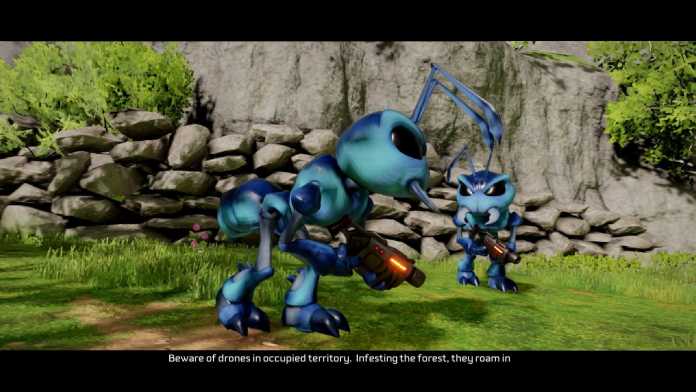
You play as a cutesy tamarin monkey whose home has been destroyed by gun-toting imperialist insects. They move swiftly, taking over, polluting and expanding their oppressive factories of stone and steel. Some allegory for you. Your goal is to find your family and maybe rescue some birds along the way. A fairly simple plot for a simple game. 

A Monkey With a Gun

Tamarin is segmented into portions of platforming and combat. The combat is what may set it apart from other similar titles. You meet a friendly hedgehog, who gives you a little backstory to the insects and their motives. And then they give you an item essential to your impending fight with the ants; one which brought my jaw to the floor. An Uzi. 

I must admit, a shoot-em-up was the last thing I was expecting. However, it seems the titular tamarin isn’t one to take the occupation of their homelands lying down. You go around cleaning house like a simian John Wick. You have the weaponry to show for it too, from machine guns to rocket launchers. Unfortunately, What holds it all back from what could have been an extremely fun time, was the godawful camera. 

The camera in Tamarin infuriated me to no end, whenever I found myself indoors, which is where most firefights take place. The camera would constantly zip around to compensate for my positioning, which was necessary to avoid enemy fire. This made aiming a nightmare. I often struggled to accurately lock on to enemies or get the reticle to where it needed to be in a fight. 

Being such an integral part of the gameplay, it was seriously disappointing to see gun-play that was so lackluster. It all just felt under-baked, like there was unrealised potential beneath the surface. 

Getting Around

The platforming I’d say was the better of the two main gameplay elements, but even this was frustrating in its own way. The platforming itself wasn’t terrible per se. It’s got your basic movements, and includes a rolling maneuver to hit enemies. You’ve also got objects for traversal, such as a springboard to get to high places and climbable walls. Yet alongside the necessities, you’ve got some odd inclusions such as a leaping mechanic that requires you to get into position across from a ledge and then lock on before hitting the jump button. It breaks the flow of platforming one is accustomed to in these kinds of games. It would have been preferable to have a stronger jump, or perhaps making use of an alternate version of the springboard to leap across larger gaps. 

The purpose of the platforming is to collect fireflies, and discover gateways that require a certain number of said fireflies to open them. Some fireflies are tucked away for you to find, while others require you to complete timer events in order to acquire them. There’s some variety here and with a good number of enemies to avoid and defeat. However, once you have completed one area, none of the others really set themselves apart in a meaningful way. By the end I could not help but see them as glorified fetch quests that just padded the runtime; which is around 4 hours give or take.

Thank You For The Music

On a positive note, Tamarin does have some surprisingly good music. From the composer of a few Donkey Kong entries, David Wise provides a great soundtrack for the game. From the melodic piece around the main area to the more synth-y combat tracks reminiscent of an 80’s action movie. The soundtrack here makes the experience a lot more enjoyable.

Tamarin has this pixelated or low resolution quality to its design, that just reinforces the association and inspiration of old school 3D platformers. It can be reasonably good looking though, especially with its more modern lighting. My biggest gripe, however, is the lack of visual variety. No area feels particularly unique, outside of the razed area that was once the main character’s home. Like an apocalyptic landscape out of Fallout, it stands as an example of the path of destruction the insects leave behind. 

Oh, What Could Have Been

Unfortunately no other area has much to offer visually, there are woodlands, caves and the industrial centres that mark the insects’ base of operation. Tamarin just cycles between these kinds of locations and could have benefited from something more. Especially an area that had a look and feel that set it apart from the rest. Nothing on display here felt like something I haven’t seen done elsewhere and done better. 

There is fun to be had, but it just isn’t enough to leave a lasting impression outside of disappointment. For those in love with platformers and the N64 era there might be some value here. There is not enough, however, to rope in anyone from outside those circles.

Review: The Forbidden Arts

Action platform games started their path to greatness on the earlier generation consoles. The N64PlayStation and original Xbox were inundated with many great titles. The colourful worlds, the simple approach and complex puzzles captivated its audience and worked the systems to their limits. Modern gamers want open worlds and realism, so this cutesy cartoon design may not have the same appeal today.

Cast your mind back to 2019. We were all free to gather in pubs, play sports, and take “normality” for granted. Yet with all this sociable interaction just in front of us, we still sat in front of a tele and played computer games. The Forbidden Arts by publisher and developer Stingbot Games is my latest review title, and I’m going to see if it is worth buying in 2021.

A story of fire and puzzles.

The story revolves around a young lad named Phoenix who has dreamlike visions and seeks advice from the Druid counsel. This visit awakens a power deep within, and he discovers he will rise like a phoenix from the flames. He will make new friends, and learn to control his pyromancy secret. Unbeknownst to him, this meeting starts him on an adventure where he must; take on tough enemies, leap chasms, solve puzzles, and master his fiery ability.

The honey is sweet, and the monsters sour!

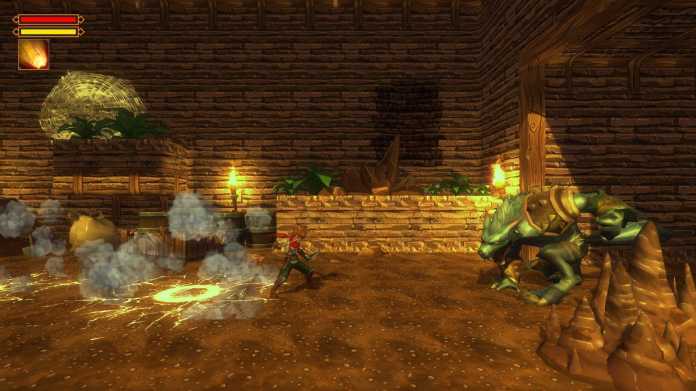
The main action plays out via a side-scrolling screen. A map highlights the area ahead, and you must search every area to find the lost gold, eventually coming face to face with a colossal boss. Each stage comprises many paths. They twist and turn, leading you to dead ends, armies of monsters, and deadly traps. You must look before you leap otherwise you will fall to your doom and have to start again at the last save point.

In-depth levels, but a simple premise.

Each level is extremely well designed, with many challenging areas to reach. Master the art of wall sliding, and double jumping to reach the highest and hardest to reach spots. Spikes, boulders and other traps will try to catch you out. You will clamber across vines and webs trying to traverse the many gaps that you will find. A variety of enemies will block your path, and you must use your trusty daggers, or fire to overcome them. The fighting mechanic is easy to manipulate in your favour, and none of the enemies put up much of a fight. The end boss follows this same predictable pattern. It’s a larger version of one creature already faced, and you must study its form and attack its weak point. 

The levels may have you bamboozled, but the concept won’t. It’s a game that simply wants you to; explore, overcome puzzles, and attack everything in your path. The side-scrolling movement feels linear. This could have been restrictive if it wasn’t for the maze like stages you encounter. Many of the puzzles are straightforward in premise, but in reality they take a lot of patience and precision to overcome. The easiest part of this game has to be the combat, even though its clunky and inaccurate with its approach. You will sweep aside any foes you face, allowing you to work out how you will get to the top of the latest cliff face.

Small open areas with invisible walls.

The “Overworld” map strays away from the side-scrolling notion and allows a 3D open-world experience. Don’t get too excited though, each area is tiny, and you are caged in by an invisible wall. A vast landscape of beautiful colours stretches as far as the eye can see, yet you walk on the spot being held back by a transparent force field. The lack of freedom breeds frustration, which is compounded with the constant reminder that you cannot access certain areas without completing one task or another. It was as if the developers wanted to allow you the freedom to explore, but couldn’t decide how it could be done, so they tethered your progress to points in the story.

This is how it all begins.

Though your abilities increase the more you progress, and these add elements to the gameplay, and a new way to approach each puzzle. There was a lack of character development for Phoenix. This meant that he was always overpowered compared to any opponent, and consistently weak in the health department. It was an odd combination that made little sense, and I think Stingbot Games should have focussed some time in this area as Phoenix’s progress comes across as unbalanced.

It’s a colour explosion.

The limitations of the 3D worlds frustrated me, yet I had to admire the beauty that surrounded me. The vibrancy of the colours, and the character design was fantastic. Every visual element was laced with nostalgia, and though it had a polished finish, it could have easily have been mistaken for a remake from the late 90s or early 00s. The simplicity of the gameplay meant that the action was smooth, and I found no issues.

The folksy music and old-school sound-effects transported me back to my uni days. The jovial and mischievous tunes inspire you to keep on delving deeper into the maze like levels. And the sound-effects, though a tad annoying worked well with the retro style. 

Who’d have thought that Werewolves could be so angry?

Classic controls.

A simple premise needs an easy to play game, and that’s exactly what is presented. A well designed and easy to learn layout enables the newest of gamers to the genre to pick this up quickly. Attacking, dodging and casting spells are all achieved with ease. The only difficulty will be your own skill level when you attempt to; leap from walls, pass traps, or evade monsters.

You will want to return to play this because of the level design. The drip feeding of new abilities ensures that if you wish to see everything that the game offers, then you must return to each stage at a later date. All of this, and a large achievement list of 60+ tasks to unlock, and you have yourself lots of action to sink your teeth into.

Is it worth buying in 2021?

It’s fair to say that the market has moved on a lot in 2 years. No matter what we are presented with, there is always room for a bit of nostalgia. The Forbidden Arts is a classic platform title with an exploration twist. The many routes that you can take, and the addition of new gameplay mechanics, makes this a title that will keep you thinking. Though very easy in some aspects, it will test your accuracy, timing and patience. It’s for these reasons that I recommend you play it. If you want a go on this unusual platform title, then buy it here! Can you help Phoenix rise from the flames and fulfil his destiny?

REVIEW: Hitman III Cloud Version

Hitman III is a game for next-gen platforms, current-gen platforms, and streaming services like Google Stadia and Switch’s Ubitus cloud service. This is the final chapter in the World of Assassination Hitman Trilogy as well as the current storyline of Agent 47, discounting spinoffs and future entries. With this in mind, this marks the final chapter in the current canonical storyline for Agent 47, as each game prior features different story arcs which, while not interconnected for the most part, do take place in the same continuity, and serve to develop 47’s background, humane side, and relationships with other recurring characters. 

Hence, as I state below in the story section, it’s important, but not required, to play the other main “World of Assassination” Hitman games first before jumping into this one. For those uninitiated in Hitman’s universe, The (original) series started with 2000’s Hitman: Codename 47, and it has featured eight main games in total, the most recent being Hitman 3, released in January 2021. The last one released for a Nintendo System, to my knowledge, is Hitman II: Silent Assassin for the Nintendo Gamecube, on 17 June 2003

Main games in the Hitman series are set in semi-open world environments and presented from the third-person perspective, and have players eliminate specific targets assigned to them while trying to remain as stealthy as possible by various means; these include taking disguises, hiding from suspicious enemies, and using supressed weaponry. The series’ main protagonist and playable character is Agent 47, the eponymous hitman, who works for the fictional International Contract Agency (ICA). Originating as a clone created to maintain peak human physicality and intelligence, be easy to control, and display a cold and monotone personality, 47 is regarded as the best assassin in the world.

Now that I got all of the basics cleared up for you, how good- or great or bad – is the finale to the World of Assassination Hitman trilogy?

STORY

The story is divided into 6 missions and an epilogue for the final installment in the Hitman Trilogy, discounting spinoffs. It is personally recommended that you play Hitman and Hitman II on other consoles to understand the story going into Hitman III.

Mission 1: On Top of the World

Following the events of Hitman 2, Agent 47 and Lucas Grey are continuing to hunt down the elusive Partners of Providence. They head to Dubai to infiltrate the inauguration of the Burj Al-Ghazali as the world’s tallest building to eliminate the Partners, Alexa Carlisle, Carl Ingram and Marcus Stuyvesant. They finds out that Alexa has left the building. They HALO jump into the building and 47 eliminates the other two Partners. Arthur Edwards, the Constant, locates and contacts Diana. Diana realizes that the deaths of the partners and Lucas’s contracts were all orchestrated by the Constant himself.

Mission 2: Death in the Family

They learn that Alexa Carlisle has gone back to her home, a mansion in England. She has faked her death, and is trying to secure her family legacy before it is too late. Diana informs them that the Carlisles still have control over many parts of the world, and that Alexa’s late father brought the three influential families of Providence together. This means that the mansion is in fact the birthplace of Providence. They head to the mansion to eliminate her and recover a case file she keeps on the Constant. 

They find out that one of Alexa’s brothers, Zachary Carlisle has been murdered on the premises of the mansion. Alexa has hired a private investigator to find out who did it. 47 eliminates Carlisle, and escapes with the case file. Meanwhile, CICADA private security hired by the Constant have located Grey. Grey hurriedly tells 47 that Diana can no longer be trusted, and that he needs to find Olivia. He tells the guards to “tell the Constant to start running.”, and disarms a guard before shooting himself with the guard’s gun.

The Constant visits Diana in person, and gives her a case file proving that 47 was the one who planted the car bomb which killed her parents. 47 disguised as a CICADA security guard contacts Olivia telling her that Grey is gone and to escape to Berlin.

Mission 3: Apex Predator

Diana is resting at a cottage in the woods when she receives a phone call from the Constant. He tells her that she could be the next Constant. She says that she will need some time to think about it. The Constant tells her she won’t. 47 goes to a club in Berlin to meet Olivia, but Olivia tells him that they have been compromised, and there are ICA agents in the club. 47 eliminates five ICA agents before their handler recalls them. 47 meets Olivia in an abandoned diner. Olivia tells 47 that the data they have on the Constant is useless. 47 tells Olivia that he knows where the ICA stores all its data, and that he wants to leak it to the public.

Mission 4: End of an Era

47 heads to the main ICA data facility, in Chongqing, China, run by a man called “Hush”. Hush is a former cyberterrorist for the Ministry of State Security in Khandanyang, who is doing experiments on mind control. Access to the data core is restricted to the facility’s overseers, Hush and Imogen Royce, a behavioral analysis pioneer. Olivia tells him about a weakness in the protocol: if both overseers die unexpectedly in a short period of time, the security protocol is changed to a weaker failsafe, which she can hack. 47 eliminates both overseers. He wipes all traces of his and Diana’s existence and relationship before uploading the data to a non-profit leak website. Diana tells the Constant that 47 only has one weakness: herself.

Mission 5: The Farewell

Diana sets up a false meeting with a Providence Herald as a trap for 47. When 47 comes to eliminate her, she uses an Ether neurotoxin to knock 47 out. She tells 47 that she knows what he did to her parents. Diana says that Providence used 47, but she did too, so she is freeing him. 47 remembers past contracts he has done, while the room slowly fills with blood.

47 wakes up in a bed. The Constant tells him that Diana was foolish to think he would kill 47, and that he wants to keep 47 as a tool for himself. He has prepared another amnestic serum, and plans to inject 47 with it. He passes out again. He sees Grey, who tells 47 that Constant’s toxins are playing into his fears, and that he should resist them for as long as he can. 47 tells Grey that Diana wants him dead. Grey says that this is not the case, and that Diana has found a way to turn Edwards’ power against himself. He hears Diana speak: “Once you dispose of Edwards, I will dismantle Providence from the top down. It will finally be over. All you have to do is embrace the past.” 47 relives killing Diana’s parents, having to trigger the explosives once more.

Mission 6: ???

47 wakes up again in the Constant’s lab, set up in the old asylum in Romania. He boards a moving Providence train and eliminates Edwards. He enters the forests of the Carpathian Mountains. Diana watches the news in her cottage. The news anchor states that many CEOs (previous members of Providence) have resigned from their positions in a bizarre pattern. She takes the case-file of her parents’ death and throws it into the fireplace. She rips off the Providence badge, an origami crane and throws it into the fire too.

Epilogue

One year later, 47 is walking through a forest on the phone with Diana. He states that he is rejoining the ICA willingly, because it is his life. Diana tells him, “No one is untouchable.” He briefly forms a slight smile before replying, “It’s good to be back.”, as it is his life and their check on elites’ power will always be required.

In a secret ending, if 47 injects himself with the serum while confronting Edwards, he passes out. He awakens in a padded room, greeted by Edwards’ voice telling him, “Wake up. Wake up, my friend. It’s the dawn of a new day, and you have things to do”—akin to the opening of Hitman: Codename 47.

In an interview conducted with IO Interactive on 31st December 2020, they confirmed that despite ‘Hitman 3’ being the final game in the ‘World of Assassination’ trilogy, it will not be the last game in the franchise. Christian Elverdam, director of the game, has said that “closing the door on this chapter of Agent 47’s story feels fitting.” This indicates that he will be back for more in future games, but in what fashion remains to be seen.  It’s kinda depressing to know that he rejoins the ICA,  mainly due to it being his life, as he puts it.

In the penultimate mission before Mission 6, I was surprised when Diane nearly killed 47, but I knew that it was for his own good and partly out of revenge for killing her parents, so I understood why it was being done. Also, playing through a life-or-death dream-esque sequence was surreal, and a bit unsettling, as we get to see past targets he went after. It felt surreal, nightmarish, traumatizing, and, of course, depressing. The game had done it. It made me care about a character who was designed to not be emotionally attached to by fans. I’m very impressed.

GAMEPLAY

The game is now entirely Single-Player. If you were a fan of Ghost Mode or  Co-op mode in Sniper Assassin from previous entries, then prepare to be majorly disappointed.

In addition to the story-based Sniper Assassin mode, there is also  Elusive Targets (with a few yet-unrevealed changes), the Escalations that add extra requirements and complications to your murders, and the Contracts Mode which uses hits created by players.

Let’s put Sniper Assassin mode in our focus, as that’s where players will be spending all their time. Sniper Assassin is single-player only, and requires a strategic use of various costumes and stealthy, non-lethal weapons and knockout methods.

Owners of Hitman or Hitman 2 are able to import maps, levels and their progress into Hitman 3.

Like any Hitman game, the goal is to kill members of an elite group, Providence in this case, without getting detected by other people all the while. The main objective is to use non-lethal means to subdue enemies in such ways that they don’t alert security or members of Providence.

FINAL VERDICT

Hitman III is a good game. It continues on with the story of Agent 47, in this trilogy at least, and wraps things up rather well. Those who came for multiplayer are gonna be disappointed. Those who came for a good, and gripping, single-player experience are in for the best action-stealth game this year so far.

Review: Butterfly

When you can only crawl, having to fly off the back of bees is cruel.

Indie games are on this perpetual conveyor belt of churn. New games appear almost daily, without concern about the concept or quality. It is hard as a consumer of these goods to make an informed decision. Many come wrapped up in pretty packaging, and promise the world, but rarely do they deliver. If I’m willing to gamble on an unknown entity, I look for several factors; low price, unusual concept, and garish colours. The winner from this hearty mix is Butterfly from publisher and developer Xitilon.

Butterfly is a puzzle adventure title that shows that no matter your disadvantages in life, you must make the best of the situation you find yourself in. You control a caterpillar who cannot; jump, swim or fly. He must use his brain to highlight the weaknesses in his opponents, all while searching each level for several flowers left lying around.

A few levels, and little challenge.

40 levels of non-jumping action await you in this platform puzzle game. You must observe your starting position, and work out a path that allows you to use all the surfaces, and your enemies to gather the fauna. If you fail to analyse the situation correctly, and you do not collect all the plants, then you must restart the level and plan again.

It sounds like it should challenge, but it doesn’t. With a quick glance at the screen, you will see an obvious solution to the problem that lies before you. Pipes will be utilised, as well as the backs of bees to reach higher points in each map. You will fly through the levels with little difficulty, and only your own inadequacies will prevent you from succeeding.

So many pipes, and just one caterpillar.

You will need accuracy and quick reactions.

Though the action is simple, and you will know what you need to do, this doesn’t mean it’s a walk in the park. If you cannot move at the right time, or you fall into the bees as they pass you, you will be killed and you start that stage again. You must time your approach well, and failure to plan correctly will prevent you from proceeding.

I like a good, straightforward game as much as the next person, but Butterfly lives by the rules of simplicity. Game mechanics progress at a slow rate, and each level has a sense of Deja vu about it. It was a shame that Xitilon didn’t push the concept further, as in its current state it gets old quickly.

The concept lets it down. How about its presentation?

Graphically, it’s as old-school and basic as they come. A fixed screen, 2D world clearly shows all the action, and there is little in the way of surprises. The pixelated animals will not wow you, nor will the animation that has them moving around the screen. The colour palette is bright and garish, and had a Super Mario World feel to it. Like the main mechanics, the visual presentation kept it simple, allowing you to focus on the basic gameplay.

The audio didn’t push itself any further than the rest of this title. A chiptune soundtrack accompanies the action. Its light-hearted songs matched the unusual theme and created a jovial atmosphere. The sound effects were basic and were reminiscent of many games I played on the SNES. It will not win awards for its presentation, but it worked with this title.

A definite look of Super Mario Bros here!

Mastered in under a minute.

The controls were so simple that I didn’t have to think about what I was doing after level 1. There was little to no challenge in approach, or delivery. Once you knew how to succeed, you steamrolled your way through, waiting for the next level to load up. This lack of difficulty took away from the complexity, effected the longevity, and gave the gameplay a hollow feel.

With 40 stages to attempt, it would be easy to believe there is replay value to be had, unfortunately there isn’t. With a lack of originality, and each level appearing similar to the last, it becomes dull at an incredible pace. If you then consider that the achievement list is fulfilled in around 10 minutes, there isn’t a lot to make you return. At around £3 it won’t break the bank, but there are better indie titles at this price point.

Was it worth the little effort spent on it?

Having wasted around 1 hour of my life on this colour title, I can say I had some fun, but it was a forgettable experience. The premise isn’t bad by any stretch, yet it doesn’t challenge its player base. I did like the colourful presentation, and this reeked of retro influence. Many other elements were outdated and done better by other titles. Do I recommend you play this? Not really, no! If you want an easy 1000 Gamerscore, it can be purchased here! Control your caterpillar and use the environment to eat all the plants on offer.