Two Minute Review: Full Leather Magnetic Wallet from Mujjo

Here is our Two Minute Review of the Full Leather Magnetic Wallet from Mujjo.

–  Easy-access three-card wallet.

–  Compatible with iPhones with MagSafe/magnetic cases.

–  Vegetable-tanned Ecco leather ages beautifully, rated Gold for environmental standards.

–  Lined with luxurious Japanese microfibre with a satin-like finish.

–  Easy to attach, with silicone stripes for slip resistance.

–  Access cards from the top, base, or back.

A Closer Look

Final Thoughts

The Full Leather Magnetic Wallet from Mujjo comes ready to use – you just take it out of the box and attach it either to the back of your iPhone or to the back of any MagSafe iPhone case (as shown above). It’s very easy to remove as well, by just pulling!

Putting your cards, up to three, into the wallet and removing them is easy and they felt very secure there.

If you would like to add a card wallet to your iPhone and you want it to look good, then look no further than the Full Leather Magnetic Wallet from Mujjo.

The Full Leather Magnetic Wallet from Mujjo is available now priced around £44 and comes in either Black, Tan or Monaco Blue.

You can learn more from the Mujjo website here.

A Closer Look at Newton’s Lab Kits

With Christmas less than 2 months away, we take a closer look at some of the Newton’s Lab Kits from Kikkerland.

The Newton’s Lab collection, named after the Father of Modern Physics Isaac Newton and designed by Hector Serrano, is a fun way of learning the basics of physics. 

Kids will see with their own eyes how physics work in real life! Each experiment kit shows a different scientific principal, including optics, hydraulic forces, gravitational forces and aerodynamics. 

Newton’s Lab Color Disc

Paint the discs with different color combinations and make it spin to see the amazing mixes from rainbow colors from white and many more discoverings. Kit includes: discs, string, paint and brush.

The Newton’s Lab Color Disc is available now priced around €10.00.

Newton’s Lab Painting Pendulum

Learn about the forces of gravity while making art at the same time.

Newton’s Lab Painting Pendulum is available now priced around €13.50.

Newton’s Lab Pulley Crane

Build and use the Pulley Crane to teach your kids about how a pulley can be used to change the direction of applied forces and lift heavy objects. The kit includes die cut cardboard pieces, metal screws and nuts, metal hook, sticker sheets, wooden dowel, string & pulleys.

Newton’s Lab Pulley Crane is available now priced around €30.00.

All the sets would make great Christmas presents and there are lots to choose from!

You can learn more from the Kikkerland website.

Review: Highlander 4K Collectors Edition

Here is our review of the Highlander 4K Collectors Edition.

The HIGHLANDER 4K UHD COLLECTOR’S EDITION features brand-new artwork from celebrated artist Matt Ferguson, a 64-page booklet, prequel comic #1 Way of the Sword, a set of badges, art cards and poster. The two-disc set also includes a wealth of new extras including the first extensive ‘Making of’ documentary featuring all of the main cast and crew.

A certified ‘80s cult classic, the film was directed by Russell Mulcahy (Swimming Upstream, The Real McCoy) and stars Christopher Lambert (Mortal Combat, Fortress), Sean Connery (James Bond), Clancy Brown (The Shawshank Redemption, Starship Troopers) and Roxanne Hart.

Featuring an unforgettable original score by Michael Kamen and Queen, HIGHLANDER went on to inspire four further sequels and a television series.

THERE CAN BE ONLY ONE

1985 New York City; the Battle to end all Battles. The last remaining Immortals gather together to fight to the death: decapitation alone can kill them, and the victor alone can lay claim to “The Prize”. Amongst the contestants is Connor MacLeod (Christopher Lambert), who fought his first Battle in 1536 on the highlands of Scotland, swordsman Ramirez (Sean Connery) who mentored MacLeod and taught him the ways of the Immortals, and the evil and brutal barbarian Victor Kurgan (Clancy Brown).

4K UHD BONUS MATERIALS

NEW THE IMMORTAL ATTRACTION OF HIGHLANDER: Looking back at four decades of Highlander magic in a brand new and exclusive documentary featuring new interviews with Director, cast and other key crew

NEW – A KIND OF MAGIC: MUSIC OF THE IMMORTALS: A featurette on the Soundtrack

NEW – CAPTURING IMMORTALITY: Interview with photographer David James

NEW – THERE CAN BE ONLY ONE KURGAN – Clancy Brown remembers Highlander

NEW – Audio Commentary with author Jon Melville

Audio Commentary with Russell Mulcahy

Audio Commentary with William Panzer and Bill Davis

Highlander is one of my all-time favourite films and so when I was offered the chance to not only review the 4K version of the film, but to also get my hands on the collectors edition, I literally jumped at the chance.

The physical contents of the collectors edition are amazing – the badges, poster, comic, artwork and book are great collectors items and the content on the discs are worth the price of the set on it’s own. There are lots of new material to watch on the discs, not to mention watching the movie itself in 4K.

The HIGHLANDER 4K UHD COLLECTOR’S EDITION will be released on October 31, priced around £39.99 and is a must for any Highlander fan! Now if you’ll excuse me, I’m going to watch it again!

Review: Flowtime Biosensing Meditation Headband

Here is our review of Flowtime Biosensing Meditation Headband.

Recorded Biodata

Built-in two-channel brainwave and heart rate sensors, Flowtime Headband tracks your types of brainwave, heart rate, HRV, Attention, Relaxation, and Stress, in real-time.

Supported Modes

  • Guided Lesson Mode: If you are a beginner, there are more than 110 easy-to-start lessons to help you gain the essentials of meditation.
  • Resonant Breathing Training: Follow the 5-5 breathing pattern to get calm and relaxed quickly.
  • Timer Mode: It’s okay if you want to play your own music. The Timer mode is just for you, recording biodata whatever you play.

What’s in the box?

The box contains the headband, charging cable, quick start guide, different size traps and a 3-month membership card.

A Closer Look

Using Flowtime

There is a Flowtime app that is used to connect to the headband and capture all the readings, make settings changes and choose what you want to do. It’s available for both iOS and Android.

Final Thoughts

The Flowtime headband is very lightweight – you almost cant feel its there when you are wearing it. You place it on your forehead with the five sensors touching you head – you almost wear it like you would sunglasses, only higher up.

Pairing the headband with the app was as simple as starting the app, following the steps and then you are ready to use it. The whole process, including creating an account only took a few moments.

Charging the headband is really easy – just connect the supplied cable to the headset and the other end to a computer or USB plug and let it charge. When fully charged, the headband lasts for around 8 hours, and the Flowtime app will show how much battery is remaining.

A 3-month membership card is included within the box so you can try out all the features for 3 months and then decide if you want to continue with the premium features or just use the free features, which on their own are really good anyway!

If you are new to meditation, there are lots of different guided meditations can you follow to help you on your journey. Some of them are free and some you need the premium membership for, but as mentioned, you do get a 3-month membership card included in the box so that you can see for yourself what you need.

During and after each session, various data readings are taken and analysed. A lot of it might not mean that much to you, however it’s very each to go and read up on each set if results to understand more about that it is doing.

I found the Flowtime Biosensing Meditation Headband really easy to use and it showed a lot of interesting results and it helped me to relax. I will be continuing to use it going forward and I am eager to try out all the different options and meditations.

The Flowtime Biosensing Meditation Headband is available now, priced around £174.00, although at the time of writing the review it was on-sale for £161.00.

You can learn more from the Flowtime website.

News: Live by the Sword: Tactics

0

EGX 2022 presented some incredible and eye-opening titles. Publisher Gravity Games showed a large array of interesting propositions, and one of them was Live by the Sword: Tactics. This unashamedly old-school game captures the best mechanics of the genre. Furthermore, it has an incredible story and addictive and interesting features.

Developed by Labrador Studios, this is a tactical strategy, RPG. What’s more, it is their first step into the gaming market, and what a phenomenal title they have made. With awesome pixelated graphics, sharp and contrasting tones, and retro music, it is a nostalgia-fuelled experience.

Live by the Sword: Tactics has a simple approach.

Unlike its peers, Live by the Sword: Tactics has a straightforward approach. Consequently, there is no grinding or levelling up. Instead, you must refine your tactical approach if you wish to succeed. Moreover, there is no additional equipment to worry about. As such, you won’t waste time or brute force your way past a specific problem.

This may seem like a problematic idea, but I adore the concept. Instead of grinding your way to victory, you must focus on the characters you select while understanding their strengths and weaknesses. Accordingly, this will push your tactical mindset and will test you throughout.

Alongside this, Live by the Sword: Tactics is available on PC, Nintendo Switch, and Xbox. Furthermore, there is multiplayer action between friends and random players online. As such, this straightforward retro RPG offers a unique experience. If you fancy trying something new, why not click the links above and purchase a copy? 

Review: New Tales from the Borderlands

An underdog story is a great way to pull at anyone’s heartstrings. Consequently, no matter how cold and callous you are, you’ll secretly want them to break free from their rut, and succeed at least once in their lives. This opportunity arises in New Tales from the Borderlands. It’s a narrative-rich story that is full of humorous and whacky cinematic. Accordingly, it takes you on a strange journey full of wonderment and familiar settings.

Developed by GEARBOX and published by 2K, this is an amusing and grim narrative-focused adventure title. What’s more, it captures many of the much-loved elements from the main franchise, while delivering something entirely unique. Filled with QTEs, mini-games, and zany text, it retains the Borderlands charm, while delivering a wonderful standalone experience. Unlike its 2014/15 predecessor from Telltale Games, this is much more intelligent and sophisticated. Furthermore, it couldn’t be any further away from the classic shooter looter that we’ve all come to love. However, its well-timed plot, interesting characters, and moralistic choices are intriguing and silly and offer oodles of replay value.

No sleeping on the job!

New Tales of Borderlands: new story, similar setting.

If you love the franchise, you’ll know that the grim Borderlands world is somewhat rundown. Criminals run wild, and you are pretty much free to do as you want when you want. Yet, there is still some order in this chaos thanks to the overbearing and all-seeing corporations. Unfortunately, there is little room for underdogs, as you soon find out. You control 3 of life’s biggest losers who have aspirations to change their lifestyle. Sadly, though, the system won’t allow this to happen, and they must stand up and be counted if they wish to make a difference.

Set across 5 different chapters, you flit between 3 lowly but interesting protagonists. First, there is Anu. She is a pacifist scientist who ironically works for Atlas. Why is this ironic? Well, Atlas is one of the largest weapon producers in the Borderlands universe. Second, you control Octavio. He is a streetwise young man who has dreams of becoming the next big thing. Finally, there is Fran. A restaurant owner who owes too much money, but has a badass hover chair that is filled with deadly weaponry.

Each of these personalities is set perfectly within the narrative and cinematic heavy gameplay. The slow-paced and often methodical action is punctuated by cutscenes, quick time events, and the odd moralistic dilemma. As such, you feel more of a voyeur than a key player in this unsubtle, yet comical, game.

Not every robot is as badass as this one.

3 players, unique abilities, and Vaultlander toys.

A Borderlands game would be total junk if the protagonists were weak and unremarkable. Thankfully, the 3 heroes have unique abilities that are pivotal to the progression of the story. Anu uses her special goggles to scan for hidden objects and other scientific tasks. Fran’s chair can freeze things with a touch of a button and the robotic prosthetics are a great defensive tool. Finally, Octavio is a bit of a talker and he can hack electronic devices with his wristwatch.

These abilities are perfectly synced with the interesting, albeit predictable QTEs! Slide the analogue stick in the correct direction, or slam each button before the timer runs out. Each of these elements is pretty well established and somewhat lacks originality. However, I enjoyed the occasional layers of shooting, the odd boss battle, and the mini-games you must undertake.

Each of these activities lacks challenge, but is fun, nevertheless. Octavio has a hacking game to get your teeth into, whereas there are many sequenced-based challenges that require quick reactions and accuracy. This is most apparent in the Vaultlander battle encounters. During every chapter, you’ll undertake a button-bashing event that is, unfortunately, far too easy. With little effort, you’ll overcome any opponent and move on with your life. This was disappointing, as there was potential to add a challenging distraction from the maddening, yet hilarious plot that unravels. Sadly, however, this never happened, and you’ll want something to push you a little harder.

New Tales from the Borderlands look amazing.

When a game focuses on slow and arduous action, the visuals have to be spot on. Thankfully, the comic book styling and excellent steampunk approach are incredible. On top of this, there is the classic comic book artistry, the rich colour palette, and the striking and easy-to-read dialogue. Furthermore, fans of the franchise will recognise many key elements from the shooter looter series. With loot boxes to open, awful cities to explore, and the usual grunts to fight, the familiar graphics were very much appreciated.

Alongside this, the excellent audio sets the scene. With incredible acting, amazing music, and excellent sound effects, the cruel atmosphere is well and truly set. Furthermore, when a game relies heavily on its cinematic, it needs to be on point with its audio. Thankfully, it delivers on each element, and this produces a hilarious, yet dramatic, end product.

New Tales from the Borderlands is full of interesting characters.
Don’t get on the wrong side of her.

An excellent UI and responsive controls.

QTEs add pressure to any gaming experience. Therefore, you want responsive controls that work immediately. Luckily, that’s exactly what you get in New Tales from the Borderlands. With plenty of pre-warning, you know what button to press at any moment. Accordingly, quick inputs ensure that mistakes are reduced. However, the slow gameplay and ample input time reduce stress and make this a straightforward title to play.

When there are multiple storyline branches and moralistic choices on offer, replay value is at a premium. Unfortunately, though, the roughly 10-hour play time and a £35 price tag prevent this from being truly great value for money. Subsequently, new players to this genre may look elsewhere, and this is a shame.

New Tales from the Borderlands delivers what is expected.

I enjoyed the 2014/15 Tales from the Borderlands game. As such, I couldn’t wait to see how the second instalment would evolve. Luckily, the developers have done an amazing job with practically every layer. Aesthetically, it is fantastic, smooth, and problem free. Furthermore, it is laced with humour; it is easy to play, and the QTEs are enjoyable if not a bit too easy. Disappointingly, though, it isn’t long enough, and the Vaultlander battles aren’t challenging enough. Yet, it is still a great experience and I recommend you buy it here! Will you help each protagonist to redeem themselves? Explore the grim world, uncover the secrets, and fulfil your dreams.

Terrific Tips for Beginners to Fast Track Learning the Poker Rules

As more and more people are interested in playing poker, they are also becoming more curious about the rules of the game. Although poker is a relatively simple game, there are still a lot of poker rules that need to be learned in order to play correctly.

One way to learn poker rules is to find a tutorial or article that outlines the basic rules. However, this can be time-consuming and may not be the most effective learning method. If you want to learn the poker rules quickly and efficiently, here are 15 tips and tricks to help you do just that:

1. Start by learning the basic hand rankings. 

This tip is the foundation upon which all other poker rules are built, so it’s essential to get this down first. There are plenty of resources online that can help you with this.

2. Once you know the hand rankings, learn about the different types of poker games. 

There are many poker variations, so it’s essential to choose one poker game that interests you and stick with it. Doing this will make learning the rules much more straightforward.

3. Don’t be afraid to ask for help. 

If you’re ever unsure about a rule, don’t hesitate to ask a friend or family member who knows how to play. They’ll be more than happy to explain it to you.

Photo from Pixabay

4. Take some time to watch others play. 

Doing this is a great way to learn how the game is played and pick up on any subtleties you may have missed. Just ensure you don’t get too distracted and end up missing your hand, leading to your loss of poker chips.

5. Use a poker odds calculator. 

These handy tools can be found online and will help determine the likelihood of certain hands winning. This tool is a great way to learn about pot odds and other essential concepts.

6. Practice, practice, practice. 

The best way to learn anything is by doing it yourself. So fire up some online poker or break out the chips and cards with friends and start playing. The more hands you play, the better you’ll become at understanding the rules.

7. Read books or articles about poker strategy. 

In addition to learning the rules, it’s essential to understand how to play the game strategically. Plenty of resources available can teach you about poker strategy and help you become a better player.

8. Join a poker forum or chat room. 

These online communities are full of experienced players who can offer helpful advice and feedback. Just be careful not to get too caught up in the discussion and miss out on your own hands. GGPoker, the world’s largest poker room, offers a fun and safe place to play and enhance your poker skills.

Photo from Pixabay

9. Attend a live tournament. 

If you want to take your game to the next level, attending a live poker tournament is a great way to do it. You’ll be able to watch the best players in the world and learn from them firsthand.

10. Watch poker on TV.

Poker is one of the most popular spectator sports in recent years, so there’s no shortage of televised tournaments to choose from. Watching these events can be a great way to learn about the poker game and pick up some tips from the pros.

11. Download a poker app. 

Many different poker apps can help you learn the game or just have some fun playing against others. These apps are a great way to brush up on your skills when you have some free time.

12. Get a poker coach. 

Hiring a poker coach is a great way to do it if you’re serious about becoming a better player. A good coach will be able to teach you the basics, help you develop your skills, and give you feedback on your progress.

Photo from Pixabay

13. Join a training site. 

There are many different poker training sites available that can help you learn the game. These sites typically offer video lessons, articles, and forums where you can interact with other members.

14. Use software to improve your game. 

Various software programs can help you analyze your hands, track your progress, and find leaks in your game. These tools can be a great way to take your game to the next level.

15. Study successful players. 

One of the best ways to learn poker is to study the strategies of successful players. Plenty of resources available can help you do this, including books, articles, and videos.

By following these tips, you’ll be well on learning the rules of poker and becoming a better player. Sign up with GGPoker now and grab that exciting opportunity to fast-track your learning and be confident to play with different types of players around the world. So relax, enjoy yourself, and have fun.

News: Once Upon a Jester

0

Early this month I reported news of Crunching Koalas and Bonte Avond’s latest project. Once Upon a Jester is an upcoming title, that’ll feature on Nintendo Switch and PC. This theatrical musical adventure is set in a colourful and whimsy world. Furthermore, the original soundtrack has been created solely by the development team. As such, it is full of high jinx and amusing moments and is unlike anything else you’ve heard.

The crazy story follows a pair of criminals who wish to steal the Royal Diamond. Sok and Jester are desperate to complete their task, but in order to get close enough to the royal family, they must outperform the Kingdom’s best actors. Accordingly, they undertake an array of improv theatre shows in front of insatiable crowds. If they are successful in their endeavour, they will be invited to the Royal Theatrical Spectacle, where they can fulfil their dastardly plan.

Once Upon a Jester has a new trailer.

Featured in the MIX Next Fall online Showcase, the team has released a new gameplay trailer. However, they are still holding their cards close to their chests. Consequently, I can’t wait to get my hands on a copy. In the meantime, there are some key gameplay features to devour.

  • No two shows are alike! The branching pathways can take the performance anywhere, depending on the player’s choices.
  • A fully voiced cast of colourful characters brings life and laughter to the show! A Wendigo, a tree looking for its roots, and a blob of pesto are just a few.
  • It’s always adventure time in hand-crafted locations like the cosy Dorp Town, the dark mysterious Woudwoods, and the radio-obsessed Stad City.
  • An original soundtrack, written and performed by the developers is here to vibe to, infused with indie tunes!

If Once Upon a Jester takes your fancy, why not click on these links and pre-order your copy today?

Steam

GOG

(More information on Crunching Koalas can be found here!)

(More information on Bonte Avond can be found here!)

Review: PlateUp!

Whenever I watch famous TV chefs, I wonder why anyone would undertake that job. Every element of it looks stressful and depressing. However, whenever I have the opportunity to play a cooking-themed game, I jump at the chance. PlateUp! is the latest Steam sensation that has its fan base salivating. Therefore, I wanted to see what all the fuss was about.

Developed by It’s happening and published by the Yogscast, this is a crazy and hectic cooking title. What’s more, it has a high degree of tactical nuance and procedurally generated levels and can be enjoyed solo or with up to 3 friends. On top of this, it is Steam Deck verified, and this makes it all the better. 

Is PlateUp! a poor man’s Overcooked?

Whenever a developer creates a new IP in this genre, it’ll inevitably be compared to Overcooked. Now, this may seem unfair, but it is the Gold Standard that we all look towards. Fortunately, PlateUp! does enough to not be considered a poor replica. Instead, it’ll be appreciated on its merits and its distinct layers of originality.

Unlike its peers, PlateUp! doesn’t rely on a story. Instead, it lets its action take centre stage. Now, this may disappoint some story-hungry gamers, but it shouldn’t. Why? Well, its unusual approach gave the developers all the creative freedom they wanted. Furthermore, it lets you focus on the action without unnecessary distractions.

So, the action follows a simple gameplay loop. Survive 15 shifts in your restaurant, upgrade your menu, and your equipment, and then start over again with your improved gear. This continues until your customers lose patience and your restaurant is closed. This is the core concept, but of course, there is plenty more meat on the bone.

PlateUp! allows you to cook with friends.
Too many cooks spoil the broth.

Upgrades, upgrades, upgrades!

The crazy gameplay demands a multi-faceted approach. Subsequently, you’ll be spinning many plates at once. This is particularly disconcerting as a solo gamer, as it can become overwhelming. Yet, when playing with others, the madness is infuriating, and moreish, and will test your friendships.

Each playthrough begins with a rudimentary kitchen. However, as each shift is completed, upgraded equipment can be purchased. Whether it was a new counter, fridge, table, breadsticks, or plants, they all have their uses. Depending on your approach, you may wish to increase your customer’s patience and resolve. Alternatively, you can improve your kitchen, upgrade your decor, or purchase a mop to clean stains. Whatever you decide, it’ll drastically improve your chances of staying open.

The daily routine is in theory quite repetitive. You must manage the front of house, clean up and serve delicious meals. However, there is so much going on that things rarely become tiresome. Accordingly, the developers should be applauded for their unique ideas. At no point did I experience tedious or boring gameplay. No, instead, I thrived on the unknown and the mayhem that ensued.

Use the garage items to improve your chances.

Varied menus and fussy customers.

It wouldn’t be a cooking game if there wasn’t a fantastic variety of food on offer. Fortunately, PlateUp! has a great selection that gets better as you progress. As the shifts pass, upgraded ingredients are added to the menu. Now, this may seem great, but it also complicates every meal you prepare. Why? Well, your simple salad or dessert suddenly requires multiple components and considerably more time to prepare. Furthermore, it impacts the amount of kitchen space you have to work with. Consequently, as the game wears on, you have so much to think about that it can be tough to keep up.

Annoyingly, things aren’t helped by the demanding customers. These impatient imbeciles are messy and unhelpful. Sadly, they lack patience and in large groups; they demand their meals are served together. This shouldn’t be an issue, except when hot food is involved. If left on the side, the hot meals become cold and the customers won’t be happy. Therefore, you have to recook the food and risk losing it all. If this happens, it is game over and your restaurant is closed. Accordingly, no matter how much you hate them, you must prioritise their needs.

PlateUp! has a nice and simple style.

Much of the action will push you to your limits. Accordingly, I appreciated its simple visuals. Playing out from an isometric viewpoint, the madness is easy to follow. What’s more, each playable character has a distinct colour that makes them easily identifiable. On top of this, the progress of each task is supported by an easy-to-understand progression bar. As such, you know when each job is nearly done, and you can plan ahead.

What was also great were the customisable elements for each restaurant. At the end of the shift, you have the freedom to adjust each location. This was amazing, as any issues with tables or the kitchen layout can be altered immediately. 

This genre has some of the best audio around. Its whimsy style and upbeat nature will bring a smile to your face. Alongside this, the sound effects are great, even if the noise of burning food fills you with dread.

The later levels are ridiculously tough.
How will you manage this madness?

Excellent controls, mostly. 

Even when everything is burning around you, the controls won’t let you down. Thanks to the thorough tutorials and easy-to-access recipes, playing this is a piece of cake. However, there are minor problems with the size of the hitbox. Subsequently, you have to be pretty accurate whenever you undertake a task. Disappointingly, this leads to unwanted frustration and failure. Other than this, it works exceptionally well with both a mouse and keyboard and the Steam Deck

Thanks to the procedurally generated approach and the multiplayer action, this oozes replay value. Furthermore, it is addictive and tough to put down. Like its peers, it’ll get under your skin. Consequently, you’ll play it again, and again, and again. 

PlateUp! is an excellent addition to the genre.

This genre has some amazing titles. Therefore, finding something as interesting and original is unusual. Moreover, add into the mix its addictive action and multiplayer approach, and you get a spectacular game. PlateUp! is so addictive that I could only stop playing by cutting off my hands with my virtual cooking utensils. Unsurprisingly, I loved it and I recommend you buy it here! Running a restaurant is never easy. Therefore, you must spin many plates as you try to make everyone happy. 

Review: Miraculous: Rise of the Sphinx

There have been some incredible TV series to computer game crossovers. However, there have also been some absolute stinkers. The latter category is usually filled with children’s programs that aim to cash in on their much-loved popularity. As such, these titles normally get berated by angry fans and those who should know better. Many adults forget to consider that the key audience is their children, not the person footing the bill. As such, as long as the little ones love it, does it matter? Now, Miraculous: Rise of the Sphinx is another TV series game that could easily fall into either of the aforementioned categories. Therefore, I had to be careful when I examined it in finer detail.

Developed by Magic Pockets and published by GameMill Entertainment, this is a superhero adventure title. What’s more, it is set in the Miraculous universe, but no prior knowledge is required to enjoy the action. As it is aimed towards a younger audience, the levels are understandably short; the difficulty is reduced, and the aesthetics are loud, colourful, and in your face. Furthermore, it is simple to pick up, has a moralistic backbone, and is a vain attempt at an interesting story. In short, it delivers a punch without really wowing you.

Ladybug has some kick ass moves.
Time to show them your moves.

Miraculous: Rise of the Sphinx delivers a bizarre story.

The key protagonists return for another unique adventure. Ladybug and Cat Noir must tackle the diabolical supervillain Hawk Moth across 7 colourful and interesting levels. Their arch nemesis has akumatized the Parisian locals to do his bidding. However, the superhero pair won’t let this stand in their way as they de-evilize each akuma. En route, the pair will make friends, learn new skills, and take down a plethora of bosses.

In theory, this sounds like a fantastic and classic superhero endeavour. In reality, it doesn’t make much sense, and the exploration elements in the central hub didn’t work. Consequently, I understood what the developers were trying to achieve, but I and my children became lost in the nonsensical and fragmented narration. Between chapters, you are expected to lead a “normal” life. As such, you’ll go to school, interact with friends, and do everyday tasks. Yet, Hawk Moth is up to his old tricks, and this creates an array of problems for you to undertake. Accordingly, the story flits from one moment to the next, and it is tough to keep up.

Alongside this, the central hub, or Parisian districts, didn’t add much to the gameplay. Instead, they reeked of padding out the minimalist plot and were poorly executed. Thankfully, a fast travel system and a well-laid-out map were incorporated to remove much of this pain. However, it was sadly a key element between chapters that will leave you feeling disappointed.

Miraculous: Rise of the Sphinx has some terrible combat mechanics.
Kill the goons and collect the orb.

Collectables, fighting, and well-trodden mechanics.

Each stage followed the same gameplay loop. Once you finished faffing around the central hub, the game moved onto a linear 3D platform world. Here, you are expected to search for collectables (orbs and macaroons), fight each of the bosses’ goons, and undertake the standard platforming tropes. Disappointingly, Miraculous: Rise of the Sphinx played life extremely safely, making it understandably lacklustre. Yet, my kids enjoyed the understated nature of the gameplay, and the easy-to-explore levels.

As the story wears on, each of the heroes learns new abilities that’ll open otherwise unreachable areas. Subsequently, you are expected to revisit earlier stages to find each collectable and improve that chapter’s score. These abilities create new paths or help you to overcome an array of obstacles. Moreover, this was an interesting way to expand each level and something that stood out amongst the otherwise flat and lifeless elements.

The flaccid approach continued within the fighting mechanics. Though there are a variety of goons to defeat, they won’t test you, nor will they test a child. With a few hits, each of your foes is conquered and you move on. This continues until you reach the end of the level and you encounter one of the bosses. Thankfully, these moments were excellent. Furthermore, the gargantuan beasts were challenging and demanded a small amount of skill. You’ll use stealth to defeat Weredad, your power and agility to destroy Mr Pigeon and your knowledge and intelligence to take down the Gamer. Alongside this, Miraculous fans will enjoy the new bosses on offer.

The bosses are big, angry, and challenging.
That is one giant selfie.

Miraculous: Rise of the Sphinx is a frame rate nightmare.

Graphically, I expect very little from this genre. Usually, the developers throw together some show-related scenes, while incorporating familiar characters and landmarks. Now, this may seem like a copout, because it normally is. Thankfully, though, Miraculous: Rise of the Sphinx has a unique story, and many of the levels are surreal and unusual. This was great, as it kept things interesting, even though each chapter was painfully short. On top of this, I liked the stark imagery within the cutscenes and the vivid colour palette. Disappointingly, however, the game has a terrible frame rate and the action particularly stutters to a stop. This was noticeable during cutscenes and in the central hub. Yet, when fighting Weredad, it is beyond a joke. This was a terrible example of modern gaming and one that is unforgivable in 2022.

The audio is equally disappointing! With horrific soundbites, terrible sound effects, and music that stopped unnecessarily, it is dreadful. For unknown reasons, the heroes spout dated sayings, such as, “would you like a knuckle sandwich?”. Now, this wouldn’t be a problem, but when it is played on a loop, it is irritating as hell. Furthermore, when an 8-year-old mentions its tedious nature, you know it’s bad. Luckily, there is a saving grace. The acting for the cutscenes and the narration are well-delivered, full of energy, and enjoyable. Sadly, it was a shame that the rest of the audio didn’t follow suit.

The two heroes will save the day.
Ladybug and Cat Noir.

Simple controls.

As a parent, you purchase this genre to let your kids play unsupervised. As such, you don’t want to be helping out every other minute. Fortunately, the simple control system ensures that once the fundamentals are nailed, the game is easy to play. On top of this, each level has a basic navigation system to ensure you stayed on track. What’s more, the inputs were responsive, and this was helpful during the combat encounters and the minor QTEs you’ll experience.

If you are young enough to enjoy the inane action, you won’t want it to end. Accordingly, younger players will be happy to explore the hidden areas. Furthermore, there are plenty of macaroons to locate and loads of orbs to collect. Alongside this, the whole story can be enjoyed cooperatively in a local setting. Therefore, a parent and child can play together, or 2 siblings can help each other to defeat Hawk Moth. This was a great approach that made this a fun, albeit problematic, family title.

Miraculous: Rise of the Sphinx is great for kids.

From an adult’s perspective, Miraculous: Rise of the Sphinx is undeniably awful. However, there are a few glimpses of amazing ideas, but these are fleeting. As such, it doesn’t deserve more than a 3 or 4 out of 10. Yet, this is aimed towards a much younger audience. Consequently, it ticks many boxes for its key demographic. The story is lively and loud, the characters are charming and loveable, and the gameplay is stripped back and easy to pick up. Moreover, the interesting and surreal stage designs are enjoyable to explore, and the basic platforming elements test younger players. Subsequently, the developers have delivered for this player base. As such, I recommend you buy it here! Will Ladybug and Cat Noir save the day? Collect the orbs and macaroons, defeat your foes, and stop Hawk Moth at all costs.

Beginners Guide to D&D Sourcebooks

Dungeons & Dragons (D&D) isn’t the easiest of hobbies to get into. The rules alone are often enough to overwhelm the hardiest of tabletop players out there. Add on the abundance of official supplement books you have to sift through, and you may find yourself wanting to quit before you’ve even started.

To make things a little easier for you, I’ve narrowed down the 50+ official books into 7 bitesize recommendations. For the sake of keeping things beginner friendly, I won’t go into overwhelming detail. Instead, I’ll simply provide concise summaries of what each book has to offer, along with their target demographics.

I’m also strictly limiting this guide to the core and supplement sourcebooks. Campaign and adventure books are an entirely different kettle of fish, and both are deserving of their own separate articles.

Is playing for free an option?

Before getting into this, I’d like to start off by reminding players that you don’t need to purchase ANY books in order to begin playing D&D. The basic rules, character customisation options, monsters, and prewritten adventures, can all be found for free over at D&DBeyond.com. That, in my opinion, is the perfect way to dip your toes into the water, and get a taste of what D&D has to offer.

However, if you are set on giving yourself a wider array of options, then the books we will be discussing today are a great place to start.

Core Books (Essential Buys)

Player’s Handbook

One book that every D&D player should own is the Player’s Handbook (PHB). This, for all intense and purposes, is rightfully considered to be the 5th edition bible. It contains easy to understand explanations of the basic ruleset, along with step-by-step guides to help you create your characters. 

The myriad of customisation options that comes packaged within this book will service you for your entire tenure as a D&D player. No matter what you fantasise playing as, the PHB can assist you in making that dream become a reality.

Included in this book are:

  • 40 subclasses
  • 42 feats
  • 13 backgrounds
  • and a wide variety of helpful tooltips.

Beyond the initial setup, the PHB is also the book you’ll refer to the most during your gameplay sessions. Want to know how much something costs in a shop? Perhaps what ability a specific spell does? Or maybe how a status effect will impact you? All of this and more can be discovered in the PHB.

Without a doubt, if you only intend to buy one D&D book, you should make it this one.

Monster Manual

This one comes with a bit of an asterisk attached. If you intend to be a player, then you really don’t need to seek this one at all. On the other hand, if you are an aspiring Dungeon Master, then you probably should add the Monster Manual (MM) to your arsenal ASAP.

Enclosed within the MM are 150 readymade monsters for your campaigns. This alleviates a lot the pain of having to come up with your own set of balanced creatures. Instead, you get to sit back and relax whilst choosing which monster you want to torment your players with. Speaking of the monsters, the MM covers just about everything you could ask for. From Dragons and Goblins, Unicorns and Beholders, and, my personal favourite, the Mind Flayer.

Compact stat blocks also accompany each monster in the MM, allowing you to locate, manage, and run an encounter effortlessly. Alongside this, each monster is also provided with a description of its appearance and den. You may not think that is important now, but illustrating an image in your players mind is a fantastic way of immersing them into the game.

Lastly, the challenge rating system ensures you can safely pair a monster to your party’s current level. While it isn’t perfect, the system often does prevent you from accidently wiping your party… so, that’s nice.

Overall, the content found in here will allow you to run games for years to come.

Supplement Books (Non-essential, but recommend)

Dungeon Master’s Guide

Some players genuinely place the Dungeon Master’s Guide (DMG) into the essential category. Whilst I can certainly see their reasoning behind placing it there, respectfully, I would have to disagree with their assessment.

Player characters don’t benefit all that much from having this on hand. Likewise, if you are a self-reliant DM, particularly in the creative department, then this book will also be a wasted investment. That isn’t to say that the DMG is complete waste of time though. On the contrary, it can be a great source of inspiration.

There are a ton of tables for you to roll on that allow you to create basic dungeons, settlements, and NPCs. In addition to this, there are optional game rules for you and your players to tinker around with, along with extra tips on how to better DM your D&D games. Best of all though, the 50 odd magic items detailed in the DMG are exceptional dungeon/questline rewards.

All in all, the DMG is a useful resource to have. Though, like I said earlier on, it isn’t exactly necessary. I’d really only recommend picking this up if you want to boost upon the core gameplay experience, or, if you want some help in curating your world.

Xanathar’s Guide to Everything

Xanathar’s Guide to Everything (XGtE) can best be described as a companion piece to the Player’s Handbook. Inside, you’ll discover additional subclasses, racial feats, and spells, that allow you to further diversify your characters skillset and identity.

Dungeon Master’s can also take advantage of this book by exploring the plethora of new DM tools. To name a few, these include, combat encounter tables, dungeon trap examples, and, intriguing ways to highlight player tool proficiencies.

In keeping with streamlining the preparation process, XGtE also provides you with a handy name generator based on race and language origin. This is unbelievably reliable, and a true lifesaver when you need to quickly come up with an NPC name on the spot. Oh, and much like the DMG, you also gain 50 new magical items to add into your campaign.

However, the element I love the most about XGtE, and one that I constantly refer back to, is the discussion surrounding downtime activities. Fundamentally, this section details various ventures you can offer to your party during the less hectic moments. It helps to keep the game moving forward, and give you time as a DM to prep the next big thing.

Undoubtedly, XGtE is one book I am happy to have on my shelf. Having said that, you don’t really need to pick up this book immediately. I would still recommend it, especially if you’ve had your fill of the PHB content, but it’s not necessarily something you need on day one.

Tasha’s Cauldron of Everything

Similarly to Xanathar’s Guide, Tasha’s Cauldron of Everything (TCoE) expands upon the core customisation and ruleset options of 5th edition. In addition to extra subclasses, feats, and spells, TCoE also allows players to fully customise their characters origins via changing their racial traits. Essentially, this allows you to create a character ideology and personality, then pair it to the confines of the game. For example, if you wanted to play an intelligent Orc, or a stealthy Goliath, well, now you can! If that wasn’t enough, Tasha also comes bundled with an entirely new class centred around crafting, aptly called the Artificer.

DMs also gain some additional toolkits. These range in usefulness, from how to add and mange a party sidekick, all the way up to intricately designed puzzles. Though, if you really want to impress your players, you can now offer them the ability to gain a magical tattoo.

‘What are they?’ I here you ask. Well, more or less, these operate in the same way as a standard magical item. The only difference, as the name implies, is the magical power is directly etched onto a characters body. Realistically, this is strictly included for flavour purposes. But it give you another way as a DM to help foster a characters identity.

I love this book, as do the dozens of players I run the game for. Out of all the optional recommendations I have in this list, I’d probably place this one at the top. Yet, much like XGtE, you can wait until you’ve had your fill of the PHB before going out of your way to buy this.

Monsters of the Multiverse

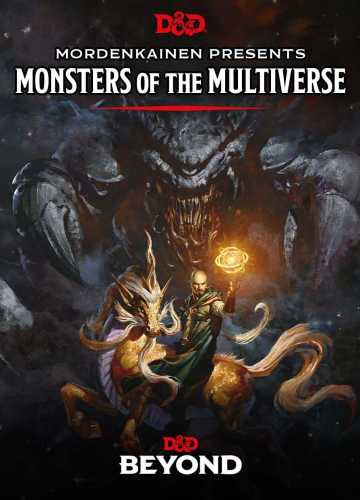
If the villainous foes in the Monster Manual aren’t quite cutting it for you, then you may want to look into the Mordenkainen Presents: Monsters of the Multiverse (MotM). This contains over 250 new monsters that have been assembled from two other sourcebooks, those being Volo’s Guide to Monsters, and Mordenkainen’s Tome of Foes. Now, rather than having to buy two separate books, you get both of them for the price of one!

As is standard with 5th edition bestiaries, each monster comes with its own stat blocks and descriptions. However, unlike the aforementioned Monster Manual, MotM simplifies the way that spellcaster variants work. This makes running encounters with the likes of witches and wizards so much smoother for us DMs. — As a side note, I hope the monsters in the MM will retroactively receive this update upon the release of One D&D. — To cap it all off, players also receive a whopping 30 fantastical races to mess around with.

Truth be told, I reach for this book a lot more often than I do for the Monster Manual nowadays. Depending on which creatures you like, you may want to opt for this book over the MM. The only problem I can foresee in doing is missing the stat block breakdown and explanation in the MM. Though, this can easily be remedied by reading the basic rules section over at D&DBeyond.com.

Fizban’s Treasury of Dragons

As the name implies, Fizban’s Treasury of Dragons (FToD) is a large compendium of Dragons. Over 80 Dragon related monsters are packed into this tome, all of which come with beautiful descriptions and, you guessed it, independent stat blocks. You even have chapters dedicated to discussing what you might find in a Dragons lair, ranging from things like magical items to Draconic gifts.

Although there are a couple of new subclasses and player options, both of which unsurprisingly revolve around Dragon themes, FToD should primarily be thought of as a bestiary. And, a very niche one at that. As such, this book is mainly aimed at DMs that have a fascination with Dragons. But, as with everything else in this category, it really isn’t required.

Summary

So, there you have it. A very brief insight into what official D&D supplement books you should be on the lookout for. Depending on which medium you prefer, you can purchase these either physically or digitally at all reputable retailers. As one last piece of advice, you can also pick these up as part of a set. Going down this route has the added benefit of being more cost efficient.

The core set includes:

The expansion set includes:

As a reminder though, you don’t actually need to purchase any book to begin playing D&D. Instead, you can find plenty of free resources on Wizards of the Coast’s official digital platform, D&DBeyond.com. Furthermore, places like Reddit and YouTube offer a ton of homebrew ideas and settings. The content found on those platforms is enough to last anyone a lifetime. I implore you to check those out first before you commit to purchasing any official product.

Review: Justice Sucks

Robots are mankind’s future, apparently. They will complete mundane tasks and make our lives easier. However, science fiction has taught me a thing or two about robotics. Consequently, I know that this idealism will end with screaming, tears, and death. Unsurprisingly, this is exactly what happens in the gory and brilliantly crazy Justice Sucks.

Developed by Samurai Punk and developed by tinyBuild, this is a violent action game. What’s more, it has some strategy elements, plenty of levels, and gallons of blood to contend with. Yet, if you are squeamish, you can reduce the gore while retaining the hilariously violent gameplay.

The missions in Justice Sucks are random, amusing, and challenging.
It’s time for an explosive time.

Justice Sucks = Déjà vu!

When I was given Justice Sucks, I was sure I’d played it before. Everything about it seemed familiar, and I had a distinct déjà vu moment. Then it struck me. In 2021 I reviewed Roombo: First Blood. The original title was a much simpler and refined version of its sequel. But I loved it nonetheless and scored it a 7. Accordingly, I was hopeful that Samurai Punk would build on their strong foundations, and create a deep and brutal game for us all to enjoy.

Well, spoiler alert, they have done just that. Justice Sucks is much more grisly, angry, and disgusting than its predecessor. Subsequently, it’ll make you wince as you bludgeon your opponents to death. Moreover, the protagonist becomes all-powerful as he chews up their bodies and sucks up their blood. Oh, have I forgotten to mention that the hero is a robotic hoover?
You control Dusty, a robotic household hoover. He loves his family, and when their house is broken into, he goes rogue. By killing the burglars, it alerts the manufacturer, FamilyCorp of his misdemeanour. Consequently, the Warranty squad is called in to resolve the situation. As they arrive, a scuffle breaks out, and Dusty is sent flying into the TV. Here he merges with the TV world, and a surreal adventure begins.

Dusty can become a powerhouse.
Customise your robot and complete every mission.

Weird, but it’ll make you chuckle. 

Being teleported into a surreal world is just weird, but it gives the developers a creative licence. Thankfully, they grabbed the opportunity with both hands and the gameplay benefits considerably. The action is split among several worlds, each comprising an array of levels. During each stage, you are given unique tasks to complete and a limited amount of time to succeed. If you are victorious, you’ll be scored for your efforts and you’ll progress. This gameplay loop continues throughout, even if the objectives and goals differ slightly per world. 

As Dusty, you’ll be asked to move parcels, prevent robberies, kill invaders, clean up, and much, much more. As you explore each level, you will need to hide, hack, and steal items to use as weapons. The Warranty squad is determined to stop you, so you must be proactive and aggressive throughout. Yet, a little tactical nuance isn’t a bad thing. As such, using the shadows to hide, or hacking electrical supplies to shock would-be assailants is not a bad idea.

Alongside this, Dusty has an array of abilities and perks that he can unlock. These special elements give you a fighting chance and can be the difference between success and failure. The abilities are powered by blood, so the more people you kill, the more powerful you become. Subsequently, you’ll want to hoover each dead body, and clean up the claret they leave behind. 

Justice Sucks looks similar to the original. 

I adored the gameplay changes in Justice Sucks. Subsequently, I think the developers did a perfect job of enhancing the difficulty while retaining the gory charm. However, I wasn’t so impressed with the visuals. Unfortunately, there is little to decipher between the two games, and this was frustrating. Yes, it looks nice, and the stage design is interesting, but I would have liked a bigger improvement in the graphics, nevertheless.

The audio follows suit with its upbeat and familiar style. The high-adrenaline soundtrack works well with the gruesome gameplay and is complemented by wonderful sound effects. The noise of bones crunching, skin squelching, and blood spraying was incredible. When you combine the ear-splitting audio with the eye-opening visuals, you get quite a vivid and overwhelming experience.

Every stage will be scored.
Aim for the best score possible.

Confusing controls. 

When a title is as simple as Justice Sucks, you expect the controls to be easy to master. However, I was horribly wrong, as I struggled considerably to pick them up. With many submenus and plenty of buttons to understand, I was all fingers and thumbs. Yet, once you understand the fundamentals, it is enjoyable, straightforward, and well thought out.

With many levels to overcome, a scoring system to follow, and a global leaderboard for each stage, it’ll have you hooked. The only element it was missing was multiplayer action, and this was disappointing. Even if the developers stuck with couch cooperative gameplay, this would have scratched that itch.

Justice Sucks is good brutal fun. 

Though Samurai Punk went a little OTT with the gore and violence, I still think it works. Its core concept is brilliantly addictive, and I adored how challenging each level was. Furthermore, I believe they have improved on their first title. Accordingly, I loved it and I recommend you buy it here! Can you save your family and exit the TV realm? Suck, clean, and maim your way to victory. 

A Closer Look at NASA Interactive Robot Astronaut

With Christmas less than 2 months away, we take a closer look at the NASA Interactive Robot Astronaut.

This NASA Interactive robot responds to voice and touch. Talk to him and listen as he records and repeats your messages. Moves forward, backward, left and right.

Perfect for any space enthusiast, the NASA Interactive Robot Astronaut is a lot of fun to play with and will make a great Christmas present.

The NASA Interactive Robot Astronaut is available now priced around £29.99 and is aimed at ages 3 and up.

You can learn more from the ThumbsUp website.

Disclosure: This product was provided free of charge in exchange for a fair and unbiased review.

A Closer Look at NASA RC Opportunity Mars Rover

With Christmas less than 2 months away, we take a closer look at the NASA RC Opportunity Mars Rover.

Re-create the excitement of NASA’s exciting mission to Mars with our remote control model of Opportunity. Set your smartphone into the bracket and record your own exploration missions.

Perseverance’s innovative wheel tracks enable it to move forward, backward and even sideways just like the real Opportunity on Mars.

The NASA RC Opportunity Mars Rover is a lot of fun to play with, and whilst you can’t take it to Mars, you can certainly find places on Earth to play with it!

The NASA RC Opportunity Mars Rover is available now priced around £39.99.

You can learn more from the ThumbsUp website.

Disclosure: This product was provided free of charge in exchange for a fair and unbiased review.