Why MMO games will never stop forcing you to gamble

0

MMO games, or massively multiplayer online games, are online games that allow a large number of players to interact with each other in a virtual world. These games often feature open worlds, quests, and other activities that players can engage in together. MMO games have become increasingly popular in recent years, with some of the most well-known examples including World of Warcraft, Final Fantasy XIV, and Elder Scrolls Online.

In many MMO games, gambling mechanics have been introduced to increase revenue for the game’s developers. Gambling in MMO games can take many forms, but typically involves purchasing a randomized item or reward, such as a loot box or gacha, with the hope of obtaining a rare or valuable item. These gambling mechanics have been controversial, with some arguing that they exploit players and encourage addictive behavior.

The argument of this paper is that MMO games will continue to use gambling mechanics to generate revenue, despite the controversy and potential risks associated with them. This is due to the importance of revenue for MMO games, the appeal of gambling to players, and the difficulty of regulating gambling in online games. However, it is important for players to be aware of the potential risks associated with gambling in MMO games and to make informed decisions about their gameplay.

The Business Model of MMO Games

The success of an MMO game often depends on its ability to generate revenue. MMO games require ongoing development and maintenance, which can be expensive. Additionally, game developers need to continually add new content to keep players engaged and interested. This means that a steady revenue stream is crucial to ensure the long-term success of an MMO game.

One way that MMO games have increased revenue is by introducing gambling elements. By allowing players to purchase randomized items or rewards, such as loot boxes or gacha, game developers can create a sense of excitement and anticipation that can lead to increased spending. Players may spend real money in the hopes of obtaining a rare or valuable item, which can generate significant revenue for the game.

Loot boxes are one of the most common gambling mechanics in MMO games. These are virtual boxes that players can purchase with real money, containing randomized items or rewards. The contents of the loot box are unknown to the player until they open it, creating a sense of excitement and anticipation. The chance of obtaining a rare or valuable item is often low, which encourages players to purchase more loot boxes in the hopes of obtaining the desired item.

Gacha mechanics are another common form of gambling in MMO games. Gacha is a Japanese term that refers to capsule toys that are sold in vending machines. In MMO games, gacha mechanics involve purchasing virtual items or rewards from a randomized pool, similar to loot boxes. Players can spend real money to purchase gacha items, with the hope of obtaining a rare or valuable item.

While gambling mechanics in MMO games can generate significant revenue, they have also been controversial. Some players argue that they are exploitative and encourage addictive behavior. Additionally, there have been concerns about the potential impact of gambling mechanics on young players who may not fully understand the risks involved. Despite these concerns, gambling mechanics are likely to continue to be a significant part of the business model for MMO games.

The Psychology of Gambling

Gambling mechanics in MMO games can be highly appealing to players. The randomized nature of loot boxes and gacha creates a sense of excitement and anticipation that can be highly rewarding. The chance of obtaining a rare or valuable item also creates a sense of exclusivity that can be highly motivating for players.

One psychological principle that is often used to encourage gambling in MMO games is operant conditioning. This involves using rewards and punishments to shape behavior. In the case of MMO games, players are rewarded with rare or valuable items when they engage in gambling mechanics, such as purchasing loot boxes or gacha. This reward reinforces the behavior and encourages players to continue gambling in the hopes of obtaining more rewards.

However, the impact of gambling on player behavior can be concerning. Some players may become addicted to the excitement of gambling and continue to spend money even when they can’t afford it. Additionally, the randomized nature of gambling mechanics can create a sense of uncertainty that can be highly stressful for some players. Moreover, while gambling mechanics in MMO games can be highly rewarding and appealing to players, they also have the potential to create negative impacts on player behavior.

It is important for game developers to consider the potential risks associated with these mechanics and to take steps to mitigate these risks. On the other hand, people who want to experience gambling without being addicted to it can look for jackpot slots at online casinos. It is important to note that the impact of gambling in MMO games is still being studied, and more research is needed to fully understand the psychological impact of these mechanics on players. It is also important for players to be aware of the risks associated with gambling in MMO games and to make informed decisions about their gameplay.

The Legal Status of Gambling in MMO Games

The legal status of gambling in MMO games is often ambiguous and varies depending on the region. In some regions, gambling is strictly regulated and can only be offered by licensed operators. In other regions, gambling is prohibited altogether.

The introduction of gambling mechanics in MMO games has made it difficult for regulators to determine the legal status of these games. Some regulators have argued that these mechanics constitute gambling and should be regulated accordingly. Others have argued that these mechanics do not meet the legal definition of gambling and should be allowed to continue without regulation.

One of the challenges in regulating gambling in MMO games is that the games are often global in scope. This means that a single game may be subject to multiple different regulatory regimes, each with its own set of rules and regulations.

The impact of different regions’ laws on gambling mechanics in MMO games can also be significant. In some regions, for example, loot boxes are considered a form of gambling and are regulated accordingly. In other regions, however, loot boxes are not considered to be gambling, and therefore are not subject to regulation.

Overall, the legal status of gambling in MMO games is still evolving, and regulators are still grappling with the best way to regulate these mechanics. It is likely that different regions will continue to have different approaches to regulating gambling mechanics in MMO games, creating a complex and often confusing legal landscape for game developers and players alike.

Overall

In conclusion, it is unlikely that MMO games will stop including gambling mechanics in the near future. These mechanics have become an important part of the business model for many game developers, and they are highly effective at generating revenue.

However, the impact of gambling on player behavior and the ambiguous legal status of gambling mechanics in MMO games are both significant concerns. It is important for game developers to be aware of these concerns and to take steps to mitigate the potential risks associated with gambling mechanics.

Players also have a responsibility to be aware of the risks associated with gambling in MMO games and to make informed decisions about their gameplay. This may involve setting limits on spending, avoiding games with gambling mechanics altogether, or seeking out resources and support if they feel that they may be developing a gambling addiction.

In the end, the future of gambling mechanics in MMO games is likely to be shaped by a complex interplay of business interests, regulatory frameworks, and player behavior. It is up to all stakeholders to work together to ensure that these mechanics are used responsibly and that the potential risks associated with them are minimized.

How Bitcoin is changing the online gaming industry

0

Online gaming can fall into many streams, including casino games, video games, and many more. With more and more people joining cryptocurrency, the online gaming industry finds itself needing to play catch up to keep players coming back for more. 

Today we take a look at how Bitcoin is changing the online gaming industry while also offering you a little look into what cryptocurrency is. 

What is cryptocurrency?

For many years people have been looking for an alternative to fiat currencies, and in 1990 a man by the name of Dr. David Chaum birthed the idea of a digital currency called eCash. eCash was launched during the prime of internet businesses and was meant to help consumers make payments anonymously while protecting their banking information. Many banks, such as the Deutsche Bank, Credit Suisse, and many more, showed interest in digital currency; however, things took a turn, and in 1998, eCash had to file for bankruptcy. 

In 2008, the idea of digital currency was revisited, and in 2009 the world saw the launch of Bitcoin and cryptocurrency in general. Cryptocurrency is a digital means of exchange meant to operate similarly to fiat currencies. 

In recent years, there has been an increase in interest surrounding cryptocurrency, meaning that more and more people are using crypto as a primary source of monetary exchange. This increase leaves companies and industries, such as the online gaming industry, rethinking their concept of cash. 

Bitcoin and the online gaming industry

When we think of Bitcoin, we’re usually thinking of an investment package; however, a large chunk of its users use Bitcoin to make things such as payments. Below we look at how Bitcoin affects the online gaming industry. 

Online casinos and Bitcoin: How Bitcoin is changing the way you play your games

Online casinos have seen an increase in the number of people looking for Bitcoin as a payment alternative. This is for various reasons, including anonymous banking transactions, quicker processing times, lower transaction fees, and many more. Additionally, people can also make transactions from anywhere in the world without having to worry about things such as exchange rates. 

Some online casinos have also added various cryptocurrencies to their list of offerings to offer users as much variety as possible. Others have opened cryptocurrency casinos, also known as Bitcoin casinos, to help create a balance between cryptocurrency users and online casinos. 

Cryptocurrency offers benefits that traditional banking methods cannot and leaves users with more value for their money as their transaction fees aren’t as high. Users can also place bets on sports using sports books and cryptocurrency. 

Online games and cryptocurrency

Did you know that you can play certain video games and make a sweet cryptocurrency profit? Cryptogames can now earn things, such as NFTs and even cryptocurrency, by winning at certain games. 

The digital assets that a gamer obtains are theirs meaning that they become the property of the gamer. These digital assets can then be exchanged for stablecoins on cryptocurrency exchange platforms. The more crypto games you play, the more you stand a chance of making more money.

The video gaming industry has been affected by crypto in so many positive ways, including when they have tournaments. We’ve all heard of gaming tournaments; cryptocurrency takes gaming a step further by allowing users to win their prizes in crypto. 

Gaming tournaments have always had issues with fiat currencies and the red tape surrounding prize money. Cryptocurrency offers them an easy solution to this problem as they can pay users from a decentralized point, meaning that they are not accountable to banks and the government. All winners or contestants have to do is create a crypto wallet, verify it and use it to earn their winnings. 

The only major issue with crypto is that some countries have either restricted or banned its use, making it hard for some winners to collect their winnings; however, a solution is available for those.

How How Cryptocurrency and the Digital Space are Impacting Sports

0

Cryptocurrency has slowly moved into the sports space in a way that some had predicted. There are a lot of unknowns around the industry, but it is something that is becoming increasingly popular in the United States and is already taking off elsewhere.

While fans make their Premier League predictions with a new season underway, they are finding out how popular the use of bitcoin is becoming.

Bitcoin and other cryptocurrencies are essentially virtual currencies that can be used how everyone else uses money. Except it exists exclusively in a virtual way, and every transaction is recorded in a blockchain, a public ledger.

Part of the hesitancies among people using cryptocurrency is that it is unregulated, and the peaks and valleys of buying bitcoin are something that makes headlines but people do not fully understand. So they just see the headlines as generally negative.

Teams Usage

Paris Saint-Germain and Juventus partnered with a blockchain platform in 2018, which was a big year for cryptocurrency’s growth in sports. A global investment platform, eToro, partnered with seven teams fans can make Premier League picks on in 2018, including Brighton & Hove Albion, Cardiff City, Crystal Palace, Leicester City, Newcastle United, Southampton, and Tottenham Hotspur.

The clubs promoted the company and were paid in bitcoin for the deals. Plenty of clubs are being asked to pay athletes in bitcoin, so they have to become more invested in the cryptocurrency space.

That includes the United States, where NBA guard Spencer Dinwiddie was among those who wanted to be paid in bitcoin. He was deemed an “entrepreneur and digital trailblazer” in a New York Post story from 2019.

That is when Dinwiddie signed a $34 million contract with the Brooklyn Nets, and he converted part of it into a digital investment deal that allowed him to be paid upfront. He essentially is selling stock in himself for more money; the Post put it. It is the first move of its kind in the National Basketball Association.

But other teams started promoting with companies in the cryptocurrency world. The Los Angeles Lakers sold their stadium naming rights to Crypto.com for $700 million over 20 years. It gives the crypto space name recognition with one of the most recognizable brands in the world.

FTX was once deemed the next big competitor in the crypto space. It had the naming rights to the Miami Heat and secured a sponsorship deal with a patch worn by all Major League Baseball umpires. But they lost the Heat naming rights, and the company was facing a class action lawsuit in the fall of 2022.

Move to the Digital Space?

Dallas Mavericks owner Mark Cuban has also been at the forefront of the cryptocurrency movement in sports, and he doesn’t have connections to make Premier League predictions today or a team … yet.

In one of the most populous cities in the United States, sports fans have been able to pay in bitcoin for their tickets, concessions, merchandise, and more for five years. Dogecoin has also become popular among Cubans and the Mavs.

He struck a deal with Voyager Digital, a publicly traded cryptocurrency platform, that lasted five years. The company specializes in exchange-traded funds (ETFs) and offered a $100 reward for fans if they deposited $100. The deal was done at a time of crypto downturn, but that didn’t stop Cuban, who is focused on the future.

Trading for Fans

While bitcoin, dogecoin, and other cryptocurrencies are becoming popular, particularly among younger generations, there are other ways that sports fans can enter the digital space. While trading cards have been wildly popular, particularly with the COVID-19 pandemic giving others something to do, the digital form of trading cards is growing in popularity.

Fans can buy NFTs – a non-fungible token – that are essentially a collection of highlights by a specific player. It is like trading cards in that the packs are randomized and can be purchased for many. There are different collections that come with rewards, member points, and other items to get people to invest more over time.

But instead of getting a physical card to hold and take care of, it is instead a numbered highlight that lives in the virtual world. It is crazy to see how sports are progressing in the digital space.

Review: Akka Arrh

Rarely do I consider the games that get canned. Accordingly, there must be thousands of titles that fail to impress publishers and therefore never get seen. As such, I wonder how many of these failed experiments would have excelled. Well, Akka Arrh attempts to right this wrong as it surfaces after 40 years in the dark.

Developed by Llamasoft and published by Atari, this is a fast-paced arcade experience. What’s more, it is psychedelic, insanely strange, and unlike anything else I’ve experienced. Consequently, I wonder why it was scrapped in the first place. Though it lacks depth, it oozes 80s charm and fits in with many sci-fi games of the era. Accordingly, I believe it would have achieved cult status had it been rightly published all those years ago.

Use your bomb to start a combo.
Shoot a bomb and watch the chain begin.

Akka Arrh chucks you into the madness. 

80s arcade titles comprise plenty of familiar mechanics, but they love their shocking moments as well. Subsequently, it didn’t surprise me that Akka Arrh chucks you straight in at the deep end. With no explanation of what is happening and very little guidance as to what to do, you must muddle through. Now, this sounds like a complaint, but it isn’t. Instead, I loved the hectic nature of the gameplay and trial-and-error approach.

The action may be maddening, but the core concept is remarkably simple. You control a turret that must fight off waves of alien creatures. As you destroy each entity, it explodes and emits a shock wave. This oddly shaped “weapon” can annihilate other aliens and this tool must be used to maximise your score. By firing a bomb, you’ll restart your combo and your chain must start from 0. The challenge is to maximise your combo to increase your score whilst surviving each wave. This sounds easy, but drip-fed mechanics makes the action tough but rewarding.

Use the lower level to protect your ship.
Head to the lower level and destroy those aliens.

Ahhh, stop breaking my balls. 

Not only do you enjoy a simple concept, but there is a range of modes to undertake as well. However, alongside this, you must endure drip-fed mechanics that alter the gameplay and increase the difficulty. If things are going to plan, you’ll hold back each wave of aliens without concern. Yet, things rarely go to plan and the action soon begins to break your balls. 

If your enemies break through your defences, they’ll enter a lower layer of your base. Here, they try to steal orbs that weaken the turret. Moreover, if all your orbs are taken, your run is finished and you must start again. On top of this, your enemies evolve and some will defend themselves. When this happens, you must use your secondary weapon to destroy them. This additional element increases the difficulty, but it can be used to increase or continue your combo as well. Accordingly, though they are a nightmare, these annoying enemies can be used to improve your run.

Akka Arrh looks insane. 

I’ve never taken drugs, therefore, I assume that Akka Arrh is the closest thing to an LSD trip that I’ll experience. This vivid and surreal title looks insane! With clean lines, mind-blowing colours, and fast-flowing action, it plays tricks on your eyes. Moreover, the strange shapes and never-ending stream of aliens are relentless. Alongside this, you have to move from the upper to the lower layer seamlessly. When this happens, a smooth transition helps you to adjust.

On top of the 80s psychedelic artistry, you’ll enjoy excellent animation, basic stage design, and brilliant UI. Furthermore, Atari adds another neon-infused game to their arsenal of incredibly addictive endeavours.

The graphics are crazy. However, I was equally impressed by the audio. The hard-hitting soundtrack isn’t to my liking, but it was perfect for the theme and genre. The synth music was era-specific, painful on your ears, but brilliantly upbeat as well.

Akka Arrh is a vivid and unusual title.
Damn, this is vivid.

Excellent controls. 

Akka Arrh lacks complexity. Consequently, the controls were never going to be tough to pick up. However, a helpful tutorial smooths things over. As such, the responsive inputs and basic layout increase the usability further still. 

Arcade games are addictive and casual. Thankfully, Akka Arrh is unbelievably moreish as you destroy multiple enemies and survive waves of attacks. Furthermore, the drip-fed mechanics keep you on your toes. Additionally, I loved trying to maximise my combo and the subsequent score I achieved. 

Akka Arrh shouldn’t have been cancelled. 

I do not know why this wasn’t released in the 80s. Every layer of the gameplay is a success, and it works as well as many of its peers of the time. Thankfully, though, Llamasoft has brought it to life while giving it a modern polish. Accordingly, I enjoyed it and I recommend that you buy it here! Can you protect your pods and destroy every alien? Drop your bomb and watch the fireworks begin. 

Is Pedro Pascal Getting Too Big for Television?

0

Pedro Pascal is one of the most recognisable faces on television now, after gaining massive acclaim for his roles in Game of Thrones and Narcos. The Chilean-born American actor is sought after by television production companies, and he has recently taken on lead roles in numerous high profile offerings.

Pascal now has a dedicated fanbase of people who enjoy his nuanced performances and incredible charisma. The question is, with his star continuing to rise, is the actor destined for bigger and better things? He is arguably ready to make the step up to becoming a Hollywood A-lister.

Pascal’s Rise to Fame After Narcos Has Been Astounding

Pascal’s career is an inspirational one for actors all over the world, as he grafted for many years before earning his breakout role in Game of Thrones. For instance, he had minor parts in offerings like Buffy the Vampire Slayer and Law & Order: Criminal Intent, but never gained recognition from these. When he took the role of Oberyn Martell in the HBO fantasy, the world took note of his impressive talents.

Soon after that, Pascal landed the lead part in Narcos on Netflix, playing the character of Javier Peña for three seasons between 2015 and 2017. The crime drama was one of the streaming platform’s greatest success stories, and it became a sprawling franchise. Aside from the main series and the spinoff, there were various games that helped market it to a wider audience and boost Pascal’s fame further.

For instance, mobile players could enjoy Narcos: Cartel Wars, while slots fans had the Narcos video slot. The latter is still hugely popular and is listed among the top New Jersey online casino games. Players can see the main characters from the series on the thumbnail and get a sense of the story when they spin the reels. This game drove many new fans to the Netflix series and made Pascal a household name.

Pascal Should Get Lucrative Roles in Hollywood

Ever since Pascal landed the part of Joel in HBO’s The Last Of Us adaptation, he has enjoyed even greater stardom online. Certain publications regard him as the biggest star in the world, with many people just discovering him for the first time. The bleak post-apocalypse series has been an unprecedented hit, and it’s hard to see where Pascal goes from here on television.

In 2023, Pascal was named by Time Magazine as one of the 100 Most Influential People, and it’s easy to see why. There are few entertainment consumers who haven’t heard of the 47-year-old. The question is, is the actor now ready to take on lead roles in Hollywood? He has already played parts in blockbusters like Wonder Woman 1984, and he also had a fabulous turn in The Unbearable Weight of Massive Talent. Many would say it’s his turn to be the face of a major motion picture.

It will be a shame when the time comes for Pascal to evolve from a great television actor to a Hollywood legend, but it seems like the time is almost upon us. It will be fascinating to see how his career develops from here.

The Legend of Zelda: The Ocarina of Timelines

0

As long and as storied The Legend of Zelda is, you would be forgiven for being utterly baffled by any of the backstory and lore the Kingdom of Hyrule has to offer. The sin of ignorance is completely acceptable in this case for a plethora of reasons.

  1. There are 19 games in the main timeline(s), and that’s not including the remakes.
  2. The timeline does NOT follow the order of the games’ release.
  3. There are multiple timelines sprouting off from Ocarina of Time.
  4. Every protagonist is called Link and every Princess of Hyrule is called Zelda despite them not being the same people from game to game in most cases.
  5. Time travel and returning from the dead are so commonplace its weird when they aren’t features of the plot.

And I’m sure there’s more. Safe to say that even enthusiastic Zelda players may have turned a blind eye to a larger timeline purely from a primal instinct to not lose their minds. However, in a series of articles here on Moviesgamesandtech, I hope to pave the road from start to end of the Zelda timeline(s).

With The Legend of Zelda: Tears of the Kingdom mere weeks away from release, this feels like a good time to ask: What in the world is happening?

In today’s lore dump I hope to take you from the lowly beginnings of Hyrule all the way up to the divergence point at the end of Ocarina of Time. Then we’ll deal with the wibbly-wobbly, timey-wimey stuff later. Cool? Cool.

Now, as I stated above don’t be fooled into thinking the first Legend of Zelda game was the first one released back in 1986, oh no. Instead, before we get to the events of any release, we have to set the stage.

Setting the Scene

In a place before time, three Goddesses existed. Din, the goddess of Power, Nayru, the goddess of Wisdom, and Farore, the goddess of Courage. Remember those traits (not that you’ll have a choice).

They brought the world into being. Din created the land, Nayru created order, and Farore created life. These three things combined to form the Kingdom of Hyrule, the place where most of the subsequent adventures take place.

See? Goddess doing goddess-y things.

The power of the three Goddesses coalesced into a relic known as the Triforce (or some other similarly nebulous process). Another Goddess, Hylia was tasked with the protection of this object, for only those who possess all three traits, power, wisdom, and courage can wield the Triforce. Any who do so may demand a wish. So you can see why folks might desire it.

However, should someone who does not possess all three attributes come into contact with the Tri Force it will split into three, the most apt piece will stay with the person with the other two scarpering to find suitable hosts.

There, world established. Let’s move on.

Legend of Zelda: Skyward Sword

From left to right: Ghirahim (creep), Link (legend), Fi (weird blue sword spirit thing)

Yes, that’s right, the first chronological game in the Legend of Zelda canon is Skyward Sword, a game first released in 2011 and remastered in 2021. A suspicious remaster if you ask me, but you’ll only find out what I mean by that if you hang around till the final article. That’s called a tease in the business. Who knows what business though? You could also just google it, but that’d be rude.

Prior to the start of our adventure there is even more scene to be set. Turns out, leaving something as powerful as the Triforce lying around, even if protected by a goddess, is a poor move. The Demon King, Demise, rises up in rebellion against Hylia forcing her to take drastic action should her charges come to harm.

Demise is an absolute unit

She gathers all her people onto a particular crop of land and, using epic goddess powers, flings it into the sky and suspends it there. Seems demons can’t fly.

With her people safe, Hylia focuses her attention on Demise. After a lengthy conflict, she defeats him and seals him away. Get used to that, someone is always getting sealed away somewhere in Zelda games. Hylia tries to use the Triforce to put an end to Demise once and for all but can’t as the Triforce is not usable by goddesses for some reason. So, naturally, Hylia sacrifices her divinity, becoming human, enter stage right: the first iteration of Zelda.

For context: floating islands are fairly par for course in Zelda games

Now for the game, I’ll attempt to skip over as much as possible to maintain some brevity in this piece, but certain games are more impactful to overall timeline than others.

Here’s is where we come in. Link is a student at the Knight’s Academy on Skyloft (the name for the chunk of land just floating in the sky) and is chosen to take part in the Ceremony of the Goddess alongside Zelda (Hylia). But things don’t go to plan as the Demon Lord Ghirahim has been sent to hunt down Zelda, she ends up being flung down from Skyloft towards the world below.

Ghirahim is a proper weirdo

Link, now on a quest to save her, even though I’m not sure how a normal person would survive falling hundreds of feet, find the Goddess Sword, a mystical weapon created by Hylia to guide her chosen hero. How does it do that you ask? Well, there’s a blue woman called Fi who lives in the sword. Naturally.

Turns out Zelda isn’t dead. She has recovered her memories of being Hylia and is hatching a plan to ensure Demise does not escape. She plans to travel 1,000 years into the past and hibernate there to maintain the seal on his prison. Seems logical, let’s move on.

Ghirahim attacks, Link holds him off. Zelda escapes with the first incarnation of Impa into the past.

This is Fi. Think Navi from Ocarina but only slightly less irritating.

Link upgrades Goddess Sword to the Master Sword. Which can do whatever the plot requires of it, in this case send him to the past to have a chat with Zelda before she has a snooze. When he returns, he seeks out the Triforce and wishes for part of Skyloft to return to the earth. In doing so it crushes Demise and the day is saved, right?

Of course not, because anyone can do this time travel lark, Ghirahim kidnaps Zelda (count 1), and travels back to before Demise is crushed and frees him. A wasted effort it seems as Link just defeats him anyway and seals him away inside the Master Sword. Here begins the endless cycle of Link and Zelda doing battle with evil. Skyward Sword done.

Stuff Happens

Time passes in Hyrule (what they called their new land), and everything is hunky dory. The Temple of Time is constructed to guard the Master Sword and the Triforce. They are both sealed away, the Master Sword behind the Door of Time and the Triforce in the Sacred Realm.

The descendants of Hylia build Hyrule Castle adjacent to the Temple and establish the Royal Family of Hyrule to act as its protectors. Here starts the tradition of naming every Hylian princess, Zelda. Which, whilst weak, does explain why there are so many Zeldas. Why so many Links then you might ask, well don’t, just accept it.

Legend of Zelda: The Minish Cap

From left to right: Picori, Picori, Picori, Link, Ezlo (bird-hat), Picori, Picori

Minish Cap was released in 2004 making it the natural sequel to 2011’s Skyward Sword.

Time has passed, as time is wont to do, since he events of Skyward Sword. Generations before Minish Cap begins a great evil is defeated by a Picori, who seem to be tiny people, using a great weapon. This evil is sealed away, using the sword, in a chest. The people of Hyrule are so grateful that they hold a festival in honour of the Picori every year. The Picori are said to emerge every 100 years to mingle with the folk of Hyrule and just guess how long it’s been since the last time?

Link and Zelda take part in the festival which culminates in a sword fighting tournament which is won by a wizard known as Vaati.

Vaati turns out to be a bit of a wrong’un and releases all the evil sealed away in the chest, breaking the sword sealing it in the process. Bit of strange move to have a chest containing all the world’s evil just sat out in the open if you ask me. As Vaati escapes he turns Zelda to stone, because Zelda is the perennial damsel.

Like, right there in the open

Link sets off to find the Picori as they are the only ones with the power to stop Vaati and save Zelda. Turns out the Picori call themselves the Minish and one of their number has been transformed into a bird-hat thing. Hence the cap.

The cap is actually a Picori called Ezlo was transformed into the bird-hat by Vaati. So he’s well up for some revenge. Link must find four elements to fix the sword, he obviously does, and all is well. The result of this is the Four Sword which, as you’ll see later, is a vehicle for Nintendo to make multiplayer Zelda games.

Vaati is defeated, Zelda is rescued. Happy days.

The Legend of Zelda: Four Swords

Is this official art or just a picture of four swords? Impossible to say

Four Swords was released in 2002, once again making it only too obvious that is set after the event’s of 2004’s Minish Cap and 2011’s Skyward Sword. You are following, right?

Four Swords is a multiplayer game that was alongside A Link to the Past (which we will not talk about today), and so has little to no effect on the timeline as a whole.

There are four Links, this is all that matters.

Brief summary: Vaati returns. Vaati is defeated and sealed in the Four Sword. Vaati breaks free many generations later. Kidnaps Zelda (count 2). Link takes up the Four Sword, becomes four Links. Vaati loses because he couldn’t beat one Link, what’s he meant to do against four of them?

Onward!

The Legend of Zelda: The Ocarina of Time

From left to right: Birds, Link, Epona, Navi

This is the last game I’ll talk about today as, after Ocarina, the timeline splits which I’ll quickly explain at the end.

Ocarina of Time was released in 1998, meaning that only an idiot wouldn’t understand how clear it is that is follows on from 2002’s Four Swords, 2004’s Minish Cap and 2011’s Skyward Sword. The only thing more obvious is that I’ll never drop this bit.

Side note: This is probably my favourite LoZ game. It might not be the best critically, but I love it. Play it.

War! (Star Wars joke)

Hyrule is in chaos as the various tribes war against one another for reasons. In this chaos, a young mother flees into the Kokiri forest with her babe. She leaves this child in the care of the Great Deku Tree. I think we can all agree that placed in the same situation we would also ask a sentient tree to look after our baby.

Seems trustworthy, I like his moustache

And so, our young hero (psst, it’s Link), grows up in the care of the Kokiri people, who all have the appearance of children, and all are accompanied by a fairy. Hey listen!

Eventually the King of Hyrule unites the tribes and brings peace to the land once more. The leader of one of these tribes is Ganondorf of the Gerudo. If you know anything about Zelda lore, you know he’s a bad dude.

Ganondorf is plotting against the King as he seeks the power of the Triforce for himself, because why wouldn’t you? It literally grants wishes without any of the Robin Williams stipulations. In order to get the Triforce he must find the three keys to the Sacred Realm that are scattered throughout Hyrule.

No, you listen you little…

Meanwhile, Zelda (new one) is having a prophetic dream in which she sees Ganondorf’s treachery and the emergence of Link as the Hero of Time. Link is also setting out on a quest as the Great Deku Tree has been cursed by Ganondorf and is dying, the tree sends Link to find Princess Zelda in order to stop the plot. Link is also gifted one of the keys to the Sacred Realm by the tree with a face, nice lad it turns out.

As Link arrives at Hyrule Castle with all three keys, a tricky journey no doubt given he’s 10 years old, he is confronted with the startling sight of Zelda legging it from Ganondorf with the aid of Impa (new one). Ganondorf has already enacted his plan it seems.

Link enters the Sacred Realm using the keys, but Ganondorf has followed him and claims the Tri Force, plunging Hyrule into darkness. Before Link is incapacitated by Ganondorf he finds the Master Sword which then seals away Link’s spirit until he is ready to wield the legendary sword.

7 years pass. Hyrule is not doing well. Ganondorf rules and Zelda has gone into hiding, disguising herself as a warrior named Sheik. Upon Link’s reawakening, he is tasked by Sheik with finding the five sages, people of each tribe whom, together, possess the power to seal Ganondorf away. Link obviously does so.

Say hi to Sheik, he’s (she’s) alright really

It also turns out that Ganondorf does not possess the completed Triforce. His heart was unbalanced so he only received the Triforce of Power, Wisdom had gone to Zelda, and Courage to Link. This will repeat itself many more times over the timeline. As the sages prepare to seal Ganondorf away he pops up, kidnaps Zelda (count 3) and lures Link into a trap at Hyrule Castle in an attempt to reunite the Triforce and get his wish.

It is at this point that the first timeline split occurs, but I’ll finish recapping the story then double back. Link defeated Ganondorf who morphs into a monstrous boar named Ganon and Link defeats him again, sealing him away along with the Triforce of Power. The End.

Ganondorf turning into a giant pig monster is a bit of a thing to be honest

Timeline Split

So, following the events of Ocarina of Time, three eventualities cause our diverging timelines.
A: The Hero of Time is actually killed by Ganon atop Hyrule Castle.
B: Link triumphs and returns to his childhood with his memories of Ganondorf’s plot intact allowing him to inform Zelda and preventing Ocarina from ever happening.
C: Link triumphs and the timeline moves on.

Following today’s article, there will be three more detailing the events of those timelines and hopefully tying everything into a neat bow (no chance). Hope you’ve enjoyed and are maybe a tiny bit wiser on why The Legend of Zelda is the way it is. If not, that’s totally fair.

Also, a couple of quick footnotes, there are going to be people out there who know far more about this than I do, so if my take on things doesn’t quite match what you know, feel free to comment but be nice. Second, some of this is played up or down for laughs so don’t take it too seriously.

Review: Flexispot BS11 Pro chair

It is shocking how much time we spend sitting down. If you work in an office, game, or stream, you’ll be stuck to your desk for most of your day. Therefore, getting the right chair is essential. Flexispot is a leading manufacturer of incredible office furniture. As such, when I was offered the Flexispot BS11 Pro chair to review, I couldn’t resist.

This ergonomic chair is well-built, stylish, and extremely comfortable. What’s more, you can adjust each supportive element with ease. Consequently, this is a user-friendly piece of furniture that is perfect for multiple occupancy offices. Why? Well, with the twist of a knob, push of a button, or flick of a switch, you’ll have adjusted the chair to your liking in a matter of seconds.

What’s in the box of the Flexispot BS11 Pro chair?

  • Weighing in at around 23kg, the box is bulky but manageable. The cardboard shell has some basic information and is understated. Inside, the contents are protected with a fine layer of flexible polystyrene. This had to be binned, as there is no way it can be recycled. Accordingly, there is room for improvement.
  • The Flexispot BS11 Pro chair arrives in approximately 10 bits. As such, this DIY build project isn’t too daunting. As you move the parts, you immediately notice the excellent materials, weighty feel, and build quality.
  • You are provided with a screwdriver/Allen key and the right number of screws for the job. Each set of screws is easy to identify thanks to their varying sizes. 
  • The simple user manual talks you through every step. Furthermore, there are helpful diagrams to keep you on track. 

Putting it together. 

Fortunately, I’m an accomplished DIYer. Therefore, the thought of putting together this chair didn’t bother me. However, due to the weight of some of the components, it would be easier to get a helping hand. Yet, a solo build is perfectly achievable and takes around 15 minutes.

Once all the packaging is removed, the screws are organised, and you’ve arranged the parts, you simply follow the step-by-step guide. I found lining up the screws and tightening every part to be a cinch. My only complaint, however, would be that the diagrams could be clearer. Though you can make out what is required, a larger image would have helped matters.

Technical aspects.

There are many gaming and office chairs available. Subsequently, how do you pick a winner from the masses? Well, Flexispot is a renowned company that produces incredible standing desks and a range of other office equipment. Therefore, I was confident the Flexispot BS11 Pro chair would be exceptional. Yet, I didn’t expect it to be as great as it was.

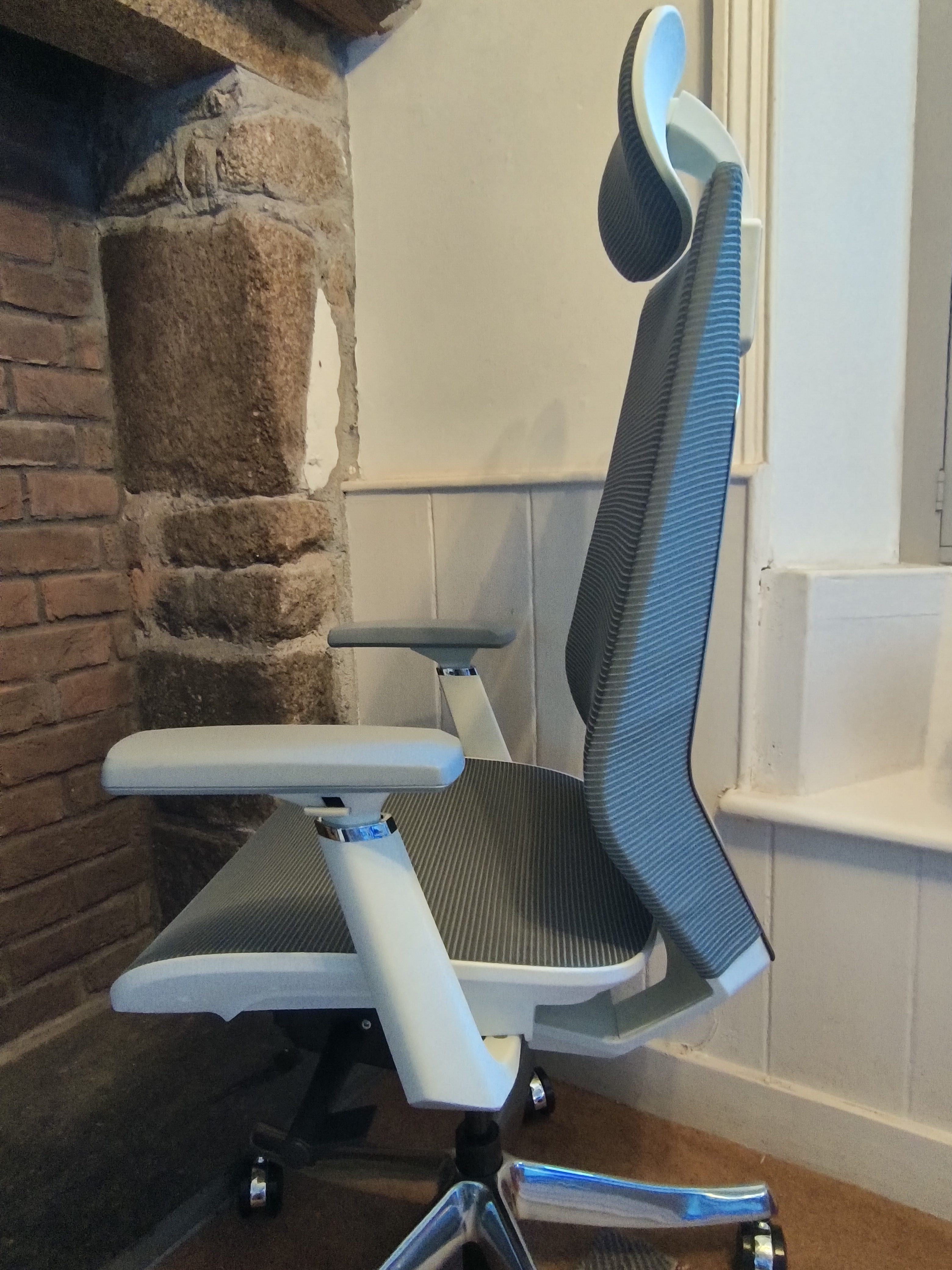
This comfortable chair allows you to adjust the armrests, head section, height, and lumber support. With easy-to-access switches, you can recline the back, move the base, twist the armrests and adjust the height. Thanks to a gas-powered strut, the chair moves smoothly as you increase and decrease the height. Moreover, the well-constructed tactile levers are reassuringly strong and built to last.

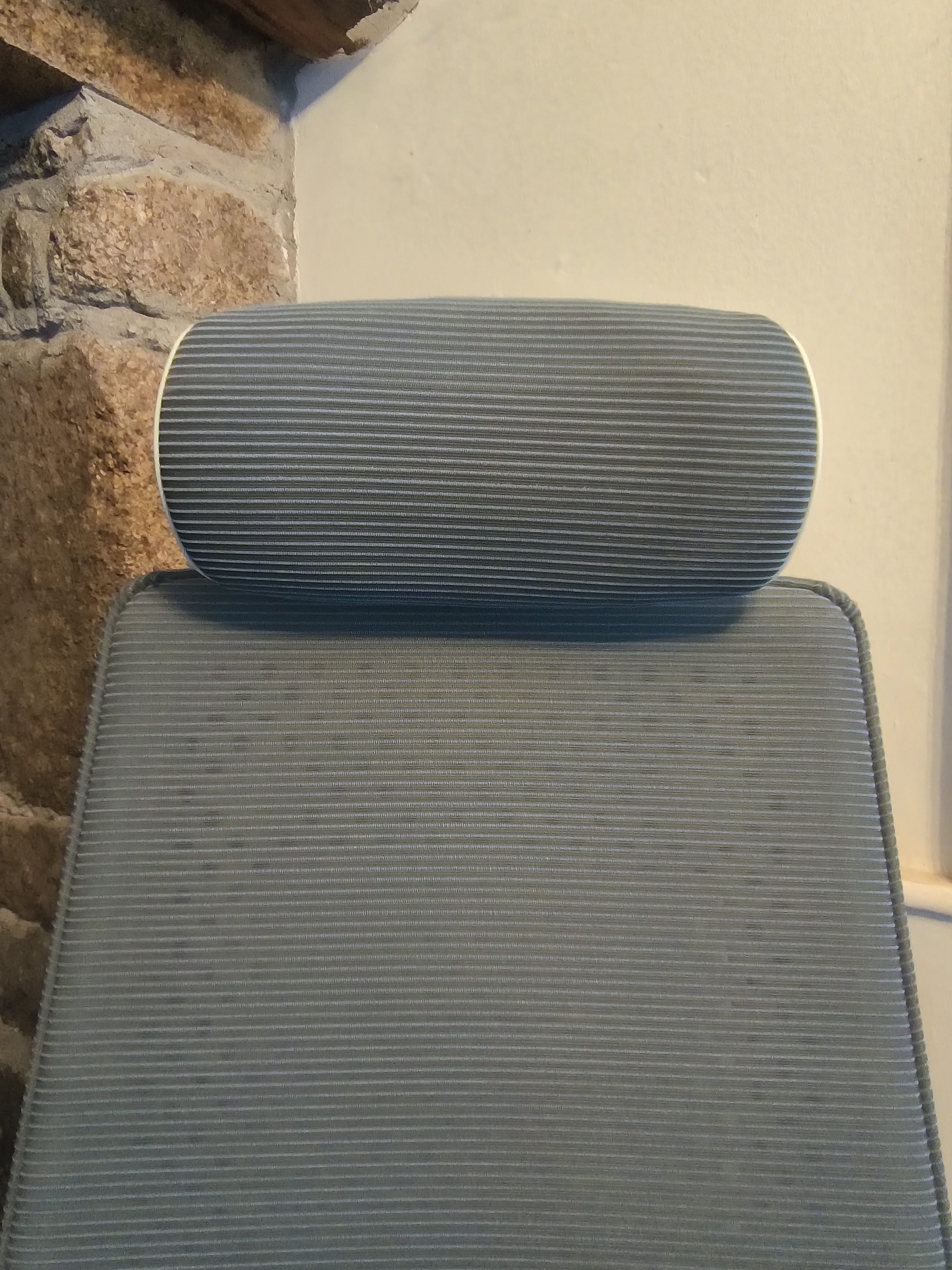
Another element that amazed me was how versatile the setup could be. Subsequently, the Flexispot BS11 Pro chair is perfect for users of different heights and builds. Thanks to the fully adjustable headrest, taller users will receive the same benefits as their shorter counterparts.

Build quality. 

The ergonomic design and adjustable parts are incredible. Yet, I loved the look of this chair just a bit more. Not only is this a comfortable piece of furniture, but it is phenomenal to look at. With a white frame that is overlaid by a grey mesh, it is undeniably professional in its design. Furthermore, the aluminium alloy chassis is reassuringly strong, heavy, and well-balanced. Alongside this, the breathable mesh ensures that you never feel sweaty during extended work sessions.

Underneath the seat, you’ll locate many switches. Each of these levers moves independent parts. Moreover, they are sturdy and easy to use. The strong gas-powered strut raises and lowers the chair and the motion is smooth. Alongside this, the chair holds each position perfectly and you never worry that it’ll falter.

Unlike its peers, the Flexispot BS11 Pro chair remains comfortable during extended sessions. Thanks to the taught mesh and the padded seat, there are no hot spots or pressure points. What’s more, the ergonomic design makes this the perfect choice if you suffer from a bad back or tight hips.

Is the Flexispot BS11 Pro chair worth it?

Available for £429.99, this is a hefty investment. Yet, it is money well spent as it ticks every box. Thanks to its ergonomic design, stylish finish, and adjustable parts, it is suitable for many users. Consequently, this is the perfect accompaniment to the Flexispot EHD2 or the Q8 8-in-1 Standing Desk. I think the Flexispot BS11 Pro chair is amazing and I recommend that you buy it here!

(More information on Flexispot can be found here!)

Review: Zoeti

If you’re wondering what Zoeti means, then you’re not the only one. The best Google could come up with is an American company that makes medicine for pets. Probably not what they’re going for. In this case though, Zoeti refers to one of two Goddesses. These goddesses had a bit of a tiff and scattered themselves over the land. The best way to worship them? Poker, of course.

Zoeti is aiming for the rapidly growing card-based roguelite genre but instead of faffing around with fancy cards, it plays it refreshingly straight. Lay down your three of a kind, smack enemies. There’s really not much more to it other than that, though. If you’re already a fan of the genre, then Zoeti will entertain but it struggles to get out of the shadow of its fellows.

Zoeti - Combat

Ante Up

Let’s focus on the meat: the combat. Zoeti works by dealing you a hand of regular playing cards, which are then matched up into poker hands. There are no aces or face cards for some reason; I guess fantasy poker has simplified itself a bit. As you progress, you can assign skills to these hands, which allow you to attack, defend or boost a skill. Deck customisation comes down to picking your skills, assigning them to hands and using the cards you’re dealt to line things up. Drawing a straight flush was a source of much glee, as I got to basically wash my hands of any enemies in my way.

It’s an interesting system. Cards not used during a turn are kept to the next, allowing you to build your heavy hitters a bit more effectively. You can keep your hand and bank on a full house or play it safe and armour up. The three different characters change it up a bit too. You’ve got a knight, who focuses on defense, an assassin, who uses combos and dodging, and a mage, who blasts things with elemental attacks. I tended to lean towards the assassin, as my skills at these games basically comes down to chaining together attack cards and praying. You also pick up accessories as you go, boosting skills here and there.

Zoeti‘s basic looking playing cards are a bit of a shame though. I’d hoped for a little more variation than bog-standard playing cards, given the setting. Some sort of variation on suit maybe? Still, the art style in general is rather nice. The landscapes and towns we visit all look beautiful and there’s nice touches in the character design. Assuming you like anthropomorphic animal characters that is, which thankfully I do. It even varies up the monster design quite a bit, even if it does like its hornets.

Zoeti - Characters

Full House of Gripes

Things are sounding rather positive but unfortunately Zoeti crashes head-first into some of the issues with the genre. First and foremost: repetition. When you start one of the story sections, you begin with a dialogue scene. The writing here is shaky – being a little over-reliant on twee humour – but it looks nice enough. Shame it’s going to be skipped most of the time, as it never changes between runs. After that, you pick a path to the boss, which is littered with monsters and encounters, and off you go.

The issue is that there is a relatively shallow pool of encounters for each run, so you’ll end up skipping through those too. This is paired with the fact that skills are drip-fed to you after encounters. Meaning, by the time you reach the first boss, you’re likely to have a mismatched set of skills that you have to frankenstein together into a working deck. As a result, half of my runs fall at the first hurdle. So it’s back to the beginning and the same set of encounters once again. All the runs started blending into each other.

It’s not helped by combat being a static affair. Zoeti, and others in the genre come to think on it, tend to shy away from unique animations for attacks. Fights began to feel like clockwork. Two pair for evasion, chain one pairs or use a straight. Repeat. This also leads me to a more contentious point: the difficulty is all over the place. ‘Duh’, you may say, ‘the genre lives on RNG’. That doesn’t account for how some bosses will do little more than sneeze at you while others will fire off multiple powerful moves in one go. One lad recovers health, damages you and buffs itself in one turn. Every time I face a boss that hurts me when I draw a card, I have to fight the urge to restart the run right there.

Time To Fold

Things aren’t helped by the sheer amount of status icons that clutter up your health bar. A few of my more irritating deaths were caused by one of my many status effects quietly ticking up to an insta-kill. By that point I had so many different icons that I lost track of what was doing what. It was hard to come back after that. You could say, perhaps quite rightfully, that it’s my fault. But Zoeti isn’t great at telling me things at the best of times, which leads me to think it’s not quite ready for the stage yet. For one thing, a card makes reference to selling items – something I seem unable to do. There’s also a ‘Create A Deck’ button that just shows me my playing cards and nothing else. Presumably it’s supposed to do something.

Now, if reading about Zoeti is giving you some deja-vu then allow me to explain. Zoeti is heavily inspired by Slay The Spire, even going so far as to name-drop on it on the Chinese version of its website. That puts it in a difficult place, because Zoeti is directly copying Slay The Spire‘s homework at points. The map layout, the items and the general gameplay; its all there. It’s just rubbed out the ‘Dark’ in ‘Dark Fantasy’. The poker system does add a little frisson, but by copying over so much, it’s running into the same issues that plague the genre.

Please don’t take away from this that Zoeti is bad. When everything aligned, I found myself getting quite into it. Unfortunately, a nice central idea can only get you so far. A bit longer in the oven and Zoeti could be great but at the moment it’s feeling a little underbaked.

(Zoeti Steam Page)

Review: Cions of Vega

Becoming a parent is one of the greatest experiences you can have. However, your bundle of joy inadvertently adds stress, worry, and fear to your existence. Consequently, if anything happens to your offspring, you always think the worst. This is exactly what happens in Cions of Vega. This wonderfully atmospheric game is slow, touching, and full of mystery.

Developed by Tonguc Bodur and Eastasiasoft Limited and published by the latter, this is a walking simulation title. What’s more, there are some basic platforming and puzzle elements. As such, there are many dynamics to this odd, eerie, and uncomfortable tale.

The world of Cions of Vega is full of weird children.
Creepy child!

Cions of Vega: a Bodur redemption. 

I recently reviewed The Redress of Mira, and I was left disappointed. However, I’ve played many other Bodur titles, and have found each to be captivating, thrilling, and beautifully presented. Accordingly, I had high hopes that Cions of Vega would redeem Bodur’s fine name and creative integrity. *Spoiler alert*. Thankfully, I wasn’t disappointed. 

Your daughter is missing, and no one knows where she is. Consequently, you must do what it takes to find her and prevent her from coming to any harm. You control the father who is accompanied by his brother, Logan. This team must search an array of locations as they hunt for clues, solve puzzles, and piece together the mystery. Your brother offers advice and timely narration to pad out the experience while adding drama to the occasion.

The excellent, albeit mindless “small talk” narration breaks up the silence. This was necessary, as many of the locations are stark, empty, and horribly eerie. Therefore, this prevents the action from becoming tedious while helping you to emphasise with the protagonists.

The world is stunning.
Where shall we go next?

There’s nothing to it. 

Whenever a game highlights puzzles and platforming elements, I get concerned. If both of these mechanics are executed properly, the game will excel. However, any minor issues cause it to be a headache and a flop. Luckily, Cions of Vega incorporates both elements perfectly. Furthermore, neither of them is too challenging and as a result, there’s nothing to it. 

The platforming layer is so refined that you won’t even acknowledge it. With basic crawling, jumping, and climbing moments, it merges with the story seamlessly. However, the puzzles are more in your face. Yet, they won’t test you as Bodur doesn’t want you to become frustrated, or get stuck. Instead, well-placed clues and tools to solve each problem are easy to find and identify. Subsequently, you’ll unlock each gate, open safes, find keys, dig up fuses, and explore caves without concern.

Cions of Vega looks great. 

Bodur has a unique style that rarely disappoints. Fortunately, Cions of Vega follows this trend with its varied locations, weird character models, and stunning backdrops. You’ll explore houses, caves, forests, and other jaw-dropping areas as you search for your daughter. En route, you’ll see nicely animated animals, beautiful weather fronts, and interesting landscapes. What’s more, the first-person perspective enhances the experience. Sadly, though, there are some minor graphical issues that taint the finish. However, this wasn’t a problem as it didn’t impact the gameplay.

The audio is equally exceptional. Thanks to the stunning environmental noises, the soft but dramatic soundtrack, and the excellent sound effects, it is immersive. Moreover, there are suspenseful moments, and some incredible narration. My only disappointment was the lack of acting from the NPCs. The creepy children should have had soundbites associated with their dialogue. However, this was missing, and it was a noticeable shortcoming.

The safe is the first of many puzzles.
Light the candles and open the safe.

Walk, walk, search, walk. 

Walking simulation games are easy to play. Effectively, all you must do is walk and explore. Thankfully, though, with puzzle mechanics and basic platforming elements, there is more to do. Additionally, you may run in open spaces to speed things up, and a helpful on-screen icon ensures that you don’t miss key information. Moreover, the control layout is easy to understand and the inputs are responsive.

Unfortunately, Cions of Vega lacks replay value or longevity. If you rush your first playthrough, you’ll finish the game in under 2 hours. However, if you take your time and enjoy your surroundings, you can easily double it. The short game time could easily be padded out with hidden text and tougher achievements. Has this been accomplished, it would have improved an already great experience.

Cions of Vega shows that Bodur is back to his best.

Cions of Vega won’t be for everyone. However, if you love a slow-paced and atmospheric game, then this will be right up your street. Furthermore, visually it is nice, and it has a captivating soundscape. What’s more, the puzzles are interesting and the platform elements are understated. My only complaint is the lack of longevity and replay value. Luckily, though, these are minor things. Accordingly, I recommend that you buy it here! Can you save your daughter? Explore the strange world and discover the secrets hidden beneath the surface. 

Review: Idea

On an elemental level, many games revolve around movement. From the iconic jumping prowess of Mario, to the thrill of web-swinging through New York in Marvel’s Spider-Man, game developers are continually challenged to provide players with innovative and intuitive ways to traverse digital worlds. Get it wrong, and you risk an integral part of your gameplay feeling like a clunky chore; get it right, however, and players will lose hours finding new ways to get around. Thankfully, Idea nails it. It feels propulsive and satisfying and right. Unfortunately, a muddled vision and social mechanic that doesn’t quite work leaves it feeling less than the sum of its parts. 

Developed by TLR Games as an adaptation of a Finnish short film, Idea revolves around a singular lightbulb, set in an orb representing creativity and imagination, as it journeys through stunning Northern European vistas. The environments, created from drone footage shot by filmmaker Olli Huttunen, are a marvel; even scaled down from the original 4K footage, they look striking on the Switch. Instead of feeling inert and static, these are tactile backdrops, with our titular idea bumping into cars and bouncing against trees.  

Players have the ability to ‘nudge’ the lightbulb in different directions, as opposed to direct control. These pushes are limited to two per screen at first, but more pushes can be unlocked as the player progresses, creating some sense of progress through new attempts. With such pared-back gameplay, Idea lives and dies by its traversal mechanics. Thankfully, once it all comes together, it feels satisfying. The lightbulb has a pleasing sense of gravity, and working out how to draw upon limited moves and bounces against environmental objects in order to navigate to the next screen feels simple yet fairly compelling for a time. For players frustrated by the game’s lack of clarity as to controls and overall goals, there is a helpful tutorial located within the menu. While perhaps this tutorial could have been integrated into the gameplay, its absence does encourage you to experiment and play around. 

There are two in-game timers: one linked to the pleasant musical soundtrack, and one that resets after entering a new screen. If either runs out without discovering one of the seven potential endings scattered throughout the game, the journey ends, and you are prompted to leave a message for other players to encounter. This social mechanic attempts to connect with the game’s larger themes of creativity, imagination and play. Unfortunately, it doesn’t quite come together.  

There is little motivation to create new messages, besides unlocking icons. The twin gameplay systems of bouncing around an orb and then writing a message feel like separate strands, as opposed to a cohesive and rewarding experience. Instead of encouraging the player to harness their own innate creativity, it feels a little tacked on. Throughout my time with Idea on the Switch, I didn’t encounter a single message from another player. Whether this speaks to the perils of small indie titles with gameplay mechanics relying on community engagement, or some mistake on my part, it’s hard to say. Regardless, the lack of presence significantly hobbles the intended effect. 

Idea is not a bad game – far from it. The physics-based gameplay feels solid, and any time spent with Huttunen’s gorgeous landscapes and relaxing score is not time wasted. However, it never truly feels engaging in the way you want it to. The social mechanic is a nice idea in theory but falls short in execution. While movement feels propulsive and intuitive, the game is somewhat lacking in a sense of fun. There’s nothing wrong with simple, movement-based gameplay; some of the greatest games ever made are similarly pared-back. What’s needed is a compelling gameplay loop, a hook that draws you in for just ‘one more run’, again and again. Sadly, it’s here where Idea falls short. For a meditation on creativity, you can’t help but wish it had a couple more ideas of its own.