In the gory and hyper-violent world of Daimon Blades, you hack and slash through hundreds of enemies to turn them into pools of blood. Daimon Blades is a first-person action roguelite in which you must fight your way through hordes of enemies in randomly selectable zones and strengthen your character. These zones and the very world itself invoke a hostile emotion as you traverse through various locations, such as sewers, ice caverns, prisons, and more. The game is sporting a dark fantasy aesthetic in both location and character designs.
Gameplay
As I mentioned before, Daimon Blades is a first-person action game. From the start, you have the choice of selecting a specific weapon and your player character’s appearance (Note: The appearance does not have any significant gameplay differences among them. They are just cosmetic). The weapons have different properties, but you only get one till you find another one in a run. Starting out, you have access to a standard melee attack and a projectile that you can charge for more damage. There’s a block button that if you time it at the right moment you can parry and stun enemies. Throughout a run, you’ll be able to add abilities to your arsenal, but those will not stay afterwards. What you do end up keeping after runs are Celestial Stones and Daimonic Orbs. These items are important as they are used to increase your stats and upgrade your weapon abilities, respectfully.
Although you would want to prioritize those items, you may end up dying A LOT in your first few runs. Daimon Blades is very brutal when it comes to its enemies and bosses. You are constantly encouraged to keep moving as enemies can come at you from all sides and angles. Thankfully, you’re not totally helpless as this game gives you very generous movement options. Double jumps, dashes, and a grappling hook: all of which go a fair distance. Still, you will have to be on high alert for most enemy encounters. Projectiles will be constantly shot towards the ground or flying enemies. Not to mention that you’ll be getting swarmed by the basic foot soldier enemies and an elite. Elites tend to have shields that you will have to break through. Although they are some of the more interesting enemy types in the game for the fact that if you time a parry right, they will be stunned for a brief window of time that will allow you to hit them around their shield.
One of the last few things that I wanted to touch on about the gameplay that I found interesting was the Corruption Gauge. Starting out, the Corruption Gauge’s limit goes to 100. Every time you would die in a run, you would be revived and the Corruption Gauge would fill by 20 points. Once you reach 100, it’s game over and you’re back to the main hub area. What I find interesting about this system is how there are ways of increasing and lowering the gauge without dying. If you were to increase the Corruption Gauge, usually it would mean that you’re risking your run ending, but you would normally receive some semblance of a buff or aid. Similar can be said about lowering the Corruption Gauge, but these are harder to come by and are more dangerous areas of the zone.
Early Access Woes
For what I’ve enjoyed about Daimon Blades, a majority of that enjoyment was from the gameplay (as it should). The real problems of the game creep up when you least expect it. On several instances, the game has crashed on me. Sometimes it would be during a run, other times I would be interacting with NPCs in the main hub area. It’s not uncommon for Unreal Engine games, especially ones in early access, to have crashing problems, but they are still annoying none the less. Another complaint I have about the game are its settings. When you start the game for the first time, you are granted the option to alter the game brightness. I tuned mine on the brighter side just by a little bit just to fully see how the game looked. When I found some areas to be too dark, I tried to find the brightness setting and it was nowhere in options. I even relaunched the game to check the options on the title screen and they still weren’t there.
Conclusion
Despite some of the flaws of this game, I enjoyed my time with Daimon Blades. The combat felt great and fast-paced and I enjoyed the progress system. Much of my complaints about this game are things that I hope will get fixed on future updates to the early access version or the full game release. The is currently listed at $34.99 USD on Steam, so I’d understand if most would want to hold off on it till full release or sale. Regardless, if what I described sounded like it was up your alley, then show the devs some support and give this game a shot. If you’ve got a friend you could convince to get this game, it has multiplayer. All-in-all, I hope that this game continues to polish a lot of its rough edges till full release.
Escape From Tarkov, a highly anticipated extraction shooter developed and published by Battlestate Games, is planned to have a full release later this year on November 15th. However, a closed beta for the game has been out since July 28, 2017, so the game has been in the works for a while. Though I personally have not played myself, I can imagine the hype has been building for the game for those lucky enough to play and those anticipating its full release. With only a few weeks left, I hope it lives up to the expectations of the fanbase, filled with intense combat, strategic planning and loot galore to fully customize your builds and loadouts.
But what if it had ducks?
As the name suggests, Escape From Duckov is a parody take on the Escape From Tarkov game. Developed by Team Soda and published by bilibili, a full release was on October 16, 2025. Escape From Duckov is a top-down extraction shooter in a world of loot, violence and cute little ducks. With five unique maps, tons of different enemies, weather effects, a day/night system and seven different difficulty settings, this single player adventure will entertain and challenge you for each raid you attempt. Starting as an ordinary duck, you must find loot to develop your duck, weapons and bunker to venture out a little bit further each time as you complete quests for fellow ducks. So, ready your ducks because its time to discuss Escape From Duckov!
The Story: Duck Customization in Duckov
The story begins with a shot of the world: Duckov. Duckov teeters on the edge of collapse as cataclysmic events ravage the region, forcing evacuation on most of the population. We did not. After completing a dream sequence (I’ll get back to this), we awake in a prison with a voice speaking to us through loudspeakers. We are unaware of who this voice belongs to, but they direct us through our escape of the prison, leading us to a bunker. They teach us some of the basic ropes, such as movement, looting and combat and eventually we reach the bunker and meet the voice: Jeff. Jeff is an older duck who serves as our guide throughout our adventure. He teaches us about the many facilities we can add to the bunker, gives us our main story quests to accomplish and wishes us luck every time we leave.
The story beyond this has so far proven to be a slow grind to piece together. There are things to read and more ducks to meet out in the world, but most of them only have a line or two of dialogue. Usually, they have nothing to do with the overall story and want to talk about fishing or request us to retrieve a “balanced” diet. Obviously, I have questions. A lot of them. But my hope is that the further you proceed with the game, more story will be revealed to you, such as the cause of the collapse or what we can do to save the world or how will we evacuate. Ultimately, I do wish there was a bit more story early on, but I’ll speak more on this a bit later.
During the dream sequence, you get to do one of my favorite things in video games: Character customization! For a game where all the characters are ducks, the customization is surprisingly detailed. There’s different scales to change size and positions, and different faces, feathers and feet. You can come up with some wacky looking ducks. I spent probably too much time playing around with the customization, quacking up over some of the ducks I was able to create. If this isn’t your cup of tea though, you are able to say you are the “yellow duck” which will give you a preset character to go with. Personally, I believe my duck turned out pretty cute.
The Combat & Loot: Guns, Crafting and the Miscellaneous
After completing the tutorial, we receive a basic firearm, ammo, and a melee weapon to help us survive. Proceeding on the first raid, we quickly learn that field of vision and sound play important roles in this game. Enemies remain hidden unless they enter the duck’s direct line of sight, making visibility a tactical challenge throughout the game. However, enemies pace around and their footsteps can be heard. Once you hear a quack though, they have either spotted you or sometimes another enemy. For example, wolves roam around in specific parts and will sometimes attack enemy ducks. This gives you an opportunity to clean up or make a break for it while they fight. Different sounds of footsteps and quacks belong to different enemy types. Its beneficial to try and remember what goes with what to know whose nearby.
Obviously, combat is not entirely unavoidable, so it’s important to know how to fight. The game features plenty of different weapons, from shotguns, snipers, rifles, bows, knives, shovels, dynamite, etc. Different weapons feature different stats which can be viewed by hovering over them with the mouse. Ranged weapons will display different reticles as well, which might change how aiming might look on the screen. Ranged weapons will also require ammo, so make sure you have the correct set of ammo on you. Some weapons support attachments like extended magazines, laser sights, or suppressors. This allows players to customize their loadouts for improved accuracy, capacity, or stealth. Personally, I prefer the stealth approach with a bow, and a shotgun in case things get out of hand.
Loot plays a key role in this game. Loot can be a wide range of items, such as healing items for your hotbar, other weapons, ammo and armor, and consumables such as food and beverages. Many loot items will be crafting materials and upgrade currency that are stackable, such as wood, bolts, fading feathers and cash. Other loot items include a few “miscellaneous” things that are not stackable but rare to find, such as keys, cups, and IV bags. With all these different types of loot, it can be very easy to get bogged down without proper inventory management. I’m that player that loots everything in games. So I had to make frequent trips to the bunker to store my loot in the warehouse. Eventually, I realized that I needed to start planning my raids, taking note of what items I should look for and what I can leave behind.
The Gameplay Beyond Combat: Upgrades & Stats
You can upgrade almost everything in the game—guns, gear, skills, and more. You can upgrade your duck’s ranged capabilities and melee prowess. Upgrading the warehouse storage space, the overall bunker with different facilities to add, and more are also possible. Along with crafting and quests, there’s certainly a ton to try and keep track of. I almost felt the need to play with a pen and paper just to take notes. So far I believe I’ve encountered four different skill trees, each with their own purpose. As mentioned, some items are rare to come across, but are necessary for some quests and facility crafting. It also doesn’t help that if you die out during a raid, you lose all of your inventory and must retrieve it without dying again, or else it will be lost “forever” (you can restore an earlier save if you want to try again though).
There are also a ton of gameplay mechanics that I haven’t even touched on yet. There’s fishing which I haven’t tried yet. Fading feathers are used to purchase totems, which are items that provide great boosts to stats. The amount of stats in this game is insane. Without a sort of in-game guide to help us out, it’s a tad much to try and keep track of. Hunger and thirst are important to keep track of, but I’m not too sure what they do when empty. Different consumables apply unique effects, though I’m unsure of what they mean. The maps seem expansive and are interactable. There’s bridges to build, extraction points for quick travel, mysterious vendors to sell rare items and mini-bosses to challenge. There’s definitely a learning curve here. This may seem daunting for unfamiliar players who really wanted to play a game about ducks.
The Drawbacks: A Ducking Long Grind
The audio and visuals in this game are great. I have no notes in these departments as I feel like both just work. I love the cute ducks, the quacks (though a dedicated quack button feels like a huge miss), and even the little dog that follows us around. The world isn’t the most detailed, but again, it feels fitting and adds to the overall charm.
However, that charm probably won’t keep the player-base interested in the long run. I think this ultimately brings me to the main drawback of Escape From Duckov. It is certainly not lacking in goals to set and work towards completing. However, it does start feeling like a grind to do so. The sheer amount of things you are able to craft or upgrade is yes, a great thing to have. Unfortunately I can see players becoming disinterested overtime.
Since the game is single player, there isn’t that appeal in playing with friends in co-op or competing online in PVP. Don’t get me wrong, the single player aspect isn’t a drawback for me personally. Single player tends to be my preference. However, I worry that without multiplayer, the game might have a burst of player base (which it seems is currently happening with its peak of 180K concurrent players) followed by a decline overtime as people either grind through and finish the game or get bored. The game requires a grind that may turn off some players. On top of that, there isn’t a replayability factor that I can see of.
The Conclusion: It Has My Interest…For Now
Having just had a full release earlier this month, Escape From Duckov is certainly set to receive future updates. With overwhelmingly positive reviews on steam and modding capabilities, there can hopefully be a bright future for the world of Duckov and all the cute ducks that inhabit it. This is a game that I can see myself continuing to play, spending hours and days on the grind. Though I may get bored in the future or an extremely unfortunate death sets me back a ton of progress, I’m enjoying the game for now and am having a lot of fun.
I think the developers at Team Soda did a great job! I would recommend this to players who enjoy a grind and a challenge. If crafting, looting, questing and cute ducks are your thing, then Escape From Duckov might be the game for you! I’m also glad that Battlestate Games is embracing/promoting the game despite the obvious parody of Escape From Tarkov. I’m eager to see how Duckov holds up after Tarkov launches on November 15th. If you played both, please let me know in the comments how you think the two compare. I am hopeful that the game continues on with its own identity and player-base, and am excited to see what comes next.
PowerWash Simulator 2 scratches a cleaning itch that its predecessor always fulfilled. The rotten stages, interesting equipment, and new mechanics will make fans of the genre foam at the mouth. Moreover, the expansive campaign feels like it is never-ending. Huge buildings, complex vehicles, and an array of new climbing methods make this the best PowerWash experience to date.
This dirty simulation game was developed and published by FuturLab. It is a single-player, split-screen, or up to 4-player online title. I didn’t tackle the latter choice, but this is something I plan to do post-release. Instead, I focused on each level by myself or with one of my rather keen children. I wish they were this happy to clean a plate, their room, or any other mundane task.
PowerWash Simulator 2 expands the city of Muckingham.
Muckingham is a disgusting place at the best of times. However, the protagonist and their cleaning company seem to find some of the most revolting sights you’ll ever see. Crusty buildings, ruined cars, and an array of weird and wonderful objects require your attention. This much-anticipated sequel takes you to Sponge Valle, Power Falls, and Lubri City.
Each location is filthier than the last, and there is a sense of grim grind as you blast the mess off of every surface. Though the core mechanics are very similar to every DLC and the first game, the developer has done their best to freshen things up. This will appeal to hardcore fans and anyone who has never played the original due to living under a rock.
What’s new?
Like a Babushka doll, PowerWash Simulator 2 has levels within levels. Consequently, when you think you’ve done enough, a secret area unlocks, and the filthy hell starts again. Furthermore, there are plenty of moving parts to entertain and test your accuracy. This is the headline change and something impressive. Although it makes solo action more difficult and long, it will improve the co-op and online scenarios.
The developer has added a base and furniture to design a relaxing home away from the madness. I wasn’t that sold on this idea, but plenty of gamers will enjoy cleaning the furniture and creating the base of their dreams.
On top of this, there is a new soap mechanic to speed up the cleaning of stubborn stains. Furthermore, there is a floor scrubbing mop and a scissor lift to get you to awkward locations. This is paired with a moving seat that attaches itself to billboards and other unusual structures. The latest additions add some flair, depth, and new tactics to a very well-trodden franchise.
PowerWash Simulator 2 looks great.
I reviewed a PC version of PowerWash Simulator 2, and it looks fantastic. The action was flawless, and I didn’t encounter any bugs, frame rate problems, or flaws. However, I understand it would be tough to point out textural issues when many of the levels look dirty and ghastly.
The audio has always driven me potty! The constant whoosh of water is torture. Yet, PowerWash Simulator 2 has upped the ante with a weird audio bug. If you play it cooperatively, one player’s audio doesn’t work. Subsequently, I managed to invent the first silent run pressure washer. Furthermore, if you use the floor mop, the water volume is wrong every time. This wasn’t problematic, but it needs fixing ASAP.
Excellent controls.
If you have played the original, you will not struggle. However, if you are new to the franchise, the excellent UI, simple controller layout, and responsive inputs make this a joy to play. PowerWash Simulator 2 plays exceptionally well with a mouse and keyboard or a gamepad. I preferred the latter as it felt more intuitive and smoother.
The grind is real. However, if you love the rewarding sense of removing dirt and slowly working through every level, this will keep you playing for hours. Undoubtedly, this is much easier with additional players. Yet, it is an achievement if you can tackle every mountain of filth alone.
PowerWash Simulator 2 is a great sim game.
I cherish this franchise! The developer has done an amazing job with the sequel, and I applaud their eye for detail and the new elements. Furthermore, I love how they have kept the heart and soul of the original. Therefore, this has enough new elements to prevent boredom, but it is familiar enough to start playing without effort. Accordingly, it is a great sim game and I recommend buying it here! Can you make Muckingham shine? Upgrade your equipment, master the new gear, and polish every filthy stage.
I’ve played my fair share of games with various combat mechanics, some have been poor, had great ideas but not well executed and others have been amazing, fun, and engaging which is exactly what Absolum succeeded at, very well too may I add.
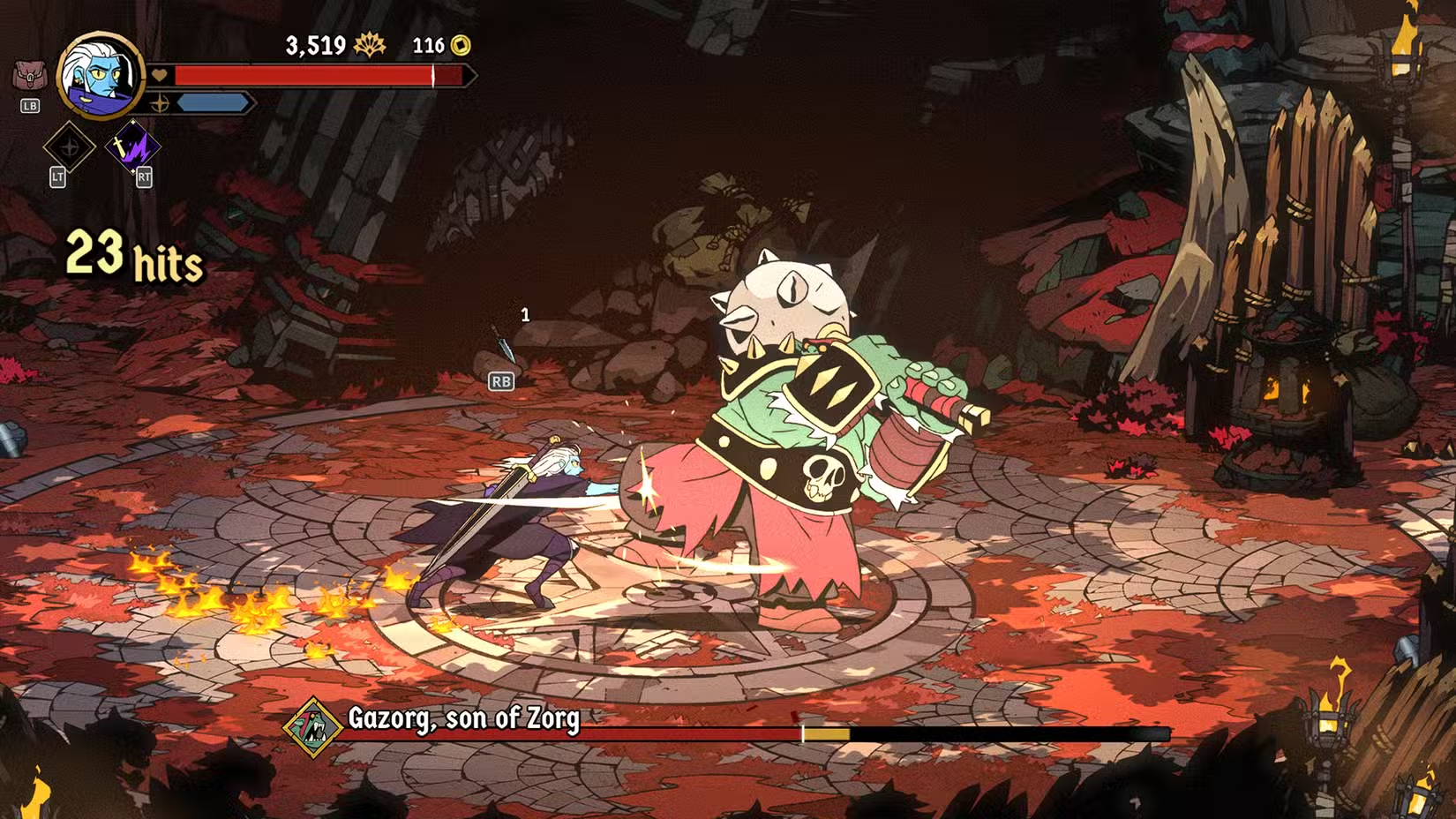
Several aspects made me enjoy the combat as a whole, which were the various abilities, bosses, enemies, along with the satisfying attacks and combos. The kicks and punches despite throwing hundreds of them were just as satisfying as the first one, I was so into that sometimes I would hit the controls harder and faster than necessary, if I had to say why it was so addictive I feel like that describes it almost perfectly.
Not only was it the basic attacks that made the combat so great, but the throwables which included knifes and axes were a great resource and switched the combat system up, not to mention how useful they were especially in boss fights, allowing for long ranged attacks without taking much damage. The ultimates and special abilities for each character also added more variety, special abilities were easy to charge up, you deal damage and the bar fills simple, the ultimates though are a lot harder to gain, you always start with one but it’s very rare to find more in chests or breakables. Regardless they’re both quite strong and fun to use.
There’s still more, after helping save a frog from the swamp and approaching her upon starting a new run, she’s able to help you enhance rituals and unlock some strong abilities for elements like fire and lightning and also for necromancy and time. These are extremely useful and makes the game so much easier and enjoyable, it does take quite a lot of effort however to unlock ones which are very helpful, so you’ll have to put in a decent amount of hours into it.
Having to beat the game through runs instead of in a single go was its biggest weakness
Most story games have you beat the game in one playthrough, allowing you to save your progress on multiple files and when you die you go back to your latest save. Some games of course do only give you one life to complete it though that’s often on the hardest difficulty, what Absolum does is only give you one life without a difficulty setting, there is no easy, normal or hard mode to choose from, the only feature there is to make your life a bit easier is to reduce the damage you receive and deal.
You can either increase or decrease both so you can make it much easier or a lot more challenging, if the game was too much of a breeze for anyone. But here’s the kicker, this is only available on co-op mode, you’re probably wondering why I’m saying that like it’s a really bad thing, after all you have one extra person helping you beat the game, the levels, abilities, and enemies you fight are the same so what’s the problem?
Well with all good things come drawbacks, and for Absolum’s co-op mode it’s that there are a lot more enemies who all have extra health, to put it simply it’s quite chaotic. Not to mention that if the other player has really bad connection then it can impact your gameplay too, regardless it does make beating the game easier thanks to the difficulty option, just be prepared to fight a lot more enemies on potentially much worse ping.
With that said having to beat the game on one run on your own or with someone else was something I found quite annoying at first. I would constantly die either early on or very late on which annoyed me the most, and to get back there and beat the game I would have to beat the same areas, levels, and enemies constantly which as you can imagine quickly became repetitive and rather boring.
But after a while I didn’t mind, since you were able to unlock more abilities, try out new trinkets, and make strong and unique builds, not to mention the combat even after 12 hours of constant punching and kicking was still satisfying and highly enjoyable. It took me about 20 runs to finally reach the end and defeat Azra the Sun King, but it was worth it.
On your journey you won’t always be fighting alone however, you do have options to hire mercenaries to help you on your quest to defeat Azra, though they do come at a cost. Most of them cost 50 coins with the stronger ones costing 100, they don’t last that long but they can be quite useful, taking some of the heat whilst dealing some damage.
Meds were quite hard to come by which encouraged cautious gameplay
If you’ve ever played any games that have a survival aspect to them or a character health bar, then you’ll know how important healing items are. You’ll look high and low to ensure you have an adequate amount for an upcoming boss fight or for an area you know will be swarmed with enemies. Absolum however strays completely from that, in the sense that you can’t actually carry and stack the already scarce healing items that you’ll come across in the various areas.
Healing comes in the form of food, from bread to cheese you’ll find them in breakables like barrels or sometimes in chests, though they’re not easy to find. There isn’t actually a way to increase the number of healing items you find so most of the time it’s just luck based and considering this is a roguelite game it’s not at all surprising, despite how annoying it can be.
There was nothing worse than going through several different levels and taking so much damage, destroying all breakables and finding only one food item which didn’t heal you that much knowing that a boss fight is upcoming, it doesn’t exactly make one ooze with confidence, if anything it pretty much means the likelihood of defeating the boss is very slim, depending on how low your health actually is of course.
Though there were other ways to heal in the form of Hearthroots which you’ll come across every now and then, it’s a completely safe area with a massive campfire in the middle that heals you slightly, you can increase the amount of health they restore by buying upgrades on the soul tree, you can also buy other upgrades with earned crystals such as increasing the maximum amount of hp you have amongst other things which makes the runs much easier.
Analyzing enemies attacks and improving on dodging and clashing I also found was great to preserve health, I would still get hit of course but it was less frequently, meaning that whenever I found food I was near enough fully healed. There’s also a trinket which reduces the amount of damage you take, so if you manage to find them frequently in shops or after completing an area then you’ll practically be a walking tank by the end of the game.
I’ll be honest: I’ve never really interacted with NASCAR. I didn’t grow up in a state where the sport was particularly relevant, nor did I have anyone in my life introduce it to me at a formative age. It’s something that I’ve observed from afar, mostly knowing Dale Earnhardt Jr. as the “Mountain Dew guy”.
There’s something to be said about welcoming new people into niche communities though. Sure, I might not be very knowledgeable about NASCAR culture, traditions, and history, but that gives me a unique perspective when asked to review their latest video game. Did NASCAR 25 transform me into a massive fan? No, but I have a bit more context for the sport now, and understand why it captivates millions of Americans each year.
As you might expect from a yearly sports title, the main menu presents you with a variety of modes to hop into, including Career, Online, and Championship. I chose to explore Quick Race first given that it was the simplest, allowing you to pick a driver and track before getting straight into the action.
I understand that NASCAR isn’t the most complex motorsport in the world (driving fast while veering left served me relatively well) but I was befuddled by the lack of any tutorialization. The sports games I frequent every year usually shove some sort of introductory gameplay segment down your throat, so its absence here was particularly alarming.
It forced me to reflect on how just because someone is playing a sports title doesn’t necessarily mean they know all of its ins-and-outs, or even basic concepts. These games can be used as educational tools, driving more people to check out the events happening in real life. As I spent more time with NASCAR 25, it became clear that other drivers were executing strategies that I wasn’t aware of, thus making it harder for me to compete. Perhaps I would have been encouraged to spend more time with the game if developers iRacing Studios had been more accommodating to new players.
Career mode is certainly the package’s main draw, where you’ll create your racer and begin your ascent to NASCAR superstardom. Your character options are disappointingly thin, merely offering a choice of gender and name, though the lion’s share of customization options belong to your car. You’ll be able to tailor the exterior to your liking, and purchase upgrades to keep your vehicle in tip top shape.
As you place in races, your reputation will increase, netting you new sponsors and an increased cash flow. When your rep reaches certain thresholds, you’ll be welcomed into the next available NASCAR series. You’ll need to grind for this privilege however, since progression can be a tad glacial if you aren’t winning every contest. This can easily be passed off as an attempt at realism, but it can be frustrating if you were hoping to jump into the Cup Series quickly.
Thankfully, Championship solves that problem immediately. This is the standard season mode you’ve grown accustomed to, letting you select your series and play through an entire year of races. You can even shorten the mode’s total length if you’d like, opting for a half or quarter season. It’s a nice alternative to Career if you’re not looking to engage with extracurriculars like reputation or finances.
NASCAR 25 is a good simulation, including multiple modes that, while similar in some aspects, let players experience the breadth of the racing experience. It’s not the most beginner-friendly product in the world, and I doubt that it will catch on with those outside the sport’s sphere of influence, but longtime fans should be satisfied with the offer on display.
The Witcher, Ciri glasses from GUNNAR are perfect for gamer girls and female office workers. Now, I’m not saying that men can’t wear these glasses, but they are designed with Ciri’s adventurous spirit at the fore. The rounded lenses, slim frames, and leather accents ooze sophistication. Moreover, the Epic-level lenses and design will impress the harshest critic. Accordingly, these glasses will appeal to a large audience.
If you spend a lot of time at your computer, you’ll know how horrible itchy eyes and fatigue can be. No one likes headaches or that dry, scratchy feeling of exhaustion. Thankfully, GUNNAR overcomes many of those issues with their patented blue light protection. These glasses come in prescription and non-prescription. However, unlike many of their peers, they only have the amber lens option.
This 65% blue light and 100% UV light protection lens reduces the unwanted effects of poor eye health. Moreover, they make reading contrasting colours a more pleasurable experience. The result is increased productivity and improved reactions if you love fast-paced games.
What’s in the box of The Witcher, Ciri glasses?
The packaging is simple but robust. Furthermore, it can be recycled.
The Witcher, Ciri glasses are wonderfully feminine. The meteorite/saddle frame colour has an abstentious finish that is simply divine. Additionally, the laser etching and leather elements highlight the sophisticated nature of Ciri.
A collector’s hard case and a colourful soft case are provided.
Clean the lenses with the themed microfiber cloth.
Technical aspects.
This epic-level product delivers some impressive features. Whether it is the patented lens technology, the G-Shield protection, high-quality materials, or eye-catching accessories, The Witcher, Ciri glasses have it all. The lens technology puts its peers to shame! The advanced polycarbonate lens resists scratching and reduces weight. The outcome is a durable design that is comfortable to wear. On top of this, there is an oleophobic coating to reduce smudges and distracting moments when streaming. This helps you to keep your glasses cleaner for longer while keeping your audience happy.
If you require a prescription, you can organise this at the checkout. GUNNAR assists its customers with -5 and +5 prescription needs. Alternatively, if you have 20/20 vision, you can invest in the standard model and enjoy the blue light and UV protection.
Hidden extras.
I love it when GUNNAR incorporates Easter eggs into their design. This pair of glasses has some incredible detail that will impress fans of The Witcher. The temples are adorned with deep laser-etched Zireael sword motifs. This small but important detail will resonate with hardcore fans of the franchise. Alongside this, the wrapped leather arms deliver a sense of elegance and class.
Build quality.
The Witcher, Ciri glasses come with a 1-year warranty as standard. Though I don’t think you’ll need it, it is reassuring nonetheless. Every layer of this product is incredibly well built. The accessories look amazing and are designed to last. The collector’s case is a thing of beauty and something that immediately caught my eye. Furthermore, the soft case and microfiber cloth look amazing. The Witcher design is bound to appeal to a wide audience.
The frame is a slim brushed gold stainless steel with performance multi-barrel hinges. This strong but lightweight design is comfortable to wear during lengthy work or gaming sessions. Moreover, the strong hinges are designed to withstand knocks and heavy-handed users.
Are The Witcher, Ciri glasses worth it?
TheWitcher fans will adore these glasses, but I think their appeal extends further than that. Non-gamers will admire the slim and attractive frame. Moreover, the leather-wrapped arms offer a layer of depth and sophistication. Though the laser-etched markings may not appeal to non-gamers, they are discreet enough to be overlooked. Finally, the health benefits will interest many people.
Reducing headaches and uncomfortable eyes is a dream for many gamers and office workers. Consequently, removing those problems by investing in a pair of gaming glasses is a no-brainer. If you then consider the fashion edge and the incredible accessories, you’d be silly not to invest. Accordingly, I think they are great, and I recommend buying them here!
The Tongits card game remains one of the most cherished and enduring pastimes in the Philippines, deeply woven into the fabric of Filipino culture. It serves as a social glue, bringing families and friends together over countless generations, fostering moments filled with laughter, camaraderie, and strategic gameplay. Originating near the turn of the millennium, this beloved game has evolved from a simple card deck around a table to a vibrant digital experience largely fueled by the GameZone platform, making it accessible and engaging for Filipinos everywhere.
A Classic Filipino Game Adapted for the Digital Age
Tongits has long held a special place in Filipino hearts, admired for its unique balance of luck, skill, timing, and strategic maneuvering. Traditionally played in close-knit gatherings, its unpredictability and depth keep players returning, eager for each thrilling round. Over time, the game’s traditional tabletop setting has transitioned effortlessly into the virtual realm. With the advent of smartphones and digital apps, the core essence of Tongits online now fits neatly into the palm of every player’s hand. This transformation has opened doors for wider participation, enabling enthusiasts to enjoy the game anytime and anywhere—whether at home, on the go, or far from their hometowns.
GameZone: Delivering Authentic Filipino Entertainment
GameZone stands out as a premier gaming platform that captures the spirit and excitement of Filipino card game culture. Its user interface, gameplay mechanics, and graphic design are meticulously crafted to replicate the communal experience of Tongits. Real-time gameplay and chat features simulate the genuine interaction usually shared over physical card tables. These tools allow players from different provinces and even overseas to connect seamlessly, bridging distances and cultivating a sense of belonging within the Filipino community.
An essential aspect of GameZone is its commitment to fairness and responsibility. The platform ensures transparent and equitable play, promoting a safe environment where players can enjoy the game without concerns over monitoring or cheating. This dedicated approach significantly contributes to the platform’s growing popularity and trust among users.
Understanding The Fundamentals of Tongits Gameplay
At its core, the Tongits card game involves tactical card play where three participants compete using a standard 52-card deck. Each player’s objective is to form specific combinations like three-of-a-kind or straight flushes through drawing and discarding cards. The dealer starts with thirteen cards, while the other players each receive twelve.
The game progresses as players take turns carefully selecting cards to improve their hand and reduce their total points. Winning occurs either by being the first to declare “Tongits” —signaling they have no more cards to play—or, if no one claims Tongits, the player with the lowest combined card value wins after everyone reveals their hands. The elegant mix of easy-to-learn rules coupled with strategic depth allows beginners to quickly get involved and experienced players to continually hone their tactics.
Why GameZone Is The Preferred Platform for Tongits Players
Among the numerous online Tongits platforms, GameZone distinguishes itself through several compelling features:
Stable and fluid gameplay ensures smooth rounds even during peak user activity.
Intuitive design caters to a broad spectrum of players, from novices to seasoned competitors.
A strong emphasis on community engagement fosters interaction, friendly competition, and social connection.
A diverse game library affords players the opportunity to explore other Pinoy favorites such as Color Game, Lucky 9, and Pusoy, extending entertainment value beyond Tongits.
This combination of reliability, user focus, and variety has positioned GameZone as the top choice for Filipinos seeking both nostalgia and innovation in their card gaming experience.
Expanding the Excitement with Tongits Go and More
GameZone keeps gameplay fresh and engaging by introducing modes like Tongits Go. This variation brings new twists to the traditional play, mixing familiarity with fresh challenges and keeping every session unpredictable and exciting. The dynamic nature of the offerings ensures players always have something novel to look forward to.
Players can also participate in exclusive tournaments and seasonal events hosted through the app. These competitions amplify excitement and encourage the community spirit that makes Filipino card playing unique.
The Warmth of Pinoy Tongits Online
Playing the Tongits card game on GameZone transcends mere entertainment—it evokes the warmth of shared Filipino experiences. The environment encourages playful competition with friends old and new alike, mirroring the atmosphere of traditional gatherings. Updated visuals and seamless communication enhance the experience without compromising the game’s authentic feel. As a result, each digital session becomes an opportunity to relive the closeness and joy associated with Pinoy bonding rituals.
The Enduring Popularity of Tongits
At the heart of Tongits lies connection—the game fosters relationships and shared moments that extend beyond winning or losing. GameZone amplifies this by offering an accessible and welcoming interface, encouraging engagement across varied skill levels and backgrounds.
With easy accessibility via the Tongits APK, players can join in anytime and anywhere, ensuring that this cultural pastime remains vibrant and inclusive. The game not only captivates with its competitive edge but also delights with moments of laughter and friendship that characterize Filipino social life.
Sustaining Filipino Spirit Through Gameplay
Tongits card game continues to symbolize much more than a card game; it reflects essential Filipino values—community, strategy, enjoyment, and togetherness. By modernizing this classic pastime through GameZone, countless players can connect across distances and generations, sharing in a timeless tradition that enriches social bonds.
More than a digital platform, GameZone preserves and promotes the Filipino spirit through its dedication to quality gameplay and community-building features. It rekindles the laughter and friendly rivalry that accompany every round, providing an engaging outlet for cultural expression and entertainment.
For those ready to dive into a genuine Filipino classic, downloading the Tongits APK opens the door to countless hours of fun and connection. Inviting friends and discovering why this game continues to capture the hearts of Filipinos is just a tap away, making it easier than ever to celebrate a cherished pastime and experience the rich tradition that Tongits represents for millions nationwide.
This timeless game truly lives on through digital innovation and community spirit, blending tradition with modern convenience seamlessly.
ZOE Begone is a game that broke my balls on multiple occasions. Its cruel ways, tough and repetitive action, and somewhat wayward controls were enough to make me scream. However, there is something desirable and interesting about a game that is morally unjust. After all, the hero simply wants to relax and her creator won’t let this happen.
This bullet hell shoot em up was published by PM-Studios, Inc. It is a single-player game that is often unforgiving but amazingly rewarding. When I got things right, I laughed, smiled, and gave myself a pat on the back. However, this rarely happened as failure was always just around the corner.
ZOE Begone tells a tale of revenge.
ZOE Begone isn’t your typical bullet hell endeavour. There isn’t a huge arena filled with enemies and projectiles to avoid. No, you have an old-school reel of film that must be explored and manipulated to your advantage. If you can somehow overcome the arcade action, you’ll face a tough boss and things continue.
This gameplay loop was created by the harsh and cruel animator. Zoe wishes to rest, but the animator has work to do. Consequently, she must battle her way across 3 different game modes and upgrade her abilities if she wants to survive.
Simple ideas.
Though the action is hectic, the ideas are remarkably simple. The hero must destroy everything in sight, ground smashing any apples and using them to upgrade her skills whenever the shop appears. This is easier said than done as the controls are somewhat wayward and this causes unwanted issues.
If you can master the accuracy and hitboxes, you’ll enjoy the retro style and the interesting aesthetic. Moreover, the challenging action is enough to test the best gamers around. I found the learning curve and difficulty to be the most off-putting element of ZOE Begone. No matter how much I tried, I found things to be just too tough. Frustration was often the overwhelming feeling and the odd smattering of success didn’t make up for the shortcomings.
ZOE Begone looks incredible.
The developer has done an stunning job with the animation and retro imagery. The old-school reels, strange creatures, and smooth animation make this a pleasure to play and observe. Though it is often tough to keep on top of things, I laughed and admired the madness even when it was kicking my ass.
The audio is a joy to listen to. The piano music has a distinctive 1930s edge that matches the dated film reels. Furthermore, the sound effects are loud and oddly modern. These juxtaposing ideas somehow work and I liked the drama and high energy finish.
Wayward controls.
ZOE Begone was frustrating to play. Death came far too quickly, and the wayward controls were not my friend. Missing your target or failing to collect health supplies or apples was always annoying. Though you can forgive the madness and learn to master the shortcomings, it took the polish off an otherwise interesting and fun game.
If you love to have your ass kicked, ZOE Begone will be the game for you. I’m not a massive fan of failing, dying, and failing again. However, I know some gamers adore this sadomasochistic gameplay. If this is your thing, you’ll keep playing until your eyes water. Additionally, there are 3 unique game modes to test your skills and keep you interested.
ZOE Begone wasn’t the game for me.
I’m usually a big fan of this genre, but I couldn’t get into ZOE Begone. Its tough ways were often too cruel for my liking. Moreover, it was a little repetitive and that’s a shame. I’m not sure the developers got the balance right and I fear that this will put many people off. Though it wasn’t for me, it will appeal to a niche audience, and I recommend they buy it here! Can you stop the animator and get some rest? Avoid the projectiles, complete ever real, and take out those big, bad bosses.
It takes a good idea to be fun, and Jelly Troops was exactly that… I mean both things here, fun and a good idea. Not trying to be a stick-in-the-mud here… You genuinely enjoy the time spent with Jelly Troops. Although match-making could have been better.
Developed by Nukenin and published by Phoenixx Inc., Jelly Troops is a unique take on PVP capture the flag multiplayer gameplay by throwing the concept of minions into the mix.
Normally, the number of people playing a game and the fame, or lack thereof, should not affect how the game feels, but the situation is a little different for Jelly Troops. Being a multiplayer-focused game with an interesting gameplay mechanic, it was disappointing to spend most of my time searching for people to play the game with.
Jelly Slavery
Jelly Troops sounds simple as a game, but it gets very intense as you progress.
You play as a magician who can summon little Jelly minions by absorbing certain crystals. Your opponent, another magician with the same power, spawns on the other side of the map.
The goal is to collect three mini flags from the map or one large flag from your opponent’s spawn point.
How is it done? Well, that is where the game gets fun.
As you play, you do a few things: you summon your jelly slaves and order them to go and collect orbs… They must grab the orb and bring it back home. Once they reach home, the orbs transform into more slaves… You can then order them to go and collect more orbs…
While the size of the orb varies, the number of slaves sent increases the speed of extraction. But that is not all, as the Jelly Troops manage to create some obstacles and a chance of strategy to spice up the game.
Obstacles at Play
There are a few things to take note of as you play:
Giant Rock Monsters
Depending on the size and shape of the map, there are large rock creatures littered around that will attack your slaves and kill them if they come near. These monsters chase you around the map constantly and force you to outwit them many times.
The only way to avoid getting chased is to not run near them, forcing you to slow down the speed of your success and rethink your entire route every few seconds under pressure.
Great Wall of Jelly
At every corner and every turn of the map, you are given the option to spend your Jelly slaves to build walls that could block both the path of the Rock monster and hold off your opponent.
Creating these walls costs a certain number of jelly slaves, so you have to be smart about when creating a wall is worth the loss.
Combining all these different aspects of Jelly Troop and using your own mind for strategy makes this game pop out much more than it should.
Good Jelly, Bad Jelly
You can see the thought behind it, the little systems feed into each other, and that’s what makes it sting that it’s mostly empty lobbies right now.
This is one of those games that makes you wish more people were playing it. It’s clever, weirdly intense, and surprisingly easy to lose time in once a match finally starts.
It’s got brains, it’s got personality, and it definitely has enough jelly to go around..
Not perfect, but I’d still recommend it. Jelly Troops has a good idea, a good loop, and just enough charm to make the wait times worth it.
Here is our review of the new Orbi 370 Series WiFi 7 Dual-Band Mesh System.
Specifically designed for today’s connected homes, the Orbi 370 Series makes cutting-edge WiFi 7 performance accessible to more households than ever before, combining ultra-fast internet, expansive coverage, and built-in security at NETGEAR’s most affordable price point yet.
The Orbi 370 Series empowers households to unlock the full potential of their connected devices. With ultra-fast speeds up to 5 Gbps in the US and 3.6 Gbps in Europe, Orbi ensures smooth video calls, buffer-free streaming, responsive gaming, and reliable smart home automation. Households can easily expand coverage by adding additional satellites, ensuring their network grows and adapts seamlessly to their changing needs and lifestyles.
Powered by the latest WiFi 7 technology, the Orbi 370 Series features Multi-Link Operation (MLO), combining 2.4GHz and 5GHz bands to improve speed, reduce latency, and enhance performance across every connected device, over up to 4,500 sq ft. The 2.5Gbps internet and Ethernet ports support multi-gig internet plans, while flexible wired or wireless connections accommodate high-demand devices such as smart TVs, gaming consoles, and PCs.
Orbi 370 Series comes equipped with state-of-the-art firewall protection, automatic firmware updates, VPN support, WPA3 security, access controls, and guest network options. A 30-day trial of NETGEAR Armor™ Powered by Bitdefender adds advanced threat protection and VPN capabilities across all connected devices. NETGEAR Smart Parental Controls™ are also included to help families manage online activity and screen time, with optional premium features available via subscription.
Specifications
WiFi 7 Technology – Next-gen wireless standard delivers higher speed, lower latency, and backward compatibility with WiFi 4/5/6/6E.
Multi-link Operation – Combines two WiFi bands at once, for both backhaul (shared 2.4GHz & 5GHz) and fronthaul (2.4GHz & 5GHz) to improve network reliability, reduce latency, and ensure data is delivered at reliable speeds.
Multi-Gig Speeds with 2.5 Gig Internet Port – Use the 2.5 Gig internet port for multi-gig cable and fibre plans. Compatible with any internet service provider.
Multi-gig Wired ports on Router and Satellites – Plug in wired devices to improve performance or set up a multi-gig wired connection between the router and satellites via the 2.5Gbps Ethernet ports.
Do It All with the Orbi App – Easily manage your network from anywhere, including pausing the internet, running internet speed tests, tracking your Internet data usage, setting up separate guest networks, and more.
What’s in the box?
The box contains the router and satellites, power cables, ethernet cables and instructions.
A Closer Look
Placing the Orbi Satellites
Once you have your Orbi router and network configured just how you want it the next step is to place your satellite, or satellites where you want them. Once you have them physically located where you want them it’s just a case of clicking on Add Orbi Satellite from the menu and following the on-screen instructions.
Once the process is complete you will be able to see them listed on the Attached Devices page.
Then all you need to do is connect up your devices to your Orbi network and away you go.
Final Thoughts
Setting up the router is relatively straightforward and fairly quick – just follow each of the steps and you should be up and running in no time.
One of the steps during the setup is a firmware check – make sure that you upgrade to the latest version of the firmware otherwise you might run into some problems.
You can choose to have your satellite or satellites connect to the router, or each other via WiFi – which depending on your walls and room layouts might work perfectly well, or if you have a wired connection near where you want the satellites you should connect the satellites to it. This then connects each satellite to the router using the Ethernet backhaul process which ensures you get the maximum possible speed from each satellite otherwise you will be limited to whatever speed the satellites will get when connecting either to the router or to each other. I noticed a significant speed and reliability increase when connecting the satellites to the router via Ethernet.
Then all you have to do is make any configuration settings you want and have your devices connect to the Orbi network and that’s it. Each satellite, along with the router also has Ethernet ports on the back so if you have devices that need a wired connection you can easily utilise those.
There are a lot of different configuration settings you can make – so do take the time to go through them all before you start connecting your devices as the web front end provides a lot of useful information as well.
The overall coverage you get with the Orbi is really great – and walking around where you do have coverage with your device provides a seamless constant connection. Speed wise I found the connection to be excellent when the satellites were connected to the router via Ethernet, and between very good and good when connected via Wi-Fi, although to be fair the was because of my particular setup, so make sure you do your own testing, but if you can use Ethernet for the satellite to router connections you won’t be disappointed.
If you are looking for the fastest and easiest way to setup and use WiFi 7 Mesh system for your home (or office) then look no further than the Orbi 370 Series, it’s fantastic!
The Orbi 370 Series WiFi 7 Dual-Band Mesh System is available now priced around £299.99 for the RBE363 Router and 2 Satellites, £209.99 for the RBE372 Router and 1 Satellite and £99.99 for each add-on Satellite.