
We’re not even halfway through 2026, yet Capcom seem to be on a mission to make as many high quality games they can this year, with PRAGMATA being the Japanese studios latest release.
If you thought Resident Evil Requiem and Monster Hunter Stories 3 were going to be the only excellent games that Capcom were going to develop this year, then you were mistakenly wrong.
Enter PRAGMATA, first announced in 2020, this sci-fi adventure follows the story of Hugh, who is part of a dispatch team sent to investigate the cradle after communication was cut with earth, shortly after entering the lunar station he is seperated from his team after an accident and is left badly injured, that is until Diana (an experimental pragmata), saves Hugh, as the two unexpected companions journey through the now lifeless cradle to reach a cargo shuttle that will take them to earth.
Hack and shoot, then hack and shoot again…
Combat is arguably the most important aspect when it comes to games that include it, whether it’s a survival horror or a hardcore RPG, it’s something that people tend to notice first so it can play a huge part on people’s overall opinions of said game. If the story is great, the characters are interesting, but the combat is boring and slow, then it can quickly turn from a 9/10 experience to a 7/10.
PRAGMATA not only had interesting characters, and a solid story, but it also had extremely fun and addictive combat, with a certain innovative mechanic playing such a huge part in the overall success of it.
Hacking truly made the combat so unique and refreshing, it’s not often that a game can come up with such an innovative combat mechanic that makes it noticeably stand out, but Capcom managed to achieve just that. It was essentially its own minigame, pressing buttons to go down specific paths to hit nodes which deal more damage, and trigger certain hacking nodes, all while avoiding attacks from enemies and making sure to not die.

Despite how that might sound like too much, it was fairly straight-forward, and made for much more interactive and tense battles, which I found to make even fights against normal enemies quite challenging, especially when facing a group of them.
Naturally, the weapons also played a huge part in the overall enjoyment of the combat, there were a wide variety of them to find in different locations, some of which were absolute essentials when exploring deeper parts of the cradle, especially when encountering bosses.
What I really liked about the combat, was that you had to pick a loadout consisting of weapons, mods, and hacking nodes whenever departing from the shelter to visit previously explored, or new locations. This allowed for many different synergies and fun combos to be explored, which made each outing feel fresh and unique, just another way PRAGMATA managed to make the game feel less repetitive.
Games once again show us just how beautiful and precious bonds can be really be
When I first booted up PRAGMATA, I expected a combat heavy sc-fi experience, which is exactly what it delivered. What I didn’t expect however, was a strong and beautiful bond forming between two characters that had only just met.
Hugh and Diana had a strong bond from the beginning of their first meeting despite their differences in literally everything, which made it that much more special.
We learn quite early on that Diana is a very curious android, asking Hugh what his childhood was like, what his parents are like, and what living on earth is like. This was where their relationship started to grow, from the two learning more about each other and what their lives have been like, they started to care and look out for one another, with each fight making them feel more like a well co-ordinated team.
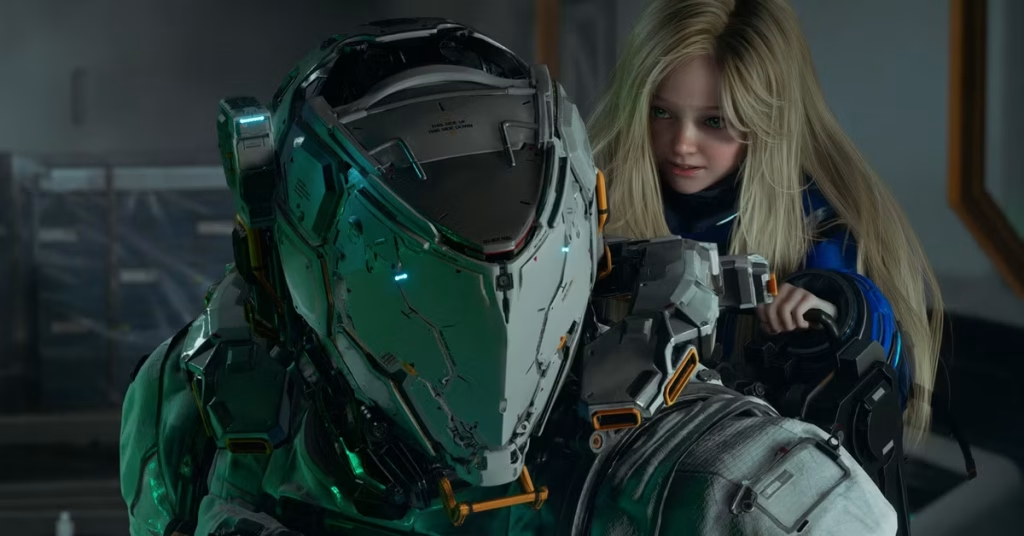
What summed up their special bond in a nutshell, was when Diana, after eight attacked her with dead filament, revealed to Hugh that she was created by Dr. Neil Higgins as a project to find a cure for his dying daughter, Daisy. This led to Diana explaining to Hugh how she felt like she didn’t really have a purpose in life, and that she was a failure, unable to achieve the one thing she was specifically created for.
After learning about this, the ending of the game makes it a beautifully tragic one, with Hugh, after also being injured by dead filament, and with no cure, sacrificing himself for Diana’s sake, sending the shuttle earth-bound so she could finally go somewhere she showed so much excitement and curiosity for.
Despite her feeling like her life had no meaning, Hugh never gave up until his last breath to fulfill his goal of sending her somewhere where she could find a purpose, live a meaningful life, and even as an android, live like a human.
That’s what summed up, and perfectly concluded their beautiful father-and-daughter like relationship throughout the game.
Even if PRAGMATA doesn’t win game of the year, it will certainly hold the 2026 title for, “The ending so beautiful, it made adults cry.”
