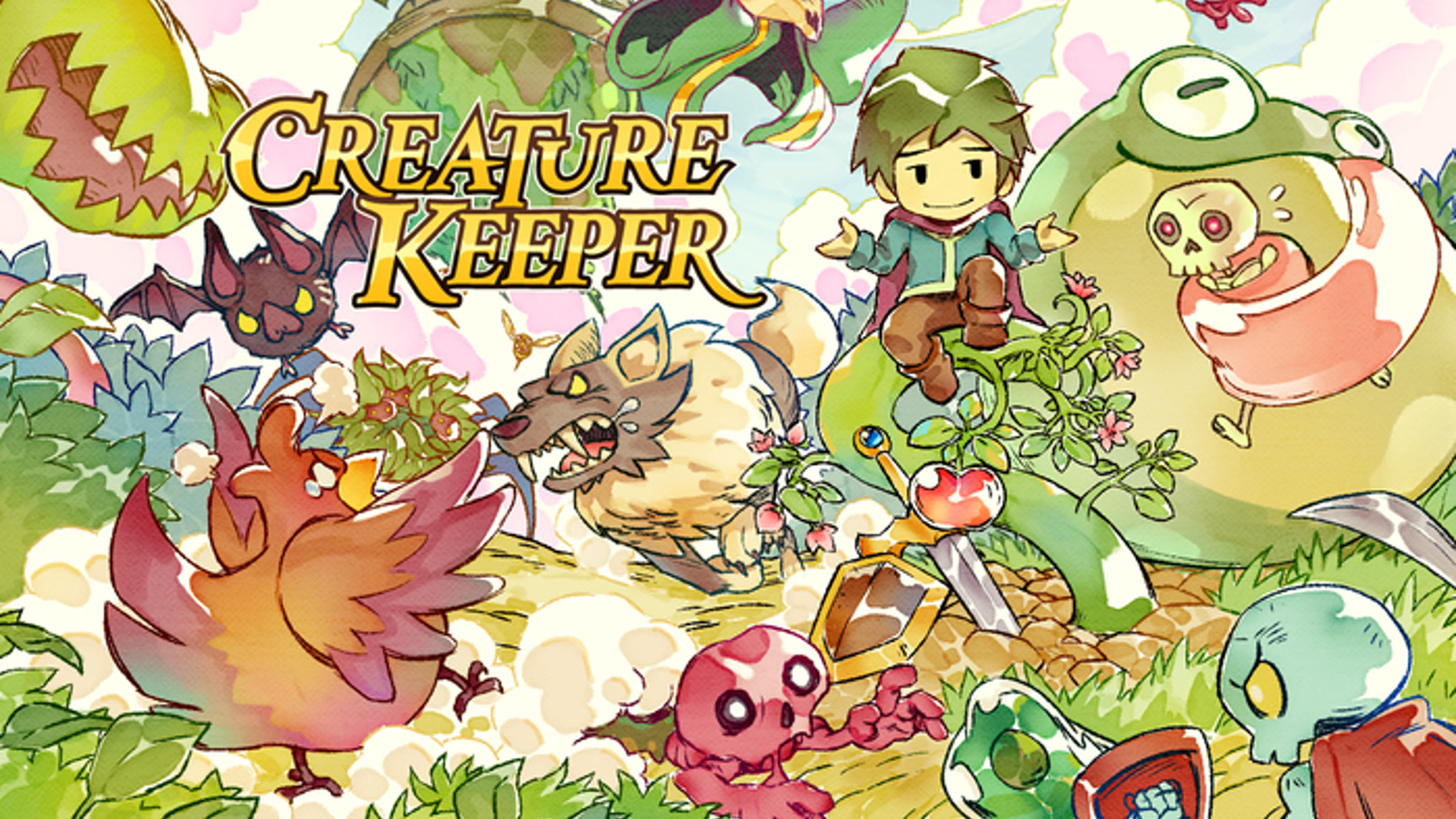
Review: Wild Keepers Rising

Developed and published by Lioncode Games, Wild Keepers Rising is an action roguelike, Bullet Hell/Heaven Guardian Collector with a fun and engaging storyline.

It’s hard to find words when a game takes you by surprise. Low hopes is how I will describe my feelings going into Wild Keepers Rising. With the 2d on 3d cardboard graphics and complete under-the-radar presentation on the Steam page, it looked like just another citizen from Generic-ville. But then, I pressed play.

Fresh Squeeze, Old Fruit

Wild Keepers Rising is, first and foremost, a Vampire Survivors-… Clone? Like? 

You control a character who attacks by themselves. XP is collected from downed enemies, and after a certain amount is collected, you get an upgrade. However, everything changed when the Guardians came to play.

If I am to summarise, Wild Keepers Rising is another Vampire Survivors-like Bullet Hell/Heaven game, but with two unique elements. It has an easy-to-follow, constantly progressing plot, and it has Guardians. 

A Hero and his Keepers

The story of Wild Keepers Rising is about a world being swarmed by parasitic forces of evil. Insect and plant – like, these creatures are trying to destroy everything. These mindless monsters were once removed from the earth by the powerful beings called guardians, but are now back to exact their revenge. 

(I have forgotten the name of the main characters, so bear with me on this one.) 

You have the choice between two characters, a boy with a sword or a girl with a bow. You do get a third option later on, an old man with the ability to provide buffs to allies, but he is useless.

Together, with the help of Guardians, you must destroy the enemies and take back the land…. So basic hero in a doomed world kind of stuff.

Let’s talk Guardians!

Guardians

Each guardian has a unique power, passive skill and special move that can help fight the enemies. For example, A cat that attacks with its claws can run fast and explode as a special move, killing a large portion of the enemies around the map. 

You can have up to 4 guardians in a mission(one is randomly assigned each time you touch a summoning orb). When a guardian dies, they are taken out of battle for some time and respawn at the point of death. There are dozens of guardians and more unlock as you progress through the campaign.

A Quick Word on Vampire Survivors

The Vampire Survivors genre has proven itself to be incredibly addictive. Those short runs, constant upgrades, and chaotic enemy swarms make it hard to put down. But let’s be real: as fun as it is, it can get overwhelming, and worse, repetitive. 

That’s where Wild Keepers Rising stands out. It takes the familiar loop we love and injects it with actual narrative momentum and a clever twist. 

Guardians don’t just add variety in gameplay, they break up the monotony by giving each run a different strategic feel. That, with the addition of a progressing story and a world that feels like it’s worth saving, makes this more than just another survivor clone. It’s fresh, it’s engaging, and that’s exactly why Wild Keepers Rising works so well.

From Nowhere to My Heart Keepers

Wild Keepers Rising came out of nowhere and completely blindsided me in the best way possible. It’s a smart, stylish spin on the Vampire Survivors formula that cares about story and strategy. If you’ve burned out on bullet heaven clones but still crave that rush, this game is your next fix. Don’t sleep on it, play it!

Review: Blue Prince

Blue Prince is a difficult one for me to review, because a lot of my points about it are based on how it made me feel. It’s hard to explain. Have you ever booked a cottage for a holiday? Bear with me. You walk in and all the doors are closed. You might know the basic floorplan but when you grab a door handle, chances are you don’t know for sure what’s behind the door. There’s a little spark of mystery, at least until you open the door and find out that it’s just a bedroom. Exploring an unknown, yet comfortable space is an odd feeling.

It’s that feeling that Blue Prince evoked most strongly in me, with a dash of something sadder, but we’ll get to that later. Every door in Blue Prince leads to somewhere strange and, often, new. When you first start playing, you might ask the question, ‘is this really it?’. I can emphatically say that the answer is no. Despite the gentle gameplay loop, there are caverns of hidden depth. Truly, Blue Prince is a game that gives back the more you put in.

Blue Prince

Architect’s Nightmare

On the surface, Blue Prince seems bizarrely simple. We play as Simon, a young lad whose uncle – the poshly named Herbert Sinclair – has passed away. In his will, he leaves Simon his giant mansion, with one twist: to keep it, Simon needs to find Room 46. The problem being, there are only 45 rooms in the mansion. I’m just glad we didn’t play as the people who had to try and execute this will. Anyway, Simon starts his quest to pick through what rooms he can find.

In terms of gameplay, if I were to compress it into a genre, I’d probably label it as ‘puzzle roguelike’. Every day, Simon goes into the entrance hall and is greeted with three doors. Interacting with one produces a ‘draft’; a set of three rooms to choose from. These rooms are broken down into broad categories. There are bedrooms, which restore energy; gardens; red rooms that inflict negative effects; hallways, and so on. An entire mansion chopped into bits and arranged at will, which resets each morning. Ever played Betrayal at House on the Hill? It feels a lot like that.

The basic route to Room 46 is broadly simple. Draft enough room types and you’ll get there. The depth comes through pretty much everything else. There are passcoded safes everywhere, for instance, as well as a variety of other puzzles that deepen the mystery. The key being that the clues are often in other rooms. It’s an excellent way of approaching puzzles from the perspective of a video game. The clues and puzzles may not appear in the same room, necessitating careful observation and, in my case, scribbling notes down like a madman. They just keep coming too. Each run uncovers new sets of puzzles. It’s excellent.

Blue Prince

Searching For Answers

Let me give you one (veiled) example. On one of my later Blue Prince runs, I drafted a room full of statues. I could interact with the statues to put them in different states, but after poking around the room for ten minutes, I was out of ideas. Frustrated, I drafted another room and, idly glancing at the walls, found the solution. It had been staring at me for hours in previous runs. It’s very organic. Add to that the need to manage energy, as well as juggling keys and trying to avoid running into dead ends, and you often can’t dictate what puzzle you’ll solve when. You’ve got to embrace the whole, and keep moving.

Which I suppose ties in with the general themes of Blue Prince, at least as far as I interpreted it. Simon is a young kid – too young to be dealing with the things that have been put on him. I don’t want to spoil too much, but he doesn’t have a fantastic family life, and while his Uncle seemed fond of him, they didn’t seem close. The mansion, and its constant shifting rooms, feels like Simon picking through the past. At each turn he comes face-to-face with the eccentricities of his uncle and his own, sudden need for adulthood. Room 46 turns into an almost mystical challenge, that leads him through his family tree as much as through the house.

I could probably continue singing the praises of Blue Prince. Like it’s tendency to deliver powerful emotional blows on the tail of puzzle solving. But this is a review, so I must parade out the nitpicks. For one, as beautiful as the art (and music) is, the house rooms feel a touch sterile. Each type of room is in the exact same condition when drafted. I wanted little elements of Simon to break through, to shift things from his uncle. Also, while most puzzles are great, some rely on certain rooms being drafted next to each other. I have one puzzle solved in my notes, but I can’t actually solve it due to basic RNG, which isn’t great.

Blue Prince

Blue Prince – Depth Of All Kinds

Blue Prince is best gone into with as little prior knowledge as possible. Which I guess makes this review redundant, but it’s true. The gradual unravelling of the layers is a key element. It’s very deliberately designed to make you underestimate it. My thinking ‘Is this really it?’ was perhaps deliberate, so that Blue Prince can laugh and shake its head. It’s not really it. Not by half. I suspect that attitude might turn people off, but I’m fifteen hours in and I’ve got a folder of screenshots, and a notebook of scribbles that all presumably fit in somewhere.

It remains a hard game to describe, though. You are just placing down room tiles, after all, while trying not to trap yourself. If it does interest you, my advice is twofold. First, if something looks a little out of place in a room, then for heaven’s sake, make a note of it. Secondly, don’t stop. Keep drafting new rooms, keep making new notes, keep starting new days. At some point it’ll click. Blue Prince truly understands the ‘game’ part of ‘puzzle game’, by presenting you with a beautiful mansion full of smart, out-of-the-way puzzles, and a depth that is truly staggering.

Ohh. Blueprints. I just got that.

(Blue Prince‘s Steam Page)

Review: Tempopo

Tempopo is an absolute joy to play. The intricate puzzles, colourful worlds, and wholesome audio are captivating. Moreover, the lack of violence and danger ensures that younger gamers can enjoy every minute. Though some of the stages are challenging, the developer has included helpful hints to keep you going.

This colourful puzzle title was developed by Witch Beam and published by The Cult Games. It is a single-player game that uses a free-moving camera. This is essential as many of the puzzles require 3d investigation. This shifting perspective is easy to work with, and the gameplay flows nicely as a consequence.

Tempopo is delightfully cute. 

Music raises your spirits and brings light to the darkest of situations. However, when Hana’s musical flowers are scattered across floating islands, all hell breaks loose. Her musical garden falls quiet, and control and order are no longer.

Thankfully, Hana has the ability to explore each island and rescue her beloved flowers. Furthermore, with the help of the Tempopo, she can solve every problem and bring music and life back to the magical garden.

Simple mechanics. 

Tempopo’s core gameplay is broken down across 3 modes. Puzzle mode, adventure mode, and challenge mode are there to be beaten. Each option uses the same mechanics. However, adventure mode is aimed towards a younger audience. Most players will focus their energy on the puzzle mode. Yet the crème de la crème will test their grey matter with the cruel challenge mode.

Each map hosts a handful of flowers hidden behind obstacles. Moreover, there are occasionally monsters to avoid and loads of chasms to leap. Thankfully, tools are provided to overcome each of these problems. The Tempopo’s can be turned into blocks, smash through cubes, fly, turn on the spot, push obstacles, and more.

During each stage, you are given the right number of tools to complete the task. Accordingly, you must place the instructions correctly and watch the magic unfold. If you get it right, the creatures will create new paths and move obstacles as they collect every flower on offer. If you get it wrong, they’ll be eaten by the monsters or fall from each floating island. 

Tempopo looks great. 

Failure is all but guaranteed. However, this shouldn’t put you off. This beautiful game is a pleasure to look at, and playing it is a relaxing experience. The pastel colours and interesting stage design were wonderful. What’s more, the action only progresses when you conduct the creatures. Subsequently, there is no time pressure, and you can take as long as you like. 

The audio is where Tempopo shines. BAFTA award-winning composer Jeff Van Dyck ploughs energy and feeling into every note and sound effect. The result is a glorious world that feels alive and special. I adore the music and the sense of movement. Though some puzzles were particularly challenging, each song brought a smile to my face.

Brilliantly accessible.

The developer has an inclusive mindset that guarantees an accessible approach. Whether it is helpful hints, a child-friendly mode, or special controller assistance, Tempopo has it all. Alongside this, the controls are easy to master, and the free-moving camera assists further. 

The puzzle mode is loaded with levels. Subsequently, there is plenty to do. However, if this isn’t enough, there are roughly 60 more challenging stages to complete. These harder options will test the most competent puzzle fans and push you to return for more. 

Tempopo is a fantastic indie game.

If you want to experience a beautiful and challenging puzzle game that bends and tests you throughout, this is the title for you. The music is stunning; each small world will make you think outside the box. Moreover, the lack of time pressure helps you to enjoy every moment. Accordingly, it is a fantastic indie game, and I recommend buying it here! Can you recover every magical flower? Explore the floating islands, overcome each obstacle, and get the garden singing in tune.

SanDisk Extreme Portable SSD for PS5 Console and PC

Sandisk has launched the SanDisk Extreme Portable SSD for PlayStation 5 Console and PC, giving gamers expanded storage, faster transfer speeds, and greater protection to securely carry their games wherever they go. This powerful SSD is available in 1TB for £101.99 and 2TB for £150.99 from shop.sandisk.com

To meet the demands of gaming’s high-fidelity visuals and performance needs, Sandisk created this variation of the SanDisk Extreme Portable SSD to provide PlayStation enthusiasts with effortless storage space for their entire library of games, all in an officially licensed, portable form factor made to match your PlayStation gear. 

The SanDisk Extreme Portable SSD for PlayStation 5 Console and PC allows PlayStation gamers to: 

Take Back Time – With enhanced read speeds up to 1000MB/s, gamers can quickly transfer games from external SSD archive to their PlayStation 5 internal storage. 

Expand Their PlayStation 5 Library – Players can expand their space for the size of the newest and greatest PlayStation 5 titles, allowing them to store more games without having to delete old ones. 

Game Directly on PC – For PlayStation PC games only, players can store their game library and play directly off this high-speed SSD when connected to PC.  

Play Fearlessly – This SSD has an IP65 rating and up to 3-meter drop protection. 

Review: Caligo

Caligo is a bizarre game that explores rebirth, death, loss, love, and practically everything else. Though its acting is wooden and pretty woeful, the imagery is great, and the short levels ensure you never get tired. However, its simple mechanics and lack of goals will annoy players who do not love a slow-paced walking sim.

This game was developed by Krealit and published by Sometimes You. It is a single-player title loaded with incredible music and stunning scenery. However, the odd plot and strange acting will make you scowl. The developer has created something extremely unusual and occasionally dark, and I’m not sure if it will appeal to a wider audience.

Caligo tells a twisted tale.

Waking with no memory of yourself or where you are is confusing. If you then chuck in a strange world and a weird individual, things take a turn for the worse. Caligo delivers this idea at every step. Each person you encounter is a piece of a very bizarre puzzle. Moreover, each segment of dialogue slots together and slowly makes sense. This slow-burner approach leaves gamers guessing. Yet, once you hit the finale, it all becomes abundantly clear.

The story will not win any awards, but I like the storytelling and the script. Additionally, each setting has a hidden message that highlights mankind’s plights and shortcomings. This emotional journey is fascinating, even though it is told strangely.

Simple mechanics.

Each level takes the protagonist on a journey. The people, locations, and emotions are part of his memory. Yet, he has blocked most of it out and requires a helping hand to realise the meaning. As you search each area, you find hidden parchment with simple images scrawled upon it. Each reflects a key moment in that chapter, but you are not penalised if you miss them.

As Caligo flits from one memory to another, you will struggle to keep up. Furthermore, none of the scenes seem connected, and this was a little jarring. Had the story made more obvious connections, I think the action would have been more meaningful and easier to follow.

Caligo looks great.

Though Caligo isn’t well polished, I love the OTT settings and the surreal nature of each chapter. The lack of polish should annoy me, but I think it looks great, regardless. The developer has used striking colours and daunting imagery to smash its ideas home. This approach makes up for the rough edges and the somewhat disconnected gameplay.

The music is where it shines! The soundtrack blends drama, sorrow, and misery in one beautiful soundscape. Each level has a unique feeling that matches the odd theme you experience. Moreover, the sound effects are good, if not a little forgettable. Sadly, the acting is the weak link, and you will chuckle as each person delivers their lines.

Simple controls.

A walking simulator with limited goals was never going to test me. Thankfully, the rudimentary design works well, and the pace is sufficient. Had the chapters been any larger, I’d have hated the slow approach.

There are 2 possible endings and a handful of chapters to enjoy. Subsequently, this is extremely short with almost no replay value. Luckily, it is affordable, and the first playthrough is good enough for you to come back again.

Caligo tries something new.

The bizarre twists and turns work well. Though I didn’t appreciate being kept in the dark, I like how everything comes together at the end. Caligo tries something new and just about gets away with it. Accordingly, this is a decent walking sim, and I recommend buying it here! Can you piece together your memories and find your purpose? Explore each chapter, find the clues, and understand the meaning of your existence.

Review: Synergy

Leikir Studio’s Synergy may at first glance look like another entry in the well-tread city-building genre, but spend a few hours with it and you’ll discover a game that both honors the genre’s traditions and thoughtfully redefines them. It’s a beautifully rendered, mechanically rich experience that goes beyond the standard loop of gathering resources and expanding territory. Instead, Synergy asks you to slow down, look closer, and learn — not just about your citizens and their needs, but about the very world they inhabit.

Great mechanics boosting an already great game

At its core, Synergy does follow the beats fans of city builders will recognize: construct buildings, balance food and housing, keep your people healthy and productive. But its most distinctive mechanic — studying — sets it apart in a significant way. This isn’t a game where you simply click through a tech tree and watch numbers go up. Instead, you’re building a city on a completely alien world, and that means nothing is known. Every plant, rock, and mineral has to be carefully researched. What does this purple shrub do? Why is this strange rock formation killing the vegetation around it? How can we harvest this plant without causing its population to collapse?

This approach to research brings an unexpected depth and sense of responsibility to your decisions. Harvesting too aggressively or ignorantly can lead to the extinction of a useful plant species, severely impacting your supply chains. Some plant species or minerals may hinder other species’ growth, meaning you might need to plan around — or even remove — certain invasive fauna to ensure your agricultural districts thrive. It’s a brilliant mechanic that not only reinforces the game’s themes of sustainability and adaptation but also creates a satisfying gameplay loop that constantly pushes you to explore and understand.

You’re not alone, in a good way

Studying doesn’t stop at your immediate surroundings either. To accompany your researchers in the city, you can also send out expeditions to investigate new regions. These trips are more than just fast travel events — they require careful planning. You must ensure the group has enough supplies to survive the trip, while still leaving enough capacity to carry back whatever they find — relics, resources, ancient tablets, as well as establishing trade routes with nearby settlements. These expeditions are an exciting way to break up the slower pace of city life and bring a sense of adventure to the game’s otherwise grounded rhythm.

Visually stunning

The visual presentation of Synergy deserves special mention. The hand-drawn art style is absolutely stunning — every building, every plant, every map element looks like it was lifted from a Moebius comic or a classic science fiction illustrated novel. The world feels organic and otherworldly, yet lived-in and thoughtful. There’s a peaceful serenity to it all, even when things start to get hectic. The UI is clean and non-intrusive, and the sound design — from the ambient environmental sounds to the tranquil soundtrack — ties the entire aesthetic together beautifully.

That said, this gorgeous visual direction does come with one minor compromise: you can’t rotate around your city. In most 3D city builders, the ability to rotate the camera is essential for planning and navigation. Here, due to the 2D nature of the art and how each element is drawn to fit a specific perspective, the camera is locked. While this decision is completely understandable given the style, it can sometimes be frustrating when you’re trying to place buildings just so, or when taller structures obscure smaller ones behind them. It’s a small price to pay, though, for the unique visual charm Synergy delivers.

My conclusion

All in all, Synergy is a breath of fresh air in the city-building genre. It doesn’t try to reinvent the wheel entirely, but the way it rethinks environmental interaction and research injects a surprising amount of life into the experience. It’s not just about expanding — it’s about learning, respecting, and coexisting with your environment. The sense of discovery and stewardship that comes from studying the land around you is unlike anything else in the genre right now. If you’re a fan of city builders and looking for something that challenges you to think differently about how you manage your resources and surroundings, Synergy is absolutely worth your time.

Review: Bionic Bay

Bionic Bay is one of those rare platformers that immediately captivates not with words or exposition, but through pure atmosphere, smart design, and a deep sense of place. Developed by indie studio Mureena, the game drops you into a hauntingly beautiful dystopian world, and trusts you to figure out the rest. From its opening moments, Bionic Bay establishes itself as a visual and mechanical standout in the genre.

A beautifully eerie atmosphere

The first thing that hits you is the art style—striking, moody, and full of texture. The environments are a fusion of organic decay and machine ruin, like rusted tech part of a living being. Lighting plays a massive role in setting the tone. Subtle glows, dynamic shadows, and radiant flares create this eerie stillness that both unsettles and mesmerizes. What’s even better is that the game knows when to give you space. Between sequences of tight, on-point platforming, Bionic Bay lets you breathe—often placing you in scenic, quiet moments where you can just soak in the backdrop. These moments aren’t just visual flourishes; they’re emotional punctuation.

Incredibly memorable puzzles

Mechanically, the game is deceptively simple. You’re not handed a massive toolkit or flashy powers. The standout mechanic is the “swap” ability, letting you switch places with designated objects in the environment. It sounds straightforward, and it is—but the level of creativity in how the game uses this is just outstanding. Each new environment doesn’t just introduce new challenges—it teaches you new ways to see the ability. The pacing is absolutely nailed. Nothing feels forced or out of place. It’s one of those games where the learning curve feels invisible, like you’re discovering rather than being taught.

What surprised me most was just how clever the platforming puzzles are. They don’t just test reflexes; they engage your brain without ever becoming frustrating. The physics-based nature of movement adds another layer to it all—momentum matters, and positioning becomes key. Yet nothing ever feels unfair. There’s a natural rhythm to how difficulty ramps up, and the game is careful not to overstay its welcome in any one idea.

It was difficult to find a fault

As for complaints, I have very few—and they’re nitpicks more than real issues. One has to do with the checkpoint system. While it’s generous (which can be a good thing), it’s sometimes a little too forgiving. In a few spots, I found myself brute-forcing a solution just to experiment, and my lifeless body would trigger a checkpoint… effectively bypassing the puzzle altogether. It’s a rare issue, but when it happens, it slightly undercuts the satisfaction of solving a well-crafted section.

The second critique is more of a heads-up: the multiplayer mode, while a cool addition, is better saved for after you’ve finished the main story. It includes speedrun challenges and leaderboard segments that are, in essence, slices of the actual story levels. Jumping in too early can spoil some of the environmental reveals or clever platforming moments. It’s not a huge issue, but it did take a bit of the magic away seeing a late-game level before I’d earned my way there. So yeah—play the story first, then dive into multiplayer.

My conclussion

Overall though, Bionic Bay is a triumph. It’s a masterclass in environmental storytelling, minimalist design, and mechanically rich platforming. It respects your time, rewards your curiosity, and most importantly, it feels incredible to play. Whether you’re here for the art, the puzzles, or just the vibes, there’s something truly special about this game. For fans of Inside, Black The Fall, or Planet of Lana, this is an easy recommendation—but even if you’re new to the genre, Bionic Bay is a great place to start.

Review: Taxi Life – Delivery Driver

Taxi Life – Delivery Driver is the latest DLC for Taxi Life – A City Driving Simulator. This is a game I covered last year, and I gave it a healthy 7.5/10. Accordingly, when the DLC was announced, I was interested to see if the developer had adjusted any core mechanics or sorted out the repetitive gameplay issues. In short, the answer is no to both questions. However, the action is still fun, and the delivery quests are an enjoyable addition to the base game. 

Simteract developed, and Nacon published this driving simulation experience. Moreover, it is a single-player driving game that can be enjoyed from several perspectives. Unlike some of its peers, you cannot leave your vehicle. Though this is somewhat restrictive, it doesn’t detract from the core gameplay. 

Taxi Life – Delivery Driver allows the action to do the talking. 

Like many of its peers, Taxi Life – Delivery Driver does not have a plot. Instead, a basic business model and a requirement to manage your business stand at the fore. This may frustrate story-happy gamers, but it’s a simple approach that allows you to focus on the goal at hand. 

Unlike the base game, you do not have to worry about transporting passengers from point A to B. Instead, you visit a warehouse with your new pickup truck to deliver parcels like an Amazon driver. Your truck can stuff 8 boxes across the seats and none in the pickup bed. This was strange, but who lets small details get in the way of an otherwise fun game? 

Drive like a champion. 

Illegal driving is frowned upon. No one likes a dangerous driver, and Taxi Life – Delivery Driver ensures that you abide by the law of the land. Speeding, crashing, and driving the wrong way up a road will get you fined! Yet, the odd naughty action can be amusing and cutting corners and hoping not to get caught are par for the course. 

As you undertake every delivery mission, you must follow your GPS and deliver your goods in a timely fashion. You will be given fragile and normal boxes, and you’ll be judged on their condition on arrival. The better the job, the higher the score. The higher the score, the more money you earn. Consequently, being careful and abiding by the law are essential if you wish to earn the most money. 

Taxi Life – Delivery Driver looks nice. 

Driving across Barcelona is a beautiful experience. The roads feel alive, and I like the sense of depth and the vast road network. Though there are a few rendering issues and the cars occasionally look blocky, the developer has done a great job. I experienced some glitches, but there was nothing to worry about. 

The audio is realistic, and though I tended to ignore passengers, there was some nice acting whenever you interacted. Moreover, the cars sound good, and I enjoyed sounding my horn more than I should have. 

Twitchy controls. 

Understanding the fundamentals was easy. There is a driving school, and this gets you up to speed in no time. However, the controls are somewhat sensitive and navigating the narrow streets can be problematic. Add in the stop-start nature of NPC cars and roundabouts, and it is a recipe for disaster. This is something that needs to be addressed, as it reduces realism considerably. 

Taxi Life – Delivery Driver is repetitive. Once you’ve completed one delivery mission, you’ve completed them all. Yet, there is a roster of cars you can buy, and there is a business model to work through. It’s just a shame that these elements don’t dominate proceedings, as it would have enhanced replay value and longevity. 

Taxi Life – Delivery Driver is a great addition. 

This isn’t going to be mind-blowing DLC that gets everyone talking. However, if you own the base game, it is a nice add-on that enhances the core mechanics. Moreover, the business elements are good, and Barcelona is pleasant to explore. Accordingly, I like it, and I recommend buying it here! Can you run a successful delivery company? Jump in your pickup, head to the warehouse, and don’t damage those parcels.

Review: IXION

Following its PC launch three years, IXION makes its way to consoles. Is this space colonising simulator worth your time? Or should it be jettisoned into outer space for good?

So Long, Sweet Earth

Space, the final frontier. Gamers have loved and marvelled at this setting for decades, imagining the endless possibilities this genre and environment has to offer, but IXION attempts to shake up the formula. Developed by Bulwark Studios and published by Kasedo Games, IXION is billed as a city building simulation game but overall I think it’s truly more of a survival game and this is clearly evident in its narrative. Set in the year 2049, you are the commander and operator of the mobile space station Tiqqun, which was crafted and created by the DOLOS corporation. Whilst testing a new interstellar travel system, the engine in the Tiqqun malfunctions and unbeknownst to the crew and the ship, results in the devastation and destruction of earth itself. Upon returning, the crew discovers the aftermath and sets in motion the main events of the story: it’s time to find ourselves a new hospitable home.

Set across a prologue and six subsequent chapters, the story of IXION is a bit of a mess. Far too often you are introduced to intriguing characters and situations, only for them to be killed off suddenly and bizarrely, which often made me question my own decision making. It works in some aspects, such as highlighting the trials and tribulations the colony is undergoing and the overall fight for survival, but in spite of this, it just felt muddled. It’s an interesting and thought-provoking adventure which needed a little more polish; too often, the game throws the mysterious DOLOS company as key to the core of the tale yet doesn’t elaborate enough to give you a full understanding. Too many subplots go unanswered and the ending felt bizarrely incomplete, leading to real frustration for me.

There is more than enough to capture your imagination but it struggles to fully achieve a smooth landing in a tale of humanity’s survival and struggle in unforeseen circumstances. Speaking of humanity, the tone of the game is relentlessly depressing. It is as if Bulwark Studios felt the need to remind everyone at every corner that humanity is a vastly flawed civilisation. Overly evil characters or organisations seem to appear at every corner and it feels overwhelming at times. Overall, I can really appreciate the developers putting in a lot of effort to add a structure and story for a simulation game like this, but it just feels at odds with itself at times and leads far too many plots and narratives left open. A true mixed bag.

Build, Harvest, Survive And Rotate

Unfortunately, gameplay in IXION, like the narrative, also represents a mixed bag. Billed as a space simulation and construction title, the game plays as veterans of simulation game would expect. The standard top down camera for simulation games is used here, but with a twist. IXION allows you to control the station from three viewpoints: Internal view, External view and the Planetary System Map. Each viewpoint has different tasks and requirements on offer for the player, which adds great variety and helps to keep the game fresh. Whether you are constructing buildings for your colony, researching new technology to help overcome unforeseen threats or buildings ships to travel and explore different planets, everything you want in a space sim is here for you. It’s just unfortunate how chaotic and frustrating the game can be.

The prologue both helps and hinder the experience from the start for the player. I was thrust into a situation with not much information and far too little advice or explanation as to how the basic controls work. It’s a very daunting task for a newcomer to not feel completely overwhelmed by the start and this could really put players off within a very short space of time. However, the prologue does succeed in making one key point very clear- gaining the trust of the citizens and maintaining that trust is the most crucial goal if want to succeed in IXION. Citizens need food, water, shelter and entertainment in order to sustain a positive trust meter in the game and this can prove to be exceedingly frustrating and troublesome as you delve further and further into the campaign.

Construction is also a key element of the core gameplay loop, as you look to build apartments and complexes through the gathering of resources. If you are familiar with simulation games, this is all standard procedure and does nothing to elevate or innovate the formula. The game has a massive dependence on the use of radial wheels which thankfully feel responsive and straightforward to navigate and control. The planetary map system offers great experiences in sending probes and watching your ships travel to uncharted planets but overall, feels underdeveloped and could have been more polished. There is a very fine balance in the gameplay in difficulty where one second you feel as though you’ve mastered the ship, only for a game over screen to appear. This is not for the faint-hearted and for players looking for a real challenge, IXION is for you. It’s a game where you really need to think carefully and thoughtfully about each action you take and the consequences that could follow.

Going Down With The Ship

From a visual standpoint, IXION succeeds. The Tiqqun looks beautiful rotating in space and truly stands out as a unique design in a sea of sci-fi games. Interiors and buildings are nicely designed and look sleek and the excellent lighting makes them stand out even more. Everything looks and feels like it could have been taken from a classic sci-fi film or novel and I can truly appreciate the art style the team at Bulwark were going for. The UI is solid and simple enough to not be an eye sore for players but there are some downsides to the text and images in IXION. When certain narrative events appear or begin, they are shown through text vignettes or images but I found them to be quite ugly and they stood out in all the wrong ways. Overall, the visuals and presentation in IXION succeed in showcasing a unique and alternate sci-fi style and on console it’s one of the better looking simulation games available.

Unfortunately and sadly, audio in IXION is a true mess. Far too often I would be confused as to where the sound had disappeared to in the game. The basic sounds and sights of construction are present, but out of nowhere, there can be almost deadly silence. It’s truly bizarre and I would hope this is a bug only experienced by me and one that can be fixed. The sounds of the ships taking off or landing sound great but again there are too few. The voice acting on display is also quite bizarre; it’s as if the cast had been told to throw out any emotion and act as coldly and heartlessly as they can. This takes away any real empathy or sympathy for these characters. I was also profoundly disappointed with the musical score. The lack of variety on offer kills any chance this score had as it regurgitates four tracks over and over and over again. Get the picture? It’s a bland set of synth space tracks which are truly forgettable. As someone who yearns for memorable scores in gaming, this is a true failure.

Verdict

To sum up, IXION both fascinated and ultimately truly frustrated me. It’s a mixture of a plot that does nothing to further the sci-fi genre, other than showcase how at odds it is in its portrayal of earth and characters. Then there is a gameplay design that at times works well but then out of nowhere spirals into a frustrating convoluted mess. I wanted to love this game and the visuals tried to lull me into a false sense of security but sadly, the terrible audio and bland musical score helped rip me straight out of that. Some simulation veterans will find some fun but overall, it’s a true shame and a tale of what could have been. Back to earth!

Review: Forever Skies

A Lonely Descent into the Skies

In a genre teeming with survival games set in oceans, forests, and alien planets, Forever Skies carves out a unique identity by setting its story far above the Earth—among the rusted spires and crumbling remains of a planet long since smothered in toxic dust. Earth has fallen to ecological collapse, and humanity has retreated to space. Generations later, you return as a lone scientist with a mission: to understand what happened, to recover what was lost, and, perhaps, to find a cure. Alone or with friends.

But you’re not descending into a world full of people or guidance. You come back alone, and that isolation is felt. It’s in the empty corridors of ruined buildings, the howling winds beyond the hull of your airship, and the quiet that stretches out between destinations. Forever Skies doesn’t just simulate survival—it embodies solitude, wonder, and vulnerability in a setting that’s both breath-taking and unnerving.

A Ship That Becomes a Home

At the heart of Forever Skies is a concept that immediately sets it apart: a fully customizable flying airship that serves as your base, your lab, and your lifeline. You begin with the bare minimum—a cockpit, a balloon, and a dream. But with every journey into the ruins, every cache of resources found, your ship grows. You add research stations, gardening plots, power modules, decorations—each upgrade unfolding a new layer of depth and personal attachment.

This is not just about upgrading gear or stockpiling loot. The airship becomes a deeply personal space. Its modular design lets you choose form and function, with every extension serving as a reflection of your playstyle. Whether you prioritize self-sufficiency, exploration, or aesthetics, your ship will grow with you. It never feels static—it’s a living, floating representation of progress and perseverance. One of my favourite moments was finding an old, worn poster that I could bring back to my ship. Over several hours I found myself surrounded in posters that reminded me of the ruins I explored to get them, a small touch and yet it made me so happy to be a feature.

Exploration with Weight—Literal and Emotional

Where other games might focus on horizontal movement or undersea diving, Forever Skies demands vertical thinking. You’re constantly ascending towers, descending into ruins, and leaping across the void. The physicality of exploration is one of the game’s defining traits. There’s a real, visceral tension every time you leap from your airship to a distant ledge, knowing that a misstep could mean a plummet into the toxic haze below.

And the world isn’t empty. New threats have emerged in the sky, including airborne predators that can attack your ship if you’re not careful. The first time a warning takes you attention off the cockpit as a creature closes in on your home, it’s a chilling moment—a quick glimpse at the fact you may not be alone, but not in the comforting sense.

Despite its beauty, the game never lets you feel fully safe. The ruins are weathered, the ‘dust’ is thick and suffocating, and the atmosphere is deadlier the lower you go. For players used to the pressure of deep water, Forever Skies offers an familiar kind of anxiety.

A Story Told Through Silence and Scars

One of the most impressive evolutions since Early Access is how Forever Skies handles its narrative. Rather than relying on heavy exposition or constant dialogue, it trusts the player to pay attention. The story is etched into data logs, carved into derelict structures, and hinted at in the very design of the world.

This minimalist approach works in the game’s favour. You’re not being dragged through someone else’s story—you’re uncovering a shattered history and piecing it together yourself. And as you research the past and adapt to the present, the question lingers: is there a future to be found?

Amidst the desolation, there is a moment of warmth. At a certain point in your journey, you gain a small, charming companion. It not much, but its presence changes everything. The sense of loneliness dulls just enough to make space for reflection. In solo play especially, this companion serves as a gentle reminder that you’re still human—that even here, at the edge of the world, connection matters.

From Early Access to Full Potential

Players who were part of the Early Access period will find that Forever Skies has expanded significantly. The crafting systems are deeper, the biomes more varied, and the threats more dynamic. Most importantly, the narrative has matured from background lore into something with momentum and emotional weight.

The developers at Far From Home have clearly listened to feedback. Performance improvements, new systems like disease research and ship power management, and added narrative content all contribute to a version of the game that feels complete—not just technically, but emotionally.

Final Verdict

Forever Skies stands as a bold and elegant entry into the survival genre. It doesn’t try to compete with the fast-paced chaos of PvP survival or the crowded silly co-op experiences of similar titles. Instead, it offers something quieter, deeper, and more reflective: a solitary journey through beauty and ruin, driven by discovery and sustained by curiosity.

It’s a game that trusts you to take it slow, to get lost, and to find meaning in the silence. For those who love exploration, customizable bases, and stories told through the environment rather than exposition, this is a game that deserves your time.

Even if the skies make your knees weak.

Review: Apex Pro Mini Gen 3 keyboard

The Apex Pro Mini Gen 3 keyboard is the latest small-form-factor peripheral from SteelSeries. This compact beast has it all! Consequently, it is going to be a huge hit with casual and professional gamers. ESports fanatics have trusted SteelSeries for years, and I can see why. Years of gaming experience and a stunning eye for detail ensure that every product ticks every box!

This tiny device packs a mind-blowing level of tech into its mini 60% form factor casing. However, it doesn’t undermine performance as macros and other shortcut tools allow you to maximise inputs. Alongside this, you enjoy fully customisable RGB, reduced latency, and Omnipoint 3.0 Hall Effect switches. Accordingly, gamers can enjoy the world’s fastest keyboard without swamping their valuable gaming real estate.

What’s in the box of the Apex Pro Mini Gen 3 keyboard?

  • The packaging is strong, recyclable, and filled with key selling points. 
  • The Apex Pro Mini Gen 3 keyboard is available in 1 colour. The simple black finish may disappoint. However, the vibrant RGB ensures that this device stands out from the crowd.
  • A keycap puller is hidden under the keyboard. 
  • Power the device with the braided USB-C cable. 
  • Learn the fundamentals with the quick-start guide.

Technical aspects. 

The Apex Pro Mini Gen 3 keyboard is a wired-only device. Now, this may disappoint, but it shouldn’t. Instead of worrying about latency issues and battery life, you can focus on the game ahead. Additionally, you’ll enjoy razor-sharp inputs that never let you down. Yes, a cable can be a little messy, but the supplied braided cable looks great and can be easily removed if needed. 

This keyboard comes with all the bells and whistles! Rapid Trigger, Protection Mode, Rapid Tap, and GG Quickset. Additionally, the free-to-download software allows gamers to customise their device to their liking. Subsequently, you can alter the actuation distance, lighting, and gaming profile with ease.

The Omnipoint 3.0 Hall Effect switches deliver a match-winning edge. With variable actuation distance and a featherlight touch, these switches will propel you up any leaderboard. Gamers may choose between 0.1mm and 4.0mm actuation for a personalised experience.

Features. 

SteelSeries is pushing hard to keep ahead of its peers. The introduction of the aforementioned input modes and GG Quickset sets this device apart from its competition. Furthermore, if you love to play fast-paced and challenging games, the Apex range of keyboards will help you lead the charge. 

Rapid Tap is the perfect tool for FPS fans. 5 customisable inputs allow you to prioritise the last pressed key in a pair for instantaneous results. Counter-strafing, peeking, or slide cancelling are some of the examples of how this tech works.

Rapid Trigger complements Rapid Tap with devastating consequences. This deadly tool removes latency from a selected input for instant results. Your selected key is activated as soon as you press or release it. Though I’m not a competitive gamer, I was blown away by this incredible tech pairing.

More features. 

2-in-1 action keys are the perfect tool to reduce fatigue and maximise space. This small form factor keyboard is the perfect platform to test this spectacular feature. You may choose to walk with a deft touch of the key and run once it is fully activated. Alternatively, you may crouch and then move to a prone position if you love to snipe. Either way, you reduce hand movement and focus on the goals in front of you.

Finally, Protection Mode. Fat fingers and smashing keys are the bane of any gamer’s life. Accordingly, reducing the sensitivity of unnecessary surrounding keys can only be a good thing, right? Thankfully, this amazing feature can be altered with ease and improve your gaming experience exponentially.

Build quality.

The Apex Pro Mini Gen 3 keyboard is a high-end gaming peripheral. Consequently, exceptional build quality has to be a high priority. Fortunately, SteelSeries hasn’t let themselves down. Every aspect of this device is market-leading. The double-shot PBT keycaps are durable and comfortable to use. Moreover, they’ll resist scratching, staining, and that horrible glossy shine from oil and other dirt.

On top of this, new stabilisers deliver a secure typing platform. You’ll no longer experience key wobble, and every input feels deliberate and true. Though you’ll enjoy the wonderful, clacky mechanical sound, triple-layer sound dampening reduces the harsh clicks without undermining the familiar sound profile.

Finally, dynamic RGB customisation allows you to create the set-up of your dreams. 16.8 million colour options await, and gamers will not tire of the reactive and interesting profiles they can create.

Is the Apex Pro Mini Gen 3 keyboard worth it?

SteelSeries does not disappoint with its latest Apex series. Though the Apex Pro Mini Gen 3 keyboard doesn’t utilise wireless connectivity, this is a minor shortcoming. Every other aspect makes up for the wired-only approach, and I believe gamers will adore the vibrant RGB, the customisable profiles, and the spectacular gaming features. Furthermore, the robust build quality ensures this device will last a lifetime. Accordingly, it is fantastic, and I recommend buying it here!

(More information on SteelSeries can be found here!)

The Apex Pro Mini Gen 3 keyboard has been awarded the Movies Games and Tech Gold award.

(Full disclosure! A sample was provided for an unbiased and free review!)

Why Just Watching Isn’t Enough Anymore: The Tech Behind Interactive Entertainment

0

https://pixabay.com/photos/castle-smartphone-iphone-6913460

Many of us grew up watching cable TV or tuning into Netflix to pick a show for the night, simply idling on the couch as the screen kept us entertained. However, times have changed, and with hundreds of streaming services and games available online, simply watching isn’t enough anymore. 

Attention spans are shortening, and viewers and gamers are leaning towards interactive entertainment that offers unexpected twists, like a dynamic storyline or an immersive gaming experience. 

What Is Interactive Entertainment Technology?

Interactive entertainment technology includes various digital tools or websites where users can engage dynamically with content. Traditional media offers passive viewing, but this modern technology allows the user or viewer to participate actively in the story. 

Examples of interactive entertainment technology include video games, virtual reality (VR), augmented reality (AR), audience participation, and procedural storytelling. This can be adopted across platforms, from streaming to online casinos. The latter, for example, can use VR to make it feel like the user is really sitting at a poker table or in front of a slot machine. Many of these sites are not mainstream platforms like Stake, but do offer additional benefits like crypto gambling and a wider variety of games. (source: https://www.valuewalk.com/igaming/stake-alternative-casinos/). 

The goal of this tech is to entertain while offering an immersive experience that feels more personal to the user. 

Audience Participation In TV and Movies

Audience participation technology is changing how viewers are consuming movies and series. Viewers are involved in the narrative, allowing creators to present engaging experiences. Audience participation includes live polling, quizzes, social media engagement, and even choose-your-own-adventure movies or shows. 

The tech involved in crafting these experiences include:

  • Second screens: Viewers can watch a show on their main device (like a TV or laptop) and use a second screen (like a mobile or tablet) to interact with the content. While streaming, the second screen can be used to play synchronized games or answer quizzes. The second screen can show relevant info or behind-the-scenes content. This is often achieved through a companion app for the show or streaming service.
  • Social media: Social media offers users the opportunity to comment in real time on the story. Hashtags are used by communities to reach other viewers, and feedback provided on social channels can be taken on board by creators to guide future episodes. 
  • Virtual reality: VR technology, like headsets, can be used to immerse viewers in the show’s world. VR films or interactive documentaries allow viewers to interact with characters and even manipulate objects, allowing for slight changes to the storyline. 
  • Choose your own adventure: This was made popular by Netflix’s Black Mirror: Bandersnatch and You vs. The Wild, where viewers could make on-screen choices that would completely change the storyline of the show. These shows usually have various narratives and endings, meaning no rewatch will be the same.

Interactive Gaming

Although gaming on both consoles and PC is interactive in general, simply sitting and clicking some buttons is no longer enough. Gamers are looking to be more immersed in the game’s world, and technology has to keep up with their demands. 

VR is increasingly used in gaming to place players in the 3D world. VR headsets are used with compatible games, where the player becomes the game’s character to explore the digital world and interact with NPCs and objects. 

AR has also made games more interactive, blinding the real and digital world. Pokemon GO and Minecraft Earth allow users to interact with virtual objects in a real-world setting, making the game more immersive. 

Procedural worlds using artificial intelligence are also gaining traction. Tech is used to generate landscapes as the player progresses in the game based on their in-game choices. This allows for personalized and unpredictable gameplay. 

Review: Yu-Gi-Oh! EARLY DAYS COLLECTION

YuGiOh Early Days Collection Title

IT’S TIME TO D-D-D-DUEL all over again!

Konami’s release of Yu-Gi-Oh! Early Days Collection revivifies old-school Duelists of the Gameboy era! Containing 14 titles from the original Gameboy, GB Color, and the GB Advanced – offering a mix of card strategy and RPG elements – nostalgic fans will have a blast from the past with this lineup.

Released on February 27th, 2025, the Early Days Collection can be played on Steam and the Nintendo Switch.

Show your cards!

This low-key remaster includes 14 classic Yu-Gi-Oh! titles, with 13 of them translated into English: Duel Monsters, Duel Monsters II: Dark Duel Stories, Monsters Capsule, Dark Duel Stories, Duel Monsters 4: Battle of Great Duelists, Dungeon Dice Monsters, The Eternal Duelist Soul, Duel Monsters 6: Expert 2, The Sacred Cards, Reshef of Destruction, Worldwide Edition: Stairway to the Destined Duel, World Championship Tournament 2004, Destiny Board Traveler, and 7 Trials to Glory: World Championship Tournament 2005.

Duel Monsters II: Dark Duel Stories on Yu-Gi-Oh! Collection

They are just as they were; with hardly any tweaks and graphical updates. This collection is a pure, loyal Gameboy experience. As such, most of the issues and bugs failed to be addressed. Games like Reshef of Destruction are still as poorly paced and wicked as they once were. Generally, one’s enjoyment of this collection will depend on whether you value complete loyalty over novelty and perfection.

If you are unaware of the Yu-Gi-Oh! video game series, essentially you are your own player, and you duel against a variety of characters, including Yugi Muto, in a turn-based, monstrous game of cards. Some titles have a heavier story element to them, such as The Sacred Cards and Reshef of Destruction. The two loosely follow the Battle City plot events of the Yu-Gi-Oh! anime and manga. There is also the (rather unpopular) board game-style Destiny Board Traveler and Dungeon Dice Monsters, which haphazardly combine the Yu-Gi-Oh! card game with dice and table-top mechanics . . .

Any aces up the sleeve?

Having so many games combined into one collection, not only does it reek of 1990s and 2000s nostalgia but this makes it easily accessible for newcomers to select whichever title and begin playing. Admittedly though, the overall UI is bland and shoddy (like it was in the past). This might be conflicting for new fans.

Yu-Gi-Oh card game

The supposed “enhancements” of the Early Days Collection are minuscule and debatably helpful. There is a new rewind feature to allow players to redo a previous action(s), however it only goes back 60 seconds. So, especially if you are a slowly-paced player, this will not aid with anything. Only select games have a fast-forwarding option, and this is sorely needed for all of them in my opinion. There are many portions of each game that feel sluggish, and some players might get impatient with the NPCs’ leisurely game moves. This is as opposed to an emulator (if you have used one before) where you can quicken the game at 2x or 4x speed.

Some games will also allow for multiple save states, which can be super useful especially in notorious titles like Reshef.

Currently dealt a bad hand . . .

Initially, Konami advertised the Early Days Collection as having local multiplayer features. The Nintendo Switch version, at least, released the game before this functionality was added. When I played the game, trying out multiplayer resulted in an error message. I am not sure why the release date was not pushed back.

Yu-Gi-Oh! Early Days Collection

Local multiplayer is a major point of charm and excitement, perhaps driving some fans to make the game purchase. One may think – wow, I can play my classic favorites with my friends! Nope. Waiting to add multiplayer functionality after the initial hype dwindles is a poor move. This is especially unfortunate as this disallows multiple players to trade with one another, which blocks the original method of unlocking special cards.

The collection’s enhancements are also essentially “cheat codes,” so trading is not truly needed. Players are able to unlock all cards at any point during their playthrough. This is cozy for some, but perhaps cheap and lazy for others.

card duel

As of right now, it seems that Duel Monsters 4: Battle of Great Duelists is the only title with multiplayer available. However, it is only through online play. It baffles me that the Yu-Gi-Oh! board game title lacks online play, especially since it seems to be what it is made for. The CPUs are just insane!

Kazuki Takahashi’s iconic art style

The art style is faithful – very retro, very anime, very Yu-Gi-Oh! It is difficult to claim that the games “hold up; I personally do not find these games to be much to look at. Some of the sprites and texts are a bit muddy, and the audio quality, well, it certainly feels like you are listening to a Gameboy. Quite choppy indeed.

Yu-Gi-Oh! Character profiles

For each game, players can toggle between different filters, like the TV, LCD, and Monitor filters. Other bonus features of the collection include extra preserved box art and manuals from every title, which are super cool to sift through. Obviously this is a key inclusion for any modern collection.

Final thoughts

It is difficult to give a definitive option about Yu-Gi-Oh! Early Days Collection. It is an overly faithful remaster and delivers what is pretty much expected.

Destiny Board Traveler

A lot of these games are quite frankly the same gameplay and mechanics over and over again, so only a handful are worth playing. The collection only offers small amounts of extra features, including manuals, cheats, and rewind and fast-forwarding abilities, yet simultaneously lacks quality and bug fixes, updated UI, and local or online multiplayer functions. Not to mention, this collection is a full $50, which is rather overpriced for a bunch of outdated games.

Old-school fans may appreciate the bundle. If you are looking for a replica of a 90s to early 2000s childhood gaming experience, the Early Days Collection is robust in that department.

Yugi Muto talking

Review: Monaco 2

Monaco 2 arrives over a decade after the cult-classic Monaco: What’s Yours Is Mine, and it’s immediately clear that this sequel isn’t just a rehash of what worked before. Developed by Pocketwatch Games, Monaco 2 keeps the heart of the original—a thrilling blend of stealth, strategy, and chaos—but moves the entire experience forward with a shift to 3D, procedural levels, and even more dynamic heist scenarios.

What’s Monaco?

At its core, Monaco 2 is still all about pulling off elaborate heists with a crew of specialists. Each character has a unique ability that can completely alter how a job plays out. Whether you’re sneaking in as a master of disguise, disabling security systems as a hacker, or causing distractions with a companion dog, your team composition matters. The game rewards creative problem-solving and improvisation, particularly when things go off the rails mid-mission (which they often do).

The most noticeable change from the original is the transition from top-down 2D to a 3D isometric viewpoint. This is more than just a cosmetic upgrade—it adds a new dimension (literally and figuratively) to gameplay. Verticality becomes a real consideration; players can now navigate different floors and elevations, which opens up complex infiltration paths and new lines of sight for both players and AI guards. It makes the world feel richer and more tactical, while still retaining the sharp visual clarity necessary for stealth gameplay.

Plenty to come back for

One of Monaco 2’s standout features is its procedural level generation. The main campaign is still a set of developer created levels so that everyone’s first playthrough is the same and allows players to fairly compete on leader boards. But adding a huge amount of replay-ability is the cleverly named “unreliable narrator” mode, where the game creates fresh layouts each time. Using the main missions objective and the themed handcrafted levels to create a whole new heist with greater rewards.

Before each heist, players are given access to a detailed “blueprint” view of the target location. This planning phase adds an extra layer of strategy, letting you scope out camera placements, possible entry points, and high-value targets. It’s a great touch that adds some realism to the fantasy of being a master thief, and it reinforces the idea that a good heist begins with a good plan.

And plenty of things to try

That said, planning can only take you so far. As in the original, chaos is part of the charm. Even the best-laid schemes can unravel due to a mistimed move, an overlooked camera, or a nosy civilian. It’s in these unscripted moments—when players are scrambling, adapting, and covering for one another—that Monaco 2 is at its best. The blend of tension and teamwork creates some genuinely memorable gaming moments, especially in co-op.

Speaking of co-op, the game is clearly built with multiplayer in mind. I have played through the entire main campaign solo at first and enjoyed myself a lot. But the experience shines brightest with friends. Coordinating a silent takedown, timing door breaches, or setting up decoys while someone else grabs the loot feels incredibly satisfying. It’s not just about execution—it’s about trust, timing, and adaptability. Communication becomes a stealth tool in its own right.

Colourful, fun, and infuriating.. in a good way

Visually, Monaco 2 keeps the series’ distinct style, though now with more depth and polish. The 3D models are clean and expressive, and the lighting design adds a lot to the atmosphere—dark corners, flickering security lights, and guards lurking in shadowy nooks. It walks a fine line between sleek and playful, never taking itself too seriously despite the high-stakes subject matter.

Complementing the action is a fantastic soundtrack by Austin Wintory. The music dynamically responds to your actions, ramping up during tense chases or slipping into a soft, jazzy groove when you’re undetected. It’s a stylish audio companion that elevates the whole experience.

If there’s a downside, it’s that I found some scenarios to not play out as intended. One particular scenario made me potentially more annoyed than it should have. In a prison break mission very early into the game it possible to open the cell doors, which led me to believe I can cause some chaos and while the guards fight prisoners, I can slip by. Was I very wrong. Both guards and prisoners will spot you and then work together to take you down. It made no sense, it was infuriating and

My conclusion

Monaco 2 is a smart, stylish sequel that evolves the series in meaningful ways. The move to 3D, the dynamic heists, and the emphasis on co-op gameplay make it feel fresh while still capturing the spirit of the original. Whether you’re a returning fan or a newcomer to the world of stylish digital burglary, this is one heist worth pulling off. For the price and the hours of replay-ability I can recommend the game to fans of stealth and pulling of complex plans, as well as those looking for chaos with friends.