We recently highlighted the Funko Fusion x Man City DLC. Well, hold onto your hats as 10:10 Games has released another DLC. Funko Fusion Jurassic World Rebirth DLC supports the latest movie release. Though Jurassic Park is a little outlandish, everyone loves dinosaurs!
This latest release adds more levels, characters, and dinosaurs to an incredibly amusing experience. If you wish to make the most of this latest addition, you will need to invest in both DLC packs. Thankfully, they can be purchased as a bundle to save some money.
What’s included in the Jurassic World Rebirth DLC?
Pack 1 includes Zora Bennett and a Spinosaurus. In this content, you’ll go undercover in your search for DNA. Alternatively, you’ll brave the wild as a voracious beast.
Pack 2 includes Dr. Henry Loomis and a Raptor from Jurassic World Rebirth. If you pick this DLC bundle, you’ll search for DNA with palaeontologist Dr. Loomis or enjoy a romp with the JWR Raptor.
Time to improve your dino experience.
If you love Funko Fusion, this DLC will not be a hard sell. Every addition adds hours of fun. Furthermore, if you love Jurassic Park, you’ve probably already invested. Xbox gamers can click here to get more information.
Live streaming has become one of the most popular ways to share content in real time, whether it’s for entertainment, education, gaming, or brand engagement. For broadcasters, especially solo creators and small businesses, ensuring a seamless and professional-looking stream can be the difference between gaining loyal viewers and losing them. Here’s a breakdown of how to deliver the best live streaming experience every time.
Start With a Strong Internet Connection
It sounds obvious, but it’s the common pitfall. A wired Ethernet connection is always more reliable than Wi-Fi. If you’re relying on Wi-Fi, ensure you’re closer to your router and consider using mesh systems or signal boosters to avoid lag or drops. Aim for an upload speed of at least 5 Mbps for HD streaming; the higher it is, the better.
Use Reliable Streaming Software
Whether you’re on Twitch, YouTube, or a private platform, your software makes a huge difference, tools like OBS Studio (free), Streamlabs, or Wirecast offer high customisability and stability. Familiarise yourself with scenes, overlays, and hotkeys to maintain a professional look and swift transitions between segments.
Invest in Good Audio
Viewers are often more forgiving of mediocre visuals than poor sound. A good USB or XLR microphone is a must, especially for talking-head content. Background noise suppression, echo control, and proper mic placement all contribute to clean, professional audio. Consider using audio interfaces or mixers if you’re streaming with multiple sources.
Lighting and Camera Quality Matter
You don’t need a cinema-grade camera, but poor lighting and grainy video can deter viewers. A decent webcam, paired with good lighting (such as a ring light or key lights), can do wonders. Always face your light source and avoid backlighting. Even smartphones can deliver excellent visuals with the right lighting setup.
Engage With Your Audience
A successful stream isn’t just about visuals and sound, it’s about connection. Utilise chat tools to monitor comments and respond to them in real-time. Shoutouts, Q&A sessions, or even quick polls during a stream keep your audience engaged and coming back for more.
Test Everything Before Going Live
Always run a test stream before the real thing. Check all your audio inputs, video transitions, overlays, internet connection, and any media sources you plan to use. A dry run will help catch glitches and ensure your setup is ready for action.
How Brands and Broadcasters Are Elevating the Standard
Major brands and entertainment companies have heavily invested in technology to deliver the highest-quality live streams. High-end cameras, multi-channel audio setups, green screens, and ultra-fast streaming are just the beginning. They employ content delivery networks (CDNs) to handle high traffic and reduce buffering, while cloud encoding optimises video quality.
Nowhere is this more evident than in the world of live casino games, where seamless visual feeds, real-time player interactions, and instant betting functionality must all synchronise without delay. These platforms use state-of-the-art equipment and software to simulate the feel of a real casino floor, delivering an immersive experience to users without missing a beat.
Conclusion
Live streaming offers one of the most authentic and immediate ways to connect with an audience. Whether you’re a budding content creator or representing a brand, a seamless stream reflects professionalism and commitment to quality. With the right tech, proper preparation, and a focus on viewer engagement, you’ll be on your way to streaming success.
Shuffle Tactics blends the roguelike deckbuilding flair of Slay the Spire with the grid-based tactical depth of Final Fantasy Tactics, resulting in a design that’s both familiar and refreshing. Developed by Club Sandwich and published by The Arcade Crew.
Perfect mix between tactical RPG and deck building
The game impresses straight away with lush pixel art, dynamic lighting, and polished animations that evoke classic RPG aesthetics while remaining modern . According to VICE, the art is “gorgeous to behold”, and the various battlefield tiles—forest, ruins, caverns—help maintain visual freshness. Each attack comes with satisfying screen shakes and flashes, keeping combat engaging, The UI is clean, though the early game feels difficult and the first levels of progress very slow.
At its core, Shuffle Tactics is a deck builder wrapped in roguelike structure: choose a hero, build a deck, dash through procedurally generated maps, and fight until you fall—and then do it again Players pick from three heroes the first and for a while the only one being Doberknight. In standard fashion the player chooses the path taken with varying shops and battle difficulties on the way to the big boss. Also the possibility to recruit sidekicks who come with their own decks and unique turn-based tactical roles such as the scientist, necromancer, healer, etc.
Main gameplay loop
Combat unfolds on isometric grids: positioning matters, as terrain features can be exploited, and positioning-based cards are key. Cards trigger buffs, debuffs, elemental interactions (e.g. ice + water + electricity), and movement abilities like pushes or pulls. After battles, players choose enhancements: new cards, destructive relics, buffs, or attaching modifiers to cards—ensuring each run feels fresh.
Shuffle Tactics offers impressive replay value: 3 heroes, with 3 varying decks each, 10-ish sidekicks, 6 regions, 300+ hero cards, 150 sidekick cards, countless relics, and branching maps filled with shops, elites, and bosses. Runs feel distinct thanks to a wide variety of unlockables and procedural combinations. Meta-progression is unlocked via new relics and characters, but each run starts your hero fresh keeping tension high.
The difficulty is ambitious. While winning grants full health recovery between battles, elite encounters remain punishing and simple mistakes can end the run very quickly, demanding heavy planning. The initial difficulty spikes and design quirks, for example, early game hero’s movement abilities becoming worthless against bosses who ignore push/pull. I have spent a lot of hours with the initial hero and his basic deck, but when I finally unlocked the next playable hero it felt very deserved.
“one more run” is strong with this one
While the game’s visual and mechanical foundations are strong, some technical issues do show. Mostly the difficulty and lack of meaningful unlockables early on can make players feel like they’re not making progress. I have also noticed that some buttons simply don’t work. The game told me I can pan the camera around with middle mouse click but pressing the button did nothing, and there is no way to re map buttons.
Shuffle Tactics stands out as a bold and ambitious fusion of tactical RPGs and roguelike deckbuilders. It’s a visual treat, a deeply strategic playground, and a constantly evolving experience. But that ambition comes at the cost of polish and pacing. If you thrive on trial‑and‑error, high-stakes tactical gameplay, and don’t mind the occasional UI hiccup or steep challenge, this is a must-play especially at its modest launch price. However, if tight balance and gentler difficulty progression are your preferences, you may want to wait for post-launch patches or improvements. Shuffle Tactics has the spark of something special it may just need a few refinements to truly shine.
The OpenRock S2 earbuds are designed with the great outdoors in mind. The incredible open-ear design is perfect for runners, walkers, and outdoor enthusiasts. Furthermore, the impressive lightweight design ensures that you’ll forget you are wearing them.
Created with the latest technology in mind, these earbuds are wonderful. Bluetooth version 6.0 and multipoint connectivity deliver versatility and a seamless transition between compatible devices. Moreover, the battery life is fantastic thanks to the slim and compact charging case. Accordingly, you get plenty of bang for your buck.
What’s in the box of the OpenRock S2 earbuds?
The colourful packaging is compact and durable. Though it is simple, it catches your eye.
The OpenRock S2 earbuds are ridiculously light as they weigh only 7 grams. There is a tactile button on both earbuds for accurate and responsive controls.
The Pebble charging case is slim. This makes it easy to transport and slip into your bag or pocket.
Learn the basics with the user manual.
Technical aspects.
Though audio is a massive consideration, I need my earbuds to be easy to use and packed with tech. The Bluetooth connectivity is fantastic. A few presses of a button and you are set up. Moreover, you can move between devices with ease. This is ideal if you work from home and wish to stay connected to your colleagues while partaking in a sneaky workout.
On top of this, 32 hours of battery life with the charging case keeps you in the game for longer. I eked out around 8 hours of playtime per charge, and the charging case got me up to full power in around 2 hours. Subsequently, you are rarely without power.
Waterproof and sweatproof ratings are a must. Luckily, there is triple sweat and IPX5 waterproof rating to keep your earbuds protected during adverse weather or heavy exercise sessions. What’s more, the durable material is easy to clean, and I like the subtle and simple colourway.
Build quality.
The OpenRock S2 earbuds are built with exercise in mind. Consequently, they have to be hardwearing and comfortable. The lightweight design reduces fatigue when worn for lengthy sessions. Additionally, the earhooks are snug without creating pressure or pinch points. These earbuds can be worn in 3 unique ways to maximise your audio experience.
The handy charging case is small enough to place in your pocket. Moreover, the snug design securely holds each earbud. The result is protected earbuds that charge whenever you are out and about.
Audio quality.
Open-air earbuds cause some controversy and debate. The tradition of over-ear headphones and shutting out the world continues to be popular. However, there is a sense of freedom as you run or walk and hear everything around you. Furthermore, the placement of the speakers delivers a strong sound profile that rarely fails.
I could make out the tonal range with ease, and the bass is nicely balanced. Though there were minor issues with extreme external noises, I prefer the safety of increased situational awareness. Finally, the microphone quality is impressive. The 4-AI-noise-cancelling microphones deliver clean comms when you are out and about.
Are the OpenRock S2 earbuds worth it?
The OpenRock S2 earbuds impressed me. Though they aren’t in the same league as Shokz’s latest products, they were great nonetheless. Available for under £80, they are incredible value for money. The audio is clean and pleasant, and the build quality and battery life ensure that they will last the test of time. Accordingly, they are perfect for audio-loving, budget-conscious athletes, and I recommend using code MGATROSS20 for 20% off when buying them here!
Soulstone Survivors is an amazing addition to the genre. Dare I say it, I enjoy it more than Vampire Survivors, Bronana, and Brotato. Plenty of heroes, loads of depth, and an array of game modes and skills and abilities ensure that you can come back for more. It is dark, energetic, and unbelievably addictive.
This rogue-like arena-based adventure was developed by Game Smithing and published by Digital Bandidos. It is a single-player affair that plays out from an isometric viewpoint. Each character has strengths and weaknesses that must be understood and exploited. Moreover, there are curses to overcome as you tackle every monster and huge overlord.
Soulstone Survivors has a gloriously outlandish tale.
Though the plot of SoulStone Survivors plays second fiddle, the heroes remind you of your plight and goals throughout. A dark force is taking over the world and destroying humanity. However, they don’t understand the resistance of the Void Hunters. This group of fighters will do everything possible to protect the DawnStone and the people of their kingdom.
The story is pretty outlandish, but it rarely impacts the action. Instead, it is the runes, powers, abilities, and your reactions that lead you to victory. Every hero can be upgraded with permanent buffs and new weapons. Alongside this, there are passive and active skills that can be improved and selected during every playthrough.
Curses, curses, and more curses.
There are 3 main game modes to pick from. Each requires you to work hard to unlock the next option. On top of this, you can test your skills as you curse yourself and make things much harder! More elite monsters, tougher minions, and an army of big bosses push you to your limits.
This may seem unnecessary, but the tougher the run, the bigger the reward. Consequently, pushing yourself all the way is a great way to progress through the ranks. Additionally, the more you unlock, the better selection of skills you have at your disposal. Therefore, hard work pays off, and every playthrough is unique.
Soulstone Survivors looks amazing.
Though Soulstone Survivors made my eyes water, the game is impressively smooth. The action is hectic, and your spells and abilities flit and fly across each stage like a demented wasp. The light show and never-ending projectiles juxtapose the simple backdrop with their iridescent glow. Furthermore, the animation is smooth, and I experienced limited issues and no frame rate drops.
The audio delivers a hellish blend of drama, anger, and mind-splitting tunes. On top of this, the sound effects capture the fantasy vibe perfectly. The never-ending action is complemented by the repetitive, but brilliant soundtrack. No matter how many times I heard a song, I never became bored.
Incredible controls.
Can I say that a game with mainly automated controls handles incredibly? Well, I’m going to regardless. Your hero moves across the map with speed and ease. Dashing pushes you past objects, and dragging your foes into a deadly pack is great. As such, this can be mastered by genre newbies.
Oozing replay value is a genre speciality. There are loads of heroes to pick, plenty of abilities to try, and a skill tree to complete. Additionally, there are loads of secrets to discover as well as some interesting twists and turns. Subsequently, this will keep you playing for hours.
Soulstone Survivors is a brilliant indie game.
Indie gaming gets stronger and stronger. When a gem is released, it deserves every accolade. Soulstone Survivors is addictive, fun, challenging, and affordable. Therefore, if you adore this genre, you will not wish to miss your opportunity to play it. Accordingly, I love, love, love this game and recommend buying it here! Can you defeat the dark forces and keep the light burning? Pick your hero, master your skills, and defeat every hideous boss.
Following its announcement in December 2024, Rematch launches to much excitement and intrigue. Is this unique take on football worth a shot? Or should it receive an immediate red card?
A Fresh Perspective
Sloclap have become developers I truly admire as they’re not afraid to take risks with games. Absolver and Sifu proved that this small team knows how to make great games, so when they announced Rematch, they instantly had my attention. It’s a very bold move for a team to pivot so dramatically in genre for their next game but my goodness, have Sloclap seamlessly transitioned! Rematch is an online only football game that is played from a third person perspective. In a world with a multitude of sport simulation games, like EAFC and the Madden series, it’s so refreshing to see a developer craft a game that’s vastly different. The term that keeps getting thrown around is Rocket League without the cars, but I think that does this game a slight disservice.
Upon loading up the game, you are thrust into a character creation screen which has a decent amount of customisation on offer for players to craft their ultimate footballer. From here, the game introduces the prologue, which is short and sweet but gives the player the fundamentals for how this football game will be played. The prologue also serves as the only real story with some small, but wonderfully animated cutscenes of your player, who shows great talent, but needs to understand how to play in a team. Sloclap flex their storytelling muscles briefly, making it memorable, but from then, it’s time to get into the game. At launch, Rematch sports 3v3, 4v4 and 5v5 online PvP modes, along with a ranked version of 5v5. The games makes it clear the fewer players, the lower the skill ceiling, so its highly recommended you start in the 3v3 games and learn the basics of movement, defending and attacking. If you are not too comfortable going straight online, there are some mini games and practice opportunities, known as workshops that will help you understand the basics better. This is what Rematch currently has to offer but Sloclap have promised more modes and additions as the game continues to grow. With this in mind, it’s important for Rematch to have a gameplay loop which is addictive and satisfying – and boy, it really delivers this!
One More Game?
The gameplay in Rematch is without doubt, simply superb in its design and execution. The controls are extremely simple and easy to use but hard to master. Everyone will be able to pick up and play this game, but if you want to get to the higher ranks, you’ll need to master your craft. In every game mode the rules are the same; there are no rules besides scoring more goals than the other team. This creates such fluidity and excitement as apart from a goal going in, the game never stops ticking over. It feels so frenetic and fast paced that it’s brilliant. The dribbling, the shooting and the passing are easy to use, yet hard to master and this is a recurring aspect of this game. Shooting, in particular, feels unique in Rematch as the game allows to you to hit the ball off the walls of the arena, creating rebound opportunities. You can use skills and tricks to bamboozle opponents or fly by them with the sprint burst- the options are varied and vast. The camera position plays a huge role in shooting and makes the gameplay feel so different to the likes of EAFC.
Each mode has one person to start in goal but this can be changed at any moment, as you can swap out of the box by simply running out and the player running back into the box will gain the gloves. It’s genius but can also be frustrating if you’re playing with random players, as communication is key. Goalkeeping is a game of chess with the opponents but the diving and sweeping mechanics feel responsive and solid enough to make you feel in control. EAFC and other football titles have never really captured the fun of being a goalkeeper but Rematch makes sure every single position on the pitch is an absolute blast. The three different team modes feel vastly different from one another. 3v3 feels slower paced and deliberate in attempts to allow the player to dip their toe in, whilst the 4v4 and 5v5 feel utterly chaotic at times as 7 or 9 other players swarm around you. Like Rocket League, this game captures the magic feeling of ‘Shall I play one more game?’ Countless times already I have thought I was done for the night, only for myself or a friend to utter that line and play another game. It captures the pure addictiveness and enjoyment players today are so desperately seeking, but there are also some minor downsides.
A few days before launch, Sloclap announced there would be no crossplay at launch. Whilst this is understandable, and their message is appreciated, the lack of crossplay support really hurts this game. The sooner that component is added, the better, for its survival and longevity as a live service game. Speaking of live service, Rematch does include the usual battle pass and store but thankfully the microtransactions in this game are purely cosmetic for the player or the arena. The in game chat system could use some additions to help create more communication and teamwork, but I suspect, unfortunately, that most of these additions may be added into the in game store as a cosmetic.
Unfortunately, the game has also suffered from a fair few bugs and glitches since its release. In my time with the game so far, I have experienced freezes, server drops and some hilarious bugs. The worst bug being when I had scored a goal in ranked mode, for the remainder of the game I could not see the ball or the goals! These will be ironed out in time but will affect players’ enjoyment. Overall, the gameplay in Rematch is simple, yet difficult to master but it is a lot of fun. I challenge anyone to pick up this game and not have a good time!
The Theatre Of Dreams
In the departments of visual presentation and character animations, Sloclap have achieved something incredible. Every single arena and player look stunning in this animation style that the developers are now known for. Arenas can be customised with unlockable themes, whether its space, jungle, desert or even underwater! These environments are truly breath-taking. When the game starts and these visuals encompass the arena, it’s an explosion of colour and beauty hitting your eyes. I cannot praise them enough! Along with the games visuals, the player animations are top notch. Every run, pass, shot or save have been animated to perfection in this unique animation style Sloclap are known for. As previously mentioned, the level of customisation on offer for players is superb, allowing you to craft and create different kits for home and away games and mix and match colours-a monumental effort in visual presentation.
Conversely, the sound design and score warrant mixed results. The sound design has some great audio cues for players, such as the sound of an opposing player’s footsteps behind them or the blast of a shot from the foot of a player. The problem with the sound is that it’s inconsistent, and bizarrely, too quiet or too loud at times; the mix is all over the place. Hopefully, this should be ironed out in future patches, but for now it’s frustrating and hinders the game. Whilst the musical score suits the tone of the game with a fast paced electronic score, it’s also extremely short, creating a repeat of the same track often in games. This made me (and I suspect other players) view the music as white noise and it’s disappointing more effort wasn’t made in producing a memorable score.
Verdict
At its best, Rematch shines as an absolute blast of a football game. Unique design, great controls and just downright fun gameplay will keep players coming back for one more match countless times. Stunning visuals and animations also help solidify Sloclap as true masters of graphical presentation. Sadly, some bugs, audio miscues and a disappointing soundtrack will dampen the spirit slightly but thankfully not terminally. Rematch is a bold attempt at mixing up the format of sports games and I applaud Sloclap for taking a leap of faith. I just cannot wait to go back in and play another game!
Hitman: World of Assassination bundles together the complete trilogy of the modern Hitman reboot, Hitman (2016), Hitman 2 (2018), and Hitman 3 (2021) into one package. Known for its open-ended missions, creative assassination methods, and immersive sandbox levels, the series has earned a reputation as one of the best in stealth gaming.
Now, the Nintendo Switch 2 version promises the full experience on a portable platform. Unlike the cloud-streamed version that launched for the original Switch, this edition runs natively on the new hardware.
Gameplay: The Core Stealth Experience Shines In Hitman: World of Assassination
The core of Hitman: World of Assassination remains unchanged, and that’s a good thing. Players step into the well-polished shoes of Agent 47, a genetically engineered assassin sent across the globe to eliminate high-profile targets. Each mission is a playground for stealth experimentation. You can poison a drink, cause an “accidental” fall, or even don a flamingo mascot outfit to get close to your target.
Each level offers dozens of ways to complete objectives. The game actively encourages replaying missions to uncover new methods and storylines. Whether you’re a silent assassin or a chaotic wildcard, the game adapts to your style.
The trilogy’s structure has been smartly unified. All maps and missions are accessible from a single menu, and progression carries across the games. The addition of the Freelancer Mode (a roguelike-style assassination campaign with permadeath elements) adds serious longevity for hardcore players. This is alongside the special elusive targets, the single-play limited time events. It most recently featured a James Bond tie-in starring Mads Mikkelsen reprising his role from Casino Royale.
Performance: Switch 2 Handles It Surprisingly Well
The game runs natively, not via cloud streaming, and that makes a massive difference. Thanks to the improved specs of the Switch 2, you can expect:
1080p resolution in docked mode and 720p in handheld mode
A stable 30 FPS across most missions
Minimal loading times, especially compared to the original Switch or older consoles
While it doesn’t hit the 60 FPS target seen on PS5 or Xbox Series X, the Switch 2’s performance is stable and consistent enough to make the game fully enjoyable. Occasional dips do occur in larger environments, such as Mumbai or Santa Fortuna, but they’re not deal-breakers, even though it isn’t hitting the 4k we hoped for.
Visuals: A Compromise, But Still Impressive
Hitman has always been a visually detailed series, with levels brimming with life and atmosphere. Naturally, compromises had to be made for the Switch 2 version, but IO Interactive has done an admirable job optimising the visuals.
The character models and lighting are noticeably scaled back from next-gen standards, but they still maintain a clean and realistic appearance. Environmental design remains impressively intact, with each location feeling unique, ranging from the neon-lit streets of Chongqing to the sun-drenched vineyards of Mendoza. While texture pop-in is minimal, some surfaces and crowd animations lack the finesse typically seen on more powerful consoles.
In handheld mode, the visual compromises are more noticeable, but they’re balanced by the sheer novelty of playing a full-blown Hitman game on the go. For many, that trade-off will be worth it.
Controls and UI: Smooth and Intuitive
The Switch 2’s upgraded Joy-Cons and haptic feedback enhance the stealth gameplay experience. Aiming and movement feel more responsive than on the original Switch, and the game supports full Pro Controller compatibility for docked play.
The UI has been scaled nicely for the smaller screen, with clear objectives, maps, and inventory menus. While the lack of touchscreen support might disappoint some handheld users, the control layout is well-designed and rarely feels clunky.
Audio and Atmosphere: A Big Win for Hitman: World of Assassination
Sound design has always been a strong suit in the Hitman series, and that holds true here. The ambient audio, ranging from bustling crowds to distant echoes, adds depth and immersion to every environment. Agent 47’s stoic voice work is as menacing as ever, and the orchestral soundtrack ramps up tension without overwhelming the scene.
On the Switch 2, audio fidelity is crisp in both handheld and docked modes, and the improved internal speakers make a noticeable difference during portable play.
Final Verdict: A Stealth Hit for Switch 2 Fans
Hitman: World of Assassination on Nintendo Switch 2 is one of the most ambitious ports on the platform. For the most part, it succeeds. IO Interactive has delivered a faithful version of the acclaimed trilogy, optimised impressively for both handheld and docked play.
If you’re a fan of stealth games or want to experience Agent 47’s globe-trotting saga in a portable format, this is an easy recommendation. While not without compromises, the experience is rich, replayable, and surprisingly robust on Nintendo’s hybrid console.
Neon Apex – Beyond the Limit is an arcade experience that attempts to break the mould. Unfortunately, it is a little repetitive, and I lost interest reasonably quickly. Accordingly, I could only play this in short bursts to get the best out of it. However, if you love fast-paced arcade madness, this might be the game for you.
This futuristic arcade racer was developed by Repixel8 and published by Numskull Games. It is a single-player and shared splitscreen title that will tickle racing fans’ fancy. There are plenty of game modes to enjoy, a leaderboard to climb, and 2 types of vehicles to master. Furthermore, there are street circuits to overcome if you wish to be crowned the champion.
Neon Apex – Beyond the Limit focuses on its hectic action.
Though there is a career mode, Neon Apex – Beyond the Limit has a limited plot. Effectively, you are a no one who wishes to prove their worth. Racing bikes and cars is your skill, and beating every opponent is your goal. How you win is up to you, and violence, speed, and lightning-fast reactions are a must.
I spent much of my time in the impressive career mode. Unlike its peers, this has an online leaderboard that reflects the progression of every player. This was interesting as you aim to unlock every vehicle and beat every global player.
Simple mechanics.
The core concept is simple. You must choose your race and vehicle. Once the event starts, you must hit boost pads, use your nitro, and avoid the walls at all costs. Damage is a real risk, and blowing up happens regularly. Though this doesn’t end your race, it slows you down and you usually lose as a consequence.
Depending on how you do in each race, you’ll earn XP and cash. XP unlocks bigger and better bikes and cars. The cash, on the other hand, lets you buy upgrades, repairs, and nitro. Effectively, it is a bit of a balancing act as you need cash to enter races, and failing to win harms your bank balance.
The races comprise a few interesting quirks. You can take part in a circuit race, a point-to-point affair, or a takedown battle. The latter is brutal, and death is guaranteed. The other 2 are fun, hectic, and unpredictable. Consequently, anything can happen as you burn around each Japanese circuit.
Neon Apex – Beyond the Limit looks great.
Neon Apex – Beyond the Limit is one of the best-looking arcade racers I’ve played. A combination of comic book cinematic and incredible lighting delivers a vibrant, fast, and unusual gaming experience. Additionally, the vehicles look great, and each track is fun to explore. The developer has incorporated 3 points of view to appease every racing fan.
The audio is as hectic, loud, and energetic as you’d expect. It captures the arcade vibes perfectly and brings every race to life. The crunching of metal against the wall and the explosions as enemies are thwarted were impressive, uncomfortable, and brilliant to hear.
Excellent controls.
Each vehicle has a unique way of handling. The familiar grippy arcade racing style dominates proceedings. Furthermore, drifting is a must as you tackle tight and long looping curves. Mastering each of these mechanics isn’t easy, but practice and patience make perfect.
Though there is loads of replay value, Neon Apex – Beyond the Limit is somewhat repetitive. This prevented me from playing it for any length of time. Subsequently, my progress was slow, and this made it somewhat arduous.
Neon Apex – Beyond the Limit didn’t quite float my boat.
My inability to push past short bursts has tainted my impression. Unfortunately, it is a little too repetitive, and Neon Apex – Beyond the Limit didn’t float my boat. However, it is impressive nonetheless. The graphics are great, the audio is loud and suitable, and I like the online leaderboard. Accordingly, I recommend buying it here! Can you become a racing legend? Pick your vehicle, upgrade it, and win every race.
I Am Your President casts you as a satirical take on the U.S. President, letting you choose a political leaning, conservative, moderate, socialist, and make decisions that shift your approval, policy direction, and the nation’s fate. It’s a concept ripe for sharp political commentary or amusing chaos, similar to titles like Suzerain or Democracy, but with its own flavour.
What’s the presidents Job?
At heart, it’s a narrative-driven strategy sim: you navigate through text-heavy events, dialogues, and stat-based decisions, with various advisors popping into your Oval Office as cardboard-like cut-outs.
Decision balance: You juggle domestic policies, international crises, and public opinion, go to war, enact reforms, enforce curfews, compose speeches, or tweet out provocative “Screecher” posts. Branching narrative: Multiple endings and a second-term mode boost replay ability.
Although I must say that the simulation is skin-deep. After multiple playthrough with wildly different approaches I noticed rarely any consequences of my decisions. Even severe actions like starting a war don’t always materially impact your stats.
How does it fare?
Originally PC-focused, the PS5 port wasn’t optimized for a controller-screen setup. I have noticed major navigation issues, Cursor movement via the stick is erratic and misaligned with UI layers, making menu selections unreliable. On big screens, text becomes tiny, no scaling options, forcing players to squint or get right up to the tv to be able to read anything on screen. There’s also no remapping meaning awkward left-stick navigation even though typical console conventions favour the right stick. If you’re playing the title at a desk with mouse and keyboard, the experience may be better. On a couch and TV, it becomes a struggle.
The aesthetic is deliberately simplistic and tongue-in-cheek: cardboard-character models, static backgrounds, and basic sound effects. Now this has it’s charm and works well with the quirky visuals and Monty Python‑style strangeness adding comedic value.
My Conclusion
I am your president has its moments of comedy, for instance situations like nuking Canada while allying with Sri Lanka offer laugh‑out‑loud moments. Although the comedy doesn’t last long and the game overall lacks meaningful strategy. The game vacillates between silly exaggeration and simulation, but never fully commits to either. Multiple political paths and outcomes offer some longevity, but flaws diminish the desire to replay. In short: it’s entertaining in short bursts and not without clever moments, but limited by technical flaws and shallow systems.
If you’re a satire fan with patience, you may enjoy a chaotic, short-lived presidential term in this bizarre political sandbox. But if you’re seeking a polished console experience with strong strategy, responsive controls, or deep political simulation, you’ll likely be left wanting. The PS5 version’s UI and text issues make it better suited to PC and the core design still feels undercooked.
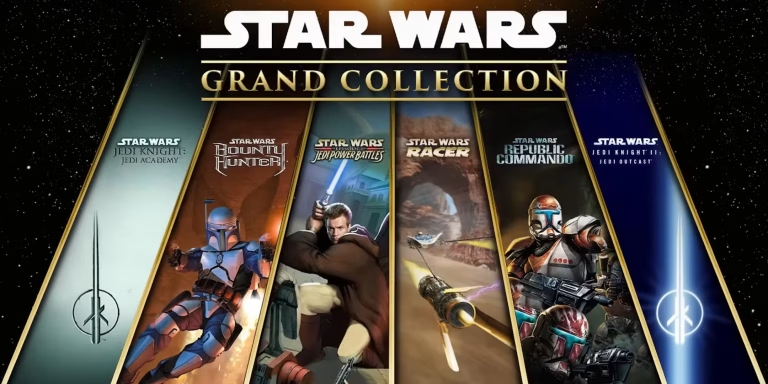
A Star Wars package bringing great 2000’s classics to modern consoles with a sprinkle of modern polish. The collection is available on PlayStation and the Switch and features these games;
The PlayStation version notably missing, but included on Switch, are Knights of the Old Republic I & II and The Force Unleashed. That leaves a mixed bag of beloved titles and lesser‑known entries.
Classic Jedi Knight games.
Jedi Knight II: Jedi Outcast – A classic FPS combining Blaster and lightsaber combat. The PS4 port runs smoothly, with modern controller support and sharper visuals, though core gameplay remains unchanged. The combat is satisfying, though some mechanics feel dated by today’s standards. Overall, it remains one of the most enjoyable titles in the collection.
The sequel, Jedi Knight: Jedi Academy builds on the previous title with deeper lightsaber combos and a character creator. The PS4 version plays cleanly, retaining the thrill of Jedi duelling. However, visuals and AI can occasionally feel stiff, and there’s no online multiplayer, which is a missed opportunity. Still, it’s a standout.
The good batch
Bounty Hunter – Jango Fett’s third‑person action adventure sees a strong return. Ported in August 2024, it delivers jet‑pack mobility, engaging traversal and dual‑wielding blasters. Visuals have been polished with lighting upgrades and DualSense haptics, making this one of the more impressive entries in the bundle. Being also ported to PS5 unlike most of the titles in the collection it feels even better to play. Controls are responsive, the performance is stable and although there are not many huge additions it my top choice from the collection.
Republic Commando – A gritty, squad‑based FPS focusing on Delta‑Squad Clone Commandos. Controls and squad AI have aged, though the atmosphere remains strong . The absence of extra bonus content, other than some menu‑accessible music and icons, means a faithful but basic port. Fans of tactical shooting will find this a worthwhile pick
The bad batch
Episode I Racer – A remastered port of the fast-paced podracer, now in HD. The action remains thrilling, but visuals show their age, textures are simple and there aren’t many modern enhancements. Still fun for nostalgic races and split screen sessions. I have had issues running it on the PS5 however. Multiple crashes, freezes and on instance of the game freezing my entire console until I pulled the plug. I may have gotten unlucky, especially when looking around online forums and not seeing the same issues. Either way If Episode IRacer wasn’t included in the collection , I don’t think anyone would miss out.
Episode I: Jedi Power Battles – Once notable for co‑op fun, this side‑scroller shows its age. Combat and platforming feel clunky, and visuals are dated. Nostalgic value remains for fans, especially in local two‑player mode, but newcomers may struggle with outdated mechanics.
My conclusion
The Star Wars: Grand Collection on PS5 is a nostalgic ride through some of the franchise’s most iconic gameplay experiences. Highlights include Jedi Knight titles and Bounty Hunter, which still deliver compelling action today. Republic Commando remains a gritty gem, while Episode I Racer and Jedi Power Battles offer nostalgic fun, but reveal their age.
Graphically and technically, the collection is solid but unambitious: expect sharper load times and controller support, not full visual overhauls or modern enhancements. The lack of online features places focus solely on single‑player and local split screen play.
Crucially, missing out on Knights of the Old Republic I & II and The Force Unleashed, Blockbusters by any measure, hurts the PS5 package when compared to the Switch bundle. Over all I think that buying the whole collection is a waste of money and you are better off buying the titles separately as not all of the ports are worth your time.
Bartender Hustle arrived on PS5 on April 23, 2025, delivering a well-crafted, low-pressure simulation of behind-the-bar life. Developed by Canadian indie studio Departure Interactive and published by Ultimate Games, it offers a mix of cocktail making, customer interaction, and a few interesting modes.
Cocktails and conversations
Players step into the shoes of a solo bartender, working through a narrative-driven Career mode across five distinct venues, ranging from cosy neighbourhood pubs to upscale cocktail lounges. Along the way, you’ll encounter customers with unique personalities and drink preferences, stirring (literally) conversations about their lives. The story starts off with promise, setting up the main character, a struggling bartender trying to make rent. But in reality there is very little character progression. The apartment is really more of a glorified pause menu between the days. The narrative is ok, there is some fun conversations and interesting characters that the players gets to know as time goes on but I just wish said dialog would carry on while mixing, as oppose to a text box when you hand the cocktail over to the customer, ruining the flow.
Bartender Hustle offers more than just the story mode. There are a few game modes to play around with but the one I was most intrigued by was the Arcade Mode. The promise of running your own cocktail lounge, expanding and customising as you make more money, adjusting the menu to your liking, and maximising profit. But unfortunately this falls short, indeed the player can add and take things away from the menu but that just limits what the customers can order. The stock is the same, the layout doesn’t change, customers don’t complain about a small menu. The customisation is simply tweaking colours on walls and floors, as well as adding a ‘lounge’ and ‘club’ to the bar. This just adds extra income at the end of the day and I achieved all unlocks within 40-50 minutes of gameplay.
Mechanics and presentation
The game is played in a first-person view. You manage everything from glassware selection to pouring liquids with precise measurements down to the Oz (or millimetres), adding ice, bitters, syrups, garnishes, and even quirky extras like umbrellas and straws . Whether you’re pouring a simple Pale Ale or crafting a complex layered cocktail, the process is intuitive and satisfying when you learn where everything is. There are a lot of ingredients, and although in story mode the drinks do get introduced slowly, the setup of the bar with every ingredient possible on display can get very overwhelming and confusing.
The precision of the cocktails served can get slightly aggravating when the player forgets one garnish on a 4 addon-on drink and the customer will outright refuse to have it, while still making the drink disappear resulting in starting over, as oppose to simply putting in the forgotten umbrella.
Graphically, Bartender Hustle is solid. The bar setups are detailed enough to feel immersive, though character models are more serviceable than standout. Lighting and stage dressing across the five venues properly convey atmosphere, with ambient sounds and background tunes that suit pouring rhythm without annoying repetition. The audio, while sometimes feeling like “supermarket music,” complements the gameplay well relaxed, consistent, and not overbearing.
My Conclusion
If you’ve ever yearned to helm a bar, mix drinks meticulously, or enjoy a narrative-sprinkled sim, Bartender Hustle delivers. It’s the kind of game that scratches the satisfaction itch—perfect pours, growing efficiency, and deepening you into the rhythm of bar life. With multiple modes, an appealing price, and tactile mechanics, it’s a solid pick-up for simulation fans. That said, don’t expect a story-heavy epic or AAA polish—its charm lies in unpretentious, honest craftsmanship.
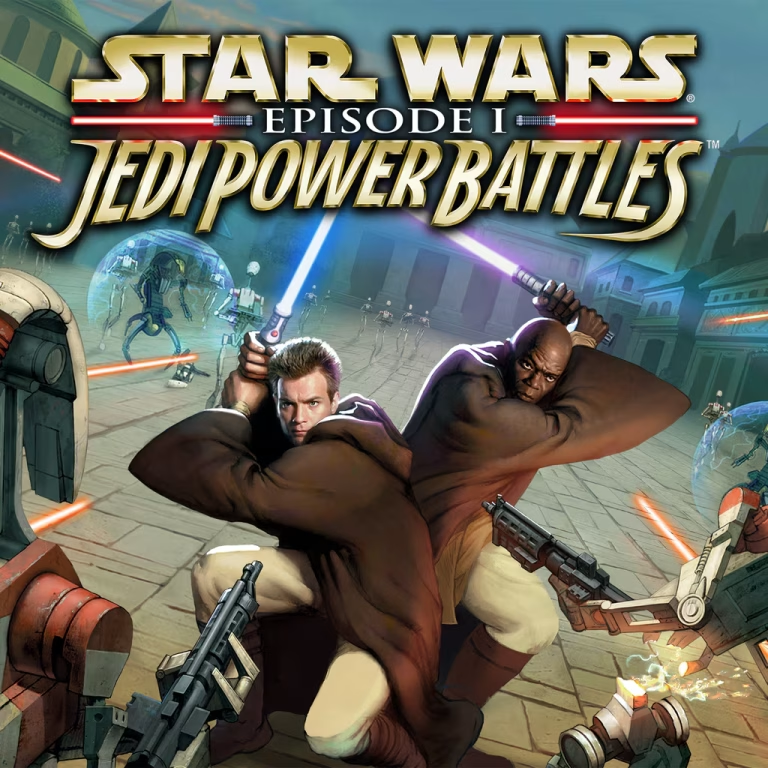
Originally released in 2000 for PlayStation and Dreamcast, Jedi Power Battles was a side‑scrolling action‑platformer based on The Phantom Menace. This PS5 “remaster” by Aspyr re‑releases it largely intact with updated visuals, DualSense support, and modern console compatibility. It’s available digitally for both PS4 and PS5 as of 23 January 2025
So what is it?
The structure is simple and nostalgic: ten core levels plus bonus minigames, featuring a roster of iconic Jedi including Obi‑Wan, Qui‑Gon, Mace Windu, and unlockable characters like Darth Maul, Queen Amidala, Jar Jar Binks, and Ki‑Adi‑Mundi. Each character has distinct lightsaber combos and Force moves, adding variety – though many remain fairly similar in function.
If you have fond memories of the original, this is a love letter first and foremost. The game has a strong nostalgic vibe, tapping into iconic moments like Theed Palace battles and Jedi duels against waves of battle droids. The 25th‑anniversary edition celebrates this by offering toggles like lightsaber colour customisation, modern/classic control schemes, and cheat code support like Big Head mode.
One area where the game truly shines is local couch co‑op. Playing alongside a friend brings back the joy of split‑screen multiplayer, softening the blow of harsh mechanics. Bonus modes and unlockables, now accessible from the start.
How does it fare in 2025?
The core loop is hack‑and‑slash combat with occasional platforming distractions. Some may praise the nostalgic “viscerally addictive” feel, but I have to describe it as repetitive button‑masher with flimsy combo design. The hit detection and responsiveness are inconsistent; blocks and parries don’t always register, and timings can feel off. Which I can understand for the original released 25 years ago, but not for a Indie priced release now.
Platforming fares worse: jump arcs are floaty, collision detection is glitchy, feedback is poor, and players often die to blind jumps or hidden pitfalls. Checkpoints are sparse, lives limited, and cheap deaths frequent. One might describe it as: “frustrating as hell”, and surviving a difficult level that would usually end in satisfaction will sometimes only end in a sigh of relief.
Visually, the remaster modestly enhances textures and lighting, offering sharper character models and more vibrant environments. That said, it retains much of the original’s polygonal, Dreamcast-era aesthetic, blocky models and stiff animations still punctuate the experience. Audio is a mixed bag. Iconic John Williams music and faithful lightsaber & blaster SFX evoke that Star Wars atmosphere. But repetitive clips, like Jar Jar’s looping lines, and tinny effects sometimes undermine immersion.
My conclusion
Aspyr introduced modern options: modern/classic controls, lightsaber colour toggle, cheat codes, and all characters are available upfront. Frame rates are solid, loading is fast, and DualSense haptics are supported . However, there’s no option to remap buttons. Menus lack polish, UI is clunky, and vehicle sections receive little to no improvement. This is not a ‘remake’ , it is simply a dream-cast game ported onto a modern console.
Star Wars: Episode I – Jedi Power Battles on PS5 is a nostalgic gem wrapped in a dated package. Aspyr’s remaster is faithful, charming in parts (especially for the nostalgic crowd), and technically competent. However, sluggish combat, punishing platforming, and an absence of modern refinements tarnish its shine.
I can only recommend picking up this version if you grew up with this game and want to relive those memories with a friend at your side. If you’re after slick, modern action or fluid platforming, I would skip this one.
The Epomaker x AULA F65 Pro keyboard is a comfortable, small-form-factor device that is surprisingly affordable. Priced at under £50, I was blown away by the tech, design, and usability. Furthermore, it can be customised with hot-swappable switches.
Though the keycaps may not tickle your fancy, they will appeal to a niche audience. Additionally, you could swap the keys out if you wish. This device is wonderfully versatile as it is tri-mode compatible. On top of this, it is lightweight and easy to use. Accordingly, it is perfect for commuting or less technically advanced individuals.
What’s in the box of the AULA F65 Pro keyboard?
The packaging is attractive, informative, and strong. Additionally, it can be recycled.
The AULA F65 Pro keyboard is lightweight but robust. It has a media knob to enhance usability. Moreover, this 65% form factor (66 key) product is perfect for compact workstations.
A keycap puller and spare switches are provided.
Power the device or charge the battery with the USB cable.
Learn the fundamentals with the user manual.
Technical aspects.
3 connectivity modes = impressive versatility. However, if you wish to enjoy responsive gaming, I recommend playing wired or via the USB dongle. Both connections deliver 1000 Hz polling rates for the ultimate gaming experience. If you must use the Bluetooth connection, this drops considerably to 125 Hz. Though this isn’t a massive issue if you are working or typing emails, elite gamers need that match-winning edge.
If you play wirelessly, you’ll enjoy a 4000 mAh battery. The battery life can be monitored with the handy built-in RGB tool. The battery life was good, and you can enjoy up to 40 hours of juice from one charge. Word of warning, battery life varies if you use the RGB lighting.
This keyboard is compatible with Windows, Mac, and Android. Moreover, the switches are hot-swappable for any 5-pin alternative. Consequently, you can use this keyboard with most platforms and customise it to match your needs.
Build quality.
The AULA F65 Pro keyboard has a creamy typing soundscape. This softer mechanical approach delivers the traditional clacky sound without the shrill and ear-splitting edge. Moreover, it is smoother to use, and this reduces fatigue when typing or gaming during marathon sessions.
Unlike other Epomaker keyboards, this one uses shine-through RGB backlighting. This creates an amazing light display for your gaming rig. Furthermore, it complements the special shine-through legends on each PBT keycap. The result is an impressive display that stands out from its peers.
The keycaps use a Cherry profile for familiarity and comfort. Each one is crafted from premium PBT materials for increased durability and stain resistance. The result is longer-lasting keys that don’t have that oily and shiny edge.
Audio profile.
The creamy sound-dampening material delivers a stunning soundscape. I’m a huge fan of mechanical keyboards, and I adore the array of noises they produce. However, as time passes, I prefer something a little less obnoxious. Thankfully, manufacturers agree, and many are incorporating layers of sound-dampening materials to create a softer audio experience.
The softer style matches a slightly spongy typing profile. This doesn’t impact actuation distance, polling rates, or latency performance. Instead, it reduces fatigue while enhancing typing comfort. Unlike more aggressive gaming keyboards, this will appeal to a larger audience.
Is the AULA F65 Pro keyboard worth it?
Gaming can he an expensive business. Hardware is increasingly pricey, and keeping up with your friends will drain your bank account. Subsequently, picking up an impressive gaming keyboard for under £50 isn’t commonplace. Thankfully, the AULA F65 Pro keyboard offers desirable tech at an affordable price. Moreover, it is built to last, and visually, it is striking. Accordingly, I like it and I recommend buying it here!
I have mixed feelings on the concept of ‘luck’. Lost In Random: The Eternal Die heavily features dice, surprisingly. But what you end up with on a die is likely just a combination of the specifics of the die, how you throw it, conditions of the table, etc. But at the same time, when I roll three critical fails in a round of D’n’D, it does rather feel like there’s some giant, otherworldly force that’s unhappy with me. So I don’t believe in it, but still blame it when everything goes wrong. It’s strangely comforting.
Still, despite the name, there isn’t actually that much ‘luck’ in Lost in Random: The Eternal Die. Unless you’re just randomly mashing buttons, I guess. Instead, there’s more emphasis on skill, going by the super tight movement and clever relic system. It’s also set in an interesting world and tries its best to work in some dice here and there. The only problem is that everything feels rather unbalanced, and this threatens to tip the whole game upside-down.
Violent Yahtzee
Lost In Random: The Eternal Die follows Queen Aleksandra, ruler of Random, a place where everyone was living happily until a ‘Black Die’ started vomiting corruption everywhere. Aleksandra goes to sort it out, and promptly gets sucked into the black die and loses her powers. From there, she has to fight her way through the black die’s perversions of her memories to fight the big foe, ‘Mare The Knight’. I should point out that if, like me, you’ve not played the original Lost in Random, then you’ll be missing a lot of context from this storyline. It’s not as stand-alone as it claims.
That’s not a criticism, per se, but it did lead me to scratching my head at times. As you progress, you’ll meet a slew of allies, all of whom talk at you like you’re already supposed to know who they are. Take the giant toad, Aama. She acts like you’ve committed a grave sin against her and her sisters, and a big theme of Lost in Random: The Eternal Die‘s good ending is redemption. But the writing is vague enough that the grave sin could be anything from toad genocide to not refilling the coffee pot. Still, the writing and world are interesting enough that I did find myself engaged, if not as emotionally gripped as it was hoping for.
Anyhow, let’s move onto gameplay. The Eternal Die is an action roguelite, where you progress through floors and bosses, and carry home upgrade materials upon death. First things first, the movement and basic combat are stellar. The dash button seems wired to my brain, not my controller. The four basic weapons have weight to them, and the enemy AI seems reasonably smart. The in-run upgrades are clever too. Upgrades need to be slotted into a grid, and are all colour coded. Match three colours, and it raises a stat like weapon damage. You only have a limited grid, so you quickly need to choose between keeping an ability buff (like poisoning on a critical hit), or replacing it to keep your stats high enough. Good stuff.
Snake Eyes
Roguelites live and die on their gameplay balance. Too easy and it defeats the point, too hard and it’s just frustrating. The Eternal Die is bewilderingly easy. There’s a few reasons for that. Most foes are slow-moving melee attackers, so the bow renders them impotent. Relics drop very frequently, so its fairly trivial to beef yourself up early on. There is also no limit on how many permanent ‘blessings’ you can take, including one that gives you up to three revives, snapping what difficulty is left over its knee. In the end, if you can survive the first boss fight, then you’re guaranteed of an almost straight shot to the final boss.
This imbalance has a number of serious knock-on effects. For one, I reached the first set of credits in five hours. Secondly, it highlights the distinct lack of variation between runs. You’ll face the same bosses in the same biomes each time, and without a distinct challenge, it becomes quite repetitive. To unlock the good ending, you need to fulfil ally quests, and a good chunk of them require grabbing collectibles like outfits or little dice fellas. So as I was breezing through the game, my runs started to blur together, putting me into a trance. My pride at beating Mare the Knight began to dribble away when I realised it was pretty much an inevitability.
It’s frustrating because the solution to this repetitive feeling is quite literally staring you in the face: the dice. You have a little die following you, named Fortune, who you can throw in battle. Their damage depends on the number it lands on. That, and a few dice-related mini-games, is the extent of the randomness. For a game with random in its title, it’s remarkably linear. Using dice to roll for blessings and weapons at the start of a run would add some appealing random spice to the mix, and make the most of the core concept. It would stop me spurning all weapons but the bow and explosive arrows, at least.
Lost In Random: The Eternal Die – Charming But Wobbly
Still, while The Eternal Die wobbles a bit with its gameplay, the presentation is undeniably charming. The art style is very deliberately inspired by Tim Burton, and all the characters have wonderful designs and feel distinct. The world, too, is an interesting one. Random seems controlled by dice, and has a fascination with games. So the world inside the black die is littered with random dice and cards. It’s a nice aesthetic, being both happy and slightly creepy; something shared with the character design.
In the end, Lost in Random: The Eternal Die is proof that one key flaw can start to degrade everything around it. I was quite enjoying myself until I realised just how unbalanced things were. I ended up breezing through subsequent runs without even really trying, meaning the good end came with a simple investment of time, rather than effort. The bulk of The Eternal Die is undeniably charming and the core gameplay is very smooth, but it needs to have a good, hard think about its balance.