News: Back to School guide

0

It is that time of year when parents celebrate, and young adults and children moan. This Back to School guide highlights some of the best tech for your young people as they return to school or university. We have tried many of these products, and we love them. Accordingly, I am happy to recommend anything in this article.

The Back to School guide.

Wacom.

The Wacom MovinkPad is a sleek, ultra-portable pen display designed for creative professionals on the go. Featuring a high-quality OLED screen with stunning colour accuracy, it delivers a natural drawing experience with Wacom’s renowned EMR pen technology. Lightweight and durable, the MovinkPad connects easily to laptops or mobile devices, making it perfect for artists, designers, and illustrators who need a powerful, compact tool for digital creativity anywhere.

SteelSeries.

The Apex Pro TKL White (Gen 3) is a premium tenkeyless gaming keyboard that combines sleek design with cutting-edge performance. Featuring SteelSeries’ adjustable OmniPoint 3.0 switches, it offers lightning-fast response times and custom actuation for every key. Its durable aluminium frame, vibrant RGB lighting, and compact layout make it ideal for competitive gamers who demand precision, speed, and style—all in a streamlined, high-performance package.

The SteelSeries Arctis GameBuds are compact, wireless earbuds designed for gamers who value portability without sacrificing performance. With low-latency wireless connectivity, they deliver responsive, high-quality audio for mobile, console, and PC gaming. Featuring a comfortable in-ear fit, dual microphones for clear voice chat, and a pocket-sized charging case, the Arctis GameBuds are perfect for on-the-go gaming, offering immersive sound and reliable communication wherever you play.

The Rival 3 Wireless Gen 2 is a lightweight, reliable gaming mouse designed for performance and versatility. Featuring dual wireless connectivity via 2.4GHz and Bluetooth, it offers ultra-low latency and seamless switching between devices. With a high-precision sensor, durable switches, and up to 400 hours of battery life, it’s built for both competitive gaming and everyday use—delivering comfort, accuracy, and freedom without the hassle of cables.

Boulies.

Engineered for a tailored seating experience, the Boulies OP300 features a Multi Tilt Mechanism. Moreover, the backrest can be easily adjusted to lean forward or backwards (recline 90°-109°). Furthermore, Boulies engineers the backrest to perfectly align with the spine’s natural curve to help reduce strain.

INIU.

The Pocket Rocket P50 offers 45W full-speed output that supports PD, QC and Samsung Super Fast Charging 2.0 (PPS). Consequently, you have the ability to charge multiple devices simultaneously. This power level can take a smartphone from low battery to around 73% in just 25 minutes and deliver roughly 42% charge to a MacBook Air in the same time. Accordingly, this makes the P50 a practical emergency laptop solution as well as a daily phone charger. 

VQ.

The Halo is a revolutionary wireless speaker with TWS (True Wireless Stereo). Furthermore, it pairs two devices together, with a transmission distance of 10 meters for stereo sound quality. It boasts 22 watts of immersive 360-degree stereo sound in every single full-range speaker, and when paired together, delivers 44 watts of incredible sound with a frequency response of 20Hz – 20KHz. It is Bluetooth 5.3 compatible and connects to any Bluetooth device simply and easily at the touch of a button. 

A short but sweet guide!

School and university are just around the corner. Accordingly, your youngsters will need some new tech to get them going. Each of these brands offers a wide range of suitable products, and I recommend taking a look and improving your gear for the new school year!

Review: Flame Keeper

Flame Keeper by developer Kautki Cave is the latest roguelite entry that has arrived to the PlayStation 5. The action game follows Ignis, a special lump of coal who must fight his way through different levels of enemies to liberate the world of Orbis and bring light to a world shrouded in darkness. Is Flame Keeper a worthy addition to the roguelite genre? Does it shine brightly like its main character? Lets take a look and find out!

Light Vs Darkness

The story of Flame Keeper is simple. Ignis must free the world of Orbis from creatures called Pixies. He must restore the Eternal Flame and bring light to this world. On his quest, he encounters many different enemies like spiders, worms and fly-like creatures that try to stop him in his tracks. The story isn’t anything too deep and can be forgettable the more you progress. One of the strongest aspects of the game are the cutscenes. The animation and art style is fantastic and is a treat to watch. Even the opening intro scene when you boot up the game is beautifully shot. These cutscenes help the story in a way even if it isn’t that strong. It is a shame the story isn’t too memorable because this art style is amazing. But the gameplay is where Flame Keeper shines.

Die And Go Again

Like other roguelite action games, Ignis must fight his way through many difficult enemies to level up and become stronger and he progresses through the three different waves per level. Ignis can level up by using his health to light up campfires in every level. Each level has three waves. The first two are normal levels, where players must explore the area, kill enemies and find lamps to bring back to the campfire in order to light it up. Each lamp that is lit up, Ignis can access different perks and abilities to make his journey easier. Some of the these perks range from increased damage to faster movements. Players can also find weapons for Ignis like rock hands that do more damage. These are especially handy when you progress through the levels against higher level enemies.

The third wave is a survival wave where you must defend a cauldron of flames against waves of enemies that are coming to destroy it. All the abilities and weapons you pick up come in handy here as you have to survive five minutes against them and it becomes very intense. Ignis can use his health to build towers that have village residents on top of them to throw spears at enemies. You can also unlock other traps to help take out enemies. Flame Keeper is a difficult game but this adds to the fun of the game. It also means you need to be wary of what powers you want to upgrade, because if you die, back to wave one and you go again.

Now of course this three wave design can become repetitive the more you progress in the game as the levels, despite looking different in design from swamps to temple like areas, are basically the same. The gameplay does keep it all appealing and fresh. The combat is simple. Punch enemies or dash into them to kill them. Players can also unlock special abilities like missiles or a magic hammer that can damage a horde of enemies of you can time the attack perfectly. The hammer will smash down in the small area, wiping anything in the area out. Best weapon to use, especially against the hordes of enemies when defending the cauldron.

There is a hub world in Flame Keeper. Ignis can upgrade abilities at Vulpius Village. You can come here to upgrade buildings that also level up your abilities. This also includes upgrading your attack power and stamina so it is your best interest to visit and upgrade buildings as much as you can.

Flame Keeper: Captured on PS5

Boss Fights

There are multiple boss fights in the game. These boss fights are challenging like the spider boss fight that spits acid around the platform you are standing on. It can knock you off so there is a lot of things to consider when tackling these boss fights. The most important thing is you picked the best abilities that suit your playstyle as everything you unlocked in the previous levels can be used here. There’s not much else to the boss fights. They have cool designs and are challenging. It is satisfying to take them down knowing you earned it with the challenges you overcame. The beauty of a roguelite game.

Verdict

Flame Keeper is a fun little game to play. It is a welcome addition to the roguelite genre. The combat is simple but fun and the abilities you can unlock are satisfying to use against enemies. The boss fights are challenging and a fun time. The tower defense type wave where you defend the cauldron for five minutes is also a welcome addition and can help keep things somewhat fresh after completing the other normal waves. Some of the levels can get repetitive over time as it does follow the same formula and waves. The story is also forgettable but the art style can keep player’s attention. The game is only about 5-6 hours long, depending on how many times you may die in the game but it is a reasonable length for this type of game. Flame Keeper is a good time for any interested in roguelite games.

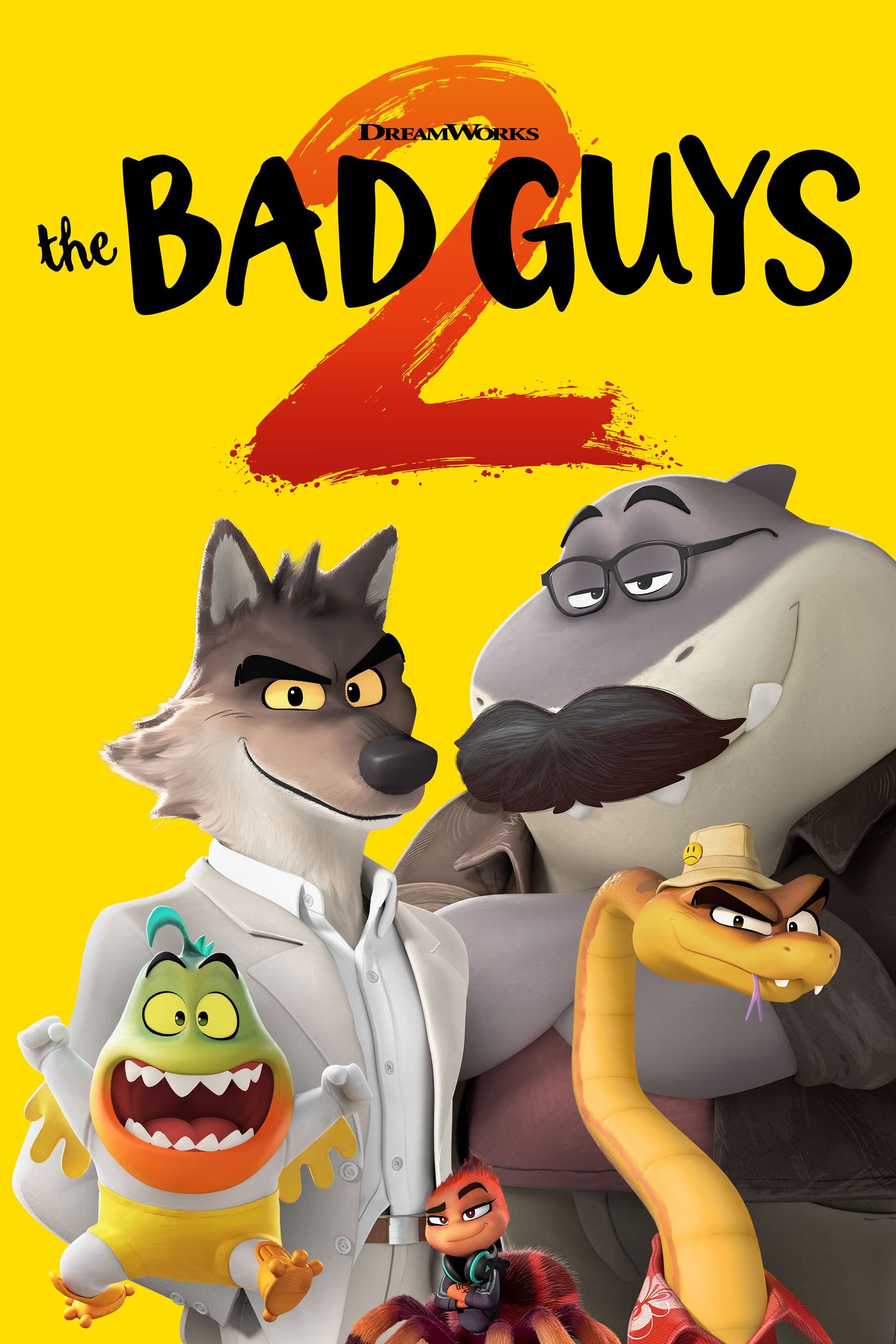
Win a Bad Guys 2 Movie Digital Code

We have 3 Bad Guys 2 digital codes to give away.

The struggle to be good continues with everyone’s favorite Bad Guys, as they encounter a new challenge from a gang of Bad Girls, in DreamWorks Animation’s newest action-comedy, THE BAD GUYS 2, coming home exclusively on digital platforms to buy or rent August 25, 2025 from Universal Pictures Home Entertainment. Based on the New York Times bestselling children’s graphic novel by Aaron Blabey, the latest animated adventure takes the Bad Guys to new exciting locations around the world and even further, to outer space! Unveil THE BAD GUYS 2 master plan with over one hour of captivating bonus content showcasing the exclusive animated short “Little Lies and Alibis” as well as never-before-seen features including deleted scenes, hilarious recording booth moments, how to draw character sketch tutorials with filmmakers, and more when you purchase from participating digital retailers nationwide. 

The Bad Guys are back, and this time, they’ve got company. In the new action-packed chapter from DreamWorks Animation’s acclaimed comedy smash about a crackerjack crew of animal outlaws, our now-reformed Bad Guys are trying (very, very hard) to be good, but instead find themselves hijacked into a high-stakes, globe-trotting heist, masterminded by a new team of criminals they never saw coming: The Bad Girls.

How to enter to win

We have 3 digital codes for Bad Guys 2 to give away.

All you have to do is enter below:


Win a Bad Guys 2 Movie Digital Code

The contest closes at midnight on 7th September 2025.

The contest is only open to our UK readers – sorry! 

Review: Curse Rounds

Okay maybe this wasn’t the game for me, I don’t have much experience of rougelikes beyond slightly enjoying, but never completing 2021’s Returnal. The concept of losing everything after dying once and having to battle my way back through repetitive procedurally rooms of the same enemies from square one may appeal to the masochists among you, and the gaming population is certainly full of those, but personally leaves me feeling like Sisyphus watching the boulder roll back down the mountain. 

Now I’ve heard nothing but great things about other games in this genre such as Binding of Isaac and 2020’s GOTY winner Hades, both of which are on my (embarrassingly) large play list and maybe one day I’ll go back and finish Returnal, but from what I’ve seen of them, these games have style, narratives and themes going for them. So what does Curse Rounds offer?

My eyes betray me.

I’ll start with the good, actually no, to be fair, the VERY good; I really dig this game’s aesthetic. Composed of monochrome, pixelated doodles, great care has definitely been put into how the game looks. Its sprites, admittedly basic, come alive thanks to fantastic animation work and every one of its, admittedly impressive, list of enemies all behave uniquely. The same can be said of its sound design, a simple retro throw back of pixelated tunes and crunchy sound effects, a tribute to those vintage PC games of yore. What little there is of a story is told through very nice comic book panels; rough and sketchy. Oh and if the black and white contrast is too harsh for you, there is an option in the settings to switch to a much less striking greyscale palette, an excellent consideration.

But then there are moments where it just becomes almost too much. In more intense rooms where enemies become comically frequent, it becomes a cacophony of visual noise, your tiny player character getting lost in the chaos of it all. Some of the game’s curse cards (I’ll get to that in a second) cause visual drawbacks such as screen shakes and pixelated rain to constantly fall from the sky, further muddying the playfield. It’s a fun difficulty curve, I’ll give them that, and your tolerance may vary, but there were points where it gave me genuine motion sickness. I don’t recommend playing this game on a gigantic modern TV either, not only because of the input lag (is this a bad time to talk about how terrible modern telly’s are for gaming?) but simply because your eyes won’t be able to track the chaos of what’s going on. This is a monitor game, requiring you to sit forward at a desk in front of a smaller screen (or handheld) and do what I believe the kids nowadays refer to as locking in.

I never curse, I swear.

Now we get on to the namesake of Curse Rounds: the curses. Between rooms you are given the option of two cards, each condemning you to carry a debuff that will follow through your entire run; by the end you will have gained a whole stack of contrasting effects. As aftermentioned some of these are visual and others mechanical, the floor now being slippery ice or causing enemies to rise up as unkillable ghosts. To balance it out, after clearing a room you are given a small permanent buff to your weapon damage or movement speed, and after a boss you are given a very welcome power card that will provide a positive effect. It’s all random and leads to a lot of unique combinations, with the store page going as far as to declare “No two runs are the same!”. Huh.

Mechanically, it plays fine. Just fine. The player character feels responsive enough and you are given a nice dash with very generous i-frames. Enemies are incredibly varied and I’m sure time can be sunk into learning their behaviours and attack patterns. The base weapon, apparently a flashlight, shoots slow moving pellets that just kinda graze the enemies with no real oomf. I don’t feel like I’m giving that much damage, there’s not enough visual or aural feedback here for it to feel satisfying for me. Likewise the power ups (one of the three selling points on the store page) bounce between being actually useful and kinda lame, leading me to just avoid them and stick to the base pea shooter. Sure, there are some cool boss battles, but they vary from very brief to just cluttering the screen with noise, and I just felt a level of detachment to it all. 

Speaking of detachment, the story doesn’t seem to have anything to do with the gameplay. A child playing video games in the dead of night hears knocking coming from his attic; grabbing a flashlight to investigate, the trapdoor bursts open and a swarm of tentacles grabs the boy, dragging him inside. Then he gets turned into a little white ghost (I think?) and has to defeat swarms of ghosts/monsters/whatever in the same empty black room. Look I get this is appealing to a crowd that likes simple no nonsense stories, but what does it have to do with the gameplay loop? I’m not asking for Baldur’s Gate here, but I want some kind of incentive that leads to a payoff. A run will only take you about 25 ish mins and then you are treated to a dozen comic panels that don’t conclude anything. Fantastic. I’m biased of course, I studied film/theatre/TV writing and the written word is my comfort zone; I do like a narrative to keep me going.

I said, maybe” – Noel Gallagher

Curse Rounds is a somewhat difficult, repetitive time killer with more in common with the coin gobbling arcade cabinets of yesteryear. It’s very cheap (£3/$4) but on modern store fronts that constantly host much deeper games for a similar price point, it feels like an iPhone game in comparison. There’s a good foundation here, very nice visuals and solid game feel and I can see the retro loving crowd getting more out of it, particularly those on Switch and PC (it played okay on controller, but I feel the aiming mechanics were designed with keyboard and mouse in mind). Maybe I’m too young, maybe I’m too impatient, maybe I’m too much of a wannabe film bro and maybe my astigmatism didn’t agree with how many objects were on screen (I should get my prescription checked). But perhaps the biggest maybe, is that one day I’ll find a rougelike that makes me want to roll the boulder back up the hill.

Review: Swords and Souls Legacy Collection

0

Something about the art as I laid eyes on the game awoke dormant memories. When Steam was a baby, Newgrounds gathered young, passionate talent from around the world, and YouTube wasn’t invented yet. It was a wild untamed world. The little animation we had was watched over thousands of times, and games were made that make current mobile games stale and uninspiring. Folks did what Tony Stark did, made a suit in a cave while today’s makers with better technology only dream of. 

Well the past did not want to stay. In an act of preservation, the old development teams SoulGame Studios and Armor Games have done the task of porting Flash games to new gen systems. Through the use of Adobe AIR, this was possible. Players now have access to a select collection of games to commemorate this task.

Soul Driver

One of the first examples of endless runners to predate Temple Run. Players take control of a manic driver with the goal of staying on the road for as long as possible. The many difficulties include outside forces and even the car itself. The car has a health bar and will take damage on obstacles like construction work, ramming another car, or speed strips. The antagonist is local law enforcement. They will take to the road the minute the game starts and will play a constant back and forth to wreck the car. Players can guide the police into obstacles to break their car and move on. Other police units will spawn as the level gets longer and as more upgrades are purchased. Speed checkers force you to slow down in order to not get caught, and some will stand on the road to fine you for harm.

The upgrades are all useful things for the vehicle: acceleration, braking, wheels, health, all make the next voyage last longer for more coins and challenge.

The Gentleman

The early version of mission based puzzle rooms. The idea of going from left to right, modified to its many different possibilities. Players must move their character from beginning to end, which involves getting to a door. Sometimes that door is locked and needs a key. The Gentlemen can jump, use portals, hover with his umbrella, use switches, and other things to reach the goal. The puzzles are fairly straightforward, sometimes a hint will flash at the start to signify what you must do. The simplicity is overshadowed by the goal window which records your time, and displays the optimal time for beating the puzzle. At the start this is easy, but players soon realize that perfect execution is needed to gain that hat sticker for the level.

Speaking of levels there are fifty of them. A lofty achievement considering the time.

Rogue Soul 1 & 2

I might get crucified for lumping them together. But going off my experience, both of them are very close in gameplay. It’s an endless runner, but inside small set mission levels. Players take the Rogue through varying levels, requiring quick thinking, and working knowledge of the level. Enemies can be taken out by jumping on them, or throwing a knife obtained in-level. The first game has a simple goal of obtaining money so he can get food, and other things. It also plays in Zones, but will start from 1 when the Rogue fails. There are lots of stats to see from mileage, to enemies attacked, items used or collected, and more. There’s even skins to unlock based on completion percentage.

The sequel is a lot of the same. There have been some differences made with level layout. It’s still the same kind of gameplay, but you now complete singular levels instead of endlessly running. The levels have criteria for full completion and incentive for multiple playthroughs. The layout of the game is cleaner. You have a more organized base to see everything you want. The bestiary and loot is all in one place, the upgrades and unlockables in another, and the mission button. Rogue 2 has more to unlock, and has a friendly approach. The first game can be harder and more difficult to play than this one.

Swords and Souls

The last game brings us the auto battler. Players work through various gauntlets of increasingly stronger opponents until victory or defeat ensues. Afterwards the earnings can go towards stats, the money can go towards item upgrades or it could all go to the player’s little lovely house. The museum has a banker that will collect money while the game isn’t being played. There’s also a training ground that will give you extra points for leveling up the stats.

These old ported Flash games were a great reminder of the old time. Places like Newgrounds and Kongregate still stand and are doing great things, but it’s nice to revisit the old stick figure shows and Stickman Adventure games. New times aren’t completely bad, even SoulGames made a new game for Steam called Neverseen. It has a lot of what they specialized in, and has their signature art as well. But Swords and Souls Legacy Collection is definitely good to playthrough.

Review: Shinobi: Art of Vengeance

Shinobi: Art of Vengeance reboots the Shinobi series. This much-loved franchise hits the ground running with this epic, albeit clichéd experience. You’ll enjoy some classic Asian vibes as you slice, dice, and parkour your way through numerous levels. En route, you’ll encounter obstacles, enemies, and a host of familiar Metroidvania mechanics. Accordingly, it’ll appeal to a large audience.

This action platformer was developed by Lizardcube and published by Sega. It is a single-player game that has a story mode, arcade mode, and plenty of secrets to discover. The core action is repetitive, but this matters not. Slashing foes, sliding past fire, and climbing walls will thrill every player.

Shinobi: Art of Vengeance tells a classic tale. 

Revenge is a dish best served cold. Unfortunately, Joe Musashi didn’t get this memo, as he lost his shit. The ENE Corporation has decimated his village, and Lord Ruse plans for world domination. This angers the hard-as-nails warrior as he plans to seek revenge and thwart Ruse’s plans.

The story brilliantly punctuates every stage. Cartoon-style cutscenes highlight the plight of the villagers. Moreover, the gruff nature of Musashi cuts every foe short. The story is wonderfully told, and the pacing makes it easy to follow.

Fantastic mechanics. 

Hack and slash combat dominates every encounter. Consequently, Shinobi: Art of Vengeance is somewhat mindless. This isn’t a complaint, as I loved the smooth and frantic nature of each fight. On top of this, there are some glorious parkour moments as you climb up walls, dodge obstacles, and leap chasms. 

As the game evolves, you learn new abilities and attacks. Ninpo magic allows Joe to enhance his already out-of-this-world strength. Alongside this, the hero can be equipped with amulets to heighten his powers further. 2 amulets can be equipped, and new items are found if you have an inquisitive mindset.

Shinobi: Art of Vengeance is great to look at. 

The level design utilises the Metroidvania mechanics. Tunnels, secrets, and a labyrinthine world keep you on your toes. Moreover, a scene of death and destruction supports the despair and downturn of the protagonist. The developer has done an amazing job of creating a buttery smooth game with limited issues. Gamers will adore the seamless transitions between areas and the high-energy combat. 

The audio supports the madness with its loud and hectic soundtrack. Aggressive sound effects dominate proceedings. Furthermore, I liked the voice-over work and the impressive acting. The Asian theme is nicely presented, and though it is clichéd, it is great to hear. 

Smooth controls. 

Shinobi: Art of Vengeance could have been extremely complicated. Thankfully, the simple layout and detailed tutorial ensure that inexperienced gamers will not struggle. However, there is a nice layer of complexity for veteran players.

This layer of complexity pushes you as you explore secret areas and overcome elite forces. Additionally, there are plenty of secrets, rifts, and collectables to find. This enhances replay value and longevity. Moreover, the drip-fed mechanics make you return for more as each level opens up. 

Shinobi: Art of Vengeance is a great addition to the franchise. 

The developer has done an amazing job with this game. Shinobi: Art of Vengeance incorporates many of the fantastic elements from a longstanding franchise. Fans will adore the maze-like world and fast-paced combat. Newcomers will enjoy the story, setting, and easy-to-understand controls. Accordingly, it is fantastic, and I recommend buying it here! Can you get your revenge? Explore the world, learn new skills, and defeat Lord Ruse!

Review: Echoes of the End

When Echoes of the End released on PC, the conversation online quickly centred around one thing: technical issues. From shader compilation stutters to random frame drops, many early reviews and user impressions suggested that this game, like so many Unreal Engine 5 titles before it, was weighed down by performance hiccups. I went into it expecting frustration, armed with patience and a healthy dose of scepticism. And yet, to my genuine surprise, I experienced none of those problems.

Let’s start with the obvious: this game is visually stunning. Built on UE5, the sweeping landscapes of Aema, icy mountains, lush valleys, volcanic forges, are crafted with a painterly eye for detail. Even standing still, there’s always something to take in.

Visuals like a tech demo

What stood out most in my playthrough wasn’t just how good it looked, but how smoothly it ran. I’ve seen reviewers call this “one of the worst stuttering experiences in recent memory.” Maybe I got lucky, or maybe my hardware configuration happened to align perfectly, but for me, those breath taking visuals weren’t tarnished by performance flaws. They were exactly what they were meant to be: immersive windows into another world.

Echoes of the End give me massive God of War and Uncharted vibes in tone and pacing. As well as graphics, scenery, companion interactions to name a few. It’s a cinematic, linear adventure with a clear focus on character relationships. At the heart of the story is Ryn, a character whose arc slowly but surely drew me in. Early chapters establish the stakes and the world, but it’s in the latter half of the game that her journey truly shines.

From a slow start to an engaging climax

One thing that struck me is how Echoes of the End balances its mythic, high-fantasy setting with grounded human emotion. There are big boss fights and epic confrontations, but what lingers are the quieter moments: conversations at campfires, glimpses of vulnerability, choices that feel like they matter even in a fairly linear story. By the final chapters, I felt genuinely invested, not just in seeing the story wrap up, but in understanding who Ryn had become through the journey.

Here’s where I diverge a bit from my otherwise glowing praise: the early gameplay is underwhelming. Puzzles are straightforward, combat feels limited, and the game sometimes seems to hold your hand a little too tightly. I can understand why some players bounced off in the first few hours, especially if performance issues compounded their frustrations.

But I’m glad I stuck with it. By the midpoint, puzzles introduce more layers, and combat expands with new magical abilities. You start feeling less like you’re walking through a tutorial and more like you’re actively shaping strategies in fights and solving clever environmental challenges. The pacing ramps up, and by the time the story hits its stride, the gameplay has caught up enough to keep you fully engaged.

Not all perfect

That said, I did notice moments where the combat clearly aimed to emulate God of War’s weighty, cinematic feel. You can see the influence in the camera angles, the dodge-and-counter rhythm, and even the way certain boss encounters are staged. The problem is that the responsiveness just isn’t quite there. While combat certainly evolves and becomes more enjoyable as new abilities unlock, it never reaches that same fluid precision. The result is a system that’s fun in its own right but occasionally left me wishing it controlled as tightly as the game it’s trying so hard to echo.

Echoes of the End is not a perfect game. Its puzzles can be predictable, its combat never fully blossoms into something groundbreaking, and its linear structure may leave exploration-hungry players wanting more. But judged on its storytelling, atmosphere, and visual presentation, it delivers a compelling, memorable adventure.

My conclusion

And for me personally, the lack of technical issues elevated the experience from “worth checking out” to genuinely engrossing. While others may remember their time with Echoes of the End as marred by stutter and frustration, I’ll remember mine as a seamless journey through a beautifully crafted world, one that managed to capture both my eyes and my emotions without ever breaking immersion.

So here’s my verdict: if you’re fortunate enough to avoid the technical troubles that others report, you’re in for a rewarding adventure. Echoes of the End may not redefine the genre, but in the right conditions, it proves that sometimes a game doesn’t need to be perfect to leave a lasting impact.

Review: Backbone Pro

Here is our review of the Backbone Pro.

Backbone Pro is built for players who demand more — more precision, more comfort, more freedom. Designed with full-sized ALPS joysticks, rear buttons, and a larger ergonomic shape, it delivers pro-level control for every session. FlowState technology lets you move seamlessly between mobile, tablet, PC, and smart TV, unlocking an open world of play. With up to 40 hours of battery life and customisations in the Backbone App, Backbone Pro lets you play your favourite games — on any screen, anywhere.

The Backbone app transforms your phone into a universal hub for gaming, allowing you to access all your games in one place. The app supports multiple gaming categories including App Store games (including Apple Arcade, Netflix games), Remote Play services (Xbox Remote Play, Steam Link), cloud gaming platforms (Nvidia GeForce NOW), and—for the first time—retro games through a built-in emulator. With new features like Smart Search, you can discover and launch games across platforms seamlessly, all from a single place. The Backbone app is one of the most popular gaming apps on the App Store–it was #4 in its category on the App Store this past holiday season. It’s free and works with any Backbone device, even when you don’t have a device connected.

What’s in the box?

The box contains the Backbone Pro, instructions and extra adapters for phones without cases.

A Closer Look

Final Thoughts

For anyone who may have used or owns a previous Backbone product, the Backbone Pro has bigger joysticks, configurable back buttons and wireless mode making it a significant improvement on the previous version, along with a built in battery.

Pairing the Pro with your phone or tablet (or even SmartTV) is as simple as pressing a button the Pro and then following the steps.

As mentioned, one of the new features is Wireless mode – this means you don’t have to plug in your device to use the Pro as a controller – it works really well, especially if you want to use it with a larger screen like a tablet or Smart TV.

Fitting your phone into the Pro is easy, just pull the Pro apart, slide the phone in and start playing. The adaptors in the box help insure your phone has a nice snug fit whether it’s in a case or not.

Using the Pro is really comfortable – it actually feels like a proper controller rather than something not quite a controller, which means it really feels like something you are used to playing with!

The Pro is configurable as well – using the Backbone app you can adjust the sensitivity of both the joysticks and the triggers making sure it’s perfect for your gaming needs. You can also configure the new back buttons and map any control you want onto them very easily.

Several features in the app require you to have a Backbone+ subscription which was a little disappointing considering the Pro costs nearly £170, you don’t expect to then pay extra to use some of the features, although for some users these features may not be needed.

When fully charged you can get around 40 hours of play time from the Pro. You can also use the Pro whilst it is charging if you really want to, in fact when plugged in the Pro will also charge your phone too!

If you like gaming on the go then the Backbone Pro is for you – check it out, you won’t be disappointed.

The Backbone Pro is available now priced around £169.99.

You can learn more from the Backbone website here.

Review: Clix Gaming Goggles

The Clix Gaming Goggles from GUNNAR will make fans go crazy. This collaboration is the latest in a long line of incredible designs from this market leader. Whether it is Marvel, Fallout or Blizzard, this company delivers. Eye-catching designs and an array of benefits make these glasses a must-have product.

If you are a keen gamer or you work in front of a screen, you’ll know the pain of fatigue. Unwanted headaches and tired/dry eyes ruin your killer instinct and productivity. Thankfully, GUNNAR’s patented lens technology removed these unwanted side effects. 

Available in a variety of lenses, I was provided with the amber option. 65% blue light and 100% UV light protection create a refreshing and comfortable environment for working and gaming. Moreover, the build quality is exceptional, and the design is attractive and professional. 

What’s in the box of the Clix Gaming Goggles?

  • The simple packaging is pleasant and discreet. Furthermore, it can be recycled. 
  • The Clix Gaming Goggles are light with a square design. The hybrid stainless steel and PEP frame matches the sleek theme.
  • A soft case and microfiber cloth are provided. 

Technical aspects. 

Sitting in front of a screen is arduous at best. However, when you consider the fatigue and other negative elements, it is enough to make you want to cry. Thankfully, GUNNAR has considered this problem with every product they design. The Clix Gaming Goggles are no different. The amber lenses deliver a pleasant yellow hue to every task you undertake. This reduces the harsh nature of modern monitors, TV screens and mobile devices.

65% blue light and 100% UV light are blocked with the patented lenses. This helps to reduce headaches, fatigue, and dry, itchy eyes. The result is an unprecedented increase in productivity and comfortable gaming or work-related activities.

Build quality. 

Clix wouldn’t put his name to poor-quality products. Accordingly, you know that the Clix Gaming Goggles are well-built. Moreover, GUNNAR do not produce low-quality goods. As such, I had high expectations before these hit my desk. Thankfully, I wasn’t disappointed. 

The sturdy frames incorporate high fashion with usability. The slim metallic finish is eye-catching and professional. The result is the perfect combination for work or pleasure. Alongside this, the amber lenses are subtle but effective. 

A combined polymer and stainless steel frame creates market-leading durability. Furthermore, the multi-barrel hinges are ideal for heavy-handed individuals. If you are a rage-quitting monster, your glasses will not suffer.

Finally, the G-SHIELD protection reduces maintenance and unwanted smudges. Additionally, the anti-glare film is perfect if you love to stream or use any online-based meeting tool. 

Are the Clix Gaming Goggles worth it?

I’m not going to lie, I love GUNNAR glasses. I own many different pairs and I love every one. The designs, build quality, and lack of fatigue are a game-changer. Additionally, I love a great collab. As such, I recommend buying them here!

(More information on GUNNAR can be found here!)

The Clix Gaming Goggles have been awarded the Movies Games and Tech Gold Award.

(Full disclosure! A sample was provided for an unbiased and free review!)

Review: Gatekeeper

When I first picked up Gatekeeper, I didn’t really know what to expect. I haven’t played many Roguelikes, and while I have a lot of respect for the genre, I just personally have never gotten around to them. Opening this game for the first time and starting a run was a bit intimidating, but after hours and hours of playing, Gatekeeper kept me engaged the whole way through, despite some hiccups in gameplay and accessibility.

The Heart of Time is waiting for you

Gatekeeper is developed by Gravity Lagoon and published by HypeTrain Digital. The game has you facing hordes of enemies as you fight to hunt down Chaos, who stole the Heart of Time. Before you begin your run, you will have the option to choose a character, with their own unique abilities and stats. Something that I really appreciate about this game is that it won’t shy away from giving you all the information you would need. You know everything about how your character, abilities, and items work, which keeps the gameplay as clear as possible. The character designs and art style are also immediately noticeable and fit the world very well. There’s so many cool enemy designs, and they all look unique!

Time to look at our Database and land!

The gameplay loop will have you entering a mission where you defeat enemies, pick up upgrades, and clear mission objectives. When you clear all the objectives and defeat a boss, you’ll be sent to a hub area to plan out and further optimize your build before going into the next mission. While some could see this as repetitive, the objectives changed enough to keep things interesting. I found the combat in this game to be really fun and engaging. Just mowing down hordes of enemies using my abilities and getting stronger feels good! However, the upgrades do start to feel less and less impactful the more runs I played. While there are a lot of different build options, after awhile it got hard to differentiate between styles of play.

Jumping over the Gate

While Gatekeeper is a game I enjoyed greatly, it does have a good amount of issues that hold itself back. I found a lot of the bosses to be big damage sponges that would take many minutes to kill. I understand that bosses need to be difficult, but the difficulty always felt like it came from big HP bars. While unlocking new characters helps, I could see myself getting bored of the general gameplay loop over time. The upgrades losing impact and the bosses definitely don’t help in this regard! Another issue I found with the game is one accessibility feature that seems fairly important. There’s no way to save your game in the middle of a run! With this game, runs easily last over an hour, so having at least an autosave would help a ton.

Worth it to reach the Throne Room?

Overall, I found Gatekeeper to be a really fun game with a rewarding system and satisfying gameplay. Even if there’s problems in bosses and upgrades, the core of the game works very well! As the developers continue updating the game, I hope they listen to feedback to make a better, well rounded experience. I absolutely see myself playing this game on my own time. This game is a great introduction to the Roguelike genre. It’s a simple game to understand, and has enough content to keep you engaged for quite awhile. While there’s some issues I had with the game, Gatekeeper has proved itself to be a really good time.