Preview: Turbo Golf Racing

Rarely do I look at a game and think, damn, that is going to be awful. Sadly, however, Turbo Golf Racing did just that. Everything about it screamed well-trodden and unnecessarily dated. Yet, I have been wrong, so maybe I’m in for a pleasant and unexpected surprise.

Developed by Hugecalf Studios and published by Secret Mode, this is a fast-paced sports title. Like Rocket League, it blends adrenaline-fuelled racing with an unexpected sport. In this case, instead of football, you get to “enjoy” the upper-class ramblings of a round of golf. Now, I know what you are thinking! How on earth do the two marry up? Well, this isn’t golf in many of the traditional senses. As such, the only similarities are the courses, the ball, and the hole to aim for. Accordingly, it is more of a racing game than a hybrid sports experience.

Find the hole and win the round.
Almost there.

Turbo Golf Racing is all about the action. 

With a choice of 8-player online action or solo gaming, this will attract an array of players. Furthermore, lovers of Rocket League will be attracted to the sharp visuals and simple gameplay. However, for me, it was dull, lacked finesse, and quickly became tiresome. This wasn’t helped by the lack of a plot, and the non-existent career mode to sink my teeth into. 

So, we’re not off to a great start, but things can only get better. Surely? Luckily, they did as the level designs, vehicles, and ability-boosting cores add some depth. Alongside this, the online mode is surprisingly competitive, if not a bit mind-numbing. Disappointingly, the solo experience was underwhelming and lacked challenge. Unlike the online gameplay, there was no spark of adrenaline, nor was it competitive. Instead, you must drive as fast as possible to beat a set time. If you do this, you are awarded stars and you must move on.

The online mode, on the other hand, is set across 3 events. During each race/round, you must avoid obstacles, your opponents, and any pitfalls as you speed to the pin. If you get there first, you bag the maximum score and move onto the following hole. The winner is the person who scores the highest (so nothing like golf). As you play, you are awarded currency that can be spent on unlockables. On top of this, there is a season pass to complete and other tasks to work towards.

Use your turbo booster to keep up.
Catch up with your turbo booster.

Power-ups and unique courses.

Where Turbo Golf Racing excels is its course design and an array of power-ups. These important elements add depth and drama to an otherwise bland affair. I adored the speed boost on the fairways, the sluggish roughs, and bogged-down sand traps. Furthermore, the obstacles cause problems that must be avoided at all costs.

Unlike the obvious elements of each course, the power-ups are more random. This was great as it mixed up the action while including some nasty surprises. You could shoot missiles to blow up your foes, slow them down, or block their advances. Consequently, whatever upgrade you got, you needed some skill and a massive chunk of luck to be successful.

Turbo Golf Racing is nicely polished.

Game Preview titles are renowned for their lack of polish. However, Turbo Golf Racing looks really nice. I admired the variety of courses and the detail on each vehicle. What’s more, the gameplay is buttery smooth with limited frame rate or performance issues. If the developers retain this high level of performance as the game evolves, it could be spectacular. Thanks to the Urban, Wild, and Industrial themes, you won’t tire of what you see.

Unsurprisingly, the audio is loud and obnoxious. Moreover, the vehicles are deafening and the music is upbeat. Subsequently, the sound effects complement the audio further because of their high energy. With missiles booming, engines roaring, and vehicles crashing, it is a cacophony of noises that are uncomfortable but suitable to the genre.

Turbo Golf Racing allows you to pick your ride.
Race your friends and win the round.

Occasionally unresponsive controls. 

Though I’ve bemoaned much of Turbo Golf Racing’s mechanics, I was frustrated mostly by the controls. Due to their unresponsive nature, the racing was particularly difficult. Consequently, until you get used to their unusual ways, you’ll be frustrated repeatedly. However, once you understand how they respond, you’ll enjoy each event and the ensuing challenge.

I can’t understand the addictive nature of these titles. For me, they are repetitive and plateau very early on. Yet, if unlike me, you love this genre, you’ll find plenty to do and many challenges to complete. On top of this, there is a season pass to explore, unlockables to obtain, and the honour of being the best golf racer to fight for. 

Turbo Golf Racing wasn’t for me.

There were sparks of excellence, but mostly, Turbo Golf Racing was a poor attempt at replicating Rocket League. Of course, it is an early access title, so it may pull it around. However, in its current build, I cannot recommend it. More information can be found here, though! Have you ever wished to combine racing and golf? Now is your chance in this adrenaline-fuelled but mundane gaming experience. 

Review: HF500 Anti-Twist Cordless Vacuum Cleaner Pets Edition from Hoover

Here is our review of the HF500 Anti-Twist Cordless Vacuum Cleaner Pets Edition from Hoover.

The Direct Impulse Motor has been developed for consistent power output & high efficiency, spinning at 100,000 RPM and delivering 75AW of suction power, to achieve impressive dust and debris pick up on all kinds of floors.

No need to worry about tangled hairs : our new Anti-Twist floorhead features an integrated comb to prevent hair wrapping around the roller during cleaning. Maintenance is quick and easy, as the transparent window pops open for instant access.

The brushbar has a mix of soft and hard bristles to clean all types of hard floors and carpets effectively. Use the CARPET button for deep cleaning, or switch off to clean rugs and hard floors.

Need to pause for a moment? HF500 can be temporarily parked in the upright position on hard floors, thanks to the Hoover Quick Park&Go system.

What’s in the box?

The box contains the Cordless Vacuum Cleaner, Removable Battery Pack, UK Charging plug, 2in1 Dusting/Upholstery tool stored onboard, Crevice Tool, Cleaning Tool, Motorised Mini Turbo Pets Brush and an Accessory Bag.

A Closer Look

Final Thoughts

Everything you need is included in the box, including the mini pet brush which will help get rid of any stubborn pet hair! There’s even a light on the front of the hoover which helps you see what you are hoovering up. This is especially useful when hoovering under things.

The selling point for this particular hoover is the Anti-Twist floorhead which prevents hair wrapping around the roller during cleaning, and so far during the testing of the hoover this worked very well.

Battery wise a full charge takes around 2 1/2 hours and will last around 45 minutes in Auto mode, 25 minutes in Standard mode and 10 minutes in Turbo mode. Obviously the mode you use will be dependant on your cleaning needs. The battery can be removed and recharged anywhere convenient.

When the container is full it’s very easy to empty, just remove it, place it over a bin or bag and click it open.

The hoover stands at 69cm and so is easy to store in a cupboard without taking up too much space. The hoover even stands on its own without having to lean it against something. This is also very useful when hoovering if you need to stop mid-hoover – no more laying it down on the floor and having to bend over to pick it up!

Using the hoover was very easy, select the power mode you want and start hoovering – it glides fairly effortlessly over different surfaces and picks up everything in it’s path. The hoover fits together easily and can be taken apart just as easily. You can even use it in hand-held mode so you can really get into the small hard to reach places.

If you are looking for a great all round cordless hoover that’s designed to help clear up pet hair with the unique anti-twist feature then you really should take a look at the HF500, it won’t let you down.

The HF500 Anti-Twist Cordless Vacuum Cleaner Pets Edition from Hoover is available now priced around £299.

You can learn more from the Hoover website here.

Review: Smash Boats

Being a ship captain isn’t an easy job! Plenty of things can go wrong, and disaster is often irreversible. Accordingly, no one wants to go down with a sinking ship, so what are you going to do? Well, the answer: think fast, move faster, and keep your vessel intact. This is the core concept behind Smash Boats. It is a modern Battleship title that is fast-paced, with considerably less strategic thinking.

Developed and published by Smash House Games LLC, this is an arcade-inspired warfare game. What’s more, it is jam-packed with childish humour, turds, and an array of funky warships. As such, there is plenty of different approaches to try, many enemies to blow up, and an array of levels to overcome. In short, it captures a dated era of gaming that is often overlooked. 

Smash Boats is mindless fun. 

Now, I normally enjoy a story-driven game. Yet, occasionally, I’ll put this aside if the gameplay piques my interest. Luckily, Smash Boats did that with its arena-style battles and mindless action. Consequently, it’s a great casual title that can be picked up and put down with ease. 

The gameplay revolves around many levels of increasing difficulty. The environments you visit are all water-based and loaded with obstacles, enemies, and power-ups. The aim of each stage is to survive, collect the stars, annihilate your foes, and manipulate your surroundings. However, this is easier said than done as your opponents gradually become more advanced and dodging their advances is increasingly challenging.

The selection of vessels in Smash Boats is both vast and amusing.
Captain that shark vessel and bite everything in sight.

New vehicles and quick thinking. 

So, whenever you’re faced with a brutal learning curve, what are you going to do? Well, you “get gud”, that’s what! Effectively, Smash Boats is a game that demands practice, patience, and fast reactions. Yet, this doesn’t mean that it’s complicated, because it’s not. Everything about this game is easy to understand and straightforward to overcome. Therefore, if you wish to progress and unlock every vehicle, you must utilise power-ups and each vessel’s special abilities.

To do this, you must collect every star on each level. If you gather enough, you’ll unlock new maps, different vehicles, and experience unique gameplay styles. The drip-fed unlockables were a fantastic idea that prevented the game from stagnating. Consequently, if you are tired of one vessel, you could quickly jump to another to mix things up.

Don't be afraid of the giant squid.
Boom, boom, get out of my way giant squid.

Power-ups and “Mayday events” 

Alongside this, the power-ups and “Mayday events” kept things fresh. First, the power-ups give you short-time buffs. You’ll gain unlimited ramming power, a shield, more health, and more. On top of this, you collect 5 letters that spell out “SMASH”. If you do so, you’ll unlock a nuclear bomb that’ll annihilate everything in sight. These additional abilities enhanced the gameplay in a simple but enjoyable way. Without them, the action would have been unbalanced and possibly tedious.

Finally, the “Mayday events” will keep you on your toes. Your ship is transported to a special location where 10 stars are up for grabs. However, there is a catch as you have a limited timer to collect them all. What’s more, you must avoid obstacles, explosions, and so forth as you whizz around each compact location.

Smash Boats is pleasant enough. 

Rarely am I blown away by an indie title, and Smash Boats didn’t surpass my expectations. However, it’s still pleasant to look at, turds and all. Moreover, it uses a vivid colour palette, some simple stage design, and contrasting imagery to reduce confusion. As such, it is easy on the eye without being spectacular. Furthermore, it plays at a consistent frame rate and there were no visual glitches to report. This was particularly impressive, as at times, the action becomes hectic and the screen is awash with colours.

The audio also hits a pleasant note. Though it never wowed me, nor did it do anything unique or unusual. Instead, its soundtrack is jovial, fun, and just what the doctor ordered. This is then complimented by some hearty and loud sound effects. You’ll enjoy the sound of circular saws, bombs exploding, and ships sinking. All in all, it’s a loud affair that is reminiscent of some great arcade experiences.

The levels are varied and colourful.
I love the fantasy theme.

Occasionally clumsy controls. 

Though much of the action is easy to follow, the occasionally clumsy controls are frustrating. There was nothing worse than dying through no fault of your own. The phrase “turning circle of a tanker” is relevant and apt. As such, your pacey opponents will often dodge your advances. Consequently, you’ll be left screaming and ruing your awful luck.

If you love unlocking new bits and bobs while completing every element, then you’ll love this. Smash Boats certainly has a lot of unlockables and plenty of stages to experience. However, where it falls short is its lack of multiplayer action. This was disappointing, as teaming up across the eclectic levels would have been great fun. Instead, you are destined to sail and battle solo. 

Smash Boats is a lighthearted and immature title.

If you want a serious endeavour, then Smash Boats isn’t for you. However, if you want something that is lighthearted and immature, then look no further. With childish humour, interesting levels, and fun boats to control, there is plenty to keep you entertained. What’s more, it can be enjoyed casually and at your pace. It is for these reasons that I recommend you to buy it here! Can you avoid the obstacles, collect the stars, and destroy your foes? Pick your ship, use the power-ups, and be victorious. 

Review: Ynglet

0

A relaxing and meditative adventure awaits you in the game Ynglet. You will play as a jellyfish-type creature that floats through a hand-drawn world full of bubbles and plenty of spacious areas to explore through. Unlike any other platformer game, this one is without a platform. Instead, you’ll be required to float and bounce around worlds in search of your missing friends who were separated by a comet. As you travel through each location, you’ll enjoy the beautiful and calming music notes that play each time you touch any portion of the level.

How Was The Game

At first, I felt like the artist who designed the game, a fully hand-drawn game added a creative aspect worth keeping my interest to play. As I’m not too much into music and platformer games, which just appear as if they are still being designed, planned, or even in the beta stage. This game didn’t feel quite that way to me.

Many might first sense it to be easy, imperfect, and not anything typical of a brilliant game that is vibrant, 3D, and full of realistic appeal in its graphics or quality. However, take it from me, for a relaxing and easily drawn game, this isn’t one to pass up! It really supports a creative idea that is very well entertaining to play. Especially with so many puzzles to work through and many friends to rescue.

It’s also got music that plays as a key on a piano or some sort of single beat. Actually, it could be one beat or a few beats playing at the exact same time, depending on the size of the object you are going through are just bouncing off of. Also, the friends you find to rescue will interact with you in their own unique sounds as well.

On the other hand, why this game is so relaxing for the player because of a few things. I noticed there isn’t any competitive or time-rushing gameplay, frustrating and difficult problems to solve, or requiring you to be a quick player or do some difficult moves to proceed to the next portion of the game. So if it’s a child or an adult playing, this game works for everyone. Especially, since it’s absolutely easy to play and understand from start to finish without becoming perplexed. That is exactly how I felt when I started playing. Even if the game may not take too long to defeat, it still is quite enjoyable and something worth trying when you want to escape the stress of the real world.

Now before starting the game, they do have the option to play a harder version than the normal style of the game. So if you can accomplish the first challenging mode with ease, it’s now a chance to play it again and go for the difficult option in gameplay. Also, it’s cool you can end up restarting the game at any time. If you accidentally fall or happen to not make the location, as this jellyfish guy can only go so high before falling from one location to the next, you can easily restart and end up not having to wait for a reload.

Each square; bubble can be a new checkpoint to start back at again. Just float until the square fully turns pink all on each edge. That way you won’t start from the beginning and can continue from where you left off. It’s a new idea in gaming, with unlimited continuing locations. I like it!

A question that many may wonder about and I did at the beginning. Are there any bad guys to face, large bosses, or unbeatable obstacles that stand in the way? The answer to this is no. It’s more of a puzzle-adventure style challenging game to play and not one based on fighting or defeating big sea monsters. It’s mostly figuring out ways to move through a world, like a puzzling maze of bubbles and music from start to finish. Also, a few bonus areas open up and plenty of cute-shaped fishy friends to collect! Nothing in this game seems off, nor did I struggle to play and enjoy.

One last thing, I noticed that there aren’t really any loud sounds, just a light tune in the game. Even the ones that are triggered by the objects your jellyfish guy may bounce or fall upon. The friends and the interaction they have with you may also contribute some sound effects, but it’s very soft in the music that plays. Furthermore, it is so easy to notice how simple the graphics are in this game, with shapes and plenty of colors. Even the hero, who we play as the jellyfish is simply shaped like a triangle with tentacles of squiggly lines and circles. The fish and other friends are also very simply designed, but honestly, it all contributes to the originality of the game, which I love!

Final Thoughts

This is a very different game, something that I wouldn’t find copied or made by another. As it’s all hand-drawn and the storyline is not very large or similar to any other game as well. The worlds you visit are very interesting and each has these individual sounds that play like music notes, as you bounce and float into different objects. It’s quite interesting and fun to achieve when roaming and exploring the levels for your friends. Lastly, the game to me felt quite easy, relaxing, and just plain fun! It might not be super long or take much use of the brain, but it is something that will keep you calm and entertained as you rescue your friends.

Review: Live A Live

In 1994 Square developed and published a JRPG, Live a Live, for the Super Famicom. 28 years later the game has been re-made on the Nintendo Switch and finally made its way to western markets. While the graphics and audio updates are a welcome refresh, including voice acting. While some of the mechanics should have remained in 1994, Live a Live is still ground-breaking nearly three decades later.

Gameplay

Live a Live is almost a love letter to films, games, and television series that you will probably recognise. Featuring some obvious tropes, it’s a wonderfully nostalgic reminder of why these genres work so well. That is until the game pulls out the rug from under you and suddenly, it’s unique and fresh. You take on the role of a central character during a specific point in the past, present, or future and follow through with a story unique to that chapter. This is great but what sets Live a Live apart is how it then ties all of that together. You’ll have to play it to find out how!

There are crafting mechanisms, dialogue, side-quests, mini-games, and more to explore – along with a basic leveling-up system that in most cases unlocks new abilities. This all feels very traditional for any RPG game. Unfortunately, and maybe this is a trend of its era, cutscenes are often dragged out unnecessarily with large gaps before the next piece of dialogue just so the NPC can move slightly to the left. On occasion, the animations are interesting or amusing enough for this to be ok, but for the most part, it spoils the flow. Thankfully, you can skip these, but it does mean you might miss some key dialogue. Similarly, the grind can be tiresome (and in these cases, I often jumped into the present day for a Street Fighter-styled break!). If you’re a fan of RPGs, as I am, you’ll stick with it. I do wish the ending had been a little shorter, and a little tighter in that regard as unfortunately it lacked an explosive climax to the narrative.

Combat in Live a Live is the same… but different.

Regarding combat, Live a Live is very clever. Throughout each chapter, it employs the same turn-based grid system. You can move a member of your party, select attacks, and select which square they will have an effect in. However, each chapter feels unique. Foes can have specific weaknesses or resistances.  The player character and the party have unique abilities that can only be used in certain ways and while some are ranged, others are close combat only. There are ‘tougher’ foes that if you beat you win the whole encounter as the weaker foes run away. You end up learning how to play the grid system like a game of chess, building from knowledge gained in previous chapters where relevant. Despite all using the same grid, it always feels exciting and fresh.

Live a Live takes you through the ages…

Live a Live is broken down into seven primary chapters. While there is a story that reveals itself as time goes on, each chapter is unique and can be played in any order. You can also leave each chapter and go back to it if you like. This is wonderfully unique as, while each chapter doesn’t take an incredibly long time to finish, it is almost like seven distinct games. Where Live a Live excels, is that it does tie it all together in the end making it feel less fragmented than it otherwise could have done.

Pre-historic

The pre-historic chapter focuses on Pogo, a caveman who exists before language. This is interesting as a concept, especially as the game has voice acting because you now need to work things out based on simple pictorial depictions and a series of grunts. Items that can be collected and crafted, and the attacks themselves are all appropriately themed to this period. Unique to this chapter, Pogo can smell out his foes which leads to combat encounters. The story in this chapter is focused on Pogo, and his tribe exiling him for rescuing and hiding a woman intended for sacrifice.

Imperial China

In the Imperial China chapter, you play Shifu, an aging master of an endangered martial art. Shifu is searching for a disciple to take his place and encounters a rival master with whom he must beat. Uniquely, in this chapter, you can pass on battle techniques to your disciples. This adds a unique feel to the combat encounters.

Edo Japan

While in Edo Japan you play as the shinobi Oboromaru. Tasked by his master to rescue a politically important person, and kill the captor. What makes this chapter feel especially unique is how it plays more like a stealth-action game, as you can cloak yourself and sneak around to achieve your objectives. This is a nice change of pace and makes the playthrough of this chapter particularly stand out.

Wild West

What self-respecting RPG could wander through different historical periods and not land on the wild west? In this chapter, you play as the Sundown Kid, a gunslinger who is forced to work with a bounty hunter to save a town from bandits. There’s still combat in this chapter and long-distance mechanics as well which makes the grid a unique experience, but with the added tactical planning of using the townsfolk to lay traps. It’s almost a bit like a tower defence for this part, but without the currency, spending to buy the traps.

Present Day

In the present-day chapter, you play Masaru Takahara, a fighter who wants to become the strongest person in the world, he does this by fighting opponents in different combat styles to learn their moves and get stronger. This chapter felt more like playing Street Fighter than an actual JRPG. This was a lot of fun, it highlighted the tactics involved in the grid-based combat system and despite being the same system in every chapter, I wasn’t bored.

Near Future

When you enter the near future, you take on the role of Akira, an orphan with special powers that allow him to teleport and read minds. This often leads to comedy elements with the mind-reading and a teleport system that doesn’t always work! Akira is in pursuit of a biker gang and learns a dark secret about them that must be stopped. In this chapter, you have the interesting mechanics of Akira’s abilities as well as the unique world travel. To get to the next plot destination, you move around the city in a top-down view, either avoiding or engaging in combat with patrolling foes.

Far Future

In the far future, you play as a little robot, called Cube, on a cargo ship headed to Earth with a vicious monster in the cargo hold. When the monster escapes, Cube must investigate while all around it the crew is being killed off. In this mode, there is no fighting making it a unique experience compared to the previous chapters.

Live a Live Audio and Visuals

The audio and graphics were completely redone for the Nintendo Switch version. Visually, the game is stunning to look at. An interesting blend of sprite graphics with a unique depth of field makes it feel more than your retro JRPG. The colours are vibrant, and the worlds all feel unique and relevant to the time the chapter is set in. I particularly enjoyed just how different each chapter felt in this respect. It wasn’t the case you were in the same location at different points in time, but all over the place. The characters, items, enemies, and moves all are uniquely tailored to the specific chapter.

The audio follows suit, while some of the voice acting is a little over-the-top, I didn’t mind it that much. The music also fits the genre that each chapter lends itself to and is wonderfully scored and created. It feels retro, but that fits with the game’s overall charm and legacy.

Is Live a Live a good game?

Live a Live on Nintendo Switch is a fantastic update to a classic that was only ever released in Japan.

If you’re a fan of JRPGs then you will really enjoy Live a Live. Full of comedy, action, and adventure across multiple time periods Live a Live is overall a solid game. Sure, some cutscenes drag out. Some of that RPG grind is tedious but it’s still a must-play entry into the genre.

Review: South of the Circle

The choices we face in life can have deep-seated ramifications. So much so, that ill-made decisions can haunt us forever. However, this doesn’t mean we regret what we’ve done. No, instead, we will always wonder about our alternative paths, and what could have been. This is the wonderfully deep narrative of South of the Circle. It is a cinematic experience that will melt the iciest of hearts.

Developed by State of Play and published by 11 Bit Studios, this is a cinematic adventure that’s driven by your decisions. What’s more, it highlights the painful choices we make in life and the consequences that follow. Its plot is dark and melancholy, but bittersweet at the same time. The slow-paced storytelling balances heartwrenching drama with uncomfortable and tense moments.

South of the Circle is historic and relevant. 

South of the Circle splits its narrative across two distinct chapters of one man’s life. You play Peter, a Cambridge academic who has a brilliant mind. A chance encounter on a train ensures the protagonist’s existence will never be the same again. Here, he meets Clara, a young Scottish academic who has a zest for life. The two instantly hit it off, and a friendship and possibly more start to unfold. However, this is only one part of the tale.

Desperate to complete his paper, Peter charters a plane to a base in Cold War, Antarctica. Sadly, an accident occurs and the plane crash lands miles from the nearest outpost. Bruised but otherwise unscathed, Peter begins his journey on foot to save his and his pilot’s life. However, as he makes his arduous trip, his past decisions haunt him in the form of vivid cinematic experiences. Here, you understand what makes the man tick, and why he finds himself in a cold wintry hell.

The budding relationship between the protagonists is heartwarming.
Peter and Clara during better times.

An immersive title. 

Whenever a game splits its focus between two distinct elements, it can be off-putting. What’s more, it can feel punctuated and the action splutters and fails. Luckily, though, this isn’t the case in South of the Circle! Instead, you enjoy a truly immersive title that wonderfully blends the past and present. Subsequently, every flashback flows from the now into a relevant object or structure within the cinematic.

This was exceptionally well delivered, as the plot flowed seamlessly from one moment to the next. What was equally good, was the core decision mechanics. With a range of emotions to pick from, such as assertive, passive, aggressive, and confusion, you can tailor Peter’s answers to each situation. What was better, still, was how poignant moments drove the key areas in the plot. For example, will you focus on your career, friendships, or romancing Clara? Whatever you decide, it has a bearing on the relationships that form and the way the story unfolds.

This was truly fascinating as the developers hid curveballs within the plot to keep you thinking. Furthermore, there were moments when certain emotions weren’t available, so tough and often unfair decisions had to be made. This was excellent, as it highlights that life is often unfair. What’s more, it is these poignant moments that often stand out against the positive and rewarding choices.

Sadly, salvation isn't as close as you think.
Maybe this is your salvation?

South of the Circle is beautifully delivered, but also cold and haunting.

The simple art style worked wonders with the haunting storyline. Moreover, I adored how the rich colour palette of the hazy memories juxtaposed the cold and dangerous present day. Though much of the imagery was rudimentary in design, its minimalist approach was brilliantly understated. What’s more, the tight camera angles and often fixed perspective added an element of tension to the dramatic moments. Then there was the incredible merging of each era of Peter’s life. The seamless transition between memory and real life sucked you in and captured your attention.

Further to this, the audio was captivating. I adored the excellent acting and the environmental sounds. The cold and callous world was filled with daunting and aggressive noises. Whereas the safer and pleasant times with Clara were upbeat and jovial. This combination of music and sound effects enhanced the incredible story alongside the well-written narrative.

South of the Circle highlights the dangers of the Cold War era.
Cold War, Antarctica is a dangerous place to crash.

Basic controls. 

The controls and key mechanics are a little confusing, to begin with. Accordingly, the opening scenes may not develop as you wish. However, once you get to grips with the emotions and the relevant buttons, it is plain sailing. Alongside this, there are some open-world moments that require a keen eye for detail. Yet, this isn’t challenging, nor is it time-consuming. As such, it keeps the story flowing nicely.

The pivotal moments in the plot alter the course of the game. Consequently, this adds to the replay value and longevity. Furthermore, the characters evolve based on your choices. Therefore, you’ll enjoy unique moments whenever you try a new playthrough.

South of the Circle is a touching and melancholy experience. 

South of the Circle used some risqué mechanics at its core. Subsequently, plenty of things could have gone wrong along the way. Luckily, though, the excellent story, brilliant acting, and seamless transitions create a touching, yet melancholy experience. Accordingly, I admire its approach and I recommend you to buy it here! The past holds you back and endangers your life. Focus on the here and now and survive this horrific ordeal. 

A Day at BRICKLIVE in the Park 2022

0

Yesterday, myself and my almost 6 year old assistant visited BRICKLIVE in the Park.

BRICKLIVE is focused on creating an environment that encourages interactive play, fosters creativity, collaboration and physical experiences in an inclusive and safe environment.

BRICKLIVE in the Park 2022 is taking place between Saturday 20th August 2022 and Wednesday 24th August 2022 at Evolution in Battersea Park London.

To celebrate the return to live events, the BRICKLIVE team have pulled out all the stops for this one and are bringing some of their newest and biggest brick-based models. Highlights among the attractions include the Safari explorer zone, a mythical labyrinth full of fantastic beasts, and an out of this world space adventure and much more!

These zones are packed with selfie opportunities, challenges, games, and life-sized brick sculptures that are certain to make your draw drop. Whether building spaceships, cities, Minecraft or giant towers you will find a zone that’s right for you. There is something for all builders young and old, including Duplo.

The events lasts for 3 hours (either a morning or an afternoon session), and includes lots of LEGO exhibits, LEGO creations to sit in, lots of LEGO to build (there are literally ball-pits filled with LEGO, a lots of tables to make your own creations) and even a really fun bouncy castle (thankfully not made of LEGO!).

The time really flew by, there is so much to see and do and we both had a really lovely time, so much so we cant wait for the next BRICKLIVE!

Tickets are still available from SeeTickets priced around £21 each.

DISCLAIMER: We purchased our own tickets for BRICKLIVE in the Park 2022 and all opinions are our own.

Review: Cult of the Lamb

People frown when they hear the word cult! It inspires images of fanatics, ghastly rituals, and ungodly acts. Now, these things may or may not be true. But, when I was gifted the chance to create and run my own cult, I couldn’t turn down the opportunity. Cult of the Lamb is the perfect title for would-be cultists or those with a soft side for the dark arts.

Developed by Massive Monster and published by Devolver Digital, this is a base-building rogue-lite adventure title. Furthermore, it brilliantly splits its focus between your cult and their home, and the exploration and resource management elements. What’s more, there are plenty of quests to tackle, many monsters to slay, mountains of upgrades, decorations to place, and followers to convert.

Cult of the Lamb is absurd and addictive. 

I’ve played some great games recently, but this one is truly moreish. Because of its multi-layered approach, its gameplay ticks many boxes. However, this does have its drawbacks, as the initial learning curve is tough and confusing. Yet, once you get over this hurdle, you experience a rich and rewarding game that is tough to put down.

Though there are many outlandish moments, the most absurd, for me, was the plot. You are the last of your kind and consequently; you are hunted because of this issue. 4 deities decide that you cannot live and work together to sacrifice you to end your bloodline. The aforementioned evil power has other plans and brings you back to life as a vessel for his plans. 

He empowers you to start a cult and destroy each of the deities. By doing so, he’ll break the chains that trap this devil from being reborn. To make matters stranger, you are a lamb and your followers are anthropomorphic beings with personalities and traits.

Cult of the Lamb has an excellent base-building element.
Build the base of your dreams.

Plenty to do.

What truly amazed me about Cult of the Lamb was the volume of things to do. On top of this, there are many upgrades, new buildings, curses, doctrines, and so much more. What starts out as a low-key affair (albeit with a heavy data dump), soon turns into a micromanagement dream or nightmare depending on your preferences.

Alongside this, you must balance your exploration into enemy territory. Here you’ll explore a labyrinthine world of arena battles. Each small area is full of monsters, tarot cards, and more. Each dungeon culminates in a boss fight, and eventually, when all criteria are met, you’ll face off against each of the gods that sacrificed you.

If you are successful in annihilating the all-powerful deity, you’ll unlock a new realm and the madness starts over. However, you can return to previous locations and try an endless mode. This option progressively gets harder and you must recognise when to quit. Consequently, the rewards are great, but the risk is greater. Because it’s a rogue-lite title, you know that failure will be harsh. Therefore, you must decide whether you run with your loot, or gamble and keep going.

Dark imagery and powerful gods rule the roost.
Don’t upset the all-powerful gods.

It is all about the cult.

You’ll get sucked into the excellent adventure moments. But progress is heavily dependent on how you manage your cult. Accordingly, a well-run and disciplined environment will shower you with rewards. Alternatively, mismanagement will cause followers to lose faith, starve to death, or revolt and leave altogether. So, how do you keep them happy? Tasks, food, and plenty of rituals and sermons.

Whatever your approach, you’ll have to be smart, ruthless, and calculating. After all, no one wants an elderly cultist screaming the odds! No, instead, kill two birds with one stone and kill the old codger. Hey presto, no elderly person to die and stink up the place, and everyone believes you are a wise and just leader.

Sometimes Cult of the Lamb delves into elements of love.
Everyone loves a ritual of love and marriage.

Devotion and doctrines.

Leading by force is not always the right option. This is where devotion and doctrines are so key. By setting out the rules of your cult, your people know how to behave and what to expect. Furthermore, you unlock rituals to help your progress, or to remove troublemakers. Of course, this is all in the name of faith, so no one will complain at the odd missing cultist.

Devotion is the commodity used to unlock new structures and advance your cult. Without it, you’ll struggle to appease your people, and life will be miserable. However, by improving your home, your people evolve from a rudimentary bunch with all the mod cons. As such, you’ll leave behind your sleeping bags and unhealthy meals, and will build farms, shelters, and, of course, places to worship the lamb.

Cult of the Lamb looks fantastically dark.

I instantly admired Cult of the Lamb’s art style. With its isometric viewpoint, Don’t Starve style, and wonderfully dark moments, it’s eerie, creepy, and morbidly charming. Moreover, the rituals have unique animations and your followers are cute as hell. On top of this, it runs extremely well on the Xbox Series X with no frame rate problems or visual glitches.

Alongside the incredible visuals are some wonderfully haunting and amusing sound effects. Whether it is the slashing of your weapon, the scream of your foes, or the inane chatter of your followers, it never gets old. Furthermore, each region has a distinctive sound that helps to set the scene while making each one unique.

Your new followers can be found anywhere.
Save that hostage and gain a new follower.

Slash, curse, roll.

Many rogue-lite titles focus on a brutal experience. Luckily, though, Cult of the Lamb is different, mostly. Thanks to its balanced approach, the combat elements never feel out of reach. What’s more, the UI is stripped back, and this helps to keep things simple. As such, you’ll focus on attack, rolling for defence, and using your curses. This is the extent of the control layout and this makes it easy to master. On top of this, you’ll enjoy the dungeon crawling while getting to grips with the other mechanics.

Cult of the Lamb is so addictive that I want to play it now. Once you grasp the fundamentals, you’ll cherish every cultish moment you encounter. Whether it is sacrificing your followers, fishing, playing dice, or hunting for resources, I never tire of it. Then, there is the small task of rescuing a devil and getting revenge. All in all, it’ll keep you busy for hours.

Cult of the Lamb didn’t disappoint.

I’ve read reports of bugs and glitches, but I didn’t experience any. Accordingly, I wasn’t disappointed at any point. For me, Cult of the Lamb delivered on every aspect and excelled in many areas as well. It is for these reasons that I recommend you to buy it here! Being a cult leader is not an easy task. However, with a considered approach and plenty of rituals, you can run your cult like a well-oiled machine.

Review: Pumped BMX +

After playing a 50+ hour RPG, you might want to unwind with something a little more laid back before jumping into the next AAA release. It was this exact thought process that led me to downloading a game called Pumped BMX + from my Steam library. Like many titles on my account, I have absolutely no idea how it ended up there. However, it seemingly appeared to fit the bill, so I decided to give it a shot.

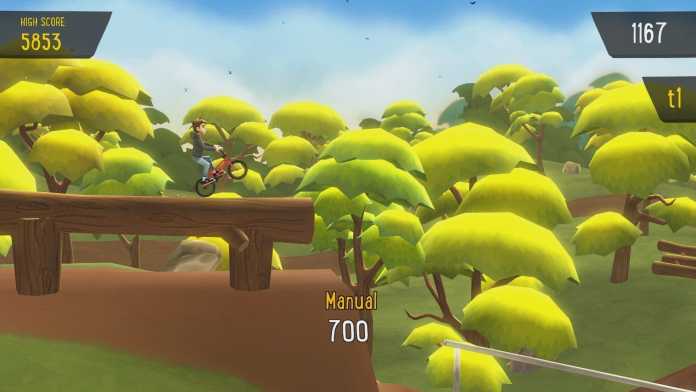
Pumped BMX + is an arcade sports game developed by Yeah Us! and published by Curve Games. Structurally, it’s a combination of the old school Tony Hawk’s games, mixed with elements of the Trials series. It was released back in 2015, with a sequel subsequently coming out in 4 years later called Pumped BMX Pro. 

Simple but effective gameplay.

Simply put, the goal of Pumped BMX + is to navigate through different sets of obstacle courses. The courses themselves are comprised of numerous rails, ramps, gaps and barriers to jump over. This is easier said than done though, as each input requires expert timing and handling on the part of the player.

If you accidently crash into an object, fail to execute an ollie, or botch your landing, then you’ll be sent right back to the start of the level. There are no checkpoints either, meaning you have to best each level in 1 attempt. It’s a pattern that takes some time to get used to, but once you do, it is incredibly fun, satisfying and rewarding.

On top of this, each course also comes with its own set of unique challenges. For the most part, these are optional tasks that you can complete in your spare time. Although later on in the game, they do become mandatory to unlock certain levels.

The challenges usually require you to conduct a flashy trick on your BMX. Preforming these is relatively straight forward, as flicking the right analogue stick will allow you to act out the various stunts instantaneously. Landing the tricks can be a bit of a problem, as some of the challenges are very gruelling to pull off. Thankfully, all of these quickly become second nature to preform, after you’ve been playing for a while.

Character customisation and accessibility options.

Completing a set number of challenges will reward you with new abilities. These can provide you with things like additional upwards mobility, or shortening your take-off to sustain more speed. You also have the option of customising your character with a small selection of bikes, helmets and outfits.

Sadly, there is a worrying lack of option customisation. Those looking to do things like reconfigure their input layout, toggle on a colour-blind mode, or utilise any other accessibility settings, won’t have the choice to do so. This is a disappointing oversight by the developers, and one that ultimately alienates a lot of gamers. It’s something to keep in mind before setting out to purchase this game.

Basic graphics, but it does what it needs to do.

Pumped BMX + is very cartoonish in its presentation. The colour pallet uses a mixture of bright and inviting colours, all of which cultivate a visually stimulating experience. The, somewhat, decent variety amongst the environments ensures that you won’t be looking at the same thing constantly. This is especially welcoming during levels that require multiple attempts to conquer.

In addition to this, the 3D models utilise a low polygon count. While this was clearly chosen for technical reasons, it also matches the aesthetic presented by the colouration and texturing. Admittedly, Pumped BMX + does have a rather bland art style, typically seen in the likes of mobile releases. However, it’s executed well enough that it never really impacted my enjoyment of the game.  

A surprisingly great soundtrack!

In my life, I’ve played my fair share of games from lesser-known developers. One trend I’ve noticed amongst them is their habit of tagging on a sub-par soundtrack onto their games. Still, there are times where this expectation has been proven wrong, and I’m happy to say that Pumped BMX + is one of those times.

The OST is a varied collaboration between different artists. It’s rooted in electronic instrumental music, but crosses over into various subgenres. For example, the tracks by TIGERBLOOD venture into Trance and Dubstep, whereas tracks by Fork & Knife are rooted in spacious synthwave ambiences.

The unique styles that each artist brings to the table work exceedingly well together, with each of them serving the game excellently. It honestly sounds like a soundtrack you would hear in the background of the X Games. For those unfamiliar with this blend of music, I can imagine it sounds a bit overbearing at first. But once you overcome this hurdle, you’ll find a fantastic score within.

Conclusion

Pumped BMX + is an enjoyable game, even if it is slightly one dimensional. The gameplay is a nice merger of the Trials series and Tony Hawk games, with enough complexity to keep you entertained throughout. Artistically, it’s a fairly standard low-poly aesthetic, but serviceable enough in getting the job done. Its soundtrack surpasses all expectations, featuring a wide array of musical talents that is well worth the cost of admission alone. If you are seeking a title that is outside the norm, or one that will hold you over until the next AAA release, then I’d recommend giving this a shot.

Review: Thymesia

Let me just utter the word “Soulsborne“, and see how it makes you feel. This singular statement is usually sufficient to send shivers down your spine. Why? Well, the thought of hours upon hours of gruelling gameplay and dying repeatedly isn’t always that much fun. Yet, there is a hardy bunch who obsess over such endeavours. Consequently, this group will jump at the opportunity to play Thymesia.

Developed by OverBorder Studios and published by Team17, this is a Soulsborne adventure RPG. What’s more, it has some hack n slash elements and is much smaller and less intense than its peers. Does this mean it isn’t as challenging? In one word, yes. But, don’t let that put you off as some excellent mechanics are begging to be experienced.

The moody setting makes Thymesia incredibly atmospheric.
What secrets lie ahead?

Thymesia is sadly lacking original content. 

My overwhelming thought while playing Thymesia was the lack of originality. This title borrows heavily from FromSoftware’s approach, and this was disappointing. Accordingly, you have to create something special to compete, and I think they fell short across many elements. However, I applaud the developers for their lofty vision and attempt at twisting the perspective. Disappointingly, this is one genre that is set in its ways. Except for Elden Ring, many games rigidly stick to the tried and tested path. As a consequence, the gameplay can stagnate and I can see why OverBoarder Studios tried something slightly different.

The story is the first area of notable familiarity. You play the role of Corvus, a warrior with a dodgy memory. This would-be hero is tasked with saving a plague-torn kingdom from itself. Sadly, an obsession with alchemy went too far, and disease ravaged the unwitting citizens of Hermes. Guided by a spectral image, you must investigate the mysteries behind Pure Blood and Vile Blood.

The core storytelling unfolds through a series of notes that must be deciphered. This antiquated approach may work for Dark Souls, but in Thymesia it never clicked. Instead, the action flowed from one cryptic clue to the next, and it was unsatisfying. What’s more, it never felt dramatic enough, and this was frustrating.

The usual waypoints. 

Fans of the genre will love the usual waypoint mechanics. Subsequently, the normal checkpoint rules stand as your hero can be upgraded and enemies respawn. The same is true of death, as your “belongings” are gathered if you make it back to your grave.

Upgrading Corvus isn’t as in-depth an experience as many of its peers. Accordingly, your combat approach is somewhat diminished, but still interesting nonetheless. You can alter your moves to suit your style, or change them completely. Furthermore, a limitation within the talent point allocation restricts you further still. As such, you can’t max out every skill, and you must decide what type of warrior you wish to be. Then, there is the choice of weapons and secondary skills to mix things up. Do you select power over speed, or ranged over melee?

Power your attack and reap what's rightly yours.
Dodge and slash your foes.

Amazing combat. 

This leads me nicely onto the pièce de résistance, the combat encounters. This is where Thymesia truly shines, thanks to its smooth and fun fighting elements. Now, I’m not talking about the big boss encounters. No, instead, I’m discussing the regular fights with the grunts. Here, a special power called “Reaping” is introduced. By charging your attacks, you can steal abilities from your foes. These are then incorporated into your combos with slick and disastrous consequences. I adored this challenging but enjoyable element to the gameplay and wish the rest of the action was as good.

Where this element faltered was the difficulty curve. The opening boss is unfairly tough and punishing. However, this is nothing new in a Soulsborne title. What was strange, though, was the lack of levelled gameplay. As you progressively got stronger, the action doesn’t become harder. Instead, the challenge becomes annoyingly imbalanced, and this is distinctly unSouls-like. This will be particularly infuriating for hardcore gamers and the flock of dedicated genre fans.

Thymesia looks moody, but unimaginative.

Thymesia has done a great job of creating a dank and moody atmosphere. In fact, I loved the variation in backdrops between the major realms. What’s more, I enjoyed the unique elements that made each stand out from the other. However, I was saddened by the continual lack of originality. Every location felt rehashed and done to death. It was truly disappointing that such great ideas were painted onto a well-worn canvas. Had the developers strived to create something fresh and subsequently failed, I would have applauded their efforts. As it is, this reeks of playing it safe and the final product is underwhelming. 

Like its peers, Thymesia has a dramatic and rich soundtrack. I adored the ominous music that juxtaposed the high-energy and lighthearted moments. Alongside this, the sound effects enhance the fantasy theme. The immersive nature of the audio annoyingly highlighted the visual shortcomings. Had the two worked well together, the end product would have been a dark and cinematic treat.

Strategy and planning are needed to be successful.
Don’t hold back.

Clumsy and often unresponsive controls. 

When a game relies on finesse and timing, you expect the controls to be responsive and sharp. However, this often isn’t the case as the inputs are often lagging way behind. This is particularly troublesome during the boss battles. With so much at stake, you need everything to work perfectly. Disappointingly, the clumsy and often unresponsive controls will let you down time and time again. Other than this, I liked the UI and the button layout. These elements combined make the action easy to understand and simple to execute.

Thanks to the many optional side quests, an array of endings, and different abilities and weapons, there is both replay value and longevity. However, this isn’t your traditional Soulsborne title, nor is it as difficult. Consequently, hardcore fans will be left wanting just a bit more.

Thymesia has lofty ideas that are poorly executed. 

I admire the developer’s drive and aspirations. However, many elements failed to reach their potential. Whenever you lack originality, gamers will find flaws. Accordingly, this is exactly what happened at every level. I wish Thymesia had explored some fresh ideas and tightened up their controls. Had they done this, the end product would have been more polished and more enjoyable. If you love the genre, you should give it a go here! Yet, be aware of its shortcomings and potential pitfalls. Can you piece together the plot and save the kingdom from itself? Learn new skills, tailor your approach, and defeat everything you encounter.